22 January 2006

Gender Differences in IQ--Still an Issue


Kevin at Intelligence Testing Blog reports on a new study of sex differences in IQ.

The new article that Kevin discusses is by Rojahn and Naglieri, is a study of 79,780 children, and is accessible here. The study utilised the Naglieri Nonverbal Ability Test, which Kevin states is a measure of Gf (fluid intelligence). (This table is great, Kevin!)

The authors of the paper conclude:
NNAT data were consistent with Lynn’s developmental theory of gender differences insofar as (a) there were no gender differences between 6 and 9 years; (b) females scored slightly higher between 10 and 13 years; and (c) males were ahead of females between the ages of 15 and 16. However, the discrepancies between the genders were smaller than predicted by Lynn. In fact they were so small that they have little or no practical importance. In other words, the NNAT did not reveal meaningful gender differences at any stage between the ages of 6 and 17 years.

This study was somewhat in conflict with a study by Lynn in 2002, and a meta-analysis by Lynn et al in 2004. (see article citations) Read the article for more details.

This does not settle any issues that Larry Summers may have raised, but the fact that scientists are not afraid to look at this issue is a good thing. Thanks to Kevin for keeping an eye on the research.

But if you want to read something related to IQ group differences with a bit more controversy, try Steve Sailer's article on Steven Pinker's "dangerous idea" over at Edge.org. Dennis Dale at Untethered has related observations.

Labels: , ,

Bookmark and Share

Flow Batteries are a new and Revolutionary Storage Technology

The Energy Blog reported a while back on a new energy storage technology, Vanadium redox flow batteries. Flow batteries are called that because the electrolytes flow through the cells, giving up electrons to an external circuit. The redox reaction is reversible, so the cells can be charged or discharged. The significant fact about flow batteries is the potential to scale to very large storage sizes into the megawatt and multi-megawatt ranges. This is the type of storage capacity utilities have been looking for.

Performance

*
The VRB has an availability of greater than 98%. Designed for unattended operation with very low maintenance costs.
*
No degradation from repeated deep charges and discharges. The system can be discharged and charged greater than 13,000 times (20% to 80% SOC) without deterioration in system efficiencies.
*
System round-trip efficiencies between 70% - 78%.
*
The VRB-ESS has a charge/discharge window of 1:1 - allowing off-peak charging for on-peak dispatch - a fraction of the time required by other battery systems and ideal for wind generation applications.
*
Cross mixing of electrolytes does not lead to contamination of electrolytes
*
indefinite life of electrolyte (no disposal or contamination issues).
*
Once charged, the electrolyte remains fully charged with low self-discharge.


Flow batteries are not generators, like regular fuel cells. Most fuel cells use up their fuel sources in an irreversible reaction. Flow batteries do not use up their electrolytes. The electrolytes are fully reusable, with recharging. And flow cells are not like regular batteries, since you recharge them by replacing the electrolyte. They are a new, hybrid form of chemical battery/fuel cell.

The best use for these cells will probably be as load levelers for utilities, and as backup power for large industrial facilities.

Here are more links:

Sandia
Wiki
ME
Geo

Labels: ,

Bookmark and Share

21 January 2006

Nano-Therapy for Alzheimer's--Golden


This physorg.com news report details a new possible treatment to destroy amyloid plaques neurofibrillary tangles in Alzheimer's using nano-gold particles.


Kogan and colleagues in Spain developed gold particles roughly 10 nanometers wide with peptides attached to them that specifically bond to the kind of abnormal proteins found in Alzheimer's. These particles are small enough to penetrate cell membranes and can also absorb microwave radiation.

The scientists incubated the nanoparticles with the protein for up to a week, long enough for the protein to clump up. Using microwave frequencies at power levels six times lower than those used by conventional mobile phones, the researchers found that several hours of irradiation heated the nanoparticles enough to completely dissolve the toxic clumps. The nanoparticles alone showed no such effect, while the microwaves alone accelerated the growth rate of the abnormal fibers.


Long life can be a good thing only if the brain continues to function properly. If the brain breaks down, the long life becomes a curse. Approaches to prolong life must necessarily include the means to preserve high level brain functioning. There are many approaches to doing this, and this blog will attempt to present them for readers as soon as they are published.

Labels:

Bookmark and Share

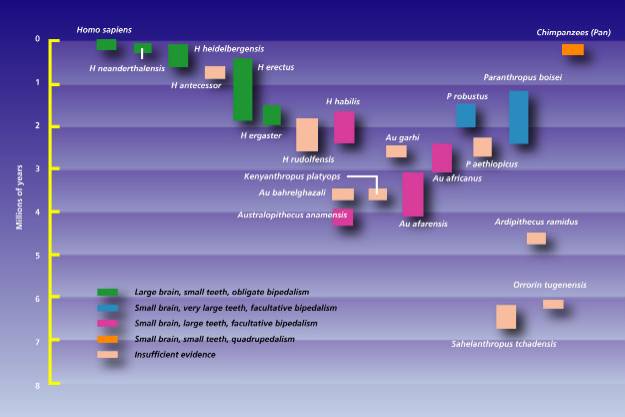
What are these Humans? From whence came they?

TalkOrigins

Talkorigins.orgprovides a good introduction to the scientific study of human origins.

If you have a high speed connection, this website will give you an interactive experience through four million years of human evolution.

Wikipedia has a good article about human origins. Homo Sapiens has been around for over a quarter of a million years, since the last inter-glacial period. Homo sapiens sapiens, or modern humans, came on the scene sometime in the past 100,000 years. When humans developed language and technology, things began to happen.

After the Ice by Steven Mithen covers the period of time between 20,000 B.C. and 5,000 B.C. During that time, a great deal of human migration occurred. As the weather warmed, plant life and animal life exploded. Human populations multiplied and overfilled the islands of thaw. Tribes were pushed outward in all directions. The ice had not melted, sea levels were low, and many present day islands were accessible to migrating humans and animals. When the ice melted, sea levels rose, islands formed, and hundreds of human populations were cut off. At the same time, the western hemisphere was populated by migrating tribes from Siberia.

The Human Web, by John Robert McNeill and William Hardy McNeill, picks up where "After the Ice" leaves off, at the dawn of agriculture. From Publishers Weekly
The spread of agriculture, the growth of world religions and the rise of European civilization to world dominance are some of the themes explored in this engrossing addition to the distinctive McNeill brand of broad-brush macro-history. The motor of history this time is the growing "web" of interactions-weaving together hunter-gatherer bands, then civilizations and finally the whole world-by which people, goods, diseases and ideas spread. As it binds ever more people ever more tightly, the web both brings them into conflict and lets them share and build on each other's achievements; thus Columbus's extension of the web to the Americas led to conquest but also to the exchange of New World potatoes and maize for Old World horses and smallpox. The father-son historian duo also revisit ideas from William's previous books, discussing the co-evolution of humans and microbes, the uneasy symbiosis between warrior elites and the farmers they protect and exploit, and the social solidarity imparted by group singing and dancing. More ecological than humanistic, the McNeill outlook sees conflict and cooperation as twin outcomes of the struggle for survival that drives developments in technology, political organization, social habits and even religious beliefs. This approach can be reductionist (Europe's vibrant civil society is said to spring from its use of mold-board plows); and as impersonal historical meta-agents go, the trendy "web" conceit is less substantive and fertile than other McNeill brainstorms. Still, this concise and beautifully written synthesis brims with revealing insights that make history comprehensible and enthralling. 25 illus., maps.
Copyright 2003 Reed Business Information, Inc.


Human Accomplishment by Charles Murray, looks at human accomplishments in the sciences and the arts. The leading names are predictable: Galileo, Newton, Einstein, and Darwin in the sciences, Beethoven and Bach in music, Shakespeare and Schiller in literature, Michelangelo in painting, Euler in mathematics, and so forth. Murray is at pains to eliminate Eurocentrism in his analysis: there is separate coverage of Chinese and of Indian philosophy to match Western philo- sophy, Chinese painting, Japanese art, Japanese literature, Arabic literature, and Chinese literature. These include, at a level he views as comparable to Aristotle and Mozart, such names as Gu Kaizhi, Basho, al-Mutanabbi, and Kalidasa. Murray’s goal is not, however, merely to make a list of 4002 all-time greats. He wants to build up a general view of the historical conditions that allow for the flourishing of artistic and scientific innovation and discovery.

Speaking of cultural histories, Jacques Barzun's "From Dawn to Decadence" is a useful addition to the list. Barzun looks specifically at the last 500 years of western culture.
From Dawn to Decadence, [1] Mr. Barzun’s overview of the last five-hundred years of Western cultural history, is a magnificent summa of his concerns as a thinker and historian. It synthesizes as well as summarizes a long lifetime’s reflection about the fate of those distinctive energies that define Western culture: “the great achievements and the sorry failures of our half millennium.” The first thing to be said about From Dawn to Decadence is that reading it is an exhilarating experience. I mention this partly to reassure those intimidated by the book’s length, partly to mollify those put off by its admonitory title. At nearly nine-hundred closely printed pages, From Dawn to Decadence certainly is long, but it is also a rich tapestry of a book—the product, Mr. Barzun remarks, of accidents like “insomnia and longevity,” as well as of immense scholarship. Despite the book’s intimidating girth, I suspect that many readers will, like me, come to feel about it the way one feels about certain long novels. For the first hundred pages or so, a mixture of wariness and anticipation predominates: will the book really repay the time and effort it demands? These feelings give way, as one settles into the story, to eager excitement. Finally, as the end approaches, one finds oneself madly trying to prolong the experience and delay coming to the final page.

National Geographic's Atlas of the Human Journey website is a fascinating glimpse at the sweep of human pre-history. The graphics are exceptionally good.

The New Geneva Center website presents an engaging discussion of human culture from ancient to modern, including cultures from east and south asia, the levant, africa, pre-columbian america. The author discusses both secular and spiritual aspects of culture which shaped ancient and modern civilisations.

This website is packed full of links about western civilisation.

To understand where humans are today, you must understand western civilisation. No other civilisation has created such an environment so conducive to learning, scientific and cultural freedom, and societal ferment. It is almost certainly from western civilisation that the next level will grow.

Labels: , , ,

Bookmark and Share

Combining Aspects of Reality In the Brain

Science Blog reports on research that examines how brains unify multiple sense impressions into a single impression. When a person sees an object, the brain registers the size, shape, contours, textures, colors, etc. in different locations of the CNS. The brain must then assemble this information--quickly now--into an object identification, either consciously or sub-consciously.

For instance, a particular neuron may respond to objects with either a concave fragment at the top or a convex fragment at the bottom. At this point, the neural signals are ambiguous; the brain doesn't know whether the concavity, the convexity or both are present.

Milliseconds later, however, neurons begin to react exclusively to combinations of shape fragments, rather than to individual fragments. In other words, the brain begins to put the pieces together to form larger sections, in the same way that an artisan might fasten discrete shards of stained glass to create a design.

"Humans do a rough categorization of objects very quickly," Connor said. "For instance, in just a tenth of a second, we can recognize whether something we see is an animal or not. Our results show that this immediate, rough impression probably depends on recognizing just one or more individual parts of what we see. Fine discriminations – such as recognizing individual faces – take longer to happen, and our study suggests that this delay depends upon emerging signals for combinations of shape fragments. In a sense, the brain has to construct an internal representation of an object from disparate pieces."


Of course the problem is more complex, involving not only visual features, but odors, sounds, vibration and other touch stimuli, and also underlying emotional states and levels of hunger, fatigue, sleepiness, and distractibility.

Known as the "binding" problem, it is merely one part of the complex study of consciousness.
Bookmark and Share

Hydrogel Drug Implants Deliver the Goods

Medgadget has an interesting post about a new medical implant technology developed by New Jersey company Valera.

Valera's Hydron implant technology is a:
subcutaneous drug delivery reservoir, the Hydron Implant has been designed for in-office physician insertion into the patient's upper arm using local anesthesia. The hydrogel polymer compositions possess soft, flexible tissue-like characteristics, providing excellent biocompatibility and patient comfort.

Employing micropores for drug diffusion, the implants are non-biodegradable and are capable of long-term (one year or more), continuous, near zero order release rates determined primarily by specific polymer blends, implant wall attributes and drug solubility.
Because Valera® has the ability to manufacture Hydron Implants to exacting chemical and geometric specifications, the technology is applicable to a broad spectrum of drugs, representing significant prospects for meeting therapeutic needs not addressed by current oral administration, depot injection, short duration implants, and transdermal patch delivery systems.


Here is the story about the human testing of the implant. It was used to suppress premature puberty in young girls.

According to Spitz, the results of the implant testing for puberty were encouraging. Puberty hormones remained suppressed at nine months after implant insertion in all 11 girls, and up to 15 months in six girls who were followed for more than one year after the original implant was inserted. All the girls reported less pain and discomfort, and less interference with school activity and work with the implant than with standard monthly injections, the investigators reported.

According to the Pediatrics report, there was no menstrual bleeding during the implant treatment, and mean breast development regressed somewhat during treatment. The acceleration in bone maturation that would signal an end to growth in height decreased during treatment, as did growth velocity, the report indicated.

"Our results showed there were no half measures. Each and every child experienced complete and full suppression. It was even more effective than monthly injections," said Spitz.

"The advantage of the implant is that it's simple to insert under local anesthesia and causes the complete suppression of the hormones for one year," said Spitz. "It obviates the need for children to come in every month for an injection. With injections, kids who have an overactive pituitary gland sometimes even need to come in two or three times a month. And sometimes, these injections are very painful.
"


A lot of medical treatments are given over a period of several months or years. Some are even potentially permanent treatments. An implant keeps working, even when the patient forgets all about the medicine or the medical condition. Implant techology improves along with technology for drug, biotech, and nanotech treatments for stubborn and deadly diseases.

Labels:

Bookmark and Share

20 January 2006

Where Are the Next Generation of Scientists Coming From?

Kevin at Intelligence Testing Blog points to an important article at boingboing.net describing a London Science Learning Centre survey of 11,000 adolescents.

The results they've reported so far are a bummer. Meanwhile, the numbers of 16-18 year-olds taking physics, chemistry, and math A-level courses have dropped big time over the last 15 years. From the BBC News:

Around 70% of the 11-15 year olds questioned said they did not picture scientists as "normal young and attractive men and women"...

They found around 80% of pupils thought scientists did "very important work" and 70% thought they worked "creatively and imaginatively". Only 40% said they agreed that scientists did "boring and repetitive work".

Over three quarters of the respondents thought scientists were "really brainy people".

Among those who said they would not like to be scientists, reasons included: "Because you would constantly be depressed and tired and not have time for family", and "because they all wear big glasses and white coats and I am female".


Original BBC article.

Surveys in Canada and the US would probably be similar in results. Scientists are being portrayed in the popular media as being either sinister, or superheroes, or dull drab doormat types. Science has a public relations problem and someone needs to address it soon. The earlier that boys and girls start thinking of themselves as scientists or engineers, the earlier they can take part in activities that will build a resume' of scientific achievement.

Labels:

Bookmark and Share

More on Non-coding RNA

Snowcrash at Biosingularity blog has another great posting on RNA. Snowcrash is a Professor of Immunology and Microbiology at a US medical school, and actively involved in immunological and stem cell research, as well as being a skilled and prolific blogger. He knows what he is talking about.

The research described by Snowcrash was done at Children's Hospital Boston. The discovery that microRNA is involved in synapse formation in the developing brain reveals how large the gaps in biological knowledge have been. It further illustrates how the discovery of the multiple functions of RNA is leading to a proliferation of research discoveries with no end in sight. In fact, there is no end in sight to the acceleration of research discovery.

The singularity itself is often described as a near vertical rise in rate of information/knowledge increase, a near asymptotic growth rate.

Labels:

Bookmark and Share

Changing Plant Genes to Cope with Climate


A Bio.com newsfeature reports on British researchers' discoveries of barley genes that control the plant's response to climate parameters, such as length of day.

The varieties of crops grown in the UK are suited to the soil, seasons and traditional cool, wet summers. Later flowering in barley means it has a longer growing period to amass yield. If British summers get hotter and drier we will need types of wheat, barley and other crops that flower earlier, like Mediterranean varieties, to beat summer droughts. However, new varieties will need to be adapted in all other ways to UK conditions. "

With the new knowledge about the workings of barley researchers and plant breeders will find it easier to select variations that will thrive in the UK environment but will also flower earlier, coping with hotter summers.

Dr Laurie commented, "Although our research has been on barley we know from observation that other crops show similar variation in the way they respond to the lengthening of the day in springtime. We are confident that we will find equivalent genes in other key crops."


The article mentions global warming concerns, but of course that is the crisis du jour. The larger more important issue is the ability to "adjust plant genomes" to cope with a variety of environments. As plant scientists better understand how a plant's genes allow it to interact with its environment, they will be better equipped to actually change a plant to match its environment.

If you have sandy soil, you will be able to adapt your crop to suit the soil. If your water is brackish, you can adjust your plants to deal with the salts. Too wet? Too dry? Too cold? Too hot? Just dial in the appropriate genes, and the plant is happy.

Designing plants that produce large quantities of sweet crude oil, or plants that take the CO2 from the air and make diamonds--those are not far fetched. Of course, neither is the idea of teaching a cotton plant to make cocaine, or an onion plant to make opium. Our human senses were designed to monitor macroscopic details. What is going on inside the nucleus of a plant cell is harder to detect.

Labels:

Bookmark and Share

Another Anti-Alzheimer's Compound


This bio.com newsfeature points to research done at Northwestern University.

As described in the Jan. 11 issue of the Journal of Neuroscience, the compound, called MW01-5-188WH, selectively inhibits production of pro-inflammatory proteins called cytokines by glia, important cells of the central nervous system that normally help the body mount a response, but are overactivated in certain neurodegenerative diseases, such as Alzheimer's disease, Parkinson's disease, stroke and traumatic brain injury.

The compound was designed and synthesized in the laboratory of D. Martin Watterson at Northwestern University Feinberg School of Medicine, using a synthetic chemistry platform developed in his lab by researchers at the Northwestern University Center for Drug Discovery and Chemical Biology (CDDCB) for the rapid discovery of new potential therapeutic compounds.

Watterson is co-director of the CDDCB, the J.G. Searle Professor of Molecular Biology and Biochemistry and professor of molecular pharmacology and biological chemistry at the Feinberg School.


There is a delicate balance of pro-inflammatory and anti-inflammatory hormones, including cytokines, in the neuron's environment. Rational drug design methods allow the targeted development of chemical compounds designed for very specific purposes. These compounds are not necessarily safe and effective because they were "rationally designed." They must still go through a thorough vetting process by national drug regulatory agencies. But even if these pinpoint specific compounds fail the tests for regulatory approval, they are often still useful scientific probes for studying biological systems. Development of these rapid discovery tools is one of many new mechanisms propelling biological science rapidly ahead.

Labels: , ,

Bookmark and Share

19 January 2006

Retraining the Brain


CBS News posts a story about brain plasticity, using various non-drug therapies. Using something called CI Therapy, or Constraint Induced Therapy, some patients are regaining the use of limbs deadened by brain injury. Using another therapy called the "Brain Gym", a software training device, others likewise regain use of facilities previously thought permanently lost.

Hat tip Intelligence testing blog.

Another rapidly growing area of non pharmaceutical brain retraining is Neurofeedback, described in this Wiki article with links.

Labels: , ,

Bookmark and Share

Progress in the Genetics of Cancer


Researchers affiliated with Ohio State University have found a tumor suppressor gene that may open a door for new treatments of lung cancer and other tumors.

Researchers have identified a new and unusual tumor suppressor gene that may be important in cancers of the lung and head and neck. The study shows that restoring the inactivated gene can slow the growth of tumor cells.

The gene, known as TCF21, is silenced in tumor cells through a chemical change known as DNA methylation, a process that is potentially reversible.
Christoph Plass

The findings might therefore lead to new strategies for the treatment and early detection of lung cancer, a disease that killed an estimated 163,510 Americans in 2005. The study could also lead to a better understanding of the molecular changes that occur in tumor cells during lung-cancer progression.


DNA methylation is at the heart of this discovery. Wikipedia gives an introductory explanation of this phenomenon here.

The larger issue of "gene silencing" is discussed in this brief wiki article. For a more thorough understanding, along with CME credits, this 1.5 MB pdf file will give many people something to chew on.

hat tip eurekalert.

Labels: ,

Bookmark and Share

Gene Therapy for Parkinson's

This bio.com newsfeature highlights a provocative genetic therapy for Parkinson's by scientists affiliated with Northwestern University.

By placing the RNA interference into a crippled, non-disease-causing virus, scientists in the Bohn lab have been able to deliver the RNA interference tool to the brain of rats and turn off the alpha-synuclein protein in neurons. "This is the first step in developing a new therapy for Parkinson's disease based on molecular knowledge of the disease," said Mohan K. Sapru, research assistant professor of pediatrics, who is first author on the study and co-inventor of the gene therapy technology.

"It may also be useful for other diseases of the brain, such as dementia with Lewy bodies, a disease also characterized by Lewy bodies in the brain," Sapru said.

The Bohn lab will subsequently test this gene therapy in mouse models of the disease. If the RNA interference approach works in the mouse, a gene therapy based on silencing the _alpha-synuclein gene will be developed for clinical trials for Parkinson's patients.


This technique apparently uses a viral vector to deliver a RNAi therapy to neurons to prevent a troublesome protein from being produced. Noncoding RNAs, including RNAi, represent a vast new continent ripe for exploration, survey, subdivision, and finally one the productive settlers (scientists) move in, tremendous progress at a dizzying rate.

Labels:

Bookmark and Share

18 January 2006

Stupidity is its own Punishment

Several prolific and qualified researchers have made a study of human intelligence, among them Richard Lynn, Linda Gottfredson, Camilla Benbow, and several others.

Richard Lynn has written on issues of human intelligence for decades. Lynn teamed with Vanhanen to write the book IQ and the Wealth of Nations. As the authors ask in the first chapter, "Why Are Some Countries So Rich, and Others So Poor?". They then proceed, in a copiously documented ten chapters, to advance a partial answer to the question. By looking at national average for IQ, and comparing this nation by nation with economic output, a regression/correlation analysis is developed.

Gene Expression Blog took a look at the data set from the book, and found that it survives close scruitiny.

Richard Lynn and Tatu Vanhanen examine IQ scores and economic indicators in 185 countries. They document that national differences in wealth are explained most importantly by the intelligence levels of the populations. They calculate that mean national IQ correlates powerfully—more than 0.7—with per capita Gross Domestic Product (GDP). National IQs predict both long-term and short term economic growth rates. Second in importance is whether the countries have market or socialist economies. Only third is the widely-credited factor of natural resources, like oil.

The book goes for $80 US at Amazon. For those who would like to browse the data table, here is a link to the table of data.

Now, after you clean up all the lead exposure, the malnutrition, the childhood diseases, lack of education, and other negative features of the childhood environments in poor countries, what would the data table look like? It is likely that no one will ever know, due to the political incorrectness of the topic. This area of study is frowned upon by the establishment.

A different question might spotlight the north american black-white IQ gap, where middle class black students who are at the top of the black SAT curve, equal the SAT scores of lower class white students who are well down the white SAT curve. This New York Times article attempts to fit together possible reasons for the disparity.

This document takes Lynn and Vanhanen's data, and extrapolates global IQ into the future. The mental picture of an entire world that looks like Bangladesh or Zimbabwe is not appealing.


Ever notice that the politically correct attack any discussion of IQ as unscientific and racist . . . unless it serves their purposes? In discussions of lead exposure and IQ, and US military enlistments and IQ, the PC Thought Police issued a pass, freeing up discussion. Without such a pass, the repercussions would be dire.

Labels: ,

Bookmark and Share

17 January 2006

More on the Shortage of Mathematicians


Geekpress supplies another great article on the impact of mathematicians on the modern marketplace, and the high demand for new math graduates. According to this geekpress linked Businessweek article:
From fledglings like Inform to tech powerhouses such as IBM (IBM ), companies are hitching mathematics to business in ways that would have seemed fanciful even a few years ago. In the past decade, a sizable chunk of humanity has moved its work, play, chat, and shopping online. We feed networks gobs of digital data that once would have languished on scraps of paper -- or vanished as forgotten conversations. These slices of our lives now sit in databases, many of them in the public domain. From a business point of view, they're just begging to be analyzed. But even with the most powerful computers and abundant, cheap storage, companies can't sort out their swelling oceans of data, much less build businesses on them, without enlisting skilled mathematicians and computer scientists.

The rise of mathematics is heating up the job market for luminary quants, especially at the Internet powerhouses where new math grads land with six-figure salaries and rich stock deals. Tom Leighton, an entrepreneur and applied math professor at Massachusetts Institute of Technology, says: "All of my students have standing offers at Yahoo! (YHOO ) and Google (GOOG )." Top mathematicians are becoming a new global elite. It's a force of barely 5,000, by some guesstimates, but every bit as powerful as the armies of Harvard University MBAs who shook up corner suites a generation ago.


Read it all.

In a previous posting, I mentioned the competition for top mathematicians, and linked to an article dealing with the competition between the US NSA, and GOOGLE for math geeks. The article mentioned that in private sector jobs, the sex disparity in hires is significant, but in the NSA jobs the gender disparity is much less. Remember the big hoopla at Harvard about the sex differences in hiring for top level math and physics professors? Does anyone really believe that Harvard, MIT, Stanford, Berkeley, Google, Yahoo, IBM, Bell Labs, and all the other elite corporations and institutions would hire more males in these jobs just out of sexism?

Labels:

Bookmark and Share

16 January 2006

Peak Oil--What to Make of It?

Peak Oil is a controversial topic. First we lead off with a posting from mises.org entitled "The Myth of Peak Oil." Then from the herd perspective, Wikipedia has an article on Hubble Peak Theory which is fairly informative, in a typical journalistic and conventional thinking way.

Next, we have this intriguing viewpoint from an economist, who suggests that if the doomseekers of Peak Oil actually believed what they were predicting, they could make a huge fortune in oil futures trading. That article was linked to inside this comment. The comment appeared under this kuro5hin posting on peak oil. As usual with kuro5hin, there is a full complement of comments.

One of my favorite blogs dealing with this issue is Peak Oil Debunked, listed on the right side-bar. This blog discusses various economic and technological issues that impact upon peak oil. Most people who are problem solvers by nature will start thinking about alternative energy sources to relieve the possible harsh impact of higher oil prices that come with a supply/demand mismatch. The Debunking blog is a problem solving blog. Another favorite blog on energy topics is The Energy Blog. This is another blog with an emphasis on problem solving.


Doomseekers, on the other hand, want to see the fall of civilisation--and nothing less will do, thank you. The doomseekers are extremely confident in their predictions of doom, but somehow fail to put their money where there mouths are. That failing tends to subtract somewhat from their credibility. That, and the dismal record of dooms prediction over the past half century or so, from doomseekers of all political persuasions.

Personally, I expect oil prices to fluctuate wildly over the next ten years, with an upward (six months running) average price trend over that time period. That will make it difficult to time futures contracts, although there are many ways that both commodoties and stock investments can be made to pay in that type of market.

What would a next level human think about peak oil? He would not think about it, it would not bear thinking about. Oil is a primitive energy source, and even between level humans should be ashamed at their dependence on oil. The really big sources of energy are the sun, the earth's core, fusion, and probably quite a few others we are simply too stupid to know about. Stupidity is not a crime, but it is its own punishment.

Labels: ,

Bookmark and Share

OBVIO! From the San Francisco Intl. Auto Show


Gizmag has a feature about a new Brazilian "trybrid" automobile that can run on gasoline, ethanol, any combination of the two, or electric motor. Realistically, it is a hybrid with an internal combustion engine and an electric motor. But the ICE can run on gasoline, ethanol, or any combination. So please excuse them for calling it a "trybrid."

Brazil has made ethanol a signature technology for the national economy. Sugar cane produced ethanol is more efficient than corn produced ethanol. Many economists believe the yield is not economical, even with cane. Time will tell.

Regardless, the automobile itself has many interesting features, including a continuously variable transmission, which might attract some buyers, and certainly will attract curiosity seekers.

My point of view is that pluggable hybrids (using any number of ICE fuels) are the most logical technology for driving automobiles at this time. Fossil fuels are an excellent mobile store of energy, but they do contribute to pollution, and the hydrocarbons could probably be better used as chemical feedstocks.

Labels: ,

Bookmark and Share

A Shortage of Top Mathematicians

Mathematics, in the form of complex algorithms, makes the modern world go around. From Bioinformatics/Genomics discovery, to electronic money transfers, to confidential data communications, to drug discovery, to manufacturing processes, to transport/shipping tracking etc. etc. Top mathematicians are in demand, so much so that there is a heated competition going on for their services. Hat tip Geek Press Blog.

The modern world rests on the shoulders of top mathematicians. For every top mathematician who is female, there are almost ten top mathematicians who are male. That same sex disparity is present among top physicists and top scientists, engineers, and computer scientists who use the most difficult mathematical techniques in their work.

Why the sex differences? Why the gender disparity? Is it a sexist conspiracy to keep the little woman down? Hardly that. If any conspiracy is involved, it is a conspiracy between mother nature, sister evolution, brother epigene, and father gene. There is something different about the brains of the people who fall within the elite of mathematical skill.

This difference will not always display itself in a simple IQ score, since an IQ score is a composite of various mental abilities that combine to form the "g" value. There is more to intelligence than innate math skills.

Complex modern societies depend upon their elite mathematicians and other mathematically inclined scientists, engineers, and technologists. These men, mostly men, often find their way to top jobs with good pay and job security.

It is very likely that a significant number of mathematically inclined persons are thrown on the metaphorical garbage heap due to government policies that fail to seek them out and find them, partially because of their gender. That would come underThe War Against Boys by Christina Hoff Sommers, and several other excellent publications showing how a misguided attempt to forcefully "even the scales" is producing counterproductive results.

Labels:

Bookmark and Share

15 January 2006

Prognosis for Nano-Biotech Advances

This fascinating pdf file presents the results of a survey of nano- and bio-technologists predicting the time to development and import of development of various advances in nano-biotech.

The survey results display a conservatism among prognosticators that is often observed whenever "experts" in a field are asked to anticipate time-to-discovery for new technologies. Personally, it seems that the predictions are off by at least 50% on the conservative side, for most technologies. It is particularly interesting to see the number of experts who predict that any given technology will "never" be developed. Realistically, the only way that any of these technologies will "never" be developed, is if a better technology is developed first, which obviates the need for that particular technology.

Hat tip to slashdot.
Bookmark and Share

Implanted Cells Survive in the Brain, Fight Parkinson's

In this fascinating article, University of Wisconsin researchers have engineered progenitor brain cells from stem cells, to produce GDNF (glial cell line-derived neurotrophic factor) inside the brains of rats and monkeys after being implanted.


In some small but promising clinical trials, GDNF showed a marked ability to provide relief from the debilitating symptoms of Parkinson's. But the drug, which is expensive and hard to obtain, had to be pumped directly into the brains of Parkinson's patients for it to work, as it is unable to cross the blood-brain barrier.

In an effort to develop a less invasive strategy to effectively deliver the drug to the brain, Svendsen's team implanted the GDNF secreting cells into the brains of rats and elderly primates. The cells migrated within critical areas of the brain and produced the growth factor in quantities sufficient for improving the survival and function of the defective cells at the root of Parkinson's.


Go here for the full article.

Hat tip to Medical Daily.
Bookmark and Share

We are all Cyborgs now

JW Bats at Tech Future blog, presents an excellent posting on the future of mind controlled prosthetics. It is a link-filled extravaganza of a post, so go ahead and enjoy.

There is a race, of sorts, between the hardware technologists and the bioware technologists. The hardware technologists seem to have more of a headstart, and are giving us useful prosthesis such as cochlear implants, more functional limb prosthesis, and even retinal implants.In the long run, the biotechnologists cum nanotechnologists will win out. But in the short run, the hardware technologists still have a lot to give.

Update: Cuanas presents a thoughtful post relating to this topic.

Labels: ,

Bookmark and Share

More RNA

Here is a good posting from Biosingularity providing more information about RNA interference. One of the links provided there is to this PBS site that provides delightful tutorials and explanations of RNAi.

A few years ago, Antisense RNA was a revolutionary discovery. Now RNAi is the new celebrated technology. RNA still has some surprises that are so far unrevealed. The general field of noncoding RNAs looks at the several types of RNAs that perform other duties besides what the traditional "dogma" originally dictated.

Scientists are generally plodding creatures, staking out their small niches and cultivating a small, specialised crop. When entirely new continents of research potential are discovered, a lot of room for homesteaders is opened up. The majority of molecular biologists will plod their way into their small field and work it for the next ten, twenty, thirty years. The discoverers, a small minority, will look around for clues to other hidden continents, waiting to be found.

Labels:

Bookmark and Share

14 January 2006

Math Geeks and Singularities

Singularity News has a great post entitled "Three Reasons to be a Math Geek." Follow the link, then follow the three links to learn the three reasons. The future looks good for math geeks, but since more males than females are likely to be drawn to math geekhood, the whole issue teeters on the brink of political incorrectness.

The Speculist offers an interesting short essay entitled "God and the Singularity." In it, he addresses some of the same points I briefly discussed in Next Level vs Singularity, The Speculist approaches the issue from a different perspective, more informed from a singularity perspective.

Micah, at Event Horizon, has a post "When Machines Transcend the Mechanical." This posting likewise deals with some of the same concerns about the singularity addressed in the above links.

Geekpress links to a short Kurzweil interview about the singularity. The link to the interview is here.

Labels: ,

Bookmark and Share

Non Coding RNAs: Another Genetic Revolution

Snowcrash at Biosingularity Blog presents a very clear and readable article about the "dicer" molecule. I mentioned this molecule briefly when talking about crafty cancer researchers.

The use of Dicer in studying RNA interference, is part of a revolutionary development. The discovery that RNA performs more functions than merely acting as an intermediary between DNA and Protein, has opened up a rich and fertile field of study.

To understand Dicer, and RNA interference, it helps to get a grounding in the emerging branch of genetics known as NonCoding RNA. To assist in this pursuit, here is a link to an introductory primer on noncoding RNA by Sean Eddy. It is a pdf file, so you will need the free Adobe pdf reader. Also available is an HTML version of the file .

The above primer is a few years old, so some recent discoveries are not included. Once you have a fair handle on the concepts, do more targeted searches with Google Scholar, Scirus, or another good science search engine. Links are available in the sidebar to the right, under Science.

For a broader, more general introduction to genomics and bioinformatics, this online course provides a gentle introduction along with a huge number of links for further study.

Labels:

Bookmark and Share

The Next Level vs. The Singularity

When referring to the progress of humans, I typically refer to the impending higher stage of mental and physical development of humans as "the next level." The term, "the singularity," is reserved for a technological evolution of increasing machine sophistication (including nanotech) and increasing sophistication of information technologies. The singularity can occur without significant change in human nature, simply because science and technology development does not require very many people, in relative numbers. The people involved in advancing science and technology are special individuals, in terms of mental capacity, but they are a tiny minority of all persons. The singularity is a technological and scientific event.

The next level is a human event, the transformation of humans. At the present time, what I call "between-levels humans" are simply too short-lived and too stupid to take care of this part of the universe. Look at the pollution, the religious wars, the third world deforestation, the primitive and wasteful energy technologies. Look at the insane politics, the oppression, the dictators starving their people. Look at the drug abuse, the general escapism, the strong drive to retire without ever achieving anything.

Technological and scientific advances can occur at a dazzling rate, and not change basic humanity. There will be more sophisticated means of escape, virtual reality being one such grail to be sought. Machine intelligence is looked on by many as either a benign form of slavery, or as an act of creating another intelligent species with which to commune. The more likely result of machine intelligence is a dizzying escalation of non-human intelligence, engineered by non-humans, for the benefit of non-humans.

That is, unless humans become more intelligent themselves, intelligent enough to understand and anticipate their creations, before they are created. The laws of complexity suggest that emergent phenomena can always surprise a designer. Simple starting rules give birth to complex resultant phenomena. Being aware of that, next level humans will conduct their experiments in contained environments, in some cases environments surrounded by the vacuum of space.

Humans must become more intelligent, and longer lived. There has always been a shortage of wise, intelligent, experienced humans. Look at contemporary society in the western world, where the vanity and rashness of youth are valued over the wisdom and perspective of maturity. Passion and excitement are valued, which is good, but they are valued above many other things that are more integral to a satisfying life.

We must not allow ourselves to lag too far behind our technology. Evolution by natural selection is a slow worker, requiring millenia and millions of years to accomplish great things. Evolution has done its work on each of us, for good or ill. But now we are not content to wait. Diabetics take genetically engineered insulin, in order to live and function. Critically ill patients in emergency wards and ICUs are given genetically engineered potions to allow them to survive the crisis and heal. Victims of malignant tumors are given genetically engineered drugs to combat their malignancies, and other genetically engineered drugs to help their bodies rebuild.

We drink milk produced by cows given genetically engineered BGH. We consume breads and pastas made from genetically engineered grains. We are encouraged by the improvement of health in third world countries, where genetically engineered "golden rice" prevents illness and death of children.

Genetic engineering, and soon stem cells and tissue engineering, are becoming a natural part of daily human existence. Most people shy away from the gene engineering of the human genome, but that too is becoming more common. Innocent children, through no fault of their own, are born with fatal genetic illnesses. In the opulent western world, we are generally happy to do whatever we can to provide these unfortunates with any advantage possible, including genetic therapies.

On the singularity side, cyborg technologies are becoming extremely common. Cochlear implants prepare the way for retinal implants. High technology titanium prosthetics make way to pressure sensing and active responding prosthetics. We are becoming more comfortable with the idea of prosthetic technologies to assist in compensating for any deficits. Mental prosthetics are very near, in fact in many ways personal computers and communications networks are forms of mental prosthesis, taking over from the printed page and spoken word.

What I am referring to with this discussion, is the difference between a consciousness that is biologically enhanced, and a consciousness that is technologically enhanced. Yes, I realize that technology is involved in any "artificial" enhancements. The distinction is useful, nonetheless. Next levels put humans first, singularitarians put technology first, whether intentionally or not.

A later discussion will take up "the technology reflex."

Labels: , , ,

Bookmark and Share

13 January 2006

Algae: Good for the Environment? The Climate?


Energy Blog provides us with this look at an ingenious use of algae to kill two birds with one stone: produce fuel and reduce greenhouse gas.

The Christian Science Monitor has more.
Here is a link provided by Energy Blog to a competing group attempting to accomplish the same results with algae.

Those of you who follow the links on the sidebar already understand that the climate story is far more interesting and complex than the less than intelligent reports of the main stream media would have people believe. Here is an article about how trees affect the climate. This report discusses methane release from plants, up to 30% of annual methane release. We know that methane is a much stronger greenhouse gas than carbon dioxide.

Labels:

Bookmark and Share

Humans Grow Crafty in Approach to Cancer

Biosingularity has more great posts. Snowcrash discusses an approach to killing cancer cells, by smuggling photosensitive conditionally-toxic materials into tumor cells. When exposed to light, these materials become toxic and kill their host malignant cells. Here is a link to the NIH source article.

Daily Biomed has several links to stories describing how people are using dogs to "sniff out" cancer in people. This is an example of an old folk tale that may have had more than a kernel of truth.

Human researchers are learning how the molecular world operates. Most life processes occur at the molecular level. The mastery of the molecular level is the real declaration of "our bodies, ourselves." It is the declaration of ownership of our own life processes.

In addition to all that, scientists are learning how to use RNA interference to block potential cancer causing reactions. The molecule dicer evolved to cut up double stranded RNA in viruses, but also produce short fragment RNAs which can interfere with gene expression. Learning to use dicer as another research tool is just another example of human craftiness. Hat tip to sciencenerd depot.
Bookmark and Share

The Muslim World Goes Backward

Hat tip to Cuanas


What type of culture would adulate suicide killers like the western world adulates rock stars and sports heroes? What type of culture would celebrate the mass murders of civilians and noncombatants? What type of culture would reject modern learning, and immerse its young in medieval indoctrination and fantasies of world conquest through massacre and genocide?

Even if you could ignore the tens of thousands of innocent westerners targeted by these religious bigots and supremacists, you should not condone the destruction of the minds of the young muslims themselves. What type of non-muslim would celebrate these suicide-killings? An ideologically enslaved non-muslim, exactly like the ideologically enslaved muslims who celebrate the murders. Ideology is an excuse for not thinking, and many non-muslims take that road also.

Are ideologically inclined individuals less intelligent? As a mass, perhaps. Many individual ideologues are quite intelligent, and finding themselves among the mass of less intelligent ideologues, consider themselves brilliant and important by comparison.

Labels:

Bookmark and Share

12 January 2006

Part 3 of The Great Chinese Experiment

Part III of The Great Chinese Experiment is available at Technology Review. This well written three part series takes an honest look at the huge challenge facing China in its bid to become a world class scientific powerhouse. China's leaders want their scientist to be tops in the world, to put it bluntly, the political leaders want the scientists to start winning Nobel Prizes.

Famed science writer, Horace Freeland Judson, is able to break through the normal Chinese reticence to reveal some candid concerns of the scientists involved in this great experiment to transform the huge nation's science infrastructure. The task is not an easy one, due to many uniquely Chinese traditions and customs.

Western willingness to get down to business from the very beginning of an enterprise, to spell everything out bluntly and clearly from the first, seems to serve the cause of science in the west. Chinese reticence and humility may obscure many important issues, and make it difficult to clear away potential misunderstandings that might hobble an enterprise later, in its successful phase. Several other stumbling blocks were uncovered in the author's discussions with Chinese researchers.

From my vantage point, China's leaders are placing an almost impossible burden on China's scientists. They are asking them to lead the world in science, to propel China to the forefront of discovery, while at the same time they are undercutting the entire economic enterprise of China through their personal corruption and manipulation of China's banks and state owned enterprises.

A healthy scientific infrastructure rests upon a healthy economic infrastructure and a society with freedom of expression and ideas. China's corrupt and autocratic leaders are offering inducements to the scientists with one hand, while making it impossible for them to be successful with the other hand.

China's leaders made a momentous choice one generation ago, to open China to western ideas and western economic technologies. But they only went partway, preserving the absolute power of the communist party over society. Recent shutdowns of internet cafes and Chinese blogs demonstrates the unwillingness of the leadership to open China to freedom of ideas. This brittleness, hardening of the societal arteries, along with basic economic unsoundness, makes the going very precarious in China.

We can only hope that the basic intelligence and ingenuity of the Chinese people will find a peaceful way through the transition to world harmony on the other side.

Labels:

Bookmark and Share

11 January 2006

Beam Weapons, Data Storage Breakthroughs, etc.


Here is an update on beam weapons from Los Alamos labs. The article is two pages long, but worth the read. Hat tip to Joscelyn Files blog.

From the Science Blog, we get a link to a story about a breakthrough in data memory design. Imagine a computer that doesn't lose data even in a sudden power outage, or a coin-sized hard drive that could store 100 or more movies.

Magnetic random-access memory, or MRAM, could make these possible, and would also offer numerous other advantages. It would, for instance, operate at much faster than the speed of ordinary memory but consume 99 percent less energy.


These asymmetric "nanorings" may be the answer to a memory hog's prayers.
Bookmark and Share

Watching Molecules React in Real Time

For the first time, A team from six research institutions in Canada, the United States and the United Kingdom has become the first to watch a molecule from the inside as it falls apart.

Using high speed laser pulses, the team was able to reproduce "snapshots" of the way the electron structure of the molecule changed over the vanishingly small period of time, ten to the minus 12 seconds.

This type of experiment reveals more about the energy economics of molecular scale reactions. While physicists work from one direction, nanotechnologists are working from the other direction. When subatomic and molecular dynamics are finally truly understood, the human use of matter and material will just be beginning.
Bookmark and Share

NEPPs, A Possible Palliative for Neurological Injury

It is widely known that neurotoxic levels of glutamate are released in the brains of stroke victims and Alzheimer's patients. A research team from La Jolla, CA, has discovered one possible way to protect from the neurotoxic effects of glutamate release.

The research team discovered that certain electrophilic compounds, NEPPs (NEurite outgrowth-Promoting Prostaglandins), induce nerves cells in the brain and the spine to release natural antioxidants that protect these cells from the free radical stress that results from excitotoxicity by activating the Keap1/Nrf2 pathway which regulates the production of these antioxidants.

“This is the first reported evidence that this protective response can be activated directly in nerve cells to release antioxidants and counter oxidative stress,” says Stuart Lipton, M.D., Ph.D., senior author of the study and director of the Del E. Webb Center for Neurosciences and Aging at the Burnham Institute.


This abstract discusses parallel research on NEPPS from Japan.

The molecular level of life is a complex balance of conflicting chemical and physical reactions. When the balance is disturbed, as in disease processes, a profound knowledge of this underlying balance is necessary in order to utilise the inbuilt protectors of vital cells.

Labels:

Bookmark and Share

mPhase Partners with Rutgers

mPhase Technologies has been working on its nano-tech "smart" battery technology for several years with Bell Labs and others. Now it has entered a partnership with Rutgers University Energy Storage Research Group, in order to further flesh out the underlying chemistries necessary for development of the new batteries.

The new batteries should be able to retain a charge for many years, without leakage. Modern batteries leak up to 10% or more of a charge over a year's time. Scientific American has a feature article on the mPhase technology in the upcoming February 2006 issue.

Battery storage of electrical charge is often listed as one of the laggard technologies in the renewable energy technologies chain. With better nanotech-assisted battery technology, renewable energy will undoubtably find many more niches. Batteries, flywheels, supercapacitors, and fuel cells, are some of the ways to temporarily store energy, until it is needed. Renewable energy sources are often only available sporadically, and not always during peak demand. Storage technologies will help match supply with demand, a vital function.

Labels:

Bookmark and Share

Sex Differences and Skills Shortages in the Workplace

This short article discusses the well known phenomenon of the shortage of skilled workers in the engineering, technology, and construction industries. Traditionally, the skilled workers in these industries have been male, but with the displacement of males from higher education by female students, the reservoir of potential workers is being populated more by females. So, what is the problem?

Females make distinctly different career choices than males. In spite of an amazing array of promotions and inducements to get women to choose more technical occupations and professions, and despite the fairly good pay prospects in many technical sectors, few females are choosing to train in these fields.

Women play a vital part in today's workplace. Psychology graduates are now mostly women, and the top professions are heavily dependent on their female graduates.

These skill shortages are not for the elite upper echelon mathematics and physics jobs for which few women are neurologically suited, according to the best scientific research. These are jobs that most women would have no difficulty performing, if they were so inclined. They are typically not so inclined.

If women are displacing men from higher education, but women are not training for many of the skilled jobs that are available, what options are left? More vigorous promotion efforts to induce women into these fields, certainly. More alternative training programs for men, to bring the displaced into the process, yes. And more immigrant workers will be required. Unfortunately, in the end, more offshoring of jobs will inevitably result.

Labels:

Bookmark and Share

Carnival of Tomorrows # 17 at the Speculist

Do not miss # 17 in the Carnival of Tomorrows series. The Speculist has done a good job of rounding up postings far and wide. Topics from the singularity, to nanotechnology, to life extension, flying cars, and . . . the end of the world?

Labels:

Bookmark and Share

10 January 2006

China Bubble Bursting?

Rand Simberg at Transterrestrial.com remarks on the bursting of the Shanghai housing bubble. He then links to a thoughtful posting at Samizdata.net.

China's economy is intimately tied to the economies of all other developed nations of the world. If the China buble bursts, there will be significant international fallout, economically. Go ahead and read the samizdata.net article and comments.

Then go readthis TechnologyReview.com article about China's attempt to create a world class science infrastructure. Part 2 of the same series presents even more details about the differences in the way western scientists and Chinese scientists view the enterprise and ethics of science. Part 3 should appear in tomorrows issue.

If not for its communist government, and other "top-down" societal forces, China might be in line to lead the world toward the "singularity". The people are intelligent and hardworking. The entrepreneurial skills of the Chinese are second to none. We should all hope that the Chinese can emerge from their current difficulties to become a harmonious partner with western civilisation.

Labels:

Bookmark and Share

08 January 2006

David C. Geary: Evolution of Brain, Cognition, and Intelligence


David C. Geary is a highly prolific developmental psychologist, who shows the same type of intelligence, talent, and imperviousness to the political winds that Steven Pinker displays.

Geary's latest, The Origin of Mind, is a superlative examination of the evolution of brains, human cognition, and modular-integrated intelligence. Like anything that has evolved, the human brain bears remnants of its origins, of its earlier versions. Geary discusses the different selection pressures bearing on brain development, and connects the behavioural outcomes to the ecological forces that shaped them.

Similar to Pinker, Geary does not shy away from issues that the PC Thought Police try to hide. In an earlier book, Male, Female: The Evolution of Human Sex Differences, Geary discusses the evolutionary origins of modern day sex differences. Geary's technical and scientific approach to that issue is a useful addition to The Essential Difference: The Truth about the Male and Female Brain by Simon Baron-Cohen, Sex on the Brain : The Biological Differences Between Men and Women by Deborah Blum, and Taking Sex Differences Seriously by Steven E. Rhoads.

Here is an interesting short review of Geary's more recent book.

Labels:

Bookmark and Share

07 January 2006

Another Interesting Wind Turbine


At this site you can see images of a vertical turbine design, by TMA Global Wind Energy Systems. You can even see a Flash Video of the turbine in operation. They claim that their design results in no bird kills, as opposed to propeller designs that will certainly kill birds that try to fly through the spinning blades.

Wind energy in North America is certainly taking off, according to this site. For Canada alone:

* Between 2004 and 2006 provinces in Canada will have collectively issued RFPs for 6,000 megawatts of renewable energy, with a lion's share of that rewarded to wind projects in Ontario, Quebec, Manitoba and New Brunswick.

* Canada, which had only 450 megawatts of installed wind capacity in 2004, is expected to see that base rise quickly to more than 6,200 megawatts by 2010.

Labels:

Bookmark and Share

High Flying Energy Concept


Here is an interesting new concept in renewable energy:From Magenn Power INC:
The Magenn Power Air Rotor System (MARS) is an innovative lighter-than-air tethered device that rotates about a horizontal axis in response to wind, efficiently generating clean renewable electrical energy at a lower cost than all competing systems. This electrical energy is transferred down the tether to a transformer at a ground station and then transferred to the electricity power grid. Helium (an inert non-reactive lighter than air gas) sustains the Air Rotor which ascends to an altitude for best winds and its rotation also causes the Magnus effect. This provides additional lift, keeps the device stabilized, keeps it positioned within a very controlled and restricted location, and causes it to pull up overhead rather than drift downwind on its tether.


Most of the wind is way up, high above the ground. To catch it you either need to build a tall tower, or fly your generator up to meet the wind. A tethered lighter-than-air device such as this is a logical alternative to towers, particularly if wind is seasonal, and you plan to move your generator to a different location with the change of seasons. If the wind is higher on a certain day, just let out the tether. Access for maintenance is also easy, requiring you only to crank the tether in. My concern is whether the device would survive high gusting wind conditions.

Labels:

Bookmark and Share

06 January 2006

Bacteria--Master Nanotechnologists?


The American Society of Microbiology is holding the 2nd meeting on Microbiology and Nanotechnology in San Francisco Jan 15-18, 2006. According to this press release, the conference will explore:
# Using bacteria and biotechnology to manufacture microscopic electronic devices

# Developing interfaces between biological materials and nano-structures for applications such as disease detection, monitoring and control.

# Using bacteria and other biological materials for information processing or as biomachines.

# Using nanotechnology to diagnose and treat disease

Microbiologist Robert Hamers discussed his research at UWM earlier this year with New Scientist.

Here is an image of bacteria on a pinhead, for size perspective.

Labels:

Bookmark and Share

05 January 2006

2nd Star To the Right then Straight on 'til Morning

Where would you go if you could go anywhere? Micah at Event Horizon Blog, pointed to this suite of NASA sites discussing space travel options.

A recent article in the Scotsman newspaper looks at another idea, "AN EXTRAORDINARY "hyperspace" engine that could make interstellar space travel a reality by flying into other dimensions is being investigated by the United States government.

The hypothetical device, which has been outlined in principle but is based on a controversial theory about the fabric of the universe, could potentially allow a spacecraft to travel to Mars in three hours and journey to a star 11 light years away in just 80 days, according to a report in today's New Scientist magazine.

The theoretical engine works by creating an intense magnetic field that, according to ideas first developed by the late scientist Burkhard Heim in the 1950s, would produce a gravitational field and result in thrust for a spacecraft. "
Hat tip to we make money not art.com.

A slightly older article from livescience.com discusses the z-machine as of a year ago.

Burkhard Heim proposed this general concept back in the 1950s. Some friends and I in graduate school developed a mathematical model on paper for this type of drive, but decided it would have to wait for a fusion power source. Reportedly, the Z pinch has achieved some limited fusion reactions when deuterium was added to the experimental apparatus.

Update 6 Jan 06: Here is a link to the New Scientist article that goes into a bit more detail than the Scotsman account.

Labels: , ,

Bookmark and Share

Progress in Nano-assembly

Image from Medgadget.com
Biosingularity reports on yet another advance in the use of DNA in nanostructures. The Oxford researchers developed a family of rapid assembly DNA nano-tetrahedra. These structures assemble themselves rapidly, and are small enough to hold single protein molecules. Presently these structures have the functionality of nano-tinkertoys, but it is not difficult to imagine using them for drug delivery systems, or as scaffolding for assembling more complex nano-structures. More information here.

Theoretical biologists speculate that life on earth may have begun when proteins or nucleic acids used molecular scale clay structure as "forms," providing a catalyst for polymerisation and "reproduction." They also speculate that proteins may have formed a scaffolding for nucleic acids, or RNA may have provided a scaffolding for the more stable DNA--each product becoming the "catalyst" for the next step. Matter abides, and is patient in its experimentations. Humans are less patient, but smarter.

Scientists at Rutgers have fabricated an octahedral container in a procedure described here.

Finally, researchers at IBM Research are discovering ways to self-assemble nano-structures, for any number of possible functions.

These different methods of forming nanostructures are only starting points. It is the rate of discovery that seems to be increasing. Each discovery is likely to spark several other discoveries in turn.

Medgadget provided a link and the graphic.
Bookmark and Share

04 January 2006

Frozen Egg Baby Born Healthy

A 41 year old nurse in Kentucky gave birth 31 Dec., 2005, to the first frozen donor egg baby from a commercial egg donor bank. Now women can receive donor eggs that have been preserved by freezing, just as they have long been able to receive donor sperm that had been frozen.

Well over 100 babies have been born from frozen human eggs, but the technology has now gone commercial, allowing recipients to match egg donors for physical similarities with the birth mother. With new technology that allows women to have ovarian stem cells frozen and later converted to eggs, along with the new frozen egg technology, women are acquiring more options for conception than ever. The "biological clock" may be slowing just a bit.

Labels: ,

Bookmark and Share

A Rising Star in Neuroscience


In a recent Science and Consciousness Review, Giulio Tononi is featured in an article by Henri Montandon. Tononi's full article, "An Information Integration Theory of Consciousness," which is described by Montandon, is also available.

Giulio Tononi may be the type of scientist who can give Jeff Hawkins a run for his money in the race to create a workable model of consciousness.

Gerald Edelman is well known to students of neuroscience and consciousness. Less well known is his frequent collaborator, Giulio Tononi.This link will take you to some reviews of "A Universe of Consciousness", by the two scientists.

I had intended to write a longer feature on Tononi two weeks ago, but got sidetracked. Thanks to mindhacks.com for reminding me. In the future I plan to compare some of the key concepts of Edelman, Tononi, Hawkins, and other consciousness researchers, in order to find key differences and similarities.

Labels: , ,

Bookmark and Share

03 January 2006

Supercapacitors vs. Batteries: An Electrifying Race

The Energy Blog scores another homerun, with its post on supercapacitors. Supercapacitors are fast. They charge fast and they discharge fast. Think of the supercapacitor as the hare, and the storage battery as the tortoise, and you will get the picture.

The third component of the electrical triumvirate is the fuel cell, which acts as the power generator, slow and sure. Oh, and the properly sized electric motor as an actuator. The combination may be a bit too heavy for a regular commuter automobile, but with advances in all three technologies in the pipeline, it may not be long.

Supercapacitors have many uses besides acting as a power boost and regenerative brake for vehicles. Read the article and follow the links.

Labels: , ,

Bookmark and Share

02 January 2006

Dangers of Biotech


In this photograph you can see one of the dangers of biotech. This poor creature can not look forward to a happy life as either a kitten or a frog. Thanks to self-centered and ambitious biotechnologists, this poor varmint is doomed to a life of misery and ridicule. Is it too much to label the scientists who did this "little Hitlers?" Perhaps, but one cannot help but feel the pain of this miscegenetic chimera.

Labels: , ,

Bookmark and Share

01 January 2006

Utopia--I'll Make My Own, Thanks


Singularity News Blog has an article quoting from Nick Bostrom's 'Letter from Utopia'. "There is a beauty and joy here that you cannot fathom. It feels so good that if the sensation were translated into tears of gratitude, rivers would overflow. I wish I could elaborate but language abandons me."

Is he just talking about pleasure, the secret ingredient for a more fulfilling life? No, more. Joy, beauty, pleasure, love . . . These are some of the ingredients of Utopia, not exactly a place or time, but then you should read Nick's letter to get a better feeling for the thing. It almost reads like an invitation from a next level human to between levels.

Every time governments or ideologues try to create utopia, they end up creating hell. True Utopia lies through a door that must be crossed by one person at a time. Each person has to make himself ready for the crossing. Not a casual choice, no, not at all.

Labels: ,

Bookmark and Share

Molten Carbonate Fuel Cells Are Very Efficient

The Energy Blog has an article dealing with molten carbonate fuel cells. The company whose product is described, is Fuel Cell Energy, Inc. of Danbury, CT, USA.


These molten carbonate fuel cells operate at temperatures near 650 C. Present products produce 0.5 MW, 1.0 MW, and 2.0 MW. They operate on methane type fuel without reformation to hydrogen, and can achieve efficiencies up to 70% and above. There are several industries in the market for such power supplies, from hotels, manufacturing plants, and government installations, to wastewater treatment plants. This type of product contributes to the decentralisation of power supplies, making the power supply of a society more resilient and resistant to widespread shutdowns.

Labels:

Bookmark and Share

Synthetic Biology Incorporated

An article at Biosingularity blog announces the formation of Synthetic Genomics, Inc., another Craig Ventner startup. Given the successful track record of Dr. Venter's enterprises, the prospects look pretty good for SGI.

Quoting from Biosingularity:
The ability to make extensive changes to the DNA of a chromosome, assemble it, and insert it into an organism is in its infancy, and the capability to assemble chromosome length strands of DNA will be key to the success of the company. Synthetic Genomics, Inc. is developing new scientific processes to enable industry to design and test desired genetic modifications. Using the genome as a bio-factory, a custom designed, modular “cassette” system will be developed so that the organism executes specific molecular functions. Synthetically produced organisms with reduced or reoriented metabolic needs will enable new, powerful, and more direct methods of bio-engineered industrial production.

Labels: , , ,

Bookmark and Share

Stem Cells in Brain and Marrow

Snowcrash at Biosingularity reports on two new discoveries involving stem cell research.

The first, from KI in Sweden, details the discovery of a method to selectively stimulate the stem cells that produce the dopamine neurons that are lost in Parkinson's Disease. Such selective control is remarkable.

The second from Mount Sinai S of M in New York describes the way in which the sympathetic nervous system affects the performance of the bone marrow in maintaining a supply of hematopoietic stem cells for replacement in the blood.

Read the whole thing.

Stem cells hold many secrets to the maintenance and rejuvenation of human life. But in the end, they--like we--are biological machines that do as they are told. If we between level humans can learn to speak the language of stem cells, and tell them what we want them to do, they will do it.

Labels:

Bookmark and Share
Newer Posts Older Posts
Al Fin Main Page
Enter your Email


Powered by FeedBlitz
Google
WWW AL FIN

Powered by
Blogger

``