30 November 2011

The Incredible Shrinking Spy

The new generation of spies tend to be on the small side. Some of the new, advanced mobile "bugging" devices actually are bugs: insect cyborgs to be more precise.
SD

Professor Khalil Najafi, the chair of electrical and computer engineering, and doctoral student Erkan Aktakka are finding ways to harvest energy from insects, and take the utility of the miniature cyborgs to the next level.

"Through energy scavenging, we could potentially power cameras, microphones and other sensors and communications equipment that an insect could carry aboard a tiny backpack," Najafi said. "We could then send these 'bugged' bugs into dangerous or enclosed environments where we would not want humans to go." _SD
These tiny, stealthy spies can retrieve information from places you would never dream of sending one of your human agents. And the process of miniaturisation has just begun.
Image Source
Above you see a type of wasp known as the "fairy fly." It is smaller than an amoeba, and roughly the size of a paramecium. Imagine such a mini-wasp outfitted with a full kit of spy equipment. Where could such a tiny spy not go?

Well, of course your cyborg insects would be vulnerable to insecticide. Which is one reason why you would want to pursue research into non-cyborg miniature spy machines. But evolution has a long head-start on artificial nano-machine makers. There is a great deal which we must learn before we are able to mimic living miniature machines in terms of functionality.

The new generation of miniature machine makers will have to learn from nature, rather than to attempt the enterprise from scratch. Even Eric Drexler has been forced to move away from his early "diamondoid architecture" in pursuit of more proven nano-machine materials.

As for the concept of nano-spies, expect it to take off. Literally. An upcoming 2012 space mission aims to launch 4 nano-satellites. And that is only the beginning.

Expect invisible spies to surround you wherever you go -- whether at sea, on land, in space, or underground. Some living, some pure machine, some half machine and half animal. It is a new era, in which it becomes more difficult to remain invisible.

Consider your counter-measures. And consider stocking up on insecticides and advanced insect repellants. Your privacy may depend upon it.

Originally published at Al Fin, The Next Level

Labels: , ,

Bookmark and Share

01 August 2011

Rice vs. Lawrence Berkeley: Battle of the "Nanobatteries"

Rice University Nanowire Battery

Small batteries constructed of nano-scale components, such as Rice's nanowire battery pictured above, can only supply electricity in the micro-amp range. But that is all the energy you need to power ultra-small sensors and actuators. But for now, it is the marvelous fabrication technology which is noteworthy:
Researchers led by Rice professor Pulickel Ajayan built a hybrid energy storage device, which serves as a battery and a supercapacitor. The first version sandwiched an electrolyte between a nickel/tin anode and a cathode made of a polymer called polyaniline. The cathode also served as a supercapacitor, storing lithium ions in bulk, as this writeup by Rice University explains. The prototype proved that lithium ions would move through the electrolyte and into the cathode.


Then Ajayan and colleagues incorporated this structure into a single nanowire, through a complicated process of etching and chemical washing. The goal is to make nanowires with ultra-thin separation between electrodes, so the device can remain as small as possible.

The completed wire-batteries are about 50 microns tall, which is roughly the diameter of a human hair, according to Rice. _PopSci_via_Physorg
More details at Physorg.
Lawrence Berkeley Labs Graphene Nanobattery_via_NBF

The battery above is meant for bigger things -- to ultimately power an electric vehicle. Although constructed from materials with nanoscale thicknesses, by using thin sheets rather than tiny nanowires, the construction can be scaled up more easily. More from Brian Wang:
Berkeley Lab researchers assembled alternating layers of graphene and tin to create a nanoscale composite. First a thin film of tin is deposited onto graphene. Next, another sheet of graphene is transferred on top of the tin film. This process is repeated and the composite material is then heated to transform a tin film into a series of pillars. The change in height between graphene layers improves the electrode’s performance and allows the battery to be charged quickly and repeatedly without degrading. _NBF
More information from Lawrence Berkeley Labs (link via NBF)

Engineers must design production methods with the use of the final product in mind. That is just as true at the nano level as it is on the macro level. The two "nanobatteries" are not actually comparable, although the Lawrence Berkeley design could be scaled down more easily than the Rice design could be scaled up. But there are doubtless applications for which the Rice nanobattery approach will be used, which would not be suitable for the LBNL's graphene sandwich approach.

Labels: ,

Bookmark and Share

04 March 2011

Robot Doom? If You Can See Them You Can Fight Them

The fear of "robot apocalypse" is but one of the many fears of doom which trouble the dreams of modern humans. New speculations over the US Navy's development of swarm robots is feeding into this deep anxiety (Brian Wang has more details).

Out of dozens of US Navy technology solicitations, "N11A-T037 Desktop Manufacturing with Micro-robot Swarm" has been the focus of concern. One can almost imagine swarms of warrior robots pouring out of desk-top factories around the world, eager to fight and kill for robot conquest and glory.

Sure, some designs for swarm robots are quite benign and even beneficent, but anyone familiar with science fiction understands what can happen when mobile machines are made more powerful, as well as capable of reproducing themselves and coordinating action among themselves.

The actual danger will not come from hulking, clanking robots that you can see, however. Such robots require too much material and too much energy to create, maintain, and move to the kill zone. No, when robots decide to exterminate humans, the swarm that gets you will be the one you cannot see -- until it is too late.

You see, it will be far more economical and effective for self-assembling robot exterminators to come in the guise of wind- and water-borne micro-bots and nano-bots. Consider Josh Hall's wonderful vision of nano utility fog, but instead of creating a wonderful fantasy world for humans, the fog binds them, chokes them, shreds them, then uses their remains as raw material to make more fog.

Of course, it would be wasteful for nano-conquerors to commit wholesale genocide against groups of humans. It might be smarter for them select the humans likely to be useful, then simply perform nano-neurosurgery to make them more compliant to their overlordship.

Imagine invasive nano-fog which is capable of giving impromptu IQ and physical aptitude tests to any persons it finds, then passing instant judgment on them -- terminate or transform. Resistance is futile, if you can not see them coming.

Robert Freitas' inspiring conception of Nanomedicine reveals the optimistic side of human vision. But for every profound and competent optimistic visionary, there are hundreds of dull doomers and would-be doomers. And at least a few very bright dreamers who might be turned to the dark side with sufficient incentive.

The good thing about nano-weapons is that they are likely to have an expiration date. If you can outlast their destructive phase, you should be alright until the next swarm is unleashed.

Anyone who incorporates powerful networked molecular-level replicators or desk-top fabs into their technological vision, will always be vulnerable to an internal threat from devices that can always be tampered with or hacked.

Once "desktop manufacturing" or 3-D fabs become sophisticated enough, the programming for such "killer nano-fog" can be sent to the fab over the net from anywhere. As soon as a desktop fab can create an entirely autopoietic nano fog, there will no longer be a need for the fab. The fog can recreate itself using targeted raw material it comes upon in its wind- or water-borne travels.

If the very air you breathe and the water you drink is infested by nano-bots of doubtful provenance, where will you find safety? While you may think you will be safe in a deep underground bunker, you should remember how easily the Stuxnet worm penetrated Iran's deep bunkers.

Basing your survival upon the idea that "the commons" will always be free and safe, may not be the best plan. Humans are at the top of the survival chain in one sense, but they are badly outnumbered by insects and microbes. If swarm intelligences which can assume the sizes of insects and microbes get it into their minds to topple the homo king of the mountain, the slide to the bottom may leave you more than bruised.

Labels: ,

Bookmark and Share

21 July 2010

Beware the Zombie Nano-Assassin

PopSci

Perhaps the most important difference between life and non-life is the ability of biological cells and organisms to communicate -- and modify their behaviour on the basis of that communication. Cell signaling and organism to organism communication allow for remarkable adaptation to changing circumstances within and around cells and organisms.

University of Pittsburgh researchers are designing artificial life cellular systems that are able to signal, and achieve self-organising behaviours of a complexity not generally attributed to non-biological entities. This project uses a vastly simplified form of "cell signaling" compared to actual biological cells, but it represents the "baby steps" of a human effort to devise useful artificial nano- and micro- systems which display something of the adaptability and "ingenuity" of living systems.
To communicate, a signaling cell will secrete special nanoparticles known as agonists that prompt the target cell to respond by secreting different nanoparticles known as antagonists. When the antagonists reach the original signaling cell, it stops secreting agonists. Once the signaling cell goes silent, the target cell does the same (it was only secreting antagonists in response to the agonists). At that point, the signaling cell knows to start signaling again.

This cycle locks the two into a cycle that can be thought of as a conversation. Engineers can manipulate that conversation by adjusting the nanoparticles themselves, the capsules' permeability, and the number of nanoparticles each one is given.

But how do the microcapsules know where to find each other? That's the neatest trick of all: the Pitt engineers devised a method -- with a tip of the hat to ants -- wherein the capsules leave a chemical trail behind them as they move about. That trail prompts other microcapsules to follow, just as ants follow one another along a perfect trail even though the trail isn't marked. Such an ability to gather, follow, and cooperate could make for highly targeted drug delivery systems or carry out super-precise chemical processes in the lab. _PopSci
Ants, slime moulds, bacterial signaling etc . . . there are many biological parallels to what the U. Pittsburgh researchers are attempting. The difference is that the biological examples are orders of magnitude more complex than the artificial system -- which is only a computer simulation so far.

Such research may lead to utility fog (flocking nano-actuators) or smart dust (flocking nano-computing). Biomedical research will almost certainly use such technology -- once instantiated in real form -- for diagnostic and therapeutic purposes. Military and intelligence agencies will use it for stealth information gathering -- and perhaps for untraceable assassinations.

Once nano-technological tools are given biological-level signaling tools, the variety of tasks for which such hybrid designs could be suited is difficult to overstate. And you will never see it coming, since such very small objects can float on the wind, burrow through "solid objects", or swim through water like a tiny minnow.

These tools can provide narcissistic would-be tyrants with powers far more powerful and selective than any nuclear arsenal.

Labels: ,

Bookmark and Share

07 July 2010

Nano-Magnets: Controlling the Worms in Your Brain


Scientists at the University of Buffalo have devised a means of using magnetic nanoparticles implanted in the "heads" of worms, to control the worms' burrowing behaviour.
"We targeted the nanoparticles near what is the 'mouth' of the worms, called the amphid," explains Pralle. "You can see in the video that the worms are crawling around; once we turn on the magnetic field, which heats up the nanoparticles to 34 degrees Celsius, most of the worms reverse course. We could use this method to make them go back and forth. Now we need to find out which other behaviors can be controlled this way."

The worms reversed course once their temperature reached 34 degrees Celsius, Pralle says, the same threshold that in nature provokes an avoidance response. That's evidence, he says, that the approach could be adapted to whole-animal studies on innovative new pharmaceuticals.

..."By developing a method that allows us to use magnetic fields to stimulate cells both in vitro and in vivo, this research will help us unravel the signaling networks that control animal behavior," says Arnd Pralle, PhD, assistant professor of physics in the UB College of Arts and Sciences and senior/corresponding author on the paper. _Physorg_(more video)
Picture a miniature version of the sandworms of Dune, plowing through the tissues of your brain. Instead of being guided by gill-hooks, they are being ridden by invisible electromagnetic waves, steering them to ever more sensitive parts of your brain.

"Wake up, Mr. Fin! You were only dreaming."

"Oh, my, thank you, Valerie. Wait! Don't push the "Publish" button! . . . .

Labels: ,

Bookmark and Share

30 March 2010

Gee Whiz, the Future!

Al Fin jokes frequently about "Gee Whiz! Futurism", but it cannot be denied that significant breakthroughs are waiting to be made in several different areas. Just because our politicians are total idiots and psychopaths is no reason to be totally pessimistic. The new tools of the future will be extremely powerful. Those who can take them and use them constructively and imaginatively should be able to do okay.

The first junctionless transister. Shrinking electronics devices even smaller.

First magnetic monopole? The potential for opening entire new fields of materials and technology.

Nano-desalination breakthrough. If this device can be scaled up, it will change the future.

Diamond nanowire photo-quantum device. Early glimpses of the potential of quantum diamond electronics and photonics.

Nano-superconducting wires for super-efficient nanoelectronics. More advanced quantum effects on the way.

Electronically switchable adhesion device for walking on walls and ceilings. May be particularly useful in weightless environments and for robots.

Automated rainwater catchment and irrigation system. Making desert homesteading more workable.

High altitude blimps that create their own hydrogen from water using photovoltaics -- stay perpetually high! Living and working between Earth and space. Good training for long-term astronauts -- also great launching platforms for ultra high skydives!

Woven high pressure air tank "flatpacks" for firefighters and other interesting uses. These "deflatable" pressure tanks can be stored flat when empty, then inflated to high pressures in designed shapes -- to avoid getting "hung up" in tight spaces. Besides uses in firefighting, should be useful for underwater uses, possibly outer space. Also possibly useful for gaseous fuels.

"Silver bullet" antiviral that works against multiple deadly viruses. May be useful in bio-warfare situations as well as emerging epidemics of lipid enveloped viruses.

Fascinating and semi-fascinating questions about brain and mind.

H/T Keelynet and Brian Wang

The problem with most futurists is that they know very little about nitty-gritty survival. The problem with most survivalists is that they know very little about the future. The problem with most government officials who have authority over the public is that they not only know very little about either the future or survival -- they truly do not give a damn beyond their own power structures, and their own pensions and benefits.

You have to do it yourself, don't count on government. Don't count on talking heads on television or pundits on the internet. It's all on you.

Labels: ,

Bookmark and Share

22 March 2010

A World of Fresh, Clean Water for the Taking

A new device out of MIT is aimed at making efficient desalinating devices cheap, portable, and battery-powered. Current desalination mechanisms are extremely expensive energy hogs. But the MIT device gets down to the molecular level to sort the water from the salt molecules. Using smarter nanotechnology, the job can be done better.
We are using a phenomenon called ion concentration polarisation to "push" the salt out of seawater,' says Jongyoon Han, who led the research at Massachusetts Institute of Technology. 'When a voltage is applied across a small membrane made from an ion-selective material such as Nafion, something unusual happens. On one side of the membrane, charged particles are repelled - and on the other side, they are collected.'

Han's team developed a microchip-sized device that funnels a stream of water down to a fork and splits into two channels. The entrance to one channel is covered with a charged Nafion membrane, which shields the water flowing down it and pushes any salt down the other channel. Crucially, the shield also repels other charged particles, both positive and negative, which includes most organic matter and microorganisms, such as bacteria, viruses and other contaminants.

But to function effectively the process requires very small water channels and these can only produce tiny amounts of water on their own. 'Our future direction is similar to how the semiconductor industry makes microchips,' Han explains. 'We can envision thousands of water channels on a single chip - the goal is to make systems that can produce around a litre of purified water over ten minutes.'

Although Han admits this is a relatively small amount, it may be possible to run the device continually for a long time using solar power, which could be extremely valuable in areas of critical water shortage. _ChemistryWorld

Battery or solar powered portable desalination / water purification devices would be the perfect survival method of assuring clean water supplies wherever there is water of any kind. Pre-filters would be needed to elminate larger particles that would clog the micro-channel intakes, but such pre-filters are cheap and easily made from ordinary materials.

It will take some work to bring the manufacture of such devices up to scale, and to make them re-usable over a long time span. But that is why US taxpayers allow their governments to cut them to the quick -- to pay for world-leading research in virtually every area of science, biomedicine, and technology (among other things).

You may as well bask in all of this great science and technology while you can. Soon the US government will be diverting ever larger portions of its budget away from r&d and toward vast new exponentially growing entitlements + the rapidly growing interest on the federal debt.

Labels: ,

Bookmark and Share

13 January 2010

List of 50 Top Nanotechnology and Materials Science Sites

This useful list is taken from "Masters In Health Informatics Blog":

Top Nanotech and Materials Science Websites

Technology is providing interesting opportunities to advance our knowledge of science and improve our lives. Indeed, technology is shrinking down to the nanoscale, putting objects and devices at up to one billionth of a meter in size. That is amazing, and it means that scientists are working on projects at a scale so small that they are working with molecules and even atoms in some cases. Nanotechnology is providing the potential for a number of new discoveries and breakthroughs, including in materials. New materials are being discovered regularly, including biomaterials that have some amazing potential. Here are some of the top nanotech and biomaterial blogs around.

88271993_a423e7cf4e
Nanotechnology

Learn about what is happening in the world of the smallest machines. Interesting breakthroughs and fascinating science.
  1. Soft Machines: This blog focuses on thoughts related to the future of nanotechnology, looking at where we are and where we might be going.
  2. Responsible Nanotechnology: A look at developing nanotech in a way that is more socially responsible.
  3. blog nano: Looks at what is happening in the world of nanotechnology.
  4. Next Big Future: A look at what our future could look like, with the help of nanotech.
  5. The Foresight Institute: This blog looks at explaining the transformative technology that is nanotech.
  6. Nanotechnology Today: The latest information and news related to nanotechnology and more.
  7. Nanotechnology Development Blog: Learn about how nanotech is developing and read about the latest breakthroughs.
  8. Nanotechnology Now: News and information related to nanotechnology and related developments.
  9. Nanotechnology News and Information: Just what it sounds like, this blog features the latest in news on nanotech, as well as jobs in the field.
  10. Nanotech Buzz: Get the latest news and happenings in the world of nanotechnology.
  11. Nanotechnology Law Blog: An interesting look at legal issues surrounding nanotechnology.

Quantum Computing and Mechanics

One of the most interesting and exciting applications of nanotechnology is for use with quantum computing. Learn about the advancements made in this area, and how they relate to nanotech and biomaterials. Besides, to understand things at the nanoscale, it helps to have a knowledge of quantum mechanics.
  1. Michael Nielsen: This blog looks at computer development, including quantum computing, from one of the pioneers in the field.
  2. Shtetl-Optimized: An interesting look at items related to science and the theory behind quantum computing.
  3. The Quantum Pontiff: A look at all things quantum, especially in terms of theory and research on quantum computing.
  4. in theory: Delve into the world of quantum theory, and how it can lead to interesting new possibilities.
  5. Computational Complexity: A look at computational learning, including theory about computation, and sometimes looking at quantum computing.
  6. Quantum Mechanics Demystified: Attempting to make quantum mechanics a little more understandable.

Materials Science

Learn about the science behind developing new materials and the interesting possibilities provided by these advancements.

  1. Engineering World: A look at materials science from the perspective of an engineer.
  2. OSU Materials: Learn about materials science and education from Ohio State University.
  3. Materials Science News: Updates and more from the materials science blog at Science Daily.
  4. Gold Innovations: An interesting look at how gold can be used to advance technology. Applying a material we know about for new purposes.
  5. Materials Today: Looks at the latest technology advances in the field of materials science.
  6. DMSE News and Events: This is the blog of the MIT Department of Materials Science and Engineering. Lots of news and interesting accomplishments.
  7. MRS: Fun & Newsworthy: The Materials Research Society has a fun blog related to materials and science. Some of the items take a look at science fiction, while other items look at the advancements of science.

Biomaterials

These materials are those made from the building blocks of life. Read about some of the interesting advancements in biomaterials.
  1. Biomaterials, Genetic Engineering & Biotechnology News: Get the latest news in biomaterials development and science.
  2. Biomaterials News Feed: Pulls in different bits of news from around the Internet about what is happening in biomaterials science. Also includes videos and old lectures.
  3. Biotech Blog: Get the latest in biotechnology news, and in what is happening with biomaterials.
  4. helpBIOTECH: Explore biotechnology and materials, and what it means for the future.
  5. Kush Tripathi’s Blog on Biomedical: Get a look at biomedicine and the materials and applications that come with the territory.
  6. Intute Blog – biomaterials: A look at different subjects related to biomaterials.
  7. The Biotech Ethics Blog: Consider the questions of ethics brought up by biotechnology and research into biomaterials.

Devices and Applications

Find out more about nanotech and biomaterials can do for a number of different fields. A look at the applications of nanotechnology and biomaterials.
  1. Medical Device Link: How new devices based on new technology can improve the filed of medicine.
  2. Nanotech – The Circuits Blog: This blog from CNET News focuses on nanotechnology used in many of our devices.
  3. Nanotechnology Made Clear: This blog focuses on the applications of nanotechnology, and how it can be used in devices and for technological advancement.
  4. Window for Devices: News and information about new gadgets and gizmos.
  5. Medical Devices, Biotechnology, Bioengineering and the Like: A look at the news revolving around devices and biotech, and including commentary on recent happenings.

Physics

Understanding the fundamentals of physics can be important to these new and exciting fields of science. Here are some solid physics blogs, many of which offer posts and insights into nanotech and biomaterials.
  1. PhysOrg.com: Covers a number of interesting physics subjects, and features plenty of information on nanotech and biomaterials.
  2. Not Even Wrong: A physics blog that looks at many aspects of science and technology.
  3. Andrew Jaffe: Leaves on the Line: An interesting physics blog addressing different areas of physics — and life.
  4. APS Physics News Ticker: Get information on the latest physics discoveries, including new materials and nanotechnology.
  5. Resonaances: An interesting blog following the latest happenings in particle theory.
  6. Cocktail Party Physics: A fun look at physics and how the whole thing works.
  7. Uncertain Principles: Explores different principles of fundamental physics, and connects it to politics and culture.
  8. EMPG Blog: Considering mathematical physics, and the latest science discoveries.

Chemistry

Chemistry plays a big role in biomaterials and nanotechnology. Without a firm grasp of chemistry, it becomes difficult to create new materials and understand nanotech.
  1. Chemistry Blog: Keep with the latest chemistry news, and see interesting insights and experiments from a chemistry teacher.
  2. Useful Chemistry: Putting chemistry to good use for a number of applications in a number of fields.
  3. The Culture of Chemistry: Learn about what goes on in chemistry, and how it benefits the world.
  4. Chemistry World Blog: A look at the latest news and information, as well as breakthroughs and advancements, in chemistry.
  5. Anne Marie’s Chemistry Blog: A look at what is happening in chemistry, as well as insight into how useful chemistry can be.
  6. The Sceptical Chymist: This blog is written by the editor of Nature Chemistry, and features interesting stories about chemistry, including those on how it helps nanotech and biomaterials.
Source

The above list is wholly copied from the linked source.

I have found a large number of websites that provide fascinating lists of "top websites" on various topics. Most of these "lists websites" are concerned with finding careers in one area of healthcare or another.

Labels: ,

Bookmark and Share

09 November 2009

Nanotech to Grow from $147 Billion to $3.1 Trillion


Image via AreaDevelopment
The nanotechnology industry is due to grow from a $147 billion a year business to a $3.1 trillion a year business by the year 2015. The nano industry will insert itself into virtually all areas of economic activity from medicine to energy to construction to space travel.
Nanotechnology has allowed the transformation of aerospace, agriculture, biotech, national defense, energy, medicine, and transportation, and it is currently being used in everything from batteries and solar panels to eyeglasses, baseball bats, tennis rackets and cameras. By altering the states of the elements and materials, nanotechnology can help make products stronger, lighter, and more durable.

A recent report by the Project on Emerging Nanotechnologies (PEN) highlighted more than 1,200 companies, universities, government laboratories, and other organizations involved in nanotech research, development, and commercialization. The number is up 50 percent from the 800 organizations identified just two years ago. The report also identified the top three sectors for companies working in nanotech as materials, tools, and medicine. “There is now not a single state without organizations involved in this cutting-edge field., “says David Rejeski, PEN director.

...“Nanotech tends to develop around metropolitan areas with world-class research facilities,” says Murdock. “A lot of it has to do with the changed structure of innovation and corporate investment in R&D and we anticipate rapid growth [in many of the clusters].” The map of nanotech activity created by the Project on Emerging Nanotechnologies shows development centered around major universities Massachusetts and California, have traditionally served as the centers of nanotech, but new technologies are developing in other states.

North Carolina: The Research Triangle near Raleigh, North Carolina, has been recognized as a burgeoning spot for nanotech and recently moved up into the top five locations, displacing Oakland, California. Not long after the National Nanotech Initiative started in 2005, the North Carolina Board of Science and Technology (NCBST), an organization that identifies and helps develop important technologies for the state, began tracking the development of nanotech and analyzing the strengths and weaknesses of nanotech in North Carolina. It identified 69 companies working in nanotechnology that spanned industries from biotechnology to chemicals, coatings and materials. _areadevelopment
The largest threat to the nanotechnology industry will come from government, naturally. If government decides it wishes to help the nanotech industry, then nano is doomed. Otherwise, nanotech could be one bright spot in a very dim-looking tech future. It is the bad luck of the energy, biomedical, banking, and transportation industries, that Mr. Obama decided to lay his Magical Hands upon them so early in his presidency.

Labels:

Bookmark and Share

15 February 2009

Biotech and Nanotech: Novel Cancer Killers

Until recently, physicians have had to rely on "sledge hammer" treatments for fighting cancer: surgery, radiation, chemotherapy. All three mainstream approaches to cancer therapy can kill the patient, or have devastating effects on the person's quality of life above and beyond any impact from the cancer. Both doctors and patients would like access to finely targeted therapies that kill only the cancer, and leave the patient whole and healthy. Both biotech and nanotech (as well as the two combined) offer hope for such "magic bullet" therapies.

Specialists at the Curie Institute in Paris have devised a method of "baiting" cancer cells into killing themselves, using special DNA decoys.

North Carolina State University researchers are using modified plant viruses coated with targeting molecules to selectively target and destroy cancer cells.

UC Santa Cruz researchers are coating hollow gold nano-spheres with short-chain targeting molecules that bind to cancer cells. Infrared light beamed onto the tumour is trapped by the gold particles, and the cancer cells are cooked.

Tel Aviv University researchers are building nano-submarines out of phospholipids, filling them with siRNA particles that shut down the target cell's cell division machinery, and coat them with specific targeting molecules.

German researchers are injecting nano-magnetic particles of iron directly into tumours, then using an extermal oscillating magnetic field to induce a killing heat inside the cancer.

You can see how the convergence of nanotech and biotech is aiding researchers in their highly specific targeting of tumour cells, and other cells of interest (over-active immune cells in autoimmune disorders). Some of these treatments require the application of external energy (infrared light, magnetic fields, heat, etc), and other approaches insert the killing impetus inside the nanoparticle itself. Most of the methods use bio-targeting molecules to guide the nanoparticle to the cells of interest.

This is only the beginning. As long as the entire economic infrastructure of the western world is not destroyed by the neofascists currently reigning in Washington, resources will continue to find their way to productive researchers. The pace of discovery may slow, as more resources are diverted to non-productive government programs as well as to politically connected crony-friends of the reich. It is quite possible that even after cleaning out the rat's nest through future elections, recovery from the current spree of corrupt dysfunction may take many years, or decades.

Labels: , , ,

Bookmark and Share

06 February 2009

Killer Robots Change Face of Future War


We are entering the age of military robots, where killer robots become ever more lethal as they inch toward autonomy.
Attack drones and bomb-handling robots are already common in battle zones.

Robots not only have no compassion or mercy, they insulate living soldiers from horrors that humans might be moved to avoid.

"The United States is ahead in military robots, but in technology there is no such thing as a permanent advantage," Singer said. "You have Russia, China, Pakistan and Iran working on military robots."

There is a "disturbing" cross between robotics and terrorism, according to Singer, who told of a website that lets visitors detonate improvised explosive devices from home computers.

"You don't have to convince robots they are going to get 72 virgins when they die to get them to blow themselves up," Singer said. _France24
The US has a head start in the use of robots by land, sea, air, and space -- but Russia, China, Pakistan, Iran, and soon North Korea will have their own killer bots. Perhaps even equipped with nuclear warheads. To each of those tyrannous regimes, North America and Europe represent obstacles to the goal of conquering the world. Better to use robots to clear out the populations, so that your own people can move in and settle the land.

So why hasn't the US done this with Mexico, to make room for southward expansion in the face of the coming Ice Age? The US has not thought in terms of expansion for many decades. But the US is changing, and new imperatives may arise in the face of a changing global economy and demographics. The next violent cross-border incursion by Mexican military forces may trigger something big -- something robotic? Who knows?

Big, destructive robots may not be the biggest threat. Tiny, nano-robots, that can be targeted like the hunter-killers of Dune -- but are too small to be seen -- are soon to arrive on the scene. Carrying a tiny dose of highly lethal toxin or microbe, such nano-assassins would be virtually unstoppable. I can think of several other ways -- easy ways -- that invisible nano-machines could kill. Better not to say more.

Nanotech plus biotech plus infotech will make for potent changes in military strategy and tactics. But robotech will be quite enough, for now. Although now I must go, in the name of the baroque bloggers association, let me say, I'll be Bach!

Labels: , ,

Bookmark and Share

09 January 2009

Synthetic HDL Cholesterol Sponge: Nanotechnology Making Cholesterol Safer

The nano-synthesis of biologically active molecules has a huge future in biomedicine. One example of such a synthetic biomolecule is synthetic HDL cholesterol, recently synthesised by Northwestern University scientists.
The researchers successfully designed synthetic HDL and show that their nanotechnology version is capable of irreversibly binding cholesterol. The synthetic HDL, based on gold nanoparticles, is similar in size to HDL and mimics HDL’s general surface composition. The study is published online by the Journal of the American Chemical Society (JACS).

“We have designed and built a cholesterol sponge. The synthetic HDL features the basics of what a great cholesterol drug should be,” said Chad A. Mirkin, George B. Rathmann Professor of Chemistry in the Weinberg College of Arts and Sciences, professor of medicine and professor of materials science and engineering. Mirkin and Shad Thaxton, M.D., assistant professor of urology in Northwestern’s Feinberg School of Medicine, led the study. _Nanowerk
A previous use of synthetic HDL cholesterol is as a tracer molecule, to identify atherosclerotic plaque inside arterial lining. Tagging the synthetic HDL with likely MRI contrast agents such as gadolinium allowed for the rapid location and size estimate of cholesterol plaques.
"It's like a smart bomb that goes directly to the plaque," says Fayad. "We were able to see plaque in high contrast."

In their images, the team also detected accumulations of macrophages--killer cells that invade areas of injury or inflammation such as plaque buildup. These macrophages secrete enzymes that Fayad says "eat up" plaque, making it unstable and more likely to rupture, which in turn could lead to heart attacks. Being able to detect these cells early on could help identify people at high risk of heart disease, as well as help develop treatments and lifestyle changes before their condition worsens. _Medgadget
More on using nano-synthetic HDL to aid in diagnostic testing for atherosclerosis here.

Labels: , ,

Bookmark and Share

27 December 2008

Eric Drexler Renounces Diamond, Takes Vow of Poverty, Praises Fool's Gold

Okay, the bit about Drexler taking a vow of poverty isn't exactly correct. But interestingly, the father of diamondoid nanosynthesis has publicly come out in opposition of the pursuit of diamond.
Contrary to popular opinion, diamond synthesis seems almost irrelevant to progress toward advanced nanosystems. At the current stage or research, it is both difficult and unnecessary. In a following post I’ll present some criteria and metrics for judging materials, praise cerium dioxide, and explain why humble fool’s gold is better than diamond.

...Considering the difficulties of diamond synthesis, why treat diamond mechanosynthesis as if it were a necessary first step toward molecular manufacturing? Building a tiny bit of diamond this way would of course be an impressive lab demo, but the plausible technologies for achieving this seem difficult to extend, and I doubt that they would be very useful in any general sense.

Indeed, a leading nanotechnology company, Zyvex, used computational modeling (density-functional based molecular dynamics) to study diamond mechanosynthesis and concluded that, although the physics would work, but the present-day laboratory practicalities would not. They’ve chosen instead to pursue mechanosynthesis of silicon-surface structures, using a clever approach termed “patterned atomic-layer epitaxy”, a method in which the only mechanically directed operation is the removal of hydrogen atoms from a hydrogen-passivated surface. _Metamodern
Drexler proceeds to explain that he has always seen diamond nanosynthesis as an extreme test case of his theories -- if they will work with diamond, they should work with almost anything. His public statement today simply clarifies the importance of going with what works now, for pragmatics' sake.

The author of Engines of Creation and Nanosystems no doubt stays in close contact with nanosynthesis researchers around the world. If anyone should know what works now and what doesn't, he would be the one. Eventually, diamond nanosynthesis may become the state of the art. But by that time, many other processes that are "just good enough" will probably be in widest use due to economics and ease of production.

Most humans are not yet accustomed to a "total cornucopia" of met desires and whims. Nanosynthesis promises the ultimate in a society of comforts and worldly pleasures. Good health should also come along in the bargain. What else would you need to create the Next Level? Quite a lot actually.

More later.

Labels:

Bookmark and Share

10 December 2008

Material: Heal Thyself! The Brave New World of Synthetic Materials That Self-Heal

Nanoscience and Nanotechnology are giving us the tools to build roads that repair their own potholes, structural beams that mend their own cracks, polymer coatings and paints that erase scratches and dents . . . The list is limited only by the imagination.

The brave new world of self healing materials promises to create a self-perpetuation future that "The World Without Us" would simply not recognise.
To make self-repairing coatings, the researchers first encapsulate a catalyst into spheres less than 100 microns in diameter (a micron is 1 millionth of a meter). They also encapsulate a healing agent into similarly sized microcapsules. The microcapsules are then dispersed within the desired coating material and applied to the substrate.

"By encapsulating both the catalyst and the healing agent, we have created a dual capsule system that can be added to virtually any liquid coating material," said Braun, who also is affiliated with the university's Beckman Institute, Frederick Seitz Materials Research Laboratory, department of chemistry, and Micro and Nanotechnology Laboratory.

When the coating is scratched, some of the capsules break open, spilling their contents into the damaged region. The catalyst and healing agent react, repairing the damage within minutes or hours, depending upon environmental conditions. _SD
Here is another approach to achieve the same end. The competition is growing, because the economic payoff is obvious. Self healing electronics is another exciting branch of this research. The Second International Conference on Self Healing Materials is scheduled to take place in Chicago, from June 28 - July 1, 2009.
...the topics that are selected as the focal points of this international effort on research in Self Healing Materials:

* Asphaltic materials
* Bio-inspired technical materials
* Cementitious materials
* Composites and hybrids
* Metals
* Paints and other coatings
* Structural polymers
* Biological systems
* Theoretical models related to Self Healing
* Characterisation of Self Healing behaviour
_SelfHealingMaterials Delft
Personally, I am looking for self-sealing spacecraft, orbiting habitats and lunar stations. Self-repairing seastead flotation structures are another must, for the extreme colonist who wishes to survive the every day hazards of an extreme environment. These new nano-tools will make it much easier to survive the rigours of the extreme polar environments, undersea habitats, high altitude "orbiting" research stations, and human habitats that must guard its fragile inhabitants from vacuum, near-vacuum, and extreme toxicity.

These are the tools that Next Level humans will use to create the future for themselves, and for their between-level cousins who choose not to make the transition. Surviving the madness of the coming chaos will require all the tools in our kits.

Labels:

Bookmark and Share

25 November 2008

Boron Optimistic About The Future


While most financial pundits present a pessimistic view of the near future, Boron adopts a contrarian and optimistic position. Al Fin caught up with Boron at a recent industrial materials conference in Miami.

AF: This is the first time I have interviewed an element. How do you prefer to be addressed?

B: No need to stand on formality, Al. Just call me B.

AF: Thank you, B. To begin, what makes you so special? Almost everyone in the world is pessimistic about the economic future. Why are you so upbeat?

B: Well, Al, I have always felt that I have an important destiny. Even back in the days when Ronald Reagan was the only one who would speak up for me, I never gave up hope. Things are different now. Now I'm a big deal--everybody wants a piece of me!

AF: How do you explain all the new found fame, B?

B: Brian Wang at NextBigFuture has been a great help in telling people about my new compound BAM (boron-aluminium-magnesium) and how it's slicker than teflon and almost as hard as diamond! BAM is going to be a very big deal in industry.

AF: Yes, I quite agree, B. BAM is an incredibly impressive coating material for all types of industrial uses. What else has you so upbeat?

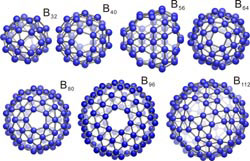
B: Haven't you heard, Al? Scientists are starting to make all kinds of nanostructures out of me. Boron buckyballs, footballs--fullerenes of all kinds. My goal is to make a better nanotube than Carbon! Take that, C!

AF: Yes, well, good luck with that. What else?

B: Have you heard of my ceramic solid Boron Nitride? It has some impressive properties chemically, thermally, mechanically, electrically, and in terms of machinability. Very corrosion resistant too. Another big deal.

AF: Very nice. Anything else?

B: Yes. I may be crucial to cheap, abundant fusion energy. Humans have depended on Carbon for their energy supplies for too long.

AF: Is it possible to get too much of you, B?

B: Well, I am an important nutrient for helping maintain bone structure and bone calcium for humans. And I have a lot of other beneficial effects on the human body including maintaining magnesium levels. But, yes, you can get too much, even of me.

AF: Thanks so much for your time, B. Any parting thoughts?

B: Always remember, boys and girls, even when everyone else in the world is counting you out, keep believing in yourself. I did, and just look at me now!
This has been the first in a series of Al Fin interviews with the elements. Next in line is Carbon, long accustomed to special status among the elements. Stay tuned to discover how Carbon is dealing with these latest challenges from Boron for energy and nano supremacy.

Labels:

Bookmark and Share

11 August 2008

Doing More with Less -- No Limits

There are two dominant themes in the western world today: the limited world view that wants to slash energy use, slash human populations, and release most of the human world back into the wild -- and there is the theme of upward evolving, and growing into a peaceful world of abundance, without limits. Julian Simon represented the latter view, par excellence.
The ultimate embarrassment for the Malthusians was when Paul Ehrlich bet Simon $1,000 in 1980 that five resources (of Ehrlich’s choosing) would be more expensive in 10 years. Ehrlich lost: 10 years later every one of the resources had declined in price by an average of 40 percent.
Buckminster Fuller was another person who believed that human ingenuity would allow humans to continue to do more -- with less.
Doing "more with less" was Fuller's credo. He described himself as a "comprehensive anticipatory design scientist," setting forth to solve the escalating challenges that faced humanity before they became insurmountable.
The key to humanity evolving (as opposed to devolving into a collectivist lifelong larval colony) is in learning to do more with less. Recent spikes in commodities prices convinced many superficial students of resource economics that Simon would finally be proven wrong. But scientists and engineers are beginning to catch the spirit of Fuller and Simon in their work. We may yet escape the collectivist larval farm.

Brian Westenhaus at New Energy and Fuel describes an Australian innovation that will allow the substitution of a cheap Teflon compound in place of ultra-expensive Platinum in fuel cell catalytic membranes. The cost savings will be immense, and should rapidly speed the transition to fuel cell applications for automobiles and stationary installations. It will also greatly extend the world's supply of platinum.

Brian Wang at Next Big Future presents several innovations that will make automobiles lighter and more fuel efficient. These include several new uses of carbon nano-fibers, ways of making titanium cheaper for use in cars, and the use of graphene enhanced plastics.

The ability to substitute cheaper, smaller gasoline engines for larger more expensive diesel engines, should introduce cost savings into many industrial applications.

Of course, the holy grail of "more with less" is molecular nano-assemblers that can manufacture an almost limitless array of products quickly, precisely, and relatively cheaply. Brian Wang presents an update on carbon nano-assemblers.

When confronted with a challenge, humans can either try to find workable solutions, or they can hide behind "limits." Whether "peak oil doom", "climate catastrophe", "overpopulation", the challenge of militant Islam to secular western ideals--a dominant refrain from modern left-limitists is "cut back!"

Instead of cutting back, however, ingenious and resourceful humans will substitute and innovate, and do more with less. The limits are in the mind. Think laterally, as well as logically.

Labels: , , , , ,

Bookmark and Share

05 June 2008

A Tale of Two Nano-Arrays

The nano-array pictured above is described as a perfect absorber of light--it reflects none of the incident light, instead turning all radiant energy into heat.
"Three things can happen to light when it hits a material," says Boston College Physicist Willie J. Padilla. "It can be reflected, as in a mirror. It can be transmitted, as with window glass. Or it can be absorbed and turned into heat. This metamaterial has been engineered to ensure that all light is neither reflected nor transmitted, but is turned completely into heat and absorbed. It shows we can design a metamaterial so that at a specific frequency it can absorb all of the photons that fall onto its surface."

...Because its elements can separately absorb the electric and magnetic components of an electromagnetic wave, the "perfect metamaterial absorber" created by the researchers can be highly absorptive over a narrow frequency range.

The metamaterial is the first to demonstrate perfect absorption and unlike conventional absorbers it is constructed solely out of metallic elements, giving the material greater flexibility for applications related to the collection and detection of light, such as imaging, says Padilla, an assistant professor of physics.

Metamaterial designs give them new properties beyond the limits of their actual physical components and allow them to produce "tailored" responses to radiation. Because their construction makes them geometrically scalable, metamaterials are able to operate across a significant portion of the electromagnetic spectrum. __RDMag__via_NEN

The nano-array above was previously discussed here at Al Fin and at New Energy and Fuel. This second array was designed to capture the radiative energy of light and turn it into electrical energy. Compare the two arrays at your leisure and note the similarities and differences. Both nano-arrays can be optimised for particular ranges of photon wavelength.

The potential range of applications for these arrays, and similar "metamaterials" made from precise nano-configuration of ordinary matter, is immense. These nano-arrays are something new under the sun, and worth considering.

Our planet is constantly bathed by showers of photons, and other particles from the sun. Until recently, humans have used the sun for agriculture, tanning, and heating, and inadvertently for Vitamin D production. It is long past time for us to begin using the sun, and other sources of infrared radiation, more thoroughly.

Labels: ,

Bookmark and Share

24 May 2008

Nano-Weapons of the Near Future

Nano-weapons are coming soon. No one knows exactly when, but you can be sure that they will see you before you see them!
Nano-Weaponry – Testing the Limits

Here are just some of the possibilities:

1.) Nano-Scouts – Using technologies that effectively “lives on” and controls live insects, the proverbial “fly on the wall” may have literally hundreds or even thousands of parasitic nano-scouts living on its exterior....

2.) Nano-Poisons – Most people instantly think of poison as a tool for killing someone. But nanotechnology, with its ability to trigger specific brain functions, will provide a whole new menu of poison options. As an example, a liar-poison will make it impossible for someone to tell the truth. A kleptomaniac poison will make it impossible for the person to stop stealing things. An alcoholic poison will make a person unable to stop drinking alcohol. The obesity poison will cause a person to eat themselves to death. And my favorite - - we’ll call it the “frontal lobotomy poison,” - - will make a person incapable of being angry or mean.

3.) Nano Force Fields – Any field powerful enough to keep the bad guys out is also capable of keeping the bad guys in....

4.) Nano Mind Erasers – Neutralizing a person’s memory can often be a more powerful defense than killing them. Micro fields flaring up in a succession of unnoticeable tiny brain bursts may wipe sections of a brain clean without anyone ever noticing. Alzheimer’s in a can.

5.) Nano Needles – Invisible to the human eye, nano diameter needles will be shot like clusters of bullets from great distances to “pin” people to a wall or freeze their physical movement. Nano needles, because of their tiny diameter, will be the ultimate non-lethal weapon, leaving no visible wounds and causing no permanent damage.

6.) Water Bullets – As a different kind of non-lethal weapon, self-contained water balls, formed around an elevated surface tension containment system, will be used to knock people down, temporarily rendering them harmless.

7.) Desynchronized Energy Fields – Binary power, created by the intersection of two otherwise harmless beams, has the ability to disrupt the energy fields in an individual. A person with desynchronized energy fields will feel extremely fatigued, and pushed to a more extreme level, will drop unconsciously to the ground. A new form of stun-gun.

8.) Nano Heart-Stoppers and Stroke Inducers – ... nano-blood flow restrictors that induce excruciating pain and reduce the victim to a fraction of who they once were, over a long period of time, have the side benefit of telling the world “don’t mess with me” or you’ll end up like this guy. __FS__via__FutureScanner
A future of nano-dust spies, sentinels, assassins, and defensive weapons, is one that most of the world's military specialists are unprepared for--to say nothing of the average world citizen. Yet most of these weapons are far closer and easier to devise and build, than the molecular nano-assembler--the horn of plenty that most people think of when they think of a nanotechnological future.

Nano-weapons combined with bio-weapons, chemical weapons, and genetic weapons, provide the budding world religious or ideological dictator with far more ultimate power than a few nuclear weapons.

Of course, every measure has a counter-measure. But not everyone will have the resources to obtain counter-measures, when the means of deadly attack becomes nearly ubiquitous. Have you thought lately about what I said regarding minimum viable population?

Labels: , , , ,

Bookmark and Share

28 March 2008

Carnival of Space #47 Plus Exciting Bonus Topics

The Martian Chronicles hosts the 47th Carnival of Space (via NextBigFuture). This look at why the inflatable Bigelow space station may be a big improvement over the ISS boondoggle is worth a look.
Bigelow's modules on the other hand, may not only be cheaper to launch into space, but may be safer as well, as its thick outer skin may be able to take "a greater punch" than its metallic rivals.

These inflatable modules may also more expendable than their more rigid cousins, as it would be much easier to replace a module or two (like a Pontoon bridge), than an entire section of a more traditional space station.____Much more at_ColonyWorlds
Brian Wang at NextBigFuture reports on fascinatingnew ways to increase the efficiency of heat and radioactives to electricity.
Materials that directly convert radiation into electricity could produce a new era of spacecraft and even Earth-based vehicles powered by high-powered nuclear batteries, say US researchers.

Electricity is usually made using nuclear power by heating steam to rotate turbines that generate electricity....US researchers say they have developed highly efficient materials that can convert the radiation, not heat, from nuclear materials and reactions into electricity.

Liviu Popa-Simil, former Los Alamos National Laboratory nuclear engineer and founder of private research and development company LAVM and Claudiu Muntele, of Alabama A&M University, US, say transforming the energy of radioactive particles into electricity is more effective.

The materials they are testing would extract up to 20 times more power from radioactive decay than thermoelectric materials, they calculate.___NewScientist__via__NextBigFuture
Getting 20 times the electricity from nuclear batteries also sounds good, using the direct radioactivity-to-electricity nanotube approach. One more advantage to nanotech.

Brian Westenhaus at NewEnergyandFuel presents a new way to produce bio-gasoline. This method would not depend upon the use of food to make fuel. As more food-free ways are developed to produce bio-energy, the cries of those who claim that bio-fuels take milk out of the mouths of babies are sounding shrillier (shrill + sillier) all the time.

Right. We all should have known the ISS would turn out to be a boondoggle after Al Gore personally involved himself in outsourcing large parts of it to Russia (the parts that don't work). Bigelow's approach is better thought out, and until automated construction methods using space materials are developed to build space stations and habitats, Bigelow's habitats are simply better.

Labels: , , ,

Bookmark and Share

13 March 2008

Nano, Micro, Merely Small, etc.

The curious shapes you see pictured above are DNA building blocks, examples of what a DNA architecture might achieve.
A team of scientists has created a versatile strategy for building three dimensional structures on the nanometre (billionth of a metre) scale by coaxing strands of DNA to from a basic building block that can then assemble spontaneously into complex three dimensional shapes over distances of around ten to twenty billionths of a metre.___Telegraph
Meanwhile, inside living organisms, modifications to DNA seem to determine whether an individual will be schizophrenic, bi-polar, or normal.
Arturas Petronis, senior scientist at the Krembil Family Epigenetic Laboratory at the Centre for Addiction and Mental Health in Toronto, has found there is a distinctive pattern in the on-off switches controlling roughly 40 different genes in the brains of psychiatric patients suffering from schizophrenia and bipolar disorder....They looked at 12,000 genes and found significant differences in the brains of the patients who suffered from serious mental illnesses. There were distinct differences in the methylation of 40 genes. Some of the differences were shared between the schizophrenia and bipolar patients, and some were unique to each disease.___GlobeandMail
This "epigenetic" control of gene expression can lead to different experiences of health and disease in two individuals whose genomic DNA sequences are identical. Clearly, epigenetics is a huge repository of "environmental" effect.

Meanwhile, in worm and yeast DNA, scientists are zeroing in on genes that may account for differences in lifespan between individuals.
The researchers began by scouring the scientific literature for genes that have an influence on the life span of nematode worms. The worms are often used in ageing research because they have a short natural life span and are easy to genetically modify. The scientists found that of the 276 genes known to affect ageing in nematode worms, only 25 were also present in yeast. At least 15 of these have similar versions in humans.___Guardian
Learning how to trigger or block certain of these genes (or gene products) may provide the first effective treatments for "aging".

Japanese researchers are developing nano-sized mechanical computers capable of performing massively parallel simultaneous computations.
The team plans to turn the 2D wheel of 16 molecules into a 3D sphere - a structure that would consist of 1,024 molecules. This spherical device could perform 1,024 instructions at once, theoretically making it capable of 4^1024 different states. ___Source
On a larger scale, "sugar cube-sized" robots that are capable of linking up and forming larger robots for various purposes, announce the application of the "swarm concept" to robotics.
If a machine has to travel a long distance, it could assemble into a rolling ball, before changing shape into a four-legged machine to clamber over rubble, said Winfield. By mimicking evolution, the robot will test different strategies and settle on whichever seems to work best.

The principle is similar to an ant or termite colony, where individuals cooperate to such a degree they behave like one large organism, even though there is no central "brain" instructing it what to do.

"A Symbrion swarm could be released into a collapsed building following an earthquake ... they could form themselves into teams searching for survivors or to lift rubble off stranded people. Some might form a chain allowing rescue workers to communicate with survivors while others assemble themselves into a 'medicine-bot' to give first aid," Winfield added.___Source
While human disciplines are organised by "field of study", in real life there are no "fields of study." In real life, everything is interdisciplinary. More intelligent humans will adapt their educational practises to reflect the interdisciplinary nature of the real universe. Hyper-specialisation is a fact of life at universities, but in nature it is a certain recipe for extinction.

Labels: , ,

Bookmark and Share
Older Posts
Al Fin Main Page
Enter your Email


Powered by FeedBlitz
Google
WWW AL FIN

Powered by
Blogger

``