15 November 2010

How the E-Book Saved Civilisation

Many of you may be familiar with the story of how the Irish monks and scribes saved civilisation from the dark ages, by way of their scrupulous record-keeping and manuscript copying. Others may remember how an astrophysicist saved civilisation in the book "Lucifer's Hammer," by carefully storing hundreds of important books in an underground cache in the hillside above his house.

The world of books and manuscripts has changed since the Dark Ages -- even since the science fiction world of Pournelle and Niven's Lucifer's Hammer. Now we have e-books, which may have an important role to play in saving civilisation all over again.

US ebook sales are headed for $1 billion in 2011. The NYTimes is to begin publishing e-book bestseller lists next year. Librarians are beginning to help clients download library ebooks onto their personal devices. E-books are beginning to go multi-media, for a more varied and potentially intense reading experience. And just in time for the 2010 holiday sales season. A number of blogs and websites have sprung up to assist readers in keeping up with ebook and ebook reader trends, including teleread and good ereader.

The dream of ebook visionaries is to be able to carry the Library of Congress inside an ebook reader the size of a Kindle. As memory and storage continue to shrink, that dream is becoming much less wacky than it once would have been. With the assistance of solar re-charging, long-lasting batteries (with ample spares) and advanced power management tools, a sophisticated survivalist may well be able to store most of the relevant knowledge and history of civilisation through even an extended coming anarchy or dark age.

Consumer Reports recently ranked the Kindle 3G as the best of the readers, although the new Sony reader is supposed to offer some features that surpass the Kindle. More on the Kindle 3G:
All-New, High-Contrast E Ink Screen – 50% better contrast
Read in Bright Sunlight – No glare
New and Improved Fonts – New crisper, darker fonts
New Sleek Design – 21% smaller body while keeping the same 6" size reading area
15% Lighter – Only 8.7 ounces, weighs less than a paperback
Battery Life of One Month – A single charge lasts up to one month with wireless off
Double the Storage – Up to 3,500 books
Books in 60 Seconds – Download books anytime, anywhere
Free 3G Wireless – No monthly payments, no annual contracts
Built-In Wi-Fi – In addition to the 3G wireless, you can connect to Wi-Fi hotspots
20% Faster Page Turns – Seamless reading
Enhanced PDF Reader – With dictionary lookup, notes, and highlights
New WebKit-Based Browser – Free 3G web browsing (experimental) _Amazon
3500 books is not quite the US Library of Congress, of course, but if you are selective you should be able to store a fairly solid start to a new technological civilisation. And as memory and storage sizes are reduced, you will be able to store that many more thousands of additional books. Be sure to store your ebook cache in a protected environment from fire, shock, EMP, water, heat, chemicals, theft, and other environmental and human-caused damage. Store your springboards to new civilisations where the brown-shirted book burners and dieoff.org Luddites of the far left and far right will never find them.

Labels:

Bookmark and Share

Coming Anarchy, Mexico and the Resurrection of the Vigilante

The recent explosion of violent lawlessness in Mexico has raised alarms on both sides of the Mexican:US border. As far away as Ireland, people are amazed that as many Mexicans were killed in a single Mexican city [Ciudad Juarez] in one year, as were killed in all of Northern Ireland during the 30 years of the Troubles.

No wonder vigilante groups are springing up in Mexico -- and in the US along the Mexican border -- to try to deal with the rampant violence. It is clear that the Mexican government is unable to handle the epidemic of violence, and the Obama administration is unwilling to enforce border security or ramp up interdiction of illegals -- even violent gang members.

Obama's border policies amount to a de facto importation of Mexican violence into US border states. This vast Obama folly makes the creation of vigilantes on the US side a virtual certainty -- which may be what Obama is hoping for. Unfortunately for Obama, he has lost half of his cheering section in the US Congress, and will probably not be able to leverage any contrived provocation to force the passage of amnesty legislation for illegal migrants.

Vigilance committees were an important part of the taming of the American West -- and in fact are necessary wherever human populations move out beyond the reach of official law enforcement. In the case of Mexico, the lure of easy money from smuggling drugs, smuggling humans, kidnapping, robbery, extortion, etc has become the dominant meme among many Mexicans looking to improve their prospects in a land where prospects are typically few and far between. When violence explodes in this way so that official agencies are unable to cope, the people will often take justice into their own hands.

Many outside analysts feel that Mexico should be a rich country. But crime, chaos, corruption, culture, and large numbers of low IQ citizens, makes it difficult for the nation to maintain enough order to allow a normal market culture to emerge and integrate with the nether parts of the country. As long as the drug cartels are capable of assassinating even the best guarded of Mexico's anti-drug enforcers, chaos has a seat at the table.

As the US plays host to a growing Mexican population -- both criminal and conventional -- individual citizens of all ethnicities and subcultures will have to decide whether they wish for Mexican anarchy to establish a permanent foothold inside the US.

The Obama administration apparently wishes it to happen. But the US is not yet a dictatorship, the citizens still have a voice of sorts. And state governments still have some power under the US Constitution, although in the case of California, the state stands with Obama.

Mexico's coming anarchy could easily spread northward. What is your choice, America?

Labels: ,

Bookmark and Share

13 November 2010

US Oil Production Gearing Up


WSJ

The de facto Obama moratorium on oil well drilling in the Gulf of Mexico has spurred new exploration and production on the US mainland. Local economies are beginning to experience boom times never experienced before. It is a phenomenon that may well spread across the US, as the oil & gas mania locates useful hydrocarbons wherever they are to be found.
For much of this decade, energy companies pioneered new drilling technologies that allowed them to recover natural gas from a subterranean rock called shale. By drilling down and then out laterally, companies were able to exploit greater areas of the shale. And by injecting massive doses of water, sand and chemicals into the ground, they could crack open the gas-bearing rocks, allowing gas to flow to the surface.

...The shale boom won't begin to end American dependence on imported oil, but industry experts say it is driving a significant and potentially enduring shift in the way oil is produced domestically.

"It's a game-changer for U.S. oil production," said Bill Durbin, head of global markets research at Wood Mackenzie. "The U.S. has always been perceived to be a very mature oil province with relatively little prospect for growth. Now we're seeing the declines in production being arrested by the increase in unconventional oil."

Nationally, the balance between oil and gas exploration onshore has tilted heavily toward oil. The number of oil-seeking rigs has nearly tripled since June 2009, and now makes up 42% of all rigs in use, a prevalence not seen since 1997, according to data compiled by oilfield-services company Baker Hughes Inc.

Among states, Texas has seen the greatest increase of rigs in the past year, adding 300, a 73% increase. North Dakota added 83 rigs in the last year, Oklahoma gained 71, and Colorado picked up 30. Analysts at IHS Cambridge Energy Research Associates have identified 20 significant shale prospects across North America.

Industry executives and analysts say the growth is likely to continue, at least as long as oil prices remain over $70 a barrel. _WSJ

Yes, this boom is likely to continue for as long as oil prices remain over $70 a barrel. In other words, as long as demand continues, the supplies will be located -- sometimes where you least expect them.

The Obama - Holdren - Salazar - Boxer coalition of energy starvation will not control the US government indefinitely. When the left-Luddite Malthusians are finally swept from power, a wider array of energy options will be placed upon the table for consideration.

When the energy markets are opened up, it is possible that demand will be insufficient to maintain oil prices at current inflated levels. Sure, the value of the dollar will continue to decline as long as US debt expands exponentially -- which drives the price of commodities higher, when priced in US dollars.

But other, more stable measures of value will come into more widespread use. When priced in more stable currencies, the price of oil is likely to fall in the long run, rather than rise.

Cross published to Al Fin Energy

Brian Wang has more on North Dakota, Alberta, and large global shale energy plays

More 14Nov10: Tim Worstall makes a very good point about the proliferation and expansion of new production technologies.   The same type of rapid expansion of exploitability of resources occurs on many levels -- from the most rarified and abstract theory to the most rudimentary and basic in-the-field innovation. Between those extremes lies a multitude of fertile levels for innovative change.  Here is an interesting article that Tim points to, reinforcing Brain Wang's point above.

Labels: ,

Bookmark and Share

11 November 2010

In the Brain, Inhibition Sets Us Free

Our brains would not be able to function without inhibitory inter-neurons. The best description that I have read describing how interneurons control brain activity comes from Gyorgy Buzsaki's excellent book, "Rhythms of the Brain."

Scholarpedia presents a nice, brief description of inhibitory interneurons:
The importance of inhibition in the brain is aptly illustrated by the fact that in addition to excitatory principal cells, the brain contains diverse classes of specialized inhibitory interneurons that selectively innervate specific parts of the somatodendritic surfaces of principal cells and other interneurons. In the cortex, axon terminals of interneurons release gamma amino butyric acid (GABA) onto their synaptic targets, where the inhibitory action can compete with the excitatory forces brought about by the principal cells. However, inhibitory interneurons do much more than just provide stop signals for excitation. Proper dynamics in neuronal networks can only be maintained if the excitatory forces are counteracted by effective inhibitory forces. With only excitatory cells, it would be difficult to create form or order or secure some autonomy for transiently active groups, the hypothetical "cell assemblies", because in interconnected networks, excitation begets more excitation. Interneurons, by way of their inhibitory actions, provide the necessary autonomy and independence to neighboring principal cells. The functional diversity of principal cells can also be enhanced by the membrane domain-specific actions of GABAergic interneurons. Additionally, the opposing actions of excitation and inhibition often give rise to membrane and network oscillations which, in turn, provide temporal coordination of the messages conveyed by principal cells. _Scholarpedia

The image above and to the right illustrates a simple 2 neuron oscillator composed of an excitatory neuron and an inhibitory (inter) neuron. Input from the outside is always excitatory, and it is the turning on and off of the inhibitory neuron which accounts for the assembly's oscillation. The image below illustrates a 3 neuron oscillator, with the assembly on the left oscillating at 40 Hz and the assembly on the right oscillating at 30 Hz. The input from the NMDA neuron at the upper left determines which of the two oscillators is operating.
Image Source
Real neuronal assemblies in the brain are far more complex than these simple oscillators. But it helps to picture something simple before thinking about more complex and realistic assemblies -- which have a lot more things that can go wrong. Researchers at Baylor University have recently discovered a genetic variation that leads to dysfunction of inhibitory interneurons in Rett Syndrome -- a devastating neurologic disease of early childhood leading to severe problems of intellectual and motor development.
Children, mostly girls, born with Rett syndrome, appear normal at first, but stop or slow intellectual and motor development between three months and three years of age, losing speech, developing learning and gait problems. Some of their symptoms resemble those of autism.

These inhibitory (gamma-amino-butyric-acid [GABA]-ergic) neurons make up only 15 to 20 percent of the total number of neurons in the brain. Loss of MeCP2 causes a 30 to 40 percent reduction in the amount of GABA, the specific signaling chemical made by these neurons. This loss impairs how these neurons communicate with other neurons in the brain. These inhibitory neurons keep the brakes on the communication system, enabling proper transfer of information.

"In effect, the lack of MeCP2 impairs the GABAergic neurons that are key regulators governing the transfer of information in the brain," said Dr. Hsiao-Tuan Chao, an M.D./Ph.D student in Zoghbi's laboratory and first author of the report.

..."This study taught us that an alteration in the signal from GABAergic neurons is sufficient to produce features of autism and other neuropsychiatric disorders," said Zoghbi, a Howard Hughes Medical Institute investigator and director of the Jan and Dan Duncan Neurological Research Institute at Texas Children's Hospital. _SD
It does not require much interference in the normal operation of the molecular biology of the brain to cause severe dysfunction. The pathway of the dysfunction -- from molecule to synapse to cell assembly to developmental and behavioural dysfunction -- is intriguingly complex on many levels.

My main interest in this regard, is the transient long distance synchrony of cell assembly oscillatory activity in different parts of the brain. It would take several lifetimes to understand such phenomena in all their variation, origination, and modification. The implications of such understanding to human learning, creativity, health and disease, personality, and so on, are profound.


Inhibitory Interneurons and Network Oscillations

Some background reading on the phase-locking of neural populations via inhibitory interneurons PDF [Notice: Opening PDF documents can tie up a browser for several moments. If you think you want to download a PDF document, you may want to right click and select "save linked content as" option.]

Human Oscillatory Brain Activity near 40 Hz Correlates with Cognitive Temporal Binding PDF

Labels: , ,

Bookmark and Share

US Navy's Free Electron Super-Laser Energy Weapon ++


H/T BrianWang

The US Navy plans to equip its nuclear ships with powerful, tunable, free electron lasers which can serve as powerful energy weapons as well as serve several other functions. The Chinese military is developing a lethal "carrier killer" missile, meant to neutralise the power of the US aircraft carrier groups which may intervene in a Chinese invasion of Taiwan. The US Navy wants to neutralise this threat in turn, as well as accomplishing many other weapons and non-weapons capabilities with the new, powerful laser.
All lasers require some kind of medium to turn light into high-energy beams--solid state lasers use crystals, while chemical lasers use (you guessed it) a stew of unfriendly chemicals. Both of those versions have their pros and cons, but neither is extraordinarily versatile; they generally power their lasers up to a certain wavelength and that’s that.

Free electron lasers, on the other hand, use a stream of supercharged electrons to power the laser at varying wavelengths. This versatility is why the Navy has referred to FELs as the Holy Grail of laser tech and why it has embarked on a $163 million quest to develop a working weapons system, $26 million of which is currently facilitating a development program at Boeing that’s due for delivery in 2012. _PopSci

Sure, everyone wants a “death ray,” as the Navy’s chief of research, Rear Admiral Nevin Carr, put it yesterday. But the program manager at the Office of Naval Research for the Free Electron Laser, Quentin Saulter, tells Danger Room that the Navy is looking at “multiple uses, not a single use” for its “Holy Grail” of lasers. And that might lighten the laser’s energy burden.

What would the laser do when it’s not trying to blast a missile out of the sky? “It can be used as a sensor,” Saulter says in an interview during the Office of Naval Research’s science and technology conference in Virginia. “It can be used as a tracker… It can enable kinetic kill systems to be more precise. It can be used for location, time-of-flight location, information exchange, can be used for communications, it can be used for target designation, it can be used for disruption.” _Wired_via_BrianWang

The US is involved in something of a new "arms race" with China, similar to an earlier arms race with the now-defunct USSR. But the US military will not be able to out-spend China the way it did the Soviets. And keeping a technological lead over the Chinese will be difficult when US corporations and labs are teeming with corporate and overseas spies -- and when US corporations themselves are vying with each other to transfer advanced technology to the Chinese, and to build huge new state of the art tech fabs and factories on the Chinese mainland.

The Chinese, in other words, will have the blueprints to the new weapons long before they are built. While Chinese infrastructure may be lagging in many areas of high technology, eventually they will be able to build and/or counteract whatever US labs invent and develop. That is something the US military must keep in mind when it spends big money on advanced weapons.

Labels: , ,

Bookmark and Share

When Hubbert is God, Only a Fool Believes

MK Hubbert was only the "King" of Peak Oil (DOOM!), but to many true believers he is a god. Stanford Professor Steven Gorelick examined Hubbert's assumptions and predictions. In Chapter 4 of Gorelick's fine book "Oil Panic & The Global Crisis: Predictions and Myths", many of Hubbert's ideas and predictions were pinned to the dissection table and examined. I recommend a close reading of Gorelick's book, as well as a careful reading of Leonardo Maugeri's "The Age of Oil."

I have posted a few images from Chapter 4 of Gorelick's book, to give you a flavour of some of the information you can find there. One of the many bonuses of "Oil Panic" is that it presents both sides of the story of peak oil, and allows you to decide which is the more credible.

Where Is The Bell Curve?

The assumption that oil production will assume a roughly symmetrical, logistic bell curve. Logically, there is no reason for this assumption, but simple logic does not always come into play in the real world. What actually happens with production, vis a vis the bell curve?
Hubbert also applied his logistic model to US gas production. Real world results are juxtaposed with Hubbert's prediction for natural gas production below.
Hubbert came closest to achieving predictive "bell curve" success with his prediction for US lower 48 state oil production peak. Hubbert's "best prediction" for US peak oil was 1965, although one of his prediction scenarios (which he himself considered unlikely) predicted a peak for around 1970. This date was quite close to the actual US production peak, although it received a good deal of assistance from the tsunami of oil regulations that followed the 1969 Santa Barbara offshore oil spill.

So, score a tentative point for Hubbert, against all his demonstrated errors. Still, watch below, as US oil production takes a decided departure from its Hubbertian bell curve trajectory.
The human brain craves knowledge of the future, and prediction is one of the central functions of the brain. Hubbert was one of many analysts seeking to predict the future of the oil resource, and honestly believed that he had discovered a secret to predicting resource peaks.

But Hubbert was far more intelligent and open to contrary data, than most of his modern-day followers. No doubt he would have juxtaposed his predictions and the data and modified his approach accordingly.

Peak Oil DOOM(!)ers have a tendency to deify their prophets, such as Hubbert -- although Hubbert is more of an arch-prophet or god in the peak oil world. When one deifies a person, one is unable to objectively examine data that contradicts the words of the deity. Mass religious and quasi-religious movements -- such as peak oil DOOM! or carbon hysteria DOOM! -- comprise large numbers of persons who have suspended rational judgment in this way, and are thus unable to critically examine the evidence.

But the world doesn't stop for anyone -- not even a demi-god. Our rational examination of the ongoing data should not stop either.

This article is cross-posted to Al Fin Energy under a different title.

Labels:

Bookmark and Share

10 November 2010

A Fine Meth (ylome) You've Gotten Us Into This Time

Source

The methylome is the pattern of DNA methylation in cells as they become relatively differentiated. Methylomics is a branch of epigenetics -- non-coding control of gene expression. Even identical twins will have different gene expression, in part due to differing methylomes. Methylomes of cancer cells are of particular interest to medical scientists.

Chinese scientists have decoded the methylome of mature peripheral blood mononuclear cells. The tools they used may prove useful for decoding the methylomes of other types of mature and cancerous cells.
. Understanding the mechanisms and functions of DNA methylation and how it varies from tissue to tissue and between individuals will have profound implications for human health and disease.

A team of Chinese researchers decoded the essentially complete methylome (an inventory of all the bases that are methylated) of the human genome using peripheral blood mononuclear cells (PBMCs). The results are published in the online, open access journal PLoS Biology.

The research is part of YanHuang (YH) Project, which has been launched by BGI (previous known as Beijing Genomics Institute) at Shenzhen, which aims to sequence 100 Chinese individuals in 3 years to accelerate the discovery of disease genes and mutations in an Asian population.

...The research not only provides a comprehensive resource for future epigenomic research but also demonstrates a paradigm for epigenetic studies through new sequencing technology. The PBMC methylome data has been deposited to NCBI (http://www.ncbi.nlm.nih.gov/Traces/sra/, accession number: SRA008544). It is expected to form a lasting resource as part of the International Human Epigenome Project. _SD
The methylome is a unique signature of the development of a particular cell or cell type. This development was affected by both the individual's genome and his environment. A person's methylome -- in its unbelievable complexity -- is but one more way in which persons are different from each other.

We have only begun to comprehend how much we have yet to learn.

Update 10Nov10: U of Chicago researchers have made an important discovery into the nature of "demethylation" of DNA

Labels:

Bookmark and Share

What Are You Afraid Of, Senorita Amygdala?

Scientists are beginning to learn how the brain learns to be afraid, and how learned fears are activated at the level of individual nuclei and cells in the amygdala.
In this week's issue of the journal Nature, a research team led by scientists at the California Institute of Technology (Caltech) has taken an important step toward understanding just how this kickoff occurs by beginning to dissect the neural circuitry of fear. In their paper, these scientists—led by David J. Anderson, the Benzer Professor of Biology at Caltech and a Howard Hughes Medical Institute investigator—describe a microcircuit in the amygdala that controls, or "gates," the outflow of fear from that region of the brain.

The microcircuit in question, Anderson explains, contains two subtypes of neurons that are antagonistic—have opposing functions—and that control the level of fear output from the amygdala by acting like a seesaw. _Eurekalert
Antagonistic neuronal types allow for finer control of output -- which allows us to preserve some of our dignity when surprised, at least.
Brain-Mind

A team of European scientists has looked at different parts of the central nucleus of the amygdala, and have discovered that the lateral subdivision of the central nucleus is involved in learning a fear response. The medial subdivision of the central nucleus is involved in the behavioural manifestation of a fear response.
Now, research involving several Swiss and German teams and a researcher from Inserm Unit 862, “Neurocentre Magendie”, in Bordeaux, has been able to identify, for the first time, distinct neuronal circuits within the central nucleus of the amygdala which are specifically involved in acquisition and control of behavioural fear responses. Details of these results are published in this week’s edition of the journal Nature.

...In that second step, real-time recording of the activity of the neurons in the lateral and medial subdivisions of the central amygdala, using unique electrophysiological techniques, made it possible for the researchers to identify the specific neurons, within the structures, which were involved in conditioning and behavioural manifestation of fear responses.

These neurons are inhibitor cells belonging to very organized and strongly interconnected neuronal circuits. Modification of the activity of these circuits enables the relevant behavioural fear response to be selected as a function of the environmental situation. _SB
Fear is at the center of primate learning, particularly the earlier stages. Much of the late early, middle, and latter parts of our lives involves the "papering over" of our raw learned fear responses, in order to avoid the unpleasantness of feeling afraid, and to allow us to act in groups without triggering contagious fear response chain reactions. Anxiety emerges when we are not sure what it is that we are afraid of at the moment.

There are good reasons why benzodiazepines, alcohol, and other anxiolytics account for so much economic activity.

Labels: ,

Bookmark and Share

NYTimes Discovers, Denies Racial IQ Differences

Update 30 November 2010: I am adding a more rigorous graphic portraying SAT score by race by SES. The source of the image is sociologist La Griffe du Lion.   SAT math scores are a fair proxy for IQ scores, and this graphic illustrates the clear and sustained gap between white and black scores, all the way across the SES spectrum.  More observant readers would have already noticed the contradiction in the graphic further down (2nd image down), showing IQ scores and IQ gap by SES.  Despite the IQ gap remaining at about 1 SD (15 points) all the way up the SES spectrum, the PC graphics designers chose to narrow the IQ gap as the SES rose.   Such gratuitous editorials-in-graphics form give social science a bad name.   I left the IQ gap graphic in despite a number of problems, to see if any reader would point out the most obvious one -- the erroneous narrowing of the gap.  Please try harder next time.  ;-)
In tony suburban Shaker Heights, Ohio, funding is generous, support programs aimed at black students (about half of the student population, not an alienated minority) abound, there is no ability tracking (students track themselves), and such racism as can be found is too intermittent to destroy the academic curiosity of a human being of normal resilience. Yet blacks there cluster at the very bottom of the school _McWhorter

We know that blacks -- particularly black males -- lag in academic and professional achievement worldwide, whenever pitted against members of any race except Australian aboriginals. There is no limit to the number of excuses given for why blacks cannot compete -- poverty, a sick culture, racial discrimination, legacies of slavery, a history of tropical diseases, lack of role models... A new report described in the NYTimes takes another look at the "achievement gap." The report finds that poverty cannot be used as a credible excuse -- the achievement gap starts at the earliest stages of life, even among wealthy blacks.
“There’s accumulating evidence that there are racial differences in what kids experience before the first day of kindergarten,” said Ronald Ferguson, director of the Achievement Gap Initiative at Harvard. “They have to do with a lot of sociological and historical forces. In order to address those, we have to be able to have conversations that people are unwilling to have.” _NYT_via_IHE

The achievement gap only widens as children grow older, as can be seen by comparing testing results for all age groups. There is a good argument to be made that only 4% of American Blacks are qualified for a rigorous 4 year college degree -- regardless of their socioeconomic class or preparatory training.

The denial of human biodiversity (HBD) goes deep in American academia and general culture. Genetics is a relatively new science compared to political and economic philosophy, and will require time to be integrated into the general psyche -- particularly when it is fighting against embedded prejudice.

The sheer persistence of the racial achievement gap across time and geographic space argues for a more rigorous examination of its causes -- no holds barred, no topic off the table for research and publication. That is the only way to achieve as level a playing field as we will ever get, and it will require the deepest understanding of genetics possible.
This map shows IQs of indigenous people for various continents and nations. European and East Asian people evolved to average population IQs of roughly 100 or slightly higher. Most of the rest of the world's population IQ average is somewhere between 80 and 95. Only among African and Australian aboriginals does one find average population IQs which are so low as to allow one to foresee a worldwide stratification in achievement whenever these low-IQ groups might be paired against higher-IQ groups in an academic or professional achievement race.

This is basic information that has been known since the early 1900s when reliable psychometric testing first became available. How ironic that it is those claiming to be most educated and sophisticated who are the slowest to comprehend the obvious -- and to use that information in order to help those who lag. For it is the persistent denial of basic facts which holds those who lag down, without any genuine hope.

Labels: , , ,

Bookmark and Share

09 November 2010

Reporting in the journal Nature, scientists from Royal Holloway, University of London and the Institut de Ciencies del Mar (Spanish Research Council) have revealed a new model that explains how continents thin as well as helping to more accurately predict the location of hydrocarbons such as oil and gas. _SD
via New Energy and Fuel

A new model of continental thinning, faulting, and re-forming, promises to provide new ways to locate vast new petroleum reserves. Scientists at institutions in the UK and Spain hopes to provide petroleum prospectors with new conceptual tools for determining the most likely areas to find the billions of years worth of hidden hydrocarbons.
The new model is based on high-resolution images of the tectonic structure of the crust at such margins. These images are obtained using elaborate seismic methods, which give a picture of the crust below the oceans, showing where faults and sediments are.

The new model has important implications for the formation of hydrocarbon resources, plus it offer a new view of the style of faulting during continental thinning, sediment deposition and potentially for the opening of oceanic gateways and oceanic circulation. _BrianWestenhaus
The geologic sciences are still quite young, sharpening their teeth on ideas that take into account the antiquity of the planet, the incessant nature of geologic processes, and of microbial and photosynthetic organisms which have thrust their way into the midst of epochal geologic upheaval.

Older geologic theories focused upon easily accessible sediments from relatively recent geologic regions -- areas laid down millions or dozens of millions of years ago as opposed to the billions of years that photosynthesis has been converting CO2 to organic carbon. Exceptions to conventional theory have popped up from time to time, but have been largely ignored as anomalous.

As large international companies get shut out of the richest oil reserves of OPEC nations and corrupt, unreliable nations such as Russia, they are forced to look for oil wherever it may be found. Continental shelves off large rivers such as the Mississippi and the Amazon are likely places for grabbing oil dozens of millions of years old. But to find the truly old oil and hydrocarbon, some new ideas will be necessary -- and will require testing. All of that takes time, which the big international oil companies are running out of, caught between political peak oil (Obama, Boxer, Salazar, etc.) and sovereign oil companies that nationalise the valuable assets and work of multi-nationals at the least opportunity.

Labels: , ,

Bookmark and Share

08 November 2010

Why the Age of Oil Is Just Beginning & Why It May Soon End

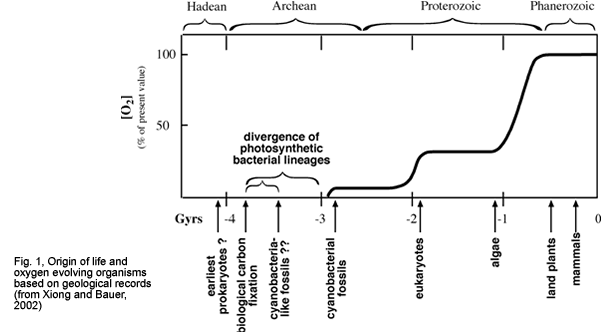
Petroleum is thought to have originated mainly from the remains of sediments of photosynthetic organisms which sedimented from ancient seas, and were heated and compressed by geological processes. Assuming that to be true, it is interesting to note that photosynthetic organisms originated almost 3.5 billion years ago. From the chart above, one can note that the Oxygen concentration of Earth's atmosphere rose markedly at about the same time as the origin of cyanobacteria (2.8 gya), eukaryotes (2 gya), and algae (1 gya), respectively.

The higher the oxygen level the higher the rate of sedimentation of photosynthetic organisms, presumably. Note that such sedimentation began to occur nearly 3 gya. Also note that the vast majority of petroleum which humans have begun to tap into, originated roughly 100 mya or more recently. I think you will agree with me that the Proterozoic Era (2.5 gya to about 540 gya) is likely to have been extremely prolific in the sense of laying down organic carbon in sediments.
Now, observe the Tethys Sea in the image (see Tethys Ocean). The Tethys Sea (Ocean) opened about 250 mya and closed about 10 mya. Most of the modern world's known oil and gas reserves lie in the sediments which once underlay the Tethys water masses. Much of this oil and gas is of fairly recent origin, geologically speaking, although some dates back to the early Triassic (250 to 200 mya). It only takes a hundred thousand years or so to make petroleum by natural means, depending upon local geology.

Now, I know you are saying to your computers, "But Al, if we are only beginning to tap a very small fraction of all the oil that has been deposited, where is all the rest of the oil?"

To which I reply, "Where do you think it is? Floating beyond the orbit of Pluto?" No, seriously, a lot of things can happen to oil deposits over time. Some can seep into oceans and be eaten by microbes. Some can be turned into various types of gas, and escape or be adsorbed by minerals. But most of it is likely to have been buried in the constant geologic upheaval of the planet's layers of rock.

The Japanese and Chinese have recently begun finding significant deposits of oil and gas within volcanic rock. Oil geologists are beginning to look beneath undersea volcanic deposits for submerged oil fields of great potential. The Russians have been finding significant petroleum beneath deep igneous and metamorphic layers for many years. The history of oil formation goes back over ten times farther than almost all of the oil humans have retrieved or located so far -- although drops of bitumen has been found in rocks dated between 2.6 and 3.2 gya.
Australian expert in petroleum geology, Associate Professor Colin Ward of the University of New South Wales, says it's not surprising that algae and other simple life forms existed during this early stage of the Earth's history.

What is significant, is that there are now signs they were producing oil.

"He's found good evidence that the processes that generate oil were active in a very early history," he says.

Rasmussen's discovery may have implications for exploration, Ward says.

"It focuses attention back on very old rocks as a possible places to look for more oil and gases," he says. _Source
So why do I say that the age of oil may be ending soon? Because while it takes 100,000 years (plus or minus) to make petroleum by natural processes, it only takes a matter of weeks -- from start of algae crop to harvesting and processing -- using modern methods. Yes, modern oil made this way is very expensive, but that is because we have just begun learning to create it. Within 20 years, Al Fin energy experts assure me that microbial fuels and energy will be fully price-competitive with petroleum, and rapidly scaling to match production within 30 years.

You may hear a lot of talk about "peak oil" in certain circles. The most likely kinds of peak oil you will see are "political peak oil" from bad energy policy or political conflict, and "peak demand" -- when consumers choose other forms of energy and fuel than petroleum. Peak demand can also occur from economic, or other forms of collapse, which we hope does not occur.

The beginning of oil, the end of oil. Mayhaps both.

More 9Nov10: Whether crude oil survives or is decomposed to wet and / or dry natural gas probably depends more upon the catalytic environment in the reservoir than the temperature. The presence of mineral catalysts changes the decomposition picture significantly. We may discover that much of the sub-seafloor methane clathrate resource is a result of this type of natural catalysis of crude oil to natural gas, which migrates upward to a cooler, moister environment and is captured in clathrate. Of course, abiotic gas might well do the same thing in some formations.

Labels: ,

Bookmark and Share

07 November 2010

Gene Expression Instantiated: The Metabolome

Metabolomics is a newborn cousin to genomics and proteomics. Specifically, metabolomics involves the rapid, high throughput characterization of the small molecule metabolites found in an organism. Since the metabolome is closely tied to the genotype of an organism, its physiology and its environment (what the organism eats or breathes), metabolomics offers a unique opportunity to look at genotype-phenotype as well as genotype-envirotype relationships. Metabolomics is increasingly being used in a variety of health applications including pharmacology, pre-clinical drug trials, toxicology, transplant monitoring, newborn screening and clinical chemistry. However, a key limitation to metabolomics is the fact that the human metabolome is not at all well characterized.

Unlike the situation in genomics, where the human genome is now fully sequenced and freely accessible, metabolomics is not nearly as developed. There are approximately 2900 endogenous or common metabolites that are detectable in the human body. Not all of these metabolites can be found in any given tissue or biofluid. This is because different tissues/biofluids serve different functions or have different metabolic roles. To date, the HMP has identified and quantified (i.e. determined the normal concentration ranges for) 309 metabolites in CSF, 1122 metabolites in serum, 458 metabolites in urine and approximately 300 metabolites in other tissues and biofluids. Clearly more concentration data would be desirable and this is one of the long term goals of the HMP and other affiliated metabolomic projects around the world. _Metabolomics
ImageSource

The power to watch the changes in the products of metabolism in the body does not come easily. But it is incredibly important in developing an understanding of gene expression in response to everyday events -- normal and pathological. It is one of the dreams of biomedical scientists and diagnosticians that is coming true. The following is a report on the comprehensive metabolic effects of smoking, as an example:
"Our analysis uncovered hallmarks of liver, heart, and kidney toxicity in otherwise healthy patients," says the study's lead investigator, Ping-Ching Hsu, a doctoral student who works in the laboratory of oncology researcher Peter Shields, MD, who specializes in tobacco carcinogenesis. Shields is the senior author....

...In their pilot study, they analyzed the blood of 10 smokers before and after they smoked a cigarette, and then measured the effects again after a second cigarette smoked one hour later in a smoking laboratory. Because frequent tobacco users may metabolize smoking-related toxins differently, the study enrolled 5 light smokers (fewer than 12 cigarettes a day) and 5 heavy smokers (23 or more cigarettes smoked a day).

The researchers then analyzed the global metabolomic profile of about 3,000 chemicals in the blood of each smoker. A metabolite is produced when anything taken into the body – such as food, tobacco smoke, alcohol, medicine – is metabolized, or broken down into chemicals that produce a biological function via metabolic pathways. The global metabolome is the network of metabolic reactions, and metabolomics is analysis of the metabolome at any given time.

Using complicated tools, researchers can trace the metabolites in the context of relevant pathways that are affected by cigarette smoke including cell death, cell-cell interactions (a marker of inflammation), lipid metabolism, and gene expression In heavy smokers, they then traced metabolites that were being produced after smoking back to damage in multiple organs and to a breakdown in the phospholipids that make up a cell's membrane, and a change in production of bile acids. _Source
The tools being developed to study metabolic responses to various events and stimuli, are incredibly advanced, involving the cutting edge of analytic and computational machines and methods.

Here is a study from Howard Hughes Medical Institute looking at the plasma metabolic profile of human mitochondrial disease -- an incredibly important area of study in connection with aging, degenerative diseases, resilience to injury, and normal body function and performance.

An e-briefing on the metabolome from the New York Academy of Sciences Click on "media" for 3 flash lectures and slide shows displaying detailed descriptions of research.

More presentations from NYAS on biomedicine

Metabolomics looks at the dynamic phenotype of gene expression. The tools seem advanced to us, yet they are still only rudimentary compared to the challenge. Still, it is easy to be optimistic about the long term prospects for this endeavour.

Labels:

Bookmark and Share

06 November 2010

"Walking Corpse" California Chooses Deeper Grave

Today, when comparisons are made, California is most often compared to Greece — another idyllic place with a sunny, Mediterranean climate on the verge of bankruptcy.

In the end, only the voters of California can change things. But on Tuesday, they opted for more of the same governance that will only make conditions worse. _Source
ImgSrc
California is a large and populous state. It was once a desirable location for both families and businesses. But decades of being feasted on by professional political parasites has taken a toll on the once-golden state. Recently, California voters put the exclamation mark on their state's nosedive.
• With just 12% of the U.S. population, California has almost a third of the nation's welfare recipients. Some joke the state motto should be changed from "The Golden State" to "The Welfare State." Meanwhile, 15.3% of all Californians live in poverty.

• In a ranking by corporate relocation expert Ronald Pollina of the 50 states based on 31 factors for job creation, California finished dead last.

• In another ranking, this one by the Beacon Hill Institute on state competitiveness, California came in 32nd — down seven spots in just one year.

• California is home to 25% of America's 12 million to 20 million illegal immigrants. A 2004 study estimated that illegals cost the state's citizens $10.5 billion a year — roughly $1,200 per family.

• Unfunded pension liabilities for California's state and public employees may be as much as $500 billion — roughly 17% of the nation's total $3 trillion at the state and local level.

But the real political problem lies in Sacramento, the state capital, which is run not so much by politicians as by the unions they've sold out to — state employees, nurses, teachers and prison guards.

...Moreover, as its tax base shrivels, the state is lurching ever closer to fiscal insolvency. At some point, it will ask Congress for a bailout, and how likely is that with the new Republican majority?

Worse is the feeling among the state's businesses of an entrenched, almost pathological antipathy toward any job-creating activity...

...So far this year, thanks to California's unfriendly political environment, strict regulations and high taxes, 32 companies have announced they'll either expand elsewhere, move or shut down operations, according to the California Manufacturers & Technology Association. _IBD
California voters are like puppets on strings controlled by public sector unions, the faux environmental lobby, the trial lawyer industry, and the academic lobotomists of America. If you want to live where government is most dysfunctional in the entire US, California is your place.

What do you bet on the likelihood that the three dysfunctional state stooges: California, Illinois, and New York state, will soon be standing in line for massive state government bailouts from the federal government? Obama is no doubt willing, but the complexion of the US Congress has changed a bit.

Do you think Obama could re-distribute a few $trillion to his corrupt friends at the state level without anyone in Congress noticing?

Update 8Nov10:
You've racked up nearly $70 billion in general obligation debt, and that doesn't include your $500 billion unfunded pension liability. Your own analysts predict you'll face a hole of at least $80 billion over the next four years.

Your government's run by a brothel of environmentalists, lawyers, public-sector unions and legislative bums. When they're not taxing or spending, they're creating regulations and commissions like the Board of Barbering and Cosmetology and the California Blueberry Commission. Many businesses would leave if it weren't for your sunny climate.

...Jerry Brown will be your new (old) governor. This is the man who acted as a gateway drug to your spending addiction three decades ago when he gave public-sector employees collective bargaining rights. Helping enforce your wacky laws will be Lt. Gov-elect Gavin Newsom, the San Francisco mayor who flouted state law by allowing same-sex marriage.

...You've also just re-elected Barbara Boxer (that's Senator Barbara Boxer) to a fourth term. She boasted on election night that it's her "eleventh straight election victory, and what a sweet one it is . . . [since] everything was thrown at us, including the kitchen sink, and the stove and the oven and everything, millions of dollars of negative ads from known and unknown opponents, millions and millions of dollars."

We've tried to help you, California. Some spent millions on campaigns to entice you to change your reckless behavior. And you told them to kick rocks.

So here's our final warning: When you inevitably crash and burn, don't count on us to bail you out. _WSJ

Labels:

Bookmark and Share

05 November 2010

Without Siberia, What Will Become of Russia?

With an area of over 3,727,000 square miles, Siberia makes up roughly 75 percent of the total territory of Russia. If Siberia were to secede from Russia, it would be the world's second-largest country, with only Canada being larger. Major geographical zones include the West Siberian Plain and the Central Siberian Plateau. _Source
The population of ethnic Russians in Russia has been collapsing in a morass of high death rates and low birth rates. The Nicholas Eberstadt video below goes into much more detail in explaining the what of ethnic Russia's collapse.
Growing numbers of Russian children are being abandoned to the streets, where drugs, violence, alcoholism, TB, and HIV hold sway.

It should be obvious that Russia's time as a grand empire is running out. It is uncertain how long Russia can hold onto the resource rich but relatively unpopulated regions of Siberia -- with a shrinking number of Russians to project power into what are essentially colonies of Moscow.

When will Siberia secede from Russia? Siberian separatism has been simmering below the surface for many years, and the centrifugal forces pulling Siberia away from Moscow can only grow stronger as the number of Russians shrinks.

The recent trial of Mikhail Khodorkovsky, former chairman of Yukos Oil, highlights the problem of perennial recurrent Russian autocracy and tyranny -- and much of the reason for a pessimistic view of Russia's economic future. Russia's "one trick pony" reliance on energy to prop up an otherwise crumbling economy, is a fool's game. The stupidity of the strategy will be made painfully clear when Siberia finally does break away from Moscow, taking most of Russia's energy wealth with it.

Who has the most to gain from Siberian secession? Clearly China will be in a dominant position to control Siberia's destiny, assuming China does not collapse or lose its economic shine first. International energy companies will likewise have much to gain from access to Siberia's rich oil and gas fields. The US is also likely to find many opportunities for advantage within a nascent independent Siberia.

In addition, Alaskan and Northern Canadian secessionists would find much to celebrate in a free Siberia. If destructive US central government autocratic policies are not reined in, more and more Alaskans will view separation more positively. Likewise, many Northern Canadians will consider breaking away from Ottawa should the leftists regain control and resume the destructive policies of earlier leftist governments.

Governments can be overthrown very precipitously, as was demonstrated in Eastern Europe of the late 1980s and early 1990s. They can fall like dominoes in a row, should conditions shift in certain directions. Watch and learn.

Labels: , ,

Bookmark and Share

04 November 2010

World's Oceans, Coral Reefs, Feel Better After US Election

Al Fin recently attended a conference with representatives of all the world's oceans and seas, along with representatives from 600 of the world's largest coral reef formations, plankton communities, and kelp forests. After intensive discussions over the significance of the November 2010 elections in the US for the future of the world's oceans, and Al Fin's explanations of the ramifications of recent US elections for science and the oceans, the expressed conclusion of all attendees was one of massive relief.
Theoretical predictions indicate that coral calcification rates should decline as a result of increasing atmospheric CO2 concentrations by as much as 40% by 2100. However, real-world observations indicate that elevated CO2 and elevated temperatures are having just the opposite effect. _ScienceandPublicPolicy
Of the four 'states' that CO2 can assume, carbondioxide CO2 is a mere 1%, bicarbonate HCO3 is 93% and carbonate CO3 8% . But the total amount of carbon dissolved in the oceans is just short of 40,000Gt (Pg) compared with less than 700Gt in the atmosphere. The sea is a massive carbon dioxide reservoir, in balance with an even more massive limestone reservoir of 40,000,000Gt carbon in marine sediments .

...It is thought that the carbondioxide in the sea exists in equilibrium with that of exposed rock and bottomsediment containing limestone CaCO3 (or sea shells for that matter). In other words, that the element calcium exists in equilibrium with CO3. But the concentration of Ca (411ppm) is 10.4 mmol/l and that of all CO2 species (90ppm) 2.05 mmol/l, of which CO3 is about 6%, thus 0.12 mmol/l. Thus the sea has a vast oversupply of calcium. It is difficult therefore to accept that decalcification could be a problem as CO3 increases. To the contrary, it should be of benefit to calcifying organisms. Thus the more CO2, the more limestone is deposited. This has also been borne out by measurements (Budyko 1977).

The bit missing at the beginning is that CO2 (atmosphere) <=> CO2 (sea water) or in other words, that the carbondioxide in the air is in balance with that in the surface water.

If the amount of CO2 in the atmosphere rises, then more of it will dissolve in the water, working all the way through the chemical reactions, to an increase in acidity and an increase in carbonate CO3. Scientists believe that the sea in pre-industrial times was 'saturated' relative to dissolved limestone, and that recent increases in CO2 have 'desaturated' the sea (beginning in the antarctic sea), with possible dire consequences for sea life. But we have observed that calcium skeletons dissolve back into what scientists call 'saturated' CO3. _SeaFriends
The oceans are not acid but alkaline, with an average pH of about 8.15 (0-7 being acid, 7-14 being alkaline). But they vary both in space and time, Arctic seas being less strongly alkaline than tropical, and some bays and reefs being actually acid because of underwater volcanic emissions. The dissolution of carbon dioxide in the oceans may lower the pH slightly to about 7.9 or 7.8 by the end of the century at the worst – still alkaline.

Environmentalists like to call this a 30% increase in acidity, because it sounds more scary than a 0.3 point (out of 14) decrease in alkalinity, but no matter. It is still well within the bounds of normal variation over space and time: the pH of the water intake at the Monterey aquarium varies by almost twice as much as this every month. The difference between the pH of the seas off Hawaii and Alaska is greater than this.

Enough numbers. Try chemistry. The scary reasoning rests on the argument that lower pH will mean less dissolved carbonate in the water. But a new paper from scientists in North Carolina proves what many scientists have long suspected, namely that corals and other species do not use carbonate as raw material to make their shells; they use bicarbonate. And dissolving carbon dioxide in water actually increases bicarbonate concentrations.

This may explain why study after study keeps finding that far from depressing growth rates of marine organisms, high but realistic levels of carbon dioxide either do not affect them or increase them. By far the most important calcifiers in the oceans are plankton called coccolithophores, which account for about a third of the total marine calcium carbonate manufacture. There is now strong evidence that coccolithophores are growing faster and larger as a result of human carbon dioxide emissions. Stands to reason if they use bicarbonate. _MattRidleyinTheTimes
The persistence of coral reefs through geologic time – when temperatures were as much as 10-15°C warmer than at present, and atmospheric CO2 concentrations were 2 to 7 times higher than they are currently – provides substantive evidence that these marine entities can successfully adapt to a dramatically changing global environment. Thus, the recent die-off of many corals cannot be due solely, or even mostly, to global warming or the modest rise in atmospheric CO2 concentration over the course of the Industrial Revolution. _CO2 Science

It is unusual for representatives from all the world's seas and oceans, plus the largest communities of corals and sea plants and plankton, to gather in one place at one time. But the recent distortions of ocean science by persons who should know better, forced concerned saltwater representatives into action.

When the seas and oceans learned that corrupt land and ocean scientists were concocting a fake crisis to enrich themselves, political sponsors, and collaborators, they decided that they simply must speak out against the travesty of distorted ocean science.

Al Fin interviewed the chairman of the proceedings after the conclusion of the conference:

Al Fin: Thank you for speaking with me today, Chairman GBR (Great Barrier Reef).

Chmn: It is certainly my pleasure, Al. And thank you so much for taking time out of your schedule to attend our conference.

AF: I would not have missed it for all the world. Can you tell me why the oceans and ocean communities are so relieved by the findings of this conference?

Chmn: Well, Al, the oceans of the world have been very angry -- and you don't want to make them angry, Al, you really don't. They have been hearing all this news about humans killing the oceans with acid and CO2 until they were beginning to believe it. Having you here to explain the dishonesty of corrupt science, media, and politicians has helped us understand what is really going on.

AF: Certainly humans are doing some bad things to the seas and oceans, and for that I am sorry. But those are local problems, such as dumping toxins, untreated sewage, and other excess nutrients into the local ecosystems. Some harbours, bays, and estuaries are being stressed -- and that problem needs to be addressed.

Chmn: Yes, of course it does, Al. But all the hoopla about acid oceans and CO2 only distracts from the real problems you point out. If the crooked scientists are eating up all the resources which could have been used for remediation and finding solutions for real problems, it only hurts us more, Al.

AF: You are certainly correct. And that is why you should feel relief at the results of the November 2010 US elections. The criminal enterprise which could only do untold damage to both humans and the oceans has at least been slowed down by the election of less corrupt and less gullible elected representatives at the US federal and state levels.

Chmn: We understand all that now, thanks to you, Al. Thanks again for attending this important summit and conference.

AF: Thank you, Chairman GBR, for speaking with me for the benefit of Al Fin blog readers.

More from Matt Ridley here

Labels: , ,

Bookmark and Share

03 November 2010

Halo Interceptor Multi-Functional Vehicle w/Attachments


The Halo Intersceptor is a concept vehicular hub, which begins as a sports car. With attachments, the Halo can be converted to a helicopter, a catamaran speedboat, or a jet aircraft. Conceivably a submarine attachment could be designed as easily as the cat speedboat or jet flyer.
Each attachment must be carefully maintained and stored until needed. Of course the attachments could be stored in different locations of maximum anticipated need. Attachments could even be shipped by boat or rail to the next location of use -- or you could have multiple attachments ready at several locations if you have the budget for it.
H/T Brian Wang

Al Fin operatives prefer a single vehicle which is self-modifiable without attachments, to serve multiple functions. But it is easy to imagine larger organisations such as the US military incorporating a HumVee hubbed multi-functional vehicle that can act as either helicopter or hovercraft, besides its basic land function.

Labels: , ,

Bookmark and Share

President Threatens Unions: Accept Cuts or "Over the Cliff!"

Sorry, did you get the impression that US President Obama had grown the cojones to tell public sector unions to stop destroying the US economy at all levels -- federal, state, and local? Ha! The president in question is Socialist Cuba's President Raul Castro. Whatever his faults, Castro, at least, has the wits and the testosterone to lay out the cold facts to public sector unions, and to make the hard decisions.
Cuban President Raul Castro told unionists to accept layoffs and reforms that open the way for private enterprise as necessary for the survival of socialism...“To defend and explain these measures, the working class must learn and be convinced of their importance for the survival of the revolution,” Castro said in an address to the Central de Trabajadores de Cuba, the only union recognized by the Communist Party. “Otherwise we will fall off the cliff.”

Castro’s speech was published in the party newspaper Granma as Cuba prepares to dismiss 500,000 state workers by March, affecting 10% of the workforce.

The dismissed workers are being encouraged to go into business for themselves, and Granma said the central bank may offer micro-credits to new entrepreneurs as the island faces its worst economic slump since the former Soviet Union ended support in the 1990s. _MP
As for Obama, he considers Tuesday's election results to be a mandate for him to push his agenda for radical change even further and faster than he did when he had a sycophantic Nancy Pelosi as his private house maid, for doing his scutwork. Obama is taking a small vacation -- at a cost of $200 million a day -- to visit India in grand style. No -- Obama is not paying $200 million a day for his diverting vacation -- you are!

Somehow the new Republican House of Representatives leadership sees the recent election results a bit differently, than does Obama. It is possible that this slight disagreement may lead to a trifle of unpleasantness in Washington DC, from time to time. Wait and see.

If Republicans actually do try to press a "Tea Party" style agenda on the US federal government, they are likely to feel some "push-back" from public sector unions. Certainly the heavy Republican gains at the state government level -- with the majority of state governor's races won by Republican candidates -- presages some epic government vs. public sector union battles at the state level. Darrell Issa, Republican Representative from California, said this:
"The American people have sent a clear and direct message to Washington that they want less spending, limited government and more accountability," Issa said Tuesday night. "The mandate is clear: Advance an agenda that will create real jobs, not government jobs, but real jobs to get our economy moving again. Reduce the footprint of government in our lives, get government to live within its means and make government more transparent and accountable." _Govexec
To union bosses and enforcers, those sound like fighting words. Particularly when you think about what New Jersey Governor Christie has been doing in his state.

Expect some very interesting times ahead, with two diametrically different visions for the future -- one backed up by billionaire George Soros, public sector unions, leftists in academia, billion dollar lobbyists and hangers-on, etc, and the other mainly led by a grass-roots Tea Party movement that did not exist two years ago.

Labels:

Bookmark and Share

02 November 2010

Babies Born Ready for Introspection and Daydreaming?

Resting state networks are connected systems of neurons in the brain that are constantly active, even when a person is not focusing on a particular task, or during sleep. The researchers found that these networks were at an adult-equivalent level by the time the babies reached the normal time of birth.

One particular resting state network identified in the babies, called the default mode network, has been thought to be involved in introspection and daydreaming. MRI scans have shown that the default mode network is highly active if a person is not carrying out a defined task, but is much less active while consciously performing tasks. _SD
The resting state default mode network (DMN) appears as a particular mode of brain activity in the resting brain, primarily made in the posterior cingulate cortex (PCC) and the medial prefrontal cortex (MPFC), but also in the ventral anterior cingulate cortex (vACC), and lateral parietal cortex. The characteristic synchronised activity between these regions in the awake resting state, in light sleep, and even during anesthesia in monkeys. This network is supposed to represent mental activity in casual monitoring of the self and the environment and in daydreaming.

The discovery that such a network appears to be functional by the 40th week of gestation in newborns -- but not much before the 40th week -- suggests that the DMN may be important in the learning deluge which is triggered by the fact of the child's birth. Its development and activation appears to be timed to coincide with the normal time of delivery.

In other brain news:

EEG sleep spindles in stage II sleep may represent the transfer of memories from sub-cortical centers such as the hippocampus to cortical centers.

Transfer of motor skills to the frontal cortex from the basal ganglia appears to be crucial for these skills to become automatic

University of Utah researchers have made some important discoveries about how brain attentional networks are mapped in the intraparietal sulcus according to the specific type of stimulus being attended to.

University of the Netherlands researchers have discovered that besides being a great motivator, experiencing anger can bring pleasure.

Two studies looking at the brain's mitochondrial energy supply suggest that it is possible to determine a brain's metabolic age independent of chronological age, and to identify potential energy crises which may lead to Parkinson's Disease -- long before actual disease occurs, by understanding the brains energy and metabolic networks.

A thorough understanding of the brain requires intense study on many different levels, and via several different disciplines. Few individual researchers are capable of achieving such study at any significant depth or breadth. Fortunately we have computers to help us correlate findings across the wide array of the cognitive sciences, including neuroscience.

Labels: , ,

Bookmark and Share

Answer to Global Aging? Traveling Stud Ensenbles


The world faces a population bomb of old people, such as those seated on the bench above. Not only are countries such as Russia and Japan doomed to fade into the twilight of history due to ultra-low birthrates. Entire towns and regions of developed nations such as the United States and Canada are dwindling into non-existence.

It is not only prairie towns, farm towns, and isolated rural towns that are shrinking to nothing. Scenic coastal towns such as Camden, Maine, are desperate to prevent the continuing loss of population. Much more than regional colour, history, and tax bases are being lost. Entire ways of life and culture are slipping out of time. What is to be done?
StudEnsemble
A new industry is rising up to meet the needs of aging populations -- particularly in North America, but also in western Europe. Traveling ensembles of human studs, such as the Latin Stallions, have risen to prevent the threatened demographic disaster.

Al Fin recently traveled to Camden, to meet with Jose Mendez, El Jefe of the Latin Stallions.

Al Fin: Why have you and the Stallions come to Camden, Jefe? Were you invited by the mayor or city council?

Jefe: (Laughing) No, Al. We could see there was a need for our services here. The population is dropping because the bit-... uh, the young women are not having babies. It's a problem we know how to solve, so we're solving it.

AF: But how do the townspeople of Camden react to what you are doing?

Jefe: The bi-... er, women don't mind, Al. Some of the older people give us the dirty looks, sure. It's an Anglo thing for unmarried women and girls not to have babies. But you see where that hangup's got them? We're here to help.

AF: So the Stallions are just here temporarily? You don't plan to settle here, like on a stud farm, maybe get married?

Jefe: Hell, no, Al! We're the "Travlin" Latin Stallions. We don't stop no place for nobody. There's lots of towns like Camden that needs us.

AF: Okay, but how do you finance your travels? Who pays your way as you go from shrinking town to shrinking town?

Jefe: We don' talk about that to the public, Al. But we're more than just studs. We're businessmen. We move more than one product, if you know what I mean.

AF: I think I do, Jefe. Well, thanks for speaking with me, and good luck re-populating the small towns and backwoods.

Jefe: Hey, no problem Al. We know what needs to be done. If these ... women need a little help, we're there for it.

See, Al, in a capitalist country there's solutions to any problem you got. Sometimes you need an outsider to see what needs to be done....

_______________________________________________

There you have it. The outlook for Russia and Japan may not be so bright, unless such countries can develop stud solutions of their own. Artificial wombs might be the best solution, but we are still years and decades away from being able to mass produce effective artificial wombs. Until then, the ... er, women may need something a bit more convincing to help them see the light. Perhaps something more studly than they are accustomed to?

Labels: ,

Bookmark and Share
Newer Posts Older Posts
Al Fin Main Page
Enter your Email


Powered by FeedBlitz
Google
WWW AL FIN

Powered by
Blogger

``