07 December 2012

A Massive Upswelling of Unfashionable Wealth

Green energy is fashionable -- but it will bankrupt anyone who depends on it. Hydrocarbons such as oil & gas are most unfashionable -- but they are poised to drive a massive industrial and economic renaissance in North America, if fashion-conscious political elites could hold their noses tightly enough to allow the economic resurgence to happen.
US domestic oil production has jumped by 18 per cent in the past year as the shale boom has expanded, and in the first eight months of this year oil imports were 800,000 barrels a day fewer than a year earlier. America's oil exports rose over the same time by 300,000 barrels a day, so net imports have fallen in just one year by 1.1 million barrels a day, or about 6 per cent of total consumption. If that pace if sustained the International Energy Agency's prediction of self sufficiency for the US by 2030 will prove to be conservative.

Oil production from shale in the US is rising much more strongly than expected because the boom itself is working to shift production into liquids. _TheAge
This puts US President Obama in the position of having to make a hard choice -- something he is not known for doing, if he can avoid it. Nevertheless, Obama's fiscal policies are driving the US into an unprecedented deep pit of debt, while his regulatory policies are destroying economic opportunity across the width and breadth of the private sector. If Obama lets the energy & industrial boom happen -- in spite of his close ties to the green / political / academic / faux environmental complex -- he will lose friends among the fashionable, but will also finally allow a much-delayed economic recovery to begin across much of the US.
The six fastest-growing jobs for 2010-11, according to Economic Modeling Specialists International, are related to oil and gas extraction. In total, nine of the top 11 fast-growing jobs in the nation over the past two years are tied in one way or another to oil and gas extraction.

Over the decade, the energy sector has created nearly 200,000 jobs in Texas, as well as 40,000 in Oklahoma, and more than 20,000 in Colorado. Growth on a percentage basis is even higher in North Dakota, which saw a 400 percent increase in these jobs, as well as Pennsylvania, where jobs increased by 20,000.

The energy revolution presents Obama with the clearest path to drive this critical boost to greater economic growth. New technologies for finding and tapping resources, such as fracking and other new technologies to tap older oil fields, could make America potentially the largest oil and gas producer by 2020, according to the International Energy Agency. _Joel Kotkin
A massive upswelling of unfashionable wealth awaits a number of decisions by US President Obama. Now that his re-selection is a fait accompli, what is he waiting for?

Labels: , ,

Bookmark and Share

26 November 2012

Food Production Becoming Better Investment than Oil

Demand for food is growing faster than demand for oil. As human industries grow more sophisticated, they learn to do more with less oil. But as human societies grow more sophisticated and more urbanised, they demand more food -- and of a better quality and a wider variety.

China's demand for food is expected to grow particularly quickly, as the population urbanises, and China experiences more and more difficulty with decreasing quality of water and soil.
"In 10 years," Gua said, "China will be importing 50 mmt of corn. In fact, less than 10 years." China currently imports no corn.

This rapid increase in buying the world's grain despite the cost is due, Gua said, to China's economic growth in the past 30 years, more people moving from rural areas to urban, and government policy to assure there is plenty of food to feed its 1.3 billion people.

As urban areas expand, more tillable acres are lost to crop production.

...As the middle class gets more prosperous, more meat is sought in Chinese diets, he said. _China's Growing Food Demand
With higher meat consumption, more animal feed is required. Most of that increased supply will come from overseas, particularly Brazil and the US.
The US continues to be a good bet for food production, due to its excellent farmland, advanced farming practises, good climate, good transportation infrastructure, and generally reasonable government policies.
A lot of factors need to be addressed when assessing a purchase of farmland around the world. We see U.S. farmland as the best opportunity for investors as it has some of the best soil in the world, the perfect climate for fertile crops, the adequate infrastructure for transporting grain, and a government that supports its farmers and property rights. _US Farmland
As Chinese farmland is lost to urban growth and development (as well as to toxic industrial products dumped into the soil), and as more farmers move into cities for work, China will have to cultivate more foreign food suppliers. Besides Brazil, China is also looking toward Africa as a future producer of food for China.

Currently, Africa accounts for just 3% of global agricultural trade, with South Africa and Côte d'Ivoire together accounting for a third of the entire continent’s exports. But if the world wants to feed itself then it needs Africa to emerge as an agricultural powerhouse. _ZeroHedge
But there are serious problems with developing African infrastructure of any kind, including food production.
local farmers are skeptical when foreigners come to their country. Farmers react quite emotional and do not want to sell land that they got from their ancestors. It’s hard to understand how important land is to most of the population. Many fear that if they sell out their land the country will be driven back to the colonial days of the past. _Farming in Africa
In Brazil, most of the farmland is owned by just a relative few large landowners -- 2/3 of the land is owned by 3% of landowners. It is much easier for China to make deals with these "land oligarchs" of Brazil, than with the many small farmers and holders of Africa.
China is at a huge disadvantage as it accounts for 20% of the world’s population, but only 7% of arable land. Compare that with Brazil which has the reverse of those ratios.

...we would expect the big gainers of a meaningful rise in food prices in real terms to be Brazil, the US and Canada, while Japan, South Korea and the UK would face challenges... China’s surplus has turned to deficit. What will happen if the Chinese middle class swells as it is expected to? And that’s the rub; what we have been used to in terms of food’s importance is set to change. How food moves around the world is likely to change, and the flow of currency around the world will also likely be impacted. _ZeroHedge

Modern high production agricultural requires plenty of oil, fertiliser, sophisticated farmers, high quality transportation infrastructure, and ready industrial support. While Africa may possess 60% of the world's uncultivated land, its land is not all of the best quality, and Africa's support infrastructure leaves a great deal to be desired. Africa cannot even feed herself on her own.

Europe has good infrastructure and sophisticated farmers, but not as much high quality farm area as it once had. Russia and the Ukraine suffer from inferior infrastructure and a more sluggish industrial support -- as does much of Asia and South America.

Canada and the US -- as well as parts of Latin America -- stand to benefit the most from a global boom in demand for agricultural products. But Europe is still well positioned as a premier processor of food, beverages, and food products.

The best US farmland is likely to be bid up in price, over time.

Fortunately, there are plenty of ways to start with an inferior soil, and develop it over time so that it acquires superior fertility.

Labels: , ,

Bookmark and Share

24 October 2012

How Long Can Russia's Soviet Era Oil Infrastructure Go It Alone?

The following article was previously published on Al Fin Energy''


“For foreign oil companies seeking to expand production and reserves, Russia is now off limits,” Robbert Van Batenburg, head of research at Louis Capital Markets LP in New York, said in a telephone interview yesterday. The BP accord “is probably scaring the others away.” ...

Since 2004, Putin has been tightening the government’s grip on the Russian oil sector, moves that made it increasingly difficult for foreign producers to establish or maintain footholds in the country, said William J. Andrews, a fund manager at C.S. McKee & Co. in Pittsburgh....

“The Russians are nationalistic and are going to keep the oil reserves for themselves,” said Andrews, who helps manage $14 billion. “They don’t really have a legal system or a political system. It’s a dictatorship.”

...“Ten years ago, Russia was a much more open place to do business,” Molchanov said. “But that is no longer the case, thanks to Vladimir Putin. The international oil companies are having to look elsewhere for opportunities at a time when the set of opportunities is growing more limited and costly.” _BW
But is Russia -- with its neolithic infrastructure and shrinking ethnic Russian population -- in a position to cut itself off from western expertise and the technological advances that are occurring at a rapid pace in the western world? Is this the same phenomenon of a hubris born of backwardness that brought down the Soviet Union?

Russia's Putin has been banking on rapidly rising oil prices. But more and more western analysts -- including Citi and Goldman -- believe that global oil prices will stabilise near present levels through 2020, and possibly beyond. To finance his ambitious military, nuclear, and technological goals, Putin needs for oil prices to approach $150 a barrel. As long as prices stay near $90 levels, Putin must either restrain his ambitions, or draw down his dwindling reserves.

If Putin refuses to open Russia to outside investment and infrastructure upgrades, he is limiting himself to more devious methods of supporting his grandiose goals for Russia. Methods which include starting proxy wars in and around the middle east to increase the geopolitical risk premium of oil -- driving up global oil prices.

It is a type of "painting oneself into a corner," which appears to be a common character failing of Russian leaders down through history.

Between Russia's core population collapse, its disintegrating public health infrastructure, a debilitating brain drain, and the steady drip, drip, drip of capital flight outside the country -- more intelligent and wise Russians must understand the desperate need for a change in direction.

With Putin at the helm, Russia sails perilously through hazardous straits.

More: A Weak Russia is A Dangerous Russia

Labels: ,

Bookmark and Share

16 August 2012

So Many Jobs, Even Obama Can't Kill These Economies

In towns and counties across the North American oil patch, there are so many jobs that employers cannot find enough people to fill them. The shortage of employees applies not only to service jobs, but also to government jobs that offer good pay, benefits, and a lifelong pension after 20 years.

In Montana and North Dakota:
Rapid oil and gas development in the “oil patch” of western North Dakota and northeastern Montana has created huge demand for workers—not just in the oilfields, but also in a range of non-oil industries. But so far, the supply of labor—from within and outside the region—has responded slowly to demand. In recent years, job openings have soared and unemployment has dropped to very low levels—below 3 percent in a number of counties. _Desperately Seeking Workers

In Texas:
A freshly graduated petroleum engineer can make $80,000 a year, sometimes with a $10,000 to $20,000 signing bonus tacked on. Roughnecks and truck drivers willing to work killer hours can gross over $100,000 a year. _Chron

In Oklahoma:
Many businesses and government agencies now struggle to find enough workers. Most able-bodied people can double or triple their income in the oil patch.

“If you can walk and breathe out here, you can get a good job,” said LaVern Phillips, president of the Industrial Foundation in Woodward. The county’s unemployment rate hovered around 3 percent in June, 5 percentage points lower than the national average. In some nearby counties, the rate has dipped below 2 percent.

In towns like Woodward, which is home to dozens of oil and gas companies, housing is scarce, hotels are booked solid and vacant jobs are everywhere. _Many Jobs Go Unfilled

Don't get me wrong. There are plenty of Obama administration officials who would like to shut down the oil & gas boom. Many of these spoiled sports work at the US EPA, but some of them work in the White House itself.

But Obama and his anti-private sector activists and energy starvationists have been warned by his re-election strategists that Obama cannot afford to destroy any more private sector jobs -- at least, not until after the election. After the election, they are willing to allow Obama to do his worst.

Just in case Obama is defeated in November, real estate developers across the oil patch are making plans to build thousands of units of rental properties, to take advantage of the swollen populations of oil workers -- and consequent housing shortages -- across the oil boom towns and counties.

The US oil & gas boom has the potential to add almost 4 million new jobs to the US economy, both directly and via add-on stimulatory effects to local economies.

Imagine the state of the US economy, had Obama not gone all-out to shut down offshore oil drilling, coal mining and coal power plants, nuclear power plants, energy production on public lands, and a number of other industries which would have been key to re-building a healthy economy? Instead, Obama drove the US deeper into debt by the $trillions, to pay off crony supporters across the board from unions to trial lawyers to green ripoff lobbies and corporations.

Most people who will vote for Obama, are doing so due to dependency on government payoffs of one type or another. Certainly far more are dependent on government checks now, than when Obama first campaigned for the presidency. Imagine how many people would be dependent on the government after a second Obama term?

It is almost as if Obama is creating a nation of crack ho's, dependent upon a steady supply of government crack.

Without Obama, in 2013 the US economy would have a chance to rapidly re-build, on a more solid basis than an addiction to government handouts and corruption.

Of course, after Obama, the US government debt is so high that even very slight rises in interest rates could put catastrophic stresses on the US federal budget. And once interest rates do inevitably go up, the rate of growth of the federal debt will make it difficult for even a booming economy to pay it down.

But then, with more of Obama, the end result will necessarily be default. And you don't want to know what that would do to the world economy.

Labels: , ,

Bookmark and Share

30 July 2012

Look Ma: No Water! Non-Hydraulic Fracking Extends Energy Revolution

More:

Brian Westenhaus takes a closer look at waterless GASFRAC of Calgary

Brian Wang also takes a look at water-free fracking

New methods of fracturing deep source rock promise to change the face of the tight oil & gas energy revolution. Eliminating the need to use water should minimise concerns about earthquakes and water contamination.

Originally developed for shale oil extraction in geographic areas that were far too cold to use water due to freezing, Non-Hydraulic Extraction has recently emerged to be asserted as a cheaper and more effective extraction method that does not affect groundwater at all.

Chimera Energy Corp has put in place their procedure for engineering this new method for mass production, patenting, licensing and sales. For a description of how Non-Hydraulic Extraction works, high-speed broadband users may visit
www.zerowaterfracking.com.

All other Internet speed connections may visit www.chimeraenergyusa.com/investors.html. _FP

More from Russ Steele:
A planned shale gas drilling project in New York state has drawn global attention for its aim to make use of a waterless form of hydraulic fracking – a new technique designed to reduce the pollution associated with controversial natural gas drilling processes.

According to an industry report, the project is focused on using a technology that pumps a thick gel made from propane into the ground as opposed to using traditional methods of hydraulic fracking that make use of a mixture of water, sand, and chemicals to extract natural gas reserves from deep shale formations. Unlike traditional technologies, the gel from the new liquefied propane gas (LPG) fracking method reverts to vapor while still underground, and as a result returns to the surface in a recoverable form. _Russ Steele

As technological innovation discovers better ways to discover and recover new energy supplies, we will always be confronted with new problems and new objections.

But the answer to obstacles is not to lie down and whine, as faux environmentalists are wont to do. Rather the answer is to get busy and devise solutions and viable work-arounds.

Labels: , ,

Bookmark and Share

13 June 2012

BP Review 2012: Coal Use Expanding Faster than Crude Oil

The 2012 BP Statistical Review of World Energy is now available for download. It reveals that worldwide demand for coal is growing significantly faster than worldwide demand for crude oil. And that is just the beginning.
BP via GCC

Oil demand grew by less than 1%—the slowest rate amongst fossil fuels—while gas grew by 2.2%, and coal was the only fossil fuel with above average annual consumption growth at 5.4% globally, and 8.4% in the emerging economies.

...Emerging economies accounted for all of the net growth, with OECD demand falling for the third time in the last four years, led by a sharp decline in Japan. China alone accounted for 71% of energy consumption growth.

...Fossil fuels still dominated energy consumption with 87% market share, while renewables rose fastest but are still only 2% of the global total. The fossil fuel mix continues to change with oil, the world’s leading fuel at 33.1% of global energy use, losing share for 12 consecutive years. _GCC

In North America, natural gas is increasingly replacing coal for purposes of electrical power generation. As global natural gas prices decline, the same type of substitution should be seen in other areas which benefit from large scale tight gas deposits.

Worldwide, however, coal should continue to be in high demand for power generation and other industrial uses.

Renewables such as big wind and big solar continue to be less than impressive, as predicted. Intermittent unreliable sources of energy cannot be depended upon. No wonder a significant part of China's installed wind power capacity continues to lack connections to any power grid. I suppose the capacity looks good on paper, even if it isn't doing anything but sit and rust.

BP Statistical Review of Energy 2012 Download PDF

Labels: , ,

Bookmark and Share

06 June 2012

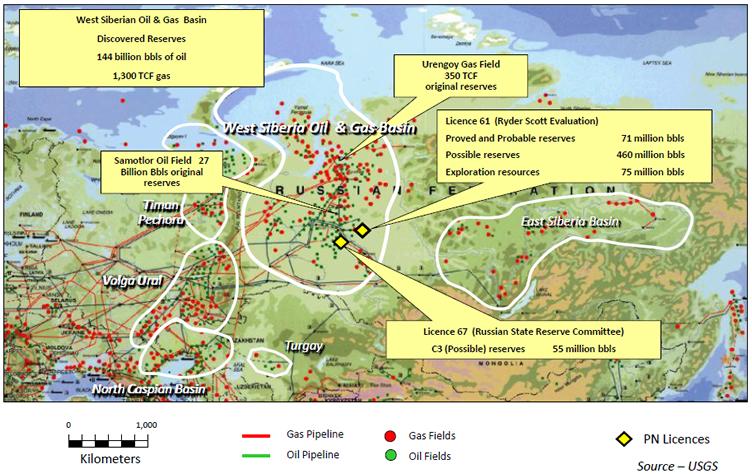
What Would King Hubbert Think of the Hundred Trillion Barrels of Oil Equivalent In the Bazhenov Formation?

Brian Wang says there are over 100 trillion barrels of oil equivalent in the Siberian Bazhenov (Jurassic) formation. If that is true, that would give Russia the greatest hydrocarbon resources of all world nations.
O&G Journal
Brian Wang

Peak oil saint M. King Hubbard felt that, as a geologist, he was aware of the size and location of most of the important oil deposits in the planetary crust. Possessing such knowledge, he felt quite confident in predicting that global peak oil would occur sometime between the mid 1980s and the early 2000s.

But something happened on the way to the global peak oil catastrophe and civilisational collapse. Tools of oil & gas exploration and production did not stand still. Oil fields that were thought to be beyond development suddenly became profitable to exploit. Older oil fields thought to be depleted were found to be producing once again, with the application of new technologies. And now, just when they thought that all the giant oil fields had been discovered, we are suddenly faced with the reality of the Bazhenov Jurassic formation -- thought by some to contain over 100 trillion barrels of oil equivalent.
Giant recoverable oil reserves contained in the fractures suggest that the Jurassic reservoir is a primary oil accumulation which has no analog all over the world. Therefore, we believe that Russia has the largest hydrocarbon reserves in the world. _O&G Journal
Whether the amount of recoverable oil in the Bazhenov Jurassic is 100 billion barrels or 1 trillion barrels, it is significant enough to maintain production for at least a century of prudent management.

We should point out that in order to produce oil from this formation, it will be necessary to use fracking technology -- an approach that Russian President Putin has condemned, at least when utilised in North America. Perhaps Russian fracking will be acceptable to Vladimir Bonaparte Putin.

More from Brian Westenhaus

Geochemistry of Upper Jurrasic Lower Cretaceous Bazhenov Formation

Abstract of USGS Ulmishek study of the West Siberia Basin

Full 4.5 MB PDF Ulmishek USGS Report on West Siberia Basin

Labels: ,

Bookmark and Share

04 April 2012

President Obama Is Playing Politics With Pipelines

This article is adapted from an earlier posting at Al Fin Energy

NP

Canadians are wondering why Mr. Obama has to make simple trade issues so complicated. By obstructing much of the potential flow of Canadian oil southward, Mr. Obama opens entirely new cans of worms which did not need to be opened.
The [Keystone XL] pipeline decision was delayed until after the presidential election so Obama wouldn’t have to offend his environmental supporters while he seeks re-election. None of the excuses offered for the delay holds water: The chosen route for the project through a valuable aquifer was no great threat, the project had passed crucial safety tests, and the area is already criss-crossed by a large network of other pipelines. It was all about politics.

But the result of the decisions is the quandary now facing the president: The U.S. needs oil one way or another. Whatever the long-range attractions of reducing dependency on fossil fuels, the world isn’t going to switch to biofuels and solar power overnight, and a secure supply of oil will remain crucial for decades to come.

The source of that fuel is critical to the U.S. The problems with Iran are a perfect demonstration of that: in the absence of a friendly, secure, reliable supplier, the U.S. is forced to look to places like Saudi Arabia and Venezuela. After Canada and Mexico, the top suppliers to the U.S. are Saudi Arabia, Venezuela, Nigeria, Angola and Iraq. Not one real democracy in the lot, all of them with serious political and stability issues. and none of them right next door.

Canada, on the other hand, is just across the border, is a close friend and ally of the U.S., and is both ready and eager to ensure a reliable increase in supply. But Washington’s willingness to play games with the Keystone project has only served to increase Ottawa’s awareness of the need to find other customers.

...Mr. Obama could have avoided all this by accepting the self-evident benefit to the U.S. of getting Keystone built as quickly as possible. Instead he’s got to juggle Saudi capacity against Iranian vengefulness, and the long-term implications of a risky sanctions plan that could blow up in the face of its supporters.

Relying on his friends in Canada would have been so much easier. _NP_
Enbridge has recently announced the expansion of its pipeline from Canada to the Gulf of Mexico, to provide an alternative pathway for Canadian oilsands in the wake of the recent Obama rejection of the Keystone XL pipeline northern leg.
Enbridge Oil Sands Alternative via Chicago

When Obama took executive action to prevent the upper leg of the Keystone XL pipeline, environmentalists celebrated as if they had won a victory. But there may be more involved in the story than what was printed in the newspapers or broadcast on the airways and cable channels. Whenever an economic decision is made by a government, sceptical people always ask: "Who benefits?"

Brian Westenhaus takes a look at the recent Enbridge announcement that it is expanding its pipeline network to provide an alternative pathway to the Gulf of Mexico for Canadian oilsands.

Oil flowing through Illinois is subject to local fees and taxes, which enrich the many corrupt FOOs (friends of Obama) who have taken up positions of power there. But one must also wonder what goes on behind the scenes before such a decision is even made.
Keystone XL Bypasses Chicago
As you can see if you follow the dotted green line representing the Keystone XL pipeline, the pipeline which Obama is stonewalling does not come anywhere close to Illinois or Chicago. In that sense, the pipeline is no good to Obama or all the crazy FOOs in that corrupt state. Unlike the alternative pipeline plan recently announced by Enbridge. Politics can be a byzantine affair, twisted and labyrinthine in its ways of distributing power and money to those who please the king.

Labels: ,

Bookmark and Share

22 March 2012

Another Brief Look at Oil Prices

Saudi Arabia is ramping up oil production in response to appeals from European governments to moderate oil prices. But it may be that no matter what Saudi Arabia does, oil prices will remain well above the level that ordinary market mechanisms of supply and demand would place them. Here is more on the Saudi move, followed by further excerpts from the FT article which reveal a deeper dimension to how oil prices are set.
Speaking to reporters in the Qatari capital Doha, Mr Naimi [the Saudi oil minister] said he wanted to “dispel this pessimism in the market” and the widespread fear that the world could see a repeat of 2008’s oil price increase which was a harbinger of the global recession.

“I think high prices are unjustified today [on] a supply-demand basis,” he said. “We really don’t understand why the prices are behaving the way they are.”

Supply was “much more firm today than in 2008” when crude rose to $147 a barrel, he said, with global supply now exceeding demand by 1m-2m barrels a day.

Saudi Arabia had 2.5m b/d of additional production capacity, which it could bring online if necessary, he said. The kingdom is likely to be producing about 9.9m b/d of oil in April and exporting roughly 7.5m-8m b/d of that, he said.

Asked if it could ease prices by exporting more oil, he said customers were not asking for additional crude. “We are ready and willing to put more oil on the market, but you need a buyer,” he said.
_FT
The statements of the Saudi oil minister are interesting enough, suggesting that the Saudis are still capable of achieving a 25% increase in oil production. Continue reading, to understand why even a 25% boost in Saudi oil production might not knock oil prices off their pedestal:
...the relatively modest move in the oil prices was a sign of some scepticism in the market.

“I don’t think it’s much of change for the market,” said Mike Wittner, head of oil research at Société Générale [investment bank] in New York. “The problem is the more they produce the less spare capacity they have. If they want to try to bring down prices not only do they have to keep on producing at very high levels they need to show the world that they are bringing on extra spare capacity.”
_FT
Can you see the hidden assumptions in Mr. Wittner's comment above? Mr. Wittner thinks that he knows the "true" spare capacity of the Saudi's oil production sector. Speaking as an investment banker and oil speculator, Mr. Wittner is as much as saying that the uber-investors will not allow oil prices to come down until insider (and public) assumptions about spare capacity can be beaten down with a big stick of reality.

This is the self-fulfilling peak oil mentality writ large, currently installed at the highest levels of New York investment banking. No matter how much oil OPEC decides to pump, Mr. Wittner and his cohorts think that they can set the global prices of oil based upon their beliefs in OPEC "spare capacity."

A very interesting prelude to financial disaster, once again, for pension funds, university endowments, and the life savings of countless numbers of retirees and near retirees. But a huge windfall for the top investment bankers and uber-investors.
Up until now, Saudi Arabia has kept silent on the price rally, although it is pumping oil at 30-year highs. But a statement issued by the Saudi cabinet on Monday could signal a more active policy. The cabinet said that it had noted the risk high oil prices posed to economic growth and the kingdom would work individually and with others if necessary to “return oil prices [to] fair levels”.

When asked, however, Mr Naimi declined to specify what specific measures Saudi Arabia could take to moderate prices.

The minister, who was in Doha for a meeting of the Gulf Co-operation Council, acknowledged that he had been approached by a number of ministers from European and developing countries complaining about the effect of high oil prices on their economies.

The weak global economy was tempering demand for oil, he said. Europe’s economy was “iffy” and growth was moderating in Asia. “I don’t think an economy that’s sick today is all of a sudden in the third and fourth quarter going to turn around,” he said.
_FT
Under an oil-pricing regime where top investors can manipulate spot prices via the futures market -- using leased storage facilities as well as a backward-propagating manipulated shortage of market supplies when futures prices are bid up -- it takes far more oil production to overcome artificially inflated prices caused by the intercession of big money investors.

It is rare for investment banks to admit as much, but if you listen closely you can hear their confessions. But the investment banks, in their quasi-Peak Oil fervour, are deluding themselves about "spare capacity." Spare capacity is not worth anything to oil producers until it is needed. In fact, spare capacity can be a huge economic drain, if it is maintained when not needed, particularly in an oil kingdom with a massively corrupt extended royalty, and a need to placate the unruly masses.

Are high oil prices "bad?" No, if high oil prices would only stay high, the proper investment in substitutes and unconventional fuels would be made, and we would enter a new era of liquid fuels supplies (and a higher use of nuclear power) -- at a stable but higher level of fuel prices than we have been used to. But such a transition requires a huge investment, which will not be made until it is clear that it is necessary. Capital intensive industries such as CTL, GTL, KTL, BitTL, BTL, etc. can be easily wiped out by the type of oil price drop that occurred in 2008 / 2009.

That huge price drop of oil in late 2008 and early 2009 was no accident. It was the natural aftermath of the same investment bank policies which are being used currently to artificially boost prices, but which are unsustainable due to significant changes which are beginning to occur on both the supply and demand sides.

Smart investors and investment bankers can ride these artificially generated waves to high profits. But the majority of investors and investment brokers are not that smart, and will lose huge amounts of money once again.

Previously published at Al Fin Energy

Supply and demand are enormously important in setting the price of oil on global markets. But we need to remember that public impressions of supply and demand can be manipulated by powerful players -- both in governments and in finance.

Labels: ,

Bookmark and Share

06 March 2012

Do Oil Wells Re-Charge Themselves?

There have been numerous reports in recent times, of oil and gas fields not running out at the expected time, but instead showing a higher content of hydrocarbons after they had already produced more than the initially estimated amount. This has been seen in the Middle East, in the deep gas wells of Oklahoma, on the Gulf of Mexico coast, and in other places. It is this apparent refilling during production that has been responsible for the series of gross underestimate of reserves that have been published time and again, the most memorable being the one in the early seventies that firmly predicted the end of oil and gas globally by 1987, a prediction which produced an energy crisis and with that a huge shift in the wealth of nations. Refilling is an item of the greatest economic significance, and also a key to understanding what the sources of all this petroleum had been. It is also of practical engineering importance, since we may be able to exercise some control over the refilling process. _Recharging of Oil & Gas Fields

Rigzone
Of course we all understand the concept of "repressurising oil fields" using gas injection and other means.
As the oil or natural gas in a formation is produced, the hydrocarbons remaining in the reservoir may become trapped because the pressure in the formation has lessened, making production either slow dramatically or stop altogether.

...gas injection is used on a well to enhance waning pressure within the formation. Systematically spread throughout the field, gas-injection wells are used to inject gas and effectively sweep the formation for remaining petroleum, boosting production.... gas injection can serve as an economical way to dispose of uneconomical gas production on an oil reservoir. While in the past, low levels of natural gas that were produced from oil fields were flared or burned off, that practice is discouraged in some countries and against the law in others.

...Gas Injection, Gas Lift & Gas Miscible Process
Although the terms are sometimes interchanged, gas injection and gas lift are two separate processes that are used to increase production. While gas injection is a secondary production method, gas lift is a type of artificial lift.

Artificial lift is another way to increase production from a well by increasing pressure within the reservoir. The main types of artificial lift include gas lift and pumping systems, such as beam pumps, hydraulic pumps and electric submersible pumps.

While gas injection is achieved by injecting gas through its own injection well, gas lift occurs through the production wells. In gas lift, compressed gas is injected down the casing tubing annulus of a production well, entering the well at numerous entry points called gas-lift valves. As the gas enters the tubing at these different stages, it forms bubbles, lightens the fluids and lowers the pressure, thus increasing the production rate of the well.

Furthermore, a type of EOR employed on a well in the tertiary production process, a gas miscible process can be used to increase production. The difference in this recovery method is that the gases introduced into the reservoir are not naturally occurring. In a gas miscible process, carbon dioxide, nitrogen and LPG are injected into the reservoir. _Rigzone Gas Injection
Most of the oil in existing wells remains underground, waiting for people to become smart enough to retrieve it. Better enhanced oil recovery techniques will inevitably be developed to extract more and more of the residual hydrocarbon -- until it is no longer economical to do so. Then the remaining oil will wait for further developments.

Thomas Gold argues (here and here for example) that oil wells are charged and re-charged with new oil & gas from below. He claimed that most new hydrocarbons are generated deep in the crust, rising into geological traps at several different depths for particular parts of the crust. That is the abiogenic theory of hydrocarbon production, which is supported by astronomical data and by lab data simulating conditions in the deep crust and upper mantle.

Rapid charging of oil fields -- such as is suggested here -- would require deeper secondary reservoirs under pressure, feeding into the primary reservoirs as they are depleted.

There is another way in which oil & gas fields are re-charged -- via the biogenic production of oil & gas. But biogenic production via geologic heat and pressure is generally a much slower method of re-charging than Gold's abiogenic method. But it inevitably occurs all the same. Biogenic oil is a renewable resource, but it is renewable on a different time scale than humans generally use.

And yet, there is a way in which biogenic oil can "rapidly" recharge a depleted oil field. In the case of multiple communicating oil reservoirs at different depths, heat, and pressure, a deeper biogenic reservoir could re-fill a more superficial reservoir at variable rates, depending upon a number of factors. Oil & gas migrate upwardly, when given the opportunity. In this case, instead of "turtles all the way down," it is "oil & gas reservoirs all the way down." ;-)

Biogenic Oil Formation
This image illustrates the conventional idea of biogenic formation of oil. Imagine it taking place over and over again, during the 3 billion + years that photosynthetic life has been converting CO2 into various biological carbon polymers, layer stacked upon layer etc etc . . . . .
Abiogenic Hydrocarbons Forming in the Mantle
This image illustrates the likely abiogenic formation of hydrocarbons in the upper mantle. These hydrocarbons then can migrate upward into the crust, and become trapped under impermeable minerals. Abiogenic hydrocarbons almost certainly mix with biogenic hydrocarbons.

Abiogenic hydrocarbons are also modified in various ways by deep crust microbial populations. In other words, the predominately short-chain abiogenic hydrocarbons from the mantle can be converted to longer chain hydrocarbons on the way up.

Finally, there is the ocean crustal tectonic activity which feeds a constant supply of partially processed organic material to the deep crust and mantle via constant subduction of ocean crust beneath continental crust. This is a slow but steady pipeline which supplies feedstock for production of oil & gas on a constant basis. The Earth's huge gas hydrate resource likely owes a great deal to this tectonic process.

Previously published on Al Fin Energy

Labels: , ,

Bookmark and Share

26 February 2012

A Word About Oil Prices

There is a great deal of discussion about why global oil markets are engaged in yet another price feeding frenzy. Some claim it is simply supply and demand. Others point out that both "supply" and "demand" can be manipulated in many ways. Others point to international tensions in the middle east, particularly Iran. Yet others point to Wall Street and blame the bankers. And not just a few in the US are pointing fingers at Barack Obama's broad agenda of energy starvation as being a significant factor in price increases. But where does the truth "lie?"
A speculator purchasing vast futures at higher than the current market price can cause oil producers to horde their commodity in the hopes they'll be able to sell it later on at the future price. This drives prices up in reality -- both future and present prices -- due to the decreased amount of oil currently available on the market.

Investment firms that can influence the oil futures market stand to make a lot; oil companies that both produce the commodity and drive prices up of their product up through oil futures derivatives stand to make even more. Investigations into the unregulated oil futures exchanges turned up major financial institutions like Goldman Sachs and Citigroup. But it also revealed energy producers like Vitol, a Swiss company that owned 11 percent of the oil futures contracts on the New York Mercantile Exchange alone [source: Washington Post].

As a result of speculation among these and other major players, an estimated 60 percent of the price of oil per barrel was added; a $100 barrel of oil, in reality, should cost $40 [source: Engdahl]. And despite having an agency created to prevent just such speculative price inflation, by the time oil prices skyrocketed, the government had made a paper tiger out of it. _HSW: Oil Speculation and Oil Prices
Inflation Adjusted Crude Oil Prices

As you can see from recent history, oil price shocks are nothing new to global markets. In fact, as you can see from the chart above, oil prices are not yet back to last April's (2011) highs -- the most recent price scare.

What about oil futures and oil prices? Many people suggest that if oil futures speculators do not take delivery of oil contracts, that they cannot influence the real price of oil. But that is not necessarily the case:
A speculator betting on a single futures contract will have no effect on the market. A speculator with a sizable amount of capital to put to work however, can purchase a stake that is sizable enough to sway the market, and is considered the major factor in how oil futures raise prices.

As speculators purchase on rumor rather than fact, a speculator purchasing a large amount of futures at a price that is higher than the market value of oil currently can lead to the hoarding of the commodity by producers in the hopes that the commodity can be sold for a higher price in the future.

As the supply of oil is reduced by these actions on the part of the producer, this leads to a realized increase in the price of the commodity both in the present as well as the future. An investment firm as well as oil producers stand to make a huge profit, as an estimated 60% of oil’s per barrel price is the result of speculation on the part of investment firms and other major players. _HowtoTradeStocks
Large scale, coordinated oil speculation would appear to be one way in which "oil demand" can be manipulated so as to drive up prices. There are several other ways in which this can be done, and we will look at some of those in later postings.

Those who think that oil speculators do not actually take delivery of oil may be in for a bit of a shock to discover that speculators have periodically stockpiled oil -- then strategically released stockpiles -- for some time.
The oil-storage trade is a trading strategy where oil tank owners and companies that lease storage buy oil for immediate delivery and hold it in their storage tanks, then sell contracts for future delivery at a higher price. When delivery dates approach, they close out existing contracts and sell new ones for future delivery of the same oil. The oil never moves out of storage. Trading in this fashion is only successful if the forward market is in "contango", that is if the price of oil in the future also known as forward prices are higher than current prices or spot prices. Storing oil became big business in 2008 and 2009,[1] with many participants—including Wall Street giants, such as Morgan Stanley, Goldman Sachs, or Citicorp—turning sizeable profits simply by sitting on tanks of oil.[2]

It has been estimated that one in twelve of the largest oil tankers are being used for the storage, rather than transportation of oil,[3] and that if lined up end to end, the tankers would stretch out for 26 miles. _Wikipedia
The actual proportion of tankers and oil depots used for speculative purposes is likely to fluctuate over time, according to prices and price-manipulating opportunities.

There is a great deal riding on oil prices. Hedge funds, pension funds, university endowments, foundations, big money NGOs, and more, are betting on oil prices going higher. The risk involved is significant, but with the deteriorating value of the dollar and the general stagnation in global economies, opportunities for significant returns on investment seem to be few and far between, the past few years.

While many analysts are scratching their heads as to how oil prices could increase in the absence of any clear increase in natural (as opposed to artificial) demand, Al Fin energy analysts believe that several concurrent factors are in play:

  1. Russia is far more than a bystander in the current price runup More here

    International tensions tend to create a "defensive demand," a type of artificial demand which involves stockpiling oil in anticipation of future reductions in supply. Russia is best situated of all nations to both ramp up international tensions -- either directly or via proxies -- then to profit in several ways from a runup in energy prices.
  2. OPEC has an interest in driving up the global price of oil as high as can be sustained by the markets.
  3. National oil companies in many oil-producing countries neglect their oil production equipment and their oil fields, leading to artificial reduction in production and supply due to Oblomovism.
  4. Official policies of "energy starvation" on the part of the US Obama administration and other western nations, leads to artificial reduction of supplies.
  5. The rapid buildup of the "infrastructure to nowhere" better known as the "Great China Bubble" has led to an artificial demand surge. The Chinese government appears to be engaged in "doubling down" on this policy, despite early warning signs of impending turbulence.
  6. The progressive decline in the value of the dollar creates an inexorably upward trend in oil pricing.
There are many more factors involved, of course. But it is enough to understand that the causes of the current oil price runup are many and varied.

What are the counter-vailing forces, seeking to drive oil prices downward again? The most significant force in the short-term is the desire of speculators to take profits. Once investors decide the house of cards is due for yet another inevitable collapse, the rats will get out while the getting is good.

In the intermediate term, demand destruction eventually sets in -- even in emerging nations, BRICs, and third world nations. But demand destruction in the advanced worlds of the North America and Europe never truly went away after the price runup of 2007-2008. And such demand destruction in North America and Europe is likely to add to the general economic doldrums both there and in exporting nations such as China.

In the longer term, high oil prices stimulate increased production of oil, increased exploration for new oil, better technologies for recovering more oil from existing fields, and better technologies for producing economical substitutes for crude oil. All of these price-stimulated supply increases put downward pressure on oil prices.

The entire dynamic is complex, with several opposing and reinforcing factors in play. It is best to expect to be surprised, and to be prepared, in case you are.

Cross-posted to Al Fin Energy

More: Gas Prices - Much Ado About Nothing?

Labels: , ,

Bookmark and Share

20 February 2012

Russia Playing War Games with Global Oil Markets

Russia has intentionally maneuvered Iran to the brink of war over its nuclear reactor program, in order to help raise global oil prices. With Russia's unflagging assistance, Iran is processing its uranium ore so as to produce highly enriched uranium. The most likely indications are that Iran will have enough enriched uranium to build fission bombs in the near future -- again, with Russia's assistance.

Russia is the main beneficiary of the run-up to war and oil market instability -- its oil profits are keeping its corrupt government afloat. China is a secondary beneficiary, able to buy Iranian oil at a significant markdown. The Iranian people are the big losers, sinking into poverty, drug addiction, and despair.
Russia is now the world's largest oil producer, pumping about 10 million barrels of oil a day, slightly more than Saudi Arabia. Of this, Russia exports seven million barrels a day... The Russian oil industry was already reaping the rewards of higher global oil prices from Iranian tensions, even before Tehran raised the stakes Wednesday by threatening to cut off oil to six European nations.

Now, whether Iran carries out that threat immediately or Europe proceeds with its previously planned embargo of Iranian oil this summer, the Russian industry could capitalise more directly. Its pipelines stand ready to serve customers willing to pay a premium price — with a grade of oil closely resembling Iran's._NYTimes News Service _ via TheHindu
Clearly, given their growing capability to produce and deliver oil wherever the market dictates, and the tie between the price of oil and price of gas in Russian supply contracts, it is in the clear interest of the Russians to push up the price of Brent crude. Therefore, could it be that the tumult around deliveries of Iranian oil is merely a smokescreen to escalate prices, and that some thing far more nefarious is taking place? _Learsy_HuffPost
Russia is having problems with its own ineptitude and corruption. It is also troubled by the threat of the coming global shale oil & gas boom. Other competitive pressures likely to arise in the near future include massive supplies of unconventional liquid fuels from GTL, CTL, BTL, bitumens, kerogens -- all eventually facilitated by high quality nuclear process heat.

It is clear that Russia had to take matters into its own hands in order to drive up oil prices -- one way or another.
As the NYTimes reported, "The Russian oil industry was already reaping the rewards of higher oil prices from Iranian tensions." The Russians have been cashing in brilliantly while rendering support to Iran by such acts as vetoing or emasculating any and all meaningful U.N. resolutions that would force Iran to comply with the terms of the U.N.'s International Atomic Energy Agency mandates. It is an open question whether this is being done in solidarity with Iran, or more malignly, to solidify Iranian intransigence on matters nuclear, in the hope that the European and other world consumers' boycott of Iranian oil has maximum impact, making Russian oil more sale-able at ever higher prices. _Learsy
Meanwhile, Russia is seeking the help of the international oil companies to upgrade its oil production and refining procedures and operations. Given how Russia has behaved toward international oilcos in the past after having received help and technology transfer, it is difficult to see how this turns out well for either western oil companies or western countries in general.

At the same time that Russia is ramping up international tensions over Iran in order to pull in greater oil profits, it is also looking for the world's sympathy by claiming that Russian oil fields are declining rapidly, to the point that Russia's oil production "has peaked" and in danger of rapid decline.

Yes, certainly we should all feel sorry for Russia, the nation that is enabling nuclear proliferation in Iran and driving the world to the brink of war -- all for oil profits that will go into the Swiss bank accounts of Russian oligarchs, insiders, and quasi-dictators. The nation that lets its oil fields go to crap out of neglect, asks western corporations for help, then abruptly nationalises any resources, technologies, and assets which the outsiders naively leave within the kleptocratic reaches of the Russian government.

Russia's energy reserves remain vast, deep, and wide -- and largely unexplored and undiscovered. In the hands of competent organisations, Russia's hydrocarbon production would not peak for several more decades. But pay no attention to reality -- heed only what you are told by your masters.

Raymond J. Learsy thinks that Russia is manipulating global oil markets to the detriment of all of Europe:
So here we have Russia, a major supplier of oil and gas with an economy deeply dependent on the revenues received from the sale of those commodities. According to the NYTimes article, "And the taxes the Russian government has received from those sales have been a political windfall for Prime Minister Vladimir V. Putin as he campaigns to return as Russia's president. The extra money has helped further subsidize domestic energy consumption, tamping down inflation." Combine this with a Russia that is in large measure governed by that unique version of our Wall Street "ole boys network," the alumni of Russia's highly touted secret service, the KGB. The KGB helped form Putin and many of his associates in government. Here was an organization that was the nonpareil masters of clandestine intrigue, knows how to keep secrets, and now in a sense, is running the country albeit with the trappings of democratic governance.

Fast forward-only this week, "a group of brokers and traders successfully managed to manipulate an interest rate that affects loans around the world" (Please see "Traders Manipulated Key Rate, Bank Says," Wall Street Journal). If this could happen to interest rates, so widely traded throughout the world, just think what a KGB oriented Russia could do, and not with $6,500 at their disposal, but billions upon billions. It should not be a stunning surprise to those, be they government agencies, the press, or energy focused think tanks, that the traded price of Brent crude is being gamed. _Learsy
That would be an interesting "one-two!" play by the Russians, if we believe that they are so clever and manipulative. First ramp up international tensions over Iran, then behind-the-scenes, use a bit of leverage to shift global markets to their advantage.

We know the Russian government needs every bit of hard currency it can get, to keep its people happy, and to keep powerful insiders well compensated. But the price being paid by the Iranian people is severe, and has no apparent end-point.

Needless to say, the strategy is not guaranteed to work to the satisfaction of top Russian players, indefinitely. A lot of things could go wrong....

Meanwhile, behind the scenes in Russia, a demographic, infrastructural, and public health disaster continues to play itself out, below the happy Potemkin facade. Putin has a grand strategy, but it is built on a foundation that is slowly crumbling.

Parts of the above were cross-posted from articles previously published at Al Fin Energy.

Meanwhile, contrast the lucrative game of realpolitik being played by Russia, with the ham-handed, self-destructive voodoo environomics being practised by the Obama administration, to the detriment of North Americans everywhere.

Labels: , ,

Bookmark and Share

13 February 2012

Baku Risks the Curse of the Tallest Tower

Azerbaijan wants to build the world's largest tower -- the Azerbaijan Tower -- in Baiku. Clearly this giant building is meant to be an enduring tribute to the greatness of the current leadership of the country -- much like the pyramids of Egypt. But are the leaders of Azerbaijan aware of the Skyscraper Index, which correlates the building of the world's tallest tower with the subsequent national decline of the builder nation?
The future isn't in Dubai or Saudi Arabia — it's going to be on a city of 41 artificial islands called the Khazar Islands that'll cost $100 billion to construct and be home to the world's tallest building. The Azerbaijan Tower, as the Avesta Group of Companies is calling it, will reach 1050 meters into the sky.

To put that height into perspective, that's 220 meters taller than the Pringles-can shaped Burj Khalifa and 50 meters taller than the Kingdom Tower (expected completion in 2016/2017). The tower will also be able to survive 9.0 magnitude earthquakes, in case you're the worrying type. _dvice
The ultimate longevity of the tower will depend upon who builds it and who maintains it. The utility of the tower depends upon how well Azerbaijan is able to maintain its oil & gas fields, and on how long the world prices of oil & gas can continue to remain in an inflated state.

The construction of the new tower -- along with other recent giant towers in UAE, KSA, China, etc -- should provide construction engineers with more experience and wisdom in the building of giant towers. Ultimately, at least some societies of humans are likely to pursue urbanisation to its logical conclusion -- the super-arcology, or one-building city. Efficient super-arcologies could free up most land for agricultural, recreational, and natural ecological uses, with a minimal "human impact" on natural habitats.

In fact, with sufficiently efficient arcologies, the concept of human overpopulation of the planet is laughable, for the foreseeable future.

Labels: ,

Bookmark and Share

23 January 2012

A Basic Understanding of Oil

The creation of oil, gas, coal, and kerogen is an ancient process, which has taken place over the eons ever since photosynthetic life first occurred in the oceans and seas. For example, did you know that the Alberta oil sands area was once part of a prehistoric sea?
Alberta's oilsands are in an area that was once part of a prehistoric sea and have yielded several important marine reptile fossils. _CBC.ca

Oil creation is a renewable process, but over quite a long time span. Gas is made more quickly and more ubiquitously under the seabed than oil, and is becoming so cheap and common as to be thought of as a nuisance in many locations.

But it is crude oil about which such a fuss has been made for the past 100 years or so. And a well educated person should know more about crude oil than he is likely to find in the media or on the doomer sites. This embedded book by oil insider Leonardo Maugeri is likely to fill a lot of holes in the oil education of most ordinary people.
"The Age of Oil" by Leonardo Maugeri is a basic-level primer on the various facets of the modern petroleum age, from past, to present, and to future. It is best to start with basic history and basic supportable facts. Then, if you wish to go out on a limb, at least you will have a solid foundation from where to start.

Where oil comes from, and a hint of where new oil may be found
Looking at changes in atmospheric concentrations of O2 and CO2 over time is another way of noting the underlying biological processes involved in making the plants and microbes that go into making fossil fuels.

Oil shale sediments were deposited on large lake beds in the US western states:
Lacustrine sediments of the Green River Formation were deposited in two large lakes that occupied 65,000 km2 in several sedimentary-structural basins in Colorado, Wyoming, and Utah during early through middle Eocene time....The warm alkaline lake waters of the Eocene Green River lakes provided excellent conditions for the abundant growth of blue-green algae (cyanobacteria) that are thought to be the major precursor of the organic matter in the oil shale. _geology.com
How old is the oldest oil? No one knows, since it hasn't yet been found. But some oil has reportedly been found in rock that was billions of years old. Photosynthetic life has been around almost 3 billion years, so that provides for a lot of oil creation in deep rock layers.
Geologists usually don't bother looking for oil in very ancient (Precambrian) rocks for two reasons:

Conventional wisdom insists that oil is derived almost exclusively from organic matter, and additional conventional wisdom assures us that life was exceedingly scarce on earth billions of years ago.

Any oil that was created billions of years ago would have surely been destroyed by intense pressures and high temperatures over the eons.

Yet, Precambrian oil in commercial quantities has been found in formations up to 2 billion years old (in Siberia, Australia, Michigan, for example). While some of this oil might have migrated in-to the Precambrian rocks from younger source rocks, some of it does seem indigenous and, therefore, ancient.

...Now, three Australian scientists (R. Buick, B. Rasmussen, B. Krapez) have discovered tiny nodules of bitumen (lumps of hydrocarbons) in sedimentary rocks up to 3.5 billion years old in Africa and Australia. These bitumen nodules were formed when natural hydrocarbons were irradiated by radioactive isotopes that coexisted in the ancient rocks. Futhermore, these African and Australian rock formations were never severely deformed or subjected to high temperatures. The possibility exists, therefore, that some of the earth's oldest rocks may contain substantial oil reserves. So far, no one has seriously looked for oil in Precambrian rocks because of the two preconceptions noted above. _Science-Frontiers
The planet has gone through a large number of cycles over the past few billion years. Unless you can go back through time and trace the large numbers of optimal areas for oil, gas, coal, kerogen, and bitumen formation which have come and gone, come and gone, come and gone -- and been hopelessly changed and disguised by ongoing geologic processes -- you may be easily persuaded that almost all the fossil fuels have already been found.

The "abiotic oil" concept is not discussed here because the concepts behind biotic oil are difficult enough for most people to understand. And most hydrocarbons produced in the mantle by abiotic processes are shorter chain hydrocarbons, as you might find in "wet gas." Biotic and abiotic hydrocarbons tend to mix in the crust and follow much the same routes of migration upward in many cases. But if you want a good example of quick renewable hydrocarbons, the abiotic variety might qualify.

Previously published on Al Fin Energy

Labels: ,

Bookmark and Share

10 November 2011

The Americas Want to be the World's Energy Suppliers

The US is #1 in natural gas production, Canada is #4. The US is #3 in oil production, and Canada is #6. Goldman Sachs says the US will be the World's largest oil producer by 2017. More here. In fact, North America holds the largest hydrocarbon resources in the world -- and technologists are determined to find ways of getting at them cleanly and economically.
But it is not just the US and Canada which are experiencing an oil & gas resurgence. It is claimed by many observers that the oil (and gas) map of the world is shifting to the western hemisphere.
Canada ranks third in proved oil reserves behind only Saudi Arabia and Venezuela.[23] It has 175 billion barrels of proved reserves, consisting mostly of oil sands. Oil sands consist of very heavy oil mixed with clay and sand that requires separation of the impurities before capturing the oil. The process requires more energy than conventional oil production and therefore results in slightly higher carbon dioxide emissions. According to Daniel Yergin, the carbon dioxide emissions of oil sands production are only 5 to 15 percent higher than those resulting from the average barrel of oil consumed in the United States when the entire life cycle, well-to-wheel, is taken into consideration.[24]

Due in large part to oil sands production, Canada has recovered all the jobs it lost in the 2009 recession. Alberta’s oil and gas industry supports more than 271,000 direct jobs and hundreds of thousands of indirect jobs in sectors such as construction, manufacturing, and financial services. The province has an unemployment rate of 5.6 percent compared to Canada’s national rate of 7.3 percent and the 9 percent unemployment rate for the United States.[25]

...Brazil has about 15 billion barrels of proved oil reserves in its sub-salt offshore fields. They lie in a 2 kilometer deep salt layer under the seabed that is estimated to hold up to 50 billion barrels of oil.[32] These ultra-deep deposits are drilled at up to three times the normal pressure for offshore oil. Estimates have production as much as 5 million barrels a day by 2020.[33] The sub-salt’s share of total domestic oil production in Brazil is expected to increase from 2 percent in 2011 to 40.5 percent in 2020.[34] New breakthroughs in technology made possible the identification and development of these resources.

...Another find in South American unconventional oil is in the Neuquen Province of Argentina where 927 million barrels of shale oil were recently discovered. YPF, Argentina’s largest oil and gas firm, has been exploring for shale oil since 2007. The field will roughly double the company’s reserves and helps put Argentina in third place behind the United States and China in terms of having the world’s third-largest probable reserves of shale oil, according to the Energy Information Administration.[35] The discovery is part of YPF’s five-year oil and gas exploration program in Argentina. It expects to invest about $2.9 billion in exploration and production during 2011, the most it has invested in at least 20 years. The company has outlined another 502-square-kilometer area that could contain additional oil and gas resources.[36]

...Estimates of oil resources are generated by geologists based on limited physical data, expectations about prices, and existing technology. But expectations and technology change and improve over time. The estimates of the Bakken are one good example. After all, the 2008 USGS estimate of recoverable oil was 25 times larger than the estimate a mere 13 years earlier.

In oil fields, only 35 to 40 percent of oil in place is initially produced. As oil prices increase and as technology changes over time, there are increased incentives to invest in production and technology to squeeze more oil from existing fields. Advances in technology enable companies to increase recovery from existing fields and to produce oil from unconventional sources that were uneconomic at lower prices. As long as the price of alternatives is higher than the price of producing the marginal barrel, it makes economic sense to produce more and to invest in technologies for finding and producing oil.[37]

And so it is with North American and South American oil. The newer finds in Canada, the United States, Brazil, and Argentina are now economic due to technological breakthroughs in drilling and the sustained higher price of crude that make unconventional sources of crude economic. These new finds can make the United States nearly independent of crude oil from the Middle East in the future. To do that, the United States must set policies conducive to their production and consumption in this country. _InstituteEnergyResearch
And then there is the giant Venezuelan Orinoco heavy oil basin, and the huge resources of the North American outer continental shelves. Huge resources of coal, kerogens, and gas hydrates are waiting for the appropriate technologies to be developed, to allow clean and economical utilisation.

The truth is, however, that if the Obama regime of energy starvation can be removed from its chokehold over US energy production, most of these vast resources will never need to be touched. Once Obama's obstructionist Nuclear Regulatory Commission can be made to do its job and certify safe, clean,advanced nuclear reactor designs, the US (and Canada by default) will be set for producing as much of the hydrocarbon resource as needed.

Advanced nuclear technology will make it possible to produce as much hydrocarbon as we want, in a very clean way -- and the same technology will also allow us not to produce any more fossil fuel than is absolutely necessary. As time goes by, less and less fossil fuel will be necessary, hence the growing awareness of the concept of "peak demand."

Labels: ,

Bookmark and Share

24 August 2011

How to Liberate 3X Saudi Arabia's Oil Reserves Without Using Water

...the Uinta Basin is the site of the massive Eocene Green River Shale formation – potentially the largest reservoir of unconventional petroleum in the world. With total reserves estimated at up to 1.3 trillion barrels, and ultimately recoverable reserves of 800 billion barrels or more , this formation holds three times or more the amount of Saudi Arabia’s proven reserves. Unlocking this formation would change the energy outlook of the nation – and of the world – for a century or more.

Today, TomCo has announced that it has awarded contacts toward the development of this resource. _Source
World Oil

Reserves of oil shale kerogens in the western US states is massive -- far larger than the huge proven oil reserves of Saudi Arabia. Now a technology exists which can liberate these vast trapped energy reserves without using water or contaminating groundwater. Using this waterless in situ approach, the scenic appearance of these majestic western drylands will be unaffected, and the environmental quality of the region will be preserved.
Eco-Shale Technology
The EcoShale™ In-Capsule Technology involves heating mined shale in a closed surface impoundment, or capsule. The process relies on conventional mining and construction methods and produces a bottomless oil product that requires no coking. The process produces a shale oil with a much higher concentration of middle distillate than West Texas intermediate crude. Two synthetic shale oil products are produced: (1) prompt oil of approximately 29 API gravity; (2) condensate oil of approximately 39 API gravity. The oil and condensate produced with this process have no fines and have very low acid numbers.

The technology requires no process water, protects groundwater and vegetation, uses low temperatures for heating and allows for rapid site reclamation.

The resultant product is a high quality feedstock with an average 34 API and no fines. The process also results in synthetic natural gas production allowing for energy self-sufficiency. _EcoShale
It is almost impossible for most persons to envision the economic impact of the introduction of these vast energy resources into world energy markets. Far more resources are devoted by the Obama administration to shutting down the liberation of North America's vast energy stores, than to making the production of energy cleaner and more economical.

Mr. Obama's approach has always been one of energy starvation, rather than energy facilitation. That is just one of the several nearly insurmountable obstacles to prosperity which the US economy currently faces, and for which Mr. Obama can take direct credit -- if only he would.

Cross-posted in slightly modified form under a different title to Al Fin Energy blog

Labels: ,

Bookmark and Share

22 April 2011

Oil Price Volatility: Central Banks and Spooky Investors?

Global oil markets are coming to resemble something out of a D-grade science fiction movie, a monster with a life and will of its own bent on devouring everything in its path. But who created the monster, and who continues to feed the hungry beast?
...the advent of widespread Internet trading platforms radically increased the number of people with access to commodity markets, decreased the amount of time it took for an investment decision to impact the market and expanded the amount of money that could be applied to those markets. In particular, the creation of energy-indexed investment vehicles created additional demand for commodities by people who have no intention of ever taking delivery of the commodity.

...In any other market, the presence of a mass of new players would obviously have a distorting effect, but in the oil market, the inelastic nature of oil demand magnifies the investor presence. Since oil is so essential to modern life — needed for everything from transportation to making plastics, fertilizer or paint — industrial and retail demand for oil is actually fairly stable. The introduction of dynamic actors into a normally static system results in periodic and disproportionate price shifts.

...Over the past six years, the global money supply has roughly doubled. There are any number of reasons to expand money supply, but the most relevant ones of late have been to ensure that there is sufficient credit to stabilize the financial system. However, governments have few means of forcing such monies to go in any particular direction. And since the entire purpose of professional investors is to shuffle money to where it will earn them the highest return, some of the money from an expanded money supply often finds its way into commodity markets.

... In China, for example, such a huge and expanding money supply is keeping the country’s many profitless enterprises solvent, which keeps legions of unemployed from causing social instability or unrest. But it comes at the cost of inflation pressures, which could also cause unrest by consumers due to price increases. (The massive monetary expansion in China is symptomatic of a brewing crisis that STRATFOR expects to burst within the next few years.)

But for the commodity markets, including oil, the impact is clear: Prices will steadily rise — and on occasion dramatically fall — so long as the world’s monetary authorities keep expanding the money supply. _Forbes (STRATFOR)


Adapted from an earlier posting at Al Fin Energy

Unless one is a student of complexity, autopoiesis, and emergent phenomena, the seemingly disconnected movements of modern markets would be completely incomprehensible. But even under the best circumstances, the energy market monster is somewhat unpredictable in terms of timing the repeated rises and crashes.

Caution is recommended whether one is lulled into going long or scared into taking a short position. Oil is not gold, and should not be treated as a safe repository of value. Even gold and silver are subject to price swings, due to market psychology, geopolitical instability, and politically corrupt policies.

Try to be ready to take advantage of the inevitable erratic swings as they happen. For long term planning, make allowances for the likely volatility in energy and commodity prices -- as well likely erratic movement and possible collapse of selected currency values.

Brian Wang has more insight into some of the inadvertent effects of a weak dollar policy for the US

Labels: ,

Bookmark and Share

19 November 2010

Turbulent Oil Prices Ride Storms of Stupidity

“Very little of the recent price rise has really been down to the improving supply-demand balance,” said Matt Parry, senior oil consultant at KBC Process Technology Ltd. Instead, most of the recent rise is due “to a combination of the anticipated renewal in quantitative easing and the general increase in investor appetite for risk.”

In fact, investors could discover that they’ve bitten off more than they can chew when it comes to increasing their risk.

Any market that shows a strong divergence from its fundamentals … is vulnerable to a sharp sell-off,” said Darin Newsom, senior analyst at Telvent DTN. _Marketwatch
Puts: Oil vs Gold

T. Boone Pickens is predicting $95 a barrel oil prices in one year. Other investors and investment houses are predicting that oil will shoot well above $100 a barrel in 2011, perhaps much higher. Given the turbulence in commodity pricing, predicting prices a year in advance is not much easier than predictions for 10 or 20 years in advance. But present circumstances can give us a few ideas what to expect.

Uncertainty is rampant in modern markets. The world's reserve currency is being treated like toilet paper by its own government and central bank. The Eurozone is being shaken to its foundations by demographic change and debt. The ability of China and India to pull the world out of its economic doldrums without help from North America or Europe is being belatedly recognised as having been overstated.

What I am saying is that large investors are hard put to find a safe haven. Just as in late 2007 and early 2008, these investors are running to commodities for a false sense of security. Gold has a fairly good record historically as a storage of value of last resort, but oil is something of a johnny-come-lately in that regard. Investors were killed in 2008, and they will be killed again, betting on oil.
“Commodities seem to spend more time moving with little regard to underlying fundamentals,” said Newsom. “Money flows from market to market, often driven by action in the dollar.”

Weakness in the dollar against its foreign currency rivals, money flow in financial markets, and worries over further quantitative easing have all been strong influences in gold’s climb to record levels, but they’ve been key factors for oil as well...

...“The extreme liquidity in financial markets recently has caused some commodities (like gold and oil) to inflate far more than fundamentals would support,” said Michael Lynch, president of Strategic Energy & Economic Research.

“Expectations of the [second round of quantitative easing] and then the reality were the major factor behind oil’s rise since September, with secondary support from slight strength in fundamentals,” he said.

...“It is clear that the dollar is being deflated by the Federal Reserve printing more money,” said Perry Management’s Perry. So “currency is being invested more in commodities, such as gold and oil.”

Crude oil has had a strong negative correlation with the U.S. dollar index, Newsom points out, and at times, “acts as an investment hedge against inflation.”

That sounds very similar to gold, though oil has “not completely supplanted gold as a safe-haven market yet,” he said.

...Whatever the case, oil trading similar to a currency is worth watching, as the global currency wars “look to be a key issue moving forward, and the cash-rich economies (such as China) need somewhere to put their faith, and likely commodities (particularly gold, but also oil), seem like sensible options,” said KBC’s Parry. _Marketwatch
It is easier to find new oil than it is to find new gold. Recent oil price increases are helping to spur large new oil finds on the North American mainland. And although the ill conceived Obama moratorium continues to stymie new oil development in the Gulf of Mexico, massive new oil deposits are waiting to be found there -- and become ever more affordable as the price of oil tends to rise.

New oil supplies tend to help hold oil prices down -- as does demand destruction caused by higher oil prices. Demand destruction can be due to depressed economic activity, or due to energy consumers finding substitute sources of energy and practising energy conservation. The underestimation of potential demand destruction by energy forecasters is one of the more ludicrous aspects of the current investment atmosphere.

Here at Al Fin, we are less concerned about short-term fluctuations in price than we are concerned with current US government policies of energy starvation, which create political peak oil conditions -- with accompanying higher energy costs, depressed markets, and demand destruction. Such concerns are also rising to the top of the list of concerns of the American voter.

Labels: , ,

Bookmark and Share
Older Posts
Al Fin Main Page
Enter your Email


Powered by FeedBlitz
Google
WWW AL FIN

Powered by
Blogger

``