12 January 2013

Who Will Become the 51st US State?

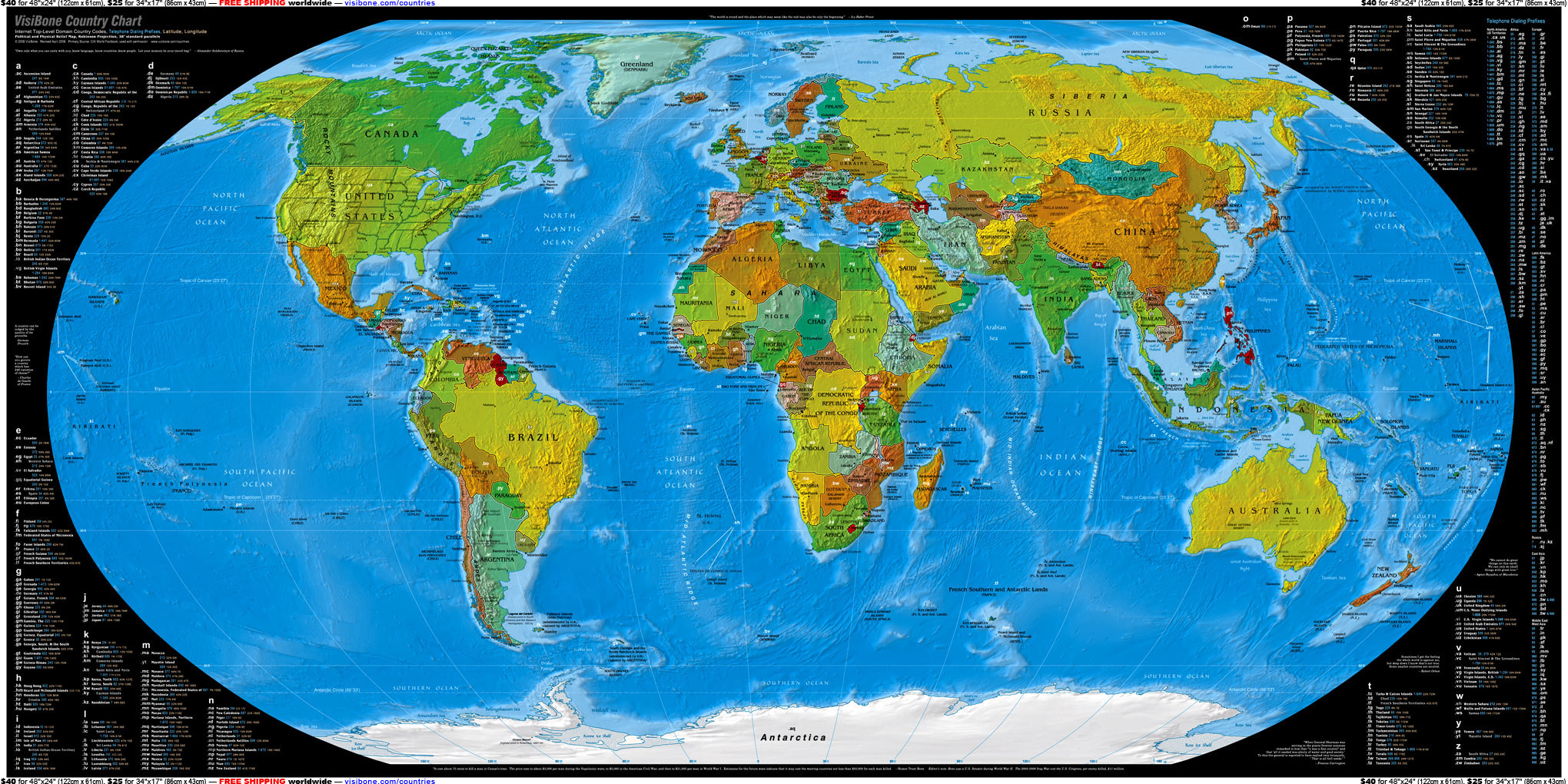
The USA has been stuck on just 50 states for over half a century now. There has been a good deal of talk about adding Puerto Rico to the US as the 51st state, but both the Puerto Rican population and the US population seem at least a little bit ambivalent about that choice.
Another candidate that has been tossed around a bit, is Taiwan!
...David Chou comes right out and says it: Taiwan should become the 51st state of the United States.

Mr. Chou is not joking. He has a plan. It may never work, but just try telling Mr. Chou that. He has been working on it for years.

Mr. Chou set up the 51 Club in 1994 to promote his idea. He admitted 51 members. But to him it is not a gimmick. It is a cause. And with all the confusing explanations that Taiwan's Government puts forth about whether it is part of China or something separate, Mr. Chou's unusual proposal is refreshingly straightforward.

''If we were a state, our most serious problem -- security -- would be solved,'' said Mr. Chou, 49, who looks and sounds considerably more normal than his proposal might suggest. ''The current Government can't solve it; neither can the opposition. But statehood can.'' _NYT
Perhaps it is possible that the security situation for Taiwan may grow dire enough for its people to look to the US for the "absolute security" that statehood would guarantee. Time will tell.
The names of other currently independent nations -- such as Canada and Mexico -- have been tossed around for potential statehood, ever since the passage of NAFTA.

The USA's North American neighbors already exist under a US defence umbrella, and are given very privileged trade status. But actual statehood may be too much for the US' neighbors to the north and south to swallow, for now.

Other potential candidates across the Pacific in addition to Taiwan that have been discussed in the context of statehood, include the rapidly de-populating Japan, the Philippine Islands, and South Korea. As with Taiwan, the most likely reason for a majority of the people of any of those countries to be willing to submit to US statehood, would be for security reasons -- although economic and demographic reasons may also come into play over time.

Most of the US' great land acquisition took place during the 1800s. Since the year 1900, the US has given up more territory than it has acquired. One of the most important territories to have given up, was the Panama Canal Zone. The Philippine Islands were also given up in 1946, after having been considered for full statehood prior to the Japanese occupation.

It may seem odd to be talking about adding more states to the USA, when so many current US states have been discussing the possibility of secession from an increasingly dysfunctional union.

Under President Obama, the US government has overstepped itself far beyond the putative limits of the US Constitution, as never before. For that reason, as well as for other reasons, a number of scholars are predicting the collapse and dissolution of the USA as we currently know it.

But for such a collapse to occur, there would need to be some form of viable alternative as global economic, military, and political hegemon. To this point, nothing except a coming anarchy has shown its future face as a replacement for the USA.

And even in decline, some organisations have been known to attempt to bloat themselves up to massively oversized proportions, just before the end. Much like spouses in a failing marriage often choose to have more children, in a last-ditch attempt to preserve the union.

Citizens of the US are being given an opportunity -- in a second Obama term -- of seeing how badly the US could have declined during a second Jimmy Carter term. National malaise under Carter was admittedly severe. If not for the surprising "US fracking boom," things would likely be even worse by now, under Obama.

If Obama embraces the boom in US oil & gas resources, along with the coming boom in next-gen nuclear power reactors and the accompanying booms in nanotech, biotech, materials science, advanced automated manufacturing, and a number of other significant scientific and technological advancements which an abundant economy would allow -- he could be known to future generations as one of the great US presidents, despite the underlying reality.

Should that unlikely recantation of his previous life occur, the US might be looking at rates of economic growth previously only dreamed of in the history of the country. At that point, the idea of 51 states -- or 57 states, for that matter -- would not seem such outrageous subject matter.

In such a case, for the sake of avoiding a more rapid decline into an Idiocracy, the US might well choose candidate territories with higher -- rather than lower -- population average IQs than the current US population IQ average..

Labels: ,

Bookmark and Share

18 December 2012

Brave New World of Scientism: Stakes are High, Cheating is Rampant

What is scientism? Scientism is an attempt to elevate science to the level of a final arbiter on all questions of human life: Science as a replacement for philosophy, religion -- even a replacement for "God and the gods" -- in the new secular age.

The temptation to overreach... seems increasingly indulged today in discussions about science. Both in the work of professional philosophers and in popular writings by natural scientists, it is frequently claimed that natural science does or soon will constitute the entire domain of truth. And this attitude is becoming more widespread among scientists themselves. All too many of my contemporaries in science have accepted without question the hype that suggests that an advanced degree in some area of natural science confers the ability to pontificate wisely on any and all subjects.
Of course, from the very beginning of the modern scientific enterprise, there have been scientists and philosophers who have been so impressed with the ability of the natural sciences to advance knowledge that they have asserted that these sciences are the only valid way of seeking knowledge in any field. A forthright expression of this viewpoint has been made by the chemist Peter Atkins, who in his 1995 essay “Science as Truth” asserts the “universal competence” of science. This position has been called scientism — a term that was originally intended to be pejorative but has been claimed as a badge of honor by some of its most vocal proponents. In their 2007 book Every Thing Must Go: Metaphysics Naturalized, for example, philosophers James Ladyman, Don Ross, and David Spurrett go so far as to entitle a chapter “In Defense of Scientism.”


_NewAtlantis
Scientism began as a joke and an insult, but it is now being accepted as valid not only by both the gullible general public and professional laity, but also by scientists themselves.

This "elevation of scientists to godhood" provides many of the more public scientists with a great deal of self-esteem and even arrogance. This is most easily seen in areas of science that are most publicly exposed, such as climate change science. But it can also be seen in social sciences, biomedical sciences, and even in some of the harder sciences.

When stakes are high -- scientific prizes, book sales, speaking engagements, political influence, fame and popular adulation etc. -- cheating grows more common. Fortunately, there are still a few scientists who are willing to fact check their colleages, and call them to account if their claims are not supportable by valid real world data.
Uri Simonsohn, a research psychologist at the University of Pennsylvania’s Wharton School, did not set out to be a vigilante...

...Simonsohn does not look like a vigilante—or, for that matter, like a business-school professor: at 37, in his jeans, T-shirt, and Keen-style water sandals, he might be mistaken for a grad student. And yet he is anything but laid-back. He is, on the contrary, seized by the conviction that science is beset by sloppy statistical maneuvering and, in some cases, outright fraud. He has therefore been moonlighting as a fraud-buster, developing techniques to help detect doctored data in other people’s research. Already, in the space of less than a year, he has blown up two colleagues’ careers. (In a third instance, he feels sure fraud occurred, but he hasn’t yet nailed down the case.) In so doing, he hopes to keep social psychology from falling into disrepute. _The Data Vigilante
A recent paper in the journal Proceedings of the National Academy of Sciences shows that since 1973, nearly a thousand biomedical papers have been retracted because someone cheated the system. That's a massive 67% of all biomedical retractions. And the situation is getting worse - last year, Nature reported that the rise in retraction rates has overtaken the rise in the number of papers being published.

The peer-review process needs to be overhauled. Currently, it happens behind closed doors, with anonymous reviews only seen by journal editors and manuscript authors. This means we have no real idea how effective peer review is – though we know it can easily be gamed. Extreme examples of fake reviewers, fake journal articles, and even fake journals have been uncovered.

More often, shoddy science and dodgy statistics are accepted for publication by reviewers with inadequate levels of expertise. Peer review must become more transparent. _Guardian
Celebrity scientists can achieve undreamed of wealth, fame, and power to control science funding and thus the scientific agenda itself. It is no wonder that cheating has become prevalent within the system itself -- all the way to the top, including government funding agencies and funding foundations. The politically connected sciences -- such as climate science and gender psychology -- may be among the worst offenders, but the problem is certainly not limited to the highly politicised sciences.
The problem is global. Retracted papers were written in more than 50 countries, with most of the fraud or suspected fraud occurring in the United States, Germany, Japan and China. The problem may even be greater than the new estimates suggest, the authors say, because many journals don’t explain why an article was retracted — a failure that calls out for uniform guidelines. _NYT

Science Fraud.org

Climate Audit.org

Fraud Endemic in China's Science Establishment

Unfortunately, much of science has been taken over by vested interests, which have achieved de facto control of science publishing in those fields -- not only via the review process, but also by having taken over editing positions within the journals themselves. In climate science, insiders even have the power to force editors of journals to step down if the editors publish articles which violate the pact of groupthink underlying much of modern climate science.

What are these high stakes? The political applications of findings in climate science alone could lead to many $trillions in redistribution funds tranferred from the first world to the third and emerging worlds -- funneled through agencies of the UN including the IPCC. High stakes indeed.

In other politically connected sciences, hundreds of billions of dollars -- as well as much power -- depend upon research findings, which are filtered through the evolving system of "peer review" and selective funding and publishing.

It is not just science which has been corrupted by groupthink PC politics, of course. But when science has been elevated to "scientism," or quasi-godhood, the stakes are high indeed. The temptation and potential rewards for professional grifters has never been greater.

Labels: , , ,

Bookmark and Share

17 October 2012

Battle of the US Presidential Endorsements Heats Up

Ross Perot, third party US presidential candidate in 1992, has officially endorsed Mitt Romney in the US presidential race. Meanwhile President Barack Obama received a strong endorsement from celebrity star Honey Boo Boo.

President Obama is popular among celebrities and media personalities, such as CNN's Candy Crawley, who are rallying around the president in these challenging times.

Mr. Romney is forced to settle for endorsements from businessmen high and low, and others whose personal competence must generally be demonstrated on a regular basis -- unlike most of those who support the US president.

Meanwhile, for the most part, US blacks remain supportive of the president, hoping against hope that perhaps in his second term, Obama can stop the collapse of the US black community and finally do something to help ordinary blacks.


Obama appears to be running against George W. Bush yet again, this campaign, but a better comparison might be with another president who had to deal with a difficult recession -- Ronald Reagan. The graphic above compares the Reagan recovery with the Obama recovery.

The graphic above compares the number of Americans added to the national work force to the number of Americans added to those not in the work force. It would appear that Mr. Obama's record on employment is something he will probably choose to avoid, obscure, or lie about.

Mr. Obama's campaign efforts to avoid discussing his actual record as president could be labeled "The Great Bamboozle!" or "The Great Hoodwinking!" With the help of the news and entertainment media, as well as a number of less savoury characters in the Chicago style of things, Mr. Obama may be able to postpone his departure from the White House for another four, increasingly depressing years.

But think of all the great White House parties and presidential vacations that American taxpayers will pay for during that time. Think of it as a 4 year fin de siecle celebration, followed by an increasingly likely US default on its debt, should current federal deficit trends continue.

Obama himself wrote that he was a type of "blank screen" that allowed others to project their own views. It is odd that this should still be the case after these disastrous years, but there you are.

American blacks are threatening to riot and commit all forms of violence, if Obama loses the election. On the other hand, if Obama wins the election, a much larger scale of ethnic violence in the US is virtually inevitable, sooner or later.

Either way, there is likely to be politically instigated violence -- but it will be on a much larger scale and over a more extended time frame if the Obama decay and national malaise are allowed by voters to continue.

Hope for the best. Prepare for the worst. And as the world becomes a more dangerous place, consider what you will have to do to meet that danger.

Labels: ,

Bookmark and Share

19 September 2012

Mephedrone -- A Popular Party Drug -- Could Help President Obama Get Re-Elected

Mephedrone was first synthesised in 1929, but did not become widely known until it was rediscovered in 2003. By 2007, mephedrone was reported to be available for sale on the internet... _Mephedrone, from Wikipedia

US President Barack Obama faces the most difficult election challenge of his young career. Obama presides over an America that suffers a profound and worsening malaise, of a type not seen in the US since the late 1970s. From the worsening economy -- teetering on the brink of recession -- to deepening social divisions, Obama has given American voters very little rational reason to vote for him.


But voting is not necessarily a rational action, for most persons. In past elections, many people have voted a certain way in exchange for cigarettes or beer money. In fact, for many politicians, it would be better for voters to enter the polling booth in a deep stupour, with just enough wits to vote for the "right" person.

In extreme cases, you want to prepare voters well in advance of election day. Even an intoxicated person may retain enough inconvenient memories of a politician's incompetence and corruption, to vote against him even when besotted with intoxicants. Particularly bad leaders -- such as Obama -- will want to prepare ahead, by erasing bad memories of voters.

Unfortunately, it is not yet possible to selectively erase specific memories, so it would be necessary to destroy a broad memory spectrum, to ensure that the voter is unable to go against the instructions of his handler, once alone in the booth.

Fortunately, mephedrone -- a popular party drug -- may be exactly what Obama White House physicians ordered.
"You get the euphoria and touchy-feeliness of ecstasy together with the intense addictiveness of methamphetamine or cocaine," said Motbey.

...Rats were given an injection of mephedrone once a day for 10 days. The brains from one group of rats were examined an hour after their final dose. Another group of rats had several more weeks of drug-free living and were then given behavioural tests to find signs of long-term cognitive impairment, before their brains were also analysed.

"With this second group that lived drug free for an extended period we found a substantial memory impairment in animals that had been given the higher dose of the drug. This is concerning because it confirms earlier hints of memory problems in human mephedrone users. The fact the impairment was still there many weeks after the end of the drug treatment suggests that this damage may be permanent," said Motbey. _Mephedrone Brain Damage

Permanent brain damage from a party drug that makes you feel good and is addictive too? It may just work, for the unscrupulous incumbent who considers voters to be little better than laboratory rats.

Full PLOS mephedrone study

We know that convicted felons, drug abusers, and illegal aliens favour Obama (aka President Food Stamp) over his opponent by a very wide margin -- perhaps by as wide a margin as African Americans favour Obama.

By slipping mephedrone into municipal water supplies, and food suppliers such as Starbucks Coffees, and popular Ben & Jerry's ice cream, large portions of the US public could be made addicted to the drug unawares.

The sooner this covert campaign can be instituted, the earlier we should see the breaking down of unpleasant memories by American voters, and the sooner that Obama should start inching up in the opinion polls.

Obama may not quite be the absolute worst president the US has experienced. But already, he has created much hardship and many bad memories. Relying on the news media and educational system to dumb down US voters would probably take too long, in terms of the November election. A little more fast-acting help in the dumbing down department may be necessary.

Labels: , , ,

Bookmark and Share

03 November 2010

President Threatens Unions: Accept Cuts or "Over the Cliff!"

Sorry, did you get the impression that US President Obama had grown the cojones to tell public sector unions to stop destroying the US economy at all levels -- federal, state, and local? Ha! The president in question is Socialist Cuba's President Raul Castro. Whatever his faults, Castro, at least, has the wits and the testosterone to lay out the cold facts to public sector unions, and to make the hard decisions.
Cuban President Raul Castro told unionists to accept layoffs and reforms that open the way for private enterprise as necessary for the survival of socialism...“To defend and explain these measures, the working class must learn and be convinced of their importance for the survival of the revolution,” Castro said in an address to the Central de Trabajadores de Cuba, the only union recognized by the Communist Party. “Otherwise we will fall off the cliff.”

Castro’s speech was published in the party newspaper Granma as Cuba prepares to dismiss 500,000 state workers by March, affecting 10% of the workforce.

The dismissed workers are being encouraged to go into business for themselves, and Granma said the central bank may offer micro-credits to new entrepreneurs as the island faces its worst economic slump since the former Soviet Union ended support in the 1990s. _MP
As for Obama, he considers Tuesday's election results to be a mandate for him to push his agenda for radical change even further and faster than he did when he had a sycophantic Nancy Pelosi as his private house maid, for doing his scutwork. Obama is taking a small vacation -- at a cost of $200 million a day -- to visit India in grand style. No -- Obama is not paying $200 million a day for his diverting vacation -- you are!

Somehow the new Republican House of Representatives leadership sees the recent election results a bit differently, than does Obama. It is possible that this slight disagreement may lead to a trifle of unpleasantness in Washington DC, from time to time. Wait and see.

If Republicans actually do try to press a "Tea Party" style agenda on the US federal government, they are likely to feel some "push-back" from public sector unions. Certainly the heavy Republican gains at the state government level -- with the majority of state governor's races won by Republican candidates -- presages some epic government vs. public sector union battles at the state level. Darrell Issa, Republican Representative from California, said this:
"The American people have sent a clear and direct message to Washington that they want less spending, limited government and more accountability," Issa said Tuesday night. "The mandate is clear: Advance an agenda that will create real jobs, not government jobs, but real jobs to get our economy moving again. Reduce the footprint of government in our lives, get government to live within its means and make government more transparent and accountable." _Govexec
To union bosses and enforcers, those sound like fighting words. Particularly when you think about what New Jersey Governor Christie has been doing in his state.

Expect some very interesting times ahead, with two diametrically different visions for the future -- one backed up by billionaire George Soros, public sector unions, leftists in academia, billion dollar lobbyists and hangers-on, etc, and the other mainly led by a grass-roots Tea Party movement that did not exist two years ago.

Labels:

Bookmark and Share

07 June 2010

Sending A Competent and Intelligent Man to Congress

Art Robinson PhD is a winner of the prestigious Al Fin Portrait of Competence Award. Dr. Robinson has already proven himself in the fields of science research, energy journalism, business, education, and ranching. But now that his six children all have their doctorates (or nearly so), it is time for a new challenge -- saving the US from the predators who are devouring the country from within. Art Robinson is running for US Congress, Oregon District 4.
ODE: How would you describe yourself as opposed to incumbent Congressman Peter DeFazio?

Robinson: There couldn’t be very many similarities. Generally I prefer smaller government, more freedom, fewer government programs, more free enterprise programs. DeFazio is really on the opposite side of that — he favors larger government and he’s known as one of the most liberal, or as they say, progressive, congressmen, so as he voted for the health care bill I would not have done that. He’s anxious for the government to regulate energy and fuel, and I think that’s a bad idea. In a general sense, DeFazio favors big government solutions to things and diminished freedom, and I favor small government and more freedom.

ODE: With that perspective, politically and economically, how do you view the recent financial collapse in America, because a lot of voices are calling for regulation now?

Robinson: I think they are making a mistake. Clearly the United States has got economic problems. They stem from several causes: One is a simple failure of the United States government to balance its budget. We have $14 trillion in interest-bearing debt — that’s roughly $40,000 for every American family. The private sector misbehaved, and the public sector misbehaved ... the government not only has a lot of debt, but it’s gotten to the point where it can’t incur any more, it just can’t do it. So the government has gotten itself terribly in debt, but so have the people. The people have made an error, but they have been induced to do this by irresponsible businessmen, bankers, people on Wall Street. Generally, if someone makes a mistake, you let him go down, so I don’t think the taxpayers should have paid a dime to bail out Wall Street ... We certainly shouldn’t further indebt the public sector to save the private sector. Ultimately, if things keep going like this, the public sector is going to have to declare bankruptcy too, and that will have to happen to clean things up....

ODE: You published a report on global warming that was somewhat controversial- where do you stand on the climate change debate today?

Robinson: Climate has changed forever. Greenland is so named because it was green in the middle ages, and they were growing crops there; that’s why its called Greenland. Now it’s covered with ice, because it’s cooler than it was in the middle ages. Fluctuations in climate occur all the time.

ODE: So climate change is not something we should be concerned about?

Robinson: No. It’s something that, basically, you have a field of endeavor in which scientists try to understand the changes and predict them, because there is certainly an advantage in being able to predict ... and it was fine, and then the field got hijacked by the politics and the hijacking didn’t do anything except obscure the good science. And, interestingly, if you look at what man can do to Earth temperature, if we wanted to be prepared for temperature change in the Earth we should hope that it gets too warm, because we can cool it. If it gets too cool, we can’t warm it. If the Earth gets too cold for us, there is nowhere to get the energy to warm it. It’s just not possible. If it gets too warm, it’s very easy to block enough sunlight to cool it, and several scientists have shown very economical ways that that could be done. I don’t advocate doing that today, but mankind can cool it to any extent it wants by blocking the sun, they can’t warm it at all. So if fluctuations go on, and uh, we had our druthers, we better get it too warm because that we can fix. I’ve read every paper in this field; I’ve studied this for ten years, and I can tell you — there is just nothing there. It’s a political front, unfortunately, that’s just what it is.... _OregonDailyEmerald
Dr. Robinson proposed a rather unusual series of debates to his incumbent opponent, Peter DeFazio. Robinson proposed to meet DeFazio in seven 2 hour debates -- one debate for each county in the district. Each candidate would speak for three minutes, followed by his opponent speaking for three minutes...and so on, for two hours. If anyone was still in the audience at the end of that time, they could ask any question they wished. Not a typical Washington style capaign debate -- particularly in this era when most democratic politicians are wisely hiding from their constituents. Not surprisingly, DeFazio declined such a highly exposed and public debate structure.

National politics in the US is marked by its blatant dishonesty, its under-the-table connections to special interests, a preponderance of Washington insiders who have become too comfortable in positions of privilege and power, and the increasing tendency to put the US in an unsustainable economic posture.

Can intelligent and competent persons such as Robinson save the country from the criminals and opportunists who are feeding on its carcass? Probably not. But perhaps if there were enough of them, they could slow the collapse enough to allow more thoughtful and prescient persons the time to prepare for what is likely to be coming.

Robinson's Access to Energy Monthly newsletter

The Robinson Curriculum

2001 American Spectator profile of Robinson

Oregon Institute of Science and Medicine

Labels: , ,

Bookmark and Share

05 February 2010

10 Geopolitical and Economic Predictions for 2010

Guest Article from OilPrice

2010: The Short Term Strategic Outlook – Beyond the Statements

A great - and still growing - divergence appeared in 2009 between public statements by leaders and their public performance. The politicized, romanticized theater of increasingly populist “democratic” leaders and media seemed to be of a different planet from activities taking place in the real world.

While a large part of the global population appears still transfixed by words, there is a growing perception that great fissures already rend the global strategic architecture.

This is a trend which will compound during 2010.

There is a widespread belief that the world has “ducked the strategic bullet” of global economic collapse, but this is merely the delusionary euphoria of the severely wounded patient. Severe structural damage has occurred to the key driver of global economic stability, the United States. Most major economies of Western Europe and Asia, although in plight, have been protected in their fall by a complex web of structures and the fact that they were not, in many respects, as leveraged as the US. Britain and Japan, however, remain leveraged in their debt-to-asset ratio, to a death-defying degree.

All of this has been long in coming, and brought to a speedy climax by the unprecedented recklessness of inflationary spending by US Pres. Barack Obama, and, in the UK by Prime Minister Gordon Brown. The modern world (East and West, but prompted by the West) is at a junction point in a long process of constantly growing — but poorly-defined — obsession with “rights” (entitlements). This had its origins with the halting, but consistent, rise in global prosperity which began with the early stages of the Second Industrial Revolution (1700-1900).

Thus, a butterfly flutters its wings in 18th Century Britain and a tsunami engulfs the world in the early 21st Century.

Managing the now-overwhelming sense of entitlement in what we call modern democracies has become, because of the power of a comprehensive, but ill-informed electorate, an exercise in mob control, and an opportunity for populist demagoguery.

Pres. Obama’s statement of January 25, 2010, that he would now curb US Government spending was, like most of the statements of the past year, self-serving and had nothing to do with reality. His plan to push through a State-dominated healthcare system at a reputed cost in excess of $1-trillion (quite apart from other discussions about a new “stimulus package” of spending) makes a mockery of the pre-election posturing of fiscal moderation (that is, his posturing before the 2008 and the 2010 elections). In any event, a review of the statistics of the US shows that his proposed “freeze” on a small part of US Government spending would be, compared with his profligacy and reduction of private sector productivity and capital formation ability, a derisory diversion.

Without dwelling, for the purposes of this estimate, on the cumulative impact of ever-broadening the electoral franchise — which creates an automatic disposition of an electorate to demand increasing benefits without attendant increases in productivity — the Western economies are probably at a point where they must attempt to create fairly draconian, centralized power structures to rule more by diktat than by “democracy”. That is the only recourse to stem the growing dysfunction of government brought about by the “democratic” necessity to pander to a restive populace.

In a report on March 20, 2009, I noted: “the ‘professional politician’ will morph into new forms of Cæsarism or Bonapartism. This is already underway, as ‘leaders’ with no practical experience of the world increasingly fear the uncertainties of markets and the confidence of those who can actually create, manage, and build. Thus, the ‘new socialism’ is a system built by leaders who demand central control of societies and who genuinely fear freedom.”

The new circus includes the pandering to newly-created pseudo-scientific religions, such as “climate change”, which have so greatly distracted governments, the media, and populations from their daily work as to have already hampered the chances for economic viability in the near future. Those, however, who live by the sword of populism — mob rule — must ultimately answer to that same fickle crowd, which, as Elias Canetti noted in Crowds & Power, has no mind, only wants.

Pres. Obama is already facing the turning crowd, which is why, on January 25, 2010, he began his studied portraiture of reasonableness and fiscal moderation, a process to continue in his January 27, 2010, State of the Union address to the US Congress. The policy analyst, however, must look to actions, and the feasibility and context of those actions, and not to the words which attend them.

Let me highlight some of the cautions which I have made over recent years, without merely repeating the ground of the March 20, 2009, report.

1. The decline in Western asset values will likely continue in the broad sense through 2010, which will automatically lead to a compounded reduction in the asset-based credit available. In other words, Western economies will be forcibly “de-levered”, quite apart from the fiscal prudence which will cause a reduction in risk investment;

2. The West will demonstrably not contest dominance of the major oil and gas fields of Iraq, Iran, Nigeria (and elsewhere in the Gulf of Guinea) against competition from the People’s Republic of China (PRC) and, to a lesser extent, India. This will force moves in the US toward natural gas exploitation and — as Obama and the “green left” depart — possible exploitation of US oilfields and new nuclear energy approaches. This would in turn imply a renewed look at nuclear waste disposal. But none of this Western search for alternatives will occur in 2010.

3. The conflict in Afghanistan will become increasingly strained as the US sends out, literally, signals of surrender to the Taliban, who take all calls from the US for a “negotiated settlement” in the wake of a pronouncement of US imminent withdrawal as a sign of weakness and defeat. It is, in fact, such a signal. And while senior US military and security officials “reassure” regional states, such as Pakistan, that the US would, in fact, remain in the area beyond the Obama withdrawal deadline of 2011, the reality is that — absent the removal of Obama from office — this will not happen. Once again, the “long-timers” in the US bureaucracy, including those in Defense and State, believe that they can outwait and outwit the “short-timers”. But the determined short-timer, such as Pres. Obama, can and will wreak havoc and destroy the pillars of the system before he leaves. And when Obama leaves, the money, in any event, will be also gone, and with it the capability and viability for the US to remain in or near Afghanistan. Indeed, the destruction of key elements of the US economic and political framework has already occurred.


4. Quite apart from the US ability to sustain South Asian operations in the manner which the Washington insiders have assured the Pakistanis (and others, such as the Australians), the reality is that India — which the US has been courting as a strategic partner — will of necessity have to re-align with Russia if it is to gain any access to the Eurasian heartland. If it does not, it will never be able to compete strategically in the near future with the PRC, which is pushing ahead with the construction of more efficient overland links to the Indian Ocean through Myanmar and through Pakistan (from the Karakoram Highway down to the Baluchistan Arabian Sea port of Gwadar, which had been offered twice by Pakistan to the US, which refused it).

5. A strategic opportunity is emerging for the West — and possibly for India — in the transformation now occurring in Myanmar as the ruling military leaders take very seriously their approach to elections later in 2010. This could — could, not necessarily will — mean that Myanmar opens to a more Western orientation to the detriment of the PRC, but only if the US can support the notion of providing some measure of post-election security, ideally within Myanmar, for the retiring military leaders. The US lost massive credibility in this kind of undertaking when it lured Liberian Pres. Charles Taylor into exile in Nigeria in 2003 and then broke promises of safe-haven for him, and organized his subsequent extradition to the UN’s International Criminal Court (ICC), to which the US does not even subscribe.

6. As global productivity fades during 2010 (albeit with some pockets of resilience), many Western leaders will turn to sophistry and intellectual distractions, such as an attempt to assert or blame “international law” as the mechanism for remedying their situations. There is, in reality, no such thing as “international law”, but there is an attempt to create it, even absent global acceptance of such a concept. There are norms of international behavior, but, strictly speaking, the United Nations (around which much of the proposed “international law” is being built) specifies the right of nations and peoples to self-determination, free from external interference. But what we are seeing is the creation of a minority-controlled set of structures — such as the “International Criminal Court” and its derivatives — creating laws without any valid legal framework. The ICC derivative judging “war crimes” in the former Yugoslavia, for example, has been making up laws and case law to validate its position. In any event, 2010 will see a stark removal of the media-perpetuated view that “international law” exists. The PRC and India have already indicated that they will not comply with so-called climate change measures; they will not commit their populations to starvation by forcing emission reduction measures on their industries, making them unaffordable or uncompetitive. This, as I have often said, is part of the trend which sees nations moving back toward nationalistic stances and protectionism. “International law”, and the United Nations itself, is heading toward irrelevancy. The feel-good gatherings, such as the World Economic Forum, at Davos, Switzerland and even the Copenhagen conference on “climate change”, become mere distractions from the real issues facing the world.

7. The unease and conflict in the Arabian Peninsula will continue apace, with strong Iranian support and some Russian interest, merely because there is nothing to stop it. Only a total compromise of Yemen Pres. ‘Ali ‘Abdullah Saleh to Iran — something which would greatly antagonize Saudi Arabia — can bring the fighting in the area to a more contained level, and even that would signify an Iranian victory. Inter-governmental talks on the security and stability of Yemen, held in London on January 27, 2010, were essentially cosmetic, and signified the lack of Western commitment to addressing the problem in the Arabian Peninsula and the Red Sea. The most significant unknown factor is the degree to which Oman can stop the spread of unrest into its country, which controls the southern littoral of the Strait of Hormuz. Equally, Oman’s unique culture, and the strength of its leader, Sultan Qaboos bin Sa’id al-Said, is its best safeguard, as well as the West’s best hope for security at the Strait.

8. It is in a climate of profound international distrust in any Western support or ability to protect that we will see the transition of power occurring in places such as Egypt and Nigeria in 2010. Both states are critical to the West, both geopolitically and in energy terms. France has offered a strong degree of support for a stable Egyptian transition, but the rest of the West has been fairly impotent. Similarly, Pakistan is undergoing a constitutional crisis which may see Pres. Asif Ali Zardari removed by the Supreme Court which he, essentially, helped reinstate after the end of the Musharraf Administration. Even if Pres. Zardari can circumvent the mounting constitutional legal case being mounted against him, his powers are being eroded by the National Assembly.

9. It is profoundly unlikely that Israel will militarily attack Iran in 2010, or in the foreseeable future. As a result, the clerical leadership in Iran will move inexorably toward greater consolidation, a process which will occur in diametric contrast to the rising shrillness of US condemnation of Iran’s nuclear position. The reality is that (a) international embargoes against Iran have already failed, and new embargoes cannot be implemented as long as Russia and the PRC guarantee Iranian trade, (b) the US (and Israel) cannot militarily attack Iran with any hope of a positive strategic outcome because the nuclear and National Command Authority targets are too diffuse and there is no capability of a ground-force follow-up, and (c) the Iranian population would, as they have always done, react with great hostility to any foreign attack, rallying around the government of the day, even if they have despised it. The only hope of what the US calls “regime change” in Iran can come if it is at the hands of the Iranian population, and Russian and PRC support for the Administration of Pres. Mahmud Ahmadi-Nejad’s security services has ensured that the Iranian public cannot effectively combine to remove him. Still, mounting internal frustration in Iran could result in a coup by the Iranian Revolutionary Guard Corps (IRGC: Pasdaran).

10. The People’s Republic of China will continue to manage the great internal disparities through 2010, but there is no guarantee that Beijing will not face major hurdles in the year. Moreover, the continuing poor economic performance in Japan and the US will continue to constrain PRC exports and dampen PRC economic options given the extent of Chinese holdings of US securities which grow less attractive by the day.

Originally published at: http://www.oilprice.com/article-10-geopolitical-predictions-for-2010--short-term-strategic-outlook.html


Written By Gregory R. Copley for Oilprice.com who focus on Fossil Fuels, Alternative Energy, Metals, Crude Oil Price and Geopolitics To find out more visit their website at: http://www.oilprice.com

Al Fin's comment: Mr. Copley's analysis appears quite sound overall. The US might well find it easier to partner with Russia on several projects were a different regime in place in Moscow. At this time there is no reason whatsoever for the US to favour either Moscow or Beijing over the other. Strategic alliances between the US and India, Turkey, and the countries of Eastern Europe remain critically important -- not to mention the critical importance of strong alliances with the nations of the Anglosphere, Japan, S. Korea, and increasingly Chile and Colombia.

The US cannot afford to be the world's policeman any longer, but it can also not afford to step back from global shipping and trade routes and strategic regions altogether. It must make wise alliances based as much as possible upon equitable trade relations.

Labels: , ,

Bookmark and Share

04 February 2010

Can Israel Save the European Union?

Guest Article from OilPrice.com

As the Middle East Peace Talks Hit Deadlock, Talk of Israel Joining the European Union Increases

The Middle East peace talks are at a deadlock. Negotiations between Israel and the Palestinians to move ahead with the plan established by the so-called Quartet – the US., U.N., EU and Russia -- have faltered and come to a complete standstill. Continuing with this inertia will have a long-term negative effect on the future of the region both from a political point of view as well as from a business perspective. With the exception of a few risk-takers, what company or business executive would be willing to invest in the Middle East once the region plunges onto the abyss amid renewed violence?

And whenever trouble brews in the Middle East it tends to spill over into other parts of the world. The risk that Mideast violence could spread to nearby Europe might have been one of the reasons that pushed Italian Prime Minister Silvio Berlusconi to say that Israel should be admitted into the European Union earlier this week. Berlusconi made the statement during an official state visit to Israel. Berlusconi, of course, is one of Israel’s strongest supporters.

Regardless of that the question remains does Israel belong in Europe?

Does Israel joining the European Union make any sense? And is this proposal likely to carry any weight? The idea has been floating around for a number of years. And if Turkey feels it belongs in the EU, then why not Israel, where a large portion of the population has direct ties to Europe.

The knee-jerk reaction from much of the Arab world will most likely be to throw a temper-tantrum. There will likely be anti-Italian demonstrations, threats to boycott Italian goods (which will be short-lived given the Middle East’s attraction to pasta) and in the extreme case, some maniacs will attempt to carry out terrorist acts against Italy. But anyone with an ounce of logic should jump on the Italian bandwagon. Support the initiative.

To what end? Why?

Think about it for a minute or two. What would it mean to have Israel join the EU? To begin with, the European Union has very strict rules regulating multiple aspects of how a member country should function. First of all, no prospective partner of the Brussels club can be allowed to join the European Union while it occupies territory that is not legally recognized as part of its own. Israel’s adhesion into the European Union would have to be preceded by a complete withdrawal of Israeli military and civilian forces from all Palestinian territory. That would mean that before such a withdrawal can happen a peace deal will have to be reached beetween the Palestinians and the Jewish State.

Israel’s admission into the European Union would mean that the highways and security roads that Palestinians are not allowed to travel on would have to disappear. It would be inadmissible to have segregated roads in the European Union. Imagine if Italy, France or Germany, for example, banned certain ethnic groups from traveling on its national highways.

The Separation Barrier (official United Nations designation) which Israel calls a “fence,” and Palestinians refer to as an “Apartheid Wall;” in reality a series of segments of a wall resembling the Berlin Wall, ditches and moats, erected between Israel proper and the West Bank to keep potential terrorists out, would have to come down. It would be unimaginable for a member of the EU to maintain such a symbol of segregation. Similarly the situation regarding Gaza would have to be resolved. Again, it is unimaginable for a European country to lay siege to a neighboring territory.

But that is not all. The whole concept of the European Union, the world’s largest economic and political zone, which saw the day shortly after the end of World War II, was to tie the economies of Europe’s countries in such a way that war would simply become unimaginable. Nations that spent centuries fighting each other – England and France, France and Germany, Germany and its neighbors to the east, and so on and so forth – began building the foundation to make those wars a thing of the past and inconceivable in the future. And it worked. Today war between once former foes in Europe is just not possible. To be sure, there may well be disagreements between members of the EU, but the disputes are settled in the European Parliament or at the International Court of Justice in The Hague. Not on the battlefield any longer. This is an example from which the Middle East could greatly benefit.

Israel in the EU would also mean that peace with Syria would have to be attained and the occupied Golan Heights returned to its rightful owners. Going a step further, Israel would have to finalize its withdrawal from the Shebaa Farms and the village of Ghajjar in south Lebanon and find a way to make peace with Lebanon and by default, with Hezbollah.

Is any of this possible? Yes, would say the optimist in me, but with a caveat. Unilateral withdrawal from Arab lands is unrealistic and dangerous for the security of Israel. And Israel’s domestic and foreign policy is driven by its security needs. So the bottom line is this: If Israel wants to become a member of the European Union, even with all the backing of the Italian prime minister, and others, it would first have to negotiate peace with its Arab neighbors. And that is a good thing.

So, Israel in the European Union? Yes, by all means, bring it on. And if Israel joins the EU, why can’t Lebanon be next? With Cyprus now a member of the EU, Europe is but a 20-minute airplane ride from the Middle East.

Originally published at: http://www.oilprice.com/article-as-the-middle-east-peace-talks-hit-deadlock-talk-of-israel-joining-the-european-union-increases.html


Written by Claude Salhani for Oilprice.com who focus on Fossil Fuels, Alternative Energy, Metals, Crude Oil Price and Geopolitics To find out more visit their website at: http://www.oilprice.com

Labels: ,

Bookmark and Share

15 February 2009

Demand Destruction vs. Creative Destruction vs. Opportunity Destruction

Demand destruction is an economic term used to describe a permanent downward shift in the demand curve in the direction of lower demand of a commodity such as energy products, induced by a prolonged period of high prices... _Wikipedia
Sometime late last spring, Al Fin warned that the world's economy could not support the ongoing upswing in energy prices, predicting demand destruction at the least, and perhaps even a recession as a result of the unsustainable costs of energy. In hindsight, it appears that last summer's price surge did indeed help trigger the current world economic recession -- along with other factors.
The expression "creative destruction" derives from the Austrian economist Joseph Schumpeter’s book, Capitalism, Socialism and Democracy, published in 1942. He coined the phrase to describe the process of change that accompanies innovation. In the book Schumpeter commented that capitalism:

…incessantly revolutionizes the economic structure from within, incessantly destroying the old one, incessantly creating a new one. This process of Creative Destruction is the essential fact about capitalism. _Business Opportunities
"Opportunity destruction" is a phrase that was either coined or re-coined by Al Fin. It refers to the a process that is exemplified by what the Obama / Pelosi reich is currently doing to the US economy. This process involves the narrowing of economic activities that are allowed, using unwarranted regulation or difficult license requirements. Or it may involve the restricting of potential gains from economic activity through extortionate penalties such as taxation, or mandated parasitism, eg labour union special preferences. Or opportunity destruction may involve mandated risk, eg tort liability structure that is slanted wildly in favour of trial lawyers. Or it may occur when the government actually takes over an entire industry, and prevents by law the entry of private individuals into that industry. Special hiring, contracting, or admissions preferences to preferred groups also constitutes opportunity destruction. Opportunity destruction is practised by politicians who do not understand the importance of freedom in the marketplace to the prosperity of the overall society.

Given enough time and power, virtually every government will practise opportunity destruction, since the advantages of favouring campaign contributors, cronies, and loyal voting blocs are far more obvious than any advantages of allowing the marketplace to work to create widespread prosperity.

Notice I said "widespread prosperity", rather than "universal prosperity." Universal prosperity is unlikely to happen in the real world given the variability of human aptitude and potential. But even if every citizen were healthy and given every opportunity to succeed, some would fail to live up to the achievements of others. This "inequity" of achievement -- even in the face of equitable opportunities -- would be grounds for a certain class of politician to campaign in the name of "universal and equal prosperity."

And so, in the name of universal prosperity -- equal or not -- politicians will gain power, and in order to solidify power they will re-structure the opportunity structure to favour their supporters. This re-structuring necessarily limits -- indeed it destroys -- overall opportunity in the society. Hence, "opportunity destruction."

Labels: , ,

Bookmark and Share

05 February 2009

His Work Cut Out For Him


Unfortunately, nothing he has done so far will help. In fact, if Obama's grand plans for health care nationalisation, energy starvation, military demoralisation, and amnesty for illegal aliens etc. are actually carried out, economic matters are likely to get far worse before getting better.

There is a good reason why leftism brings misery wherever it is put into practise. Obama has no experience in the real world, and refuses to learn from the experiences of others. His mind is full of misty, disconnected notions and whims, tied together by the limitless ambition of the total narcissist.

Interesting times to be alive. If you can get around all the corruption and stupidity in high places, some interesting opportunities are beginning to develop. Stay tuned.

Labels: , ,

Bookmark and Share

22 October 2008

Coalition Hardball: Obama and the Ayatollah

In politics as in revolutions, the side with the strongest coalition usually wins. The coalition does not necessarily need to survive the acquisition of power. When the radical Iranian Islamists rose to power, some of the first elements to be purged (killed) were former coalition members that had become liabilities--leftists, communists, political liberals and civil libertarians. The same thing happened when the Bolsheviks achieved power in early 20th century Russia and when the Sandinistas achieved power in Nicaragua. If a coalition outlives its usefulness, it will usually be dismantled.

In the US, the two large political parties consist of uneasy coalitions of convenience. As the economic and political fortunes of various parts of the coalitions rise and fall, the viability and political power of the major parties also tend to rise and fall. As long as the US depends upon elections to determine its governmental makeup, coalitions will matter. Only when a coalition leads to a dictatorship or a complete loss of power does a coalition tend to come apart completely.

Permanent institutional changes in American education favors the creation of government dependency mentality in the young. Hyper-specialization of function due to urbanization, high technology, and mental laziness, also lends to an attitude of "let the government do it" when the question of solving problems comes up. This automatic deferral to government solutions for all problems of society makes it much easier for populist smoke-blowers such as Obama to rise to the top.

Fueled by a complicit media, an indoctrinating academy from K-12 through university, a dumbed-down popular culture, an out of control immigration situation, a dominant "resentment culture" in the black community, and the will to power among big money elements such as big labor, big environmental interests, and leftist activists financed by the super-rich, the coalition driving the Democratic Party is energized and growing.

Opinion polls suggest that the Republican Coalition will be the big loser this year, although the reliability of opinion polls has never been particularly good. But should the Republicans be soundly defeated in the real elections, a significant rethinking of their coalition and of particular elements within the coalition, will be necessary.

Obama's motley coalition, if it wins, will be the victim of its own success, like most winning coalitions. Many of the revolution's children will be eaten by the revolution. That can't be helped. Incredible disillusionment will follow the initial euphoria, over time. But as power becomes more firmly entrenched in the hands of fewer and fewer top manipulators, expendable elements of the winning coalition will be pruned and thrown away.

All of that is inevitable and unimportant. The important events will be happening off-stage, where US media can safely ignore them. As the Obama revolution bulls its headstrong and oblivious path, ignoring many centuries of hard-won lessons in checks and balances, market economics, and limits to government power, the inevitable backlash from the real world--a world the media and government propaganda lackeys can't control--will bring hardships to the electorate that they had not expected.

It will finally dawn on some backers of the revolution that larger government is not the best solution for most problems. Others will suspect betrayal or weakness within the revolution that prevents it from achieving its promise. But most will follow the media in blaming some scapegoat or another from outside the revolutionary coalition. The revolutionary coalition will show cracking and pitting, but not quickly enough to do the underlying society any good.

Here is the real unspoken 300 ton gorilla in the room: the US is not alone in the world. If the US adopts a posture of weakness a la Obama, the US will be challenged far more fiercely than anything seen within the past 40 or 50 years. Obama's coalition is strong, in terms of winning a US election as an oppositional party. As a ruling coalition, it will be a disaster.

When faced by foreign coalitions far more accomplished in the Machiavellian arts more than willing to practice the arts of death to achieve their ends, the pretend "masters of the universe" within the Obama coalition will find themselves outmatched.

Obama's coalition cannot lead. It is not a leading coalition, it is an oppositional coalition. It has all the substance of a music video and the solidity of a paper tiger. It is meant to hold together long enough to disorient the staid traditionalists and energize the young and the vengeful. So far it has achieved its purposes.

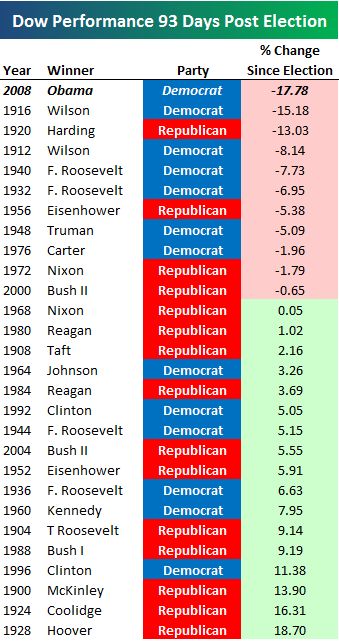
Coalition politics has never been the Republicans' strong suit. While they are in fact a coalition today -- ranging from the country club set to Bible belt Christians -- it is a very uneasy coalition. So long as the Dow Jones average is up and taxes are down, the country club set is happy. _Thomas Sowell
Sowell points out that the willingness of the Bible Belt Christians in the Republican coalition to fall on their swords of abortion to make a symbolic point--at the expense of winning an election--is making them a far less valuable part of the coalition than they would be otherwise. At this historical point in the US, the issue of abortion is far more likely to lose an election than to win one. So much for being concerned about the rights of the unborn.

Sowell is certainly right about the weakness of Republican coalition, when compared to the current Democratic coalition's incarnation. Which leaves one coalition element usually not mentioned--heavy firepower. Most members of the military vote Republican, but unless you expect a military coup to occur, the political views of the military rarely figure into practical politics. The military follows the orders of the CINC.

The Democratic Party has the backing of militant elements among minority communities, but even more, it has the backing of organized crime as allied with organized labor and corrupt big city political machines, such as Mayor Daley's Chicago mob conglomerate. From the Nation of Islam to Earth First to politically connected gangs and mobs, the Democratic Party has firepower on the street, where it can count.

Of course, should ordinary Americans ever decide to arm themselves and organize in defense against the mobs, count on the news media to accuse them of vigilantism and right wing extremism, and count on politicians to again try to disarm peaceful citizens, while doing nothing to neutralize the criminal mobs that can prove so useful to politicians.


Alice Finkel

Labels:

Bookmark and Share

11 October 2008

"Affordable Health Care?" Is that Similar to His Idea of "Affordable Mortgages?"


Watch the entire video for an entertaining, brief, and enlightening synopsis of the gang that took a left-handed sledgehammer to the world economy. This gang wants you to re-elect them all, and elevate "Dear Leader" to the head honcho position, so that he can finish the demolition. Are you stupid enough to do it? They think you are.

Markets begin to discount Obamanation

Obamanation: Rule by Thugocracy

Update: The "Hispanic Connection" underlying the housing bubble and credit meltdown

Labels: , ,

Bookmark and Share

07 October 2008

CSpan Spoof from SNL Explains Bailout Plan


This particular video clip has been the subject of much frantic search and speculation. Bruce Hall located a copy at Sweetness and Light.

The amazing thing about the clip is that Saturday Night Live--a left leaning comedy "improv" show, did the skit at all, since it skewers several prominent US Democratic Party legislators and financial backers including George Soros. In other words, I am less surprised that the clip went missing for so long, than that it was actually found again.

If SNL and other entertainment and news media outlets actually treated all political parties and viewpoints as equally worthy of satire and critique, right wing radio talk shows would be out of business.

Labels: ,

Bookmark and Share

28 September 2008

Affirmative Action Banking: Doomed from the Start

While President Carter in 1977 signed the Community Reinvestment Act, which pushed Fannie and Freddie to aggressively lend to minority communities, it was Clinton who supercharged the process. After entering office in 1993, he extensively rewrote Fannie's and Freddie's rules.

In so doing, he turned the two quasi-private, mortgage-funding firms into a semi-nationalized monopoly that dispensed cash to markets, made loans to large Democratic voting blocs and handed favors, jobs and money to political allies. This potent mix led inevitably to corruption and the Fannie-Freddie collapse. _IBD_via_DennisMangan
How did Affirmative Action Banking get such a chokehold on Wall Street and the entire financial industry?
Clinton ordered Robert Rubin's Treasury Department to rewrite the rules in 1995.

The rewrite, as City Journal noted back in 2000, "made getting a satisfactory CRA rating harder." Banks were given strict new numerical quotas and measures for the level of "diversity" in their loan portfolios. Getting a good CRA rating was key for a bank that wanted to expand or merge with another.

Loans started being made on the basis of race, and often little else.

"Bank examiners would use federal home-loan data, broken down by neighborhood, income group and race, to rate banks on performance," wrote Howard Husock, a scholar at the Manhattan Institute.

But those rules weren't enough.

Clinton got the Department of Housing and Urban Development to double-team the issue. That would later prove disastrous.

Clinton's HUD secretary, Andrew Cuomo, "made a series of decisions between 1997 and 2001 that gave birth to the country's current crisis," the liberal Village Voice noted. Among those decisions were changes that let Fannie and Freddie get into subprime loan markets in a big way.

Other rule changes gave Fannie and Freddie extraordinary leverage, allowing them to hold just 2.5% of capital to back their investments, vs. 10% for banks.

Since they could borrow at lower rates than banks due to implicit government guarantees for their debt, the government-sponsored enterprises boomed.

With incentives in place, banks poured billions of dollars of loans into poor communities, often "no doc" and "no income" loans that required no money down and no verification of income.

By 2007, Fannie and Freddie owned or guaranteed nearly half of the $12 trillion U.S. mortgage market — a staggering exposure.

Worse still was the cronyism.

Fannie and Freddie became home to out-of-work politicians, mostly Clinton Democrats. An informal survey of their top officials shows a roughly 2-to-1 dominance of Democrats over Republicans.

Then there were the campaign donations. From 1989 to 2008, some 384 politicians got their tip jars filled by Fannie and Freddie.

Over that time, the two GSEs spent $200 million on lobbying and political activities. Their charitable foundations dropped millions more on think tanks and radical community groups. _IBD_via_DennisMangan
Affirmative Action Banking is not preferential lending to minority borrowers. It is preferential lending to all extremely poor risk loan applicants, who under any sensible banking rules would be unqualified for the loan. Affirmative Action is not about race, it is about special preferences for the otherwise unqualified. That is what makes Barak Obama an affirmative action presidential candidate. Not because his biological father was from Kenya, but because Obama himself is clearly unqualified for the job. Poorly considered affirmative action policies of the government have caused the current crisis and are well on the way to cause several other crises in the pipeline. Imagine how much worse the problem will become under an affirmative action President?

Update: Blame the bubble on Jimmy Carter, Bill Clinton, and FDR?

If you lose your house, blame Bill Clinton

Labels: , , ,

Bookmark and Share

A Face To Go With the Financial Fannie Crisis

Presidents Jimmy Carter and Bill Clinton set the stage back in the '70s and the '90s for today's government-Wall Street credit embarassment. But when President Bush and John McCain wanted to reform Fannie Mae a few years ago to prevent such a crisis, one man stood tall to prevent meaningful reform. That man's name is Rep. Barney Frank of Massachussetts.
The roots of this crisis go back to the Carter administration. That was when government officials, egged on by left-wing activists, began accusing mortgage lenders of racism and "redlining" because urban blacks were being denied mortgages at a higher rate than suburban whites.

The pressure to make more loans to minorities (read: to borrowers with weak credit histories) became relentless. Congress passed the Community Reinvestment Act, empowering regulators to punish banks that failed to "meet the credit needs" of "low-income, minority, and distressed neighborhoods." Lenders responded by loosening their underwriting standards and making increasingly shoddy loans. The two government-chartered mortgage finance firms, Fannie Mae and Freddie Mac, encouraged this "subprime" lending by authorizing ever more "flexible" criteria by which high-risk borrowers could be qualified for home loans, and then buying up the questionable mortgages that ensued.

...Time and time again, [Barney] Frank insisted that Fannie Mae and Freddie Mac were in good shape. Five years ago, for example, when the Bush administration proposed much tighter regulation of the two companies, Frank was adamant that "these two entities, Fannie Mae and Freddie Mac, are not facing any kind of financial crisis." When the White House warned of "systemic risk for our financial system" unless the mortgage giants were curbed, Frank complained that the administration was more concerned about financial safety than about housing.

Now that the bubble has burst and the "systemic risk" is apparent to all, Frank blithely declares: "The private sector got us into this mess." Well, give the congressman points for gall. Wall Street and private lenders have plenty to answer for, but it was Washington and the political class that derailed this train. If Frank is looking for a culprit to blame, he'll find one suspect in the nearest mirror. _BostonGlobe
On network after network, Congressman Frank appears to explain how it was the unbridled capitalism of Wall Street that caused the contretemps. So, just at the moment that rescue is needed, who but Barney Frank comes riding over the horizon with all the answers? Who indeed.

Oynklent Green [OTC:OYNK] has taken a very strong interest in Congressman Frank. A very strong interest indeed.

Labels: , ,

Bookmark and Share

21 September 2008

Why Barak Obama Admires Ronald Reagan

Barak Obama's expansive populist vision for America has very little to do with Ronald Reagan's dreams for America to return to its traditionalist constitutional beginnings of limited government. But Obama recognises something powerful in Reagan's presentation that he wishes to achieve--and surpass. Reagan was a consummate story-teller, the weaver of narratives meant to inspire and motivate. "The Great Communicator" understood intuitively that humans comprehend the world largely in terms of narrative, and that is how he got his message across.
Storytelling is one of the few human traits that are truly universal across culture and through all of known history. Anthropologists find evidence of folktales everywhere in ancient cultures, written in Sanskrit, Latin, Greek, Chinese, Egyptian and Sumerian. People in societies of all types weave narratives, from oral storytellers in hunter-gatherer tribes to the millions of writers churning out books, television shows and movies. And when a characteristic behavior shows up in so many different societies, researchers pay attention: its roots may tell us something about our evolutionary past....

...the best stories—those retold through generations and translated into other languages—do more than simply present a believable picture. These tales captivate their audience, whose emotions can be inextricably tied to those of the story’s characters. Such immersion is a state psychologists call “narrative transport.”

...Empathy is part of the larger ability humans have to put themselves in another person’s shoes: we can attribute mental states—awareness, intent—to another entity. Theory of mind, as this trait is known, is crucial to social interaction and communal living—and to understanding stories...Children develop theory of mind around age four or five.

...As our ancestors evolved to live in groups, the hypothesis goes, they had to make sense of increasingly complex social relationships. Living in a community requires keeping tabs on who the group members are and what they are doing. What better way to spread such information than through storytelling?...Indeed, to this day people spend most of their conversations telling personal stories and gossiping.

...The power of stories does not stop with their ability to reveal the workings of our minds. Narrative is also a potent persuasive tool, according to Hogan and other researchers, and it has the ability to shape beliefs and change minds.

Advertisers have long taken advantage of narrative persuasiveness by sprinkling likable characters or funny stories into their commercials. A 2007 study by marketing researcher Jennifer Edson Escalas of Vanderbilt University found that a test audience responded more positively to advertisements in narrative form as compared with straightforward ads that encouraged viewers to think about the arguments for a product. Similarly, Green co-authored a 2006 study that showed that labeling information as “fact” increased critical analysis, whereas labeling information as “fiction” had the opposite effect. Studies such as these suggest people accept ideas more readily when their minds are in story mode as opposed to when they are in an analytical mind-set. _ScientificAmerican
It is easy to lead someone along a certain path of thought, when you transport them in an attractive narrative vehicle. Most master storytellers are mature and disciplined enough to limit their unfair advantage over their listeners. But if a master storyteller is also a quintessential narcissist, he tries to maximise his power over his admirers.

We live in a society where most people never grow up. Lacking any meaningful rites of passage, being raised and "socialised" in age-isolated cohorts far away from the adult world of responsibility, we have a society made up of large numbers of "Peter Pans" and "Cinderellas." These psychological neotenates increasingly live on fantasy and wish fulfillment, rather than on self-reliant ambition and drive. They are plump fruit, ripe for the plucking. If one only has the right narrative that will appeal to their particular type, one might do just about anything.

Labels: , ,

Bookmark and Share

18 September 2008

Controversy and Corruption Still Swirls Around Clinton Officials: Fannie Mae

The two persons most prominent in the collapse of Fannie Mae, are perennially corrupt and incompetent former Clinton officials Jamie Gorelick (pictured), and Franklin Raines.
At the top of the list we must place Franklin D. Raines, chairman and chief executive officer of Fannie Mae from 1998 to 2004. Raines, who served as director of the Office of Management and Budget under President Clinton, had previously worked at Fannie Mae as vice chairman. Before that, he worked on the Clinton transition team following the 1992 election. Before that, he was a general partner at Lazard Freres & Co. Raines, as the Wall Street Journal reported, was forced to leave Fannie Mae in 2004, when regulators discovered it had broken accounting rules "in an effort to conceal fluctuations in profit and hadn't maintained adequate risk controls." The New York Times reported two year ago that regulators "have said that of the $90 million paid to Mr. Raines from 1998 to 2003 at least $52 million—more than half—was tied to bonus targets that were reached by manipulating accounting." Raines agreed to a $24.7 million settlement with a federal regulator in exchange for charges being dropped, but he admitted no wrongdoing.

Next up is Jamie S. Gorelick, whose official résumé describes her as "one of the longest serving Deputy Attorneys General of the United States," a position she held during the Clinton administration. Although Gorelick had no background in finance, she joined Fannie Mae in 1997 as vice chair and departed in 2003. For her trouble, Gorelick collected a staggering $26.4 million in total compensation, including bonuses. Federal investigators (PDF) would later say that "Fannie Mae's management directed employees to manipulate accounting and earnings to trigger maximum bonuses for senior executives from 1998 to 2003." The New York Times would call the manipulations an "$11 billion accounting scandal." Gorelick, it should be noted, has never been charged with any wrongdoing. _Slate
Those are the two top names, the proximate although not ultimate causes of much of the turmoil sweeping Wall Street and Washington. If you read further in the above article, you should note the duplicitous sophistry of the author, in his attempt to involve others in the scandal who had no relationship to the corruption of the Clintons. But that is the media. Dishonest to a fault.

Jamie Gorelick was involved in other scandals--including creating the "wall of silence" between federal intelligence agencies which was still in place when the 9/11 terror attacks occurred in 2001, and was largely responsible for the intelligence breakdowns there. She is currently living a comfortable lifestyle, on extremely ill-gotten gains. No doubt both she and Raines are hoping for a cushy civil service job in the Obama administration.

Corruption was the name of the game under Clinton, and you can see it in action not just in the Enron and Fannie Mae scandals, but across the board in US society. George Stephanopoulos is a good example of mainstream corruption: posing as an objective news analyst, reporter, and anchor, while acting as a blatant political partisan both behind the scenes and on camera.

Unfortunately we will not be able to expect better from the Obama-Rezko-Daley administration. Corruption and Democratic Party politics are one and the same, sadly.

Labels: ,

Bookmark and Share

10 September 2008

Obama Backers Becoming Uncomfortable With the Messiah's Reflexive Phoniness

I have become increasingly uneasy about Obama's efforts to sound folksy and approachable by reflexively using inner-city African-American tones and locutions, which as a native of Hawaii he acquired relatively late in his development...
Instead, the Obama-messiah's backers want him to be phony in a way that is more convincing to his target audience. Some even suggest that Obama just "be himself", as if the Obama-onion when peeled away layer by layer, actually has an actual self. Sorry, folks. There's no there, there.

Which may be why Obama's poll numbers are abit shaky right now, and why an inexperienced "former mayor" from Alaska has the messiah shaking in his boots.
...Palin represented an explosion of a brand new style of muscular American feminism. At her startling debut on that day, she was combining male and female qualities in ways that I have never seen before. And she was somehow able to seem simultaneously reassuringly traditional and gung-ho futurist. In terms of redefining the persona for female authority and leadership, Palin has made the biggest step forward in feminism since Madonna channeled the dominatrix persona of high-glam Marlene Dietrich and rammed pro-sex, pro-beauty feminism down the throats of the prissy, victim-mongering, philistine feminist establishment.

... I have immensely enjoyed Palin's boffo performances at her debut and at the Republican convention, where she astonishingly dealt with multiple technical malfunctions without missing a beat. A feminism that cannot admire the bravura under high pressure of the first woman governor of a frontier state isn't worth a warm bucket of spit.

Perhaps Palin seemed perfectly normal to me because she resembles so many women I grew up around in the snow belt of upstate New York. For example, there were the robust and hearty farm women of Oxford, a charming village where my father taught high school when I was a child. We first lived in an apartment on the top floor of a farmhouse on a working dairy farm. Our landlady, who was as physically imposing as her husband, was an all-American version of the Italian immigrant women of my grandmother's generation -- agrarian powerhouses who could do anything and whose trumpetlike voices could pierce stone walls.

Here's one episode. My father and his visiting brother, a dapper barber by trade, were standing outside having a smoke when a great noise came from the nearby barn. A calf had escaped. Our landlady yelled, "Stop her!" as the calf came careening at full speed toward my father and uncle, who both instinctively stepped back as the calf galloped through the mud between them. Irate, our landlady trudged past them to the upper pasture, cornered the calf, and carried that massive animal back to the barn in her arms. As she walked by my father and uncle, she exclaimed in amused disgust, "Men!"

Now that's the Sarah Palin brand of can-do, no-excuses, moose-hunting feminism -- a world away from the whining, sniping, wearily ironic mode of the establishment feminism represented by Gloria Steinem...

...Sarah Palin, if her reputation survives the punishing next two months, may be breaking down those barriers. Feminism, which should be about equal rights and equal opportunity, should not be a closed club requiring an ideological litmus test for membership. _Sal-on
Yes, if Sarah Palin's reputation survives the surreal and absurdist attacks being heaped indiscriminately on her and her family by "plausibly deniable" Democratic Party attack dogs, and a national media largely subservient to the DNC.

This is full contact politics, and as in any no-holds-barred full contact event, blowback can be a bitch [media take note]. Hold on, it only gets more intense when the Democratic attack dogs of war are let slipped.

Labels: , ,

Bookmark and Share

02 September 2008

American Feminism Out of Touch w/ Women & Men

As one Iraqi women's advocate, Haifa Abdul Rahman, told her, "We see feminism in America as dividing women from men, separating women from the family. This is bad for everyone." _Source
This is not the time to be attacking the family, or family-oriented women. But that is exactly what feminism and the left is doing, in an increasingly crude and frantic manner.
Today's feminist establishment in the United States is dominated by the radical wing of the egalitarian tradition. Not only do its members not cooperate with their conservative sisters, but they also often denigrate and vilify them; indeed they have all but eliminated them from the history of American feminism. Revisionist history is never a pretty sight. But feminist revisionists are destructive in special ways. They seek to obliterate not only feminist history but the femininity that made it a success.
Feminists do not speak for the majority of women. They speak for leftist radical women, who consider all other women as "fair game" to be exploited systematically in a way the patriarchy never considered doing.

The candidacy of Alaska governor Sarah Palin should present an interesting spectacle for the women of America. It also presents an increasingly difficult dilemma for the radical feminists who have pressed so hard for a Democratic Party majority in the US Congress. If radical feminists adopt their standard attack tactics against Palin, they risk revealing more about themselves than they care to do. But if they hold back, they risk allowing entire new generations of young women to be exposed a powerful new female role model that could reverse decades of feminist indoctrination.

Should the harpy hos of feminism ignore Palin, or should they loudly protest her as "anti woman?"

McCain's maverick choice has certainly stirred the pot.

Labels: ,

Bookmark and Share
Older Posts
Al Fin Main Page
Enter your Email


Powered by FeedBlitz
Google
WWW AL FIN

Powered by
Blogger

``