19 November 2006

Is Iraq a Debacle?

de·ba·cle Pronunciation (d-bäkl, -bkl, db-kl)
n.
1. A sudden, disastrous collapse, downfall, or defeat; a rout.
2. A total, often ludicrous failure.
3. The breaking up of ice in a river.
4. A violent flood. Source

A lot of web commenters have labeled the US coalition military action in Iraq a "debacle." Is it possible the word does not mean what they think it means?

After 9/11/2001, it was obvious that Afghanistan was the rat's nest--it had to be cleaned out and disinfected. Iraq seemed like a ludicrous target to me. But it seemed that the US President Bush was in a hurry to depose Saddam. Only after Saddam's government collapsed did the US government seem to be aware that Iraq would have to be governed--which might not be easy. Well, hindsight is 20/20, of course.

After the US coalition was in Iraq, it became obvious that a precipitous exit would indeed be a debacle for the US and the west. Staying in place, amid a bloody civil war between three distinct groupings was a bad choice, but not as bad a choice as a precipitous retreat would have been.

Iraq can only be called a fiasco in relation to some other similar action. Vietnam? No, compared to Vietnam, Iraq has been a roaring success. Only those with no knowledge of Vietnam would make the comparison with a straight face. Iraq would become a Vietnam, a true debacle, were the US coalition to choose a precipitous retreat at this time. Certainly Al Qaida celebrated recent US elections as preludes to a debacle in their favour. Muslim extremists and supremacists in general celebrated those elections, in hope of a coming debacle.

In the current clash of civilisations between primitivism (Islam) and modernism (the west), perceptions are crucial. A primitive society built on blood feuds, petty raids, and wars of conquest, is not impressed by opponents that run away from a fight. Osama and his cohorts were most encouraged by the Clinton retreat from Somalia. A similar retreat from Iraq would be even greater encouragement.

George W. Bush is not the sharpest knife in the drawer. Nor is he the dullest. Many of his most vocal critics appear far duller.

What does Bush mean by "staying the course?" Probably something far different than what his critics mean. Of course, almost no one in the world really knows what "the course" means to Bush and his planners, though the critics think they know and feel free to hold Bush and his "course" in contempt.

I am taking a lot more into account, looking at a deeper game, than most Bush critics. History may very well hold Bush in the contempt that many ideologues and critics hold him in already. Or not. All I know is there is a lot more at stake than whether Bush is President or Cheney is Vice-President of the US. The future of Europe and the west is at stake. Anything that is done by the west at this time to give aid and encouragement to the jihadis and islamic supremacists is a knife in the back of western civilisation.

This post is not an endorsement of the Iraqi action, nor of US President Bush. Rather it is a suggestion that the surface "truth" is not the same as the deeper truth. That the way events are portrayed in the media may not represent the actual events in their entirety. Most people have no knowledge of military strategies, much less the treacherous interactions of civilisations in conflict. There is more going on here than you know.

Labels: , ,

Bookmark and Share

Interesting News Briefs

Salk Scientists Learn Limb Regeneration Secrets: Scientists at Salk have accomplished the regeneration of the wing of a chicken embryo. Since chickens are not known to regenerate limbs, this accomplishment may help lead to regeneration of human body parts and organs.

Scientists Detect Viruses with Lasers and Silver Nanotech: UGA researchers have invented a device to detect pathogenic viruses using laser light and silver nano-whiskers. The procedure is very fast and very accurate. Dr. McCoy's hand-held body scanner cannot be far off.

China Executes 80% or More of World's Executed Prisoners--For Body Parts!!: While political activists excoriate the US for executing fewer than a hundred violent prisoners a year, China executes 10,000 or more yearly--including political prisoners. Such political activists are like the drunks who look under the streetlight for their keys, even though they dropped them two blocks down the street. The light is better under the streetlight, you see.

A Boat with a Porpoise: A crazy Kiwi has invented a "dolphin boat" that dives, breaches, and swims like a playful dolphin. Be the first on your lake to drive one of these "porpoise-ful" boats around the water.

Hat tip, keelynet.com
Bookmark and Share

18 November 2006

Morality Only Applies if You Are Alive


....morality and compassion are things you can only afford when you're in a nation that's isn't fighting for survival.Source.

Morality has become fashionable in politics, with both sides of the US political debate claiming the moral high ground. Always be suspicious of politicians appealing to morality. By definition, politicians and lawyers are liars. Priests and Pastors are almost as bad. Special interest morality is unsatisfying to anyone who values truth. The media laps it up like dogs, though. So do people with little experience in life, or little personal ballast despite experience.

There are different approaches to morality, some of which are fairly objective. Special interest morality is a focused morality that ignores far more than it includes. It is very useful to lawyers, politicians, and priests--not to mention partisan media pundits. The problem is being able to detect the stunted morality before it causes you to change your behaviour. Most people are incapable of doing that.

If schools wanted to provide a service to students, they would require them to analyse a full spectrum of arguments on a particular issue, and not only identify the logical parts of the argument, but locate logical fallacies and logical shortcomings--including blatantly ignored alternative premises. The reasons schools rarely do this, is that such an exercise presents a danger to the school's (or professors') underlying argument or point of view. We cannot have that.

So I will do something similar. I present links to three point of view articles--here, here, and here. You may choose the topic that interests you most and analyse it.

Morality exists on many levels. The failure to distinguish between levels of morality, and how they might affect an argument, is a major shortcoming of modern education and public discourse.

Finally, there is Marc Hauser's book, Moral Minds. I have skimmed the book and read several reviews. I have read other books by Hauser. I consider the new book an essential early step in looking at the biology of morality. I plan to read the book in detail fairly soon, as it may fit in the reading rotation.

Philosophy once encompassed ethics. Now biology is elbowing its way in, quite rudely. There is something offensive about biological imperatives that force their way into polite conversation, over cocktails. Nevertheless, a growing number of dissenters from politically correct self-censorship are beginning to speak more loudly--and publishers are finding it harder not to publish them. This is a trend.

The popular media has temporarily hit on a "formula of morality" that seems to sway the majority of voters in some parts of the developed world. What the popular media may not realise is that morality is a fickle servant, subject to significant recoil.

For interested observers, I strongly recommend reading Hauser, Pinker, Dennett, Dawkins, and other students of human behaviour with Darwinian perspectives. Then look at what societies' liars--politicians, lawyers, media pundits, clerics, PC professors--are doing to morality arguments. Fascinating.

Labels: ,

Bookmark and Share

17 November 2006

Just Stick to the Formula, Asshole!

In fiction, people often claim there are only so many plots available--here is a look at anything from one to thirty-six plots that may be available to you as a budding writer. Here is the formula for the one plot approach: Exposition - Rising Action - Climax - Falling Action - Denouement.

Finding different formulas is pretty easy on the internet. There you can find formulas for fiction (here and here), formula for humor, romance fiction, the perfect Hollywood script, formula for a good life and even a perfect butt!

The sad thing is not that executives in the music, TV, and movie industries have bought into the formula racket. The sad thing is that the news media pundits and ordinary people are buying into it. If you want the public to see things a certain way, just spin the news to fit a certain formula, et voila! People get the picture you want them to get.

I remember an episode of the TV series "Northern Exposure," where the Inuit shaman went from one Anglo Alaskan to another, trying to get them to tell him a mythic story from Anglo culture. Inuits and other native peoples all have traditional mythic stories that once shaped their lives and paradigms of the world. The shaman was disappointed that none of the Anglos seemed to have a story to tell him.

Of course, anybody but a TV script writer would know that the Anglo mythic stories of modern times are the movies. Best-selling novels of course, but who reads these days? If the book is not made into a movie, most people won't have heard of it. Movies are our stories--our paradigms--and movies are made strictly according to formula.

What I'm saying is, you are living a formula, whether you know it or not. And your strings are showing. Not just anybody can pull them, mind you, but there are a lot of people out there who can.

Have you not found yourself--do you not know "who you are?" How sad for you--you haven't found your formula. Stick in there, and if you are lucky, that formula will come along.

What would it take for a society to develop citizens who were independent-minded, and original? High intelligence? Sorry, that won't quite cut it. High intelligence plus self-discipline? Much better, but not quite there yet. High intelligence, self-discipline, and the wisdom of experience and perspective? Okay, I'll buy that.

How can a society escape its own formulaic traps and prisons? First it has to want to. I see no evidence of that, from what I can see in the media and institutions of society. So instead of seriously considering what I am trying to say, you might just stick to the formula, asshole! Or so most people would probably tell you. Maybe they're right. I like to think not.
Bookmark and Share

16 November 2006

Politics of Genetics--Eugenics=Far Right; Dysgenics=Far Left

If you look at the essence of the political left and political right, you will inevitably look at attitudes toward "genetics as destiny." The old far right believes in maintaining "pure blood lines", and feels that breeding will show. The left traditionally believes that genetics is of minor--if any--importance in human affairs. They believe humans are humans are humans. Genetics simply does not signify.

Given current leftist ascendancy in universities and the media, it is understandable that eugenics has a bad reputation, synonymous with nazism in many minds. Dysgenics is simply ignored as unimportant.

But is dysgenics as unimportant as leftists would have you think? Psychologist Richard Lynn wrote a book discussing the implications of modern dysgenic policies in the western world. Like Charles Murray before him, Lynn addresses the documented differences in aptitude and achievement between genetically different groups of people, and takes the reader on a sober journey into the dysgenic future.


Dysgenics comes into play in the modern world mainly through immigration policies, although badly designed welfare programs, and anti-meritocratic practices in school admissions and employment also promise dysgenic results.

Briefly, European populations in Europe, North America, Oceania, and other scattered outposts are not reproducing enough to sustain their population proportions. The IQ component of a society contributed by European peoples is becoming less prominent, as populations that average higher test scores on IQ tests are being replaced by populations that average lower IQ test scores.

How will this apparent lowering of population average IQ scores translate sociologically and economically for these societies? In general, one could look at the societies in Africa and the Middle East that are supplying replacement populations for Europe, and societies in Latin America which are supplying replacement populations for North America--and one could predict the futures of these formerly European dominant societies by the past of their replacement population societies. In general, one could conceivably do that.

Societies with average IQs below 90 tend to be failed societies. It is difficult to conceive of a successful modern society with such a low average IQ. Yet immigration policy by a typical leftist completely ignores the dysgenic effect of policy.

Countries have an obligation to their current citizens to only admit new immigrants who have merit--who have something to offer. Immigration policy in most western countries does not follow that one simple important guideline.


In a previous Al Fin article, I looked at this topic, and pointed to the worthy blog Audacious Epigone, as one of many blogs (including GNXP.com and iSteve.com) that attempt to monitor research relating to this topic. The ongoing insurrection in France by young muslims, and increasing threats of homegrown muslim terrorism in the UK, should serve as sufficient indicators of the now and future clash of populations for anyone sober enough to drive a car or hold a job.

Labels: , , ,

Bookmark and Share

15 November 2006

How Do Memories Get From the Hippocampus to the Neo-Cortex?

Recent research in Nature Neuroscience adds intriguing new details to theories of long term memory formation and transfer from the hippocampus to the neo-cortex. Surprisingly, the transfer process appears to be controlled from the neo-cortex and involves inhibitory neuron phase-locking, or phase coupling.

To study this dialogue, Mehta recorded electrical activity in rat brains. To mimic the deepest sleep states, the rats were anesthetized then fitted with two electrodes. One electrode measured the electrical activity of thousands of cells in the neocortex. These cells were excitatory, meaning that they spark communication between nerve cells. The other electrode recorded the activity of a single inhibitory cell in the hippocampus. These inhibitory cells shut down dialogue between nerve cells.

Using this groundbreaking single-cell recording technique, honed in Sakmann’s laboratory at the Max Planck Institute for Medical Research, researchers made an important finding: During deepest sleep, in both the hippocampus and neocortex, the patterns of neural activity are both regular and highly related. The cells in the old and new brains fired nearly in synch, evidenced by similar peaks and troughs shown on electroencephalographs.

This is surprising; Previous studies showed that during deep sleep, when the excitatory cells in the neocortex showed rhythmic activity, excitatory neurons in the hippocampus showed erratic activity. This stumped Mehta and his colleagues: If these two parts of the brain talk during deep sleep, why didn’t they appear to be speaking the same language? They are, Mehta and his team discovered, if you listen to inhibitory, not excitatory, cells in the hippocampus. Mehta and his team also showed that the activity of the cells is related. The timing of activity, or talk, was the same in both brain regions, with a small delay in the hippocampus – as if those cells were echoing the speech in the neocortex.

This discovery of synchronized communication between the old and the new brain – a phenomenon known as “phase-locking” – has two key implications. It suggests that the neocortex, not the hippocampus, drives the discussion between these brain systems during deep sleep. It also suggests that the inhibitory neurons control the conversation.
Source.

Chris Chatham at Develintel follows research in phase coupling of "cross frequency" neuro-communication. I expect to read some interesting commentary at Chris' blog on this research as well.

Labels:

Bookmark and Share

Emotional Calibration

Our emotions are powerful tools for evaluating the world around us quickly, and at levels we may not be able to describe verbally. Cognitive scientists are just now starting to tackle the complexities of emotions in their more advanced machines and programs.

Human emotions need calibrating, just as our cognitive systems and mind-body controls need calibration.

I was first exposed to conscious calibration of emotions when taking drama class and musical theatre class. A good actor needs to express a wide range of emotions, without having to reach too far for them. Likewise, a good singer in a musical play needs to find the emotions within himself that the song is expressing.

Everyday life can also be emotionally demanding, with the threat of an emotional boobytrap being tripped at any time. By "calibrating" our emotions regularly, we keep our emotions tuned and ready for appropriate responses.

We are all actors on the stage. We need to utilise methods of emotional priming that are just as sound as what actors use.

The best everyday method for exercising and calibrating emotion that I have found, is the Sentic Cycle method, developed by neuroscientist and musician Manfred Clynes.

Sentic Cycles lets you generate and express your emotions in a series, as a spectrum, your emotion 'symphony', so you tend to become free from emotional rut - being stuck in one emotion- and be in touch with your real self - not overwhelmed by single emotion (yet able to savour them all as in music).

It takes only 10 minutes to learn to do it - and then you may benefit from doing it anytime the rest of your life - as long as human nature does not change! Anyone can do it.

It uses only your own natural expressions of emotion to generate and to enjoy them.

....We all tend to be prisoners of emotion more than we may wish to be. Emotions make life enjoyable and meaningful, but not if you are in an emotional rut, where a particular, most often negative, emotion takes over, and makes it hard to get out of, even temporarily. Often such negative emotions are suppressed, but still interfere with function and freedom of experience.

Sentic Cycles allow you to experience and express all such emotions more constructively, without being overwhelmed by them.
Source.

Emotions are powerful and fast, compared to other types of cognition. But they have to be kept toned and in shape, like our bodies.

A satisfying play or movie is one that exercises our emotions skillfully, so that usually we are not even aware of what is being done to us subconsciously. Most people go through life being manipulated emotionally, without realizing it. How much better it would be to become well acquainted with our emotions on a regular basis, so that they are seen more like friends than potentially dangerous strangers.

Hat tip Pastorius.

Labels: , , ,

Bookmark and Share

13 November 2006

Brain Calibration

Baseball pitchers warm up with practice pitches before every appearance. Basketball players shoot practice hoops before games. Actors practice emoting before acting, singers practice intervals and runs, surgeons go through the sequence of a major surgery before scrubbing. All of these preliminaries are examples of mental calibration.

Calibrating the brain is a priming operation. The brain can be prepped for specific types of performance. But it is not just professional performers and practitioners of high risk procedures who need to calibrate. Every morning when the brain wakes up, it falls into a new dynamic state. If the brain has to achieve a certain level of performance each day, it must be calibrated for that performance. Otherwise, the level of achievement from day to day is left to chance. That is how most people live, by chance. When has popular culture ever offered anything else?

In Palestine the children are calibrated daily to hate the Jew, as they are in Hizballah controlled Lebanon, and much of the arab muslim lands. Hatred of the proper enemy is too important to be left to chance. If a society wants a ready supply of suicide bombers and guerilla fighters, it must begin calibrating minds at an early age.

Christian fundamentalists begin calibrating the minds of their children quite early as well. Sunday School and church, religious schools, camps, bible schools, and so on. Maintaining the proper religious way of thinking is too important to be left to chance. Early morning mass, confession, liturgy, prayer meetings, revivals. If a group wants the next generation to carry on the traditions of the current one, it must begin calibrating minds very early.

But then, those examples are not really the same thing as calibrating for top performance. They are more like brainwashing. But why do so many parents leave the cultivation of the minds of their children to chance and a largely indifferent culture? Affluent societies so often breed listless and goalless children. Decadence is what happens when one generation leaves the minds of the next generations to chance.

People think in basic metaphoric "thought concepts", and combinations of concepts called "thought patterns."

A thought-pattern is always subjectively created, and successively "objectified" by different calibration procedures. The state of consensus (= collective agreement on validity) of any though-pattern is represented by its corresponding calibration history. Since the thought-patterns presented here lack an attempt to describe this history, they are to be considered basically my own. That does not mean, however, that I consider them all as having originated with me. On the contrary, I have often tried to express how I conceive the thought-patterns of others. This is of course an important part of the group-consensus forming calibration process.
Source.

Brain calibration can take many forms--from meditation to mental imaging to neuromuscular practice to estimating distances or calculations, then checking the estimates. More complex forms of calibration are needed for more complex thought patterns. Unfortunately, modern educational practices have not kept up with current findings in neuroscience, but have instead regressed to conform with current whims of "political correctness."

Many professors of educational trends are willing to destroy a society in order to see their methods of social engineering "tried out" on new generations of hapless students. Fortunately, there are others who pay attention to scientific findings, who are outside the reach of the fashionable trendsetting PC social engineers.

There is a lot of need for reform in education, thanks to the PC professors who currently rule the universities and schools of education. Whether they like it or not, this reform is coming.

Labels: , , , , ,

Bookmark and Share

12 November 2006

Discipline, and Talent

Genes vs. the Environment. Websites like Gene Expression and Steve Sailer perform a valuable service by describing research that shows how important genetics and heredity are in the success of individuals and nations. Statistically, intelligence correlates well with success--and intelligence is between 50% and 70% hereditable.

Inherited talent can certainly make the difference between success and mediocrity. But talent without disciplined training can be worse than worthless. A society that lapses into decadent sloth, where hard work is disdained and avoided, is likely to fail eventually.

Quotes on SELF-DISCIPLINE

"The first and best victory is to conquer self."
— Plato
Greek Philosopher

"You can never conquer the mountain. You can only conquer yourself."
— Jim Whittaker


"Talent without discipline is like an octopus on roller skates. There's plenty of movement, but you never know if it's going to be forward, backwards, or sideways."
— H. Jackson Brown, Jr.
Author

"It is not enough to have great qualities; We should also have the management of them."
— La Rochefoucauld


"A man without decision of character can never be said to belong to himself . . . . He belongs to whatever can make captive of him."
— John Foster
Author

"It is necessary to try to surpass one's self always: this occupation ought to last as long as life."
— Queen Christina of Sweden


"I think the guys who are really controlling their emotions ... are going to win."
— Tiger Woods


"Let me . . . ; remind you that it is only by working with an energy which is almost superhuman and which looks to uninterested spectators like insanity that we can accomplish anything worth the achievement. Work is the keystone of a perfect life. Work and trust in God."
— Woodrow Wilson


"We are what we repeatedly do, excellence then is not an act, but a habit."
— Aristotle


"Men are anxious to improve their circumstances, but are unwilling to improve themselves; they therefore remain bound. The man who does not shrink from self-crucifixion can never fail to accomplish the object upon which his heart is set. This is true of earthly as of heavenly things. Even the man whose object is to acquire wealth must be prepared to make great personal sacrifices before he can accomplish his object; and how much more so he who would realize a strong and well-poised life."
— James Allen


"Nothing is more harmful to the service, than the neglect of discipline; for that discipline, more than numbers, gives one army superiority over another."
— George Washington


"Mental toughness is many things and rather difficult to explain. Its qualities are sacrifice and self-denial. Also, most importantly, it is combined with a perfectly disciplined will that refuses to give in. It's a state of mind-you could call it character in action."
— Vince Lombardi


"There are no short cuts to any place worth going."
— Beverly Sills


"Hold yourself responsible for a higher standard than anybody else expects of you. Never excuse yourself. Never pity yourself. Be a hard master to yourself-and be lenient to everybody else."
— Henry Ward Beecher


"Keep away from people who belittle your ambitions. Small people always do that, but the really great make you feel that you, too, can become great."
— Mark Twain


"If we don't discipline ourselves, the world will do it for us."
— William Feather


"Mastering others is strength. Mastering yourself is true power."
— Lao Tzu


"Never suffer your courage to exert itself in fierceness, your resolution in obstinacy, your wisdom in cunning, nor your patience in sullenness and despair. "
— Charles Palmer


"This quality of self-denial in pursuit of a longer-term goal and, indeed, the willpower to maintain the denial, is excellent training for the boardroom."
— John Viney
Drive


"Rule your mind or it will rule you."
— Horace


"Be not angry that you cannot make others as you wish them to be, since you cannot make yourself as you wish to be."
— Thomas á Kempis


"Leaders aren't born they are made. And they are made just like anything else, through hard work. And that's the price we'll have to pay to achieve that goal, or any goal."
— Vince Lombardi


"Success is a matter of understanding and religiously practicing specific, simple habits that always lead to success."
— Robert J. Ringer


"It was high counsel that I once heard given to a young person, 'always do what you are afraid to do.'"
— Ralph Waldo Emerson


"Nobody's a natural. You work hard to get good and then work to get better. It's hard to stay on top."
— Paul Coffey
NHL star


"A successful career will no longer be about promotion. It will be about mastery."
— Michael Hammer


"The good Lord gave you a body that can stand most anything. It's your mind you have to convince."
— Vince Lombardi


"The individual who wants to reach the top in business must appreciate the might and force of habit. He must be quick to break those habits that can break him—and hasten to adopt those practices that will become the habits that help him achieve the success he desires."
— J. Paul Getty


Self discipline is the opposite of decadence and sloth. A slothful and decadent society is one that is easy to overcome from within or without. Even the slightest observation shows that socialist and communist societies become decadent--even more decadent than affluent capitalist countries. A society that provides all the amenities to everyone gratis, is a society in danger of breeding sloth into its members.

It is easy for a society to go too far in the opposite direction, as in ancient Sparta, or modern Palestine and Southern Lebanon. Societies bred exclusively for war. These societies will never produce great art or anything else but bloodshed.

Humans have always had to thread the eye of the needle, plot the course between disaster and oblivion. According to history, virtually every society eventually meets with oblivion. Sooner or later.

So, suppose a society learns to breed talent AND self-discipline into its members. Would that be enough to assure the durability of that society and its underlying civilisation? Well, luck plays a part, as does the wisdom of experience in understanding where to apply all that talent and discipline.

Wisdom is not what most people think it is. More later.

Labels: , , , , ,

Bookmark and Share

11 November 2006

The Robot Menace?--Yes or No?

"The Rise of the Robot" is the headline of a recent story by the Sydney Morning Herald. The author gives fascinating examples of advances in robot technology, and wonders where it is all heading--particularly since there has recently been a great deal of interest in the topic of sex with robots.

Hospitals in the US and Europe are already using robotic systems to help surgeons in increasingly complex operations. For several years they have been used to show surgeons 3-D views of operations in progress. With fanciful names such as da Vinci and Zeus, robotic surgical systems are widely used for cutting and sewing, and assisting in delicate operations in which a non-tremulous assistant can be invaluable. Hospitals use robots as couriers to deliver drugs, meals and medical specimens while nurses get on with more demanding jobs.

In September US Marine Claudia Mitchell became the first woman to receive a bionic arm after a motorcycle accident. Controlled by rerouted nerves in her shoulder to muscles in her chest, the movements of her new robotic arm have become so sophisticated, she is is able to peel an orange.

Meanwhile, her fellow marines in Iraq and Afghanistan get to see the cutting edge of military and disaster-zone robots. Hundreds of bomb disposal robots are being used there to defuse explosive devices.

....The US military has estimated that by 2115, 30 per cent of all military flight missions and 10 per cent of ground movements will be unmanned. Locally, the Australian Navy is planning to buy a robot to perform undersea rescues. The remote-controlled underwater vehicle can speed to a bottomed submarine and keep the crew alive until a rescue boat arrives.

Robots seem to be an ideal solution for extreme conditions. Despite the arguments among scientists over the merits of manned over unmanned space flight, US space agency NASA has said it will send robots to the moon between 2008 and 2011 and will keep using robots to study Mars.

....Recently, senior robotics scientist Henrik Christensen, a member of the European Robotic Research Networks ethics group, made the extraordinary declaration that "people are going to be having sex with robots within five years".

Perhaps visions of Daryl Hannah as the "pleasure-model" replicant in Blade Runner inspired the work of German inventor Michael Harriman, who claims to have invented the world's most sophisticated robotic sex doll. According to news reports, the doll's heart beats faster during sex and internal heaters raise its body temperature.
Source.

Of course, robots are increasingly common as children's toys. Nothing lowers the guard of society more readily than for an object to become a child's toy. But should we be afraid?

Noted columnist Mark Steyn writes in Macleans that perhaps our fixation with robots may be a symptom of a societal decadence that marks our society--our world--for extinction.

In The Children Of Men, P. D. James' dystopian fantasy about a barren world, there are special dolls for women whose maternal instinct has gone unfulfilled: pretend mothers take their artificial children for walks on the street or to the swings in the park. In Japan, that's no longer the stuff of dystopian fantasy. At the beginning of the century, the country's toy makers noticed they had a problem: toys are for children and Japan doesn't have many. What to do? In 2005, Tomy began marketing a new doll called Yumel -- a baby boy with a range of 1,200 phrases designed to serve as companions for the elderly. He says not just the usual things -- "I wuv you" -- but also asks the questions your grandchildren would ask if you had any: "Why do elephants have long noses?" Yumel joins his friend, the Snuggling Ifbot, a toy designed to have the conversation of a five-year old child which its makers, with the usual Japanese efficiency, have determined is just enough chit-chat to prevent the old folks going senile. It seems an appropriate final comment on the social democratic state: in a childish infantilized self-absorbed society where adults have been stripped of all responsibility, you need never stop playing with toys. We are the children we never had.

And why leave it at that? Is it likely an ever smaller number of young people will want to spend their active years looking after an ever greater number of old people? Or will it be simpler to put all that cutting-edge Japanese technology to good use and take a flier on Mister Roboto and the post-human future? After all, what's easier for the governing class? Weaning a pampered population off the good life and re-teaching them the lost biological impulse or giving the Sony Corporation a licence to become the Cloney Corporation? If you need to justify it to yourself, you'd grab the graphs and say, well, demographic decline is universal. It's like industrialization a couple of centuries back; everyone will get to it eventually, but the first to do so will have huge advantages: the relevant comparison is not with England's early 19th century population surge but with England's Industrial Revolution. In the industrial age, manpower was critical. In the new technological age, manpower will be optional -- and indeed, if most of the available manpower's Muslim, it's actually a disadvantage. As the most advanced society with the most advanced demographic crisis, Japan seems likely to be the first jurisdiction to embrace robots.....and embark on the slippery slope to transhumanism.
Source.

Of course, Steyn is talking about the demographic crisis in the west--the failure of western nations to sustain their populations in the face of an undeniable demographic/cultural/ideological threat from the primitive world. The rapidly procreating primitive world.

Sex dolls and sex robots are merely sophisticated masturbation aids. But if these surrogates lead to an even more rapid depletion of population in the more enlightened, educated western countries--are they helping to lead us to our ultimate doom? Not necessarily.

With advancing technology in one area, there is generally advancing technology in other areas. Perhaps western men will react to a side effect of the more radical fringes of feminism--the increasing dispensability of men--by turning to high-tech sex surrogates. But sperm banks and artificial wombs can help to prop up the population levels of even decadent societies.

Who will raise the little tikes is another question. Robot nannies and governesses? You had better expect something along those lines--sooner rather than later.

Robots may very well bring about the end of one world, and usher in another world, more alien perhaps, but perhaps more viable in the long run.

The primary issue that all societies should entertain, is the issue of survival. Mark Steyn raises some highly relevant survival issues at the Macleans article above. A small amount of thought should bring others readily to mind. Technology should always be at the service of humanity. Remember that.

Cross posted at Al Fin, You Sexy Thing.

Labels: , ,

Bookmark and Share

10 November 2006

Science Steps Back from Climate Alarmism--Politicians Keep Stepping In It

Climate alarmism is a potent political issue. Barbara Boxer cannot seem to help herself--she promises strong promotion of climate alarmism in the upcoming congress. Scientists, however, are more interested in evidence and data.

Where the specialists clash is on what the evidence means for the idea that industrial civilization and the burning of fossil fuels are the main culprits in climate change. The two sides agree that carbon dioxide can block solar energy that would otherwise radiate back into space, an effect known as greenhouse warming. But they differ sharply on its strength.

Some argue that CO2 fluctuations over the Phanerozoic follow climate trends fairly well, supporting a causal relationship between high gas levels and high temperatures. “The geologic record over the past 550 million years indicates a good correlation,” said Robert A. Berner, a Yale geologist and pioneer of paleoclimate analysis. “There are other factors at work here. But in general, global warming is due to CO2. It was in the past and is now.”

Other experts say that is an oversimplification of a complex picture of natural variation. The fluctuations in the gas levels, they say, often fall out of step with the planet’s hot and cold cycles, undermining the claimed supremacy of carbon dioxide.

“It’s too simplistic to say low CO2 was the only cause of the glacial periods” on time scales of millions of years, said Robert Giegengack, a geologist at the University of Pennsylvania who studies past atmospheres. “The record violates that one-to-one correspondence.”

He and other doubters say the planet is clearly warming today, as it has repeatedly done, but insist that no one knows exactly why. Other possible causes, they say, include changes in sea currents, Sun cycles and cosmic rays that bombard the planet.
Source.

The thing is, the "doubters" are a substantial portion of conventional climatology, and related sciences. They may be more honest than the alarmist "climatologists" in that their research is not nearly as likely to funded so generously, or published so promptly as that of the alarmists.

Boxer and her climate Cassandra cohorts are off on their timing. If only they had been able to promote their cause six years ago--or even four or two years ago. The more time that goes by, the more real science will be done to break the current headlock in funding and publishing currently held by the alarmist faction. Time is not on Ms. Boxer's side, in this regard.


Or take Robert Samuelson's cogent article posted here:

It seems impossible to have an honest conversation about global warming. I say this after diligently perusing the British government's huge report released last week by Sir Nicholas Stern, former chief economist of the World Bank and now a high-ranking civil servant. The report is a masterpiece of misleading public relations.

It foresees dire consequences if global warming isn't curbed: a worldwide depression (with a drop in output up to 20 percent) and flooding of many coastal cities. Meanwhile, the costs of minimizing these awful outcomes are small: only 1 percent of world economic output in 2050.

No one could fail to conclude that we should conquer global warming instantly, if not sooner. Who could disagree? Well, me. Stern's headlined conclusions are intellectual fictions. They're essentially fabrications to justify an aggressive anti-global-warming agenda. The danger of that is we'd end up with the worst of both worlds: a program that harms the economy without much cutting of greenhouse gases.

Let me throw some messy realities onto Stern's tidy picture. In the global-warming debate, there's a big gap between public rhetoric (which verges on hysteria) and public behavior (which indicates indifference). People say they're worried but don't act that way. Greenhouse emissions continue to rise despite many earnest pledges to control them. Just last week, the United Nations reported that of the 41 countries it monitors (not including most developing nations), 34 had increased greenhouse emissions from 2000 to 2004. These include most countries committed to reducing emissions under the Kyoto Protocol.

Why is this? Here are three reasons.
First: With today's technologies, we don't know how to cut greenhouse gases in politically and economically acceptable ways. The world's 1,700 or so coal-fired power plants -- big emitters of carbon dioxide, the main greenhouse gas -- are a cheap source of electricity. The wholesale cost is 4 to 5 cents a kilowatt hour, says the World Resources Institute. By contrast, solar power is five to six times that. Although wind is roughly competitive, it can be used only in selective spots. It now supplies less than 1 percent of global electricity. Nuclear energy is cost-competitive but is stymied by other concerns (safety, proliferation hazards, spent fuel).

Second: In rich democracies, policies that might curb greenhouse gases require politicians and the public to act in exceptionally "enlightened'' (read: "unrealistic'') ways. They have to accept "pain'' now for benefits that won't materialize for decades, probably after they're dead. For example, we could adopt a steep gasoline tax and much tougher fuel-economy standards for vehicles. In time, that might limit emissions (personally, I favor this on national-security grounds). Absent some crisis, politicians usually won't impose -- and the public won't accept -- burdens without corresponding benefits.

Third: Even if rich countries cut emissions, it won't make much difference unless poor countries do likewise -- and so far, they've refused because that might jeopardize their economic growth and poverty-reduction efforts. Poorer countries are the fastest growing source of greenhouse-gas emissions, because rapid economic growth requires energy, and present forms of energy produce gases. In 2003, China's carbon-dioxide emissions were 78 percent of the U.S. level. Developing countries, in total, accounted for 37 percent of greenhouse-gas emissions in 2003. By 2050, their share could be 55 percent, projects the International Energy Agency.

The notion that there's only a modest tension between suppressing greenhouse gases and sustaining economic growth is highly dubious. Stern arrives at his trivial costs -- that mere 1 percent of world GDP in 2050 -- by essentially assuming them. His estimates presume that, with proper policies, technological improvements will automatically reconcile declining emissions with adequate economic growth. This is a heroic leap. To check warming, Stern wants annual emissions 25 percent below current levels by 2050. The IEA projects that economic growth by 2050 would more than double emissions. At present, we can't bridge that gap.

The other great distortion in Stern's report involves global warming's effects. No one knows what these might be, because we don't know how much warming might occur, when, where, or how easily people might adapt. Stern's horrific specter distills many of the most terrifying guesses, including some imagined for the 22nd century, and implies they're imminent. The idea is to scare people while reassuring them that policies to avert calamity, if started now, would be fairly easy and inexpensive.

We need more candor. Unless we develop cost-effective technologies that break the link between carbon-dioxide emissions and energy use, we can't do much. Anyone serious about global warming must focus on technology -- and not just assume it. Otherwise, our practical choices are all bad: costly mandates and controls that harm the economy; or costly mandates and controls that barely affect greenhouse gases. Or, possibly, both.
Source.

Labels: ,

Bookmark and Share

As Good As It Gets?

Humans are quite good at complaining. Humans complain about just about anything. Even when an objective observer might see that the persons have relatively little reason to complain, they still find plenty to complain about.

In a democracy, people express their displeasure through the election process. If a nation's economy is doing extremely well, if a severe threat of homeland terrorism has been reasonably controlled, if the nation's military is involved overseas in a conflict that involves relatively little bloodshed compared to other wars--even then many voters can become incited by incessant negative news coverage to view their nation's situation as "unbearably bad." Many people have relatively little "personal ballast", and are easily moved by outside opinion. (as opposed to objective data that has been placed in perspective) This is naturally true of young people with little real life experience. But it is also true of older people who fail to develop personal depth. People without personal heft are people who are easily affected by special interest morons including those who populate the newsrooms of North America and the western world.

The recent US election will have very little substantive effect on the actual situation of most US citizens. But the "stylistic" effect of the election will occupy the pseudo-journalists for months and years. That type of superfluous "analysis" is expected from the type of person who typically goes into journalism. As time goes by, people looking for alternative points of view, and more data-based coverage of the world, will find what they are looking for in the internet.

The mid-term election of 2006 is similar in many ways to the election year of 1992. In both cases, voters were tired of several years of republican domination of national politics, and decided to "send a message" to complacent republicans. This many years after 1992, the salient fact about that year's election is what happened in the mid-term election only two years later, in 1994. Not only a reversal, but a reversal with a vengeance.

The founders of the USA were wary of democracy, and mob rule. They tried to build checks and balances into the system, to limit the "madness of the mob" that afflicts democratic forms of government. The incredible madness of the Palestinian territories, where decent people are afraid of walking the streets for fear of being gunned down by different radical Palestinian factions, is an example of a society where democracy can not work. Iraq--with its deep ethnic and religious divides--may very well be another example.

Partition of Iraq into three near-autonomous regions may be in the cards. But it will not be the cure-all that many people anticipate. Iraq is merely a prominent symptom of the problems in the islamic world, and the undeveloped world in general. The US is there, holding a spotlight to the problem. Even after the US leaves, the problems will be there, just as bad or worse. That is how that part of the world is, without strong-arm dictators like Saddam, Assad, or the mullahs in Iran. Does the US experience a benefit by directing the world's attention to the endemic problems of that part of the world? Will withdrawing the coalition troops so as to re-direct the world's attention to other parts of the world mean that the problems are gone? Will the fact that fewer coalition military members are killed in combat be balanced by more civilian deaths in coalition countries--when the islamic combatants are freed up to travel outside their native regions? Maybe.

An interesting dilemma, and not susceptible to the easy solutions that any of the vocal critics are suggesting. Critics are a dime a dozen. But acting in the world, no matter what one does, necessarily brings mixed results. By focusing on the negative--as the media often does--without looking at the larger picture, humans who need to understand never will.

As good as it gets does not mean perfection. As good as it gets means that everything you do will have at least some negative results. Pretending that is not true is commonplace, but not very intelligent.

Labels:

Bookmark and Share

08 November 2006

Joseph Lieberman Elected King of US Congress

If there is any one person who was elevated to leadership of the US Congress in yesterdays American election, it is Joseph Lieberman, US Senator from Connecticut. As the deciding democratic senate vote, and the leader of a cross-aisle alliance of moderates composing nearly 20 US Senators, Mr. Lieberman has achieved a level of power that most legislators only dream of. All because of a demented group of democratic party power brokers in Connecticut who decided to "punish" Lieberman for not being antagonistic enough toward US President Bush.

Democrats and Republicans alike will need Lieberman, a longtime Democrat whose independent ways will make him a power broker in a closely divided Senate. He's vowed to caucus with Democrats, but Republicans who provided support for his re-election are expected to court him as well.

Lieberman, who stressed his ability to work across the political aisle on the campaign trail, crafted his comeback from a shattering primary loss last August to political newcomer Ned Lamont by putting together a loose coalition of Republicans, Democrats and independent voters.
Source.

Lieberman will be a powerful moderating force in the new US Congress. With democrats in the majority for the first time in many years, a large number of the more radical democrats will want to flex their muscles in a leftist direction--to make their mark. With Lieberman bridging the ever widening gap in US politics, change will come slowly.
Bookmark and Share

07 November 2006

Becoming Cyborgs--One Organ At A Time


One of the most important steps in becoming a cyborg is developing a stable, working interface between electronic devices and nerve tissue. Nanotechnology has produced the nanotube, which not only serves as a scaffolding for the re-growth of damaged nerve tissue--nanotubes can also serve as interfaces between electronic chips and nerves.

Writing today in Advanced Materials, Nicholas Kotov of the University of Michigan and colleagues describe how they have used hollow, submicroscopic strands of carbon, carbon nanotubes, to connect an integrated circuit to nerve cells. The new technology offers the possibility of building an interface between biology and electronics.

Kotov and colleagues at Oklahoma State University and the University of Texas Medical Branch have explored the properties of single-walled nanotubes (SWNTs) with a view to developing these materials as biologically compatible components of medical devices, sensors, and prosthetics. SWNTs are formed from carbon atoms by various techniques including deposition and resemble a rolled up sheet of chicken wire, but on a tiny scale. They are usually just a few nanometers across and up to several micrometers in length.

The researchers built up layers of their SWNTs to produce a film that is electrically conducting even at a thickness of just a few nanometers. They next grew neuron precursor cells on this film. These precursor cells successfully differentiated into highly branched neurons.

A voltage could then be applied, lateral to the SWNT film layer, and a so-called whole cell patch clamp used to measure any electrical effect on the nerve cells. When a lateral voltage is applied, a relatively large current is carried along the surface but only a very small current, in the region of billionths of an amp, is passed across the film to the nerve cells. The net effect is a kind of reverse amplification of the applied voltage that stimulates the nerve cells without damaging them.

High quality, low cost single-wall (SWCNT) & multi-walled (MWCNTs)
Kotov and his colleagues report that such devices might find use in pain management, for instance, where nerve cells involved in the pain response might be controlled by reducing the activity of those cells. An analogous device might be used conversely to stimulate failed motor neurons, nerve cells that control muscle contraction. The researchers also suggest that stimulation could be applied to heart muscle cells to stimulate the heart.
Source.

In addition to neural-electronic interfaces, good cyborgs should also have a good supply of artificial organs, such as kidneys. Cyborgs, like conventional humans, may be injured, and will need replacement parts.

To make bioartificial kidneys, scientists grow cells harvested from donor kidneys not suitable for transplant and then insert them into a specially developed filter tube. Because the finished product contains live cells, it is treated like an organ for transplant, flown to the receiving hospital by helicopter in a temperature-controlled case. Humes founded a company, now known as RenaMed, to commercialize the device, which has not yet been approved by the Food and Drug Administration.

Early clinical trials of the device show that it can dramatically improve the health of patients with acute renal failure. According to the results of a trial released last year, patients treated with the device showed a 70 percent improved survival rate 28 days after treatment. (Scientists at RenaMed are currently analyzing interim results from a subsequent trial.)

However, the devices used in these trials were made with a manufacturing process that is only appropriate for growing small batches of cells. To run the larger clinical trials required for approval by the FDA and to supply needy patients if the device is approved, RenaMed will need to find a way to make and deliver the device on a much larger scale.
Source.

Humans evolved over billions of years. Now that human medicine influences human evolution, humans may be close to a dead end of sorts. Cyborgs--part human, part machine--will be one way out of the rut in the short term. Genetic engineering of germ tissue will be another way humans will jump-start evolution. A combination of both approaches is most likely in the intermediate term.

Labels: ,

Bookmark and Share

06 November 2006

A Shocking Memory Boost from Germany

German scientists have discovered that certain types of electric current stimulation applied to the scalp during sleep, can improve recall in a word-learning task. The subjects were healthy medical students, but it is conceivable that similar electrical stimulation might improve the memories of persons with Alzheimer's Disease, brain trauma, and various neurodegenerative conditions.

The scientists at the University of Lubeck say that when several mild electrical stimulation at the right frequency was applied to patients brains while they were sleeping, their ability to remember words on waking improved.

The currents, applied via electrodes stuck to the scalp, apparently mimic the natural slow oscillating brain waves in the sleep cycle linked to consolidating word memory.

During slow wave sleep there are regular electrical fluctuations in the prefrontal neocortex, which is linked to conscious thought and spatial reasoning.

The experiment which was carried out on thirteen medical students who had done a word-learning task, led to improved memory retention, says lead author neuroscientist Jan Born.

The scientists suggest brain stimulation could help people with memory problems and Alzheimer's disease and offers an alternative method of intensifying or improving sleep and its memory function.

The researchers stimulated their brain while they slept and on awaking the students were asked to recall the words they had memorized.

The scientists found that if the currents were applied to the scalp during the deep sleep phase, during the first few hours of nocturnal sleep, the students recalled a greater number of words than if they had been given a sham brain stimulation.

Born says the eight percent increase overall was striking and shows that slow oscillation has the function during sleep of building and consolidating memory.
Source.

Understanding the electro-chemical language of the brain will take time, but should yield enormous benefits. Better quality sleep, better healing from brain damage, and possible reversal of neurodegenerative changes are all possible benefits of intelligent administration of electric currents of the proper frequencies and combinations. In the brain, timing is very important in coordinating learning and memory tasks.

Labels: ,

Bookmark and Share

Nanotechnology for Robust Reverse Osmosis Production of Freshwater

The human appetite for clean freshwater is getting larger, as the global supply of groundwater supplies is decreasing. It has been obvious for several decades that better ways of producing freshwater from brackish and salt water would be needed. Finally, thanks to work done at UCLA with maturing nanotechnology methods, it is getting easier to design and manufacture more efficient and robust membranes for reverse osmosis.

The new membrane, developed by civil and environmental engineering assistant professor Eric Hoek and his research team, uses a uniquely cross-linked matrix of polymers and engineered nanoparticles designed to draw in water ions but repel nearly all contaminants. These new membranes are structured at the nanoscale (the width of human hair is approximately 100,000 nanometers) to create molecular tunnels through which water flows more easily than contaminants.

Unlike the current class of commercial RO membranes, which simply filter water through a dense polymer film, Hoek’s membrane contains specially synthesized nanoparticles dispersed throughout the polymer — known as a nanocomposite material.

“The nanoparticles are designed to attract water and are highly porous, soaking up water like a sponge, while repelling dissolved salts and other impurities,” Hoek said. “The water-loving nanoparticles embedded in our membrane also repel organics and bacteria, which tend to clog up conventional membranes over time.”

With these improvements, less energy is needed to pump water through the membranes. Because they repel particles that might ordinarily stick to the surface, the new membranes foul more slowly than conventional ones. The result is a water purification process that is just as effective as current methods but more energy efficient and potentially much less expensive. Initial tests suggest the new membranes have up to twice the productivity — or consume 50 percent less energy — reducing the total expense of desalinated water by as much as 25 percent.

Source.

The new nanotech membranes are also less subject to bacterial and particulate fouling, which limits the lifetime of current reverse osmosis membranes. With the development of more efficient and longer-lasting nano-membranes, all that will be needed is the energy to drive the high pressure pumps that force the water through the membrane.

Presently, the Persian Gulf oil states are the main users of reverse osmoses desalination/water purification. With more efficient methods, there is no reason why most seaports and coastal areas cannot produce more of their water from desalination.

Labels: ,

Bookmark and Share

05 November 2006

US Economy: Under Unprecedented Pressure--But Still Kicking Ass

The US economy has suffered several major blows in the past five years. Hurricanes, wars, terrorist attacks, high petroleum prices--but you would never know there was a problem from looking at unemployment figures or job creation. What does it take to put this economy down for the count? The Futurist blog has taken a look at this question, and makes a few speculative guesses.

Over the last 3 years, the US has averaged 3.5% annual GDP growth, which is exactly at the long-term trendline. The unemployment rate is lower than it has been for 35 of the last 38 years, with seven million jobs being created in the last 3 years. What is remarkable is that in this period, a number of factors that have caused recessions in the past have occurred, even as new negative forces have simultaneously emerged, and all these have not derailed economic growth. But does this mean we could be growing even faster, had these problems not emerged? Let us look at all the bullets that did not manage to do the damage that they once did, and the new bullets that we have successfully endured.

1) Terrorism and War : Depending on how one measures it, the Sept. 11, 2001 terrorist attacks cost the US economy anywhere from $200 to $800 billion. In addition, it worsened the recession on 2001-02, and still slows the productivity of the US economy through longer lines at airports, increased security expenditures, difficulties that law-abiding foreign tourists face in getting visas to enter the US (costing us over $100 billion a year in tourist revenue from those who opt to vacation elsewhere), etc. This is effectively a new tax that we will be paying in perpetuity.

While the War on Terror has still cost the US just 3000 troops in 5 years (vs. 50,000+ in VietNam and Korea), the media coverage and resultant burden on the psyche of the US consumer today may comparable to what it was during the VietNam War. Add to that the threat that Americans could be killed in the US mainland when they least suspect it. This lingering fear makes consumer confidence lower than it should be.

2) Oil Spike : When oil reached $90 in today's dollars back in 1980, this caused a very deep recession, even though prices quickly dropped after that. In 2006, oil reached $78 per barrel before dropping, without causing a recession. In fact, it appears that sustained prices near $60/barrel are not sufficient to cause a significant drag on the US economy. This is partly because of the US economy evolving to a state where a large portion of output is based on innovation and technological advancement, which are much less tied to oil prices. An oil spike hurts GM and American Airlines much more so than it hurts Google and Microsoft.

Read : $70+/barrel oil, the non-crisis.

3) Massive Natural Disaster : Hurricane Katrina was the largest natural disaster the US has been struck with in several decades, with the direct economic costs of a major city being submerged with water compounded by the displacement of hundreds of thousands of people and the economic activity they generate. It cut the GDP growth of Q305 down to 1.8%. But in the next quarter, GDP bounced back smartly to 5.6%. The US economy adapted to the shock in a very short time.

4) Corporate Scandal Tax : While scandals like Enron and Worldcom could happen in any era, the resultant Sarbanes-Oxley (SOX) legistation has proven to so oppressive to law-abiding corporations that the economic cost exceeds the implosion of Enron and Worldcom by a large margin. Medium-sized public companies have to pay an estimated $3 million per year to comply with SOX, which is money that could otherwise go towards R&D, or passed onto shareholders. Estimates on the total opportunity cost of SOX over the last 3 years run as high as $1 trillion. Hopefully SOX can be scaled back for medium-sized enterprises with under $1 billion in annual revenue.

5) Trade Deficit : The US trade deficit, or the amount by which imports exceed exports, is not entirely a negative economic force, but it currently is over 5% of GDP, vs. just 2% of GDP in the mind-1990s. This reduces the total US GDP growth rate by over 1% a year.

....So in conclusion, the US economy is performing very well relative to historical norms, and this is even more remarkable given the many blows it has taken in recent years.
Source.

Then he looks at the world economic growth rate, and expresses disappointment that the US growth rate lags behind that of the developing world. Of course, if something is as large as the US economy, it takes a lot more growth to create an impressive per centage growth rate, compared to the many midget economies of the developing world--where minimal growth translates into large percentage growth rates.

All I ask from people who compare numbers is that they think first about how those numbers are derived.
Bookmark and Share

Climate Catastrophe Bandwagon: Morons Get Free Admission

The Catastrophic Anthropogenic Global Warming (CAGW) bandwagon is shifting into overdrive. Powered largely by speculative models often based upon poor methodology, this bandwagon is expansible enough to carry as many mental conformists and followers as wish to board. More intelligent people are having second thoughts.

In 1988, James Hansen, a climatologist, told the US Congress that temperature would rise 0.3C by the end of the century (it rose 0.1C), and that sea level would rise several feet (no, one inch). The UN set up a transnational bureaucracy, the Intergovernmental Panel on Climate Change (IPCC). The UK taxpayer unwittingly meets the entire cost of its scientific team, which, in 2001, produced the Third Assessment Report, a Bible-length document presenting apocalyptic conclusions well beyond previous reports.

....First, the UN implies that carbon dioxide ended the last four ice ages. It displays two 450,000-year graphs: a sawtooth curve of temperature and a sawtooth of airborne CO2 that's scaled to look similar. Usually, similar curves are superimposed for comparison. The UN didn't do that. If it had, the truth would have shown: the changes in temperature preceded the changes in CO2 levels.

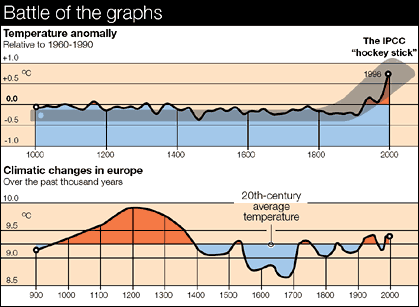
Next, the UN abolished the medieval warm period (the global warming at the end of the First Millennium AD). In 1995, David Deming, a geoscientist at the University of Oklahoma, had written an article reconstructing 150 years of North American temperatures from borehole data. He later wrote: "With the publication of the article in Science, I gained significant credibility in the community of scientists working on climate change. They thought I was one of them, someone who would pervert science in the service of social and political causes. One of them let his guard down. A major person working in the area of climate change and global warming sent me an astonishing email that said: 'We have to get rid of the Medieval Warm Period.' "

So they did. The UN's second assessment report, in 1996, showed a 1,000-year graph demonstrating that temperature in the Middle Ages was warmer than today. But the 2001 report contained a new graph showing no medieval warm period. It wrongly concluded that the 20th century was the warmest for 1,000 years.
Souce.

Even the leaders in the climate change movement are being attacked by the catastrophists for not being "catastrophic" enough! Mike Hulme, director of the Tyndall Centre for Climate Change Research is one of the sober climate players being condemned for his sobriety.

It seems that mere "climate change" was not going to be bad enough, and so now it must be "catastrophic" to be worthy of attention.

The increasing use of this pejorative term - and its bedfellow qualifiers "chaotic", "irreversible", "rapid" - has altered the public discourse around climate change.

This discourse is now characterised by phrases such as "climate change is worse than we thought", that we are approaching "irreversible tipping in the Earth's climate", and that we are "at the point of no return".

It seems that we, the professional climate scientists, who are now the (catastrophe) sceptics

I have found myself increasingly chastised by climate change campaigners when my public statements and lectures on climate change have not satisfied their thirst for environmental drama and exaggerated rhetoric.

It seems that it is we, the professional climate scientists, who are now the (catastrophe) sceptics. How the wheel turns.

Some recent examples of the catastrophists include Tony Blair, who a few weeks back warned in an open letter to EU head of states: "We have a window of only 10-15 years to take the steps we need to avoid crossing a catastrophic tipping point."

Today, a mass demonstration in Trafalgar Square will protest, aiming to "stop climate chaos" - the name for a coalition of environmental activists and faith-based organisations.

The BBC broadcast in May its Climate Chaos season of programmes. There is even a publicly-funded science research project called Rapid.

Why is it not just campaigners, but politicians and scientists too, who are openly confusing the language of fear, terror and disaster with the observable physical reality of climate change, actively ignoring the careful hedging which surrounds science's predictions?

....What has pushed the debate between climate change scientists and climate sceptics to now being between climate change scientists and climate alarmists?

I believe there are three factors now at work.

First, the discourse of catastrophe is a campaigning device being mobilised in the context of failing UK and Kyoto Protocol targets to reduce emissions of carbon dioxide.

The signatories to this UN protocol will not deliver on their obligations. This bursting of the campaigning bubble requires a determined reaction to raise the stakes - the language of climate catastrophe nicely fits the bill.

Hence we now have the militancy of the Stop Climate Chaos activists and the megaphone journalism of the Independent newspaper, with supporting rhetoric from the prime minister and senior government scientists.

Others suggest that the sleeping giants of the Gaian Earth system are being roused from their millennia of slumber to wreck havoc on humanity.

Second, the discourse of catastrophe is a political and rhetorical device to change the frame of reference for the emerging negotiations around what happens when the Kyoto Protocol runs out after 2012.

The Exeter conference of February 2005 on "Avoiding Dangerous Climate Change" served the government's purposes of softening-up the G8 Gleneagles summit through a frenzied week of "climate change is worse than we thought" news reporting and group-think.

By stage-managing the new language of catastrophe, the conference itself became a tipping point in the way that climate change is discussed in public.

Third, the discourse of catastrophe allows some space for the retrenchment of science budgets.

It is a short step from claiming these catastrophic risks have physical reality, saliency and are imminent, to implying that one more "big push" of funding will allow science to quantify them objectively.

....The language of catastrophe is not the language of science. It will not be visible in next year's global assessment from the world authority of the Intergovernmental Panel on Climate Change (IPCC).

To state that climate change will be "catastrophic" hides a cascade of value-laden assumptions which do not emerge from empirical or theoretical science.

Is any amount of climate change catastrophic? Catastrophic for whom, for where, and by when? What index is being used to measure the catastrophe?

The language of fear and terror operates as an ever-weakening vehicle for effective communication or inducement for behavioural change.
Source.

It is incredibly difficult for me to hold back the profanity when discussing the way the media has allied with the alarmists to jack up the intensity of this climate circus. Schoolchildren around the world have been lassooed into believing false claims and impossible predictions. This fiasco has gone beyond the absurd to the totally farcical. It is not a question of whether the world is presently "warming."
It is more a question of looking at the larger picture more intelligently.

Hat tip Climate Audit.

Labels: , ,

Bookmark and Share

04 November 2006

Remember: Be Afraid--Be Very Afraid, Monsieur Amygdala

The amygdala is involved in fear and fear based memory. A recent article at the Neurophilosopher Blog provides a fascinating discussion of the general role of the amygdala, along with some very interesting recent research findings into gene expression within the amygdala.

The amygdala receives its main inputs from the visual, auditory and somatosensory cortices; it couples these sensory stimuli (something scary) to the fight-or-flight response and, therefore, its main outputs are to the hypothalamus, which controls hormone production and homeostasis, and autonomic centres in the brainstem.

Recent work by Gleb Shumyatsky and his colleagues at Rutgers University in New Jersey has led to the discovery of several genes that are enriched in the amygdala and appear to be involved in the formation of fearful memories. One of these proteins, stathmin (also known as oncoprotein 18) is now known to be involved in mediating the formation of memories of of both conditioned and unconditioned fear; there is a high level of expression of the stathmin gene, and a corresponding high concentration of stathmin protein, in the amygdala, but not in the adjacent hippocampus.

Mutant mice lacking the stathmin gene were unable to learn new fears or to act instinctively in a fearful situation, i.e. they had weaker memories of fearful experiences. The stathmin knockout mice also showed less anxiety when presented with new mazes to explore or with potentially dangerous situations. Upon further examination, it was observed that mice lacking the stathmin gene had a less dynamic microtubule network than wild type (normal) mice. Memories are formed by the establishment of new synaptic connections, which require a re-arrangement of microtubules. In the absence of the stathmin protein, microtubules aren’t re-arranged so easily, and, as a consequence, the synapses that would normally be modified during memory formation are not as plastic as they should be.

More recently, researchers have used functional magnetic resonance imaging (fMRI) to show that the rostral anterior cingulate cortex(rACC) modulates activity in the amygdala, effectively acting as an ‘on-off’ switch. Joy Hirsch and her colleagues at Columbia University used a variant of the Stroop test, which involves presenting words for colours, which are printed in a colour that differs from that of the meaning of the word (e.g. green). This discrepancy leads to a delay in the processing of the visual information, reducing the reaction time taken to perform the task.

Instead of using words, Hirsch’s team presented participants in their experiments with photographs of happy or scared faces with the word ‘HAPPY’ or ‘FEAR’ written across them. It was found that the amygdala was activated before the rACC when the participants were presented with a happy face with the word ‘FEAR’ printed across it. Soon afterwards, though, the activity in the amygdala would be reduced. That is, initially, the amygdala processes the word ‘FEAR’, but, soon afterwards, the rACC processes the happy face, and inhibits activity in the amygdala to reduce the fear response. In contrast, when participants were presented with a photograph of a scared face which had the word ‘FEAR’ written across it, the rACC remained inactive, while activity in the hippocampus persisted for longer.
More at Source.

In twin studies, some aspects of phobia show a heritability of around 45% or higher.

Although many social scientists still deny the importance of heritability in cognitive and emotional function, people who actually work in the field know better. In fact, it would not be surprising to find that heredity influences cognitive styles that would predispose individuals to particular styles of political or ideological belief, within the broad spectrums of human political/ideological behaviour.

When one contemplates the increasing likelihood that different attitudes toward morality are at least partially inherited, it is not a great leap to expect that heredity plays a part in philosophical, ideological, or political predisposition. Teasing out all the possible mechanisms will be beyond complex.

Labels: ,

Bookmark and Share

03 November 2006

It Has Only Taken Us 3.2 Billion Years to Catch Up to Primitive Bacteria

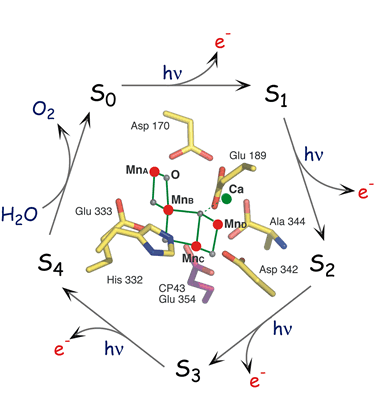
Primitive bacteria learned to split water using sunlight over 3 billion years ago. That crucial part of photosynthesis paved the way for life as we know it on Earth. Now researchers at the US DOE Lawrence Berkeley National Lab have taken a huge step in understanding this critical step--which should eventually result in much improved efficiencies in renewable energy.

Specifically, an international team led by scientists from the U.S. Department of Energy’s Lawrence Berkeley National Laboratory (Berkeley Lab) pieced together high-resolution (approximately 0.15 Ångstrom) structures of a Mn4Ca cluster found in a photosynthetic protein complex (one Ångstrom equals one ten-billionth of a meter). The team, which includes scientists from Germany’s Technical and Free Universities in Berlin, the Max Planck Institute in Mülheim, and the Stanford Synchrotron Radiation Laboratory, used an innovative combination of x-ray spectroscopy and protein crystallography to yield the highest-resolution structures yet of the metal catalyst.

“This is the first study to combine x-ray absorption spectroscopy and crystallography in such a detailed manner to determine the structure of an active metal site in a protein, especially something as complicated as the photosynthetic Mn4Ca cluster,” says Junko Yano of Berkeley Lab’s Physical Biosciences Division, who is one of the lead authors of the study.

The metal catalyst resides in a large protein complex, called photosystem II, found in plants, green algae, and cyanobacteria. The system drives one of nature’s most efficient oxidizing reactions by using light energy to split water into oxygen, protons, and electrons. Because of its efficiency and reliance on nothing more than the sun, the catalyst has become a target of scientists working to develop carbon-neutral sources of energy. Learn the catalyst’s structure, then how it works, and perhaps scientists can develop similarly robust molecules.

But until now, the precise structure of the catalyst has eluded all attempts of determination by x-ray diffraction and various spectroscopic techniques. Even a 3.0-Ångstrom-resolution structure obtained by the Berkeley Lab group’s collaborators at the Technical and Free Universities in Berlin, using x-ray diffraction, didn’t allow the researchers to pinpoint the exact positions of the cluster’s manganese and calcium atoms and its surrounding ligands.
Much more at Source.

There are many more research teams working on understanding the various processes in photosynthesis and electron transport, including the two teams detailed in this previous Al Fin posting. Once science has a firm understanding of a natural process, it can then proceed to modify the process for specific human purposes.

Labels:

Bookmark and Share

02 November 2006

Dopamine--Polymer Implant Stimulates Rapid Nerve Growth

Scientists at Georgia Tech have discovered how to stimulate rapid nerve growth in tissue culture, using a polymer with dopamine impregnated into it. This method may offer hope for nerve regeneration in patients with Parkinson's, Alzheimer's, and other neuro-degenerative conditions.

Because neural circuits use electrical signals often conducted by neurotransmitters (chemical messengers) to communicate between the brain and the rest of the body, he (Ya Dong Wang) could build neurotransmitters into the material used to repair a broken circuit. The neurotransmitters could coax the neurons in the damaged nerves to regrow and reconnect with their target organ.

Strange though his idea might have seemed to others in his field, Wang, an assistant professor in the Wallace H. Coulter Department of Biomedical Engineering at Georgia Tech and Emory University, discovered that he could integrate dopamine, a type of neurotransmitter, into a polymer to stimulate nerve tissues to send out new connections. The discovery is the first step toward the eventual goal of implanting the new polymer into patients suffering from neurological disorders, such as Alzheimer's, Parkinson’s or epilepsy, to help repair damaged nerves. The findings were published online the week of Oct. 30 in the Proceedings of the National Academy of Sciences (PNAS).

“We showed that you could use a neurotransmitter as a building block of a polymer,” said Wang. “Once integrated into the polymer, the transmitter can still elicit a specific response from nerve tissues.”

The “designer” polymer was recognized by the neurons when used on a small piece of nerve tissue and stimulated extensive neural growth. The implanted polymer didn’t cause any tissue scarring or nerve degeneration, allowing the nerve to grow in a hostile environment post injury.

When ready for clinical use, the polymer would be implanted at the damaged site to promote nerve regeneration. As the nerve tissue reforms, the polymer degrades.
Read more at Source.

This is an interesting experiment, illustrating that there are still many new uses to which commonplace biochemicals can be put. The combination of dopamine with an unnamed polymer apparently has effects no one predicted. How many other everyday biochemicals, when combined with polymers, nanostructures, or other modifying agents, have the capacity to perform similar useful functions? Time will tell.

Labels: ,

Bookmark and Share

01 November 2006

CERN Anti-matter Particle Beam Obliterates Living Cells

For the past three years, scientists at CERN have been experimenting with anti-proton beams and their effect on living cells. They have discovered that anti-proton beams are four times more deadly to living tissue than proton beams. This discovery offers promise of safer and more effective treatments for cancer.

Current particle beam therapy commonly uses protons to destroy tumour cells inside a patient. The ACE experiment directly compared the effectiveness of cell irradiation using protons and antiprotons. To simulate a cross-section of tissue inside a body, tubes were filled with hamster cells suspended in gelatine. Researchers sent a beam of protons or antiprotons with a range of 2 cm depth into one end of the tube, and evaluated the fraction of surviving cells after irradiation along the path of the beam.

The results showed that antiprotons were four times more effective than protons. When comparing a beam of antiprotons with a beam of protons that cause identical damage at the entrance to the target, the experiment found the damage to cells inflicted at the end of the beam path to be four times higher for antiprotons than for protons. Michael Holzscheiter, spokesperson of the ACE experiment, summarises: “To achieve the same level of damage to cells at the target area one needs four times fewer antiprotons than protons. This significantly reduces the damage to the cells along the entrance channel of the beam for antiprotons compared to protons. Due to the antiproton's unsurpassed ability to preserve healthy tissue while causing damage to a specific area, this type of beam could be highly valuable in treating cases of recurring cancer, where this property is vital.”

Antiprotons are antimatter; they have to be produced in small amounts in a laboratory with the help of a particle accelerator. When matter and antimatter particles meet, they annihilate, or destroy each other, transforming their mass into energy. The experiment makes use of this property as the antiproton would annihilate with a part of the nucleus of an atom in a tumour cell. The fragments produced from the energy released by the annihilation would be projected into adjacent tumour cells, which are in turn destroyed.
Source.

Proton beams have been put to good use treating prostate cancer and other cancers. If anti-proton beams are even more effective, with less incidental normal tissue destruction, the new treatment would contribute to both quantity and quality of life.

This is still a case of swatting flies with sledge-hammers, but at least we will be swinging the hammers with a bit more finesse. Newer methods of programming viruses, bacteria, and immune cells to target cancers would seem to be much more potentially accessible methods of cancer treatment for patients all around the world. Even so, it is good to put multi-billion dollar physics facility to the use of saving lives.

Labels:

Bookmark and Share
Newer Posts Older Posts
Al Fin Main Page
Enter your Email


Powered by FeedBlitz
Google
WWW AL FIN

Powered by
Blogger

``