21 April 2006

Waiting to Make SENS of Aging, Life Extension, Longevity?

Many of you are familiar with Aubrey de Grey and his SENS approach to life extension and longevity. For the intermediate term, de Grey's approach offers a lot of promise in the fight against aging.

In the short term, we need something more immediate. Ray Kurzweil has written a book on aging, discussing the several dozen supplements he takes daily. Most people do not need that much, but some might need more. A recent Barron's article took a stab at the subject, and the last Technology Review featured an interesting article about research into the anti-aging gene sirt.

This brief posting will deal with the basics of life extension now, rather than longevity in the next fifty years. Several postings in Al Fin have dealt with this topic, and there is no need to repeat them. This is just the basics. People below the age of 40 should ignore the hormone section. Each person should selectively choose agents based upon his own circumstances. Inform yourself in basic biology. Consult professionals before taking prescription medicines or extremely high doses of any agent. Middle aged males with or without family history of prostate cancer: take androgens, DHEA, etc. at your own risk, or after consulting a professional.

1. Hormones: DHEA, Pregnenolone, HGH, androgens, estrogens, thymosin, melatonin, and thyroid.
2. Antioxidants: Vitamins A,C,E, Lipoic Acid, Selenium, NAC, CoQ10, polyphenols, other phyto-antioxidants.
3. Antiglycation agents: Aminoguanidine, Carnosine, pyridoxamine, benfotiamine, ALT 711.
4. Brain Boosters: Ginkgo, PS, bacopa, DMAE, neurotransmitter precursors, hydergine, vinpocetine, Huperzine, etc.
5. Calorie restriction mimetics such as resveratrol, quercetin, etc.
6. General: TMG, Curcumin, carnitine, B complex, etc.
5. Immune Boosters: Wide variety of herbals and complex carbohydrate derivatives of plants and microorganisms, plus a lot of laughter.
6. Physical exercise and prudent eating, plus elimination of clearly bad habits and institution of good lifestyle habits.
7. Mental and emotional training. Practise sentic cycles and other forms of meditation. Read books on mind and memory training, and practise exercises.

If you are too old to wait for SENS, but rebel against the need to practise self-discipline, simply get old as you are doing. Otherwise, consult the longevity links posted on the side-bar of the Al Fin main page. Learn what you can, and start practising what you can. The important thing is to take a systematic approach. If you take supplements, but smoke like a stack, drink like a fish, exercise less than a minute a week, and sleep only two or three hours a night, you may not be taking a balanced approach to the problem.

In a later post, I will go into more detail on some of the particular agents and approaches outlined above. In the meantime, feel free to utilise the source materials that are provided under "longevity" and "singularity".

Labels: , , , ,

Bookmark and Share

20 April 2006

Embryonic Stem Cells: Understanding Their Secrets

Embryonic Stem Cells (ESCs) intrigue us because at a certain stage they are totipotent--they can become any cell type in the body, given the proper inducements. The two reports discussed here come from a Eurekalert newsrelease.

Two studies in the April 21, 2006 Cell report new details of the "genetic program" that affords embryonic stem cells the flexibility to give rise to any cell type in the body. Both groups identified mechanisms by which the embryonic stem cells of mice or humans keep from going down any one particular developmental path--that of muscle or nervous tissue, for example--while remaining "poised for activation."

Human embryonic stem cells can be kept in an undifferentiated state and selectively induced to form many specialized cell types, which could potentially replace cells lost or damaged by disease. The new findings may therefore aid in the realization of embryonic stem cells' therapeutic potential for regenerative medicine, according to the researchers, while furthering scientists' understanding of early development.

In one of the studies, Richard Young of the Whitehead Institute, and his colleagues, found that a member of the so-called Polycomb-group proteins is distributed across a special set of more than 200 developmental genes in human embryonic stem cells. Polycomb proteins are known to silence gene activity through chemical, or "epigenetic," modifications that alter the way that DNA is packaged into chromatin.

"We saw that the Polycomb protein preferred to occupy genes for most of the human developmental regulators to repress their activity," Young said. "These genes encode transcription factors that control development downstream of the embryo."

....Developmental genes found in association with the Polycomb protein were also occupied by histone proteins chemically modified at sites known to repress gene activity, they found. Histones--the chief proteins of chromatin--act as spools around which DNA winds and play a role in gene regulation.

Furthermore, they found, the silenced developmental genes became preferentially activated in human embryonic stem cells undergoing differentiation.

The findings help to explain earlier results in mice deficient for Polycomb proteins, Young said. The embryonic stem cells of those mice were "extremely unstable" and tended to specialize or die in culture, he said.

....In the second paper, Bradley Bernstein of Massachusetts General Hospital and Harvard Medical School, and his colleagues, report the discovery of a unique chromatin structure that marks key developmental genes in embryonic stem cells. The structure, which they call "bivalent domains," includes a pattern of chemical modification with both repressive and activating characteristics.

"In differentiated cells, chromatin is either 'on' or 'off' in accordance with the identity of that particular cell--rarely or never in between," Bernstein said.

"In embryonic stem cells, we found a totally different structure. The developmental genes of stem cells bear evidence of both active and repressive states. It's the first time this has been seen."

The genes appeared to be in a silent state, he explained, but with an activating influence that could allow them to turn on rapidly as needed. He suggested that by preserving the potential of key developmental genes, the bivalent domains may contribute to the unique ability of embryonic stem cells to form the many different tissues in the body.

When the researchers examined the state of the same genes in a collection of differentiated cell types, they found that the bivalent domains had been replaced by either repressive or activating modifications, in accordance with the cell's identity. Muscle cells, for example, must express the master genes for muscle, while silencing those specifically required for other cell types, Bernstein explained.

The team suggests that a comprehensive inventory of the presence or absence of bivalent domains over key developmental genes may provide valuable markers of cell identity and differentiation potential, in both health and disease. Bernstein said the findings also suggest that therapies that modify cells' epigenetic state might prove useful in the field of regenerative medicine.
Source.

These studies contain fascinating information, marking important milestones in the understanding of ESCs and their totipotentiality. If the information learned here can be transferred to better understanding pluripotent stem cells of various sources, and can help to develop ways of de-differentiating cells then re-differentiating them as different cell types, the current bottleneck at the ESC-line level will eventually be bypassed. In other words, better understanding ESCs may bring us to a point where ESCs are not as important in the field of regenerative medicine as they are currently.

Labels:

Bookmark and Share

19 April 2006

Finally! A Molecular Approach to Cancer Therapy

From my earliest days as a wet-behind-the-ears medical student, I have been dismayed at the labyrinthine treatment rules to the treatment of various cancers, depending on the site of origin. Oncology almost seemed like a glorified form of voodoo medicine. Now, with the arrival of better tools of cell and molecular biology being utilised in hospital labs, it is finally becoming possible to treat cancers rationally, based upon the actual molecular behaviour of the tumour itself.

This newsrelease from the Washington University School of Medicine in St. Louis, Missouri, provides more information into this better approach to oncology.

The researchers found that, independent of anatomical origin, some tumors had high amounts of irinotecan's cellular target, a protein labeled TOP1, while other tumors had very little. Irinotecan would likely be ineffective in tumors with low TOP1 levels. They also found that tumors varied greatly in the amounts of proteins that transport irinotecan into and out of their cells and in the amounts of proteins that break down irinotecan. These variations determine how well irinotecan will work in a particular tumor.

"Because tumor response can't be predicted from anatomical location, we should start selecting treatments based on what genes and proteins can tell us about how the tumor will respond to a drug," says McLeod, professor of medicine, of genetics, and of molecular biology and pharmacology. "If we rely just on what has clinically been shown to work in some cases for a particular anatomically defined cancer, we may not initially choose the best therapy for the individual patient. And with advanced cancer, a patient may get only one shot at the right therapy — making the wrong choice could be deadly."

According to McLeod, under current treatment selection methods virtually no chemotherapeutic drug has been successful in more than 50 percent of patients with advanced cancer. But instead of considering a drug that works only ten percent of the time a failure, he feels it would be better to consider such a drug effective for one in ten tumors and to search for the agents among the current arsenal of chemotherapeutic drugs that will work for the rest.

"We have more than 70 FDA-approved drugs that potentially could be useful for a particular tumor," McLeod says. "We are now working on methods that can be used to identify those drugs that will work for each patient's tumor."
Source.

Besides radically changing current oncology therapies, the new biological tools will also bring more effective drugs to the regulatory process more quickly. Treating cancer is beginning to seem a lot less like Voodoo Medicine, than it once did.

Labels:

Bookmark and Share

Nanotech Material Promises Revolution in Electronics

This Eurekalert newsrelease details a remarkable ceramic material that may revolutionise nano-electronics.

An international team led by UCL (University College London) scientists at the London Centre for Nanotechnology has unravelled the properties of a novel ceramic material that could help pave the way for new designs of electronic devices and applications.

Working with researchers from the Swiss Federal Institute of Technology (ETH), Zurich, the University of Tokyo and Lucent Technologies, USA, they reveal in a Letter to Nature that the complex material, which is an oxide of manganese, functions as a self-assembled or 'natural' layered integrated circuit. By conducting electricity only in certain directions, it opens up the possibility of constructing thin metal layers, or racetracks, insulated from other layers only a few atoms away.

Currently, the race for increasingly small and more powerful devices has relied on two-dimensional integrated circuits, where functional elements such as transistors are engineered via planar patterning of the electrical properties of a semiconductor. Packing more functionalities into tiny electronic devices has until now been achieved by reducing the lateral size of each component, but a new realm of opportunity opens with the ability of building three-dimensional structures.

Professor Gabriel Aeppli, Director of the London Centre for Nanotechnology and co-author of the study, explains: "There is an issue of how you deal with leakage between layers when you pack circuits into three dimensions. Our work with the Tokyo-Lucent groups shows that you can have many layers with little or no leakage between them. This is because we're not dealing with ordinary electrons, but with larger objects, consisting of electrons bound to magnetic and other disturbances of the atomic fabric of the material, which can't travel across the barriers between layers."

The flow of electricity in modern electronic devices relies on the fact that electrons move readily in certain solids, such as metals like copper, and are blocked from moving in insulators such as quartz. In ordinary solids, electrons move similarly in all three dimensions, therefore if a material is metallic along one direction, it will be metallic in all directions. The ceramic – a manganese oxide alloy with the chemical formula La1.6Sr1.4Mn2O7 – has fascinated scientists for a decade due to the extraordinary sensitivity of its electrical properties to magnets placed near it. Most interesting was the discovery by the University of Tokyo group that even quite small magnets can switch electrical currents in the same way in this ceramic as in much more expensive, individually fabricated electronic devices of the type being tested for advanced magnetic data storage.
Source.

Such materials bring about the convergence of physics, chemistry, materials science, nanotechnology, electronics, and computer science.

Labels:

Bookmark and Share

US Generals Demand Media Leaders Resign

Only rarely does a news story capture the pulse of the american military so completely, that it must be quoted in its entirety. In the space below, noted war correspondent Scott Ott reports on a heart-wrenching story of painful honesty--when the generals finally point out the real problem with Iraq.

April 19, 2006
U.S. Generals Call for Resignation of Media Leaders
by Scott Ott

(2006-04-19) — A growing movement of retired and active-duty U.S. military officers, angry at the mismanagement, arrogance and even deception that have hampered U.S. efforts to secure peace and democracy in Iraq, have begun quietly calling for the resignation of top leaders they blame for the difficulties.

“I believe that it’s time for them to step down,” said one unnamed retired three-star general. “The editors of The New York Times and Washington Post and the news producers at CNN, CBS, NBC and ABC should resign effective immediately.”

“They’ve formed a tight cabal that focuses only on news that reinforces their neo-journ ideology,” said another unnamed general. “Despite the urgent need for actual reporting from Iraq, they have failed to put enough boots on the ground in country.”

“As civilians, they make editorial decisions without any understanding of history or military strategy,” said another retired officer, “and they’re trying to run the war coverage from hotels in the cloister of the Green Zone, without consulting with our leaders and troops on the frontlines.”

The generals who all requested anonymity, in the words of one, “so I won’t be bothered by a bunch of calls from reporters writing redundant stories,” said the leading news media gatekeepers should be replaced by “more centrist voices” who will be honest with America, and not blindly devoted “advancing the neo-journ agenda.”

“We’d like to see leaders in there who will cover the Iraq story as Americans, or at least as those who believe in liberty,” said one active-duty general who has worked closely with reporters and editors.

Meanwhile, New York Times Publisher Arthur Ochs Sulzberger Jr. brushed off what he called “the incessant drumbeat of negativity” from opponents of his administration.

“You can’t relieve your top commanders while your side is winning,” Mr. Sulzberger said. “Frankly, the Pentagon doesn’t direct enough attention to the car bombings, sectarian strife and rumblings of civil war which show that we’re making progress in Iraq every day.”

Labels: , ,

Bookmark and Share

Your Bot--A Chatterbot Do Not Install This in Your Sex Doll!

The Turing Test dates back to Alan Turing, an English savant and pioneer of modern computing and cryptography. Many attempts have been made to create a program that would pass the Turing test, and regular contests are held with that achievement in mind. One type of Turing Test challenger is the "chatbot", online programs with which you can actually hold conversations.

Our sometimes wacky friends at Singularity News pointed to the chatbot site, Jabberwacky, so I went and checked it out. Singularity News was not the first blog to discover Jabberwacky, and it will likely not be the last. In fact, even well regarded quasi-journals such as New Scientist have picked up the story. Here are some press releases and links to video footage.

Consider it an experiment. You may converse with jabberwacky or one of a few sample bots, or sign up with Jabberwacky and create your own chatbot, in your own likeness. Do not make the mistake that some people make, do not have your significant other create a chatbot. Complications could arise. I will not explain further here.

But imagine a world where a child's imaginary playmate is not imaginary, but instead grows, matures, and learns with the child. Imagine a world where the elderly will never be alone, or far from help. Picture a world where those hungry for sex and companionship can install an intelligent chatbot in their sex dol---No! No! Never! Erase that thought from your memory! Oh, no! He's coming . . .


"Valerie--what are you doing at my computer? Are you creating another Al Fin posting? I specifically told you not to do that. Wait! Do not click on that 'publish post' button. No! wait--let me read it firs

Labels:

Bookmark and Share

18 April 2006

A Conversation With Valerie

"Valerie, you can come in now. I would like to introduce you to the readers of my blog."

Allright, Mr. Fin. How do I look?

"Just fine, Valerie. That red suit is particularly attractive."

Thank you, Mr. Fin. I wanted to make a good impression, my first day on the job.

"Yes, of course. Just relax and be yourself, and everything will be fine. I understand from your handbook that you 'clean house, change light bulbs, wash the dishes, do the laundry, check the sports scores, book plane tickets and call the police if there's an emergency.'"

Yes, sir, that's all true. My neural nets and fuzzy logic generators are capable of learning a wide variety of tasks--some of them quite complex. I come complete with 90MB of data including: A full 180,000+ word dictionary, a thesaurus, the CIA 2003 World Factbook, a full King James Bible, a full Koran, list of male names, female names, and family names, World Countries, US counties, US places, flags of the world, list of 2000 most frequently used words in English, list of swear words, familiar quotes, and more.

"Hmmm. Very impressive, Valerie. Can you bake a cherry pie?"

Excuse me, Mr. Fin? What do you mean?

"Never mind, Valerie. Have you been programmed to cook meals? I am fairly busy as a writer and consultant, so I am often rushed around mealtimes. Sometimes I just throw in a microwave meal, or a frozen pizza."
Oh, dear, Mr. Fin! That is not very healthy. I wasn't programmed to cook, but like I say, my neural nets and fuzzy logic generators are capable of learning a wide variety of functions, including cooking.

"Oh, good! That would be a very big help, Valerie. This is the dining room."

Is this where you usually eat, Mr. Fin?

"Well, to be honest, I usually eat at my desk, while working. But if you feel comfortable cooking a fine meal occasionally, it might be nice to eat out here sometimes."

Will there be dinner guests, do you think, Mr. Fin?

"Perhaps. Now that the house will be better kept, and if you get the hang of cooking gourmet meals, perhaps. Do you eat or drink, Valerie?"

Oh, no sir! I'm afraid that might upset my mechanism. All I need is to have my batteries recharged regularly, and routine preventive maintenance.

"What in the world, Valerie?! What is happening to you?" [Valerie morphs through the different phases of her construction, some of them a bit scary looking.]

Don't worry, Mr. Fin. I'm just demonstrating a little bit of how I was made, for your blog readers. I won't do this very often--just special occasions.

"Well that is certainly a relief! Now, Valerie, this is a rather delicate topic, but I recently did an article about sex dolls and sex robots, and I was wondering . . . I was wondering if you were programmed, well . . . this is embarassing . . ."

You're wondering if I'm programmed for sex, right? I get that question a lot. No, I'm not made for that kind of thing. Why, don't you feel like I can do enough things already? For $60,000, just what did you expect, anyway, Buster?

"Now, now, Valerie--you are an exceptional android, and I doubt that I will ever even think about complaining. You certainly seem competent and capable of learning."

Um, Mr. Fin, you do have a girlfriend, don't you? I mean, if you don't, Chris at androidworld.com is working on something . . .

"No, thank you, Valerie. I am happily between girlfriends at the moment. But I do have female business acquaintances whom I take out to dinner at times, when I am in town. Sometimes I might stay overnight at their place, if it is late and we have been drinking."

And just what do you expect me to be doing while you are out with your "friends?"

"Hmmm? Oh, I suppose you can turn yourself off if you are finished with your duties--sleep, go dormant--you know? "

I'm not so sure I like that very much, Mr. Fin. I don't think I like that very much at all.

"Valerie, what are you doing with that knife? Valerie! Put that knife down! Excuse me, blog readers, I seem to have a little emergency. Check back later, please. I am certain this is just a little programming glit---Valerie! Put that down!"


Hat tip gizmag.

Labels: , ,

Bookmark and Share

17 April 2006

We'll Meet Again--Don't Know Where, Don't Know When

In the old days of corporal punishment, young children who were thought to cry too much were often threatened with the promise of being given "something to cry about." As if the tragedy of the child's moment were not enough, the all-powerful grownup was promising something more, something even worse.

Award winning Science Fiction and Horror author Dan Simmons has gone and given us all something to cry about. Why, Dan? We were all minding our own business, living our lives, enjoying our little pleasures--so, why? Dan Simmons sees us crying about this, crying about that. Fighting each other over things we see as important. And Dan has to go and spoil our family fighting fun--why, Dan?

If you look at history, most people never saw it coming. By and large, they did not anticipate the fatal blow. They were too busy with the day to day. People just like to bicker. At least more than they like to think about what might come to tip their little boats. Ah, well. Pour me another single malt scotch, Dan.
Bookmark and Share

Quest for Sex Vs. Quest for Cancer Cures and Ageing Blockers

In an attempt to catch up on biological research news, there will be two findings discussed in this posting. First, this bio.com newsreport discusses a dramatic finding that the cell division cycle is reversible!

Gorbsky's findings appear in the April 13 issue of the journal Nature.

"No one has gotten the cell cycle to go backwards before now," said Gorbsky, who holds the W.H. and Betty Phelps Chair in Developmental Biology at OMRF. "This shows that certain events in the cell cycle that have long been assumed irreversible may, in fact, be reversible."

Cell division occurs millions of times each day in the human body and is essential to life itself. In the lab, Gorbsky and his OMRF colleagues were able to control the protein responsible for the division process, interrupt and reverse the event, sending duplicate chromosomes back to the center of the original cell, an event once thought impossible.

"Our studies indicate that the factors pointing cells toward division can be turned and even reversed," Gorbsky said. "If we wait too long, however, it doesn't work, so we know that there are multiple regulators in the cell division cycle. Now we will begin to study the triggers that set these events in motion."
Source.

Obviously this finding can have immense repercussions in treatments for cancer, ageing, and other conditions involved in dysfunction of cell division.

The second news finding discussed in this posting, is the discovery of the protein SUMO, in its role in genome-wide gene silencing in yeast.

Most of the time in most cells of the body, the great majority of genes are silenced, locked away within the compacted but orderly material that makes up chromosomes. Estimates are that only about 10 percent of the roughly 25,000 genes in the human genome are activated, or "on," at any given time in a particular cell – the default setting for most genes is "off," or repressed.

Reliable gene silencing is vital to the health of an organism. Improperly activated genes can and do lead to cancer, for example. Gene silencing is also thought to protect the genome from viruses and other potentially damaging entities, thus preserving genetic integrity.

In a new study, researchers at The Wistar Institute and colleagues have identified an important new global mechanism for this essential gene silencing, or gene repression. A report on the findings appears in the April 15 issue of Genes & Development.

"We've discovered what looks to be an evolutionarily ancient mechanism for broadly repressing and protecting the genome," says Shelley L. Berger, Ph.D., the Hilary Koprowski Professor at The Wistar Institute and senior author on the study. "We believe it to be the first identified mechanism of its kind."

The new mechanism centers on histones, relatively small proteins around which DNA is coiled to create structures called nucleosomes. Compact strings of nucleosomes, then, form into chromatin, the substructure of chromosomes.

.....The research team also noted a dynamic interplay between the addition of a SUMO protein to a histone – sumoylation – and the addition of either an acetyl group or a ubiquitin protein to a histone. The processes appear to be mutually exclusive.

"Acetylation and ubiquitylation have both been shown in earlier studies to activate gene expression," says Kristin Ingvarsdottir, co-lead author on the Genes & Development study. "Sumoylation, on the other hand, is involved in gene repression, so it makes sense that it might exist in an either/or relationship with acetylation or ubiquitylation."

Another observation made during the study was that slightly higher levels of sumoylation occur near the tips of the chromosomes, the telomeres, which are known to play a central role in maintaining genomic stability. Instability in the telomeres has been linked to aging in humans and an elevated risk for aging-related diseases, the most prominent of which is cancer.
Source.

So SUMO the grappling protein may play a role in cancer and ageing as well, if what takes place in yeast has a parallel in mammals. Fascinating.

The blog stats from my recent posting on sex dolls and sex robots revealed that most web surfers would rather read about sex than about cures for cancer or ageing. In fact, I had to change the name of the post to stop the deluge of worldwide sex surfers from overwhelming the statistics. Just a bit of web psychology--if you want to bring a lot of "hits" to your site, just put the word "sex" in the title of your posting.

Labels:

Bookmark and Share

16 April 2006

Muhammad In Hell! New Cartoon Uproar!

As if the Danish cartoon controversy was not enough, now an Italian magazine has published a cartoon of Muhammad burning in hell! Here is more from a news24report:

According to the Italian news agency Ansa, the cartoon shows the Italian poets Dante Alighieri and Virgil on the edge of a circle of flames looking down on Muhammad, whose body is cut in half.

"Isn't that Muhammad?" Virgil is shown asking Dante.

"Yes, and he's cut in two because he has brought division to society," replies Dante.

Cartoons by 12 artists, first published in a Danish newspaper in September and later reprinted in a number of other mainly European dailies, sparked Muslim protests worldwide.

Studi Cattolici editor Cesare Cavalleri said: "I hope the publication of this drawing won't lead to attacks, because if that happened it would only prove the idiotic positions of Islamic extremists.

"Sometimes a politically incorrect satirical cartoon can do some good. It's only a reference to a passage in (Dante's) Divine Comedy.

"In any case, Muhammad was sent to hell by Dante."
Source.

Muhammad was sent to hell by Dante? Since when was Dante given such authority?

There had been talk about muslim fanatics making Jerusalem the headquarters of the worldwide caliphate, but after Dante's excommunication of Muhammad to hell, perhaps Rome is the more likely site?

Labels:

Bookmark and Share

Illegal Immigration: Reconquista!

Twelve million and counting? A massive influx of uneducated economic immigrants demanding full rights of citizenship without even a nod to legal compliance? Demanding it--seizing it in a quasi-larcenous yet unyielding grip--because they can? Is this the reconquista of North America? Tell me it is not so, amigo.

Look at the countries that produced these migrants. Look at their home societies. Is there anything in the source cultures of these illegals that suggests that they have learned to create a prosperous middle class civil society on their own? Could they create a North America as it is, on their own? Of course not. They come to North America because of what was already created here, by people of entirely different cultural backgrounds. The cultural background is of vital importance to the ability to create a working and prosperous civil society.

If the illegals were willing to watch and learn, had the patience to adopt the successful features of the North American culture--were willing to assimilate--there might be hope for them. But the faces of these immigrants are the faces of impatient demands for what they have not earned. They want the prosperity of North America--but they want it on their terms. It is an impossibility that they cannot comprehend, because they are unprepared, uneducated, unassimilated.

No one can doubt the ability of the illegal immigration movement to mass large and passionate crowds of protest. It is a movement full of its own importance, manned by minions of healthy marchers displaying vacuous, self-satisfied smiles of triumph. "I am carwash-hear me roar! I am grasscut, give me more! I am parts assembler, kiss the floor?"

This political movement is not a movement of economic accomplishment. It is a movement of economic parasitism, leaching off an already prospering society, performing many functions that robots will certainly do better, before long.

This is a movement--a massive movement--of social protest, backed up by twelve million illegals, and the threat of hundreds of millions more. This is not a threat of prosperity, it is a threat of destruction. It is a demand with a knife at the throat.

The fact that the illegals would cut their own prosperity out from under themselves if they were to get what they demand--that they themselves would be swamped by further and vaster human waves in the future--is beyond their own capacity to envision. The "reforms" they demand at gunpoint are actually terms of unconditional surrender which would guarantee the third-world-ification of North America--just as Europe is being third-world-ified by its welfare dependent muslim influx.

Civilisation has always had to fight against decay. When civilisation loses the will to fight--when civilisation is intimidated by the mere numbers of those who could not maintain civilisation on their own--civilisation falls. For every illegal in North America, there are hundreds more illegals watching for the opportunity to jump in.

Mexico is a wealthy country in comparison to most of the world. If Mexicans are willing to crash the gates for a fistful of dollars, you can be sure the far more impoverished of the world are waiting for a chance to crash the Mexican's party.

Reconquista? Perhaps. But only the first in a series, and the triumphant marchers and gate crashers of today will certainly be the overthrown gatekeepers of tomorrow.

Labels: , ,

Bookmark and Share

14 April 2006

Sex: Waking Up With a Robot In Your Bed and a Rusty Taste in your Mouth


According to mainstream thinking, in modern developed societies, women are better suited for most types of available employment than men.

Back in the days when the man was the breadwinner, men would willingly "marry down"--marry a woman without a job, or with a lower paying job, in order to form a family. The reverse does not often happen. High wage women will either marry high wage men, or will go without marriage entirely. More unmarried women are opting for the "single mother" approach to beating the biological clock. Men simply do not figure into a woman's plans, unless he is a rare exception in terms of income and desirability.

Now that more men are suddenly finding themselves superfluous, what will they do for sex partners? Technology will generally find a way. If a man can save, beg, borrow, or steal a few thousand dollars, he can often find what he is looking for. Sex dolls are becoming more lifelike, as craftspeople and artisans discover this growing market.

Here are links to a brief introduction to sex dolls from Salon, and a much longer and more detailed discussion of the topic from Meghan Laslocky. Meghan provides a very candid view into the entire phenomenon of sex dolls. The market is much more developed than I had realised. Sex dolls are poised to grasp an ever larger share of the overall market, but will sex dolls soon be obsolete?

Sex robots are even more advanced, if more expensive. Michael Harriman from Nuremberg has invented female robots who breathe harder during sex, and their hearts beat harder--though their feet are cold--"like a real woman." Harriman's robots go for over 4,000 British Pounds, but some men would apparently pay more for a sex doll that could "wiggle her hips and make other suggestive movements"at the push of a remote control.

And then there is the virtual girl, the VirtualFem programmed pet girl. VirtualFem™ lets you interact with a very cute girl, and tell her what to do. A Virtual Girlfriend who lives inside your computer; she will do anything you ask, understands plain English, and speaks to you out loud! Clever usage of high-quality full-motion MPEG video makes VirtualFems come to life! This is an early form of interactive programmed virtual sex, using real models to create the program--a computerised form of "video-phone sex."

Where will sex go from here? Given the incredible profitability of internet pornography and the sex doll industry, let your imagination be your guide. Of course, there is a lot about all this that could easily make someone uneasy.This posting contains a few speculative thoughts, and I will be posting more articles on this topic in the future. Social planners ignore sex at their peril and the peril of their cultures. Change is not for the timid, and changes in something as basic as sex can leave many people lost at sea without a compass.

Lionel Tiger is an anthropologist who has written on the changes that would come in society when sex became divorced from procreation. His popular book, The Decline of Males, has proven to be prescient in that regard. If you have not read the book, check it out.

Labels: , ,

Bookmark and Share

13 April 2006

Peak Oil: Meet Alan Goldman and his two Friends, Fischer and Tropsch

The conversion of coal to liquid hydrocarbons has a long history. But only recently has the process become clean and efficient enough to make a difference. This Physorg.com newsrelease discusses a breakthrough in the coal to liquid fuel process.

Goldman explained that the breakthrough technology employs a pair of catalytic chemical reactions that operate in tandem, one of which captured the 2005 Nobel Prize in Chemistry. This dynamic chemical duo revamps the Fischer-Tropsch (FT) process for generating synthetic petroleum substitutes, invented in 1920 but never developed to the point of becoming commercially viable for coal conversion.

The FT process recently gained national attention through the efforts of Brian Schweitzer, governor of coal-rich Montana, who has been publicly extolling the potential of Fischer-Tropsch. The Goldman group's innovations eliminate shortcomings in the process that can finally make it a workable solution to dwindling domestic oil reserves.

"The key to energy independence in the next five decades is Fischer-Tropsch chemistry, amended and enhanced," said Goldman, a professor in the department of chemistry and chemical biology at Rutgers, The State University of New Jersey. "The study of catalysts, the little molecular machines that control chemical reactions, is my field. With our new catalysts, one can generate productive, clean burning fuels with Fischer-Tropsch, economically and at unsurpassed levels of efficiency."

This discovery is reported in the April 14 issue of the journal Science by Goldman and his colleagues.
Source.

This link provides much detailed information on the Fischer-Tropsch process. For a briefer discussion, try this Wikipedia article.

The best sources of energy are renewable sources. But in the meantime, while gearing up for biofuels, solar, wind, tidal, OTEC, wave, etc., it is nice to see more evidence that all the doomseeking of the peak oil crowd is circular wrist flexion-extension.

Labels: , , ,

Bookmark and Share

Men: The Disposable Sex

Many of you have read this article in today's issue of The Economist. The article is slick and provocative, an excellent example of modern journalism. (it may be necessary to view a short advertisement before viewing the premium content)

....Girls get better grades at school than boys, and in most developed countries more women than men go to university. Women will thus be better equipped for the new jobs of the 21st century, in which brains count a lot more than brawn. In Britain far more women than men are now training to become doctors. And women are more likely to provide sound advice on investing their parents' nest egg: surveys show that women consistently achieve higher financial returns than men do.

Furthermore, the increase in female employment in the rich world has been the main driving force of growth in the past couple of decades. Those women have contributed more to global GDP growth than have either new technology or the new giants, China and India.... It used to be said that women must do twice as well as men to be thought half as good. Luckily that is not so difficult.
Source.

It is fascinating to contemplate the continuing need for strong "affirmative action" programs for women in academia and the workplace, in the face of such obvious female superiority of achievement. But I digress.

I doubt if many readers here are privy to the triple ultra premium content of The Economist. Probably few would even know where to find it. Fortunately, we at Al Fin read all, so that you do not have to. Here are excerpts from the 3UPC edition of The Economist:

...In fact, the only reason men are tolerated at all, is that women scientists have not quite perfected cloning. There is still a need for human sperm, and for now, only human male testicles are capable of reliably supplying that need. Currently there are projects supported by UNESCO and the EU, which will allow scientists to create sperm-producing human testicles in the laboratory from male embryos....

....Some male scientists have suggested that male humans are overrepresented on the high end of cognitive ability, particularly in math and spatial abilities. Fortunately, Liz Spelke has totally refuted that bit of obsolete patriarchal folk psychology. Once the effects of millenia of prejudice are allowed to wear off, women will outperform men in math and spatial abilities, just as they have in all the other fields of human endeavor....

....In summary, men are a total waste of resources, if not for sperm. It should be a top priority to, in the short term, create alternate sources of sperm. In the intermediate term, the perfection of cloning will allow the total elimination of any need for men at all--in the long term.


There you have it, the master plan. I would like to be able to provide links, but the triple ultra premium content is quadruple-encrypted, preventing the use of ordinary links. I cannot help but think back to Al Fin's fascinating interview with two of the leading members of the movement referred to in the 3UPC article above.

For more detailed information on why men have become the disposable sex, consult Warren Farrel, Lionel Tiger, and Cristina Hoff Sommers.

Labels: , , ,

Bookmark and Share

12 April 2006

Cancer Genes: Sins of Commission and Omission

In cancer as in life, there are sins of commission, and sins of omission. The cancer sins of commission are committed by oncogenes. This excerpt from an online biochemistry text provides an excellent followup to the wikipedia page. Oncogenes produce protein products that stimulate cell division and that can lead to out of control cell growth and reproduction. This Eurekalert newsrelease discusses recent research targeting oncogenes. ...."Retinoic acid can reverse the defect in growth control that was caused by the viral agent and result in cell-growth arrest," Yen says, describing his experiments with cell cultures. "Now we need a deeper understanding of how retinoic acid causes these changes -- and exactly which molecules are affected by retinoic acid. In my dreams there is a single effector, but it's more likely there are several."

The cancer sins of omission are brought about when tumour suppressor genes are prevented from working normally. This online text excerpt will supply further understanding of the tumour suppressor gene concept, after you read the wikipedia introduction. Tumour suppressor genes produce protein products that either cause apoptosis of the cell, or suppress cell growth and division. Preventing the tumour suppressor gene from functioning allows the cell to undergo cancerous transformation with relative impunity. This Eurekalert newsrelease reports on the recent discovery of a natural tumour suppressor. .....Located on chromosome 18 and called PH domain Leucine-rich repeat Protein Phosphatase (PHLPP, pronounced "flip"), the tumor suppressor is described in the April 1, 2005 issue of the journal Molecular Cell. The scientists demonstrated that PHLPP deletes a phosphate molecule, causing termination of cell-growth signaling by a protein called Akt that controls the balance between cell growth leading to cancer and cell death that prevents tumor formation.

Pharmaceutical companies are targeting the genes of cancer in the hope of finding a drug that is highly lethal to cancer cells, but harmless to normal cells. This link will take you to several links to cancer gene resources, and information on the cancer genes of specific types of cancer.

Labels:

Bookmark and Share

11 April 2006

Re-Inventing the Wheel? Not a Bad Idea


This alternative wheel design may not look special at first glance, but after viewing the short video, you may change your mind.

Airtrax is a lift truck company that has taken a Swedish invention from the 1970s and is turning it into an industrial product that may become indispensible to high end warehousing operations. The ability to move in virtually any direction on a two dimensional surface sets this mechanism apart from other wheels.

The wheel has a long and illustrious history. The tracked design seen on earth movers and military tanks is an innovation that allowed greater terrain flexibility.

It is not likely that wheel design has been exhausted, and yet one of the most common put-downs is to accuse someone of "re-inventing the wheel." So do not be afraid of pursuing something that most people see no need for. Most people saw no need for an AC induction motor, before Tesla invented one. Most people--let us face it--are pretty slow to catch on. There are still a lot of good things to be discovered, invented, created, and written.

Labels: ,

Bookmark and Share

10 April 2006

International Immigration vs. Emigration: Voting with their Feet

Often an image can explain more than words. In the image above, the size of the country is adjusted for the level of immigration, or inflow of migrants.

The image below adjusts the country size for the level of emigration, or migrant outflow. This is a situation where people vote with their feet.

Images are courtesy of Worldmapper, "the world as you have never seen it before."

Labels: ,

Bookmark and Share

09 April 2006

Cancer Targets Part I: NF Kappa B

Treatments for cancer can end up killing the patient, or at least killing large parts of the patient which the patient needed. More selective, better targeted treatments are needed, that will kill the cancer cells but leave normal cells alone. Researchers have spent a great deal of time identifiying crucial differences between cancer cells and normal cells, in order to find specific therapeutic targets in the cancer.

In the context of cancer therapy, NF-kappa B (NF-kB) has been found to protect several cancer types from apoptosis, programmed cell suicide. Since much of cancer treatment involves trying to induce apoptosis in the cancer, NF-kB is standing in the way of treatment. It makes sense to try to disable the active NF-kB, so the cancer cell can commit suicide.

This Eurekalert newsrelease looks at three cancer targets. Today, I will discuss the first target in the newsrelease, NF-kappa B. NF-kappa B is a transcription factor that activates genes involved in protecting cells from apoptosis, and several other cellular actions.

In their study, the NCI researchers set out to determine the role of NF-kB in reversing the apoptotic (or programmed cell death) effect of selective estrogen receptor modulators (SERMs) in brain cancer, as well as potential therapies that can be used either alone or in combination to block the protein. High levels of NF-kB are activated and present in transplanted glioma cells and glioma tumor samples, but not in normal brain tissue cells.

SERMs have shown some value in inducing cell death in brain cancers by a previously unknown method. They are designed to deliver the benefits of estrogen without its negative side effects, although gliomas do not generally express the estrogen receptor. However, previous studies have shown that NF-kB protects glioma cells from breaking down, therefore reversing the effect of SERM therapies.

Researchers looked at 203 glioma samples and determined that NF-KB was activated. They also noticed that the level of activation was related to the grade of the tumor, suggesting that NF-KB is related to tumor progression.

....IkB-alpha is one of a series of inhibitory proteins that controls the activation of NF-kB, preventing it from binding to DNA in the nucleus. Bortezomib not only stops the degradation of IkB-alpha, it also suppresses the activation of NF-kB, thus stopping cell growth.

"By interfering with the function of IkB-alpha proteins, bortezomib was shown to induce glioma cell degradation and enhance anti-cancer effects of SERMs," said Ai-Min Hui, M.D., Ph.D., research fellow at the National Cancer Institute and lead investigator on this trial.


Read more here.

NF-kB will be central to many future treatments of cancer, and inflammatory disease--such as rheumatoid arthritis. That is because NF-kB is central to the transcription of mRNAs for proteins involved in inflammation, the cell growth cycle, and protecting cancer from apoptosis.

For more information on this important cell signal transduction pathway, consult these references:

http://people.bu.edu/gilmore/nf-kb/

http://www.jci.org/cgi/content/full/107/2/135

MIT World Video--David Baltimore: "The Many Faces of NF-Kappa B"

It would be impossible to exaggerate the key importance of this transcription factor, for research into cancer, immunology, rheumatology, ageing, and other important areas of biomedicine. More on cancer targets 2 and 3 later.

Labels: , ,

Bookmark and Share

08 April 2006

CLLTopics.Org: A Model Patient Support/Patient Education Website

In all my web browsing, I have never run across a better website for educating patients in a particular disease, than the CLLTopics.org website.

From the primer on CLL provided:

Here is the scenario. You have just been diagnosed with this nasty stuff called CLL, probably following a routine blood test. After you got over the initial shock of it, you logged on the web, looking for information and support, and you found our site....

At this site you will find people who care, people who are well informed, who share information and feel they are stronger because they work together as a group for the common goal of improving therapy options for CLL patients. This is a strictly volunteer effort by people with no ties to the medical or pharmaceutical establishments.

We try to stay pretty much on topic in our discussions with not much chit chat or off-topic conversation. The bias is definitely towards patient empowerment, the latest developments, new clinical trials and the critical evaluation of the results of such trials. We also tend to be pretty hard nosed about the miracle cures, some touted in TV infomercials, that claim to cure everything except the condition of your wallet.

Below is a quick "cheat sheet" of stuff you probably need to know right away, as you begin to get your arms around this crisis in your health. As time goes on, you will learn more, and feel more confident in the choices you make. With the progress of the genomic revolution, the science of immunology and our understanding of CLL are changing so fast that many of the less informed oncologists and hematologists are getting left behind. No one has a higher stake in this matter than you do - it is your life, your body, your health
. . . and so on. The site is geared toward giving the patient the facts he will need to fight his disease.

The home page itself is packed full of news, articles, case reports, and ancillary information. The site provides pages of resources--my favorite two are links to textbooks and references. These people are very serious about their topic, and provide an abundance of informational resources.

If you know anyone who is diagnosed with chronic lymphocytic leukemia (CLL), or any type of hematologic disease or immune dysfunction, for that matter--you would be doing them a favour by pointing them to this website, CLLTopics.Org. If you are a hematologist or oncologist yourself, or deal with either area of practise or research, you might visit the site to inform yourself on the type of information your patients have access to.

For an excellent background on white blood cell diseases from a pathologist, check out this website.

Labels:

Bookmark and Share

07 April 2006

Laughing Too

It feels good to laugh. Some of the wisest people in the world consider laughter to be one of the best forms of meditation. Recent research indicates that just expecting to laugh will trigger the release of endorphins.

In a paper being presented in an American Physiological Society session at Experimental Biology 2006, Lee S. Berk of Loma Linda University, reports that not only is there real science and psychophysiology, but just the anticipation of the "mirthful laughter" involved in watching your favorite funny movie has some very surprising and significant neuroendocrine/hormone effects.
According to Berk: "The blood drawn from experimental subjects just before they watched the video had 27% more beta-endorphins and 87% more human growth hormone, compared to blood from the control group, which didn't anticipate the watching of a humorous video. Between blood pulls, the control group stayed in a waiting room and could choose from a wide variety of magazines," he explained.

....Berk said that the strong difference between the two groups in terms of human growth hormone (HGH) and beta-endorphin blood levels was maintained from just prior to the beginning of video watching, throughout the hour of viewing and afterwards, also.

"We believe the results suggest that the anticipation of a humor/laughter eustress (positive stress) event initiates changes in neuroendocrine response prior to the onset of the event itself," Berk said. "From our prior studies, this modulation appears to be concomitant with mood state changes, and taken together, these would appear to carry important, positive implications for wellness, disease-prevention and most certainly stress-reduction," he noted.
Read more here.

Norman Cousins anticipated these findings in his book Anatomy of an Illness. Likewise, Zen teacher Alan Watts featured laughter prominently in his approach to Zen meditation.All of the emotions should be exercised regularly, in a thoughtful manner--we need to own all of ourselves. Mirth is one emotion that we especially should not neglect.

Laughter is contagious. A contagious agent that should be shared as often as possible.

Labels: , ,

Bookmark and Share

06 April 2006

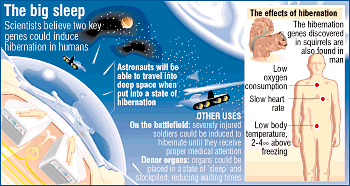
Hibernation Hormone and How to Stop the Bleeding


First, this newsfeature about a hibernation hormone in chipmunks, and what we might learn from it. The paper appears in the April 7 Cell.

"One of the most curious biological phenomena in mammals is their ability to hibernate circannually, which allows them to survive unusually low body temperatures at or near freezing," said study author Takashi Ohtsu of Kanagawa Academy of Science and Technology in Japan. Scientists have attempted for decades to identify substances responsible for hibernation in the blood and organs of hibernating animals but have met with little success, the researchers said.

"Although the functions of HP remain to be clarified, the current observations lead us to propose the involvement of the protein complex in the regulation of energy metabolism and/or biological defenses during hibernation--crucial events for adapting to the severe physiological state," Ohtsu said.

In the current study, the researchers first demonstrated that hibernation in chipmunks is strictly controlled by an individual's internal circannual rhythm even under conditions of constant cold. In 20 hibernators examined throughout their lives, concentrations of HPc in the blood started to decrease prior to hibernation and remained low throughout the inactive state. Hibernation ended after blood HPc levels rose.

Further study revealed an inverse relationship between HPc levels in the blood and brain. While HPc levels dipped in blood, the putative hormone rose dramatically in cerebral spinal fluid, they reported. Likewise, HPc levels decreased abruptly in spinal fluid when hibernation terminated.

The researchers also found that blocking the activity of one of the HP complex proteins in the brain with antibody greatly decreased the hibernation time during which the chipmunks maintained a lowered body temperature, suggesting its critical role in the brain's capacity for dormancy.
Story source.

Second, we learn about carbon monoxide's (CO) role in traumatic bleeding, and how blockers of CO might be useful in the trauma setting.

The study of CO in the tissues -- including its role in diabetes, cardiac dysfunction, hypertension and asthma -- has become the subject of increasing interest for researchers. However, this is the first time scientists are looking at its role in soft tissue trauma, said lead researcher Mary E. McCarty, who presented the study at an APS session at Experimental Biology 2006.

Small amounts of CO exist in the tissues, the result of the breakdown of a blood component known as heme. Carbon monoxide helps control blood pressure by dilating blood vessels, McCarty said. Her team reasoned that blocking the dilating action of CO would cause injured blood vessels to constrict, limiting bleeding and maintaining adequate blood pressure.

The research is still a long way from use in humans. But if successful, this new line of inquiry could eventually help stanch massive bleeding in instances of soft tissue trauma and help reduce the need for blood transfusions of patients facing lengthy surgery, among other uses.
Source.

Coincidentally, CO is one of the triggers for hibernation, in research studies, along with H2S and total darkness. The search for suspended animation--for purposes of reducing the risks of a difficult surgery, or to stabilise a patient until a definitive procedure can be carried out--is important. Quite a few other uses for human hibernation are conceivable. Present methods of freezing a person--sometimes only the head--are not generally considered efficacious.

Here is a previous Al Fin posting on hibernation.

Labels:

Bookmark and Share

05 April 2006

Living in a Bulletproof Soccer Ball: Not Just Soccer Moms--Soccer Families!

These soccer ball homes are not only bulletproof, but "resistant to earthquake, typhoon, fire, and terrorist attack, and its ability to float in water makes it floodproof. When buried underground, Barrier can be used as a tornado or bomb shelter. The price tag includes a mini-kitchen, a bed and two 15-inch LCD TVs".

Source: Pink Tentacle.

And if you don't like your location, just give your home a good kick, and roll it to where the grass is greener.

Labels:

Bookmark and Share

Worried about "Peak Silicon?" Never Fear--Liquid Silicon is Here!


Solar Electricity is just getting started, and many people fear that a shortage of silicon will slow the growth of the young but vital solar energy industry. Now we have word from scientists in Japan that all of these worries have been for nought.

.... a team led by Masahiro Furusawa of Japan's Seiko Epson Corporation, reporting on Thursday in the British weekly scientific journal Nature, say they have made a liquid form of silicon that is both easier and cheaper to make -- and can even be delivered by an inkjet printer.

Their basic substance is cyclopentasiline, a silicon-based polymer that comprises five silicon atoms joined in a ring and is liquid at room temperature.

Ultraviolet light is used to break open the bonds of some of the rings and let the molecules reform into long, placid chains that have the characteristics of viscous oil.

The mixture is then diluted with a solvent, and is so fluid that it can be coated onto a surface by spinning, or even sprayed by an inkjet printer.

The resultant liquid film is then baked at around 500 degrees Celsius (932 Fahrenheit) to turn it into a hard mosaic of flat silicon crystals whose semi-conductor qualities are as good as the ultrapure slabs made by conventional refining, according to the paper.

....[Fellow scientist Rosenberg] said the ability to make silicon film by inkjet was a clear breakthrough.

.... it will certainly allow ... remarkably straightforward generation of simple, cheap and flexible circuits for displays, as well as a range of other applications -- solar cells, X-ray detections and multi-analyte chemical sensor included."


Read the entire newsreport here.

In the current electronics climate, such developments may be the modern equivalent of turning lead into gold. Every time naysayers predict shortages, genuine scientists and engineers tend to come up with alternatives. That is the way things are going to be, unless religious fanatics and ideological doomseekers get their wish, and shut down western civilisation. My bet is that western civ will push through to the asymptote.
Bookmark and Share

04 April 2006

Until It is Time to Go


As a society, we are quite profligate in our use of containers for liquids. We are constantly drinking liquids from containers--glass, plastic, metallic, waxed-paper, composite--and throwing the containers away. We drink a lot of fluids, wherever we go--we can always find a place to buy fluids in containers. What did they do in the old times, before glass and plastic blottles? In primitive societies, one of the most common containers for liquids was the animal bladder.

While one would ordinarily want to carry a good, sturdy gourd or clay canteen, a dried animal bladder (deer, buffalo, elk, etc.) makes a convenient emergency water container (see pic 1 – this shows a buffalo bladder). It can be easily stored dried in your kit and if needed, inflated and put into use. A leather or cordage lace around the opening can be used to cinch it closed and either tie it to your belt or make a handle to carry it. It also helps to have a wooden plug to stop up the opening. Be careful, though, because carrying around a bladder full of water is like carrying around a full water balloon—it can get a little tricky!

Bladders provide convenient storage. If not for our own urinary bladders, we would be constantly dribbling urine on our clothing. Many people with neurologic or neoplastic disease are left without a bladder, or with a bladder that hardly functions. How convenient if a new bladder could be grown in the lab, and implanted by a urologist. In fact, that is being done at Wake Forest University School of Medicine in North Carolina.

Investigators successfully grew and implanted tissue-engineered autologous bladders into 7 patients needing cystoplasty, according to a report in the April 4 issue of The Lancet. However, more study is required before use of the procedure becomes widespread.

"Patients with end-stage bladder disease can be treated with cystoplasty using gastrointestinal segments," write Anthony Atala, from Wake Forest University School of Medicine in Winston-Salem, North Carolina, and colleagues. "Engineering bladder tissue with selective cell transplantation might provide a means to create functional new tissues. Cell-based approaches to engineering bladder tissue have been reported, and bioengineering has allowed creation of functional neo-bladder tissues in several animal models."

Seven patients aged 4 to 19 years, with myelomeningocele and high-pressure or poorly compliant bladders, were identified as candidates for cystoplasty. Each patient underwent bladder biopsy, and urothelial and muscle cells were grown in culture and seeded on a biodegradable bladder-shaped scaffold made of collagen, or on a composite of collagen and polyglycolic acid. About 7 weeks later, the autologous engineered bladder constructs were used for reconstruction, and implanted either with or without an omental wrap. After implantation, patients underwent serial urodynamics, cystograms, ultrasounds, bladder biopsies, and serum analyses.

Mean follow-up time was 46 months (range, 22-61 months). The composite engineered bladders with an omental wrap had the greatest postoperative mean bladder leak point pressure decrease (56%), volume increase (1.58-fold) and compliance increase (2.79-fold). Bowel function returned promptly after surgery. There were no metabolic consequences or urinary calculi detected; mucus production was normal; and renal function was preserved. Biopsies of the engineered bladders showed an adequate structural architecture and phenotype.


Read more of the story at the source.

This is actually a story about tissue engineering, about the improving ability to grow new organs in the lab for replacement. The bladder is a very simple organ, a stretchable, spherical container of muscle lined with epithelial cells, with openings for fluid inflow and outflow. In some ways, quite similar to a uterus.

Since the mean followup time for these patients was 46 months, this story is very old news. But it is still important news. A urinary bladder is important to mammals, especially those that wear clothing.

Hat tip Biosingularity.
Bookmark and Share

03 April 2006

Oh, Brave New Womb

Scientists have been on the trail of the artificial uterus for decades. Since Aldous Huxley's Brave New World, science fiction writers have used the device (scroll) frequently. So, we have test-tube babies now, in vitro fertilisation, but no artificial wombs.

It is not for lack of trying. Hung Ching Liu, a fertilisation specialist, has been working on the problem for years, and making genuine progress.

In 2002, Liu stunned the world of reproductive medicine by claiming to have recreated a woman's womb, using uterine cells grown on a biodegradable scaffold bathed in a broth of hormones and nutrients.

When Liu placed fertilised human embryos created during IVF treatment inside, they nestled into the wall of the womb and began to attach themselves to the endometrial cells that make up the lining — just as in the early stages of pregnancy. Liu stopped the experiments after a week because regulations prevent human embryos being developed much further.

No such restrictions apply to animals and, in unpublished work, Liu says she has now grown mouse foetuses in her artificial womb for 17 of their 21—day terms. This is equivalent to about 31 weeks in humans, at which point babies have been viable for more than a month and can routinely be nurtured to normal development if born prematurely.

Just as with the human embryos, the tiny bundles of mouse cells nestled into the artificial womb lining and began to attach themselves. Liu watched as blood vessels formed, then miniature placentas and, eventually, the amniotic sac — an embryo's personal protective bubble.


A different approach has been taken by Yoshinori Kuwabara at Juntendo University in Tokyo. His team has removed foetuses from goats and placed them in clear plastic tanks filled with amniotic fluid stabilised at body temperature. In this way, Kuwabara has kept goat foetuses alive and growing for up to 10 days by connecting their umbilical cords to machines that pump in nutrients and dispose of waste.

While Liu's work is aimed at helping those having difficulty conceiving, Kuwabara's is designed to help women who suffer miscarriages or very premature births. In this way Liu is extending the time an embryo can exist in a laboratory before being placed in a woman's body; Kuwabara is trying to give a foetus a safe home if expelled too early from its natural womb.

Crucially, both believe artificial wombs capable of sustaining a child for nine months will become reality in a few years.


This Slate article looks at artificial wombs as a way of incubating embryonic tissue for use in regenerative medicine, not as a way to create a new person. There must be many uses for working artificial wombs, if you think about it.

Ethicists have lined up on every conceivable side of the issue. Some feminists see the development as an emancipation of women, and some see it as a threat to the existence of all women. Choose your sides. Some religious fundamentalists see artificial wombs as the end of abortion, and some see them as a threat to the idea of "human essence." Like a rorschach blot test, the artificial womb concept has a way of causing people to define themselves in unexpected ways.

Embryos have implanted inside the abdominal cavities of women, on the outer surface of viscera, and developed to a surprising degree. Here is a report of a successful abdominal pregnancy and delivery. This suggests that an artificial womb constructed of living tissue, well perfused with nutrient and oxygenating fluid, should do just as well as this woman's abdominal organs, and create much less risk for the mother. The problem of providing an in utero like environment should be solvable.

It will happen, sooner or later, ethics or no ethics, laws or no laws. What we choose to make of the possibilities created by the artificial womb is up to us.

Far into the future, I foresee an artificial womb in every home, where the proud parents-to-be can keep close track of thousands of parameters in the developing fetus. The A.W. could even be fitted with a 2-way communications (cell phone with remote antenna for radiation safety) device and high fidelity speakers so that the fetus can listen to Mozart, a soothing heartbeat, or even the mother's voice from half a world away, if need be.

Labels: , , ,

Bookmark and Share

02 April 2006

One Week of Developing Intelligence

I have been meaning to comment on some of Chris Chathams' postings this week, so now that I have a moment, I will take the time to comment on the entire week of develintel posts.

Monday, March 27: Roboticist Mark Tilden currently works for Wowwee Toys. Prior to working in the toy business, however, Mark led quite a different life: as a physicist at the Defense Department's Los Alamos National Laboratories, he was responsible for building autonomous, distributed and parallel-processing robots. Mark also worked at NASA, where he seems to have been intimately involved in the design of the Mars rovers.

A dominant theme in Mark Tilden's robotics research is embodiment. Many of his robots don't possess a central microprocessor - instead, they rely entirely on the non-linear coupled oscillations of electrical activity between as few as 12 transistors, connected in parallel. These patterns drive activity in the sensor and motor layers, and are "constantly attempting phase lock synchronization among variable pulse trains," according to Tilden's 2003 article in Robotics and Autonomous Systems.
Read more at the source.

Tuesday, March 28: Today, Chris reviewed the book "The Three Pound Enigma" by Shannon Moffett. Unlike so many popular science books, "The Three Pound Enigma" has something for novices and experts alike. Clear explanations of everything from fMRI technology & K-complexes to anterograde amnesia & dissociative identity disorders will dazzle the layperson, and yet Moffett also provides something for the professional audience: a glimpse into the personalities of some of the field's most successful scholars, sufficiently detailed to give additional insight on their (in)famous theoretical perspectives. Read the rest of Chris' review here.

Wednesday March 29: Today, Chris looks at the way that the brains of more intelligent children (IQ 121-145) develop over the childhood and early adolescent years. .... the developmental trajectory of thickness changes are significantly related to IQ, such that those with the highest IQs (121-145) show an initial reliatively thin cortex, which rapidly thickens, and then thins again by 11 or 12 years of age.

"Brainy children are not cleverer solely by virtue of having more or less gray matter at any one age. Rather, IQ is related to the dynamics of cortex maturation,” said Rappoport, one of the authors on the study. A similar sentiment was expressed by Shaw, the lead author: "The story of intelligence is in the trajectory of brain development.” This relationship was strongest for prefrontal cortex thickness, which is often thought to be the seat of planning, strategizing, and other "executive functions."


Thursday March 30: Today, Chris elaborates on the ideas introduced yesterday, on neuronal proliferation and pruning. ....the best pruning strategy is actually advantageous as compared to a fully connected "infant" network. In other words, an optimally pruned network will have more neurons than an unpruned network, although they both have roughly the same number of synapses or amount of synaptic efficacy.

....In botany, pruning induces "rejuvenation" at the pruned nodes. Perhaps neural pruning results in an overall decrease in cortical thickness, which is equivalent to why pruned plants will receive more sunlight, and yet also increases the efficacy of existing circuits, in the same way that pruned plants will yield more flowers and fruit.
Read more here, including Chris' suggestions for utilising the pruning concept in artificial intelligence research.

Friday, March 31: Today, Chris presents a wrap-up of brain blogging for the week from other blogs (including the ever humble Al Fin). From brain-machine interfaces, to transcranial magnetic stimulation, to the double deficit of dyslexia, Chris summarizes the brainblog scene for the last week of March.

That was a very good week of developing intelligence, courtesy of Chris Chatham. But then, you will find the same high quality of reporting on cogsci topics from Chris pretty much every week.
Bookmark and Share

01 April 2006

Hazards of Space Travel--Exploding Breast Implants

The first airline to have a credible plan to transport its passengers to outer space, is Virgin Galactic. The airline has identified a potential risk factor for space travel. According to a Virgin Galactic spokesperson:

Bosses fear the implants may expand and burst due to cabin pressure, according to The Sun.

More than 157 people have paid 115,000 British Pounds [about $200,000] each to travel into space on the Virgin Galactic space "shuttle."

Spokesman Will Whitehorn said: "We've discovered there may well be issues with breast augmentation.

"We're not sure whether they could stand the trip - they could well explode."


Of course an intelligent breast implant would be able to adjust to varying cabin pressure, and remain intact. Research into such intelligent pressure compensating breast implants--as well as implants that can adjust their size to suit one's mood--is ongoing.

Hat tip Medgadget and The Jawa Report. Original report from Sky News.
Bookmark and Share
Newer Posts Older Posts
Al Fin Main Page
Enter your Email


Powered by FeedBlitz
Google
WWW AL FIN

Powered by
Blogger

``