13 March 2012

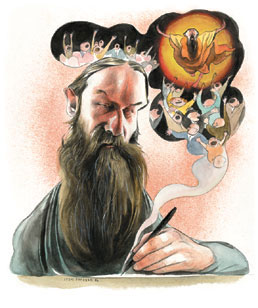
Building Two Pillars of SENS

Aging Damage Discovery SENS Solution
Cell loss, tissue atrophy 19551 Stem cells and tissue engineering (RepleniSENS)
Nuclear [epi]mutations

(only cancer matters)
19592, 19823 Removal of telomere-lengthening machinery (OncoSENS)
Mutant mitochondria 19724 Allotopic expression of 13 proteins (MitoSENS)
Death-resistant cells 19655 Targeted ablation (ApoptoSENS)
Tissue stiffening 19586, 19817 AGE-breaking molecules (GlycoSENS); tissue engineering
Extracellular aggregates 19078 Immunotherapeutic clearance (AmyloSENS)
Intracellular aggregates 19599 Novel lysosomal hydrolases (LysoSENS)
The "seven pillars of SENS anti-aging strategies" are shown in the table above, with a timeline of the discovery of their importance shown in the image below.
Important progress has recently been made on two of the pillars of SENS: Correcting for mutant mitochondria, and an improved clearing of cellular junk.

First, correcting human mitochondrial mutations:
Researchers at the UCLA stem cell center and the departments of chemistry and biochemistry and pathology and laboratory medicine have identified, for the first time, a generic way to correct mutations in human mitochondrial DNA by targeting corrective RNAs, a finding with implications for treating a host of mitochondrial diseases. Mutations in the human mitochondrial genome are implicated in neuromuscular diseases, metabolic defects and aging. There currently are no methods to successfully repair or compensate for these mutations, said study co-senior author Dr. Michael Teitell, a professor of pathology and laboratory medicine and a researcher with the Eli and Edythe Broad Center of Regenerative Medicine and Stem Cell Research at UCLA.

Between 1,000 and 4,000 children per year in the United States are born with a mitochondrial disease and up to one in 4,000 children in the U.S. will develop a mitochondrial disease by the age of 10, according to Mito Action, a nonprofit organization supporting research into mitochondrial diseases. In adults, many diseases of aging have been associated with defects of mitochondrial function, including diabetes, Parkinson's disease, heart disease, stroke, Alzheimer's disease and cancer.

"I think this is a finding that could change the field," Teitell said. "We've been looking to do this for a long time and we had a very reasoned approach, but some key steps were missing. Now we have developed this method and the next step is to show that what we can do in human cell lines with mutant mitochondria can translate into animal models and, ultimately, into humans."

The study appears March 12, 2012 in the peer-reviewed journal Proceedings of the National Academy of Sciences. _esciencenews
More at the link.

Next, clearing cellular trash aggregates:
A University of Michigan cell biologist and his colleagues have identified a potential drug that speeds up trash removal from the cell's recycling center, the lysosome.

The finding suggests a new way to treat rare inherited metabolic disorders such as Niemann-Pick disease and mucolipidosis Type IV, as well as more common neurodegenerative diseases like Alzheimer's and Parkinson's, said Haoxing Xu, who led a U-M team that reported its findings March 13 in the online, multidisciplinary journal Nature Communications.

"The implications are far-reaching," said Xu, an assistant professor of molecular, cellular and developmental biology. "We have introduced a novel concept—a potential drug to increase clearance of cellular waste—that could have a big impact on medicine." _UMich News
More at the link.

Both of these developments will require a number of years to perfect and shape into useful therapies. But as noted, improved therapies in either domain would provide hope for slowing the ageing process, and for treating many of the degenerative scourges of human existence.

The SENS Foundation has worked to promote research in the seven areas pictured above. And at least partially due to the efforts of SENS, more researchers and funding agencies are picking up the same themes.

Cross-posted to Al Fin Longevity

Labels: , ,

Bookmark and Share

05 September 2009

Coverage of SENS4 Conference in Cambridge

Kristen Fortney from Ouroborus blog is covering the 4th Strategies for Engineered Negligible Senescence conference, presently underway in Cambridge, England. Below are some excerpts of Kristen's coverage, courtesy of Fight Aging:
SENS4, Session 1: Combating oxidation

Cathy Clarke tested an original and interesting approach to avoiding free radical damage to poly-unsaturated fatty acids, or PUFAs: isotope reinforcement. ... The basic idea here, explained in an earlier paper, is very simple: heavier isotopes make stronger bonds, so isotope-reinforced PUFAs will be more resistant to free radical attack. Will these results transfer to higher organisms? Is there any chance that the deuterium could get incorporated into other molecules, stabilizing proteins that we want to degrade? The authors plan to follow up this study in worms and mice.

SENS4, Session 3: Optimising metabolism against aging

Stephen Spindler described his (ongoing) project to screen a large number of potential lifespan-affecting compounds in mice - so far, several candidates look promising. Interestingly, he also argued that the majority of previous studies measuring the effects of various compounds on rodent life expectancy suffer from serious flaws. In particular, he argued that many of them were confounded by a possible calorie restriction effect: mice are picky eaters, and if you change their diet by adding some compound to it, they will often eat less of it.

SENS4, Session 4: Adult regenerative capacity

Brandon Reines presented a counterintuitive result on regeneration: sometimes old animals have a higher regenerative capacity than young animals. In particular, if you punch a hole in the ear of a young mouse, then it won’t heal; but in a middle-aged mouse it will heal completely. He argued that this happens because mouse ear connective tissues never fully differentiate, and suggested that other neural-crest-derived connective tissues might show similar properties.

SENS4, Session 5: Eliminating recalcitrant intracellular molecules: the lysosome

John Schloendorn discussed ongoing work at the SENS Foundation Research Center to develop new enzymes that can degrade harmful intracellular junk that accumulates with age. So far, they have discovered enzymes that can degrade A2E and 7-ketocholesterol, which are implicated in macular degeneration and osteoporosis, respectively. Their next step will be to construct a drug delivery system to get these enzymes to lysozomes ... On the lighter side, Schloendorn also described some of the Center’s methods for building functional lab equipment on the cheap, all good examples for aspiring DIY biologists.

SENS4, Session 6: Eliminating recalcitrant intracellular molecules: other

Claude Wischik spoke about preventing aggregation of tau protein, which is implicated in Alzheimer’s disease. Clinical trials of their aggregation-inhibiting drug Rember are promising: it seems to slow the down the rate of cognitive decline in patients with mild to moderate Alzheimer’s disease.

SENS4, Sessions 9 and 10: Rejuvenating extracellular material

Kendall Houk gave a very interesting talk on computationally designing enzymes from scratch. They plan to apply their recently published protocol to develop enzymes that can reverse the formation of Advanced Glycation End-products (AGEs) - sugar-modified proteins that accumulate with age and are implicated in several age-related diseases. _links to more information
Ouroborus is updating Kristen's coverage as it comes in.

Twitter updates

Aubrey de Grey's SENS initiative has achieved prominence in scientific gerontology, thanks to financing from the Methuselah Foundation. Under most government health care and pension systems, long life is a bad thing, since the longer you live, the longer the government has to support your existence. That may be why so little progress was made under government financed gerontology research.

With private funding via SENS, expect much more progress. The same applies to private financing of space launch, and other crucial innovations. The private sector is all about getting results. The government is all about soaking up as many resources as possible, growing as large as possible, and employing as many public sector union members as possible.

Labels: ,

Bookmark and Share

03 January 2008

Do You Want To Live a Really Long Time?

Most readers of Al Fin blog want to live long, happy, prosperous lives. Otherwise, why read this blog? I consider Aubrey de Grey's SENS program for radical life extension to be the best ongoing approach to significant improvement in human lifespan. Now the mainstream periodical, The Economist, takes a look at de Grey's regimen:
Dr de Grey, who is an independent researcher working in Cambridge, England, is a man who provokes strong opinions. He is undoubtedly a visionary, but many biologists think that his visions are not so much insights as mischievous mirages, for he believes that anti-ageing technology could come about in a future that many now alive might live to see.

Vision or mirage, Dr de Grey has defined the problem precisely. Unlike most workers in the field, he has an engineering background, and is thus ideally placed to look into the biological repair shop. As he sees things, ageing has seven components; deal with all seven, and you stop the process in its tracks. He refers to this approach as strategies for engineered negligible senescence (SENS).

The seven sisters that Dr de Grey wishes to slaughter with SENS are cell loss, apoptosis-resistance (the tendency of cells to refuse to die when they are supposed to), gene mutations in the cell nucleus, gene mutations in the mitochondria (the cell's power-packs), the accumulation of junk inside cells, the accumulation of junk outside cells and the accumulation of inappropriate chemical links in the material that supports cells.

It is quite a shopping list. But it does, at least, break the problem into manageable parts. It also suggests that multiple approaches to the question may be needed. Broadly, these are of two sorts: to manage the process of wear and tear to slow it down and mask its consequences, or to accept its inevitability and bring the body in for servicing at regular intervals to replace the worn-out parts.
Economist

The writers at The Economist seem to understand that the key to getting anywhere in science is to "break a problem into manageable parts". Then define hypotheses which are falsifiable. Then test your hypotheses, one by one.

Because this is the approach that de Grey and his program are taking--and since no one else has attempted anything else nearly so ambitious or logical--it is to de Grey, SENS, the Methuselah Foundation etc. that most interested parties look for advances in this area. Of course, breakthroughs can occur at unexpected times and places. The radar scope must still sweep a broad circle. But reading de Grey's book, Ending Aging, and following the progress of SENS, is a good place to start.

Hat tip Brian Wang

Labels: , ,

Bookmark and Share

26 September 2007

SENS Update

SENS3, the third biannual SENS conference was held 6-10 Sept 2007 at Queens College, Cambridge. An excellent summary of the conference is available at Ouroborus. Apparently, progress has been made by several researchers on multiple fronts. To access talks from previous conferences, go to SENS1 here, or SENS2 here.

Aubrey de Grey's SENS is a seven-part approach to engineering increased longevity in humans. SENS research is being funded by the Methuselah Foundation, and other funding agencies and individuals.

Other important recent conferences of note were the Singularity Summit in San Francisco and the Nano-Bio technology Conference in Tucson. Both of those conferences were well covered by Michael Anissimov.

Hat tip Brian Wang

Labels: ,

Bookmark and Share

19 December 2006

MPrize and SENS--Extending the Lifespan

The Methuselah Mouse Prize (Mprize) is a set of contests to develop the longest living mus musculus research mouse. The Mprize is an example of an "Inducement Prize", a cash award created to induce contestants to achieve a notable goal. Other examples of inducement prizes include the recent XPrize won by Burt Rutan's group and the Kremer Prizes for human powered flight won by Paul MacReady's group.

Aubrey de Grey and his SENS group are involved in several approaches to extending human life span, in addition to participating in the Mprize effort.

Peter Thiel, cofounder of Paypal, has recently donated US $3.5 million to SENS research projects. $500,000 was donated for immediate use, and $3 million was contributed in the form of matching grants.

Difficult challenges such as the human longevity challenge, require special champions able to direct scientific researchers toward likely avenues of research and to capture the imagination of donors and the general public. Aubrey de Grey has proven himself up to the challenge on both counts.

For those interested in attending a talk by de Grey, here is his schedule of coming talks. The Edmonton Aging Symposium would be a good choice for Canadians and other North Americans new to the field of life extension.

Humans need longer lives so as to acquire wisdom for future challenges. Although popular "culture" emphasizes amusements and entertainments, there really are serious challenges being met today--although you would never know it from the main stream media. That is one reason why the msm is "old media", obsolete, and a definite "sell."

Labels: , ,

Bookmark and Share

12 July 2006

Aubrey de Grey's SENS Stands Up to Lively Debate

I strongly encourage anyone with an interest in gerontology or life extension science to visit the lively debate at Technology Review concerning the "SENS Challenge", with a prize of US $20,000 at stake. The challenge was issued a year ago, with the $20,000 prize offered to anyone who could prove that SENS was "unworthy of learned debate."

Technology Review has provided links to the entire debate (scroll down). Most of the entries failed to approach the level of serious consideration by the challenge judges, however one entry by Preston Estep was considered well enough argued to be awarded a $10,000 grant, which had nothing to do with the prize money for the challenge.

Links from other challengers are also provided on the TR SENS Challenge page, along with Aubrey de Grey's rebuttals, and the counter-rebuttals by the challengers. Finally, Preston Estep posted a strong protest to the judges' decision.

At the MPrize website, the editors correctly proclaim that SENS has withstood the challenges so far, and the $20,000 prize remains unclaimed. The $10,000 award to Estep is briefly discussed there as well.

The real debate is taking place as you read this, on the discussion forum of Technology Review, and other websites. A quick blog search query brought up a large number of news and blog reports on the decision of the judges. Start at the TR SENS Challenge page, and follow the links.

No one is staking his life that SENS is correct in every detail. That level of perfection is not necessary for SENS to have a profound positive impact on anti-aging research. It is only necessary that the SENS theories help lead to positive results, either directly or indirectly, for the theories to have been worthwhile in the long run.

There are backwaters of science that need to be shaken up from time to time. Gerontology had certainly become one of those backwaters by the 1990s. The entry of SENS into the arena has been like a splash of cold water to the face, and like a breath of fresh air, simultaneously.

Technology Review is to be congratulated for helping to stimulate this lively debate, and for furthering interest in this incredibly important field of study.

Labels:

Bookmark and Share

21 April 2006

Waiting to Make SENS of Aging, Life Extension, Longevity?

Many of you are familiar with Aubrey de Grey and his SENS approach to life extension and longevity. For the intermediate term, de Grey's approach offers a lot of promise in the fight against aging.

In the short term, we need something more immediate. Ray Kurzweil has written a book on aging, discussing the several dozen supplements he takes daily. Most people do not need that much, but some might need more. A recent Barron's article took a stab at the subject, and the last Technology Review featured an interesting article about research into the anti-aging gene sirt.

This brief posting will deal with the basics of life extension now, rather than longevity in the next fifty years. Several postings in Al Fin have dealt with this topic, and there is no need to repeat them. This is just the basics. People below the age of 40 should ignore the hormone section. Each person should selectively choose agents based upon his own circumstances. Inform yourself in basic biology. Consult professionals before taking prescription medicines or extremely high doses of any agent. Middle aged males with or without family history of prostate cancer: take androgens, DHEA, etc. at your own risk, or after consulting a professional.

1. Hormones: DHEA, Pregnenolone, HGH, androgens, estrogens, thymosin, melatonin, and thyroid.
2. Antioxidants: Vitamins A,C,E, Lipoic Acid, Selenium, NAC, CoQ10, polyphenols, other phyto-antioxidants.
3. Antiglycation agents: Aminoguanidine, Carnosine, pyridoxamine, benfotiamine, ALT 711.
4. Brain Boosters: Ginkgo, PS, bacopa, DMAE, neurotransmitter precursors, hydergine, vinpocetine, Huperzine, etc.
5. Calorie restriction mimetics such as resveratrol, quercetin, etc.
6. General: TMG, Curcumin, carnitine, B complex, etc.
5. Immune Boosters: Wide variety of herbals and complex carbohydrate derivatives of plants and microorganisms, plus a lot of laughter.
6. Physical exercise and prudent eating, plus elimination of clearly bad habits and institution of good lifestyle habits.
7. Mental and emotional training. Practise sentic cycles and other forms of meditation. Read books on mind and memory training, and practise exercises.

If you are too old to wait for SENS, but rebel against the need to practise self-discipline, simply get old as you are doing. Otherwise, consult the longevity links posted on the side-bar of the Al Fin main page. Learn what you can, and start practising what you can. The important thing is to take a systematic approach. If you take supplements, but smoke like a stack, drink like a fish, exercise less than a minute a week, and sleep only two or three hours a night, you may not be taking a balanced approach to the problem.

In a later post, I will go into more detail on some of the particular agents and approaches outlined above. In the meantime, feel free to utilise the source materials that are provided under "longevity" and "singularity".

Labels: , , , ,

Bookmark and Share

09 February 2006

SENS: Strategies for Longevity or Immortality?

Who wants to live forever?

We learn from Anti-ageing blog that controversial gerontologist Aubrey de Grey appeared on BBC Radio4 Start the Week yesterday. Anti-ageing blog provides this link for a Real Media format download of the show.

This past December, Acceleratingfuture blog presented a fine expose on SENS and de Grey. From that article:

The SENS website lists the seven causes of pathogenic damage underlying aging:

1) cell depletion
2) chromosomal mutations (cancer)
3) mitochrondrial mutations
4) unwanted cells that won’t die
5) extracellular crosslinks
6) extracellular junk
7) intracellular junk

These seven sources of damage are treated as comprehensive because they were all discovered over 20 years ago, and our tools for detecting sources of pathology has improved so greatly over this time, that if there were others to be found, they would be obvious by now. De Grey proposes the following solutions which respectively correspond to the seven causes of aging:

1) Stem cells, growth factors, exercise
2) WILT (Whole-body Interdiction of Lengthening of Telomeres)
3) Allotopic expression of 13 proteins
4) Cell ablation, reprogramming
5) AGE-breaking molecules/enzymes
6) Phagocytosis; beta-breakers
7) Transgenic microbial hydrolases

De Grey proposes a 50/50 chance that within twenty to thirty years, our implementations of the above countermeasures will become sophisticated enough to lower the rate of aging to negligibility. After that point, the only threats to life which would remain are disease, war, accidents, and technological or natural disasters. Of course, success in this endeavor will require adequate funding. And the old guard biogerontologists and skeptics are coming around, bit by bit, as they realize the scientific feasibility of de Grey’s proposals.


It is worthwhile to read the entire article. Then, armed with such excellent background information, go straight to the SENS website. At the SENS site, you can look over a wide array of information about SENS and de Grey, from de Grey's biography, to an overview of the science, basic questions and objections, and scheduled meetings.

SENS has an official publication, called Rejuvenation Research. Here is a link to a complementary issue of Rejuvenation Research. According to the website:
This fully indexed MEDLINE journal covers:

* Cardiovascular Aging
* Cell Immortalization and Senescence
* Cloning/ESCs
* DNA Damage/Repair
* Gene Targeting, Gene Therapy, and Genomics
* Growth Factors
* Immunology
* Invertebrate Lifespan
* Neurodegeneration
* Tissue Engineering
* Public Policy, Social Context
* ...and much more


According to Frank at anti-ageing blog, de Grey was not received well by others appearing on the BBC Radio4 show, including Clare Short, prominent British politician.

It is not surprising that contemporary politicians in the developed world look suspiciously on the idea of extending human lifespan. After all, budgets are strained to the breaking point already, to provide for social security--and that is with people obligingly dying before the age of 100. What happens when they live to 200, 500, or 1000 years? What will that do to the structure of political and economic power in the world?

Labels: , , ,

Bookmark and Share
Older Posts
Al Fin Main Page
Enter your Email


Powered by FeedBlitz
Google
WWW AL FIN

Powered by
Blogger

``