31 May 2006

New Discoveries in Climate Change

Clever new icebreaking techniques allowed scientists to drill over 400 meters of seafloor core, clarifying climate change over the past 56 million years. By using three icebreakers--one to maintain station over the drill site, and the other two to fend off ice flows--the scientists were able to remain on station at each of four drill sites for up to 9 days.

Results of the 2004 research expedition, led by scientists from the University of Rhode Island and Stockholm University, are reported in the June 1 issue of the journal Nature.

“Little direct evidence about the environmental history of the Arctic Ocean existed before our cruise, partly because of the enormous technological challenges of collecting the samples,” said Kate Moran, professor of oceanography and ocean engineering at URI and co-chief scientist on the expedition. “Our analysis of the core sample suggests that 55 million years ago the Arctic was much warmer than today. We anticipate that our data will be used by climate modelers to give us better information about how climate change occurs and where global climate might be heading.

....The sediment cores provide a surprising Cenozoic Era record of a climate transition from a warm “greenhouse” world in the late Palaeocene and early Eocene epochs to a colder “icehouse” world influenced by sea ice and icebergs from the middle Eocene to the present.

The researchers discovered that 55 million years ago, during a period called the Palaeocene Eocene Thermal Maximum, which was similar in climate to today, the surface temperature of the Arctic Ocean was much warmer than previously believed – perhaps as much as 20 degrees Celsius higher than today. The team was also surprised to find the remains of a large quantity of freshwater ferns, dated to 49.5 million years ago, which suggests that the ocean had considerably lower salinity levels and conditions amenable to the formation of sea ice.

Pebbles and sand in the sediment cores – debris that fell out of floating ice – is evidence of climate cooling 45 million years ago, about 35 million years earlier than previously believed. The revised timing of this Arctic cooling coincides with similar events in Antarctica, supporting the belief that global climate changed symmetrically at both poles.

....This Arctic Coring Expedition was undertaken by the National Science Foundation-sponsored Integrated Ocean Drilling Program, an international research effort that explores the history and structure of the Earth as recorded in seafloor sediments and rocks.....The drilling was done at four sites on the Lomonosov Ridge, approximately 1,000 meters under the sea-surface and 250 kilometers from the North Pole.
Source.

The definition of an "ice age", is a time when the earth's poles are covered by ice. By that definition, the earth has been in an ice age for millions of years, with periodic periods of increased glaciation punctuated by much shorter inter-glacial periods. Climate change is merely part of the normal way of earth's climate.

Whether or not humans represent a serious destablising force in earth's climate or not is still a matter of serious debate among scientists. Certainly the sloppiness of many climate "scientists" lends a lot of ammunition to skeptics.

Regardless, it is nice to see real science being done, science that can shed real light on the topic. The earth has been through a lot over the past four billion years or so.

Labels: , , ,

30 May 2006

Red Rain over Kerala: New Update from Central Programming?

Of the many theories of the origin of life on earth, one of the most fascinating is the theory of panspermia. Panspermia suggests that life originated outside of earth, and survived passage through outer space, and entry through earth's atmosphere--to seed life on the new planet earth.

A relatively recent earthfall of red cell-like particles over India raises the question again--this time leaving real specimens for scientists to examine.

In April, Louis, a solid-state physicist at Mahatma Gandhi University, published a paper in the prestigious peer-reviewed journal Astrophysics and Space Science in which he hypothesizes that the samples—water taken from the mysterious blood-colored showers that fell sporadically across Louis’s home state of Kerala in the summer of 2001—contain microbes from outer space.

Specifically, Louis has isolated strange, thick-walled, red-tinted cell-like structures about 10 microns in size. Stranger still, dozens of his experiments suggest that the particles may lack DNA yet still reproduce plentifully, even in water superheated to nearly 600˚F. (The known upper limit for life in water is about 250˚F.) So how to explain them? Louis speculates that the particles could be extraterrestrial bacteria adapted to the harsh conditions of space and that the microbes hitched a ride on a comet or meteorite that later broke apart in the upper atmosphere and mixed with rain clouds above India. If his theory proves correct, the cells would be the first confirmed evidence of alien life and, as such, could yield tantalizing new clues to the origins of life on Earth.
Source.

Panspermia developed a touch of giggle-factor when Hoyle and Wickramasinghe blamed extraterrestrial viruses for flu epidemics. But it has come back into fashion of late, and proponents argue there's plenty of evidence for it. Experiments have shown that some tough bacteria can survive for years in space, despite the extreme cold and high levels of radiation. Others have proved that some of these bugs could survive the high-speed collisions that they would experience if they slammed into the Earth on a comet.

The idea of primitive microbes flying around the solar system in its early days is not as wild as it seems. "Most of the rocks near the surface of the Earth are shot through with microbial life. It would be a fairly simple thing for a little piece of the crust to be ejected and life survive and land somewhere else," says Walker. On balance, he says, he'd bet that life began here on Earth. But he wouldn't be that surprised if evidence emerged that life started somewhere else and was delivered to Earth by a hunk of space rock.
Source.

These red cell-like specimens measure very close to the size of a human red blood cell. Their seeming ability to reproduce by budding is not at all erythrocyte-like, however. Further study in more modern research laboratories may provide more information.

A number of blog reports have covered this topic, including here and here.
These micro-particles are unlikely to be a threatening form of Andromeda Strain, but a certain amount of caution in dealing with unexplained phenomena is warranted.

Perhaps the United Nations could dispatch a special team of scientists to Kerala to observe the local population for anomalies, such as extra eyes, arms, or sensory organs of unknown type?

Labels:

NF Kappa B Update: Interactions with Oncogene and Tumour Suppressor

Several weeks ago, I discussed the NF Kappa B family of transcription factors as possible targets for cancer therapies. Now researchers at two German research institutes have uncovered further details into how NF Kappa B interacts with an important leukaemia oncogene, and how transcription of the oncogene is blocked by a tumour suppressor protein by way of de-ubiquitisation (be patient, this is important).

During the process of genetic transcription, Bcl-3(oncogene product [transcription factor]) cooperates with other, unusually important transcription factors which belong to the NF-KB-family. Its five members influence a broad spectrum of disease processes, like infections and immune reactions, as well as cell growth. Two representatives of this group, p50 and p52, must themselves first be activated in order to initiate the transcription. One important mechanism for doing that is Bcl-3 binding. Until now, we have known that Bcl-3 can cooperate with p50 or p52, causing intense cell growth and ultimately cancer. For such cooperation, however, Bcl-3 has to first enter the nucleus, where DNA and the NF-KB proteins can be found. The team from Munich, led by Prof. Reinhard Fässler, showed that the transcription factor is helped by a molecular "ticket".

Large numbers of ubiquitin molecules can be attached in sequence to proteins. A certain kind of binding marks this protein as "rubbish" which has to be removed. Another type of ubiquitin attachment to proteins functions as a kind of transport signal. It negotiates the transfer, for example, of proteins into the nucleus. The study shows that this is the case with Bcl-3. It only functions like this, however, when Cyld does not get in the way. This protein was first found in patients suffering from cylindromas. These are tumours that grow on the face, neck, and scalp. Cyld is a deubiquitinase - an enzyme that removes ubiquitin groups from other proteins. "We could show in our study that Cyld proteins can accumulate around the nucleus," says Fässler. "They can intercept Bcl-3 there and prevent it from being imported into the nucleus, by removing ubiquitin appendages." This is the first evidence ever of a specific mechanism that regulates and controls the Bcl-3 oncogene.

The team of researchers from Munich flawlessly reconstructed Cyld interaction with Bcl-3. They demonstrated every step in the process, from the recruiting of Cyld over to the nuclear membrane, to the ubiquitinisation of Bcl-3, and Cyld's reversal of this process. They also showed in detail that Bcl-3 collects without Cyld in the nucleus, and can cause cell proliferation with p50 and p52. All in all, it seems not unlikely that Cyld functions as a tumour suppressor in mice and in humans. In humans, there is evidence that a defective Cyld gene can have negative consequences, like the largely benign tumours of cylindromas. The researchers also found very little, or no, Cyld in the cells of other skin tumours. The situation is similar in some cases of liver, kidney, and uterine cancer. "Cyld is expressed in every cell in the body", Fässler says. "I believe personally that the deubiquitinase activity of Cyld functions as a tumour suppressor in all tumours in which the Bcl-3 oncogene plays a role."
Source.

This is just a small picture view of what is going on with one particular oncogene and a likely tumour suppressor that tries to block its expression. The fact that it involves the NF Kappa B family as co-transcription factors is something to be filed away for future use. NF Kappa B sits at the center of many cell processes, and will probably be targeted at some point in the cell signalling pathway, probably more than one point--since finding the precise target point in a complex pathway for specific disease processes can be a trial and error procedure.

Labels:

28 May 2006

Hobbling Time

There is a quantum of time for every thought. Our bandwidth of thought lies well under one hundred bits per second at best. In spite of our ability to chunk information and utilise massive parallelism of cortical columns. When we are tired or otherwise indisposed, our bandwidth is reduced accordingly.

Our consciousness is arranged so as to focus our attention on one thing at a time. Women manage a limited type of multi-tasking due to better balancing of the cortices, but men are confined practically to one thought at a time. That is one limitation, the real time limitation of thought rate.

Within hours after waking, the human brain requires nutrient and fluids, and periodically through the waking hours this must be repeated. For many humans, periodic infusions of nicotine, caffeine, ethanol, and other chemicals are required in the waking time. For most modern humans, the waking brain requires a period of rest and rejuvenation, so it watches pre-digested "information" or entertainment content, or reads or listens to particular sounds. After around fourteen or sixteen hours of "waking", human brains require rest, so they sleep.

Humans can, of course go for much longer times without chemicals, sleep, and recreation. I myself have worked for periods of up to and longer than sixty hours without sleep, with little food or fluid, and no chemicals except the rare and treasured caffeine. That is not something humans will do willingly, unless given strong motivation. In general, the preceding paragraph applies.

When humans are born, they cannot think, not like adult humans. It requires years to acquire language and the forms of thinking that adult humans use. Up to half of each day of those early years is occupied by sleep and other non-thinking activities. If the child goes to school, well over half.

The frontal lobes do not fully myelinate before the early to middle twenties. Judgement suffers during this time prior to brain maturation, and very often the brain is well indoctrinated and innoculated against independent thought before the brain has grown to dynamic completion. In many of these cases, there is no amount of time that can remedy the loss. In other cases, the coming of full brain function allows a growth out of childhood and university indoctrination.

In all these years, particularly if the child is in school, most hours of his day are spent in non-thinking activity, even allowing for the limitations on thought in the immature brain. These hours of non-thinking become a habit not easily broken after the hobbles of childhood and youth are removed.

We think very slowly, when we think at all. Much of our time is devoted to performing duties of various types in exchange for currency, currency that gives us choices in what we do with our "free" time. We would rather talk on the cell, watch a film, relax with a cigarette or cup of coffee, drink a fine wine, and exchange non-thoughts with our friends. This is life, this is time.

Grasping for companionship thinking this will stop time this will be forever this eternal moment. Attending weddings, our own, our friends. Surprised by time by babies by new emotions. Surprised by stangers with the names of our spouse and our children. Gray hair and wrinkles time sneaks strange.

All too soon, we are spending time at the clinic, at the diagnostic center. Visiting the hospital or being visited. Attending funerals for those whose time elapsed. Seeing ourselves in the casket reflected in the bathroom mirror, seeing ourselves in the hospital bed from the medicines inside the cabinet. That is our time.

What is the bandwidth of thought when one never thinks? When what passes for thought is pre-digested hyper-processed slurm? A lifetime of it and then nothi

All the marvelous ways we have of forgetting the passage of time. We say we are killing time but really we are just ignoring time while time is killing us. What can people do? Is it enough to be wise and to age gracefully, to achieve balance and peace of mind? Yes, that is preferable to suffering. Most humans never think, never think about this except in bad dreams or tragedies, but if they did they would not accept the buddha's answer.

Humans would want to hold time rather than to be held by time. Perhaps it comes down to the daily conflict between the will to act willfully when awake, and the will to sleep in peace. Understanding this, understanding one gulf between people. Further dividing among those who want to act while awake, those who want to achieve primacy over others, from those who only want to act out their own lives free from unnecessary hobbles.

Time hobbles when hobbling time, when hobbling time comes. Which will it be?

All of this will still be operative when "the singularity" hits us. If you understand the terrain, you can trace the future of the watercourse after the deluge.

Labels:

26 May 2006

The Earth Is Warmed by the Sun, and other Inconvenient Truths

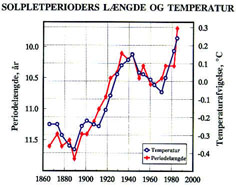
The Earth is located at a fortuitous distance from the sun. Solar irradiation combined with greenhouse gases such as water and CO2 provide the earth with a life-sustaining, though normally variable, climate. Current warming trends in global climate require explanations, and good scientists do not limit their hypotheses unnecessarily. In other words, since climate is a complex outcome of several variables with complex and poorly understood interactions between the variables, we are likely to be surprised by actual climate change if we are looking at only one variable in the equation.

It is extremely unlikely that greenhouse gas emissions will be decreasing within the next two or three decades (unless there is a massive worldwide recession), so the first thing that comes to mind that might destroy the current correlation between temperature rise and CO2 concentration increases, would be a drop in solar output.

General Circulation Models (GCMs) of climate typically consider solar output to be a constant, and greenhouse gases to be the only possible significant variable to have changed enough to impact climate. This assumption of constancy is quite convenient for those modelers whose living is based upon proving the greenhouse gas forcing (ggf) theory of climate change. Not because there cannot be more than one force acting on the climate at one time, but because in pragmatic terms, nothing must be allowed to steal the spotlight from the ggf theory.

Not surprisingly, astrophysicists and solar scientists take a somewhat different view of solar "constancy." They say it is wrong. This is an inconvenient bit of data for professional climate modelers and scaremongers, so it is ignored. Nevertheless, it is fascinating to consider that solar variability combined with several other factors--including greenhouse gases--generates climate change. Fixating on one cause is fine if you are a professional lobbyist for an environmental organisation, or if you are making films to try to help your presidential bid, or if your living well depends on keeping one particular theory of climate change front and center--but if you are interested in truths of all kinds, including inconvenient truths, you actually must include other hypotheses.

Current fixation on carbon dioxide to the exclusion of other factors, leads to an over-simplification of outlook. Clearly greenhouse gases magnify the heating effects of solar irradiation. But what is the effect of different concentrations of CO2 on heat trapping, and how is that modified by the actions of water, aerosols, ocean temperatures and currents, ground vegetation layer, surface albedo, and other factors--some of them as of yet unknown?

In other words, once you know that one element of climate warming involves greenhouse gases, and one greenhouse gas that is increasing in concentration is CO2, where do you go from there. A rational person will not go where Al Gore goes, but then that is not surprising, judging from Mr. Gore's past antics and claims--particularly in light of the transparent propaganda methods utilised in his recent film. But a rational person who is seeking explanations must continue looking.

Because the truth underlying all the propaganda and politics is much more interesting than most "environmentalists" could possibly understand. The climate will change. The climate has always changed. We are told that "global warming" can lead to unpredictable warming or cooling. This may appear paradoxical, but it is only a way of covering all the bases.

If greenhouse gases in fact magnify the sun's warming effect in a non-linear way, it is easily conceivable that a reduction in solar output could lead to much greater cooling than would be expected from the change in solar output. Conversely, much greater heating is possible due to greenhouse gas effect.

The fact that CO2 and temperature change are not perfectly correlated over time suggests that other significant variables are involved. GCM models ignore other variables, or make unfounded assumptions about them which affect the reliability of the projections.

How much will meeting Kyoto targets slow warming? Very little if any. It all depends on the exact degree of forcing caused by CO2, and no one knows that. Meanwhile, climatologists and environmental charities/lobbies are doing very well financially, with sloppy models, bad assumptions, and poor technique. Can you really blame Al Gore for wanting to get in on the action?

Labels: , ,

25 May 2006

No Standing Still for Nanotechnology

The first story discusses the use of carbon nanotubes as tiny extruders and jigs, for small scale fabrication.

The research builds on the team's earlier findings detailing how bombarding electrons at carbon "onions" -- tiny, multilayered balls of carbon -- essentially knocks the carbon atoms out of their lattice. Surface tension then causes the balls to contract with great force, which allows carbon onions to act as high-pressure cells for creating diamonds.

In the new report, the team discovered that the same thing happens with nanotubes, producing enough pressure to deform, extrude, and even break solid materials that are encapsulated within.

The researchers filled carbon nanotubes with nanowires made from two extremely hard materials: iron and iron carbide. When irradiated with an electron beam, the collapsing nanotubes squeezed the materials through the hollow core along the tube axis, as in an extrusion process. In one test, the diameter of iron carbide wire decreased from 9 nanometers to 2 nanometers as it moved through the tube, only to be pinched off when the nanotube finally collapsed.
Source.

Next, we learn that scientists at NIST (National Institute of Standards and Technology) are growing nanowires that can be used as nano-light sources, for small scale sensors and detectors.

NIST is one of few laboratories capable of growing such semiconductor nanowires without using metal catalysts, an approach believed to enhance luminescence and flexibility in crystal design. The wires are generally between 30 and 500 nanometers in diameter and up to 12 micrometers long. When excited with a laser or electric current, the wires emit an intense glow in the ultraviolet or visible parts of the spectrum, depending on the alloy composition.

A paper in the May 22 issue of Applied Physics Letters* reports that individual nanowires grown at NIST produce sufficiently intense light to enable reliable room-temperature measurements of their important characteristics. For example, the peak wavelength of light emitted with electric field parallel to the long axis of a nanowire is shifted with respect to the peak wavelength emitted with electric field perpendicular to the wire. Such differences in emission are used to characterize the nanowire materials and also may be exploited to make sensors and other devices.
Source.

Finally, we are told that "Panasonic today announced the development of a novel VCSEL (Vertical Cavity Surface Emitting Laser) utilizing an epoch-making physical phenomenon called as surface plasmon resonance."

The surface Plasmon resonance drastically enhances optical transmission through the silver nano-holes array at an optimized pitch of the holes resulting in high optical output of 2mW. The used silver is known as the metal exhibiting the maximum resonant effect as well as very high reflectance. The enhanced reflectance at the mirror successfully reduces the threshold current down to 0.5mA.

In addition, fabrication process of the silver nano-holes is successfully established using electron beam lithography. In order to avoid any degradation of the silver, the nano-holes are entirely covered by dielectric films such as silicon nitride.
Source.

So we see advances in nanotechnology involving nano-fabrication, nano-sensors, and nano-laser devices for rapid data communications. When we read books such as Drexler's Engines of Creation, then look at the state of the art in nanotech, we might wonder "where are all those miracles we were promised?" But miracles do not come from nothing. They come from clear and clever thinking, and hard persistent work. And time and luck.

And do you really think the militaries of the world would publicly announce nanobots that could be dropped over a country such as Iran, to seek out and dismantle any nuclear devices and materials found?

Update: Here is a nano invisibility cloak. Maybe there is some magic in the air after all.

Labels:

24 May 2006

Ambien--For Sleeping, For Waking

Zolpidem (Ambien) has been available for over ten years, and for many it has been an extremely helpful aid for sleep. Now South African researchers are reporting that Zolpidem can be useful for "waking" people from a brain damaged state, temporarily.

Each of the three patients studied was given the drug every morning.

An improvement was seen within 20 minutes of taking the drug and wore off after four hours, when the patients restored to their permanent vegetative state.

Patient L had been in a vegetative state for three years, showing no response to touch and no reaction to his family.

After he was given Zolpidem, he was able to talk to them, answering simple questions.

Patient G was also able to answer simple questions and catch a basketball.

Patient N had been "constantly screaming", but stopped after being given the drug when he started watching TV and responding to his family.

Dr Ralf Clauss, now in the nuclear medicine department at the Royal Surrey Hospital was one of the researchers who carried out the study.

He told the BBC: "For every damaged area of the brain, there is a dormant area, which seems to be a sort of protective mechanism.

"The damaged tissue is dead, there's nothing you can do.

"But it's the dormant areas which 'wake up'."

Activity trigger

He said drugs like Zolpidem activate receptors for a chemical called GABA in nerve cells in the brain.

When brain damage occurs, these receptors appear to change shape, so they cannot behave as normal.

He said the drug appeared to cause the receptors in these dormant areas to change back to their normal shape, triggering nerve cell activity.

Dr Clauss added: "We are carrying out further research. The next step is to get rid of the sleepiness effect of the drug."
Source.

This is a curious finding, and one that needs a good deal more examination and analysis. It is unlikely that the explanation for the mechanism of this phenomena is actually what is taking place. The finding is provocative, nevertheless, and may point to ways of maximising brain function in the brain injured patient. My personal view is that neurofeedback is quite underutilised in these cases.

Now if only someone could find a way to wake the masses of somnambulatory "normals." Or maybe we are better off the way it is?
:-)

23 May 2006

Another Piece of the Alzheimer's Puzzle is Revealed

Previously, here and here, I discussed the connection of apoE4 and NMDA glutamate receptors with Alzheimer's disease and neuronal cell death. Here is some followup research from Georgetown University on the relationship of apoE4 and the NMDA glutamate receptors, with Alzheimer's Disease. This study establishes the connection in more detail.

In a study published in the Journal of Biological Chemistry, the research team specifically found that receptors on the outside of brain nerve cells that bind on to APOE and glutamate are connected on the surface of neurons, separated from each other by only a small protein.

While the researchers don't know why these receptors are linked together, they say inefficient or higher-than-average levels of APOE in the brain could possibly be clogging these binding sites, preventing glutamate from activating the processes necessary to form memories.


....in this study, they confirmed through a series of experiments that the receptors for APOE and NMDA interacted, and that the protein that linked the two was PSD95, often found in neural synaptic junctions. Together, they form a multiprotein complex that could presumably be activated by either APOE, NMDA or glutamate.


Looking back at previous research:

....Based on recent research, Rebeck and others suspect that, in the brain, APOE also acts as a transporter, picking up lipids and perhaps other material that result from normal brain tissue wear and tear, or from trauma, and moving it to where it can be used or can be cleared away from the brain. Work in Rebeck's lab found that APOE receptor 2 ( ApoEr2 ), one of the eight different APOE receptor types, is crucial to both the development and operation of a normal brain.

Glutamate increases the strength of a synaptic response following stimulation. The NMDA glutamate receptor binds on to the drug NMDA, and also on to glutamate, an excitatory neurotransmitter that also stimulates nerve cell activity. Researchers know that the NMDA receptor is needed to produce the long-lasting synaptic response that is necessary in order to establish, or "lay down," memory, Rebeck says. " The molecular basis of memory depends on NMDA receptor. "

In work leading up to this study, Rebeck and the research team found that adding APOE to neurons in laboratory culture blocked NMDA receptors.

....Rebeck suspects that the APOE4 variant -- the one linked to Alzheimer's disease -- is less efficient at removing lipid debris in the brain than is APOE2 or APOE3, and because of this, brain cells secrete more of the faulty protein to do the job. If too much APOE ends up binding to the APOE/NMDA receptor, one of two things could possibly happen, Rebeck says. In one scenario, the receptor becomes over-stimulated due to the accumulating presence of APOE, which could trigger a process called excitotoxicity that results in death of the neruons. Or, in the presence of damage and secreted APOE, the receptor "turns down" its activity -- thus, hampering memory formation -- until the brain is repaired. " Having damage around tells the brain not to think too much for awhile, " Rebeck says. But if APOE4 cannot clear up accumulating damage, the ability to make new memories, and use old ones, may be increasingly lost.
More at the source.

This is how research progresses, step by step--each step based upon earlier findings by the same researchers and/or other researchers around the world pursuing the same sets of leads. With each new piece of the mechanism identified, another potential target for protecting neurons from degenerative processes is uncovered.

Labels:

22 May 2006

Fuel Your Car With Garbage: Back to the Future?

In news reports here, here, and here, we learn that microbiologists are devising fuel cells that could potentially run on garbage--reminding one of the "Mr. Fusion" garbage burning DeLorean from the movie. From the Eurekalert newsrelease:

"Microbial fuel cells show promise for conversion of organic wastes and renewable biomass to electricity, but further optimization is required for most applications," says Derek Lovley of the University of Massachusetts in Amherst. Earlier this month, Lovley announced at a meeting that he and his colleagues were able to achieve a 10-fold increase in electrical output by allowing the bacteria in microbial fuel cells to grow on biofilms on the electrodes of a fuel cell.

This week, Gemma Reguera, a researcher in Lovley's lab will present data identifying for the first time how these bacteria are able to transfer electrons through the biofilms to the electrodes.

"Cells at a distance from the anode remained viable with no decrease in the efficiency of current production as the thickness of the biofilm increased. These results are surprising because Geobacter bacteria do not produce soluble molecules or 'shuttles' that could diffuse through the biofilm and transfer electrons from cells onto the anode," says Reguera.

She and her colleagues discovered that the bacteria produce conductive protein filaments, or pili 'nanowires,' to transfer electrons. The finding that pili can extend the distance over which electrons can be transferred suggests additional avenues for genetically engineering the bacteria to further enhance power production.

In further developments using bacteria to produce energy, Researchers from the Universidad Nacional Autonoma de Mexico announce that they have genetically engineered the bacterium Bacillus subtilis to directly ferment glucose sugar to ethanol with a high (86%) yield. This is the first step in a quest to develop bacteria that can breakdown and ferment cellulose biomass directly to ethanol.

"Currently ethanol is produced primarily from sugarcane or cornstarch, but much more biomass in the whole plant, including stems and leaves, can be converted to ethanol using clean technology," says Aida-Romero Garcia, one of the researchers on the study. The next step is to engineer the bacteria to produce the enzymes, known as cellulases, to break the stems and leaves down into the simple carbohydrates for fermentation.

Bacteria can not only produce alternative fuels, but could also aid in oil production by boosting output of existing wells. Michael McInerney and his colleagues at the University of Oklahoma will present research demonstrating the technical feasibility of using detergent-producing microorganisms to recover entrapped oil from oil reservoirs.

"Our approach is to use microorganisms that make detergent-like molecules (biosurfactants) to clean oil off of rock surfaces and mobilize oil stuck in small cavities. However, up till now, it is not clear whether microorganisms injected into an oil reservoir will be active and whether they will make enough biosurfactant to mobilize entrapped oil," says McInerney.

He and his colleagues were able to inoculate an oil reservoir with specific strains of bacteria and have these bacteria make biosurfactants in amounts needed for substantial oil recovery.
Source.

In other science news, using carbon nanotubes to create nanotech membrane filters promises to achieve chemical separations at lower costs, including desalination of saltwater, air purification, and chemical separation for industrial processes and chemical refining.

A nanotube membrane on a silicon chip the size of a quarter may offer a cheaper way to remove salt from water. Researchers at Lawrence Livermore National Laboratory have created a membrane made of carbon nanotubes and silicon that may offer, among many possible applications, a less expensive desalination.

The nanotubes, special molecules made of carbon atoms in a unique arrangement, are hollow and more than 50,000 times thinner than a human hair. Billions of these tubes act as the pores in the membrane. The super smooth inside of the nanotubes allow liquids and gases to rapidly flow through, while the tiny pore size can block larger molecules. This previously unobserved phenomenon opens a vast array of possible applications.

The team was able to measure flows of liquids and gases by making a membrane on a silicon chip with carbon nanotube pores making up the holes of the membrane. The membrane is created by filling the gaps between aligned carbon nanotubes with a ceramic matrix material. The pores are so small that only six water molecules could fit across their diameter.

“The gas and water flows that we measured are 100 to 10,000 times faster than what classical models predict,” said Olgica Bakajin, the Livermore scientist who led the research. “This is like having a garden hose that can deliver as much water in the same amount of time as a fire hose that is ten times larger.”
Source.

I am always looking for technologies that could be used for remote habitats--including undersea, outer space, mid-ocean, or other isolated habitats--to produce energy, clean water, food, and other necessities from unconventional materials, including recycled organics. Many of the new microbiological and nanotechnological technologies certainly suggest possible approaches to providing such functions, and more.

Labels: ,

21 May 2006

Islam in Europe: Clash of Cultures--Which Will Last?

A recent opinion poll in Germany points out a growing distrust between the native German population, and the muslim immigrants whose culture is so different, and in many ways, so violent. Given the growing feelings of antagonism between the modern indigenous people of Germany, and the growing numbers of mostly third world immigrants from primitive cultures, it appears inevitable that serious conflict looms in the future for Germany.

Germans' esteem for Islam has been falling since the Sept. 11, 2001 terrorist attacks in the United States, with 83 percent of the 1,076 Germans questioned in the survey agreeing with the statement that Islam is driven by fanaticism. That amount was 10 percent higher than two years ago. A majority, 71 percent, said they believed Islam to be "intolerant," up from 66 percent.

When asked what they associate with the word "Islam," 91 percent of respondents connected the religion to the discrimination of women, and 61 percent called Islam "undemocratic." Eight percent of Germans associated "peacefulness" with Islam.


It is not only Germany that is affected, of course. Everywhere modern European cultures are hosts to rapidly growing numbers of culturally primitive immigrants, conflict appears, and crime rates increase.

....While 65 percent of those charged with rape are classed as coming from a non-western background, this segment makes up only 14.3 percent of Oslo's population. Norwegian women were the victims in 80 percent of the cases, with 20 percent being women of foreign background.

...68% of all rapes committed this year the perpetrator was from an ethnic minority, leading Muslim organisations have now formed an alliance to fight the ever-growing problem of young second and third-generation immigrants involved in rape cases against young Danish girls.

....The number of rape charges in Sweden has tripled in just above twenty years. Rape cases involving children under the age of 15 are six - 6 - times as common today as they were a generation ago.

...in more cosmopolitan centers like Paris and Australia, the game is blossoming. It consists in the ritual gang rape of white women by non-white immigrants....The ritual is known as a “tournante,” meaning “Take your turn,” and it consists of a black male becoming “friendly with” (seducing) a white female, preferably a teenager. Once they’ve become chums, the male lures the girl to a location where his buddies in the gang “take their turns” with her.
Look here for links to above stories.

There appears to be a pattern of sorts, where young immigrant muslim males are placed in close proximity to more liberated European young women. There is very little cultural common ground, for peaceful interaction. You may blame this group or that group, this nation or that nation, this politician or that politician--but in the end the tragedy continues growing. You have not solved anything, you have only dispensed your blame.

It would seem extremely prudent for immigration authorities to confront these patterns of growing distrust and violence between the two cultures, and to halt new immigration from these cultures that are proving incompatible with native European cultures. Any other course of action clearly leads to worsening conflict, and perhaps genocidal violence.

Academics, think tank authors, and government bureaucrats who study these issues can take all the time they wish to issue their "authoritative reports," so long as the underlying cause of this growing violence is curtailed. Some cultures cannot coexist in the same time and place. Face the fact. Admit it. Do something about it.

Labels: , , , , , ,

20 May 2006

Anti-Sense DNA: Nanotechnology and Gene Therapy for Cancer

A brief report from the National Science Foundation reveals a novel approach to cancer treament.

By attaching strands of "antisense" DNA to nanometer-scale particles made of gold, scientists at Northwestern University have significantly enhanced the strands' ability to suppress the production of dangerous proteins--such as those that cause cancer.

The Northwestern team, led by Chad A. Mirkin, director of the university's Center for Cancer Nanotechnology Excellence, was supported in part by the National Science Foundation. The center itself is funded by the national Cancer Institute. The team's findings are detailed in the May 19 issue of the journal Science.


A Eurekalert newsrelease provides further helpful details:

When compared to antisense DNA complexed with commercial agents such as Lipofectamine and Cytofectin, the antisense nanoparticles were more effective in gene knockdown (decreasing gene expression and protein production), were less susceptible to degradation resulting in longer lifetimes, exhibited lower toxicity and were more readily absorbed by cells, exhibiting a greater than 99 percent uptake.

"When mutations in the body's genetic material cause too many copies of certain proteins, cancer and other diseases can result," said Chad A. Mirkin, director of Northwestern's Center for Cancer Nanotechnology Excellence, who led the study. "Whereas typical drugs target the proteins, it is possible through gene therapy to target the genetic material itself before it is ever made into copies of harmful proteins. One way to target the genetic material is to block the messenger RNA by using 'antisense DNA,' which prevents the message from ever becoming a protein."
Once inside cells, the DNA-modified nanoparticles act as messenger RNA "sponges" that bind to their targets and prevent them from being converted into proteins.

In their experiments the researchers targeted mRNA sequences that code for enhanced green fluorescent protein (EGFP) expressed in a mouse cell. The antisense sequence of the DNA attached to the nanoparticles was complementary to the mRNA for EGFP expression. When the nanoparticles were introduced to the cells the fluorescence dimmed -- a result of the nanoparticles binding to the mRNA and shutting down the protein's expression, or fluorescence.

"In the future, this exciting new class of antisense material could be used for the treatment of cancer and other diseases that have a genetic basis," said Mirkin, who is George B. Rathmann Professor of Chemistry, professor of medicine and professor of materials science and engineering.


There are many steps in the pathway from gene to protein to final product/effect, where gene therapies of different types can be utilised. The combination of genetic therapies with nanotechnology will be a particularly potent approach in the near future, for combatting cancer and other diseases involving faulty genes.

Labels:

19 May 2006

Sins of Memory


Chris Chatham at Develintel takes a look at Daniel Schachter's "Seven Sins of Memory" and decides to clarify and simplify the picture. For anyone interested in the nuts and bolts of cognitive science, Chris' series on memory this week is worth a look.

A good scientist will keep working at a topic until he is satisfied that he understands it in as basic a manner as possible. Chris has an aptitude for seeking parsimonious explanations for cognitive phenomena. That is one reason I keep going back to Develintel.

18 May 2006

Underpopulation Bomb: World Turned Upside Down?

Paul Ehrlich's bestseller The Population Bomb (1968) made some dire predictions. . . . hundreds of millions of people are going to starve to death." The earth, he claimed simply could not support the 6 billion people projected to exist by the year 2000. In a 1969 article titled "Eco-Catastrophe!", Ehrlich later stated that "by 1985 enough millions will have died to reduce the earth's population to some acceptable level, like 1.5 billion people." Source. Interestingly, many journalists and university academics are still repeating the same lines, decades after they became obsolete.

Two years ago, Phillip Longman published an article in Foreign Affairs entitled The Global Baby Bust. He convincingly argues that western nations will soon be underpopulated, due to falling birthrates. Longman's article probably helped to jump start the discussion of this topic within the mainstream, although underpopulation had long been a growing concern among western conservatives and independents. After reading Longman's piece, you might consider readingthis article, which is also quite informative.

Japan, Russia, France, Germany, Sweden, Italy, South Korea, and a number of other Western/or European countries will either shrink in population, or experience severe cultural shock as populations are replaced by outsiders. Even China and India will face inevitable problems unique to their populations and economies, due to the slowing of birthrates.

If their populations shrink significantly, current social democratic governments are doomed. There will be no one to pay the pensions. If on the other hand, the indigenous populations are replaced by outsiders, it is by no means certain that the new workers will be willing to pay the pensions of the retired indigenous populations who refuse to emigrate. It is likewise by no means certain that the new populations will have the technical and professional skills to maintain European/Western civilisation at its current level of sophistication.

The problem, put bluntly, is that the productive part of the world is shrinking, and the non-productive parts of the world are expanding, population wise. There is no gentle or PC way to put it, which is why the topic is largely ignored in most social democracies--yet social democracies are certainly doomed by the phenomena unless it is addressed firmly. And if the social democracies are doomed, the third world is also doomed--since the undeveloped world is dependent on the developed world for aid and sustenance.

Today, Glenn Reynolds of "Instapundit" published an article called The Parent Trap in TCS Daily. Reynolds talks about the high costs and low prestige of parenthood in modern western societies. He wonders what it will take to induce young professional adults to have more children. Leaders of industrial nations are worrying about the same thing.

Here's a list of countries that are either decreasing in population or will decrease in population, if current birthrate is continued.
List of countries:

1. Bulgaria 1.13 children born/woman (2003 est.)
2. Czech Republic 1.18 children born/woman (2003 est.)
3. Latvia 1.2 children born/woman (2003 est.)
4. Singapore 1.24 children born/woman (2003 est.)
5. Hungary 1.25 children born/woman (2003 est.)
6. Slovakia 1.25 children born/woman (2003 est.)
7. Spain 1.26 children born/woman (2003 est.)
8. Italy 1.26 children born/woman (2003 est.)
9. Slovenia 1.27 children born/woman (2003 est.)
10. Andorra 1.27 children born/woman (2003 est.)
11. Estonia 1.27 children born/woman (2003 est.)
12. San Marino 1.31 children born/woman (2003 est.)
13. Macau 1.32 children born/woman (2003 est.)
14. Hong Kong 1.32 children born/woman (2003 est.)
15. Russia 1.33 children born/woman (2003 est.)
16. Belarus 1.34 children born/woman (2003 est.)
17. Ukraine 1.34 children born/woman (2003 est.)
18. Greece 1.35 children born/woman (2003 est.)
19. Romania 1.36 children born/woman (2003 est.)
20. Guernsey 1.37 children born/woman (2003 est.)
21. Germany 1.37 children born/woman (2003 est.)
22. Poland 1.37 children born/woman (2003 est.)
23. Japan 1.38 children born/woman (2003 est.)
24. Austria 1.41 children born/woman (2003 est.)
25. Lithuania 1.43 children born/woman (2003 est.)
26. Switzerland 1.48 children born/woman (2003 est.)
27. Portugal 1.49 children born/woman (2003 est.)
28. Liechtenstein 1.5 children born/woman (2003 est.)
29. Georgia 1.51 children born/woman (2003 est.)
30. Sweden 1.54 children born/woman (2003 est.)
31. Saint Helena 1.54 children born/woman (2003 est.)
32. Korea, South 1.56 children born/woman (2003 est.)
33. Armenia 1.56 children born/woman (2003 est.)
34. Jersey 1.57 children born/woman (2003 est.)
35. Taiwan 1.57 children born/woman (2003 est.)
36. Cuba 1.61 children born/woman (2003 est.)
37. Canada 1.61 children born/woman (2003 est.)
38. Belgium 1.62 children born/woman (2003 est.)
39. Gibraltar 1.65 children born/woman (2003 est.)
40. Barbados 1.65 children born/woman (2003 est.)
41. Man, Isle of 1.65 children born/woman (2003 est.)
42. Netherlands 1.65 children born/woman (2003 est.)
43. United Kingdom 1.66 children born/woman (2003 est.)
44. Luxembourg 1.7 children born/woman (2003 est.)
45. Finland 1.7 children born/woman (2003 est.)
46. China 1.7 children born/woman (2003 est.)
47. Bosnia and Herzegovina 1.71 children born/woman (2003 est.)
48. British Virgin Islands 1.72 children born/woman (2003 est.)
49. Denmark 1.73 children born/woman (2003 est.)
50. Moldova 1.74 children born/woman (2003 est.)
51. Macedonia, The Former Yugoslav Republic of 1.75 children born/woman (2003 est.)
52. Northern Mariana Islands 1.75 children born/woman (2003 est.)
53. Anguilla 1.76 children born/woman (2003 est.)
54. Monaco 1.76 children born/woman (2003 est.)
55. Australia 1.76 children born/woman (2003 est.)
56. Serbia and Montenegro 1.77 children born/woman (2003 est.)
57. Trinidad and Tobago 1.78 children born/woman (2003 est.)
58. Seychelles 1.79 children born/woman (2003 est.)
59. New Zealand 1.79 children born/woman (2003 est.)
60. Aruba 1.79 children born/woman (2003 est.)
61. Martinique 1.79 children born/woman (2003 est.)
62. Montserrat 1.8 children born/woman (2003 est.)
63. Norway 1.8 children born/woman (2003 est.)
64. France 1.85 children born/woman (2003 est.)
65. Cyprus 1.88 children born/woman (2003 est.)
66. Ireland 1.89 children born/woman (2003 est.)
67. Bermuda 1.9 children born/woman (2003 est.)
68. Tunisia 1.9 children born/woman (2003 est.)
69. Sri Lanka 1.9 children born/woman (2003 est.)
70. Malta 1.91 children born/woman (2003 est.)
71. Cayman Islands 1.91 children born/woman (2003 est.)
72. Thailand 1.91 children born/woman (2003 est.)
73. Guadeloupe 1.92 children born/woman (2003 est.)
74. Croatia 1.93 children born/woman (2003 est.)
75. Saint Vincent and the Grenadines 1.95 children born/woman (2003 est.)
76. Lebanon 1.98 children born/woman (2003 est.)
77. Iceland 1.98 children born/woman (2003 est.)
78. Mauritius 1.98 children born/woman (2003 est.)
79. Iran 1.99 children born/woman (2003 est.)
80. Dominica 1.99 children born/woman (2003 est.)
Source: CIA World Factbook 2003

It is easy to find academics, journalists, and various other uninformed groups who continue to believe Paul Ehrlich and the Club of Rome. For them, overpopulation is the problem, and they make no distinction between the productive and non-productive worlds. In fact, to those activists favoring the "die-off", disposing of the productive populations of the world appears to be a gift from above.

Many people may discern how "global warming" and "peak oil" have been inserted into the "catastrophe slot" of many of these groups. Catastrophes for many activist groups, are interchangeable. As long as you have a current catastrophe in the works, your noble cause is free to appeal for donations from the gullible.

When a person's predictions fail so badly as did Ehrlich's and the Club of Rome's, there is bound to be a great deal of fancy backstepping and sidestepping. We have the advantage of hindsight, and should not gloat. We should probably keep that in mind in twenty years, when looking back at the failed predictions of the "warmers" and the "peakers." There is far too much to be done to waste time in that way.

Labels: , , , ,

17 May 2006

Room Temperature Superconductors: What Will it Mean?

Recent experiments by "a French-German team of experimental scientists, led by Philippe Bourges of the Commissariat à l'Energie Atomique, France", appear to verify a theory of high temperature superconductivity by UCR physicist Chandra Varma.

Varma's initial theory, which he proposed in 1989 when he was at Bell Laboratories, stated the radical idea that high temperature superconductivity and related phenomena occur in certain materials because quantum-mechanical fluctuations in these materials increase as temperature decreases. Usually such fluctuations, which determine the properties of all matter in the universe, decrease as temperature decreases.

Varma's theory did not explain the nature of the fluctuations; he accomplished this in a theory he proposed in 1996, while still at Bell Labs, in which he noted that in copper oxide materials, also known as cuprates, superconductivity is associated with the formation of a new state of matter in which electric current loops form spontaneously, going from copper to oxygen atoms and back to copper. His theory concluded that the quantum-mechanical fluctuations are the fluctuations of these current loops. Physicists consider these fluctuations in the current loops to be fluctuations of time.

Bourges's group directly observed the current loops in experiments involving the diffraction of polarized neutrons. In these experiments a beam of neutrons changes direction as well as the direction of its magnetization in a manner that is closely related to the geometrical arrangement of the current loops inside the material in which the beam is made to pass.
More at Eurekalert.

"Physicists consider these fluctuations in the current loops to be fluctuations of time." This is a provocative statement, left unexplained. The research described certainly appears to delve into some profound quantum properties of certain forms of matter, cuprates. These experiments themselves will of course require verification and refinement.

Room temperature superconductivity is a revolutionary concept yet to be realized. If it is achieved, remarkable technological feats would certainly follow. Anyone who has read Ringworld by Larry Niven will have developed a sense of wonder at the possibilities. Much higher efficiencies in electrical generation, transmission, and utilisation would just be the bare beginning.

What is more fascinating to me than the incredible technologies from the use of room temperature superconductivity, is the deeper level of understanding of quantum forces of matter, and perhaps time. Learning to devise unique structures of matter that best take advantage of quantum characteristics for superconductivity, for quantum computing, and for a number of other techniques for which quantum devices might be ideally suited, will require a deeper level of understanding in solid state physics.

16 May 2006

Sucker Punched by Happy-Happy-Happiness

People just are not happy like they should be. Bad government policies may be to blame. In fact, you can be sure of it. If only the right government policies were enacted, everyone would be happy. What government policies, you ask? Why, happiness policies, naturally.

In the UK, the economist Richard Layard, New Labour's very own happiness guru, has succeeded in getting hard-nosed political operators to back his campaign. His recent call for the Government to train 10,000 more therapists to help us become happy, resonates with politicians who are desperately short of ideas. Back in the 1940s and '50s, the big idea was the Welfare State. Today it is the Happy State. Stalin, who called himself the "constructor of happiness" would approve. So would the Controller in Huxley's Brave New World, who believed that making people happy was the precondition for stable government.

Policies that are designed to make us happy have little to do with a genuine emotional response to our experience. They attempt to persuade the public to think positively and adopt forms of behaviour deemed appropriate by enlightened "experts". Like Happy Meals, happiness has been turned into an easily digestible formula that can be taught by teachers, learned by the masses and managed by policy makers.

....Privately, many New Labour supporters hope that happiness is the Big Idea that has eluded them since the decline in appeal of the Welfare State. And where New Labour treads, can David Cameron be very far behind? Mr Cameron has declared that education is "one of the keys to happiness" and that "happiness" is one of the "central goals of government". Many educators agree. Having concluded that it is easier to help children feel good than to teach them maths, reading and science, they have embraced the cause of emotional education.

The ascendancy of therapeutic education is not confined to the state sector. Anthony Seldon, the headmaster of Wellington College, hopes to turn his school into a very happy place. He has teamed up with the Orwellian sounding "Well-being Institute" of Cambridge University to produce happy children. He writes that producing "happy young adults is my highest priority as head". Excellence and high achievement? Umm. Seldon castigates "driven people" who are "missing the point of life".

Of course, no one wants to miss the point of life. And the platitude that money does not make you happy contains more than a grain of truth. However, what the happiness lobbyists are actually saying is not that we should go forth and discover the meaning of life, merely that we should be content with what's on offer. They claim that concern with prosperity and economic growth diminishes the quality of our emotional life and makes us unhappy. They argue that if we were more modest in our aspirations and lowered our expectations, we would be far happier people.

"We should be thinking not what is good for putting money in people's pockets but what is good for putting joy in people's hearts," noted Mr Cameron recently. The Conservative leader, like other advocates of this Big Idea, tends to counterpose happiness with economic prosperity. What they all argue is that concern with prosperity and economic growth causes unhappiness. The project of linking unhappiness with economic development has as its target human ambition. High expectation, hard work, aspiration for material possessions and discontent are increasingly represented as human failings in today's therapy culture. Cultivating an electorate with low expectations appeals to officials who have very little to say or offer.

.....Today's turn towards the management of people's internal life is motivated by moral disorientation and political exhaustion. Unimaginative politicians who are unable to decide what needs to be done - or implement the appropriate policies - feel more comfortable with instructing the public how it should feel.

Advocates of the happiness crusade frequently contend that their campaign will help create more caring, altruistic and trustful communities. However, the emphasis on individual feelings distracts people from the life of their communities. Public policies enacted through the intervention of thousands of therapists are likely to turn the public citizen into a helpless patient. Whatever the problems associated with the pursuit of individual ambition, they pale into insignificance when compared with the moral disorientation caused by the politicisation of happiness.


More at the source.

I had to read the article twice to see if I was missing a punchline someplace. Unfortunately, no. The sad thing is how well this government drive to induce happiness in citizens meshes with policies in government education--such as teaching self-esteem in lieu of preparing students for the real world. It is too easy to anticipate entire nations of happy dunces, pushovers for any group of thugs wanting to take over governing powers--as long as they keep everyone happy. "A gram is better than a damn," as the happy happy people say.

Something that would make me very happy. Knocking government officials who dream up such ideas on their asses. Then kicking them. Oh yes. Now that would make me happy.

Labels:

Decoding Cell Signaling: Struggle and Serendipity

In 1965, soil samples being screened for useful antibiotic candidates serendipitously yielded a microorganism that produced rapamycin. Although rapamycin was not a particularly good antibiotic, it did display interesting effects on yeast, insect larvae, and mammalian cells. Through careful research, the target of rapamycin inside the mammalian cell was located, and labeled mTOR (mammalian Target of Rapamycin). Due to its effect on mTOR, rapamycin is being investigated for a broad range of therapies.

Recent research is zeroing in on mTOR as a useful target for therapies for Glioma and other cancers.

Other recent research points to mTOR as a key to treating obesity.

mTor is key to the initiation of protein synthesis, and the initiation of cell cycling and division. The process of muscular hypertrophy utilises mTOR, both in skeletal muscle and smooth muscle. This places mTOR at the center of possible treatments for vascular stenosis due to smooth muscle hypertrophy.

It is the sheer complexity of the cell signaling pathways that causes potentially revolutionary research to proceed at a snail's pace. It is important that the therapeutic agent target only those molecules that achieve a useful result. Achieving the proper level of specificity involves both struggle and serendipity.

Labels:

14 May 2006

Sugar to Hydrogen Conversion Promises Renewable Hydrogen Energy At Low Cost

Everyone knows that fuel is more expensive. It is important to turn to alternative, renewable energies, to substitute for non-renewable petrochemicals. Jim from the Energy Blog has provided an intriguing report on a new catalytic energy process for creating renewable hydrogen from sugar, glycerine, glycols, and sugar alcohols. This new process promises to reduce the cost of hydrogen production by up to two thirds.

The process (US. Patent No. 6,699,457) will enable localized production of hydrogen using readily available sugar-based feedstocks effectively eliminating hydrogen transport, storage and safety roadblocks that impede adoption of hydrogen fueled power systems. Due to the low temperature operation of APR, the economics are scalable to small home and office use applications. Depending on the feedstock, the process is capable of producing green hydrogen at a total cost of between $1.80-$4.00/kg. This is dramatically less than alternative renewable sources, such as wind and solar, and very competitive with mature, capital intensive hydrogen production methods such as natural gas reformation, coal gasification or electrolysis.

For comparison the energy contained in a kg of hydrogen is comparable to the energy in a gallon of gasoline, thus the cost to operate an internal combustion engine (ICE) on this hydrogen, produced from a distributed production system would be competitive to an ICE running on gasoline and the cost of operating a fuel cell would be about one-third that of an ICE.

....Dumesic and his team tested more than 300 catalysts to find a nickel-tin-aluminum combination that reacts with biomass-derived oxygenated hydrocarbons to produce hydrogen and carbon dioxide without producing large amounts of unwanted methane.

When the sugar or alcohol molecules touch the surface of the catalyst, chemical reactions break and rearrange many of the carbon bonds, causing the atoms to be “reformed” into new configurations and liberating hydrogen in the process. In fact, about half the product is hydrogen gas. The researchers estimate that, if the system is fully developed, it will be able to turn a liter of biomass into about 1,000 watts of power.

....Because of the tremendous cost and energy advantages that the APR process has shown, Virent is targeting smaller [operations due to fast payback potential].


Much more information at the source.

These diagrams show all the hydrogen atoms contained within a few typical small organic molecules. Of course, if you can make hydrogen from glycerol---a major byproduct of biodiesel production---you can make biodiesel production that much more efficient. And if you can then produce cellulosic ethanol from the cellulose of the plant, efficiencies go up further, for total plant use.
This means of producing energy is relatively kosher, in comparison with the energy source profiled in yesterday's post.

Labels: , ,

13 May 2006

Patriotic US Pigs Volunteer to Contribute 10 Million Barrels of Crude Oil per Day!

I am simplifying the math slightly, but using the simple formula: 4 gallons crude oil per pig per day X 100 million pigs divided by 42 gallons per barrel, that comes to slightly less than 10 Million barrels of crude oil per day, from pig excrement. Yes, professor Yuanhui Zhang, a bio-environmental engineer at the University of Illinois Urbana-Champaign, says he can get almost 4 gallons of crude oil from each pig, every day.

Zhang's big breakthrough is that he's designed a more efficient process: a continuous reactor. Instead of converting hog waste one batch at a time, Zhang's lab, which is funded in part by the Illinois Pork Producers Association, has developed a method to feed waste continuously into a reactor, which is essentially an industrial-strength pressurized oven. And, Zhang boasts, "We don't even need pre-drying."

Chemically, pig dung isn't as different from oil as one might think. In Zhang's reactor, a process known as thermochemical conversion partially breaks down hydrocarbon molecules that make up most of the excrement, and voila: porky petrol.

Similar but not identical to the black gold it took Mother Nature eons to brew, Zhang's fuel behaves like diesel.

Now the plan is to move from the lab to a full-sized pilot reactor on a farm somewhere Downstate. Zhang predicts the process could get 3.6 gallons of crude oil a day out of each pig. Illinois brings some 7.2 million hogs to market each year and the nationwide industry is about 100-million hogs strong.

Theoretically, the resulting millions of barrels of crude a day could make a significant dent in America's dependence on nonrenewable, and often imported, oil.
More at source.

This may be one reason arabs hate pigs so much. They do not like the competition!
:-)

Labels: ,

Arab Backwardness: Societal Suicide Bomb?

Arabs are lagging in education, economy, democracy and freedom of expression, and computers. 2003—In Arab countries, with a combined population of 284 million, a “best seller” may have a print run of just 5,000 copies, due to censorship and other constraints on independent publishers. Translations of foreign works into Arabic lag far behind figures in the rest of the world: five times more books are translated yearly into Greek, a language spoken by just 11 million people, than into Arabic. Just 53 newspapers per 1,000 citizens are published daily in the region, compared to 285 papers per 1,000 people in the developed nations, and there are only 18 computers per 1,000 people in the Arab world, as compared to the global average of 78 per 1,000.

The first Arab Human Development Report in 2002 was a bombshell dropped onto the entire arab world. The report notes that while oil income has transformed the landscapes of some Arab countries, the region remains "richer than it is developed." Per capita income growth has shrunk in the last 20 years to a level just above that of sub-Saharan Africa. Productivity is declining. Research and development are weak or nonexistent. Science and technology are dormant.

Intellectuals flee a stultifying -- if not repressive -- political and social environment, it says.

Arab women, the report found, are almost universally denied advancement. Half of them still cannot read or write. The maternal mortality rate is double that of Latin America and four times that of East Asia.


The followup report in 2003 showed the situation to be no better. A group of Arab intellectuals issued a report yesterday that found the Arab world lacking in three areas they deemed fundamental to development: freedom of expression, access to knowledge and women's rights.
The group, criticized by Arab officials for a similar report last year, said the challenges caused by the deficiencies "may have become even graver" since 2002.

After dismal reports in 2002, 2003, and 2004, the UN HDR appears to have given up on the arab world. Who can blame them? Since World War II, the Arab world has lagged the rest of the planet in economic growth. For example, 300 million Arabs, and all that oil, generate less economic activity than Spain, and its population of 40 million. The main problem has been bad government. Too many dictators, and too much government restrictions on the economy. Too much corruption and waste. Even higher oil prices don't help, as it simply provides more money to be wasted on consumption, rather than business investment.

An Economist article, titled "Self-Doomed to Failure," captures the pathetic state of the arab world. The barrier to better Arab performance is not a lack of resources, concludes the report, but the lamentable shortage of three essentials: freedom, knowledge and womanpower. Not having enough of these amounts to what the authors call the region's three “deficits”. It is these deficits, they argue, that hold the frustrated Arabs back from reaching their potential—and allow the rest of the world both to despise and to fear a deadly combination of wealth and backwardness.

•Freedom. This deficit, in the UNDP's interpretation, explains many of the fundamental things that are wrong with the Arab world: the survival of absolute autocracies; the holding of bogus elections; confusion between the executive and the judiciary (the report points out the close linguistic link between the two in Arabic); constraints on the media and on civil society; and a patriarchal, intolerant, sometimes suffocating social environment.

The area is rich in all the outward trappings of democracy. Elections are held and human-rights conventions are signed. But the great wave of democratisation that has opened up so much of the world over the past 15 years seems to have left the Arabs untouched. Democracy is occasionally offered, but as a concession, not as a right.


....•Knowledge. “If God were to humiliate a human being,” wrote Imam Ali bin abi Taleb in the sixth century, “He would deny him knowledge.” Although the Arabs spend a higher percentage of GDP on education than any other developing region, it is not, it seems, well spent. The quality of education has deteriorated pitifully, and there is a severe mismatch between the labour market and the education system. Adult illiteracy rates have declined but are still very high: 65m adults are illiterate, almost two-thirds of them women. Some 10m children still have no schooling at all.

One of the gravest results of their poor education is that the Arabs, who once led the world in science, are dropping ever further behind in scientific research and in information technology. Investment in research and development is less than one-seventh of the world average. Only 0.6% of the population uses the Internet, and 1.2% have personal computers.

....•Women's status. The one thing that every outsider knows about the Arab world is that it does not treat its women as full citizens. The report sees this as an awful waste: how can a society prosper when it stifles half its productive potential? After all, even though women's literacy rates have trebled in the past 30 years, one in every two Arab women still can neither read nor write. Their participation in their countries' political and economic life is the lowest in the world.

Governments and societies (and sometimes, as in Kuwait, societies and parliamentarians are more backward than their governments) vary in the degrees of bad treatment they mete out to women. But in nearly all Arab countries, women suffer from unequal citizenship and legal entitlements. The UNDP has a “gender-empowerment measure” which shows the Arabs near the bottom (according to this measure, sub-Saharan Africa ranks even worse). But the UN was able to measure only 14 of the 22 Arab states, since the necessary data were not available in the others. This, as the report says, speaks for itself, reflecting the general lack of concern in the region for women's desire to be allowed to get on.

...With so many paths closed to them, some are now turning their dangerous anger on the western world.


Meanwhile in an ethnically divided Iraq with sectarian divisions, the first tentative steps have been taken toward democracy, as the rest of the arab world looks on with a wary curiousity. A few cautious voices believe that, in time, the Iraqi elections will put pressure on neighboring countries to democratize.

In Cairo, Hisham Qassem, chairman of a human rights organization and chief executive officer of a new Arab daily newspaper, believes that both the Iraqi and Palestinian elections have given impetus to democratic reform.
"Once people feel there are positive effects from the democratic process, they will want the same. Especially countries like Egypt who felt they were ahead of Iraq but are now lagging behind,” he said.
Many arabs must be wondering if it takes an emasculating invasion from abroad and low level civil war to bring democracy to an arab country.

It takes more than democracy to bring the arab world out of the stone age. It will take economic reform. Since Saddam was tossed out in 2003, the economy has been governed by Western rules. As a result, GDP per capita doubled by the end of 2005, and the GDP is expected to grow another 49 percent by 2008. All this despite continued attacks by Sunni Arab rebels on oil facilities and other economic targets. It's much easier to start a business in Iraq now, even though there's still a lot of corruption. The big change is that now the corruption is illegal, and there is even progress in prosecuting the government officials who take bribes or try to shake down businessmen. Lebanon is the only other Arab state to run its economy in a Western fashion, and they have thrived.

It takes education reform and freedom of expression and the press. It will take implementation of full freedoms for women. Finally, it will take religious reform. Stone aged customs, traditions, and religious restrictions virtually guarantee that arabs will remain backward, laggards of the world.

Update: Here is more from a recent World Bank report. Arabs living in the middle east and north africa are oddly resistant to modernisation and transitioning out of the stone age. Very strange, when you see how successful arabs can be when they migrate to a free environment. I suppose blaming the US and Israel will gain them at least another half century of stone age existence.

Labels: , , , ,

12 May 2006

Global Collapsism: Threats to Survival--How Do They Rank?

Everyone has an "end of the world" scenario. All the world's religions have one. There is more than a little "religious residue" in many of the secular end of the world scenarios floating around. Seriously, how would you rank the threats? Look at some different ideological perspectives and try to understand what motivates their concerns.

Captain Dave's Survival Center, a right of center survival website, provides this ranking:
  1. Terrorism at home and abroad.
  2. Middle east conflict going out of control.
  3. Nuclear Proliferation
  4. Economic disruption from resource shortages [oil, metals, etc].
  5. Contagious diseases.
  6. Others [regional threats]
Captain Dave gives an overall risk rating for TEOTWAWKI (the end of the world as we know it) as 63, on a scale of 0 to 100, with 0 being no threat and 100 being absolute teotwawki.

Nick Bostrom, guru of transhumanism, provides an interesting assessment of existential risks that overlaps somewhat with the above list, with interesting differences. The rankings provided below are my interpretation of Nick's rankings. Read the article for a more nuanced presentation.
  1. Deliberate misuse of nanotechnology.
  2. Nuclear holocaust.
  3. Shutdown of simulation [a joke]
  4. Superintelligence gone amuk.
  5. Genetically engineered super-plague
  6. Nanotech accident [gray goo]
  7. Unforeseen
  8. Emergent plague of natural origin
  9. Comet or asteroid impact
  10. Runaway global warming
  11. Resource depletion or eco-doom
  12. World government tyranny [muslim caliphate etc]
  13. Dysgenics
There is much more at the source.


Leftist academic Dylan Evans published an article in the Guardian Unlimited, titled "A Risk of Total Collapse." His three listed risks were these:
  1. Climate Change
  2. Resource Depletion
  3. Population Imbalance

Anarchist Greens go even further, not only recommending that adherents prepare for the collapse, but actually encouraging them to help bring about the collapse itself. Here is a list from one such website.
  1. End of Cheap Energy [peak oil] with Infrastructure Failure
  2. Decline of Industrial Agriculture with Famines
  3. Currency Collapse and Economic Depression
  4. Disease Epidemics
  5. Climate Change with extreme unpredictable weather

This is just a quick assortment of various views of end of the world catastrophes. Many religions [Islam, Christianity etc] have legends of messianic visitations in the end of time, bringing about teotwawki. The Economist provides A Brief History of the end of the world that may bring a smile.

Your world is certain to end. Certainly the devout christians who prepared for the many end of the world predictions of the messiah back in the 19th century, are all dead. Their worlds did end, for them. So it will be for you--something will end your world eventually. We at Al Fin blog will leave it to you to decide what precautions to take.

Labels: , , , , ,

11 May 2006

Rush to Destruction: Iran's Version of the Singularity

Yesterday, I linked to several essays dealing with issues of the technological singularity. Today I am linking to essays dealing with a singularity of a different nature.

Iranian Shias have a legend of the Twelfth Imam, representing the messianic end of the present world and the final triumph of Islam over the infidels. Current day leaders of Iran seem to have taken the legend of the twelfth imam to heart, in their rush to develop nuclear weapons so as to be able to incinerate the enemies of their own version of radical revolutionary supremacist Islam.

Over at Shrinkwrapped blog, the psychologist blogmaster has posted a fascinating series of essays entitled The Singularity and the 12th Imam, Parts I-V. You should first read essay one, then proceed through the essays, being sure to check out the comments.

Here are the links to all five essays in the series:
  1. Essay One
  2. Essay Two
  3. Essay Three
  4. Essay Four
  5. Essay Five
These essays were written from a psychologists point of view, and incorporate a lot of psychoanalytical thinking. That is part of the beauty of the web, that anyone can publish in his own words, from his own perspective.

A lot of people avoid the reality that tens of millions of religious and ideological fanatics would like to see them enslaved or dead. It is one thing to be honestly ignorant of one's precarious place in the world. It is something else to be studiously ignorant--intentionally ignorant. That verges on stupidity.

Addendum: I recently read VS Naipaul's fascinating account of his visit in 1979 to revolutionary Iran. His poignant style captured the mood of the place at the time, reminiscent of the engaging book describing a different islamist revolution, Kite Runner. You can inhale a bit of the essence of the Iranian belief in the twelfth imam, from the second page of Naipaul's article.

Labels: , ,

10 May 2006

Strong Nanotechnology: Jumping Off Point to Singularity?

The "Singularity" can be viewed as a dramatic acceleration of scientific and technological progress, made possible by advanced technological tools of computation and manufacture. In other words, real molecular manufacturing and computation. Strong nanotechnology. Here are some provocative new essays on molecular assembly, the opportunities and dangers, by several knowledgeable nano-theorists. Hat tip The Speculist.


Here are links to a set of earlier essays on similar and complementary topics:


Source for more essays: Wise Nano.

Danger and opportunity, in one small package. There is no such thing as life without risk, if we are lucky there never will be. One does tend to wonder what the singularity version of the afterlife would be, however. Another time, perhaps.
:-)

Labels:

09 May 2006

Did Your Surgeon Graduate from an Online Medical School?

Probably not, at least not yet. It may not be long before technology allows that to happen, however. The decentralisation of learning began with correspondence courses and is accelerating with online education. Virtual Reality technology may just complete the transition. Patient simulators will allow budding students to make inevitable early mistakes on machines, instead of living people, similar to student pilots learning on flight simulators. If medical school education can be provided through distance learning, supplemented by patient interaction under local physician instructors, is there any type of education that requires a large onsite concentration of buildings, students, and instructors?If you have always fancied yourself a shark--wanted to go to law school but cannot take the time or uproot yourself and your family? Check out these online law degree programs from findlaw. What if you always wanted to be a shrink, a clinical psychologist? You can get an accredited PhD in Clinical Psychology online, staying where you presently live and work.

Opportunities for online graduate degrees in Engineering, Nursing, Education, Information Sciences and many others are available. In fact, Canada has a Virtual University system, and so might your home state.

There are many free classes available online, some from Stanford, MIT, Brigham Young, and others. Class notes, slides, supporting materials, are available online for thousands of university courses worldwide. Several of these are linked to on the sidebar of this blog.

Conventional universities may not be the best places for an education these days. Alternatives are showing up just in the nick of time. Employers complain about the low quality of college graduates, because conventional universities often spend more time indoctrinating students in political correctness, than in teaching them to learn and think for themselves, and instilling necessary skills and knowledge. Too many university departments have been taken over by academic maos and pol pots.

If you or your children are more interested in an education than an indoctrination, alternatives on the horizon are expanding rapidly.

Labels: , , , ,

08 May 2006

Secret Agent ML-7 Attacks Cancer Skeleton in Breast

Researchers are constantly looking for new ways to attack the cellular processes of cancer cells. Now researchers at the University of Illinois have focused on the cancer cell's skeletal structure, in an attempt to make cancer treatment safer and more successful.

A molecule that interferes with the internal scaffolding that shapes the cell may kill cancer cells, retard the growth of tumors and give a boost to a common chemotherapy drug, according to findings appearing in the May issue of the European Journal of Cancer.

Although tumor growth depends on the rapid cell division and mobility of cancer cells -- processes highly dependent on the cytoskeleton -- the cytoskeleton has not been a target in treating cancer, said Primal de Lanerolle, professor of physiology and biophysics at the University of Illinois at Chicago and principal author of the study.

The researchers found that ML-7, which inhibits an enzyme called myosin light chain kinase, which is important to the structure and dynamics of the cytoskeleton, induces cell suicide, or apoptosis, in cultured breast and prostate cancer cell lines. In addition, treatment with ML-7 in combination with etoposide, a chemotherapy drug used to treat solid tumors, enhanced the ability of etoposide to kill cancer cells.

In animal models, ML-7 retarded growth of breast cancer and prostate cancer tumors. The combination of ML-7 and etoposide reduced tumor growth by 88.5 percent for the breast cancer tumors and by 79.1 percent in the prostate cancer tumors compared to controls.
More at the source.

In the fight against cancer it is important to focus specifically on tumour cells while sparing normal cells as much as possible. ML-7 appears safe, and may allow oncologists to use lower doses of toxic chemotherapy drugs, thus sparing body tissues that divide rapidly but are not cancerous, such as bone marrow cells and GI tract lining.

Labels:

07 May 2006

Panic, Damn You!

Reason magazine has an interesting feature titled "Peak Oil Panic." A lot of persons who are locked into the worst prognostications of peak oil, global warming, etc. etc. appear fixed in a single mode: panic.

The good news is that the peak oil doomsters are probably wrong that world oil production is about to decline forever. Most analysts believe that world petroleum supplies will meet projected demand at reasonable prices for at least another generation. The bad news is that much of the world’s oil reserves are in the custody of unstable and sometimes hostile regimes. But the oil producing nations would be the ultimate losers if they provoked an “oil crisis,” since that would spur industrialized countries to cut back on imports and develop alternative energy technologies.

Apocalypse Yesterday

Predictions of imminent catastrophic depletion are almost as old as the oil industry. An 1855 advertisement for Kier’s Rock Oil, a patent medicine whose key ingredient was petroleum bubbling up from salt wells near Pittsburgh, urged customers to buy soon before “this wonderful product is depleted from Nature’s laboratory.” The ad appeared four years before Pennsylvania’s first oil well was drilled. In 1919 David White of the U.S. Geological Survey (USGS) predicted that world oil production would peak in nine years. And in 1943 the Standard Oil geologist Wallace Pratt calculated that the world would ultimately produce 600 billion barrels of oil. (In fact, more than 1 trillion barrels of oil had been pumped by 2006.)

During the 1970s, the Club of Rome report The Limits to Growth projected that, assuming consumption remained flat, all known oil reserves would be entirely consumed in just 31 years. With exponential growth in consumption, it added, all the known oil reserves would be consumed in 20 years. These dour predictions gained credibility when the Arab oil crisis of 1973 quadrupled prices from $3 to $12 per barrel (from $16 to $48 in 2006 dollars) and when the Iranian oil crisis more than doubled oil prices from $14 per barrel in 1978 to $35 per barrel by 1981 (from $45 to $98 in 2006 dollars).

In response, the federal government imposed price controls on oil and gas in the 1970s and established fuel economy standards to encourage the sale of more efficient automobiles. The sense of doom did not dissolve. In 1979 Energy Secretary Schlesinger proclaimed, “The energy future is bleak and is likely to grow bleaker in the decade ahead.” The Global 2000 Report to President Carter, issued in 1980, predicted that the price of oil would rise by 50 percent, reaching $100 per barrel by 2000.

Most of today’s petro-doomsters base their forecasts on the work of the geologist M. King Hubbert, who correctly predicted in 1956 that U.S. domestic oil production in the lower 48 states would peak around 1970 and begin to decline. In 1969 Hubbert predicted that world oil production would peak around 2000.

Hubbert argued that oil production grows until half the recoverable resources in a field have been extracted, after which production falls off at the same rate at which it expanded. This theory suggests a bell-shaped curve rising from first discovery to peak and descending to depletion. Hubbert calculated that peak oil production follows peak oil discovery with a time lag. Globally, discoveries of new oil fields peaked in 1962. The time lag between peak global discoveries and peak production was estimated to be around 32 years, but peak oilers claim that the two oil crises of the 1970s reduced consumption and thereby delayed the peak until now. Hubbert’s modern disciples argue that humanity has now used up half of the world’s ultimately recoverable reserves of oil, which means we are at or over the peak.

The prophets of oily doom are opposed by preachers of energy abundance. Chief among the latter is the energy economist Michael Lynch, president of the Massachusetts-based Global Petroleum Service consultancy. “Colin Campbell has the worst forecasting record on oil supply,” says Lynch, “and that’s saying a lot.” He points out that in a 1989 article for the journal Noroil, Campbell claimed the peak of world oil production had already passed and incorrectly predicted that oil would soon cost $30 to $50 a barrel. As for Matthew Simmons, Lynch dismisses him with a sneer: “Petroleum engineers know a lot more about petroleum engineering than a Harvard MBA.”

One petroleum engineer— Michael Economides of the University of Houston—calls peak oil predictions “the figments of the imaginations of born-again pessimist geologists.” Like Lynch, Economides, who worked in Russia to boost that country’s oil production in the last decade, rejects Simmons’ analysis. Saudi Arabia, which currently produces about 10 million barrels of oil a day, “is underproducing every one of their wells,” he claims. “I can produce 20 million barrels of oil in Saudi Arabia.”
Much more at the source.

A lot of people just need a catastrophe--any catastrophe--to make their lives feel worthwhile. If the catastrophe fits their political proclivities and prejudices, so much the better.

Most people are tired of this dependence on fossil fuels, and want society to move to renewables as soon as economically and technologically possible. The world will not end during this transition, much to the disappointment of the doomseekers.

Labels: , , , ,

05 May 2006

Android Update: Sorry, No Sex Bots

First, from Korea we learn that a team of Korean scientists have unveiled a new android design that can learn faces and shake hands.

"Through the wireless networking ability, NBH-1 can recognize people using facial recognition technology," said Yoo, a professor at the state-run Korea Institute of Science and Technology (KIST).

It has enough in-built artificial intelligence to be able to recognize voices and motions as well, Yoo said.

Similar to Japanese car maker Honda Motor's ASIMO unveiled in 2000 that can greet and dance with dignitaries, the NBH-1 can shake hands and turn and walk in a range of directions, he added.
Here is more on another Korean android that is closer to human appearance than NBH-1.

Next, from Japan, we hear from Osaka University's Intelligent Robot Lab Chief, Hiroshi Ishiguro, about his new robot, Repliee.

For a mesmerizing few seconds from several meters away, Repliee Q1expo was virtually indistinguishable from an ordinary woman in her 30s. In fact, it was a copy of one.

To many people, Repliee is more than a humanoid robot--it is an honest-to-goodness android, so lifelike that it seems like a real person. Japan boasts the most advanced humanoid robots in the world, represented by Honda's Asimo and other bipedal machines. They are expected to eventually pitch in as the workforce shrinks amid the dwindling and aging population. But why build a robot with pigmented silicone skin, smooth gestures and even makeup? To Repliee's creator, Hiroshi Ishiguro, the answer is simple: "Android science."

....To emulate human looks and behavior successfully, Ishi­guro yokes robotics with cognitive science. In turn, cognitive science research can use the robot as a test bed to study human perception, communication and other faculties. This novel cross-fertilization is what Ishiguro describes as android science. In a 2005 paper, he and his collaborators explained it thus: "To make the android humanlike, we must investigate human activity from the standpoint of [cognitive science, behavioral science and neuroscience], and to evaluate human activity, we need to implement processes that support it in the android."

One key strategy in Ishiguro's approach is to model robots on real people. He began research four years ago with his then four-year-old daughter, casting a rudimentary android from her body, but its few actuator mechanisms resulted in jerky, unnatural motion. With Tokyo-based robotics maker Kokoro Company, Ishiguro built Repliee also by "copying" a real person--NHK TV newscaster Ayako Fujii--with shape-memory silicone rubber and plaster molds. Polyurethane and a five-millimeter-thick silicone skin, soft and specially colored, cover a metal skeleton. Given clothing, a wig and lipstick, it is a near mirror image of Fujii.
Go to the Scientific American article for much more information about Repliee.

Japanese researchers seem to feel more strongly about achieving human-like appearance in their robots than most North American researchers. Korean researchers appear to share this same drive to imitate human mannerisms and features in their robot creations.

The Japanese have had a strong lead in industrial robotics for many years, and it is not surprising that they could carry this progress to the proto-field of human replacement androids.

There are two main problems that I see:
  1. Lack of self contained actuators and power supply.
  2. Inability to pass the Turing Test.
No one expects these androids to possess actual intelligence, but if they are going to be placed as receptionists and college professors, they will need a vocabulary of at least a thousand words. And any android that needs a refrigerator sized device to power pneumatic actuators for body movement, is not going to be able to occupy most office cubicles, due to space restraints.

Even so, research goes on. Research at one of the University of Texas campuses into artificial muscles may solve problem 1, and improvements in chatterbox technology may solve problem 2. As for all of you horndogs who expect expensive androids to walk gracefully, speak intelligently, and satisfy your sexual needs as well, I can only suggest that you put yourself in your android's shoes for once, and imagine how it would feel to be so taken for granted. Oh, please, why did he have to get home early . . .


"No, no, Valerie, not again! I get home and find you back at the computer writing another Al Fin posting. What do I have to say to get you to sto

Labels: , ,

Global Warming Debate: Clearing the Cobwebs

A lot of people get all of their news from television, radio, and the papers. That is "old media", and paying too much attention to the old media is an excellent way to kill your mind. Fortunately we have the web, and on the web there are places where healthy animated debate takes place. If you look, you can find good thoughtful debate on many topics. One of the best places to find stimulating debate on climate issues and global warming, is Climate Audit blog, climateaudit.org. Climate Audit stands in marked contrast to realclimate.org, because Climate Audit does not practise censorship. Try an experiment and visit both sites, posting comments guaranteed to oppose the viewpoint of the blogmasters. I have done that, and found realclimate's blogmaster to enjoy controlling the debate more than he should, whereas climate audit allows the expression of a broad array of opinions as long as you are civil.

Back in the eighties when I was quite young, I contemplated all the CO2 that industrial society was dumping into the atmosphere, and combining that awareness with the knowledge that CO2 is a greenhouse gas, I supposed that the earth would inevitably get warmer. Such was the simplistic view of a very young person, without experience, without perspective, without a depth of knowledge of interacting causes. As far as I knew at the time, there was no "global warming movement" in existence. It was merely a stray thought, in reaction to the prevalent idea at the time, that an ice age was just around the corner.

Global warming is a topic that most people think they understand, but actually do not. But because the "old media" has championed global warming as a political issue, and reports only one side of the debate, most uninformed people think they understand. If you are the type of person who avoids challenge, you should also avoid websites where open debate takes place. If you are content with the old media view, stick to old media and realclimate. If you thrive on debate, why not visit both sites, until you get a good feel for them?

One of the things I find dismaying in the world, is the "true believer." The true believer does not think, it simply reacts. The old media, as well as most religions, educational systems, and political ideologies, are oriented toward producing and exploiting true believers. This is not necessarily a question of intelligence, because highly intelligent people can gravitate to the top of old media, old religion, and old politics. Even in the new media, most websites are oriented toward the unimaginative true believer. How boring.

The world is changing quickly. Ray Kurzweil, Eric Drexler, Hans Moravec and others are trying to prepare people for some of the changes that will certainly come. Singularitarians typically discuss changes at the "top end", changes that come from the 5% of humans who create innovation and propagate it to the rest of society. A lot of changes are also coming from the "bottom end," the religious supremacist of Islamism and masses of unassimilable third worlders pouring into the first world, bringing the traditions of misery and poverty of the third world with them.

For a person to be prepared for the world that is coming, he must clear the cobwebs, welcome conflicting ideas, and learn to make decisions based upon input that inevitably contains cognitive dissonance. Anyone who fails at this task will be dumped by the wayside, like garbage, whether he deserves that fate or not.

Labels: ,

04 May 2006

Dead Poets Society--Schools as Suicide Pact?

One of the most stimulating and enlightening books on education is freely available online--"The Underground History of American Education." It has been praised by persons from almost every conceivable ideological viewpoint. It is uncomfortable to read, sometimes painful. Similar to childbirth, in a way.

Soon after I began teaching Moby Dick I realized the school edition wasn’t a real book but a kind of disguised indoctrination providing all the questions, a scientific addition to the original text designed to make the book teacher-proof and student-proof. If you even read those questions (let alone answered them) there would be no chance ever again for a private exchange between you and Melville; the invisible editor would have preempted it.

The editors of the school edition provided a package of prefabricated questions and more than a hundred chapter-by-chapter abstracts and interpretations of their own. Many teachers consider this a gift—it does the thinking for them. If I didn’t assign these questions, kids wanted to know why not. Their parents wanted to know why not. Unless everyone duly parroted the party line set down by the book editor, children used to getting high marks became scared and angry.

The school text of Moby Dick had been subtly denatured; worse than useless, it was actually dangerous. So I pitched it out and bought a set of undoctored books with my own money. The school edition of Moby Dick asked all the right questions, so I had to throw it away. Real books don’t do that. Real books demand people actively participate by asking their own questions.
Source.

Those lines are similar to scenes from "Dead Poets Society," with the same rejection of standardisation and manipulation to conformity.

Part of the book is history of education--going back millenia--and part is autobiography of a rebellious teacher. Gatto displays the people who built the educational establishment into its present monument to fossilized conformist mediocrity, displays them in their own words.

If you have ever looked at the dysfunctionality and counterproductivity of schools and wondered, "why?", you should take a good look at this history of education.

Labels:

03 May 2006

Learning by Neural Nets, Connectionism, Our Brain

To understand how people learn, we need to understand the biopsychological basis for learning that was built into our brains by natural selection. To do this, we need to delve into neuroscience. The biological brain is made of neurons, and other structural tissue. The brain's neurons are interconnected in amazing patterns of networks, neural nets. Cognitive scientists work with artificial neural nets in order to better understand the workings of biological neural nets, brains.

We are fortunate to have a good guide to the topic of learning and neural nets, in our friend Chris Chatham at Develintel blog. Chris has recently posted a large number of articles dealing with connectionist models of learning, including those here, here, and here. Besides providing glimpses into selected subjects of interest on his blog, Chris also surveys the blogosphere periodically, for good articles about the brain from other bloggers. To top it off, Chris replies promptly and thoughtfully to comments.

The best book I have found to introduce the topic of learning and neural nets, is Manfred Spitzer's The Mind Within the Net, 1999, MIT Press. Online materials from two university courses on neural nets are available here and here.

For more information on neural nets, consult the sidebar links under cognitive science and machine intelligence, follow the wikipedia links from the neural nets article, or follow this link and scroll down to the neural nets links. PCAI magazine currently is offering a free issue dealing with neural nets and fuzzy logic. This short online primer(pdf) on neural nets has some nice graphics.

Although the study of neural nets is still quite recent, a lot has been learned that can be transferred to the science of education. Much more will become relevant to the teaching of children very soon. There appears to be a total disconnect between the fossilized industry of education in North America, and the vibrant research into cognitive science and learning taking place in the research community.

Labels:

02 May 2006

How People Learn: Can Schools Be Made Safe and Effective?

The National Academies of Sciences Press has made available online free of charge two books relevant to this topic. How People Learn: Brain, Mind, Experience, and School: Expanded Edition (2000) from the Commission on Behavioral and Social Sciences and Education, and How Students Learn: History, Mathematics, and Science in the Classroom (2005) from the Board on Behavioral, Cognitive, and Sensory Sciences and Education. Both books can be read online or printed for non-electronic reading.

If you have read the recent essays from Derek Bok on the state of university education, you will not be comforted to learn that K-12 education is worse--much worse. Education is resistant to reform, is almost impossible to improve, because education is an industry--a heavily politicised industry. A lot of money is at stake for vested interests, who strongly resist change out of political and financial motivations. The children and students are the helpless pawns whose lives are injured by the largely indifferent industry of education. Colleges of education at universities are in the pockets of this industry, serving the industry's interests rather than that of the population of students.

The most trivial allergy pill goes through far more scrupulous testing than the teaching methods used on helpless children in schools. There is a lot of new knowledge from cognitive science on how children learn. This knowledge is not being implemented in schools, from K-12 through universities. The knowledge is being ignored by the education industry in hopes it will go away, and leave the status quo undisturbed.

One of the reasons this is so important is the phenomenon of massive unassimilated immigration. The dropout rates for these masses of unassimilated immigrants is huge--approaching 60% and more in many areas. Their mothers and fathers are happy to be making more in their new country, but the failing, dropout children will more likely be radicalised by class envy, given a popular culture that promotes the idea of conspicuous affluence as the measure of personal worth.

If ever there was a time for adopting education methods that work, this is the time. There is no time to waste. No more dumbing down can be tolerated.

Labels: ,

01 May 2006

Derek Bok and the Leaning Tower of Ivory Part II

Following yesterday's posting on Derek Bok's modest suggestion for the reinvention of the university, I located an editorial by Bok in the Boston Globe with more reasons why he thinks change in the university system is inevitable.

....-Substantial groups of students, including African-Americans, Hispanics, and recruited athletes in major sports, perform well below the levels one would expect based on their high school grades and SAT scores. Although a few colleges have developed successful programs to overcome such underperformance, most do not even try, despite the commitment expressed in many college brochures to ''help each student develop to his or her full potential."

Further studies indicate that problem-based discussion, group study, and other forms of active learning produce greater gains in critical thinking than lectures, yet the lecture format is still the standard in most college classes, especially in large universities. Other research has documented the widespread use of other practices that impede effective learning, such as the lack of prompt and adequate feedback on student work, the prevalence of tests that call for memory rather than critical thinking, and the reliance on teaching methods that allow students to do well in science courses by banking on memory rather than truly understanding the basic underlying concepts.

....College faculties have long been able to ignore educational research and avoid discussion of teaching methods because they risk no adverse consequences as a result. Students will rarely know whether they are learning less than they might or whether they could learn more at another institution. So long as colleges do not charge excessive tuitions and keep abreast of their competitors, offering popular degree programs, providing financial aid, and building facilities, they can continue to attract applicants and graduate satisfied students.

There are signs, however, that colleges may not be able to continue paying so little attention to improving student learning. Changing demands in the economy are forcing employers to pay increasing sums to remedy deficiencies in the writing and computational skills of the college graduates they hire. In addition, more and more work normally performed by college graduates is now being outsourced to other countries. Already, tax returns for several hundred thousand US citizens are being prepared in India; CAT scans are being analyzed in Poland; Microsoft is employing scientists in China; Boeing has engaged the services of engineers in Russia. As this process continues, American graduates will no longer be competing only with themselves but with hordes of ambitious, hard-working young people from countries such as India and China intent on claiming a piece of the world's most prosperous economy. In this new environment, American students can no longer afford to graduate without the best possible education.

Other organizations have become accustomed to this kind of competition. They have responded by becoming effective learning organizations -- that is, organizations that constantly assess their work to identify problems, look for new ways to overcome weaknesses, evaluate these innovations with care, and adopt the methods that work while discarding those that don't. Colleges urgently need to follow this example.

Properly done, such a process can be rewarding for everyone. The principal beneficiaries will be the students, but professors stand to benefit as well. Experimenting with new and better ways to help students learn can be as engrossing for a teacher as experimenting in a laboratory or undertaking an empirical investigation in the social sciences. For academic leaders, trying to initiate a process of enlightened trial and error through continuing self-scrutiny and research may well be the most important challenge they face. Those who succeed will not only gain the lasting satisfaction of helping to improve the lives of their students, but lead the way toward higher-quality undergraduate education. Few educators could aspire to any greater achievement.
Source.

Science is learning some new things about the way people learn, but universities cannot be bothered to adjust their methods--not yet. Not until the people holding the pursestrings force them to.

Labels:

Al Fin Main Page
Enter your Email


Powered by FeedBlitz
Google
WWW AL FIN

Powered by
Blogger

``