22 April 2008

Manure & Garbage Cut Biofuels Costs

Producing bio-ethanol takes a lot of energy. And energy is expensive--especially natural gas and oil. Bio-ethanol manufacturers are substituting manure, plastics, paper, rice hulls, and other garbage for natural gas--saving many millions of dollars in production costs!
The world's first manure fired ethanol plant is expected to go online in the next two months. Not only will it be environmentally friendly but it will also save Panda Ethanol about $30M a year. ___Source (good video)__via__QiBioenergy
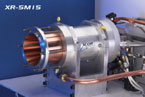
A wider array of garbage and waste can be used to fire bio-ethanol plants using a new flex-fuel boiler developed by EPI.
Substantial savings are realized by using in-plant waste streams as fuel. Paper mills produce a paper sludge waste that is typically land filled but can be utilized as a fuel to produce steam for the paper making operations. Other industries may have plastics, paper, cardboard, oat hulls, rice hulls, distiller’s grains, syrup, glycerin or other byproducts that could be converted into usable energy utilizing EPI’s flexible fuel fluidized bed system. ___Source (PDF)__via__QiBioenergy
This move away from natural gas and oil-fired boilers for bio-ethanol production helps reduce costs of production for bio-ethanol--making it more competitive economically--and it makes more natural gas available to the parts of thegeneral market which may have more difficulty making the same type of substitution.

Such flex-fuel boilers will be equally as useful when cellulosic alcohol processing is more common in 5 to 10 years. The same technology will be useful as well for various biomass to liquid fuel thermochemical processes which are expected to take over most of the biofuels industry within 20 years--unless Craig Venter and his merry band of synthesists can create a new life-form that makes a better, cheaper biofuel from CO2 and sunlight.

Most analysts of bio-energy seem to be lost in a haze of misinformation. Blaming biofuels for high food costs is one clear sign of confusion on an analyst's part. But these things have a way of sorting themselves out.

Oil costs between now and the November US Presidential elections are likely to be kept high, by various machinations. Behind the scenes currency manipulation is only one tactic that seems to be working for now. US government budgetary and Federal Reserve Bank monetary policies have made such manipulation fairly easy. Other reasons for high oil costs--high demand, temporary short supplies due to manpower and infrastructure shortages etc.--are simply part of doing business in any industry. Oil is not just any business, however, and its price has repercussions that propagate throughout the geopolitical globe.

Labels: , ,

Bookmark and Share

17 January 2007

Manure Powered Rocket Engines--To The Moon on Poop?

Most of you already know that manure can produce methane via microbial digestion. In fact many dairy farmers are taking advantage of this process to create much of their own electricity with methane powered generators.

But why should we settle for simple electricity from manure, when we can use it to fly to the moon? I believe that we need to get our priorities straight. Using animal poop to power a moon rocket displays a certain savoir faire, and ambitious resourcefulness, that modern "woe-is-me-the-world-is-coming-to-an-end" media and academia seems to lack. In fact, I challenge the new US Democratic Congressional leadership to grab the manure with both hands, and march into the future with their eyes on the prize--regaining the moon.

Anything less would be letting us all down.

Labels:

Bookmark and Share

29 July 2006

Farm Waste to Bio-Oil: Energy from the Darndest Sources

Agricultural researchers are determined to help solve the energy shortages the industrial world is experiencing. Previously I posted on University of Illinois Urb/Champ researchers who developed a process to produce crude oil from pig manure. Now researchers from Iowa State University are mixing corn stalks and cow manure to produce oil and charcoal.

The researchers are working to take wastes from Iowa farms -- manure and corn stalks -- and turn them into a bio-oil that could be used for boiler fuel and perhaps transportation fuel.

"The way I see manure, it's not waste anymore," Sadaka said. "It is bio-oil."

But it takes a few steps to make that transformation.

First, the manure needs to be dried so it can be burned. Sadaka's idea for low-cost and low-odor drying is to mix the manure with corn stalks, put the mix in a big drum, use a small blower to keep the air circulating and use an auger to turn the mixture once a day. Within about five days, bacteria and fungi working to decompose the mix have naturally raised the temperature to about 150 degrees Fahrenheit. Within another 20 days or so the moisture content is down from 60 percent to about 20 percent. Sadaka calls the process bio-drying.

That makes it possible to move to the next step: rapidly heating the mixture in a bubbling, fluidized bed reactor that has no oxygen. It's a process called fast pyrolysis. The process thermochemically breaks the molecular bonds in the mixture. It produces charcoal that can be used to enrich soil. And it produces vapors that are condensed to a thick, dark bio-oil.

Preliminary tests indicate every kilogram of dried mixture produces .2 to .5 kilograms of bio-oil depending on the operating conditions.

Sadaka said the energy content of dry manure is 12 to 18 gigajoules per ton. Canada's Office of Energy Efficiency says one gigajoule of electricity will keep a 60-watt bulb continuously burning for six months. Sadaka figures if half the animal manure in the country were processed into bio-oil, that would produce the equivalent of 45 million tons of oil.

Sadaka is experimenting with the process in 900-liter drums at the Iowa Energy Center's Biomass Energy Conversion Center in Nevada. So far, he has dried a mixture of cow manure and corn stalks. Next he'll test the process with poultry manure. And then he'll try pig manure.
Source.

This process is similar to other processes used to make oil from poultry process waste. Here is more information on the process from the US Government renewable energy program.

These processes are attempts to utilise more of the byproducts of agriculture in producing renewable energy. Growing animals for food is inherently wasteful when viewed in perspective, but there are ways of making it more efficient than it is. Here is a fine overview from Mechanical Engineering Magazine, discussing this family of technologies and their application to farm waste.

Besides thermolyis and thermal depolymerisation to produce oil, manure can produce methane to substitute for natural gas. Corn stubble and rice, wheat, barley etc. straw can be broken down to sugars and fermented to make ethanol or butanol, and the methane from manure used as fuel to distill the resulting "beer" to pure ethanol.

Researchers in agricultural sciences simply do not want to be left out of the action, when it comes to solving the renewable energy problem. There seems to be enough glory to go around, even for manure research.

Labels: , ,

Bookmark and Share

13 May 2006

Patriotic US Pigs Volunteer to Contribute 10 Million Barrels of Crude Oil per Day!

I am simplifying the math slightly, but using the simple formula: 4 gallons crude oil per pig per day X 100 million pigs divided by 42 gallons per barrel, that comes to slightly less than 10 Million barrels of crude oil per day, from pig excrement. Yes, professor Yuanhui Zhang, a bio-environmental engineer at the University of Illinois Urbana-Champaign, says he can get almost 4 gallons of crude oil from each pig, every day.

Zhang's big breakthrough is that he's designed a more efficient process: a continuous reactor. Instead of converting hog waste one batch at a time, Zhang's lab, which is funded in part by the Illinois Pork Producers Association, has developed a method to feed waste continuously into a reactor, which is essentially an industrial-strength pressurized oven. And, Zhang boasts, "We don't even need pre-drying."

Chemically, pig dung isn't as different from oil as one might think. In Zhang's reactor, a process known as thermochemical conversion partially breaks down hydrocarbon molecules that make up most of the excrement, and voila: porky petrol.

Similar but not identical to the black gold it took Mother Nature eons to brew, Zhang's fuel behaves like diesel.

Now the plan is to move from the lab to a full-sized pilot reactor on a farm somewhere Downstate. Zhang predicts the process could get 3.6 gallons of crude oil a day out of each pig. Illinois brings some 7.2 million hogs to market each year and the nationwide industry is about 100-million hogs strong.

Theoretically, the resulting millions of barrels of crude a day could make a significant dent in America's dependence on nonrenewable, and often imported, oil.
More at source.

This may be one reason arabs hate pigs so much. They do not like the competition!
:-)

Labels: ,

Bookmark and Share
Older Posts
Al Fin Main Page
Enter your Email


Powered by FeedBlitz
Google
WWW AL FIN

Powered by
Blogger

``