11 May 2006

Rush to Destruction: Iran's Version of the Singularity

Yesterday, I linked to several essays dealing with issues of the technological singularity. Today I am linking to essays dealing with a singularity of a different nature.

Iranian Shias have a legend of the Twelfth Imam, representing the messianic end of the present world and the final triumph of Islam over the infidels. Current day leaders of Iran seem to have taken the legend of the twelfth imam to heart, in their rush to develop nuclear weapons so as to be able to incinerate the enemies of their own version of radical revolutionary supremacist Islam.

Over at Shrinkwrapped blog, the psychologist blogmaster has posted a fascinating series of essays entitled The Singularity and the 12th Imam, Parts I-V. You should first read essay one, then proceed through the essays, being sure to check out the comments.

Here are the links to all five essays in the series:
  1. Essay One
  2. Essay Two
  3. Essay Three
  4. Essay Four
  5. Essay Five
These essays were written from a psychologists point of view, and incorporate a lot of psychoanalytical thinking. That is part of the beauty of the web, that anyone can publish in his own words, from his own perspective.

A lot of people avoid the reality that tens of millions of religious and ideological fanatics would like to see them enslaved or dead. It is one thing to be honestly ignorant of one's precarious place in the world. It is something else to be studiously ignorant--intentionally ignorant. That verges on stupidity.

Addendum: I recently read VS Naipaul's fascinating account of his visit in 1979 to revolutionary Iran. His poignant style captured the mood of the place at the time, reminiscent of the engaging book describing a different islamist revolution, Kite Runner. You can inhale a bit of the essence of the Iranian belief in the twelfth imam, from the second page of Naipaul's article.

Labels: , ,

Bookmark and Share

10 May 2006

Strong Nanotechnology: Jumping Off Point to Singularity?

The "Singularity" can be viewed as a dramatic acceleration of scientific and technological progress, made possible by advanced technological tools of computation and manufacture. In other words, real molecular manufacturing and computation. Strong nanotechnology. Here are some provocative new essays on molecular assembly, the opportunities and dangers, by several knowledgeable nano-theorists. Hat tip The Speculist.


Here are links to a set of earlier essays on similar and complementary topics:


Source for more essays: Wise Nano.

Danger and opportunity, in one small package. There is no such thing as life without risk, if we are lucky there never will be. One does tend to wonder what the singularity version of the afterlife would be, however. Another time, perhaps.
:-)

Labels:

Bookmark and Share

09 May 2006

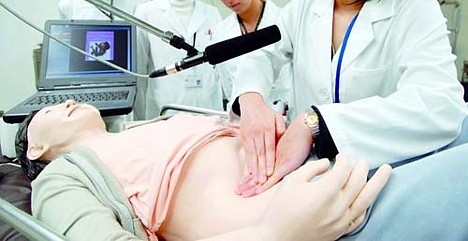
Did Your Surgeon Graduate from an Online Medical School?

Probably not, at least not yet. It may not be long before technology allows that to happen, however. The decentralisation of learning began with correspondence courses and is accelerating with online education. Virtual Reality technology may just complete the transition. Patient simulators will allow budding students to make inevitable early mistakes on machines, instead of living people, similar to student pilots learning on flight simulators. If medical school education can be provided through distance learning, supplemented by patient interaction under local physician instructors, is there any type of education that requires a large onsite concentration of buildings, students, and instructors?If you have always fancied yourself a shark--wanted to go to law school but cannot take the time or uproot yourself and your family? Check out these online law degree programs from findlaw. What if you always wanted to be a shrink, a clinical psychologist? You can get an accredited PhD in Clinical Psychology online, staying where you presently live and work.

Opportunities for online graduate degrees in Engineering, Nursing, Education, Information Sciences and many others are available. In fact, Canada has a Virtual University system, and so might your home state.

There are many free classes available online, some from Stanford, MIT, Brigham Young, and others. Class notes, slides, supporting materials, are available online for thousands of university courses worldwide. Several of these are linked to on the sidebar of this blog.

Conventional universities may not be the best places for an education these days. Alternatives are showing up just in the nick of time. Employers complain about the low quality of college graduates, because conventional universities often spend more time indoctrinating students in political correctness, than in teaching them to learn and think for themselves, and instilling necessary skills and knowledge. Too many university departments have been taken over by academic maos and pol pots.

If you or your children are more interested in an education than an indoctrination, alternatives on the horizon are expanding rapidly.

Labels: , , , ,

Bookmark and Share

08 May 2006

Secret Agent ML-7 Attacks Cancer Skeleton in Breast

Researchers are constantly looking for new ways to attack the cellular processes of cancer cells. Now researchers at the University of Illinois have focused on the cancer cell's skeletal structure, in an attempt to make cancer treatment safer and more successful.

A molecule that interferes with the internal scaffolding that shapes the cell may kill cancer cells, retard the growth of tumors and give a boost to a common chemotherapy drug, according to findings appearing in the May issue of the European Journal of Cancer.

Although tumor growth depends on the rapid cell division and mobility of cancer cells -- processes highly dependent on the cytoskeleton -- the cytoskeleton has not been a target in treating cancer, said Primal de Lanerolle, professor of physiology and biophysics at the University of Illinois at Chicago and principal author of the study.

The researchers found that ML-7, which inhibits an enzyme called myosin light chain kinase, which is important to the structure and dynamics of the cytoskeleton, induces cell suicide, or apoptosis, in cultured breast and prostate cancer cell lines. In addition, treatment with ML-7 in combination with etoposide, a chemotherapy drug used to treat solid tumors, enhanced the ability of etoposide to kill cancer cells.

In animal models, ML-7 retarded growth of breast cancer and prostate cancer tumors. The combination of ML-7 and etoposide reduced tumor growth by 88.5 percent for the breast cancer tumors and by 79.1 percent in the prostate cancer tumors compared to controls.
More at the source.

In the fight against cancer it is important to focus specifically on tumour cells while sparing normal cells as much as possible. ML-7 appears safe, and may allow oncologists to use lower doses of toxic chemotherapy drugs, thus sparing body tissues that divide rapidly but are not cancerous, such as bone marrow cells and GI tract lining.

Labels:

Bookmark and Share

07 May 2006

Panic, Damn You!

Reason magazine has an interesting feature titled "Peak Oil Panic." A lot of persons who are locked into the worst prognostications of peak oil, global warming, etc. etc. appear fixed in a single mode: panic.

The good news is that the peak oil doomsters are probably wrong that world oil production is about to decline forever. Most analysts believe that world petroleum supplies will meet projected demand at reasonable prices for at least another generation. The bad news is that much of the world’s oil reserves are in the custody of unstable and sometimes hostile regimes. But the oil producing nations would be the ultimate losers if they provoked an “oil crisis,” since that would spur industrialized countries to cut back on imports and develop alternative energy technologies.

Apocalypse Yesterday

Predictions of imminent catastrophic depletion are almost as old as the oil industry. An 1855 advertisement for Kier’s Rock Oil, a patent medicine whose key ingredient was petroleum bubbling up from salt wells near Pittsburgh, urged customers to buy soon before “this wonderful product is depleted from Nature’s laboratory.” The ad appeared four years before Pennsylvania’s first oil well was drilled. In 1919 David White of the U.S. Geological Survey (USGS) predicted that world oil production would peak in nine years. And in 1943 the Standard Oil geologist Wallace Pratt calculated that the world would ultimately produce 600 billion barrels of oil. (In fact, more than 1 trillion barrels of oil had been pumped by 2006.)

During the 1970s, the Club of Rome report The Limits to Growth projected that, assuming consumption remained flat, all known oil reserves would be entirely consumed in just 31 years. With exponential growth in consumption, it added, all the known oil reserves would be consumed in 20 years. These dour predictions gained credibility when the Arab oil crisis of 1973 quadrupled prices from $3 to $12 per barrel (from $16 to $48 in 2006 dollars) and when the Iranian oil crisis more than doubled oil prices from $14 per barrel in 1978 to $35 per barrel by 1981 (from $45 to $98 in 2006 dollars).

In response, the federal government imposed price controls on oil and gas in the 1970s and established fuel economy standards to encourage the sale of more efficient automobiles. The sense of doom did not dissolve. In 1979 Energy Secretary Schlesinger proclaimed, “The energy future is bleak and is likely to grow bleaker in the decade ahead.” The Global 2000 Report to President Carter, issued in 1980, predicted that the price of oil would rise by 50 percent, reaching $100 per barrel by 2000.

Most of today’s petro-doomsters base their forecasts on the work of the geologist M. King Hubbert, who correctly predicted in 1956 that U.S. domestic oil production in the lower 48 states would peak around 1970 and begin to decline. In 1969 Hubbert predicted that world oil production would peak around 2000.

Hubbert argued that oil production grows until half the recoverable resources in a field have been extracted, after which production falls off at the same rate at which it expanded. This theory suggests a bell-shaped curve rising from first discovery to peak and descending to depletion. Hubbert calculated that peak oil production follows peak oil discovery with a time lag. Globally, discoveries of new oil fields peaked in 1962. The time lag between peak global discoveries and peak production was estimated to be around 32 years, but peak oilers claim that the two oil crises of the 1970s reduced consumption and thereby delayed the peak until now. Hubbert’s modern disciples argue that humanity has now used up half of the world’s ultimately recoverable reserves of oil, which means we are at or over the peak.

The prophets of oily doom are opposed by preachers of energy abundance. Chief among the latter is the energy economist Michael Lynch, president of the Massachusetts-based Global Petroleum Service consultancy. “Colin Campbell has the worst forecasting record on oil supply,” says Lynch, “and that’s saying a lot.” He points out that in a 1989 article for the journal Noroil, Campbell claimed the peak of world oil production had already passed and incorrectly predicted that oil would soon cost $30 to $50 a barrel. As for Matthew Simmons, Lynch dismisses him with a sneer: “Petroleum engineers know a lot more about petroleum engineering than a Harvard MBA.”

One petroleum engineer— Michael Economides of the University of Houston—calls peak oil predictions “the figments of the imaginations of born-again pessimist geologists.” Like Lynch, Economides, who worked in Russia to boost that country’s oil production in the last decade, rejects Simmons’ analysis. Saudi Arabia, which currently produces about 10 million barrels of oil a day, “is underproducing every one of their wells,” he claims. “I can produce 20 million barrels of oil in Saudi Arabia.”
Much more at the source.

A lot of people just need a catastrophe--any catastrophe--to make their lives feel worthwhile. If the catastrophe fits their political proclivities and prejudices, so much the better.

Most people are tired of this dependence on fossil fuels, and want society to move to renewables as soon as economically and technologically possible. The world will not end during this transition, much to the disappointment of the doomseekers.

Labels: , , , , ,

Bookmark and Share

05 May 2006

Android Update: Sorry, No Sex Bots

First, from Korea we learn that a team of Korean scientists have unveiled a new android design that can learn faces and shake hands.

"Through the wireless networking ability, NBH-1 can recognize people using facial recognition technology," said Yoo, a professor at the state-run Korea Institute of Science and Technology (KIST).

It has enough in-built artificial intelligence to be able to recognize voices and motions as well, Yoo said.

Similar to Japanese car maker Honda Motor's ASIMO unveiled in 2000 that can greet and dance with dignitaries, the NBH-1 can shake hands and turn and walk in a range of directions, he added.
Here is more on another Korean android that is closer to human appearance than NBH-1.

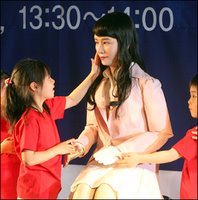
Next, from Japan, we hear from Osaka University's Intelligent Robot Lab Chief, Hiroshi Ishiguro, about his new robot, Repliee.

For a mesmerizing few seconds from several meters away, Repliee Q1expo was virtually indistinguishable from an ordinary woman in her 30s. In fact, it was a copy of one.

To many people, Repliee is more than a humanoid robot--it is an honest-to-goodness android, so lifelike that it seems like a real person. Japan boasts the most advanced humanoid robots in the world, represented by Honda's Asimo and other bipedal machines. They are expected to eventually pitch in as the workforce shrinks amid the dwindling and aging population. But why build a robot with pigmented silicone skin, smooth gestures and even makeup? To Repliee's creator, Hiroshi Ishiguro, the answer is simple: "Android science."

....To emulate human looks and behavior successfully, Ishi­guro yokes robotics with cognitive science. In turn, cognitive science research can use the robot as a test bed to study human perception, communication and other faculties. This novel cross-fertilization is what Ishiguro describes as android science. In a 2005 paper, he and his collaborators explained it thus: "To make the android humanlike, we must investigate human activity from the standpoint of [cognitive science, behavioral science and neuroscience], and to evaluate human activity, we need to implement processes that support it in the android."

One key strategy in Ishiguro's approach is to model robots on real people. He began research four years ago with his then four-year-old daughter, casting a rudimentary android from her body, but its few actuator mechanisms resulted in jerky, unnatural motion. With Tokyo-based robotics maker Kokoro Company, Ishiguro built Repliee also by "copying" a real person--NHK TV newscaster Ayako Fujii--with shape-memory silicone rubber and plaster molds. Polyurethane and a five-millimeter-thick silicone skin, soft and specially colored, cover a metal skeleton. Given clothing, a wig and lipstick, it is a near mirror image of Fujii.
Go to the Scientific American article for much more information about Repliee.

Japanese researchers seem to feel more strongly about achieving human-like appearance in their robots than most North American researchers. Korean researchers appear to share this same drive to imitate human mannerisms and features in their robot creations.

The Japanese have had a strong lead in industrial robotics for many years, and it is not surprising that they could carry this progress to the proto-field of human replacement androids.

There are two main problems that I see:
  1. Lack of self contained actuators and power supply.
  2. Inability to pass the Turing Test.
No one expects these androids to possess actual intelligence, but if they are going to be placed as receptionists and college professors, they will need a vocabulary of at least a thousand words. And any android that needs a refrigerator sized device to power pneumatic actuators for body movement, is not going to be able to occupy most office cubicles, due to space restraints.

Even so, research goes on. Research at one of the University of Texas campuses into artificial muscles may solve problem 1, and improvements in chatterbox technology may solve problem 2. As for all of you horndogs who expect expensive androids to walk gracefully, speak intelligently, and satisfy your sexual needs as well, I can only suggest that you put yourself in your android's shoes for once, and imagine how it would feel to be so taken for granted. Oh, please, why did he have to get home early . . .


"No, no, Valerie, not again! I get home and find you back at the computer writing another Al Fin posting. What do I have to say to get you to sto

Labels: , ,

Bookmark and Share

Global Warming Debate: Clearing the Cobwebs

A lot of people get all of their news from television, radio, and the papers. That is "old media", and paying too much attention to the old media is an excellent way to kill your mind. Fortunately we have the web, and on the web there are places where healthy animated debate takes place. If you look, you can find good thoughtful debate on many topics. One of the best places to find stimulating debate on climate issues and global warming, is Climate Audit blog, climateaudit.org. Climate Audit stands in marked contrast to realclimate.org, because Climate Audit does not practise censorship. Try an experiment and visit both sites, posting comments guaranteed to oppose the viewpoint of the blogmasters. I have done that, and found realclimate's blogmaster to enjoy controlling the debate more than he should, whereas climate audit allows the expression of a broad array of opinions as long as you are civil.

Back in the eighties when I was quite young, I contemplated all the CO2 that industrial society was dumping into the atmosphere, and combining that awareness with the knowledge that CO2 is a greenhouse gas, I supposed that the earth would inevitably get warmer. Such was the simplistic view of a very young person, without experience, without perspective, without a depth of knowledge of interacting causes. As far as I knew at the time, there was no "global warming movement" in existence. It was merely a stray thought, in reaction to the prevalent idea at the time, that an ice age was just around the corner.

Global warming is a topic that most people think they understand, but actually do not. But because the "old media" has championed global warming as a political issue, and reports only one side of the debate, most uninformed people think they understand. If you are the type of person who avoids challenge, you should also avoid websites where open debate takes place. If you are content with the old media view, stick to old media and realclimate. If you thrive on debate, why not visit both sites, until you get a good feel for them?

One of the things I find dismaying in the world, is the "true believer." The true believer does not think, it simply reacts. The old media, as well as most religions, educational systems, and political ideologies, are oriented toward producing and exploiting true believers. This is not necessarily a question of intelligence, because highly intelligent people can gravitate to the top of old media, old religion, and old politics. Even in the new media, most websites are oriented toward the unimaginative true believer. How boring.

The world is changing quickly. Ray Kurzweil, Eric Drexler, Hans Moravec and others are trying to prepare people for some of the changes that will certainly come. Singularitarians typically discuss changes at the "top end", changes that come from the 5% of humans who create innovation and propagate it to the rest of society. A lot of changes are also coming from the "bottom end," the religious supremacist of Islamism and masses of unassimilable third worlders pouring into the first world, bringing the traditions of misery and poverty of the third world with them.

For a person to be prepared for the world that is coming, he must clear the cobwebs, welcome conflicting ideas, and learn to make decisions based upon input that inevitably contains cognitive dissonance. Anyone who fails at this task will be dumped by the wayside, like garbage, whether he deserves that fate or not.

Labels: ,

Bookmark and Share

04 May 2006

Dead Poets Society--Schools as Suicide Pact?

One of the most stimulating and enlightening books on education is freely available online--"The Underground History of American Education." It has been praised by persons from almost every conceivable ideological viewpoint. It is uncomfortable to read, sometimes painful. Similar to childbirth, in a way.

Soon after I began teaching Moby Dick I realized the school edition wasn’t a real book but a kind of disguised indoctrination providing all the questions, a scientific addition to the original text designed to make the book teacher-proof and student-proof. If you even read those questions (let alone answered them) there would be no chance ever again for a private exchange between you and Melville; the invisible editor would have preempted it.

The editors of the school edition provided a package of prefabricated questions and more than a hundred chapter-by-chapter abstracts and interpretations of their own. Many teachers consider this a gift—it does the thinking for them. If I didn’t assign these questions, kids wanted to know why not. Their parents wanted to know why not. Unless everyone duly parroted the party line set down by the book editor, children used to getting high marks became scared and angry.

The school text of Moby Dick had been subtly denatured; worse than useless, it was actually dangerous. So I pitched it out and bought a set of undoctored books with my own money. The school edition of Moby Dick asked all the right questions, so I had to throw it away. Real books don’t do that. Real books demand people actively participate by asking their own questions.
Source.

Those lines are similar to scenes from "Dead Poets Society," with the same rejection of standardisation and manipulation to conformity.

Part of the book is history of education--going back millenia--and part is autobiography of a rebellious teacher. Gatto displays the people who built the educational establishment into its present monument to fossilized conformist mediocrity, displays them in their own words.

If you have ever looked at the dysfunctionality and counterproductivity of schools and wondered, "why?", you should take a good look at this history of education.

Labels:

Bookmark and Share

03 May 2006

Learning by Neural Nets, Connectionism, Our Brain

To understand how people learn, we need to understand the biopsychological basis for learning that was built into our brains by natural selection. To do this, we need to delve into neuroscience. The biological brain is made of neurons, and other structural tissue. The brain's neurons are interconnected in amazing patterns of networks, neural nets. Cognitive scientists work with artificial neural nets in order to better understand the workings of biological neural nets, brains.

We are fortunate to have a good guide to the topic of learning and neural nets, in our friend Chris Chatham at Develintel blog. Chris has recently posted a large number of articles dealing with connectionist models of learning, including those here, here, and here. Besides providing glimpses into selected subjects of interest on his blog, Chris also surveys the blogosphere periodically, for good articles about the brain from other bloggers. To top it off, Chris replies promptly and thoughtfully to comments.

The best book I have found to introduce the topic of learning and neural nets, is Manfred Spitzer's The Mind Within the Net, 1999, MIT Press. Online materials from two university courses on neural nets are available here and here.

For more information on neural nets, consult the sidebar links under cognitive science and machine intelligence, follow the wikipedia links from the neural nets article, or follow this link and scroll down to the neural nets links. PCAI magazine currently is offering a free issue dealing with neural nets and fuzzy logic. This short online primer(pdf) on neural nets has some nice graphics.

Although the study of neural nets is still quite recent, a lot has been learned that can be transferred to the science of education. Much more will become relevant to the teaching of children very soon. There appears to be a total disconnect between the fossilized industry of education in North America, and the vibrant research into cognitive science and learning taking place in the research community.

Labels: ,

Bookmark and Share

02 May 2006

How People Learn: Can Schools Be Made Safe and Effective?

The National Academies of Sciences Press has made available online free of charge two books relevant to this topic. How People Learn: Brain, Mind, Experience, and School: Expanded Edition (2000) from the Commission on Behavioral and Social Sciences and Education, and How Students Learn: History, Mathematics, and Science in the Classroom (2005) from the Board on Behavioral, Cognitive, and Sensory Sciences and Education. Both books can be read online or printed for non-electronic reading.

If you have read the recent essays from Derek Bok on the state of university education, you will not be comforted to learn that K-12 education is worse--much worse. Education is resistant to reform, is almost impossible to improve, because education is an industry--a heavily politicised industry. A lot of money is at stake for vested interests, who strongly resist change out of political and financial motivations. The children and students are the helpless pawns whose lives are injured by the largely indifferent industry of education. Colleges of education at universities are in the pockets of this industry, serving the industry's interests rather than that of the population of students.

The most trivial allergy pill goes through far more scrupulous testing than the teaching methods used on helpless children in schools. There is a lot of new knowledge from cognitive science on how children learn. This knowledge is not being implemented in schools, from K-12 through universities. The knowledge is being ignored by the education industry in hopes it will go away, and leave the status quo undisturbed.

One of the reasons this is so important is the phenomenon of massive unassimilated immigration. The dropout rates for these masses of unassimilated immigrants is huge--approaching 60% and more in many areas. Their mothers and fathers are happy to be making more in their new country, but the failing, dropout children will more likely be radicalised by class envy, given a popular culture that promotes the idea of conspicuous affluence as the measure of personal worth.

If ever there was a time for adopting education methods that work, this is the time. There is no time to waste. No more dumbing down can be tolerated.

Labels: ,

Bookmark and Share

01 May 2006

Derek Bok and the Leaning Tower of Ivory Part II

Following yesterday's posting on Derek Bok's modest suggestion for the reinvention of the university, I located an editorial by Bok in the Boston Globe with more reasons why he thinks change in the university system is inevitable.

....-Substantial groups of students, including African-Americans, Hispanics, and recruited athletes in major sports, perform well below the levels one would expect based on their high school grades and SAT scores. Although a few colleges have developed successful programs to overcome such underperformance, most do not even try, despite the commitment expressed in many college brochures to ''help each student develop to his or her full potential."

Further studies indicate that problem-based discussion, group study, and other forms of active learning produce greater gains in critical thinking than lectures, yet the lecture format is still the standard in most college classes, especially in large universities. Other research has documented the widespread use of other practices that impede effective learning, such as the lack of prompt and adequate feedback on student work, the prevalence of tests that call for memory rather than critical thinking, and the reliance on teaching methods that allow students to do well in science courses by banking on memory rather than truly understanding the basic underlying concepts.

....College faculties have long been able to ignore educational research and avoid discussion of teaching methods because they risk no adverse consequences as a result. Students will rarely know whether they are learning less than they might or whether they could learn more at another institution. So long as colleges do not charge excessive tuitions and keep abreast of their competitors, offering popular degree programs, providing financial aid, and building facilities, they can continue to attract applicants and graduate satisfied students.

There are signs, however, that colleges may not be able to continue paying so little attention to improving student learning. Changing demands in the economy are forcing employers to pay increasing sums to remedy deficiencies in the writing and computational skills of the college graduates they hire. In addition, more and more work normally performed by college graduates is now being outsourced to other countries. Already, tax returns for several hundred thousand US citizens are being prepared in India; CAT scans are being analyzed in Poland; Microsoft is employing scientists in China; Boeing has engaged the services of engineers in Russia. As this process continues, American graduates will no longer be competing only with themselves but with hordes of ambitious, hard-working young people from countries such as India and China intent on claiming a piece of the world's most prosperous economy. In this new environment, American students can no longer afford to graduate without the best possible education.

Other organizations have become accustomed to this kind of competition. They have responded by becoming effective learning organizations -- that is, organizations that constantly assess their work to identify problems, look for new ways to overcome weaknesses, evaluate these innovations with care, and adopt the methods that work while discarding those that don't. Colleges urgently need to follow this example.

Properly done, such a process can be rewarding for everyone. The principal beneficiaries will be the students, but professors stand to benefit as well. Experimenting with new and better ways to help students learn can be as engrossing for a teacher as experimenting in a laboratory or undertaking an empirical investigation in the social sciences. For academic leaders, trying to initiate a process of enlightened trial and error through continuing self-scrutiny and research may well be the most important challenge they face. Those who succeed will not only gain the lasting satisfaction of helping to improve the lives of their students, but lead the way toward higher-quality undergraduate education. Few educators could aspire to any greater achievement.
Source.

Science is learning some new things about the way people learn, but universities cannot be bothered to adjust their methods--not yet. Not until the people holding the pursestrings force them to.

Labels:

Bookmark and Share

30 April 2006

Can the Ivory Tower Be Saved?

Out of the several short articles at the Forbes.com Blank Slate special presentation, I was particularly interested in Derek Bok's short essay on the need to reinvent university education in the US, and North America.

Teaching methods change very slowly. Apart from a few technological flourishes, they are very much like the methods used 50 years ago. As a result, no one can confidently assert that colleges today are helping students to write better, speak more eloquently, think more rigorously, or reason quantitatively more proficiently than they did in the 1950s.

Unfortunately, universities lack the incentives that many other institutions have to constantly improve their performance. Although they often compete fiercely for better students, such rivalry does not spur increases in quality. The reason is that applicants to universities have no way of knowing how much they will learn at the college or professional school they are considering, let alone comparing it to how much they might learn at some other institution. Unlike most businesses, therefore, universities do not feel much pressure to work at improving their “product.” So long as they keep their tuitions from rising faster than those of their rivals, offer attractive financial aid, maintain good facilities and provide an adequate array of popular academic programs, they will continue to attract plenty of applicants without increasing the quality of their teaching or the amount their students learn.

....What I would wish for is a set of reliable, universally accepted measures for evaluating and comparing student progress toward all the educational goals appropriate to every college and professional school. Some of these measures might be artfully constructed short-answer tests that could accurately assess student progress in critical thinking, moral reasoning, quantitative skills and foreign language competency. Others would require computers capable of scanning and evaluating written essays to measure students' understanding of complex material or their clarity and style in writing the English language.

If measures of this kind were available, results would soon be published in U.S. News & World Report and other well-known guides. Before long, students would gradually move to universities with the most effective educational programs. Presidents and trustees at less successful institutions would quickly notice that their ratings were deteriorating. Professors would realize that the best students were choosing to go elsewhere. Soon, pressure would build to improve the quality of teaching. Instructors who were demonstrably effective in the classroom would start to be rewarded with handsome pay increases and attractive job offers from rival institutions. Faculties everywhere would begin working harder to find new and better ways of helping students learn.

....What most campuses still lack is a comprehensive effort that begins by assessing student progress and goes on to identify weaknesses, experiment with possible remedies, and adopt those innovations that work well while discarding those that don’t. Thus, universities have not yet become “learning organizations”--at least not in the sense that the term is used in other well-run institutions. Even so, the tides are moving in the right direction. With continued pressure from society for greater accountability and proper leadership from presidents and trustees, it is not too much to hope that universities will gradually reinvent themselves and adopt more systematic methods of self-scrutiny. If they do, students 20 years from now should be graduating much better prepared for the more complex, demanding world they are poised to enter.
Source.

Derek Bok knows as much about the state of higher education in North America as anyone. Although his desires for reform are modest, they have a snowball's chance in hell of being adopted. Conventional educational practices, which place political correctness above relevant learning, guarantees the ongoing and worsening obsolescence of "higher education" in North America.

Even so, Bok's suggestion is a good one. Combined with tenure reform and other methods of insuring more accountability from the instructional staff and administrative officials, the fall of the ivory tower might be postponed a few decades. In the end, new educational technologies combined with other important trends in modern society suggest the move to greater de-centralisation of education at almost all levels.

Labels: ,

Bookmark and Share

Blank Slate: Special Report on Re-invention

Forbes.com has compiled a special online report dealing with the re-invention of everything. From re-inventing life itself, to re-inventing re-invention, several topics are covered.

Here are links to some of the articles on re-inventing:

And there are other articles dealing with things such as crisis creativity and more.

It is nice to see mainstream journals reporting on futuristic topics. Forbes has a bias toward corporate development of ideas, but the underlying issues of creativity, design, and reinvention are the same regardless of the ultimate use.

Labels: ,

Bookmark and Share

28 April 2006

Women: Looking for a Faithful Aphrodisiac?

Sex is important for good health.

The previous article here mentioned apomorphine tangentially as an aphrodisiac. But apomorphine is only an aphrodisiac by accident, via its dopamine effects. Just as cocaine and amphetamine can have aphrodisiac effects via dopamine (and probably concomitant reduction in prolactin). Believe it or not, there seems to be a drug in development that is a bona fide aphrodisiac, for women and men.

This article discusses a drug in development that promises to be a genuine, centrally acting, reliable aphrodisiac. Sure, there are a lot of skeptics, there always are. But sexual pleasure occurs in the brain, primarily. It is certain that there exist chemical molecules, electrical forms of stimulation, and methods of self-training, that could all release the potential for sexual pleasure that virtually everyone must possess. This article first introduced the public to this potentially world changing phenomenon a few months ago. It was re-printed last Sunday in the Observer.

Good health, good sex, long life, high intelligence, wisdom, personal freedom, casual affluence, and much more. That is what the next level is all about. The next level is a humanised version of Kurzweil's singularity. It is coming to the world courtesy of a number of people who are sick and tired of the Siamese twins: suffering and stupidity.

Labels:

Bookmark and Share

27 April 2006

Sex on the Brain: Apomorphine as Life Extension Aphrodisiac

Apomorphine is an old drug, dating at least back to the 1860s. It has found many uses, including as a treatment for Parkinson's Disease, and a treatment for Erectile Dysfunction. Apomorphine is also an efficient emetic at proper doses. In the context of life extension and longevity, apomorphine has proven to be a good trigger for HGH release. The drug may find uses in cases of stroke and myocardial infarction. Apomorphine is not an opiate analgesic like morphine, and is not addictive.

I suspect that apomorphine will find many more uses, given its multiple potencies. A good sex life is important for a satisfying life, whatever its length, and apomorphine not only induces penile erection, it also is a dopamine agonist, which suggests that the sex drive itself would be stimulated by apomorphine, and the sex act made more pleasurable.

Given the emetic properties of higher doses of apomorphine, it is not likely to become a drug of abuse. And given the several decades since its initial use in humans, the more lethal and disabling side effects of a drug would have been found. In other words, we have a drug, apomorphine, that likely has a positive effect on longevity via HGH release, and a positive effect on sexual desire, performance, and pleasure. Yet very few people have heard of apomorphine.

Here is some recent research on apomorphine from Shanghai:

Apomorphine (APO), a potent D1/D2 dopamine receptor agonist, is currently used as an antiparkinsonian drug. We have shown previously that APO stimulates synthesis and release of multiple trophic factors, such as brain-derived neurotrophic factor (BDNF) and glial cell line-derived neurotrophic factor (GDNF), in both mesencephalic and striatal neurons, thereby effectively preventing dopaminergic neuron loss in vitro. The present study was designed to investigate the effects of APO on fibroblast growth factor-2 (FGF-2) expression and regulation in astrocytes, and furthermore, to identify signaling mechanisms underlying these effects. Here, we show that FGF-2 expression is robustly induced in cultured astrocytes in response to APO. FGF-2 expression was proportional to APO concentration and time-dependent. More at source.

One more thing: apomorphine has been found to be protective of mitochondria in central nervous system neurons and heart muscle. Consider the implications of that when you are putting together your life extension kit.

Labels: , , ,

Bookmark and Share

25 April 2006

Dead Before Fifty--Damage to DNA Mounts With Loss of Repair Protein

Our DNA is the basis for every moment of our existence. Our cells have complex mechanisms for repairing incidental day-to-day damage that inevitably occurs to DNA. But what happens when the DNA repair mechanism breaks down? That is what happens in Werner's Syndrome, when the gene for the WRN helicase protein is defective, and repairs normally initiated by WRN do not take place.

This newsreport describes the work of two California research teams who have solved the crystal structure of the WRN protein.

When the gene for WRN is defective the result is Werner's syndrome, a rare inherited disease that shows no symptoms until puberty but soon causes rapid aging. Beginning in their twenties, victims may become afflicted with cataracts, hair loss, wrinkled skin, osteoporosis, arteriosclerosis, and type II diabetes; many patients contract cancer, and most die by the age of 50. Understanding how the WRN protein normally works to maintain genomic integrity could lead to new forms of treatment for cancer and age-related pathologies.

"One reason we are particularly interested in WRN is because Werner's syndrome is unusual among premature-aging diseases, in that children are born normal and show no signs of disease until early adulthood," says Steven Yannone of Berkeley Lab's Life Sciences Division. "This gives us a better chance of clearly separating defects in development from aging."

"We wanted to study the protein itself because it is unique," says Jeff Perry of the Scripps Research Institute's Department of Molecular Biology and Skaggs Institute for Chemical Biology, formerly of Berkeley Lab, who led the research with Yannone. "WRN belongs to a family of enzymes called RecQ helicases" - of which there are five in the human genome, performing important functions in DNA replication, recombination, and repair - "but in this family, only WRN has coupled a helicase function and a nuclease function within the same protein."

Helicases open up the double helix of DNA, while nucleases degrade one or both of the DNA chains; both operations are critical to repairing errors and proofreading DNA sequences. One part of WRN is an exonuclease, which starts working from the end of a DNA strand. Perry and Yannone and their colleagues determined the structure of the WRN exonuclease domain (WRN-exo) and showed how the enzyme may function in a series of specific DNA repair events. Their findings will soon appear in Nature Structural & Molecular Biology and are now available online.

....Tainer says, "The exonuclease domain of the WRN protein is a prime example of what we in SBDR call 'master keys,' structures that open doors to lots of different repair pathways. Among other things, WRN is involved in repairing double-strand breaks, single-strand breaks, replication forks and junctions, even DNA-RNA duplexes. How does one protein know how to interact in so many different processes? If we can understand how this unique protein works, we'll have a key to how all these pathways work in human beings."

Cooper says, "Understanding the relationship between the structure of WRN and how it performs its multiple functions to prevent aging and cancer is a perfect example of the kind of problem we designed the SBDR program to solve. With 21 investigators in 15 institutions, SBDR's goal is to gain fundamental insights into the molecular machines that maintain genomic integrity, by applying a range of experimental techniques."
There is much more information from the research at the source.

There are many potential causes for aging, and we may have to study them all in depth before a truly effective rejuvenation therapy scheme can be developed that is broadly applicable to most people. Learning how to help people who suffer from diseases such as WS are the top priority. The spinoffs from such new knowledge will benefit everyone.

This link will take you to a few tutorials on DNA repair proteins. WRN is one of many repair proteins that often work in concert to repair various types of damage to DNA. This article suggests some of the complexity involved.

Labels:

Bookmark and Share

24 April 2006

IQ by Gender and Race: An Appeal to End the Practise of Brainbinding

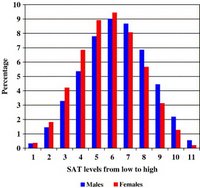
We begin with a study comparing "g" of males and females, from 100,000 SAT scores. This article will appear in "Intelligence" and is reported by Dienekes Anthropology Blog. The following is the study abstract:

In this study we found that 17- to 18-year old males averaged 3.63 IQ points higher than did their female counterparts on the 1991 Scholastic Assessment Test (SAT). We analysed 145 item responses from 46,509 males and 56,007 females (total N = 102,516) using a principal components procedure. We found (1) the g factor underlies both the SAT Verbal (SAT-V) and the SAT Mathematics (SAT-M) scales with the congruence between these components greater than 0.90; (2) the g components predict undergraduate grades better than do the traditionally used SAT-V and SAT-M scales; (3) the male and the female g factors are congruent in excess of .99; (4) male–female differences in g have a point-biserial effect size of 0.12 favoring males (equivalent to 3.63 IQ points); (5) male–female differences in g are present throughout the entire distribution of scores; (6) male–female differences in g are found at every socioeconomic level; and (7) male–female differences in g are found across several ethnic groups. We conclude that while the magnitude of the male–female difference in g is not large, it is real and non-trivial. Finally, we discuss some remaining sex-difference/brain-size/IQ anomalies. Source.

This is not significant, societally, although it is consistent with Lynn's and other researchers' previous results, inconsistent with others, and very politically incorrect. Individuals do not follow statistical distributions and should not be judged by them. You should notice the difference in this distribution from population distributions, due to selection from the pool of SAT takers, rather than the general population.
The second part of this posting deals with Lynn's new book, Race Differences in Intelligence. This comes courtesy of iSteve.com, and Sailer's article discussing the book is worth reading. After discussing Lynn and Vanhannen's IQ and the Wealth of Nations, Sailer moves to Lynn's new book:

Now, Lynn has a new book out, Race Differences in Intelligence, which tabulates 620 separate studies of average IQ from 100 different countries with a total sample size of 813,778. That's nearly four times the number of studies summarized in his book with Vanhanen. (Here is J.P. Rushton's review on VDARE.com, and here is Jason Malloy's review on GNXP.com.)

This profusion of data allows us to do analyses of important issues that haven't been feasible before.

Source. Be sure to read James C. Bennett's reply and objections at the source above. There are places on the net where discussions are freewheeling and relatively unrestricted, as long as you are civil and intelligent. If there is anything to Lynn's theory of "IQ and the Wealth of Nations," immigration policy planners might reconsider their policies.
You see what I mean about not politically correct? Most conventionally educated students and graduates are not prepared for anything so far out of the mainstream. Just like the ancient Chinese tradition of footbinding, the brains of modern students are bound by politcally correct restrictions on what they can read and discuss. How uncomfortable for them, then, when the cognitive dissonance of the real world sets in. Brainbinding--what a comfort, eh? How much better to confront the student with the ideas in all their wickedness, and discuss them honestly to the best of scientific knowledge--understanding that science does not stand still?

The professors are themselves victims of brainbinding, often self-inflicted. Universities should be places where minds are unbound, and introduced to the complex inter-dynamics of a broad range of ideas. That is presently a lost ideal, but one worth pursuing.

Labels: ,

Bookmark and Share

Stem Cells and Cancer: The Exquisite Dance

As many as 20% of cancers or more originate in stem cells. Our bodies are homes to hordes of stem cells, sometimes quiescent, sometimes regenerative, and sometimes proliferating out of control. The female breast is one organ that is amply supplied with stem cells.

"People have long suspected there should be a stem cell population in the human breast gland," said Sigurdsson who is part of the ESF-funded team led by Thorarinn Gudjonsson. A 'virgin' breast, before pregnancy, is very different to a fully functioning, milk-producing breast. With lactation, the breast becomes fully differentiated, and once this stage is over, it involutes. This cycle of proliferation, differentiation and apoptosis also happens in every menstrual cycle and in a more dramatic form during pregnancy. "This caught our attention, and has driven our research," Sigurdsson pointed out.

Breast cancer almost always occurs in the luminal epithelial compartment, which is also where milk is produced. Perhaps it is not surprising then, that stem cells reside in this compartment. In 2002, Thorarinn Gudjonsson, successfully isolated cells from the human breast with stem cell properties.

Gudjonsson immortalised these cells and grew them in three dimensional matrix that mimics the real, living tissue. Biologists have long relied on 2-dimensional cell cultures as the basic tool of their trade. But there is a big difference between a flat layer of cells and culturing cells in three-dimensions. The Icelandic researchers, realizing just how much a cells context matters, used the 3-D cell culture pioneered by Mina Bissell, at the Lawrence Berkeley National Laboratory in California. "We can build up a 3-D breast structure similar to what you have in vivo," says Gudjonsson.

"You can analyse cell-cell interactions and signaling pathways in these cells during morphogenesis and in cancer progression." The Icelandic researchers are now focusing their efforts on how endothelial cells convey signals to stem cells in normal breast formation and in cancer. In collaboration with another Icelandic research team, the Gudjonsson lab is now unraveling the role of tyrosine kinase receptors and their downstream signaling events.
Source.

And so we see that stem cells are a two-edged sword in the breast. The same is true in other tissues. Stem cells are vital for regenerative functions, but must be held in check by tumour suppressor genes.

[A tumour suppressor gene,]PTEN functions to decide whether to progress further though the cell cycle or return to a quiescent (G0) state. Disrupting PTEN in stem cells results in more active cycling and a loss of the quiescent pool of stems cells that is necessary for long-term stem cell maintenance.

PTEN can be phosphorylated in response to other signals that modulate its function. The Li Lab's work demonstrated distinct populations of hematopoetic stem cells (HSCs) with phosphorylated and unphosphorylated forms of PTEN, suggesting that PTEN phosphorylation may be a 'sensor' that could help integrate external cues with the HSC quiescence/activation switch.

"Although the primary mutation occurs in stem cells, leading to short-term expansion of normal stem cells, this mutation alone is not enough to support unlimited expansion of either normal or cancer stem cells," said Dr. Li. "A secondary mutation is therefore required to empower the leukemia cells resulting from this mutation to undergo unlimited expansion. Exploring the nature of the secondary mutation, together with the primary mutation in PTEN, can help to understand the self-renewal ability of stem cells and perhaps will identify new molecules that can be targeted to provide effective leukemia treatment without adversely affecting normal stem cells."
Source.

Sometimes the tumour suppressor genes are silenced, and if the tumour cells can maintain the silencing of the suppressor genes, the tumours are free to grow. Methylation is one means of gene silencing that tumours take advantage of.

Our cells become cancerous when the normal controls over cell growth and death go awry. This deregulation has traditionally been linked to DNA mutations of single genes or deletion of large sections of the chromosome. However more recently it has become clear that gene silencing in cancer can also occur, in the absence of changes to the DNA sequence: a phenomenon known as 'epigenetics'. DNA methylation is one of the main epigenetic processes.

In cancer, the DNA methylation pattern of many genes changes. However, until now, it was believed that only individual single genes were silenced by methylation. But this is not necessarily the case. "What we've found is that non-methylated genes that reside in a particular suburb near methylated genes are also silenced. Their physical proximity to the methylated genes affects their ability to function. It's a case of being in the wrong neighbourhood at the wrong time", says Assoc. Professor Clark.

The Garvan team developed a new method to scan the entire complement of the 30 000 plus genes - the entire genome - in the cancer tissue samples, which allowed widespread changes to be identified in specific parts of the genome.

They were amazed to find the extent of gene silencing. Assoc. Professor Clark adds: "What we want to do now is determine if these same regions are switched off in other types of cancers".
Source.

Given that adult male testicles carry a sizable contingent of stem cells, it is perhaps surprising that testicular cancer is no more common than it is. There is considerable interest in testicular stem cells, and their possible potential in regenerative medicine. Projects are currently underway to learn how to extract and culture testicular stem cells in vitro. The following describes a project to culture specifically the spermatogonial stem cells, although more pluripotent cells are present.

"Our plan is to develop a culture system for spermatogonial stem cells" de Rooij told conference attendees. Although admitting the leap to humans is considerable, the colonised mouse testes are already providing useful insights.

"We'd like to know how to culture human spermatogenic stem cells to restore male fertility after cancer therapy," says Hannu Sariola, from the University of Helsinki in Finland who is also working towards a similar goal.

Bizarrely, a brain cell growth factor also has a powerful influence on spermatogonial stem cells. Glial cell derived neurotrophic factor (GDNF) is also involved in spermatogenesis: levels are high during the neonatal period and drop in adulthood. Indeed, mice that have been genetically manipulated to express high levels of GDNF in the testes produce huge clusters of spermatogonial stem cells. But the risk of cancer is boosted too, so it is not just about turning on the GDNF tap indiscriminately. It must be tightly regulated, Sariola pointed out.

The Dutch researchers are also hunting for the ideal conditions and nutrients that will coax spermatogonial stem cells into becoming sperm. So far, they have found that growth factors GDNF and fibroblast growth factor (FGF) seem to be necessary to enhance cell growth. The team's next move is to transplant monkey and human cells into the mouse testes system.
Source.

Such are a few of the many molecular moves of the exquisite dance of the cell. It is not surprising that so many things sometimes go wrong. Rather, it is amazing that so many things go right for so long. But then, that is evolution's doing--we cannot take credit. The things that are coming, well, that is another matter.

Labels: , , , ,

Bookmark and Share

Slasher Molecule Rips Bacterial Membranes to Ribbons

Bacterial resistance is a major problem in even the best medical centers of the world. Bacteria are capable of evolving defenses against antibiotics almost as soon as they are introduced. Researchers are constantly seeking new approaches to the fight against pathogenic bacteria. This Newswise newsreport details the work of Gregory Tew and Zhan Chen, from UM Amherst and U Michigan, respectively.

The newly designed antimicrobial compound has a super-stiff backbone, an important structural decision, says Tew, noting that previously researchers focused on the arrangement of the side-chains that are attached to the backbone. The stiff spine yields a compound that has charges distributed in such a way that it is attracted to the water-lipid interface of the bacterial membrane, says Tew.

To test its ability to distinguish friend from foe, the researchers pitted the new compound against microbes such as E. coli and Staphylococcus aureus—the bacterium whose resistant strains plague hospitals—and against human red blood cells. The tests revealed that the new design is indeed both lethal and selective. While it slashed bacterial membranes with zeal, the compound left the human blood cells alone.

Many antibiotics attack a bacterium’s membrane-making machinery, not the membrane itself, says Tew. By taking a hint from nature and mimicking a class of molecules that goes right for the membrane, he hopes bacteria won’t be able to simply tweak their machinery to evade it. The new molecule has shown no propensity for inducing resistance compared to current antibiotics that attack bacteria through more classical routes, he says.

Gaining a better understanding of how these antibiotics work against the membrane will be essential to further improvements, says Tew. So he and Chen used sum frequency generation (SFG) vibrational spectroscopy—a technique that uses lasers and is typically employed by chemists for identifying molecules at surfaces—to further explore the antibiotic-membrane interaction. Tew and Chen have harnessed SFG to explore which molecules pack the strongest antimicrobial punch and how this punch is delivered at the molecular level.

....Using SFG lets the researchers watch a potential antibiotic at work—and at concentrations that are meaningful, says Tew. By combining the SFG data with lab experiments on a compound’s bacteria-inhibiting abilities and tests that look at how much cell leakage occurs, researchers will be able to learn more about the molecular interactions governing this antimicrobial activity, he says.

“Being able to see how these molecules interact with the membrane at the molecular level in real-time will prove invaluable,” says Tew. “This will let us build much better models of how these novel antibiotics interact with membranes—if we understand that, we can build drugs that are more effective and less toxic.”
Source.

Although bacteria are able to exchange genetic material with each other--transferring antibiotic resistance almost instantly--there is a limit to the cleverness of microbes. Humans are able to continue probing the molecular mechanisms of bacteria, at ever greater depths of complexity. Antibiotics were an accidental discovery, and not particularly clever on the part of humans. Bacteria have been dealing with antibiotics produced by plants and other microorganisms for hundreds of millions of years.

New approaches to defeating pathogenic bacteria will be novel--evolution will not have prepared bacteria for what is coming.

Labels:

Bookmark and Share

23 April 2006

Graphene Spintronics: Nanotech plus Electronics

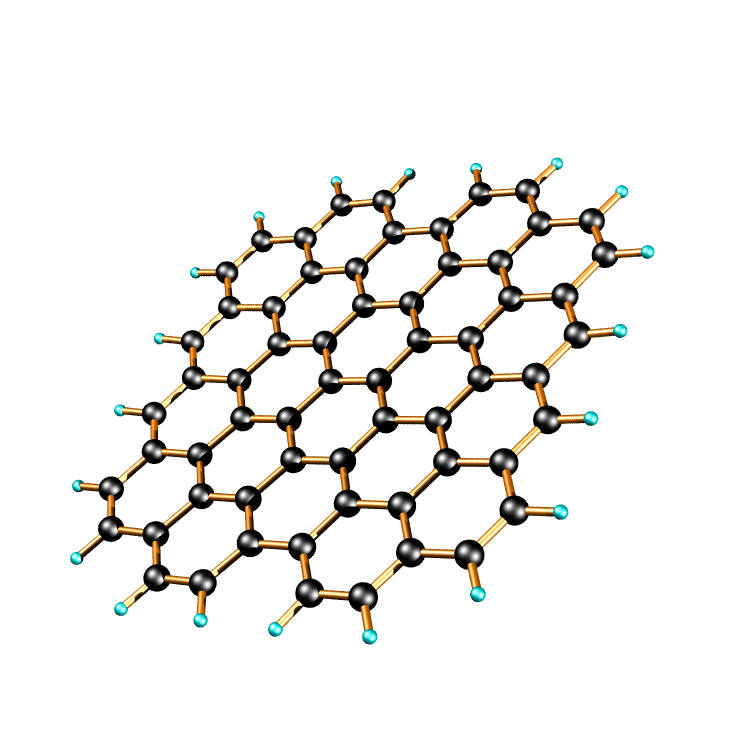
Take a carbon nanotube and flatten it out into a sheet, and you get graphene. A single layer sheet of graphite--a material with amazing electronic properties. One of the possibilities that graphene provides, is an opening into the new radical electronics called spintronics. Read on.

Single sheets of graphene were only isolated in 2004 by Andre Geim (Univ. Manchester). In graphene, electron velocity is independent of energy. That is, electrons move as if they were light waves; they act as if they were massless particles.

This extraordinary property was elucidated in November 2005 through experiments (see background article in the Jan. 2006 Physics Today) using the quantum Hall effect (QHE), in which electrons, confined to a plane and subjected to high magnetic fields, execute only prescribed quantum trajectories.

...."This is really the first step in a very long path," he [de Heer of Georgia Tech] said. "We are at the proof-of principle stage, comparable to where transistors were in the late 1940s. We have a lot to do, but I believe this technology will advance rapidly."

The research, begun by de Heer's team in 2001, is supported by the U.S. National Science Foundation and the Intel Corporation.

In their paper, the researchers report seeing evidence of quantum confinement effects in their graphene circuitry, meaning electrons can move through it as waves. "The graphene ribbons we create are really like waveguides for electrons," de Heer said.

Because carbon nanotubes conduct electricity with virtually no resistance, they have attracted strong interest for use in transistors and other devices. However, the discrete nature of nanotubes – and variability in their properties – pose significant obstacles to their use in practical devices. By contrast, continuous graphene circuitry can be produced using standard microelectronics processing techniques.

"Nanotubes are simply graphene that has been rolled into a cylindrical shape," de Heer explained. "Using narrow ribbons of graphene, we can get all the properties of nanotubes because those properties are due to the graphene and the confinement of the electrons, not the nanotube structures."

De Heer envisions using the graphene electronics for specialized applications, potentially within conventional silicon-based systems.

"We have shown that we can interconnect graphene, put current into it, and take current out," he said. "We have a very promising electronic material. We see graphene as a platform, a canvas on which we can work."

....the Manchester researchers have shown that graphene can be fashioned into a device called a spin valve, which discriminates between mobile electrons according to their spin. Spin is a quantum-mechanical property of electrons, and can take either of two values - somewhat akin to magnets that can orient their poles in either of two opposed directions. Conventional electronics takes no account of electron spin; but it has been suggested that a spin-dependent form of electronics, called spintronics, could provide new and powerful ways to process information. A graphene spin valve could act rather like a spintronic filter that lets a current pass only if the electrons have the correct spin.

....Using electron beam lithography, they've created feature sizes as small as 80 nanometers – on the way toward a goal of 10 nanometers with the help of a new nanolithographer in Georgia Tech's Microelectronics Research Center.

The graphene circuitry demonstrates high electron mobility – up to 25,000 square centimeters per volt-second, showing that electrons move with little scattering. The researchers have also shown electronic coherence at near room temperature, and evidence of quantum interference effects. They expect to see ballistic transport when they make structures small enough.

So far, they have built an all graphene planar field-effect transistor. The side-gated device produces a change in resistance through its channel when voltage is applied to the gate. However, this first device has a substantial current leak, which the team expects to eliminate with minor processing adjustments.

The researchers have also built a working quantum interference device, a ring-shaped structure that would be useful in manipulating electronic waves.

The key to properties of the new circuitry is the width of the ribbons, which confine the electrons in a quantum effect similar to that seen in carbon nanotubes. The width of the ribbon controls the material's band-gap. Other structures, such as sensing molecules, could be attached to the edges of the ribbons, which are normally passivated by hydrogen atoms.

De Heer and collaborators began working on graphene in 2001 and received support from Intel in 2003. They later received a Nanoscale Interdisciplinary Research Team (NIRT) award from the U.S. National Science Foundation. They have filed one patent for their methods of fabricating graphene circuitry.

De Heer and his colleagues expect to continue improving their materials and fabrication processes, while producing and testing new structures. "We have taken the first step of a very long road," de Heer said. "Building a new class of electronics based on graphene is going to be very difficult and require the efforts of many people."


The italicized material above comes from four different articles, with the links provided at the beginning of the excerpt from each article. For background material, consult the wikipedia links in the opening paragraph.

The quantum world of electron spin is becoming more accessible to nanotechnology and electrical and electronics engineering. Spintronics promises to create electronics devices that are presently unimaginable.
Bookmark and Share
Newer Posts Older Posts
Al Fin Main Page
Enter your Email


Powered by FeedBlitz
Google
WWW AL FIN

Powered by
Blogger

``