18 May 2009

You Can Train a Monkey to Do Surgery

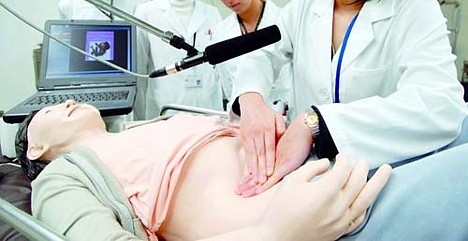
You can train a monkey to do surgery! That's what one of my anatomy professors used to say -- and he is a surgeon himself, so he should know. And now, with improved surgical simulator trainers, you can teach monkeys to operate even more quickly, and with better surgical technique!
The researchers put the obstetrics and gynaecology medics in two groups - one which had the traditional training of working alongside doctors and tutoring and another which supplemented this with seven hours simulator training.

They found that those that used the computer simulators were twice as quick, taking just 12 minutes to complete the operation on a patient. They also carried out better procedures, according to a points system used to judge the quality of the work.

Lead researcher Christian Rifbjerg Larsen said: "Simulator training should be incorporated into the curriculum for all surgical trainees before they embark on patient procedures..."This can potentially improve patient safety and improve operation room efficiency." _BBC_via_FierceHealthcare
Just like flight simulators, surgical and OB simulators can provide a wider range of surgical complications than most surgeons-in-training might typically see. This will make them better surgeons -- monkeys or human. ;-)

Labels: ,

Bookmark and Share

06 December 2008

Journal of Visualized Experiments and Search

If you have ever been curious about how biological research is carried out -- or if you are considering entering a bio-medical research field yourself -- you should take a look at the research videos at the Journal of Visualized Experiments (JOVE). By JOVE, you can see for yourself how various key procedures are carried out. If you are still in high school, or earlier, you can get a definite jump on the competition by learning many of the basic, intermediate, and advanced methods of biological research.

If you are an educator or homeschooler, you will find some worthwhile teaching materials, and some tips on basic experiments you may wish to set up in your teaching environment.

JOVE is a good example of what today's web can offer to self-starting learners, and to teachers and homeschoolers.

Bonus: From the Online College Blog -- a blog for students of all ages who are seeking an online education -- here is an article looking at 100 useful tools for digging down into the deeper levels of the web than Google will usually take you. From "meta-search" to "semantic engines" to special database search tools to academic /scientific / and custom search engines, this list of tools has something for everyone.

Smart young cookies can find their way out to some quite rarefied reaches of knowledge, quite on their own. Of course it helps to have a tutor and a bit of healthy competition, along with other gentle spurs to progress.

Many people believe that the biggest deficiency of home or solitary web learning is the lack of socialisation, but that is not a big problem unless one spends all one's time at the computer. As long as the web learning is guided by a reasonable structure and sequence, the biggest shortcoming is the lack of hands-on practical doing, to accompany the mental "knowledge." Computer simulations can only go so far toward building practical competencies.

That is why bricks and mortar schools still have some life left, at least for science, engineering, biomedical, and other technical subjects that require practical hands-on competencies.

For the other topics such as philosophy, math, sociology, history, literature, and liberal arts in general, their days are numbered for on-site educational institutions. A good thing too, since other than math, those are the subjects that have been taken over by the neo-aristocracy indoctrinators. Overpaid, over pampered, cretins of the academy, whose time has just about run out.

As virtual reality improves, and as distributed technical simulation centers grow up to take the place of many failed institutions of higher learning indoctrination, the ability to train an incredibly wide range of competencies will find its way farther and farther out into the boondocks, where anyone with a mind to do so can become competent at just about anything.

Labels: ,

Bookmark and Share

15 February 2008

Medical Homeschooling: Making It Economical

A medical education at a real medical school can be very expensive. Fortunately, medical educator and surgeon Carla Pugh has devised several economical "virtual patient" devices that will allow homeschool medical students to perform even the most "sensitive" examinations at home.
Her first creation, in 1998, was a “vaginal vault” made of a cardboard toilet-paper roll, Play-Doh and a badminton shuttlecock (a makeshift cervix). She has also constructed a scrotum using two wood balls linked by a rubber band (vas deferens) and suspended in an extra-large condom filled with oil and peanut butter.

She often buys penises at adult “novelty” shops, though they are all erect and circumcised, and sometimes welds on rubber tubing used for synthetic intestines when a foreskin is needed.

...The models need not be particularly high-tech. “A very sophisticated simulator would be too much for a student,” he said. “For simple tasks like a pelvic exam, a simple simulator like Carla’s is actually preferable. You don’t teach a teenager to drive in a million-dollar Ferrari.”

...normal people can be squeamish about touching strangers’ scrotums without it being a life-changing situation. The onus is on doctors. What good is a mechanic who doesn’t like getting greasy? If you have a squeamish doctor, get a new doctor.___Source
Some of you are no doubt wondering why these medical homeschoolers do not simply experiment on themselves, their wives, or their husbands. The fact is, many med student homeschoolers lack a suitable partner at home--and many of those who have significant others at home report that the partners are often reluctant to allow them to work through the sensitive learning curve of the exams.

I know that others of you are saying to yourselves, "why don't homeschool medical students learn to do these exams the same way that licensed dentists do: on their patients who are under anesthesia?" The fact is, many homeschool medical students cannot afford the dental chairs and anesthesia needed for that technique. One reason for doing homeschool medicine in the first place, is that they could not afford a real on-campus medical school.

Physicians who never become comfortable doing sensitive exams are a hazard to their patients. Every symptom can have multiple causes--some serious, some trivial and self-limited. Whether educated in a home medical school, or a large university medical school, it is important that every licensed physician get plenty of practise performing examinations that could potentially make both them and their patient uncomfortable.

Although I personally went to a real medical school, I do not criticise others who choose the home-school route. It is only fair for me to point out, however, that medical homeschools allow graduates to obtain only an HMD degree, and license. This license requires the graduate to restrict his practise of medicine to the home, on family members. But for those with very large extended families, the profession of HMD can still be profitable. Insurance companies do not pay for services rendered by HMDs, however.

H/T Kurzweilai.net

Labels:

Bookmark and Share

28 November 2007

Dental Fembot


The robotic dental simulator featured early in this video from the International Robot Exhibition has a healthy gag reflex, and will moan in pain if the dental student accidentally touches a nerve.
Simroid, a robotic dental patient with an eerily realistic appearance, has been spotted at the 2007 International Robot Exhibition in Tokyo. Designed primarily as a training tool for dentists, the fembot patient can follow spoken instructions, closely monitor a dentist’s performance during mock treatments, and react in a human-like way to mouth pain. Because Simroid’s realistic appearance and behavior motivate people to treat her like a human being, as opposed to an object, she helps dental trainees learn how to better communicate with patients.
Pink TentacleMade by Kokoro Company, also the makers of the DER2 receptionist and guide robot, she is not to be confused with Honey Doll, who also moans--but for different reasons. ;-)

Tools such as this should provide medical, dental, and nursing students with helpful feedback, before performing painful and delicate procedures on actual patients. We are not far from the day when pre-clinical training--including online VR with haptics feedback and realistic simulators--will better prepare the next generation of health care students for a more technologically advanced future.

Update: This Eurekalert newsrelease describes the work of a UCLA mathematician who devises algorithms for state of the art VR surgical simulations for training surgeons:
Making virtual surgery a reality will require solving mathematical equations, as well as making progress in computational geometry and computer science. An applied mathematician, Teran works in these fields; he develops algorithms to solve equations. Advances by Teran and other scientists in computational geometry, partial differential equations and large-scale computing are accelerating virtual surgery.

How human tissue responds to a surgeon, Teran said, is based on partial differential equations. Teran solves on a computer the mathematical equations that govern physical phenomena relevant to everyday life.

Labels: , , , , ,

Bookmark and Share

23 July 2007

Simulated Childbirth--Quite Painless, Really

Medical and surgical simulators are becoming an indispensable part of the education process for physicians and nurses. Now birthing simulators are good enough to become an important part of a medical students' and midwife's curriculum.
"It gives us the opportunity to learn and practice but do no harm," said Dr. Kay Daniels, a clinical associate professor who trains students at Stanford University.

Interactive simulation robots first became popular in the 1990s after scientists developed them for anesthesiologists in training. They've since been designed for various types of medical training and even for veterinary students, who work on dog mannequins.

Unlike commercially available birth simulators, this one has a pelvis that mimics soft tissue which allows for better training in matters of maternal manipulation.

The fetal model is equipped with bioengineering instrumentation that allows measurement of the effect of clinician-applied force on the fetus. The nylon-lycra glove has pockets sewn into it to house force-sensors, which measure the traction in delivery. Wires emanating from the sensors are connected to a computer-based data-acquisition system that stores and then processes the data on a laptop.

Video.
From an earlier story.

High quality simulators and virtual reality training scenarios make it more likely that the University of Phoenix or another clever educational entrepreneur will soon offer credible medical training online, including all pre-clinical and quasi-clinical content.

Labels: ,

Bookmark and Share

21 March 2007

Online Education Offers Many Advantages


In Arizona, some students are enrolled in all three state universities simultaneously, online.
A small but growing number are taking courses at all three Arizona universities through a program that gives students more flexibility and access to classes.
Students can choose the university that grants their degree and never attend a class there in person.
As part of the Arizona Universities Network, students typically go to class at one university and take online courses at the other two.
Source

Online education provides possibilities to rural students that would have been inconceivable until recently.
Rural students are at risk of being left out of the latest technological advances, educational opportunities – and jobs, said Hudson, a biochemist who directs the Center for Matrix Biology at Vanderbilt University Medical Center.

“But there is a path to enhanced opportunity,” he said. “I would like to capture that path, and give them hope and understanding.”

On April 10, Hudson and his team of science educators will launch the Aspirnaut Initiative, a unique science education program in Sheridan, Ark., about 30 miles south of Little Rock.

About 15 “high ability” middle and high school students will receive laptop computers, then board a bus equipped with broadband Internet access via cell phone towers.
Source

Online college enrollment is growing significantly in the midwest:
More than 98 percent of large public colleges and universities (with more than 15,000 students) in the region offer online courses or programs - more than double the percentage of smaller institutions.
Source

The same thing is happening in the southern US states:
More college students are taking online academic courses at institutions in the 16 member states of the Southern Regional Education Board than ever before, according to an SREB report.

More than 1.1 million students were enrolled in online classes at two- and four-year colleges in SREB states in 2006, a 68 percent increase over the previous year and nearly double the 35 percent national gain.

The report, "Making the Grade: Online Education in the United States, 2006, Southern Edition," is based on the Sloan Consortium's annual survey of online learning at more than 2,200 colleges and universities in the United States. It shows that the percentage of students using online courses at public institutions is higher on average in SREB states than in the nation. Growth and acceptance patterns also indicate that online learning has made greater inroads in SREB states than in the nation as a whole.
Source


Online education will allow students to get high quality university educations from any location in the world.

That is a distinct improvement over the current situation, where on-campus education is more likely to emphasise indoctrination as education.

Bypassing the huge on-campus infrastructure for political bias and indoctrination will make the educational experience far more productive.

Labels: , ,

Bookmark and Share

24 February 2007

Medical School Online Part II


Medical school online? It sounds preposterous on the surface. How can you create a realistic clinical and laboratory environment online? As a previous posting illustrated, it may not be long before the first two years of medical school--and part of the last two--can be provided online.

Online patient simulators can be useful, but are currently limited in realism. But because life and death situations are stimulating, the simulations will improve. Medical Schools are beginning to understand the potential usefulness of electronic medical simulators.
Simulation, which has become an integral component of training in the aviation industry, is now recognized as a valuable tool for training medical professionals and improving patient safety. Full-scale patient simulators help a wide variety of practitioners and students learn the diagnosis and management of clinical problems without risk to real patients.

....The Rochester Center for Medical Simulation is located near the Surgical Suite at the University Medical Center, and officially opened in 1998. The core of this specially constructed facility is a computer-controlled full-body patient simulator that incorporates mathematical models of the cardiovascular and respiratory systems as well as models of human responses to drugs. The patient presents realistic vital signs and responds appropriately to clinical management. Physiological parameters and disease processes can be pre-programmed, or changed at any moment during the simulation by the operator.
Source.

Medical simulations using haptics allow the tactile feedback that is necessary for performing medical and surgical procedures.

Although traditional medical schools are using various types of medical simulators more frequently, even state and provincial medical licensing and credentialing boards and agencies are planning to use simulators for evaluating competencies of licensed professionals. If medical simulators and simulations are approaching that level of realism--why not an online medical school?

Realistically, what we are talking about is the decentralisation of medical training--and most other forms of high level education. Small regional medical simulation centers located far from the huge medical mega-centers can provide most of the necessary training for paramedics, nurse practitioners, physician assistants, general practitioners--even some subspecialty medical and surgical training.

But when medical and surgical training can be decentralised through advanced online simulations and teleconferencing, is there any possible form of education that cannot be presented online to a significant extent?

Currently, many university students are forced to receive academic lobotomies, for lack of enough good alternatives. In the future, that will be less true.


Also read Anders Sandberg's article at Andart blog.

Labels: , , , , , ,

Bookmark and Share

09 May 2006

Did Your Surgeon Graduate from an Online Medical School?

Probably not, at least not yet. It may not be long before technology allows that to happen, however. The decentralisation of learning began with correspondence courses and is accelerating with online education. Virtual Reality technology may just complete the transition. Patient simulators will allow budding students to make inevitable early mistakes on machines, instead of living people, similar to student pilots learning on flight simulators. If medical school education can be provided through distance learning, supplemented by patient interaction under local physician instructors, is there any type of education that requires a large onsite concentration of buildings, students, and instructors?If you have always fancied yourself a shark--wanted to go to law school but cannot take the time or uproot yourself and your family? Check out these online law degree programs from findlaw. What if you always wanted to be a shrink, a clinical psychologist? You can get an accredited PhD in Clinical Psychology online, staying where you presently live and work.

Opportunities for online graduate degrees in Engineering, Nursing, Education, Information Sciences and many others are available. In fact, Canada has a Virtual University system, and so might your home state.

There are many free classes available online, some from Stanford, MIT, Brigham Young, and others. Class notes, slides, supporting materials, are available online for thousands of university courses worldwide. Several of these are linked to on the sidebar of this blog.

Conventional universities may not be the best places for an education these days. Alternatives are showing up just in the nick of time. Employers complain about the low quality of college graduates, because conventional universities often spend more time indoctrinating students in political correctness, than in teaching them to learn and think for themselves, and instilling necessary skills and knowledge. Too many university departments have been taken over by academic maos and pol pots.

If you or your children are more interested in an education than an indoctrination, alternatives on the horizon are expanding rapidly.

Labels: , , , ,

Bookmark and Share
Older Posts
Al Fin Main Page
Enter your Email


Powered by FeedBlitz
Google
WWW AL FIN

Powered by
Blogger

``