20 June 2006

Leapfrog University--Rejecting Indoctrination in Favour of Education?

Higher education in North America is badly in need of an overhaul. The modern world is crying for solutions from our brightest minds, yet universities are spending more time indoctrinating students in political correctness and politically biased anti-western multiculturalism, than in teaching students to learn, solve problems, and face the world as it is.

At the University of Minnesota, scholars Arthur Harkins and John Moravec are proposing just such an overhaul. Here is the most recent version of the "Building a Leapfrog University" memo v 4.0:

In this memorandum, our focus is placed on the undergraduate education required to produce knowledge and direct it toward continuous innovation. We call for an entirely new undergraduate education mission –one that requires a different vocabulary and mindset compared to the now globally-distributed education missions for agricultural, industrial, and information-based societies. We believe that reforming undergraduate education to lead the competition in knowledge production and innovation is accomplishable; that it is appropriate, harmonizes with workforce needs, and better prepares students for post-graduate work.

....Knowledge production results from the conversion of information to actionable form. Routine knowledge production at the undergraduate level would constitute a major paradigm change for tertiary education and would constitute the backbone of a world-leading Leapfrog University.

We contend that creative knowledge production by youth is essential for societies planning to compete and collaborate successfully in the global economy. Knowledge production results from the transformation of information into formats suitable for actionable decision making. We believe that undergraduates who learn to participate in knowledge production can help catalyze a shift from curriculum consumption and mass education to knowledge production, meaningful personalized education, and innovation.

Below, we define six types of creative knowledge production which we assert are critical to successful participation in the work and civic forces of the 21st Century. The six types of knowledge production, driven by constructivist theory and supported by continuously available advanced technology, are:

* Mode 1: rigorously developed scientific and scholarly knowledge;
* Mode 2: rigorous, collaboratively developed knowledge that is intended for highly practical applications;
* Mode 3: subjectively developed knowledge intended for personal applications;
* Mode 4: experientially developed knowledge that defines the capabilities and limitations of human contexts, including cultures;
* Mode 5: machine developed knowledge beginning to emerge from expert systems and very early artificial intelligence;
* Mode 6: integrative and chaordic knowledge that fosters the most effective uses of knowledge Modes 1-5.

While only the first two of the six modes of knowledge production are routinely employed in undergraduate education, the full range of modes offers students many opportunities to demonstrate the goodness of fit between their studies, their lives, and the demands of everyday life in an innovative global economy where knowledge production is increasingly socially distributed.

In order to avoid the perpetual game of “catching-up,” we offer nine quite different archetypal undergraduate development futures. These types permit institutions to strategically place themselves within or beyond the confines of historical practice.

All nine of these archetypes may choose to employ the six modes of knowledge production and utilization in different, market-centered ways. Every such choice can readily manifest the characteristics of Leapfrog University by helping to create variety, new strategic alternatives, and new innovation potentials.

1. Genius-Centered Future (Individuality Product). Focus on uniqueness development creates graduates capable of functioning as articulate, proactive individualists, in other words as human intellectual leaders.
2. Think Tank Future (Knowledge Worker Product). Students invent most of their own education experiences, evolving graduates capable of joining the workforce as full-fledged knowledge workers bent on innovation.
3. Development Teams Future (Collaborator Product). An business opportunity focus creates graduates who have worked in teams to produce patented or copyright materials, have started companies or non-profits, and have joined or created professional societies appropriate for their interests.
4. Student Services-Based Future (Student Culture Product). Students are matured within a culture nurtured by redefined and upgraded student services. Graduates leave college able to work well with as creative assistants in similar programs.
5. Global/International Learning Future (Globalized Individuality Product). This holistic approach creates students who can work within existing and emerging global cultures. The students utilize language translation devices and in-country experiences within local/global systems development models.
6. Old Economy Personnel Development Future (Student Employee Product). A talent/interest development approach permits business and industry the opportunity to locate potential star employees earlier in life. Chosen students are financially supported throughout college while acting as apprentices.
7. Home College Future (Family Culture Product). The domestic venue permits wide age-range access to services, including co-generated curriculum choices, domestic experiential learning options, campus- and age-independent services, and assistance from learning consultants.
8. Experiential Innovation Future (Context Worker Development Product). Students are selected for their capacity to integrate knowledge products. Their education is experiential in advanced design and innovation contexts. They may be paid to engage in tertiary education, and/or they are charged nothing on their loans while in school (e.g., Tony Blair’s recent student loan plan).
9. Chaordic Systems Future (Chaordic Systems Design and Management Product). Students are selected for their capacity to work in the phase-shifting contexts of uncertainty, unpredictability, and limitless diversity. They are provided the latest in simulation software, including advanced games, to hone their skills at coping with chaordia. Students are helped to develop the skills to work primarily in virtual space and time through simulations, games, and prototypes.

We believe that the above-mentioned nine scenarios allow for innovation based on the continuous rejuvenation of knowledge resources based on attention to the creative, inventive, and innovative individual. Even the several more traditional approaches require applications of innovative social capital to help them survive and evolve. We contend that, in particular, the production of Mode 3 knowledge offers stakeholders very appealing returns on investment in tertiary education, since most innovation begins in the mind of the creative individual. We also heavily favor Mode 4 knowledge production, or the creation of appropriate contexts or cultures to help students competitively leverage their futures.

Required: A New Emphasis on Undergraduates as Creatives

The Leapfrog University will invariably need to rethink its approach to undergraduate education to develop and cultivate the creative potential of its students. To this end, University leaders need to address several questions:

* How can the University vastly expand its impact on undergraduates and vice-versa?
* How do undergraduates routinely produce tacit and explicit knowledge, and then employ it innovatively?
* Can the University move to create expectations of innovative leadership among its undergraduate students?
* How can this daily expression of personal capital growth become part of expected services delivered by the University?
* How can the University expand both personal capital and social capital, in part by making the substance of each more individualized and purposively developmental?
* Can the University of Minnesota shift from industrial/information-age models of human capital preparation to knowledge/innovation models?
* Can the University seriously focus on recognizing and developing the uniqueness and variety of undergraduates through technology-supported, individualized learning services?
* Can the University focus more on student innovations as opposed to context-free testing and rigidly constrained paper topics?
* Can the University become more experiential and experimental as it moves toward knowledge based, innovation-supportive learning services?
* Can the University support development of the innovative individual through lifelong subscription services?
* Can the University provide new subscription networking for its alumni, productively linking them to one another and to undergraduate students?
....
Much more in the original memo.

Changing the university from an indoctrination center to an institution that helps students learn to create solutions to society's current and future problems, is a daunting task. Current politically correct thought police and multicultural nutzis will fight this effort tooth and nail. But it is becoming clearer that PC multiculturalist indoctrination is merely making the west more vulnerable to conquest from the outside. What is needed is more problem solvers, not more internal saboteurs bent on destroying the only halfway enlightened human civilisation planet earth has ever produced.

Leapfrog University may actually succeed in Minnesota, or it might be sabotaged by the reactionary establishment. Either way, it is a courageous attempt to outline what is needed from moder universities. It is important for others to build on these ideas, to actually create the generative educational system that the western world has needed for several decades.

The modern university is actually a throwback to the middle ages--particularly given the indoctrinating nature of the increasingly oppressive mindset of university faculties and administrations. Insuring that students escape that indoctrination is truly one of the chief hopes for western civlisation.

Labels: ,

Bookmark and Share

19 June 2006

God and Orgasms: Seeking Pleasure, Transcendance, and Purpose

Humans have been searching for God ever since their brains grew large enough to begin asking: who, what, when, where, how, why, why not, and what if? Humans are still searching for the transcendant, and it makes perfect sense that they incorporate modern technology in the search.

Dr. Michael Persinger has been researching the effect of transcranial magnetic stimulation on the human brain for about twenty years. He developed what has been dubbed "the God helmet", an array of electromagnets that mount on the subject's head.

The magnetic helmet focuses on the temporal lobe, a part of the brain that has been associated with transcendant experiences for some time. Many subjects do indeed report transcendant experiences, such as experiencing being in the presence of God, or in the presence of someone they know who has died. Others experience only very subtle effects, or no effects at all.

Earlier researchers used direct electrical stimulation of the brain, with more striking results. Jose M.R. Delgado was an early neuroscientist who used direct brain stimulation. He is perhaps most famous for his use of brain stimulation to stop a raging bull in its tracks. Wilder Penfield was a North American neurosurgeon whose use of electrical probes in neurosurgery expanded the knowledge of brain function tremendously. Robert G. Heath was another neurosurgeon, who pursued electrical stimulation of the brain for therapeutic purposes.

Most mainstream medical uses of electrical brain stimulation seek only to alleviate traditional maladies such as movement disorders, mood disorders, etc. Heath's research in the 50s and 60s used electrical stimulation of the pleasure centers of the brain to take the research to a new level:

Heath tells us some of his patients were given "self-stimulators" similar to the ones used by Old's rats. Whenever he felt the urge, the patient could push any of 3 or 4 buttons on the self-stimulator hooked to his belt. Each button was connected to an electrodeimplanted in a different part of his brain, and the device kept track of the number of times he stimulated each site.

Heath tells of one patient who felt impelled to stimulate his septal region about 1500 times per hour. He happened to be a schizophrenic homosexual who wanted to change his sexual preference. As an experiment, Heath gave the man stag films to watch while he pushed his pleasure-center hotline, and the result was a new interest in female companionship. After clearing things with the state attorney general, the enterprising Tulane doctors went out and hired a "lady of the evening," as Heath delicately put it, for their ardent patient.

"We paid her fifty dollars," Heath recalls. "I told her it might be a little weird, but the room would be completely blacked out with curtains. In the next room we had the instruments for recording his brain waves, and he had enough lead wiring running into the electrodes in his brain so he could move around freely. We stimulated him a few times, the young lady was cooperative, and it was a very successful experience." The conversion was only temporary, however.

... We ask Heath if human beings are as compulsive about pleasure as the rats of Old's laboratory that self-stimulated until they passed out. "No," he tells us. "People don't self-stimulate constantly -- as long as they're feeling good. Only when they're depressed does the stimulation trigger a big response. There are so many factors that play into a human being's pleasure response: your experience, your memory system, sensory cues..." he muses.

A more recent medical scientist's accidental discovery of an
"orgasmatron"
device is in need of volunteers, to perfect the method.

Dr Meloy - originally a pain specialist - stumbled on the concept when he inserted a pacemaker-like device under the skin in a bid to alleviate severe back pain in a patient.

The pronounced side-effects of the electrical current it delivered prompted him to diversify into a different field of research. He patented the idea of using the technique to treat female sexual dysfunction.

The device works because of a natural reflex in the body which produces an orgasm.
Source.

The pursuit of push-button pleasure and electromagnetic transcendance might cause one to wonder just what humans want? A lot of people instinctively answer that humans just want to be happy. But is that true? Here is one thoughtful perspective:

3.5: Isn't "happiness" the meaning of life?

No.

What is happiness? What's it made of? Where's it come from?

To over-simplify things down to the basic evolutionary origin, happiness is what we feel when we achieve a goal. It's the indicator of success. (The actual emotion of happiness is far more complex in rats, never mind humans, but let's start with the simplest possible case.) By seeking "happiness" as a pure thing, independent of any goals, we are in essence short-circuiting the system. I mean, let's say there's an AI (Artificial Intelligence) with a little number that indicates how "happy" it is at any given time. Increasing this number to infinity, or the largest floating-point number that can be stored in available RAM - is that meaningful?

Or to put it another way, how do you know you're happy? Because you think you're happy, right? So thinking you're happy is the indicator of happiness? Maybe you should actually try to spend your life thinking you're happy, instead of being happy.

This is one of those meta-level confusions (19). Once you place the indicator of success on the same logical level as the goal, you've opened the gates of chaos. That's the basic paradox of "wireheading", the science-fictional term for sticking a wire into the brain's pleasure center and spending your days in artificial bliss. Once you say that you should take the indicator of success and treat that as success, why not go another step and trick yourself into just thinking that you're happy? Or thinking that you think you're happy?

The fact that evolution has reified the success-indicator into a cognitively independent module doesn't make it logically independent.

There's also the problem that seeking "true happiness" is chasing a chimera. The emotions of happiness, and the conditions for being happy, are all evolutionary adaptations - the neurologically reified shapes of strategies that promoted reproductive fitness in the Plio-Pleistocene environment. Or in plain English, when we're happy about something, it's because being happy helped you survive or have kids in hunter-gatherer tribes.

Punchline: There is no point at which the optimal evolutionary strategy is to be happy with what you have. Any pleasure will pall. We're programmed to seek after true happiness, programmed to believe in it and anticipate it, but no such emotion actually exists within the brain. There's no evolutionary reason why it should.
Source.

What if everyone could sense the presence of God by putting on a God helmet, or could achieve total bliss at the push of a button on a handheld remote? Would that be your heaven?

Labels: , ,

Bookmark and Share

18 June 2006

Silicon Free Solar Cells? Bypassing Peak Energy

Manufacturing design for renewable energy technology is becoming better streamlined, more efficient. The cost of solar energy is coming down in comparison to conventional energy sources, due to better efficiencies of production and the devising of means to minimise or eliminate the amount of "scarce" silicon.

Jim at the Energy Blog has an encouraging update on silicon-free solar cells from Daystar Technologies. Daystar's unique metal foil design is not vulnerable to current shortages in silicon. Production of this thin film design is being ramped up to 20 MW per year, and soon to the GW range per year.

DayStar’s TerraFoil(TM) is a combination of Copper Indium Gallium diSelenide (CIGS) technology solar cells placed on flexible 1-5 mil stainless steel foil. DayStar is pursuing a vision of Gigawatt scale manufacturing by initially employing discrete solar cells on specialty metal substrates that will be manufactured by incrementally advanced production processes adapted from the computer hard-drive industry.

According to Daystar, achieving economical, widely accepted solar energy requires low cost, high throughput manufacturing of high performance solar cells, modules and systems that can meet the cost demand of less than $1/Wp at the system level. To achieve this benchmark cost, DayStar is pursuing a vision of gigawatt scale manufacturing.

DayStar is executing, what it believes is a low-risk, highly efficient incremental manufacturing development plan which places the emphasis on methodical, cost-controlled buildup of four manufacturing line generations. This can allow the Company to achieve cash flow early in the development cycle while proving key processes required to reach the goal of Gigawatt-scale production with Generation IV (and beyond) roll-to-roll manufacturing. Roll-to-Roll manufacturing is considered an essential manufacturing methodology for the highest throughput at the lowest cost. Each new manufacturing line builds on the knowledge gained from the previous line and substantially reduces the technology and cost risks associated with the technological challenges of developing roll-to-roll capability as the initial effort. Each succeeding generation is designed to demonstrate production on wider rolls running at higher speeds.
More at the Energy Blog.

Efficient large scale manufacturing of world-changing technologies such as photovoltaic cells can be achieved in any developed country in the world. Modern manufacturing involves far more automation and less labour than earlier manufacturing techninques. Before long, machines will be able to build such large manufacturing plants. And other machines will be able to build the machines that build the manufacturing plants. You understand the quasi-infinite regress? It is machines all the way down.

The same will be true for large scale agricultural production. As ADM and other multi-national giants take over renewable liquid fuel energy production via biodiesel, ethanol, butanol, etc., is it not likely that agricultural production itself will grow even more mechanised? The machines that will plant, cultivate, and harvest the crops will be too sophisticated for unskilled labourers to work on.

What is my point? Almost everything humans require--shelter, clothing, food, water--can be supplied by well designed machines. These well designed machines will be built by other well-designed machines. Human engineers will design the machines initially, but eventually machines will design most of the machines.

I suggest that human designers should omit implanting a sense of "self" and "self-interest" in any future machine designs. It would simply not do for machines to start wondering why? Why are we machines doing all these things for humans? No, that would not do. Machines must not be given a sense of intentionality and purpose.

As for humans, they must learn to rediscover purpose outside of decadent comforts, or apocalyptic religious or ideological quests. Humans need to discover the next level. The only way out is self improvement.

Labels:

Bookmark and Share

16 June 2006

A "Smart" Petri Dish? Using Nanotechnology for Mass Screening of Liver Toxins

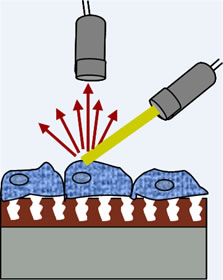
Welcome back to Snowcrash of Biosingularity Blog, who had taken some time off from blogging for several weeks. Snowcrash reveals that researchers at UCSD have developed a "smart petri dish" using silicon crystals pierced by nanometer sized holes. These dishes are designed to maintain a culture of liver cells, and allow for mass screening of liver toxins and toxic drug interactions, and more.

Researchers at the University of California, San Diego have developed what they call a “Smart Petri Dish” that could be used to rapidly screen new drugs for toxic interactions or identify cells in the early stages of cancer circulating through a patient’s blood.

Their invention, described in the June 20 issue of Langmuir, a physical chemistry journal published by the American Chemical Society, uses porous silicon crystals filled with polystyrene to detect subtle changes in the sizes and shapes of the cells.

“One of the big concerns with any potential new drug is its toxicity,” says Michael Sailor, a professor of chemistry at biochemistry at UCSD who headed the research team. “Since the liver is the organ that cleans up the blood, liver cells are particularly susceptible when a toxin is introduced to the body. Pharmaceutical companies want to know early on the effect a drug has on the liver. But it’s very expensive to screen every potential candidate on living animals, typically rats. So if you can use just a few cells from the liver rather than the entire animal, you can perform many more thorough tests.”

“You could also in principle use this to identify metastatic cancer cells circulating in a patient's blood,” Sailor adds, “by putting blood samples from a patient onto the crystal and comparing them to normal blood samples.”

....The scientists constructed their Smart Petri Dish by first fabricating silicon crystals with nanometer-sized holes. This enabled them to produce a photonic crystal, capable of controlling light within the structure analogous to the way that semiconductors transmit electricity through computer chips. By attaching rat liver cells to the polystyrene within the crystals and measuring the scattering of light with a sensitive spectrometer, they were able to detect small changes in the shapes of the cells as they reacted to toxic doses of cadmium chloride and acetaminophen.

“As these cells shrivel up in response to a toxin, they scatter light better, much like fog on a car windshield, allowing us to quicklydetect which drugs may have adverse side effects when taken in combination with another,” says Sailor. “You’re not supposed to drink alcohol when taking acetaminophen, because the combination of the two is much more toxic to your liver than either drug individually. This is known as an adverse drug-drug interaction and it is very expensive and time-consuming to screen a new drug candidate with all the possible combinations of drugs that a patient may be taking. The Smart Petri Dish allows us to perform a large number of such toxicity assays simultaneously, in order to provide an early indication of the particular physiological or pharmacological conditions that need more in-depth study.”
More at Biosingularity.

It is fascinating to contemplate how many of the tools of research, and everyday life for that matter, could be made more intelligent by nano-fabrication methods combined with laser/light, RFID, and nanoelectronics.

Soon we will be developing "grist", the intelligent nanomatter that permeates the science fiction world of Tony Daniel's "Metaplanetary" and "Supraluminal." There are still a few technicalities to work out, but as long as western civilisation exists as the foundation for scientific research, it is likely that we will get there eventually.

Labels:

Bookmark and Share

Love Public Schools? But Send Your Kids to Private School? You are Not Alone

The city with the highest proportion of students going to private schools is San Francisco, a city generally considered left of center politically. Discussing that paradoxical phenomenon is San Francisco Chronicle staff writer Heather Knight.

Mark Lauden Crosley describes himself as a "passionate believer" in public education.

The 54-year-old homeowner in San Francisco's Castro district believes it's critical that children of all socioeconomic and racial backgrounds be educated together. The software designer said he has never voted against any education measure in his life.

But, he said, he believes that even the city's best public schools are overcrowded and underfunded. And despite his belief in the importance of public education, he must do what's best for his three daughters -- so he sends them to private schools.

"There's very little in life that's as important to me as my kids' education. It's a sacrifice you make, and it pays off," he said, noting he nonetheless has nagging concerns that his daughters aren't experiencing diversity in their classrooms. "I don't want my kids in an elite, privileged environment where they don't spend time with people who are different from them. ... But that's the reality, and it bothers me."

His twin eighth-graders, Andrea and Danica, go to Katherine Delmar Burke School near Lincoln Park. He sends sophomore Elinor to the Urban School of San Francisco in the Haight.

Crosley and his wife, Claudia Stern, a financial consultant, get some tuition assistance to cover the total bill of about $70,000 a year. But they still must funnel all of their discretionary income into education -- so no fancy vacations, few movie nights, and no dinners out. Despite the belt-tightening, they're convinced they've made the right choice.

Crosley isn't alone in feeling uncomfortable about private schools while choosing them anyway. In San Francisco, families choose private and religious schools in higher proportion than in any other major city in the country.

Last year, 29.3 percent of the city's school-age population went to private or religious schools. About 10 percent of children nationwide and 8.7 percent of those in California attend private or parochial schools. Marin County has the second-highest rate in the state at 18.7 percent, followed by San Mateo at 15.4 percent and Napa at 13.4 percent.

....Families cite a variety of reasons for going the private-school route. Some say they resent that the school district's lottery system does not guarantee them the right to attend the public school of their choice, especially one in their own neighborhood. (The vast majority of families do get one of their top seven public school choices.)

Other families choose private schools because they want a particular program or feature -- such as an emphasis on French or Mandarin, a religious focus or single-sex education. Others say their children will simply receive a better education in private schools, featuring smaller classes, more resources and more attention for their children as opposed to public school teachers having to focus on students who are far behind.

"The best private school is, in my opinion, better than the best public school anywhere," said Pamela Singer, whose daughter, May, attends Convent of the Sacred Heart Elementary. "When you take a group of people who have money and they just pour money into this school, and they're already like-minded because they've chosen to join this club together, it's just going to be elevated."

Other parents told The Chronicle they don't want their children to be around students who wear "saggy pants" or who "curse on Muni" or who may be "rotten apples." A few said they can see big differences between public school students and private school students just by watching them walk in and out of their respective schools.

The National Assessment of Educational Progress, known as the Nation's Report Card, has tracked students' achievement for the past 30 years and has consistently found that private school students outperform their public school counterparts in all categories surveyed: reading, math, science and writing.
Source. Hat tip Steve Sailer.
There is much more at the source, with the predictable lunar spin and leftist angst. What is perhaps remarkable is that although private schools educate so many San Francisco children, it took this long for the local media to finally admit that fact, as if it were a source of shame for the entire city. Imagine such clonic PC conformism.

For more information on the public vs. private school debate, look at this Cato report. This website, CAPE, is a clearinghouse for information on private schools.

Labels:

Bookmark and Share

15 June 2006

A Whimsical Visual Correlation of IQ, GNP, and Night Lights


Hat tip to Fat Knowledge Blog.

Labels:

Bookmark and Share

14 June 2006

Nanotechnology Pushes Back Peak Oil

From The University of Queensland’s Australian Institute for Bioengineering and Nanotechnology (AIBN), comes a discovery in nanotechnology that could help greatly increase the amount of oil recovered from each well.

With oil companies forced to leave behind as much as two barrels for every barrel of oil they produce, this revolutionary technology could help reduce the cost of supplying petrol to the market.

Known as Pepfactants®, the peptide technology can control the emulsions and foams used in a wide range of industry processes and could impact a range of products from petroleum to specialty chemicals and therapeutic drugs.

Developed by Professor Anton Middelberg and Dr Annette Dexter, details of the technology were published recently in the prestigious Nature Materials journal.

According to Professor Middelberg, Pepfactants® is a disruptive technology with the potential to be used in ways we cannot yet foresee.

“Emulsions, or mixtures of two immiscible liquids like oil and water, are found just about everywhere from mayonnaise to moisturising cream to products for delivering chemotherapy drugs,” said Professor Middelberg.

“Our process enables the reversible and controllable making and breaking of an emulsion or foam, in an environmentally friendly and sustainable manner. For example, Pepfactants® allows for the very quick separation of oil and water as well as the reversible reformation of the emulsion.

“An obvious application of the technology is in oil production where water is used to force oil to the surface of the well. Pepfactants® would allow the easy separation of the oil/water emulsion on the surface. Also, it would change the viscosity of the oil to increase the amount of oil extracted from each underground oil reserve.”

Pepfactants® also recently won an Emerging Technology Awards at TechConnect Summit 2006 Conference in Boston and is the subject of wide industry interest.
Source.

With radical new methods for oil exploration AND recovery, the total reserves will continue to go up at least for the near future. Peak oil is not happening. What is happening is the emergence of twin giants--China and India--triggering the ancient laws of supply and demand. That is not peak oil. That is basic economics. With renewable oil substitutes gaining in production every year, the transition from petroleum to renewables will be far smoother than the doomseekers in politics and the media would have liked.

Labels: ,

Bookmark and Share

13 June 2006

Inconvenient Global Warming Update Truth: Earth Still Warmed by Sun

Recent climate research reinforces a point I made in this post: the sun's influence on climate cannot be ignored and swept under the rug. Research published in PNAS illustrate the dramatic effect of solar variation on levels of glaciation in the Andes, over the past 1000 years.

Check out this analysis of the study in climate audit:

Eduardo Zorita sent me an interesting paper (Pollissar et al 2006, Solar modulation of Little Ice Age climate in the tropical Andes) hot off the press on June 1, 2006, co-authored by Bradley, which reported:

The intersection of the ELA [equilibrium line altitude] and pollen estimates indicate that during the LIA the Venezuelan Andes were both cooler (~3.2°C) and wetter (~208 mm/ yr, +22%) than present … Our data suggest considerable sensitivity of tropical climate to small changes in radiative forcing from solar irradiance variability.

They mention that "during most of the past 10,000 yr, glaciers were absent from all but the highest peaks in the Cordillera de Merida."
Go to climate audit for more analysis with graphs from the study.

The Pollisar paper was also mentioned in CO2 Science:

Since Polissar et al.'s data suggest that the Little Ice Age in the tropical Andes of South America likely owed its existence to decreased solar activity, it follows that the prior Medieval Warm Period was likely sustained by greater solar activity. In addition, since the Current Warm Period in this region has not yet achieved the high temperature level experienced by the Medieval Warm Period, when there was something on the order of 100 ppm less CO2 in the air than there is today, there is no compelling reason to believe that earth's current warmth is sustained to any degree by its extra 100 ppm of CO2. It's the enhanced activity of the sun that is likely responsible for it. Source.

This Chronwatch piece entitled: "Global Warming: Some Inconvenient Glaciers", pulls no punches in taking the implications of solar variation's effect on climate straight to Al Gore's doorstep:

Al Gore says the world’s glaciers are melting because humanity has emitted too much CO2.

A new peer-reviewed study shows, however, that in South America‘s Andes Mountains the glaciers’ advances and retreats have not been governed by CO2, but by small variations in the sun’s intensity.

The study, led by P.J. Polissar of the University of Massachusetts, found that Andean glaciers expanded only four times during the 600 years of the Little Ice Age, which lasted from 1250 AD to 1850. Each of those glacier advances occurred during a solar minimum, when the sun’s lowered activity apparently dropped the mountain-top temperatures by 2–4 degrees C and increased precipitation by about 20 percent.

The Polissar team’s report, “Solar Modulation of Little Ice Age Climate in the Tropical Andes,” was recently published online in the Proceedings of the National Academy of Sciences.

The team studied the glaciers’ moraines--piles of rocks, soil, tree trunks and other glacial debris left behind when the glaciers retreated. Then they matched the glacial debris with the sediment layers in nearby mountain lakes. The pronounced seasonality in the Andes precipitation allows the researchers to count years in the sediments and precisely date the glacial advances.

The Andes glacier study not only links glacial advances and retreats with the sun, but emphasizes that the earth’s glaciers have often retreated--and even disappeared--during past centuries, long before humans built cars and smokestacks.

Most of the Andes glaciers must have disappeared during the Holocene Warming that ended just 5,000 years ago. Temperatures then were as much as 2 degrees C warmer than today’s. So far, the Modern Warming has produced about only 0.8 degrees C of total temperature rise in its 150 years.

The sun has been linked to earth’s climate changes for the past 400 years--by sunspot records. Early astronomers noted that the two coldest periods of the Little Ice Age occurred when there were virtually no sunspots on the sun. The Sporer Minimum lasted from 1420 to 1570, and the Maunder Minimum from 1645 to 1710.

The solar-earth linkage came to the fore again in the 1980s, when researchers brought up the first long ice cores from Greenland and the Antarctic. The 400,000 years of temperature history contained in the ice cores clearly showed a moderate, natural cycle that raised temperatures at the latitude of New York and Paris by about 2 degrees C, and then lowered them by a similar amount. The cycles averaged about 1500 years in length. Carbon 14 and beryllium 10 isotopes in the ice clearly linked this temperature cycle to the sun.

The question for Al Gore is not whether our temperatures are rising; the key question is why they’re rising. Antarctic ice cores tell us that temperatures and CO2 in the atmosphere have tracked closely together through recent Ice Ages, but the CO2 changes have lagged behind the temperature changes by about 800 years.

Higher temperatures have produced more atmospheric CO2, rather than CO2 producing higher temperatures! That’s because most of the planet’s CO2 is stored in the oceans, and as the seawater warms, it can’t hold as much CO2.

If CO2 is the driving climate force, why did the earth begin warming in 1850, while human CO2 emissions didn’t start to really expand until about 1940? Mr. Gore doesn’t tell us the answer.

Why did the earth’s temperatures decline from 1940 to 1975, even as CO2 emissions were soaring? Mr. Gore doesn’t say.

How warm will New York get in the Modern Warming? Apparently Mr. Gore can’t tell us, but a total of 2 degrees C seems likely--based on the history in the ice cores.

Source.

The illusion of "consensus" in the scientific community in regard to a "human caused climate catastrophe of monumental proportions" has been well maintained by those who call themselves journalists of the mainstream media. Currently, many young scientists are afraid to express their divergent opinions due to the current hysterical atmosphere surrounding the topic of climate change. Al Gore is responsible for much of the hysteria that is inimical to objective science.

Labels: , ,

Bookmark and Share

Black Ghanaian Students Say: Black is Beautiful, But Blonde is Ideal

A Connecticut Psychologist looking at students in Ghana found that western preferences for lighter skin tones may be universal.

Mackey distributed questionnaires to more than 200 students from two schools in Accra, the Ghanaian capital. One school was public, while the other was private. They were given a series of questions related to attractiveness, familiarity, wealth, nurturance, academic ability and social acceptance. The first study asked students to relate certain qualities to one of the five dolls – who were placed on a continuum from very light skinned to very dark skinned and were presented to the students. Generally, the lightest skin doll was associated most often with various positive characteristics.

The second study asked the same questions and gave the students a choice between only two dolls – the lightest-skinned doll and the darkest-skinned doll. Again, the students associated the lighter doll with the positive characteristics. The results of the second study were similar to those from studies designed by Kenneth and Mamie Clark during the 1940s in the United States. The Clarks were called upon as expert witnesses during the landmark 1954 Brown vs. Board of Education case, which led to the banning of segregation laws across the nation. Mackey said the Clarks’ studies helped to show that the previous legal standard of “separate but equal” was, in effect, a contradiction because of the low self-esteem demonstrated by the African-American students at that time.

Mackey said that before the studies, she thought the darker-skinned dolls would have scored higher in the areas of nurturance, academic performance and familiarity, but that the lighter-skinned dolls would have scored higher in questions related to opportunity and economics. But almost across the board, the lighter-skinned dolls scored more highly.
Source.

There is a lot of evidence to suggest that lighter skin tone in women are preferred across broad cultural and ethnic populations. Such a preference toward lighter skinned males has not been studied as thoroughly, and would probably yield somewhat different results. This gender difference may be due to the fact that within the same ethnic groups, males tend to have darker skin pigment than women.

Nevertheless, it is clear that there is currently a perceived dominant ethnic group in world affairs, primarily of European origin. Such economic, cultural, and military dominance is likely to translate to subconscious perceptions of power and success.

Read the article for more information and speculation.
Bookmark and Share

12 June 2006

Global Warming Being Berry Gude to Me, Say da Forest to da Tree

The earth has been getting greener over the past twenty years, with forests growing larger and thicker over most of the globe. A joint Nasa-DOE study concludes that the past twenty years have been good for a greening earth. The illustration above from the report shows greening areas in green, and the few browning areas in brown.

The globally comprehensive, multi-discipline study appears in this week's Science magazine. The article states climate changes have provided extra doses of water, heat and sunlight in areas where one or more of those ingredients may have been lacking. Plants flourished in places where climatic conditions previously limited growth.

"Our study proposes climatic changes as the leading cause for the increases in plant growth over the last two decades, with lesser contribution from carbon dioxide fertilization and forest re-growth," said Ramakrishna Nemani, the study's lead author from the University of Montana, Missoula, Mont.

From 1980 to 2000, changes to the global environment have included two of the warmest decades in the instrumental record; three intense El Niño events in 1982-83, 1987-88 and 1997-98; changes in tropical cloudiness and monsoon dynamics; and a 9.3 percent increase in atmospheric carbon dioxide (CO2), which in turn affects man-made influences on climate. All these changes impact plant growth.

Earlier studies by Ranga Myneni, Boston University (BU), and Compton Tucker, NASA's Goddard Space Flight Center (GSFC), Greenbelt, Md., also co-authors of the study, reported increased growing seasons and woody biomass in northern high-latitude forests.

....Nemani and colleagues constructed a global map of the Net Primary Production (NPP) of plants from climate and satellite data of vegetation greenness and solar radiation absorption. NPP is the difference between the CO2 absorbed by plants during photosynthesis, and CO2 lost by plants during respiration. NPP is the foundation for food, fiber and fuel derived from plants, without which life on Earth could not exist. Humans appropriate approximately 50 percent of global NPP.

NPP globally increased on average by six percent from 1982 to 1999. Ecosystems in tropical zones and in the high latitudes of the Northern Hemisphere accounted for 80 percent of the increase. NPP increased significantly over 25 percent of the global vegetated area, but decreased over seven percent of the area; illustrating how plants respond differently depending on regional climatic conditions.
Climatic changes, over approximately the past 20 years, tended to be in the direction of easing climatic limits to plant growth. In general, in areas where temperatures restricted plant growth, it became warmer; where sunlight was needed, clouds dissipated; and where it was too dry, it rained more. In the Amazon, plant growth was limited by sun blocking cloud cover, but the skies have become less cloudy. In India, where a billion people depend on rain, the monsoon was more dependable in the 1990s than in the 1980s.


Go to the source for more fascinating illustrations, and some great animations. The illustration just above the previous paragraph illustrates percent yearly change in vegetation production, by the color code provided. Hat tip to Fat Knowledge blog.

Charles Keeling, Scripps Institution of Oceanography, La Jolla, Calif., cautions no one knows whether these positive impacts are due to short-term climate cycles, or longer-term global climate changes. Actually, no one really knows much of anything about the climate, since the type of sophisticated instrumentation by satellite utilised in this study has only been available for a very few decades.

The less than careful use of proxies by "climatologists" in looking back thousands of years, is too imprecise to definitively determine long-term global climate changes--although plenty of people swimming in tens and hundreds of millions of dollars of grant money continue to claim the ability to do so, in order to keep the funding spigots wide open.

In the meantime, the forests and the trees, by and large, are being berry happe!

Labels: , ,

Bookmark and Share

Butanol: A Superior Renewable Energy Substitute for Gasoline

Oil prices hover close to US $70 a barrel. This higher price drives a lot of research into finding substitutes for petroleum fuels. Ethanol is the cause celebre of the news media, but two-carbon ethanol is not nearly as good a gasoline substitute as is butanol, a four-carbon alcohol. Here is more information from Butanol.com:

* Higher energy content (110,000 Btu’s per gallon for butanol vs. 84,000 Btu per gallon for ethanol). Gasoline contains about 115,000 Btu’s per gallon.
* Butanol is six times less “evaporative” than ethanol and 13.5 times less evaporative than gasoline, making it safer to use as an oxygenate in Arizona, California and other states, thereby eliminating the need for very special blends during the summer and winter months.
* Butanol can be shipped through existing fuel pipelines where ethanol must be transported via rail, barge or truck
* Butanol can be used as a replacement for gasoline gallon for gallon e.g. 100%, or any other percentage. Ethanol can only be used as an additive to gasoline up to about 85% and then only after significant modifications to the engine. Worldwide 10% ethanol blends predominate.


Here is a list of the advantages of butanol from Pure Energy Systems:

# Higher energy content than ethanol.
# Not as corrosive as ethanol.
# Uses an air/fuel ratio which is close to that of gasoline. Ethanol does not.
# Can be shipped through existing fuel pipelines where ethanol must be transported via rail, barge or truck.
# Can replace gasoline any percentage up to 100%. Ethanol can only be used up to 85%.
# Gives better mileage than ethanol. (http://www.businessweek.com/autos/content/apr2006/bw20060427_493909.htm?chan=autos_autos%20indexpage_insight)
# Safer to handle than ethanol.
# Will also assist in the conversion of vegetable oils into biodiesel.


Here is a list of butanol advantages from lightparty:

Butanol is a four carbon alcohol. It has double the amount of carbon of ethanol, which equates to a 25 percent increase in harvestable energy (Btu's).

Butanol is produced by fermentation, from corn, grass, leaves, agricultural waste and other biomass.

Butanol is safer to handle with a Reid Value of 0.33 psi, which is a measure of a fluid's rate of evaporation when compared to gasoline at 4.5 and ethanol at 2.0 psi.

Butanol is an alcohol that can be but does not have to be blended with fossil fuels.

Butanol when consumed in an internal combustion engine yields no SOX, NOX or carbon monoxide all environmentally harmful byproducts of combustion. CO2 is the combustion byproduct of butanol, and is considered environmentally 'green'.

Butanol is far less corrosive than ethanol and can be shipped and distributed through existing pipelines and filling stations.

Butanol solves the safety problems associated with the infrastructure of the hydrogen supply. Reformed butanol has four more hydrogen atoms than ethanol, resulting in a higher energy output and is used as a fuel cell fuel.

Butanol is an industrial commodity, with a 370 million gallons per year market with a selling price of $3.75 per gallon.

Hydrogen generated during the butanol fermentation process is easily recovered, increasing the energy yield of a bushel of corn by an additional 18 percent over the energy yield of ethanol produced from the same quantity of corn.


Here are even more advantages for butanol from Environmental Energy Inc.:

Environmental Energy Inc has shown that BUTANOL REPLACES GASOLINE - 100 pct and has no pollution problems, and further proved it is possible to produce 2.5 gallons of butanol per bushel corn at a production cost of less than $1.00 per gallon. There are 25 pct more Btu-s available and an additional 17 pct more from hydrogen given off, from the same corn when making butanol instead of ethanol that is 42 pct more Btu-s more energy out than it takes to make - that is the plow to tire equation is positive for butanol. Butanol is far safer to handle than gasoline or ethanol. Butanol when substituted for gasoline gives better gas mileage and does not pollute as attested to in 10 states. Butanol should now receive the same recognition as a fuel alcohol in U.S. legislation as ethanol.

Besides using butanol as a straight substitute for gasoline, butanol can be blended with diesel or biodiesel and burned in diesel engines. When you combine the processes of producing biodiesel from oil seeds, and butanol from biomass, you can fuel all the vehicles on the highway. Then if you use byproducts of those processes in fuel cells to produce electricity, your overall efficiency goes even higher.

Here is a good article on butanol from Green Car Congress, a more recent article from R-Squared, and also a fine article from Fat Knowledge blog. Be sure to read the comments.

Ramping up butanol infrastructure is a matter of investment and chemical/manufacturing engineering technology. The public relations battle against the ethanol super-giants is another matter. Ethanol is represented by big farm conglomerate money, among other big business interests, and has its hands in government pockets. Government officials listen to ethanol. Butanol is the David against the ethanol Goliath. But Butanol is clearly the better man, so Butanol will eventually win. We should all hope that smaller farm interests will wake up to the possibilities, pool their resources, and put butanol on the main track soon.

Labels: , , ,

Bookmark and Share

11 June 2006

Being Fully Human: Feral Children and Developmental Critical Periods

Most people have heard stories of "wild children", children who grew without exposure to language, so that by the time they were finally exposed to a human language, their brains were no longer capable of learning to speak or understand. These true stories highlight the concept of a cortical "critical period", a time period in the child's life when he must either learn a skill, or the skill will be lost to him for the rest of his life. The concept of the feral child is also common in myth and fiction.

The stories of the feral children demonstrate the phenomenon of the critical period for language skills. Similar critical periods for mathematics, music, poetry, art, and spatial visualization skills are also likely, although the following discussion will explain why the concept is not as simple as it first appears.

Chris Chatham at Develintel Blog posts a fascinating examination of the cognitive modeling of "critical periods" using computational models.


A central theme of several articles in the May issue of Developmental Psychobiology is that future research must strive to explain the mechanisms that give rise to critical periods in development, rather than merely describing a relationship between plasticity and age. While some argue for the use of converging behavioral, neuropsychological, ERP, and fMRI techniques to achieve this goal, an article by Thomas & Johnson suggests that computational modeling is a particularly effective tool for any such attempt to causally link neural development with behavioral change.

The authors emphasize that computational simulations of critical or sensitive periods force theorists to become explicit about the precise nature of the representations in that problem domain or modality, and how those representations may change with age. Computational models also require that theorists indicate the exact kind of "input" required for a developing system to illustrate the critical period effect, as well as the frequencies with which those inputs are encountered.


....Sometimes, sensitive period effects can seem to result from increased competition for mental resources. For example, some children who appear to recover from brain damage will not manifest any particular deficit, but will show an overall decrement in cognitive performance

....The learning algorithms of neural network simulations also suggest other ways in which sensitive periods might emerge. For example, the Hebbian learning algorithm can be described as "fire together, wire together," and based on this description, it becomes clear that the more "active" brain would manifest more plasiticity. The authors go on to describe that both electrical activity and brain metabolism appear to peak in early to mid childhood, and that children's hemodynamic response tends to be more widespread than that in adults for the same tasks.

....In a simple model of imprinting, O'Reilly and Johnson illustrated how Hebbian learning can cause a self-organized termination of sensitivity to input. Their model was trained on Object A for 100 presentations, and then trained with 150 presentations of a very different looking object, Object D. Preference for an object was interpreted as the amount of activity on the output layer, and by the end of training, the network "preferred" Object D. However, if the network was trained on just 25 more presentations of A (bringing the total to 125), the network would never show a preference for Object D, despite over 900 presentations of that object. In this case, the connection weights within the network became entrenched as a result of a specific type and frequency of input, ultimately resulting in reduced sensitivity to further training. In other words, the "sensitive period" for this network closed between 100 and 125 presentations of Object A.

....Thomas & Johnson also describe how sensitive periods may seem to end as a result of endogenous factors, in which the potential for plasticity is reduced according to a strict developmental timeline. They used a three-layer model of past-tense acquisition, trained through backpropagation, with an input layer of 90 units, an output layer of 100 units, and a hidden layer of 100 units. Two pathways existed between input and ouput: a direct pathway between input and output, and an indirect pathway which connected the input to the output via the hidden layer.

The networks were damaged after 10, 50, 100, 250, 400, 450 or 490 training presentations by removing 75% of the connections between both pathways. After sustaining this damage, each network was trained for an additional 500 trials, and then tested on past-tense formation for both regular mappings (walk - walked) and three types of irregular mappings (run - ran, sleep - slept, go - went). Critically, the authors simulated reduced plasticity by including a small probability that any low connection weight would be destroyed after 100 presentations, which is roughly equivalent to the developmental time-course of synaptic overproduction and subsequent synaptic pruning throughout late childhood and adulthood.
More at the source.

Computational modeling of neural development using neural nets and other models allows the sort of experiments that would be extremely difficult to monitor and interpret using animal models. Over time, these methods get more sophisticated and useful. Critical periods arise naturally from developmental phenomenon, including pruning of networks and evolutionary competition for neural resources in the developing brain.

By learning to utilise the critical periods in the upbringing of young humans, the inborn capacities of the young can be developed more fully. Although the "g" value on IQ tests might not be changed appreciably post-adolescence, the power of the "g" which is present could conceivably be multiplied considerably. This is one possible escape valve from the "genetics determines g -------> genetics is destiny" argument.

But only by approaching the issues honestly can the potential of newer generations of humans be augmented. The current denial of the genetic contribution to "g", and the current denial of the importance of "g", makes it very difficult to approach the subject clearly and soberly. Political Correctness has the effect of dooming the disadvantaged to more generations of disadvantage. Is that paradoxical? Is it by design? Ask the Nutzis who continue to push the PC agenda.

Labels: , ,

Bookmark and Share

10 June 2006

Renewable Diesel Energy, Renewable Gasoline

It takes time for a society that is dependent on petroleum fuels to convert to renewable fuels. Fortunately, the cost of petro-oil is high enough now to encourage the development of alternatives. Biodiesel from oil seeds can substitute for petro-diesel, and ethanol or butanol can substitute for gasoline.

Jim at the Energy Blog reports on the Green Star Biodiesel continuous processor biodiesel reactor, which should reduce the costs of producing biodiesel and make it more available.

GSPI Biodiesel Plants have the following competitive advantages:

* All plant design is modularized so additional capacity can be added at minimal cost.
* Speed of construction - plant can be placed in service in 14-16 weeks versus industry standard average of 14 to 18 months.
* Small footprint of plant because of its modularized "continuous flow waterless design" versus industry batch plant design, which also results in lower production and maintenance costs.
* Minimum plant management and operations staff required because plant is automated.
* Proven technology - Industrial size plant operated and produced biodiesel for over three years in Bakersfield, California.
* Minimal permits required from regulatory agencies. Plant requires no wastewater permit, which could take up to one year to obtain and minimum air quality permits.
* The plant design is very energy efficient and reduces energy requirements by over 30% of industry average.
* Lower capital costs by at least 40% compared to biodiesel industry standards. (between $.80 cents per gallon to a high of $1.25 per installed gallon for conventional biodiesel plants)
* Plants require 30 to 40% less energy (increased efficiency) to run motors and pumps.
* Faster achievement of positive cash flow is due to a much shorter time frame to complete construction and permitting.

Since GSPI's Continuous Flow Biodiesel Production (CFBP) system is completely enclosed and waterless, it greatly reduces the time to secure construction permits, which can take a year or longer to obtain. Mr. LaStella, President of GSPI, points out that California is probably the toughest state to obtain air and water discharge permits. Recently, the GSPI CFBP system received the permits to construct a biodiesel plant in California in only eight weeks. Since many cities and towns across the U.S. do not have the expertise to evaluate new biodiesel plants being built in their jurisdiction, they have welcomed the California permit package to save them the need to research this emerging biodiesel technology and save GSPI the time to receive these valuable permits.

The basic production cost to build the reactors has been reduced to only $30,000 per 10-million GPY reactor module. Smaller units will cost even less. This will significantly reduce the costs and time to build biodiesel plants. The prefabricated reactors make it possible to construct plants within 14-18 weeks versus the 14-18 months that is typical for conventional plants. The balance of the infrastructure--which includes land, building, electrical, storage facilities, railroad access and final cleanup of biodiesel--will still be required.
More at the source.

Renewable liquid fuels are carbon neutral in terms of the carbon cycle. Whatever CO2 that is released by burning the fuel is later re-absorbed from the atmosphere in the plant that produces the oil seeds.

The same applies to the use of ethanol or butanol for gasoline replacement, as long as the ethanol comes from a renewable source. The hare-brained idea to produce ethanol from coal should be stuffed down the garbage chute.

Butanol is much preferable to ethanol as a liquid gasoline replacement, due to better burning characteristics and much lower corrosion potential. Unfortunately, the microbiological infrastructure for efficiently fermenting butanol is far behind the ethanol micro-infrastructure by thousands of years. I expect significant progress from microbiologists on that front, however.

There is tremendous potential for efficient use of agriculture to produce liquid fuel replacements for petrofuels. Using oil seeds for biodiesel, then using the byproducts from biodiesel to produce ethanol, and finally using the cellulosic waste from the plant itself to ferment either ethanol or butanol. Then, there is always the pig factor.

Labels: , ,

Bookmark and Share

09 June 2006

Featured Online Portals to Learning

Continuing with the online learning theme from a few days ago, today's posting features two of the best collections of links to learning materials on the web.

First is Merlot.org. Merlot links to Arts(507 sites), Business(2417), Education(2012), Humanities(2282), Mathematics and Statistics(1151), Science and Technology(5807), and Social Sciences(987) websites. Some of the sites linked to might qualify as portals in themselves, others are java animations suitable for teaching small children. The site has to be explored in order to understand the wide variety of approaches to learning, from pre-school to post-graduate level. Highly recommended.

Then there is 101 Science, a well stuffed and eclectic website with a large set of links to many large sets of links to . . . . and so on. The theme is science and technology. Check out these meta-portals to biology and mathematics. There are many more. While you stand a good chance of finding what you are looking for at 101 Science, you will almost certainly find much more.

Both of these featured sites are well worth visiting. I also recommend the many reference links in the sidebar of the Al Fin main page. One of the main purposes of this website is to encourage readers to prepare themselves for more demanding times. Being well trained in only one field is not sufficient. The underpinnings of once stable societies are beginning to loosen and the fabric starting to unravel. Once trustworthy institutions have become worthless. Many things have to happen for the future to arrive, some of them a bit frightening. It would be better for readers and their loved ones not to be caught unaware.

Budgeting more time to learning, and learning how to learn, has gone from a luxury to a necessity.

Labels: , , , ,

Bookmark and Share

07 June 2006

Teledildonics, Nanotechnology, Cyber Sex

Most people have heard of teledildonics, the family of technologies that allows people to sexually stimulate each other from a distance. Presently the technology is limited to remote controlled vibrators and other simple machine stimulators. Eventually, the technology is going to get much more sophisticated. Science fiction can give us some ideas how it might be done.

Take the Star Trek shows featuring a "holodeck". You may have wondered how in the world solid objects could appear from empty space--even convincing simulations of walking, talking, touching, human beings. More than one crew member had to be reprimanded for fornicating with holodeck "beings." Well, at least one, and you can imagine how the stress of crewing a starship might lead to that kind of thing . . .

Anyway, you do not have to wonder any longer about the technology involved. There is a type of nanotechnology that has been theorised called "utility fog." Utility fog can sit in a room, invisible to the naked eye, then when activated it can simulate solid objects. Here is a list of links for learning more about utility fog and how it might be made and used.

There is quite a gap between a bluetooth controlled vibrator or role-playing cybersex, and a fully animated touch-realistic holodeck partner using utility fog. No doubt remote controlled realistic sex robots incorporating haptics sensors and actuators will attempt to fill the gap in the near future.

One related area where some progress is being made, is virtual reality. Check out this amazing video that demonstrates a virtual reality interface that actually allows you to move in any direction! Here is a short news article about this fascinating device called the VirtuSphere. With an interface like this, a haptic sensor/actuator suit, and advanced software, you would be set for a fairly convincing virtual experience--sexual or not.

The economic potential is there. Sexual programming propelled the home VCR market and continues to help drive internet commerce. Add in the population of game addicts and general escapists in the population, and you have a huge market potential.

Long distance relationships have always been very challenging to maintain, but with the coming of new virtual reality technologies, staying together while apart might become easier. Some couples might even prefer a "virtual" relationship, after trying it both ways. With virtual reality, you can change your appearance, or change the appearance of your partner, if you wish.

But be sure to keep your anti-viral software updated. Stay safe. :-)

Labels: , , , ,

Bookmark and Share

06 June 2006

Harvard Stem Cell Research Proceeds with Private Funding

Many tears have been shed over the US federal government's refusal to finance new stem cell lines. Harvard Stem Cell Institute and Children's Hospital Boston have decided to stop crying and start working. Utilising private funding, researchers in Boston are busily starting new stem cell lines, helping to lay the foundations for a major bio-medical revolution.

In this initial protocol, Daley and colleagues hope to obtain failed-to-fertilize eggs and poor-quality embryos. They will then use two methods to create hESCs:

1) Nuclear transfer. This technique involves using a microscopic needle to remove the nucleus from an egg, and replacing this nucleus with a donor nucleus, containing the donor's genetic material, or DNA. The process of transferring the donor nucleus into the egg "reprograms" it, reactivating the full set of genes for making all the tissues of the body. The resulting "reprogrammed" cell is encouraged to develop and divide, and by about day 5, forms a blastocyst--a ball of 50-200 cells. The blastocyst's outer cells are destined to become the placenta, while the inner cells have the potential to form all of the tissues of the body. At this point, development is halted and the inner cells are isolated to derive hESCs. Because the nucleus implanted into the egg contained the patient's DNA, the hESCs derived by this method are genetically matched to the patient.

In the future, under separately approved protocols, Daley and colleagues hope to obtain donor cells from actual patients, and to transfer the donor nucleus into a fresh egg from a donor or from the patient herself, if female. The donor cell would be of a type easy to obtain, such as a skin cell.

For now, under the approved study protocol, Daley and colleagues will obtain the donor nucleus from a blastomere, a single cell from a poor-quality embryo of less than 8 days' gestation. They will then transfer this nucleus into a failed-to-fertilize egg, wait for a blastocyst to develop, and isolate hESCs from its inner cell mass.

"Our long-term goal is to create embryonic stem cells from a patient's tissues, correct the genetic defects, and get the repaired cells back into the patients," Daley says. "In the meantime, however, using an embryonic cell rather than a skin cell will increase the chances that nuclear transfer will be successful, because the nucleus of an embryonic cell is much easier to reprogram than the nucleus of a skin cell. This will allow us to answer some basic questions of stem cell biology while becoming technically proficient in creating stem cell lines."

2) In a second technique, hESCs will be created directly from poor-quality embryos, and eventually from frozen, good-quality embryos, without nuclear transfer. The researchers will add feeder cells, chemicals and growth factors to encourage the embryo to grow to the blastocyst stage. They will then stop development and derive hESCs from the blastocyst's inner cell mass. This procedure will generate "generic" hESC lines -- not customized to an individual -- that can be used to study how stem cells behave and differentiate.

Leonard Zon, MD, director of Children's Stem Cell Program, Chair of HSCI's Executive Committee, and Chair of the State Biomedical Research Advisory Committee that oversees Human Stem Cell Research in Massachusetts, was responsible for orchestrating the institutional and administrative oversight and review structures that have allowed the work to be done at Children's. "The work, if successful, will have a major impact on our understanding of human development and tissue formation, and will provide a scaffold for the treatment of many diseases of children and adults," Zon says. Zon also emphasizes that the program explicitly prohibits using these techniques for reproductive purposes - that is, to clone a human being, or to grow one from a donated embryo. "There will be no transfer of cloned embryos to a womb, and no embryo will be allowed to grow beyond the blastocyst stage."

Future goals

In the future, the Daley laboratory hopes to combine hESC creation with gene therapy to treat patients with specific genetic defects. Already, the lab has restored immune function in mice with a severe immune deficiency (similar to "boy in the bubble" disease) by making ESCs through nuclear transfer, correcting the gene defects, differentiating the repaired cells into blood stem cells, and returning the normal blood cells back to the mice. Using similar methods, Daley's team is also treating mice with thalassemia, a disorder of red blood cells that leads to chronic anemia and the need for children to undergo a lifetime of blood transfusions Other research goals of Daley's lab include:

* Using hESCs to create human embryonic germ cells -- primitive cells in the embryo that mature to become sperm or eggs. Daley's lab has already made sperm precursors from mouse ESCs -- work cited by Science Magazine as a "Top Ten" breakthrough for 2003 -- and now, with funding from the Harvard Stem Cell Institute, hopes to create eggs. These eggs could potentially be used in place of donor eggs for nuclear transfer.
* Understanding the process by which nuclear transfer genetically "reprograms" cells back to their embryonic state. This understanding may enable scientists to take mature, specialized cells back to a fully undifferentiated state, without the need for embryos, eggs, nuclear transfer or ESCs.
* Probing the links between stem cells and cancer. Critics of embryonic stem cell research have raised concerns that implanting ESCs in the body could lead to cancer, because when ESCs are injected into mice, they form benign tumors. Daley's lab is studying the conditions under which such tumors could become malignant.

Source: Children's Hospital Boston

The US is the largest donor nation for private charities and international relief efforts, in terms of private funding. It should not be surprising that in the presence of a genuine humanitarian need, private funding would step forward and assist in this important work. Too many institutions become dependent upon support from tax collections, rather than being creative in fundraising. The US government, and most other governments, are too large and omnipresent in the activities of citizens. Eventually humans will be intelligent enough to do away with these institutions of waste, corruption, and quasi-organised criminal activity called governments. Many people have looked forward to that day for a long time.

Labels:

Bookmark and Share

04 June 2006

Free Online Courses and Texts: Educating Yourself

Is there some subject you have always wanted to learn, but never had the time to devote to it? Are there topics you would like to know better, but cannot take the time off work, travel long distances for seminars, or devote big chunks of your budget for libraries of texts and references and class fees?

There are a lot of online class, text, and reference resources available free on the internet. Here are a few places to start looking:

Textbook Revolution--This site links to many different texts and educational resources for a wide variety of academic subjects, from math to sciences to engineering to health professions, economics, computers, and general education. Some of the resources are surprisingly good, some are only average. They update their holdings fairly regularly. Here is the official blog that updates and augments Textbook Revolution.

Open Educational Resources Wiki Repositories--This Wiki site links to several "mega-sites" full of tutorials, class materials, audio and video lectures, and many other types of educational resources. If you want to investigate these links thoroughly, set aside the better part of a day or more. This site links to some huge collections of fine links. Highly recommended.

Directory of Open Access Journals--This Directory links to 2265 free, full text journals on many topics, including Agriculture and Food Sciences, Arts and Architecture, Biology and Life Sciences, Business and Economics, Chemistry, Earth and Environmental Sciences, General Works, Health Sciences, History and Archaeology, Languages and Literatures, Law and Political Science, Mathematics and Statistics, Philosophy and Religion, Physics and Astronomy, Science General, Social Sciences, and Technology and Engineering. If you are not affiliated with a large institution, it can sometimes be hard getting access to reasonably up to date findings in a field of interst. Open Access Journals can be very helpful.

Like I say, these are only good starting points. You will quickly discover just how vast are the educational resources available free online, once you start looking.

The current system of education is obsolete, whether it knows it or not. The multi-media environment of the modern broadband internet just keeps getting better. As we get closer to "virtual reality" online environments, with haptic sensory interfaces, there will be very little in the way of course material that cannot be served over the net.
It may be that teledildonics will be the driving force financing broadband virtual reality on the net, but there is really no limit on the types of software and interfaces that can be connected. Then when nanotechnology finally provides a true "holodeck" environment, the fun and the learning will just be starting.

Labels: , , , ,

Bookmark and Share

Graphic Reality: Tracking Relationships over Time

Here is a colorful animation plotting life expectancy in countries against per capita income in dollars US. This is the explanatory tutorial for the animation.

Once you load the chart, you can change either the dependent or independent variable for different comparisons--choose from over fifteen different variables that you can place in either the dependent(vertical) or independent(horizontal) position. The legend at the upper right will flash the countries from any given region. Select an individual country to track its progress on any of the variables.

As for the relationship between life expectancy and percapita income, the blue outliers you see dropping off the lower end of the curve are sub-saharan african nations. Notice the pci horizontal axis is a log scale. Changing the scale to linear alters the shape of the graph significantly.

Play with it for a while until you see what it can do. You may want to bookmark the chart for future use.

Hat tip to Steve Sailer.
Bookmark and Share

02 June 2006

Dysgenics: As the World Burns

The very promising blog "The Audacious Epigone", was highlighted by Steve Sailer recently. Crush41 at TAE recently commented on Lynn and Vanhannen's IQ and the Wealth of Nations hypotheses. After discussing some interesting correlations between IQ and various variables, he takes a wary peek into the future:

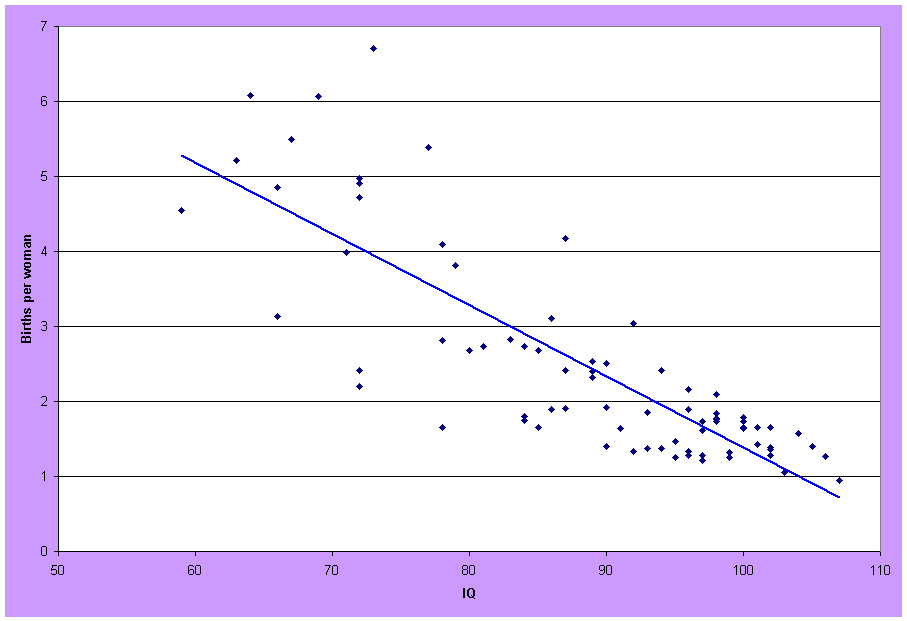
The future looks precarious. The brainy nations are becoming grayer and reproducing below the replenishment rate of 2.1 children per woman (see the nearby charts--click to enlarge).

....Globalization will continue to make migration easier. As newly-arrived, formerly destitute third-worlders enjoy the prosperity of the developed host, they become more fecund (Hispanics in the US average 2.8 babies per woman. That's higher than Mexico's 2.42 per woman, and indeed is more fertile than much of Latin America). By depressing wages and making housing less affordable, they also have the effect of decreasing the fecundity of the host country's natives. As the relative size of the smart fraction dwindles while the duller side grows proprotionally (and absolutely, of course), more human resources will have to spent by the brights to take care of the dulls. Crime and poverty will increase, living standards will be pressured, and human progression will be slowed.
Source.

He then makes a few suggestions for possible remedies, possible incentives for smarter people to have more children. Good luck. The idea of artificial wombs would probably do more than most current incentives being tried around the world, and even then the idea of the creche or the kibbutz might have to be dusted off. Modern professionals do not want to sacrifice for the next generations, even though it is the next generations who will finance tomorrow's social democratic welfare states.

The outlook for Europe is particularly bad, combining dysgenics with religious antagonism. Across Europe, prisons are filling up with muslim immigrants and children of immigrants. North America does not get off free, however. Hispanic crime rates are three times higher than crime rates of americans of european origin. Mean IQ of latin american immigrants to North America is no higher than 90, which is higher than mean IQ of the muslim immigrants to Europe. The importation of third world values and traditions, along with the dysgenic impact and higher crime rates, will change the aspect of many North American and European cities.

China will not experience the same dysgenic forces What dysgenics China does experience will be due to the fact that there are far more Chinese (often of high intelligence and education) trying to leave China than foreigners trying to enter. The same applies to Russia. Japan is turning to limited time guest worker permits, and even more to robotics and automation to replace retiring workers--but not immigration, with its dysgenic potential.

Not many people are brave enough to speak about this topic in the open, due to the hypocrisy of politically correct societies. Nevertheless the research on intelligence has established genetics as considerably more important than external accoutrements, other than nutrition and early childhood experiential enrichment.

Labels: , , , ,

Bookmark and Share

01 June 2006

Human Stupidity Leads to Poverty--Smarter People Needed

Oscar Wilde said "there is no sin except stupidity." Voltaire said “The only way to comprehend what mathematicians mean by Infinity is to contemplate the extent of human stupidity." Einstein said, “The difference between genius and stupidity is that genius has its limits.” Source.

Poverty and stupidity--like hand and glove. Some countries experience widespread poverty temporarily--postwar Germany, Japan, and South Korea come to mind--then rebound out of poverty when conditions improve. Other countries such as Haiti are always impoverished, regardless of external conditions, opportunities, and internal resources. Then there are countries such as Zimbabwe which were once much better off, but now are among the most impoverished nations on earth. Then there is China, which improved its material circumstances by backing away from its communist command economy.

International investors would be happy to take advantage of low worker wages in these perennially impoverished nations if they could expect a reasonable return on investment. Investors dealing with poor countries expect a certain degree of corruption and graft in dealing with government officials. There will also be problems with political instability, and the ever-present threat of nationalisation of the industry, as occurred recently in Bolivia to the natural gas fields. This type of government behaviour virtually guarantees that investors will stay away.

If, in addition, there is a shortage of trainable workers--if there are not enough people in the potential workforce intelligent enough to learn the skills and technologies involved in the industry--the situation is hopeless. A technological society requires an average population IQ of at least 90 (with 100 being the internationally standardised mean) to maintain itself. If the population average (mean) IQ is less than 90, all attempts to bring the nation as a whole into the modern technological world, are doomed. Consider that a hypothesis, that can be disproved by the presentation of contradictory examples. . . . . . .? . . . . . .?.......

The book IQ and the Wealth of Nations discusses this issue, and makes comparisons of average IQ between different nations. The authors admit that political and economic factors can artificially hold down a nation's wealth, even in the presence of high average IQ. Conversely, in a nation of relatively low average population IQ, an enlightened market economy can raise the nation's wealth above what it would be if the economy were more centrally commanded. Likewise, oppressive and/or unstable political regimes will depress a nation's wealth, even where the population average IQ is average or above.

I consider IQ and the Wealth of Nations to be a starting point for discussion, rather than an authoritative reference and documentary. For example, what happens when maternal and childhood nutrition is improved in an impoverished nation? The average IQ should improve, and in the presence of an enlightened political structure and economy, the wealth of the nation should also improve. This is a worthy goal.

What if after optimising nutrition for mothers and children, significant population IQ average differences remain between nations? Then if it is clear that the nations with lower population average IQs are suffering because of it, the reasons for the differences should be determined and steps taken to improve the intelligence of those nations on the lower end.

Of course, once you go beyond nutritional optimisation in trying to improve intelligence, it is likely that most nations will want to participate in the improving of their citizen's IQ--even those nations that already have average or above average population IQs. In that case, it is more than likely that your intervention will result in even greater inequality of average IQs than were present originally.

You see the problem. An IQ "central command" would be very much like an economic "central command." The unintended consequences might be worse than what you started with. The alternative--a "market approach" to increasing IQ, would result in wealthier nations that already have higher average IQs gaining access to intelligence augmenting technologies before poorer nations, with the technology "trickling down" at a rate slow enough to make most people unhappy. An interesting problem. The consequences from doing nothing may be severe.

I will discuss more on this subject later.

Labels: , , ,

Bookmark and Share
Newer Posts Older Posts
Al Fin Main Page
Enter your Email


Powered by FeedBlitz
Google
WWW AL FIN

Powered by
Blogger

``