08 October 2012

Black Males: Falling Behind the Rest

One of the most frustrating problems for modern social engineers, is how to erase the achievement gap between black males and everyone else in the world. If one looks at poverty by nation, worldwide, one discovers that the poorest nations tend to be those populated with and controlled by black males.

42 Poorest Nations of the World

1. Zimbabwe
22. Tanzania (United Republic of)
2. Congo (Democratic Republic of the)
23. Djibouti
3. Niger
24. Angola
4. Burundi
25. Haiti
5. Mozambique
26. Senegal
6. Guinea-Bissau
27. Uganda
7. Chad
28. Nigeria
8. Liberia
29. Lesotho
9. Burkina Faso
30. Comoros
10. Mali
31. Togo
11. Central African Republic
32. Nepal
12. Sierra Leone
33. Papua New Guinea
13. Ethiopia
34. Mauritania
14. Guinea
35. Madagascar
15. Afghanistan
36. Benin
16. Sudan
37. Yemen
17. Malawi
38. Myanmar
18. Rwanda
39. Cameroon
19. Gambia
40. Ghana
20. Zambia
41. Bangladesh
21. Côte d'lvoire
42. Kenya

Infoplease

Even in oil-rich Nigeria, 61% of the population is forced to live on less than $1 a day. You may think that this phenomenon is limited to subSaharan Africa, but it occurs wherever blacks make up a large proportion of the male population.

When black males emigrate to western nations, they inevitably fall behind all other groups -- including black females -- in terms of academic and economic achievement.

The problem certainly exists in Britain, where large numbers of blacks from the Caribbean have migrated. It is a problem that originates within the black community itself.

The problem also exists in the world's wealthiest nation, the US.

Even leftist social engineers are beginning to see the black male achievement gap as "a crisis." And neither poverty nor "special needs" are "the cause" of the problem.
These low achievement levels aren't just the result of poverty. The average black fourth and eighth grade male who is not poor doesn't do any better on the NAEP than white males who come from low-income backgrounds. The data also shows that black males without special education challenges also don't score any higher than white males with special needs.

When it comes to school experience factors like suspension, black males are, "three times more likely than white students, two times more likely than Hispanic and American Indian students, and five times more likely than Asian students to be suspended from school."

Black males who make it to college are half as likely as their white male peers to graduate within four years. And, according to the report, in 2008, black males over 18 accounted for 5 percent of the college population but were 36 percent of the prison population. _Good.is

So, what's a frustrated social engineer to do about this persistent and serious problem?

For one thing, she needs to ditch the political correctness, and open her mind to the full range of possible causes of the problem.

Has she ever considered that the male hormone testosterone may be at least part of the problem that is causing black males to constantly fall behind?

Testosterone significantly increases the neurotoxicity of the amino acid neurotransmitter glutamate, in contrast to estrogens, which work to reduce the neurotoxicity that comes from an over-abundance of glutamate.

Under conditions of transient low oxygen levels or low blood flow conditions to the brain, nerve tissue can be flooded with toxic levels of glutamate. If the brains of black females and black males were put under identical temporary conditions of hypoxia or hypoperfusion, one would therefore expect the brains of black females to emerge from the trial in better working order.

Estrogens similarly protect the brain from mercury toxicity more effectively than androgens. Estrogen also has a protective effect on the brain from strokes, Alzheimer's Disease, and other forms of neurodegeneration.

Is it possible that estrogens and androgens have different protective effects on the brain in the case of lead toxicity? It is something that should perhaps be looked into.

If you examine the table below, you will see that on a statistical basis, blacks have higher levels of sex hormones than whites, who have higher levels than asians, statistically.

None of this is politically correct. But political correctness -- in government, media, and academia -- accounts for a large part of the cultural blind spot which is preventing this problem from being approached honestly, and dealt with effectively.

Special preferences, affirmative action, preferential hiring / admissions / benefits / etc. may all temporarily mask the problem, and prevent a certain degree of violence on the part of frustrated black males. But such programs tend to corrupt and degrade the quality of work, productivity, and innovation in any fields that are affected by them, penalising society at large. There is a limit to how long such programs can be maintained without a serious degradation of the society's capabilities, and without provoking a dangerous backlash on the part of the populations that are inadvertently disadvantaged by the programs.

By the year 2050, as many as 200 million people in the US will be eligible for special preferences under affirmative action law. As US demographics change, it is conceivable that we will see larger populations of "disadvantaged" -- eligible for special preferences -- than there are "advantaged" -- not eligible for special preferences. One would expect a rapid disappearance of the "advantaged" populations, as they suffer from more and more stringent affirmative action rules, regulations, laws, mandates, penalties, fines, and other race based punitive actions by government.

It should be clear that such a society has legislated and regulated itself onto the path toward national poverty. Perhaps such a nation may eventually make the "infoplease global top 42 rankings of impoverished nations?"

Labels: ,

Bookmark and Share

20 June 2012

Wealth of Nations


Some nations make it easier for inventors, entrepreneurs, and small business -- causing their economies to grow. Some governments start out making it easy for innovators, then grow so bureaucratically large and corrupt that they forget that the secret to a healthy economy is healthy innovation and growth from the bottom up.

In the US, there is a movement afoot to bypass unwieldy government in order to promote innovation at the grass roots level.

The following is excerpted from Popular Science "Invent Your Own Anything"

The path to becoming a successful inventor is easier than ever--but there are also a surplus of options, and it can be difficult to know where to start. Here's a step-by-step plan to inventing your own anything.

Step 1: Think Big

Think Big: Click here to see this image much larger.  Katherine Bagley

The most original projects combine two or more disciplines. Look to mash them up.

Step 2: Team Up

Team Up: Here's a map of hackerspaces all around the country. We've picked out three--one in Brooklyn, one in Chicago, and one in the Bay Area--to give an idea of how these work. Find more at Hackerspaces.  Katherine Bagley

Shared workspaces let you learn new skills and wield expensive tools. These are some of the largest and most active.

TECHSHOP

Each of TechShop’s five 15,000-square-foot locations contains more than $1 million in prototyping equipment and software. Its 3,000-plus members include entrants in the Google Lunar X Prize and the makers of the fastest electric motorcycle. Starting at $75/month; techshop.ws

PUMPING STATION: ONE

Chicago’s first hackerspace, Pumping Station: One lets members use its tools, such as CNC machines and laser cutters, 24/7. Projects include pants that produce music and a biosensor array that reads patient vitals. Starting at $40/month; pumpingstationone.org

GENSPACE

Genspace in Brooklyn caters to professional biologists and amateur beaker jockeys alike. It has everything from microscopes and incubators to PCR machines and spectrometers. $100/month; genspace.org

Step 3: Gear Up


Click to launch the gallery.
Some tools are for research, some make other tools, and some just tear stuff apart.

Step 4: Get the Right Stuff

Sugru:  Courtesy Sugru

New materials can protect your project against anything--even outer space.

SUGRU

Imagine Play-Doh that waterproofs holes in your hiking boots, repairs electrical cords, and hangs pictures on the wall. Hand-mold this silicone rubber into anything, let it sit for 24 hours, and you’ve got a grippy, electrically insulating, dishwasher-safe product that maintains its shape between –76° and 356°F. Pictured above. $18/60-gram pack; sugru.com

UHMW

Ultrahigh-molecular-weight polyethylene is a plastic that can handle up to 7,740 pounds per square inch, resist moisture and chemicals, and dampen noise. Useful in heavy-use projects like snowboards and body armor, it has a low friction coefficient and is 10 times as resilient to abrasion as carbon steel. $35/square foot; polymerplastics.com

KAPTON

This polyimide film withstands temperatures between –452° and 752°, so engineers use it to insulate products such as photovoltaic panels and spacecraft. It flexes without cracking, is a thermal conductor, and can withstand copper etching, as in printed circuits. The trickiest part is smoothing it on without forming bubbles. $12/square foot; professionalplastics.com

Step 5: Build a Supply Chain


Don't blindly DIY--outsource the tough stuff.

KNOW YOUR VENDORS...

McMaster-Carr sells more than 490,000 items for your shop. The Electronic Goldmine and SparkFun are reliably cheap sources for circuits, solar kits and transformers. Digi-Key has every electronic part you can think of. And the MakerShed offers not just mechanical and electrical parts but lab tools as well. Also, AliExpress carries inexpensive off-brand miscellany from China and can be your source for components you couldn’t find, much less afford, otherwise.

...AND TREAT THEM AS PARTNERS

Describe your process and your problems to a vendor; they want to help. DNA-synthesis companies, for instance, can speed a project along. They may offer cells with a fluorescence gene that makes it easy to spot which ones you’ve modified.

BUY FROM PARALLEL INDUSTRIES

Who else uses the same equipment? Rather than buying glassware from pricey lab suppliers, for instance, get them cheap from beer-making sites like brouwland.com.

HIRE A FREELANCER

Sites like elance.com, odesk.com and ifreelance.com help you outsource tasks—coding, graphics, product design and marketing—that you can’t (and shouldn’t) handle.

LET SOMEONE ELSE FABRICATE WEIRD PARTS

eMachineShop allows you to draft your design on free CAD software, upload it, and order finished parts that arrive by mail a few days later. Or go international: Upload to MFG.com, where manufacturers from around the world can bid on the job.

Step 6: Get It Funded

Get It Funded: Some examples of Kickstarter-funded projects.  Katherine Bagley

Crowdfunding can get your first prototype built, but you have to know your backers' tastes. Take a cue from four emerging categories on Kickstarter.

Step 7: Get It Out There

Red Bull Creation: The Red Bull Creation hackathon, taken at last year's event.  Courtesy Red Bull

Events draw the press, investors and other makers together. Share your idea at an up-and-coming venue.

RED BULL CREATION

A 72-hour hackathon for 16 teams. Last year’s challenge was to move a person without using fossil fuels. This September, finalists will show off a new round of projects in New York.

iGEM JAMBOREE

The year’s biggest synthetic-biology event, founded by MIT, is a race to genetically engineer something innovative. The world championship is held each November.

NOTACON

Presentations at this beloved nine-year-old meet-up of makers, held in Cleveland each April, range from discussions of neurohacking and data analysis to lighter topics, like swords.

CLOBAL SYNCHRONOUS HACKATHON

Hacker spaces complete an assigned challenge every month while streaming their work by webcam. Tasks have included improving the long-term energy efficiency of the team’s workspace and mailing a cupcake to another hacker group so that it arrives in pristine condition.

_Invent Your Own Anything -- Popular Science
The governments of the western world -- from Europe to North America to Oceania -- have grown large, corrupt, and dysfunctional. They are no longer supportive of the genuine needs of their people, and have gotten sidetracked onto "pseudo-issues" which allow governments to show favouritism to large campaign contributors and to political cronies.

If individuals can be empowered by new technologies and powerful methods of networking, they may eventually create leaner, meaner, more functionally limited but effective governments.

That would be a great innovation.

Labels:

Bookmark and Share

13 May 2012

IQ and the Wealth of Nations: 10 + Years and Going Strong

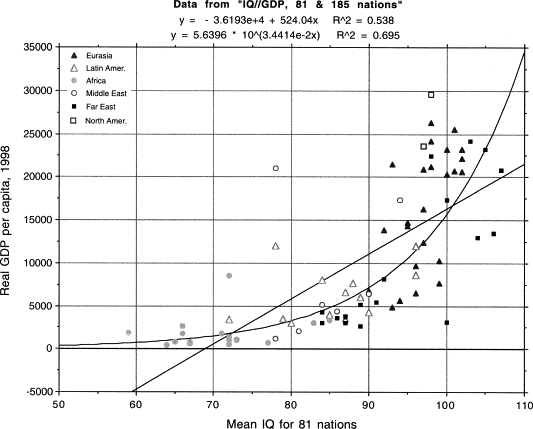
Exponential Relationship of National IQ and GDP: Intelligence Vol 34 Issue 3 pp 291 - 295

Lynn and Vanhanen's famous book, IQ and the Wealth of Nations, was published in February of 2002. Because it made a credible link between the average intelligence of its people and a nation's achievements and economic prosperity, the book came under immediate and unrelenting attack from the politically correct pseudo-intellectual quarter.

The most recent broadside attack against Lynn and Vanhanen comes from Charles Kenny in Foreign Policy, Dumb and Dumber. Unfortunately, such rebuttals to Lynn and Vanhanen are not held to high standards by the mainstream press or by academia. Perhaps that is why Steve Sailer was able to make such quick and devastating work of Kenny's argument.

Lynn and Vanhanen's national IQ data has been criticised, which is certainly fair to do. Social scientists have been particularly outraged at the low average IQ assigned to SubSaharan Africa by L & V (approx. 70). But out of all the critics, virtually no one is willing to jump in and produce better data! Surely if one were so eager to prove this vexing thesis wrong, one would secure the proper grant, and go out and compile the definitive data that would disprove the disturbing idea. The closest that a researcher has come to doing this is the work of Jelte Wicherts (PDF). But it requires little reading of Wilcherts' argument to discover that his selection criteria are even more questionable than Lynn and Vanhanen's -- and the best Wilcherts could do was to raise the mean SS African IQ to 82, with all of his fudge-factors of selection.

Is the actual average IQ of subSaharan Africa closer to 75 than to either 70 or 82? Probably. Could better nutrition and a higher stimulus environment raise that average IQ closer to the African American average IQ of 85? Probably. But researchers must deal with data, the best that they can. When they deal in wishful thinking they lose all credibility.

To the extent possible, within the treacherous modern world of PC hyper-sensitivity, Lynn and Vanhanen's data has been updated and generally confirmed. More here.

Over the intervening years, national IQ data has been plotted against GDP according to linear models and according to exponential models. More here. The exponential model would seem to provide a better fit of the data.

Even without arguing about the causes or IQ differences, or possible cures for the problem, the startling trend, in terms of the importance of IQ (or smart fraction) and national prosperity, should be clear to even the most reluctant observer.

The question of why some nations are rich and some nations are poor, cannot be answered by a single parameter. But after ten years of considering the relationship of national IQ (including smart fraction) and national prosperity, the relationship has held up very well indeed.

Labels: ,

Bookmark and Share

13 April 2012

Science and the Wealth of Nations II: Where Science Gets Done

Most people think that science and math and engineering are found everywhere, like soccer, but actually, they are regional practices, more like hurling or tossing the caber. In the map, countries are resized according to the number of scientific papers they produce. Population size plays a role, but average productivity matters more. Note that Singapore, with a population of 5 million, looks bigger than Indonesia, with 240 million people. _West Hunter
Spend a little time with the map below, to receive the full impact of the global situation.
Greg Cochran's West Hunter

Generally the pattern is about what you would expect from the world distribution of IQ (note the correlation with latitude), coupled with the notion that science is generated by people out in the tail of the intelligence distribution. About 2% of a population with an average IQ of 100 scores above IQ above 130, about 0.1% above 145. For a population with an average of 85, only 0.1% will score above 130 – 20 times fewer. _West Hunter
The lower the average IQ of a nation, the fewer the prospects for successful training in science, math, computer science, or engineering. And the less science, math, computer science, and engineering being done in a nation, the more impoverished the nation will be, on average.
Innovation and the Scientific Wealth of Nations

Of course, even in nations of relatively high average IQ, political and cultural forces can suppress science and technology. And when a particular nation gains a large head-start -- as did the US before, during, and after World War II -- it can be hard for other regions to catch up again.
An EU initiative to increase effective R&D spending in 2000 (the "Lisbon Agenda") to gain parity with the US has had limited success, to put it most diplomatically. In a report published Friday (Jan 20), an independent Expert Group commissioned by the EU "urges Europe’s leaders to take radical action on research and innovation “before it is too late” " ... UK Telegraph article. The authors "propose a 4-pronged strategy focusing on the creation of innovation friendly markets, on strengthening R&D resources, on increasing structural mobility as well as fostering a culture which celebrates innovation."

The reported, effective abandonment of Europe by pharmaceutical companies, for example, is occurring at the very moment that the synergy of computation, biotechnology, and medicine is just getting underway (cf. earlier posts on Ray Kurweil's book The Singularity is Near). Europe's world-class scientists and corporations tend to focus on important, profitable but well-established fields. Meanwhile, the international ties associated with "frontier" research create wealth and productivity gains that pass much of Europe by. _Anglosphere
Of course, under the Obama administration, the US may be well on the way to squandering its earlier advantages.
Worldwide R&D by Nation (PDF)

Funding drives R&D, but if the talent isn't there, the funding is largely wasted. That is why research universities in countries such as Saudi Arabia -- where the average IQ is only about 85 points -- must import must of their high powered scientists and engineers from the outside.

H/T Steve Sailer

Labels: , ,

Bookmark and Share

18 March 2011

Recent Study Relating IQ/Human /Capital to per capita GDP

Update: Here is a handy per capita GDP Predictor, which provides a 0.97 r correlation (!) between its predictions and the actual GDP numbers, using national IQ and an economic freedom metric (plus "tweaks") as input. (via Brian Wang) Methodology is provided at the link.
Wikipedia

Heiner Rindermann, of the Chemnitz University of Technology, has a study being published in the upcoming issue of Psychological Science, a journal of the Association for Psychological Science. The study looks at 90 countries, correlating the intelligence of the populations with the per capita GDP -- in an attempt to understand the relationship of human capital to national economic well-being.
The researchers collected information on 90 countries, including far-off lands from the U.S. to New Zealand and Colombia to Kazakhstan. They also collected data on the country’s excellence in science and technology—the number of patents granted per person and how many Nobel Prizes the country’s people had won in science, for example.

They found that intelligence made a difference in gross domestic product. For each one-point increase in a country’s average IQ, the per capita GDP was $229 higher. It made an even bigger difference if the smartest 5 percent of the population got smarter; for every additional IQ point in that group, a country’s per capita GDP was $468 higher.

.... “In other words, it’s the ability of a person to solve a problem in the most efficient way—not with violence, but by thinking,” Rindermann says. He wrote the new study with James Thompson of University College London. _PsychologicalScience_via_NextBigFuture
Many factors are involved in the determination of national prosperity, including economic freedom, rule of law, property rights, and trust. But study after study appear to indicate that cognitive ability is as important as the other factors. In fact, certain minimum levels of average cognitive ability may be necessary for some of the other important factors to be reliably present.
Here is more on that topic by Rindermann in an abstract taken from an earlier (2007) study:
. It is shown that in the second half of the 20th century, education and intelligence had a strong positive impact on democracy, rule of law and political liberty independent from wealth (GDP) and chosen country sample. One possible mediator of these relationships is the attainment of higher stages of moral judgment fostered by cognitive ability, which is necessary for the function of democratic rules in society. The other mediators for citizens as well as for leaders could be the increased competence and willingness to process and seek information necessary for political decisions due to greater cognitive ability. There are also weaker and less stable reverse effects of the rule of law and political freedom on cognitive ability. _ScienceDirect

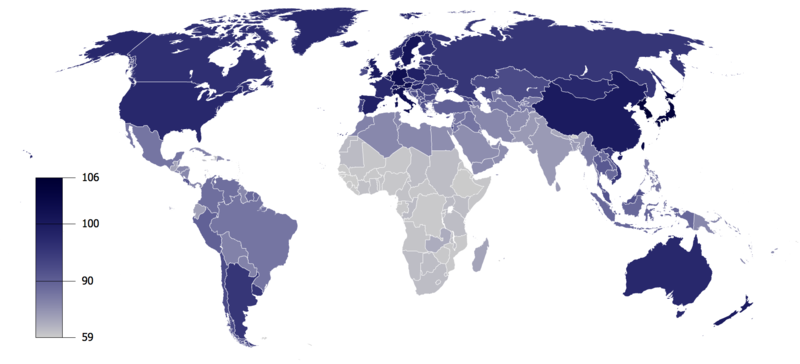
It is crucial for the future of humanity that the genetic fraction of the underpinnings of differences in average population intelligence (see map) not be denied or downgraded. Any attempts to explain all or most of the differences in population average IQ by nutritional, educational, or other environmental factors without including the genetic component, is counter-productive for future generations. Nutrition, education, and environmental intellectual enrichment of all kinds are all important -- but not sufficient for the goals of any philanthropic humanist worth the description.

The best hope for long-term improvement in average human intelligence exists within a broadly applied, advanced genetics. Such a program is likely to result in smaller IQ and EF gaps between populations -- proportionally -- than at present. The only thing to be achieved by following a politically correct path of HBD denial, is the continued and inexorable descent into a dysgenic Idiocracy.

Labels: , , ,

Bookmark and Share

07 February 2011

Reasons for Economic Growth: Don't Forget Human Capital

NextBigFuture

MIT economists and computer modelers are attempting to answer the age old question: "Why are some countries rich and some countries poor?" (via Next Big Future) They have framed the question in terms of economic growth, and have surrounded it with sophisticated computer modeling and visual representations, but they seem to have left out a crucial, central variable: human capital.

In the MIT model, the key variables considered are the diversity of economic "inputs" and diversity of economic "outputs" for a country.
Economists think of production in terms of inputs and outputs. The outputs are the goods that a country produces. The inputs are everything that’s required to produce those goods. In 19th-century America, lumber was an example of a product with relatively few inputs. Exporting it required little more than the manpower and tools to chop down trees and haul them to shipping ports. Twentieth-century digital-signal-processing chips, on the other hand, are products that require a lot of inputs: the ability to extract and purify exotic materials like gallium arsenide, computer-aided design software to produce circuit layouts, and the chemicals and vacuum chambers required for the deposition of different layers of material, among other things.

Hidalgo and Hausmann argue that the diversity of a country’s production capacity, and thus the true strength of its economy, depends on the diversity of both its outputs and its inputs. Two countries could export the same number of products — they could have the same diversity of outputs — but if one exports only garments, it’s likely to have many fewer inputs than a country that exports a mix of garments and other light manufacturing, agricultural products, electronics and cultural goods. And the country with more inputs, the researchers claim, will adapt better to a changing world economy. _MIT

Hidalgo and Hausmann have found that GDP correlates pretty well with diversity of outputs, but it correlates much better with diversity of inputs. And the cases where the correlation breaks down could actually be more interesting than the cases where it holds, because they could indicate economies poised for growth. In 1970, for instance, the Korean economy had much greater diversity of inputs, according to Hidalgo’s measure, than the Peruvian economy; but Peru had twice Korea’s GDP per capita. Over the next 30 years, the relative diversity of inputs in the two countries’ economies stayed more or less the same, but by 2003, Korea had four times Peru’s GDP per capita. _NextBigFuture
Human capital can be represented by several different markers. Levels of educational achievement, for example, can be seen as one measure of human capital. Quality of pre-natal care, child-raising, and early education are other very crucial metrics. But one assessment of human capital which absolutely cannot be neglected in the analysis of a nation's long-term economic trajectory, is the average population IQ.
Per capita GDP vs. national average IQ. The regression line is shown in red. The correlation coefficient is 0.73.

There are many ingredients which go into the economic growth and success of a society, region, or nation. But any analysis which dances around the central issue of human capital, can easily be seen as a sophisticated smokescreen or obfuscation, rather than an attempt to get at the heart of the issue.

A nation's exports and imports are certainly important indicators of its economic health. But what is cause and what is effect? Clearly the MIT researchers are wrapped in a complex dynamic computer network of circular causation -- and potential infinite regress -- unless they can clearly identify variables which are more central and causative.

Political correctness has long been associated with the death of honest research and scholarship in many departments of academia. The ascendancy of post-modern multiculturalist ideology in the humanities departments and in administrative policies of universities has trickled down and spilled over into the social sciences -- even into some of the harder sciences. There are simply some topics and phenomena which one cannot even hint at, much less mention outright -- and far less make a topic of serious study.

Imagine all the time, effort, and resources being wasted at all levels of society, devoted to "dancing around the obvious." Entire huge and expensive departments of academia, media, industry, and government are devoted to obfuscating and denying truths which are obvious to any intelligent 6 year old.

But MIT has very big computers, very good tools of visual illustration, and very intelligent professors and researchers. Best to let them show them off, and pull the wool over society's eyes, using very sophisticated tools. Lie back and enjoy it. You'll feel much better about it all that way.

Labels: ,

Bookmark and Share

20 September 2010

Energy and the Wealth & Poverty of Nations

Energy is the crucial factor which determines how well a people can live. In fact, the availability of energy also determines how many people can live comfortably in a given area. Leftists in the faux environmental movement want to shut down energy so as to eliminate at least 90% of the humans currently living on Earth.
Giving society cheap, abundant energy ... would be the equivalent of giving an idiot child a machine gun. - Paul Ehrlich, ``An Ecologist's Perspective on Nuclear Power'', May/June 1978 issue of Federation of American Scientists Public Issue Report

If you ask me, it'd be a little short of disastrous for us to discover a source of clean, cheap, abundant energy because of what we would do with it. We ought to be looking for energy sources that are adequate for our needs, but that won't give us the excesses of concentrated energy with which we could do mischief to the earth or to each other."
—Amory Lovins, The Mother Earth - Plowboy Interview, Nov/Dec 1977, p. 22 _YVY_via_SeekerBlog

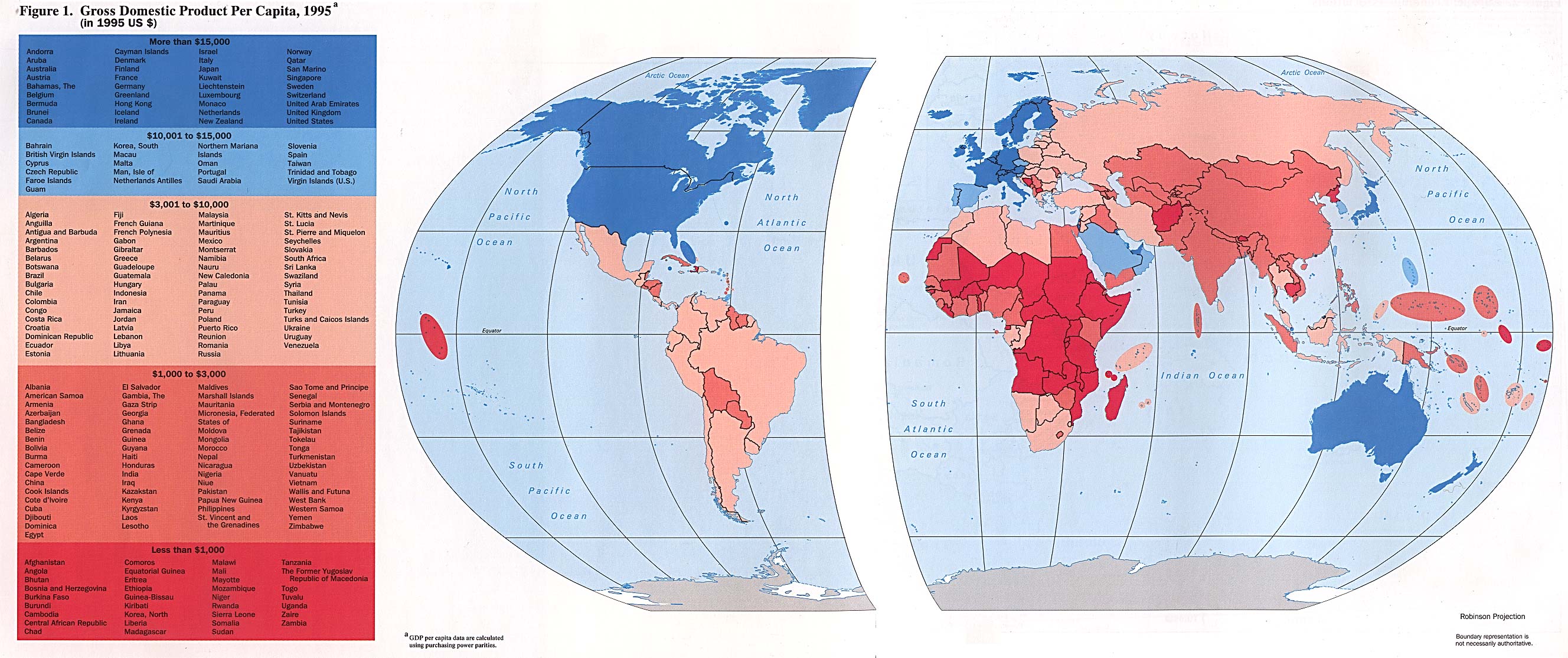
The map above is a look at world poverty by nation. The image below is a graphic look at global electric power production by region and nation. The comparison is stark.
With an abundant and relatively inexpensive source of energy, the Earth could comfortably support ten times the current human population of Earth -- living in health and prosperity. But such a large population would want to utilise the third dimension for both living and agricultural space. If they had the energy, it would be simple.

The political left, of course, is taking the opposite tack of energy starvation. Choking off energy supplies will force a rapid and drastic population shrinkage across the third world -- via famine, sickness, war -- and across the developed world via a further dropping of already-low birthrates.

It is clear that Mr. Obama is taking the low road of energy starvation at this particular crossroads. It is the easy and mindless choice, thus it is the one he chooses.

The best choice is to breed a tougher breed of human -- a pioneer breed who is eager to take up the challenge of the vast spaces beyond the current limits of human habitation and expansion. More on that topic later.

Labels: , ,

Bookmark and Share

29 June 2010

Silver Is Likely to Multiply In Value Faster than Gold


Half of silver demand, or 435.1 million ounces, goes into industrial applications including electrical conductors, alloys, solar panels and batteries, according to GFMS Ltd., which compiles reports for The Silver Institute, a Washington-based industry group. That compares with 12 million ounces for gold, 3.85 million ounces for platinum and 6.19 million ounces for palladium. Industrial demand for silver will gain 14 percent in 2010, the most since at least 1988, Barclays estimates.

...Solar-panel installations may jump 44 percent this year to about 33 billion watts of capacity.....Crystalline silicon solar panels use as much as 0.12 gram of silver per watt of capacity. The metal accounts for about 35 percent of a silver- oxide battery and as much as 40 grams of silver are used in a 32-inch plasma TV screen, VM Group estimates. _BW

Silver has many more industrial uses than gold, but is also widely seen as valuable in itself -- as a form of wealth, or money. Silver's value at this time is historically rather low, compared to gold. If economic times turn difficult -- as they easily could at a time when the world hegemon is ruled by an unprecedentedly incompetent government -- silver's innate value as money would probably push its cost well past doubling, approaching a quadrupling.
Doubling as a store of value for buyers concerned about the economy and as an industrial material for those bullish on growth, silver is outperforming metals from copper to zinc this year and keeping pace with gold...."Silver is really attractive because you have strong investment demand and strong fabrication demand," said Jeffrey M. Christian, the managing director of CPM Group, a research company in New York...."You buy gold when you think the world is going to hell in a handbasket. You buy copper when the economy is booming. In between those two, if you're a bit confused, you buy silver."

The metal, used to create the first telegraph messages, rose 9.5 percent since the end of March, heading for a sixth quarterly advance. That's the best streak since 11 consecutive quarters through the beginning of 1980, a year after the Hunt brothers tried to corner the market.

While gold reached a record $1,265.30 an ounce on June 21, silver would have to more than double to get to the all-time high of $50.35 reached in New York in 1980. Silver rose 13 percent this year in London, gold added 14 percent and the London Metal Exchange Index of six industrial metals fell 9.2 percent. _SFGate
If paper currencies lose their value any more quickly than at present, a return to hard currencies is likely. If not in official markets, then in grey and black markets that are likely to spring up in ever more visible locations. Gold, silver, and copper would be used as money, but other things such as prescription drugs, common ammunition, and culinary substances such as salt and spices may all find themselves put to use as makeshift currencies. Barter is also likely to grow in popularity -- assuming a person has anything of value to trade.
....gold is rising due to the instability of the global financial system. Gold is money, and as the ultimate global currency and store of value, the yellow metal is regaining its place in history as a trusted reserve currency.

But throughout history, gold has not been the only monetary metal. Silver has always played a role alongside gold. In fact, up until the beginning of the 20th Century, more people used silver as money than they did gold. _GoldNews
It is a shame what governments have done to money, in their utter greed for dominance and power. People who are capable of thinking these things through will need to decide when to stop playing along.

In good times you want to grow your wealth. In bad times, the best that you can often do is just to hold on to it.

Labels: , ,

Bookmark and Share

14 January 2010

Why is Haiti So Poor?

Map of Haiti before the recent tragic earthquake. The huge loss of life, and the ongoing monumental humanitarian relief effort have focused the eyes of the world onto the small, perennially impoverished and unstable island nation.

Tyler Cowen asks the second-most asked question in the world:  Why is Haiti so poor?   Tyler then provides 8 hypothetical reasons for Haitian poverty, but confesses that he is not satisfied by them.   But his commenters proceed to fill Tyler in on the real reasons -- from American colonialism to voodoo religion to deforestation etc etc.  The most intelligent commenter suggested that Haiti was so poor because the average income was too low!  No doubt an Ivy League MBA with a law degree, working for the government or the UN.

A few commenters timidly suggested that perhaps something intrinsic to Haitians themselves contributed to poverty in Haiti, but the idea was dimissed as being "beyond the pale."  

The average IQ of the Caribbean nations' populations is close to 75.   According to Wikipedia, the average IQ of Jamaicans is 72. The GDP of nations correlates very will with the average IQ -- so much so, that only educated fools could go on and on in comments about the poverty of a nation such as Haiti without seriously discussing the average IQ (and other heritable factors).

Haiti has been violently independent since its inception as a nation of self-liberated slaves from West Africa. Independent except when it comes to foreign aid and foreign weapons to the ruling classes, and other militant groups. Haitian immigrants have contributed significant crime to New York City, Boston, Quebec, and other parts of North America -- but little else.

So why is Haiti so poor? Who in their right minds could imagine an independent Haiti as anything else -- this side of the singularity and the nanotech revolution? Read the comments at the top link, and consider the extravagance of so many wasted educations.
Labels: ,

Bookmark and Share

17 December 2009

Final Score: Singapore 103 Jamaica 72


Image Source
IQ score, that is. An average difference of 31 IQ points between residents of Singapore and residents of Jamaica. A difference of two full standard deviations. So. When comparing the economic output of Jamaicans with Singaporians, you might expect that the IQ difference would play a role. You might if you were intelligent yourself. But if you were a journalist constrained by mainstream rules of political correctness, you might be smarter to play dumb. (via OneSTDV)
.....we can contrast Jamaica and Singapore. Both are relatively tiny states, with under 5 million residents apiece. Upon Singapore’s independence in 1965—three years after Jamaica’s own establishment as a nation—the two nations were about equal in wealth: the gross domestic product (in 2006 U.S. dollars) was $2,850 per person in Jamaica, slightly higher than Singapore’s $2,650. Both nations had a centrally located port, a tradition of British colonial rule, and governments with a strong capitalist orientation. (Jamaica, in addition, had plentiful natural resources and a robust tourist industry.) But four decades later, their standing was dramatically different: Singapore had climbed to a per capita GDP of $31,400 (2006 data, in current dollars), while Jamaica’s figure was only $4,800.
What accounts for the amazing difference in growth rates? _Jamaica vs. Singapore_via OneSTDV
The article makes some good points about the importance of enlightened governmental economic policy toward private enterprise and entrepreneurial activity. That is certainly a factor, but since the per capita GDP of Singapore is 6 times the per capita GDP of Jamaica, it is likely that more than one explanation can fit the data.

When looking at IQ vs the wealth of nations, it becomes clear that the average population IQ of a nation can be an important co-determinant of national economic output. Starting at an IQ of 70, every 10 point rise in average IQ might add as much as or more than $10,000 to a nations' per capita GDP -- assuming a relatively business-friendly government.

A high IQ country can lose its high per capita GDP by letting its average population IQ drop.  Consider immigration:
While the vast majority of young adult children of immigrants experience upward economic and social mobility, a new study finds that a significant minority are suffering from lower levels of education, lower incomes, higher birth rates and higher levels of incarceration. Furthermore, it is the U.S.-born children of Mexican, Haitian and West Indian immigrants who experience these problems in the largest proportions.


The study, led by sociologists Rubén G. Rumbaut of UC Irvine and Alejandro Portes of Princeton University, appears online this week in the Migration Information Source. The largest and longest-running study of children of immigrants yet conducted....


Differences in arrest and incarceration rates are also noteworthy, particularly among second-generation, U.S.-born, males. While only 10 percent of second-generation immigrant males in the survey had been incarcerated, that figure jumped to 20 percent among West Indian and Mexican American youths. _Eurekalert_via_HBDBooks
If a country encourages immigration of low IQ populations with high fertility rates -- particularly when the higher IQ native population has very low fertility rates -- the overall population average IQ will tend to decrease. Poverty, crime, and civil turmoil tend to increase.

Political correctness is the opiate of the masses, in this situation. Just pretend the problem does not exist. The problem will not go away, of course. It will certainly grow worse. But at least you can feel self-righteous on the way down.

Labels: ,

Bookmark and Share

24 October 2009

More Information on NOS1 Gene Variant & IQ


The study which was an international collaboration with researchers from the Universities of Cardiff and Munich, was led by TCD researchers Dr Gary Donohoe, Dr Aiden Corvin, Dr Derek Morris, and Professor Michael Gill of the NRG and Department of Psychiatry, TCD and funded by Science Foundation Ireland. __InSciences
Scientists have known that human intelligence is between 50% and 80% heritable. The difficulty has been in identifying the multiple gene variants accounting for differences in cognitive potential. If this particular NOS1 variant can be proven to account for as much as 5 IQ points difference in IQ, it is likely that other gene variants will be shown to contribute to significant IQ differences.
Commenting on these findings Dr Gary Donohoe said: “Although the genetics of human intelligence has been more widely studied than any other human trait, pinning down the specific molecular variants involved has been slow, probably due to the complexity of IQ and the large number of variants involved. While further studies will be required to determine the true size of NOS1’s effect on human cognition, these data support the view that some genes may affect both cognition and risk for psychiatric illness. This is important not just for understanding the biological basis for cognition and psychiatric illness but also for developing new treatment targets for these disorders.” _InSciences
Single genes are not the holy grail for cognitive geneticists. It is the genetic interaction of multiple genes working together which will eventually be shown to cause persistent and significant population group differences in IQ.
Objective To investigate whether a potential schizophrenia risk single-nucleotide polymorphism (rs6490121) identified in a recent genome-wide association study negatively influences cognition in patients with schizophrenia and healthy control subjects.


Design A comparison of both cases and controls grouped according to NOS1 genotype (GG vs AG vs AA) on selected measures of cognition in 2 independent samples. We tested for association between NOS1 rs6490121 and cognitive functions known to be impaired in schizophrenia (IQ, episodic memory, working memory, and attentional control) in an Irish sample. We then sought to replicate the significant results in a German sample.


Setting Unrelated patients from general adult psychiatric inpatient and outpatient services and unrelated healthy volunteers from the general population were ascertained.


Participants Patients with DSM-IV–diagnosed schizophrenia and healthy control subjects from independent samples of Irish (cases, n = 349; controls, n = 230) and German (cases, n = 232; controls, n = 1344) nationality.


Results A main effect of NOS1 genotype on verbal IQ and working memory was observed in the Irish sample where the homozygous carriers of the schizophrenia risk G allele performed poorly compared with the other genotype groups. These findings were replicated in the German sample, again with the GG genotype carriers performing below other genotype groups. Post hoc analysis of additional IQ measures (full-scale and performance IQ) in the German sample revealed that NOS1 GG carriers underperformed on these measures also.


Conclusions NOS1 is associated with clinically significant variation in cognition. Whether this is a mechanism by which schizophrenia risk is increased (eg, via an influence on cognitive reserve) is yet to be confirmed. _ArchGenPsych
It is important to point out that persons homozygous for NOS1 G allele (GG) tested lower on verbal IQ and working memory. In the future it is likely that gene variants -- or combinations of multiple gene variants -- will be found to confer positive cognitive benefits compared to controls.

As soon as the larger picture of cognitive genetics becomes clearer, potential  genetic therapies to improve cognitive functioning should be developed. It is likely that such therapies would be more effective if implemented as early as possible in brain development, but perhaps not. The magnitude of improvement in cognition for adult brains may well make gene therapies worthwhile in the future.

The only road to true cognitive egalitarianism is to better understand cognitive differences. As soon as we sweep away all the PC crap, that task can be carried out more expeditiously.

Labels: , ,

Bookmark and Share

05 March 2009

IQ and the Science of Nations

CarpeDiem
We are accustomed to making the correlation between the average IQ of a population and its GDP. We also understand that nations with low average IQs can often "make-do" if it has a smart fraction, or market dominant minority.
Wikipedia
So it makes sense that other national characteristics besides wealth would track the average population IQ. Spiegel offers an example in a recent article that looks at genetic modification of crops as a possible answer to world hunger.
Spiegel
The map accompanying the article points to the parts of the world where the most progress is being made in the genetics revolution. Not coincidentally, genetics "hotspots" correlate with the countries with highest population IQ in the maps above.

As long as you understand that oppressive states such as North Korea and Russia will be outliers -- due to the suppressive effects on free inquiry of tyrannical governments -- you can take virtually any area of cutting edge science and create a similar map.

IQ is important. It is important between countries and within countries. It is important between families and within families. The only other brain metric more important than IQ, is executive function (EF). EF plays a greater role in personal success than IQ, although both are important if one wants to be on the cutting edge.

Of course if you are powerful enough, you can be wealthy without having a high IQ. The leaders of third world nations possessing vast mineral wealth may be more intelligent than the average citizen of their countries, but still have IQs under 100. A few leaders of the oil/gas and mineral-rich nations of Africa, the Middle East, and Latin America come to mind.

What about BH Obama? What is his IQ? No one knows. His grades and test scores have been sealed for his protection. But if Obama ever wants to dispell common rumours concerning his low intelligence, and publicly take an IQ test, scoring as well as he can, he should look over "How to Score Above Average in IQ Tests". It might help. Obama's IQ is likely higher than that of his wife, but that isn't saying very much. ;-)

Labels: , , , ,

Bookmark and Share

09 September 2008

The Wealth of Nations

Why are some nations rich and some poor? From Adam Smith to Jared Diamond, authors have tried to explain the discrepancy. Now Gregory Clark takes his turn--with a new book, A Farewell to Alms: A Brief Economic History of the World, to explain the difference that makes a difference in the wealth and poverty of nations. The following excerpts of a review of Clark's book provide a small glimpse into the ambitious work:
In this quantitative, long-term economic history, Clark seemingly rejects the ‘institutional development theory.’ ‘Despite the dominant role that institutions and institutional analysis have played in economics and economic history since the time of Adam Smith,’ he writes, ‘institutions play at best a minor role in the story of the Industrial Revolution told here, and in the account of economic performance since then’ (10). He tells us that ‘economists, and the institutions they inhabit, such as the World Bank and the International Monetary Fund, have adopted a false picture of preindustrial societies, and of the eventual causes of modern growth’ (ix). (2)

Clark writes that institutions alone are not sufficient to trigger a takeoff into economic growth. Indeed, do-gooders such as the Melinda and Bill Gates Foundation, the World Bank, and UN peacekeepers all too easily cause only misery.....Clark attacks the authors of various widely accepted theories about the Industrial Revolution, and indirectly confronts many economic develop-ment theories, including institutional ones. He dismisses theories as varied as Gary Becker’s (that fewer children were being endowed with better human capital), Douglas North’s (that property rights and free markets after the Glorious Revo-lution got modern capitalism going), and Kenneth Pomeranz’s (that scale economies in a big, compact population facilitated modernisation).

....We must acknowledge that not all people are the same when it comes to fulfilling the requirements of modern economic prowess. Many societies around the world today are far behind where western Europeans were in their basic cultural attitudes in the sixteenth century (or the Chinese and Japanese in the early nineteenth). The slapdash work ethic of Indian textile workers is still a hindrance to competitiveness, and complex modern production processes require a more disciplined workforce and social climate than can be found in many parts of the third world. Recently, we were again reminded of the importance of fundamental internal institutions when the Kenyan flower export industry, once extolled as an outstanding African success, collapsed and quickly shifted elsewhere after the outbreak of tribal strife. We must therefore guard against the illusions that all third-world societies will now find it easy to transit from the Malthusian fraternity into the world’s expanding growth league, and that outside aid can do much to produce the all-important cultural changes.

...Clark has taken the magnifying glass to contemporary ‘institutional development theories,’ which have proven fruitful and influential. He shows to my satisfaction that it is naive merely to ‘export’ formal institutions such as property rights legislation, transparency compacts, and democracy to underdeveloped societies. To do so now is almost as unsophisticated as it was fifty years ago to simply send capital goods to ports in less developed countries. What really matters is the populace’s receptiveness to freedom, which is based on deep-seated cultural institutions and attitudes, and which does not grow overnight. By overlooking the cultural foundations of prosperity, development optimists and freedom apostles in Washington and Canberra are wasting resources. Do-gooders who simply offer alms may indeed cause harm if they entrench dependency and a claimant mentality among people trapped in the ‘Malthusian mindset.’ _Source
The last paragraph of the excerpt sums up the basic take-home message from the reviewer's reading of Clark's book. Quite provocative, in the light of conventional wisdom on the topic.

There seems to be at least a grain of truth in most of the "wealth and poverty of nations" hypotheses. Certainly division of labour in modern societies allows a greater productivity. But we must keep in mind that while legal and economic freedoms are important to prosperity, if the underlying society is not "prepared" to use those freedoms constructively and cooperatively, the same political and economic liberalisation that has so helped the Anglosphere to prosper, may be a deadly curse to other societies.

Finally, it is very important to understand that culture and genetics are intimately tied together. For a society to evolve from a "Malthusian" to a "Prosperity" culture, it must have the genetic wherewithal to do so. I suspect that such potential limitations to societal evolution may be more than just a step beyond what today's politically correct, post-modern, faux multi-cultural academics and think tankers are willing to brave.

Labels: , ,

Bookmark and Share

23 January 2008

He Ain't Slow, He Ain't Fast, He Just Half Ass

Russians have a name for it: "Oblomovism". A fictional character from a novel,
"(Oblomov) has inherited property that's decaying because he won't get out of bed to manage it. When the novel appeared, everyone agreed that it defined a pervasive element in the Russian character. A new word was born, Oblomovism."
[from National Post]

Social entropy. Decline from neglect. In Russia, Zimbabwe, Detroit (see photo above), Venezuela. Decay--a winding down of the clock. Just drive down the street of a middle-aged neighborhood, and observe which houses and properties are maintained and which are neglected. Houses which are owned by the resident may be kept better, due to the incentive of maintaining personal or family wealth. Renters have less incentive to maintain a property's value. But even owners, like Oblomov, can "let things go."

Peak Oil enthusiasts predict a massive decay of society when fossil fuels grow too scarce and expensive to use for normal upkeep and support of society. Global Warming acolytes anticipate collapse of society from greenhouse gases. Although both viewpoints lack credibility, forces of societal decay and collapse are still visible on a smaller scale, and subject to spread and acceleration.

Some societies are prospering and some are decaying. Why? Various authors from Adam Smith, to David Landes, to Jared Diamond, to Richard Lynn, to David Warsh have written entire volumes to try to answer the question.

History suggests that in the long run, even the greatest and most powerful societies will decline, and fall into disrepair. Some populations seem to naturally fall into "Oblomovism"--natural decay. Other populations fight against entropy for centuries. Lenin tried to force the "Oblomovism" out of the Russian character, but ultimately failed. Even in decaying societies, pockets of prosperity appear. Even in prospering societies, pockets of poverty stubbornly persist.

Societies are maintained by intricately inter-connected systems of information and material flow. Knowledge and decisions. As modern Japan and Singapore illustrate, information flow is more important than absolute levels of physical resources. Societal trust is important. A healthy society thrives because its people are motivated, capable, free to act, informed, and blessed with minimal resources.

The many "wealth of nations" approaches taken by the authors above, seem to emphasize particular needs of healthy societies--and neglect others.

Natural societal experiments--such as post-colonial experiences, and forced diasporas of market dominant minorities from countries--illustrate the importance of certain population characteristics (Zimbabwe, Uganda, Lebanon ...). The division of nations by two competing systems of government and economy provides another interesting look into administrative requirements of societies (East and West Germany, North and South Korea . . .).

Saudi Arabia--despite its oil wealth--is a society perched on the edge of rapid decline and collapse. The oil emirates of the Persian Gulf have opened much more to the outside, and appear to possess a vitality and potential to outlive the oil era. Arab backwardness will be hard to overcome, but the emirates are trying. If Saudi Arabia reluctantly relaxes its draconian oppression by religious law and cultural inbreeding, it may also experience a renaissance of sorts.

Latter day multiculturalism--rapid growth of unassimilated tribalism--has the potential to destroy a society much more quickly and surely than Peak Oil or Climate Change. Bad government--the destruction of personal incentive by excessive growth of central government--will cut the legs from under a society. Restricting information flow in a society creates dangerous turbulence that will eventually erode the societ's foundations. Corruption that diverts resources from the productive to the unproductive short-circuits a society's innovativeness.

There are too many ways for a society to fall into "Oblomovism," even if the natural, unfettered tendency of the society is to work hard and prosper. From California, to North Korea, to Zimbabwe, to Cuba, to Venezuela . . . bad government suppresses the natural tendency of populations to try to prosper.

Of those who understand these issues, no one is in a position to create the conditions for a society to prosper. Humans need to be smarter, wiser, longer-lived, more experienced, and better balanced emotionally.


Image credit Sweet Juniper via Joanne Jacobs

Labels: , ,

Bookmark and Share

13 January 2008

National Wealth and Poverty In the Age of Knowledge

Richard Lynn and Tatu Vanhanen imply in Intelligence and the Wealth and Poverty of Nations, that nations whose average population IQs were less than 90 IQ points could not prosper in a high technology world. This idea was a clear divergence from Adam Smith's Wealth of Nations concept based on division of labour.Lynn and Vanhanen's ideas appear to be backed up by the graphic above, and by The Smart Fraction Theory of IQ and the Wealth of Nations. Still, as important as human capital is to a nation's wealth, there is more to human capital than a nation's population average IQ.
In Knowledge and the Wealth of Nations, David Warsh puts a new twist on long-standing pillars of economics:
Thus instead of land, labor and capital -- the traditional inputs of economic theory -- it was "people, ideas and things" that mattered, driving technological change and entrepreneurial creativity. "No longer were the advantages of technical superiority to be understood as a case of 'market failure,'" Mr. Warsh writes. "They were part of the rules of the game." Such superiority was by its nature temporary -- i.e., nonmonopolistic. New knowledge constantly trumped old, and the law (rightly) gave ideas only limited property-protection.

More and more, economists came to see that it was knowledge that made the difference in modern societies -- e.g., in software, drugs, industrial processes, biotechnology and other parts of the economy where the upfront costs were large, the payoffs enormous and the benefits widespread. Economists inevitably turned their attention to the institutions or invisible structures -- constitutions, customs, property rights, cultural sentiments (like trust) -- that help to generate knowledge and sustain its effects.

In his admirably compelling account of economic thinking over time -- from Adam Smith to the present day -- Mr. Warsh shows a certain partiality to abstract mathematical theory. He might have given more credit to the thinkers such as Friedrich Hayek, the great philosopher of freedom and opponent of central planning; or to historians such as Joel Mokyr, who has chronicled the effects (as the subtitle of one of his books has it) of "technological creativity and economic progress"; or to popularizers such as George Gilder, who has documented (and celebrated) the role of knowledge in economic growth, especially in our computer age.
Source
If knowledge determines the wealth of nations in the global economy, why does GDP correlate so well with population average IQ (with a few easily explained outliers)? Clearly, knowledge and IQ are highly inter-correlated themselves.

Still, when you look at nations with GDPs well above what would be predicted from average population IQ, an important truth about "knowledge and the wealth of nations" jumps out. Nations that economically outperform their population average IQ have a market dominant minority to thank.
According to Chua, other examples of ethnic market-dominant minorities include Chinese people in Southeast Asia; "whites" in Latin America; Jews in Russia; Croats in the former Yugoslavia; and Ibos, Kikuyus, Tutsis, Indians and Lebanese, among others, in Africa

It is suggested that the USA (and to an extent the Anglosphere, Europe, and Japan) constitutes a global "market dominant minority" in the sense of setting the economic rules, providing the market infrastructure, and militarily protecting the trading routes of the world so the market can function.

An even more intriguing twist to this dynamic: if executive function (EF) is indeed more important to the success of individuals than their IQ, and if EF can be taught (unlike IQ), is it not possible that EF can be taught to entire nations of children, thus increasing the future prosperity of the entire nation? I suspect this possiblity is real.

This concept of a minority providing extensive unacknowledged benefits to the majority can help a larger audience begin to understand how a next level civilisation would benefit the much larger between-levels civilisation with which it would co-exist on the planet. The accelerated outpouring of revolutionary scientific discoveries and technological inventions from a next level civilisation would benefit the between-levels by creating a cleaner, healthier, more affluent environment for everyone.

The same idea holds in principle for a singularity civilisation guided by a "friendly artificial intelligence." The abundance created by a FAI would be there to be enjoyed by the masses, in theory. Even without FAI's, a world where abundant nano-assemblers can efficiently and economically produce essentially unlimited numbers of consumer goods and vital infrastructure, is a world unrecognizable to modern doomseekers of Peak Oil, CAGW, population crisis, and other neo-Malthusian congregations of Luddites.

Labels: , , , , , ,

Bookmark and Share

01 June 2006

Human Stupidity Leads to Poverty--Smarter People Needed

Oscar Wilde said "there is no sin except stupidity." Voltaire said “The only way to comprehend what mathematicians mean by Infinity is to contemplate the extent of human stupidity." Einstein said, “The difference between genius and stupidity is that genius has its limits.” Source.

Poverty and stupidity--like hand and glove. Some countries experience widespread poverty temporarily--postwar Germany, Japan, and South Korea come to mind--then rebound out of poverty when conditions improve. Other countries such as Haiti are always impoverished, regardless of external conditions, opportunities, and internal resources. Then there are countries such as Zimbabwe which were once much better off, but now are among the most impoverished nations on earth. Then there is China, which improved its material circumstances by backing away from its communist command economy.

International investors would be happy to take advantage of low worker wages in these perennially impoverished nations if they could expect a reasonable return on investment. Investors dealing with poor countries expect a certain degree of corruption and graft in dealing with government officials. There will also be problems with political instability, and the ever-present threat of nationalisation of the industry, as occurred recently in Bolivia to the natural gas fields. This type of government behaviour virtually guarantees that investors will stay away.

If, in addition, there is a shortage of trainable workers--if there are not enough people in the potential workforce intelligent enough to learn the skills and technologies involved in the industry--the situation is hopeless. A technological society requires an average population IQ of at least 90 (with 100 being the internationally standardised mean) to maintain itself. If the population average (mean) IQ is less than 90, all attempts to bring the nation as a whole into the modern technological world, are doomed. Consider that a hypothesis, that can be disproved by the presentation of contradictory examples. . . . . . .? . . . . . .?.......

The book IQ and the Wealth of Nations discusses this issue, and makes comparisons of average IQ between different nations. The authors admit that political and economic factors can artificially hold down a nation's wealth, even in the presence of high average IQ. Conversely, in a nation of relatively low average population IQ, an enlightened market economy can raise the nation's wealth above what it would be if the economy were more centrally commanded. Likewise, oppressive and/or unstable political regimes will depress a nation's wealth, even where the population average IQ is average or above.

I consider IQ and the Wealth of Nations to be a starting point for discussion, rather than an authoritative reference and documentary. For example, what happens when maternal and childhood nutrition is improved in an impoverished nation? The average IQ should improve, and in the presence of an enlightened political structure and economy, the wealth of the nation should also improve. This is a worthy goal.

What if after optimising nutrition for mothers and children, significant population IQ average differences remain between nations? Then if it is clear that the nations with lower population average IQs are suffering because of it, the reasons for the differences should be determined and steps taken to improve the intelligence of those nations on the lower end.

Of course, once you go beyond nutritional optimisation in trying to improve intelligence, it is likely that most nations will want to participate in the improving of their citizen's IQ--even those nations that already have average or above average population IQs. In that case, it is more than likely that your intervention will result in even greater inequality of average IQs than were present originally.

You see the problem. An IQ "central command" would be very much like an economic "central command." The unintended consequences might be worse than what you started with. The alternative--a "market approach" to increasing IQ, would result in wealthier nations that already have higher average IQs gaining access to intelligence augmenting technologies before poorer nations, with the technology "trickling down" at a rate slow enough to make most people unhappy. An interesting problem. The consequences from doing nothing may be severe.

I will discuss more on this subject later.

Labels: , , ,

Bookmark and Share

17 February 2006

Poverty, Inequality, Injustice


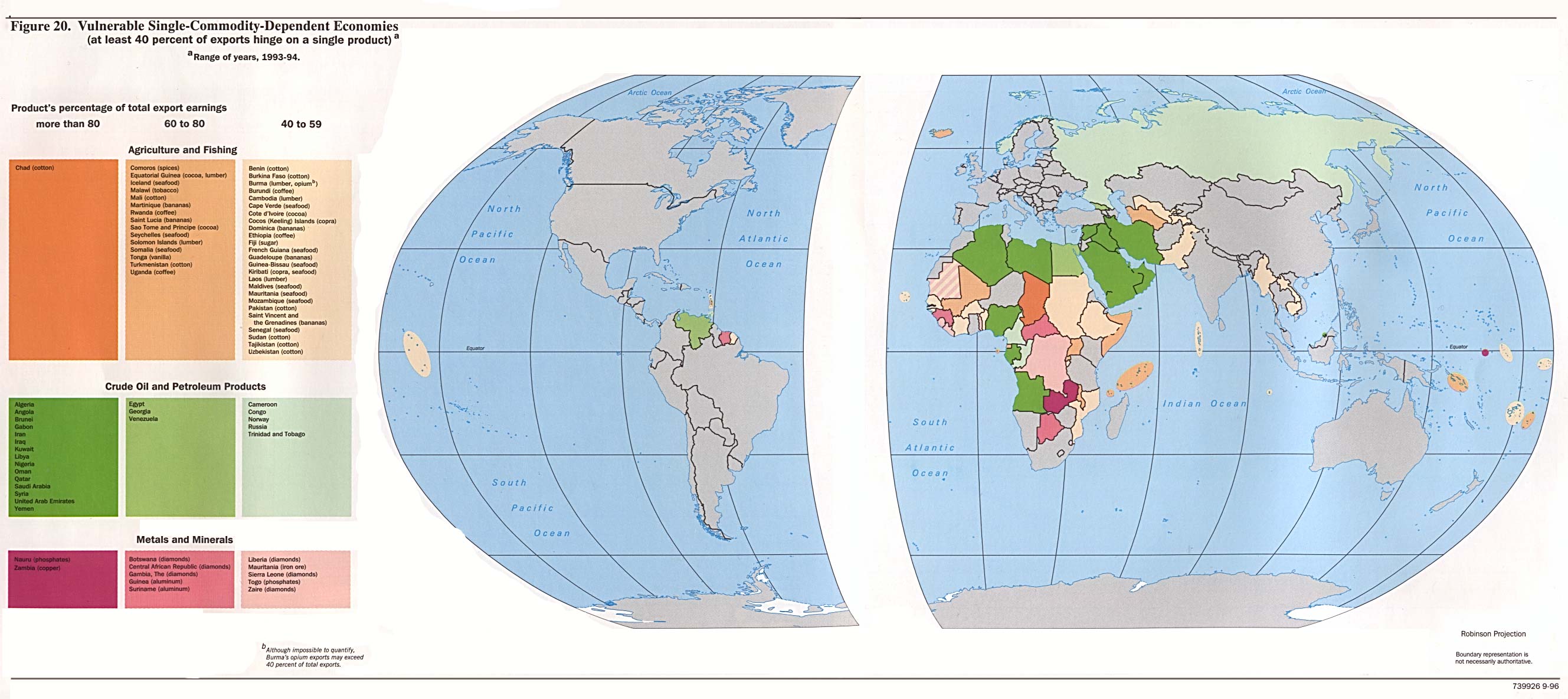
In honor of today's Columbia University symposium on world poverty, I would like to post a few statistically based world maps as visual food for thought. What is the underlying cause of poverty, economic inequality, and human deprivation?
According to the World Council of Churches, poverty is manufactured by capitalism. This is an oft-repeated cliche, dating back to paleo-Marxists of two centuries ago. Should we consider that trite assertion as the end of the matter?
Jared Diamond's book, Guns Germs and Steel, put forward several fascinating explanations for the relative wealth and poverty of the world. The book is quite readable, filled with useful historical details. Certainly if we were still living in the 19th or 20th century, one might consider a few of Diamond's arguments quite strong.
David Landes, in The Wealth and Poverty of Nations, takes another approach. Landes looks at wealth as the result of being able to make the leap to the industrial revolution. He attributes this ability to various cultural features of nations. Many historical and cultural arguments are made to support that attribution.
Jane Jacobs, in her excellent "Cities and the Wealth of Nations", describes the many benefits to a nation of aggregating many people together in cities. She is an excellent proponent of the economic and cultural advantages of cities.

Lynn and Vanhanen's "IQ and the Wealth of Nations" looks at the average IQ found in various nations around the world, and considers how the mean IQ of a nation might influence its ability to "make the leap" to an industrialised economy, or an advanced information economy.

Inequality and poverty are very real, and have a considerable effect on the amount of misery in the world. The above map details the phenomenon of "displaced persons", or refugees.

Previous posts on this blog relating to the current post can be found here, here, here, and here.

I do not expect a lot of results from all the symposia devoted to world poverty. They are attended by plump, tenured individuals from academia, NGOs, governments, United Nations sub-organisations, think tanks, economic institutions, foundations, and occasional rock stars and film celebrities. Their own well-being is assured many times over, so their interest in the actual poverty of others is, well, never mind. They will not affect poverty to any significant degree, but they make themselves feel better about themselves. Lyndon Johnson declared war on poverty in the US. That was in the 1960s.


To affect poverty, one must not only understand the roots of poverty, and have the ability to influence those roots---one must also have the will to swim against the tide, against popular misconceptions, against the fashions and fads of "anti-poverty" movements and facades. The above map of the world by religion might be juxtaposed with the above world maps showing per capita GDP and other statistical parameters of the various nations of the world. Religion is simply a cultural parameter that may influence the overall equation of poverty in a region.

It is one thing for a nation to find itself impoverished at some point in time. If the nation is like Germany, Japan, or Korea, it will be able to rescue itself with some outside help. It requires quite a different approach when a nation, or entire region, is perpetually impoverished and showing no sign of being anything but impoverished, regardless of the amount of aid given to it. That is what the donor nations of the world are facing--but refuse to face. That type of poverty will never be solved unless the root causes are comprehended, acknowledged, and remedied.

Labels: ,

Bookmark and Share
Older Posts
Al Fin Main Page
Enter your Email


Powered by FeedBlitz
Google
WWW AL FIN

Powered by
Blogger

``