17 December 2010

Lipid Fermentation via Engineered Microbes for Bio-Jet Fuel

GCC

The US military's DARPA has awarded Logos technology with a $17.5 million phase 2 award to produce jet fuel from biomass, using microbial lipid fermentation.
This contract is to demonstrate an end-to-end Lipid Fermentation Process (LFP) at scale for the commercially viable production, from cellulosic biomass, of Hydrotreated Renewable Jet (HRJ) spec jet fuel—a near term surrogate for JP-8 that can be readily commercialized.

HRJ is produced from renewable oils (lipids) by methods common in petroleum refining. Fatty acids and triglycerides are hydrotreated to remove oxygen, and the resulting paraffinic hydrocarbons are processed to yield a mixture of straight-chain, branched-chain, and cyclic paraffinic hydrocarbons with collective properties that are similar to those of conventional jet fuel.

Oleaginous yeast can produce lipids from the sugars resulting from the pretreatment and hydrolysis of biomass; certain fungi can also produce lipids, either via solid-state fermentation of biomass or from the biomass hydrolyzate.

This primary program effort is to consist of optimized process development and engineering along with regionally specific economic modeling to produce fuel, demonstrate process energy efficiency and support commercialization.

...This phase of the BioJET program requires the delivery of larger quantities of jet fuel with a projected cost of production of JP-8 at commercial scale implementation (50Mgal/yr) at less than $3.00 per gallon. _GCC
Al Fin bio-synthesists believe that the greatest value of current advanced biofuels research is to put a rough ceiling on future prices of hydrocarbon fuels. Peak oil doomsayers claim that liquid fuels will have no price ceilings when "peak oil" truly hits the fan.

But that claim has already been falsified by the fact that shale gas cost per BTU is well less than half the cost of crude oil per BTU. As efficiencies of conversion from gas to liquids improve, we will see the "price ceiling" effect of shale gas begin to affect markets. Something similar will begin to happen in about ten years, as more efficient biomass to liquids processes begin to scale up.

Like everything associated with energy these days, oil futures markets are heavily politicised, and infiltrated by persons whose behaviour is -- shall we say -- somewhat less than ethical. The fluctuations of oil markets are highly profitable to those who know how to put their fingers on the scale in a reasonably surreptitious manner. But the conversion of alternative and unconventional fuels to liquid hydrocarbons: GTL, CTL, BTL, kerogensTL, BitumensTL, etc etc, provides a multiple bypass to the oil commodities markets. Such alternative routes to fuel makes the work of the energy mafias and faux environmentalists much harder -- unless they can use bribed politicians to stop the alternatives and unconventionals.

Cross-posted to Al Fin Energy

Labels: ,

Bookmark and Share

17 November 2010

Corn Cob Gasoline @ $1 / Gallon? GE Energy Wants In

GCC

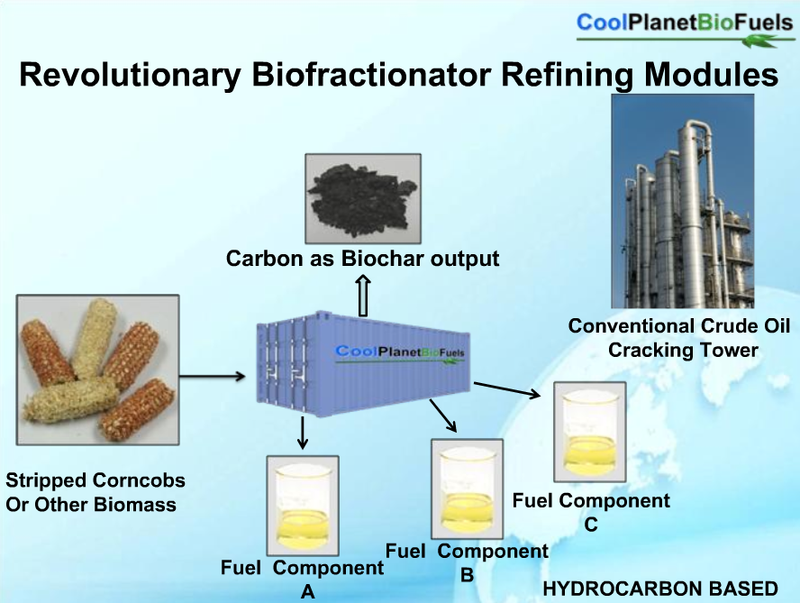
GE Energy, a GE subsidiary, has jumped into the advanced biofuels race by throwing in $8 million with the startup CoolPlanetBiofuels. The startup claims to be able to produce a bio-gasoline from rough biomass for about $1 a gallon. Here is more from GreenCarCongress:
$8-million funding round for CoolPlanetBioFuels, a start-up company developing a technology that converts low-grade biomass into high-grade fuels, including gasoline, and carbon that can be sequestered. This venture capital investment was led by North Bridge Venture Partners, which had also led CoolPlanet’s financing round last year. Additional financial details were not disclosed. CoolPlanet’s research and development facilities are located in Camarillo, CA.

CoolPlanetBioFuels is developing modular thermal/mechanical processors which directly input raw biomass such as woodchips, crop residue, and algae and produces multiple distinct gas streams for catalytic upgrading to conventional fuel components.

In support of the biomass fractionator, the company is also developing a range of one-step catalytic conversion processes which mate with the fractionator’s output gas streams to produce products such as eBTX (high octane gasoline), synthetic diesel and proprietary ultra-high crop yield “super” fuels.

At the GoingGreen Silicon Valley 2010 conference in October, Mike Rocke, CoolPlanetBiofuels VP Business Development, said that the startup could produce carbon-neutral gasoline from biomass for less than $1.00/gallon US.

Biomass throughput time in the biomass fractionator is minutes, Rocke said earlier at a conference at Stanford. Two fractionators in a module can produce one million gallons of gasoline per year, with capex of $0.50/gallon to install—i.e., $0.10/gallon over a five year life. _GCC

The image above shows a comparison of product between conventional Shell 87 octane gasoline and the Cool Planet BioFuels drop-in product from biomass, by gas chromatograph.

Whether the information provided to investors is accurate or not, if the company is able to produce high quality drop-in bio-gasoline from biomass technology already developed, increasing efficiencies and yields, and decreasing costs, may make the product competitive within a matter of 5 or 10 years.

The problem with biomass is its low energy density, and its diffuse nature. It takes a lot of energy to gather biomass together, densify it for transport, and to transport large amounts to a central processing facility such as CoolPlanetBioFuels'. It is clear that those energy costs were not figured into the amounts quoted to investors.

Thermochemical production of biofuels via pyrolysis and gasification have a natural head start on microbial fuels -- due to prior work done on other feedstocks. But if the thermochemical approach is to achieve a foothold -- and critical scale-up -- it cannot dally about while people such as Craig Venter are working feverishly to genetically engineer microbes to achieve the same thing at far lower energy cost.

Cross-posted at Al Fin Energy

Labels: , ,

Bookmark and Share

03 November 2009

Ethanol from Corn Much Better than Expected


Brian Westenhaus presents an optimistic story of corn (maize) ethanol triumphing over environmental obstructionists and academic thumb-suckers. Brian points to an amazing study (PDF) that catches the laggard academic research up to the ambitious reality of farmers and the ethanol industry. In other words, while environmentalists and academics have been sitting on their thumbs, real people in the real world have been accomplishing impressive things. Even Al Fin must gasp in surprise at the improvements in all phases of production of corn ethanol.
The study’s ethanol-to-petroleum output/input ratios ranged from 10:1 to 13:1 but could be increased to 19:1 if farmers adopted high-yield progressive crop and soil management practices, according to the study. Using advanced closed-loop ethanol production technology with anaerobic digestion reduced GHG emissions by 67% and increased the net energy ratio to 2.2, from 1.5 to 1.8 for the most common systems. These numbers are much better than the 1.5:1 so often seen and discounted to below 1:1 by non expert pundits. _NewEnergyAnd Fuel
Corn ethanol production did not reduce food production, since the total corn production increase more than compensated for the diversion of maize to ethanol. In fact, since dried distiller's grains (DDGs) byproduct from the corn ethanol process is used as healthy livestock feed, available food corn (for animals and people) has gone up. Apparently, virtually everything we have read about corn ethanol from pundits, academics, and mainstream journalists is wrong -- because the academics and intellectuals were using outdated data -- they cannot seem to catch up to the nitty-gritty reality of the cutting edge present.

The implications of this new study suggest that the transition to biomass (once cellulosic conversion to sugars is perfected) will be much smoother and productive than anyone predicted.  Since cellulosic crops grow on marginal lands, with minimal watering and cultivation, the energy return from biomass alcohol production should be even greater than for corn.

Read Brian's article and try to understand the growing sophistication of the corn ethanol industry. People in the industry have to make a profit -- unlike politicians, journalists, and thumb-sucking professors. And in the age of Obama - Pelosi, making a profit is becoming ever more difficult.

Cross-posted to Al Fin Energy

Labels: ,

Bookmark and Share

06 October 2009

Halophytes -- a Limitless World of Biomass

* True halophytes are plants that thrive when given water having greater than 0.5% NaCl. A small number of plant lineages have evolved structural, phenological, physiological, and biochemical mechanisms for salt resistance, and true halophytes have evolved convergently in numerous, related families.
* Xerohalophytes are the desert species of halophytes. Desert and coastal halophytes possess the same mechanisms for dealing with salt toxicity and salt stress. Species living in both saline habitats commonly belong to the same phylogenetic lineages.
* There are marine phanerogams (seed-bearing plants) that live completely submerged in seawater. _UCLABotany
Most people have the wrong idea about biofuels and bioenergy. Biofuels do not have to be produced from food, and there are essentially no limits to the surface area that can be devoted to growing biomass for fuels. Biofuels are not a threat to food supplies nor will they encroach upon rich, vital croplands. Biomass can be grown in the desert using salt water for irrigation -- they can even be grown in the ocean itself!
Today, Boeing and UOP announced an initiative, with the Sustainable Aviation Fuel Users Group consortium and the Masdar Institute in Abu Dhabi, to examine the overall potential for sustainable, large-scale production of biofuels made from salicornia bigelovii and saltwater mangroves – plants known as halophytes.

The halophyte study will evaluate aquaculture management and practices, land use and energy requirements and identify any potential adverse ecological or social impacts associated with using halophytes for energy development, specifically for aviation biofuel development. _BiofuelsDigest
The UAE appear to be taking a long-term view of energy needs in the Gulf area. While the UAE is quickly ratcheting up plans to build a fleet of nuclear reactors, they are also looking a other alternatives to dependency on oil -- such as solar and biofuels. Biofuels in a desert, you ask? Why, yes.

The growing of crops, plants, and biomass depends upon water, of course. Part of the UAE biofuels effort will utilise desalinated fresh water. But another large part will be oriented toward halophytes and algae. Salt water and brackish water are much cheaper than desalinated fresh water.

I am not surprised to see Boeing involved in the venture, since there are very few alternatives to liquid hydrocarbon fuels for large airliners and other aircraft of similar size. In the quest for energy from biology, Boeing joins Exxon, Chevron, BP, Shell, Statoil, Dow, DuPont, Petrobras, Bill Gates, and a score of big corporations and investors.

The Persian Gulf area has much more oil yet to be discovered. The region has not been explored for oil nearly to the extent that North America has been explored. But there will come a time when even "easy oil" will find it difficult to compete with alternative forms of energy. That is when Peak Oil will finally occur in a meaningful sense. Peak Oil due to lack of demand.

Cross-posted to Al Fin Energy

Labels: ,

Bookmark and Share

13 April 2009

Robots Will Farm and Log the Future


The six-legged robotic logger featured in the above video is just the beginning of the infiltration of robots into logging and farming. Maintaining healthy forests and healthy crops is a lot of work. Physically demanding and often menial, these chores are almost perfectly designed for a robot's strengths.
The successful development of [agricultural] robots could potentially bring a two-fold advantage to modern agricultural techniques. Firstly, the specificity with which robots work – the ability to deliver nutrients directly to the plant on an as-need basis – could greatly reduce the amount of resources and money spent on crop maintenance. Second, the ability to harvest specialty crops could significantly lower the amount of time and back-breaking labor associated with picking fruits and vegetables

“Agriculture contributes a lot of damage to the land, the soil, the water and environment,” Rus explained. “So if we can figure out a way of using robots and automation to deliver nutrients to plants – pesticides, fertilizers, water when it’s needed – instead of sort of mass spreading them, then we hope we would have an impact on the environment.” _RedOrbit
This development is inevitable, particularly with the coming of biofuels from agricultural and forestry waste. Robots can be perfectly equipped to gather, compress, and otherwise densify agricultural and forestry waste biomass. After preliminary on-site densification, waste biomass can be economically transported to local and regional pre-processing and processing plants for conversion into various forms of portable energy such as torrefied biomass, pyrolysis oils, syngas, biomass cubes and pellets, etc. Or the compacted biomass may be co-fired with coal to produce electricity.

Eveything depends upon the economical collection and densification of the waste biomass on-site. Robots -- perhaps solar-powered robots -- are potentially perfect for the task.

Cross-posted on Al Fin Energy

Labels: , ,

Bookmark and Share

24 March 2009

Turning Cellulose Into Fuels, Plastics, Chemicals

The bio-gateway to abundant energy and wealth was just opened a crack. Cellulose is one of nature's favourite ways of storing solar energy. But human machines and power systems do not run well on cellulose. Naturally, a conversion from cellulose to high density liquid, solid, and gaseous forms of energy storage is vital. But, how to do it? Using clever and efficient enzymes can be a good way, but single enzymes lack the power and versatility to do everything necessary. Hence, the "gang of 15 enzymes" working together.
Researchers at the California Institute of Technology (Caltech) led by Frances H. Arnold, the Dick and Barbara Dickinson Professor of Chemical Engineering and Biochemistry at Caltech, and gene-synthesis company DNA2.0 have developed a new group of 15 highly stable fungal enzyme catalysts that efficiently break down cellulose into sugars at high temperatures for conversion into a variety of renewable fuels and chemicals.

Previously, fewer than 10 such fungal cellobiohydrolase II (CBH II) enzymes were known. In addition to their remarkable stabilities, Arnold’s enzymes degrade cellulose over a wide range of conditions. A paper on the work was published 23 March in the early edition of the Proceedings of the National Academy of Sciences.

This is a really nice demonstration of the power of synthetic biology. You can rapidly generate novel, interesting biological materials in the laboratory, and you don’t have to rely on what you find in nature. We just emailed DNA2.0 sequences based on what we pulled out of a database and our recombination design, and they synthesized the DNA. We never had to go to any organism to get them. We never touched a fungus.
—Dr. Frances Arnold

...Arnold and Caltech postdoctoral scholar Pete Heinzelman created the 15 new enzymes using a process called structure-guided recombination. Using a computer program to design where the genes recombine, the Caltech researchers mated the sequences of three known fungal cellulases to make more than 6,000 progeny sequences that were different from any of the parents, yet encoded proteins with the same structure and cellulose-degradation ability.

By analyzing the enzymes encoded by a small subset of those sequences, the Caltech and DNA2.0 researchers were able to predict which of the more than 6,000 possible new enzymes would be the most stable, especially under higher temperatures (a characteristic called thermostability). _GCC
Very clever. And this is just the beginning.

We are living in a biological world. When we start working with biology to get more of the things we want, we can begin building a veritable cornucopia of riches.

Cross posted to Al Fin Energy

Labels: ,

Bookmark and Share

06 December 2008

Making New Cropland: Salt and Drought Tolerance for the New Age of Biomass

Halophytes grow as quickly as today's agricultural crops, but actually produce higher biomasses. Rozema and Flowers cite the example of Salicomia bigelovii, a species of halophyte that they believe could become an important oilseed crop. Yields of the species are 18 tons per hectare—fifteen times the yield of sunflowers. Such crops could not only be grown in brackish waters, they could also feed the world's growing population. _Source

Biological organisms have colonised most of the land surfaces of Earth, and significant parts of the oceans. Natural selection has accomplished all of that without the help of humans. Halophytic organisms naturally thrive in salty soil and brine. In the coming age of biomass, such organisms should provide for much greater biomass yield, without reducing food crops.
"I'm convinced that saltwater agriculture is going to open up a whole new expanse of land and water for crop production," Glenn said. "Maybe the world hasn't needed a 50 percent expansion in irrigated agricultural land because we've had enough food, but now that biofuels are in the mix, I think it's the way crop production should go."

The world's population has grown by five billion people since 1900 to an astounding 6.7 billion today. Despite the population explosion, food production — primarily animal feed and commodity cereals like wheat and rice — has been able to keep pace. But the food system has been severely stressed by a variety of factors, including the increasing use of arable land to grow energy crops to turn into biofuels.

Even if energy crops didn't cause all or even most of the precipitous rise in food prices in 2007, most social and environmental groups agree that the best location for bioenergy crops would be on currently unusable land. That would ensure that land used to grow food crops in poor countries wasn't converted to growing energy crops to power cars in developed nations. _Wired
Of course energy crops did not cause the temporary rise in food prices over the past year, just like energy crops did not cause the temporary rise in oil prices and other commodities prices. Only idiots, government bureaucrats, UN employees, or environmental organisations are likely to still push that line of argument.

Even so, the emergence of huge new crop growing regions is certainly a very big deal. New research and development in the genetic engineering of new crop species will allow an even greater expansion of useful croplands.

Beyond salt and drought tolerance, we will see new nitrogen-fixing species as well as nitrogen-fixing symbionts that can be grown alongside the actual cash crop. These new crops will not require the expensive fertilisers that are used for most crops. In addition, we will see more frost-tolerant species, much faster growing species, and crops with an enhanced ability to produce oils, sugars, or other desirable chemicals -- even pharmaceuticals.

The new age of biology and biomass should arrive within the next 2 decades. It will probably be 3 or 4 decades before the full impact of the biotech revolution hits the world. In the meantime, the world will need coal, oilsands, oil shale, heavy oils, natural gas, nuclear power, and every other means to produce energy it can find.

A lot of politicians, "environmentalists", and activists and bureaucrats of all types will try to choke off our energy supplies. Understand, their alarmism over climate "tipping points" is void of scientific support. It is the political power of life and death over the masses that they crave. The ability to re-make the world after their impoverished dreams and oppressive fantasies. It is up to the rest of us to be sure these Luddites do not succeed in bringing on a new dark ages.

Labels: ,

Bookmark and Share

03 September 2008

Coal to Liquids: Smart Coal

Coal can be converted to liquids profitably as long as the oil price remains over 80$ a barrel. Brian Westenhaus has an article today on coal-to-liquids (CTL) that looks at some of the details.
The developed world can solve its oil and gas problems with F-T. All the facts and sources are enough to make an oil exporter very nervous, indeed....

...even today with oil coming back to near $100 a barrel the F-T processes can be highly competitive. It’s the carbon and hydrogen available in the feedstocks that make pricing work or not. Coal at $50 a ton, as shown by Sasol can yield 1.25 barrels of oil equivalent, can be worth twice the feedstock price. South Africa found that Sasol profits got so high that excess profit taxes were levied.

In the U.S. several companies have started coal to liquid process experiments that range from pilot plants to commercial installations. The big oil firms like Shell, Exxon and StatoilHydro are already running in South Africa, Malaysia and New Zealand closing in on 60,000 barrels a day of production.

The little guys like American Clean Coal Fuels who is developing a 30,000-barrel per day combined biomass and coal plant in Oakland Illinois uses carbon capture and sequestration to keep the unused CO2 from the atmosphere.

Baard Energy is building a 53,000-barrel per day combined biomass and coal plant in Wellsville Ohio with a market for the excess CO2 headed to oil field enhanced recovery. _NewEnergyandFuel
The CO2 produced can be piped to an algae oil operation conveniently located next to the CTL plant. Biomass can be easily integrated into the gasification and F-T process as well, providing a multi-feedstock, multi-product operation.

Labels: , , ,

Bookmark and Share

21 August 2008

Biomass Is a Versatile Energy Suite

Biomass can be turned into gasoline, into a renewable natural gas, into bio-coal, into ethanol, or directly into electricity. Combined cycle biomass to electricity plants can be 45% efficient generating electricity. Even more efficiency can be achieved by using the waste heat productively.

What is biomass? It is waste wood from forestry, waste stover/straw/bagasse etc. from crops, waste cardboard and paper products, byproducts of paper manufacture etc. Or biomass can be grown specifically for energy production--miscanthus, switchgrass, fast-growing poplar, bamboo, etc. are all being tested for the ability to create a prolific bio-feedstock for conversion to energy.

Biomass energy makes far more sense currently than wind energy schemes. It is suitable as a local or regional enterprise--which means that thousands of small biorefineries and biomass processors and pre-processors will be set up across North America. Biomass is far less dense than most other forms of energy, and must be converted to other forms (pellets, cubes, bales, torrefied, gasified, liquified, etc) for transport or use.

As economies of scale are achieved by the most efficient producers, a significant shakeout of less efficient biorefineries and cellulosic electricity producers will occur over time.

The replacing of fossil fuels by bioenergy will be a gradual process that takes decades, at least. You do not replace a multi-trillion dollar infrastructure overnight. Over the next 40 years, current energy infrastructure will be largely replaced by bioenergy, by new generation nuclear energy, by solar and geothermal heat-to-power, by photovoltaics, possibly by orbiting solar power sats, and not so much by wind.

Al Fin Energy has many other articles and links on this topic and other energy topics.

Labels: ,

Bookmark and Share

23 June 2008

Biomass Gasification On The Move

Biomass gasification to syngas is becoming the most efficient means of turning waste biomass and garbage into electrical energy. In Iraq, portable gasifier/generators will be undergoing field tests by the US military throughout the summer until August. The use of portable on-site gasifier/generators in Iraq should cut down on the military fuel convoys that have been subject to ambush and deadly IED attacks.

In Washington DC, Auburn University students have been demonstrating their own portable gasifier-on-a-trailer system to the public and hopefully to clueless US legislators.
Auburn University is showing off its mobile bioenergy unit in the nation’s capitol this week, converting wood chips into electricity on the back of a truck near the National Mall.

The mobile unit, used to promote awareness of biomass energy technologies, converts wood chips, switchgrass and other agricultural byproducts into gas, which can be used to generate electricity or converted into liquid fuel. __Source
Gasification of waste biomass and garbage creates H2 and CO, or syngas. Syngas, once cleaned, can either be:
  1. burned in gas turbines to generate electricity
  2. fired to create steam--which can then be used to drive steam turbines to generate electricity.
  3. fermented to make alcohols
  4. run through a F-T process with catalysis to make a wide range of hydrocarbons.

The most economical and high yield methods of performing all of the above tasks--and likely others--are being intensively worked out by scientists, engineers, and inventors around the world.

Vinod Khosla is only one of the shrewd financial backers of this particular form of renewable energy. Some of the world's largest oil companies and automobile manufacturers are also jumping on the gasification wagon.

Previously published at Al Fin Energy
H/T Checkbiotech.com

Labels: ,

Bookmark and Share

23 May 2008

Political Peak Oil; Biome Under Seafloor; Roasting Biomass Like Coffee Beans

Politicians in Washington DC have been grandstanding for the camera, to demonstrate their "deep concern" about high oil prices. The only problem with that political posture is that it is the politicians themselves who are directly to blame. We are experiencing political peak oil.
Of natural crude, we have large reserves off the coasts of California and Florida. However, no drilling in these areas has been permitted by law since the late 1960’s. China, however, by using agreements with Cuba to drill in this area, will begin doing so shortly.

America also has additional reserves in the Gulf areas, from Florida to Texas. However, no drilling is permitted in most of these areas. Mexico, however, has no such restrictions.

In Alaska, both onshore and offshore, we have large areas of proven reserves, which are not allowed to be developed by law. Canada has no laws prohibiting such development.

In the mountain Western states, large amounts of oil are available in the shale rock formations. However, EPA regulations prohibit their development.

In the far West, vast areas of tar sands remain undeveloped due to environmental restrictions. As with the geographic areas noted above, most of the land is owned or controlled by the federal government. Canadian use of tar sands is a major source of their oil exports.

The conversion of coal to oil, a technology available for over 100 years, remains another untapped resource, due to legislative and environmental restrictions.

The bottom line is that America could have become energy independent with regard to crude oil by the mid 1980’s. In the area of electricity, the addition of more coal fired generating plants, nuclear power plants, and additional hydro electric plants could have made the need for gas and oil fueled electrical plants unnecessary by 1990. That would have freed up more crude for other purposes, and reduced our overall consumption of oil. In addition, our electrical generation capacity would substantially exceed our present needs, rather than the sporadic shortages we now experience.

Some analysts have estimated that if all of these options had been initiated in the immediate aftermath of the OPEC embargo, crude oil today would have a domestic price of 40-45 dollars per barrel, with secure supplies, and uninfluenced by foreign costs or international speculators. Why didn’t this happen?

It is popular to blame the oil companies, oil cartels, or greedy speculators. But in truth, we are in a bed of our own making. It is not the usual suspects who have passed laws based on bad science, radical environmental lobbies, self interest, political agendas or ignorance of technological advances and free enterprise economics. It is the result of our own government, mainly through the ineptness of Congress. __Source
The biggest comedians on television recently were not David Letterman or Jay Leno. No, the biggest jokers were Senators Barbara Boxer of California and Dick Durbin of Illinois. Maxine Waters, California Representative, was something of the joker herself--promising to socialize nationalize American oil production. Congress is an ass. We knew California was in a self-inflicted energy deprived tailspin. Now Boxer, Waters, Durbin et al want to do the same thing to the entire US.

Of course, we can substitute biomass for much of the oil and coal that we burn. In fact, by roasting the biomass in a manner similar to coffee roasting, we can increase the amount of energy in the biomass--making it burn hotter and cleaner. We can turn waste biomass into gas, and use that gas to fire conventional gas turbines to generate electricity, or convert the gas into liquid fuels to power transportation vehicles such as trucks, farm tractors, heavy equipment, buses, automobiles, ships, and planes.

But the most intriguing news about biomass in the past week comes from studies of the deep ocean floor--bizarre life forms buried deep beneath the ocean floor. In fact, there may be more living biomass buried under the seafloor than in all the plants on Earth's surface.
...the rocks beneath the sea appear to be teeming with life.

John Parkes, a geobiologist at the University of Cardiff, UK, hopes his team's discovery might one day help find life on other planets. He says it might even redefine what we understand as life, and, bizarrely, what we understand by "age".

Parkes has been hunting for deep life for over 20 years. Recently, he and his colleagues examined samples of a mud core extracted from between 860 metres and 1626 metres beneath the sea floor off the coast of Newfoundland.

They found simple organisms known as prokaryotes in every sample. Prokaryotes are organisms that often have just one cell. Their peculiarity is that, unlike any other form of life, their DNA is not neatly packed into a nucleus. __Source
It is too early to say how the under-the-seafloor prokaryotes relate to early life on Earth, or perhaps even life on other planetary bodies in space. Prokaryotes are more primitive than eukaryotes (cells with a nucleus), and given the relatedness of under the seafloor prokaryotes to deep ocean vent prokaryotes, this form of life appears quite ancient.

Life on Earth is ubiquitous. It exists high in the atmosphere, deep under the Earth's surface and seafloor, within its oceans and polar ice, and virtually everywhere on the surface. But as much life as exists already, there is room for orders of magnitude more life. Energy from the sun and the Earth's heat and chemistry is virtually limitless, for human purposes.

As Craig Venter and his merry band of synthetic biologists devise ever newer forms of life, custom-made to serve human needs, we will discover even more ways that life can exist on this planet.

Labels: , , ,

Bookmark and Share

11 May 2008

Energy in Biomass vs. Other Forms

How much energy is contained in dry wood biomass as compared to other forms of energy? Let's take a look:

  1. 1 kg of dry wood contains about 5 kWh of energy
  2. 1 kg of torrefied wood contains about 6 kWh
  3. 1 kg of coal contains about 7 kWh
  4. 1 kg of diesel contains about 12 kWh
  5. 1 cubic meter of natural gas contains about 8 kWh
  6. 1 fully charged 12 V car battery contains about 0.6 kWh
Source
...one of the fundamental properties of biomass is that it is more local than fossil fuels, simply because it is less concentrated with respect to energy. On the other hand – this tends to promote local, small scale, sustainable business in the forest regions of the country. So the use of biomass for energy does not only have a positive impact on the climate issue – it also has a positive impact on the local economy and on the local employment rate. __VXU
Initially, biomass is most logical as a local and regional energy source and cash business/employer. But things are apt to move very quickly as capital and innovation are brought to the bio-energy sector. The main initial obstacle to biomass energy on the local level is the lack of local/regional pre-processing, processing, and bio-refinery infrastructure. As the potential boost to local economies is demonstrated by functioning infrastructure, expect the concept to spread.

Currently, much of the impetus behind ethanol and biodiesel forms of biofuels, comes from the national governmental and inter-governmental guidelines, mandates, and incentives. But such forms of governmental incentive are subject to change--particularly when governments and legislatures are run by incompetent fools, as is typically the case currently.

The more reliable long-term incentive is of course the ability to make a profit based upon sound business practise and efficient industrial engineering. That is the type of incentive that biomass energy provides long term. For example:
Let's focus our energy on the research and development and innovation that allows us to produce a $1-a-gallon fuel. There's no question about it, we can produce it for $1 a gallon and retail it at Wal-Mart for $1.99 a gallon and create a competitor for oil. __SFGate_via_R-Squared
Khosla is referring to cellulosic ethanol, but he may as well be referring to algal biodiesel or Venter's new designed synthetic organisms, or any number of other forms of bio-energy development in the pipeline.

Prices are always high for new technologies. Then as the infrastructure gets built and innovated, customer bases are built, retail outlets sign on, and supply lines are secured, etc. prices come down. But we have to understand roughly what we can expect from bio-energy.

Labels:

Bookmark and Share

04 May 2008

Soft Rot Fungus Wants To Be Your Friend

While it may not seem a likely friend, soft rot fungus produces enzymes that can allow us to more cheaply create fuels from biomass. Trichoderma Reesei has caused the rot of clothing and shelter for generations of military and scientific personnel stationed in the jungle. Now the fungus has the opportunity to make up for its mischief.
In their comparative analysis of T. reesei with other fungi, the team observed clustering of carbohydrate-active enzyme genes, which suggested a specific biological role: polysaccharide degradation. “While plant tissues are not likely the main source of nutrients for T. reesei, upon detection of cellulose and hemicellulose it seems that the organization of these degrading genes may be the key to a rapid response,” said Martinez.

“The sequencing of the Trichoderma reesei genome is a major step towards using renewable feedstocks for the production of fuels and chemicals,” said Joel Cherry, director of research activities in second-generation biofuels for Novozymes, one of the collaborating institutions on the study. “This soft rot fungus serves as the world’s most prodigious producer of cellulases and is already a dominant source of a wide variety of cellulase products for the textile industry worldwide. It is also the organism of choice for producing enzymes for the breakdown of cellulosic biomass to fermentable sugars, which can then be biologically converted to fuels and chemical building blocks. The information contained in its genome will allow us both to better understand how this organism degrades cellulose so efficiently and to understand how it produces the required enzymes so prodigiously. Using this information, it may be possible to improve both of these properties, decreasing the cost of converting cellulosic biomass to fuels and chemicals.” __CheckBiotech
At this time, the most efficient process for converting cellulotic biomass to fuels and chemicals is by way of thermochemical conversion and gasification. But even the most efficient forms of thermochemical conversion depend upon parasitic heat processes which lower the overall efficiency--and thus lower profits--of the process. Scientists hope that by learning to cheaply make and tweak (for efficiency) the best enzymes for the job, they can make the biomass-to-fuels/chemicals transformation just a bit more profitable overall. In the business world, sometimes "just a little bit" more profit means the difference between success and failure.


Such subtleties are no doubt lost upon corrupt politicians and make-work bureaucrats, but we are planning to feed them into the pyrolysis plant anyway. ;-)

Labels:

Bookmark and Share

03 May 2008

Clean Burning Bio-Coal From Torrefaction Processing of Wood and Biomass

Biomass that has been treated by the torrefaction process is very close to coal in energy content, but unlike coal, torrefied biomass is virtually pollution free and smokeless. The torrefaction process is self-sustaining and relatively simple and fast. It creates a biomass derived coal substitute that is virtually pollution-free.
Torrefaction (300-400º C) liberates water, volatile organic compounds (VOC), and hemicellulose (HC) from the cellulose and lignin.
The VOC and HC are combusted to generate process heat.
TW can easily replace coal in combustion or be a feedstock for further pyrolysis or gasification for combined heat and power or Fischer-Tropsch liquids.
The warm lignin acts as a binder when the torrefied wood (TW) is pelletized. __PDFTorrefiedWoodPPT
Torrefied biomass, or biocoal, can be fired along with coal in power plants, or can be used altogether in place of coal in unmodified plants. More on clean biocoal:
1. Very Clean burning
2. Cheaper than coal
3. Very safe for the Environment
4. Only True Solution to Global Warming
5. Green House Gas Neutral
6. Tree plantations clean environment
7. Virtually no water pollution
8. Infinite supply
9. Equal or more BTU’s to coal
10. Low moisture __Source
More on biocoal here.

H/T QiBioenergy

Torrefaction processing of biomass can be seen as a parallel energy path to gasification or other thermochemical processes for turning waste biomass into world-class energy products.

Labels: ,

Bookmark and Share

22 April 2008

Cellulosic Fuels to Come Online 2008-2017

We are just now entering the era of cellulosic fuels, according to a new report from Research and Markets.
  1. - The US biofuel industry especially ethanol production is expected to lead the global production during the forecasted period of 2008-2017.
  2. - Corn is anticipated to dominate the [Ed: near] future ethanol production in the US, however, cellulosic ethanol requirements are expected to boom during the period 2008-2017.
  3. - US biodiesel sector need strong support from the government as well as from technology point of view to sustain growth in future.
  4. - Biodiesel prices in the US are expected to see a declining trend to push up commercial usage during 2008-2015.
  5. - Supply of raw material (corn and soybean oil) will be a major concern for the US biofuel industry in coming years. Source_via_BusinessWire
Here again, we see a mixture of valid conclusion and popular misconception. Biocellulosic alcohols will lead one charge away from "food as feedstock." Biomass to liquids (BTL) will lead another--ultimately much larger--charge away from foods for feedstocks. Biodiesel from algae and non-edible oilseeds such as jatropha, is yet one more important leap from "foods as feedstocks" to foods and food-prices as a non-issue. Cellulosic electricity--substituting biomass for coal in co-generation plants--is yet another way that bioenergy will help to reduce oil costs--and thus reduce food costs.

Zeachem, Coskata, and a number of other small to medium bio-fuel plants will bring cellulosic biofuel product to market starting within the next year. In Europe, Choren is ready to bring BTL biodiesel to market, and looking to expand within North America in the next year.

Biomass, farm waste, agricultural waste, forestry waste, municipal waste, and industrial waste, are all available for making important contributions to the energy supply. It is a matter of making the necessary technological and managerial adjustments that will allow more industries and regions to take advantages of these resources which are currently going to waste.

Labels: , ,

Bookmark and Share

16 April 2008

Attacks on Biofuels Poorly Conceived

The future of bio-energy involves the use of biomass to fuels, not food to fuels. Current demonisation of biofuels as the cause of current high food prices and future famine, is a wasteful diversion of attention from the productive solution of both energy and food price problems. Current higher costs of food is caused by a variety of factors:
  1. High energy prices (which affects production and shipping costs).
  2. Increase in demand from developing countries: “going from 1 meal a day to 2 meals a day” leads to an increase in the amount of food needed.
  3. More meat in diets in developing countries.
  4. Droughts in important growing regions, including Australia and Europe.
  5. Reduced food stocks.
  6. Commodities trading/futures trading: food being used as a financial instrument.
  7. Increased production of biofuels.
_source_[editorial reassortment by order of importance AF]
It is important to understand that all of these factors--in varying degrees--impact upon food prices. Other unlisted factors are even more important to particular regions, such as food being used as a weapon against the people by vindictive governments and officials, civil wars, and other local political factors. Food prices--like all global commodity prices--are subject to multi-factorial fluctuations. When an analyst selects one factor out of many to blame, he is engaging in irrational scapegoating. (This mis-attribution of causes is common among financial analyst commentators in the media. In an attempt to appear omniscient, they instead come across as clueless.)

The use of food crops to make fuel will not last beyond the next few years--so even this minor effect on food prices will be removed.
Now Choren wants to mark the dawn of a new age. The plant in Freiberg uses non-food biomass instead of traditional crops and is the first of its kind to cross the threshold from theoretical research into industrial production. This advanced refinery was designed to furnish proof that the new fuels are feasible - and can be produced on a much larger scale.

Instead of sugar beets and rapeseed, the new plant processes wood as its raw material. In a pinch, it can also use straw. Using these materials significantly increases the yields from cultivated areas. According to estimates provided by the German Agency for Renewable Resources (FNR), the annual energy yields using the Choren process, based on a Central European climate, are 4,000 liters of fuel per hectare (1,057 US gallons), which is up to three times as much as previous biofuel production methods. What’s more, in contrast to production methods using rapeseed oil and ethanol, this technique does not produce fuel of inferior quality. Choren manufactures extremely pure diesel with virtually no sulfur. Moreover, these second generation biofuels do not harm particle filters or engines and meet top emissions standards. __Spiegel__viaCheckBiotech
It appears that the inordinate focus on biofuels--the scapegoating of biofuels--is a terrible distraction and waste of time, when the real problems are crying out for attention.

Intelligent people look for local and regional solutions to both energy scarcity and food scarcity. The misguided tendency to fixate on global solutions to all problems--even if they are local and regional problems--is at the root of many of the disasters caused when the developed world tries to help the undeveloped world. We need a more intelligent approach than most bureaucrats, academics, and journalists are capable of conceiving.

PDF document of images showing available land for crops globally via NewEnergyandFuel

Labels: ,

Bookmark and Share

09 April 2008

You Can Learn to Eat Like a Cow

Have you ever watched cows grazing in the fields and wondered what it would be like to spend your days in a pleasant green field, cogitating. Perhaps you have secretly wished that you, too, could survive by eating grass? Mariam Stickler, PhD, of Michigan State University, has developed a clever technique for genetically engineering plants, that may eventually allow you to eat like a cow and fulfill that secret wish.
Using genes taken from a microbe found in cow stomachs, Mariam Sticklen of Michigan State University, East Lansing, and colleagues were able to grow corn that produces a key enzyme needed to break down cellulose, the fibrous material found in the stalks and leaves of corn.

...The team has been growing the transgenic corn, known as Spartan Corn, since 2005. The first version carried a single enzyme from a microbe found in hot springs and capable of breaking cellulose into large pieces...The second version, Spartan Corn II, which was unveiled in 2007, uses an additional gene found in fungus to produce an enzyme that takes these cellulose pieces and breaks them into pairs of sugar molecules...Spartan Corn III employs both of these prior enzymes as well as a third, beta-glucosidase, from a microbe found in cow stomachs, to separate paired molecules into simple sugars. These sugars can then be readily fermented to make ethanol.

..."The enzymes are locked in the vacuoles until we grind the plants up at the end of their life," says Sticklen, who presented her work on April 8 at a meeting of the American Chemical Society. ___NS
Of course, most people are stuck on the idea of using the cellulose-into-sugar to ferment ethanol. But imagine entire fields of grass, made with this genetic modification. And you, in the middle of that field, chewing, and chewing, and chewing . . . watching the clouds go by . . . seeing automobiles full of people driving along the road . . . and wondering . . .

Labels:

Bookmark and Share

08 April 2008

Biofuels vs. Food: The False Debate

Recent exciting breakthroughs in the direct conversion of grass and wood biomass to liquid biofuels demonstrates the absurdity of much of the "food vs biofuels" debate. As one can easily discover by even a cursory search, biofuels/biomass R&D has progressed light years beyond maize ethanol.

Biomass combined heat and power (CHP), high yield biodiesel from algae and other non-food oil crops, thermochemical production of liquid and gaseous biofuels from waste biomass, and a host of new second and third generation bio-energy projects are moving to production. Newer approaches to non-food bio-energy hold even greater promise for bringing local and regional jobs, productivity, and prosperity.
According to Bruce Date, the ethanol expert of Michigan State University, “we could feed the country’s (America’s) population with 25 million acres of farmland, and currently have 500 million acres. Most of our agricultural land is being used to grow animal feed.” About 76% of the corn consumed in the US is used as animal feed. America exports 20% of its corn. Two-thirds of these corn exports go to 28 OECD countries, where they feed animals.

For every tonne of corn that America exports to one of the 25 countries with the most serious malnutrition problems in the world, it exports 260 tonnes to a wealthy member country of the Organisation for Economic Cooperation and Development (OECD).

Even in the United States, most energy crops are grown on marginal land where no commercial crops are being raised now. Prime acreage is not diverted to the production of bio-fuels.

A lot of research still needs to be done to identify the best raw materials to produce ethanol or other bio-fuels. Corn is far from being the ideal raw material...It is, therefore, important to explore new and more environment-friendly sources such as agricultural waste to manufacture [biofuels]. Some research studies report that pine groves can be an excellent source of [biofuels]. Perennial prairie grasses are considered to be among the best raw materials to manufacture [biofuels] from.

...Above all, the paramount need is to improve agricultural productivity across geographies. Crop yields can be increased through the introduction of technologies such as drip irrigation or through education and training of farmers. If countries like India and China, which have large swathes of agricultural land, can boost their productivity to the levels attained by the developed world, it will significantly mitigate food scarcity while creating enough agricultural elbow room for the cultivation of crops to manufacture green bio-fuels like ethanol or bio-diesel. ___ET
It is time for the debate to catch up to the reality in the labs and in the new bio-energy plants. For reasons of their own, too many analysts are stuck on ten or twenty year old concepts, and unwittingly take sides in an obsolete debate.

Labels: ,

Bookmark and Share

19 March 2008

Regional Strengths, Global Weaknesses: Answers to Outsourcing and Global Energy Strangleholds

Economics is boring. Poverty is even more boring, however. In order for a nation or region to avoid poverty, it must be able to run its industrial base without paying exorbitant energy costs. In the year 2008, the term "energy costs" generally refers to the cost of oil and gas.

It seems that if a country or region is not rich in oil and gas resources, its economy is being held ransom to high energy costs. Most oil and gas is controlled by autocratic and oligarchic governments in control of national oil companies. High oil prices put more money into their corrupt government coffers and private Swiss bank accounts, so it is not in the interest of the oil tyrants to produce more oil and gas--which might cause the value of their underground assets to decrease.

Nations without oil and gas cannot grow healthy economies in current circumstances. In order to strengthen local and regional economies, it is important to match the region's strengths with economic opportunities and needs. Find what your region can produce at a reasonable profit, and look for ways to cleanly and economically develop that resource.North America happens to be particularly blessed by bio-potential. The North American economy is the world's most prolific--in terms of all around research, development, invention, and production--and it also has an abundant potential for vastly more bio-energy production to fuel much of its future growth.

Biomass is particularly suitable for regional development--at the small and intermediate scale. Small and medium sized regional hubs of bio-energy are likely to grow up in areas that are currently relatively impoverished, away from the mega-cities that are becoming increasingly top-heavy and unstable.
We propose a network of regional biomass processing centers (RBPC) to address many of these issues. The RBPC, in its mature form, is conceptualized as a flexible processing facility capable of pre-treating and converting various types of biomass into appropriate feedstocks for a variety of final products such as fuels, chemicals, electricity, animal feeds etc. as shown in Figure 3. It is envisioned that a number of such RBPC will form an extended biomass supply infrastructure feeding into large biomass ethanol refineries and other processing facilities.

Preprocessing is designed to improve biomass handling, transport, storageability, and potentially add value by making biomass more fit for final conversion to fuels, power, and chemicals. Preprocessing includes: cleaning, separating and sorting, chopping, grinding, mixing/blending, moisture control and potentially densifying. In most of existing literature, biorefineries have been typically designed to accept baled biomass and carry out all the preprocessing onsite at the biorefinery, followed by further processing stages of pretreatment, hydrolysis, fermentation, ethanol recovery. (e.g. Wooley et al., 1999; Aden et al., 2002; Hamelinck, 2005). We propose to strip both preprocessing and pretreatment steps out of the biorefinery and carry these out at RBPCs. A number of RBPCs will then supply pre-treated biomass to the biorefinery for further processing. While some prior research has looked at potential small scale on-farm preprocessing of biomass, mainly physical state alteration by chopping and grinding to improve transportability, we propose more advanced preprocessing, which will involve both physical transformation and chemical pre-treatment, in relatively large, intermediate, geographically distributed facilities.

...Distributed preprocessing can potentially reduce overall supply chain costs. Because chopping and grinding carried out prior to pretreatment nearly doubles the bulk density of biomass, a two stage collection system where the raw baled biomass from a smaller collection area is first transported to the RBPC, pretreated into more uniform and denser feedstock, and then transported to the central biorefinery may be less costly. However, actual cost savings are a function of the additional costs of handling the feedstock twice, and spatial distribution of the biomass sources relative to the biorefinery and the transportation infrastructure. RBPCs can also be designed to serve as appropriately designed, intermediate storage facilities that can reduce spoilage and deterioration of biomass compared to open on-farm storage. Further, RBPC locations can be chosen to ensure all weather access, so that the biorefinery can draw uniformly from the inventory at the RBPCs even during winter months. Because of high fixed costs, high capacity utilization is critical for financial success of a biorefinery, and on-field storage can be problematic in areas with poor access during some seasons. Distributed preprocessing can also reduce local environmental impacts of biorefineries, e.g. traffic congestion and associated air quality effects, and odor from stored biomass. Distributed preprocessing facilities can also be designed to receive different local feedstocks and mix them appropriately to deliver uniform quality feedstock in terms of composition, size, density, moisture etc. to the biorefinery. In fact, research has shown that growing a mixture of grasses instead of a single variety of grass may increase the biomass energy yield per acre by as much as 238% (Tilman et al., 2007). _Source__Feasiblity of Regional Biomass Centers__via__QiBioenergy

Looking for small and medium sized opportunities is a smart way for a person to get into business for himself. Bio-energy is a ground floor opportunity for those intelligent enough to perceive the energy future for the next several decades.

North Americans have been well-indoctrinated in the "job mentality", working for someone else, indentured servitude. The idea of stepping out on one's own, of taking the risks involved in working for oneself, causes too many academically lobotomised, psychological neotenates to quake in fear.

For all the high school and college dropouts, who rejected that indoctrination, these opportunities for starting small on the ground floor most definitely exist. Even for the well-established professional or working person, the prospect of hundreds or thousands of these small to medium regional biomass pre-processing and processing centers should suggest some investment opportunities.

It is a different way of looking at the world. Locally, regionally, in a distributed and more accessible manner.

Image Sources: Biomass Processing and Anthonares blog

Labels: , ,

Bookmark and Share

14 March 2008

Energy Where You Least Expect It

Can you really get energy from garbage? From exhaust gases? From forestry and agricultural biowaste? In all the brouhaha about biofuels taking food out of the mouths of babies, who would have the imagination to take a negative such as garbage and exhaust gases, and turn them into a positive such as useful energy? Only intelligent people, which is why you hear so little about the idea in the mainstream media.

Brian Westenhaus at New Energy and Fuel looks at the "pyrolysis reaction," one of several ways of extracting useful energy from waste.
Modern science is exploring and improving on pyrolysis. Scientists know what temperatures yield what products and how time at temperature can affect the product production. The modern goal is to have no oxidized products and yield products that can be made into other products. What is common is to try to yield pyrolysis oil, a complex mixture of oxygenated hydrocarbons that can be refined into most things that crude oil can also be used to make. The advantage is that modern techniques yield liquid products that are much easier to use, easier to transport and can be made into a wide array of products.

The latest technology is in gaseous pyrolysis. Gaseous pyrolysis has been around for well over 100 years when coal was first treated by pyrolysis to make “coal gas” that was piped around to homes and businesses for lighting lamps before electricity became commonplace. Today the target is “syn-gas” or “syngas” and to achieve the highest yield with the least possible liquid and solid products.

Its not all that simple, pyrolysis is a complex reaction and results can be products out of equilibrium with difficult to predict properties. Nevertheless, technology marches on and the control expertise has good results now in managing the process temperatures, the timing, ambient surroundings, and the “contaminates” of oxygen, water and other gases. A pure or consistent feedstock can yield excellent results. Keep in mid that only a very small fraction of the energy locked in the feedstock is all that’s required to make the necessary heat run the pyrolysis.___NewEnergy

Pyrolysis reactions are the subject of intensive research by those who understand the energy revolution that is coming.

Here is more about energy from garbage, and energy from exhaust gases. Even the US military in Iraq is learning to replace diesel generators with trash fueled generators.

For those who are stuck on stupid the mainstream media's perceptions of biofuels, take a quick peak at the different approaches to biomass energy and energy from garbage. No need to do anything as drastic as to change your mind. Just let some new information in, and allow fermentation to occur.
;-)
Image Source

Labels: ,

Bookmark and Share
Older Posts
Al Fin Main Page
Enter your Email


Powered by FeedBlitz
Google
WWW AL FIN

Powered by
Blogger

``