10 July 2006

The Siren Call of Space--Free to Fly

The future of human exploration, development, and recreation in outer space, appears more dependent upon private space launch companies than on NASA, ESA, or other government agencies. Beginning this year, the pace of private space launches and launches of other private space ventures, will begin to pick up. According to Technology Review:
Last week saw the successful launch of the Space Shuttle, but this week may see something far more relevant to the future of space travel: the launch of a prototype piece of a future orbiting hotel. It comes amid an expected flurry of private launches of small, innovative, and reusable rockets that will make 2006 a watershed year for privately financed rockets.

Taken together, these expected launches could usher in an era of relatively inexpensive space travel. "Even as the shuttle sweeps overhead, we have new items on the real road to practical spaceflight -- private market development -- popping up," says Boston-based aerospace engineer and consultant Charles Lurio.

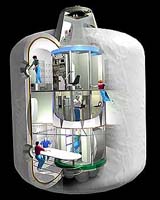
The first of the new companies to launch this year is developing a potential new destination: a hotel in space. Using a design originally conceived as an add-on module for the International Space Station, Las Vegas hotelier Robert Bigelow is planning his first test flight of a subscale version of an inflatable space station module, scheduled to take place by July 14 at a launch pad in Russia. He hopes to have a full-sized orbiting hotel open for tourism by 2012. While some have been skeptical about Bigelow's plans, partly because of his relative secrecy, Lurio says "by all accounts...this is a serious, technically careful project."

But the Bigelow launch is only the first in a series of expected private launches. Some of the loudest roars will be heard this fall in New Mexico, at the X Prize Cup. That's an exposition to showcase developments in new rocket technology, following the 2004 awarding of the $10 million X Prize for private manned rocket launches that reached suborbital altitudes and returned safely. The X Prize Cup will kick off with multiple launches and takeoffs of rocket-powered vehicles.

The Cup will see at least two launches of prototype vertical takeoff, vertical landing rockets that might evolve into a vehicle that could someday land on the moon. These will be made as part of a NASA-sponsored lunar challenge -- a challenge that includes a $2.5 million prize for demonstrating a rocket's ability to take off and land vertically, and move sideways while aloft. Fifty teams have registered for the contest and two are considered almost certain to compete: Armadillo Aerospace of Texas, which was a competitor for the original X Prize, and startup Masten Space Systems of Mojave, CA.

Meanwhile, Space Exploration Corp., or SpaceX, founded by PayPal founder Elon Musk, this October expects to make a second launch attempt of its Falcon 1 rocket, at the Kwajelein Atoll in the Pacific Ocean, after an attempt last spring that failed less than one minute after liftoff (see "Space Tourism or Bust"). When it comes to putting satellites or astronauts into orbit within the next couple of years, as opposed to suborbital flights, SpaceX may be the only real contender.

If the Falcon 1 launch works as expected, the company plans to begin test firings of a much bigger craft, the Falcon 9, as early as this November. Using nine rocket motors identical to the single motor in Falcon 1, the huge rocket could deliver payloads and humans to the International Space Station (ISS), or anywhere else in low Earth orbit. The tests slated for this fall would be static firings -- engine tests while strapped to the launch pad -- but after a series of tests next year, actual commercial flights could begin in 2008, Musk said.

Finally, Virgin Galactic, a partnership between Sir Richard Branson and Burt Rutan -- founder of Scaled Composites, whose SpaceShipOne won the X Prize in 2004 -- is getting close to test flights of a suborbital tourist spaceplane (although Rutan never announces a schedule for his test flights until they happen).
More at Technology Review. Hat tip Keelynet.com.

This is exciting news for space enthusiasts. Some readers may remember watching Neil Armstrong first step onto the moon's surface in 1969. For them, the past few decades must have been very frustrating. Certainly well known writers, scientists, and personalities such as Jerry Pournelle, Larry Niven, Hans Moravec, Eric Drexler, and many others must have been pounding their fists in frustration over the slow progress of space development. Certainly Gerard O'Neill and Robert Heinlein would have been extremely excited to see the uptick in private space activity, had they lived.

Nothing worth doing is without risk, and certainly involvement in outer space will be risky in many ways. Despite the risk, some of the age's most successful entrepreneurs are getting involved. Persons who made billions of dollars from the growth of Microsoft, Amazon.com, Paypal, and other companies, are risking significant chunks of cash on new space launch companies and technologies. These are people who are used to getting things done. Bureaucratic paper shuffling and bowing to Slavic stonewalling are not in their style of doing things.

Humans should not keep all their eggs in one basket. Stray comets and asteroids have destroyed dominant life on earth more than once in the past few billion years. Sooner or later it will happen again. Further away from the sun are materials and life-sustaining volatiles many times the amount of what are present on earth. If humans decide to utilise the resources of their own solar system, many times the population that presently lives on earth could happily inhabit the outer system.

Labels:

Bookmark and Share

09 July 2006

Hydrogen Not Efficient for Energy Storage

The annual fuel cell conference of the European Fuel Cell Forum was held in Lucerne, Switzerland, last week. Much of the sentiment from the conference in regard to hydrogen energy storage was compiled in this Reuters newsreport:

When environmentally friendly wind electricity is used to generate hydrogen, only one-quarter of the energy generated by the wind turbine is eventually used to move a car. The rest is lost during transport and energy conversion, said Ulf Bossel of the European Fuel Cell Forum, which held its annual fuel cell conference in Lucerne, Switzerland, last week.

"With hydrogen energy you only have 25 per cent efficiency to turn wind power to [car] wheel power," he said. It's much more efficient to transport that electricity directly into a car battery, via the grid, and use 90 per cent of its power."

Hydrogen is being discussed at the conference because it is one of the fuels for cells that can generate electricity and heat in an electrochemical conversion.

....Bossel said most renewable energy will be harvested as electricity through wind and solar power and should be used directly.

But he accepted that today's economy is based on fuels and cars will need some liquid fuel for long journeys, rather than recharging batteries every few hundred kilometres.

Even when this liquid energy is made from biomass, it makes sense to turn it into a biodiesel rather than hydrogen, said Wim van Swaaij, professor of thermo-chemical conversion at Netherlands' Twente University.

Biofuels are easy to handle, like today's fuels. Hydrogen, in its pure form, needs to be stored under high pressure which also consumes energy. Biofuels themselves contain hydrogen but in a much more stable form.

"Through steam reforming technology we can turn 40 to 50 per cent of the original fuel content in biomass into biofuel. The percentage is even higher for hydrogen, 50 to 60 per cent, but we will also have to store it and biofuels are the easiest and most efficient way to store it," Van Swaiij said.

The carbon particles in the biofuel will not make a net contribution to heating up the Earth through the greenhouse effect if the fuel is harvested from biomass, because the plants consume carbon dioxide as they grow, Van Swaaij added.

Bossel also said that producing hydrogen, either through electrolysis using nuclear or renewable electricity, or refined from biomass or fossil fuels, requires massive amounts of water. One kilogram of hydrogen requires nine litres of water.

In capitalist countries, the market will decide efficiencies based upon pricing--supply and demand--within the context of government regulation. We should all hope that government does not chase the wild albatross of hydrogen storage too much farther. Eventually nanotechnology and materials technologies may make hydrogen viable, economically. At present it would be smarter to bank on alternatives, such as batteries, supercapacitors, and biofuels such as bio-butanol and biodiesel.

Labels: , ,

Bookmark and Share

08 July 2006

News Media Business as Usual: How to Lie with Opinion Polls

Hat tip to Shrinkwrapped blog for pointing to a NYT newstory based loosely upon a Pew Global Attitudes Project poll.

While the NYT article is titled "Poll Shows Bright View of Muslim Integration", a close study of the graphs in the Pew article about the poll itself suggests a much darker story that could have been written. You have to wonder if the NYT writer ever actually read the poll itself, judgeing from all the happy talk in his story.


These graphs tell a truer and more profound story than the NYT writer was prepared to write. Self-identity can be divided many ways. But anyone who knows muslims personally is surely aware that there was much muslim celebration behind closed doors, on the occasions of 9/11, 7/7, and 3/11. This is one dark side of self-identification that cannot show itself in public. In public there were mainly profuse expressions of concern by muslims that they not all be blamed for the atrocities. (in the old world they came from, they would have been slaughtered, as low status minorities with ties to the religious jihadi mass murderers)

Islamic identity is growing--muslims are not assimilating within modern western nations, but rather simmering in their own broth.


How do muslim immigrants to the west view themselves? Do they relate to old world muslim totalitarian religious life and law, or do they accept the secular rule of law in their new countries? Do they condemn islamic violence and rioting, are are they sympathetic with it?

Muslims in the west are in fact agitating for Islamic Law in western countries? Can you imagine the temerity of mostly uneducated, often on the dole, immigrants demanding their own primitive system of law, in more advanced countries with long established legal traditions?


The true story is hidden within the numbers, and within the methodology of the poll itself. It is also hidden within the dishonest pseudo-virtues of multicultural appeasement by westerners, and the dishonest self-interested fear of reprisal by muslim immigrants. All poll takers must be aware of such things when asking such questions as this.

This is the time of the false truce, or hudna. It is only temporary, just long enough for the faithful to improve their strength, increase their numbers. If the westerners are easily lulled, as under multicultural appeasement, it becomes easier to grow in numbers and capacity to overthrow the established order. Visit the obstetric wards of european hospitals, and look at the majority of names of the newborn children. People who are prolific aim to gain and maintain control. People who choose not to propagate will necessarily cede the territory.

Rejoice, you faithful. Your time is at hand. The rest of you go back to sleep.
Bookmark and Share

06 July 2006

Behaviour Genes: Designer Living

Welcome to a newcomer on my blogroll under Neurosciences, MindBlog. A few days ago, Deric commented on various genes that seem to influence behaviour. Anyone familiar with the twin studies by Bouchard and others should not be surprised by these influential little genes. The names of some of the genes are quite humorous, suggesting that some scientists do indeed have a sense of humour.

INSIG2 - Obesity - A common gene variant that is associated with significantly increased risk of becoming fat among the more than 25 million Americans who carry it. Herbert et al. (2006) "A Common Genetic Variant Associated with Adult and Childhood Obesity". Science 312:279-283.

neuroD2 - Risk-taking - Mice lacking neuroD2 have a greatly reduced sense of fear. Variants of the human version of this gene may lead to risk-taking behaviors. Lin et al. "The dosage of neuroD2 transcription factor regulates amygdala development and emotional learning" Proceedings of the National Academy of Science 41:14877-14882

CYP2A6 - Nicotine Addiction - People with certain forms of this gene smoke more and are more likely to become addicted to cigarettes. Tailoring treatments based on which form of CYP2A6 a person has may help him or her quit. Minematsu et al. (2006) "Limitation of cigarette consumption by CYP2A6*4, *7 and *9 polymorphisms" European Respiratory Journal 27:289-292. Malaiyandi et al. (2006) "Impact of CYP2A6 genotype on pretreatment smoking behavioral and nicotine levels and usage of nicotine replacement therapy". Molecular Psychiatry (2006): 400–409.

AVPR1a and SLC6A4 - Dance talent - Variants of these genes are correlated with creative dance performance. Bachner-Melman et al. "AVPR1a and SLC6A4 Gene Polymorphisms Are Associated with Creative Dance Performance". PLoS Genetics 1(3): e42

DRD2 - Anorexia - Variants of this receptor for the neurotransmitter dopamine have been preliminarily linked to the risk of developing anorexia. Bergen et al. (2005) "Association of Multiple DRD2 Polymorphisms with Anorexia Nervosa" Neuropsychopharmacology 30, 1703-1710.

DRD4 - Sexual desire - Another dopamine receptor gene that is linked in this study with sexual desire and performance. Zion et al. (2006) "Polymorphisms in the dopamine D4 receptor gene (DRD4) contribute to individual differences in human sexual behavior: desire, arousal and sexual function". Molecular Psychiatry (published online ahead of print)

fruitless - Sexual orientation - Male and female fruit flies make different forms of this gene. Males carrying the female gene do not court females. Females carrying the male gene are attracted to other females. Demir and Dickson (2005). "fruitless Splicing Specifies Male Courtship Behavior in Drosophila" Cell 121:785-794.


Go to Deric's article for more information, and links to the original research.

There is always the proviso that single genes do not typically act alone, and a great deal of gene-gene interaction takes place. Even so, it is fascinating to observe the thickening plot in the genetic--environment dance. Blank Slate advocates are finding their support crumbling under their feet.

Labels: ,

Bookmark and Share

04 July 2006

Delayed Maturation: The Neotenous Society Part I

Here is where the trend is taking us: as soon as parents take a newborn home from the hospital, they sign it up for infant-school. From the start, parents drop the infant off at school in the morning and pick it up in the evening, being careful to check its diapers. From birth on, school continues uninterrupted for the little tyke as it progresses through toddler stage, on into traditional K-12 schooling. The high school graduate progresses directly into university, achieving its undergraduate degree (of little value on its own), and progressing to graduate school.

Graduate school can never take too long, so it will be extended over several decades until retirement age. The late middle-aged student will now graduate from school, so as to go directly on retirement pension. Longer lifespans will carry the retiree on for two or three decades of well-pensioned retirement, before mandated euthanasia--to make way for newer generations.

Lifelong students, without any of the unwelcome requirement for employment or risk of running a business. There will be plenty of breaks and vacations to exotic places, as part of the extended curriculum. But no working will be allowed. Society cannot risk allowing these perpetual students cum retirees to shoulder any real responsibility, since nothing in their backgrounds will have prepared them for it.

Immigrants will do whatever work machines cannot do. Immigrants will drive the students to school through K12 and throughout graduate school, until retirement. Then immigrants will drive retirees between places of interest and their retirement homes. All police departments, fire departments, maintenance and custodial services etc. will be staffed by immigrants.

Whenever the immigrants decide to assimilate, they will step into the student/retiree matriculation as well. Students will form unions and agitate for shorter school weeks, and earlier retirement. That is to be expected, and society will do what is necessary to placate the students, since they will be the largest voting block within society.

All military service will be forbidden, since the military is seen as competition for the educational establishment. Any need for military action will be fulfilled by international troops unter international governmental control. Citizens of North America will not need to dirty their hands with that sort of thing. Likewise, religions will be forbidden, as "confusing and unnecessary intrusions into belief systems" that the education department should control.

All students will receive a stipend, which will help pay local and federal taxes to cover immigrant's salaries, as well as international government taxes. All goods and services will be available at the school store, free of charge to students. Students will live in school housing, provided free of charge. Bussing to and from classes is also free. The few married students will be housed separately, close to infant school.

All television, internet sites, magazines and newspapers, will be run by the Education Department, with content carefully selected so as to increase a student's self esteem and willingness to conform to the common good. All medical and dental services will be provided to students and retirees free of charge by immigrant doctors, nurses, dentists, hygienists and assistants.

I have glossed over how the economic system of this brave neotenous society will work. More on that later.

Neotenous Society II
Neotenous Society III

Labels: , , ,

Bookmark and Share

01 July 2006

Other Expectations: Making One's Way

Recent comments from Turtlekill have stimulated me to consider alternative ways in which a person might wish to order his/her life. Both men and women are being shortchanged by current societal expectations.

For women, some evidence suggests that having children at an early age (in her twenties) produces health benefits for both mother and child. But all health concerns aside, is it possible that there is something inherent in the process of raising a very young child that teaches something to a parent that cannot be easily learned any other way? Is it possible that child-raising itself offers benefits to the mother (primarily), that will stand her in good stead in the course of her later career?

I suggest that this is the case, that watching and aiding the physical and mental development of a very small child provides a learning experience that is very profound and very valuable. Such an experience is also frequently very rewarding emotionally, and frequently not regarded as a sacrifice.

A woman trained in human nature by very young professors-in-diapers, can be a formidable judge of character indeed. Often what seems to be missing in trial judges in courts of law, entrepreneurs, and rising executives in enterprise, is that very character judgement. Yet so often professors of feminism discourage young women from having children early, and disparage and criticise women who make such a choice for early child rearing. Perhaps they lack good judgement themselves?

Young men are also putting off marriage and child-rearing later and later in their lives. ( Why should they buy the cow when they can get the milk for free, so to speak?) It is not only the mother who learns from the young child. If the father will pay attention and attend to the child himself, he could also learn a great deal about human nature, and also gain an emotional reward.

Education

It is expected that children of college educated parents will also go to college, and beyond. In fact, it is desired, "societally", that most youth should graduate from high school and go on to graduate from college. But is that the best plan for the youth, and for "society?"

With the internet (and before that with public libraries), virtually everyone can have the knowledge base and erudition of the college educated, regardless of their formal educational attainment--as long as they can read and learn to operate a computer. With faster connection speeds and more advanced interfaces, virtually any type of knowledge or skill will be available over the net.

The lack of a college degree did not keep some of the most famous billionaires and tycoons from achieving their wealth. In a large part of the world, it is still a person's capacity to achieve that counts, rather than the degrees behind the name. Children and youth need to learn real world skills, and problem-solving skills well enough that they acquire justified confidence in their ability to make their way in the world. A college degree is no substitute for confidence based upon achievement.

Unfortunately, the educational system in the west is devised to deny children and youth the opportunity to achieve anything meaningful. This is because the people who devise and revise the educational system do not have real-world skills themselves, so fail to see any value in them. Educated idiots, is the cruel but accurate description for a large proportion of university professors and professors of education. How are these educated idiots going to help students to acquire necessary skills that the idiots do not even recognise as important?

University of Minnesota scholars Harkins and Moravec have put forward a bold plan for making universities relevant again. Their Leapfrog University proposal is a hopeful and reasonable approach to making universities a fertile bed for growing solutions to societies problems.

But not everyone, not even most, perhaps, should go to university. A university education is no guarantee of success or competence. The more society tries to force everyone to get a college degree, the less value the certificate seems to have. Then you need a masters, a doctorate, a post-doc, a post-post-doctoral fellowship, and so on, to distinguish yourself academically.

But in the real world, it is competence that counts. Competence and confidence that is based upon competence. One alternative to college for young men (and recently for young women) has always been military service. Many young people go into the military uncertain and unskilled, and come out with job competencies that in civilian life might have taken much longer to acquire.

In an opportunity society, it is entrepreneurs and independent businesspeople who have the greatest potential for economic growth. In the independent business world, you do not generally need a degree if you have the competence. This is more true in the trades, in businesses that service the large businesses, and in new pioneer industries, where rigour mortis has not set in, as it has in the professions.

An intelligent high school dropout can still apprentice in a trade, learn the business, then strike out on his/her own. If able to out-compete, the dropout can grow a new business to an impressive size, and either cash it in or move to a supervisory and planning role and live on the proceeds. Not bad for a dropout. Better to have the degree, perhaps, but there are ways to compensate if people are open to them.

How many people have internalised the attitude of "failure" or "loser" because of the limited and overly critical attitude of many in society toward educational and professional achievement? How many of these go on to become failures, losers, drunks, junkies, etc. because of this subconscious internalisation of society's attitudes? What might they have contributed if they had been given all their options when they were young?

But how could they, when there is such prejudice against alternative orderings of one's life? When their teachers themselves serve merely as conformist enforcers for the larger society?

These are very interesting things to consider. Do not for a moment believe that this blog has seen the last of speculations on this topic.
:-)

Labels: , ,

Bookmark and Share

30 June 2006

More Realistic Virtual Humans

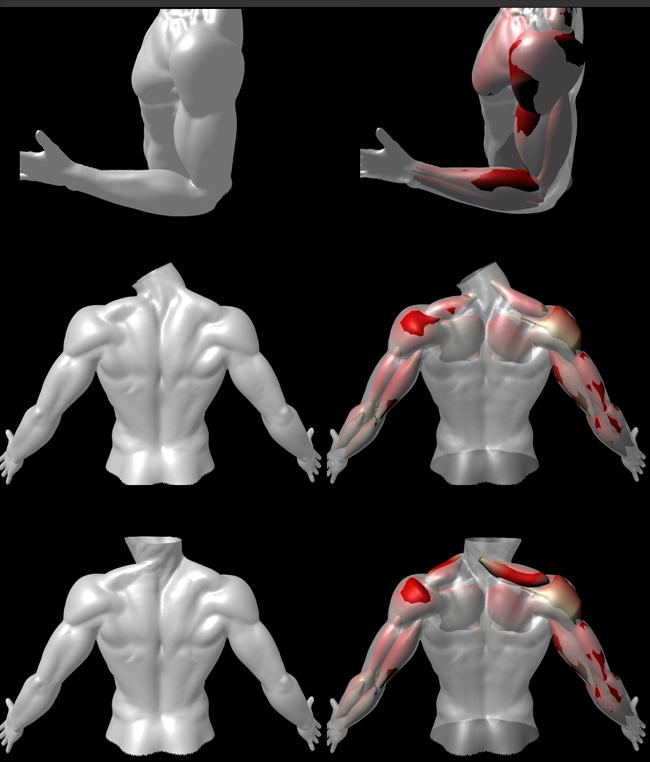
Researchers at the National Center for Computer Animation have devised a computer program that automatically adds realistic muscle shape to simple wire frame and skeletal figures. These virtual muscles will move and change shape realistically, under skin and clothing, when the figures are animated. From the NewScientist article:

Zhang and his colleague Xiaosong Yang have developed a system that takes the outward appearance of a character and automatically generates a skeleton and muscles to fit inside.

"It works by using geometric processing of the still character to determine where muscles should go," he told New Scientist. "If there's an important muscle it will show through the skin so the tool can infer where the major muscles should be."

The software guesses at a suitable skeleton to attach the muscles to by adapting a standard humanoid skeleton to fit the character's overall shape. With skeleton, muscles and skin all in place, the character can be made to move in more realistic ways.

The software simulates how the muscles affect the outward appearance as they contract, relax and slide in relation to joints and other muscles.
Other mammals

"Our method could also be applied to characters based on other mammals," says Zhang. As long as the basic shape of an animal's skeleton is known and the skin is designed, it would work just as well, he says.

But the team first plans to improve the technique's accuracy in generating human-like characters. "We plan to add detailed knowledge of the human anatomy," he explains. "We hope to be able to take a character and fit a very accurate anatomy to it."

This could even have medical applications, says Zhang, allowing doctors to infer the biomechanics of a patient's anatomy from their outer appearance.


Initially you will see this approach used in computer gaming and entertainment animations. Then you will see this improved realism utilised in virtual reality programming, such as virtual surgery tutorials, and other technical tutorial programming.

Judging by the illustration at the top of the page, it may not be long before Chippendale's creates an animated showcase using virtual male strippers. Virtual female strippers and more erotic virtuality is inevitable, given the money flow.

Labels:

Bookmark and Share

Cancer: The Biological Clock, Apoptosis, and Gene Amplification

Understanding cancer, and how to defeat it, is one of the main goals of western medical research. As people living in western nations live longer lives, they are more likely to confront cancer at some point. Cancer and ageing are closely linked.

This Biocom newsrelease discusses the relationship between the body's biological clock, and cancer:

"The notion that the clock regulates DNA-damage input and that mutation can affect the clock as well as the cell cycle is novel," says Jay Dunlap, professor and chair of genetics at DMS. "It suggests a fundamental connection among circadian timing, cell cycle progress, and potentially the origins of some cancers."

....Recent evidence in mammalian cells shows that other cell cycle regulators physically interact with clock proteins. Loss of at least one clock protein (mammalian period-2) is known to increase cancer susceptibility. The coordination of the clock and cell division through cell cycle checkpoints, supports the clock's "integral role in basic cell biology," conclude the researchers." Their work can help advance understanding of cancer origins as well as the timing of anti-cancer treatment.
Much more at source article.

When DNA damage occurs that could lead to cancerous transformation, cells usually detect the DNA damage, and trigger apoptosis, programmed cell death. Cancerous cells have evolved ways to prevent apoptosis, and their own programmed destruction. This Biocom newsrelease provides more details of how malignant cells obstruct apoptotic cascades, and how science might devise drugs to make cancer cells more vulnerable to treatment:

Researchers at The University of Texas M. D. Anderson Cancer Center have significantly refined the scientific understanding of how a cell begins the process of self-destruction - an advance they say may help in the design of more targeted cancer therapies.

In the June 30 issue of the journal Cell, the research team found that a natural "brake" exists in a cell to prevent it from undergoing apoptosis, or programmed cell death, and they say that optimal anti-cancer therapies should take a two-pronged approach to overriding this brake in order to force a tumor cell to die. Very few drugs do this now, they say.

The discovery "demonstrates that apoptosis is more complicated than had been believed, and consequently harder to achieve," says the study's lead author, Dean G. Tang, Ph.D., associate professor in the Department of Carcinogenesis in the Science Park Research Division of M. D. Anderson in Smithville, Texas.

Apoptosis can occur when a cell has reached its lifespan, and so is "programmed" to die, or is initiated when a cell is damaged beyond repair or infected by a virus. Apoptosis is rare in cancer because tumor cells have adapted biological pathways to circumvent cell death, so many anti-cancer therapies focus on inducing apoptosis in these cells, Tang says.

...."Many cancer drugs focus on pushing the mitochondria to release CC [cytochrome c], and not on reducing the nucleotide pool, and our new model suggests that decreasing this pool is essential to produce sensitivity in cancer cells to apoptosis," Tang says.

Cancers that quickly become resistant to therapy, such as melanoma and ovarian tumors, do so because they have found ways to prevent mitochondria from releasing a lot of CC, he says. Tumor cells also don't want to decrease their nucleotide pool, because they need ATP for continued functioning, he says.

"An optimal cancer therapy should combine both strategies," Tang says. "They should maximize release of CC and maximize the decrease of nucleotide levels."

Some chemotherapy drugs, like paclitaxel, cisplatin and etoposide, appear, coincidentally and perhaps inadvertently, to do both, and are very effective for specific cancers, he says. "But based on these new findings, we now have a new theoretical approach that can be used to help in the design of more targeted chemotherapy drugs," Tang says. "This will change the way that scientists now think about the role of nucleotides in cancer therapy."
Much more detail at source.

Here is another interesting finding about the molecular onset of cancer, from researchers at Georgia Tech:

Gene amplification plays an important role in causing cancers via activation of oncogenes. If scientists can determine the rules as to which segments of genetic material become amplified and how, oncologists and drug researchers may be able to interrupt that process and prevent the formation and growth of some tumors. Using yeast as a model organism, researchers at the Georgia Institute of Technology have discovered that the location of a hairpin-capped break relative to the end of the chromosome will determine the fate of the amplification event

Gene amplification is the increase in copy number of a particular piece of DNA and
is a hallmark of tumor cells. Double minutes are extrachromosomal segments of amplified DNA. Homogeneously staining regions are amplified intrachromosomal segments forming large genomic regions. Some strategies of pharmaceutical research in cancer prevention and treatment could involve curbing cancer development via restricting gene amplification. The first step towards achieving this is to discover the rules that govern whether an amplification event is a double minute or a homogenously-staining region.

It’s known that regions of chromosomes that are prone to amplification have
palindromic sequences of DNA, which are weak places where the chromosome can break. These palindromic sequences can be naturally found in human genome. The distribution of such sequences can vary from one individual to another. Researchers at the Georgia Institute of Technology have discovered that a particular type of DNA break, a hairpin-capped double strand break, induced by these palindromic sequences, is a precursor to amplification.

“We have a developed a system in yeast which would mimic the situation in human cancer cells wherein oncogenes might be located next to palindromic sequences. Using this system we have discovered the rules that determine how double minutes or homogeneously staining regions can be generated,” said Kirill Lobachev, assistant professor in Georgia Tech’s School of Biology.

....The findings can help researchers understand the cause of cancer in diseased individuals and also to potentially identify individuals who might be prone for cancer.
More information and links at the source.

The initiation and maintenance of cancer cells and tumours are complex. Only by understanding how to work within this cellular/molecular complexity will researchers devise better cancer therapies.

Labels:

Bookmark and Share

29 June 2006

Women: Have Your Babies While You are Young--Healthier, Longer Living, More Intelligent Children

This newsreport points to research suggesting that children born to younger mothers tend to live longer:

People are more likely to see their 100th birthday, research hints, if they were born to young mothers.

The age at which a mother gives birth has a major impact on how long her child will live, two researchers from the University of Chicago's Center on Aging told the Chicago Actuarial Association meeting this spring.

The chances of living to the ripe old age of 100 -- and beyond -- nearly double for a child born to a woman before her 25th birthday, Drs. Leonid Gavrilov and Natalia Gavrilova reported. The father's age is less important to longevity, according to their research.
More at source.

This newsrelease from Stanford suggests that if you want your children to be as intelligent as possible, you need to spend a lot of time with them in the early years:

Knudsen's findings about how experiences shape the brain's architecture help explain findings in both rats and monkeys, where early experiences translate directly to how the adults behave and learn. Co-author Judy Cameron, PhD, professor of psychiatry at the Oregon National Primate Research Center, has found that monkeys prevented from forming a strong bond with their mothers as infants go on to be less social, less likely to investigate new situations and more prone to anxiety as adults.

Shonkoff said the animal work has an important parallel in human development. For example, kids who are abused or neglected, whose parents are compromised by drugs, alcohol or depression, who are shuttled among relatives and foster-care placements or who spend long hours in poor-quality child-care programs don't develop the same brain power as kids with happier, more nurturing and stable childhoods. Those kids have less chance of securing skilled jobs when they grow up. They are also more likely to need expensive remedial help in school or-even more costly-rely on public assistance or serve jail time as adults.
More at source.

This letter from Nature looks at some of the differences in brain growth mechanics between children of three different intelligence levels:

Children who are adept at any one of the three academic ‘R’s (reading, writing and arithmetic) tend to be good at the others, and grow into adults who are similarly skilled at diverse intellectually demanding activities1–3. Determining the neuroanatomical
correlates of this relatively stable individual trait of general intelligence has proved difficult, particularly in the rapidly developing brains of children and adolescents. Here we demonstrate that the trajectory of change in the thickness of the cerebral cortex,
rather than cortical thickness itself, is most closely related to level of intelligence. Using a longitudinal design, we find a marked developmental shift from a predominantly negative correlation between intelligence and cortical thickness in early childhood to a
positive correlation in late childhood and beyond. Additionally, level of intelligence is associated with the trajectory of cortical development, primarily in frontal regions implicated in the maturation of intelligent activity4,5. More intelligent children demonstrate a particularly plastic cortex, with an initial accelerated and prolonged phase of cortical increase, which yields to equally vigorous cortical thinning by early adolescence. This study
indicates that the neuroanatomical expression of intelligence in children is dynamic.
Much more at source, with helpful graphs and illustrations. Hat tip Neurolearning Blog and Intelligence Testing blog.

Girls are born with their full complement of eggs. The older the woman, the older and more potentially damaged are the remaining eggs. Older women run higher risks of producing chromosomally damaged infants, or of simply being incapable of becoming pregnant.

Young women who intend having children should consider having them while they are in their twenties. Better to have children when you are young and strong and able to keep up with the little dynamos. Once they are well into school years, you can put most of your energies into your career, without worrying about the biological clock.

In addition, younger women possess greater attractiveness to potential fathers, evolutionarily speaking. If a woman waits for marriage and family until she is firmly established in her career, in her late thirties or early forties, her ability to attract the type of man she may wish as the father of her children will be diminished by the natural effects of time and life's stress. You may think an older woman can better choose a good father, given her greater experience, but in this situation the diminished choice can easily balance the greater wisdom of age.

Being politically incorrect is an enormous pleasure, an exhilarating luxury given to the self-employed.
:-)
Bookmark and Share

28 June 2006

Cooling the Earth: Mitigating Global Warming While Avoiding the Next Ice Age

There is a lot of recent interest in methods of cooling earth's climate, by reducing CO2 in the air, and other more direct means. The image above pictures an array of high-tech CO2 sequestrators, made to suck CO2 directly out of the air.

This NY Times article presents even more outlandish ways of cooling the earth:

The plans and proposed studies are part of a controversial field known as geoengineering, which means rearranging the earth's environment on a large scale to suit human needs and promote habitability. Dr. Cicerone, an atmospheric chemist, will detail his arguments in favor of geoengineering studies in the August issue of the journal Climatic Change.

....Geoengineering is no magic bullet, Dr. Cicerone said. But done correctly, he added, it will act like an insurance policy if the world one day faces a crisis of overheating, with repercussions like melting icecaps, droughts, famines, rising sea levels and coastal flooding.

....The study of futuristic countermeasures began quietly in the 1960's, as scientists theorized that global warming caused by human-generated emissions might one day pose a serious threat. But little happened until the 1980's, when global temperatures started to rise.

Some scientists noted that the earth reflected about 30 percent of incoming sunlight back into space and absorbed the rest. Slight increases of reflectivity, they reasoned, could easily counteract heat-trapping gases, thereby cooling the planet.

Dr. Broecker of Columbia proposed doing so by lacing the stratosphere with tons of sulfur dioxide, as erupting volcanoes occasionally do. The injections, he calculated in the 80's, would require a fleet of hundreds of jumbo jets and, as a byproduct, would increase acid rain.

By 1997, such futuristic visions found a prominent advocate in Edward Teller, a main inventor of the hydrogen bomb. "Injecting sunlight-scattering particles into the stratosphere appears to be a promising approach," Dr. Teller wrote in The Wall Street Journal. "Why not do that?"

....Other plans called for reflective films to be laid over deserts or white plastic islands to be floated on the world's oceans, both as ways to reflect more sunlight into space.

Another idea was to fertilize the sea with iron, creating vast blooms of plants that would gulp down tons of carbon dioxide and, as the plants died, drag the carbon into the abyss.


The US Government has been making policies and plans for several years to reduce greenhouse gas emissions, and to increase sequestration of greenhouse gases.

The reason the atmosphere of the climate is even more charged than usual, is the recent schizoid NAS Panel Report. Even Al Gore is rather steamed about the NAS report, among other things.

Although planting more trees would seem to be a more efficient and inexpensive way of reducing greenhouse gases than high-tech sequestrators, one must admit that sequestrators can be placed in areas where trees will not readily grow, such as arid deserts and above timberlines on mountains.

As for the futuristic orbiting lenses and mirrors, temperature control is not a bad thing to research. Clearly the earth has experienced times when it was both much warmer than at present, and much colder. Given human beings' love of comfort, it is only prudent to learn what methods of temperature control will work, and which methods will either not work, or be too dangerous to implement.

Anyone with an IQ above 50 should know that an ice age is a thousand times more lethal to human civilisations than the mild warming trends being experienced currently. Current warming has been mild and not without benefit. More concerning is the possibility of positive feedback warming or cooling. Humans need to be able to recognise early signs of feedback effects quickly, and be prepared to deal with them.

Too much current climate work is based on incompetent modeling and proxie work. The prediction of climate catastrophes based upon unprofessional and unethical quasi-science will only lead to the diverting of resources from projects that reduce poverty and disease, to projects that accomplish nothing productive. It is time for climate research to enter the big leagues, and begin to incorporate solar effects and the effects of water vapour and cloud formation.

Labels: , , ,

Bookmark and Share

27 June 2006

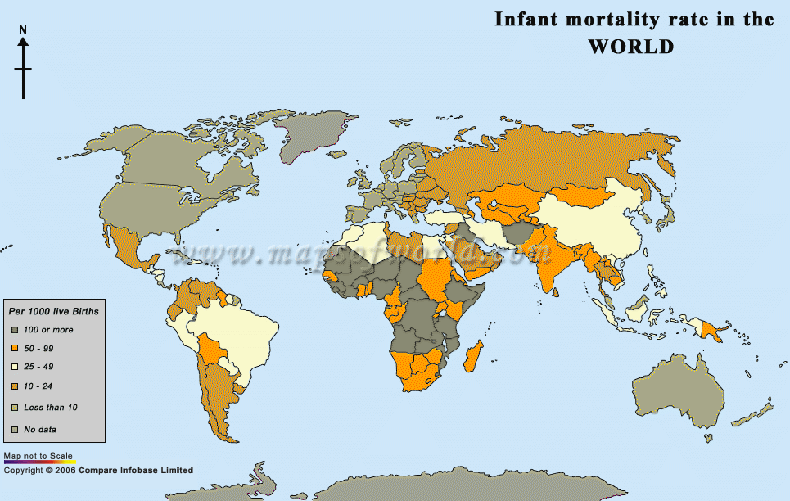
Visual Correlations: Poverty, Corruption, Infant Mortality, IQ, etc.

Corruption


Fertility Rate


Literacy Rate


IQ with GDP

Labels:

Bookmark and Share

Stupidity Kills----Part I: Malaria

Malaria is a major killer of children under the age of five. Perhaps a million children die of malaria every year. A million children a year. How is that possible? Who would allow such a thing to continue to happen, year after year?

Most malaria deaths occur in impoverished nations of sub-saharan Africa and Asia, and large organisations have been spending billions of dollars a year to try to reduce the impact of malaria--particularly devastating on young children, and pregnant women. The World Health Organization has appointed "an Iron Fist" to administer its world anti-malaria program.

Dr. Kochi, who in the past ran the agency's Stop TB initiative, has never been known for his diplomatic skills. A 57-year-old graduate of Japanese medical schools and the Harvard School of Public Health, he ruled the Stop TB campaign with an iron fist, colleagues say, and by his own admission, so alienated the Rockefeller Foundation and other partners that he was ultimately forced out of the job.

But even his critics admit that he was a decisive strategist and that the tuberculosis campaign was one of most effective the W.H.O. has run.

"His tactic really worked," said Dr. Jacob Kumaresan, a former chief of the Stop TB Partnership in Geneva and now the president of the International Trachoma Initiative. "With his staff, he's pretty strict — those who don't produce results will be laid off. But he's very bold, and I think he's on the right track."
Read more at the source.

Sounds hopeful, right? Dr. Kochi appears competent, from the article, but the apparatus he has to work with is not. From the WHO infrastructure, to the unscrupulous third world drug manufacturers, to the homicidally corrupt governments through which Kochi must work to reach the people who are sick, the situation is anything but hopeful.

But people like to blame those who try to help, more than they like to face the bottom line problem that is killing people. Here is an example of that "blaming the helper" attitude from a Lancet article:

8 years ago, the World Bank launched the Roll Back Malaria campaign, promising to halve malaria deaths this decade. After studying its options, the Bank made an unprecedented pledge before Africa's heads of state in 2000: it would spend (or rather, loan) $300–500 million to fight malaria in Africa.2 This promise of funding was warmly welcomed, because contemporary economic arguments held that malaria cost Africa dearly—perhaps even tens of billions of dollars a year. But the Bank failed to lend Africa the funds for malaria control that it said it would, and rather than admit this with candor, the Bank concealed the fact by using untransparent and contradictory accounting.

In 2001, the year after its pledge to Africa's heads of state, the Bank made the impressive claim that it had “about $450 million out in various forms of anti-malaria programs”.3 But by 2002, it appeared to backtrack, writing that “Bank direct financing for malaria control activities is over US$200 million”.4 The Bank also cut the number of countries where it supported antimalaria programmes, from 46 to about 25.3,4 Although the Bank's statements lack complete precision, they do give the appearance that in just 1 year, the Bank slashed a quarter of a billion dollars of malaria-control funding, and nearly halved the number of countries it assisted.
And so on.

Naturally, the World Bank is corrupt due to bureaucratic rather than meritocratic staffing methods. But why not admit the real bottleneck? Why not face up to the problem that refuses to be solved--corrupt governments from the national to the regional level?

Here is a harsh bucket of cold water reality to the face:

But journalist June Arunga doesn't think this [foreign aid] will really help in the long run.

....Arunga grew up in Kenya, and she wonders why Americans waste money on foreign aid to Africa … when many politicians just steal it.

"Africa is full of governments that steal money," she said.

Billions of dollars are hidden by African politicians in Swiss banks or spent on mansions, lavish trips and luxury cars.

Even food aid gets stolen. When "20/20" went to Kenya a few weeks ago, Kenyan farmers said bags of food aid from their government never arrived.

"You find most of it is getting lost on the way," farmer Joseph Nthome said. Lost, but then found … for sale in street markets.

So much is stolen because we rely primarily on governments to administer foreign aid, and many African governments are kleptocracies.


Here are some harsh facts about malaria:

# Forty-one percent of the world's population live in areas where malaria is transmitted (e.g., parts of Africa, Asia, the Middle East, Central and South America, Hispaniola, and Oceania).
# An estimated 700,000-2.7 million persons die of malaria each year, 75% of them African children.
# In areas of Africa with high malaria transmission, an estimated 990,000 people died of malaria in 1995 – over 2700 deaths per day, or 2 deaths per minute.
# In 2002, malaria was the fourth cause of death in children in developing countries, after perinatal conditions (conditions occurring around the time of birth), lower respiratory infections (pneumonias), and diarrheal diseases. Malaria caused 10.7% of all children's deaths in developing countries.
# In Malawi in 2001, malaria accounted for 22% of all hospital admissions, 26% of all outpatient visits, and 28% of all hospital deaths. Not all people go to hospitals when sick or having a baby, and many die at home. Thus the true numbers of death and disease caused by malaria are likely much higher.


Malaria is neither the leading cause of death world wide (#8), nor the leading cause of childhood death world wide (#4). But WHO officials know how to prevent malaria, and they know how to cure it. So what is the problem? Stupidly corrupt government leaders and officials that suck up most of the contributed aid before it gets to the people.

Stupidity kills. What is the connection between stupidity and corruption? A lot stronger than you might think.

Labels: ,

Bookmark and Share

26 June 2006

As Fat as You Want to Be

Popular culture teaches us that obesity is an illness, the obese are victims, and the victims have no control over their disease. Is this Opra-esque parcel of victimology accurate?

Snowcrash from Biosingularity blog reports on research from the Salk Institute that delves deeply into the physiological mechanisms of fat storage, metabolism, and synthesis. Some of the results are amazing.

The engineered mice consumed an equally high-fat diet but did not gain weight, indicating that fat storage pathways can be tweaked. "Maybe the most amazing finding is that these mice are protected from fatty liver disease, a serious problem in obese individuals with insulin resistance," says Montminy.

Our body's ability to store fat requires the activity of the enzyme acetyl-coenzyme A carboxylase, or ACC. When we fast, the body starts to burn fat while simultaneously shutting down ACC through a chemical modification called phosphorylation.

The Salk researchers found that a critical protein called TRB3 orchestrates a second chemical modification of ACC, known as ubiquitination, which gets rid of the enzyme altogether. "In this parallel pathway, TRB3 serves as a go-between for an enzyme that marks ACC for degradation," says Jose Heredia, a graduate student in Montminy's lab.

TRB3 levels in adipose tissue usually rise only during fasting, when ACC should be turned off. Heredia and co-first author Ling Qi, Ph.D., reasoned that keeping the TRB3 pathway artificially "on" during both fasting and feeding might melt away fat depots.And that's exactly what happened. Mice genetically engineered to express permanently elevated levels of TRB3 protein in fat tissue were 10-20 percent skinnier than normal mice. "Even when we put them on a high-fat diet, these mice just didn't gain any weight," says Qi. "Their physical activity was the same, but they were constantly burning fat."

All this is good news for the fight against obesity and the disorders characterized by insulin-resistance known as "metabolic syndrome." Most people with insulin resistance will develop type 2 diabetes within 10 years, unless they lose 5 to 7 percent of their body weight–about 10 to 15 pounds for someone weighing 200 pounds. Defining how molecules regulating fat storage interact could lead to novel measures to curb obesity.

Further evidence linking TRB3 to disease comes from recent findings from a team of Italian scientists who report that mutations in the human TRB3 gene are associated with several insulin resistance-related health problems, such as high insulin levels, high cholesterol, and cardiovascular disease.
Source.

This would be particularly good news for persons with type 2 diabetes--insulin resistance. These persons are almost always obese, and additionally suffer all the health risks of diabetics--atherosclerosis, neuropathies, small blood vessel occlusions, renal disease, loss of vision, ASHD, and early mortality. Clearly these unfortunate people do not want to suffer all that morbidity. Just as clearly, physicians are growing tired of dealing with these cookie cutter patients, many of whose very real medical problems are lifestyle choice induced.

And honestly, we all know people who hide behind their obesity like a shield. Their obesity allows them to avoid situations that might be uncomfortable for them. Likewise we all probably know relatively physically fit spouses who are comfortable with the obesity of their spouse. Or physically fit parents who are comfortable with the obesity of their child. There is indeed a significant amount of secondary gain involved for many obese people, and obesity enablers.

Scientists are determined to make obesity a matter of choice. Not all of the obese are necessarily appreciative. Certainly an effective medical cure will relieve many people of the near-impossible amount of physical work and self-discipline that would be required for them to lose weight without drugs. But what about the psychological motivations to remain obese?

The psychological underpinnings of many persons' obesity may be the most difficult thing to cure, in the end. Society will try to make that psychology a disease, and scientists will continue developing drugs for all symptoms and discomforts--physical and psychological.
Bookmark and Share

25 June 2006

A Life on the Sea--Seasteading: The Book

Through the years, a lot of people have looked to the sea for a type of freedom they imagined was not possible on the land, locked in by traditions hundreds or thousands of years old. The thought of starting one's own country at sea, or under the sea, and making up the rules for oneself, has occurred to a large number of people. Finally, someone has thought to write a book, free on the internet, describing many of the failed approaches, and many more possible approaches that might possibly work.

The sea is is an ever changing environment, sometimes placid, sometimes hellish and unforgiving. It is up to the persons who plan the sea-going human environment to plan for the possibilities, to ensure freedom, survival, and hopefully prosperity.
A small but passionate minority is deeply dissatisifed with current political systems. These people seek the autonomy to live under and experiment with different political, social, and economic systems than currently exist. It is this search for sovereingty, for the freedom of self-government, which is the fundamental motivation for seasteading. Utopia is different for everyone, and so there are a wide variety of theoretical new systems and gripes with the old ones. We'll present only broad outlines of the most common schools, leaving the explanations of what the Problems are and how each philosophy is the Answer to the partisans themselves:

* Many people are interested in sustainable, environmentally friendly ways of living [Celestopia], which are well-suited for seasteading, where renewable energy generation and closed-loop gardening will be facts of life.

The residents of these future cities, throughout the world, will show by exemplary actions that people of different races and divergent political, religious, cultural and social beliefs can live and prosper together while also being good stewards of the earth, respecting, and thereby benefiting all inhabitants and ecosystems of the planet.[Celestopia]

* Capitalists want low taxes and regulatory freedom [Atlantis1994].

There are tax benefits: no federal tax on coroporate profits, no state corporation tax, no social security tax. And any open sea facility is a free port. You can bring in any raw materials and ship out any finished products, without paying tariff duties. Outside government jurisdiction on the open sea, there are no regulatory agencies to contend with. You can dispense with the expense and bother of excessive paperwork, forms, and reports. You won't be ordered to waste your time appearing before government bodies. Licenses and permits will be things of the past. Government litigation and harassment, and the uncertainty caused by changing laws, regulations, and interpretations will be eliminated.
[Fisher1985, pp. 48-49]

* Few opportunities remain for pioneers, and the oceans are the obvious next frontier for civilization.
* It seems likely that the next major frontier, after the oceans, will be space. We can look at seasteads as a dry (er...wet) run for spacesteading:

If we are going to colonize space, it is best to colonize the easiest space first...Living in colonies at sea will teach us many crucial lessons about life in space. The isolation, self-sufficiency, and political autonomy of sea colonies are the same as those of space colonies. Both types will impose many of the same requirements on their inhabitants...The Moon is a harsh mistress; we would be wise to learn these early lessons while still in Earth's gentle lap.
[Savage1992 pp. 23-24]

If humankind is to survive, I see no alternative to expanding outward into space. And this doesn't just mean settling on other planets and moons. They will be just as vulnerable to doomsday weapons as the Earth, and there aren't enough of them to insure that some will survive an Armageddon. Only a large number of communities well dispersed in the volume of space seems likely to have a chance...The establishment of such communities space would constitute a Golden Age of new-country formation in the next few centuris. Those who gain experience in the new-country field now are the most likely to be ready to seize the new opportunities when they arise -- or to see their children and their children's children in a position to do so.
[Strauss1984 p. 47]

* Devoted proponents of peace seek places where they can live without being taxed to fund violence.
* Drug users care deeply about the freedom to ingest whatever chemicals they desire [Island]. In many current societies, they are subject to arrest, jail, and the confiscation of their property.
* Individuals who are Environmentally Intolerant (EI), such as those suffering from Multiple Chemical Sensitivity, seek environments with minimal contamination from human chemicals:

Waterfront property offers some of the cleanest air anywhere by virtue of the high rate of ambient air exchange afforded by ocean or lake breezes. Even regions with relatively bad general pollution levels enjoy orders of magnitude cleaner air along the shore, as long as there are regular breezes. Unfortunately, few people can now afford such property -especially those who need it most. A floating home offers a potentially unlimited amount of waterfront real estate with no land cost. You can have as much as you can afford to build. There are no surrounding lawns and trees to generate pollen, no roads with cars to generate pollution -though, of course, boats are still a pollution issue albeit far less than automobiles.
[Hunting]

Our personal motivation is the belief that monolithic, land-based societies are too big and too politically static. We think political flexibility and experimentation with many different political systems is the right way to find new and better ways to live. Seasteads would allow for a rich diversity in forms of governance because they lower the barrier of entry to the market of government. When it takes a revolution or millions of votes to take over a country, small groups have no opportunity for self-government. But if, for the cost of their houses, they can band together and create new sovereign territory, many will do so. While living their own ideal lifestyle, they will also be researching innovations in the basic institutions of society, which will increase our collective wisdom and benefit all humankind. These ideas are explored more under dynamic geography below.

Whatever the specific motivations, the popularity of new country projects make it clear that there is a great deal of interest in this topic [Alexandisle, Atlantis1994, Celestopea, FloatingCities, FreedomShip, Freedonia, Island, LFC, NewUtopia, NewAtlantis, Nexus, Pelagic, ResidenSea, Salsbury1992, Savage1992, Sealand, Seascape, Strauss1984, VenusProject].

While few people are devoted enough to drop everything and go found a new society, we think that everyone is, to some degree, a revolutionary. After all, who was the last person you met who was completely happy with everything about their society? While utopia is not an option, we do believe there are some fundamental reasons why seastead societies are likely to work better than terrestrial ones. As experimenting with new social systems becomes cheaper and easier, it will be a viable alternative for an increasingly large segment of humanity. Seasteading is a realistic way to make a significant leap forward.

The authors then go on to discuss the philosophy of seasteading and the approaches most likely to achieve success.

There is no single "right" approach to seasteading. Thus we will present you with many ideas, exploring those we think are the most viable in the most detail. However, it does seem like there are some "wrong" approaches, as we can see from the many failures of projects with the same goal. What we've learned from the movement's (admittedly dismal) history has to a large degree shaped our philosophy. Because of this, explaining our approach goes hand-in-hand with identifying common points of failure and indicating how we think they can be overcome.

The root cause of most of these failures seems to have been lack of realism. So our solution is simply to be as pragmatic as possible about our vision. Realism is our philosophy's foundation, and more specific polices are just the application of realism to various areas. Important areas include incrementalism, politics, technology, and finances.

Incrementalism

We believe that a realistic approch to the difficult problem of nation-founding must be incremental. Large, successful things usually start out small and expand organically, rather than springing forth full-formed like Athena from the brow of Zeus. Rome wasn't built in a day and a succesful business leverages each stage into the next. Big things (cruise ships, skyscrapers, factories) do get built all at once at times, but they are almost always proven concepts that were first demonstrated successfully on a smaller scale. For example, we bet that the first multistory building had exactly 2 stories. In our case, if there was a nation-founder with the financial resources to jump the intermediate stages and create a vast floating city, it would already exist. After all, there are plenty of people ready to design and build one as soon as the multi-billion dollar check gets cut. Since no such deus ex machina appears to be forthcoming, we recommend humbler methods.

There are plenty of grand conceptual ideas out there, but we see a key link between being grand and staying conceptual. We find the notion that the first sea-city will be for ten thousand people is ludicrous. If you make the first step too high, you will never even get started, as the many participants who became frustrated with and dropped out of new-country projects can attest. Instead, we believe that almost all the focus should be on the current and immediate next stage, not on far-distant visions. Watch the path in front of you, not the sky.

There is an inherent difficulty in getting people involved in something that has value only if people are involved in it. How do you start? Contingent contracts help, ie all participants sign something which says "I will pay for my share and move onboard if 99 other people also sign this contract". This approach is working for the Free State Project in its quest to get 20,000 libertarians to move to New Hampshire. In our case, however, there are difficulties. We think that its best to try out this new way of life with fewer people at first. Also it appears difficult to get enough interest for even contingent signatures on floating-cities without demonstrating viability. For these reasons, our plan includes a series of distinct stages, each involving a greater number of people.


First we complete a design, and build an aquarium-sized model. Then a pool-sized version. Next we build a habitable Baystead prototype for 5-10 people, anchored in sheltered waters within US boundaries, to demonstrate our seriousness and our design. This is the first point at which we need other people's participation. We just need to find 5-10 people who are willing to live together, and don't mind the level of creature comforts that can be achieved on a fairly small platform. While it will require a rare level of dedication to the concept to join this group of aquatic pioneers, we don't have to find very many such people.

Next we need to find 25-100 people (or the equivalent in timeshares) who weren't quite sure if seasteading was legit before, but seeing the demonstration by the first group, find it worthwhile to participate. They build the first deep-water, self-sufficient seastead. Next we find the 100 people who weren't quite convinced by the small group ... and so on. Smaller steps can be added if necessary.

There is plenty of historical precedent for this strategy of zealots seeding settlements. North America, for instance, was colonized mainly by members of minority religions such as the Puritans seeking to escape persecution. These dedicated folk were willing to put up with the discomfort of pioneering in exchange for religious freedom. The result of this passionate committment to a cause was, eventually, an increased level of civilization, and a beachhead for the less dedicated to follow.

At every step in incremental development, the standard of living increases due to economies of scale, refinement of techniques, and the network effects of the larger community. Rather than convincing 10,000 people from the beginning, you just keep bringing in those at the margin, who needed things to be just a little bit better to get involved. As interest in seasteading steadily grows, more units are steadily built. Each may cater to a slightly different audience, or experiment with different engineering designs and social systems. They will be modular and eventually cluster together into the grand vision many have proposed [Atlantis1994, Nexus, NewUtopia, VenusProject].

With advanced technology, the pioneering cycle is much shorter nowadays. It doesn't take centuries to go from Conestoga wagons to skyscrapers, and we'll get to start out with electricity, hot running water, and satellite telephones. But at the beginning, we still must be pioneers. We aren't focusing on these humble first steps because we lack imagination, or don't think a huge luxurious floating city would be amazingly cool. That sea city is our ultimate goal, but it is our firm belief that a sea village must come first - and a single sea house before that.


This is just a short excerpt from the second chapter of the book. Here is the Table of Contents for the entire book. I will revisit this book in future posts.

Every child learns to dream about other worlds, worlds of possibilities beyond the present. The facility to dream is too easily lost in the dystopian atmosphere created by much of popular media, and the smothering academic world of postmodern emasculating political correctitude. That is society's loss. Fortunately a small number of people refuse to give up the ability to dream of what they might achieve under their own power, given the freedom. The future depends, to a large extent, on these few being able to hold out a little longer.

Labels: , ,

Bookmark and Share

23 June 2006

Starting Over, Returning to the Roots, Waking Up

Creating embryonic stem cell (ESC) lines is controversial. Destroying embryos to create a single ESC line strikes some as wasteful of human life. But what if you could take an embryo and create millions of distinct ESC lines from it?

This Nature abstract discusses the protein Nanog, which may allow the creation of any number of "hybrid" ESC lines-- reprogramming adult stem cells to pluripotency. Eventually it should even be possible to reprogram adult stem cells without having to use an ESC. Here is a bit more detail in this Bio.com newsrelease:

The Edinburgh scientists fused mouse embryonic stem cells with brain stem cells, a type of adult stem cell. They found that the addition of Nanog resulted in a massive increase in the numbers of hybrid cells, all of which behaved like embryonic stem cells. Most importantly the hybrid cells showed the capacity to make many different cell types, such as heart and gut. "This means that the genetic programme of the brain cells has been erased and replaced by the unspecialised programme of an early embryo cell" says Dr Jose Silva, first author of this study.

Dr Silva adds "The effect of Nanog is remarkable. All of the hybrid cells become fully converted to embryonic stem cells. If we can figure out how Nanog does this, it may become possible to switch cell types without fusion or cloning." However, the Edinburgh team must also identify at least one other key gene. "Nanog has great power" says Professor Smith, "but it does not work in isolation, only in partnership with other genes present in embryonic stem cells".

As an organism ages, it loses the ability to replace lost cells. At some point, cells lose the ability to replicate, but even before that point they show signs of incompetence in gene expression. This Nature abstract discusses research that reveals this increased variation in gene expression of aging myocytes:

One possible mechanism by which increased DNA damage could lead to cellular degeneration and death is by stochastic deregulation of gene expression. Here we directly test for increased transcriptional noise in aged tissue by dissociating single cardiomyocytes from fresh heart samples of both young and old mice, followed by global mRNA amplification and quantification of mRNA levels in a panel of housekeeping and heart-specific genes. Although gene expression levels already varied among cardiomyocytes from young heart, this heterogeneity was significantly elevated at old age. We had demonstrated previously an increased load of genome rearrangements and other mutations in the heart of aged mice3, 4.

This means that in order to perform DNA repair on senescent cells, it will be necessary to have templates of relatively young cells of that type. At some point it would be necessary to replace the old cells with new cells--much like replacing the rotten planking of an old wooden boat with new planking. It is still the same boat, but the new planking gives it a new life. Stem cells--tissue specific programmed ASC's from preserved ESC's--would provide the replacement cells.

That is why drugs such as the recent Korean discovery CGK-733 will not work as life extenders. They only extend the replication lifetime of cells--they do not keep the ageing cells young. The senescent incompetence of gene expression is still present, along with increasing risks of cancerous transformation.

Finally, what good is a body made of young vibrant cells, if the mind is asleep or deranged? This Eurekalert newsrelease discusses the discovery of Neuropeptide-S, a new brain protein that promises to help wake the walking sleepers.

Neuropeptide S (NPS), so named by Rainer K. Reinscheid, Ph.D., assistant professor, Program in Pharmaceutical Sciences, University of California, Irvine, is produced by a small cluster of cells in the brainstem, yet its specialized receptors are found in several areas of the brain, including those that are associated with the regulation of arousal, sleep and wakefulness, anxiety, appetite, learning and memory. Dr. Reinscheid and his colleagues reported finding the new neuropeptide just last year and described animal studies showing how binding of NPS to its receptors on the surfaces of neurons promotes strong arousal, suppresses all phases of sleep and lessens anxiety in stressful or unfamiliar situations.

Now, at ICN 2006, Dr. Reinscheid's group reports how NPS also can reduce the biochemical and behavioral symptoms of schizophrenia in an established animal model for this mental illness that affects some 2 million Americans. Animals pretreated with NPS before receiving a drug that normally induces psychotic-like behaviors did not develop the signature behavioral symptoms and neurochemical features of schizophrenia, reported Naoe Okamura, M.D., Ph.D., who is a co-worker of Dr. Reinscheid at the University of California, Irvine.

"Although preliminary, our animal studies indicate the NPS receptor should be explored as a target for the development of novel antipsychotic drugs. Whether molecules activating the NPS system will prove to be better drugs than others used to treat the symptoms of schizophrenia remains to be seen. We still have a very long way to go before proving it can alleviate symptoms in humans as we've seen it do in rodents," said Dr. Reinscheid.

A peptide that wakes people up, and makes them less anxious and perhaps less psychotic too? Quite the improvement over amphetamine. Perhaps exactly what is needed in the coming age of tumultuous transition to a next level world.

Some nanotechnologists and singularitarians believe that tiny nanobots will be able to store and carry the early genome to all cells, and busily repair any errors that may occur in replication--even in ageing cells. Such nanobots could conceivably detect early cancerous transformation, and act to trigger apoptosis in cells with such changes.

Research in biotechnology is now at such a profound level, that breakthroughs in one are can quickly lead to breakthroughs in several other areas. It is obvious that ageing is related to malignancy as well as autoimmune and other inflammatory diseases. In addition, improvements in the tools of biotechnology research almost immediately suggest newer and more profound areas of research and discovery. It is becoming easier to believe Ray Kurzweil's analysis of exponential knowledge growth.

Labels:

Bookmark and Share

21 June 2006

Cryogenics, Human Growth Hormone, and the Will to Live

Two postings on aging: the first deals with mitigating the effects of aging in those already old. The second posting will deal with new theories of cryopreservation that may finally provide a workable way forward to safely place people into "stasis" for later "re-animation".

A compound that stimulates the secretion of growth hormone can help older adults improve their physical function and lower their body fat percentage, according to study results that will be presented Wednesday, June 21, at the International Congress of Neuroendocrinology in Pittsburgh. The results will be presented by Dr. George Merriam, professor of medicine at the University of Washington and a physician with the VA Puget Sound Health Care System. Merriam helped coordinate endocrine aspects of this multi-site study, along with Dr. Heidi White of Duke University and researchers at Pfizer, Inc. Nearly 400 adults from 65 to 84 years old were enrolled in the study, and were divided into groups receiving a placebo or one of four different levels of an oral growth hormone secretagogue (GHS), which stimulates the secretion of human growth hormone. Researchers measured the participants' fat and lean body (muscle) mass, as well as their performance in physical tests like stair climbing and a heel-to-toe walk. The participants also received blood tests for levels of growth hormone and a compound called IGF-1, a hormone which responds to growth hormone and mediates some of its effects. Participants receiving the GHS treatment saw a significant increase in lean body mass – about 1.5 kilograms, or 3.3 pounds. The GHS treatment led to improved physical function over the six- to 12-month study period. Participants also had higher levels of growth hormone and IGF-1 in their bloodstreams. Patients receiving the GHS treatment had minor side effects, including increased fatigue, insomnia, and fasting glucose levels. Growth hormone is vital in childhood growth, and production of the hormone peaks during puberty. However, it continues to affect physical function throughout our lives, and it regulates metabolism and body composition. As adults move into middle age, growth hormone production begins to taper off. Many of the effects of aging – increased abdominal fat, reduced muscle mass, and decreased physical function – look very similar to the symptoms of growth hormone deficiency in younger people. As those aging effects set in, many older adults find it difficult to care for themselves, and they lose quality of life and often turn to long-term care. Source.

Next, new ideas on cryopreservation:

In medicine, cryopreservation involves preserving organs and tissues for transplantation or other uses. Only certain kinds of cells and tissues, including sperm and embryos, currently can be frozen and successfully rewarmed. A major problem hindering wider use of cyropreservation is formation of ice crystals, which damage cell structures. Cyropreservation may be most familiar, however, as the controversial idea that humans, stricken with incurable diseases, might be frozen and then revived years or decades later when cures are available. Bogdan's experiments involved a form of water termed "glassy water," or low-density amorphous ice (LDA), which is produced by slowly supercooling diluted aqueous droplets. LDA melts into highly viscous water (HVW). Bogdan reports that HVW is not a new form of water, as some scientists believed. ...."It may seem fantastic, but the fact that in aqueous solution, [the] water component can be slowly supercooled to the glassy state and warmed back without the crystallization implies that, in principle, if the suitable cyroprotectant is created, cells in plants and living matter could withstand a large supercooling and survive," Bogdan explained. In present cryopreservation, the cells being preserved are often damaged due to freezing of water either on cooling or subsequent warming to room temperature. "Damage of the cells occurs due to the extra-cellular and intra-cellular ice formation which leads to dehydration and separation into the ice and concentrated unfrozen solution. If we could, by slow cooling/warming, supercool and then warm the cells without the crystallization of water then the cells would be undamaged." Source: American Chemical Society More at source.

In the future, several approaches to aging will be available. Those who choose to age "normally" will have the option of "optimising their years" without adding to them appreciably. HGH promoters, pumps, and depo injections will be useful for them. Others will want to add a few decades of high functioning years to their lives. For those, drugs that aid in DNA repair, protein crosslink repair, calorie restriction mimetics, and anti-oxidant/anti-inflammatory supplements will probably do the trick. For those who want more radical extension to their lives, SENS-like approaches to rejuvenation engineering may eventually pay off. Stem cell repair and organ re-growth will definitely be available in the next few decades. More cyborg replacement parts will also be available in the next half century. The grand strategy is genetic engineering of a longer living body that rejuvenates itself constantly, and heals rapidly when injured.

Should safe and reliable cryogenics become available before the more radical lifespan extension strategies, it is conceivable that some might opt to be placed in "suspended animation" until the technologies for longer life are perfected. That might be particularly true for those dying prematurely of terminal illnesses.

Research into these technologies is being funded, sometimes under other pretexts. It is very likely that the goal of doubling the human lifespan will be achieved before the end of the century.
Bookmark and Share

Big Business Discovers Butanol--Renewable Energy Gasoline Substitute

Green Car Congress has posted an article detailing a partnership between oil giant BP, and chemical giant DuPont, to create bio-butanol as a renewable energy additive (and substitute) for gasoline. Butanol can also be added to diesel to reduce pollutants. (see alse the Energy Blog article on the same topic).

BP and DuPont have created a partnership to develop, produce and market next-generation biofuels to help meet increasing global demand for renewable transport fuels.

The two companies have been working together since 2003 and are now ready to bring their first product to market: biobutanol, which will be introduced in the UK in 2007 as a gasoline bio-component.

The companies are leveraging DuPont’s biotechnology and bio-manufacturing capabilities with BP’s fuels technology expertise and market know-how. By pooling their knowledge and expertise, the two companies aim to be the world leaders in the development and production of advanced biofuels, driving the growth of biofuels, which today account for less than two percent of global transportation fuels. Current projections show that biofuels could represent up to 20-30% of the transport fuel mix in key markets.

Bio-butanol. Butanol (C4H10O) is a four-carbon alcohol in widespread use as an industrial solvent, with a US market size of some 370 million gallons per year at a price of about $3.75 per gallon (approximately $1.4 billion).

Originally produced by fermentation starting nearly 90 years ago (using Clostridia acetobutylicum), butanol shifted to becoming a petrochemically-derived product in the 1950s as the price of petrochemicals dropped below that of starch and sugar substrates such as corn and molasses. Virtually all of the butanol is use today is produced petrochemically.

Butanol’s energy content is closer to gasoline than ethanol’s. It is non-corrosive, can be distributed through existing pipelines, and can be—but does not have to be—blended with fossil fuels. Butanol itself could be reformed for hydrogen for use in fuel cells, and the production process itself produces hydrogen. (Earlier post.)

Bio-butanol’s low vapor pressure and its tolerance to water contamination in gasoline blends facilitate its use in existing gasoline supply and distribution channels. It has the potential to be blended into gasoline at larger concentrations than existing biofuels without the need to retrofit vehicles and it offers better fuel economy than gasoline-ethanol blends, improving a car’s fuel efficiency and mileage.

DuPont and BP are currently in the process of carrying out detailed calculations of biobutanol’s greenhouse gases Well-to-Wheel Life Cycle Analysis emission performance. Initial indications are that, on the same feedstock basis, biobutanol can deliver emission reductions that are at least as good as ethanol on the same basis.

Bio-butanol also enhances the performance of ethanol blends in gasoline by, amongst other things, reducing ethanol’s impact on vapor pressure, one of the issues which hampers a wider use of ethanol in existing gasoline distribution channels.
Read the rest in the Green Car Congress article, and more at the Energy Blog.

This is the first time that Butanol has gotten this kind of attention from big money interests. It seems that the many advantages of butanol over ethanol are finally coming to the attention of top level executives.

Labels: , ,

Bookmark and Share
Newer Posts Older Posts
Al Fin Main Page
Enter your Email


Powered by FeedBlitz
Google
WWW AL FIN

Powered by
Blogger

``