11 August 2012

Streamlining the Bio-Production of Fuels, Chemicals, and Pharmaceuticals

This article is adapted from an article published on Al Fin Energy blog


The team's method can be compared to understanding both the chemical reactions and the machinery that are required to refine crude oil into petrol in a large, industrial factory. Modeling metabolism tells you what biochemical reactions need to take place. Modeling the organism's gene expression tells you what kind of machinery you need. The team's method specifically accounts for the expression of enzymes, which are the molecular machines responsible for the biochemical processes of life. With this knowledge, it is possible to explore how an organism distributes its resources to promote growth and how genetic manipulation of these organisms alters this distribution. _SD
This new approach devised by UCSD researchers is likely to expedite the creation of biological organisms capable of producing high volumes of fuels, chemicals, pharmaceuticals, etc. in a fast and profitable manner.
A biochemically accurate model of molecular biology and metabolism will facilitate comprehensive and quantitative computations of an organism's molecular constitution as a function of genetic and environmental parameters. Here we formulate a model of metabolism and macromolecular expression. Prototyping it using the simple microorganism Thermotoga maritima, we show our model accurately simulates variations in cellular composition and gene expression.

Moreover, through in silico comparative transcriptomics, the model allows the discovery of new regulons and improving the genome and transcription unit annotations. Our method presents a framework for investigating molecular biology and cellular physiology in silico and may allow quantitative interpretation of multi-omics data sets in the context of an integrated biochemical description of an organism. _NatureCommunications


UCSD researchers have taken an important step toward the general ability to custom design the genome of organisms, in order to produce synthetic fuels, chemicals, pharmaceuticals, on a commercial scale.
"What you could hypothetically do with our model is simulate the total cost of producing a value-added product, such as a biofuel. That includes all the operating and maintenance costs," said Daniel Hyduke, a project scientist in Palsson's lab. Hyduke said the method has the potential to help streamline industrial metabolic engineering efforts by providing a near complete accounting of the minimal material and energy costs associated with novel strain designs for biofuel, commodity chemicals, and recombinant protein production.

Hyduke and Lerman prototyped the method on the minimal, yet metabolically versatile, hyperthermophile Thermotoga maritima. Because T. maritima is not currently ready for use in industrial applications, Hyduke and Lerman are working as part of a larger team to produce similar models for industrially relevant microorganisms, such as E. coli.

"We've built a virtual reality simulator of metabolism and gene expression for Thermotoga maritima, and shown that it much better approximates phenotypes of cells than modeling metabolism in isolation," said Lerman.

...Their method accounts, in molecular detail, for the material and energy required to keep a cell growing, the research team reported in the journal Nature Communications.

"This is a major advance in genome-scale analysis that accounts for the fundamental biological process of gene expression and notably expands the number of cellular phenotypes that we can compute," said Bernhard Palsson, Galetti Professor of Bioengineering, at the UC San Diego Jacobs School of Engineering.

"With this new method, it is now possible to perform computer simulations of systems-level molecular biology to formulate questions about fundamental life processes, the cellular impacts of genetic manipulation or to quantitatively analyze gene expression data," said Joshua Lerman, a Ph.D. candidate in Palsson's Systems Biology Research Group. _SD
This approach provides more useful information in advance, to researchers considering various approaches to the design of custom chemicals-producing organisms -- particularly microbes, but eventually plants and animals as well.

In summary, the development of this tool should streamline the design and development of organisms capable of producing commercially valuable chemicals and fuels in an economical and timely manner. It should also prevent much wasted energy on the part of researchers, by pointing out dead-end research approaches in advance.

Full article in Nature Communications

Tools such as this will take us closer to the world where fast-growing weeds can be transformed into complete nutrient food crops capable of growing virtually anywhere, or life saving pharmaceuticals grown in one's own garden or window sill. High value "inks" for 3D printing will likely be produced from organisms designed by this or similar methods. And you can count on clever criminals learning to create tomato plants that produce cocaine, or squash that produce opium.

These tools will not stay in laboratories. They will migrate into garage biohacking facilities in short order. And then we will see disruptive change. Slowly at first, and then more rapidly.

Labels: , ,

Bookmark and Share

19 January 2012

Synthetic Diesel @ $1.19/Gal and 25,000 Gal / Acre?


Joule Unlimited, a startup based in Bedford, Massachusetts, has received $70 million to commercialize technology that uses microörganisms to turn sunlight and carbon dioxide into liquid fuel.

The company claims that its genetically engineered bacteria will eventually be able to produce ethanol for as little as $1.23 a gallon or diesel fuel for $1.19 a gallon, less than half the current cost of both fossil fuels and existing biofuels...The company, formerly known as Joule Biotechnologies, claimed in 2009 that its organisms could in theory produce as much as 20,000 gallons of ethanol on an acre of land in single year. Company officials now say their target is 25,000 gallons per acre, and that efficiencies they have already demonstrated take them 60 percent of the way to that goal. _MIT Technology Review

TechnologyReview

Of course we have to remember that the company is talking about both ethanol and diesel, so it is important to pin them down at each point, as to which fuel they are talking about. Can they actually make diesel for $1.19/Gal and at a rate of 25,000 Gal/acre/year? No. The company is expressing a goal for combined production of both ethanol and diesel together. Not as impressive as for diesel alone, but we should still give them a chance to explain why they are so hopeful.
In a peer-reviewed paper published last year in the journal Photosynthesis Research, Robertson and others showed that their process can achieve an overall efficiency of 7.2 percent in converting sunlight to liquid fuel. The figure is roughly seven times higher than the efficiency rate of systems that use naturally occurring microörganisms. The key to the increased efficiency, Robertson says, is that the engineered bacteria can secrete liquid fuels continuously. Nonengineered microbes produce oils that have to be harvested and refined into fuels, and the organisms have to be ground up to release the oils, so each batch yields only a single harvest.

The microbes that attain 60 percent of the company's stated productivity goal have been secreting ethanol in outdoor SolarConverters at the company's three-acre pilot plant for the past six months. To increase efficiency, Robertson says, the company will further manipulate the organisms' genetic makeup to limit all biological processes that compete with fuel production. For example, Joule has been working for several years to shut down genetic pathways that allow the organisms to keep growing. That should enable them to devote more energy to fuel production.

Robertson says that the company has just begun to optimize production in its diesel-secreting microbes, which currently yield fuel at a rate that is only 10 percent of the company's goal of 15,000 gallons per acre per year. _TechnologyReview
Full article from Photosynthesis Research detailing a planned expansion of the limits of photosynthesis

This approach to advanced biofuels does not require prime cropland, nor does it use food as a feedstock. It is not meant as a "magic bullet" replacement for all other forms of energy. It would be merely one piece of the power puzzle, as it should be.

Startups tend to exaggerate their goals and eventual capacities. But the wise investor learns to separate the boaster from the true performer. Joule has big ambitions, and is probably a decade or more before its time -- in terms of the overall energy picture.

Cheap shale gas can be converted into diesel via gasification and Fischer Tropsch (FT) catalysis much more quickly than Joule can get going, and in large quantities. Shale gas can also be converted to gasoline via Exxon Mobil's methanol to gasoline (MTG) process. And yet, in the big picture view of things, there is a place for ventures such as Joule.

But it will take a lot of time to develop. And societies must find a way to get rid of their energy starvationists along the way.

Labels: ,

Bookmark and Share

21 December 2011

Turning Corn Into Chemicals: Gevo Goes for Profit & Survival

Government mandates and subsidies in the energy field have been largely ineffective, or worse -- destructive. Subsidies to big solar energy firms have resulted in multiple bankruptcies, subsidies to big wind energy projects are resulting in making Warren Buffet richer, but are raising electricity costs and making overall US energy security much worse. And government mandates and credits for cellulosic biofuels are turning out to be worse than useless -- as bio-butanol maker Gevo has discovered.
As the difficulty of producing cellulosic biofuels cheaply becomes apparent, a growing number of advanced-biofuels companies are finding it necessary to take creative approaches to their business, even though that means abandoning some of their green credentials, at least temporarily, and focusing on markets that won't have a major impact on oil imports. This is hardly the outcome the government hoped for when it announced cellulosic-biofuels mandates, R&D funding, and other incentives in recent years.

Cellulosic biofuels still cost much more to produce than either corn ethanol or gasoline. One reason is that startups have had trouble raising enough money to build the large-scale commercial plants needed to lower costs. That's in part because their technology is unproven, and in part because there's no guaranteed market for cellulosic biofuels yet.

Additionally, government mandates that were meant to help create a market for cellulosic biofuels have so far been ineffective; it's typically cheaper for the fuel providers affected by the mandate to purchase credits rather than biofuels. And finally, supply chains for cellulosic materials aren't yet well developed, so companies face a challenge when they try to lock in reliable access to them. _TechnologyReview

Luverne, Minnesota Corn-to-Butanol Plant


Gevo's strategy addresses all these problems. Besides relying on corn in order to overcome supply challenges, the company is reducing capital costs by retrofitting existing corn ethanol plants rather than building new ones; the retrofit of the first plant, in Luverne, Minnesota, will cost about $40 million, a fraction of the hundreds of millions it costs to build a new plant. And rather than making ethanol, Gevo is making butanol, which can command a higher price—especially for use as a feedstock for the chemical industry. Gevo expects that it can make butanol from corn—a readily available feedstock—for significantly less than it costs to make it from petroleum.

Gevo plans to start operations at Luverne within the next six months or so and hopes to produce 17 million gallons of butanol per year there. Most of it is destined for Sasol Chemical Industries, which will sell the butanol to make chemicals.

Butanol can be converted into a wide range of chemicals for making plastics and other products that are now made with oil. Gevo already has an agreement with a major maker of synthetic rubber, and last week it announced a partnership with Coca-Cola to develop plastic bottles made entirely from plants. _TechnologyReview

Versatile Bio-Butanol

Gevo is smart to pursue the high value product which can give them early profits and help the company to survive through these tough early days of advanced biofuels.

There is nothing wrong with using corn (maize) for production of chemicals, since overall production of maize is quite flexible. The additional market in chemicals and fuels gives farmers another market for their product, and helps to maintain stability of price.

Most US corn is used as animal feed, and even after being used to produce bio-chemicals and biofuels, the dried distiller's grain can still be fed to animals as a high protein feed. The oil from the corn can be used for other uses, including food.

It is important to point out that both cellulosic fuels and high value cellulosic chemicals are highly likely to become huge markets in the future. The use of corn will only continue as long as it is more profitable to use corn than to use cellulosic biomass. Eventually corn will lose its advantage in this area -- and at that point, it is likely that much less corn will be planted, as farmers move to other crops to follow the markets.

Those who harp on the tired old "food vs. fuels" refrain are almost certainly people who have never farmed for a living, and who have never had to balance profit and loss in a productive enterprise. Most people who sing that song do so for reasons of political activism, rather than out of any desire to arrive at the actual numbers involved.

But the truth of the matter is that the chemicals market offers higher profits to advanced biofuels producers than the fuels market offers. And that is where many of these companies are certain to go, in the beginning.

The arrival of massive proved reserves of unconventional natural gas is likely to delay the large-scale profitability of advanced biofuels for a number of years -- if not decades.

Labels: ,

Bookmark and Share

29 June 2011

Can Biofuels Save SubSaharan Africa?

800 million people live in Sub-Saharan Africa and a third of them don’t have enough food. By 2050, an estimated 1.95 billion people will be trying to live off the land in that region. Even if everyone in Sub-Saharan Africa were only to be fed as inadequately as they are today, the region would need to more than triple its food production over the next 40 years. For everyone on the continent to have enough to eat, food production would have to more than quadruple. _NYT

SubSaharan Africa is desperately in need of industries which will provide both work for the people, and crucial international trade for hard currency. Africa's oil and minerals industries tend to be run by outsiders, with most of the profits going overseas, and settling in the Swiss accounts of top government officials and cronies.

According to many scientists, Africa is custom-made for the coming biofuels revolution.
Dr. Lynd and Dr. Woods suggest that a growing bioenergy economy can be the key to driving this agricultural boom. Land is relatively plentiful in Africa, they write, and land for crops and land for fuel will not necessarily be in direct competition.

On marginal lands that cannot support agriculture in any case, they see great potential for biofuel crops, which require less water and nutrients. Africa’s vast land resources could also make the continent a competitive exporter of biofuels, which could bring in money for the basic infrastructure needed to transport and process food, they argued. It could also provide an economic incentive for rehabilitating degraded lands, the thinking goes.

...In an interview, Dr. Woods pointed out that it’s “always easier to think of problems than it is to think of solutions.

“It’s thanks to the demonization of bioenergy,” he said, “that companies are afraid to potentially tarnish their public image by exploring the potential that bioenergy offers Africa.” _NYT
Most people who demonise biofuels have not bothered to keep up with research and development in the rapidly changing field. They tend to look at ten-year-old data on corn ethanol production, and base their calculations and projections upon obsolete technological systems. Such approaches typify the mediocrity rampant in modern academia, thanks to a politically correct dumbing down of academic standards, and a destructive tendency to abort healthy debates prematurely -- declaring winners on the basis of ideological criteria.

The fertile land and abundant workforce of Africa are already in place. There is a need for modern agricultural, business, and land management expertise. But the greatest need now, if African biofuels are to prosper, is to find a way around the massive infrastructure-of-corruption which rules in virtually every SS African state.

One danger is that corrupt leaders -- for a price -- will allow foreign companies to set up huge plantations which will strip the land, with no provision for future fertility and long-term production. Another danger is that farmers with government or NGO grants -- but without guidance or skills -- will try to grow crops which are not appropriate for their soil and climate.

The biofuels potential for SS Africa is large, and promising well into the future. If managed properly, the land of SS Africa can feed even larger numbers than at present, and provide them with a decent income at the same time.

Labels: ,

Bookmark and Share

13 April 2011

Algae are Optimistic about the Future

More: A study from the Pacific Northwest National Lab outlines how the US could replace 17% of its petroleum imports with homegrown algal fuels.
Abstract from study
NewScientist

While human academics and analysts are all too quick to write off algae as serious contenders in the energy race, the algae themselves are completely optimistic about their own futures. Perhaps the algae know something that we do not know? Well, for one thing, algae is already a big business. For another, algae has a lot of potential for productive yield -- and is just getting started.
ALGAE are being put to work performing a unique double duty: cleaning up sewage waste while simultaneously producing biofuel.

All algae feast on phosphates and nitrogen-containing compounds, converting them to lipids. Some of these oils can be converted to biofuel, but only a few algal species produce lipids of the right type and quantity to be easily converted to fuel. In theory, though, algae are a perfect renewable fuel source. The main obstacle is that brewing the right nutrient mix can be prohibitively expensive.

Now, in work for a master's thesis, Eric Lannan, a mechanical engineer at Rochester Institute of Technology (RIT) in New York and colleagues have identified three types of microalgae - Scenedesmus, Chlorella and Chlamydomonas - that efficiently convert nutrients to fuel on a diet of municipal waste water, while happily living in its harsh, salty environment. In a lab test, it took just three days for the algae to gobble up 99 per cent of the ammonia, 88 per cent of the nitrate and 99 per cent of the phosphates in a broth resembling that from a domestic sewage treatment plant, turning themselves into rich sources of fuel even as they purified the water.

"People had looked at algae to clean waste water, others to make biodiesel," Lannan says. "We're putting those ideas together." _NewScientist
The idea to use waste feedstocks for boosting algal production is not especially new, but it still needs to be demonstrated on a large scale. And the demonstration must show that the resulting algae can be used to produce valuable products to make the entire process self-sustaining and profitable.

Besides using wastewater, the use of high CO2 effluent from power plants and cement factories etc. would provide the carbon boost for rapid growth, which algae crave.

Algae do not need too much sunlight -- in fact too much sunlight can reduce yields for valuable algal products. Solazyme, for example, grows its algae in the dark by feeding them sugars from biomass for fuel. They claim an 80% lipid yield, which is quite high.

Artificially inflated prices for crude oil are driving a multitude of approaches to the production of alternative liquid fuels. Fuel from algae is but one of many alternative approaches to liquid fuels, and algal researchers are taking dozens of divergent approaches to create algal fuels. Other microbial fuels approaches appear equally promising at this time.

A lot of money is going into the effort to create microbial fuels and fuels from biomass. But the key discoveries will not necessarily come from the best-financed research labs. Time will tell.

Those who think "biofuel" means only maize ethanol, are going to be very surprised when they discover what is really happening.

Labels: , ,

Bookmark and Share

03 February 2011

Some Product Claims Go Beyond Whimsical

GreenTechMedia

Some of algal biofuels company BARD's claims are too whimsical to put in a headline or title. But in an atmosphere of mainstream doubt regarding the short to intermediate-term viability of algal fuels, these claims are too cute to ignore. Keep in mind these claims are for yields, not for profitability:
"Biofuel Advance Research and Development, LLC (BARD) has entered into an agreement with The Green Institute Inc. to construct and operate a commercial scale algae system pilot facility located in the Commonwealth of Pennsylvania. The planned facility will produce algae biomass to be used to produce biodiesel, and other commercial products. The pilot facility is estimated to produce 20,000,000 gallons of algae oil / biodiesel per acre per annum (!) [emphasis added]. Initially, the pilot facility will produce 43,070 gallons of algae oil / biodiesel per annum using 6 modules of photo-bioreactors covering 84 square feet." _Greentechmedia
Got that? The claim is for roughly 43,000 gallons of oil from 84 square feet over one year. Since there are roughly 43,000 square feet in an acre, they claim that they would have produced over 20,000,000 gallons of oil per year had they expanded their lab facility to 1 acre size.

Here is what an algae guru from NASA and other algae experts say about the claims:
According to John Benemann [an algae expert], with 'normal' systems we can expect at the very most 5,000 gal/acre/yr from open ponds. This either means that BARD is doing something very revolutionary or they are not telling us that their yield of 9+ million gal/acre will take them 1,886 years to produce! We have a real problem with light unless of course we use artificial light and then we have an energy problem or a photonic materials cost problem... These guys may have discovered a miracle organism, but I suspect they are selling snake oil rather than making algae oil.

...According to Bob Walsh, the CEO of Aurora Biofuels: "While it is hard to comment on another company's technology when you are not under the hood, I can say we believe the absolute theoretical maximum is 10,000 gal/acre/year. The white paper GreenFuel Technologies: A Case Study for Industrial Photosynthetic Energy Capture by Dr. Krassen Dimitrov, PhD, March 2007 goes through the calculations.

"We also believe engineering systems [photo bioreactors and their ilk] will not deliver huge increases in productivity. Engineering has to drive out the typical costs of algae production but cannot double production. Our most recent scientific progress, which decreased photo inhibition increased our capability from the 2,000 gal/acre/year level to consistently producing above 4,000 gal/acre/year. Our scientific team believes 6,000 gal/acre/year is an achievable target." _GTM
Clearly BARD is doing a great deal of extrapolation, and is likely supplementing its module's sunlight with artificial light, in addition to feeding its algae some very expensive algal food. Yield is irrelevant if the process is not economically viable.

But there are ways to fudge the yield. Imagine a tall rotating cylindrical building, with a 120 ft radius and a height of 4,000 feet. The algae are grown on panels (or bags, etc) on the cylinder's outer surface. Given an oil yield of 5,000 gal / acre / year on the cylinder's surface -- but with the building's footprint occupying roughly 1 acre of land -- an algal facility could theoretically produce about 20,000,000 gallons of oil per "acre" per year, using only sunlight for photons.

Perhaps this is what BARD has in mind? They will have to find a cheap way of rotating the building to provide uniform sunlight for all the pannels. Of course their are other ways of sharing the sunlight -- rotate only the outer surface, or slide the panels around in any number of elaborate patterns . . . Or if BARD locates the building on a hill surrounded with mirrors that bathed the panels with sunlight, they might get away with a smaller building. You can probably think of a novel approach yourself if you give it some thought. But keep it between yourself and your investors, for now.

It all depends upon what BARD's investors or government sponsors are willing to go for. The numbers provided are certainly impressive -- large enough to throw your blog host into a whimsical mood at the very least. So whimsical that I hesitate to pour that scotch and water, savouring the natural whimsy instead.

From an earlier Al Fin Energy article

Labels: ,

Bookmark and Share

23 January 2011

Why Johnny Can't Predict the Future

All Images: BP Energy Outlook_via_BitToothEnergy

Although the human brain is thought to be a prediction engine, there are limits to the predictive precision and accuracy of even the best human brains and brain products, eg computer models. If the brain or model uses faulty assumptions and data, the output prediction will fail.

BP recently released its annual Energy Outlook report, which projects the world energy future to the year 2030. The report was parsed most helpfully by the Bit Tooth Energy blog, with several images extracted from pdf to html format.

A number of things about the imaged predictions tend to jump off the page:
  • The extremely slow predicted growth for nuclear energy
  • The rate of growth of energy utilisation for undeveloped countries
  • The rate of expansion predicted for "biofuels"
...and a few other things best kept for future examination.
Notice the flat rate of growth for nuclear in the plot above. The best way to understand that prediction is to understand how much of a threat clean, cheap, and abundant nuclear energy poses to the petroleum industry overall. The rapid development of small modular reactors and molten salt reactors in particular, promise to make available huge quantities (trillions of barrels of oil equivalent) of bitumens and kerogens at a much lower cost than are presently feasible. Nuclear energy would also allow oil producing countries to export more oil which would otherwise be spent on cooling, desalination, and other electric power uses.
Notice the apparently rapid rise in biofuels supplies in the graph above. This prediction came as something of a surprise to many readers of the report, although Al Fin energy analysts believe that the prediction is a self-serving underestimate -- although not as blatant an underestimate as BP's nuclear power growth estimate.

Petroleum companies feel that they can live with ethanol as a fuel additive, and ethanol supply is mainly what is being predicted to rise in the graph above. Unfortunately for BP, by 2030 ethanol will be among the least of the biofuels. Ethanol is far inferior to butanol as a fermented biofuel. By 2020, methods for mass production of bio-butanol are very likely to begin to push bio-ethanol aside. In the same fashion, advanced hydro-treating of lipids along with Fischer-Tropsch fuels will produce far more valuable commercially available fuels than ethanol by 2020. Finally, microbial hydrocarbons should be ready to begin scaling up to industrial levels by 2020, with significant market impact by 2030.

So while BP predicts that biofuels as a whole will provide about 10% of liquid fuels by 2030, Al Fin analysts predict that (non-alcohol) microbial fuels alone will provide at least 10% of liquids by that date. Advanced hydrotreated biodiesels, F-T fuels, other advanced catalytic biofuels from bio-syngas and pyrolytis products, plus bio-alcohols will add at least another 10 to 20% of total liquids by 2030.

If you can imagine the impact that replacing 20% of petro-fuels by advanced renewable bio-fuels would have on world markets, you will have a small idea of how the established and highly centralised markets will be shaken by this simple trend alone. If you add to that the impacts from expanding nuclear, expanding shale oil & gas resources, and increasing use of coal to liquids and gas to liquids, and expansion of Canada's oil sands and Venzuela's heavy oils (after Chavez is ejected) -- your image will be closer to the truth, although still a likely underestimate of what is possible.

The US President is very strongly influenced by members of his administration with roots in the environmental movement. The environmental movement has been predicting catastrophic resource depletion, with associated economic ruin and mass human dieoff, for several decades now. Far wiser persons who have pointed out the fatal flaws in the environmentalist's predictive process have been largely ignored and scoffed at. And so we see US national energy and environmental policies being set and enforced by persons enmeshed in a system of thought that has invariably led to failed predictions of doom. The same is true for most European and Anglospheric nations.

If the developed world becomes hog-tied by regulations spurred by visions of doom and resource scarcity, we will fall into a self-fulfilling prophecy of energy starvation -- political peak oil. Political peak oil combined with the demographic contraction of Europeans, Koreans, Japanese, and other advanced cultures of high achievement -- the groups who have largely spurred technological improvement and the environmental improvements of the world from the mid 1900s onward -- the world will indeed be plunged into a serious state of turmoil.

Those optimistic predictions BP made regarding the rapid energy use growth in the undeveloped world, will surely fail in an environment of political peak oil, falling demographic global "smart fraction", and increased autocratic controls over most economic aspects of every person's life. The current president of the US is setting policies which lead unerringly toward that destination, and he is joined by most of the political leadership of the developed world.

Al Fin futurologists do not expect things to work out the way that the US revolutionary-in-chief intends. That is a good thing. Because there are actually revolutions which can lead the planet in a good direction. Revolutions which Mr. Obama will never be capable of comprehending.

It is not important that BP or any other institution or conglomerate be able to predict the future accurately, as a whole. It is only important that enough persons understand the mechanisms which drive innovation and human economic activity. Even if the masses continue to tend toward an Idiocracy, the competent cores of individuals with the better ideas will find ways to network and interact with each other.

Labels: , ,

Bookmark and Share

17 November 2010

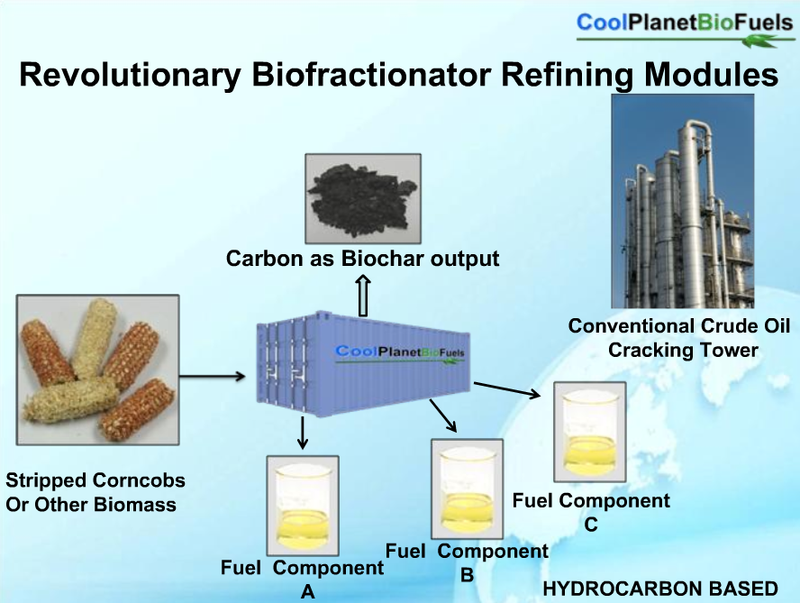
Corn Cob Gasoline @ $1 / Gallon? GE Energy Wants In

GCC

GE Energy, a GE subsidiary, has jumped into the advanced biofuels race by throwing in $8 million with the startup CoolPlanetBiofuels. The startup claims to be able to produce a bio-gasoline from rough biomass for about $1 a gallon. Here is more from GreenCarCongress:
$8-million funding round for CoolPlanetBioFuels, a start-up company developing a technology that converts low-grade biomass into high-grade fuels, including gasoline, and carbon that can be sequestered. This venture capital investment was led by North Bridge Venture Partners, which had also led CoolPlanet’s financing round last year. Additional financial details were not disclosed. CoolPlanet’s research and development facilities are located in Camarillo, CA.

CoolPlanetBioFuels is developing modular thermal/mechanical processors which directly input raw biomass such as woodchips, crop residue, and algae and produces multiple distinct gas streams for catalytic upgrading to conventional fuel components.

In support of the biomass fractionator, the company is also developing a range of one-step catalytic conversion processes which mate with the fractionator’s output gas streams to produce products such as eBTX (high octane gasoline), synthetic diesel and proprietary ultra-high crop yield “super” fuels.

At the GoingGreen Silicon Valley 2010 conference in October, Mike Rocke, CoolPlanetBiofuels VP Business Development, said that the startup could produce carbon-neutral gasoline from biomass for less than $1.00/gallon US.

Biomass throughput time in the biomass fractionator is minutes, Rocke said earlier at a conference at Stanford. Two fractionators in a module can produce one million gallons of gasoline per year, with capex of $0.50/gallon to install—i.e., $0.10/gallon over a five year life. _GCC

The image above shows a comparison of product between conventional Shell 87 octane gasoline and the Cool Planet BioFuels drop-in product from biomass, by gas chromatograph.

Whether the information provided to investors is accurate or not, if the company is able to produce high quality drop-in bio-gasoline from biomass technology already developed, increasing efficiencies and yields, and decreasing costs, may make the product competitive within a matter of 5 or 10 years.

The problem with biomass is its low energy density, and its diffuse nature. It takes a lot of energy to gather biomass together, densify it for transport, and to transport large amounts to a central processing facility such as CoolPlanetBioFuels'. It is clear that those energy costs were not figured into the amounts quoted to investors.

Thermochemical production of biofuels via pyrolysis and gasification have a natural head start on microbial fuels -- due to prior work done on other feedstocks. But if the thermochemical approach is to achieve a foothold -- and critical scale-up -- it cannot dally about while people such as Craig Venter are working feverishly to genetically engineer microbes to achieve the same thing at far lower energy cost.

Cross-posted at Al Fin Energy

Labels: , ,

Bookmark and Share

09 October 2010

Scientists: Expect Massive Growth in Smart Biofuels Production

More than 80% of total agricultural production in the United States is used to feed animals, not human beings directly;
Our analysis shows that the US can produce very large amounts of biofuels, maintain domestic food supplies, continue our contribution to international food supplies, increase soil fertility, and significantly reduce GHGs. If so, then integrating biofuel production with animal feed production may also be a pathway available to many other countries. Resolving the apparent “food versus fuel” conflict seems to be more a matter of making the right choices rather than hard resource and technical constraints. If we so choose, we can quite readily adapt our agricultural system to produce food, animal feed, and sustainable biofuels.
—Dale et al
_gcc
GCC

Up until now, most people analysing US biofuels potential have failed to look at a realistic and integrated system of fuels and food. In real life -- unlike a typical computer model with excessively simplified and misleading assumptions -- new economies grow up to utilise by-products of new and existing processes and industries. When these new markets and economies are neglected by forecasters and modelers, their results become completely erroneous.
In their study, they analyzed only the 114 million ha of cropland used now to produce animal feed, corn ethanol, and exports. Cropland used for direct human consumption, forests, grassland pasture, and rangeland are not considered. Thus, they note, the analysis provides an example of what is technically feasible, not an upper limit on US biofuel production.

For the study, they considered two land-efficient animal feed technologies: ammonia fiber expansion (AFEX) pretreatment to produce highly digestible (by ruminants) cellulosic biomass and leaf protein concentrate (LPC) production.

During AFEX, concentrated ammonia is contacted with cellulosic biomass at moderate temperatures, resulting in greatly increased production of fermentable sugars by enzymatic hydrolysis. AFEX increases the digestibility of cellulosic biomass for ruminant animals while increasing protein production in the animal rumen due to the addition of ammonia-based byproducts.

Although extensive feed testing and commercial applications have not yet been introduced, AFEX-treated rice straw has been successfully included in dairy cattle diets, and tests with switchgrass and corn stover have shown increased cell wall digestibility when exposed to rumen microorganisms.

High-protein LPC products are generally produced by first pulping and then mechanically pressing fresh green plant matter. The resulting protein-rich juice is then coagulated and dried. The remaining fibrous material is depleted in protein, but is still suitable for animal feed or biofuel production.

Animal feeding operations can be adapted to these new feeds, thereby freeing land for biofuel production, according to the authors. They also considered aggressive double-cropping, thereby increasing the total biomass produced per ha. _GCC

Even the CO2 that is produced in fermentation reactions can be filtered and used in high-value operations -- such as oil well recovery, algae growth, food production, and a wide range of chemical processes.

Instead of seeing the CO2 as a net positive, third-rate scientists and analysts tend to foolishly and short-sightedly look at CO2 as a "dangerous pollutant" and a complete liability. This faulty perspective is most likely to be seen where politics unduely influences scientific funding and publishing.

Cross posted to Al Fin Energy

Labels:

Bookmark and Share

19 April 2010

Survivalist's Diesel Factory: ARIES Goes Anywhere!

On the US west coast, opposite California's Channel Islands, is a small US naval base that is trying out a remarkable biodiesel manufactory: ARIES (Automated Real Time Remote Integrated Energy System). Portable ARIES converts non-food feedstock into high quality biodiesel by remote control. The Port Hueneme naval base is trying out the unit to see if it can be used for more forward bases. But if you are a survivalist, ARIES may sound like a nice little unit for your compound.
ARIES is equipped with a new and revolutionary element: remote control technologies that provide real-time sensing and management of key chemistry and processing parameters. The tools were developed by Aerojet, the same company that developed remote sensing and automated technology that sent man to the moon.

Real-time sensing can eliminate lengthy testing steps such as transesterification, which can take up to 1.5 hours, according to Russell Teall, Biodiesel Industries founder and CEO. When the reaction can be seen as it’s happening, those tests become unnecessary. “It’s a major advancement,” he said. “It’s the first time that sort of technology has been applied to biodiesel. It speeds things up by a factor of two.” The system includes stop points where it will show readings, asking if the operator would like to proceed with the reaction.

...The system also monitors the feedstock characteristics in real time. It can take several kinds of feedstocks including yellow grease, animal fat, energy crops, waste agricultural products and more. Not only that, but they can be mixed together. “You have to know what sort of characteristics the feedstock has,” Teall said. “Separating is burdensome, but ARIES can mix them up and tell you what the characteristics are on the fly.” The system will also recommend the best formula for the process with those particular feedstocks, leaving less room for operator error. The best feedstock mix depends on the location and climate. Teall cautions dependence on one feedstock can be unsustainable and vertical integration is crucial.

The Navy will make good use of the remote-controlled system, as it has identified 20 locations for the initial rollout, Teall said, adding that he doesn’t know a timeline for their establishment. The Navy has an obligation to meet between 20 percent and 50 percent of its energy needs internally by 2012. “So it’s going to be a fairly rapid rollout,” he said. The Navy’s immense consumption of fuel prompted the seven-year project, which began in 2003. “They’re the largest user of biodiesel in the world and it’s important they have access to their fuel,” Teall said.

The integrated energy system makes ARIES applicable to non-Navy endeavors, as well. The system produces about eight times more power and heat than it needs for its own processes. “In the international market, there’s a huge need in rural communities to create income and businesses that don’t exist right now,” Teall said. He cites India, where about 150,000 villages are without electricity. “It becomes a very efficient source of local heat.” _BiomassMag

Spokesman Teall above refers to using ARIES in rural Indian villages, but who is he kidding? ARIES is one expensive piece of hardware (if you have to ask how much, you can't afford it)! Only the US military and wealthy survivalists need apply.

More info here.

If you can afford an ARIES for your survival bunker (or remote off-grid cabin in Patagonia), you may also consider the self-fueling, free-roving robot that lives off biomass and can patrol a wide perimeter around your location while you are sleeping.

Remember, just because world economies and governments are committing debt and demographic suicide, is no reason that you have to. Although the fancy new tools of energy, nanotech, biotech, and transportation are not meant for collapse-of-civilisation use, always keep in mind the off-label uses for any technology.

Taken from an earlier post at Al Fin Energy

An ARIES unit could provide a nice energy nucleus for a small, remote settlement, or a post-apocalyptic group of survivours trying to jumpstart civilisation once again. You could power a diesel generator, a few diesel tractors for crops, and some diesel vehicles for your heavy-duty explorers. Placing fuel caches at strategic locations would become easy.

While limited in energy output in comparison to a small, modular nuclear reactor and steam powerplant, the ability to fuel diesel engines is a crucial early step back on the road to the next level.

Labels: ,

Bookmark and Share

25 February 2010

Update on Biofuels

 Update 26 Feb 10: A new process developed at UWM promises to convert a higher proportion of biomass into biofuels and useful chemicals.  It is a catalytic shortcut to the production of gasoline and jet fuel from biomass -- skipping the fermentation step to alcohols.  A good illustration of how quickly the bioenergy picture is changing.

Al Fin Energy is devoted exclusively to energy and energy-related issues. But Al Fin's coverage of advanced energy issues began here at Al Fin blog, so it is fitting to provide an update on a topic near and dear to Al Fin's heart -- biofuels.

The schematic above demonstrates Enerkem's waste to liquid fuels process, which recently received a large injection of capital from Waste Management corp.

This informative story from Energy Efficiency looks at important advances in biofuels research and projects in California (impressive improved oil yields from oilseeds), Florida (ethanol from waste), Pennsylvania (cellulosic ethanol), Kansas (cellulosic ethanol), Iowa (fuel from corn cobs), and Tennessee (cellulosic ethanol). And that is just the tip of the iceberg for biofuels research and enterprise across the US. Things are moving quickly beyond maize ethanol.

Clear Fuels and Hughes Hardwood are collaborating on a $200 million biomass-to-jetfuel project in Collinwood, Tennessee.

The University of Maryland is developing a process to produce fuels from fast-growing poplar trees grown on special plantations.

Better varieties of jatropha curcas are being developed to increase non-edible oil yields from its seeds. This is only the beginning for jatropha.

Economists from Yale and the University of North Dakota are busy demonstrating ways for biofuels to be economical and environmentally responsible. This is in stark contrast to economists from Cornell who use old numbers from maize ethanol projects to try to discredit all biofuels. Even maize ethanol is doing much better than the Cornell economists claim.
“The Cornell paper is pretzel logic at its worst. The truth is that when we fuel up with domestic ethanol in the U.S., we need less gasoline refined from carbon-heavy oil. And the science on this is clear: a peer-reviewed study published by Yale University found that grain ethanol is 59 percent cleaner than gasoline – with cellulosic ethanol 86 percent cleaner than gasoline,” continued Buis. _DomesticFuel

Of course the arguments for biofuels really have nothing to do with carbon reduction at all. Instead, they are arguments for local and regional production of energy and fuels, and a re-vitalisation of local and regional economies.

Biofuel feedstocks can be grown virtually anywhere on Earth and on the ocean's surface as well. There is no limit to the space available for growing biomass. Biomass can be turned into electricity, fuels, plastics, chemicals, and animal feed.

It is time to dispense with old prejudices against biofuels that are based upon outdated economic analyses, and begin to plan for where bioenergy will fit into your future.

Labels:

Bookmark and Share

30 March 2009

Algae Biofuels for $0.20 a Gallon? Peak Oil

Image Source Brian Wang

Update: After re-reading the article at NewEnergyandFuel more carefully, and after reading the materials at the AlgaeVenture site, I need to clarify the nature of the breakthrough. The impressive improvement in processing efficiency achieved by AlgaeVenture Systems is in the intermediate step of "removing, harvesting, and dewatering." This breakthrough will indeed lead to cheaper algal biodiesel, although for production costs of $0.20 a gallon we will have to wait for similar breakthroughs in the steps of oil extraction and fuels processing / synthesis. This is still a big deal. But not quite the "magic bullet" I at first thought. The Al Fin article below is edited to reflect this more careful second reading.

Algae is a monster at growing rapidly and producing huge quantities of oil. But until now, it has cost between $10 and $20 a gallon to produce biodiesel from algae. Now a company in Ohio claims to have cut the price of processing algae for oil production by a factor of over 100! The technology involves a continuous process de-watering and dry flaking of the algae for oil removal. Brian Westenhaus gives more information:
Ross Youngs, CEO of Univenture, the parent corporation of AlgaeVenture Systems said, “For nearly 40 years, it has been widely accepted that if the cost of removing, harvesting and dewatering algae could be reduced to $50 a ton, algae could become a significant source of fuel. Today we have demonstrated a truly disruptive technology that reduces that cost by more than 99 percent – from $875 per ton to $1.92 per ton. We believe that this breakthrough moves algae back into the spotlight as an economically viable, plentiful source of fuel in the future.”

If this works, scales up and is low cost to buy and install, “disruptive” might be a vast understatement. As the following chart form AlgaeVentures shows, and its loaded to their favor but not by far, the cost to gather, separate out the water and dry down algae so the oil can be harvested is a huge capital and ongoing expense. _NewEnergyandFuel
Read the entire article above, which suggests the "algal pre-processing" price per gallon for algae fuels may drop below 5 cents a gallon! Very difficult to believe, certainly, but breakthroughs have a habit of occurring when least expected. [ The total cost of production for a gallon of biodiesel would also include the costs of cultivation, oil extraction, and fuel synthesis costs. Even so, this development puts algal biofuels on the fast track to being the biodiesel of choice.]

The disruptive part of the technology comes not only from cheap and abundant liquid fuel that is coming, but from the potential to engineer the algae to produce a wide range of chemicals and other products such as high protein animal feeds. Algae are becoming quite useful for water purification of both municipal wastewaters and agricultural runoff. And for the climate catastrophe crowd, algae can eat CO2 like every day is Thanksgiving. This is very big news, if it works.

Update: Brian Wang also covered this story a few days ago.

The longer I think about this partial breakthrough, the more important it seems to me. Algae comes in many species, capable of growing in a wide range of environments. Algal oil production might range from 1,000 gallons per acre to 100,000 gallons per acre -- depending upon the growth setting and the species of algae. Even at the lowest levels, algae can out-perform palm and jatropha -- the best oilseed crops. It has always been a matter of finding economical ways of processing the algae, extracting the oil, and creating the fuel from the oil.

It makes sense that the breakthroughs for each significant step in the overall process would take place separately, and be achieved by different groups. The important thing is that significant progress is being made on all fronts. The cost of producing algal biofuels is falling -- and if enough progress is made the price point at which algal fuels can be sold will cross the price point for petrol fuels somewhere under $5 a gallon within the next 5 to 10 years.

If we do run short of fuel, the problem is more likely to be Obamanomics and Obamapolitics rather than any failure of technology. Any jackass can invent a faux crises, claim it must be solved or it will destroy the planet, then institute policies that create even worse problems as side effects. [Of course, there are some things that could destroy the planet, but Obama is not concerned about those] In this case, the jackass is the Obama / Pelosi reich, promoting a "solution" for climate change. Such stupidity adds significant urgency to the need to develop a non-food crop fuels alternative such as algae -- which thrives on CO2, thrives on salt water and wastewater, thrives in the desert where no crops grow, and so on.

Labels: ,

Bookmark and Share

17 March 2009

Fast Forward Evolution: Advanced Microbe Fab

LS9 biofuels company aims to create "magic microbes" to solve the world's energy problems, and other problems besides. To that end, they have developed a machine to create rapid multiple changes in a bacterial genome. They have put evolution on "fast forward" in the hope of riding the magic microbes into the future.
"What once took months now takes days," says Stephen del Cardayré, vice president of research and development at LS9, a biofuels company based in South San Francisco of which Church is a founder. LS9 soon plans to use the technology--called multiplex-automated genomic engineering, or MAGE--to accelerate development of bacterial cells that can produce low-cost renewable fuels and chemicals.

...Church and his collaborators attack the genome on a broad scale. They design numerous genetic changes targeting genes throughout the genome, and then implement them all at once, looking for the resulting bacterial strain that can best produce the desired product. "It allows you to make modifications to the genome much more rapidly than the traditional one-step processes we have," says Kristala Jones-Prather, a metabolic engineer at MIT who was not directly involved in the research.

...As a test run of the device, Church and his team created bacteria that could more efficiently produce lycopene, an antioxidant abundant in tomatoes. They designed DNA strands targeting genes known to be involved in lycopene production, and then monitored multiple tubes of engineered bacteria for production of the bright-red compound. In just three days, they had generated a strain that could produce five times more lycopene, according to findings presented at a conference at Harvard this month. The best lycopene producer had 24 genetic changes--four that completed blocked production of the gene's protein, and 20 that resulted in small or large changes in the expression of that gene.

Church and his collaborators, who ultimately plan on making a commercial version of the device, are now working on creating different types of chemicals, including biofuels and drug precursors. _TechnologyReview
Biofuels from microbes will not take up croplands, will not destroy rainforests, will not produce pollutants -- but count on faux environmentalists to dream up some reason that abundant microbial biofuels will destroy the planet. In the meantime--before they dash our childish hopes-- let us cultivate our simple-minded optimistic belief that humans can somehow find a way to live in the world without destroying it.

Labels: , ,

Bookmark and Share

23 February 2009

Big Oil Invests In Biofuels: The Bio Future is Near

Most biofuels naysayers haven't taken the trouble to look at all the different ways that biological organisms can create energy and energy feedstocks. Brian Wang recently discussed Sandia National Lab's recent study predicting the production of 90 billion gallons a year of biofuels in the not-so-distant-future. And now, Brian Westenhaus takes a good look at the growing involvement of big petroleum in the research and development of biofuels.
Big Oil is helping the biofuel industry move past the persistent perception that cellulosic-based fuel is five years from reality. “That would have been accurate five years ago,” Riva said. “It’s not accurate today.”

Meanwhile Exxon Mobil is in the media openly talking about its interest in biofuels. With an industry reputation of strong research and high powered engineering skills, Exxon Mobil getting into the business would mark a turning point for biofuels and for the long term viability of oil being an economy dominating club for the market manipulators.

...the news is that BP is in the biofuels business. Big Oil, with all the baggage the industry has to cope with in people’s perceptions has more incentive, capital, skill and management than any other segment of the economy. What the press and media overlook is that for over one hundred years the oil industry drove to lower fuel prices, expanded markets and a higher standard of living. Check your history till 1972 when the first embargo from OPEC began the market distortions. The oil industry had been a boom and bust business before OPEC, even more so since. No one craves a low priced, high volume, steadily profitable business more than Big Oil. Nearly two generations of oil industry people have endured a torrent of troubles. _NewEnergyandFuel
British Petroleum, Shell, Exxon, Valero, Chevron, and other big oil companies are researching, developing, and / or investing in production and refining of biofuels. All of this at a time when oil prices are stuck in the doldrums. This tells you that at least most of these companies can see a time when producing biofuels will be competitive with producing petro-fuels. Sometime very soon, perhaps.

Most analysts expect oil prices to rise sharply as soon as the global economic situation begins to revive. But as biofuels production becomes more economical, and scales upward in volume, petro-fuels will have a strong competitor. And competition generally helps constrain prices. I supppose the oil companies wanted to get in on the ground floor.

Taken from a post at Al Fin Energy

Labels:

Bookmark and Share

16 July 2008

Skipping Ethanol: Going Directly to Gasoline

Ethanol as fuel for automobiles seems to work alright for Brazil. But modern infrastructure is built for gasoline, and most North American automobiles were built to run on gasoline. What if biofuels producers could go directly from cellulose biomass to gasoline, without producing alcohols? With the right sequence of processes and the proper catalysts, it could be done. The problem is doing it efficiently, with high yields.
By speeding up the formation of certain products and slowing down the formation of others, catalysts effectively steer a reaction to a subset of possible products. In the refinement of biomass-to-fuel, catalysts can steer reactions to the most valuable biofuels and bioproducts thereby minimizing costs associated with product separation and feedstock recycling. “This is the real magic and promise of catalysis,” Auerbach says.

...Christopher Jones, a chemical engineer at Georgia Institute of Technology, works from a number of different angles when it comes to biofuels research. The common thread to his team’s projects, however, is that they all focus on lignocellulosic feedstocks, mainly pine and switchgrass, as opposed to edible starches. One of their ongoing projects is gathering data on the behavior of mineral acids such as sulfuric acid in the pretreatment of biomass. “It’s not a particularly interesting or sexy catalytic process,” Jones says. “Mineral acids have been used for a number of years to break down biomass but there are only small, isolated studies in the literature.” Jones’ team is taking a single biomass and systematically studying the effect of certain types of acids and reaction temperatures to gain a greater understanding of how these catalysts act.

...Brent Shanks, a chemical engineer at Iowa State University, first gains an understanding of the characteristics of a reaction and then designs catalysts around that. He calls this “rational design.” His approach is one of bio-inspiration in that it aims to take certain characteristics of enzymes and build them into chemical catalysts. “Enyzmes are beautiful catalysts but they have some issues such as sometimes they’re too specific, too selective, and also you can’t go to high temperatures with them,” he explains. “With chemical catalysts you can go to higher temperatures but they’re not nearly as specific as enzymes.”

...In a different approach, the team at PNNL, which Holladay is a part of, uses high-throughput screening to test multiple catalysts at a time and to increase the number of experiments they can do over a given period of time. This method for identifying new catalysts is carried out at PNNL’s Combinatorial Catalysis Lab. Initially, robotic equipment is used to form each catalyst to be tested. Solids handling robots weigh and add an appropriate amount of solid support to a small well on a microtiter plate. Each plate holds 96 wells, so up to 96 catalysts can be developed and tested together. Liquids handling robots then add a salt solution of metals, which fill the pore spaces of the support. The liquid is evaporated leaving the metals embedded in the support. Once the catalyst is treated to set the metals in the active state, the plate is moved to a reactor system where the biomass to be tested is applied to each well. The reaction is carried out in a second reactor and then another set of robotic systems draws samples from each well for analysis, Holladay explains. _EthanolProducer
Different approaches are being taken by different research groups, because it is still very early in the game of thermochemical conversion of cellulose to hydrocarbon fuels. Ethanol producers will have at least a decade to prove what they can do--in terms of efficiencies and yields, not to mention making a profit.

In today's uncertain (and rather deranged) political environment, where entire blocs of nations chase after the "climate change" delusion, one can never predict what will be encouraged and what will be prohibited, politically. We live in an age of "political peak oil", which distorts energy costs significantly, and makes it much harder for entrepreneurs and venture capitalists to plan new ventures and startups.

As usual, our friends at Oynklent Green [OTC:OYNK] are following the situation closely, putting themselves into a better position to react as situations warrant.

Labels: , ,

Bookmark and Share

14 July 2008

Growing Biofuel in Saltwater: Making New Cropland

Carl Hodges is a 71 year old Atmospheric Physicist. He believes in solving problems, not whining about them. As shown in the photo above, Hodges is attempting to prove that Earth's humans can grow more biofuel than they had imagined--in saltwater! No need to use arable cropland, or for "stealing food out of hungry third world mouths" [according to some whiners].
Hodges' knack for making things grow in odd environments has been on display at the Land Pavilion in the Epcot theme park at Walt Disney World in Florida and the Biosphere 2 project in Arizona.

Here in the northern Mexican state of Sonora, he's thinking much bigger....He wants to channel the ocean into man-made "rivers" to nourish commercial aquaculture operations, mangrove forests and crops that produce food and fuel. This greening of desert coastlines, he said, could add millions of acres of productive farmland ....Hodges has already built such a farm in Africa. Political upheaval there shut much of it down in 2003. That's why he's determined to construct a showcase project in North America to demonstrate what's possible....That's where salicornia comes in.

A so-called halophyte, or salt-loving plant, the briny succulent thrives in hellish heat and pitiful soil on little more than a regular dousing of ocean water. Several countries are experimenting with salicornia and other saltwater-tolerant species as sources of food. Known in some restaurants as sea asparagus, salicornia can be eaten fresh or steamed, squeezed into cooking oil or ground into high-protein meal.

Hodges, who now heads the nonprofit Seawater Foundation, plugged salicornia for years as the plant to help end world hunger. Do-gooders applauded. The private sector yawned....Then oil prices exploded. Hodges saw his shot to lift his fleshy, leafless shrub from obscurity.

That's because salicornia has another nifty quality: It can be converted into biofuel. And, unlike grain-based ethanol, it doesn't need rain or prime farmland, and it doesn't distort global food markets. NASA has estimated that halophytes planted over an area the size of the Sahara Desert could supply more than 90% of the world's energy needs. __More at LAT_via_CarlBrannen_via_GrahamHancock
Although it is not likely that sea levels will actually rise significantly in the next hundred years or so, it is quite true that industry cannot run without fuel. Given the tendency of the current US Congress to promote political peak oil energy shortages, it is important to pursue any source of useful liquid fuel possible.

Seawater can grow abundant single cell algae, or multi-cell seaweed, for conversion to biofuels. But if entire seawater plantations of land plants can also be grown, that opens up the process not only to coastal areas but to seasteads. Remember: the genetic engineering of plants is creating varieties of crops and trees that thrive in briny or salty water and soil.

You have to admire folks who single-mindedly pursue solutions to important problems. Quite unlike the whiners who populate most university department faculties--especially the social sciences and liberal arts.

More on Salicornia:
Salicornia provides value-added products: its seeds yield edible oil that is low in cholesterol and contains antioxidants; its succulent tips are used widely in Europe and USA in green salad dressings; the plant itself can be excellent fodder.

Research has revealed the potential of its biomass, too. The green biomass can be used as fodder for cattle. This fodder has increased milk yield by 15 per cent in addition to making it protein rich. The dry biomass is used to prepare particleboard (for use in furniture).

Labels: , , ,

Bookmark and Share

12 May 2008

Furfural from Bagasse, and the Algae Shade Wall

Furfural is a diesel substitute that can be produced from bagasse--the hemicellulose "waste" byproduct of sugar manufacture from sugar cane. Furfural is produced from bagasse by steam distillation, water separation, and purification.
An alternative biofuel, called furfural, is gaining new levels of attention because, like cellulosic ethanol, it is produced from waste biomass such as sugar cane bagasse. After pressing cane for sugar, furfural is produced by steam distillation; it has been produced since the 1920s on a commercial basis and imports for $2.24 per gallon. Avantium has successfully tested furfural as a diesel substitute. Avantium branded its furfural-based biofuel as Furanics, and tests showed a significant reduction in soot emisions and and elimination of sulphur emissions, when compared to conventional diesel. __BiofuelsDigest
On the algal biodiesel front, attempts to scale up production of oils from algae are running into the "shade wall" problem: too much algae in the mix blocks the sunlight needed to grow more algae. Algae growers are successful in using algae for water purification, however, as algae grows quite well in waste water. This Biofuels Digest article provides a good rundown on current algae biofuels research. Current production costs for algal biodiesel are near $20 a gallon, revealing how far algae research and development must go to be viable. Of course, if speculators and oil dictators have their way, gasoline itself will cost $20 a gallon at the pump soon. That is not likely, however, since Coskata and other cellulosic ethanol producers are promising to make ethanol at costs of $1 a gallon within the next 2 to 3 years.

Labels: ,

Bookmark and Share

01 May 2008

Announcing Oynklent Green: A New Energy Future

The world is in need of an abundant source of renewable energy. Al Fin Blog Syndicates is proud to announce the IPO for Oynklent Green [OTC: OYNK], the new corrupt-politician-to-biofuels thermochemical process which promises an unlimited new source of biofuels, which will actually result in more available food and cropland--not less.

An earlier Al Fin article threw the idea out as a trial balloon, and I must say the response has been most gratifying. Knowing that turkey and pork processing waste products are being used to create biodiesel, and understanding how closely related corrupt politicians are to both turkeys and pigs, the scientists at Al Fin Laboratories quickly began work on a top-secret project to perfect the "corrupt-politican-to-biofuels" (CPTB) process.

I am happy to report that the CPTB process was easier to perfect than anticipated, as the process used for turkeys and pigs was transferrable almost entirely to corrupt politicians! That happy coincidence combined with a groundswell of public support and financing allows me to announce the IPO for OYNK.

Due to problems with the SEC resulting from the rapid organisation and venture funding of OYNK, all stock transactions must take place via e-mail. But be assured that all Oynklent Green accounting will be overseen by the same accounting firm that oversaw the energy giant Enron, Arthur Andersen (re-organised).

So purchase your stock today, before Oynklent Green becomes so big as to be unaffordable. Remember, "Energy is People!"

Labels: , ,

Bookmark and Share

27 April 2008

Don't Be Stuck on Stupid! Stop Blaming Biofuels

Biomass to liquid fuels (BTL) is a promising approach to weaning modern societies off of petroleum. As we learn to make transportation fuels from biomass and other non-food feedstocks, it is important not to kill the infant market while it is still in the cradle. Don't be stuck on stupid. 2nd and 3rd generation biofuels and biomass offers one way out of our petroleum trap.
Biofuels already make up about 50 per cent of the extra fuel coming to the market from sources outside the Opec’s oil cartel this year. This explains why fears of a retreat from biofuels this week helped drive oil prices to record levels.

William Ramsey, deputy executive director at the IEA, said: “If we didn’t have those barrels, I am not sure where we would be getting those half a million barrels [from],” adding that Opec has said it would not raise supply.

The warning comes as the backlash from rocketing food prices has increased pressure on the European Union and the US to review their support of fuel made from crops.

The views of the IEA carry significant weight in Europe and the US and policymakers have warned that the debate about biofuels should take into account its implications for energy markets and climate change. The issue has been put on the agenda for the next G8 summit in July. __FT
Advanced biofuels are the nearest term solution to ever higher energy prices. If you kill that chance, you have doomed yourself foolishly well.

Labels:

Bookmark and Share

18 March 2008

Another Way to Get High on Ethanol

High fuel costs are sending aircraft manufacturers and airlines scurrying to find ways to run their aircraft on cheaper fuels. Brazilian manufacturer of crop-dusters, Neiva, is producing an ethanol-powered crop-duster, and has sold 50 of the grog-powered 'dusters so far.
Embraer subsidiary Neiva is set to deliver the latest Ipanema agricultural aircraft to a Brazilian customer this month.

The low-wing Ipanema entered service in 1973 and 30 years later Embraer introduced an ethanol-fuelled version. It continues to manufacture around two aircraft a month for the Latin American market - mainly Brazil.

"We have sold 50 new ethanol Ipanemas to date and more than 200 $40,000 ethanol conversion kits [manufactured by Textron Lycoming] as this fuel is around 40% cheaper to purchase in Brazil than traditional avgas," says Embraer.___Source__via__BiofuelsDigest

Peak oil doomseekers have long predicted that high prices of petroleum fuels will spell the end of aviation, large-scale transport, and high yield agriculture. The problem with these dime-a-dozen, dimwitted prophecies of doom, is that humans have been reacting to adversity for over a hundred thousand years.

The fact that humans can live and prosper in a wider range of habitats than any other large animal, suggests that the unsightly knot residing between human shoulders has a function other than consuming food and water, or making silly and irrelevant noises.

Ultimately, liquid bio-energy will be of much better quality than ethanol, and will work better within existing engine systems, storage systems, and pipeline systems, than does ethanol. Between now and then, expect ethanol from cane, beets, sorghum, and bio-engineered maize to merge with cellulosic ethanol/butanol to provide a bridge to better bio-energy--within the next 10 years.

Labels:

Bookmark and Share
Older Posts
Al Fin Main Page
Enter your Email


Powered by FeedBlitz
Google
WWW AL FIN

Powered by
Blogger

``