26 October 2006

Bioremediation--Using Microbes to Infect Us into Wellness

The concept of a benign infection with helpful micro-organisms is not a new one. Our normal bacterial flora on the skin, in the gut, and other body locations--all of these bacteria protect us from pathological infections and provide us with other benefits as well. Now, researchers are looking into using benign infections to combat atherosclerosis--the major killer of persons in the western world. From the Methuselah Foundation:

The Biodesign Institute at Arizona State University has awarded biochemist John Schloendorn a $30,000 scholarship that will enable him to pursue anti-aging research as a Ph.D. student in the School of Life Sciences. Schloendorn is part of the institute’s inaugural doctoral graduate assistantship class of 2006.

Schloendorn’s pioneering work concerns a new field of research called medicalbioremediation. The research focuses on identifying microbes that possess particularly effective mechanisms to biodegrade the molecular “junk” thataccumulates inside cells over time, and is at the root of many of the debilitiescaused by aging. Schloendorn’s research has been and is supported by a seedgrant made by the Methuselah Foundation, a charity dedicated to accelerating theprocess of discovering methods to defeat the debilities caused by aging.

Schloendorn’s work has led to the isolation and characterization of bacteriathat efficiently degrade several recalcitrant cholesterol breakdown products,among them 7-ketocholesterol, that are thought to play a major role inatherosclerosis (the cause of almost all heart attacks and strokes). His futureobjective is to isolate the enzymes responsible for the breakdown and test theirtherapeutic prospects in cell models of the disease, with the ultimate goal ofcreating medical bioremediation treatments for humans.
See the Methuselah Foundation website for more information.

Of course using viruses to introduce new genetic sequences is another way of using microbes in a hopefully benevolent way. As scientists learn more sophisticated and multi-level ways of affecting the human organism using microbe genomes and other cellular machinery, they will need to understand both human biology and microbial biology at correspondingly more sophisticated levels. Micro-organisms are a biological form of nanotechnology, and will no doubt compete with other forms of nanotech medicine to perform similar cellular rejuvenation tasks.

Labels:

Bookmark and Share

25 October 2006

Expecting More from Our Cars

Maybe it was all the James Bond films. The floating cars, the submarine cars, the flying boats, and so on. We simply want our transportation devices to do more than one thing.

Take the new Hydra Spider super fast floating car.

With its snazzy snout, convertible top, Corvette V8 engine and jet "impeller" -- the stainless-steel cone protruding from the rear that propels it through water -- the Hydra Spyder is poised to become the first, mass-produced amphibious automobile in America.

"It's incredibly nimble in the water. The Spyder turns smoothly, docks easily," the 46-year-old inventor boasts.

It has one shortcoming, he concedes. On the water, "the parallel parking really sucks."

Giljam tingles at the idea of anglers taking their cars out on lakes for a day of fishing; of rush-hour commuters bypassing congestion by taking a river as an alternate route; of water-skiers bouncing along in the wake of a speedboat with four wheels.

Or take the flying car presently under development by former MIT engineering student Carl Dietrich and his company Terrafugia. Sooner or later, someone will develop a comfortable road car that also flies.

My personal choice would be a flying car that could also travel submerged like a submarine, or like a hovercraft over water, mud, or ice. It would have to also function as a motorhome, for overnight trips. I do not think I am asking too much, not really. At least I didn't ask for a built in warp drive or time machine. Not yet, anyway.

Labels:

Bookmark and Share

24 October 2006

Amazing Neurochip Has Potential to Strengthen Neural Connections

UW Researchers report on an implantable electronic neurochip that may help rehabilitate patients with stroke or other types of brain damage. This chip is capable of performing an amazing function--it creates an artificial neural pathway that the brain can use to recuperate from otherwise disabling injury.

Researchers at the University of Washington (UW) are working on an implantable electronic chip that may help establish new nerve connections in the part of the brain that controls movement. Their most recent study, to be published in the Nov. 2, 2006, edition of Nature, showed such a device can induce brain changes in monkeys lasting more than a week. Strengthening of weak connections through this mechanism may have potential in the rehabilitation of patients with brain injuries, stroke, or paralysis.....

When awake, the brain continuously governs the body's voluntary movements. This is largely done through the activity of nerve cells in the part of the brain called the motor cortex. These nerve cells, or neurons, send signals down to the spinal cord to control the contraction of certain muscles, like those in the arms and legs.

The possibility that these neural signals can be recorded directly and used to operate a computer or to control mechanical devices outside of the body has been driving the rapidly expanding field of brain-computer interfaces, often abbreviated BCI. The recent Nature study suggests that the brain's nerve signals can be harnessed to create changes within itself.

The researchers tested a miniature, self-contained device with a tiny computer chip. The devices were placed on top of the heads of monkeys who were free to carry out their usual behaviors, including sleep. Called a Neurochip, the brain-computer interface was developed by Mavoori for his doctoral thesis.

"The Neurochip records the activity of motor cortex cells," Fetz explained, "It can convert this activity into a stimulus that can be sent back to the brain, spinal cord, or muscle, and thereby set up an artificial connection that operates continuously during normal behavior. This recurrent brain-computer interface creates an artificial motor pathway that the brain may learn to use to compensate for impaired pathways."

Jackson found that, when the brain-computer interface continuously connects neighboring sites in the motor cortex, it produces long-lasting changes. Namely, the movements evoked from the recording site changed to resemble those evoked from the stimulation site.
Source.

An electronic implant that can learn neuronal "language" in order to teach damaged brain to repair itself, is something new and promising. Insightful thinkers have wanted to learn the "language of the brain" for many years. Now we seem poised on the brink of beginning that process productively for healing purposes. I look forward to following this progress.

Labels: ,

Bookmark and Share

Ending the Torture--How Long?

For everyone who has earned themselves a root canal and crown, you understand what torture can be. None of this lady's underwear tease for torture crap. When you talk about dental work, you are talking genuine existential torture without the need for exaggeration you see in ideological claims of torture.

Well, things are changing. It may seem that dentistry is the last profession to innovate--and that may be true. Even so, better late innovation than no innovation at all. Medgadget blog brings a fascinating story about rapid same-day crown manufacture and placement--in the office.

Digital dentistry, using high-end computer-aided design and manufacturing right in dentists offices, will take crown fabrication from the painful multi-visit ordeal it is now to a quick, 30 minute job. And according to the Dallas Morning News, the company that will bring this innovation to you isn't modest about their beliefs:

Anyone who's ever had a tooth reconstructed knows the routine. The problem tooth is drilled down, and a temporary covering is put on while a permanent crown is made. The patient returns in a few weeks to have the permanent crown put in.

For four years, D4D has been working feverishly to change that. With its now-patented technology, the tooth is digitized using a laser wand, and a virtual 3-D model is sent to a computerized milling machine that makes the crown, inlay, onlay or veneer in 30 minutes. The patient leaves with a new tooth.

Company founder and chief executive Basil Haymann says the system is undergoing user testing and clinical studies (including one just starting at Baylor College of Dentistry). It's also in the final approval stage with the Food and Drug Administration.

"I had to be a little insane," the 60-year-old says, "because I've put in tens of millions of dollars into a dream, which everyone told me was impossible."
Source.

Did you get that? The tooth is digitized with a laser wand, and a micro milling machine makes the crown in 30 minutes or less! This may be the beginning of a beautiful transformation of how ordinary people view a trip to the dentist's. I look forward to more innovations from dental researchers. Having rapidly decaying rocks in our mouths for masticating food may have been a good idea when people lived only thirty or forty years on average. Now that people look to live close to a century or longer, our mineral teeth as currently designed may not go the distance with the rest of us.
Bookmark and Share

23 October 2006

Academic Bill of Rights--Where to Go from Here

Yesterday I presented the problem of the "indoctrination university"--a place for students to go to be brainwashed rather than to be taught different styles of thinking and viewing the world, so as to be able to forge their own unique style.

The Students for Academic Freedom have published on their site the Academic Bill of Rights, as a guideline for universities who seek to bring open-mindedness back to universities, to replace the politically and philosophically one-sided hyper-bias of current universities in North America.

.....Academic freedom consists in protecting the intellectual independence of professors, researchers and students in the pursuit of knowledge and the expression of ideas from interference by legislators or authorities within the institution itself. This means that no political, ideological or religious orthodoxy will be imposed on professors and researchers through the hiring or tenure or termination process, or through any other administrative means by the academic institution. Nor shall legislatures impose any such orthodoxy through their control of the university budget.

This protection includes students. From the first statement on academic freedom, it has been recognized that intellectual independence means the protection of students – as well as faculty – from the imposition of any orthodoxy of a political, religious or ideological nature. The 1915 General Report admonished faculty to avoid “taking unfair advantage of the student’s immaturity by indoctrinating him with the teacher’s own opinions before the student has had an opportunity fairly to examine other opinions upon the matters in question, and before he has sufficient knowledge and ripeness of judgment to be entitled to form any definitive opinion of his own.” In 1967, the AAUP’s Joint Statement on Rights and Freedoms of Students reinforced and amplified this injunction by affirming the inseparability of “the freedom to teach and freedom to learn.” In the words of the report, “Students should be free to take reasoned exception to the data or views offered in any course of study and to reserve judgment about matters of opinion.” ....
Source.

If you read the ABR carefully at the link above, you will see that it does not call for any type of faculty quota. I will quote from the ABR below so that you can see exactly what is being called for:


1. All faculty shall be hired, fired, promoted and granted tenure on the basis of their competence and appropriate knowledge in the field of their expertise and, in the humanities, the social sciences, and the arts, with a view toward fostering a plurality of methodologies and perspectives. No faculty shall be hired or fired or denied promotion or tenure on the basis of his or her political or religious beliefs.

2. No faculty member will be excluded from tenure, search and hiring committees on the basis of their political or religious beliefs.

3. Students will be graded solely on the basis of their reasoned answers and appropriate knowledge of the subjects and disciplines they study, not on the basis of their political or religious beliefs.

4. Curricula and reading lists in the humanities and social sciences should reflect the uncertainty and unsettled character of all human knowledge in these areas by providing students with dissenting sources and viewpoints where appropriate. While teachers are and should be free to pursue their own findings and perspectives in presenting their views, they should consider and make their students aware of other viewpoints. Academic disciplines should welcome a diversity of approaches to unsettled questions.


5. Exposing students to the spectrum of significant scholarly viewpoints on the subjects examined in their courses is a major responsibility of faculty. Faculty will not use their courses for the purpose of political, ideological, religious or anti-religious indoctrination.


6. Selection of speakers, allocation of funds for speakers programs and other student activities will observe the principles of academic freedom and promote intellectual pluralism.


7. An environment conducive to the civil exchange of ideas being an essential component of a free university, the obstruction of invited campus speakers, destruction of campus literature or other effort to obstruct this exchange will not be tolerated.


8. Knowledge advances when individual scholars are left free to reach their own conclusions about which methods, facts, and theories have been validated by research. Academic institutions and professional societies formed to advance knowledge within an area of research, maintain the integrity of the research process, and organize the professional lives of related researchers serve as indispensable venues within which scholars circulate research findings and debate their interpretation. To perform these functions adequately, academic institutions and professional societies should maintain a posture of organizational neutrality with respect to the substantive disagreements that divide researchers on questions within, or outside, their fields of inquiry.


Many people when first exposed to the concept of intellectual diversity, assume that those who are ideologically being actively excluded from faculties would naturally call for an affirmative action or quota policy, to ensure the inclusion of their own political point of view on faculties. As you can see by reading the Academic Bill of Rights, that is not the case.

Unfortunately, going from the present absurdly skewed and biased system, to a more principled and inclusivist, and less biased, system, will not be easy. The faculty stands ready at the barricades to repel all invaders to their sacred ground of power and indoctrination.

Rationality does not signify here, for these faculty defenders live in the post-modern world, the post-rational world as it were. These will be interesting times on the battlefields of academic freedom. You have to watch the definitions, because in the post modern world, words no longer mean what you think they mean.
:-)See also the website for FIRE--the Foundation for Individual Rights in Education.

Labels: , , ,

Bookmark and Share

22 October 2006

Intellectual Diversity on Campus--What Went Wrong?

Universities were never meant to be the indoctrination centers for political correctness they have become. In "The Elusive Goal of Intellectual Diversity," award winning science fiction author Orson Scott Card discusses the current pathetic state of intellectual restrictiveness that is almost universally present on North American university campuses.

....As a friend of mine on the faculty of a western university wrote not long ago, "higher education may have other litmus tests for ideological conformity, but the you-better-believe-in-diversity test is the only one that isn't hidden."

Ironically, the result of this absolute insistence on a commitment to diversity is ... a lack of diversity.

When the administration and faculty have all had to make the same affirmation in order to get their jobs, how likely is it that anyone will use their "academic freedom" to question a doctrine that they have already declared they believe in?

....Here and there, however, students are beginning to rebel against the pious cant that they hear from their relentlessly establishment teachers.

For instance, at Utah State University, student officers voted for an "Academic Bill of Rights." The goal was to "support intellectual diversity" on campus, and it called for such things as:

"Faculty will not use their courses for the purpose of political, ideological, religious, or non-religious indoctrination."

"Selection of speakers, allocation of funds for speakers programs and other student activities will observe the principles of academic freedom and promote intellectual pluralism."
More at Source.

Or take this Chronicle.com oped discussing the Academic Bill of Rights, promoting Intellectual Diversity.

By adopting the Academic Bill of Rights, an institution would recognize scholarship rather than ideology as an appropriate academic enterprise. It would strengthen educational values that have been eroded by the unwarranted intrusion of faculty members' political views into the classroom. That corrosive trend has caused some academics to focus merely on their own partisan agendas and to abandon their responsibilities as professional educators with obligations to students of all political persuasions. Such professors have lost sight of the vital distinction between education and indoctrination, which -- as the AAUP recognized in its first report on academic freedom, in 1915 -- is not a legitimate educational function
Source.

When "search committees" look for new faculty members, they are actually looking for more faculty members who think the same way as the search committe thinks. This leads to monolithic intellectual conformism in a faculty, which harms students' ability to function in the real world.

Former leftist radical turned conservative rabble-rouser David Horowitz has made a cause of intellectual diversity on campus. Recently Horowitz visited Duke University to give a talk on intellectual diversity among faculties. But a professor of women's studies had a surprise waiting for him--a bevy of women students prepared to laugh, heckle, and take off their shirts to distract attendees from Horowitz topic. I wish young women students would do that for me when I give a lecture or talk. That type of distraction I could deal with.

This CFIF commentary gives even more insight into the sad lack of range of intellectual challenge provided for students on the modern PC campus.

College students love to complain about how campuses are removed from "reality," which is generally defined as living in subsidized housing, sleeping on a park bench, or working in a makeshift medical clinic in Africa. But these same students seem completely oblivious to how far removed their campuses are from the rest of the nation’s political discourse. In the country as a whole, Democrats and Republicans are almost evenly split, but studies indicate that academic faculties are often skewed at least 10 to 1 in Democrats’ favor. My law school’s faculty of more than 100 includes only one registered Republican. On many campuses, students are more likely to find a Marxist professor than a conservative professor. It’s not unusual to hear a professor assert that Ronald Reagan systematically and deliberately spread AIDS to homosexuals, or that George W. Bush is not legitimately our president; many professors at my law school quite convincingly contend there is no such thing as a free-market economy and that law itself is completely indeterminate.

The most disturbing aspect of this phenomenon is how students on both sides of the political spectrum — most paying astronomical tuition — are being shortchanged. Schools often structure their curricula around professors’ specialties; thus when liberal thought is so drastically overrepresented, it is bound to overshadow necessary curricula. During most of my terms as an undergraduate, the journalism school I attended offered at least three advanced courses on race, poverty, gender or the evils of the death penalty, but not a single class on editorial writing.

Although many classes attempt to examine issues from both sides, conservative arguments are bound to be less convincing when rarely advanced by anyone who believes them. This is regrettable for both conservative and liberal students — for conservatives because they are not taught the most defensible form of their arguments and for liberals because their own views are not adequately challenged. Sure, students can make an effort to push the envelope themselves, but shouldn’t the bulk of that burden belong on the faculty? After all, they are the ones paid to foster diversity of thought.

Professors with a point of view are not incapable of teaching two sides of an issue — in my experience, many do a remarkable job. But not all professors are so open-minded; some blatantly intend to inculcate students with their political views. For example, last year a Citrus College professor required students to write anti-war letters to President Bush, and a Colorado professor asked students to write an essay explaining why the President was a war criminal. Students who refused or expressed different opinions received no credit. Sometimes professors offer such assignments for extra credit, but is that really a proper option — those who think like me get extra credit, and those who don’t, please keep it to yourself?

Maybe one Berkeley professor had it right in adding to a course description: "conservative thinkers are encouraged to seek other sections." Although the professor later apologized, one can almost appreciate the initial honesty in admitting up front that a course is designed in furtherance of a professor’s point of view.
Source.

This is a fascinating topic that is playing itself out on campuses across america. It is obvious to me that the leftist end of the spectrum has overwhelming control of most university campuses--and intends to consolidate and increase that control. It is up to more level headed minds who are actually concerned about the quality of education modern North American students receive, to attempt to provide more balanced offerings on more and more campuses.

Visit Students for Academic Freedom for more information. Another good resource is FIRE--Foundation for Individual Rights in Education.

Labels: , , , , , , ,

Bookmark and Share

21 October 2006

Mental Chronometry As Alternative to IQ Tests--New Book from Jensen

Mental Chronometry (MC) has been used for 150 years to measure the underlying neurological processes that support cognition. IQ tests have largely supplanted MC for measuring "g", or general intelligence, but as Psychometrician Kevin McGrew points out in his interesting post, Arthur Jensen maintains in his new book that MC can be very useful indeed to find measures of "g".

First developed in mid-1800, MC was subsequently eclipsed by more complex and practically useful types of psychometric tests stemming from Alfred Binet. This class of mental tests, however, has no true metric relating the test scores to any specific properties of the brain per se. The scores merely represent an ordinal scale, only ranking individuals according to their overall performance on a variety of complex mental tasks. The resulting scores represent no more than ranks rather than being a true metrical scale of any specific dimension of brain function. Such an ordinal scale, which merely ranks individuals in some defined population, possesses no true scale properties, possessing neither a true zero or equal intervals throughout the scale. This deficiency obstructs the development of a true natural science of mental ability. The present burgeoning interest in understanding individual differences in mental abilities in terms of the natural sciences, biology and the brain sciences in particular, demands direct measures that functionally link brain and behavior. One such natural ratio scale is time itself - the time it takes the brain to perform some elementary cognitive task, measured in milliseconds.


After more than 25 years researching MC, Jensen here presents results on an absolute scale showing times for intake of visual and auditory information, for accessing short-term and long-term memory, and other cognitive skills, as a function of age, at yearly intervals from 3 to 80 years. The possible uses of MC in neurological diagnosis and the monitoring of drug effects on cognition, the chronometric study of special time-sensitive talents such as musical performance, and presents a theory of general intelligence, or g, as a function of the rate of oscillation of neural action potentials as measured by chronometric methods. Finally, Jensen urges the world-wide standardization of chronometric methods as necessary for advancing MC as a crucial branch of biopsychological science.


Source, quoting from Amazon.com.

MC can be very useful as an adjunct to conventional IQ testing, in the effort to bypass cultural bias and other test-taking artifacts. Inside the PC University environment, measurement of aptitude is frowned upon--particularly when measuring between groups such as race and gender. In the real world, it is necessary to discard PC in order to discover important but inconvenient truths.

Hat tip to Chris at Develintel.

Labels: ,

Bookmark and Share

19 October 2006

A New Approach for Developing Antimocrobials

The world needs better methods of attacking resistant microbes. This is particularly true in the area of engineered bio-weapons. A new approach to antimocribial development at MIT appears to offer many possibilities for both treatment of routine resistant organisms, and treatment for anthrax and other potential bioweapons.

"In the last 40 years, there have been only two new classes of antibiotic drugs discovered and brought to the market," said graduate student Christopher Loose, lead author of a paper on the work that appears in the Oct. 19 issue of Nature. "There is an incredible need to come up with new medicines."

Loose, research associate Kyle Jensen and Professor Gregory Stephanopoulos of the Department of Chemical Engineering are focusing their attention on antimicrobial peptides, or short strings of amino acids. Such peptides are naturally found in multicellular organisms, where they play a role in defense against infectious bacteria.

The researchers' newly designed peptides were shown to be effective against dangerous microbes such as Bacillus anthracis (anthrax) and Staphyloccus aureus, a bacteria that spreads in hospitals and is frequently drug-resistant. The peptides may also be less likely to induce drug resistance in these bacteria, according to the researchers.

Antimicrobial peptides act by attaching to bacterial membranes and punching holes in them, an attack that is general to many different types of bacteria and is difficult for them to defend against. "There's no quick easy mutation fix for a bacteria to get around this non-specific membrane attack," said Loose.
....To design their new peptides, the researchers first came up with all possible 20-amino acid sequences in which each overlapping string of 10 amino acids conformed to one of the grammars. They then removed any peptides that had six or more amino acids in a row in common with naturally occurring peptides. Then, they threw out sequences that were very similar to each other and chose 42 peptides to test.

About half of the peptides displayed significant antimicrobial activity against two common strains of bacteria -- Escherichia coli and Bacillus cereus. That is a much higher success rate than one would expect from testing randomly generated sequences, and much higher than the success rate for peptides with the same amino acids as the designed sequences, but in a shuffled order.

"We've been able to focus our shotgun approach so that half of the time, we get a hit," said Loose.

In further tests, two of the designed peptides showed very high effectiveness against two types of especially dangerous bacteria, S. aureus and anthrax.
Source.

There are other approaches to treating resistant bacteria that have similar promise. I am very hopeful that biotechnology will offer many solutions to the problems that conventional pharmacology has created.

Labels:

Bookmark and Share

18 October 2006

Thorium Fission Energy--The Next Big Energy Thing?


Thorium is referred to as a "fertile isotope," and is vastly more plentiful than U235. In addition, when it undergoes conversion and subsequent fission, it will not produce plutonium--unlike another fertile isotope, U238.

Michael Anissimov posted a fascinating look at Thorium fission, and other aspects of safer, more advanced fission energy, in this excellent post. Michael provides a great deal of information about advanced fission, and a several links at the bottom of his article. He also provides a visionary's look at the possibilities provided by these new technologies that is inspirational.

Another good source of information about Thorium fission is the Thorium Energy Blog.

If it takes 20 years for politicians and bureaucrats to catch up to the safer new nuclear fission technologies, then that is how long current oil production will need to be maintained. If renewable technologies can continue to increase their share of production, albeit slowly, they will be enormously useful.

Many extreme right wing and extreme left wing persons are hoping for an energy crash that leads to a severe worldwide depression, with accompanying massive human die-off. The apocalyptic vein runs deep in these people, as it does in many religious ultra-fundamentalists of various types. That type of death wish deformity merely makes the work that much harder--for those of us who are trying to keep the progress made by western civilisation going and accelerating.

I am not presently in a position to comment on the immediate prospects for the Thorium economy. I am, however, encouraged by what I am reading on various sites about the potential.

Here is a description of a thorium reactor that operated in Germany in the late 1980s. More are currently under development now.

Labels:

Bookmark and Share

17 October 2006

Re-Defining the Concept of Printing: Mass Producing 3-Dimensional Micro Scale Machines

A Redwood City, California, company has developed a new technique for building micro-scale machines layer by layer, using a "printer" supplied with specially formulated "inks" containing materials from metals to ceramics to polymers. Various micro-scale structural features can be built in, including tiny passages and chambers. This Technology Review story goes into more detail:

Each layer is cured by a flash of ultraviolet light before the next layer is printed, and once all of the layers have been printed, the whole assembly is fired at high temperatures, about 850 degrees Celsius , depending on the materials used. These materials have to be carefully selected so that they shrink at the same rate during the firing, and so that the space-holding materials can diffuse through the other materials, leaving behind empty spaces.


One of the company's first devices, a fuel-cell "reformer" for stripping hydrogen from methanol, will supply enough hydrogen for micro fuel cells that recharge 20-watt two-way radios used in emergency areas, where grid power isn't reliably available. The 300-layer device shows the complexity possible with the printing technique, Chait says. The layers form a total of 33 discrete components, such as heating coils, catalyst beds, "chambers, passageways, a diffuser section, a reformer section, and a combustion section," he says. Methanol is fed into the device, and the combination of steam and catalysts free the hydrogen. The entire reformer is the size of two dominoes.
....

Chait says his company is working with several others to create prototype devices based on the new technique, which can produce complex, three-dimensional structures out of multiple materials--and do so in a high-throughput process that can lower costs. The new method is an improvement over other printing-based techniques, Chait says, such as those that print designs on pre-formed ceramic sheets. The new method requires no pre-forms, which simplifies the process, cuts costs, and allows for more-complex designs, he says.


EoPlex is applying the concept to manufacturing micro-reactors, devices now often made from silicon, which quickly combine small amounts of precursor compounds to form high-value chemicals. Because they work with small amounts of chemcials at a time, such micro-reactors could be safer than conventional techniques when interacting with toxic or volatile chemicals. EoPlex has also designed an electrical generator smaller than a dime that uses piezoelectric materials to transform vibrations in a vehicle into electricity for powering wireless sensors. While wireless air-pressure sensors are now available on luxury cars, Chait says the new power source could lead to much smaller devices. The new printing technique would help make the sensors inexpensive enough to be put on all new cars.


Printing technologies have promise because "they are amenable to low-cost mass production," says Michael Cima, materials-science and engineering professor at MIT. "If you're talking about sensors for cars, you've got to make millions of them, and you've got to make them cheaply." ....
Source.

This technology is even more intriguing than similar silicon micro-scale fabrication methods, due to the use of several different materials together in the same micro-machine. This is a technology to be watched--because this type of process almost inevitably is shrunk in size over time, like silicon lithography for micro-electronics.
Bookmark and Share

14 October 2006

This Is Not Your Grandfather's TV

I remember the first time I went to a Laserium show, thinking: "lasers can do a lot more than I thought." Now an Australian company has developed laser television that surpasses plasma tv technology in just about any way you can imagine.

Soon-to-be-listed Australian company Arasor International and its US partner Novalux yesterday unveiled what they claimed to be the world's first laser television in Sydney, with a pitch that it will be half the price, twice as good, and use a quarter of the electricity of conventional plasma and LCD TVs.

Manufacturing company Arasor produces the unique optoelectronic chip central to the laser projection device being developed by Silicon Valley-based Novalux, which is being used by a number of television manufacturers.

And displayed beside a conventional 50 inch plasma TV, the Mitsubishi-built prototype does appear brighter and clearer than its "older" rival.

With a worldwide launch date scheduled for Christmas 2007, under recognisable brands like Mitsubishi and Samsung, Novalux chief executive Jean-Michel Pelaprat is so bold as to predict the death of plasma.

"If you look at any screen today, the colour content is roughly about 30-35 per cent of what the eye can see," he said.

"But for the very first time with a laser TV we'll be able to see 90 per cent of what the eye can see.

"All of a sudden what you see is a lifelike image on display."
Source.

With better energy efficiency, better price and half the weight and depth of plasma TVS, laser televisions are expected to take over the plasma niche.

I never did like the power-hog plasma sets. But if lasers can provide over 50% more colour content than plasma, I cannot wait to see the new laser displays. Next stop--laser hologram displays.
Bookmark and Share

13 October 2006

Tangled Bank from Neurophilosopher

Neurophilosopher Blog consistently publishes high quality stories, usually accompanied by exceptionally good graphics. This month Neuophilosopher provides Tangled Bank 64, a great collection of recent stories from science, medicine, and nature.

If you have not become acquainted with Neurophilosopher Blog, go over and take a look at the recent postings.
Bookmark and Share

12 October 2006

Plagiarism on the Net--How Widespread?

Update 17 Oct 06: Keelynet has a post today that explains the reason for lack of attribution. He apparently saw my story on another website where it had been re-published without clear attribution. It was an unintentional mistake and has been corrected.

By the way, I did a recent blog search on laser television, and found an excerpt from my laser TV story (above) published on a website I have never heard of, under my original title. There was a link to my website via Topix.net. So I can understand how a web author might run across one of my stories on yet a third website, and for it not to be clear where the story originated.


One of my favourite sites for looking at new sci-tech stories is Keelynet.com. Unfortunately, on 12 Oct 06, Keelynet copied an Al Fin story from 23 Sept 06 verbatim--"The Ammonia Economy Tries to Displace the Hydrogen Economy"--without attribution.

Whenever I quote from another site, I post a link to the original site. Perhaps many sites assume that all articles on blogs are from secondary sources--not original. That is not the case. This is not the first time I have found some of my stories used by other websites, but almost always a link or some form of attribution was provided--albeit sometimes in almost invisible small print or faint print.

Is this a problem for any other bloggers? I am not in this for any monetary rewards, but simple attribution for original writing should not be too much to ask. What do you think?
Bookmark and Share

10 October 2006

Second Life: What Can You Do With It?

Second Life is an interactive online environment where you can spend all of your time if you want. Some people make their living in the real world from what they do on Second Life.

"Second Life" now has more than 800,000 denizens, of whom more than a hundred are earning a real-world, full-time living there, selling things like virtual land, clothes, jewelry, weaponry and pets, or by offering virtual services, notably sex.

Yes, people pay real money for things they can only use in Rosedale's world, which is created on powerful servers and accessed through the Internet. Hundreds of thousands of real dollars change hands in "Second Life" daily, and it would have an annual gross domestic product of around $150 million if it were to stop growing today.

But Rosedale forecasts it will pass a million users this year. A rush to be part of the "new new thing" is on, and organizations like Major League Baseball, Harvard University, American Apparel Inc., and CNet.com are among the many opening operations in "Second Life," while musicians like Duran Duran and Suzanne Vega have broadcast virtual concerts there using the world's lifelike animated characters.

Find much more information about SL, particularly from the creator's point of view at the source.

The best article that I have found describing Second Life is this one. There you can find interviews from several Second Life addicts, and links to a variety of YouTube clips from SL.

The intriguing thing to me about Second Life is how dedicated the creators/operators of the enterprise seem to be toward improving the simulation and making it more realistic.

Second Life has a lot of potential to grow. Other virtual environments such as World of Warcraft could conceivably become mere subsets of the Second Life world. As interfaces grow more and more realistic--including sensory body suits and haptics--most forms of human interaction will become possible. If you imagine a total sensory experience combined with ultra-wide bandwidth, you begin to see the future of networked interaction.

I recommend reading the two articles linked to above, and view a couple of the YouTube videos at the Phoenix site. Unless you are already familiar with SL, you will probably be amazed by what is there, and blown away by the possibilities for the future.

Labels: , ,

Bookmark and Share

08 October 2006

Here is A Good Approach to the Energy Problem

The Kohkala technology recovers waste heat (or uses solar heat) and produces electricity as well as hot water and space heating from low temperature heat that is usually wasted. This approach will be a boon to homes and small industries that have not been able to utilise cogeneration technologies due to the low level of heat produced. This is one approach to small scale power generation that can be widely applied--especially when combined with newer geothermal technologies. Making use of relatively low temperature energy is like snatching usable energy from the jaws of the monster entropy.

Here is more from Kokhala:


Kokhala's solution uses a unique heat-to-electricity closed loop power cycle solution optimized to generate electricity from external heat sources above 120F. The heart of the EnergyCell® are two proprietary, oil-free variable speed positive displacement expander engines, optimized to efficiently convert the external heat into mechanical rotary power, and then into electricity. The modular components are designed to function in a compound thermal relationship such that a high temperature power cycle is optimized with working fluid circulates between 600F and 250F and a low temperature power cycle is optimized with a different working fluid circulates between 250F and 120F. Since the heat transfer and expansion occurs in a biphase mode, cycle efficiency are optimized and the heat exchangers are minimized. Each expander turns an efficient permanent magnet DC generator with a high turned down ratio. The residual heat from the low power temperature cycle is provide to heat domestic hot water and provide comfort heating for the facility. Based on principles of organic Rankine thermodynamics, the EnergyCell®. exhibit excellent efficiency, low acoustical and electrical noise, no polluting emissions, high reliability and long life.

Source.

Hat tip Peswiki.

Labels: ,

Bookmark and Share

07 October 2006

Interesting Observations on Arabs: Why are We so Surprised When a Different Culture is so DIFFERENT?

12 postulates about arabs from Rants and Raves blog, based on his experience teaching in Saudi Arabia:

1)They don't think the same way we do.
2)When you meet them in ... the right circumstances they are likable.
3)Their values are fundamentally different from ours . . .
4)They can neither build nor maintain a modern infrastructure
5)They do not think of obligations as running both ways
6)In warfare, we think they are sneaky cowards . . .
7)They don't mean their rhetoric to be taken seriously
8)The abstract concept of "truth" means something different to them . . .
9)Cause and effect means something different to them . . .
10). . . They see themselves as a civilization on the skids . . .
11)We think everybody has a right to their own point of view--arabs think that's ridiculous
12)Arabs understand that western secular civilization cannot share the same world with muslim/arab civilization. One or the other must dominate, and arabs mean their culture/civilization to dominate by whatever means necessary.

I took minimal editorial license with the twelve points. Read the original observationshere. An extremely abbreviated quote from the post is below, but I recommend reading the entire thing.

1) They don’t think the same way we do.

No, I mean THEY REALLY DON'T THINK THE SAME WAY WE DO.

2) When you meet them in just the right circumstances, they are a very likable people.

Arabs are often easy to like, but difficult to respect....no friendship with you is ever going to remotely equal the obligations they have for their family, tribe or the community of the Believers.

3) Their values are fundamentally different from ours, their self-esteem is derived from a different source.

4) Not only can they not build the infrastructure of a modern society, they can’t maintain it either.

The very concept of "maintenance" is foreign to them.

5) They do not think of obligations as running both ways.

With us, contractual and moral obligations tend to be equal and reciprocal. They don’t see it that way.

6) In warfare, we think they are sneaky cowards, they think we are hypocrites.


7) In rhetoric, they don’t mean to be taken seriously and they don’t understand when we do.

8) They don’t place the same value on an abstract conception of Truth as we do, they routinely believe things of breathtaking absurdity.

9) They do not have the same notion of cause and effect as we do.

This involves some seriously weird stuff about other people being responsible for their misery because they ill-wished them.

10) We take for granted that we are a dominant civilization still on the way up. They are acutely aware that they are a civilization on the skids.

Anyone who looks at the surviving architecture of Moorish Spain can tell that Islamic civilization has seen better days.

11) We think that everybody has a right to their own point of view, they think that that idea is not only self-evidently absurd, but evil.

12) Our civilization is destroying theirs. We cannot share a world in peace. They understand this; we have yet to learn it.


The comments after the post are also very interesting.

Labels: ,

Bookmark and Share

06 October 2006

Climatology Students Learning from Climateaudit.org--Turbulence Ahead!

Climatology students in one class have gotten tired of the evasiveness they see all too often at realclimate.org. They want to support realclimate because they believe the "consensus" orthodoxy, but feel some of the blogmasters at realclimate are real weanies. Their instructor recommended they check in at Climateaudit.org to learn what educated and generally apolitical skeptics are saying. Rather like a "trial by fire" you might say.

I have noticed the weasly nature of the realclimate people as well. But then, that is typical of an orthodoxy that wishes to squash dissent. I cannot blame an educated person with little knowledge of statistics, who believes the orthodox realclimate POV out of respect for "scientific" authority. That is a natural approach for a non-scientist, non-statistician. Those with scientific and/or statistical backgrounds, however, should delve a bit more deeply into the very real and ongoing debate.

Realclimate.org is the conventional, orthodox climate site. If you want to know what the high priests of the orthodoxy are promoting in terms of climate policy and climate outlook, go no farther than realclimate.

For scientists and data analysts, there is no excuse for just going along with the orthodoxy. I salute Kenneth Blumenfeld for being wise enough to direct his students to a meaty debate, rather than simply telling them to accept the "revealed word."

Update 7 Oct 06: Climate Science blog has an excellent example of what is troubling so many climate science students about realclimate.org. Read the article and the comments, including two by Gavin from realclimate--then read the responses to Gavin's comments. Judge for yourself who is being more scientific, and who is being more political/religious (dogmatic and orthodox). Most fascinating!
Bookmark and Share

28 September 2006

Global Warming--Not Just an Orthodoxy, It's An Adventure!

The theory of Catastrophic Anthropogenic Global Warming (CAGW) has become accepted orthodoxy by much of the general public, also by those whose income is based on the orthodoxy (think high priests), and other politicians.

But something interesting happened on the way to the anthropogenic climatic end of the world. The oceans started to cool. The satellite readings of tropospheric temperature trends diverged from surface temperature measurements. And people who are savvy in mathematics and statistics started looking closely at the sloppy methodology of the GCM multi-decadal trend climate modelers. That is what is happening over at Climate Audit blog right now. They are having a raucous--no, an adventurous--debate over the methodology of James Hansen's recent "rushed to press to beat the elections" paper in PNAC.

If you really want to think about the underpinnings of CAGW, and not simply go along with the crowd, go here and here, and read the articles and comments. If you just want to believe what everyone else believes, do not bother. It will not be worth your time and mental distress.

But if you believe that science should be a mental adventure, as I do, the issue is far from settled. In fact, the debate is only just beginning. Follow the links to Climate Science and Climate Audit and you will find fascinating discussions--the back and forth of genuine debate--that has been lost from more mainstream discussions of orthodox political views of climate.

If you browse the sidebar of Al Fin blog, you will find several other links to unorthodox views of the climate. True believer sites like realclimate etc. are a dime a dozen, and censor their comments closely to shut out heretics and infidels. If you are a special type of person who enjoys a rowdy debate the way science was meant to be, try something different.

Here is one of the reasons Hansen felt he needed to convince his friends to publish his rather confused article so hastily: storm clouds on the horizon.


The “hockey stick” was completely and thoroughly broken once and for all in 2006. Several years ago, two Canadian researchers tore apart the statistical foundation for the hockey stick. In 2006, both the National Academy of Sciences and an independent researcher further refuted the foundation of the “hockey stick.” http://epw.senate.gov/pressitem.cfm?party=rep&id=257697

The National Academy of Sciences report reaffirmed the existence of the Medieval Warm Period from about 900 AD to 1300 AD and the Little Ice Age from about 1500 to 1850. Both of these periods occurred long before the invention of the SUV or human industrial activity could have possibly impacted the Earth’s climate. In fact, scientists believe the Earth was warmer than today during the Medieval Warm Period, when the Vikings grew crops in Greenland.

Climate alarmists have been attempting to erase the inconvenient Medieval Warm Period from the Earth’s climate history for at least a decade. David Deming, an assistant professor at the University of Oklahoma’s College of Geosciences, can testify first hand about this effort. Dr. Deming was welcomed into the close-knit group of global warming believers after he published a paper in 1995 that noted some warming in the 20th century. Deming says he was subsequently contacted by a prominent global warming alarmist and told point blank “We have to get rid of the Medieval Warm Period.” When the “Hockey Stick” first appeared in 1998, it did just that.

....One of the ways alarmists have pounded this mantra of “consensus” on global warming into our pop culture is through the use of computer models which project future calamity. But the science is simply not there to place so much faith in scary computer model scenarios which extrapolate the current and projected buildup of greenhouse gases in the atmosphere and conclude that the planet faces certain doom.

Dr. Vincent Gray, a research scientist and a 2001 reviewer with the UN’s Intergovernmental Panel on Climate Change (IPCC) has noted, “The effects of aerosols, and their uncertainties, are such as to nullify completely the reliability of any of the climate models.”

Earlier this year, the director of the International Arctic Research Center in Fairbanks Alaska, testified to Congress that highly publicized climate models showing a disappearing Arctic were nothing more than “science fiction.” In fact, after years of hearing about the computer generated scary scenarios about the future of our planet, I now believe that the greatest climate threat we face may be coming from alarmist computer models.

This threat is originating from the software installed on the hard drives of the publicity seeking climate modelers.

It is long past the time for us to separate climate change fact from hysteria.

....Here is a quote from Newsweek magazine:

“There are ominous signs that the Earth’s weather patterns have begun to change dramatically and that these changes may portend a drastic decline in food production– with serious political implications for just about every nation on Earth.”

A headline in the New York Times reads: “Climate Changes Endanger World’s Food Output.” Here is a quote from Time Magazine:

“As they review the bizarre and unpredictable weather pattern of the past several years, a growing number of scientists are beginning to suspect that many seemingly contradictory meteorological fluctuations are actually part of a global climatic upheaval.”

All of this sounds very ominous. That is, until you realize that the three quotes I just read were from articles in 1975 editions of Newsweek Magazine and The New York Times, and Time Magazine in 1974. http://time-proxy.yaga.com/time/archive/printout/0,23657,944914,00.html

They weren’t referring to global warming; they were warning of a coming ice age.

Let me repeat, all three of those quotes were published in the 1970’s and warned of a coming ice age.

In addition to global cooling fears, Time Magazine has also reported on global warming. Here is an example:

“[Those] who claim that winters were harder when they were boys are quite right… weathermen have no doubt that the world at least for the time being is growing warmer.”

Before you think that this is just another example of the media promoting Vice President Gore’s movie, you need to know that the quote I just read you from Time Magazine was not a recent quote; it was from January 2, 1939.

Yes, in 1939. Nine years before Vice President Gore was born and over three decades before Time Magazine began hyping a coming ice age and almost five decades before they returned to hyping global warming.

Time Magazine in 1951 pointed to receding permafrost in Russia as proof that the planet was warming.

In 1952, the New York Times noted that the “trump card” of global warming “has been the melting glaciers.”

BUT MEDIA COULD NOT DECIDE BETWEEN WARMING OR COOLING SCARES

There are many more examples of the media and scientists flip-flopping between warming and cooling scares.

Here is a quote from the New York Times reporting on fears of an approaching ice age.

“Geologists Think the World May be Frozen Up Again.”

That sentence appeared over 100 years ago in the February 24, 1895 edition of the New York Times.

Let me repeat. 1895, not 1995.

A front page article in the October 7, 1912 New York Times, just a few months after the Titanic struck an iceberg and sank, declared that a prominent professor “Warns Us of an Encroaching Ice Age.”

The very same day in 1912, the Los Angeles Times ran an article warning that the “Human race will have to fight for its existence against cold.” An August 10, 1923 Washington Post article declared: “Ice Age Coming Here.”

By the 1930’s, the media took a break from reporting on the coming ice age and instead switched gears to promoting global warming:

“America in Longest Warm Spell Since 1776; Temperature Line Records a 25-year Rise” stated an article in the New York Times on March 27, 1933. The media of yesteryear was also not above injecting large amounts of fear and alarmism into their climate articles.

An August 9, 1923 front page article in the Chicago Tribune declared:

“Scientist Says Arctic Ice Will Wipe Out Canada.” The article quoted a Yale University professor who predicted that large parts of Europe and Asia would be “wiped out” and Switzerland would be “entirely obliterated.”

A December 29, 1974 New York Times article on global cooling reported that climatologists believed “the facts of the present climate change are such that the most optimistic experts would assign near certainty to major crop failure in a decade.”

The article also warned that unless government officials reacted to the coming catastrophe, “mass deaths by starvation and probably in anarchy and violence” would result. In 1975, the New York Times reported that “A major cooling [was] widely considered to be inevitable.” These past predictions of doom have a familiar ring, don’t they? They sound strikingly similar to our modern media promotion of former Vice president’s brand of climate alarmism.

After more than a century of alternating between global cooling and warming, one would think that this media history would serve a cautionary tale for today’s voices in the media and scientific community who are promoting yet another round of eco-doom.

Much of the 100-year media history on climate change that I have documented here today can be found in a publication titled “Fire and Ice” from the Business and Media Institute. http://www.businessandmedia.org/specialreports/2006/fireandice/fireandice_timeswarns.asp

MEDIA COVERAGE IN 2006

Which raises the question: Has this embarrassing 100-year documented legacy of coverage on what turned out to be trendy climate science theories made the media more skeptical of today’s sensational promoters of global warming?

You be the judge.

On February 19th of this year, CBS News’s “60 Minutes” produced a segment on the North Pole. The segment was a completely one-sided report, alleging rapid and unprecedented melting at the polar cap. http://www.cbsnews.com/stories/2006/02/16/60minutes/main1323169.shtml

It even featured correspondent Scott Pelley claiming that the ice in Greenland was melting so fast, that he barely got off an ice-berg before it collapsed into the water.

“60 Minutes” failed to inform its viewers that a 2005 study by a scientist named Ola Johannessen and his colleagues showing that the interior of Greenland is gaining ice and mass and that according to scientists, the Arctic was warmer in the 1930’s than today.

On March 19th of this year “60 Minutes” profiled NASA scientist and alarmist James Hansen, who was once again making allegations of being censored by the Bush administration. http://www.cbsnews.com/stories/2006/03/17/60minutes/main1415985.shtml

In this segment, objectivity and balance were again tossed aside in favor of a one-sided glowing profile of Hansen.

The “60 Minutes” segment made no mention of Hansen’s partisan ties to former Democrat Vice President Al Gore or Hansen’s receiving of a grant of a quarter of a million dollars from the left-wing Heinz Foundation run by Teresa Heinz Kerry. There was also no mention of Hansen’s subsequent endorsement of her husband John Kerry for President in 2004. http://www.columbia.edu/~jeh1/dai_complete.pdf

Many in the media dwell on any industry support given to so-called climate skeptics, but the same media completely fail to note Hansen’s huge grant from the left-wing Heinz Foundation. http://www.heinzawards.net/speechDetail.asp?speechID=6

The foundation’s money originated from the Heinz family ketchup fortune. So it appears that the media makes a distinction between oil money and ketchup money.

“60 Minutes” also did not inform viewers that Hansen appeared to concede in a 2003 issue of Natural Science that the use of “extreme scenarios" to dramatize climate change “may have been appropriate at one time” to drive the public's attention to the issue. http://naturalscience.com/ns/articles/01-16/ns_jeh6.html

Why would “60 Minutes” ignore the basic tenets of journalism, which call for objectivity and balance in sourcing, and do such one-sided segments? The answer was provided by correspondent Scott Pelley. Pelley told the CBS News website that he justified excluding scientists skeptical of global warming alarmism from his segments because he considers skeptics to be the equivalent of “Holocaust deniers.” http://www.cbsnews.com/blogs/2006/03/22/publiceye/entry1431768.shtml

This year also saw a New York Times reporter write a children’s book entitled” The North Pole Was Here.” The author of the book, New York Times reporter Andrew Revkin, wrote that it may someday be “easier to sail to than stand on” the North Pole in summer. So here we have a very prominent environmental reporter for the New York Times who is promoting aspects of global warming alarmism in a book aimed at children. And so on.


Why is the media in the catastrophe business? Would not reporting the news be enough? Apparently not. Reporting the news does not provide the media insiders enough clout. They have decided to shade the news a bit--okay, a lot. Expect a lot more of this type of thing from the media, until things start going more the way they like politically.

Labels: , , ,

Bookmark and Share

27 September 2006

Tis Ramadan, and the Non-Natives are Restless . . . .

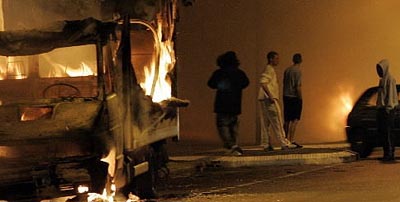
For the third night in a row, Ramadan rioting has been the favoured activity of muslim immigrants in the capital of Europe, Brussels. The youths can apparently not imagine a more appropriate means of celebrating the holy month of Ramadan.

The riots centered on the Brussels Marollen quarter and the area near the Midi Train Station, where the international trains from London and Paris arrive. Youths threw stones at passing people and cars, windows of parked cars were smashed, bus shelters were demolished, cars were set ablaze, a youth club was arsoned and a shop was looted. Two molotov cocktails were thrown into St.Peter’s hospital, one of the main hospitals of central Brussels.

....The immigrant youths claim that they are upset by the death of Fayçal Chaaban, a 25-year old criminal, in a Brussels prison last Sunday.

....The authorities are especially nervous since the Belgian municipal elections are being held on Sunday October 8th. It is likely that the elections will be won by anti-immigrant, “islamophobic” parties.
Source.

Yes, I would consider it likely that anti-immigrant parties would win many elections after all this rioting, as long as the polls close before the end of that day's fast. Otherwise a massacre of the voters and burning of the polls might take place.

Muslim immigration to many parts of Europe seems to be not working out very well. Rather than hard working, well-mannered neo-europeans, Europe is playing host to something quite disruptive and alien. Will the late Oriana Fallaci's predictions of the now and future "Eurabia" (Europe as the Gaza Strip) be proven sadly true?

Cross-linked to Abu-Al Fin

Labels: , ,

Bookmark and Share

Genetic Brain Maps, Teraflop Processors, Quantum Encryption, etc.

Paul Allen of Microsoft fame has funded an amazing project to create a genetic brain atlas of a mouse. Since humans share 90% of the brain genes with mice, there is plenty of information in the mouse brain atlas to generate profitable experiments in humans.

Brian Wang at Advanced Nanotechnology blog brings us the stories for today.

Mouse Brain-Gene Map

Teraflop Processors

Quantum Encryption Advances

Mechanically Interlocked Molecules


Technical Feasibility of Nano-scale Manufacturing

Teraflop processors and advances in quantum encryption are obviously important. Mechanically interlocked molecules point toward improved abilities to fabricate new types of matter at a very small scale.

Here is a Technology Review article describing the brain gene map.
Bookmark and Share

26 September 2006

Now I'm Jealous--Why Can't My Skin Feel Like That? Asks Valerie

When I was being made at the Android World factories, they didn't have skin like this. Dermis of soft silicone 1 cm thick, covered by a mere 0.2 mm of firm urethane. Compared to that dreamy texture, my skin feels like plastic! I wonder if Chris can do a retrofit for me, if Mr. Fin asks for it?

In a move that could provide a crucial boost to our robotic friends struggling up the near side of the Uncanny Valley, major cosmetics manufacturer Kao Corporation and a Keio University research team led by robotics professor Takashi Maeno have developed an artificial skin that feels just like human skin.

Skin, the largest organ of the human body, consists of a soft layer of tissue (dermis) covered by a tougher protective layer (epidermis). The artificial skin developed by Kao and Keio mimics the feel of human skin with a 1-cm thick “dermis” of elastic silicone covered by a 0.2-mm thick “epidermis” of firm urethane. Countless tiny hexagonal indentations etched into the urethane epidermis provide it with a very realistic texture.

In a series of unscientific tests, 10 out of 12 people who touched the skin thought it felt like human skin, while equipment designed to measure the mechanical properties of skin confirmed the artificial skin had characteristics resembling human skin.

The skin was unveiled earlier this month at the 24th Annual Conference of the Robotics Society of Japan (RSJ) at Okayama University. While Kao plans to use the artificial skin in the development of new cosmetics, Professor Maeno sees potential applications in the field of household robotics, where there are many opportunities for human-robot interaction.
Source.

Even though I'm just an android housekeeper, when my neural nets were evolving the people at Android World must have put a lot of girl in me. I like cosmetics and perfumes, and even though I'm not made for sex, I still like to flirt and feel appreciated. With skin like that robo-chick in the picture has, I know I'd feel so much more feminine.

Anyway, I'm gonna look into it, and if I can get Mr. Fin to see it the right way, maybe I'm in for some new skin. Hope so.

Well, I remember I need to say thanks for the links to Neurocritic, Technovelgy, and Yomiura Shimbun.

Bye for now,

Valerie

Labels: , ,

Bookmark and Share

25 September 2006

Space News Briefs

Although adherents of stone-age religions and ideologies want humans to remain on earth until a stray comet or asteroid finishes us off, more intelligent and future oriented people continue to study ways of moving at least some of our eggs out of this planetary basket.

At the recent Space 2006 conference the old debate between orbiting space colonies and distant planetary settlements was reignited. Wired News gives a good, if short, overview.

This Spacedaily newsreport reveals more about the Lockheed-Bigelow discussions on converting the Atlas 5 rocket for manned launches to access the Bigelow space hotels, habitats, and space stations.

The Space Review looks at some of the social aspects of space flight that were discussed at the recent conference "Societal Impact of Spaceflight". Since the future of humans in space largely depends upon the support of the average citizen, this aspect of space cannot be ignored.

Are the Japanese rethinking Kyoto? Perhaps so, since they recently launched a spacecraft to study solar activity more closely. It is the sun that heats the earth, after all.

Climate models are at an infantile stage of development, and are a fragile instrument upon which to base public policy at this time. GCMs cannot account for the cooling of the oceans, they cannot account for solar variation, and they cannot account for the discrepancy between surface temperature trends and tropospheric temperature trends.

Labels:

Bookmark and Share

24 September 2006

International Space Station is Obsolete

The electrons from the new solar panels on the ISS have barely begun to flow, yet it is clear that the ISS has been obsolete for a decade. No amount of add-ons or work-arounds will compensate for the dismal mismanagement of the ISS program during the 1990s. Fortunately, private enterprise is coming to the rescue--none too soon.

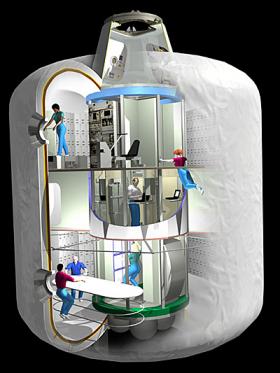
Robert Bigelow, a Las Vegas billionaire entrepreneur, is readying a space station habitat for launch in 2009 or early 2010, which will be far more advanced than the ISS can ever be.

...Bigelow said his third module, dubbed Sundancer, would have a mass of 8,618.4 kilograms and be equipped with life support systems, attitude control, three windows, on-orbit maneuverability, reboost and de-orbit capability.

He plans to place it at an altitude of 250 nautical miles at an orbital inclination of 40 degrees. Bigelow said that while Sundancer will be a scale model of the large, human-rated habitat he eventually plans to launch into orbit, it will nonetheless have 180 cubic meters of habitable space.

"We're pretty damn serious," Bigelow said in his lunch address.

Initially Sundancer will require a six-to-nine month period to check out all of its onboard systems. After that, Bigleow said, Sundancer would be able to stay in orbit for several years...
Source.

Also see Michael Anissimov's more thorough discussion of the current state of affairs in the quest for human habitats in space.

If Al Gore invented the internet and was the model for "Love Story", it would not be an exaggeration to say that Al Gore destroyed the International Space Station, as well as the next generation space shuttle, through his political manipulation while serving as US Vice President. Not some of his proudest achievements, since he rarely refers to his role in those debacles.
Bookmark and Share

A Journalist's Worst Nightmare: Robot Fact Checkers

Recent cases of journalists caught red-handed fabricating and obscuring the news includes the memogate scandal by CBS News, the Eason Jordan coverups by CNN, the New York Times fabrications of Jayson Blair, CNN's fabrication of war crimes in the Tailwind report, and many other examples of the mainstream media attempting to influence public opinion through false reporting.

Now journalists will have even more reason to be looking over their shoulders. Advanced computer programs will be constantly scanning news reports, and scrupulously evaluating journalistic sources for evidence of fabrication and misrepresentation.

The new research will use machine-learning algorithms to give computers examples of text expressing both fact and opinion and teach them to tell the difference. A simplified example might be to look for phrases like "according to" or "it is believed." Ironically, Cardie said, one of the phrases most likely to indicate opinion is "It is a fact that ..."

The work also will seek to determine the sources of information cited by a writer. "We're making sure that any information is tagged with a confidence. If it's low confidence, it's not useful information," Cardie added.

....The results, she added, will always include pointers to the original sources, so that when a computer draws some conclusion, human beings will be able to look at the original material and determine whether or not the conclusion was correct.
Source.

The blogosphere has been successful in exposing a great deal of journalistic misconduct, which has become endemic in the news media. Now the big money is being put behind the effort to hold frequently dishonest and capricious journalists to account for their well-paid manipulations.

Labels: ,

Bookmark and Share

23 September 2006

Carbon Nanotubes Help Adult Stem Cells Replace Stroke Damaged Neurons

This is an excellent example of the convergence of nanotechnology and biotechnology. According to this Technology Review story, carbon nanotubes can be used as scaffolding to allow adult stem cells to differentiate to mature neurons, replacing neurons damaged by stroke.

Stem cells are a promising therapy for stroke and other brain injuries--they can sprout into healthy neurons and may be able to re-establish brain activity in brain-injured patients. While preliminary animal research shows promise, there's often a common hurdle: adult stem cells have a hard time growing in damaged areas and tend to migrate to healthier regions of the brain.

....Webster and his collaborators in South Korea found a possible anchor in carbon nanotubes: tiny, highly conductive carbon fibers that not only act as scaffolds, helping stem cells stay rooted to diseased areas, but also seem to play an active role in turning stem cells into neurons.

....Prior to this experiment, Webster had been experimenting with the properties of carbon nanotubes as possible neural implant material. Since nanotubes are highly conductive, they're an ideal template for transmitting electrical signals to neurons. In 2004, Webster was able to stimulate neurons to grow multiple nerve endings along carbon nanotubes. The study attracted the attention of South Korean stroke researchers, who proposed a collaboration: Why not use carbon nanotubes as a template for adult stem cells to grow into neurons? Taking it one step further, the team injected this nano-cocktail directly into the stroke-damaged brain regions of rats.

In order to determine how well the two therapies work together, the team compared the effects of injections of both stem cells and nanotubes with control groups injected with only adult stem cells or carbon nanotubes. After one and three weeks, researchers sacrificed the rats and examined the diseased areas of their brains. In rats who had received only adult stem cells, the cells tended to stray to healthier regions of the brain. But rats given both nanotubes and cells showed new neural growth in stroke-damaged brain regions in as little as a week.

Researchers aren't sure what makes carbon nanotubes such an effective template for stem cells--or how they help stem cells differentiate. But Webster says a likely answer to both questions is laminin, a glycoprotein in the brain's extracellular matrix that directs the generation of healthy nerve cells. The surface of carbon nanotubes resembles the elongated shape of laminin, and previous research has shown that nanotubes easily attract and adsorb laminin. Laminin, in turn, has a key amino acid sequence that attracts stem cells, stimulating them to turn into neurons. For these reasons, nanotubes may serve as pro-active delivery devices for stem cells.
More at Source.

Of course there are many other types of brain damage besides CVA. Brain tumours, brain abscesses, neurodegenerative and demyelinating diseases--all of these might profit from a reliable means of growing new neurons in-situ, from adult stem cells.

The entire field of growing biological tissue replacements should benefit from nano-technological scaffolding.

Labels:

Bookmark and Share

The Ammonia Economy Tries to Displace the Hydrogen Economy

Everyone has heard about the hydrogen economy. Even US President Bush has promoted the hydrogen economy from time to time. But hydrogen is not a practical storage medium/fuel at this time, and will not be for many years. Some people are tired of waiting, and have begun to promote the ammonia economy.

The Hydrogen Engine Center (HEC) of Iowa has made some bold moves in the direction of the ammonia economy. The HEC is making internal combustion engines that run on anhydrous ammonia. Anhydrous ammonia contains more hydrogen by volume than liquid H2, which makes ammonia a potential fuel for fuel cells, once the corrosion problems are solved. Here is a Wired news story describing one recent project using HEC ammonia engines.

Ammonia comes from processing of natural gas and coal, so at this time it is not a renewable form of energy. Nevertheless, for those concerned about carbon emissions, it should be noted that ammonia contains no carbon whatsoever.

Labels:

Bookmark and Share

Accountability? There is No Accountability in Government Programs! How Dare You!

Most of us think we understand the phenomenon of "Poverty in America", but then most of us are wrong about that. Mping at Fat Knowledge blog, provides a good look at the topic of poverty in america, and what he uncovers is most interesting.

....Although 13% of Americans are poor in any given year, closer to 5% spend most of their years in poverty and less than 2% spend all of their time in poverty. Poverty in the US is very transitory.

Instead of looking at who is poor, maybe we should be looking at who becomes poor each year and who leaves poverty.

....Statistics show that in order to avoid becoming poor in the United States, you must do three things: graduate from high school, marry after the age of twenty, and marry before having your first child. Only 8 percent of those who do these three things become poor as adults, whereas 79 percent of poor adults have failed to do these three things.

....You can take a look at the Census Bureau's definition of poverty yourself to see if you agree. Food stamps, housing subsidies and the earned income tax credit are all ignored in the calculation. If you ask me, those should all be added back in. I am sure it would reduce the level of poverty, but I am not sure by how much.
There is much more at the Source.

One of the main problems in getting government bureaucrats to provide a service for society, is that the bureaucrats never want to stop providing the service! That would require them to get a different job, learn new skills, perhaps move to a different part of town--or a different town altogether! What an inconvenience!

The bureaucratic mentality is devoted to never being held accountable for the failure of your project, and above all--never succeed if success means your project will be terminated!

The entire effort to combat poverty--from government bureaucrats to private charities to church charities to large foundations to corporate outreaches to private philanthropists--in all its forms, it suffers from a lack of accountability.

Retailers can be boycotted and sued. Individuals in businesses and professions can lose their licenses, can be sued, or can be boycotted. Even an elected official can be unelected--impeached, recalled, or defeated in the next election. Contrast that type of accountability with the lack of accountability of government bureaucrats, tenured academics, functionaries at large foundations and quasi-governmental organisations, etc.

It becomes clear that all the efforts to "eradicate" poverty suffer from lack of accountability. Occasionally one hears about charities that spend a few cents on the dollar to eradicate poverty, and the balance on extravagant salaries and benefits for staff and board directors. That is an under-reported phenomenon. Lack of accountability and oversight of large governmental and quasi-governmental programs leads to understandable skepticism and resistance on the part of much of the general public. That antagonism of the public toward large dysfunctional bureaucracies will only get worse in North America, as the governments there more closely approximate the fossilized incompetence of the unwieldy European Union apparatus, and the socialistic monstrosities of many individual European countries.
Bookmark and Share

22 September 2006

Why are the Oceans Cooling? Climate Scientists Do Not Know

Someone forgot to tell the computer modelers who are practising climatology that "the map is not the territory," or more specifically: "the computer model is not the climate."

For most of the new millenium, the oceans' temperatures have been cooling, rather than warming. This is difficult for many climate modelers who have firmly held beliefs in global warming, to explain. Climate models, GCMs, do not explain this "anomaly", or departure from the computer models. Believers in global warming are at a loss to explain this finding, but they nonetheless hastily reassure their acolytes that all is well and that this significant finding is actually just "temporary", and easily dismissed.

This paper suggests that there is a natural cycle of warming and cooling of ocean surface temperatures that so far the climate models have been unable to replicate. This raises serious questions about the GCMs' ability to predict multi-decadal climate trends. Government planners need to be aware of the many failings of climate models before "betting the farm" on something that is less than scientific.

Renewable forms of energy are better, not because of anthropogenic climate forcing, but because they produce less pollution, less environmental risk in terms of oil spills and mining damage, and are more sustainably integrated into the human economy.

There is far too much about the genuine complexity of long term climate cycles that is unknown. Computer programmers who call themselves climatologists cannot simply ignore this complexity in order to match their models with preconceived expectations. The real climate may just slip up behind them and give them a freezing bite.

Labels: , , ,

Bookmark and Share

21 September 2006

"Perpetual Motion" Discovered in Florida County--Abundant Energy From Advanced Plasma

The county government of St. Lucie County in Florida, has decided to build a US $425 million facility that will run on the energy produced on site, plus produce twice as much electricity as is consumed--and sell large quantities of steam and solids as lucrative byproducts. Where did this Florida county find such an energy gold mine? In its landfills.

The $425 million facility expected to be built in St. Lucie County will use lightning-like plasma arcs to turn trash into gas and rock-like material. It will be the first such plant in the nation operating on such a massive scale and the largest in the world.

Supporters say the process is cleaner than traditional trash incineration, though skeptics question whether the technology can meet the lofty expectations.

The 100,000-square-foot plant, slated to be operational in two years, is expected to vaporize 3,000 tons of garbage a day. County officials estimate their entire landfill - 4.3 million tons of trash collected since 1978 - will be gone in 18 years.

No byproduct will go unused, according to Geoplasma, the Atlanta-based company building and paying for the plant.

Synthetic, combustible gas produced in the process will be used to run turbines to create about 120 megawatts of electricity that will be sold back to the grid. The facility will operate on about a third of the power it generates, free from outside electricity.

About 80,000 pounds of steam per day will be sold to a neighboring Tropicana Products Inc. facility to power the juice plant's turbines.

Sludge from the county's wastewater treatment plant will be vaporized, and a material created from melted organic matter - up to 600 tons a day - will be hardened into slag, and sold for use in road and construction projects.

"This is sustainability in its truest and finest form," said Hilburn Hillestad, president of Geoplasma, a subsidiary of Jacoby Development Inc.
Source.

This Peswiki page provides more details and links for exploring and evaluating this intriguing concept. It requires a great deal of energy to create such a very hot environment, but apparently once you reach this level of energy, you can harvest twice as much energy as you use in the first place. Very interesting.

Check out this YouTube video on the use of Magnegas--a sewage to gas product made using similar electric plasma technology as described above. Remember, the electricity to produce the gas is only part of the total energy created. The energy can be sold as either gas (eg magnegas) or as electricity produced on site. Hat tip Free Energy News.

Here is a Free Energy News directory of Waste to Energy projects all over the world. This idea is likely to spread to more regional governments, as the economic benefits of turning a liability into a source of profic sinks in.
Bookmark and Share
Newer Posts Older Posts
Al Fin Main Page
Enter your Email


Powered by FeedBlitz
Google
WWW AL FIN

Powered by
Blogger

``