23 February 2012

The Great Wall of Canada

The USA Is Already Lost, But Canada Can Still Be Saved!

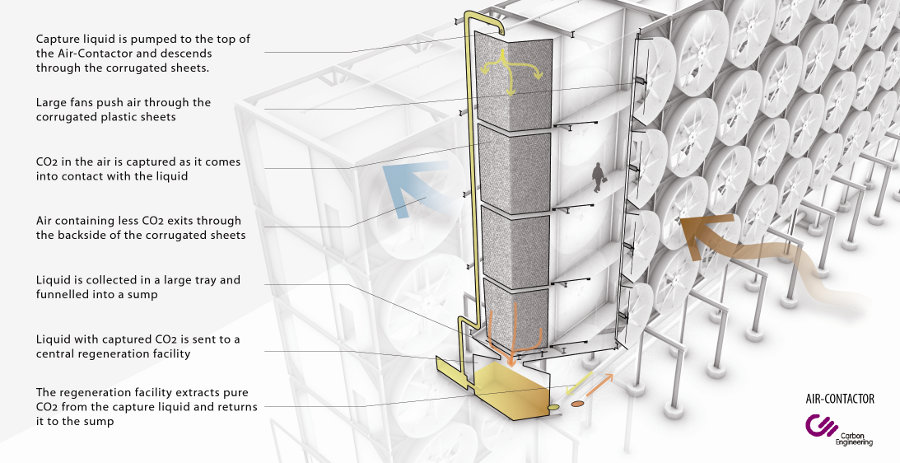
Top-secret plans are afoot to build a giant wall of carbon purification along the entire length of the Canada - USA border. A prototype wall section built by Carbon Engineering of Calgary demonstrates what such a wall might look like.
Great Wall Route

The technology incorporated into the Great Wall of Canada will be fairly straightforward. Special carbon-capture liquids will be pumped through atmospheric-contact channels, automatically removing the deadly demon gas CO2 from our precious common breathing gases. The carbon will then be removed from the capture liquid, freeing it up for another cycle.
The Great Wall of Canada would be but a first-line defense, of course. Smaller carbon purifying units would be located near large population and industrial zones, for added life-saving protection.
As noted above, the USA is already lost to toxic, acidifying levels of the demon gas. But if we work quickly, we can still save Canada from the demonic forces that threaten most of the rest of the world.
We should consider the Great Wall Project as the first in a series of protective measures against the widespread decay that is destroying large parts of Europe and North America. And thanks to massive resources of coal, gas, bitumens, and crude oil, we can afford to build such a wall, coast to coast. And thanks to our friends from China, for pitching in.

Remember, in the new age of climate change, southern Canada will be the new Arizona and Florida. There will be no need for winter migrations to the south any longer. We need to learn to watch out for ourselves, now.

As for our neighbors to the south, we are willing to sell our carbon purification technology to them, but they must be prepared to pay the full price. We recommend that they start by building a wall along their own southern border, and take it from there.

Labels: , , , ,

Bookmark and Share

24 February 2011

Shale Gas Promise is Real, "Gasland" Is A Fraud

In the US, unconventional gas is providing a much needed energy boost. Over the next 20 years, shale gas is destined to grow from 15% of US gas production to roughly 50% of production.

Contrary to the blatant falsehoods (PDF) displayed in the Oscar-nominated "documentary" Gasland, production of shale gas is as clean or cleaner than production of any other type of non-nuclear energy or fuel.
Extent of Marcellus Shale Resource

Several nations in Europe are growing more interested in their own shale oil resource, and are beginning to drill test wells.
In countries like Britain, Germany and Poland, exploratory drilling is under way, or about to begin, as engineers try to determine how much shale gas is present and how easy it will be to retrieve. New technologies for extracting natural gas from stone have raised worries about contamination of drinking water while also driving a huge drilling expansion in the United States, helping push prices down by two thirds since 2008 and reducing dependence on imports.

Shale gas production accounted for 14 percent of U.S. natural gas production in 2009 and is expected to reach 45 percent by 2035, the U.S. Energy Information Agency estimates.

“It was an amazing story in the U.S., this very rapid increase in the availability of shale gas,” said Paul Stevens, senior research fellow for energy at Chatham House, a London research institute. European exploration has big potential too, he added... _NYT

More on Marcellus Shale -- just one of several huge US gas deposits, now available for production thanks to improved drilling technologies.

Faux environmentalists inside and outside of the Obama regime have sworn to shut down US energy production -- including shale gas -- no matter what it takes. The Obama agenda of "energy starvation" shines through in the regime's offshore oil de facto drilling moratorium, in the shutting down of coal mines and coal power plants, in the attempts to shut down Canadian oil sands imports, in behind-the-scenes moves to shut down US shale gas, and in the Obama Nuclear Regulatory Commission's blatant dragging of its feet on new nuclear designs and plants. The EPA's decision to regulate CO2 -- a keystone to the chain of life on Earth -- as a "dangerous pollutant" is a clear indication that Obama's interests are not dictated by the welfare of humans in the US or anywhere on Earth.

More: From Master Resource, here are some maps for the three main types of unconventional gas resource for the US.


More from Master Resource here and here.  Methane is a compound found on other planets and moons in significant quantities in the outer solar system.  It has also been found to be generated in Earth's mantle abiotically.  Vast quantities of methane clathrates exist beneath seafloors and in arctic regions.  It is unlikely that humans will ever come close to running out of methane -- particularly when it is so easily produced via anaerobic digestion of waste biomass.

We must have fossil fuel resources such as oil, gas, coal, oil sands, etc. in order to give us time to move to more sustainable energy sources such as advanced fission, fusion, enhanced geothermal, advanced biofuels and bioenergy, orbital solar, and perhaps low energy nuclear reaction reactors.

More on energy topics at Al Fin Energy

Labels: , ,

Bookmark and Share

24 July 2010

Another CO2 to Fuels Process: Do We Really Want to Do This?

Researchers at Columbia University’s Lenfest Center for Sustainable Energy, in collaboration with Risø National Laboratory for Sustainable Energy, DTU, are investigating the high-temperature co-electrolysis of CO2 and H2O using solid oxide electrolysis cells (SOECs) to produce a syngas for conversion into liquid hydrocarbon fuels. _GCC
GCC

The idea of "re-cycling" CO2 back into a fuel -- skipping the middleman of photosynthesis -- continues to be popular in certain scientific circles. This approach involves the co-electrolysis of H20 with CO2 to create an H2/CO syngas, which can be further processed into liquid hydrocarbon fuels.
The Lenfest/Risø team notes that high temperature electrolysis makes very efficient use of electricity and heat (near-100% electricity-to-syngas efficiency), provides high reaction rates (no need for precious metal catalysts), and the syngas produced can be catalytically converted to hydrocarbons in well-known fuel synthesis reactors (e.g. Fischer-Tropsch). There is no need for a separate reverse water-gas shift reactor to produce syngas, and the waste heat from exothermic fuel synthesis is useful in the process.

An analysis of the system energy balance presented by Christopher Graves at the May conference showed a 70% electricity to hydrocarbon fuel efficiency. Using solar photovoltaic energy at 10-20% efficiency, that would result in an overall 7-14% solar energy to liquid fuel efficiency, he said.

Their analysis of the economics of a co-electrolysis-based synthetic fuel production process, including CO2 air capture (earlier post) and Fischer-Tropsch fuel synthesis, determined that the price of electricity needed to produce competitive synthetic gasoline (at $2/gal wholesale) is $0.02 - $0.03 per kWh. _GCC

GCC

The Columbia / Riso approach involves the use of Ni/YSZ based solid oxide cells for co-electrolysis. This high temperature approach is somewhat similar to the STEP process being developed by George Washington U. and Howard U. researchers, for the explicit purpose of splitting CO2 for purposes of reduction of atmospheric CO2 levels. The STEP process provides the option of turning atmospheric CO2 into solid carbon for easy sequestration, or turning CO2 into CO for conversion to liquid fuels -- as in the Columbia / Riso approach pictured above.

These approaches will require dedicated (small modular) nuclear reactors to provide the large, steady flow of electricity and heat, required for such high temperature electrolytic substitutes for photosynthesis. It comes down to necessary efficiencies at every step in the process -- including the CO2 capture step.

Are these CO2 to fuels approaches a form of renewable energy? They require vast quantities of reliable electricity and heat to be efficient -- nuclear fission reactors, in other words. Nuclear energy could be sustainable for hundreds of thousands of years, given the proper regime of breeder technology, fuel recycling, inter-locking fuel cycles, and efficient removal of fission-killing by-products. But most political activists currently influencing the ruling class do not see nuclear energy as renewable energy, at this time.

Al Fin engineers and atmospheric scientists are uncertain where the large quantities of CO2 required to make these processes economical will be obtained. If political activists are successful in shutting down large-scale coal and other hydrocarbon power generation processes, CO2 could become rather scarce. (the atmosphere possesses only 0.04% CO2 and despite the sensationalist press, atmospheric levels are not climbing quickly) If the current ruling class is successful in its hysterical crusade against CO2, what can we expect? A chaotic tipping point -- in the opposite direction as that taught in schools -- is not out of the question.

The plant life of Earth evolved, for the most part, under conditions of much higher levels of atmospheric CO2, and conditions of much more "acidic" oceans than at present. The planet's natural systems are, if anything, starved for CO2. If political activists ever grow beyond their greedy scamming stage of carbon scheme and tax grifting -- if they become efficacious at carbon reduction despite themselves -- planet Earth will find itself in a desperate situation where the "great human dieoff" being promoted by political activists will not be optional any longer, but instead mandatory.

Adapted from an Al Fin Energy posting

Labels: , ,

Bookmark and Share

14 May 2010

Amazing Time-Lapse Video of CO2 Effect on Plant Growth


WattsUpWithThat

Clearly, plants love CO2. Not only land plants, but sea sponges and photosynthetic plankton and sea bacteria throughout the oceans love CO2. Just a quick glance at the white chalk cliffs near Dover will tell you that sea life can make very good use of much higher concentrations of CO2 than humans have ever seen.

And yet, people who make a living by promoting a fear of CO2 continue to claim that CO2 is a pollutant, and that CO2 threatens land and sea life.
Rising levels of atmospheric carbon dioxide interfere with plants’ ability to convert nitrate into protein and could threaten food quality, according to a new study by researchers at the University of California, Davis.

The scientists suggest that, as global climate change intensifies, it will be critical for farmers to carefully manage nitrogen fertilization in order to prevent losses in crop productivity and quality.

The study, which examined the impact of increased carbon dioxide levels on wheat and the mustard plant Arabidopsis, will be published in the May 14 issue of the journal Science. _WUWT
Notice the careful fudging: "could threaten" food quality. Of course, given the "butterfly effect" of chaotic dynamics, your choosing to go out to the market for a quart of chocolate milk "could threaten" food quality for the future. The authors of the paper are therefore quite safe.

An earlier study at Stanford was able to demonstrate that a careful manipulating of Nitrogen, water, and temperature of crops was able to cause a paradoxical response to raising CO2 levels. But the added CO2 did not stunt the plant growth! It merely reduced the growth stimulation from the artificial manipulation (of water, temperature, and nitrogen) from 84% down to 40%. The reasons for this lesser stimulation of excess growth are no doubt complex, but when the phenomenon is expressed truthfully -- rather than apocalyptically -- it loses its alarmist overtones.

Rather than to manipulate growing conditions outside the realm of natural possibility in order to promote a fiction that CO2 is harming plant growth, would it not be better to perform honest and open experiments, and let the chips fall where they may? As in honest science? Or perhaps, there is no money in that type of thing these days.

Check out the plant growth database at CO2 Science

Labels:

Bookmark and Share

23 February 2010

Plants Thrive on 1000 ppm CO2 or More


Carbon dioxide (CO2) is an essential component of photosynthesis (also called carbon assimilation). Photosynthesis is a chemical process that uses light energy to convert CO2 and water into sugars in green plants. These sugars are then used for growth within the plant, through respiration...as CO2 levels are raised by 1,000 ppm photosynthesis increases proportionately resulting in more sugars and carbohydrates available for plant growth. _OptimalCO2

Most plants and corals evolved in an atmosphere with much higher concentrations of CO2 than currently exist around the planet (click on graph at right). In fact, most plants and sea creatures crave more CO2 for optimal growth, and would grow faster and larger if provided with more CO2 food.

Many commercial greenhouses use CO2 generators to supplement their internal air up to 1500 ppm of CO2.

Human burning of fossil fuels leads to incrementally higher levels of CO2 in Earth's atmospheric mix -- but not nearly enough to provide optimal growth for most plants. Consequently, atmospheric levels of CO2 have not risen proportionately to the quantity of CO2 exhausted into the atmosphere by human activity -- the plants and oceans are grabbing it for their own use.

Modern climate science has benefited from exaggerating fears about carbon dioxide, and the doom CO2 is supposed to bring to Earth's environment. But Earth's life evolved in atmospheres many times higher in CO2 than at present -- leaving modern plants and ocean life relatively carbon-starved.

It is time for climate science to step away from contrived and exaggerated claims of doom, and to return to a genuine science of observation and falsifiability. Politics has played far too large a part in this destructive carbon hysteria, and must be tamed before we all fall victim to the political excesses of carbon alarmists and carbon opportunists.

Labels: ,

Bookmark and Share

26 January 2010

CO2 to Fuels Using Sunlight

The question remains: Can humans do better at conversion of CO2 to useful fuels and chemicals than nature has done for billions of years?

A recent newsrelease from Carbon Sciences Inc. claims the development of a new biocatalytic process to convert CO2 into methane, ethane, and propane.

This past November, Joule Biotechnologies announced an important advance in its quest to convert CO2 into hydrocarbons using solar powered genengineered microbes.

Sandia Labs is also pursuing the dream of synthetic conversion of CO2 to fuels using solar energy.

From UCSD:
Now Clifford Kubiak, professor of chemistry and biochemistry, and his graduate student Aaron Sathrum have developed a prototype device that can capture energy from the sun, convert it to electrical energy and “split” carbon dioxide into carbon monoxide (CO) and oxygen. _ScienceBlog

Penn State researchers aim to use nanotubes to catalyse the reduction of CO2 to methane using sunlight as a power source.

Algal fuels companies and other microbial fuels syndicates and bioenergy corps. also rely upon CO2 for feedstock and sunlight for energy.

Problem: Carbon dioxide is a trace gas -- only 0.04% of the Earth's atmosphere. For most of the plans above to succeed, they need to tap into a concentrated source of CO2 -- such as the effluent gases from a coal plant.

Labels:

Bookmark and Share

15 January 2010

Children: Don't Fear the Plant Food


Schoolchildren are taught early to be very, very afraid of carbon dioxide.  The same low level trace gas (under 0.04% of atmospheric gases) that provides plants with vital carbon for growth, is cruelly thrust into the nightmares of young children as a horrid monster that is destroying the planet.   This is the type of childhood mental trauma that can shape the mental outlook of a young mind, and last a lifetime.

Is it child abuse to fill a child's mind with fearsome images of impending doom?   Certainly, if the doom being force-fed to schoolchildren is based upon a fabrication.  If sweet, hometown schoolteachers are filling your child's mind with invented horrors which have no real basis in science, what should be done?

First, try to understand carbon dioxide's role in the planetary scheme of things.  Without carbon dioxide in the atmosphere, there is no carbon-based life on the surface of the planet.  But will higher levels of CO2 create  a problem?

Environmental Effects of Increased Carbon Dioxide PDF

Limits on CO2 Climate Forcing PDF

Climate Models that predict catastrophic warming are untrustworthy

And besides growing lots of plants, there are many valuable things that we can produce from any excess CO2 that we are lucky enough to find:
When it's exposed to the elements, the surface of copper turns green because it reacts with oxygen. But now scientists have discovered a copper-based material with a surprising property: it reacts with carbon dioxide in air rather than oxygen. Though the reaction is not a practical way to remove large quantities of carbon dioxide from the atmosphere, it does provide an alternative new route, using a cheap, nonpetroleum feedstock, to make useful chemicals. _TechnologyReview


 More creative uses of CO2 from the UK (via MattGoesGreen)

You might ask yourselves why educational curricula for entire nations would be designed to instill fear inside the minds of very young children. What would be the point of creating herds of fearful, self-doubting and self-loathing human minds-in-development?

Ask yourselves that every morning when your children step out to go to school.

Labels: ,

Bookmark and Share

31 March 2009

Google Wants to Have Sex With Your Brain

Google wants to hurry up the brave new world. Google is not only involved in X Prize promotion of new technology, including the Google Lunar X Prize, but is also starting its own venture capital company to boost new ideas with direct capital involvement.

One intriguing idea is to take atmospheric CO2 and turn it into methane, like this group at Penn State is doing. There are oodles of similar bioenergy projects that Google Ventures might consider boosting.

I suspect Google is also interested in extending its search function beyond the internet into the human brain itself. To achieve "brain search", Google will need to better understand the human brain's "inference engine."

But one of Google's ultimate aims is almost certainly the development of a reliable brain-machine interface allowing seamless interaction of humans, computers, and robots.

Of course, with humans linked to the virtual and robotic worlds via new Google brain-machine interfaces, several areas of human productivity and creativity will skyrocket -- including machine design, architecture, various new art media, drug design, and a great deal more. Putting the human mind inside powerful machines will make a huge difference to many fields.

But then, the natural tendency is for humans to want to play games with their new toys and new powers. And one of the favourite games that humans play is the game of sex. Humans will no doubt learn to play that game with robots and virtual worlds as soon as possible.

Millions of people are addicted to their computers as it is. Imagine the situation when virtual worlds and robotic interaction and proxy allow persons to travel around the world instantly, or to experience life on the moon via robot proxy? How many humans will fall in love with their real or virtual robots (sexual or otherwise)? It will happen in many ways.

And Google wants to be there when it does. Google wants to have sex with your brain. Because after that, you will have a difficult time refusing it anything at all.

Labels: , , ,

Bookmark and Share

12 April 2008

A Pictorial Look at Earth's Carbon Cycle

The first image portrays the Earth's carbon cycle without life.
In the geological carbon cycle, carbon moves between rocks and minerals, seawater, and the atmosphere. Carbon dioxide in the atmosphere reacts with some minerals to form the mineral calcium carbonate (limestone). This mineral is then dissolved by rainwater and carried to the oceans. Once there, it can precipitate out of the ocean water, forming layers of sediment on the sea floor. As the Earth’s plates move, through the processes of plate tectonics, these sediments are subducted underneath the continents. Under the great heat and pressure far below the Earth’s surface, the limestone melts and reacts with other minerals, releasing carbon dioxide. The carbon dioxide is then re-emitted into the atmosphere through volcanic eruptions. (Illustration by Robert Simmon, NASA GSFC)

The balance between weathering, subduction, and volcanism controls atmospheric carbon dioxide concentrations over time periods of hundreds of millions of years. The oldest geologic sediments suggest that, before life evolved, the concentration of atmospheric carbon dioxide may have been one-hundred times that of the present... Source
The next image looks at the much richer carbon cycle that includes many of the contributions of the biospheres of land and sea. We are just beginning to quantify the movement of carbon between the various biospheric compartments, the oceans, the lithosphere, and the atmosphere. At least a third of human-generated CO2 ends up sequestered by either the biosphere of land and sea, or by going into solution in the oceans.Local land biosphere carbon sequestration may involve incorporation into growing plants such as trees, or incorporating into micro-organisms, fungi, and animals in the soil.This graphic looks at global turnover of carbon from various compartments. As you can see, human contributions to atmospheric carbon are quite low compared to natural contributions. As long as the biosphere is allowed to grow, it is capable of sequestering the larger part of human emissions of CO2.This image looks at the photosynthetic activity of the Earth seen from space, during the time period of 18-25 Dec, 2000. Observe that the northern hemisphere displays very low photosynthetic activity compared to the southern hemisphere, at that time of year. You would expect to see a mirror image of photosynthesis north to south when viewing the time period of 18-25 June.

CO2 concentration in the atmosphere is roughly 380 parts per million, or 0.000380 of the atmosphere, or 0.038 per cent of the atmosphere. Since modern measurements of CO2 have begun, CO2 concentrations have steadily increased--although the rate of increase may have temporarily slowed, as measured at Mauna Loa.

These images are meant as a preliminary to a future more detailed look at the carbon cycle, and possible biological feedbacks in the carbon cycle. Significant sequestering of CO2 can be carried out through a number of human interventions, including biochar agriculture, wiser forestry practises, and other ways of making carbon work for us as the valuable resource that it is.

Labels: ,

Bookmark and Share

14 February 2008

CO2 to Gasoline: More on Green Freedom

More details about the Los Alamos Lab's Green Freedom (pdf) CO2 to Fuels project are revealed at Green Car Congress.
While the chemistry of capturing carbon dioxide from the atmosphere can be straightforward (CO2 is readily absorbed into a potassium carbonate solution where it forms bicarbonate ions), the challenge in developing a practical system lies in the large volumes of air that would need to be processed to capture sufficient amounts of CO2 for useful application. Furthermore, according to the Los Alamos team, the conventional processing can only capture 73% of the carbon dioxide from the processed air on a single pass.

By contrast, Green Freedom uses a newly-developed electrolytic stripping process that can capture production quantities of air; capture more than 95% of the carbon dioxide on a single pass; and produces hydrogen as a byproduct that reduces supplemental hydrogen production requirements by 33%.
Read the full PDF report here.

The bottom line? The price of gasoline at the pump would need to be US $4.60 per gallon for the process to be profitable. The calculation assumes the incorporation of a nuclear reactor to provide electricity for the process.

Update: Snake Oil Baron was kind enough to provide the link to this UCLA research on CO2 trapping using zeolidic imidozolate frameworks (ZIFs).
"For each liter of ZIF, you can hold 83 liters of carbon dioxide," Banerjee said.... Zeolites are stable, porous minerals made of aluminum, silicon and oxygen that are employed in petroleum refining and are used in detergents and other products. Yaghi's group has succeeded in replacing what would have been aluminum or silicon with metal ions like zinc and cobalt, and the bridging oxygen with imidazolate to yield ZIF materials, whose structures can now be designed in functionality and metrics. ___Physorg
Very intriguing indeed. Thanks Baron!

When we burn fossil fuels and utilise biomass and biofuels, we are taking advantage of nature's ability to turn CO2 into fuel. What scientists at Los Alamos, Sandia, ELCAT, etc are trying to do is to go cleanly from CO2 to gasoline or diesel, without involving life forms.

As better CO2 air capture methods are developed, the economics of CO2-to-gasoline should improve. No one wants to pay $4.60 per gallon at the pump, but when that becomes the norm, it would be nice to know that the gasoline you are burning was made locally, out of thin air.

Labels: ,

Bookmark and Share

13 February 2008

Fuel from CO2: Nature Does It, Why Not Us?

Roger Pielke Jr. has been talking about "air capture" of CO2 for years. The Europeans (ELCAT) have been working on methods to make hydrocarbon chains up to C8 from CO2 since 2004. In the US, at least three groups are working on CO2 to fuel processes: Global Research Technologies in Arizona, Sandia Labs in New Mexico, and Los Alamos Labs in New Mexico.
Scientists there [Los Alamos] say they have developed a way to produce a truly carbon-neutral fuel and useful organic chemicals at large scale using carbon dioxide removed from the air as the raw material. There are plenty of schemes brewing to capture carbon dioxide, both directly from the atmosphere and from the stacks of power plants. All of them, for the moment, are costly or hard to envision at the billion-tons-a-year scale that would be needed to blunt the buildup of carbon dioxide in the atmosphere coming mainly from fuel burning.

The advantage with the Los Alamos’s “Green Freedom” concept, and similar ones, is that reusing the carbon atoms in the captured CO2 molecules as a fuel ingredient avoids the need to find huge repositories for the greenhouse gas. The lab’s researchers, led by F. Jeffrey Martin, say their system could process vast volumes of air using existing giant structures like the cooling towers at nuclear power plants — a big possible advantage over using corn, switchgrass or other crops to capture the carbon for reuse.___NYT

Of course, nature has mastered the conversion of CO2 to burnable oils and biomass for over a billion years. That is one reason the concentration of CO2 in Earth's atmosphere is so low at this time. While humans are finding more efficient ways of using nature's ingenuity to supply fuel needs, the importance of finding ways to economically replace fossil fuels is acquiring urgency as the price of hydrocarbons continues to remain quite high.

It makes sense to work along several parallel paths in the quest to develop large and reliable supplies of hydrocarbon replacements. Craig Venter and his merry band of synthetic biologists are attempting to improve on nature through the creation of synthetic living fuel factories. Other scientists are attempting to "bypass the middle man" and go straight from CO2 to hydrocarbons using non-biological methods. To each his own.

Labels:

Bookmark and Share

CO2 and Trees: City Trees vs. Country Trees

Photosynthetic plants tend to react a certain way toward CO2--the more CO2, the faster they grow. It sounds like a feedback, to me. Looking at the country/city tree cousins:
“In the country, the trees were about up to my waist. In the city, they were almost over my head — it's really dramatic,” said Jillian W. Gregg, the study's lead author.

“No matter what soil I grew them in they always grew twice as large in New York City,” said Gregg, who said she was initially perplexed by the unexpected results. ____Source___via _M4GW__H/T_TomNelson


Another look at trees grown in different concentrations of CO2:
In May of 1999, four oak (Quercus ellipsoidalis) acorns were planted in each of 24 plots in each of six experimental FACE rings, three of which were maintained at an elevated atmospheric CO2 concentration of 550 ppm and three of which were maintained at the air's ambient CO2 concentration of 360 ppm. Half of the plots in each ring were weeded during the first three summers of the experiment; and in the summer of 2000, half of the plots received regular watering while the other half received no water during a 3.5-week period.

...In the words of the six Minnesota researchers, "the results showed that under hot and dry conditions, elevated CO2 can act like a nurse plant for tree seedlings growing in bare and unshaded areas, increasing seedling survival and growth, and thereby expanding the establishment window for trees encroaching into a grassland environment." In the specific situation investigated in their experiment, for example, they concluded that "increasing atmospheric levels of CO2 may be able to kick-start oak establishment into Cedar Creek's old fields."___CO2 Science_via_M4GW


CO2 is the gaseous fuel that feeds the ecosystem. Doubling atmospheric CO2 is less of a threat to the planet than halving atmospheric CO2 would be. The Biosphere is expandable, as long as there is enough sunlight and CO2. What is the optimal CO2 for earth? It depends. How much life do you want?

Labels: ,

Bookmark and Share

12 February 2008

Second Generation Biofuels: We Love CO2!

Many environmental websites are revealing their ignorance of the state of the art in biofuels R&D. If they want to be taken seriously on the topic of biofuels, they need to start up the learning curve of second generation biofuels.
Vijayanand S Moholkar of the Guwahati-based Indian Institute of Technology said, “Pre-liminary experiments show tremendous potential for micro-algae derived oil feedstock for economic synthesis of bio-diesel. Proper cultivation of micro-algae can produce 10 times more oil than Jatropha in the same piece of land. Jatropha and Karanja yield not more than 1 to 1.5 tonne of oil per hectare of cultivation —a major limitation, which adversely affects the bio-diesel Economy.”

Moholkar was in Delhi last week to participate in the 5th International Bio-fuels Conference organised by Winrock International-India. He said largescale production of micro-algae can be done in raceway ponds (closed loop recirculation channels) and photobioreactors. The prices of micro-algal oil and crude fossil oil must differ by two orders of magnitude, so as to make microalgal bio-diesel a cost-effective alternative, he said.

K Subramaniam from the biotechnology department of Sathyamangalam-based Bannari Amman Institute of Technology favoured biochemical conversion of rice straw and other biomass into bio-ethanol. He said that the bio-ethanol production from cheaply available rice straw by separate enzymatic hydrolysis and fermentation can be economically viable.

According to Mritunjay Kumar Shukla of the Dehradun-based Indian Institute of Petroleum bio-ethers, particularly Dimethyl ether (DME), Diethyl ether (DEE) and methylal seem to be promising among all the bio-fuels due to their oxygenated molecular structure, better combustion characteristics, superior well-to-wheel efficiency, low GHG emissions and higher production efficiency.

The director-general of International Crops Research Institute for the Semi-Arid Tropics (ICRISAT), William D Dar said that his institute has found out the way for production bio-ethanol without comprising food security. The stalks of the varieties of sweet sorghum developed by the institute can produce bio-ethanol and increase livelihood options for farmers in dryland areas.____Financial Express

Many species of algae and seagrass thrive on artificially raised levels of CO2. Land plants such as trees and grasses show the same accelerated growth in atmospheres artificially boosted in CO2 levels.
The researchers report that the elevated CO2 "led to significantly higher reproductive output, below-ground biomass and vegetative proliferation of new shoots in light-replete treatments," i.e., those receiving light at 33% of the surface irradiance level. More specifically, they write that "shoots growing at 36 µM CO2(aq) were 25% larger than those in the unenriched treatment [16 µM CO2(aq)]," while "at 85 µM CO2(aq) shoots were 50% larger than those in the unenriched treatment and at 1123 µM CO2(aq) shoots were almost twice as large as those in the unenriched treatment." In addition, they found that at 1123 µM CO2(aq) "22% of the shoots differentiated into flowers, more than twice the flowering output of the other treatments at this light level."___Source

By coupling the growth of biofuel biomass with the CO2 of power plant effluent gas, you accomplish accelerated growth of biomass while transferring the CO2 and pollutants from power plant effluent to the growing biofuel feedstock.

Algae, seagrass, and other organisms living in the sea, thrive on higher CO2 levels. But if it is politically advantageous to remove CO2 from the air--thus depriving sea life of its food--humans may have to use the "power plant effluent to algal bio-diesel and bio-petroleum" route.

Labels: , , ,

Bookmark and Share

01 February 2008

500 Million Years of CO2: What is Normal?

Low Temperature Eras Designated by Gray Bars at Top
How do modern levels of CO2 rank on the geologic time scale? Based upon the figure above, from PNAS (7), April 2, 2002, pp. 4167-4171 authored by MIT's Daniel H. Rothman, modern CO2 levels are somewhat lower than typical levels over the past 500 million years. Among the author's conclusions:
Where carbon dioxide is concerned, we remain at a low ebb. Moreover, if for long geological periods the ‘null hypothesis’ that pCO2 and climate are unrelated cannot be rejected on the basis of this evidence, how certain are we that such constraints might not apply at much shorter time scales too? I only ask?____Source of quote


More on this intriguing perspective at Global Warming Politics

H/T Tom Nelson

Labels:

Bookmark and Share

28 January 2008

CO2 and Climate Primer

Atmospheric CO2 levels are rising, never mind why. What are the likely effects on earth's climate and biosphere? This brief PDF document places CO2 into the broader context of climate forcings. With a large number of self-explanatory graphics, it clearly reveals what we should expect from rising CO2 levels, and why.
via Tom Nelson

Labels:

Bookmark and Share

25 January 2008

Sun and Ocean Driving Climate, Not CO2

The numbers tell an interesting tale about climate, CO2, the sun, and ocean oscillations. Look at the strength of correlation between temperature records and the three variables below.Source Icecap via NCMedia

Atmospheric CO2 levels have been rising over the past century, and show no sign of slowing down. The apparent association between rising CO2 levels and rising surface temperatures has fueled an apocalyptic media feeding frenzy over the past decade and a half--carrying many politicians and opportunists along with a gullible public. A more sober analysis appears to indicate that other factors may be much more important than the low level CO2 effect.
Much of the rain and snow we are having right now is the result of a La Nina which may be an early indicator that the Pacific has shifted to a cool phase. This shift will bring us back to the weather we had between the 1940 and 1970s. It was a lot colder and wet in the winter and spring. I remember one year when it seemed to rain from December to May. [arid California foothills]

You can down load the whole analysis here (pdf).
NevadaCounty Media Watch
H/T Tom Nelson

Note: AMO in the graph above stands for Atlantic Multidecadal Oscillation. PDO stands for Pacific Decadal Oscillation. USHCN stands for United States Historical Climatology Network, i.e. ground station temperature record.

More: Oceans affect the world's climate in many ways. Oceans store enormous amounts of solar heat. The ocean is also a huge carbon sink by multiple means. Scientists are learning more all the time about the ability of ocean micro-organisms to use the sun's energy together with atmospheric CO2 to contain and sequester a monstrous amount of carbon.

As the oceans warm from solar heating, they release dissolved CO2 into the atmosphere. This is responsible for most of the rise in atmospheric CO2 being observed in the atmosphere. As the solar cycles move into longer, weaker cycles, that effect will diminish. There is necessarily a lag time of many decades to centuries between the solar cycles and the changes in ocean-CO2 balance.

The simplistic GCMs that focus on CO2 to the exclusion of the truly important climate forcings, have the effect of dumbing down the public in science, and diverting trillions of dollars to non-productive (anti-productive) enterprises. Humans could never reach the next level that way.


Update: Anthony Watts has an excellent posting explaining all the information above over at Watts Up With That. H/T Tom Nelson

Labels: , , ,

Bookmark and Share

16 December 2007

Coral Reefs: Is There Any Danger? No, No, Not Really

Is there any danger?
No, no, not really.
Just lean on me.
Takin time to treat
Your friendly neighbors honestly.
Simon and Garfunkel
Would it be too much to ask of climate science, to begin depending more upon empirical data rather than computer models? Computer models are tautological, in that you can tune the parameters to achieve virtually any output you wish. Recent predictions about "ocean acidification", "coral reef devastation", and "the irrevocable destruction of the ocean biosphere" have been given more than ample press--despite not being based upon actual scientific results. Computer models can suggest scientific research, but the models in themselves are not science. We need more data!Seawater pH is not relatively constant, historically, but rather ocean pH has fluctuated historically, and has been increasing (becoming less acidic) over the past 100 million years. While it is fashionable to claim that ocean pH has dropped 0.1 unit since the beginning of the industrial age, in reality data to prove such an assertion is sadly lacking. In fact, we still lack a useful network of reliable pH monitor buoys of sufficient sophistication to give reliable data for predictive purposes over decadal and multi-decadal scales. Current claims of the ocean's doom rest upon the combination of poorly validated proxies with infinitely tunable computer models. We need more data.
Different types of coral, algae, phytoplankton have evolved over the past 250 million years to thrive at different temperatures, light levels, depths, ionic concentrations, etc. Most coral thrives at warmer temperatures, so that you would expect coral growth to increase should the oceans warm. Coral is sensitive to human waste effluent, nitrogen fertilizers, and other toxic and nutrient effluents.

Experiments in coral reef microcosms and with transplanted corals suggest that a coral that thrives in one set of conditions may die under other growth conditions. Corals have lived for over 250 million years in Earth's oceans. They have survived and adapted to conditions that led to multiple large scale extinctions of land species--including the dinosaurs. They survived conditions of much lower pH and much higher atmospheric CO2 levels--and greatly warmer temperatures--than Earth is likely to see within the next few centuries. There is some evidence that the addition of dissolved inorganic carbon to seawater actually promotes coral growth, but be aware that coral growth rates are not always accurate indicators of coral reef health. We need more data.

Climate hysteria serves a useful purpose--if you are established at ground zero in the global carbon trading schemes, like Al Gore and his friends. These insiders stand to make tens and hundreds of billions of US dollars, should their schemes be adopted by the rich western nations. The news and entertainment media are surprisingly easy to manipulate, for these insiders. By inserting their message into government schools curricula from the earliest ages, they neutralise the natural incredulity to unproven science that well-educated persons would normally display.

It will be fascinating to see if the affluent western governments can be intimidated into adopting the economically counter-productive "remedies" that Al Gore and his gang are promoting.

Labels: , , ,

Bookmark and Share

29 August 2007

Planting and Harvesting Trees--The Best Carbon Sequestration?

Freeman Dyson maintains that soil carbon is the most important sequesterer of carbon. Cofounder of Greenpeace Patrick Moore, claims that growing and using trees is the best way of dealing with high CO2 levels.
Trees are the most powerful concentrators of carbon on Earth. Through photosynthesis, they absorb CO2 from the atmosphere and store it in their wood, which is nearly 50 per cent carbon by weight. Trees contain about 250 kilograms of carbon per cubic metre.

North Americans are the world's largest per-capita wood consumers and yet our forests cover approximately the same area of land as they did 100 years ago. According to the United Nations, our forests have expanded nearly 100 million acres over the past decade.

...There is a misconception that cutting down an old tree will result in a net release of carbon. Yet wooden furniture made in the Elizabethan era still holds the carbon fixed hundreds of years ago.

...Although old trees contain huge amounts of carbon, their rate of sequestration has slowed to a near halt. A young tree, although it contains little fixed carbon, pulls CO2 from the atmosphere at a much faster rate.

  1. Deforestation, primarily in tropical forests, is responsible for about 20 per cent of global carbon dioxide emissions. This is occurring where forests are permanently cleared and converted to agriculture and urban settlement.
  2. In many countries with temperate forests, there has been an increase in carbon stored in trees in recent years. This includes the United States, Canada, New Zealand and Sweden.
  3. The most important factors influencing the carbon cycle are deforestation on the negative side, and the use of wood, from sustainably managed forests, as a substitute for non-renewable materials and fuels, on the positive side.

To address climate change, we must use more wood, not less. Using wood sends a signal to the marketplace to grow more trees and to produce more wood. That means we can then use less concrete, steel and plastic -- heavy carbon emitters through their production. Trees are the only abundant, biodegradable and renewable global resource.
Vancouver Sun

This is rather obvious. If you grow a tree, then use the tree to build a house that stands for hundreds of years, that carbon is effectively sequestered for that period of time at least. Wood is a desirable building material for many things. Rather than preventing responsible forest harvesting and regrowth, intelligent environmentalists who truly believe in the CO2 theory of catastrophic climate change would be pushing for large wood plantations for construction lumber.

Hat tip Lubos Motl

Labels: , , ,

Bookmark and Share

09 March 2007

Were CO2 Levels in the 1940s Actually Higher Than Today's?


In this bipolar (Hannity and Colmes) interview, controversial climate scientist Tim Ball makes reference to a "soon-to-be-released" study that will contradict the IPCC's model of CO2 driven catastrophic anthropogenic global warming (CAGW).

I wonder if the study that Ball alludes to is the same one discussed at An Englishman's Castle and Greenie Watch? If anyone has more information on this story, I would appreciate a "heads-up."

If the CO2 levels used by the IPCC climate models are wrong, then the entire climate change house of cards collapses. It is difficult to believe that an established political body as well-funded and supposedly reputable as the IPCC would falsify data. But it is vital to keep in mind that the IPCC is a political rather than a scientific body. Political groups are in the business of falsifying data, in order to acquire more influence.

Update: Roger Pielke Sr. reveals some of the inner working of the IPCC from his own experience as an IPCC scientific participant in 1995.

Update: I should explain that I am referring to disagreements about the validity of ice core air bubble CO2 levels used by the IPCC as opposed to historical measurement of atmospheric levels of CO2 by reputable scientists in the 19th and 20th centuries. The IPCC models are based upon a very low "pre-industrial" level of atmospheric CO2--based on ice core measurements. The question is whether the IPCC "ignored" valid data that contradicted the model of anthropogenic logarithmic rise in CO2 levels over the past century. If so, results of climate models would not be valid.

Labels: ,

Bookmark and Share

19 January 2007

Better Understanding Carbon Dioxide--Taming the Hysteria

Carbon Dioxide is a topic of much debate, often verging on hysteria. A better understanding of CO2, and how to manipulate it, would go a long way toward taming the hysteria.

Recent discoveries at UC Riverside suggest one way that nanotechnology could be used to pull CO2 out of the air--molecule by molecule--and transport it selectively to a chosen point of release.
A research team, led by UC Riverside’s Ludwig Bartels, was the first to design a molecule that can move in a straight line on a flat surface. Now this team has found a way to attach cargo: two CO2 molecules, making the nano-walker a molecule carrier.

The work will be published Thursday, Jan. 18 in “Science Express” and later in the print-version of the journal “Science.”

“This is an unprecedented step forward towards the realization of molecular-scale machinery,” said Bartels, associate professor of chemistry and a member of UCR’s Center for Nanoscale Science and Engineering. “Our experiments show a means to transport molecules reliably. This will become as important to the molecular machinery of the future as trucks and conveyor belts are for factories of today.”

The last paper Bartels and his team published on this subject generated a great deal of interest. It was included in the American Institute of Physics “Top 25 Physics Stories for 2005.”

The new molecule carrier runs on a copper surface. It can pick up and release up to two carbon dioxide (CO2) molecules and carry them along its straight path. “Carrying a load slows the molecule down” explained Bartels. “Attachment of one CO2 molecule makes the carrier need twice as much energy for a step, and a carrier with two CO2s requires roughly three times the energy. This is not unlike a human being carrying heavy loads in one or both hands.”

Bartels explained that using machines at the scale of single molecules will ultimately be the most efficient way to build objects or to deliver material.
“It resembles the way nature does it: the molecule carrier transports carbon dioxide across a surface,” he said. “In the human body, the molecule hemoglobin carries oxygen from and carbon dioxide to the lungs, thereby allowing us to breathe – and to live.”
Source.

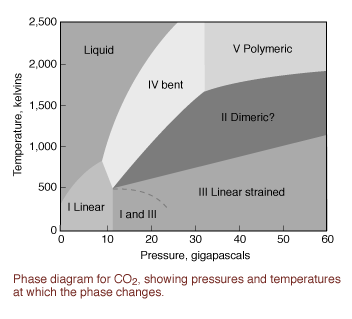
Carbon dioxide is far more useful and versatile than generally imagined. Besides being the vital fuel for plant growth, CO2 is used chemically in creating chemical feedstocks from alkanes. Under pressure, CO2 can be made into a toughened glass similar to diamond, for use as a coating. In fact, CO2 can actually be converted into diamond itself. Some of the techniques for CO2 conversion can be found here.

In other words, nanotechnology is being taught to pull CO2 molecules from the air and transport them to chambers where the CO2 can be concentrated and used in chemical processes, or converted to a quartz-like material, or perhaps diamond.

Climate change is not due nearly as much to CO2 as the media and political alarmists attempt to claim. But CO2 is freely available in the air, and if productive uses can be made of it, that would be grand. Enough of hysteria. Humans need to learn to think constructively for a change.

Labels:

Bookmark and Share
Older Posts
Al Fin Main Page
Enter your Email


Powered by FeedBlitz
Google
WWW AL FIN

Powered by
Blogger

``