23 August 2012

A Revolution Made of Wood?

Nanocrystalline cellulose (NCC), which is produced by processing wood pulp, is being hailed as the latest wonder material. Japan-based Pioneer Electronics is applying it to the next generation of flexible electronic displays. IBM is using it to create components for computers. Even the US army is getting in on the act, using it to make lightweight body armour and ballistic glass.

To ramp up production, the US opened its first NCC factory in Madison, Wisconsin, on 26 July, marking the rise of what the US National Science Foundation predicts will become a $600 billion industry by 2020.

...NCC will replace metal and plastic car parts and could make nonorganic plastics obsolete in the not-too-distant future, says Phil Jones, director of new ventures and disruptive technologies at the French mineral processing company IMERYS. "Anyone who makes a car or a plastic bag will want to get in on this," he says. _NS
A new "miracle material," nanocrystalline cellulose (NCC), offers incredible commercial and technological opportunity, yet it can be made out of waste sawdust, twigs, and tree branches. It is a true "garbage to gold" story.
[Nanocrystalline cellulose is] transparent but it also has eight times the tensile strength of stainless steel due to its tightly packed array of microscopic needle-like crystals. Even better, it's incredibly cheap.

"It is the natural, renewable version of a carbon nanotube at a fraction of the price," says Jeff Youngblood of Purdue University's NanoForestry Institute in West Lafayette, Indiana. _New Scientist
By replacing more expensive materials such as plastics, steel, ballistic glass, body armour, etc.... NCC will impact economies in unanticipated ways.

But this is exactly the kind of substitution of cheap and abundant materials in place of more expensive and rare materials, which Julian Simon discusses in his free online book: Ultimate Resource II.

And it is this type of innovation and substitution which makes most prophecies of resource scarcity doom obsolete.
Production of NCC starts with "purified" wood, which has had compounds such as lignin and hemicellulose removed. It is then milled into a pulp and hydrolysed in acid to remove impurities before being separated and concentrated as crystals into a thick paste that can be applied to surfaces as a laminate or processed into strands, forming nanofibrils. These are hard, dense and tough, and can be forced into different shapes and sizes. When freeze-dried, the material is lightweight, absorbent and good at insulating.

"The beauty of this material is that it is so abundant we don't have to make it," says Youngblood. "We don't even have to use entire trees; nanocellulose is only 2 nanometres long. If we wanted we could use twigs and branches or even sawdust. We are turning waste into gold." _NewScientist

Labels: , , ,

Bookmark and Share

30 November 2010

Trees That Grow on Rocks? Foresting the Drylands

Peter Hoff is a retired tulip and lily magnate who has invented a means of growing robust trees that can survive in even the driest of climates. His invention is the clever Groasis Waterboxx, a portable microclimate in a bucket. If you are interested, you will want to watch the Groasis slideshow -- or the YouTube video below -- to get more details behind the actual workings of the Waterboxx.
The plant grows within the hole inside the Waterboxx. The Waterboxx itself is full of water -- which acts as both a thermal flywheel to regulate the plant's temperature within favourable limits, and as an ultraslow wicked water source.

These Waterboxxes should be quite inexpensive when produced and sold in quantity. Test plantings in the drylands of Spain and in the Sahara, seem to support the claims being made for the device. Certainly a worldwide drive to plant more forests in marginal and dry climates would be more productive for the Earth, than current doomer wailings over a phantom carbon catastrophe. In other words: "So you have nothing to do? Well, just go plant a tree, then!"
The device has evolved from its conceptual beginnings, and is likely to evolve further yet -- perhaps specialising into various forms more ideal for planting specific trees, shrubs, or crops. Or Waterboxxes with a more linear shape and multiple holes, for planting rows of crops at a time. The limit lies within human ingenuity.

It is possible to reverse desertification to a large degree, with an intelligent enough approach. The ascendancy of life on this planet is no fluke.

Labels: ,

Bookmark and Share

09 February 2009

A World Where Even Forests Learn to Talk

Forests? Talking? What could forests possibly find useful to talk about? What about ..... fire? Imagine a forest of trees, wirelessly networked to communicate information such as temperature, humidity, winds, and more?
enough energy is available to power wireless mesh networks within forests that can transmit data about local temperature and humidity conditions. These networks could be used for agricultural monitoring or early detection of forest fires. Voltree Power is planning to test their so-called Early Wildfire Alert Network (EWAN) beginning in the spring. _DesignNews_via_Bioenergy
Networked forests (and fields) could monitor for fires, pests, poachers, and a large number of other things.
Starting this spring, Voltree will test its device in a 10-acre area provided by the U.S. Forest Service in Boise, ID. Future applications, Love says, could include agricultural monitoring as well as radiation detection along the U.S. borders, to prevent the smuggling of radioactive goods. _TechnologyReview
Interesting. These talking forests and fields will detect smugglers, terrorists, the health of crops and trees, forest fires, and more. All made possible by the ability to turn lovely trees into "battrees."

And that is only the sensor side of the equation. What about actuators? What if trees could fight their own fires, or change the flow of the fire to make it easier for human firefighters to control? What if forests could alert animals of danger and somehow guide them to safety? Or trap poachers, terrorists, and other "undesirables"?

You can read more about the technology behind networked forests here and here. Here is the full text of a PLOS research article by MIT scientists describing the underlying phenomenon.

The voltages involved are in the milli-volt range, suitable only for a trickle charge to a small rechargeable battery. But as electronic devices are made smaller and less power-hungry -- yet more capable -- the possiblities for distributed computing and networking using very small levels of current are growing more impressive.

Labels:

Bookmark and Share

26 March 2008

Brazilian Diesel Trees Thrive in Australia: New Bio Energy Industry w/ Transplant Trees

Australian farmers are busily at work cultivating the "diesel tree" (copaifera langsdorfii) from Brazil. These trees can be tapped for a natural oil (sesquiterpenes), which can be refined to a biodiesel. Such bio-energy "crops" promise to help with regional demands for oil, energy, and diesel.
Over 20,000 trees have been sold to farmers in the tropics by the man who introduced the diesel tree from Brazil.

The tree produces an oil that can be extracted, filtered and used to power vehicles and farm machinery....It is estimated a one-hectare crop could produce enough fuel for an average-sized family farm. ___abc__via__jennifermar0hasy
This tree is a perennial that can produce 12,000 liters of diesel per hectare (roughly 2.5 acres), or 14 gallons per tree. Farmers and family ranches could power their vehicular use via this wild growing tree.
The recommended method of growing them is to plant 1,000 trees on a hectare of land, preferably in a tropical area, then test them for their vigour, growth and yield about three years later, which ordinarily would lead to culling about half of them.

About four to six years later they would be measured again before culling them down to between 250 and 350 of the best trees, which would be inter-bred and harvested for seed.

Mr Jubow said a large mature tree would yield about 40 litres of diesel a year, which equated to about 12,000 litres per hectare of trees.

"It becomes astonishingly viable for a farmer to have a piece of his most productive land to get the tree up and running and then he can be independent from the fuel companies for the rest of his life," he said.

They are known to produce fuel for 70 years.__smh__via__jennifermarohasy


Copaifera langsdorfii (Purdue)
Copaifera langsdorfii (world agroforestry)

While waiting for synthetic biologists to produce the ideal bio-energy organism, it does not hurt to use what nature has already invented.

Labels: , ,

Bookmark and Share

29 August 2007

Planting and Harvesting Trees--The Best Carbon Sequestration?

Freeman Dyson maintains that soil carbon is the most important sequesterer of carbon. Cofounder of Greenpeace Patrick Moore, claims that growing and using trees is the best way of dealing with high CO2 levels.
Trees are the most powerful concentrators of carbon on Earth. Through photosynthesis, they absorb CO2 from the atmosphere and store it in their wood, which is nearly 50 per cent carbon by weight. Trees contain about 250 kilograms of carbon per cubic metre.

North Americans are the world's largest per-capita wood consumers and yet our forests cover approximately the same area of land as they did 100 years ago. According to the United Nations, our forests have expanded nearly 100 million acres over the past decade.

...There is a misconception that cutting down an old tree will result in a net release of carbon. Yet wooden furniture made in the Elizabethan era still holds the carbon fixed hundreds of years ago.

...Although old trees contain huge amounts of carbon, their rate of sequestration has slowed to a near halt. A young tree, although it contains little fixed carbon, pulls CO2 from the atmosphere at a much faster rate.

  1. Deforestation, primarily in tropical forests, is responsible for about 20 per cent of global carbon dioxide emissions. This is occurring where forests are permanently cleared and converted to agriculture and urban settlement.
  2. In many countries with temperate forests, there has been an increase in carbon stored in trees in recent years. This includes the United States, Canada, New Zealand and Sweden.
  3. The most important factors influencing the carbon cycle are deforestation on the negative side, and the use of wood, from sustainably managed forests, as a substitute for non-renewable materials and fuels, on the positive side.

To address climate change, we must use more wood, not less. Using wood sends a signal to the marketplace to grow more trees and to produce more wood. That means we can then use less concrete, steel and plastic -- heavy carbon emitters through their production. Trees are the only abundant, biodegradable and renewable global resource.
Vancouver Sun

This is rather obvious. If you grow a tree, then use the tree to build a house that stands for hundreds of years, that carbon is effectively sequestered for that period of time at least. Wood is a desirable building material for many things. Rather than preventing responsible forest harvesting and regrowth, intelligent environmentalists who truly believe in the CO2 theory of catastrophic climate change would be pushing for large wood plantations for construction lumber.

Hat tip Lubos Motl

Labels: , , ,

Bookmark and Share

21 December 2005

Turning Lovely Trees into "Battrees"?


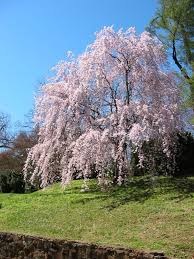
Can you turn one of these lovely natural objects, . . . .


. . . . . into one of these?

This article
discusses the work of an engineering group in Canton Mass., in collaboration with an inventor from Illinois. They claim that soon they will be able to tap the "energy in trees" to charge batteries up to 12 Volts or higher.

The concept comes from the natural potential differences that develop in nature. Such potential differences help to shape animal embryo growth and development. Such naturally occurring potential differences also create lightning, and other natural electrical phenomena.

Currently the researchers can only generate enough voltage/current to keep an LED burning indefinitely. They promise more, much more, in the near future--if provided with funding. Take that for what it is worth. Food for thought, at least for termites.

Labels: ,

Bookmark and Share
Older Posts
Al Fin Main Page
Enter your Email


Powered by FeedBlitz
Google
WWW AL FIN

Powered by
Blogger

``