09 March 2012

Counter-Intuitive Creativity Boosting, New and Old

A U. Mass Amherst researcher with degrees in computer science and philosophy, Anthony McCaffrey, has won a $170,000 National Science Foundation grant to develop new tools to boost creativity and creative problem solving. His ideas revolve around the acrononyms OFH (obscure features hypothesis) and GPT (generic parts technique).
Looking at more than 100 significant modern and 1,000 historical inventions, McCaffrey analyzed how successful inventors overcame various cognitive obstacles to uncover the key obscure information needed to solve problems. He found that almost all innovative solutions follow two steps, as articulated by the OFH: Noticing an infrequently-seen, obscure feature and second, building a solution based on that feature.

...Psychologists use the term "functional fixedness" to describe the first mental obstacle McCaffrey investigated. It explains, for example, how one person finding burrs stuck to his sweater will typically say, "Ugh, a burr," while another might say, "Hmmm, two things lightly fastened together. I think I'll invent Velcro!" The first view is clouded by focusing on an object's typical function.

To overcome functional fixedness, McCaffrey sought a way to teach people to reinterpret known information about common objects. For each part of an object, the "generic parts technique" (GPT) asks users to list function-free descriptions, including its material, shape and size. Using this, the prongs of an electrical plug can be described in a function-free way to reveal that they might be used as a screwdriver, for example. _ecs.umass.edu
Part of McCaffrey's approach offers parallels to Edward de Bono's "Lateral Thinking" theories and creativity training programs.

Lateral Thinking Techniques

  1. Alternatives / Concept Extraction: Use concepts to breed new ideas
  2. Focus: Sharpen or change your focus to improve your creative efforts
  3. Challenge: Break free from the limits of accepted ways of operating
  4. Random Entry: Use unconnected input to open new lines of thinking
  5. Provocation: Move from a provocative statement to useful ideas
  6. Harvesting: Select the best of early ideas and shape them into useable approaches
  7. Treatment of Ideas: Develop ideas and shape them to fit an organization or situation

"Great business competitors are great lateral thinkers . . ." - Edward de Bono

How Might You Use Lateral Thinking?

The Lateral Thinking techniques are useful in a variety of applications.

  • Constructively challenge the status quo to enable new ideas to surface
  • Find and build on the concept behind an idea to create more ideas
  • Solve problems in ways that don’t initially come to mind
  • Use alternatives to liberate and harness the creative energy of the organization
  • Turn problems into opportunities
  • Select the best alternate ideas and implement them 
_LateralThinking
Yet another parallel counter-intuitive creativity approach comes from a website called Brainstorming.co.uk.
So, what creative thinking techniques are available?

Many! The techniques we specialize in, and will be training you in, are listed below. All of them will provide you with fresh stimuli and a new way of thinking. You will be able to incorporate them into your brainstorming sessions (individual or group) to generate new ideas easily and they will make sure you'll never be stuck for a new idea.
  • Random Word
  • Random Picture
  • False Rules
  • Random Website
  • SCAMPER
  • Search & Reapply
  • Challenge Facts
  • Escape
  • Analogies
  • Wishful Thinking
  • Thesaurus
_Brainstorming.co.uk CreativeThinkingTechniques
This webpage provides more detail and allows actual practise with a few of the techniques.

All three counter-intuitive creativity approaches are likely to provide positive results to those who are willing to put in the time and work. But that is not what most people want to hear. Most modern wannabe legends -- in their own minds -- would like to have world-shaking ideas pop into their heads on demand, effortlessly.

But as Daniel Kahneman explains, fast intuitive thinking is not trustworthy unless a person puts in the hard work to hone it to a fine edge. Besides, fast intuition is not generally creative, but rather tends to arrive at more obvious -- and often more fashionable -- solutions.

That is why most creativity training programs which produce relatively good results, tend to be of the "counter-intuitive" variety. Because you are looking for solutions that are not typically obvious or intuitive.

One final example of the counter-intuitive approach to creative problem-solving, is John David Garcia's "autopoietic" method. Garcia's technique is meant to be utilised by an octet -- that is, eight people in a group -- consisting of four men and four women. But according to Garcia, a doublet consisting of one man and one woman can also achieve good creative results. Al Fin's experience with this method convinced him that single individuals could also achieve good results, in many cases.

The central idea behind the autopoietic method of creative problem solving, besides a significant mental preparation, is to have a problem presented, at which point the the early, easy, automatic intuitive solution is summarily rejected. That is just the first step, of course, but it is the crucial step. The goal is to enter a deeper, creative state of mind.

Creativity -- like much humour -- is typically counter-intuitive, at least in the sense in which most persons are intuitive.

If we want our children to be creative and powerful problem-solvers, they will not only need to hone their intuitions to a sharp edge, but they will also need to learn when to reject fast and easy intuitive solutions in favour of deeper, less obvious (except in hindsight) solutions.

More for those interested in the John David Garcia autopoiesis techniques: The philosophy of creativity and ethics behind the technique is described in the freely accessible online book by Garcia, Creative Transformation. More detail regarding Garcia's technique and philosophy of autopoietic creativity is presented in Chapter 5 of Creative Transformation.

As developed by Garcia, the experience can be extremely powerful and effective at eliciting a wide range of counter-intuitive solutions and ideas. But it is certainly not for everyone, or even for most.

Labels: ,

Bookmark and Share

08 March 2012

Cost of Consensus: Overconfidence in Group Decisions

When decisions and policies are made in collaborative groups, an overconfidence in group accuracy develops. Groups are less willing to accept external input, and tend to make mistakes in judgment which individuals would be less likely to make -- due to most individuals' greater willingness to consider alternative viewpoints. (Minson and Mueller APS 2012 PDF)

There is a curious confidence in the power of consensus in bureaucracies and institutions -- including institutions of government and inter-government which increasingly set limits on the future of humans. And yet consensual decision-making is rarely put to the test, to assess its weaknesses and how it might be radically improved.
We demonstrate that the very process of making a judgment collaboratively rather than individually also contributes to such myopic underweighting of external viewpoints. Dyad members exposed to numerical judgments made by peers gave significantly less weight to those judgments than did individuals working alone. This difference in willingness to use peer input was mediated by the greater confidence that the dyad members reported in the accuracy of their own estimates. Furthermore, dyads were no better at judging the relative accuracy of their own estimates and the advisor’s estimates than individuals were. Our analyses demonstrate that, relative to individuals, dyads suffered an accuracy cost. Specifically, if dyad members had given as much weight to peer input as individuals working alone did, then their revised estimates would have been significantly more accurate. _Minson and Mueller 2012 Abstract
The researchers discovered that the larger the number of the collaborative consensus group, the greater the danger of this overconfident refusal to entertain outside input.

The unwillingness of collaborative "insider" groups to entertain outside input is particularly dangerous when the results of the decisions made by such groups could lead to poverty and oppression for large numbers of people. One ready example of such a dangerous consensus is the IPCC collaborative of "ClimateGate" fame. An honest and thorough assessment of insider emails between IPCC insiders reveals an internal climate of hubris, overconfidence, and a willingness to suppress contradictory evidence and to ruin the careers of anyone willing to espouse other points of view.

This willingness of group members to subsume themselves within the identity and purpose of the group -- this decadent conformity of consensus with its concomitant blockheaded overconfidence -- becomes a more serious problem as more and more important decisions are being made by bureaucratic committees and collaboratives.

Individuals are not, of course, immune from this group consensus fallibility. In fact, within a single brain, decisions are made by competition between different brain-wide neuronal assemblies, which battle it out until a winner emerges. That type of decision making is a consensus of sorts, a trial by combat that takes place on a subconscious level constantly, as choices and decisions are made on a moment by moment basis.

Over time, overconfidence is possible on an individual basis, if enough subconscious decisions and choices result in success. Daniel Kahneman has studied this phenomenon of intuitive overconfidence:
"What you find is a great deal of confidence in the presence of very poor accuracy," Kahneman explained. "So the confidence people have is not a good indication of how accurate they are."

Overconfidence is accentuated by the failure of people to, in general, learn from their mistakes. "When something happens that a person has not anticipated, ... they remain convinced that what they had predicted, although it didn't happen, almost happened," he said. The overconfidence is then propagated while the accuracy remains the same, and the cycle begins again. _APS
It is not necessarily a question of whether individuals or groups are better at problem solving or decision making, although false confidence tends to grow exponentially as the numbers in the group grow. The important thing is for both individuals and groups -- no matter what the purported level of expertise -- to be relatively open to looking at alternative approaches and theories.

The modern curse of conformity in general, is a much tougher nut to crack. We will be dealing with that question both here and at Al Fin the Next Level.

Labels: , , ,

Bookmark and Share

How Shale Revolution Creates Jobs; How Obama Destroys Them

The oil and gas industry could be creating even more jobs if the United States had more of a pro-development policy for traditional energy sources instead of a government-driven, heavily subsidized, green energy approach. For example, energy consulting firm Wood Mackenzie evaluated the impact on production, jobs, and government revenues of implementing regulatory policies that support the development of oil and natural gas resources, including: a) opening federal land that is currently “off limits” to exploration and development; b) lifting the drilling moratorium in New York; c) increasing the rate of permitting in the offshore Gulf of Mexico; d) approving the Keystone XL and other future Canada-to-U.S. oil pipelines; and e) leaving regulation of shale resources predominantly at the state level.

Under a scenario that encourages the development of new and existing domestic energy resources, Wood Mackenzie estimates that by 2015 an additional 1.27 million barrels of oil equivalent (BOE) could be produced, rising to 10.4 million BOE by 2030. That would be a 47 percent increase over the estimated 2030 production levels under a current development path case.

Furthermore, under the new development path, there would be a potential increase of 1 million new oil and natural gas jobs by 2018, and 1.4 million new jobs by 2030, while adding cumulative potential government revenue of $36 billion by 2015, and nearly $803 billion by 2030. _American
A Remarkable Lack of Concern for America's Energy Future

A new report from the World Economic Forum (PDF) reveals that about 9% of new US jobs in 2011 were created by the shale energy revolution.
The report said the oil and gas industry contributed 37,000 direct jobs in 2011, which led to the creation of an additional 111,000 indirect jobs during the same period. It said the multiplier effect for solar and wind energy were lower during operation, but higher at up to 3.3 times during construction.

“We always suspected that energy had a vital role to play in the economic recovery but we were still surprised when the data uncovered the magnitude of the sector’s multiplier effects,” Roberto Bocca, head of energy Iidustries at the World Economic Forum, said in a release.

The domestic U.S. oil and gas industry is in the midst of the its biggest boom in a generation, with hydraulic fracturing and horizontal drilling technology unlocking billions of barrels of oil and decades’ worth of natural gas from previously untappable tight coal seam fissures. _Reuters via GWPF
The Obama administration has, of course, been trying to find a way to shut down as many forms of energy production as possible -- and to hell with jobs.
The oil and natural gas industry, one of the strongest job-creating sectors of the U.S. economy, has been unfavorably targeted by President Obama’s proposed 2013 fiscal year (FY) federal budget. To start with, Obama is proposing, for the fourth consecutive year, to repeal Section 199 of the “American Jobs Creation Act.” If enacted, this selectively punitive treatment would increase taxes on oil and natural gas companies by almost $12 billion over the next decade. It could possibly jeopardize some of the millions of American jobs supported by oil and natural gas producers and prolong the sub-par “jobless recovery.”

Overall employment in the U.S. economy still remains short by almost 5 million jobs, and more than 3 percent below the pre-recession employment peak in November 2007. But the oil and natural gas industry has added 34,200 jobs over that period and expanded industry employment by more than 22 percent. Oil and natural gas companies have been on a hiring spree, adding almost 100 new payroll jobs every day for the last year.

In contrast, job creation in green energy projects has so far been very disappointing. According to a recent Wall Street Journal analysis of $4.3 billion in public funding for wind energy under Section 1603 of the American Recovery and Reinvestment Act, there were 36 wind farms that employed 7,200 American workers during the peak of their construction, or an average of 200 workers per project. Today, according to these companies and state and local government economic development officials, those projects employ only about 300 workers, at a cost to taxpayers of more than $14 million per permanent job. _TheAmerican
Obama's antagonism toward reliable sources of energy appears to be based upon at least two foundations: 1. A desire to please big money faux environmentalist supporters, who are pursuing an agenda of carbon hysteria, and 2. A desire to punish and discipline successful private sector enterprises, and to bring them more under the control of a bloated central governmental bureaucracy.

Anyone who has read Mr. Obama's first two autobiographies and observed his early career in community organising and political activism, will understand the man's antagonism toward capitalism, free markets, and any source of wealth and power creation which competes with a central, redistributive government.

The people of the US, in the meantime, must find ways of surviving despite their president's internal whims and caprices.

Good luck with that.

Labels: ,

Bookmark and Share

07 March 2012

Escaping Putin's Russia the Hard Way

Vladimir Putin -- one of the world's wealthiest men with assets exceeding $40 billion in value -- will be president of Russia for at least another term. And that means more of the same, only worse, for the people of Russia. Those who can leave for better opportunities elsewhere, do so. Those who cannot leave, sometimes take more drastic measures.

via chartsbin.com
Besides being burdened by high rates of alcoholism, TB, HIV, crime, corruption, smoking, and drug addiction, Russia is suffering a stealth epidemic of suicide.
Child and teenage suicide in Russia came into spotlight after a series of suicides last month. On February 6 two teenage girls jumped from the roof of a high-rise building. The next day a 15-year-old boy jumped from the window of his apartment presumably after a row with his father. Subsequently, at least four other children committed suicide in about one week.
On Monday afternoon a seven-year-old boy hanged himself on a synthetic cord in his house. His stepfather and sister were in the house at the moment, but could not rescue him.
“After the boy witnessed his father’s suicide, he occassionally asked his mother what happens when you put a rope around your neck,” investigation department spokesman Yegor Markov said. _ria.ru
Russia is hard on its children, and Yelizaveta Petsylya and Anastasia Korolyova finally decided, at the age of 14, to do what thousands of other Russian teenagers have done. There was one way to assert control over their lives, and that was to end them.

Russia has the third-highest teenage suicide rate in the world, just behind its neighbors Belarus and Kazakhstan and more than three times that of the United States. On an average day, about five Russians under age 20 take their own lives.

...The suicide rate is highest in the Far East and in parts of northwestern Russia, said Bertrand Bainvel, head of the UNICEF office in Moscow. It is much higher in small towns than in cities. More boys kill themselves than girls. There is not a big seasonal variation, despite the long hours of darkness in a northern winter. _WaPo
The articles focus on teens, but the problem is severe across all age groups past the onset of adolescence. Children take to alcohol, tobacco, and drugs at an early age. Home life can be oppressive, given the oppressive sense of futility that hovers over so much of Russia.

Despite claims that low Russian birthrates have reversed themselves, the truth is that without immigration from the Central Asian republics, the ongoing demographic collapse of ethnic Russians could not be covered up nearly so easily.

Russians need hope and opportunity, not more of the same forced march to oblivion.

Labels:

Bookmark and Share

A New Era of Hydrocarbon Fuels: Gas to Liquids & Coal to Liquids

Unconventional liquid fuels are slated to provide ever growing proportions of future demand for transportation fuels. The burgeoning success of plants such as Shell's Pearl GTL plant in Qatar herald a new era of liquid fuels production.
In terms of what GTL is, it is the process of chemically turning natural gas into cleaner-burning liquid products, including fuel, base oil for lubricants and feedstock for chemicals. To produce, the process firstly involves methane and oxygen which are converted into a mixture of hydrogen and carbon monoxide known as synthesis gas or syngas. This is then fed to a reactor with a proprietary Shell catalyst that accelerates the conversion of the mixture to long-chained waxy hydrocarbons and water.

From the GTL reactor, the long-chained hydrocarbons are then reacted with hydrogen and ‘cracked,’ into a range of smaller molecules of various sizes using another proprietary Shell catalyst. This process is referred to as ‘hydrocracking.’ The final step is distillation. Various boiling points are reached to separate out the products, which can be in the form of GTL naphtha, GTL kerosene, GTL normal paraffins, GTL gas oil, or GTL base oils. These are then eventually fed to their own storage tanks ready for use.

...One of the products, GTL gasoil (diesel-type fuel), can contribute significantly to the diversification of the diesel fuel supply. This product can reduce local emissions of nitrogen and sulfur oxides and particulate matter. Because it contains virtually no sulfur or aromatic compounds and has a high cetane number – a measure of combustion quality – GTL gasoil burns more efficiently than conventional oil-based diesel and thus produces fewer local emissions and less black smoke than conventional diesel. The high cetane of GTL gasoil can lead to noise reductions in certain engines under certain driving conditions and improve cold start performance. GTL gasoil can also be blended with conventional diesel and/or biodiesel and used in the same vehicles and infrastructure, thus offering a low investment cost compared with other alternatives.

GTL Kerosene is an alternative to conventional oil-based kerosene. Its primary use is expected for aviation. GTL kerosene can be used as a blend with traditional jet fuel without any modifications to existing aircraft and engines. Given that the aviation sector will rely on liquid hydrocarbons for decades, this fuel can help support the future energy needs of the industry, and offer customers fuel diversification. GTL kerosene has higher energy density than conventional oil-based kerosene and this reduces the required fuel payload, thus aircraft may be required to carry less fuel weight to cover the same distance. _QatarShell
When even pro-nuclear activists such as Rod Adams are speaking out in favour of a coal - nuclear partnership to produce liquid transportation fuels, you should understand that people are finally beginning to look at the possibilities.
Coal is a valuable resource that can be safely mined for centuries by well-trained and compensated miners. Instead of eliminating the use of coal, I would prefer to help coal miners and coal mine owners to recognize that they could make more money and sell a cleaner product if they upgraded their fuel at the mine rather than shipping a dirt-filled, unrefined product that sells for a huge discount in the energy market.

...My pitch to the coal industry would be to use cheap, clean nuclear heat to convert H2O and their carbon rich fuel into a refined hydrocarbon that could compete with petroleum products.

...Shipping oil instead of coal from our domestic mines would also be very beneficial to the US national security and to the prosperity of the world. Just think about the positive impact that substantially lower US demand would have on the price of diesel fuel delivered to a developing country. _RodAdams
Until more people are able to think of energy in multi-disciplinary, multi-industrial terms, societies will be forced to pay higher prices for fuels and energy than is necessary. By including cheap and unlimited nuclear reactor process heat into the fuel production mix, we can immediately bring CTL, GTL, bitumens to liquids, kerogens to liquids, and even biomass to liquids (BTL) into the feasible and profitable arena.
Fortunately, more nuclear advocates are beginning to understand the importance of cleanly integrating coal and gas into the overall energy and fuels mix. But we need more bright chemical engineers like Robert Rapier, and physicists like Tom Murphy, to crunch the numbers once again -- this time including the powerful impact of high temperature process heat from modular and mini-modular HT gas-cooled nuclear reactors.
By utilising scalable, factory produced reactors which can be sited at the point of production of gas, coal, bitumens, kerogens, methane hydrates -- and even biomass in some situations of intensive cultivation -- it should be clear to any objective observer that a new era of hydrocarbon production is quite feasible.

Government action could certainly prevent this development. The great carbon hysteria delusion -- if firmly enacted into law in the developed world -- would not only kill unconventional fuels, it would kill the economic viability of the underlying societies themselves. That is what several governments, from the UK to Obama's US to Australia to the EU are attempting to do in various ways.

A far less likely -- but still potentially effective -- way to stop the revolution in unconventional fuels, is for the national oil companies of OPEC and other oil dictatorships to route needed funds into oil field production, exploration, discovery, and development. It would be easy for existing oil fields and fields under development to ramp up production to overwhelm even the current inflated levels of global demand -- if the equipment, manpower, and funding were allotted for the purpose. But this will not be done, because governments from Russia to Venezuela to Saudi Arabia etc need oil prices to remain artificially high so that they can use oil profits to pacify unstable populations and pay off highly placed insiders.

Previously published on Al Fin Energy

Extra bonus just for loyal Al Fin readers: China apparently has vast shale gas reserves. China is vigorously pursuing the development of these gas reserves.

In the early phases this will help the North American engineers and drilling companies who assist in China's learning curve for shale gas production. It will also help China negotiate more favourable gas prices with Russia's Gazprom.

In the long run, these huge natural gas reserves will help reduce China's oversize demand for imported crude oil. This down-shifting of global oil demand will occur due to China's increasing use of an up and coming coal -- natural gas hybrid liquefaction process. This process of synthetic fuels production should become particularly economical when using cheap nuclear process heat as the primary heat source.

Russia itself will be forced to adopt GTL technologies as it finds some of its best customers turning to their own shale gas reserves, and turning away from Gazprom.

Labels: ,

Bookmark and Share

06 March 2012

Do Oil Wells Re-Charge Themselves?

There have been numerous reports in recent times, of oil and gas fields not running out at the expected time, but instead showing a higher content of hydrocarbons after they had already produced more than the initially estimated amount. This has been seen in the Middle East, in the deep gas wells of Oklahoma, on the Gulf of Mexico coast, and in other places. It is this apparent refilling during production that has been responsible for the series of gross underestimate of reserves that have been published time and again, the most memorable being the one in the early seventies that firmly predicted the end of oil and gas globally by 1987, a prediction which produced an energy crisis and with that a huge shift in the wealth of nations. Refilling is an item of the greatest economic significance, and also a key to understanding what the sources of all this petroleum had been. It is also of practical engineering importance, since we may be able to exercise some control over the refilling process. _Recharging of Oil & Gas Fields

Rigzone
Of course we all understand the concept of "repressurising oil fields" using gas injection and other means.
As the oil or natural gas in a formation is produced, the hydrocarbons remaining in the reservoir may become trapped because the pressure in the formation has lessened, making production either slow dramatically or stop altogether.

...gas injection is used on a well to enhance waning pressure within the formation. Systematically spread throughout the field, gas-injection wells are used to inject gas and effectively sweep the formation for remaining petroleum, boosting production.... gas injection can serve as an economical way to dispose of uneconomical gas production on an oil reservoir. While in the past, low levels of natural gas that were produced from oil fields were flared or burned off, that practice is discouraged in some countries and against the law in others.

...Gas Injection, Gas Lift & Gas Miscible Process
Although the terms are sometimes interchanged, gas injection and gas lift are two separate processes that are used to increase production. While gas injection is a secondary production method, gas lift is a type of artificial lift.

Artificial lift is another way to increase production from a well by increasing pressure within the reservoir. The main types of artificial lift include gas lift and pumping systems, such as beam pumps, hydraulic pumps and electric submersible pumps.

While gas injection is achieved by injecting gas through its own injection well, gas lift occurs through the production wells. In gas lift, compressed gas is injected down the casing tubing annulus of a production well, entering the well at numerous entry points called gas-lift valves. As the gas enters the tubing at these different stages, it forms bubbles, lightens the fluids and lowers the pressure, thus increasing the production rate of the well.

Furthermore, a type of EOR employed on a well in the tertiary production process, a gas miscible process can be used to increase production. The difference in this recovery method is that the gases introduced into the reservoir are not naturally occurring. In a gas miscible process, carbon dioxide, nitrogen and LPG are injected into the reservoir. _Rigzone Gas Injection
Most of the oil in existing wells remains underground, waiting for people to become smart enough to retrieve it. Better enhanced oil recovery techniques will inevitably be developed to extract more and more of the residual hydrocarbon -- until it is no longer economical to do so. Then the remaining oil will wait for further developments.

Thomas Gold argues (here and here for example) that oil wells are charged and re-charged with new oil & gas from below. He claimed that most new hydrocarbons are generated deep in the crust, rising into geological traps at several different depths for particular parts of the crust. That is the abiogenic theory of hydrocarbon production, which is supported by astronomical data and by lab data simulating conditions in the deep crust and upper mantle.

Rapid charging of oil fields -- such as is suggested here -- would require deeper secondary reservoirs under pressure, feeding into the primary reservoirs as they are depleted.

There is another way in which oil & gas fields are re-charged -- via the biogenic production of oil & gas. But biogenic production via geologic heat and pressure is generally a much slower method of re-charging than Gold's abiogenic method. But it inevitably occurs all the same. Biogenic oil is a renewable resource, but it is renewable on a different time scale than humans generally use.

And yet, there is a way in which biogenic oil can "rapidly" recharge a depleted oil field. In the case of multiple communicating oil reservoirs at different depths, heat, and pressure, a deeper biogenic reservoir could re-fill a more superficial reservoir at variable rates, depending upon a number of factors. Oil & gas migrate upwardly, when given the opportunity. In this case, instead of "turtles all the way down," it is "oil & gas reservoirs all the way down." ;-)

Biogenic Oil Formation
This image illustrates the conventional idea of biogenic formation of oil. Imagine it taking place over and over again, during the 3 billion + years that photosynthetic life has been converting CO2 into various biological carbon polymers, layer stacked upon layer etc etc . . . . .
Abiogenic Hydrocarbons Forming in the Mantle
This image illustrates the likely abiogenic formation of hydrocarbons in the upper mantle. These hydrocarbons then can migrate upward into the crust, and become trapped under impermeable minerals. Abiogenic hydrocarbons almost certainly mix with biogenic hydrocarbons.

Abiogenic hydrocarbons are also modified in various ways by deep crust microbial populations. In other words, the predominately short-chain abiogenic hydrocarbons from the mantle can be converted to longer chain hydrocarbons on the way up.

Finally, there is the ocean crustal tectonic activity which feeds a constant supply of partially processed organic material to the deep crust and mantle via constant subduction of ocean crust beneath continental crust. This is a slow but steady pipeline which supplies feedstock for production of oil & gas on a constant basis. The Earth's huge gas hydrate resource likely owes a great deal to this tectonic process.

Previously published on Al Fin Energy

Labels: , ,

Bookmark and Share

Barack Obama: A Fashionable Failure?

The Presidents and the Forgotten Man

Of all US Presidents, Obama is the one most noted for the crease of his pants and the cut of his suits. Mr. Obama is well-suited for fashionable vacations, retreats, and hideaways, and is always among the best dressed on the golf course. When he was elected US President in 2008, he was riding a veritable wave of fashion.

But now that the world has had a chance to see the man in action, as the leader of the world's richest and most powerful nation, it is clear that the current US president leaves much to be desired. Take Obama's energy policies:
President Obama, Treasury Secretary Timothy Geithner, Interior Secretary Ken Salazar and Energy Secretary Steven Chu, have all made it clear they want to make fossil fuels more expensive. And after their failed attempt to crush fossil fuels in one fell swoop with cap and trade legislation, they’ve turned to federal agencies to impose a long list of selective and foolish regulations on America’s oil and natural gas producers.

Of course each of these regulations on their own won’t be the death of fossil fuels. But combined, they’re setting the stage for a chilling ending that will mean the loss of millions of jobs, billions in tax revenue and weaker national security.

...In 2010, the EPA slapped a remediation order on a natural gas producer in Texas while the state’s oil and gas regulation agency was still conducting tests regarding alleged water well contamination. After testing was complete, the contamination was found to be naturally occurring and in no way related to drilling. But the EPA’s arbitrary and shameful actions proved the agency can target any company at random and force them to clean up, at their own expense, a problem they had nothing to do with.

And more costly regulations are on the horizon with the U.S. Fish and Wildlife Services now considering the addition of 100 Texas species to the endangered species list. It’s estimated that one species alone, the dune sagebrush lizard, could cost oil and natural gas producers, and state and private royalty owners hundreds of millions of dollars over the next ten years.

But perhaps most troubling could be the reporting of Greenhouse Gas (GHG) emissions on oil and gas facilities in the field. And at what cost? Training, consulting fees, data tracking and ultimate reporting will cost one large independent an estimated $10-$20 million per year. The EPA definitions and thresholds will encompass the smallest to the largest domestic producers.

And to what end? Take your pick – regulatory cap and trade, curtailment, or a new carbon tax. The Obama administration will do through regulation what they could not accomplish through legislation.

...you could look to the Administration’s decision to deny the Keystone XL pipeline permit. That decision not only deprives American consumers of oil from a friendly neighbor, Canada, but also means most of the 500,000 bbls per day of oil from the massive Bakken field in North Dakota and Montana will continue to be transported by truck or rail at a much higher cost; ultimately resulting in higher gasoline prices. Of course it’s just a coincidence that Berkshire Hathaway, run by Warren Buffett, one of Obama’s biggest supporters, owns the railroad transporting significant amounts of that oil.

So who’s the ultimate victim in this tale of mounting regulation? The American people. The administration knows that by increasing regulation, it also increases the cost of doing business and ultimately, the price consumers pay at the pump. And by making fossil fuels artificially expensive, they’re clearing the path for their friends in the so-called “green” energy industry.
What’s even more alarming is that all of this comes at a time when America’s abundant supply of oil and natural gas could play a significant role in solving our nation’s most pressing problems—unemployment, debt and national security.

...Any way you slice it, the Obama Administration is out of touch with reality. _Forbes_Mike Cantrell
Obama's suicidal national policy of energy starvation is all the more amazing when one understands that it is based upon the discredited carbon hysteria fad. Mr. Obama's dysfunctional carbon hysteric policies of energy starvation have hamstrung all forms of reliable energy -- from nuclear to coal to oil to gas to oil sands to oil shale kerogens.

High powered economic societies require a large amount of reliable energy, fuel, and electrical power. Mr. Obama's favoured providers -- big money wind and big money solar -- are not reliable. In fact, most European nations which have tried these expensive and unreliable forms of energy production on a large scale, are being forced to back off very rapidly -- for the sake of their economies.

The energy starvation policies of President Obama represent just one aspect of the man's war against the US private sector. When looked at in their entirety, Mr. Obama's economic policies spell doom for the American economy.

Mr. Obama is no doubt still considered a very fashionable president -- particularly by the thug-monkeys of the US skankstream media, and by powerful special interest groups and lobbies. But anyone with clear vision and an honest voice would have to admit that the president is a fashionable failure, best-suited to be sent out to the fashion pasture of former presidents, where he can do much less harm than he is doing in his current position.

Labels: ,

Bookmark and Share

05 March 2012

Creativity Is Dangerous -- The Absence of Creativity Is Fatal

When we encounter new creativity, the work of someone who is really trying to bring something new to the game, our first reaction won’t be, ‘Oh, that’s lovely’, but rather, ‘Oh my God, that looks dangerous’. Maybe even that it’s disgusting.

We need to recapture the edge that creativity is supposed to have and inject that back into the discussion about it. _CreativeTimesUK
Removing danger and risk from life necessarily involves removing creativity. And without creativity, human life on the scale of modern times, is impossible. In other words, the engineers of modern societies are grooming their populations for oblivion, by removing risk, responsibility, and creativity from their childhood and adult lives.
As a general rule, we dislike uncertainty. It makes us uneasy. A certain world is a much friendlier place. And so, we work hard to reduce whatever uncertainty we can, often by making habitual, practical choices, choices that protect the status quo. You know the saying, better the devil you know? That about sums it up.

Creativity, on the other hand, requires novelty. Imagination is all about new possibilities, eventualities that don’t exit, counterfactuals, a recombination of elements in new ways. In other words, it is about the untested. And the untested is uncertain. It is frightening... _SciAm "Why So Afraid of Creativity?"
Democracies are all about keeping the voting masses relatively calm and satisfied. If this involves the wide scale infantilisation of mass populations from the cradle to the grave, then so be it. Humans are unpredictable creatures. Best to keep them fat, dumb, and happy.
If you are considering putting yourself out there creatively/emotionally, or are already doing so, you have a potential audience that is much, much larger than just your parents. It is true that the world can be a cruel and punishing place, but it is also large and welcoming. It is just a matter of when you will be heard and who will be there to hear you. _PsychologyToday
Okay, the last quote is a bit touchy-feely psychobabblish. Of course there is no guarantee that taking creative or emotional risks will turn out well in the end. That is the point: There are no guarantees, either way.

Complacent people will choose not to take the risk, not to create or innovate into a new and unfamiliar world. They will choose a wide choice of home entertainment, alcoholic beverages, and prescription drugs. Lots of prescription drugs.

Perhaps you have guessed by now that dangerous children are not about staying in the safe zone, and avoiding risk and responsibility. Dangerous children learn that the best way to become trapped in the stun-stall of the abattoir is to play it safe, and stay inside the prescribed lines.

Al Fin social analysts suspect that most persons living in modern social democracies will choose the path of mass oblivion. But just in case there are some who would choose differently, we are exploring the concept of "the dangerous child."

If you are interested in learning more about the concept of "the dangerous child," we are running a series of postings on that topic at Al Fin, the Next Level. Feel free to drop in anytime.

First published at abu al-fin

Labels:

Bookmark and Share

04 March 2012

IQ Research: Limited Lasting Benefit from Early Childhood Intervention

Approximate Average IQs by Nation / Region

It is generally felt among IQ researchers that the heritability of IQ is somewhat lower in children from families of low socioeconomic (SES) status. If true, the possibility for raising IQ through early childhood intervention provides hope for narrowing IQ gaps between groups that statistically tend to populate different SES strata.

A recent UK IQ study by SES, of 8716 twin pairs, suggests that we should view earlier research on this topic critically -- particularly if it was performed with fewer than 5,000 twin pairs.
If heritability is lower in lower-SES families, it suggests that environmental interventions might be more effective in boosting cognitive development for children in lower-SES families. The present study, which is based on a large UK-representative sample of children followed longitudinally, leads to a similar implication. Although the genetic influence on IQ is the same in lower-SES families, shared environmental influence appears to be greater in lower-SES families, suggesting that family-based environmental interventions might be more effective in these families. However, two further aspects of the results temper the policy implications of this finding. First, shared environmental influence is found in both lower- and higher-SES families and the difference in shared environmental influence between them is modest. Second, shared environmental influences on IQ decline from childhood to adulthood so that these influences might not have an impact in the long run. _PLoS: SES and Children's IQ
The above study when combined with an earlier study by some of the same authors, looking for the quantitative effect of specific genes on IQ, suggests that we should not expect to develop any magical intervention for permanently raising IQ in the near future -- from either environmental or genetic interventions.

This is bad news for groups which occupy the low rung of the SES ladder -- either as sub-populations within a particular country, or as low ranking countries within the community of nations, eg sub-Saharan African countries.

Hope springs eternal, however. Here is a look at the prospects for development in sub-Saharan Africa from an Indian perspective:
Samir Brahmachari, Director General of India's Council for Scientific and Industrial Research, CSIR, knows that intellectually, Africa is a goldmine. "Of every thousand Africans, one has an IQ of 140" he says. That sort of brilliance can't be put down, all it needs is a push in the right direction.

But he also knows India is in the best position to help. "I was part of the team that first mapped the Indian genome", he says. "And we found that among all the ethnic groups of the world, Indians have the maximum number of genes similar to Africans". _ibnlive.in
Is it true that one out of 1,000 sub-Saharan Africans has an IQ of 140? Let's try to find out.

Below you will find a Z score probability calculator which will let you test this assertion for yourself. Set the calculator to compute the area under the "right" tail (rather than the default setting of "left"). Now you will need to enter a "Z" score -- what should you enter? The Z score is simply the number of standard deviations from the mean for which you are seeking a probability. So we want to know what the mean IQ of sub-Saharan Africans is, so that we can calculate how many standard deviations from the mean the score of "140" happens to be.

The most likely IQ mean for SS Africa is 75 points, which is 65 points away from 140. Dividing 65 by a standard deviation of 15 gives a Z score of 4.333... But the calculator does not allow you to enter a value higher than 4, so enter 4 as the Z value. The result for the area (probability) of the curve at or above approx. 140, is given as 0.000032.

Is a probability of 0.000032 the same as 1 in 1,000? No, 1 in 1,000 would correspond to a probability of 0.001. The actual likelihood of finding a sub-Saharan African at random with an IQ at or above 140, is about 3 in 100,000. Not exactly the "gold mine" which the CSIR's Brahmachari claims -- more like tin.

What if Brahmachari was referring to North Africans, with an average IQ of 85? That would put a score of 140 about 55 points from the mean of 85, giving us a Z score of 3.666... If we enter a Z score of 3.67 in the box, we obtain an area of 0.000121, or a probability of about 0.0001. Is that 1 in 1000? No, it is about 1 in 10,000. Still not a gold mine, but perhaps copper.

For Brahmachari's assertion to be true, he would have to be referring to a population with a mean IQ of about 95 -- where a score of 140 would have a Z value just above 3. That is very close to the mean IQ of the United States or Russia, and considerably above the mean IQ of any part of Africa -- or even India. I wonder what Brahmachari was thinking? Does the CSIR have secret plans to colonise Russia or the US?

By zscorecalculator.com
The average population IQ of a nation leads to important consequences in terms of national GDP, and national competitiveness. The map at the top of this entry suggests one reason why some nations have better economic prospects than others.

Unfortunately, it looks as if will be a matter of decades, at least, before science can do anything to change that picture.

Labels: ,

Bookmark and Share

How a 1,000 Euro Pair of Implants Upset the Balance of Nature in Bagnolo

Laura Maggi has been running Le Cafe in Bagnolo, Italy, for eight years. But it wasn't until she invested in breast implants and a more revealing wardrobe, that her business began to truly take off.
Le Cafe's Laura Maggi courtesy Daily Mail

After eight years running a bar, Laura Maggi suddenly found men beating a path to her door. Not for the quality of her coffee and aperitifs, but because she had started appearing for work in highly revealing outfits.

Hundreds of male customers flocked there day and night, leaving their cars double parked in the surrounding streets.

Congestion became such a problem that the lady mayor announced she was considering an emergency bylaw to limit traffic in the area. _DailyMail
In fact, the Mayor forbade her husband from visiting Le Cafe, and several other wives of the village have followed suit. But what are the women actually complaining about?

For a cost of between 1,000 Euros and 2,500 Euros, any woman can obtain a reasonable approximation of Laura's breasts. Revealing clothing is easily come by. Learning to think of one's self as sexy, and acting the part, may be the most difficult accomplishment for most modern, feminist-indoctrinated women, however. In many ways, large numbers of women may have forgotten how to act like women. If so, that could be an expensive lapse of memory for some, and a huge windfall of profits for Laura Maggi!

What if other female bar owners in Italy decide to imitate Laura's business plan? What will this do to the already drooping birthrates in Italia? If the men are all at Laura's bar, they can't be home making tomorrow's generation of Italians.

If Italy's women are to save the country's future, they may have to re-learn some very old lessons about human nature.

Originally posted to Al Fin Potpourri and to Al Fin, You Sexy Thing!

Labels: , , ,

Bookmark and Share

Fakegate: What Drove Peter Gleick to Write Fake Heartland Memo

My judgment was blinded by my frustration with the ongoing efforts -- often anonymous, well-funded, and coordinated -- to attack climate science and scientists and prevent this debate, and by the lack of transparency of the organizations involved.

_Peter Gleick quoted in Atlantic
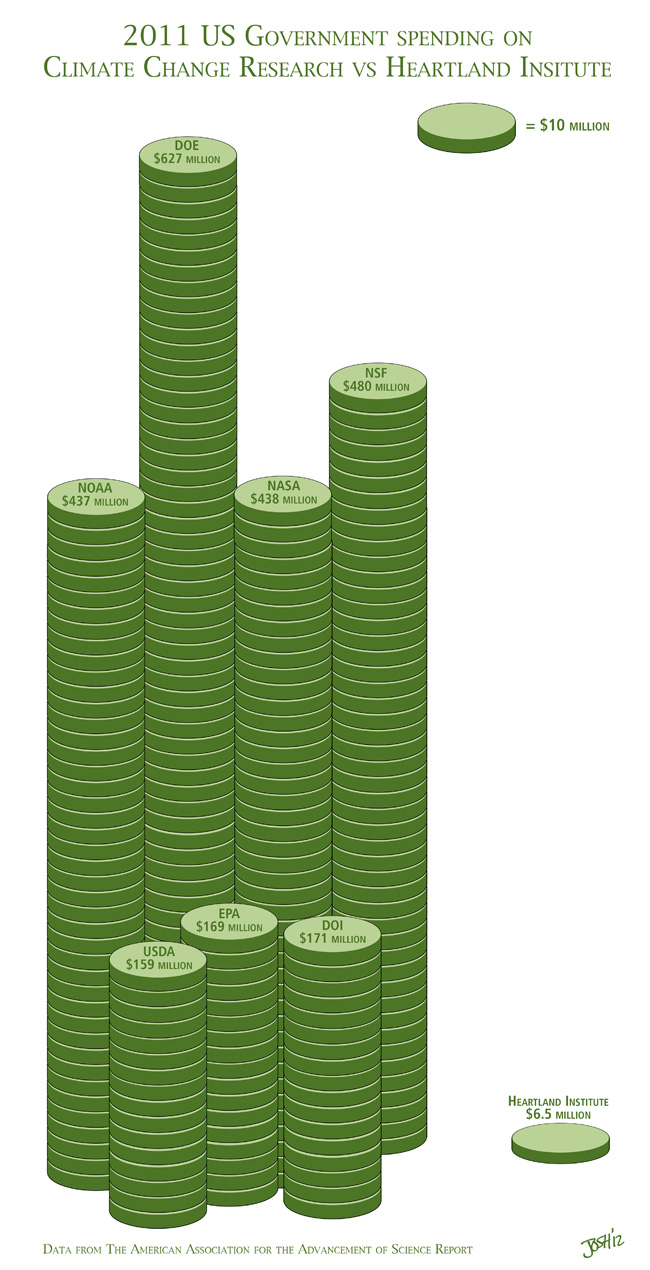
Bishop Hill cartoon by Josh

It was the unfairness of it all, as you can clearly see from the graphic above. Clearly The Heartland Institute was being allowed to control the debate, by channeling a preponderance of funding to sceptic groups and scientists.

How Gleick perpetrated a fraud and identity theft in order to obtain uncontroversial and mundane materials from Heartland

Part of the back-story behind Gleick's frustrated misdeeds

Peter Gleick Fakegate Timeline PDF file

And in the end, after receiving the most boring set of documents from Heartland that one can imagine, Peter Gleick's frustration at being unable to "level the playing field" against the sceptics drove him to create a fake memo, which he distributed to a set of climate alarmist orthodoxy websites to widespread, but anonymous, acclaim.

And then reality set in.

Labels:

Bookmark and Share

03 March 2012

Henry Markram's Blue Brain Project Vies for €1 billion Prize

[Henry] Markram, a South-African-born brain electrophysiologist who joined the Swiss Federal Institute of Technology in Lausanne (EPFL) a decade ago, may soon see his ambition fulfilled. The project is one of six finalists vying to win €1 billion (US$1.3 billion) as one of the European Union's two new decade-long Flagship initiatives. _Nature
The Challenge

The Blue Brain Project in Lausanne is attempting to model a working human brain to an exquisite level of physiologic detail -- to the ion channel level. This would require an enormous amount of computer power -- to say nothing of the electrical power required to drive and cool the apparatus when fully functional. But €1 billion can presumably still buy a great deal.
Every experiment at least tacitly involves a model, whether it is the molecular structure of an ion channel or the dynamics of a cortical circuit. With computers, Markram realized, you could encode all of those models explicitly and get them to work together. That would help researchers to find the gaps and contradictions in their knowledge and identify the experiments needed to resolve them.

Markram's insight wasn't original: scientists have been devising mathematical models of neural activity since the early twentieth century, and using computers for the task since the 1950s (see page 462). But his ambition was vast. Instead of modelling each neuron as, say, a point-like node in a larger neural network, he proposed to model them in all their multi-branching detail — down to their myriad ion channels (see 'Building a brain'). And instead of modelling just the neural circuits involved in, say, the sense of smell, he wanted to model everything, “from the genetic level, the molecular level, the neurons and synapses, how microcircuits are formed, macrocircuits, mesocircuits, brain areas — until we get to understand how to link these levels, all the way up to behaviour and cognition”. _Nature...BlueBrain

Henry Markram

By the end of 2005, his team had integrated all the relevant portions of this data set into a single-neuron model. By 2008, the researchers had linked about 10,000 such models into a simulation of a tube-shaped piece of cortex known as a cortical column. Now, using a more advanced version of Blue Gene, they have simulated 100 interconnected columns.

The effort has yielded some discoveries, says Markram, such as the as-yet unpublished statistical distribution of synapses in a column. But its real achievement has been to prove that unifying models can, as promised, serve as repositories for data on cortical structure and function. Indeed, most of the team's efforts have gone into creating “the huge ecosystem of infrastructure and software” required to make Blue Brain useful to every neuroscientist, says Markram. This includes automatic tools for turning data into simulations, and informatics tools such as http://channelpedia.net — a user-editable website that automatically collates structural data on ion channels from publications in the PubMed database, and currently incorporates some 180,000 abstracts.

The ultimate goal was always to integrate data across the entire brain, says Markram. The opportunity to approach that scale finally arose in December 2009, when the European Union announced that it was prepared to pour some €1 billion into each of two high-risk, but potentially transformational, Flagship projects. Markram, who had been part of the 27-member advisory group that endorsed the initiative, lost no time in organizing his own entry. And in May 2011, the HBP was named as one of six candidates that would receive seed money and prepare a full-scale proposal, due in May 2012. _Nature
Blue Brain Model

The project is both ambitious and expensive. It is also more complex and difficult than can currently be anticipated or planned for. But kudos to Henry Markram for making the attempt.


H/T NextBigFuture

Labels: ,

Bookmark and Share

02 March 2012

Africa's Amazing Rise

A spate of articles in the popular media has attempted to paint an image of Africa as a resurgent continent in the middle of a great economic and cultural ascendancy. While such imaginative viewpoints may fit the modern mood of political correctness, they risk the inducing of complacency in the persons who might otherwise want to help develop solutions for the rapidly worsening plight of sub-Saharan Africans.

Here is an excerpt from a recent article about the "Africa's Amazing Rise."
The conversation about development, still too often mired in outmoded discussions of African poverty and stagnation, must catch up to the realities on the ground. A decade ago, development experts lectured African governments on the importance of crafting pro-poor policies. Now the question increasingly asked is how Africans can share their wealth more equitably. _Atlantic
These African Panglossians make a number of fundamental errors in thinking and argument when attempting to portray the dark continent as a veritable up and coming Garden of Eden.

First, they fail to distinguish between Muslim North Africa, and black sub-Saharan Africa.

Next, they focus on growth numbers such as per cent growth in GDP, without noting that "high" GDP growth numbers mean very little when one is starting from virtually nothing.

In addition, they look at growth industries such as "cell phones" as an example of the increasing vitalisation of the area. While cell phones may help facilitate genuine economic enterprise, they may also be used for a large number of non-economic and often decadent purposes.

Moreover, these cheerleader pieces of pseudo-journalism fail to confront the horrendous and worsening problems which SS AFrica faces. Dictatorships, overpopulation, bloody tribal war, religious wars, over-dependency on natural resources, neo-colonisation by China, tropical disease, HIV, collapse of family structure, premature urbanisation into crumbling cities of perpetual decay... and so on.

One would do far better in understanding the future of sub-Saharan Africa by reading The Coming Anarchy.

Wishful thinking -- even politically correct wishful thinking -- will not make a silk purse of a sow's ear. Anyone who still cares about Africa, beyond its vast resource wealth, will want to confront the reality of Africa, rather than the fantasy.

First published on abu al-fin

Labels:

Bookmark and Share

Printing Zombies


We already have "printers" capable of printing entire houses. There is the Cornell University printer that prints 3-D flying insect robots. A Drexel University paleontologist is building dinosaur robots out of printed 3-D dinosaur bones.

An elderly woman was a recent surgical recipient of a 3-D printed replacement jawbone. And we are not that far away from printing 3-D replacement tissues and organs using tissue printers.

San Diego startup Organovo is printing muscle tissue with a 3-D printer, aiming to create working muscle.
Unlike some experimental approaches that have used ink-jet printers to deposit cells, Organovo's technology enables cells to interact with each other much the way they do in the body. They are packed tightly together and incubated, prompting them to adhere to each other and trade chemical signals. When they're printed, the cells are kept bunched together in a paste that helps them grow, migrate, and align themselves properly. ­Muscle cells, for example, orient themselves in the same direction to create tissue that can contract.

So far, Organovo has made only small pieces of tissue, but its ultimate goal is to use its 3-D printer to make complete organs for transplants. Because the organs would be printed from a patient's own cells, there would be less danger of rejection. _Technology Review
Organovo will first print human tissues of various types to be used in pharmacological research, to replace animal models and other cruder forms of testing new drugs. They will use the income from sales of these tissue models to drug companies, in order to fund their replacement organ printing research.

But do you see where all of this is leading? First you print the bones, for assembling the skeleton. Then you print the muscles, to allow movement. The organs and blood vessels are then printed and assembled together. The only thing left to add is the brain -- the robotic zombie controller.

While cognitive scientists are almost able to create a zombie brain, they are still decades away from creating a realistic human brain. You should not be discouraged by this, since as long as we remove the cannibalistic instincts of our printed zombies, and train them to be docile and obedient, they can be used for many constructive purposes.

Consider the advantages of being able to use the car-pooling lane in your daily commutes. Or just imagine the surprised looks on your friends' faces when you show up at a party in the company of 2 or 3 zombies who look and are dressed exactly like you!

Just think of the many uses to which trial lawyers could put these zombies in class action lawsuits! Imagine the sympathy they could induce in naive jurors who didn't know any better. Why, one might even be elected president of the USA! It would not be unprecedented.

Anyway, give it some thought. We may not be that far away from such a brave new world, and you want to be prepared.

First published at Al Fin Potpourri

Labels: , ,

Bookmark and Share

A Day of Reckoning for the IPCC?

A Final Reckoning for the IPCC?

When even ultra-scrupulous Georgia Tech climatologist Judith Curry is wondering whether the IPCC has outlived its usefulness, you know that there is trouble in paradise. The UN's Intergovernmental Panel on Climate Change has been the seat of the climate alarmist orthodoxy, recipient of billions of dollars in grants, and the aspirant to becoming the clearinghouse for the distribution of trillions of dollars of redistribution funds -- if only they can get the suckers, er, people to trust them.
Clive Best

But how can you trust a group whose chief members are authors of the damnable ClimateGate emails? And besides that, their climate model projections stink to high heaven.
Scafetta vs. IPCC

We have looked at Duke University climatologist Nicola Scafetta's natural cycle model before. You can see it compared graphically above vs. IPCC models vs. observations. It is too early to tell how far reality will diverge from the IPCC, but things do not look good for the intergovernmental panel of alarmists.
Clear-headed climatologists have questioned the apparent upward bias of the IPCC projections for a number of years, but it often takes time for an apparent -- but false -- trend to veer away from real world observations. Particularly when the computer models are based upon numbers which have been "adjusted" by the same persons who have done the modeling. Not exactly an ideal situation in an unbiased scientific setting.

We are currently "in media res," or in the middle of the story. We are watching how things unfold, and trying to resist the carbon hysteria of the orthodoxy, and their incessant demands for more billions, tens of billions, hundreds of billions, and more dollars.

Because, you see, we are not completely convinced that the gang of hysteric orthodoxers are being completely level with us. In fact, we are beginning to look at the IPCC as a gang of liars and thieves. If this goes on much longer, there may well be a day of reckoning for this gang. One they probably won't like.

Labels:

Bookmark and Share

01 March 2012

The Need for Vital Energy vs. the Giant Green-Industrial Complex

...in the U.S., new technologies such as hydraulic fracking and vertical drilling have vastly increased estimates of North America’s energy resources, particularly natural gas. By 2020, the United States, according to the consultancy PFC Energy, will surpass Russia and Saudi Arabia as the world’s leading oil and gas producer. _Kotkin
All healthy, modern industrial economies require abundant supplies of energy. Any organisation or institution which obstructs the supply of energy to a modern nation is the deadly enemy of that society and those people. Today, the huge, well-funded green-industrial complex is exposing itself as opposed to all reliable and affordable forms of energy. This means that there is a war, of sorts, taking place in modern industrial nations, between the pro-prosperity forces and the energy-starvation forces.
ImageSource

More:
The divide between the fossil-fuel industry and the green movement is increasingly dividing the country by region, class, and culture....President Obama in recent days has gone out of his way to sound reassuring on energy, seeming to approve an oil pipeline to Oklahoma this week after earlier approving leases for drilling in Alaska. Yet few in the energy industry trust the administration’s commitment to expanding the nation’s conventional energy supplies given his strong ties to the powerful green movement, which opposes the fossil-fuel industry in a split that’s increasingly dividing the country by region, class, and culture.

...No single sector affects more people and industries than energy, and none is more deeply affected by the disposition of government. Energy divides the nation into two camps. On one side there are the regions and industries dependent on the development and use of energy. They include the increasingly expansive energy-producing region stretching from the Gulf Coast and the Great Plains to parts of Ohio, Pennsylvania, and the Appalachian range.

...Nine of the 11 fastest-growing job categories are related to energy production, according to an analysis by Economic Modeling Systems Inc. Energy jobs pay an average of $100,000 annually, about the same as software engineers earn in Silicon Valley.

Perhaps more important politically, this bonanza is now spreading to historical battleground states Ohio, Pennsylvania, and Michigan. Long-depressed areas like western Pennsylvania are reversing decades of decline as new finds and advances in natural-gas drilling have opened up vast new stores of domestic energy. The new energy wealth has created new jobs, enriched property owners, and provided states with potential huge new sources of revenue.

...Given the success in the other energy states, California—with double-digit unemployment—might reconsider its policies, but this is unlikely. “I asked [Gov.] Jerry Brown about why California cannot come to grips with its huge hydrocarbon reserves,” John Hofmeister, a former president of Shell Oil’s American operations and a member of the U.S. Department of Energy’s Hydrogen and Fuel Cell Technical Advisory Committee, told me recently. “After all, this could turn around the state."

Brown’s answer, according to Hofmeister: “This is not logic, it’s California. This is simply not going to happen here.’”

...If all [national] energy subsidies were removed, the fossil-fuel industry likely could shrug off the hit, while the heavily subsidized green-industrial complex would markedly diminish. Yet even if Congress refuses to continue the green subsidies, it’s probable that administration regulators would find ways to slow fossil-fuel expansion in a second Obama term. Responding largely to the Democratic environmental lobby, they have already overruled the State Department to delay the Keystone XL pipeline from Canada.... _Joel
Kotkin
It is slowly sinking into Barack Obama's mind that he confronts perhaps the first real political test of his charmed career. This time, the abysmal economic condition of the country can be laid squarely at his feet. With a real unemployment rate of 11% and an underemployment rate above 20%, the housing market continuing to decline across large swathes of the country, and 73% of the US population saying the country is "on the wrong track" -- Mr. Obama's spin machine has its work cut out for it.

Canada, on the other hand, appears to have been taking a more rational pro-energy approach from the very start of its current administration.
The [Canadian] government’s notion of an energy strategy — emphasize the power and efficiency of markets, get rid of red tape, finger environmental radicals, and remind the U.S. how secure Canadian supplies are — received a double boost this week...

...the main reason for both the strong Canadian dollar and high petroleum prices is that government money factories from the U.S. Federal Reserve to the European Central Bank are trying to bail out their political masters by debasing their currencies. It’s got little or nothing to do with Fort McMurray.

The good news on the policy front is that this spat helps put paid to the notion that Canada is ever likely to get a comprehensive and intrusive energy strategy of the kind usually embraced by left liberal governments _GWPF Peter Foster
Countries across the western world had best get out the disinfectant, to remove the green rot which is eating away at their industrial and economic strength. The alternative to such vigorous spring cleaning is a progressive sinking into the twin quagmires of debt and demographic decline.

You are not likely to enjoy that alternative.

Labels: , , ,

Bookmark and Share

Want to Delete Your Google Browsing History?

Is it too late? Read on:
Google’s new privacy policy rolled out overnight, turning more than 60 policies into one and clearing the way for the company to unify data about its users across its various online services.

The company went ahead despite concerns from European regulators who asked Google to put the changes on hold. EU Justice Commissioner Viviane Reding said in a radio interview today that the policy changes are ”not in accordance with the European law and that the transparency rules have not been applied.”

In a new blog post, the company reiterates that user controls aren’t changing — you’ll still be able to clear your search history, for example — and says it’s making the changes with an eye toward improving its services. _Geekwire.com
Well, they say you can still clear your search history -- and perhaps you should if you are concerned about such things. And yet, what has Google already done with your data, between the stroke of midnight and the hour you are reading this?
Tech News Daily reports that once Google's new unified privacy policy takes effect all data already collected about you, including search queries, sites visited, age, gender and location will be gathered and assigned to your online identity represented by your Gmail and YouTube accounts. After the policy takes effect you are not allowed to opt out without abandoning Google altogether. But now before the policy takes effect, you have the option of deleting your Google Web History by modifying your settings so that Google is unable to associate data collected about you with your Gmail or YouTube accounts.

...deleting your browsing history before March 1 when Google's new privacy policy comes into effect will limit Google's ability to track and record your every move online. The process is simple. Follow the steps below:
1. Go to the google homepage and sign into your account.
2. Click the dropdown menu next to your name in the upper-right hand corner of your screen.
3. Click accounts settings
4. Find the "Services section"
5. Under "Services" there is a sub-section that reads "View, enable, disable web history." Click the link next to it that reads: "Go to Web History."
6. Click on "Remove all Web History"
When you click on "Remove all Web History," a message appears that says " Web History is Paused." What this means is that while Google will continue gathering and storing information about your web history it will make all data anonymous, that is, Google will not associate your Web History information with your online accounts and will therefore be unable to send you customized search results.

Google's ability to gather personalized information about you by assigning data to your Gmail and YouTube accounts will remain "Paused" till you click "Resume." _DigitalJournal
On the other hand, many people may feel sorry for Google, and may wish to help the struggling dot.com to survive the Obama era. If you are one of these soft-hearted folk, simply disregard this entire posting. No one but Google will ever know the difference. Oh, and anyone else that Google decides to tell, of course.

Labels:

Bookmark and Share

MIT Neuroscientists Make Important Alzheimer's Discovery

The number of Alzheimer’s victims worldwide is expected to double every 20 years... MIT neuroscientists have shown that an enzyme overproduced in the brains of Alzheimer’s patients creates a blockade that shuts off genes necessary to form new memories. Furthermore, by inhibiting that enzyme in mice, the researchers were able to reverse Alzheimer’s symptoms.

The finding suggests that drugs targeting the enzyme, known as HDAC2, could be a promising new approach to treating the disease, which affects 5.4 million Americans.

Histone deacetylases (HDACs) are a family of 11 enzymes that control gene regulation by modifying histones — proteins around which DNA is spooled, forming a structure called chromatin. When HDACs alter a histone through a process called deacetylation, chromatin becomes more tightly packaged, making genes in that region less likely to be expressed.

HDAC inhibitors can reverse this effect, opening up the DNA and allowing it to be transcribed.

In previous studies, Tsai had shown that HDAC2 is a key regulator of learning and memory. In the new study, her team discovered that inhibiting HDAC2 can reverse Alzheimer’s symptoms in mice._MIT
As the populations of the developed and emerging nations grow progressively older, the number of Alzheimer's sufferers -- and sufferers of other debilitating diseases of old age -- threaten to cripple these societies. Affordable means of preventing and treating dementias and other disabling diseases of senescence could make the difference between prosperity or poverty for many nations. The recent MIT discovery may be an important step forward in this regard.
... the team subsequently showed that using RNAi to reduce HDAC2 build up in the hippocampus of a mouse neurodegenerative disease model removed this repression, reinstated neuronal structural and synaptic plasticity, and eradicated neurodegeneration-associated memory deficits. Li-Huei Tsai, Ph.D., and colleagues report their findings in Nature in a paper titled “an epigenetic blockade of cognitive functions in the neurodegenerating brain.”

Epigenetic modifications in the nervous system that are mediated by histone acetylation have been unequivocally associated with facilitating learning and memory, the researchers state. Multiple studies have in addition reported that reduced histone acetylation is associated with cognitive decline in animal models of neurodegeneration including AD.

To further investigate the role of HDAC2 in neurodegeneration-related cognition, the team looked at levels of the enzyme in CK-p25 mice. These animals can be induced to overexpress p25, in the forebrain. p25 is a truncated version of p35 and is implicated in a range of neurodegenerative diseases. Their studies showed that animals induced to overexpress p25 demosntrated significant increases in HDAC2 in neuronal nuclei, specifically hippocampal area CA1 but not CA3 or the dentate gyrus, and also in the prefrontal cortex. In contrast, levels of the HDAC1 and HDAC3, were not changed.

The researchers then moved on to carry out chromatin immunopreciptation studies to assess the functional consequences of HDAC2 elevation, primarily in a range of known HDAC2 targets that have been shown to be downregulated in human AD brains, including learning- and memory-related genes, and those involved in synaptic plasticity. They found elevated HDAC2 enrichment at the majority of these genes induced CK-p25 hippocampus, whereas again, HDAC1 and HDAC3 binding wasn’t affected. “Interestingly, in agreement with previous reports showing that HDAC2 can also bind to a gene’s coding region, we also found HDAC2 more abundantly bound to the coding sequence of the same genes,” they note. _GenengNews
The MIT researchers have utilised a number of different advances in cell and molecular biology to make these discoveries. As scientists close in on the discovery of meaningful interventions in destructive pathological processes, the importance of pre-existing replicated "off the shelf" research grows.
The researchers found that in mice with Alzheimer’s symptoms, HDAC2 (but not other HDACs) is overly abundant in the hippocampus, where new memories are formed. HDAC2 was most commonly found clinging to genes involved in synaptic plasticity — the brain’s ability to strengthen and weaken connections between neurons in response to new information, which is critical to forming memories. In the affected mice, those genes also had much lower levels of acetylation and expression.

“It’s not just one or two genes, it’s a group of genes that work in concert to control different phases of memory formation,” Tsai says. “With such a blockade, the brain really loses the ability to quickly respond to stimulation. You can imagine that this creates a huge problem in terms of learning and memory functions, and perhaps other cognitive functions.”

The researchers then shut off HDAC2 in the hippocampi of mice with Alzheimer’s symptoms, using a molecule called short hairpin RNA, which can be designed to bind to messenger RNA — the molecule that carries genetic instructions from DNA to the rest of the cell.

With HDAC2 activity reduced, histone acetylation resumed, allowing genes required for synaptic plasticity and other learning and memory processes to be expressed. In treated mice, synaptic density was greatly increased and the mice regained normal cognitive function. _MIT
This is good news for all mice who suffer from Alzheimer's. Now, scientists must confront the immense government-made mine field and obstacle course which obstruct modern efforts to affordably develop life saving interventions in the biomedical fields. In this sense -- as in many others -- government is the greatest enemy of the future.

Cross-posted to Al Fin Longevity

Labels: ,

Bookmark and Share
Newer Posts Older Posts
Al Fin Main Page
Enter your Email


Powered by FeedBlitz
Google
WWW AL FIN

Powered by
Blogger

``