07 January 2013

For Now: It's The Family, Stupid!; Tomorrow, It Will Be Something Quite Different


Question: Why Are So Few Women at the Top of Their Professions or Companies?

The answer to that question 50 years ago was quite different than the answer to that question today. And the answer to the question today, is quite different from the answer tomorrow. Yesterday's women may not have had the opportunities to compete beyond "the glass ceiling." As for today's women? Kay S. Hymowitz explains why today's women are not willing to fight for the top job:
...women don’t ascend the career ladder in the business world the way men do. According to Catalyst, just 37 percent of those who receive the first major promotion—to manager—are women. And the higher you go, the scarcer women get. Only 26 percent of vice presidents and senior executives are female, as are 14 percent of executive committees, and those numbers haven’t changed in years.

It seems that few women are even auditioning for the star positions. A longitudinal study of Booth School of Business graduates at the University of Chicago found men and women launching careers in equal numbers and, if you take into account differences in their industries and subspecialties, earning about the same amount of money at the outset. Ten years later, though, barely half of the female grads—52 percent—were working full-time, compared with over 90 percent of the men.

In their thirties and forties, women with children are typically looking for ways to work less, not more. They’re twice as likely as men to work part-time, and surveys show that that’s the way they want it. Female physicians have been avoiding emergency-room medicine and flocking to dermatology and pediatrics, which bring fewer emergency calls and night hours. Harvard economists Claudia Goldin and Lawrence Katz have demonstrated that women’s preference for fewer and more flexible hours has transformed a number of professional occupations, including veterinary medicine, pharmacy work, and certain medical specialties. The group practices that have all but replaced lone practitioners in these fields allow women to limit their night and weekend hours, work three or four days a week, and avoid the headaches of ownership. The rising generation of women doesn’t look likely to change any of this. One recent survey of students by four University of Wisconsin psychologists found that college women, as they planned their careers (and they did expect to work), were already thinking about cutting back hours when they had children. A recent Gallup poll showed that 44 percent of women wished that they didn’t work at all, compared with 22 percent of men. _Kay S. Hymowitz
Ignore biology at your peril -- unless you are a politician, journalist, professor, or a bureaucrat -- and do not pay a penalty for your egregious mistakes.

So, yesterday's woman could not get to the top of the heap even if she wanted to. Today's woman, for the most part, doesn't want to pay the penalty for reaching the top, and staying there. What about tomorrow's woman?

The problem for tomorrow's women will be more complex, as coming generations of women are being raised more by peers and consumer electronics offerings than by adults who are capable of passing along meaningful principles of navigating their way through life.

...young girls are in a ‘catastrophic’ state of crisis because of the ‘toxic’ influences of advertising, celebrity and pornography which pressurise them to grow up too quickly._Daily Mail
What if there is even a tiny sliver of truth in the quote above? Then rather than expect tomorrow's generations of young women to lead humans into a brave new future, we should more likely expect them to create huge new headaches for anyone even remotely connected to them.

The human capital of a society is its most precious resource. What would cause a society to squander its present and future resources -- male and female, young and adult -- at such a prodigal and cynical rate?

It may be that most of tomorrow's women will be challenged maintaining a halfway competent retail counter, or even household accounts -- much less planning important tactics and strategies for the survival or ascendancy of important public and private entities.

Where will tomorrow's competent women (and men) come from, if popular culture, the educational establishment, and the family have all been corrupted to the point of being unable to instill confidence that is based upon true competency in meaningful skills?

A lot more money is being spent on raising girls up to competitive levels in science, technology, law, medicine, business, and government. But most of that money is being mis-spent on political and ideological strategies that take no account of biology and genetics -- and are thus destined to fail.

Boys are certainly being neglected by modern hyper-feminised PC society, but in the long run that may be to their advantage -- once more unpaid volunteer mentors for boys come along and figure out what is what.

Young women, however, are caught in the political feminist's web of control, and may never emerge from the trap as a whole, independent, thinking, competent person, separate from the PC groupthink police and informer network. More's the pity.

Labels: ,

Bookmark and Share

13 December 2012

Out of All Geniuses, Why Are So Few Female?

The lifelong effects of early exposure to sex hormones are characterized as organizational, because they appear to alter brain function permanently during a critical period. Administering the same hormones at later stages has no such effect. The hormonal effects are not limited to sexual or reproductive behaviors: they appear to extend to all known behaviors in which males and females differ. They seem to govern problem solving, aggression and the tendency to engage in rough-and tumble play-the boisterous body contact that young males of some mammalian species display. __Sex Differences In the Brain

What is genius? It is an extraordinary level of skill and accomplishment which goes far beyond the commonplace. Genius refers to the ability to push human accomplishment beyond its present limits.

In an exhaustive historical study of human genius across a range of human endeavour from science to art: Human Accomplishment: The Pursuit of Excellence in the Arts and Sciences, 800 BC to 1950, very few female geniuses made the lists.
Murray ranks the leading 4,000 innovators in several fields of human accomplishment from 800 BC to 1950. In each field Murray identifies a number of sources (leading encyclopedias, histories and surveys) providing information about the leading figures in the field. The rankings are made from information in these sources. A raw score is determined based on how many sources mention and on how much space in each source is devoted to a person. Then these raw scores are normalized so that the lowest score is 1 and the highest score is 100. The resulting scores are called "Index Scores".
Women invariably come up short.
A Small Gender Curve Shift With Large Consequences for Genius

More

The same relative shortage of female genius is discovered in lists of science Nobel Prize winners, in lists of top mathematical prize winners, and in most any other objective and meritocratic measure of accomplishment where men and women are free to compete for the prize.

This gender disparity -- although real and enduring -- is far from politically correct. In the PC skankstream, the lack of parity cannot be allowed to stand unchallenged. A recent challenge to the reality of the gender imbalance in genius, comes from Scientific American -- once a science journal, but now largely a political organ of the skankstream:
For most of history women in the Western world were denied opportunities to seek higher education and develop their talents.

The dearth of women at the top of their fields is now often the result of compromises made for the sake of family, rather than differences in ability.

Women who seek eminence face difficult choices regarding when to invest in their careers versus their personal lives. More cultural and institutional support for women could dispel the lingering gender disparities. _SciAm
A brief summary is available at the link, but most of the article is hidden behind a paywall.

While women have already surpassed men in overall achievement of college and graduate level degrees, something keeps them from matching men in proportionate numbers at the top levels in the fields which are very difficult to master.

Journolistic and pseudo-scientific skanks attempting to explain this female shortfall have a limitless bucket of excuses from which to draw. And they are never short of grand plans and schemes for "correcting" this disparity. But when the ultimate explanation for the shortage of female genius and grand female accomplishment is finally seen to rest at the biological level, the PC skankstream will have to take a different approach -- if it is to be taken seriously.

The biological explanation fits the data best of all -- although it is the least politically correct.

There is now a growing literature to suggest that, in addition to similarities between male and female brains, there are marked sex dimorphisms in brain morphology, neurochemistry, hard-wiring, and functional outcomes (De Vries and Boyle, 1998; Simerly, 2005; Cahill, 2006; Cosgrove et al., 2007). Moreover, increasing evidence suggests that estrogen can have different (sometimes opposite) effects as well as similar effects in male and female subjects, probably because of underlying brain dimorphisms that occur in some brain processes but not others.

... substantial evidence in humans and experimental animals documents sex differences in specific cognitive and behavioral tasks (De Vries, 2004; Cahill, 2006; Cosgrove et al., 2007). Whether males or females have the advantage depends on the task. For example, men generally outperform women on visuospatial tasks, quantitative tasks, and targeted motor skills, whereas women excel in verbal skill tasks, perceptual tasks, and fine motor skills... _Estrogen in the Brain (& Sexual Dimorphism)
A large and growing body of scientific evidence describes significant statistical differences in the brain structure and function of males vs females. This "sexual dimorphism" of brain strucutre & function begins very early in development, and continues throughout childhood, receives a big boost in puberty, and generally carries on through adulthood and to the end of life.

It is no surprise that such significant statistical brain differences would result in significant statistical differences in behaviour and accomplishment. It is politically inconvenient to a radically feminised establishment inside government, academia, media, and popular culture, yes. But no surprise.

We will have to watch and see how many more tens (and now hundreds) of billions of dollars are wasted on the futile attempt to overcome the built in biological differences between the brains of men and women.

Meanwhile, boys of potential genius are being neglected by tax-supported institutions, because their potential does not fit the narrative.

If you have boy children and girl children, be sure to give each of them full opportunity to choose their own course in life -- without regard to political correctness. And be sure to make them as dangerous as they wish to be.

It is never too late to have a dangerous childhood.

Labels: ,

Bookmark and Share

05 September 2012

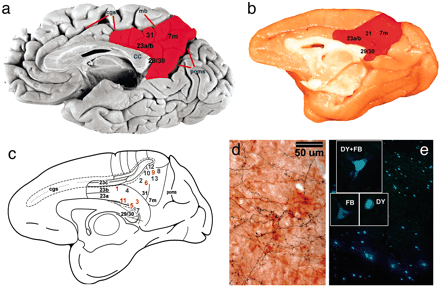
Posteromedial Cortex: Pathway to the Self?


One of the interesting aspects of human consciousness is the sense of the "autobiographical self," which provides us with a sense of personal identity and continuity. Recent research at Stanford U. School of Medicine adds new pieces to the human consciousness puzzle, which cognitive scientists are attempting to assemble. They discovered that the posteromedial cortex was extremely active when recalling events in the person's life, but that this activity was shut down immediately when the patient was asked to do a simple arithmetic problem.

The posteromedial cortex is tucked so deeply into the brain that it is often difficult to examine its ongoing function, using traditional imaging tools such s fMRI. In the Stanford study, researchers took advantage of a previously scheduled neurosurgical procedure being done in a group of epileptic patients, using intracranial electrode monitoring of the PMC.

In a study published online Sept. 3 in Proceedings of the National Academy of Sciences, Parvizi and his Stanford colleagues found a way to directly and sensitively record the output from this ordinarily anatomically inaccessible site in human subjects. By doing so, the researchers learned that particular clusters of nerve cells in the PMC that are most active when you are recalling details of your own past are strongly suppressed when you are performing mathematical calculations.

...The researchers took advantage of a procedure performed on patients who were being evaluated for brain surgery at the Stanford Epilepsy Monitoring Unit, associated with Stanford University Medical Center. These patients were unresponsive to drug therapy and, as a result, suffered continuing seizures. The procedure involves temporarily removing small sections of a patient’s skull, placing a thin plastic film containing electrodes onto the surface of the brain near the suspected point of origin of that patient’s seizure (the location is unique to each patient), and then monitoring electrical activity in that region for five to seven days — all of it spent in a hospital bed. Once the epilepsy team identifies the point of origin of any seizures that occurred during that time, surgeons can precisely excise a small piece of tissue at that position, effectively breaking the vicious cycle of brain-wave amplification that is a seizure.

...The experimenters found eight patients whose seizures were believed to be originating somewhere near the brain’s midline and who, therefore, had had electrode packets placed in the crevasse dividing the hemispheres. (The brain’s two hemispheres are spaced far enough apart to slip an electrode packet between them without incurring damage.)

...Significant portions of the PMC that were “tapped” by electrodes became activated during self-episodic memory processing, confirming the PMC’s strong role in recall of one’s past experiences. Interestingly, true/false statements involving less specifically narrative recall — such as, “I eat a lot of fruit” — induced relatively little activity. “Self-judgment” statements — such as, “I am attractive” — elicited none at all. Moreover, whether a volunteer judged a statement to be true or false made no difference with respect to the intensity, location or duration of electrical activity in activated PMC circuits.

This suggests, both Parvizi and Foster said, that the PMC is not the brain’s “center of self-consciousness” as some have proposed, but is more specifically engaged in constructing autobiographical narrative scenes, as occurs in recall or imagination.

Foster, Dastjerdi and Parvizi also found that the PMC circuitry activated by a recall task took close to a half-second to fire up, ruling out the possibility that this circuitry’s true role was in reading or making sense of the sentence on the screen. (These two activities are typically completed within the first one-fifth of a second or so.) Once activated, these circuits remained active for a full second.

Yet all the electrodes that lit up during the self-episodic condition were conspicuously deactivated during arithmetic calculation. In fact, the circuits being monitored by these electrodes were not merely passively silent, but actively suppressed, said Parvizi. “The more a circuit is activated during autobiographical recall, the more it is suppressed during math. It’s essentially impossible to do both at once.” _Parvizi _via SD
As the researchers suggest, the PMC is not likely to be "the centre of self-consciousness." Rather, the PMC is one part of the human brain's mechanism of self-consciousness -- and a crucial part at that.

It is usually a mistake to claim that a specific part of the brain is "the centre" for a specific cognitive or behavioural function. Rather, different brain modules are integrally tied to various behavioural and cognitive functions, and work in concert to perform cognitive and behavioural functions and actions.

PNAS Neural Connections of PMC in Macaque

PLoS One: Functional Connections of the Human PMC

More: CUNY researchers have discovered that androgen receptors in the visual cortex appear to affect how males see the world through their eyes, as opposed to the way that females see the world. Since androgen receptors are scattered throughout the human cerebral cortex, it is likely that male brains not only see the world differently (statistically), but also perceive the world differently in all of their senses, and feel driven to react to what they perceive in a different manner (statistically) than do females.

Labels: , , ,

Bookmark and Share

29 July 2012

Why Do Males Continue to be Superior at Math?

Despite shoddy pseudo-scholarly attempts by feminist ideologues to disprove the obvious statistical sex differences in math reasoning and advanced math ability, males continue to be over-represented in fields requiring advanced mathematical abilities.
Proportion Female in Various Fields _HBD Chick _via_ Complexity Simplified


So, why are males superior at math? Let's be more specific, since the reality is a bit mixed:
In late elementary school, females outperform males on several verbal skills tasks: verbal reasoning, verbal fluency, comprehension, and understanding logical relations (Hedges & Nowell, 1995). Males, on the other hand, outperform females on spatial skills tasks such as mental rotation, spatial perception, and spatial visualization (Voyer, Voyer, & Bryden, 1995). Males also perform better on mathematical achievement tests than females. However, gender differences do not apply to all aspects of mathematical skill. Males and females do equally well in basic math knowledge, and girls actually have better computational [arithmetic _ ed.] skills. Performance in mathematical reasoning and geometry shows the greatest difference (Fennema, Sowder, & Carpenter, 1999). _Education

In fact, recent research shows that males begin to take a qualitatively different approach to math thinking from an early age:
In a University of Missouri study, girls and boys started grade school with different approaches to solving arithmetic problems, with girls favoring a slow and accurate approach and boys a faster but more error prone approach. Girls’ approach gave them an early advantage, but by the end of sixth grade boys had surpassed the girls....

“Developing mathematical skill may be part ‘practice makes perfect’ and part ‘perfect makes practice,’” Bailey said. “Attempting more answers from memory gives risk-takers more practice, which may eventually lead to improvements in accuracy. It also is possible that children who are skilled at certain strategies are more likely to use them and therefore acquire more practice.” _MU News

The greater boldness exhibited by boys in math class is likely a testosterone effect, which is exhibited in so many other behavioural differences between males and females in childhood, adolescence, and early to middle adulthood.

The male superiority in spacial skills tasks and advanced math reasoning is likely to derive from far more subtle changes in the brain than those that lead to greater male boldness. But those more subtle changes are also largely due to testosterone effect.

These brain changes occur over time -- slowly in childhood, and at a faster rate in adolescence. All levels of brain activity -- from gene expression to physiological parameters to brain structure to cognitive function -- are involved.

Recent feminist-inspired studies which compare male : female math skills in childhood or very early in adolescence are unable to detect the most significant brain transformations, and are thus likely to fail to detect very real differences. Likewise, studies which focus upon comparisons of basic arithmetic skills, fail to detect the male advantages in spatial skills and in advanced mathematical reasoning.

Fortunately, better tools for detecting brain activity and differences at all levels -- from gene expression to fine brain structure to the neurological correlates of cognition -- are all in development.

A fascinating new brain imager which combines MEG (magnetoencephalography) with MRI (magnetic resonance imaging) will allow an unprecedented degree of simultaneous spatial and temporal imaging of brain structure and activity.

Functional brain imaging has already developed to the point where it can be used as an objective, culture-free test for cognitive function and speed. It is only a matter of time before such crude objective measures of cognition can be fine-tuned to look at distinct types of cognition, including mathematical and spatial reasoning.

When it comes to brain, cognition, and behaviour, hormones have consequences. The sooner human academics can grow beyond their political correctness to look at these issues objectively and honestly, the sooner we can find ways for all of us to move ahead.


More from La Griffe du Lion

More on math sex gap at secondary level (PDF)

Lubos Motl provides colour commentary on the La Griffe du Lion article linked above, paying particular attention to cross-cultural views of the math sex gap.

Labels: , ,

Bookmark and Share

11 July 2012

Obama Takes His Wrecking Ball to US Science & Technology

Since its founding, the US has been a fertile ground for scientific and technological innovation. Increasingly over the past century and a half, the US economy has been driven by scientific and technological discoveries and advances. Still, it would be quite easy for bad government policies to change all of that.

Science and technology are male-dominated areas in the US and in virtually any other nation in the world. There is a good reason for the male preponderance in math, the hard sciences, and the technological occupations. But US feminists are unhappy about this "gender imbalance," and they want President Obama to do something about it.
Quotas limiting the number of male students in science may be imposed by the Education Department in 2013. The White House has promised that “new guidelines will also be issued to grant-receiving universities and colleges” spelling out “Title IX rules in the science, technology, engineering and math fields.” These guidelines will likely echo existing Title IX guidelines that restrict men’s percentage of intercollegiate athletes to their percentage in overall student bodies, thus reducing the overall number of intercollegiate athletes.

Obama hinted that Title IX quotas would soon come to engineering and techology, saying that “Title IX isn’t just about sports,” but also about “inequality in math and science education” and “a much broader range of fields, including engineering and technology. _OpenMarket

In American universities, science, math, and technology departments are relatively free of the leftist indoctrination which pervades most other departments and divisions of modern universities. If feminists can get their man Obama to bring those recalcitrant and untamed departments under control, they will have a virtual lock on all areas of the university -- faculty, staff, and students.
The fact that fewer women than men major in science and engineering is the result of their own voluntary choices, not sexism or sex discrimination by schools, notes researcher John Rosenberg, the proud father of a daughter who got a Ph.D. from CalTech. My daughter is bright, and I’d be happy if she got a graduate degree in engineering (or became a physicist, like her grandfather), but I can’t force her to do that if she doesn’t want to, and a college shouldn’t be deemed liable for sex discrimination against women if women like her don’t want to study engineering.

Gender disparities in a major are not the product of sexism, but rather the differing preferences of men and women. The fact that engineering departments are filled mostly with men does not mean they discriminate against women anymore than the fact that English departments are filled mostly with women proves that English departments discriminate against men. The arts and humanities have well over 60 percent female students, yet no one seems to view that gender disparity as a sign of sexism against men. Deep down, the Obama administration knows this, since it is planning to impose its gender-proportionality rules only on the STEM fields (science, technology, engineering, and math), not other fields that have similarly large gender disparities in the opposite direction. _OpenMarket

Such an overwhelming difference in interests between the sexes, statistically, hints at deeper differences within the biology. Social engineers would be wise to show caution when tinkering with deep biological differences which have evolved over many millions of years.
As Susan Pinker notes, “A mountain of published research stretching back a hundred years shows that women are far more likely than men to be deeply interested in organic subjects—people, plants and animals—than they are to be interested in things and inanimate systems, such as electrical engineering, or computer systems.”

Women are well-represented in scientific fields that involve lots of interaction with people. As The New York Times’ John Tierney noted, “Despite supposed obstacles like “unconscious bias” and a shortage of role models and mentors, women now constitute about half of medical students, 60 percent of biology majors, and 70 percent of psychology Ph.D.’s. They earn the majority of doctorates in both the life sciences and the social sciences.” By contrast, “They remain a minority in the physical sciences and engineering,” which deal more with inanimate objects rather than people.

These gender-based differences are not the product of discrimination, and manifest themselves at a very early age. As a book on the biology of male-female differences notes, “Girl babies in their cribs are especially inclined to stare at images of human faces, whereas infant boys are likely to find inanimate objects every bit as attractive”; “this difference persists into adulthood: when shown images of people as well as things, men tend to remember the things, and women tend to remember the people.” _OpenMarket
Obama intends to enlarge upon his already catastrophic program of experimental social engineering, using US citizens, businesses, and institutions as his experimental mice.

It would be nice if these experimental mice were well informed about Obama's intentions prior to the November US elections.

Labels: , , , ,

Bookmark and Share

04 March 2012

How a 1,000 Euro Pair of Implants Upset the Balance of Nature in Bagnolo

Laura Maggi has been running Le Cafe in Bagnolo, Italy, for eight years. But it wasn't until she invested in breast implants and a more revealing wardrobe, that her business began to truly take off.
Le Cafe's Laura Maggi courtesy Daily Mail

After eight years running a bar, Laura Maggi suddenly found men beating a path to her door. Not for the quality of her coffee and aperitifs, but because she had started appearing for work in highly revealing outfits.

Hundreds of male customers flocked there day and night, leaving their cars double parked in the surrounding streets.

Congestion became such a problem that the lady mayor announced she was considering an emergency bylaw to limit traffic in the area. _DailyMail
In fact, the Mayor forbade her husband from visiting Le Cafe, and several other wives of the village have followed suit. But what are the women actually complaining about?

For a cost of between 1,000 Euros and 2,500 Euros, any woman can obtain a reasonable approximation of Laura's breasts. Revealing clothing is easily come by. Learning to think of one's self as sexy, and acting the part, may be the most difficult accomplishment for most modern, feminist-indoctrinated women, however. In many ways, large numbers of women may have forgotten how to act like women. If so, that could be an expensive lapse of memory for some, and a huge windfall of profits for Laura Maggi!

What if other female bar owners in Italy decide to imitate Laura's business plan? What will this do to the already drooping birthrates in Italia? If the men are all at Laura's bar, they can't be home making tomorrow's generation of Italians.

If Italy's women are to save the country's future, they may have to re-learn some very old lessons about human nature.

Originally posted to Al Fin Potpourri and to Al Fin, You Sexy Thing!

Labels: , , ,

Bookmark and Share

20 February 2012

The Truth about Gender Preferences Hiding in Plain Sight

MJ Perry at Carpe Diem blog looks at College Board Advanced Placement exams by gender, in search of what he could learn about possible career choice interests by high school aged girls and boys. What he found is quite revealing -- and quite unlikely to ever be revealed in the mainstream press, for fear of repercussions from powerful feminist interests.

Take a look, and see what you think:
AP Subject Exam, 2011 %Female   %Male 
Studio Art: Drawing7426
Studio Art: Design7228
French Language6931
Art History6634
English Literature6337
Psychology6337
Spanish Language 6337
Spanish Literature6337
English Language6238
Biology5941
Chinese Language5842
French Literature5842
Environmental Science5644
Japanese5644
World History5545
Human Geography5446
U.S. History5446
European History5347
U.S. Government5347
Statistics 5248
Latin5050
Calculus AB4951
Italian4951
Comparative Government 4852
Chemistry4753
German4753
Macroeconomics4654
Microeconomics4456
Music Theory4258
Calculus BC4159
Physics B3565
Physics C22674
Physics C12377
Computer Science A2080
Computer Science AB1486

1. Of the 35 AP subjects, female high students were over-represented in 20 subjects, male students were over-represented in 14 subjects and one subject (Latin) was perfectly balanced by gender.

2. In the science area, female students showed a greater interest in biology (59%) and environmental science (56%) than males, and males showed a greater interest in chemistry (47%) and physics (65%).

3. For mathematics subjects, female high school students were slightly over-represented in statistics (52%) and males were slightly over-represented in calculus (51%). For advanced calculus, male students were over-represented at 59%.

4. For all languages except German, more female students took language AP exams than males, and for French, female students outnumbered male students by more than 2-to-1.

5. Male high school students were significantly over-represented in all three physics exams, and both computer science exams.

Bottom Line: Assuming that high school students take AP classes and exams based on their interests and aptitudes in certain subjects, there do appear to be many gender-based differences in academic interests. Even within STEM fields there appear to be gender differences, with female high school students showing a greater interest than males in biology and environmental science and males showing a greater interest in chemistry and physics. Female students show an interest in statistics and calculus, but less of an interest in advanced math (calculus) and very little interest in computer science compared to their male classmates. _MJPerry
Girls appear to display some strong career preferences at this stage. And judging by these preferences, it is unlikely that half of all professors in science / math, and engineering / computer science, will ever be female -- unless some form of strong coercion combined with a counter-productive "dumbing down" are instituted politically.

As Mark points out in his blog post, dominant feminist interests in academia, politics, and journalism do not care about anything except what can be used to increase the political power of their affiliates. Outside of such interests, there is no significant reality, for them.

For the rest of us, we merely need to try to limit how badly we are mugged by the politically connected special interests who have hijacked what was once a representative democracy/ constitutional republic.

Labels:

Bookmark and Share

21 January 2012

Girls Suck at Math; But True Grit Can Help Sum

World class psychologist David Geary looked into the issue of why girls suck at math, and came to the conclusion that you cannot blame "stereotype threat" or any of the other usual suspect excuses.
There is a large body of research about why more girls aren’t at the top of the spectrum in math skills. One study in 1999 blamed poor self-image for underachievement in math among girls. The theory was popular, Geary said, “because it gives a sense that you can do something about it easily, so it’s taken off as an explanation.”

Geary, a curators’ professor of psychological sciences, and Gijsbert Stoet from the University of Leeds in the United Kingdom examined 20 influential replications of the original study and found serious scientific flaws. Among the most concerning was a lack of a male control group: Researchers told girls who were getting ready to take math tests that females typically don’t do well on the exams but did not give the same message to boys who took the tests. When Geary and his team adjusted the findings based on the lack of a control group and statistical flaws in other studies, they found little to no significant effect on performance based on stereotypes. _ColumbiaTribune
There are far more males at the top end of math ability than females, and that discrepancy tends to widen during the passage through puberty, into adulthood. Most knowledgeable cognitivists understand that the male hormone testosterone plays an important role in this notable and enduring discrepancy.

But for girls who are truly determined to succeed in fields where top level math skills are needed, besides a bit of math talent, there is nothing quite like "true grit."
“Grit entails working strenuously toward challenges, maintaining effort and interest over years despite failure, adversity, and plateaus in progress.”


...What differentiates kids who are gritty from kids who are not gritty is not just the hours of work they are putting in, (but) they’re putting the hardest kind of work in.


...Grit is also distinct from […] self-control, in its specification of consistent goals and interests. An individual high in self-control but moderate in grit may, for example, effectively control his or her temper, stick to his or her diet, and resist the urge to surf the Internet at work—yet switch careers [frequently]. As Galton (1892) suggested, abiding commitment to a particular vocation [..] does not derive from overriding “hourly temptations.” _Source

But of course, if you are practising the wrong things or the right things the wrong way, there is no amount of practise which will turn out right. Take as an example the way that some psychologists attempt to teach people about risk -- by using probability. How stupid is that? Risk is not a cerebral topic, it is visceral. If psychologists are too stupid to understand that fact, they should probably be working as janitors or parking attendants.

Here is an interesting study that looks at the effect of "make believe" personas in a virtual environment.
Video games constitute a popular form of entertainment that allows millions of people to adopt virtual identities. In our research, we explored the idea that the appeal of games is due in part to their ability to provide players with novel experiences that let them “try on” ideal aspects of their selves that might not find expression in everyday life. We found that video games were most intrinsically motivating and had the greatest influence on emotions when players’ experiences of themselves during play were congruent with players’ conceptions of their ideal selves. Additionally, we found that high levels of immersion in gaming environments, as well as large discrepancies between players’ actual-self and ideal-self characteristics, magnified the link between intrinsic motivation and the experience of ideal-self characteristics during play. _PsychologicalScience
As we approach the promise of virtual reality games and total sensory immersion environments, the ability to take on virtual identities which are either significant variations of our real selves, or even totally alien to our true selves, should prove to be a powerful learning tool -- not to mention a diagnostic and evaluative tool.

Along with grit and intelligent practise, one should also try to enhance one's own creative abilities. To that end, here is a useful infographic provided as a bonus, for no extra charge. Good luck.


Labels: , , ,

Bookmark and Share

06 January 2012

Overturning Feminist Dogma: Massive Gender Gap Measured

Men and women have large differences in personality, according to a new study published Jan. 4 in the online journal PLoS ONE....The researchers used personality measurements from more than 10,000 people, approximately half men and half women. The personality test included 15 personality scales, including such traits as warmth, sensitivity, and perfectionism. When comparing men's and women's overall personality profiles, which take multiple traits into account, very large differences between the sexes became apparent, even though differences look much smaller when each trait is considered separately. _SD
In a promising sign of things to come, scientists from Italy and the UK have overturned an important block in the foundation of modern radical feminist dogma. Using new techniques of measuring personality, and taking greater care to compensate for measurement error, the researchers discovered important statistical differences in the personalities of men and women.

These findings could go a long way to explain the different types of personal and career choices which men and women tend to make.
In addition to their direct influences on mating processes, personality traits correlate with many other sexually selected behaviors, such as status-seeking and risk-taking (see e.g., [20], [34], [35]). Thus, in an evolutionary perspective, personality traits are definitely not neutral with respect to sexual selection. Instead, there are grounds to expect robust and wide-ranging sex differences in this area, resulting in strongly sexually differentiated patterns of emotion, thought, and behavior – as if there were “two human natures”, as effectively put by Davies and Shackelford [15]. _PLoSOne
Differences in status seeking and risk taking behaviours help to explain why males are willing to work more dangerous jobs and much longer hours in order to achieve material success and to attain higher status.

While feminist dogma blames sexist discrimination for the greater prevalence of men at the top of the professional and executive ladders of many occupations, arts, and industries, scientific research helps us to understand the truer and more general underpinnings of such differences in accomplishment.

As more research helps to round and fill in our understanding of important gender differences, we will be less likely to resort to government regulation, mandate, and legislation in order to "correct for" things that are actually intrinsic in the nature of human animals.

PLoSOne Study:
In conclusion, we believe we made it clear that the true extent of sex differences in human personality has been consistently underestimated. While our current estimate represents a substantial improvement on the existing literature, we urge researchers to replicate this type of analysis with other datasets and different personality measures. An especially critical task will be to compare self-reported personality with observer ratings and other, more objective evaluation methods. Of course, the methodological guidelines presented in this paper can and should be applied to domains of individual differences other than personality, including vocational interests, cognitive abilities, creativity, and so forth. Moreover, the pattern of global sex differences in these domains may help elucidate the meaning and generality of the broad dimension of individual differences known as “masculinity-femininity” [11]. In this way, it will be possible to build a solid foundation for the scientific study of psychological sex differences and their biological and cultural origins.

Pay close attention to how deeply feminist dogma has penetrated the skankstream media: compare media coverage of important research of this type with the hyperbolic coverage that is routinely given to "meta analysis studies" which deny important gender differences in specific preferences or aptitudes. It can be an enlightening experience.

Labels: , ,

Bookmark and Share

09 October 2011

On Banning Women from the South Pole Research Station

South Pole Station NSF (viaNewsDiscover)

During certain times of the year, travel to and from the South Pole Station is incredibly dangerous. That is why everyone who works there over the southern winter has to accept a long winter's confinement to a lonely duty, when they sign on to the South Pole Station.

Currently, South Pole Station site manager Renee-Nicole Douceur is at her wit's end, demanding immediate evacuation from the station. She says that she is just hanging around, looking out her window, and sees no reason why she cannot be evacuated, one and half months after she claims she suffered a "stroke."

Officials of the National Science Foundation and Raytheon, the entities that run the base, are stating that only life-threatening conditions warrant evacuation under the conditions that are currently present.
The manager of the U.S. South Pole station wants to be evacuated, saying she suffered a stroke more than a month ago. But U.S. polar officials say she'll have to wait until special ski-equipped airplanes can land at the frozen base several weeks from now.

The dispute between site manager Renee-Nicole Douceur, the National Science Foundation and the operator of the base, Raytheon Polar Services, has been simmering since Douceur said she suffered a stroke on Aug. 27. The physician at the U.S.-run Amundsen-Scott South Pole Station recommended her immediate evacuation. But consulting doctors hired by Raytheon and the NSF disagreed.

...In a phone interview with Discovery News, Douceur said she suffers from blurry vision and is worried about long-term effects to her health. She says she can't wait another few weeks.

"I'm just hanging in there and I'm looking out my window and it's nice and clear bright and sunny," Douceur said. I'm saying to myself why isn't there a plane here to get me out of here today or even yesterday?"

Douceur said she worried that she may have had an aneurysm or a blood clot to the brain. The base doesn't have MRI or other scanning equipment to do make that diagnosis.

"I have not been treated fairly here," Douceur said. "They have been making decisions based on budgets. Isn't a stroke a serious thing?"

Representatives of the NSF and Raytheon say a medical evacuation over the Antarctic continent is risky and only attempted if there's a life-threatening condition.

In 1999, for example, base doctor Jerri Nielson was airlifted evacuated in mid-October after treating herself for breast cancer over winter. She died in 2009. In August 2001, another base doctor, Ron Shemenski, was evacuated to Chile after he was diagnosed with potentially life-threatening pancreatitis.

NSF officials in Washington said they are checking in daily on Douceur.

"In considering whether to attempt a very risky emergency medical evacuation during the challenging winter season in Antarctica, NSF must always balance the patient's condition with the possibility for injury or the loss of life of the patient, the flight crew and personnel on the ground at South Pole against the potential benefits to the patient," an NSF spokeswoman said in an e-mailed statement.

"We are continuing to monitor the patient's condition closely and are prepared to consider alternative courses of action if merited by a change in condition, as determined by medical experts." _NewsDiscover

The physician at the station "recommended immediate evacuation," but such a recommendation could be based upon a multitude of reasons -- including psychological reasons. It could also be made to placate the base manager, with the doctor knowing that higher officials are likely to overrule the recommendation.

The concept of "having to make do where you are," being beyond immediate evacuation to civilisation, is foreign to many modern westerners, but has long been a factor for sailors on long voyages, expeditioners on long and remote expeditions, military units on long campaigns, and so on. But the participants of such expeditions, campaigns, and voyages have historically been men, for the most part.

Colonisation, where entire families were transported permanently, far from civilised amenities, required a tougher breed of woman and child than modern westerners are accustomed to seeing.

Typically, women have been protected and kept from dangerous occupations and situations as much as possible, in the western world. A woman's (or a child's) call for help triggers a powerful response in most men, leading them to drop whatever they are doing in order to provide whatever help they can.

But the feminist world in which we live demands that women be provided every opportunity that men are offered, disregarding the problems which such mandates may cause. Modern children are pampered and sheltered throughout most of childhood and adolescence -- often well into adulthood. There is generally no "rite of passage" into adulthood or adult responsiblity before the assumption of occupational duties and responsibilities.

Military physicians are well acquainted with the phenomenon of female service members intentionally getting pregnant so as to be relieved of duties, and often discharged. It is an easy out, when one changes her mind, much like a no-fault divorce. Under such rules, one does not truly have to think about a decision before making it, since backing out can be so painless.

But imagine an expedition to Mars or beyond, where outside help is truly unavailable, and evacuation is out of the question. Will women be allowed to participate in such expeditions, and if so, what sort of "informed consent" will be required?

At this point, no one knows how serious the site manager's condition truly is, since modern diagnostic equipment is not available at the South Pole Station. But the information in the article is not describing an immediate life or death situation. And the circus surrounding her demands for evacuation seem so sterotypically female, that one is forced to wonder if operators of the station are making a mistake by allowing women to take on positions of responsibility in such a remote location.

Certainly the selection procedures should be called into question, and political correctness be damned. ;-)

Labels: ,

Bookmark and Share

12 March 2011

High Pre-Natal Testosterone Exposure & Genius, ADHD, Autism

"There seems to be some evidence that excessive prenatal exposure to testosterone facilitates increased connections in the brain, especially in the right prefrontal cortex," said Mrazik. "That's why we see some intellectually gifted people with distinct personality characteristics that you don't see in the normal population."...Mrazik's notion came from observations made during clinical assessments of gifted individuals. _SD
Genius is more commonly seen in males than females, and males certainly receive much higher pre-natal exposures to testosterone than females, on average. In addition, high pre-natal exposures to testosterone have also been associated with increased rates of ADHD and autism, two disorders more commonly seen in males than females, like genius.

ADHD has recently been associated with greater creativity:
A new study in the Journal of Personality and Individual Differences found adults with ADHD enjoyed more creative achievement than those who didn’t have the disorder.

“For the same reason that ADHD might create problems, like distraction, it can also allow an openness to new ideas,” says Holly White, assistant professor of cognitive psychology at Eckerd College in St. Petersburg, Florida and co-author of the paper. “Not being completely focused on a task lets the mind make associations that might not have happened otherwise.” _SB
Of course one would need to unravel all the different associations involved. Just as not all males are geniuses, neither are all persons with ADHD exceptionally creative. The situation cries out for extensive genetic analysis in conjunction with an analysis of hormonal history, family history, and life experience. Here's more on a particular gene, RORA, associated with autism.
"Autism has a huge sex bias, and it's been proposed that higher levels of fetal testosterone may put a fetus at risk," said study researcher Valerie Hu, professor of biochemistry and molecular biology at George Washington University in Washington, D.C. "We've provided an explanation of how this works."

Normally, RORA's job in cells is to turn on several other genes, Hu said. When a cell has high levels of testosterone, RORA levels run low, which affects every gene that RORA is supposed to turn on. The researchers based their findings on tests of neurons growing in lab dishes.
The research does not show that low levels of RORA cause autism, only that they are associated with the condition, Hu said. But other research has suggested that a RORA deficiency could explain many of the effects seen in autism. _MSNBC
...more is known about what derails the brain’s normal development, thus charting what makes gifted people gifted is very much a new frontier. Mrazik hopes that devices such as the Functional MRI scanner will give them a deeper understanding of the role of neurobiology in the development of the gifted brain.

“It’s really hard to say what does put the brain in a pathway where it’s going to be much more precocious,” he said. “The next steps in this research lay in finding out what exact stimuli causes this atypical brain development.” _Eurekalert
Asperger's Syndrome is 9 times more common in males than females, and is also thought to be associated with male genius.
But Professor Simon Baron-Cohen, of Cambridge University, says it is more accurate to describe this creativity as "systemising" - a strong drive to analyse detail.

"This might be in mathematics, machines, natural phenomena or anatomy, to identify rules that govern a system and any variations in that system."

While those whose strength lies in rational analysis are by no means exclusively male, it is described as a male brain trait compared with the so-called female ability to empathise - a characteristic weak spot for those with Asperger's.

"The condition does tend to affect men more than women, especially among those who are high-functioning. Males outnumber females nine to one in this diagnosis," he says. _PDF BBC PDF

If politically influential feminists truly wish to eliminate the gender gap in math-intensive areas such as physics, advanced engineering, theoretical computer science, and other hard sciences and technical fields, perhaps they should legislate pre-natal testosterone levels for all fetuses. The world would lose a great deal in variety and emotional colour, but achieving such a leveling would no doubt give these feminists a tremendous sense of accomplishment.

Labels: , ,

Bookmark and Share

07 February 2011

Women Choose Their Destinies in Science

Since 1970, women have made dramatic gains in science. Today, half of all MD degrees and 52% of PhDs in life sciences are awarded to women, as are 57% of PhDs in social sciences, 71% of PhDs to psychologists, and 77% of DVMs to veter-inarians.* Forty years ago, women’s presence in most of these fields was several orders of magnitude less; e.g., in 1970 only 13% of PhDs in life sciences went to women (1). In the most math intensive fields, however, women’s growth has been less pronounced (2–4). Among the top 100 US universities, only 8.8–15.8% of tenure-track positions in many math-intensive fields(combined across ranks) are held by women, and female fullprofessors number ≤10%. _PNAS Ceci, Williams
Famous Women in Science
Is the relatively low number of women professors in math-intensive fields due to discrimination, or do women choose their destinies in their field of choice? A recent study published in PNAS suggests that the choice depends on the woman, and how she interprets her ensemble of personal and professional needs.
It's not discrimination in instances of different hiring, but rather differences in resources attributable to career and family-related choices that set women back in science, technology, engineering and math (STEM) fields, say Stephen J. Ceci, professor of developmental psychology, and Wendy M. Williams, professor of human development and director of the Cornell Institute for Women in Science, both in Cornell's College of Human Ecology.

The "substantial resources" universities expend to sponsor gender-sensitivity training and interviewing workshops would be better spent on addressing the real causes of women's underrepresentation, Ceci and Williams say, through creative problem-solving and policy changes that respond to differing "biological and social realities" of the sexes.

The researchers analyzed the scientific literature in which women and men competed for publications, grants or jobs in these fields. They found no systematic evidence of sex discrimination in interviewing, hiring, reviewing or funding when men and women with similar resources – such as teaching loads and research support – were compared.

"We hear often that men have a better chance of getting their work accepted or funded, or of getting jobs, because they're men," Williams said. "Universities expend money and time trying to combat this rampant alleged discrimination against women in the hope that by doing so universities will see the numbers of women STEM scientists increase dramatically over coming years."

The data show that women scientists are confronted with choices, beginning at or before adolescence, that influence their career trajectories and success. Women who prioritize families and have children sometimes make "lifestyle choices" that lead to them to take positions, such as adjunct or part-time appointments or jobs at two-year colleges, offering fewer resources and chances to move up in the ranks. _WomenInScience
From the abstract to the study:
Explanations for women's underrepresentation in math-intensive fields of science often focus on sex discrimination in grant and manuscript reviewing, interviewing, and hiring. Claims that women scientists suffer discrimination in these arenas rest on a set of studies undergirding policies and programs aimed at remediation. More recent and robust empiricism, however, fails to support assertions of discrimination in these domains. To better understand women's underrepresentation in math-intensive fields and its causes, we reprise claims of discrimination and their evidentiary bases. Based on a review of the past 20 y of data, we suggest that some of these claims are no longer valid and, if uncritically accepted as current causes of women's lack of progress, can delay or prevent understanding of contemporary determinants of women's underrepresentation. We conclude that differential gendered outcomes in the real world result from differences in resources attributable to choices, whether free or constrained, and that such choices could be influenced and better informed through education if resources were so directed. Thus, the ongoing focus on sex discrimination in reviewing, interviewing, and hiring represents costly, misplaced effort: Society is engaged in the present in solving problems of the past, rather than in addressing meaningful limitations deterring women's participation in science, technology, engineering, and mathematics careers today. Addressing today's causes of underrepresentation requires focusing on education and policy changes that will make institutions responsive to differing biological realities of the sexes. Finally, we suggest potential avenues of intervention to increase gender fairness that accord with current, as opposed to historical, findings. _PNAS
People tend to do what they are good at. A great deal of research demonstrates that at the most elite levels of math performance men outnumber women by as much as 7 to 1 or higher. Not only do math-proficient women tend to find themselves badly outnumbered by men in fields which are math intensive, but the higher testosterone levels of men in those fields tends to drive them to work harder over longer hours in order to achieve success -- even at the sacrifice of the men's personal and family lives. For men, it is a biological imperative to compete and excel.

For many women who happen to be good at math, other motivations and needs take precedence over the academic rat race. For women in fields dominated by other women -- such as psychology -- the competition is against other women who have lower testosterone levels like themselves. Stress levels are consequently not as high in terms of competitive performance anxiety -- although staff meetings may occasionally take on the ambience of a screeching cat fight. ;-)
Women who prioritize families and have children sometimes make “lifestyle choices” that lead to them to take positions, such as adjunct or part-time appointments or jobs at two-year colleges, offering fewer resources and chances to move up in the ranks. These women, however, are not held back by sex discrimination in hiring or in how their scholarly work is evaluated. Men with comparably low levels of research resources fare equivalently to their female peers. Although women disproportionately hold such low-resource positions, this is not because they had their grants and manuscripts rejected or were denied positions at research-intensive universities due to their gender.

Also, females beginning before adolescence often prefer careers focusing on people, rather than things, aspiring to be physicians, biologists and veterinarians rather than physicists, engineers and computer scientists. Efforts to interest young girls in these math-heavy fields are intended to ensure girls do not opt out of inorganic fields because of misinformation or stereotypes.

Also, fertility decisions are key because the tenure system has strong disincentives for women to have children — a factor in why more women in academia are childless than men. Implementation of “flexible options” to enhance work-family balance may help to increase the numbers of women in STEM fields, the researchers say. _SB
Women should be free to choose the nature of their careers, and not be pushed into career tracks which they feel do not suit them, by political feminists.

There is far too much denial of human biodiversity (HBD) inside politics, the media, and the academy. By denying the natural statistical diversity of human biology in the genders and other population groupings, these HBD deniers do untold amounts of damage to generation after generation of young people -- and to society at large.

Labels: , , , ,

Bookmark and Share

31 January 2011

Is Wikimedia Dumbing Down the Idiocracy?

NYT

Several areas of commerce, enterprise, and science remain the province of mainly-male participation. Physics, mathematics, advanced computer science, technical engineering, math-intensive sciences, aircraft test pilots and combat pilots, commercial sea captains, and so on. Most informed people understand that research is dominated by males, but few people realise that technical information intensive areas -- such as highly demanding reference information providers -- are also dominated by males. A lot of politically involved feminists would like to change that situation, but is there a danger in moving too forcefully from the top down when changes may adversely affect critically important services?
...surveys suggest that less than 15 percent of [Wikipedia's] hundreds of thousands of contributors are women.

About a year ago, the Wikimedia Foundation, the organization that runs Wikipedia, collaborated on a study of Wikipedia’s contributor base and discovered that it was barely 13 percent women; the average age of a contributor was in the mid-20s, according to the study by a joint center of the United Nations University and Maastricht University.

...The notion that a collaborative, written project open to all is so skewed to men may be surprising. After all, there is no male-dominated executive team favoring men over women, as there can be in the corporate world; Wikipedia is not a software project, but more a writing experiment — an “exquisite corpse,” or game where each player adds to a larger work.

...The public is increasingly going to Wikipedia as a research source: According to a recent Pew survey, the percentage of all American adults who use the site to look for information increased to 42 percent in May 2010, from 25 percent in February 2007. This translates to 53 percent of adults who regularly use the Internet.

Jane Margolis, co-author of a book on sexism in computer science, “Unlocking the Clubhouse,” argues that Wikipedia is experiencing the same problems of the offline world, where women are less willing to assert their opinions in public. “In almost every space, who are the authorities, the politicians, writers for op-ed pages?” said Ms. Margolis, a senior researcher at the Institute for Democracy, Education and Access at the University of California, Los Angeles.

...Ms. Gardner said that for now she was trying to use subtle persuasion and outreach through her foundation to welcome all newcomers to Wikipedia, rather than advocate for women-specific remedies like recruitment or quotas.

“Gender is a huge hot-button issue for lots of people who feel strongly about it,” she said. “I am not interested in triggering those strong feelings.”

Kat Walsh, a policy analyst and longtime Wikipedia contributor who was elected to the Wikimedia board, agreed that indirect initiatives would cause less unease in the Wikipedia community than more overt efforts.

But she acknowledged the hurdles: “The big problem is that the current Wikipedia community is what came about by letting things develop naturally — trying to influence it in another direction is no longer the easiest path, and requires conscious effort to change.” _NYT
The Wikipedia world is indeed a rough and tumble world of competitive edits and re-writes. If a person cannot withstand criticism and competition, they will not likely last long in that world.

The male hormone testosterone shapes the human brain in multiple ways not yet fully comprehended by science or society at large. Much of what science has learned about the influence of hormones such as testosterone on the gender differences so prevalent in society, is considered not politically correct -- and thus essentially unmentionable in left-leaning tabloids such as the New York Times, quoted above. Testosterone makes males more interested in objects than people, more competitive, have generally superior spatial and higher math skills, physically larger and stronger with greater stamina, tending to greater independence, and generally more logically determined and less emotional in the face of distractions.

Charles Murray's fascinating book, Human Accomplishment, provides a historical reflection of the phenomenon that Wikimedia's executives and critics are struggling with. Males have tended to achieve the lion's share of discoveries, inventions, and masterpieces of art, music, and literature as far back as history can tell.

A population shrinkage is occurring among the more intelligent people of the world -- Europeans and Northeast Asians -- while an explosive growth of population is occurring among the less intelligent people of the world. The average intelligence of the human population is inexorably dropping from near 90 points of IQ, downward -- close to the mid-80s and below. That qualifies as an Idiocracy.

In order to dumb down the Idiocracy, one must institute foolish rules of arbitrary and counter-productive governance, while educating the populace to accept dumbed-down groupthink rather than to think for themselves. It is easier than you might think. What Wikimedia is contemplating -- and what many western governments have done, and called affirmative action -- is an excellent example.

Labels: , , , , ,

Bookmark and Share

06 December 2010

The Female Brain's Reaction to Stress

Rutgers

Psychology professor Tracey Shores of Rutgers has discovered some interesting gender differences between the brains of male and female rats in their ability to learn immediately after being stressed.
The research, published Dec. 1 in the Journal of Neuroscience, has implications for the way stress-related disorders are treated in men and women.

Shors and her co-authors, graduate student Lisa Maeng and post-doctoral scholar Jaylyn Waddell, examined two brain regions important in learning and stress, the amygdala and the prefrontal cortex. The amygdala, a small almond-shaped structure located deep within the brain, senses stressful situations. The prefrontal cortex, in the front of the brain, is necessary for higher cognitive functions.

“These two structures are intimately connected to one another,” Shors said. “Therefore, we examined whether they communicate with one another to influence learning after stress.”

The researchers exposed male and female rats to stress, and then presented them with an associative learning task. During training, the rats learned to associate one event with another that occurred later in time. They played a tone and later stimulated the rats’ eyelids to elicit a blink. After the stimulus was taken away, most of the male rats responded to the tone by blinking on their own. Most of the females, however, did not blink in response to the tone, indicating that they had failed to learn that association. But the research also contained a neurological surprise for Shors, Maeng and Waddell.

When Shors and her colleagues disrupted the connections between the prefrontal cortex and the amygdala in some of the females, those females were able to learn the association.

“This wasn’t true for males," Shors said. "So, males and females are using different brain structures to learn after stress. In other words, females can learn after stress if the prefrontal cortex can’t ‘talk’ to the amygdala. From this, we conclude that males and females can use different brain circuits to learn after stressful life events.” _Rutgers
This study's findings are somewhat consistent with studies in humans from both USC in Los Angeles and researchers in Polish labs. Human males are more likely to analyse the dynamics of a stressful situation with the aim of taking definitive action to resolve the stressful stimulus. This male reaction requires the brain to assess a situation as clearly as possible, which may involve adapting known strategies to the situation or adopting entirely new strategies -- which requires learning.

Human females in the face of stress, tend to look for assistance from sympathetic onlookers, bystanders, or companions. This response requires reading facial expressions of others in the vicinity, as well as their capacity to render assistance. Such abilities are rather instinctive in the female brain, and require minimal learning or creative adaptation.

As to the female rats inability to learn (basic stimulus response conditioning) immediately after stress, the extent of applicability of the finding to human females would require further study. All that can be said with respect to the USC and Polish studies, is that the stereotyped human female response to stress does not typically require new learning, not that she would be unable to learn if necessary (either stimulus-response conditioning or more conventional conscious learning).

No one is proposing cutting frontal cortex pathways in human females for such studies, but brain researchers may soon have tools to allow temporary, selective disruption of targeted pathways. At this time, transcranial magnetic stimulation can disrupt particular cortical areas -- since the cortex is closest to the skull, and easiest to reach with extra-cranial magnetic fields. As scientists find better ways to focus such pulsed fields deeper into the white matter of the brain, more selective targeting should be achievable.

Labels: ,

Bookmark and Share

15 September 2010

Women More Easily Blinded by Science?

A study from Michigan State University's Sociology Department has found that women have been more easily conned into believing in "a scientific consensus for catastrophic anthropogenic global warming" and the impending climate death of the Earth, than have men. This, despite the fact that most top rank climate scientists are men, and presumably members of the oppressive patriarchy of old white males.

Once the ClimateGate emails became public knowledge (see here and here), it should have been obvious to most thinking persons that the methods being used by the controlling inner circle of IPCC affiliated climate science were not appropriate, nor were they in keeping with good scientific practises. The use of denial of access to data, pressuring scientific publications not to publish studies critical of the "consensus of the insiders", the denial of tenure to academics skeptical of the catastrophist viewpoint, the willingness to ignore scientific standards of information exchange -- even to the point of breaking national laws of freedom of information -- should have been enough to tip off any thoughtful individual. Clearly something stinks inside the sanctum sanctorum of mainstreamed catastrophist climate science.

Who is more likely to pick up on the huge contradictions inside the rapidly shredding catastrophist camp -- thinking men or thinking women? It is impossible to know without actually checking. Michigan State sociologists have checked, and found that women are not picking up on the discrepancies. Why not?

Why do such women put their trust in authority figures, even when these figures have proven themselves untrustworthy?

More on this topic later.

Bonus: 5 reasons why water vapour feedback may not be positive, [which would destroy virtually all modern climate models, if true.]

AND a PDF study looking at cloud feedback (PDF) [which also has the potential to obliterate the results of most climate models].

Labels: ,

Bookmark and Share

11 July 2010

Politically Correct US Science Struggles to Compete With the Suddenly Wide-Open Science of China

A high tech society requires the human capital which can maintain and advance its scientific and technological infrastructure. A wise society will build on its strengths in order to stay ahead of its competitors. A foolish society will attack and tear down its human resources, in pursuit of a suicidal faux egalitarianism.

From Steve Sailer:
5 on AP Physics C 2008


Male Female Sex Ratio % of Total
Total 9,017 2,010 4.5 100.0%
White 5,705 1,127 5.1 62.0%
Asian 2,414 708 3.4 28.3%
Other 316 69 4.6 3.5%
Not Stated 199 57 3.5 2.3%
Other Hispanic 177 32 5.5 1.9%
Mexican American 98 7 14.0 1.0%
Black 78 6 13.0 0.8%
Puerto Rican 18 3 6.0 0.2%
American Indian 12 1 12.0 0.1%

More information on AP scores here.

The US is pouring vast resources into the quest to equalize scores on tests such as the AP Physics C. The US spends an extravagant amount of money to try to entice and coerce large numbers of women and non-Asian minorities into advanced math-intensive science and engineering, while neglecting population resources which are better suited for such training. Is the US government spending its resources wisely in the pursuit of this false egalitarianism?

China, on the other hand, appears to be more focused on training a capable high technology workforce to meet the likely crises of the coming century. China is not wasting its resources on political correctness.
... China has jumped to second place -- up from 14th in 1995 -- behind the United States in the number of research articles published in scientific and technical journals worldwide.

Backed by the Bill and Melinda Gates Foundation, Chinese medical researchers, partnering with a firm in the United States, beat out an Indian team last year to develop a new test for cervical cancer that costs less than $5. The goal is to test 10 million Chinese women within three years. ...

Meanwhile, Chinese military researchers appear to be on the cusp of a significant breakthrough: a land-based anti-ship ballistic missile that is causing concern within the U.S. Navy.

In 2007, Chinese geneticists discovered vast differences in the genetic makeup of Africans, Asians and Caucasians. They will soon report a breakthrough showing why some people -- such as Tibetans -- can live effortlessly at high altitudes while others can't.

...The emergence of China as a nascent scientific superpower raises questions about the U.S. relationship with Beijing. Ever since the United States opened the door to Chinese students in the 1970s, hundreds of thousands have flocked to America. Most have studied science or engineering and have been welcomed in research institutions across the land. But with China becoming a competitor, U.S. experts have begun to question that practice.

...Over the past few years, scientists at BGI sequenced the genes of a chicken, a silkworm, a panda, a strain of rice and 4,000-year-old human remains from Greenland.

In January, BGI made the biggest purchase of genome sequencing equipment ever, buying 128 ultra-high-tech machines from California-based Illumina. With that one acquisition, BGI could very well surpass the entire gene-sequencing output of the United States.

Inside the 11-story facility, the vibe is pure Silicon Valley start-up: shorts, flip-flops, ankle bracelets, designer eyewear and a random tattoo. Zhao came to BGI on a summer internship last year to work on cucumbers. Now a full-time employee while continuing his studies, Zhao is turning his attention to a topic Western researchers have shied away from because of ethical worries: Zhao plans to study the genes of 1,000 of his best-performing classmates at a top high school in Beijing and compare them, he said, "with 1,000 normal kids." _SteveSailer (quoting WaPo)


From GNXP: interesting looks at the innateness of sexual orientation, sociopathy, and the "missing heritability" of complex traits such as intelligence.

Labels: , ,

Bookmark and Share
Older Posts
Al Fin Main Page
Enter your Email


Powered by FeedBlitz
Google
WWW AL FIN

Powered by
Blogger

``