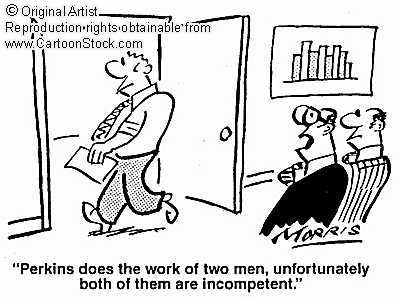
17 October 2009

Human Beings Evolving at Unprecedented Rate

A team led by University of Wisconsin-Madison anthropologist John Hawks estimated that positive selection just in the past 5,000 years alone -dating back to the Stone Age - has occurred at a rate roughly 100 times higher than any other period of human evolution.

...The human population has grown from a few million people 10,000 years ago to about 200 million people at A.D. 0, to 600 million people in the year 1700, to more than 6.5 billion today. Prior to these times, the population was so small for so long that positive selection occurred at a glacial pace, Hawks says...

The Wisconsin study is published in the Dec. 10 issue of the Proceedings of the National Academy of Sciences __DailyGalaxy
Many of the recent adaptations relate to disease resistance, such as resistance to malaria, smallpox, and other plagues. Other adaptations no doubt relate to resistance to heat or cold, ability to digest particular foods, body size and shape, muscle mass and speed, and other relatively uncontroversial adaptations.

More controversial would be adaptations that influence brain size, complexity, plasticity, and reaction times. Anything that gives genetic advantage in terms of problem solving and / or goal orientation, would give significant advantage to populations possessing those positive 2nd order adapatations.

The study of Ashkenazi Jews by Harpending and Cochran ATTN: PDF provides a view focused upon a single population of loosely related individuals who underwent rapid evolutionary changes over the past few thousand years.

One of the greatest intellectual curses of modern day humans is "groupthink", which includes "political correctness" and excessive deference to authority. Mass incompetence provides groupthink with its power over populations. Mass incompetence is fed by poor childraising, perverse educational practises, a self-destructive popular culture, and the mass indoctrination into the groupthink cult by media and higher academia.

As scientists learn more about evolutionary adaptation to human culture, it will be fascinating to locate genes that provide resistance to groupthink.

Labels: , , ,

Bookmark and Share

04 September 2009

Extreme Echo Chamber: Modern Politics and Economy

It sounds insane, and in a way it is. Public opinion, as manifested in economies and politics, is controlled by massively interlocking opinion feedbacks that can swing wildly from one extreme to the other. Witness how quickly one political party can go from dominance to subservience. Watch the economy as it rapidly swings from irrational exuberance to dark despair. What is it about humans that predisposes them to such irrational and chaotic mass shifts in behaviour?

In economics:
... the business cycle is tied to feedback loops involving speculative price movements and other economic activity — and to the talk that these movements incite. A downward movement in stock prices, for example, generates chatter and media response, and reminds people of longstanding pessimistic stories and theories. These stories, newly prominent in their minds, incline them toward gloomy intuitive assessments. As a result, the downward spiral can continue: declining prices cause the stories to spread, causing still more price declines and further reinforcement of the stories.

At some point, of course, the process must end, as when the market falls so low that it becomes enticing, or when new stories emerge. Similarly, an upward movement in stock prices generates its own upward feedback. _NYT_via_Simoleonsense
And in politics and law:
...hundreds of studies from around the world have shown the phenomenon of group polarization in action. For example, after a group discussion, people already supportive of a war become more supportive, people with an initial tendency towards racism become more racist and a group with a slight preference for one job candidate will come out with a much stronger preference.

Naturally this shift towards the extreme has all sorts of implications for government, religion, commerce and the justice system. In fact one of the neatest pieces of real-world group polarization research examines the US legal system. Main and Walker (1973) analysed the decisions of Federal district court judges sitting either alone or in groups of three to see if group discussions were a factor.

In the 1,500 cases where judges sat alone they took an extreme course of action only 30% of the time. However when sitting in a group of 3 this figure more than doubled to 65%. _Psyblog_via_Simoleonsense
It is the rare individual who possesses the moral courage to go against group extremism, and the dominant feedback meme. The classic obedience studies by Milgram illustrated the strong tendency to "go along to get along" that dominates most human group behaviour.

While conventional thinkers worry about giving humans the moral courage to resist an unjust authority, more penetrating thinkers understand the stronger unconscious tyranny of group-think and group-speak.

Once an individual understands the innate nature of human group extremism, it becomes easier to observe this irrationality in action: both in themselves and in others.

Propagandists in the media and in public relations understand this phenomenon all too well. The media echo chamber is becoming something of a trite joke. And it might even be humorous, if not for the tight relationship currently between the media and an increasingly irrational ruling power structure.

When children are raised and educated in such a way that they never grow up, never mature into individuals, never accept responsibility -- the resulting "adults" are said to be psychological neotenates. Perpetual adolescent incompetents, always looking outward to the group for a cue as to how to behave. See them in action in the media, on the courts, in legislatures and voting booths, in the markets . . .

Labels: , ,

Bookmark and Share

30 June 2009

Critical Developmental Periods of Learning

In this very short video, John Abbott discusses the importance of matching the critical learning windows of development to methods of interacting and teaching -- from infancy to adolescence and beyond.

Perhaps the greatest problem with modern affluent societies is their failure to meet the challenge presented by the adolescent developmental period. This failure is manifested by permanently stunted half-adults who never grow beyond quasi-adolescent fads, fashions, and in-group dependencies.

Labels: ,

Bookmark and Share

13 May 2009

Focus and Drift: A Secret Path to Brain Power?

Image Source: Magic Trance

"Generate and test" is the secret to prolific creativity for both humans and nature (natural selection). Another powerful pairing may be "focus and drift", for building mental facility -- perhaps even brain matter. First, focus:
In the study, Luders and her colleagues examined 44 people — 22 control subjects and 22 who had practiced various forms of meditation, including Zazen, Samatha and Vipassana, among others. The amount of time they had practiced ranged from five to 46 years, with an average of 24 years.

More than half of all the meditators said that deep concentration was an essential part of their practice, and most meditated between 10 and 90 minutes every day.

The [UCLA] researchers used a high-resolution, three-dimensional form of MRI and two different approaches to measure differences in brain structure. One approach automatically divides the brain into several regions of interest, allowing researchers to compare the size of certain brain structures. The other segments the brain into different tissue types, allowing researchers to compare the amount of gray matter within specific regions of the brain.

....The researchers found significantly larger cerebral measurements in meditators compared with controls, including larger volumes of the right hippocampus and increased gray matter in the right orbito-frontal cortex, the right thalamus and the left inferior temporal lobe. There were no regions where controls had significantly larger volumes or more gray matter than meditators. _PO
The discipline of meditation provides the brain with more "staying power" when confronting a problem, situation, or challenge. That is focus. Now, drift:
“Mind wandering is typically associated with negative things like laziness or inattentiveness. But this study shows our brains are very active when we daydream – much more active than when we focus on routine tasks,” Christoff, who has also been the lead author of the study, says. The experts used an observation technique known as functional Magnetic Resonance Imaging (fMRI) for their study. This machine has the ability to show brain areas basically “lighting up” or “turning off,” depending on whether they are active or dormant. In addition, it allows for almost real-time observations on a test subject's brain.

As a reference point, the researchers employed readings recorded while the patients sat in the fMRI machine, and pushed a button when numbers appeared on a screen. Their brain activities were monitored second after second, and stored for comparison.....Christoff says that daydreaming, a contemplative state in which the brain wonders, occupies about one third of every individual's life, and, as such, merits more investigation.

For example, the study has revealed that the “executive network” in our brains, usually dealing with high-level, complex problem-solving, is also highly active in daydreaming. This network consists of the lateral prefrontal cortex (PFC) and the dorsal anterior cingulate cortex. In addition to these regions, the wondering mind also activates the “default network,” which is made up of the medial PFC, the posterior cingulate cortex and the temporoparietal junction. The later network has been thus far believed to be the only segment of the brain active during daydreaming. _Softpedia
Competence in using the "focus and drift" cycle can provide a greater potential for problem-solving and creativity, in addition to a better ability to cope with routine challenges. There are many useful approaches to meditative focus. And quite a few methods have been developed to facilitate highly productive daydreaming "drift." Combinatorial sorting suggests an enormous range of potential "systems" for using focus and drift in a highly personal manner.

Be sure to remember to throw in a generous mix of exercise, creative play, good nutrition, and stimulating social interaction.

It may not be long before we develop "smart drugs" and smart therapies that are capable of building intelligence and executive powers to amazing levels. The humans who are already familiar with their mental and emotional powers will be best able to take advantage of an artificial boosting of intelligence and EF. Most people -- the academically lobotomised psychological neotenous narcissistic zomboids of our day -- will only grow more warped and dysfunctional. Technology can only accomplish so much, if humans lack wisdom in applying it.

Labels: , , , ,

Bookmark and Share

03 February 2009

The Problem With Pot is Who Smokes it When

Using brain scans, researchers found abnormalities in areas of the brain that interconnect brain regions involved in memory, attention, decision-making, language and executive functioning skills. _LS
When an adult smokes pot occasionally for relaxation and social bonding, his body and brain are well capable of dealing with the drug effects. But for the still-developing brains of adolescents and young adults, the impact of pot smoking is a bit more complicated. The brain contains abundant cannabinoid receptors, with effects that are still being discovered.
The findings are of particular concern because adolescence is a crucial period for brain development and maturation, the researchers note.

"Studies of normal brain development reveal critical areas of the brain that develop during late adolescence, and our study shows that heavy cannabis use is associated with damage in those brain regions," said study leader Manzar Ashtari of the Children's Hospital of Philadelphia.

The findings are considered preliminary, however, and more research is needed to confirm the work. The results, announced today, were detailed in the Journal of Psychiatric Research last month. _LiveScience
It is quite likely that any developmental effects of cannabinoids on adolescent brains depends upon the specific genetics of the individual in question. Some high school and college students might tolerate cannabinoids well, while other students might find particular career or life pathways aborted or forestalled by early and excessive use of pot. Even in mature adults, marijuana smoking has short and medium term effects that make certain types of reasoning (mathematical and abstract thought) more difficult.

The greatest danger of psychoactive drug use is during the formative periods of brain development. From embryonic development through adolescence and into adulthood, the young brain should be protected from substances that might alter brain development, whenever possible. We are familiar with fetal alcohol syndrome, of coke babies, and of babies born addicted to heroin. But the effects of recreational drugs on the brain development of middle school, high school, and college users has not been well studied.

We do not completely understand the Obama zombie effect, which culminated in the election of a US President completely unqualified to do anything other than vote "present." We have seen how "academic lobotomy" and "psychological neoteny" contributed to the zombification process, but is it not also likely that interference with normal brain development by psychoactive drug use also played a part? Certainly a brain unable to think for itself is more likely to be influenced by media propaganda and zombie peer pressure. The next question to ask: "Is there life after Obama-Zombification?" More on that later.

Labels: , ,

Bookmark and Share

01 February 2009

Science Is Not About Facts, But About Reasoning

Researchers at Ohio State University appear astounded to discover that teaching students "science facts" does not appear to help students with scientific reasoning.
(PhysOrg.com) -- A study of college freshmen in the United States and in China found that Chinese students know more science facts than their American counterparts -- but both groups are nearly identical when it comes to their ability to do scientific reasoning.

Neither group is especially skilled at reasoning, however, and the study suggests that educators must go beyond teaching science facts if they hope to boost students' reasoning ability.

Researchers tested nearly 6,000 students majoring in science and engineering at seven universities -- four in the United States and three in China. Chinese students greatly outperformed American students on factual knowledge of physics -- averaging 90 percent on one test, versus the American students' 50 percent, for example.

But in a test of science reasoning, both groups averaged around 75 percent -- not a very high score, especially for students hoping to major in science or engineering.

The research appears in the January 30, 2009 issue of the journal Science.

Lei Bao, associate professor of physics at Ohio State University and lead author of the study, said that the finding defies conventional wisdom, which holds that teaching science facts will improve students' reasoning ability. _PO
Reasoning without facts is fanciful, and facts without reasoning are dead. Education seems to flit from one approach to the other, without understanding that children need exposure to both -- without political indoctrination (eg "climate catastrophe"), and respecting the critical developmental periods of the brain.

Educational methods pass through fads, lacking a deep understanding of the nature of human learning. One current fad is the use of computers in place of books or dialogue. There may be problems with this fad.
"By using more visual media, students will process information better," she said. "However, most visual media are real-time media that do not allow time for reflection, analysis or imagination — those do not get developed by real-time media such as television or video games. Technology is not a panacea in education, because of the skills that are being lost.

"Studies show that reading develops imagination, induction, reflection and critical thinking, as well as vocabulary," Greenfield said. "Reading for pleasure is the key to developing these skills. Students today have more visual literacy and less print literacy. Many students do not read for pleasure and have not for decades." _PO
Many teachers want students to use the computer during school time, and to have parents make the children read at home. Parents may have difficulty separating the children from their video games, cell phones, texting, messaging, MTV, videos, etc. long enough to get them to read, however. With both parents working, there may be little actual "home time" at all.

Reading, thinking, and thoughtful, informed dialogue help to teach children reasoning. Computer games can teach multi-tasking and eye-hand coordination. But the deeper reasoning that higher level modern life requires seems to fall between the cracks.

It was once thought that the $100 "laptop for every child" was the answer to educating the entire world's children. In India, they even have the $10 laptop for every child. Indian officials have high hopes for the device, naturally.

Learning to reason with objective facts -- forming hypotheses, then finding ingenious and elegant ways to test them -- is at the heart of scientific reasoning, which is what science is about.

Modern education seems to be about something entirely different. Call it a cross between indoctrination (academic lobotomy), expensive baby-sitting, and peer group socialisation into psychological neoteny. Not the best way to prepare new generations of problem solvers. More like the programming of brain-dead consumers and lifelong helpless adolescents.

Labels: , , ,

Bookmark and Share

18 November 2008

Love in a Time of Psychological Neoteny

Perpetual adolescents walking around in the bodies of adults. That is a fair description of today's twenty-something generation and beyond. What is the dating scene like for these child-men and child-women? Cold, bleak, and apt to last the rest of their lives . . .
The woman may be hoping for a hookup, but she may also be looking for a husband, a co-parent, a sperm donor, a relationship, a threesome, or a temporary place to live. She may want one thing in November and another by Christmas. “I’ve gone through phases in my life where I bounce between serial monogamy, Very Serious Relationships and extremely casual sex,” writes Megan Carpentier on Jezebel, a popular website for young women. “I’ve slept next to guys on the first date, had sex on the first date, allowed no more than a cheek kiss, dispensed with the date-concept altogether after kissing the guy on the way to his car, fucked a couple of close friends and, more rarely, slept with a guy I didn’t care if I ever saw again.” Okay, wonders the ordinary guy with only middling psychic powers, which is it tonight?

In fact, young men face a bewildering multiplicity of female expectations and desire. Some women are comfortable asking, “What’s your name again?” when they look across the pillow in the morning. But plenty of others are looking for Mr. Darcy.

....“Women seemingly have decided that they want it all (and deserve it, too),” Kevin from Ann Arbor writes. “They want to compete equally, and have the privileges of their mother’s generation. They want the executive position, AND the ability to stay home with children and come back into the workplace at or beyond the position at which they left. They want the bad boy and the metrosexual.”

...The main reason that young educated adults are increasingly marrying in their late twenties and thirties is that women are pursuing education and careers, but ironically, the delay works to men’s advantage. Once they get past their awkward late teens and early twenties, men begin to lose their metaphorical baby fat. They’re making more money, the pool of available women has grown, and they have more confidence. “I could get a woman now, but when I’m 30 or 35 I could do better,” Bryson, an otherwise nice-guy 24-year-old from D.C., tells me.

...Forty years after they threw off the feminine mystique, women continue to prefer bigger, stronger, richer men, at least as husbands. They almost always marry men who are taller than they are, men who are several years older than they are (though the age difference has declined in recent decades), and men who earn more than they do (though that number, too, has declined a bit). Most of the women interviewed by Jillian Straus say that they’re looking for a man who can be the primary breadwinner. A June 2008 New Scientist article reports on two studies that even suggest that women are biologically attracted to “jerks”; researchers speculate that narcissistic, risk-taking men had an evolutionary advantage. _CityJournal_via_Instapundit
It is largely about sex. But it is also about companionship, nesting, children, responsibility, and personal integrity. The latter items seem to have gotten lost in the post-modern shuffle.

Things are not likely to get any better, as the multi-year Obama depression sets in and deepens. Bad economic times tend to bring out the worst in large numbers of people--the people who set the cultural tone among them. Nothing that young women learn in their women's studies classes has prepared them for the bad economic times to come. In fact, modern feminism is a parasitic ideology bred for affluent times, to mooch off a thriving economy. When economic times go south, parasitic feminism becomes an obvious drain on the well-being of society, standing out like sore chancres.

Psychological neotenates are adults stuck in perpetual adolescent incompetence. When your breeding population is mired in such a state, while immersed in a totally clueless culture run by a pathological narcissist-elect, clearer-headed individuals had best spur themselves to make contingency plans.

Update: Blogger Dennis Mangan points to Roissy's treatment of the same article, "Love In The Time Of Game". Roissy presents a good example of the evolving male attitude that Hymowitz is writing about. If radical feminist culture has bred a dating world of terminal contradictions and miscues, the evolving male reaction to feminist dating chaos may be far more Darwinian than feminists--and even Hymowitz--are reckoning.

Of course, none of that does anything to guide humans closer to the next level. Those who are working on that particular problem will need to ignore the background noise as best they can.

Labels: , ,

Bookmark and Share

16 September 2008

Men Growing Less Mature, European Men Even Less

Recent personality testing of men and women (PDF) in various countries appear to indicate that men in developed countries are becoming less mature--as mature behaviour grows less to be expected and demanded by society. Among developed nations, the process of lowered male maturity appears to be further advanced in Europe than other advanced nations.
...it may be that cultures in which people have longer life spans and which are more affluent put fewer expectations for men to grow up quickly. These cultures can afford to indulge less mature behavior for a longer period of time because the onset of adult roles is delayed. In contrast, women have more complex life paths to negotiate. They typically think more seriously about multiple roles at earlier ages, for example. Thus, despite the cultural trends toward equality in occupational opportunities, women may still have higher expectations for assuming the responsibilities of adulthood at earlier ages than men regardless of culture.

....Dr. Schmitt also noted that, among men in the richer countries, American men are something of an outlier because they score higher in conscientiousness than men in most European countries even though per-capita income is higher in the United States. Still, the Americans don’t appear as conscientious as men in places like Botswana or Ethiopia.

Could it be that young men in rich countries are slower to mature and therefore relatively less conscientious than young men in traditional countries? Might European men be less mature than American men? _Tierney
There is a reason why many boys in affluent societies never truly become men. Because they don't have to. If they are never forced into self-discipline or responsibility, why should they make the effort? Military service is often a "rite of passage" separating boyhood from manhood, youthful fecklessness from more manly competence and responsibility. Employers are beginning to note the differences in ambition, maturity, and "stick to-it-iveness" between males who have passed through such a rite, and those who have not.

Psychological neoteny is not just a river in Egypt. Wait, er--never mind. Anyway, if you raise children in age-cohorts, separate from the adult world of responsibility, pamper them, let children essentially raise each other--you will reap a harvest of perpetually adolescent incompetent narcissists, as often as not. Which is why we see large numbers of such lost souls--unable to read, reason, communicate, or take responsibility for themselves.

Labels: , ,

Bookmark and Share

15 August 2008

Are Today's Kids "The Dumbest Generation"?

Mark Beurlein's book "The Dumbest Generation" points to a generation so self-absorbed and lacking in intellectual curiosity that they cannot be trusted to do much beyond cell texting and Facebook scanning.
Like many others, I share their concerns: a vacuous popular culture, a lost interest in reading for pleasure and, of course, the Internet, which makes information and disinformation easy to access but harder than ever to distinguish.

Critics often point to the loss of required survey courses and a core curriculum as evidence of the "dumbing down" of our colleges and universities. But one place where the finger of blame should probably not be pointed is at America' s colleges and universities.

...The real problem is that these young men and women, through no fault of their own, are showing up on campuses undereducated and unprepared for college-level work. They should have received a good general education before they arrived on campus.

That was the view of pre-college education adopted in the great 1893 "Committee of Ten" report on pre-college education. The report said that all American children should have a sound general education that prepares them for college--whether they go or not. That policy is even more important today when the very general knowledge that prepares students for college-level work is also the knowledge that is needed for competence in the information-age workplace.

...They need remedial courses--including "core curriculum" courses in science, history, the arts and civics--at the time in their lives when they want to launch out on their own, exploring, discovering and pursuing interests at a high level. A required core curriculum in college is not something to be devoutly wished for, but rather a concession to the consequences of a third-rate preparation for first-rate colleges and universities.

...The cost of their poor preparation is staggering. Colleges and universities spend an estimated $1 to $2 billion annually on remedial classes for undergraduates. More than 60% of freshmen in California's public university system require at least one remedial course, typically in math or English. Even if you don't like to view education in purely economic terms, the billions spent on remediation is clearly money that shouldn't have to be spent--critical dollars at a time when states are hard-pressed to fund their public school systems. If education is the gift that keeps on giving, the lack of education is a curse that keeps on taking.

...To be full participants in our cultural life and democratic institutions, every citizen needs a sound and broad education. But we are pushing this problem in exactly the wrong direction. It is not the job of our colleges and universities to make up for the shoddy education offered by K-12 schools. It is the job of those schools to ensure they produce future undergraduates who are fully prepared to do college-level work.

There is a real danger that in making colleges the academic safety net of last resort, we'll absolve the public schools of their obligation to provide students with a sound, well-rounded education. It's damaging to our students, to our country and to our higher education system, which is the lone bright star in our educational firmament. Everyone loses. _Forbes_via_CoreKnowledge_via_JoanneJacobs
Al Fin readers may recognise the problem of "psychological neoteny" hiding within the problem described in the Forbes piece. Kids steeped in self-esteem, but lacking in competence or a sense of responsibility. Kids who have been sheltered from the real world for so long that they may never find a way to connect with the world they might have created for themselves--if adults had only helped them to genuine competence and self-reliance when the kids were open to those possibilities.

Not only is it too late by the time they get to college, but with the post-modern faux-multicultural, victimist indoctrination they will encounter at university, many of them will sink even deeper into an incompetent inability to meet their realities responsibly.

So who is to blame for the dumbing down of successive generations? Parents? K-12 schools? Universities? Popular culture and media? All of the above, of course. If ever a generation were in need of the next level, it is the one due to be raised by "the dumbest generation." Because that next generation will be the dumbest--and on and on and on--unless a better integration of rationality with emotionality and wisdom arrives soon.

Labels: , , ,

Bookmark and Share

30 November 2007

A Competent Future? Teaching Executive Function in Preschool

In neuropsychology and cognitive psychology, executive functioning is the mental capacity to control and purposefully apply one's own mental skills. Different executive functions may include: the ability to sustain or flexibly redirect attention, the inhibition of inappropriate behavioral or emotional responses, the planning of strategies for future behavior, the initiation and execution of these strategies, and the ability to flexibly switch among problem-solving strategies. Current research evidence suggests that executive functioning in the human brain is mediated by the prefrontal lobes of the cerebral cortex. Wikipedia

To succeed in life, a human needs control of "executive function."
The term executive function describes a set of cognitive abilities that control and regulate other abilities and behaviors. Executive functions are necessary for goal-directed behavior. They include the ability to initiate and stop actions, to monitor and change behavior as needed, and to plan future behavior when faced with novel tasks and situations. Executive functions allow us to anticipate outcomes and adapt to changing situations. The ability to form concepts and think abstractly are often considered components of executive function.
Source

Tools of the Mind is a curriculum for early childhood that resulted from a collaboration between Russian and American researchers. Recent research published in Science evaluated Tools of the Mind for efficacy:
University of British Columbia Psychiatry Prof. Adele Diamond, who is Canada Research Chair in Developmental Cognitive Neuroscience, led the first evaluation of a curriculum called Tools of the Mind (Tools), that focuses on executive functions (EFs) that depend on the prefrontal cortex area of the brain. Functions include resisting distraction, considering responses before speaking, mentally holding and using information, and mental flexibility to “think outside the box.”

...The study is published in this week’s issue of Science.

“EFs are critical for success in school and life. The skills are rarely taught, but can be, even to preschoolers. It could make a huge difference, especially for disadvantaged children,” says Diamond, who is a member of the Brain Research Centre at UBC Hospital; Vancouver Coastal Health Research Institute (VCHRI); the Child and Adolescent Psychiatry Dept. at BC Children’s Hospital; the Child & Family Research Institute (CFRI); and the Human Early Learning Partnership (HELP) in Vancouver.

“The recent explosion in diagnoses of ADHD may be partly due to some children never learning to exercise attentional control and self-discipline,” says Diamond. “Although some children are strongly biologically predisposed to hyperactivity and wouldn’t benefit from training, others may be misdiagnosed because what they actually need are skills in self-regulation.”

Previous research has shown that EFs are stronger predictors of academic performance than IQ, she adds.
Physorg

Let me repeat that: "EFs are stronger predictors of academic performance than IQ."

Deborah Leong and Elena Bodrova believe that they have found a way to develop EF in pre-schoolers, that could benefit the children for their entire lives. It will be fascinating to see followup studies for children who undergo this curriculum, to see if the benefits are sustained. Early childhood IQ often diminishes by one half SD by the time the child is in the late teens. Will the same thing happen to EF, a learned skill?

Other studies claim that EF is 90+% heritable. How will those findings be reconciled with this study? Naturally, that will depend upon followup studies for both hypotheses--and replication of results.

My personal opinion is that while EF and IQ are probably both largely heritable, we are not doing enough for children until we optimise environment. If the existing EF and IQ of the child is not being developed, who is to blame? Until environments are optimised, the heritability of these traits cannot be fully expressed.

If EF can be taught with the skills retained into adulthood, one of the foundations of psychological neoteny may just be undermined. And without psychological neoteny, academic lobotomy will be much harder to perform.

In the social sciences (like climate science), talk is cheap. Good science is more rare.

Labels: , ,

Bookmark and Share

19 May 2007

Ideology and Politics are Secondary. The Important Question Is: Are You Competent?

Because, personally, I seriously doubt that you are--if you are a typical psychologically neotenised, academically lobotomised, child of the western world.

You might try the "Jericho Test." If you have not seen the episodes of the doomed television show Jericho, go here and watch at least the first few episodes. Imagine yourself in such a circumstance. Would you be useful. How?

I recall sitting in an insurance office in a new town, transferring my policy to my new location. My young, attractive female agent was processing my paperwork and chatting with two co-workers who had gathered around the desk out of boredom. Somehow they were discussing a collapse of civilisation and what they could do to survive. My agent made the offhand comment, "at least I could work as a whore."

But there is only so much need for whores, and some of the male survivors of a holocaust would not treat their whores very kindly. So the rest of you might start thinking about other possibilities, while you have a little time. Particularly the college professors among you, who--if you pardon me for saying so--are almost certainly particularly useless in an emergency (unless your training is in applied engineering, technology, or biomedical sciences).

Your politics, religion, and ideology will probably be irrelevant, as long as you are not a psychopath. It is your useful skills that will count.

People always assume that things will continue as they are, in a straight line extrapolation of current trends. People are always wrong about that. Most people need shock therapy to acknowledge things that might go wrong, and to be motivated to prepare.

No matter how busy you are, you still have time to take steps to make you and your family more survivable.


Everyone needs a stockpile of clean water, food, and basic hygienic and first aid supplies. If you depend on a medicine such as insulin, you should have extra medication on hand, and rotate it to maintain the expiration date. If your vital medicines require refrigeration, you should have a way to power a small refrigerator off the electrical grid. (generator with fuel, solar panels with batteries, etc.)

There are many important things to think about, in connection with surviving a massive natural or man-made disaster. The Al Fin blog sidebar has an entire section of links dealing with these issues, about three fourths of the way down. As an added one-time-only bonus, here is an online book on surviving a nuclear war.

Watch the first few episodes of Jericho. Think about it.

Related

Labels: , , , ,

Bookmark and Share

02 March 2007

"Then What the Hell Good Are You, Anyway?"

If you hear the words in the title, the next thing that happens to you may not be pleasant. Most people have the absurd idea that other persons should be "good for something." For example, a woman expects her man to either provide well financially, or be very, very good at other things she values almost as much. A man expects his woman to be sexually available, to keep an attractive appearance and a clean living environment. If the expectations are not met, then "what the hell good are you, anyway?"

A boss expects the worker to provide value to the business at least as great as the salary and benefits package provided by the job, hopefully more. A parent expects the college student to return good grades in exchange for support. Those people sitting down below expect you up on the stage to put on a good show. A driver in the oncoming lane expects you to stay in your own damned lane. If not, "what the hell good are you?"

Social expectations prop up the greater part of the world in which we live. While we want to believe we are valued by others for our inner selves--our "intrinsic" value as people--deep down we know that is not true. True, there are political and religious ideologies that dwell on the intrinsic value of each living person, but in reality people who claim to believe that are the worst form of hypocrite. Give them that excuse they are waiting for to hold you in contempt, and they will happily do so.

"What have you done for me lately?" If the answer is nothing, or worse than nothing, the relationship is in danger of coming to a bad end. People expect you to "hold up your end." What is "your end?" It depends. But you should probably figure that out before your end starts to droop. In personal relationships, things are not spelled out as clearly as in a business or legal contract. The terms of the contract are implied, but still very close to ironclad. Get the picture clear in your mind, in detail. Otherwise, unhappy surprises await you.

Usually the sole exception to the rule is "home." Home is the place where when you go there they have to take you in, said Robert Frost. Something about home can make a hard person soft. The contractual calculus of home is somehow different.

So if you really want to be valued for your "intrinsic worth" in a relationship, you need to make it home. If your boyfriend doesn't see you as "home", you need to understand what he expects from the "contract", or you may be in default, in his mind. But if your hard-hearted boss sees you as "home" somehow, she will do everything she can before firing you, no matter how incompetent you may be. But that's not likely to be the case. More likely, you're on a hair-trigger in most of your relationships. Learn to size up the territory, and tread carefully.

Normally, there would be no need to spell things out so bluntly, but society has taken a very narcissistic, psychologically neotenous direction. Such a society, like a fallen Rome, is ripe for the plucking by more reality driven populations. It either wakes in time to save itself, or it goes the way of most complacent cultures that have rotted from within.

Labels: , , , ,

Bookmark and Share

31 December 2006

Competence--A Vanishing Commodity?


Competence is often stated to exist at four levels:

1. Unconscious incompetence (unaware of lack of competence)
2. Conscious incompetence (becomes aware of incompetence)
3. Conscious competence (competence with conscious effort)
4. Unconscious competence (acquires competence without conscious effort--automaticity)

The learner or trainee always begins at stage 1 - 'unconscious incompetence', and ends at stage 4 - 'unconscious competence', having passed through stage 2 - 'conscious incompetence' and - 3 'conscious competence'.

.... It's essential to establish awareness of a weakness or training need (conscious incompetence) prior to attempting to impart or arrange training or skills necessary to move trainees from stage 2 to 3.

People only respond to training when they are aware of their own need for it, and the personal benefit they will derive from achieving it.
Source.

The final level of "unconscious competence" is exemplified by Michael Jordan's performance on the basketball court, the blazing downhill skiing of a gold medalist, or the onstage musical improvisations of a master jazz musician. The master doesn't have to think--he just does. In ordinary life, automatic competence is seen in language fluency, or simply walking while chewing gum.

Emotional competence is vital to the overall competence of the individual.


Self Regulation

Managing your internal states, impulses and resources

* Self control: keeping disruptive emotions and impulses in check
* Trustworthiness: maintaining standards of honesty and integrity
* Conscientiousness: taking responsibility for personal performance
* Adaptability: flexibility in handling change
* Innovation: being comfortable with novel ideas, approaches, and new information

Motivation

Emotional tendencies that guide or facilitate reaching goals

* Achievement drive: striving to improve or meet a standard of excellence
* Commitment: aligning with the goals of the group or organisation
* Initiative: readiness to act on opportunities
* Optimism: persistence in pursuing goals despite obstacles and setbacks
Source.

A recent study of New Zealand schoolchildren discovered the close relationship between attitudinal competencies (curiosity, perseverance, communication) and traditional scholastic competencies in mathematics, literacy, and problem-solving.

The model shows that there are strong relationships between the attitudinal competencies, and also between mathematics and literacy. It also shows moderate associations between the attitudinal competencies and logical problem-solving, and with literacy. Sixty-five percent of the variance in literacy scores could be accounted for by scores in communication, curiosity, perseverance, and logical problem-solving. The link between the attitudinal competencies and mathematics appears to be indirect, with more direct associations between the former and logical problem-solving and reading comprehension.
Source.

A look at necessary competencies to rehabilitate juvenile offenders by the State of Pennsylvania, zeroed in on five:

After examining the research, we settled on the following definition—competency development is the process by which juvenile offenders acquire the knowledge and skills that make it possible for them to become productive, connected, and law abiding members of their communities and selected five core competency domains—areas in which one could reasonably expect young people in trouble with the law to build and demonstrate competencies depending on their age and stage of development. These domains are:

1. Pro-Social Skills
2. Moral Reasoning Skills
3. Academic Skills
4. Workforce Development Skills
5. Independent Living Skills

These domains do not represent a complete list of the competency areas or skills that young people need in order to succeed in life or all the things parents might want for their children. But research indicates that these are the competency areas that matter most for success in school, work and life; that strengthening these areas increases resistance to delinquency; and that deficits in these areas put juveniles at risk for continued involvement in the juvenile justice system.
Source.

A child's sense of his/her own competence (self-efficacy) also influences subsequent performance:

Efficacy beliefs are influenced by acquisition of cognitive skills, but they are not merely a reflection of them. Children with the same level of cognitive skill development differ in their intellectual performances depending on the strength of their perceived efficacy. Several factors may account for the predictive superiority of efficacy belief over acquired skills. Children vary, in how they interpret, store, and recall their successes and failures. As a result, they differ in how much self-efficacy they derive from similar attainments. Moreover, in judging their capabilities, children evaluate social influences that contribute to efficacy beliefs independently of skills. Academic performances are the products of cognitive capabilities implemented through motivational and other self-regulatory skills. The efficacy beliefs that children form affect how consistently and effectively they apply what they know. Perceived self-efficacy, therefore, is a better predictor of intellectual performance than skills alone.
Source.

Many educators misunderstood Bandura's point in the quote above. The educators thought that if the students' self-esteem was raised, that academic progress would follow automatically. Self-efficacy beliefs in academics are based on many things--including grade and test score feedback. Students are not the idiots that educators often think. Students can judge if they get a good grade for no reason. Such artificial attempts to boost self-efficacy beliefs are destined to fail.

Current trends in government education tend to eradicate personal competence of schoolchildren, while simultaneously boosing self-esteem.

This blog has devoted several posts to the issue of psychological neoteny, and the role of current educational practices in promoting maturational failure in children and young adults. It requires little imagination to see a direct connection between personal incompetence, and the failure to acquire the mature skills of emotional competence, due to perverse educational methods and policies.

In a free society, the parent is responsible for the child's education and maturation. That responsibility cannot be placed in anyone else's hands.

Here is an old oriental proverb that expresses a similar concept as the four levels of competence:

  • He who knows not, and knows not that he knows not, is a fool - shun him, (= Unconscious Incompetent)
  • He who knows not, and knows that he knows not is ignorant - teach him, (= Conscious Incompetent)
  • He who knows, and knows not that he knows, is asleep - wake him, (= Unconscious Competent)
  • But he who knows, and knows that he knows , is a wise man - follow him. (= Conscious Competent)
Source.

Labels: , , ,

Bookmark and Share

20 July 2006

Delayed Maturation: The Neotenous Society III

The human life cycle has been divided into stages by many theorists, including Freud, Erikson, Horney, Piaget, Lidz, etc. It is expected that a child must successfully meet the challenges of one stage, before it is properly prepared to meet the next stage's challenges. In other words, a child must grow up successively, in stages, to become a mature adult. This suggests the presence of many "rites of passage", often subconscious to both child and observer, throughout the maturational process. If a child misses a successful transition at a certain stage,it will have problems characteristic of that deficit.

One of the most difficult transitions is during the period of adolescence. In some cultures, girls are often married by fourteen or fifteen years old to cousins or wealthy strangers, sometimes much earlier. In other cultures, girls may be sold to a brothel at age thirteen or fourteen, to help support the family. Boys may be expected to join a religious militia or terror organisation by that time, or have been expected to blow themselves up in an act of religious martyrdom/homicide.

All of those adolescence scenarios could be considered "rites of passage." For North American youth, such situations would be rare unless the families in question belonged to particular religious sects, or unassimilated subcultures, and the arrangements were hidden from the authorities.

The typical North American adolescence involves mandatory government school education, with the atypical social pressures of adolescence magnified a hundred fold by the confinement of several hours a day with hundreds or thousands of other barely-in-control transitioning adolescents. What can one learn from the socialisation process in such a school?

Most adolescents in North America have not developed any meaningful skills or talents to set them apart. A few will be athletic standouts, some will be musically gifted, some will be good at math or science, some will be remarkably attractive and have slightly advanced social skills. But most will be scrambling for an identity and looking for a subculture to melt into. Often the most inclusive subculture is the "slacker" subculture--the subculture whose members avoid work and responsibility, taking such avoidance to the level of an art form. Petty crimes and academic ethical violations are not uncommon.

Most government high schools do not teach useful skills. They generally portray themselves as preparation for higher education, even though most students fall into the combined categories of "did not graduate" or "did not continue education past high school." This drops the students into a "no man's land" of dubious employers, often competing with illegal aliens who actually do have useful skills, and a stronger work ethic.

For a large percentage of inner city african american , hispanic students, and other minorities, the subculture with the strongest appeal is the identity culture--multicultural separatism--which is encouraged by official curriculum of government schooling, and by many universities. Separate styes of talking, walking, dressing, separate music and entertainment--sometimes completely separate languages--it is easy to avoid the mainstream, and the cultural intelligence that many mainstream employers demand.

Many colleges and universities offer special orientation weeks or weekends for minority students, and other separate events--to emphasize separateness, and to encourage the preservation of the separation from mainstream culture. Further curriculum continues to emphasize separation into tribes and cultures, celebrating the differentness rather than the things that bind people together and allow cooperation.

When it encourages tribalism, the modern multicultural curriculum frequently works against the maturation of the individual, and toward a resentful sense of victimisation. Combining hundreds of thousands and millions of resentful individuals with a sense of victimisation, leads to a society with a tendency to disintegrate. Resentful students are less likely to find meaningful careers, and less likely to put all of their effort into work for employers who they distrust and dislike. If the person never grows beyond this school/society-instilled resentment, they will never mature or reach their potential.

This type of designed obsolescence--or designed failure of maturation--leads inevitably to increased social and economic stratification. Eventually, North American societies may approach the unhealthy stratification that is seen in most latin american and third world societies, if the current regime of "education" is allowed to continue very much longer.

Ben Franklin suggested that there may be long term difficulties in keeping a representative constitutional republic functioning. He, along with Jefferson and other founders of the radical US form of government, might be surprised to learn that the general structure of the revolutionary republic has been maintained for so long--with many of its features copied by successful countries as far away as Europe and Asia.

But none of the early americans or canadians were faced with the neotenous effects of prolonged mandatory, dysfunctional government education. It is unlikely that any form of government that requires its citizens to take responsibility for their own actions, can survive this type of neotenous social engineering for very long. Children are not responsible for their actions, and it is children--adult children--that are being unleashed upon society. Illegitimacy rates up to 70% illustrate plainly the neoteny of many graduates of subcultural educational designs.

Here is an interesting history of multicultural theory and practise, for the truly interested. Multiculturalist tribalism is only one of the many neotenous forces acting upon modern North American society. More will be addressed in time.

Addendum: Here is a commentary by my cousin Abu, on Fjordman's piece above.

Labels: , , , , ,

Bookmark and Share
Older Posts
Al Fin Main Page
Enter your Email


Powered by FeedBlitz
Google
WWW AL FIN

Powered by
Blogger

``