10 January 2007

Stem Cell Sources--The More, The Merrier!

It is becoming clearer that rich sources of multipotential stem cells exist in tissues other than a developing embryo. This should be good news to everyone, not just to the so-called "pro-lifers."
researchers from the Institute for Regenerative Medicine at Wake Forest University and Children's Hospital Boston found that amniotic cells in the laboratory can grow into all of the major types of cells, dividing at the rate of once every 36 hours. Researchers coaxed amniotic fluid stem cells to develop into brain cells and injected them into the skulls of mice with diseased brains. The stem cells replaced the diseased areas and appeared to create new connections with surrounding healthy neurons, the researchers reported. Researchers also coaxed amniotic fluid stem cells to become bone cells and implanted them in a mouse. The study found the stem cells calcified and turned into dense, healthy bone. The researchers also coaxed amniotic fluid stem cells to develop into muscle, fat, blood vessel and liver cells. Stem cells extracted from amniotic fluid can be isolated starting at 10 weeks' gestation from fluid taken during tests performed to identify birth defects, according to the study. The stem cells, even after more than two years in the laboratory, did not show signs of aging or of having the potential to grow into tumors, the study found. Amniotic stem cells can be frozen for later use, the Post reports.
Source.

Multipotent stem cells can be found in amniotic fluid, cord blood, the placenta, menstrual blood, testicular tissue, and probably many more tissues. That should be good news--

--but imagine my surprise to find that some people are making a political issue out of this.

Some politically involved people are acting as if these scientific discoveries somehow threaten the primary cause of radical feminist activists--abortion rights. But that sense of threat is clearly delusional, and evidence of paranoia.

Personally, I have no use for either extreme end of the political spectrum. Especially when they involve themselves in areas where they are completely incompetent.

Embryonic stem cell research holds incredible promise for the future. As the potential benefits and risks of stem cell therapies become better understood, it will probably be more important to make products of embryonic stem cells more widely available. Just as important is to understand all the potential sources of stem cells, and what they can be used for.

If adult stem cells can be used to create replacement tissues and organs, at least you know the cells will be MHC compatible if the recipient is also the donor. It may be discovered that adult stem cells will not work. Or a way to make embryonic stem cell products immunologically compatible with a wider range of recipients may be discovered. It's too early to say.

It is not too early to call political critics of non-embryonic stem cell research morons. As for critics of embryonic stem cell research, in the long run they are irrelevant.


Update: A reader has kindly emailed some specifics on the political reasons for certain persons publicly reacting against the amniotic fluid stem cell research. As I had thought, embryonic stem cells public proponents feel threatened by promising discoveries in non-embryonic stem cell research. This is unfortunate, but it is a good example of what happens when politics has undue influence on science.

It is extremely important that both embryonic stem cell research and non-embryonic stem cell research go forward. One are of research should not get all the funding, given all the potential problems that cannot be anticipated with one line or another.

Labels: ,

Bookmark and Share

09 January 2007

The Inner Life of a Cell


A short Google Video search found the movie I'd been looking for: "The Inner Life of a Cell." This is the type of animation I would have enjoyed when I first learned biology. Together with the nano-assembler movie in the previous post, it brings nano-sized mechanisms to a scale and speed that humans can comprehend and appreciate.

But don't lose this link. It will take you to a set of great multimedia presentations on various biotech procedures and concepts. Just click on the Preview screen to the right of the animation screen to get the highly educational popup.

I am learning to appreciate the video sharing services more every day.

Labels:

Bookmark and Share

08 January 2007

Nanotech Fabricator Video Animation and Bio-Nano Animation Link


I first saw this video on nano-fabrication a few months ago. Now that it is on YouTube, I couldn't resist embedding it here. Hat tip Technovelgy.

The other video I've been wanting to embed is located here. It is an incredible computer generated animation of various cellular processes. After you view the animation, click on the Video Project Preview image to the right of the video screen, for an informative lesson on modern biotechnology.
Bookmark and Share

07 January 2007

Selectin Adhesion Molecules for Trapping Stem Cells and Killing Cancer


Selectins are peptide cell adhesion molecules that line blood vessel lumens and attach to white blood cells (L-selectin) and platelets (P-Selectin), as well as stem cells and cancer cells.

The ability of selectins to bind stem cells and cancer cells gave researcher Michael King an idea--or two ideas, actually. King realized that he could harvest stem cells from the circulation using selectins, and he also had an idea how he could use selectins to trap and kill metastasizing cancer cells.
he learned that when a cancer cell breaks free of a primary tumor and enters circulation, it flow through the bloodstream to a remote organ, then leaves the bloodstream and forms a secondary tumor. This is how cancer spreads. He put these facts together with one more, very important fact: the selectins grab onto a specific carbohydrate on the surfaces of white blood cells, stem cells, and cancer cells. Associate Professor King decided to capture stem and cancer cells before the selectins release them.

....Because bone marrow stem cells stick to selectin surfaces more strongly than other cells, King’s group coated a slender plastic tube with selectin. They then did a series of lab experiments, both in vitro and in vivo using rats, with this selectin-coated tube to filter the bloodstream for stem cells. It worked, and the King Lab discovered that they could attract a large number of cells to the wall of their selectin-coated device, and that 38% of these captured cells were stem cells. King envisioned a system by which doctors could remove stem cells from the bloodstream by flowing the cells through a device, and make a more concentrated mixture containing, say, 20-40 percent stem cells. These stem cells could then be used for tissue engineering or bone marrow transplantation.

....Another exciting application of King’s invention is filtering the blood for cancer cells and triggering their death, an innovative, new method to prevent the spread of cancer. When someone has a primary cancer tumor, a small number of cancer cells circulates through the bloodstream. In a process called metastasis, these cells are transmitted from the primary tumor to other locations in the body, where they form secondary, cancerous growths.

As a cancer cell flows along the implanted surface, King’s device captures it and delivers an apoptosis signal, a biochemical way of telling the cancer cell to kill itself. Within two days, that cancer cell is dead. Normal cells are left totally unharmed because the device selectively targets cancer cells.
Source.

These are very interesting avenues of research using the selectins. The concept of inserting molecular traps into blood vessels to both harvest good cells and to destroy bad cells suggests even more intriguing experiments to be done in the near future.

Hat tip Medgadget.

Labels:

Bookmark and Share

Neurocarnivals

Since my last post on blog carnivals, Synapse has closed down. But Encephalon continues, and two new neuro-carnivals have started. Brain Blogging and Brain Fitness cover different angles of cognition than traditional neuroscience. Hat tip Neurophilosopher.

Even better, Chris at Developing Intelligence offers a fairly regular neuro-carnival of his own, besides his own informative posts, at Develintel Blog's new residence.

Labels: ,

Bookmark and Share

06 January 2007

Survival Kit--Never Too Early to Plan For the Unexpected

If you follow the Al Fin sidebar down far enough, you'll find links to "Primitive Self-Sufficiency" websites. In the modern developed world, we have everything provided to us--clean water to our homes, plentiful food in supermarkets, anything and everything on the internet, emergency services for fire, injury, and threats of all kinds. But when you are in the wilderness, or when things inside civilisation break down--as in New Orleans and other corrupt urban centers--you need to be prepared.

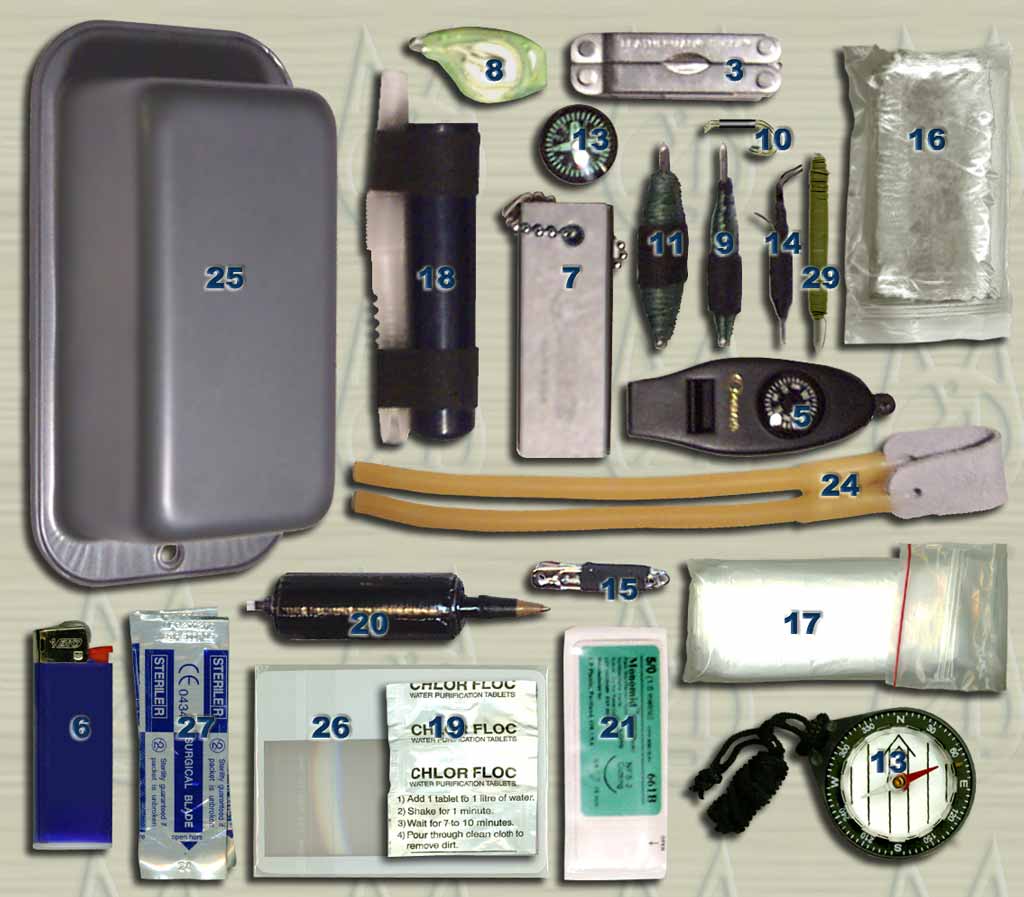
M4040 is a good website for survival information. The survival kit at top is from 4040, and on this page he explains how to use the items in his own survival kit.
ITEM 1 - Contents, Survival Tips & Guidelines (Printed on Waterproof Paper). This item is just a primer to help focus someone on the task in hand. It is not intended to be a survival manual, but a survival organizer which may help someone to prioritize their objectives in an otherwise confusing situation. It is also flammable if you cannot find tinder anywhere else. If you'd like to read it, you can See It Here.

ITEM 2 - Pencil & 3 Blank Sheets Waterproof Paper (notes for self & others) - This can be very useful for making notes to yourself or to others who may be searching for you. It is also flammable if you cannot find tinder anywhere else.
ITEM 3 - Small Swiss Army Knife (blade, scissors, file, small screwdriver, can opener, tweezers, etc) - I have since swapped the Swiss Army knife for a Leatherman Micra. It is built a little tougher, and the scissors are much better. This is included primarily because the main knife in the kit is a bit cumbersome for fine whittling or cutting small items. You can use whatever you are comfortable with here.

ITEM 4 - 550 lb.test Para Cord (20 ft.) - (Not Shown, as it is wrapped around the knife sheath & handle). The uses of Para Cord in a survival situation are too numerous to fully list. As an example, use it for shelter, whether for tying frame members together, or for stringing up a tarp between trees. Also use it for snares and for building other weapons. I would recommend more than the 20 feet specified in the kit ( I personally switch out all my boot laces with para cord as soon as I get them ). The Para cord is stronger than any bootlaces sold. True Para Cord is constructed of an outer sheath which houses 7 inner strands. Each inner strand is 50 pound test, and the outer sheathing is rated at about 200 pounds. As such, in an emergency situation, if more string were needed, one can remove the inner strands, and the outer sheathing will still serve admirably as shoelaces. If your bootlaces are each about 3 feet long, then you would be able to gain more than 40 feet of string from the laces if needed. Not bad, eh? Make sure that what you get has 7 inner strands, and is 550 lb test! This typically sells for about $5-$10 for a 100 ft length. This takes up a good bit of space in a kit, so I wrap about 20-25 feet of it around the outside of the sheath instead of packing it inside the pouch. Para cord can be obtained from many sources, but be careful what you are buying.
ITEM 5 - Whistle, Compass, Thermometer, Magnifying Glass - The combination Whistle, Compass, Thermometer, Magnifying Glass is a nice little gadget I picked up from modernoutpost.com for about $5. The whistle is, of course for signaling to help rescuers locate you. The compass (for those who know how to properly use one) can be absolutely invaluable. The thermometer is just for personal guidance as to when the local temperature may be getting dangerously high or low (or whether it's just you.. it could point out possible health issues). The magnifying glass is yet another piece of fire starting kit. Anyone can master this on a sunny day.

ITEM 6 - Small Lighter - As I mentioned before, the "Rambo" types out there seem to like roughing it. By keeping a dozen matches crammed in the handle of their knife, it would seem that they are severely limiting their fire making ability (as well as compromising the overall strength of the knife). I hope it's not the rainy season, as these matches could well be gone in about the first five minutes. I chose to put a mini Bic lighter, as you can start a hell of a lot more fires with it as compared to a comparable volume of matches. As backups, I also include the magnesium / flint bar, which, with a little practice, can start thousands of fires, and the magnifying glass, which can start limitless fires.
ITEM 7 - Magnesium / Flintbar Firestarter (also use as signaling device) - This item is about $5-$6 in any camping goods store, Wal-Mart, etc. As I mentioned above, with a little practice this little item can start thousands of fires. Just shave the magnesium with a knife (or file if you're carrying a multi-tool that has a file). collect all the shavings into a pile about the size of a dime. I have seen some sites out there saying that you are supposed to strike the flint with your knife. This is stupid, as you will ruin both the knife edge and the flintbar. Just rest the corner of the bar right in the pile of magnesium shavings and run a NON-SHARPENED corner of your knife down the flint. Practice this a little in your backyard... it's really easy to get the hang of. The magnesium ignites with a flame like a blow torch, and will burn for several seconds. Keep your tinder and fuel ready to pile on, or build the tinder pile around the magnesium in such a way as to still allow the magnesium to be hit with sparks).

ITEM 8 - Mini LED Flashlight - This is a very bright little light. If you plan to purchase one, buy one that has either white, yellow, green or blue light. The red LED's are not very bright, as they are much older technology. This item is great for short durations where you need to locate items at night. For longer duration, build a fire. These can also be used for signaling at night (another reason not to use the red). You can pack along a couple extra button batteries as well. They take very little space, and each lasts for quite a while. I recommend some electrical tape between each to keep them from discharging. As each battery is about the size of a dime, this takes very little space in the kit. If your light requires tools to change the batteries, make sure you have something to do it with!
ITEMS 9 and 10 - 30ft Fishing Line and 6 Fish Hooks (15 lb test line) - I shouldn't have to tell anyone what to do with these. except to say that in most cases, you're better off setting lines on the heavier line (80 lb test line below) and leaving them unattended. There are better things to do with your time than to spend hours fishing or hunting. Setting snares and baited lines out, and then checking from time to time will net your best results.

ITEM 11 - 50ft Fishing Line (Hvy 80 lb test) (snares, shelter making, etc) - This line is Spiderwire Fusion brand, ultra-High Performance saltwater line. It is not monofilament, meaning it has inner strands surrounded by a tough outer sheath. This stuff is tough as nails, and has about a thousand uses. It can be used for shelter building, snare making, and for unattended fishing purposes among others.
ITEM 12 - Mirror (Signaling, grooming) - A signaling mirror is great for signaling at long distances or to passing ships or aircraft. It can also be used for self inspection. No, I'm not talking about fixing your hairdo, I'm talking about checking wounds, rashes, etc in places you would not otherwise be able to see without being double-jointed. The mirror is stainless steel, and can take a decent edge if necessary (it might not be a bad idea to put a good edge on it before packing it in the kit).

ITEM 13 - Compass - As you can see above, I have shown two items labeled Item 13. If you know how to use a compass, it is an invaluable tool. If you typically pack topographical maps with you, then it's worth bringing something nice. If not, something that points North may suffice. If you are not at all familiar, then save the space, and pack something else, as you already have one compass in item 5. It is a good idea for everyone to learn at least the basics of using a compass, and to have a good idea of basic directional orientation before heading into the wilderness.
ITEM 14 - Needles(3) and Heavy Upholstry Thread (10 ft) - Excellent for mending clothing and other items ( I still have a scar from where I mended the back of my hand while camping... I now carry a Surgical Suture in my kit !! )

ITEM 15 - Safety Pins (3) - Used for quick repairs of clothing and other gear. Can also be used as additional emergency fishhooks, etc.
ITEM 16 - Survival Blanket - This is used as a blanket (reflects body heat back to you). It is also great for signaling, as it will reflect a lot of sunlight. Make a frame out of sticks, and stretch the blanket over it, and you have an extra large signaling mirror! This can also be used to waterproof your shelter, and to collect rainwater. Remember that whereas this is waterproof, it does not allow your perspiration to escape, and can therefore leave you colder than before. do NOT roll up in this or use it as an under layer inside of a jacket. Just wrap it around you like a shawl or poncho. These are available in most any Wal-Mart or other store that has camping and outdoors gear. The cost is about $2-$3 each.

ITEM 17 - Painter's Tarp 9'x7' - This is a thin plastic sheet that can be used for a variety of purposes. It can be used with a little para cord as a Tarp Shelter, or as a waterproofing for the roof of whatever you construct for shelter. It can be laid out to collect rainwater, used as a poncho, or employed as a Solar Still. This item can be purchased at your local hardware store for a couple dollars. For size considerations, I used the 0.35 mil painters tarp. This is extremely thin, but will pack 3 times as small as a 1 mil thick tarp. It is very easy to tear, so you may want to practice using this a bit to make sure you can use it without ruining it. I bought this stuff in a roll 9ft. x 400ft. for about $12, so destroying a few sheets in practice is no concern!

Notes for Item 17: You can also use one or more trash bags as a substitute for this item. The large lawn and leaf bags work well. The 45 gallon type can be cut open to a size of 4'x6', which is large enough for a one person tarp Shelter., or to serve as waterproofing for the roofs of a variety of other shelter types. Carrying two bags allows one to use one for shelter, and the other as a poncho, by tearing a hole in the top for your head (I say tear instead of cut, because cutting it will create an opening that will easily rip further).

ITEM 18 - Water purifying straw - This is one of the greatest pieces of kit I have ever come across. It is good for 20 -25 Gallons of water (depending on just how crummy the water is). It is not just a filter. It actually filters AND treats the water with antibacterials. Even if you don't use this in your survival kit, it is great to bring camping or to any outdoors activity. Amuse your friends by suddenly leaning down and drinking from some green swampy festering puddle! Some sites out there try to whack you for $20-$30 for this item, but I found some for about $8/ea at Nitro-Pak.com.

ITEM 19 - Water Purification Tablets (20) - These can each purify 1 or 2 quarts of water depending on how dirty the water is. Whereas these are Iodine based, they can be used for sterilizing injuries in the field. Crush up one water purification tablet and add about a teaspoon of water to make a strong Iodine topical solution / salve. If you need to irrigate a wound, simply thin this a little more. As each tablet can purify up to a quart of water, I would think that anything up to a cup of water would produce a strong disinfectant solution. These are available in most any Wal-Mart or other store that has camping and outdoors gear.
ITEM 20 - 5 feet of duct tape, wrapped around ball point pen - Ahhh... the many and wondrous uses of duct tape!! Where to start? Repairs can be made to just about anything. Patch holes in tarps, fix a point to an arrow or spear, etc etc etc. It can also be used to bandage cuts and scrapes (put a square of cotton from a tee shirt under it, don't just cover the wound directly). Make a butterfly bandage for more serious wounds. The pen is used as a backup to the pencil.

ITEM 21 - Surgical Suture, Sterile - I still have a scar from where I mended the back of my hand while camping. At the time, my emergency kit had only standard needle and thread, and let me tell you... this was NOT an easy task!! ... I now carry a Surgical Suture in my kit !! I used to get these from Nitro-Pak.com, but they're much cheaper at Medrepexpress .
ITEM 22 - anti-diarrhea pills (4), Motrin (6) in a watertight capsule - As someone who has traveled overseas frequently, this is not just a wilderness survival item!! These are invaluable in many places. Having a bad bout with diarrhea whilst traveling in Mexico is an inconvenience... having the same thing whilst in a survival situation could be DEADLY. The Motrin can be replaced with whatever industrial strength prescription stuff you may have laying around. If you find yourself having to make your way through 20 miles of wilderness with a crudely splinted broken leg, you'll be happy for whatever painkillers you have at hand !!

ITEM 23 - Ziploc Freezer Bags (2) - Use as canteens, waterproof storage for kit, and other items.
ITEM 24 - Slingshot kit - The Slingshot Kit is a Powerband Replacement Kit (No.RR-2, Heavy-Pull Band) from slingshots.com, the price is $4. This consists of a leather pouch and surgical tubing. This can be attached to a forked stick with ParaCord to make a slingshot. I have made a basic sketch of the best (simplest) way to do this HERE. Other uses for this item include the ability to string a bow with it, and also the ability to make a Hawaiian type fishing spear.

ITEM 25 - Small Rectangular Cooking Tin - This item was purchased in the baking section of my local supermarket, and is a cooking pan for small loaves of cornbread, etc. It was sold in a pack of three for about $5. These are 6" by 3.5" by 2.5" deep. These are primarily used as cooking vessels, but double as tough and convenient containers to pack the kits in!


RECENTLY ADDED ITEMS

ITEM 26 - Fresnel Lens - The Fresnel Lens is a credit card sized magnifying glass, and can be used to inspect small items, or to start fires. It packs very small, so is handy to have (I keep one in my wallet as well).

ITEM 27 - Scalpel Blades - I pack 2 of the size 24 scalpel blades. These come in sterile wrapping, pack extremely small and have a multitude of uses, from medical to skinning and gutting game, to fine whittling.

ITEM 28 - Fifty Dollar Bill - (NOT SHOWN) This was something I wish I thought of, but I saw it in someone else's kit, and decided that it was a GREAT idea. Imagine getting lost, and eventually finding your way out of the woods far from where you intended to be. It's nice to have some cab fare, or money for a Big Mac... after a few days eating bugs, it would be a shame to emerge next to a 7-11, and have no money for food! This could be whatever bill you feel comfortable putting in, or even an extra credit card (make sure it stays current). It's also a great idea to keep an emergency card or bill in your car's kit (ever forget your wallet?).

ITEM 29 - MilSpec Snare Wire (10 ft) - This stuff has a multitude of uses, from snaring to tripwire, to hanging food items over a fire for cooking.

Notes: Notice that both the standard and heavy fishing line are wrapped around nails. The nails can be used for shelter building or as spear points. The thread is wrapped around the three needles. I used a cordless drill to make the winding of all this a lot easier. I will be updating this picture soon to include all items.

Alternative Pouch

The tin with the kit enclosed will also fit quite nicely into a US Mil Spec Magazine Pouch. In fact, it will even fit a few extra items as well (like a Gerber Tool). This pouch is tough as nails, and can be purchased for under $10 from most any Army/Navy outlet.
Source.

If you read through survival tips on different websites, you may develop ideas of your own, for a kit that would suit your particular part of the world. My own kit has more pharmaceuticals for various medical emergencies, and more surgical supplies. Just be sure you understand the uses for the things you include in your kit.

In a society full of neotenous incompetents, every unexpected event will cause many more casualties than necessary. Just try not to be one of those casualties yourself.

Labels: , ,

Bookmark and Share

05 January 2007

Portrait of Competence--Richard Proenneke


Richard Proenneke moved to Alaska when he was 34 years old. He worked hard and after 18 years he retired to a remote wilderness area called Twin Lakes. He made many of his own handtools, and constructed his cabin on the lake himself, with local materials.

Following his discharge from the Navy Proenneke went to school to become a diesel mechanic. The combination of his high intelligence, unique adaptability, and strong work ethic turned him into a very skilled mechanic. Though quite adept at his trade, Proenneke succumbed to the call of nature within him and moved to Oregon to work at a sheep ranch.

Proenneke eventually decided to attempt a start at his own cattle ranch. With an unnamed friend, he moved to Shuyak Island, Alaska in 1950. Proenneke soon discovered that Alaska is not ranch country and he abandoned this venture.

For several years Dick worked as a heavy equipment operator and repairman on the naval base at Kodiak. Proenneke spent the next several years working throughout the state of Alaska as both a salmon fisherman and diesel mechanic. He worked for the Fish and Wildlife Service at King Salmon on the Alaska Peninsula. His skills as a mechanic were well-known and extremely sought after, and he was able to put away a modest nest egg for retirement. Although his living for the most part came from twisting bolts and welding steel, his heart was always in those far away peaks that lost themselves in the clouds.

After some thought on the matter, and a serious accident while working as a diesel mechanic, Proenneke decided he would like to retire in the wilderness of Alaska, specifically at a place called Twin Lakes. In the summer of 1967, Proenneke was dropped off at Twin Lakes for the season so he could fell timber, black spruce logs required for the building of his dream retirement home.

....Proenneke spent May, June, and July of 1968 building his cabin by hand and with nothing but hand tools. The cabin was complete with windows, one of which was designed and built of PET film by Proenneke himself to face the lake and not fog up. He also built furniture including chairs, tables, a desk, and a bunk; a log cache built up on poles to store food and goods that needed to be kept away from wildlife; a stone and mortar fireplace; and many decorations such as a plaster of paris wolf track and moose and caribou antler decorations.

Proenneke's bush pilot friend, Babe Alsworth, returned occasionally to bring food and orders that Proenneke placed through him to Sears. While Proenneke lived largely off the land, he enjoyed things like red beans, bacon, and seasonings, all of which he proclaimed to be life's real luxuries.

Several times during his life at Twin Lakes, Proenneke was attacked by brown bears. He also became quite adept at taming animals, befriending a squirrel, a weasel, many birds, and (almost) a wolverine.

Proenneke remained at Twin Lakes for the next 16 months, when he left to go home for a spell to visit relatives and secure more supplies. He returned to the lakes in the following spring and remained there for most of the next 30 years, coming to the lower 48 only occasionally to be with his family, for whom he cared a great deal.
Source.

Dick Proenneke lived for thirty years away from civilisation, living off the wilderness and surviving by his wits and hard work.

Contrast Proenneke's successful coexistence with a dangerous wilderness, with the sad story of Christopher McCandless, a healthy young man who starved to death after only 112 days living in an abandoned schoolbus, over an Alaska summer. Chris was intelligent--a graduate of Emory University. He managed to kill a moose with his .22 rifle, but did not know how to preserve the meat, so most of it spoiled. He was close to a river full of fish, but apparently didn't know how to catch fish for food.

Proenneke went much farther into the wilderness than McCandless. He made a 30 year retirement out of the wild, and prospered. Proenneke was a much older man, without a college degree. But Proenneke was competent in a way that McCandless--and entire generations of McCandlesses--never could be.

Proenneke was an old school American. McCandless was a product of the new school--the school of neotenous incompetence. Chris wanted adventure, and was both intelligent and resourceful. But he lacked the competence and common sense he needed to survive less than four relatively mild months in Alaska. Chris is representative of what a modern college education can do for a person. He had great self-esteem, and big dreams. He was egalitarian in the best traditions of political correctness. But he was incompetent for the situations he put himself into.

Labels: ,

Bookmark and Share

Reaching Into The Brain With Electromagnetic Fingers

I have been excited about the potential for electromagnetic treatments of the brain for almost two decades. Both electrical stimulation (CES) and magnetic stimulation (TMS) hold promise for treating depression and migraines--while TMS may eventually also treat Alzheimer's and help in stroke rehab. Neurofeedback is a third electronics-dependent modality of treatment that appears extremely promising.
Here is some recent news about an improved TMS system from Brainsway Ltd.:

Standard TMS coils are limited to activation of only cortical brain regions, up to a depth of about 1.5 cm. Hence when treating depression with a standard TMS system, the limbic system, which is related to mood regulation and is generally deeper than 1.5 cm, is only indirectly affected, through secondary processes involving cortical structures, which are directly activated by TMS and then affect the deeper limbic system structures.

The unique technology of Brainsway Deep TMS System enables direct non-invasive activation of deep brain structures.

Deep TMS is a breakthrough in the search for a non-invasive approach for treating common brain disorders.
Source.

Here is some information about CES from GNIF Brain Blogger:
Researchers don’t fully understand mechanisms involved, but theorize that CES electrical current helps reestablish optimal brain chemistry and improves efficiency of neural connections. [10] One example of research supporting this theory involves electrical engineering simulations conducted by researchers at the University of Texas, Austin. Their brain mapping techniques suggested that minute amounts of current traveled to the brain’s thalamus, enough to enable release of neurotransmitters. [11] Other research conducted by North Dakota State University utilized EEG techniques to quantify changes during administration of CES versus sham treatment. The research showed frequency distribution shifts suggestive of beneficial changes. [12]

Based on current and ongoing research, neuroscientist Dr. James Giordano postulates that CES microcurrent travels to the base of the brain (the brainstem), activating clusters of nerve cells which make the brain chemicals serotonin and acetylcholine. Serotonin is linked to relaxation [13] while acetylcholine is linked to body processes not under conscious control while at rest. [14] Released by nerve cells at the synapse, these neurotransmitters influence pathways within the brain and spinal cord that inhibit arousal and agitation. The resulting “fine tuning” helps the nervous system to restore homeostatic balance and possibly creates brain patterns known as alpha rhythms. Measurable via brain wave recordings (called EEG); scientists often associate alpha states with enhanced mental focus and relaxation. Neurological processes linked to alpha states seem to reduce stress, stabilize mood, and exert control over certain types of pain.
Source.

When I was in medical school, I was very impressed by neuropharmacology. Although I necessarily use neuropharmacology routinely on patients, I am always looking for effective non-pharmacological treatments. Perhaps I am hoping to find a profitable use for my electrical engineering training? Probably not. I simply don't like the potential drug side effects.

Labels: , ,

Bookmark and Share

New LGdL Essay on Intelligence

La Griffe du Lion has a new essay on intelligence guaranteed to burn the thong off any self-respecting professor of Women's Studies. Liz Spelke and Nancy Hopkins may have trouble with occasional dizzy spells if they are unwise enough to read it. Donna Shalala should likewise maintain her distance.

The world of data can be cruel to one's ideological conceits.

Thanks to iSteve.

Update: This article in the Independent goes even further in claiming that there are twice as many men with IQ > 120 than women with IQ > 120.

Dr Paul Irwing is a senior lecturer in organisational psychology at Manchester University. He claims that men are more intelligent than women.

All the research I've done points to a gender difference in general cognitive ability. There is a mean difference of about five IQ points. The further you go up the distribution the more and more skewed it becomes. There are twice as many men with an IQ of 120-plus as there are women, there are 30 times the number of men with an IQ of 170-plus as there are women.

I don't know why this is, all I can say is that we have a huge amount of data.

In my 2005 paper in the British Journal of Psychology we looked at 22 surveys sampling 20,000 university students. In 21 out of the 22 studies males always had an advantage.


Hat tip Fatknowledge Blog.

The above research appears to fit with work by J. Phillippe Rushton, Richard Lynn, and Helmuth Nyborg. In addition, such research should exonerate Larry Summers, if not for the perverse bias caused by radical political correctness in academic circles.

Labels: , ,

Bookmark and Share

04 January 2007

News of Interest

Real time functional brain scans are getting better, thanks to MEG scans--magnetoencephalography. PET scans have poor temporal resolution, and are indirect measures of nerve signalling. FMRI scans have better temporal resolution than PET scans, but are still not as fast as neuroscientists would like--and also use indirect measures of neural signalling, blood flow. MEG scans are both fast and a direct measure of neural electromagnetic activity.

Scientists at the University of Delaware have developed a fascinating new polymerization technique--deposition polymerization (DP). It involves depositing monomers on a surface in a vacuum, then exposing the coated surface to ultraviolet radiation--which triggers a polymerization reaction. Reportedly the thickness of the coating can be controlled to a precission of a billionth of a meter.

Scientists at Scripps Research Institute have learned more about how the migration of cells from one location to another is orchestrated. This research could have a bearing on the prevention of malignant metastasis, and also may lead to a means to control cell migration from outside the body--an intriguing idea to bio-futurists.

Johns Hopkins researchers have discovered a way to augment the anti-cancer effect of butyrate--a natural product of fiber fermentation in the human GI tract. Butyrate has exhibited an anti-cancer effect against several types of cancer, including colon cancer, tongue carcinoma, hematologic malignancies, prostate cancer, and others.

By combining butyrate with N-acetyl-D-mannosamine (ManNAc), the researchers both increased cancer cell uptake of butyrate, and increased the overall apoptosis in the malignant cells due to the synergistic effects of butyrate with sialic acid--a metabolite of the ManNAc.

Butyrate is a simple essentially non-toxic molecule, but it apparently has a profound effect on the cell cycle, the apoptotic cascade, and even the re-differentiation process in cancer cells.
Bookmark and Share

Global Cooling--The More Frightening and More Likely Climate Catastrophe: Nuclear War in the Third World


Very few members of the general public are aware of the stealthy growth of the threat of a climate crisis beyond "global warming." Global cooling has always been a greater danger to humans than global warming. The recent little ice age resulted in a loss of life in the many millions. Another severe episode of global cooling would be immeasurably worse.

We've been warned about nuclear winter for decades now. Before catastrophic global warming became so fashionable in the popular media, nuclear winter was fashionable among politicians and journalists. But the nuclear winter that appears more likely with each passing day is not the same nuclear winter that Carl Sagan warned against. Sagan was worried about an all-out nuclear war between super-powers, with a resulting nuclear winter that could potentially finish humans for good.

The new concerns about nuclear winter center upon the growing likelihood of a small scale nuclear war that originates in a third world nation such as Iran or Pakistan. It seems that even a limited nuclear war could have devastating consequences for the world's climate--far more devastating than global warming is likely to be.

The scientists' research is a new twist on the nuclear winter hypothesis, which attracted attention in the early 1980s. Back then, planetary scientist Carl Sagan and others warned that a much larger nuclear war between the United States and Soviet Union would lead to extensive atmospheric cooling and agricultural failure on a much greater scale and kill far more people.

The hypothesis sparked widespread scientific and political controversy. It faded from public attention toward the end of the Cold War, after which many U.S. strategists concluded that major nuclear wars that threatened all civilization were improbable.

But that judgment was premature, because of the recent emergence of small- and medium-sized nations that either have or are trying to develop nuclear weapons, the scientists warned. They said that worldwide, a regional nuclear war could kill tens of millions of people, partly because even a small number of nuclear blasts could generate enough smoke to trigger a global climate change.

The nuclear explosions and smoke could also damage the ozone layer in the upper atmosphere, they said. That layer shields Earth's surface from cancer-causing radiation from the sun.

Initially, about 20 percent of the soot would be washed out of the atmosphere by rainfall, said Turco, who was one of the pioneers of the original nuclear winter hypothesis.

However, much of the rest of the soot would rise skyward and warm as it was baked by the sun. That warming would make the soot more buoyant and force it even higher into the sky until it penetrated the stratosphere -- just above the tops of thunderclouds -- where high-speed winds would quickly spread the soot throughout the atmosphere, Turco and his colleagues said.
Source.

Personally, I think the threat of severe global cooling from a low level nuclear war in the third world is overblown. The threat of global cooling, on the other hand, is dire enough to be taken seriously. Climate on earth is a chaotic phenomenon--constantly changing, and not well simulated by current overly simplistic climate models. There is no reason to believe these models by Turco et al are any better. Nevertheless, long before humans reached the top of the food chain, earth's climate changed abruptly and unpredictably.

If the northern hemisphere suffers another Little Ice Age scale disaster, billions of people would be a risk of starvation, or dying of violence or ordinarily preventable disease.

It is not surprising that the media focuses on the less likely and less dangerous phenomenon of "catastrophic global warming." The crisis du jour is all the media, and most politicians understand. Thinking people, on the other hand, must look at all the possibilities--all the possible etiologies.

Labels: , , , , ,

Bookmark and Share

Liposomes Become Heat Seeking Missiles--Blast Tumours with Doxorubicin

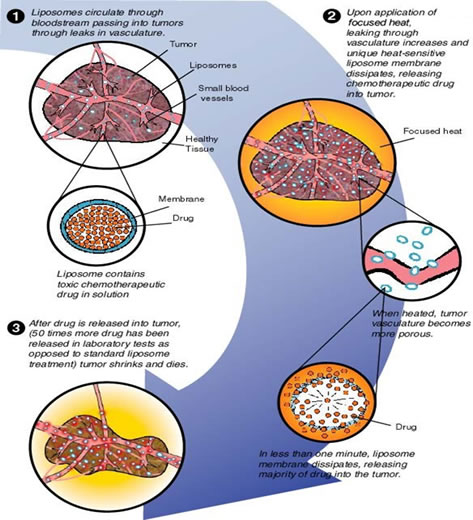
By combining the heating of tumours with a heat-sensitive liposome/doxorubicin package [Thermodox], Duke University researchers have achieved impressive results treating human tumours transplanted first into mice and then rats. Phase I clinical studies are ongoing at Duke University Medical Center.

In the study the scientists found that during the heat activated liposome administration the time at which the heat was applied could be used to control the amount of drug delivered to different areas of a tumor and its anti-tumor efficacy. Doxorubicin accumulated more quickly and reached higher concentrations in the tumor when the heat was applied simultaneously with the drug administration when compared to application of heat prior to the infusion. Simultaneous administration also produced the greatest anti-tumor effect. Heat applied before and during the heat activated liposome infusion produced a uniform distribution of doxorubicin within the tumor, whereas doxorubicin was only found in the periphery of the tumor when heat was applied during the liposome administration. Since the periphery also contains the blood vessels supplying the tumor, the greatest anti-tumor activity produced by the simultaneous administration of heat and heat activated liposome is probably due to the effect of doxorubicin on the tumor blood vessels.

Lysolipid-containing temperature sensitive liposomes were invented by Dr. David Needham, Professor, Mechanical Engineering and Material Sciences at Duke University. Celsion has licensed global rights to the technology and is currently using a heat activated liposome containing doxorubicin (ThermoDox(TM)) in Phase I clinical studies in liver cancer and recurrent chest wall breast cancer, the latter study being performed at Duke University where Dr. Kim Blackwell is the principal investigator. Celsion is working with the FDA to finalize endpoints for a Phase III study in primary liver cancer and expects to initiate enrollment in this study in 2007.
Source.

The study in Journal of National Cancer Institute, Jan 3 2007 edition, reports very good results in the rapid killing of tumour cells with this technique. It is known that some tumours are sensitive to heat, so combining focused heat on tumours with heat-sensitive liposomes filled with Doxorubicin, seems to be a highly synergistic approach.

This approach is clever and likely to be of benefit to many cancer sufferers. It is important to achieve even more precise targeting than this, however, and to move to drugs that are as effectively toxic to tumour cells, but less toxic to normal cells.

Because of the relationship between stem cells and cancer, it may be impossible to prevent all cancers. Early detection combined with precise targeting and highly selective toxicity may be the best we can do for now.
Bookmark and Share

03 January 2007

In Search of the Ninja Molecule: DNA Assassin Quest


Boise State Researcher Greg Hampikian is on a research quest to find sequences of DNA whose peptide products are so deadly, that they have been bred out of all living things.

"There must be some DNA or protein sequences that are not compatible with life, perhaps because they bind some essential cellular component, for example, and have therefore been selected outof circulation. There may also be some that are lethal in some species, but not others. We'relooking for those sequences."

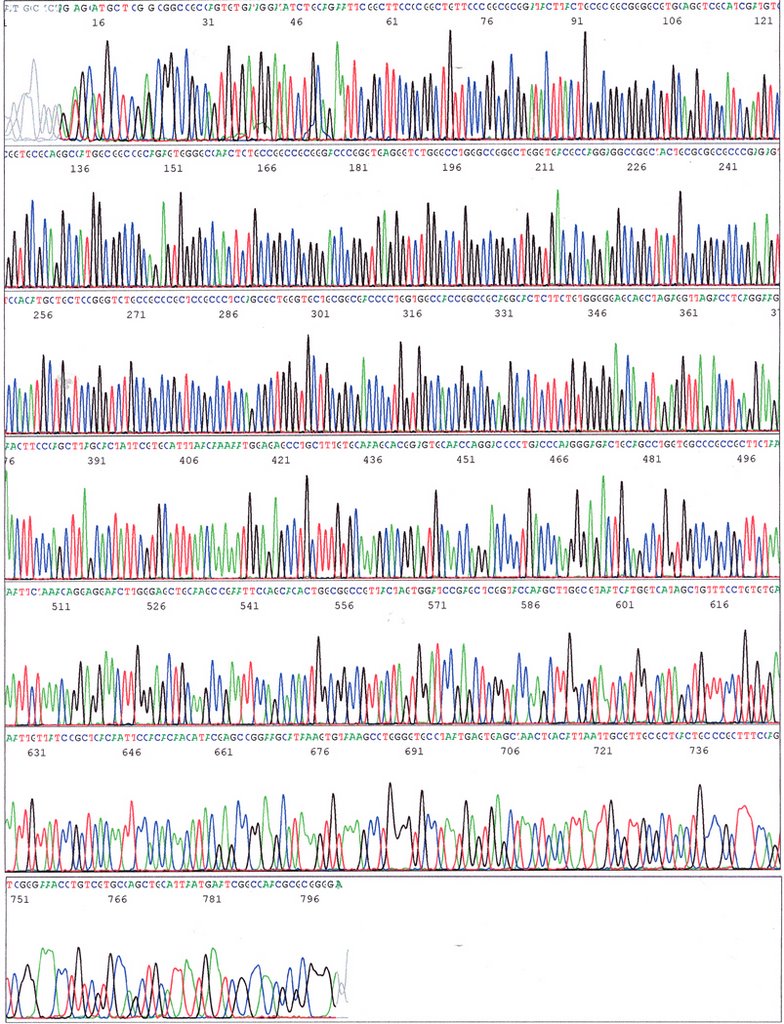
To do this, Hampikian and his colleage Tim Anderson, also at Boise, have developed softwarethat calculates all the possible sequences of nucleotides – the "letters" of DNA – up to a certainlength, and then scans sequence databases such as the US National Institutes of Health's Genbank to identify the smallest sequences that aren't present. Those that don't occur in one species but do in others are termed "nullomers", while those that aren't found in any species are termed primes.

Hampikian's team is deliberately searching for the shortest absent sequences in order to minimise the possibility that absent sequences are missing simply due to chance. So far they have found 86 sequences of 11 nucleotides long that have never been reported in humans.

They have also identified more than 60,000 primes of 15 nucleotides in length and 746 protein "peptoprime" strings of five amino acids that have never been reported in any species. "These represent the largest possible set of lethal sequences," says Hampikian, who expects the numbers to shrink as more sequence information is added to the database. He is presenting his results at the Pacific Symposium on Biocomputing in Maui, Hawaii, this week.

Whether these sequences have any biological significance in living organisms is not yet known – the next step is to test 20 of the peptoprimes in bacteria and human cells to see whether they have any effect such as causing de ath or provoking an immune reaction.
Source.

This is a fascinating line of research that is only possible because of the incredible progress in genetic sequencing across the species, and advances in bioinformatics hardware and software. Whether there is any validity to the concept of the ninja DNA sequence remains to be proven. Still, I salute Hampikian and his team for their far conceptual travels. And I very much hope there is nothing to the idea. There are more than sufficient ABC WMD's as it is.
Bookmark and Share

Kisspeptin Analogs--New Approach to Aphrodisiacs?

Kisspeptin is the neuropeptide encoded by the KiSS-1 gene. Kisspeptin is implicated in the onset of human puberty, and seems to act to control reproductive behaviour in some rodents.

A hormone implicated in the onset of human puberty also appears to control reproductive activity in seasonally breeding rodents, report Indiana University Bloomington and University of California at Berkeley scientists in the March 2007 issue of Endocrinology. The paper is now accessible online via the journal's rapid electronic publication service.

...."What is really striking is the disappearance of kisspeptin in animals experiencing winter-like days, yet the ability to respond to kisspeptin when we provide it," said Timothy Greives, lead author of the study. "These data show that the disappearance of kisspeptin in the brain is likely critical in turning off reproduction during winter."

Recent research by scientists in the U.K. and France have shown human kisspeptin triggers the release of gonadotropin-releasing hormone and luteinizing hormone, both of which are important to puberty and other sex-related functions.

"Studies in humans have shown that individuals with deficits in the receptor for kisspeptin have severe reproductive impairments," Demas said.
Source.

You might suspect that kisspeptin analogs might be rich targets for drug development for treatments of sexual dysfunction--aphrodisiacs. If you are a drug developer, you will probably be very hush-hush about what you are looking into. But if you are an investor in pharma stocks, you may want to look for companies that seem to be getting involved in lifestyle drug research. Once the major diseases are under control, people will want to be slimmer, more energetic, and sexier.

Cross-posted in Al Fin, You Sexy Thing.
Bookmark and Share

31 December 2006

Dodging Doomsday--Taking Out Insurance on the Unthinkable

Civilisation is a delicate thing. It could end in many ways. If we humans were prudent, we would take certain precautions.

The folks at the Lifeboat Foundation feel the same way. They are dedicated to the creation of Ark I, a self-sustaining space colony for the preservation of technological civilisation.

Ark I will be initially placed in orbit around the Earth at a height of 400 kilometers (248 miles) to make it easier to engage in trade and tourists from Earth. Both it and the other Arks will be moved further away from the Earth as the project progresses.

Why should we live in orbit rather than on a planet or moon? Because orbit is far superior to the Moon and Mars for colonization, and other planets and moons are too hot, too far away, and/or have no solid surface.
Source.

Another such group is ARC--Alliance to Rescue Civilization. Here is part of ARC's mission statement:


ARC Mission:

The mission of the Alliance to Rescue Civilization (ARC) is to protect the human species and its civilization from destruction that could result from a global catastrophic event, including nuclear war, acts of terrorism, plague and asteroid collisions. To fulfill its mission, ARC is dedicated to creating continuously staffed facilities on the Moon and other locations away from Earth. These facilities will preserve backups of scientific and cultural achievements, and of the species important to our civilization. In the event of a global catastrophe, the ARC facilities will be prepared to reintroduce lost technology, art, history, crops, livestock and, if necessary, even human beings to the Earth.

ARC Vision

The Alliance to Rescue Civilization is a very long-term international project. It seeks to copy and continuously update the essence of Earth in its many forms for safekeeping at a manned site off the planet (the Moon or a huge station are the leading candidates.) ARC would in effect comprehensively back up Earth's collective hard drive for use in rescuing and rebuilding the planet in the event of a catastrophic disaster, natural or man-made. It would in no sense be a time capsule, but would rather be an updated record of Earth's multiple life forms, flora and fauna, and its broad spectrum of arts and sciences, history, technology and all else that constitutes the planet's collective nature and culture.

In the event of a major catastrophe, for example worldwide plague, comet impact, nuclear war or social collapse, the staff of ARC will function in a rescue capacity rather than as librarians. They will be prepared to help the survivors reestablish a functioning technological society, or in the worst instance, to repopulate the Earth themselves, and re-introduce the additionally needed biological species here. The primary mission of ARC will be to secure our tenancy of this planet, although it is fully compatible with plans to extend human settlement beyond the Earth-Moon system. ARC will provide our manned space program with the central purpose which it has so sorely lacked, linking it firmly to human survival on our home planet and elsewhere. The ARC facility will stand as a visible and inspiring symbol of our aspirations, one which can overcome the negative connotations associated with disaster relief. With ARC in place, of course, other scientific and commercial uses of space will be facilitated. ARC can serve as an engine that pulls many freight cars.
Source.

In 1975, Oscar Falconi wrote an essay on the need for humans to colonize space. He discusses several ways in which humans might destroy themselves and their ability to survive on earth. Arthur C. Clarke reached the same conclusions as Falconi in his 1951 book, The Exploration of Space. More recently, astrophysicist Stephen Hawking wrote: "I don't think the human race will survive . . unless we spread into space."

It is wise for humans to take precautions against likely disasters. Distributing human knowledge databases in different regions of space might be helpful one day.

Many more links on this and similar topics at Sylvia Engdahl's site.

Labels: , , , ,

Bookmark and Share

Competence--A Vanishing Commodity?


Competence is often stated to exist at four levels:

1. Unconscious incompetence (unaware of lack of competence)
2. Conscious incompetence (becomes aware of incompetence)
3. Conscious competence (competence with conscious effort)
4. Unconscious competence (acquires competence without conscious effort--automaticity)

The learner or trainee always begins at stage 1 - 'unconscious incompetence', and ends at stage 4 - 'unconscious competence', having passed through stage 2 - 'conscious incompetence' and - 3 'conscious competence'.

.... It's essential to establish awareness of a weakness or training need (conscious incompetence) prior to attempting to impart or arrange training or skills necessary to move trainees from stage 2 to 3.

People only respond to training when they are aware of their own need for it, and the personal benefit they will derive from achieving it.
Source.

The final level of "unconscious competence" is exemplified by Michael Jordan's performance on the basketball court, the blazing downhill skiing of a gold medalist, or the onstage musical improvisations of a master jazz musician. The master doesn't have to think--he just does. In ordinary life, automatic competence is seen in language fluency, or simply walking while chewing gum.

Emotional competence is vital to the overall competence of the individual.


Self Regulation

Managing your internal states, impulses and resources

* Self control: keeping disruptive emotions and impulses in check
* Trustworthiness: maintaining standards of honesty and integrity
* Conscientiousness: taking responsibility for personal performance
* Adaptability: flexibility in handling change
* Innovation: being comfortable with novel ideas, approaches, and new information

Motivation

Emotional tendencies that guide or facilitate reaching goals

* Achievement drive: striving to improve or meet a standard of excellence
* Commitment: aligning with the goals of the group or organisation
* Initiative: readiness to act on opportunities
* Optimism: persistence in pursuing goals despite obstacles and setbacks
Source.

A recent study of New Zealand schoolchildren discovered the close relationship between attitudinal competencies (curiosity, perseverance, communication) and traditional scholastic competencies in mathematics, literacy, and problem-solving.

The model shows that there are strong relationships between the attitudinal competencies, and also between mathematics and literacy. It also shows moderate associations between the attitudinal competencies and logical problem-solving, and with literacy. Sixty-five percent of the variance in literacy scores could be accounted for by scores in communication, curiosity, perseverance, and logical problem-solving. The link between the attitudinal competencies and mathematics appears to be indirect, with more direct associations between the former and logical problem-solving and reading comprehension.
Source.

A look at necessary competencies to rehabilitate juvenile offenders by the State of Pennsylvania, zeroed in on five:

After examining the research, we settled on the following definition—competency development is the process by which juvenile offenders acquire the knowledge and skills that make it possible for them to become productive, connected, and law abiding members of their communities and selected five core competency domains—areas in which one could reasonably expect young people in trouble with the law to build and demonstrate competencies depending on their age and stage of development. These domains are:

1. Pro-Social Skills
2. Moral Reasoning Skills
3. Academic Skills
4. Workforce Development Skills
5. Independent Living Skills

These domains do not represent a complete list of the competency areas or skills that young people need in order to succeed in life or all the things parents might want for their children. But research indicates that these are the competency areas that matter most for success in school, work and life; that strengthening these areas increases resistance to delinquency; and that deficits in these areas put juveniles at risk for continued involvement in the juvenile justice system.
Source.

A child's sense of his/her own competence (self-efficacy) also influences subsequent performance:

Efficacy beliefs are influenced by acquisition of cognitive skills, but they are not merely a reflection of them. Children with the same level of cognitive skill development differ in their intellectual performances depending on the strength of their perceived efficacy. Several factors may account for the predictive superiority of efficacy belief over acquired skills. Children vary, in how they interpret, store, and recall their successes and failures. As a result, they differ in how much self-efficacy they derive from similar attainments. Moreover, in judging their capabilities, children evaluate social influences that contribute to efficacy beliefs independently of skills. Academic performances are the products of cognitive capabilities implemented through motivational and other self-regulatory skills. The efficacy beliefs that children form affect how consistently and effectively they apply what they know. Perceived self-efficacy, therefore, is a better predictor of intellectual performance than skills alone.
Source.

Many educators misunderstood Bandura's point in the quote above. The educators thought that if the students' self-esteem was raised, that academic progress would follow automatically. Self-efficacy beliefs in academics are based on many things--including grade and test score feedback. Students are not the idiots that educators often think. Students can judge if they get a good grade for no reason. Such artificial attempts to boost self-efficacy beliefs are destined to fail.

Current trends in government education tend to eradicate personal competence of schoolchildren, while simultaneously boosing self-esteem.

This blog has devoted several posts to the issue of psychological neoteny, and the role of current educational practices in promoting maturational failure in children and young adults. It requires little imagination to see a direct connection between personal incompetence, and the failure to acquire the mature skills of emotional competence, due to perverse educational methods and policies.

In a free society, the parent is responsible for the child's education and maturation. That responsibility cannot be placed in anyone else's hands.

Here is an old oriental proverb that expresses a similar concept as the four levels of competence:

  • He who knows not, and knows not that he knows not, is a fool - shun him, (= Unconscious Incompetent)
  • He who knows not, and knows that he knows not is ignorant - teach him, (= Conscious Incompetent)
  • He who knows, and knows not that he knows, is asleep - wake him, (= Unconscious Competent)
  • But he who knows, and knows that he knows , is a wise man - follow him. (= Conscious Competent)
Source.

Labels: , , ,

Bookmark and Share

A Simple Candle-Powered Steam Engine


Hat tip Make Blog.
The Hole - video powered by Metacafe
Bookmark and Share

30 December 2006

Stem Cell Superstar!--From The Umbilical Cord

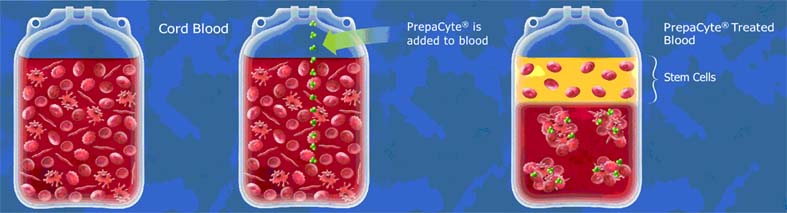
I have cut dozens of umbilical cords, and drawn blood samples from many more. I never dreamed cord blood would eventually be recognized as a major new source for multipotent stem cells! Cord blood stem cells can be differentiated into all three germ layers now--ectoderm, endoderm, and mesoderm. It was recently reported that scientists at the University of Minnesota differentiated respiratory epithelial cells from umbilical cord blood [UCB].

To obtain the MLPC [multi-lineage progenitor cell] from cord blood, we used a stem cell isolation technology — PrepaCyte-MLPC — from BioE. We successfully isolated the rare MLPC from four UCB units obtained from the American Red Cross.

...We then put the UCB stem cells into culture and allowed them to expand using mesenchymal stromal cell growth medium (MSCGM) prior to adding small airway growth medium (SAGM), both mediums from Cambrex BioScience (East Rutherford, N.J., USA). Following several days in culture, we demonstrated differentiation of MLPCs into type II alveolar cells, which was confirmed by the presence of a definitive type II alveolar cell marker — surfactant protein C (SPC).
Source.

The process of sequentially using growth factors and media to differentiate stem cells into mature cell types continues to fascinate me. No one truly understands the potential of stem cells from cord blood, menstrual blood, the testicle, the breast, the brain--or any of the growing number of stem cell sources. Although Australia has legalized the production of human embryos specifically for the purpose of producing stem cells, few other countries have followed the Aussie's lead. That means that other countries will either learn to work with what is legally available, or will fall badly behind the researchers in Oz.

There is growing expertise in producing increasing varieties of cell types from readily available sources of stem cells. Resourceful scientists with ingenuity can do amazing things with the materials on hand.

Labels:

Bookmark and Share

For My Birthday Next Year . . .

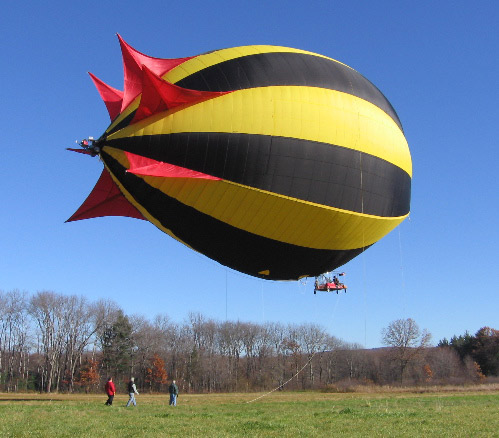
. . . I would like a personal blimp.

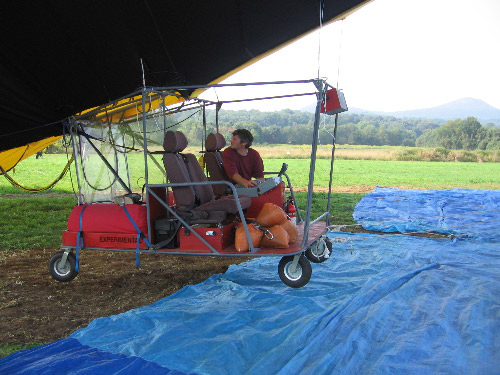
The experimental aircraft, which has been in the works for about five years, still needs at least one more year of research and development. The current design doesn't yet live up to the company's standards of quiet flight.

In initial flight tests, Alberto uses a conventional gas-powered motor. Once the early tests are done, the airship will be fitted with electric motors, along with quieter hot-air burners.

Although a number of design refinements, as well as FAA certification, lie ahead, Skyacht says it expects the airship to be priced between $100,000 and $200,000.

That's about the cost of a new, small airplane and much less the the $2 million price tag on the cheapest helium airships, to say nothing of the $12 million for a high-end Zeppelin NT, according to the company.


So you see, it is quite affordable, and quite useful as an observation platform for surveying all your domains.

While I am still holding out for a universal vehicle that I can drive on the highway, fly like a plane, power over the water like a hydrofoil, and dive under the water like a submarine--I am not averse to using separate vehicles for each function while I am waiting for the combo.

Hat tip Impact Lab

Labels:

Bookmark and Share

28 December 2006

Psychological Neoteny--A Second Opinion

The problems of the neotenous society, and psychological neoteny, have received extensive coverage on this blog. But it seems that I am not the only one to ride this particular hobbyhorse. Bruce Charlton is an Evolutionary Psychiatrist at the University of Newcastle upon Tyne. Charlton is the author of a fascinating online ebook--The Modernization Imperative--and was featured in a Discovery Channel news article earlier this year.

...it seems a growing number of people are retaining the behaviors and attitudes associated with youth.

As a consequence, many older people simply never achieve mental adulthood, according to a leading expert on evolutionary psychiatry.

...Formal education now extends well past physical maturity, leaving students with minds that are, he said, “unfinished.”

“The psychological neoteny effect of formal education is an accidental by-product — the main role of education is to increase general, abstract intelligence and prepare for economic activity,” he explained.

“But formal education requires a child-like stance of receptivity to new learning, and cognitive flexibility."

"When formal education continues into the early twenties," he continued, "it probably, to an extent, counteracts the attainment of psychological maturity, which would otherwise occur at about this age.”

Charlton pointed out that past cultures often marked the advent of adulthood with initiation ceremonies.

While the human mind responds to new information over the course of any individual’s lifetime, Charlton argues that past physical environments were more stable and allowed for a state of psychological maturity. In hunter-gatherer societies, that maturity was probably achieved during a person’s late teens or early twenties, he said.

“By contrast, many modern adults fail to attain this maturity, and such failure is common and indeed characteristic of highly educated and, on the whole, effective and socially valuable people," he said.

"People such as academics, teachers, scientists and many other professionals are often strikingly immature outside of their strictly specialist competence in the sense of being unpredictable, unbalanced in priorities, and tending to overreact.”
Source.

Isolating children and young adults inside classrooms, away from the productive world and meaningful responsibility, will probably result in large numbers of "failure-to-mature" adults, as we see in modern western societies. Immature adults are unprepared to face the momentous challenges that western civilisation faces today. There are many "micro-pockets" of maturity within these societies--small arenas where teens and young adults are faced with meaningful responsibility, and acquire useful competencies.

But those micro-pockets of reality exist outside of school curricula.

Labels: ,

Bookmark and Share
Newer Posts Older Posts
Al Fin Main Page
Enter your Email


Powered by FeedBlitz
Google
WWW AL FIN

Powered by
Blogger

``