14 May 2012

Africa: 50 Years After

After 50 + years of independence, and despite glowing reports by "international development specialists", most of SubSaharan Africa exists in a state of perpetual tragedy. Africa is only a tragedy in comparison with most of the rest of the world, of course. If more advanced parts of the human world did not exist, Africa would be a shining example of human progress and achievement.

Here is a look at the reality of urbanisation in Africa:
Although the central districts of many of Africa’s major cities now boast numerous skyscrapers of cement, glass and steel, and are host to great night life with vibrant bars and night clubs, these are transposed on unplanned, chaotic settlements built of wood, corrugated metal sheeting, mud bricks and whatever other materials may be at hand, with dirt roads and open sewer ditches.

This scenario is further complicated by other ills such as lack of piped water, unsafe sanitation, near absence of refuse collection, unstable electricity supply, poor housing, striking inequalities in wealth, absence of recreation parks and green landscapes, heavy traffic jams, and pervasive poverty, all of which have negative impacts on the quality of life and working environment in many African cities and towns.

These problems are compounded by corrupt and inefficient local government institutions and governance issues that hinder effective urban management as the lack of capacity and weakness in the municipalities result in critical problems such as unfocussed planning, weak resource mobilisation, and creation of slum conditions as “nobody is taking charge, and nobody is providing guidance”.

As of 2007, Africa housed an estimated 250 million people in urban slums, which are reduced to wastelands of overcrowding, poverty and social exclusion, and labelled by governments as illegal informal settlements that do not deserve provision of services.

In most African large cities, these informal settlements provide domicile to 40 and 70 percent of urban dwellers, especially those who work in the informal sector of employment.

Further, the African continent sits with an insurmountable level of unemployment as high as an average of 8.5 percent but going to 40 and 95 percent in some countries.

Forty percent of the people work in the informal sector of unemployment, which accounts for an extraordinary 78 percent of non-agricultural employment, 61 percent of urban employment, and 93 percent of all new jobs.

The documented growth in Africa has been driven mainly by services and capital-intensive extractive sectors, with the result that it has been growth without jobs and without reduction in poverty levels.

The formal economic sector (excluding government) has been incapable of creating sufficient jobs for urban populations, partly due to rapid influx of people, but mainly due to poorly managed urban development and weakened national economies.

It is reported to account for barely 10 percent of the total employment on the continent. _Africa 50 Years Later
Clearly the "African miracle" of growth and urbanisation looks somewhat different without the rose coloured glasses of international development "experts."

The IMF has just cut estimates for the near term economic growth of Sub-Saharan Africa, and there is little reason to hope for the long term. In terms of the reality of the ordinary African, the IMF's predictions have very little impact. Growth in Africa, when it occurs, rarely trickles down to the street level.

The reasons why African nations perpetually sit at the bottom rank of nations in terms of virtually all measures of development, achievement, and quality of life, could be debated over an indefinite period of time.

A lot of things could be done in terms of nutrition, public health, medical care, education, housing, and access to clean water, electricity, and advanced telecommunications. But almost as soon as an African achieves higher education, he is likely to emigrate to the western world, to escape the political caprice and instability of Africa.

Perhaps Africa should not be compared to the outside world. But you can be sure that Africans themselves will do so, and whenever possible, they will vote with their feet.

Labels:

Bookmark and Share

13 May 2012

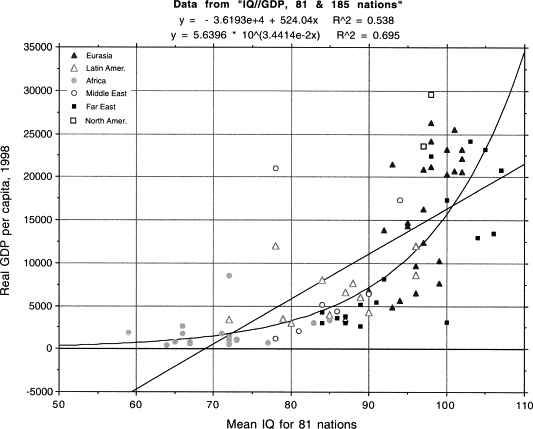
IQ and the Wealth of Nations: 10 + Years and Going Strong

Exponential Relationship of National IQ and GDP: Intelligence Vol 34 Issue 3 pp 291 - 295

Lynn and Vanhanen's famous book, IQ and the Wealth of Nations, was published in February of 2002. Because it made a credible link between the average intelligence of its people and a nation's achievements and economic prosperity, the book came under immediate and unrelenting attack from the politically correct pseudo-intellectual quarter.

The most recent broadside attack against Lynn and Vanhanen comes from Charles Kenny in Foreign Policy, Dumb and Dumber. Unfortunately, such rebuttals to Lynn and Vanhanen are not held to high standards by the mainstream press or by academia. Perhaps that is why Steve Sailer was able to make such quick and devastating work of Kenny's argument.

Lynn and Vanhanen's national IQ data has been criticised, which is certainly fair to do. Social scientists have been particularly outraged at the low average IQ assigned to SubSaharan Africa by L & V (approx. 70). But out of all the critics, virtually no one is willing to jump in and produce better data! Surely if one were so eager to prove this vexing thesis wrong, one would secure the proper grant, and go out and compile the definitive data that would disprove the disturbing idea. The closest that a researcher has come to doing this is the work of Jelte Wicherts (PDF). But it requires little reading of Wilcherts' argument to discover that his selection criteria are even more questionable than Lynn and Vanhanen's -- and the best Wilcherts could do was to raise the mean SS African IQ to 82, with all of his fudge-factors of selection.

Is the actual average IQ of subSaharan Africa closer to 75 than to either 70 or 82? Probably. Could better nutrition and a higher stimulus environment raise that average IQ closer to the African American average IQ of 85? Probably. But researchers must deal with data, the best that they can. When they deal in wishful thinking they lose all credibility.

To the extent possible, within the treacherous modern world of PC hyper-sensitivity, Lynn and Vanhanen's data has been updated and generally confirmed. More here.

Over the intervening years, national IQ data has been plotted against GDP according to linear models and according to exponential models. More here. The exponential model would seem to provide a better fit of the data.

Even without arguing about the causes or IQ differences, or possible cures for the problem, the startling trend, in terms of the importance of IQ (or smart fraction) and national prosperity, should be clear to even the most reluctant observer.

The question of why some nations are rich and some nations are poor, cannot be answered by a single parameter. But after ten years of considering the relationship of national IQ (including smart fraction) and national prosperity, the relationship has held up very well indeed.

Labels: ,

Bookmark and Share

Making the Bad Lady Shut Up

This article is adapted from a previously published piece on abu al-fin blog

In an excellent demonstration of the motto of leftist higher education: "Free speech for me but not for thee," the Chronicle of Higher Education has fired a blogger who was paid to contribute a contrary viewpoint. She was fired for publishing a viewpoint that was too contrary for the comfort of the academics to whom the Chronicle of Higher Education caters.
The Chronicle of Higher Education has fired our former editorial-page colleague, Naomi Schaefer Riley, for a blog posting on the Chronicle's website that offended 6,500 professors. Well, they're not all professors yet, but they are members of what calls itself the "higher-education community," for which the Chronicle is its trade paper. As best we can make out, the Chronicle's editor, Liz McMillen, fired Naomi Riley for doing what she was hired to do—provide a conservative point of view about current events in academe alongside the paper's roster of mostly not-conservative academic bloggers. _WSJ
Ms. Schaefer Riley tells the story from her point of view:
Recently, the Chronicle of Higher Education published a cover story called "Black Studies: 'Swaggering Into the Future,'" in which the reporter described how "young black-studies scholars . . . are less consumed than their predecessors with the need to validate the field or explain why they are pursuing doctorates in their discipline." The "5 Up-and-Coming Ph.D. Candidates" described in the piece's sidebar "are rewriting the history of race." While the article suggested some are skeptical of black studies as a discipline, the reporter neglected to quote anyone who is.

Like me. So last week, on the Chronicle's "Brainstorm" blog (where I was paid to be a regular contributor), I suggested that the dissertation topics of the graduate students mentioned were obscure at best and "a collection of left-wing victimization claptrap," at worst.

For instance, the author of a dissertation on the history of black midwifery began her research, she told the Chronicle, because she "noticed that nonwhite women's experiences were largely absent from natural-birth literature." Another graduate student blamed the housing crisis in America on institutional racism. And a third argued that conservatives like Thomas Sowell, Clarence Thomas and John McWhorter have "played one of the most-significant roles in the assault on the civil-rights legacy that benefited them."

The reaction to my blog post ranged from puerile to vitriolic. The graduate students I mentioned and the senior faculty who advise them at Northwestern University accused me (in guest blogs posted by the Chronicle editors) of bigotry and cowardice. The former wrote that "in a bid to not be 'out-niggered' [their word] by her right-wing cohort, Riley found some black women graduate students to beat up on." (I confess I don't actually know what that means.) One fellow blogger (and hundreds of commenters) called my post "racist."

Gina Barreca, a teacher of English and feminist theory at the University of Connecticut, composed a poem mocking me. (It begins "A certain white chick—Schaefer Riley/ decided to do something wily.") MSNBC host Melissa Harris-Perry spewed a four-minute rant about my post, invoking the memory of Trayvon Martin and accusing me of "small-mindedness."

Scores of critics on the site complained that I had not read the dissertations in full before daring to write about them—an absurd standard for a 500-word blog post. A number of the dissertations aren't even available. Which didn't seem to stop the Chronicle reporter, though. And 6,500 academics signed a petition online demanding that I be fired.

At first, the Chronicle stood its ground, suggesting that my post was an "invitation to debate." But that stance lasted for little more than a weekend. In a note that reads like a confession at a re-education camp, the Chronicle's editor, Liz McMillen announced her decision on Monday to fire me: "We've heard you," she tells my critics. "And we have taken to heart what you said. We now agree that Ms. Riley's blog posting did not meet The Chronicle's basic editorial standards for reporting and fairness in opinion articles."

When I asked Ms. McMillen whether the poem by fellow blogger Ms. Barreca, for instance, lived up to such standards, she said they were "reviewing" the other content on the site. So far, however, that blogger has not been fired. Other ad hominem attacks against me seem to have passed editorial muster as well. _Naomi Schaefer Riley_in_WSJ

The suppression of free speech on university campuses is being contested on a daily basis by FIRE -- the Foundation for Individual Rights in Education. But the suppression of ideas and speech by publications and information outlets is a more difficult enemy to overcome.

Fortunately, the internet provides a number of ways to expose and counteract the grand project of information bias that infiltrates and permeates modern societies.

Labels: , , , ,

Bookmark and Share

12 May 2012

Private Space Habitat: 2015 -- SpaceX & Bigelow Team Up

SpaceX is busy gearing up for a date with the International Space Station, but the company now has a second invite to one that doesn't exist yet. SpaceX has announced that it will help fellow private spaceflight firm Bigelow carry its inflatable modules into orbit, with the goal of connecting a bunch to form a proper station.

...The lynchpin is the company's seven-person Dragon capsule, which has so far cleared seven of the 10 checks NASA requires before the agency deems the craft as safe for ferrying human cargo. The Dragon capsule will launch atop SpaceX's Falcon 9 rocket, and the vehicle is one of the options on the table NASA is considering to further its manned space ambitions in sub-orbit. That cargohold could also include inflatable habitats by Bigelow Aerospace, as both Bigelow and SpaceX just inked a new deal to see it happen. Sometime after SpaceX is ready to rumble, Bigelow will go through the company to launch its BA 330 modules, the latest orbital habitat Bigelow has developed and one that offers 330 square meters of space in an environment that's safer than the International Space Station, according to the firm. While it was once thought that Bigelow would immediately turn these into space hotels for rich thrill seekers, the 330s would instead be joined to form commercial space, one that countries without an advanced program can use for orbital experiments. Of course, before any of that happens, SpaceX has a date with destiny — and the ISS. Right now that rendezvous is scheduled for May 19, though there have been several delays and could be more. _DVice
DVice
Bigelow is partnering with SpaceX to work with its BA 330 module, an inflatable habitat based on NASA technology that can hold around six astronauts in relative comfort. The Nevadan company, set up by Robert Bigelow, founder of the Budget Suite hotel chain, has had two test facilities in orbit for years and now appears ready to move into commercial operation.

...The BA 330 is the latest design from Bigelow, giving 330 square meters of habitat when fully inflated. The walls of the shelter are made up of eight layers of materials designed to offer better defense for occupants, and Bigelow claims it offers full radiation protection and better micrometeorite safety than the International Space Station's rigid walls.

..."SpaceX and BA have a lot in common. Both companies were founded to help create a new era in space enterprise," said SpaceX president Gwynne Shotwell. "Together we will provide unique opportunities to entities - whether nations or corporations - wishing to have crewed access to the space environment for extended periods."_TheRegister
Once SpaceX demonstrates its ability to reliably supply materials and men to orbital space, it will be able to boost Bigelow's inflatable habitats into orbit.

The goal for $billionaires and would-be $trillionaires such as Bigelow and Musk (of SpaceX), is to develop as many profitable ways of entering and utilising outer space as possible. While actual moon-mining and asteroid-mining may still be a decade or more away, there are a lot of preliminaries to get through, and many other possible ways of profiting from outer space access.

Once the profits start flowing in, the need for a permanent human presence in space will evolve. More: Brian Wang at NextBigFuture takes a look at the collaboration between SpaceX and Bigelow

Labels: ,

Bookmark and Share

The Ultimate Zombie Apocalypse Escape Vehicle?

The following article is cross-posted from Al Fin Potpourri blog


When the zombie apocalypse hits, you may not have much warning to get out of town. Freeways and surface roads will be jammed to a standstill, and walking out of the city with zombies on the loose could be extremely dangerous. In such an event, you will want a method of urban exfiltration. Helicopters are generally considered the best method of fast evacuation, but a flying car or flying motorcycle ranks high on the list. The Pal-V personal flying road vehicle is an auto-gyro and a three-wheel motorcycle all in one. Here's more:
On the ground this slim, aerodynamic, 3-wheeled vehicle has the comfort of a car with the agility of a motorcycle thanks to its patented, cutting-edge, ‘tilting’ system. It can be driven to the nearest airfield and take off just like any other airplane. The single rotor and propeller are unfolded to make the PAL-V ONE ready to fly. When airborne, the PAL-V usually flies below 4,000 feet (1,200 m), the airspace available for uncontrolled Visual Flight Rules (VFR) traffic; so there will be no interference from commercial air traffic. Furthermore, the PAL-V is powered by a very robust, flight certified aircraft engine. It runs on gasoline. It can reach speeds of up to 180 km/h (112 mph) both on land and in the air. The PAL-V ONE has a very short take off and landing capability, making it possible to land practically anywhere. When not using controlled airspace, you can take off without filing a flight plan. Flying a PAL-V is like a standard gyrocopter. It is quieter than helicopters due to the slower rotation of the main rotor. It takes off and lands with low speed, cannot stall, and is very easy to control. The gyroplane technology means that it can be steered and landed safely even if the engine fails, because the rotor keeps auto rotating. _PAL-V
Escaping a Zombie-Infested San Francisco
The PAL-V One can reach speeds up to 112 mph. On the road, the PAL-V One has a range of 750 miles from its gasoline engine and in the air it has a range of up to 315 miles. It runs on gasoline like a conventional car, but there will also be versions that use biodiesel or bio-ethanol. _Inhabitat
In a world of zombies, there are very few second chances. Best to plan ahead.

Labels: , , ,

Bookmark and Share

Ranking Higher Education Systems by Nation

Research authors at the Melbourne Institute of Applied Economic and Social Research, University of Melbourne, looked at the most recent data from 48 countries and territories across 20 different measures. The range of measures is grouped under four headings: resources (investment by government and private sector), output (research and its impact, as well as the production of an educated workforce which meets labour market needs), connectivity (international networks and collaboration which protects a system against insularity) and environment (government policy and regulation, diversity and participation opportunities). Population size is accounted for in the calculations. _U21

The United States' strong performance was driven largely by its total output of research journal articles, the measure that comprised 40 percent of the ranking. Examining the categories of resources and connectivity reveals room to grow. Government funding of higher education per GDP is highest in Finland, Norway and Denmark. American universities are forced to rely on private funding more than other nations do, the researchers found. And when it comes to international research collaboration, the United States is at the bottom of the pack, along with China, India and Japan.

The good news is that the majority of countries earn high marks when it comes to learning environment. In all but eight countries, at least half of students are women—the lowest percentages are in India and Korea. But when it comes to gender equity in university staff, few nations fare as well: Just five have gender parity on the faculty, with the lowest numbers in Japan and Iran. _Good
It is interesting how national higher education systems rank, when the ranking is done by an institution of higher education. But how would educational systems and institutions rank, if the ranking were done by other groups -- such as employers, former students, parents, etc.? That would be far more interesting to discover.

Take international research collaboration, for example. The US is ranked at the bottom for this measure, when proportion of international collaboration in research is measured. But in actual raw numbers -- rather than per centage or proportion -- international collaboration for researchers in the US is quite high. The low ranking given to the US for international collaboration by U21 is an artifact of the method used. Similar incongruities and quasi-deceptions can be found throughout such reports, should one bother to look.
The highest participation rates in higher education are in Korea, Finland, Greece, United States, Canada and Slovenia. The countries with the largest proportion of workers with a higher level education are Russia, Canada, Israel, United States, Ukraine, Taiwan and Australia. Finland, Denmark, Singapore, Norway and Japan have the highest ratio of researchers in the economy. International students form the highest proportions of total student numbers in Australia, Singapore, Austria, United Kingdom and Switzerland. International research collaboration is most prominent in Indonesia, Switzerland, Hong Kong SAR, Denmark, Belgium and Austria. _U21
Perhaps international research collaboration is more important somehow, for small countries such as Indonesia, Belgium, Denmark, Hong Kong SAR, etc? In larger nations, where extensive networks of collaboration already exist within the nation itself, reaching across international boundaries just for the sake of doing so, may be seen as somewhat gratuitous in many cases.

Labels:

Bookmark and Share

Obama Regime Seeks to Allow Killing Bald Eagles

Up until now, it has been a federal crime to kill a bald eagle inside the United States, without a difficult to obtain permit. But now, Obama officials are moving ahead to expand decriminalisation of the act of killing the US national bird. The regime has never cared for patriotic symbols, of course. But the reason for the impending open season on bald eagles has more to do with carbon hysteria and promoting unreliable and intermittent forms of energy, than with any latent anti-American tendencies residing within the administration.
The USFWS [US Fish and Wildlife Service, Division of the US Department of the Interior] explains at FederalRegister.gov:

We have reviewed applications from proponents of renewable energy projects, such as wind and solar power facilities, for programmatic permits to authorize eagle take that may result from both the construction and ongoing operations of renewable energy projects. During our review, it became evident that the 5-year term limit imposed by the 2009 regulations (see 50 CFR 22.26(h)) needed to be extended to better correspond to the timeframe of renewable energy projects.
Current law allows permitting for “programmatic” killing of bald eagles, which “is recurring, is not caused solely by indirect effects, and that occurs over the long term or in a location or locations that cannot be specifically identified.”

The USFWS notes that permits “may authorize lethal take that is incidental to an otherwise lawful activity, such as mortalities caused by collisions with rotating wind turbines.”

According to the regulation, measures will be taken to attempt to minimize bald eagle mortalities, and additional actions may be authorized if mortalities exceed “anticipated” levels. USFWS began investigating numerous bald eagle deaths associated with wind turbines in early 2012.

Without the proper permit, the killing of a bald eagle is a federal crime. _Foundry_via_GWPF
The killing of bald eagles in order to permit the overbuilding of an unreliable, intermittent, exorbitantly expensive and wasteful form of energy production, is a double crime to many Americans. Not only is the Obama administration cynically facilitating the killing of a national symbol. They are doing so in the name of an expensive and heavily subsidised form of energy which will only destabilise the power grid, without providing any tangible benefit.

Inept leadership is bad enough. Unfortunately, the Obama regime is far worse than merely inept. It is becoming devotedly destructive.

Labels: ,

Bookmark and Share

11 May 2012

With or Without Putin, Russia is Slipping Away

One of Russia's biggest problems is that many of its best people are moving out, and they are being replaced by people who are -- shall we put it kindly -- sub-par. Unskilled workers from the republics are flowing into Russia, while its best trained and most skilled workers and professionals are finding their ways abroad.

Even worse, ethnic Russians who stay in Russia achieve fertility rates less than 1.5 child per woman -- even with pro-natal Kremlin policies -- while Chechen women maintain fertility rates well above 3 children per woman. Two thirds of births from ethnic Russian women are from women between the ages of 20 and 29 -- a part of the population that happens to be shrinking at this time. In less than 15 years, the number of Russian women in that age group are estimated to be reduced by almost 50%.

Russian women continue looking abroad for marriage, family, and child-raising, because -- frankly speaking -- Russian men are not reliable, and Russia is no place to raise a child.
What really matter are job security, crime-free cities, family life and health, and in all these yardsticks Russia is slipping. I won’t go into the dismal life expectancy for men or the crime stats, but Russia has a major problem. It is a real concern when wealthy Russians start packing up their bags and settle abroad.

For Russia, which boasts a highly educated and intellectual population with vast achievements in science and technology, it is dangerous to be so dependent on fossil fuels and minerals. Russia’s successful military and space programmes have yielded few known commercial spinoffs. More than 20 years after the Soviet Union dissolved, Russia doesn’t have a globally renowned consumer durables brand. _Indrus.in
The quality of Russian higher education, for the most part, is somewhat overstated. The severe brain drain of the post-collapse era left Russia's intelligentsia depleted, the brain drain continues.
Salaries and the terms of faculty appointments and promotion are central to the well-being of the academic profession and its contributions to the university. If salaries are inadequate, the “best and brightest” will not be attracted to academe...in a globalised world, salaries in one country affect academe elsewhere, as professors are tempted to move where remuneration and working conditions are best....Russia and the former Soviet states pay quite low salaries, even when their economies are relatively prosperous.....For academics in those countries with quite low salaries — such as China, Russia, Armenia or Ethiopia — the academic profession faces a crisis. _TheHindu
Not all Russian professors are worth hiring abroad -- just like many social science professors in the west are not worth hiring at all. But for those who are accomplished in science and technology, the temptation to migrate abroad can be overpowering.

Russia's economy has been pegged to its energy resources for decades. Now, Russia is trying to re-invent itself in terms of business and innovation. But doing so will be very difficult.
Russia’s reliance on the export of oil and natural gas and lack of integration into regional and global markets inhibit economic growth. Although Russia’s World Trade Organization accession this year will open the Russian economy to greater foreign trade and investment, there is not yet an effective strategy for economic development. The authors recommend a “twin-vector economic strategy” that simultaneously orients Russia’s economy toward the East and West, so that it can benefit from advanced technology and investment from both.

The most obvious constraint on Russia’s ability to pursue such a strategy [Outlook 2030] is its poor climate for business and investment, in particular the pervasive corruption that crops up at every level of state and society. In addition, the country’s underdeveloped public health system, relatively anemic middle class, continuing “brain drain” emigration and aging workforce will hinder Russia’s competitiveness and attractiveness for investment. Though “Outlook” avoids the “third rail” of Russian politics -- addressing official corruption at the top levels of government -- it recommends the Kremlin adopt policies to foster the growth of small business, eliminate excessive bureaucracy and even offer greater freedom and support for civil society. Putin has shown little enthusiasm in practice for such reforms... _Carnegie Endowment


Russian life expectancy continues to be horrendously low, for a nation that claims to be developed. Few Russian men live long enough to enjoy more than a year or two of vodka-sotted retirement. Heart disease, accidents, and violent crime take care of those that alcoholism, suicide, HIV, and drug resistant TB do not handle.

A more in depth look at Russia's demographic prospects (PDF)

The recent crash of Russia's first new airliner design in decades will not help build Russia's new reputation for world-class innovation. And the theft of military technology systems by China -- a growing competitor on second and third tier defense markets for Soviet era weapons systems -- does not help to keep Russian weapons and technology manufacturers in business.

Voters in Russia have never been taken seriously. Now that Putin has achieved "President For Life" status, there is no reason for the Kremlin to do more than give them lip service from now until the military machine rusts, the oil & gas wells give out, and the Russian ethnic demographic passes the point of no return.

Who wouldn't want to get out?

Labels: ,

Bookmark and Share

10 May 2012

IQ, Race, Poverty, Violence . . . The Body Needs a Head


Smart Fraction _ La Griffe du Lion

One might not be impressed by the difference in average IQ between European (avg. IQ = 100) and African-American populations (average IQ = 85). But if one looks at the implications of that simple and consistent difference -- at the extreme right tail of the distribution curve -- one begins to understand the potency of the so-called "smart fraction."

The smart fraction of a larger population has a great deal to do with the overall prosperity and technological sophistication of the society at large. In fact, a sufficiently large smart fraction can move a society well above the GDP which one might predict based upon the average IQ.

GNXP blogger Razib Khan considers the implications of a difference in means on the "smart fraction" as small as 5. In terms of awards, achievements, accomplishments, and distinctions, the difference can be quite significance, assuming a normal distribution and comparable standard deviations in the two groups.
Two populations may have a large overlap and differ only slightly in their means. Still, the most outstanding individuals will tend to come from the population with the higher mean. The implication, I think, is clear: whenever an institution or society singles out individuals who are exceptional or outstanding in some way, racial differences will become more apparent. That fact may be uncomfortable, but there is no way around it.
The fact that racial differences exist does not, of course, explain their origin. The cause of the observed differences may be genetic. But it may also be environmental, the result of diet, or family structure, or schooling, or any number of other possible biological and social factors.
My conclusion, to repeat, is that whenever a society singles out individuals who are outstanding or unusual in any way, the statistical contrast between means and extremes comes to the fore. I think that recognizing this can eventually only help politicians and social policymakers.
_quoting the eminent geneticist James F. Crowe, author of Unequal by nature: a geneticist’s perspective on human differences
Imagine the following trait with two distributions (i.e., two populations):
- Mean = 100 and 105 (average value)
- Standard deviation = 15 (measure of dispersion)
- Let’s assume a normal distribution
Let’s plot the two distributions:

Observe the close overlap between the two distributions. Most of the variance occurs within both sets of populations. Now let’s impose a cut-off of about ~130 on the curves:

Now the similarity between the two curves is not as striking. As you move to the tails of the distribution they begin to diverge. In other words, the average of the two populations is pretty much interchangeable, but the values at the tails differ. Now let’s move the cut-off to 145:

The difference is now even more stark. Let’s compare the ratios of the area under the curve for the two populations as defined by the cut-offs:
Value at 100 = 1.26 (any given individual in the blue population is 1.26 times more likely to be above 100 than in the red population)
Value at 130 = 1.83
Value at 145 = 28
What does this entail concretely? As Crow noted above if you sample from the tails of the distribution then very modest differences between groups become rather salient...
_Razib_Khan_in_Discover
What is true for IQ and achievement also seems to be true for poverty, violence, and other socioeconomic tendency which appear to be mediated in large part genetically.

When one looks at African and African-derived populations around the world, one is struck by the high levels of violence, the high and persistent prevalence of poverty, and the low levels of achievement in terms of technological and scientific invention, and general scholarship.

Even without average IQ scores of various nations, it would be possible to rank them in terms of violence, per capita GDP, and achievement in various fields such as science, technology, and scholarship. One could use those rankings to approximate national average IQ -- keeping in mind a number of caveats including various governmental limitations on private economic activity.

As shown by La Griffe du Lion, a large smart fraction -- such as the Chinese in Indonesia or non-Africans in South Africa -- can push a country to perform well above the level which might have been predicted based upon average national population IQ, in terms of GDP, research, and academic achievement. But the high levels of violence in South Africa cannot be obscured by its smart fraction, revealing one of the limitations of the "bootstrap" approach to helping low IQ societies.

Low IQ societies can be assisted by high IQ sub-populations to a significant degree. But if the population average IQ is too low, there are limits to the benefits which the entire society can enjoy from the achievements of a high-IQ fraction. In other words, such a society might enjoy advanced communications and computational networks, abundant and reliable electrical power, and a generally healthy economy. But unless a way is found to raise the IQs of the low IQ population majority, pockets of crime, corruption, and violence will persist.

What about advanced societies possessing appreciable minorities that display traits of high violence, persistent inter-generational poverty, and low IQ? Economically and in terms of achievement, such nations can do rather well in comparison to most other countries. But if the sub-populations displaying high crime, high poverty, and low achievement are increasing in numbers faster than their higher achieving countrymen, the long term prospects for such societies might not be so bright.

This is a situation faced by a number of advanced nations, located on multiple continents of the world. The situation is being ignored for reasons of political correctness, but the underlying reality and its inevitable fallout cannot be suppressed indefinitely.

Other than stressing the importance of treating all population groups equally under the law, there is no clear solution to the impending problem. It would be nice if IQ gaps could be narrowed, while at the same time increasing IQ overall for all groups. But as long as political correctness leads to the suppression of exactly the kind of research which might lead to such remedies, society is figuratively shooting itself in the head.

A few articles for background reading:

Race Difference in Intelligence Over Millenia

Brain Volumes and IQ in Children

Don't Count on the Flynn Effect

Black White Difference in IQ and Grades.... This study is interesting for trying to find an explanatory reason for the difference in scores, based upon another set of psychological measurements. It appears to be a good example of psychological inbreeding and self-blinding.

Links Between Information Processing Speed, Working Memory, and IQ... The abstract is at the link, and the full 18 MB dissertation is available to University of Queensland staff and students.

Clearly this issue spans many scholarly fields of human endeavour, from genetics to statistics to psychology to economics to philosophy to sociology to neuroscience, and more. Very few can master all fields of study, and any complex line of reasoning necessarily involves a number of assumptions which can be challenged.

But this particular area of study is particularly dangerous for students and scholars, given the political overtones involved. Be very careful how you discuss these issues, and be particular with whom you discuss these topics. Despite the over-riding importance of these questions to advanced societies, over time, no matter how good your intentions, if you open your mouth at the wrong time, you can burn a large number of career bridges.

Hope for the best. Prepare for the worst.

Labels:

Bookmark and Share

09 May 2012

Walking On Oceans of Gold

With all the recent talk about the new venture Planetary Resources, Inc., and its goal to mine the asteroids for their millions of $trillions worth of gold, platinum, and other precious resources, it is easy to forget that everyday we are walking over oceans of gold deep beneath our feet.
During the formation of Earth, molten iron sank to its centre to make the core. This took with it the vast majority of the planet's precious metals -- such as gold and platinum. In fact, there are enough precious metals in the core to cover the entire surface of Earth with a four-metre thick layer. _SD
More from Nature journal research, which claims that the heavier metals we use now -- including the "precious metals" -- came from a "terminal bombardment" of Earth by metal carrying asteroids.
Image Source


If there is enough precious metal in the Earth's core to cover the entire planetary surface with a 4 metre thick layer, why are the billionaires of Google talking about mining the asteroids for precious metal? Because the Earth's molten core is inaccessible, for one reason. But even if the core were accessible, it would be almost impossible to separate economic quantities of precious metals from the massive amounts of not-quite-as-precious metals such as iron and nickel.

In other words, at this time it is cheaper and more economically viable to build machines to mine the asteroids for precious metals, than to build machines to tap into the oceans of gold inside the Earth's core.

And so, for now, we are stuck with the paltry amount of gold given to us by the terminal bombardment of metallic asteroids. And so most of us have heard the term "peak gold," used in much the same sense as the term "peak oil" is used -- to suggest a permanent depletion and a terminal decline of production.

Perhaps we should take a look at what has gone wrong with the confident -- but failed -- predictions of "peak oil," in order to understand some of the ways in which "peak gold" might fall on hard times:
The first estimate of proved crude oil reserves worldwide, made in 1944, was 51 billion barrels. Today, that number is 1.4 trillion barrels, and cumulative production in the last 66 years has been twenty times the original estimate.

...Natural gas and coal proved reserves have also increased several-fold despite decades of production.5 Reserves of tin, copper, iron ore, lead, and zinc were also higher in 2000 than in 1950, despite the fact that production in the half century in between substantially exceeded reserves in 1950.6...The story would be similar for other minerals, from bauxite to uranium.

...The expansionist view of mineral resources is often associated with Julian Simon, who won the most famous wager in the history of economics regarding the future scarcity of minerals. Simon and Paul Ehrlich agreed that if resources were to become scarcer in the future, their prices, adjusted for inflation, would rise. At Simon’s invitation, in 1980, Paul Ehrlich et al. chose five minerals: chrome, copper, nickel, tin, and tungsten. If, in 1990, the prices of the minerals were to rise, Simon would pay; if the prices dropped, the consortium would pay.

Simon won resoundingly. The prices of most of the picked minerals had fallen in dollar terms between 1980 and 1990, and each fell in inflation-adjusted terms—despite 822 million more people consuming “depletable” resources.7

In the annals of the history of economic thought, Erich Zimmermann, of the Institutionalist school of economics, not Simon, got there first with what he called a functional theory of resources.

According to Zimmermann, resources are not known, fixed things; they are what humans employ to service wants at a given time. Human “appraisal” turns the “neutral stuff” of the earth into resources. What are resources today may not be tomorrow, and vice versa.8

Zimmermann wrote:
Resources are highly dynamic functional concepts; they are not, they become, they evolve out of the triune interaction of nature, man, and culture, in which nature sets outer limits, but man and culture are largely responsible for the portion of physical totality that is made available for human use.9
Zimmermann concluded: “Knowledge is truly the mother of all resources.”10 _master resource blog
Humans not only discover new sources of vital, depletable resources, but they also devise substitutions for these scarce materials, from cheaper and more plentiful materials. Or they find other ingenious workarounds and alternatives. If the proper incentives are there, humans will find ways around problems that would have been "unimaginable" or "inconceivable" before the fact. (Do those words mean what we think they mean?)

Human societies are incentivised by institutional policies -- particularly government policies. In democratic societies, voters determine what sorts of incentives their institutions will set for them when they step into the voting booth. If voters are unaware of the crucial importance of incentives, and are instead manipulated by clever campaign rhetoric and promises, the institutional incentives that are ultimately set are likely to be sub-optimal.

We are walking on oceans of gold. But we are impoverished by foolish institutional (government) incentives and an absent-minded neglect of our civic responsibilities. It is our choice, our minds, our ingenuity...

Ultimate Resource II ... Free, online book by Julian Simon explores the concepts introduced above

Labels: , ,

Bookmark and Share

08 May 2012

Your Regularly Scheduled Peak Oil Doomsday Has Been Postponed Several Decades to Allow Humans to Convert to Advanced Nuclear Power

The following article was adapted from multiple articles previously published at Al Fin Energy and Al Fin Potpourri blogs

Massive Hydrocarbon Resources Beginning to Unfold
Humans have been unexpectedly handed several decades in which to convert their power infrastructure from a dependency on combustion energy to the use of advanced nuclear power. The explosion in the available natural gas resource -- from the shale gas bonanza to the coming gas hydrates boom and beyond -- should reassure us that we have time to move to advanced nuclear fission, and eventually fusion. For the next few decades, it is likely that natural gas -- particularly LNG and GTL -- will assume a rapidly growing role in the global energy trade.
New giant gas fields have been discovered in such previously unpromising places as the Mediterranean off Israel’s shores and deep Atlantic waters offshore near Brazil. There are extensive deposits of gas-bearing shales in Europe (particularly in Poland) and enormous resources in Asia. Recent reductions in the cost of gas liquefaction coupled with increased sizes of LNG tankers (they now rival the size of ships carrying crude oil) made LNG into a trade equivalent of oil: It can now be transported to consumers on any continent, bought without restrictive long-term contracts, and delivered at increasingly affordable prices. The totals speak for themselves: Global LNG trade rose roughly eightfold between 1980 and 2010, and it now accounts for 30 percent of the worldwide natural gas trade.

...Before the end of 2005, the U.S. price of natural gas rose above $15/1,000 cubic feet, nearly 12 times the all-time low reached in 1995. Production was down by about 8 percent compared to 2001, news reports speculated about supply shortages, and gas companies were gearing for expanded imports of liquefied natural gas (LNG) from overseas. Six years later, by the second week of April 2012, the market price of U.S. natural gas fell to less than $2/1,000 cubic feet (to levels not seen since January 2002), nationwide gas extraction in 2011 was nearly 12 percent above the 2009 level, and record production was expected in 2012, when all storages would be filled to capacity. No wonder that gas companies are now planning to export LNG, and that new drilling projects have been shelved in the anticipation of gas glut.

...Little has to be said about high oil prices (the price spread between liquid and gaseous hydrocarbons has reached an unprecedented level), but the conversion efficiencies achievable by furnaces and turbines burning natural gas are not sufficiently appreciated. New, super-efficient household gas furnaces convert up to 97 percent of the fuel into heat; combined-cycle generation (using the waste heat from a gas turbine to raise steam and generate more electricity in an associated steam turbine) now produces electricity with 60 percent efficiency (and 70 percent will be possible in the future).

This amazingly abrupt change of gas fortunes has been due to the rising production of shale gas. _Vaclav Smil
But an even larger resource of unconventional hydrocarbons has recently presented itself for human use: gas and methane hydrates. Methane hydrates represent the largest resource of hydrocarbons in the planetary crust. Up until now, humans had not devised a good way to tap into this immense energy wealth. But a report from the DOE today may point the way to a new era in abundant energy for human societies:
May 2 (Reuters) - The U.S. Energy Department on Wednesday announced a breakthrough in research into tapping a possibly vast fuel resource that could eventually bolster already massive U.S. natural gas reserves.

By injecting a mixture of carbon dioxide and nitrogen into a methane hydrate formation on Alaska's North Slope, the department was able to produce a steady flow of natural gas in the first field test of this method. The test was done from mid-February to about mid-April this year

"While this is just the beginning, this research could potentially yield significant new supplies of natural gas," Energy Secretary Steven Chu said in a statement.

The department, which partnered with ConocoPhillips and Japan Oil, Gas and Metals National Corp for the test, said it will offer $6.5 million this year for further research on tapping methane hydrates, and will request an additional $5 million for research next year.

Gerald Holder, dean of the engineering program at University of Pittsburgh and who has worked with the DOE's National Energy Technology Laboratory on the hydrate issue, said before this announcement he had been skeptical about what researchers would be able to accomplish. He said the main problem until now was finding a way to extract natural gas from solid hydrates without adding a whole lot of steps that made the process too expensive, so the success of this new test is significant. "It makes the possibility of recovering methane from hydrates much more likely," Holder said. _Reuters


While it is true that experts are probably understating the actual resource of gas hydrates by a significant factor, the same could be said for estimates of crude oil, coal, natural gas, bitumen, and kerogen resources.

But today's announcement should initiate renewed research in labs around the world, toward devising more efficient and economical ways of extracting gas hydrates from the enormous, "quasi-renewable" resource.


Using unconventional gas and gas hydrates as substitutes for crude oil in the production of fuels, electricity, high value chemicals, lubricants, polymers, and other important materials, will give us extra decades to convert to high energy density, safe, clean, abundant, cheap advanced nuclear power. But that is just the beginning of the energy bonanza coming our way, if we can only eject the energy starvationists who have hijacked our governments and other important institutions.

Advanced high temperature nuclear reactors give human industry the abundant power and high quality process heat to achieve clean economies of production only dreamed of in the past.

It comes down to the high quality, high temperature process heat that gas-cooled reactors provide. Here are some of the things that high quality process heat can do:
  1. Unlock the trillions of barrels oil equivalent in oil sands (PDF)
  2. Unlock the trillions of barrels oil equivalent in coal to liquids and gas to liquids (PDF)
  3. Unlock the trillions of barrels oil equivalent in oil shale kerogens 
  4. Provide abundant industrial process heat for production of fertilisers, refining fuels, making plastics, etc 
  5. Split CO2 into CO to use as a hydrogen carrier 
  6. Overturn conventional fears of EROEI and Peak Oil 
_Source
Brian Wang has also taken a look at this topic

One particular gas cooled modular reactor has been selected by the Next Generation Nuclear Plant Industry Alliance as the best design for the category:
The Alliance said that it had selected an unspecified Areva reactor concept, presumably based on the Antares design, "as the optimum design." It said, "The Areva HTGR technology's capability and modular design would support a broad range of market sectors, providing highly-efficient energy to industries such as electrical power generation, petrochemicals, non-conventional oil recovery and synthetic fuel production." Areva, it said, "has the technical and design capabilities to develop a HTGR for the process heat co-generation and generation markets."

It added that "additional investors are being pursued to fully capitalize a venture in order to build an initial fleet of HTGR plants for industry." The Alliance noted, "Deploying next generation nuclear technology is a critical step in solving the long-term needs for secure sources of energy, conserving fossil fuels and slowing the growth of greenhouse gas emissions. Clean, safe nuclear energy from HTGR would increase US energy independence and extend the life of domestic oil and natural gas resources." _WorldNuclearNews
More here

Perhaps a stimulus from the private sector will help to spur the revolution that the US federal government under Obama appears to be resisting with all its might. Regardless, it is critical for a wide range of intelligent people within various industries and sectors of the economy to understand the importance of this potential qualitative transition in possibilities for production of future energies and fuels.

Nuclear energy systems that utilise efficient fuel burn and recycling (with combined Gen III and Gen IV + reactor synergies) offer thousands of years of electrical power and optimised fuels production. Only rational nuclear energy possesses the energy density and massive fuel supplies to allow humans to transcend fears of energy scarcity in order to move into a future of relative abundance.

We are developing clean and cheap ways of utilising the truly massive energy resources of this planet. But that is just the beginning. The resources discussed above can take humans ahead centuries or longer. But it is likely that forms of economical fusion power will be developed before the turn of the century. Once fusion is tamed and scaled, we are looking at the opening of the resources of the entire solar system -- out to the Oort cloud.

Your regularly scheduled peak oil / resource scarcity doomsday has been cancelled. Enjoy the unexpected age of abundant energy which will be coming to you instead -- contingent upon your disposing of the energy starvationist parasites of the lefty-Luddite green dieoff.orgy persuasion, who have latched onto your institutions of government, academia, news media, and popular cultures.

Labels: , ,

Bookmark and Share

Surviving in Your Doomsday Bunker with Power to Spare

This semi-satirical article was first published on Al Fin Potpourri blog and subsequently re-published on Al Fin Energy blog:


After the Apocalypse

After the doomsday bell tolls, you will want to have a safe hideaway, packed with your favourite foods, beverages, people, and prescription drugs. But no matter how safely your bunker is designed, you cannot survive long without a source of heating and electrical power.

Issues of energy density dictate the need for a nuclear power and heat source -- either fission or fusion. The choice seems to come down to either a small modular nuclear fission reactor -- such as the NuScale or Wilcox and Babcock models, vs one of the new scalable fusion reactor models. The Lawrenceville Plasma Physics focus fusion device pictured below, appears to be the leader of the pack in terms of timeline for proof of concept, prototype, commercial demo, and mass production.
All images below taken from Lawrenceville Plasma Physics Inc (PDF) (via) NBF

Five megawatts baseload power should be enough to supply the power and heat needs of most medium-sized doomsday communities. When living in an underground environment, it is easy to underestimate needs for space lighting and grow-lighting, as well as power for supplying pumps, compressors, blowers, fans, filtration devices, and various electronic devices.

The diagram above attempts to illustrate energy flows and losses in the focus fusion system. Operation of the reactor will be highly automated, but a certain amount of oversight will be necessary, to assure smooth function and to limit the need for unscheduled maintenance shutdowns.

Baseload power generation means that the reactor produces 5 MW at all times. Any heat and power produced above the needs of the doomsday community will converted as needed, and routed to storage or to a sink. Since the reactor utilises hydrogen and boron as fuel, a significant amount of excess power will be used to maintain hydrogen stores. The hydrogen can be used as fuel in either the focus fusion reactor, or in backup fuel cell CHP generators.

The timeline for production of the LPP focus fusion reactors is particularly optimistic, with estimates for mass production as early as 2016.

Keep in mind that US federal and state regulators are unlikely to approve these devices for sale in the US anytime within the next decade. This means that any US citizen wishing to use these reactors as backup power supplies for their home, seastead, polar outpost, or doomsday bunker, will either need to locate outside the US, or will need to find extra-legal ways of installing their nuclear fusion (or SMR fission) reactors within the borders of the US.

In the event of doomsday, it is expected that nuclear enforcement by US federal or state officials will be suspended for a number of years. In such a case, issues of survival are likely to be paramount, over issues of bureaucratic red tape.

Labels: , , , ,

Bookmark and Share

07 May 2012

Mastering Dynamic Cell Signaling

The following article was first published on Al Fin Longevity blog
Cells make decisions in fluctuating environments using inherently noisy biochemical mechanisms. Such effects create considerable, unpredictable variation – known as ‘stochasticity’– both over time and between genetically identical cells. To understand how cells exploit and control these biochemical fluctuations, scientists must identify the sources of stochasticity, quantify their effects, and distinguish variation that carries information about the biological environment from confounding noise.

In their PNAS paper, Dr Bowsher and Professor Swain show how to decompose the fluctuations of biochemical networks into multiple components and how to design experimental ‘reporters’ to measure these components in living cells.

The paper, which describes the application of this approach to yeast cells, shows that the majority of cellular variation may be informational in origin and due to fluctuations in the cellular environment. The results pave the way to a better understanding of the dynamics of signal processing and decision-making by cells. _SD
Cell Signaling Network, Preliminary Sketch

We begin to comprehend the potential power of cell signaling mastery, when we observe research breakthroughs such as the following:
In laboratory experiments with mouse cells, the researchers found that a specific protein that regulates cell aging also controls a process that causes blood-making stem cells to age. Using drugs to inhibit the action of this protein (called Cdc42) reversed aging of the hematopoietic stem cells and restored their function to a level similar to that of younger stem cells.

It had been [previously] believed that the aging of hematopoietic stem cells was locked in by nature and could not be reversed by using drugs, according to a hospital news release.

...The study by scientists at Cincinnati Children's Hospital Medical Center and Ulm University Medicine in Germany appeared online May 3 in the journal Cell Stem Cell. _USN
Turning old hematopoietic stem cells into young hematopoietic stem cells is nothing to sneeze at. And it is only a slight foretaste of what is becoming possible, as we better understand cell signaling networks and the signaling involved in gene expression.

One of the more exciting near-to-intermediate term possibility arising from the coming mastery of cell signaling, is the ability to reverse neurodegenerative diseases which involve abnormal protein folding. Diseases such as Alzheimer's, Huntington's, Parkinson's, and "mad cow disease," for example, involve abnormal proteins leading to cell destruction and loss of neural function.
Researchers at the University of Leicester uncovered how the build-up of proteins in mice with prion disease resulted in brain cells dying.

They showed that as misfolded protein levels rise in the brain, cells respond by trying to shut down the production of all new proteins.

...The team at the Medical Research Council laboratory in Leicester then tried to manipulate the switch which turned the protein factory off. When they prevented cells from shutting down, they prevented the brain dying. The mice then lived significantly longer.

Each neuro-degenerative disease results in a unique set of misfolded proteins being produced, which are then thought to lead to brain cells dying.

Prof Giovanna Mallucci told the BBC: "The novelty here is we're just targeting the protein shut-down, we're ignoring the prion protein and that's what makes it potentially relevant across the board."

The idea, which has not yet been tested, is that if preventing the shut down protects the brain in prion disease - it might work in all diseases that have misfolded proteins.

Prof Mallucci added: "What it gives you is an appealing concept that one pathway and therefore one treatment could have benefits across a range of disorders. _BBC
Nature article

Complex cell signaling is also involved in the control of gene expression, including critically important DNA repair, and control of telomere length in cells -- which controls the number of cell doublings allowed.

If you click on the image above, you can view an enlarged version of a portion of a cell signaling network. Such complexity explains the need for high powered computational backup in the attempt to decode these networks, as a prelude to their mastery.

Cellular processes take place very quickly, and in a closely controlled and balanced chemical milieu. If we are to learn to intervene on the level of the cell in a beneficial way, we must proceed with care. But we definitely aim to proceed.

Labels: , ,

Bookmark and Share

What do Doomers Do When their Predictions Fail?

This article is cross-posted from Al Fin Energy blog:

Many doomers -- particularly the thought-leaders of doom movements -- can be quite versatile and resourceful in the face of their many failed predictions. For those who make a living from doom, it helps to not only be clever, but to have an eye for the gullible rube, or sucker. Here is how doomer Paul Ehrlich has made a lucrative life from predicting countless dooms which never came to pass:
Ehrlich came to prominence in 1968 with the publication of his environmental blockbusterThe Population Bomb. The book’s central Malthusian thesis is that a growing population is unsustainable in a world of dwindling finite resources. As Malthus’ scenario failed to materialize, so too Ehrlich’s apocalyptic vision of hungry and dead bodies on the streets in the 1970s proved a total fiction. Not that this has deterred Ehrlich. He has continued to make a healthy living from a litany of population predictions – not one of which has come to pass.

The truth is that Ehrlich is the greatest failed prophet of our age. Yet amazingly, not only does he continue to collect his university stipend and pick up lucrative public appearance and book deals, for all his blatant failures, is still feted by the media. Take the journalistic drivel with which John Vidal’s Guardian article began at the end of April. Vidal’s interview announces Ehrlich as “the world’s most renowned population analyst”. So what track record of predictive success to date warrants such approbation? Ehrlich’s prophecies include:
That the battle to feed humanity was over. In the 1970s hundreds of millions of people, including Americans, were going to starve to death. (Of course, if eco-warriors butted out, GM foods could easily eradicate global hunger within a decade. But, in any event, food production is running well in excess of global population growth. To top it all, the obesity epidemic currently kills hundreds of thousands every year.)

England would not exist in the year 2000 (I just looked out of the window. It’s still here.)

“Smog disasters” would kill 200,000 people in New York and Los Angeles in 1973.(Not only did it not happen, both cities continue to have the best air quality they have had in decades.)

In 1976, “before 1985 mankind will enter a genuine age of scarcity...in which the accessible supplies of many key minerals will be facing depletion.” (Heard of the shale gas and oil revolutions that are set to last for hundreds of years and, beyond that, centuries of methane hydrates?)

In an Atlantic article in the late 1990s Ehrlich maintained that anyone who believed technology would provide the answers to the problem of scarcity was either a liar or a fool. (Heard of the technique of ‘hydraulic fracturing’ that has set in motion the energy game-changing shale revolution – not to mention deepwater reserves – facilitating century’s more of both gas and oil and cutting US gas prices by a quarter?)

In 1972 Ehrlich suggested adding a forced sterilization agent to “staple food” and to the water supply. (Shades of the SF movie Soylent Green? Would you trust any government who effectively ‘poisoned’ the food and water supply as part of a program of ‘forced sterilization’?)

All of Ehrlich’s solutions to his predictions are, of course, rooted in the need to overthrow democracy with a world government controlling and enforcing a global program of distribution of food and energy consumption. Ah yes, world domination – and a final solution. And if the very thought of this 1984-style one world government turns your liberty-loving stomach, consider what Ehrlich-esque policies have already achieved. In the 1950s the UN imposed a global ban on the use of DDT after environmentalists complained a few birds were accidently killed by DDT (actually through slight over-use of the chemical). DDT was singularly responsible for eradicating the world’s single greatest killer: malaria. As a direct result of the ban by the EPA in 1972, it is estimated that around a million people a year in sub-Saharan Africa alone die from the disease. The “solutions” of environmentalist visionaries should come with a global health warning attached.

No wonder Ehrlich has variously been referred to as “worse than Hitler” and “the Bernie Madoff of science”. To be fair, Ehrlich’s renewed concerns articulated in Vidal’s Guardian interview, about how the earth’s resources can sustain the 9 billion people predicted for 2050, was actually triggered by a new report from the Johnny-come-lately prophets-of-gloom at the Royal Society. Remember when the RS was the doyen of Newtonian empiricist real science? Not anymore. In a desperate bid to become appear “relevant” and justify its increasingly publicly-funded soaring price tag, the RS leadership is increasingly eschewing real science for speculative science.

Published in April 2012, the key recommendations of the Royal Society’s People and the Planet are thoroughly Malthusian. Like Ehrlich, the Royal Socity report is concerned about the Earth’s finite resources failing to keep up with population growth. It demands that developed and emerging economies (that’s everyone) “stabilise” and “reduce material consumption”. And, chiefly, that “reproductive health and voluntary family planning programmes urgently require political leadership” to cut “fertility rates”. Pretty much your standard environmental doom and gloom – and based on an erroneous understanding of “finite resources”. As I have written elsewhere, the RS is developing a culture of anti-science by exchanging its empiricist soul for a mess of prophetic theory.

...No one would spend time publicly expounding preposterous prophetic theories that keep failing if there wasn’t a public appetite for them – and if there weren’t mega-bucks to be made in the speculative ‘futures’ market. Public speaking engagements, book tours, disaster movies, headline-grabbing articles majoring on apocalyptic and sensationalism and warnings are all money-spinning themes. Then there are the rewards of academia. In 1990 alone, even as the failed prophecies racked up, Ehrlich pocketed a cool $345,000 through winning the MacArthur Foundations’ “genius award” and another $60,000 being one half of an award from the Swedish Royal Academy of Science. “Genius” then, we must concede. Any butterfly specialist – which is what Ehrlich is – that can screw $400,000+ out of two international science academies must have some chutzpah. _Peter_Glover_via_GWPF_
There is a sucker born every minute. Fortunately for purveyors of doom, many of these cognitive newborns are suckers for stories of doom. From carbon hysteria to resource depletion to overpopulation to global death from pollution, many people just want to see civilisation collapse, or to see their fellow man suffer.

The purveyors of doom, such as Ehrlich, are happy to find as many suckers as they can -- individuals or institutions. Stories of doom are easy to spin -- most of them are just recycled tales of earlier failed predictions, after all. They are making good livings from selling doom vomit, in other words. What a pleasant thought.

Labels: ,

Bookmark and Share

06 May 2012

Predictions are Usually Wrong, Especially About the Future

One of the most popular prediction games among the curious cognoscenti is the "fertility prediction" game. One of the favourite tools of fertility predictors is the "TFR," the total fertility rate (PDF). TFR is only a statistical predictive tool, rather than an actual item of data. As such, it is likely to be wrong -- like most predictions about the future. Too many things about the TFR are subject to change, for it to be relied upon absolutely.

But there are biological limits which are difficult to overcome. Once a woman passes her age of fertility, it is very expensive and laborious to see her through a successful conception and pregnancy. When an entire nation of women "pass the point of no return," in terms of fertility, it becomes almost impossible to reverse the trend.

We know that this is happening in Japan and in some countries of Eastern Europe. But is it possible for such a thing to happen to a nation as populous as China, to a population as talented as the Han?
Today’s most important population trend is falling birthrates. The world’s total fertility rate -- the number of children the average woman will bear over her lifetime -- has dropped to 2.6 today from 4.9 in 1960. Half of the people in the world live in countries where the fertility rate is below what demographers reckon is the replacement level of 2.1, and are thus in shrinking societies. _Bloomberg
The falling birthrate phenomenon is most profoundly affecting populations that are more intelligent and more educated. Within the US, for example, it is highly intelligent and highly educated career women who are least likely to have children, on average.
...one country that worries American military strategists will also face serious demographic challenges. China’s rise over the last generation has been stunning, but straight-line projections of its future power and influence ignore that its birthrate is 30 percent below the replacement rate.

The Census Bureau predicts that China’s population will peak in 2026, just 14 years from now. Its labor force will shrink, and its over-65 population will more than double over the next 20 years, from 115 million to 240 million. It will age very rapidly. Only Japan has aged faster -- and Japan had the great advantage of growing rich before it grew old. By 2030, China will have a slightly higher proportion of the population that is elderly than western Europe does today -- and western Europe, recall, has a higher median age than Florida.

...China, notoriously, has another demographic challenge. The normal sex ratio at birth is about 103 to 105 boys for every 100 girls. In China, as a result of the one-child policy and sex- selective abortion, that ratio has been 120 boys for every 100 girls. From 2000 to 2030, the percentage of men in their late 30s who have never been married is projected to quintuple. Eberstadt doesn’t believe that having an “army of unmarriageable young men” will improve the country’s economy or social cohesion.

He thinks demographic change will pose two problems specific to China. Its society has relied heavily on trust relationships within extended-family networks. In a country where fewer and fewer people will have uncles, those networks will rapidly atrophy. The government, meanwhile, relies for its legitimacy on a level of economic performance that demographic trends imperil.

All in all, Eberstadt concludes, “we might want to have some additional new friends and allies in the world.” America’s growing ties to India, a nation he describes as “aging moderately,” strike him as promising. But he warns that it has not made the most of its population: “India has an appalling education deficit.”

Foreign-policy thinkers can often lose sight of demographic trends, Eberstadt says, because from a policy makers’ view “they tend to look really glacial. If it’s not happening in the next 48 to 72 hours, it’s not in the inbox.” But “population change gradually and very unforgivingly alters the realm of the possible.”_Bloomberg
It never hurts to remind oneself that a huge driving force of global commodities markets over the past several years has been demand from a rapidly growing and building Chinese economy. Should something happen to disrupt -- or interrupt -- Chinese economic growth, one might expect global commodities markets to experience a significant effect. It doesn't hurt to pay attention to these things, if you are at all connected to global markets.

Labels: ,

Bookmark and Share

The Shrinking US Labour Force: Legacy of Obama?

When people are not working, they cannot build families, buy houses, invest, indulge in tourism and consumerism, and all the other things that help drive modern consumer-oriented economies. Economic policies which discourage business startups and new jobs formation will lead to long term unemployment and a shrinking labour force.
If the same percentage of adults were in the workforce today as when Barack Obama took office, the unemployment rate would be 11.1 percent. If the percentage was where it was when George W. Bush took office, the unemployment rate would be 13.1 percent. _Incredible Shrinking Labor Force
Image Source

If the US economy is shot down by its own president's policies, who is going to rescue the world from global recession this time?
The Labor Force Participation Rate decreased to 63.6% in April (blue line). This is the percentage of the working age population in the labor force and the participation rate is at a new post bubble low. The participation rate is well below the 66% to 67% rate that was normal over the last 20 years _April Employment
Shrinking Labour Force
Mr. Obama has suppressed the private sector economy via energy starvation, strangulating regulation, and a devastating climate of economic uncertainty. At the same time, he has pumped $trillions into the pockets of cronies, favoured activist groups, political pals and hangers on, in the name of economic stimulus, among other misnomers.

Mr. Obama's approach is the equivalent of a physician strangling a patient, while at the same time defibrillating and administering heroic life support to the same patient. Such a love-hate approach to governance could only be tolerated in the context of a cheerleading media that refuses to point out the horrific inconsistencies, weaknesses, and destructiveness of Mr. Obama's agenda.

Mr. Obama did not originate all the things which were misguided and self-destructive about US government policy. He merely made them incalculably worse, and set them on irrevocable autopilot.

Whether Mr. Obama is re-elected or not, he has obtained his golden parachute for life. He will be able to avoid the worst fallout from his own policies -- by either moving away from the worst affected areas, or by using money, privilege, and payback power to insulate himself from the pain he will have caused.

For everyone else: Hope for the best, but prepare for the worst.

Labels: ,

Bookmark and Share
Newer Posts Older Posts
Al Fin Main Page
Enter your Email


Powered by FeedBlitz
Google
WWW AL FIN

Powered by
Blogger

``