27 June 2012

Human 2.0: Surviving On 1 Oz of Water a Day

This article was previously published on Al Fin Potpourri blog

How could you re-design your body so that instead of requiring over 2 litres per day of water, you suddenly need only about 30 ml to survive in good health?

Such a radical reduction in daily water requirements suddenly opens up large areas of the planet for human habitation -- from the deserts to the poles to the open ocean and more.

Reducing human water requirements also makes it easier for humans to live in outer space habitats and on long-distance spaceships. The video below describes one approach to the problem.

Video via Takram (h/t Popsci)

The video describes the Shenu Hydrolemic System, which works to limit water losses through perspiration, urination, and feces through multiple body implants and prostheses.
We were given a vision of cathartic future. A world in which humanity experiences a cataclysmic sequence of events that will bring us to the brink of annihilation. Afflicted by manmade causes, the rising sea level, radioactive emissions and release of hazardous materials into the environment, art and culture cease to exist. This provides an opportunity, not lament, to re-evaluate what constitutes art, design, culture and the quality of life itself when all prejudices and preconceptions vanish.

With this premise, takram was tasked to design a water bottle.After a period of thorough research and analysis, takram reached an uncanny solution. Our conclusion was that it would make more sense, in fact, to regulate how much water the human body can retain and recycle in this dire environment. This revelation resulted in the Hydrolemic system, a set of artificial organs. _Takram

Watch the short video, and follow the link above for more information.

The human body is in for some radical re-design, as humans attempt to expand their activities into more and more extreme environments. From the polar regions to the deep seas, to high altitude atmospheric regions, to the many environments available off-planet -- humans are looking to extend their reach and expand their practical vision.

We were not evolved for most of those environments, however. We can compensate for some of these evolutionary deficiencies by creating artificial environments around us. Submarines allow us to live and work at depth undersea. Spaceships can protect us from vacuum and temperature extremes in space, with partial protection from radiation hazard. Pressurised capsules could allow us to live at high altitudes either on mountaintops or in large high altitude lighter than air habitats.

But we are the naked ape, and we would rather be able to face these exotic environments with a minimum of artifact between us and the environment -- if we could do so safely.

That is why reducing the daily water requirement is just the beginning for the grand project of re-designing humans for the challenges ahead of us.

Much more on this topic in future postings.

Labels: , ,

Bookmark and Share

09 May 2012

Walking On Oceans of Gold

With all the recent talk about the new venture Planetary Resources, Inc., and its goal to mine the asteroids for their millions of $trillions worth of gold, platinum, and other precious resources, it is easy to forget that everyday we are walking over oceans of gold deep beneath our feet.
During the formation of Earth, molten iron sank to its centre to make the core. This took with it the vast majority of the planet's precious metals -- such as gold and platinum. In fact, there are enough precious metals in the core to cover the entire surface of Earth with a four-metre thick layer. _SD
More from Nature journal research, which claims that the heavier metals we use now -- including the "precious metals" -- came from a "terminal bombardment" of Earth by metal carrying asteroids.
Image Source


If there is enough precious metal in the Earth's core to cover the entire planetary surface with a 4 metre thick layer, why are the billionaires of Google talking about mining the asteroids for precious metal? Because the Earth's molten core is inaccessible, for one reason. But even if the core were accessible, it would be almost impossible to separate economic quantities of precious metals from the massive amounts of not-quite-as-precious metals such as iron and nickel.

In other words, at this time it is cheaper and more economically viable to build machines to mine the asteroids for precious metals, than to build machines to tap into the oceans of gold inside the Earth's core.

And so, for now, we are stuck with the paltry amount of gold given to us by the terminal bombardment of metallic asteroids. And so most of us have heard the term "peak gold," used in much the same sense as the term "peak oil" is used -- to suggest a permanent depletion and a terminal decline of production.

Perhaps we should take a look at what has gone wrong with the confident -- but failed -- predictions of "peak oil," in order to understand some of the ways in which "peak gold" might fall on hard times:
The first estimate of proved crude oil reserves worldwide, made in 1944, was 51 billion barrels. Today, that number is 1.4 trillion barrels, and cumulative production in the last 66 years has been twenty times the original estimate.

...Natural gas and coal proved reserves have also increased several-fold despite decades of production.5 Reserves of tin, copper, iron ore, lead, and zinc were also higher in 2000 than in 1950, despite the fact that production in the half century in between substantially exceeded reserves in 1950.6...The story would be similar for other minerals, from bauxite to uranium.

...The expansionist view of mineral resources is often associated with Julian Simon, who won the most famous wager in the history of economics regarding the future scarcity of minerals. Simon and Paul Ehrlich agreed that if resources were to become scarcer in the future, their prices, adjusted for inflation, would rise. At Simon’s invitation, in 1980, Paul Ehrlich et al. chose five minerals: chrome, copper, nickel, tin, and tungsten. If, in 1990, the prices of the minerals were to rise, Simon would pay; if the prices dropped, the consortium would pay.

Simon won resoundingly. The prices of most of the picked minerals had fallen in dollar terms between 1980 and 1990, and each fell in inflation-adjusted terms—despite 822 million more people consuming “depletable” resources.7

In the annals of the history of economic thought, Erich Zimmermann, of the Institutionalist school of economics, not Simon, got there first with what he called a functional theory of resources.

According to Zimmermann, resources are not known, fixed things; they are what humans employ to service wants at a given time. Human “appraisal” turns the “neutral stuff” of the earth into resources. What are resources today may not be tomorrow, and vice versa.8

Zimmermann wrote:
Resources are highly dynamic functional concepts; they are not, they become, they evolve out of the triune interaction of nature, man, and culture, in which nature sets outer limits, but man and culture are largely responsible for the portion of physical totality that is made available for human use.9
Zimmermann concluded: “Knowledge is truly the mother of all resources.”10 _master resource blog
Humans not only discover new sources of vital, depletable resources, but they also devise substitutions for these scarce materials, from cheaper and more plentiful materials. Or they find other ingenious workarounds and alternatives. If the proper incentives are there, humans will find ways around problems that would have been "unimaginable" or "inconceivable" before the fact. (Do those words mean what we think they mean?)

Human societies are incentivised by institutional policies -- particularly government policies. In democratic societies, voters determine what sorts of incentives their institutions will set for them when they step into the voting booth. If voters are unaware of the crucial importance of incentives, and are instead manipulated by clever campaign rhetoric and promises, the institutional incentives that are ultimately set are likely to be sub-optimal.

We are walking on oceans of gold. But we are impoverished by foolish institutional (government) incentives and an absent-minded neglect of our civic responsibilities. It is our choice, our minds, our ingenuity...

Ultimate Resource II ... Free, online book by Julian Simon explores the concepts introduced above

Labels: , ,

Bookmark and Share

24 October 2011

Peak Ingenuity and Peak Manpower Skills: Human Capital Needed

When confronted with a problem such as the rapid growth in demand for fuels and energy, humans need to use their ingenuity to develop new technologies. They also need to train a manpower force in the skills needed to develop, operate, and maintain the new energy technologies. Let's look at the Canadian oilsands as a case in point:
It was not until the late 1990s that the oilsands finally began to prove themselves as a large-scale commercial resource, facilitated by a crucial tax reform and lessrigid government intervention, and by major advances in technology.

The mining process was modernized, expanded in scale, and made more flexible. Fixed conveyer belts were replaced with huge trucks with the biggest tires in the world, and with giant shovels that gather up oilsands and carry them to upgraders that separate out the bitumen. Refining processes then upgrade the bitumen into higher-quality synthetic crude oil, akin to light, sweet crude oil, which can be processed in a conventional refinery into gasoline, diesel, jet fuel, and all the other normal products. _CalgaryHerald
There has always been a shortage of human ingenuity. In situations where human societies are short on inventiveness and competent tech and trade skills, the fate of that society is usually quite dire. When people talk about "peak oil" or "peak resources," they do not usually understand that what they are talking about is peak ingenuity along with peak manpower skills. Many times in history, the difference between the total collapse of a society and the prospering of the same society, is a simple innovation combined with sufficient manpower skills to take advantage of the innovation.

Consider this question in the light of Canadian oil sands:
...a breakthrough introduced an alternative way of producing oilsands - not with mining but rather in situ (Latin for "in place"); that is, with the crucial link in the production chain done in place - underground. This was very significant for many reasons, including the fact that 80 per cent of the oilsands resource is too deep for surface mining.

The in situ process uses natural gas to create superhot steam that is injected to heat the bitumen underground. The resulting liquid - a combination of bitumen and hot water - is fluid enough to flow into a well and to the surface. The best-known process is SAGD - for steam-assisted gravity drainage, and pronounced as "sag-dee." It has been described by oilsands historian Paul Chastko as "the single most important development in oilsands technology" in a half century.

Altogether, since 1997, over $120 billion of investment has flowed into Alberta's oilsands, now defined as a "mega-resource."

Oilsands production more than doubled from 600,000 barrels per day in 2000 to almost 1.5 million barrels per day in 2010. By 2020 it could double again to 3 mbd - an output that would be higher than the current oil production of either Venezuela or Kuwait. Adding in its conventional output, Canada could reach almost 4 mbd by 2020. _CalgaryHerald
Canadian oilsands do not solve the world's problems of energy scarcity. But they do temporarily abate the problem for certain parts of the world. And the impact of Canadian oilsands on global oil prices -- once high-throughput pipelines to the coast are built -- will grow significantly.
The technologies for producing oilsands continue to evolve, and increasing ingenuity is being applied to shrinking the environmental footprint and reducing the CO2 emissions in the production process. As the industry grows in scale, it will require wider collaboration on the R& D challenges not only among companies and the province of Alberta but also with Canada's federal government.

Yet the very scale of the resource, and its reliability, puts a premium on its continued evolution of this particular industry. Oilsands are, after all, an enormous resource. For the 175 billion barrels of recoverable oilsands is only 10 percent of the estimated 1.8 trillion barrels of oilsands "in place." The development of the other 90 per cent requires further technological progress. _CalgaryHerald
It usually seems as if human innovators are "running in place," running as fast as they can just to keep from falling behind. Thomas Malthus put his finger on one key issue -- human societies without appreciable ingenuity or manpower skills will out-reproduce the ability of the land to support them. But Julian Simon presents the flip side of the coin -- for societies that possess innovators and skilled manpower.

Miracle of Oil from Sand by Ronald Bailey, in Reason Magazine -- an on the scenes look at Alberta oilsands.

There is never an end to scarcity, because there is never an end to human desire and ambition -- which are essentially limitless.

Lefty-Luddites of the green dieoff.orgy persuasion, want to do away with humans -- or 90% of them at least -- in order to do away with "scarcity." By eliminating most human beings, you are eliminating most human desire and ambition, or so they think. But that is not really how it works. Perhaps they will find out the hard way.

Or perhaps pockets of civilisation will learn how to instill innovativeness and competencies into their offspring, so that the dieoff dreams of the greens will never come to reality. Competent innovating societies that were wise, would look to the possibilities that exist in the universe at large.

Earth is a fine birthplace and cradle. It should be preserved in good condition over the indefinite future. In the meantime, the ultimate future for creatures that are resourceful and competent, is the larger universe.

We might start by taking off the straitjackets of political correctness and faux environmentalism, so that we can see our problems for what they are.

The above was adapted from material previously published on Al Fin Energy blog.

Labels: , ,

Bookmark and Share

03 October 2011

Grow -- Or Die; Get Busy Livin' or Get Busy Dyin'

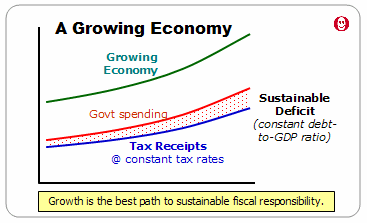
Grow or Die as Applied to a National Economy

Under current leadership, Europe and America are busy dyin'. Dynamic innovative attitudes and thinking have given way to a stagnant, steady state, dieoff.orgy bureaucratic liquidation of western civilisation. We are being crowded by our overlords into a tight, descending chute, forced down into an abattoir of stasis where civilisations go to die.
Grow or Die Applies to the Living and Business Worlds Also

"Grow or die," is a natural imperative. " ...all living systems are either growing or dying, there is no sustainable stasis...There is accretive, replicative and transformational growth." (Source) We can choose how we are to grow, but we cannot choose not to grow. Not if we want our civilisations and our bloodlines to survive.

Respected science fiction author Neal Stephenson laments the loss of innovativeness in modern American society:
This summer, at the age of 51—not even old—I watched on a flatscreen as the last Space Shuttle lifted off the pad. I have followed the dwindling of the space program with sadness, even bitterness. Where’s my donut-shaped space station? Where’s my ticket to Mars? Until recently, though, I have kept my feelings to myself. Space exploration has always had its detractors. _WorldPolicy


An Unusual Situation from The Farsight Group on Vimeo.

Matt Ridley laments the fact that even today's innovative optimists appear to be contaminated with an overlay of "culture noir," a subconscious acceptance of too much of the modern gospel of stasis. Small wonder that our shrinking number of modern innovators sometimes appear schizoid about progress, when they are so beseiged by the culture of defeat that surrounds them in academia and society.

Obama did not set American culture down this greased rail of pessimism and malaise, but he has accelerated the rate of despair and futility. In Obama's America, there is very little reason to push for growth, when the bureaucratic culture of stasis is standing by to penalise any such efforts. Electing such a person once can be written off to frustrated desperation. Re-electing such a person is a certain sign of the impending death of the society as a going concern.

We are living on a finite Earth, which is floating in an infinite universe. The Earth is our cradle, the universe is our rightful home. Until humans shake off the infantile desire to remain in a comfortable sustainable cradle until it becomes a sustainable grave, stasis will have the upper hand.

But that mainly applies to the part of human civilisation that remains under the guidance of the mainstream, bureaucratic governments of steady state stasis. For those who choose to step outside the mainstream and make their own plans for the future, more positive choices can be made.

Labels: , ,

Bookmark and Share

21 September 2011

Talpiot: Seizing the Day

The applicant pool consists of nearly ten thousand top scorers of a test taken by all graduating high school seniors. 150-200 potential applicants are then subjected to a two-day series of tests.[1] These include further IQ exams as well as group-tasks designed to test one's social dynamics, all conducted under the supervision of trained psychologists and military personnel. For example, teams of applicants are given a specific task then the instructions are changed while the test is in progress, such as shortening the alloted time or changing the assigned tasks.[1] Final applicants appear before a panel of professors, military leaders, and other examiners where they are asked questions such as to explain the theory of relativity or mechanisms of solar heating.[1] Final acceptance into the program entails a high security clearance rating, given by the Air Force. _Talpiot (wikipedia)
Talpiot is a program for bringing the best of the best of Israeli youth together into an intensive mental, physical, and military training regimen. 5,000 youth apply every year, and 50 are accepted. Out of those 50, only 40 will complete the training, and be commissioned as lieutenants in the IDF. They spend 9 years total, including education, training, and military commitment.
Those who survive go on to careers as officers in some of the military's most prestigious operations, mostly in research and development projects, Schlachet said. From there, the 500-odd Talpiot grads have tended to find their way to the upper echelons of business and academia, he said.

"You learn self-confidence, not to be afraid of anything. No subject is too complex to go after, and no answer should be taken for granted," said Talpiot grad Gilad Almogy, 38, Applied Materials' top executive in Israel.

The Nasdaq-traded biotech company Compugen was formed by three of Almogy's Talpiot comrades. A fourth, Mor Amitai, now runs the company.

Amitai says some of the most complicated work he ever did was during his time in Talpiot. "The experience of sometimes succeeding, almost always as part of a team, involving something that really seemed impossible, I think this is something we took with us," he said. _USAToday_via_SteveHsu
Talpiot is run by the Israeli Defense Force with the aim of creating an elite officer corps which is capable of responding to any threat by the innovative use of the most advanced technologies -- or any tool within reach. If these elite soldiers later become leaders in business, technology, finance, and other vital areas of society, it should come as no surprise to anyone who is paying attention.

During the training, the youngsters are taught to flirt with insubordination (PDF). Rather than listen to their superiors, they are taught to find answers on their own. The aim is to create self-confident, self-sufficient self starters capable of innovative thinking on the fly, in the middle of a crisis that doesn't yield to SOPs and conventional operations.

Israel is a tiny country thriving in a hostile environment. The country is famous for scientific and technological innovation and achievement far beyond what its small population would lead one to expect. Part of the reason for this overachievement is the survival imperative. Part of the reason is the significant proportion of famously high IQ European Jews who provide much of the leadership for all segments of Israeli society. When you combine high IQ with the will to survive, you come up with programs such as Talpiot.

Israel can not afford to waste its most talented youth -- as western nations such as the US seem intent on doing. At least, Israel's military cannot afford to lose these tough and talented innovators. Not if the country is to survive.

While western nations are busy drowning in debt, demographic decline, political correctness, green dieoff.org-motivated energy starvation, cultural decay, and other methods of slow suicide, at least a few segments of some national governments still recognise the need to promote the best of human potential and ability.

Militaries are often the last bastion of competence in countries whose cultures are in decay. At least, militaries that have to work and maintain an acceptable level of competence. But militaries tend to settle into conventional thinking and lowest common denominator policies, like all bureaucracies and institutions. That is why it is important to feed a constant flow of brutally tested innovative thinking into the mix, and give it freedom to work.

The difference between the Talpiot approach and conventional academia could not be more stark. Academia is about status, tenure, and publishing as much crap as possible. Talpiot is about sound, rapid innovation to get good results. The Talpiot must start with the best of the best, and winnow the field from there. No affirmative action. No social promotion. No special preferences for "disadvantaged groups." Just unrelenting tests for competence, ability, and ingenious thinking.

In other words, these cadets are not only smart, but they also have to be good. And they especially must have grit -- character.

Obviously this system will not work for the average youth. Even most above-average students would fall by the wayside in a rigorous program such as Talpiot. But the concepts involved in the program are key to revitalising western education. No nonsense. No grade inflation. No social promotion. No affirmative action. Focus on results, competence, and character.

Getting from here to there, however, will require a bit of demolition and reconstruction. Such an overhaul is not possible on a national level, but could be done locally, under careful leadership.

More on Talpiot via Steve Hsu

Labels: , , , , ,

Bookmark and Share

23 April 2011

A 60,000 Year Explosion of Invention?

IQ Map of World

Most readers of this blog have heard of the "10,000 Year Explosion" by Harpending and Cochrane, which convincingly describes how evolution can quickly work to change an insular breeding population of humans. Something similar -- the evolution of invention -- may have taken place on a global scale, after early humans moved out of Africa sometime over 60,000 years ago.

Before relatively recent contact with outside cultures, Subsaharan Africans did not invent the wheel, did not invent writing, developed minimal art, or agriculture, lacked musical instruments beyond simple percussion, and came up virtually empty in terms of math, science, and technology. Why the almost complete absence of invention and development?

The map of world IQ at top provides a tentative answer to the question, but the map raises a more central question: Why do SubSaharan African populations test so low, on average, on tests of IQ, executive function, and impulse control? Is it possible that a significant part of the development of the human "superbrain" -- which makes invention and modern advanced civilisation possible -- developed only after humans left the African birthplace?
The dispersal of modern humans from Africa to Europe [60,000 some] years ago provides a “minimum date” for the development of language, Hoffecker speculated. “Since all languages have basically the same structure, it is inconceivable to me that they could have evolved independently at different times and places.”

A 2007 study led by Hoffecker and colleagues at the Russian Academy of Sciences pinpointed the earliest evidence of modern humans in Europe dating back 45,000 years ago. Located on the Don River 250 miles south of Moscow, the multiple sites, collectively known as Kostenki, also yielded ancient bone and ivory needles complete with eyelets, showing the inhabitants tailored furs to survive the harsh winters.

The team also discovered a carved piece of mammoth ivory that appears to be the head of a small figurine dating to more than 40,000 years ago. “If that turns out to be the case, it would be the oldest piece of figurative art ever discovered,” said Hoffecker, whose research at Kostenki is funded in part by the National Science Foundation.

The finds from Kostenki illustrate the impact of the creative mind of modern humans as they spread out of Africa into places that were sometimes cold and lean in resources, Hoffecker said. “Fresh from the tropics, they adapted to ice age environments in the central plain of Russia through creative innovations in technology.”

Ancient musical instruments and figurative art discovered in caves in France and Germany date to before 30,000 years ago, he said. “Humans have the ability to imagine something in the brain that doesn’t exist and then create it,” he said. “Whether it’s a hand axe, a flute or a Chevrolet, humans are continually recombining bits of information into novel forms, and the variations are potentially infinite.” _SB
The absence of sophisticated invention or innovation prior to the human diaspora out of Africa, or in SubSaharan Africa since that diaspora, suggests a potentially deep distinction in the way that humans inside SS Africa think in comparison to how Eurasian humans learned to think.

It would be good to be able to research this puzzle, but unfortunately, the straitjacket of Political Correctness prevents the raising of such questions -- even for purposes of objective scientific research. Which means that those of us who are curious will have to conduct our investigations under the table, so to speak.

Is that not always how it is, when intelligent and curious humans are faced with oppressive and authoritarian culture-reichs, such as the modern quasi-left postmodern PC culture?

More: Some links to websites listing some ancient inventions:

Ancient Inventions

Inventions of Ancient China

Top 10 Ancient Inventions

Adapted from an earlier article at abu al-fin

Labels: , , ,

Bookmark and Share

02 July 2009

Why Asians Can't Think (Outside the Box)

The higher average intelligence of East Asians compared to Europeans is well documented. The question is: why do East Asians -- despite their intelligence -- lag behind Europeans in measures of creativity, particularly over the past millenium?

Dennis Mangan recently looked at differences between thought styles of Asians and Europeans in this posting. Satoshi Kanazawa of the London School of Economics and Political Science provides the grist for discussion:
The first four Euro-American nations are overrepresented among the Nobel laureates by a factor of 5 to 10; Switzerland is overrepresented by a factor of 28! In sharp contrast, all Asian nations are underrepresented among the Nobel laureates. Japan, for example, has been a major geopolitical and economic power for most of the 20th century (Small and Singer, 1982). Yet it has produced only 12 Nobel laureates, the same number as Austria, which has one-sixteenth of Japan's population.

This problem has long been known to East Asian specialists as the "creativity problem" (Eberts and Eberts, 1995, pp. 123-127; Taylor, 1983, pp. 92-123; van Wolferen, 1989, pp. 89-90). Some argue that the ideographic Asian languages curb abstract thinking and creativity among Asians (Hannas, 2003).....Whatever the reason, it is evident from Table 1 that some combinations of cultural, social, and institutional factors combine to stifle basic science in Asia.
_Kanazawa (PDF)
A similar story is told in Charles Murray's classic compilation "Human Accomplishment." While Murray went to great lengths to include as strong an Asian componentas possible in the history of human accomplishment, the cumulative list of Asian accomplishments up to the present fell short.
Q. You pay a surprising amount of attention to Asian culture. Does that stem from the six years you lived in Asia beginning as a Peace Corps volunteer?

A. Put it this way: There are aspects of Asian culture as it is lived that I still prefer to Western culture, 30 years after I last lived in Thailand. Two of my children are half-Asian. Apart from those personal aspects, I have always thought that the Chinese and Japanese civilizations had elements that represented the apex of human accomplishment in certain domains.

When I began the book, I actually hoped to give Asian accomplishment a still larger place than it wound up getting.

Q. Why did you end up with mostly Dead White European Males in your inventory of 4,002 significant figures?

A. That's what happens when you employ the methods I used. And as I spend many pages in the book describing in perhaps excessive detail, those methods are not skewed by Western sources that are unfairly oblivious to non-Western accomplishment. _Charles Murray Interview
So, how does one explain the lagging of East Asians behind Europeans in the creativity race? La Griffe du Lion suggests that East Asians have such high visuospatial ability, that their overall IQ score is lifted higher than all others except for Ashkenazi Jews. But while visuospatial / mathematical ability is quite important in many fields of hard science, mathematics, and engineering / technology, deep creativity and radical innovation appear to spring from yet other parts of the cognitive neural assemblage beyond mere visuospatial ability.
Part of the reason why Asians cannot think for themselves and make original and creative contributions to science is because they are too conformist. One of the factors that Miller identifies as a possible obstacle to the Asian future of evolutionary psychology ("academic conservatism") is actually fatal. Scientific revolutions happen by challenging the established paradigms. No conformists have ever brought about a scientific revolution. _Kanazawa PDF
A conformist culture will certainly lend toward an anti-innovative conservatism, which can leave life-long imprints in the brain of a growing child. On the other hand, culture does not spring out of nothing. Culture is strongly influenced by the genetic complement of a population. For example, communist totalitarian conformity was forced onto several nations of Eastern Europe at roughly the same time that China was forced into communism by the victory of Mao's PLA. But communism did not last in most of the European populations, whereas in China the CCP is still the locus of one-party rule.

Long ago, inventors in China devised gunpowder, printing, paper money, the magnetic compass, and probably other wonders now lost to history. But even millenia ago, entrenched Chinese conservatism prevented the constructive uses of most of these inventions. It was left to Europeans to expand and innovate on these ancient inventions around the time of the "renaissance." Has there been a fatal "lack of curiousity" in Chinese culture?
This lack of curiosity extended into science. While ancient China was in many ways more technologically advanced than ancient Greece, knowledge for its own sake was never valued. The ancient Greeks in contrast wrote and debated tirelessly about abstract ideas that had no connection to the real world. _HBDBooks
Similarly, Hindu mathematicians devised advanced arithmetic notation and algebraic logic, as well as other advanced mathematical concepts for the times. These ideas moved along routes of trade and conquest to Islamic centers of thought in Persia, Iraq, Egypt, Syria, Andalusia ... where the Hindu ideas were combined with ideas from ancient Greek mathematics, and a synthesis of sorts was created. But it was left to Europeans to take the Hindu - Islamic - Greek synthesis along with rediscovered Greek ideas, and turn them into the modern mathematics upon which modern technology is based.

East Asian scientists and technologists certainly have the brilliance to maintain and advance the modern technologies that Europeans are bequeathing to them. The question remains: what will be the pattern of advance? Will we see a plodding, step by step elaboration and revising of science and technology centered on current fields of study, from the new "Asian renaissance?" Or will we see the sort of radical creation of entirely new foci of science and technology of the sort we have become accustomed to over the past few centuries, from European inventors and researchers?

There is much to be learned about the cultural -- and genetic -- reasons why different populations seen to have different habits of thought. Rather than shying away from such research as somehow "racist" or "not PC", we should get busy understanding all aspects of this universe we live in.

Labels: , , , ,

Bookmark and Share

26 November 2008

Portrait of a Male Mind

The male mind is oriented outward, toward problems in the larger world. Other than perhaps Ray Kurzweil, there is no more prominent example of the problem-solving nature of the male mind than inventor Dean Kamen. Esquire presents an engaging portrait of the inventor and what his male mind is focusing on currently.
... there's nothing so soothing as cutting a piece of steel when it's late and you can't sleep because you're trying to work out some problem in your head. Because machines are more than machines, they're a road map to the people who built them. They tell you what kind of problems they had and what they wanted. Just as Kamen's inventions are his own autobiography in steel -- every one designed to cheat gravity, to declare independence, to make every man the king of his own empire.

He leads the way to the cupola at the top and watches the sunset, chattering happily. This is why he never got married or had children. He loves being away from everywhere, completely alone. He can watch planes land at the airport. He can watch the weather change. And it doesn't bother him that he usually comes home at nine or ten and drops into bed exhausted. It's like the private island he rarely visits, the girlfriend he rarely sees, the vacations he never takes. It's the idea that counts. Just knowing he has it is enough. Anyway, what should he stop doing? FIRST? Water? Power? Medical equipment? "I can't stop," he says. "As a practical matter, I can't put the world on hold."

He really can't. There's just too much he wants to do. When he proved that FIRST worked, he was sure it would be in every school in the country the next year. Same with the Segway. It's 100 percent more efficient than cars, those metal boxes designed for the open road when 50 percent of the people alive live in cities. It's just stupid. It's lunacy. And someday, the Slingshot will go into production, too. And one of the kids from FIRST will win the Nobel prize or cure cancer. But it takes time for an innovation to become a commodity. Because the Wright brothers flew a plane and it was a long time before frequent-flier miles. You have to be patient, give the world time to catch up.

For fun, he's starting to dream about something that flies. A new form of personal transportation. It will be, he says, Dumplonian. It will empower the individual.

Some kind of helicopter?

"Not a helicopter," he says, staring intently at the helicopter. "I've got a couple of ideas." He smiles, turning inward for a moment, lost in the vision of a new machine. _Esquire
When thinking about such inventor-spirits, only a few names come to mind after one remembers Edison, Bell, Marconi, Tesla, Carver, Burbank, Turing, von Neumann. But there are many lesser known inventors, and some destined to become legends. Besides Kamen and Kurzweil, there are Lonnie Johnson, John Kanzius, and a host of others in America alone.

Almost all of them are men. There have also been women inventors, since a woman's mind is as clever as a man's on average. Temple Grandin is an example, although being an autistic may place her mind closer to the male mode of thought. But historically, the female mind has focused upon issues close at hand, of more immediate practical or esthetic use. The male mind will typically cast farther afield for ideas, connections, and implications--and into the more distant past and future.

So even now, in a time when feminists have sacked the university and made the public sphere virtually uninhabitable in many ways for men who are themselves, or who dare to speak their minds--now is as good a time as any to celebrate the world transforming potential of the male mind.


H/T Kurzweilai.net

Labels: , ,

Bookmark and Share

10 May 2008

Drivable Airplane: Carl Dietrich's Terrafugia

Carl Dietrich's company Terrafugia has come a long way since the last time Al Fin took a look at the "flying car" project.
Between now and late July, the 10 employees of angel-funded startup Terrafugia will be spending “a lot of long days, nights, and weekends” in that shop, says CEO and founder Carl Dietrich. That’s because they want to show off their concept vehicle at AirVenture—the world’s largest aviation festival, held annually in Oshkosh, WI—and there’s a lot of work to finish first.

...And the work won’t end after Oshkosh. Terrafugia wants to deliver the first Transition to a customer by the end of 2009 and go into large-scale production by 2012. If you were just building a new type of plane or a new type of car, that schedule would be ambitious enough. But the Transition is both—and if, as the company intends, pilots are to land the vehicle on an airport runway, fold up the wings, and tool right out onto public highways, then this hybrid-of-a-different-color will have to meet federal standards for both aviation safety and highway safety.

...In other words, there are a thousand practical obstacles to achieving the flying-car dreams Deitrich says he’s had since he decided to become an aerospace engineer at the age of 8—-to say nothing of actually making a bit of money along the way. “The old joke is that the best way to make a small fortune in aviation is to start with a large one,” says Dietrich. But while he admits that building a plane that you can also drive “sounds off the wall,” he says “there is a real business case for investing in its success. I’m personally invested, as are a lot of the people here. I don’t see any way we’re not going to get this done.”

Terrafugia CEO Carl DietrichThere’s plenty of reason to take Dietrich seriously. The 30-year-old earned his bachelor’s, master’s, and doctoral degrees in aeronautics and astronautics from MIT, and was awarded the $30,000 Lemelson-MIT Student Prize in 2006 in recognition of his groundbreaking designs, including a desktop-sized fusion reactor, a pumpless rocket engine, and a blast-safe pick for removing land mines. Dietrich put the prize money into Terrafugia, which he co-founded with fellow MIT aero-astro grads Samuel Schweighart and Anna Mracek (now his wife) and two former MBA students from MIT’s Sloan School. Their plan to manufacture a road-ready airplane was the runner-up in the business venture category of the 2006 MIT $100K Entrepreneurship Competition—winning the company a $10,000 check that still hangs on the wall of Terrafugia’s “prototype development facility,” a modest space formerly used to manufacture garage doors. __Much more at Xconomy
Dietrich and company have chosen a very tough business--the flying airplane/drivable car combination. A lot of people have spend many decades of their lives pursuing the same quest, only to find themselves unable to deliver on the promise.

Dietrich hopes to take advantage of 2004 FAA rule changes that created a new category of small aircraft called the "special light sport aircraft (S-LSA)."
In a nutshell, if a company can manufacture a plane that weighs less than 1,320 pounds, carries no more than two people, and flies no faster than 138 miles per hour, it can get the craft qualified as an S-LSA, meaning that owners need only a sport pilot certificate to fly it. Getting a sport pilot certificate involves only about half as much flight training as qualifying for private pilot certificate, the license previously required for most general aviation flyers.

...The nifty thing about the Transition, of course, is that it’s designed to change from a plane into an automobile in about thirty seconds—meaning pilots will be able to drive right off the tarmac and onto the roadway without even having to get out. (The half-hour process of manually refitting the Aerocar for roadway driving was part of what killed Moulton Taylor’s dream, according to Dietrich.) At the flip of a switch, the Transition’s wings will fold up and the license plates will rotate into view. The vehicle’s engine, manufactured by Rotax, has a continuously variable transmission and a dual shaft that can power either the rear propeller during flight or a pair of front wheels on the road (top speed: 80 miles per hour).

...The idea of a flying car that could lift drivers out of traffic jams will probably remain a standing joke—a monument to an antique brand of technological enthusiasm. But a drivable airplane is a different proposition. And it’s probably safe to say that Terrafugia has assembled more brainpower, and more MIT degrees, around that proposition than any previous organization. “I think this is a fantastic opportunity—not just from a business perspective and a career perspective, but to work on something where we could make history,” says Dietrich. “I wouldn’t want to be doing anything else.”
The customers are there, the expertise in design and manufacturing are there. The investment funding is there and more is on the way. The largest barrier that Dietrich and Terrafugia face is the federal government, and its army of bureaucrats armed with truckloads of bureaucratic regulations. Only the stoutest hearts would brave such a battle.

When you look at how few there are who are willing to take up such challenges--in comparison to the many who forsake challenge in favour of security--you may begin to understand what 2 or 3 generations of dumbed down government schools and popular culture have done to the population base of North America. When you add the burden of university faculties who too often inculcate students into a brain-bound political correctness--rather than initiating them into the marvel of human initiative, drive, creation, and productivity--you understand more of the comprehensive nature of the problem. It is not just big bureaucracies, malignant litigation, and high taxes that drag North American initiative and economies down. It is the whole drone-creating system that has enmeshed entire generations.

Carl Dietrich is fortunately one of those--like Burt Rutan, Dean Kamen, Ray Kurzweil, and a few others--who is putting his own ingenuity and initiative up against the smothering effect of big bureaucracy. Good luck to Dietrich and company!

H/T Peswiki

Labels: , , ,

Bookmark and Share

15 April 2008

Dying of Leukemia, With No Scientific Credentials, John Kanzius Invents an Exciting New Approach to Treating Cancer

CBS show 60 Minutes profiled John Kanzius--retired broadcast executive, dying leukemia patient, and self-taught inventor. Kanzius has invented a new approach to cancer therapy. In his Florida garage, he has spent hundreds of thousands of dollars of his own money, to improve his focused RF thermal therapy for cancer.

In collaboration with surgical oncologist Steven Curley at MD Anderson Medical Center in Texas, Kanzius has worked against time--his own slow losing battle with leukemia--to develop a safe and effective therapy that could start saving lives.Kanzius suspected that nano-particles of metal might work particularly well for receiving the heat from the RF energy, and heating tumours. So oncologist Curley contacted nanotechnolgist Richard Smalley--Nobel Prize winning discoverer of the buckyball--to request a vial of Smalley's nanoparticles to test Kanzius' theory in mice. Although Smalley was highly skeptical of Kanzius' intuition--he said the idea "wouldn't work"--Curley and Kanzius proceeded to test Smalley's nanoparticles in the mice. The RF + nanoparticle approach worked brilliantly.

So we have yet another example where experts are proven wrong by amateur scientists and inventors!
Richard Smalley initially thought that the radiowave to heat up metal nanoparticle technique to cook cancer tumors would not work. Richard's scientific intuition was that this would completely fail. He was converted into being a believer when proven wrong with successful experimentation. __NextBigFuture
And sadly, Richard Smalley himself died of lymphoma not long after changing his mind about Kanzius RF cancer tx.

Kanzius himself expects no personal benefit to ever come to him from his hard work and years of toil on RF thermal cancer therapy. But he hopes to live long enough to see the first patient successfully treated by his device.
But if this one does work, it most likely won't be developed in time to help the man who invented it. John Kanzius may have the option of a bone marrow transplant that could buy him more time, but after six years of chemo it would be another grueling ordeal.

"Did you ever say, 'I’m not going to do this anymore. I’m not going to put myself through it,'?" Stahl asked.

"Yes. I said that-only about a year and a half ago," Kanzius replied. "I changed my mind because I think with all the research that’s going on with the institutions, that maybe, I'd like to be around for the first patient to get treated and just have a smile."

"Oh my God," Stahl said.

"And then I don't care anymore," Kanzius replied. __60Minutes


CBS News web story on Kanzius

Labels: ,

Bookmark and Share

03 February 2008

Designing the All-Purpose Vehicle: Basics

Russian designer-inventor Alexander Begak recently presented his invention dubbed "Evolution" to the Russian MAKS-2007 air show. As pictured above, the craft could obviously neither fly nor travel on water. Rather, the photo only shows the basic "core craft."

The pictured craft merely provides forward thrust, a protected cockpit, and a land-gear wheel system. To add flight capability, one would need to add lift--in this case fixed wings, as in standard ultra-light aircraft.

To add boating capability, one would have to provide buoyancy--inflatable pontoons/hull, solid pontoons/hull, and/or hydrofoils.

When websites and newspapers feature articles such as this or this, without the writers questioning how the vehicle could either fly or float, they illustrate the "dumbing down" of media--both old and new.

Yet, as a "core vehicle" for adding-on functional components, the pictured vehicle is both stylish and potentially workable. As it is, it could travel over relatively smooth highways and ground. With wings, it could fly as an ultralight, and with floatation it would work well as an "airboat." As a "mainstream" ground vehicle, it could not be licensed due to dangerous propeller effects. But as a backwoods/outback vehicle, it would serve well--as long as the multi-functional accessory modules were "packable." (the ground gear suspension would need improvement)

A more functional all-purpose vehicle that could be licensed for onroad travel, would have to have a different drive system--which adds weight and complexity to the vehicle, making it more expensive and subject to breakdowns. Modular add-ons--for floatation, buoyancy, etc--also add weight and time-consuming "switch-overs".

Much more ideal, is the concept of a "lifting body" craft with built-in extensible wings. The lifting body could double as a boat hull, with extensible keel and/or hydrofoils. The best way to provide thrust for flying, boating, and ground travel, while meeting safety and reliability requirements, weight limitations, and licensing requirements, is the main problem.

Throw in submarining capability, and the problem appears insurmountable. But, wait! We have not taken into account advances from nanotech in high-strength, lightweight materials. Or advanced materials turbine design. An ultralightweight, ultrastrong, but buoyant-in-water material, would be an important development. Other developments certain to come in the next decade or so, should change the outlook completely, and for the better.
H/T Keelynet

Labels: ,

Bookmark and Share

08 August 2007

Where Was This Stethoscope When I Was In Medical School?

Israeli researchers have devised a non-invasive method of lung imaging called Vibration Response Imaging (VRI).
Kushnir has developed a new technology called Vibration Response Imaging (VRI) that measures energy generated in the lungs and analyzes it to diagnose conditions such as asthma, pneumonia, and lung tumors. On July 23, the U.S. Food and Drug Administration granted Kushnir's Israeli startup company, Deep Breeze Ltd., approval to begin marketing a VRI device in the U.S. This comes on the heels of earlier approvals in Israel, the European Union, and South Korea.

...Kushnir's process, which uses no radiation, works by analyzing acoustic vibrations given off by the lungs. As a patient breathes normally for several seconds, sensors placed on the back—in effect, electronic stethoscopes—pick up these lung vibrations and feed them to a computer, where they're processed and turned into vivid images. Conditions such as asthma, emphysema, and pneumonia each produce distinct and definable images.

"In a matter of mere seconds, a doctor using the technology can ascertain an enormous amount of information about the lung that would ordinarily take hours and require the use of several devices," says Kushnir.
Source

This is but one more small step toward Dr. McCoy's hand held total body scanner wand, from Star Trek.

Non-invasive scanning technology has completely changed the practise of emergency medicine over the past two decades. More and more of the guesswork is being taken out of diagnosing possible life or death emergencies. Better monitoring of patients in the OR and ICU is now possible, thanks to improved transducer technologies.

Should we make a big deal from the fact that this is yet one more in a long line of intriguing inventions from Israel? I am inclined to say "yes, we should." The fact that these inventions are coming from Israel and not Saudi Arabia, Iran, Venezuela, North Korea, Zimbabwe, Cuba, and other autocratic dictatorships and theocracies should give anyone who defends those hellholes (while attacking Israel) pause.

A number of western leftists and muslims would like to turn Canada, Australia, New Zealand, and the US into copycat versions of one of that list of prison-nations. It is probably too late for all but the youngest of them to wake up and face reality, but the rest of us can choose for ourselves.

Labels: ,

Bookmark and Share

19 April 2007

Printed Circuits--No, Really!--PRINTED Circuits

This is just one early step in allowing home circuit designers to create their own circuit prototypes at home, using only a printer.
Bidoki loaded two separate chambers in the printer's cartridge, which normally contain different ink, with the metal solution and the reducing agent. Using silver nitrate solution as the "metal ink" and ascorbic acid (vitamin C) as the reducing agent proved the most successful combination.

He then programmed the printer to produce a variety of circuits and radio antennas on different surfaces including paper, cotton and acetate, all of which were placed in the printer like a normal sheet of paper.

"One test involved patterning an antenna like that used in a mobile phone on transparent film," says Clark. "It was possible to bend it almost in half without any loss of conductivity."

After a circuit is printed using silver nitrate, vitamin C is overlaid a few minutes later. Water can then be used to wash away other products, leaving the silver behind. Scanning electron microscope images reveal a rough surface of silver nanoparticles.
Source

Being able to "rapid prototype" a design is very useful for home and "garage" designers and inventors. Many other research teams are working on ways to print and spray on many things, including video displays and many other 3-D things.

Such fabricating tools are giving inventors more personal power to test their creations--just as computer software tools allow music and video creators to edit and polish their work. The enabling of writers by computer software and printers to improve their work is so commonplace that it is completely taken for granted.

Labels:

Bookmark and Share

30 March 2007

Visionaries, Inventors, Engineers, and the People Who Actually Get Things Done

Nanotechnology theorist and visionary Eric Drexler has played a vital part in bringing the promise and danger of molecular assembly to the public's attention. But he has never actually built a molecular assembler. This is the nature of today's important advances in "nanotechnology:"
A new high-resolution positioning & scanning system providing 25 picometers resolution is available.
The minute P-363 PicoCubeÆ, together with its low noise E-536 driver / controller, provide significantly higher resolution and positional stability than previous multi-axis scanning stages.

How Do PicoCubeÆ Scanners Differ from Traditional Scanner Tubes?
PicoCube systems were designed to overcome the limitations of open-loop piezo-tube based scanners which provide high resolution motion but poor linearity and trajectory guidance.
The compact PicoCube is based on exceptionally robust, high-stiffness piezo drives rather than tubes and employs non-contact, direct-measuring, parallel-metrology capacitive sensors for position feedback. The low-inertia drives allow for a resonant frequency of 10 kHz, important for high speed scanning applications
Source

Such devices are useful for atomic force microscopy and nano-manipulation. Of course, such devices are nothing like a molecular assembler, and can certainly not make copies of themselves. Nevertheless, they are useful in the slow and incremental study of molecular/atomic scale forces and structures. They are designed by engineers, and manufactured by machines and human assemblers.

Drexler's books help to stimulate the imaginations of the people who will actually make the breakthroughs leading to molecular assembly. Drexler is a visionary.

Dean Kamen and Ray Kurzweil function as both visionaries and inventors. They conceive new ideas, and work with their teams to actually develop working devices and machines. Of course, all successful modern inventors work with teams of engineers, craftsmen, attorneys, accountants, financiers, and other vital members of a modern enterprise.

Steve Wozniak served as visionary, inventor, and engineer. But Steve Jobs provided other useful skills that helped the company get off the ground. Other less well known members of the team likewise played vital roles.

In every research lab there are technicians and craftsmen who fabricate tools, software, and equipment that are necessary for testing ideas, and for refining ideas that show promise. Visionaries and inventors cannot do without them.

In reality, visionaries are a dime a dozen. Anyone can think of ideas, as long as the ideas do not have to work or be important. It is the visionaries who think of important ideas that could actually work, who are in demand--or they should be. Positioning is also important, as is who they know and how well they can stick to their purpose. Because a good visionary needs a good team, if anything is ever going to get done.

One of the major problems with a society improving itself, is the setting of priorities in the financing of innovations. In a socialist society, priority-setting occurs at fairly high levels in government committees, and nationalised industries. That is why nations such as North Korea, Cuba, Zimbabwe, and Venezuela see little if any innovation. China saw very little innovation while the Communist Party held its rigid grip on economic planning and enterprise. Russia's neo-nationalisation of oil, gas, and other profitable industries is certain to reduce innovation in that unfortunate country. Theocracies such as Iran demonstrate the same lack of innovation as socialist and other centrally controlled societies.

The more free-wheeling a society's economy, the more innovation that will be seen from the bottom up. It is no accident that revolutionary scale innovations in western nations are more rare, as the nations' economies grow more centralised.

But revolutionary innovations are what prevents economic stagnation. The evolution toward nanny states and greater nationalisation and centralisation of enterprise and innovation suggests that stagnation is coming. Certainly if a person is cared for from the cradle to the grave, regardless of his productive contribution to society, the incentive of that person to innovate will be reduced.

Many idle visionaries dream of a society where machines do all the work, and well-entitled humans sit around composing music, poetry, or producing great art. It may happen that the humans will be well cared for materially, but it is unlikely that most such persons would bother creating anything meaningful. What would be the point? More likely such persons would crave entertainment, amusement, and all manner of pleasure. If most people do not have to work at anything, they will not.

There are ways of educating children to actually want to create, innovate, and produce remarkable things. Those are not ways that most children are educated--and there is no conceivable way that today's education system could evolve into the other educational methods I allude to.

Sadly, today's education creates psychological neotenates--grown children with no experience of meaningful life responsibility or practical skills. University faculties are populated by psychological neotenates, as are civil service jobs, welfare roles, and prison cells.

Labels: , , , , ,

Bookmark and Share

25 December 2006

Homes from Dirt; Energy from Dung; Clean Water from Piss

Yes, it is true. It is possible to provide solid shelter, clean water, and reliable electricity from dirt, dung, and piss. Can you think of many places that significant numbers of humans live where there is not ample supply of all three?

Dean Kamen--successful college dropout, inventor extraordinaire--provides the means to make energy from dung or other bio-combustibles, and pure water from piss--or any impure water source. The ingenious devices that provide clean water and plentiful energy can be mass produced cheaply, and transported anywhere.

Houses from dirt are rather easily made using small portable machines to compress earthen brick. I made many such bricks of earth in helping to build such a house in the mountains of the western US. It is a house I would not mind living in myself.

The missing ingredient is food--but where there are clean water and plentiful energy, it is quite possible to grow food.

Wealthy inventor Dean Kamen does not hesitate to drink his own urine(!)--once it has passed through his patented "Slingshot" purification system. He does this in front of audiences to convince them that it is possible to do away with water-born illness around the globe. Would George Bush or Nancy Pelosi drink their own urine to help make the world a better place? Interesting question.

There should be no shortage of clean water, no homeless people, no one without electricity, no one without food. The only real shortages existing are shortages of intelligence, ingenuity, cooperation, and tolerance for other religions and ideologies. Dean Kamen has provided the ingenuity for plentiful freshwater and energy--no matter how remote the village. Ingenuity for building solid earthen homes is within the grasp of almost anyone--even a social science professor or journalist.

Labels: , , ,

Bookmark and Share

04 December 2006

Thinking, Feeling Machines--Clean Your House, and More

Modern household robots might be able to vacuum your carpet, but can they pick up empty pizza cartons and assemble your Ikea furniture? Soon they may be able to.
Modern microelectronic technology can work at amazing speeds and store increasingly unbelievable quantities of data. But modern digital computers lack "common sense", and emotion based gut feelings and intuition.

Computer Science pioneer Marvin Minsky has some ideas on how one might insert emotions into computers, to enhance their range of abilities.

Q So here you are, a pioneer of artificial intelligence, writing a book about emotions. What's going on?

A Somehow, most theories of how the mind works have gotten confused by trying to divide the mind in a simple way.

My view is that the reason we're so good at things is not that we have the best way but because we have so many ways, so when any one of them fails, you can switch to another way of thinking. So instead of thinking of the mind as basically a rational process which is distorted by emotion, or colored and made more exciting by emotion -- that's the conventional view -- emotions themselves are different ways to think. Being angry is a very useful way to solve problems, for instance, by intimidating an opponent or getting rid of people who bother you.

The theme of the book is really resourcefulness and why are people so much better at controlling the world than animals are? The argument is: because they have far more different ways to think than any competitor.

Q What, then, is the most important thing for us to understand about our own thinking?

A Your mind can work on several levels at once so, when you think about any particular subject, you also can think about the way you've been thinking -- and then use that experience to change yourself. Similarly, when you admire some teacher or leader, you can try to imitate their ways to think -- instead of just learning the things that they say.
Source.

Other luminaries of computer science and electronics also hold strong opinions on the possibility of creating a conscious machine. At a recent debate at MIT between Ray Kurzweil and David Gelertner, the audience was treated to two divergent viewpoints from two brilliant veterans of computer science and electronic invention.

"We'll have systems that have the suppleness of the human brain," Kurzweil said, adding that to contemplate how those machines will be developed, it's important to accept that current software and computing power aren't up to the task and that technological advances are necessary first. So, it's important to look out 20 or so years.

Humans will recognize the intelligence of such machines because "the machines will be very clever and they'll get mad at us if we don't," he joked.

Gelernter smiled at that, but he also shook his head. He's not buying it because logically any machine that is programmed to mimic human feelings, which are an aspect of consciousness, is programmed to lie because a machine cannot feel what a human feels. That's the case even if the machine seems to be able to "think" like a human.

"It's clear that you don't just think with your brain," he said. "You think with your body."

Kurzweil noted that recently a computer simulated protein folding, which is something that was believed to be impossible for a machine to do, suggesting that it's difficult to predict what machines will be capable of doing. Gelernter had an answer for that, too -- that's all that happened, just the simulation of the folding, the process stopped there.

"You can simulate a rainstorm and nobody gets wet," he said to use another example.


I understand both points of view, but I suspect that within 20 years, machines will be able to emulate emotions quite well, and not have to "lie" to do it.

It is when the discussion turns to unmanned combat vehicles that many people start to become wary of computers and robots. Nevertheless, research on development of unmanned combat robots, and unmanned aerial combat vehicles (UCAV) is proceeding apace.

Qinetiq says the architecture under development is intended to allow for the control of multiple, self-organising UAVs or UCAVs by a single operator.

The approach is intended to facilitate human in the loop involvement in critical mission phases, such as a ground strike by multiple UCAVs in a combat environment. In a civil scenario, that critical human operator role could potentially involve the positive identification and recovery of a survivor in a search and rescue operation carried out by multiple UAVs controlled from a helicopter.

Proving the ability to distribute decision making between the operator and the individual air vehicles to reduce workloads is a key focus of the research programme.


The human-machine interface would be critical in such a cooperative effort, as would the autonomous software built into the unmanned vehicles.

The advantages humans have over machines at this point, derive from the massively parallel architecture of the human brain, from intuitive and emotional thinking processes, and from the mind-body integration that has evolved over billions of years. Human scientists and inventors are busy attempting to negate those advantages, so that machines can do as much as and more than humans--only faster, more tirelessly, and with more precision.

Personally, I am in favour of giving humans more advantages--such as even greater intelligence, more physical strength and speed, and longer lives so as to gain more wisdom from greater experience.

Labels: , ,

Bookmark and Share

06 August 2006

99% of Earth's Mass is Hotter than Hell--Global Warming from the Inside Out

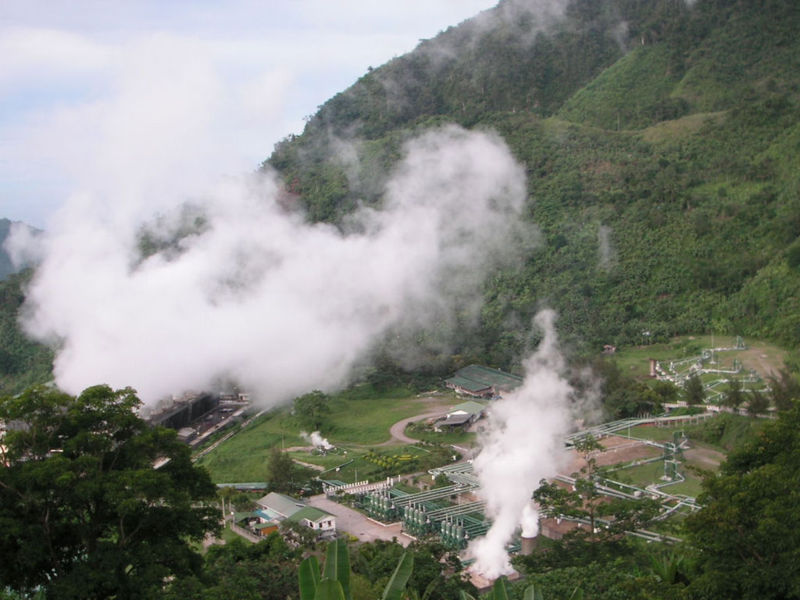
Yes, you read that correctly, and it has nothing at all to do with climate change or mainstream ideas of global warming. The massive heat is coming from the interior of the earth. To follow up on an earlier Al Fin article on geothermal energy, this report from Engineer Live gives further information:

Roughly 99 per cent of the Earth’s mass is hotter than 1800 E C and, about three miles down, the temperature reaches several hundred degrees. The optimum way of accessing this energy at the moment is Hot Dry Rock (HDR) or Hot Fractured Rock (HFR) technology. These are referred to as Enhanced Geothermal Systems (EGS) because they go beyond the drilling of a simple well.

The HDR system comprises at least two depth drillings and one subterranean heat exchanger. The heat exchanger consists of natural joints in plutonite rock which are fractured and connected to each other with the help of water pressure, known as hydraulic simulation.

This enables the exploration of the Earth’s interior heat outside known geothermal provinces. In contrast to a geothermal field in a volcanic or tectonic anomaly, an EGS depends on the artificial stimulation of otherwise tight formations by hydraulic fracturing to create an underground heat exchanger. Fluid is then circulated in a closed circuit.

It has been suggested that there could be sufficient energy to produce hundreds of megawatts of electricity per network and, at these depths, the technology enables geothermal power production virtually anywhere in the world. It is predicted that plants could work over a reservoir for 30 years without experiencing a significant drop in temperature. And this would be available 24 hours a day because it does not rely on variables such as tides, waves, wind or sun. But drilling is an expensive business.

....The United States continues to produce more geothermal electricity than any other country, comprising some 32 per cent of the world total. But this is being challenged, particularly in the Philippines and Indonesia. HDR technology is also expected to produce hundreds of megawatts in Australia.

....Increasing the efficiency of power generation is the subject of a Siemens Industrial Solutions and Services Group project, which plans a geothermal power plant based on the Kalina Cycle. This uses a binary working fluid of water and ammonia instead of water alone. In contrast to pure media with a constant boiling point such as water or pentane, this mixture boils across a larger temperature range at a given pressure.
Kalina Cycle power plants use less energy to heat the working fluid, allowing more of the energy to go directly to generating power and improving the cost effectiveness of the power plant.

The steam power plant now used to make electricity was invented 150 years ago by Scottish engineer William Rankine. It uses a heat source-coal, oil, natural gas, geothermal heat-to produce high-pressure steam that drives a turbine. The excess steam is condensed into water, which is then pumped back to a boiler. But, in a Rankine cycle, only about 35 to 40 per cent of the heat energy released ever becomes electricity, which means an excess depletion of heating resources.

Mixing the water with ammonia, which evaporates at lower temperatures, can raise efficiency at the heat stage of the cycle. But ammonia also condenses less readily, forcing engineers to use smaller turbines and lowering efficiency. Kalina’s invention solves that problem, using sophisticated thermodynamics to draw off most of the ammonia before the condensation stage. A Kalina cycle can boost efficiency by as much as 40 per cent.

....Geothermal power generation offers many benefits over other renewable sources of energy. It is constantly available and so is ideal for supplying base load requirements, where reliability of supply is paramount. Wells could be operational for 30 years or more before they cool too far, providing plenty of opportunity for recouping the initial investment.

And the technology of obtaining heat from hot dry rock formations can be applied virtually anywhere in the world. It can also draw on the experience of the oil industry in drilling very deep wells to access energy pools that are well below the earth’s surface.

Finally, even modest wells can produce megawatts of electricity, making the technology a very valuable contributor to society’s needs.
Source.
There is much more information about European efforts to exploit geothermal energy at the link above.

Geothermal heat is a massive store of energy, far more than humans can ever use--much like solar energy. Kalina cycle heat engines promise to increase efficiencies of heat energy by as much as 20% or more.

As I suggested here, heat is a fairly good method of storing solar energy. With better efficiencies from heat engines, heat is becoming an even more attractive form of storage.

Geothermal heat is not exactly solar energy, but it is energy from the formation of the solar system. All other "renewable energies" are secondary to solar, and not even close in magnitude. Only geothermal stands alongside solar as a virtually inexhaustible source of renewable energy, on time scales that humans can comprehend.

Hat tip, Keelynet.com.

Labels: , ,

Bookmark and Share

11 April 2006

Re-Inventing the Wheel? Not a Bad Idea


This alternative wheel design may not look special at first glance, but after viewing the short video, you may change your mind.

Airtrax is a lift truck company that has taken a Swedish invention from the 1970s and is turning it into an industrial product that may become indispensible to high end warehousing operations. The ability to move in virtually any direction on a two dimensional surface sets this mechanism apart from other wheels.

The wheel has a long and illustrious history. The tracked design seen on earth movers and military tanks is an innovation that allowed greater terrain flexibility.

It is not likely that wheel design has been exhausted, and yet one of the most common put-downs is to accuse someone of "re-inventing the wheel." So do not be afraid of pursuing something that most people see no need for. Most people saw no need for an AC induction motor, before Tesla invented one. Most people--let us face it--are pretty slow to catch on. There are still a lot of good things to be discovered, invented, created, and written.

Labels: ,

Bookmark and Share
Older Posts
Al Fin Main Page
Enter your Email


Powered by FeedBlitz
Google
WWW AL FIN

Powered by
Blogger

``