08 December 2006

This Isn't Working Out Part I

Modern societies treat their children as if they are incapable of bearing the least responsibility until they have finished at least twelve to sixteen years of schooling--sometimes up to twenty-five years of training or longer. This is a huge mistake that is bringing a destructive rot to society from the inside out.

Our official assumptions about the nature of modern childhood are dead wrong. Children allowed to take responsibility and given a serious part in the larger world are always superior to those merely permitted to play and be passive. At the age of twelve, Admiral Farragut got his first command. I was in fifth grade when I learned of this. Had Farragut gone to my school he would have been in seventh.
Source.

Have you ever wondered why there do not seem to be people like Benjamin Franklin around anymore?

At twelve he was bound apprentice to brother James, a printer. After a few years of that, and disliking his brother’s authority, he ran away first to New York and soon after to Philadelphia where he arrived broke at the age of seventeen. Finding work as a printer proved easy, and through his sociable nature and ready curiosity he made acquaintance with men of means. One of these induced Franklin to go to London where he found work as a compositor and once again brought himself to the attention of men of substance. A merchant brought him back to Philadelphia in his early twenties as what might today be called an administrative assistant or personal secretary. From this association, Franklin assembled means to set up his own printing house which published a newspaper, The Pennsylvania Gazette, to which he constantly contributed essays.

At twenty-six, he began to issue "Poor Richard’s Almanac," and for the next quarter century the Almanac spread his fame through the colonies and in Europe. He involved himself deeper and deeper in public affairs. He designed an Academy which was developed later into the University of Pennsylvania; he founded the American Philosophical Society as a crossroads of the sciences; he made serious researches into the nature of electricity and other scientific inquiries, carried on a large number of moneymaking activities; and involved himself heavily in politics. At the age of forty-two he was wealthy. The year was 1748.
Source.

Franklin was finished with formal schooling at age ten, and learned various trades working for his father and other relatives. He struck out on his own at a fairly early age, like most of his contemporaries, and made his own way.

You might object that there is a lot more to learn now than in Franklin's time, or even than your own grandfather's time. Surely in the complex modern world, children need to be sequestered in classrooms most of their first 18 to 25 years, before being allowed to take any responsibility?

Well-meaning parents and societies might want to provide a "worry-free" upbringing for their children. Make sure the child never has to "want for anything" in his early formative years. Bring them up like only the wealthy could afford to bring up children, before the last century. Except the wise wealthy never brought up children the way we are bringing up children. Only the insane would do that, knowingly.

Full literacy wasn’t unusual in the colonies or early republic; many schools wouldn’t admit students who didn’t know reading and counting because few schoolmasters were willing to waste time teaching what was so easy to learn. It was deemed a mark of depraved character if literacy hadn’t been attained by the matriculating student. Even the many charity schools operated by churches, towns, and philanthropic associations for the poor would have been flabbergasted at the great hue and cry raised today about difficulties teaching literacy.
Source.

Many college students today lack the reading skills that children in the early US possessed before they ever started school. Are children and college students today really that much stupider--or is the way they are treated today making them seem that way?

Labels:

Bookmark and Share

Android Actuators, Little by Little

As I mentioned in a previous post, the Nanotech Institute of the University of Texas at Dallas, has been working on solving the problem of "robot muscle"--strong and efficient linear actuators for androids and robots. Ray Baughman is the director of the Institute, and principal overseer of the robot muscle projects at UTD.

In Baughman's latest work, done in collaboration with John Madden at the University of British Columbia, the researchers made actuators out of carbon-nanotube yarns. The yarns are created by first growing densely packed nanotubes, each about 100 micrometers long. The carbon nanotubes are then gathered from a portion of this field and spun together into long, thin threads. The nanotube yarn can be just 2 percent of the width of a hair--not even visible--but upwards of a meter long. According to Baughman, spinning these threads was "like hauling in a fish with an invisible line." In his conference presentation, he described yarns that could support loads 150 times greater than nanotube papers could.


However, much work remains to be done in developing the materials. For one thing, as greater loads are applied to actuators, they can start to exhibit "creep"--that is, they do not completely return to their original state with successive cycles. Baughman says that before these actuators can be useful, creep must be eliminated. "Under load, the cycle is not reversible--you've got a little creep. In most actuator applications, you don't want any creep."

Another key issue is scaling up from thin individual threads. Although the carbon-nanotube muscles can outperform natural muscles on a per-area basis, exerting 100 times the force, natural muscles are much larger, making them stronger. This scale-up issue has been a challenge for artificial muscles in general, which is why they still can't beat human muscles in such functions as arm wrestling, Bar-Cohen says.
Source.

Strong and efficient self-contained linear actuators are one of the main obstacles to making a free moving, unplugged android. The balance problem has been as good as solved by engineers in Japan, and by technology developed by college dropout inventor Dean Kamen.

Rodney Brooks and other progressive roboticists and workers in machine intelligence have made progress in making "robot brains" produce behaviour that is more animal-like, and eventually human-like.

But androids need to be able to ambulate without pneumatic, hydraulic, or electrical cables attached. They should be able to work for several hours without being re-fueled--just as humans can go for several hours between meals. For androids to be able to move in a human-like fashion, they need linear actuators that work in an analogous manner to muscle. And even though the workers at UTD still have far to go to accomplish all that, they are making significant progress.

So tonight when you are gathered with your friends in the local pub, raise a glass to Ray Baughman and his group. They are helping to change the world.

Labels:

Bookmark and Share

07 December 2006

Dropping Out of School to Get Rich

A degree is no guarantee of competence or aptitude. Particularly these days, when political correctness and conformism are more important to teachers and professors than any valid understanding of the world. Here are some billionaires who dropped out to get rich:

Bill Gates
Larry Ellison
Steve Jobs
Michael Dell

Here are some wealthy and famous persons who dropped out of high school:

Jim Clark, Internet Billionaire
Sir Richard Branson, Virgin Galactic
Sir Michael Caine, Actor
Louis Armstrong, Musician
Ella Fitzgerald, Musician
Duke Ellington, Musician
Pierce Brosnan, Actor
Sir Sean Connery, Actor
Jack Kent Cooke, Media Billionaire
More at source.

Here is a long list of famous and wealthy dropouts at Wikipedia.

Here is a super-list of celebrity dropouts.

The fact is, if you are good at filling a perceived need of the public, government, or commercial interests, you may have a better chance of being successful by making your own way, than by staying in cookie cutter assembly line style of conformist education, oppressed by mindless politically correct guidelines.

Labels: ,

Bookmark and Share

06 December 2006

Where Does It Come From?

When I was five I thought electricity was created by electric sockets. I didn't realize there were power plants out there generating it. Likewise, it doesn't occur to most kids that wealth is something that has to be generated. It seems to be something that flows from parents.


To children most things simply appear as if by magic. No wonder they believe in Santa Claus and tooth fairies. But when people get older, they are supposed to learn better. Some people never do.

Where does wealth come from? People make it. This was easier to grasp when most people lived on farms, and made many of the things they wanted with their own hands. Then you could see in the house, the herds, and the granary the wealth that each family created. It was obvious then too that the wealth of the world was not a fixed quantity that had to be shared out, like slices of a pie. If you wanted more wealth, you could make it....

In the real world, you can't keep living off your parents. If you want something, you either have to make it, or do something of equivalent value for someone else, in order to get them to give you enough money to buy it. In the real world, wealth is (except for a few specialists like thieves and speculators) something you have to create, not something that's distributed by Daddy. And since the ability and desire to create it vary from person to person, it's not made equally.
Source.

No, the talent of wealth creation has a bell curve distribution, like height, talent at sports, intelligence, and attractiveness. If you are one of the many who are not good at wealth creation--like college professors or journalists--you tend to look at those who are good at wealth creation as thieves. In totalitarian societies and before market economics, the most wealthy people may have been thieves of some sort. But ever since the industrial revolution and the free market, most people with comfortable amounts of wealth have earned it legally and ethically. If you are the jealous type, though, you will tend to side with Karl Marx and other less than talented intellectuals.

It is not only wealth and electricity that mystify so many children. Technology and science, like business skills, are poorly taught in most schools, and like wealth remain a mystery to the neotenous older children that populate our society.

Most individuals in developed societies are dependent on technology for their comfort and health, but are almost completely ignorant of technology and the underlying science. Their well-being is dependent on many hundreds of people linked by invisible threads of commerce and skilled work, but they are ignorant of their dependency and their ignorance. They remind me of nothing so much as spoiled children of slave owners who never even notice the slaves that make their pampered lives possible.

As long as society runs smoothly, they have no problems. Most find some way to exchange their time for money, which they can convert to the wealth of their choosing. Only when things go wrong are these oblivious ones forced to see the layers of strenuous activity that support their lives.

The best way to get rich in a free market society is through your own business. Better than professional training, better than working your way up the corporate ladder, better than being a celebrity or lottery winner--most wealthy people in free societies are businesspeople. The funny thing is, learning business skills is generally easier, and more likely to have a payday, than learning a lot of things that pay much less in the long run.

But don't hold your breath until you learn those basic facts from the media or government schools. The loudest, most persistent voices in the media and schools are all saying that wealth is distributed unjustly. They are saying wealth should be distributed equally--as if wealth sprung magically from some "Daddy's" billfold. Unperceptive people with lazy minds. They cling to their lazy envy as if their lives depended on it.

Superfluous people, flotsam on the river of commerce and technology that is mostly passing them by. Interesting things are happening below their level of awareness--things that are making them even more superfluous than they already are. More on that later.

Labels:

Bookmark and Share

04 December 2006

Video Sharing News

Did you think that the YouTube/Google deal, or other YouTube deals are the only things happening in video sharing? Sorry, it's not quite that simple.

Dozens of new video sharing websites have sprung up, with some of them offering addictive features for would-be video and movie producers:


Yahoo, based in Sunnyvale, CA, recently acquired Jumpcut after looking at the trajectory of Internet video, says Jason Zajac, general manager of social media at Yahoo. He says that more people are participating in online content creation than ever before, from publishing photos on Flickr to sharing bookmarked webpages on Delicious (both companies are owned by Yahoo). For Yahoo, Zajac says, Jumpcut had the best approach and technology to effectively stir the average person to put together personal movies.

Jumpcut has "enabled real-time video editing through the Web browser," says Mike Folgner, cofounder of the company. Using an advanced Flash-based application, people can preview changes while editing. "This real-time feedback mimics the desktop editing experience that people are used to," Folgner says.

Using the software is straightforward. You can upload your own video clips (each up to 100 megabytes in size) and then play around by changing their order, speeding up time, and adding special Flash effects that, for instance, make butterflies flutter across the screen. If the thought of starting a project with a blank slate seems daunting, there are plenty of clips and videos already available on Jumpcut, just waiting to be remixed. The preexisting clips are provided by other users and sponsors.


Other companies have raised the stakes in video quality for full screen video--far and above YouTube and even better than DVD video!

Available at Zudeo, users can upload, download and comment on videos in a manner similar to other video sharing sites like YouTube, Metacafe and Revver. But instead of the low-resolution video offered by competing services, the Azureus system promises internet video at better than DVD quality, thanks to BitTorrent's ability to distribute huge video files speedily.

"Try watching a YouTube video in full-screen mode," says Azureus CEO Gilles BianRosa. "You can't make out the details of what's going on. We've changed all that."

Azureus is best known for its popular file-sharing client of the same name, which allows users to download big files from each other using the peer-to-peer BitTtorrent protocol.

BianRosa says his company's video service is more than just another YouTube clone.

"Our main target is high-definition video, which is a whole new market online," he says. "People will be able to post any kind of quality on our platform, but on top of that, we also make it possible to post videos that exceed DVD quality."

BianRosa says the company, which is based in Palo Alto, plans to add television shows and full-length feature films to the service later this month. Azureus has inked distribution deals with 12 television, film and media companies, he says.


If Azureus can bring HDTV to online fullscreen video, and provide a quality service to online customers using a workable online business model, they may be able to stick around long enough to compete with the Google and Yahoo machines.

Online video is just now appearing on the radar screens of old media. For them, it could be too late.
Bookmark and Share

Thinking, Feeling Machines--Clean Your House, and More

Modern household robots might be able to vacuum your carpet, but can they pick up empty pizza cartons and assemble your Ikea furniture? Soon they may be able to.
Modern microelectronic technology can work at amazing speeds and store increasingly unbelievable quantities of data. But modern digital computers lack "common sense", and emotion based gut feelings and intuition.

Computer Science pioneer Marvin Minsky has some ideas on how one might insert emotions into computers, to enhance their range of abilities.

Q So here you are, a pioneer of artificial intelligence, writing a book about emotions. What's going on?

A Somehow, most theories of how the mind works have gotten confused by trying to divide the mind in a simple way.

My view is that the reason we're so good at things is not that we have the best way but because we have so many ways, so when any one of them fails, you can switch to another way of thinking. So instead of thinking of the mind as basically a rational process which is distorted by emotion, or colored and made more exciting by emotion -- that's the conventional view -- emotions themselves are different ways to think. Being angry is a very useful way to solve problems, for instance, by intimidating an opponent or getting rid of people who bother you.

The theme of the book is really resourcefulness and why are people so much better at controlling the world than animals are? The argument is: because they have far more different ways to think than any competitor.

Q What, then, is the most important thing for us to understand about our own thinking?

A Your mind can work on several levels at once so, when you think about any particular subject, you also can think about the way you've been thinking -- and then use that experience to change yourself. Similarly, when you admire some teacher or leader, you can try to imitate their ways to think -- instead of just learning the things that they say.
Source.

Other luminaries of computer science and electronics also hold strong opinions on the possibility of creating a conscious machine. At a recent debate at MIT between Ray Kurzweil and David Gelertner, the audience was treated to two divergent viewpoints from two brilliant veterans of computer science and electronic invention.

"We'll have systems that have the suppleness of the human brain," Kurzweil said, adding that to contemplate how those machines will be developed, it's important to accept that current software and computing power aren't up to the task and that technological advances are necessary first. So, it's important to look out 20 or so years.

Humans will recognize the intelligence of such machines because "the machines will be very clever and they'll get mad at us if we don't," he joked.

Gelernter smiled at that, but he also shook his head. He's not buying it because logically any machine that is programmed to mimic human feelings, which are an aspect of consciousness, is programmed to lie because a machine cannot feel what a human feels. That's the case even if the machine seems to be able to "think" like a human.

"It's clear that you don't just think with your brain," he said. "You think with your body."

Kurzweil noted that recently a computer simulated protein folding, which is something that was believed to be impossible for a machine to do, suggesting that it's difficult to predict what machines will be capable of doing. Gelernter had an answer for that, too -- that's all that happened, just the simulation of the folding, the process stopped there.

"You can simulate a rainstorm and nobody gets wet," he said to use another example.


I understand both points of view, but I suspect that within 20 years, machines will be able to emulate emotions quite well, and not have to "lie" to do it.

It is when the discussion turns to unmanned combat vehicles that many people start to become wary of computers and robots. Nevertheless, research on development of unmanned combat robots, and unmanned aerial combat vehicles (UCAV) is proceeding apace.

Qinetiq says the architecture under development is intended to allow for the control of multiple, self-organising UAVs or UCAVs by a single operator.

The approach is intended to facilitate human in the loop involvement in critical mission phases, such as a ground strike by multiple UCAVs in a combat environment. In a civil scenario, that critical human operator role could potentially involve the positive identification and recovery of a survivor in a search and rescue operation carried out by multiple UAVs controlled from a helicopter.

Proving the ability to distribute decision making between the operator and the individual air vehicles to reduce workloads is a key focus of the research programme.


The human-machine interface would be critical in such a cooperative effort, as would the autonomous software built into the unmanned vehicles.

The advantages humans have over machines at this point, derive from the massively parallel architecture of the human brain, from intuitive and emotional thinking processes, and from the mind-body integration that has evolved over billions of years. Human scientists and inventors are busy attempting to negate those advantages, so that machines can do as much as and more than humans--only faster, more tirelessly, and with more precision.

Personally, I am in favour of giving humans more advantages--such as even greater intelligence, more physical strength and speed, and longer lives so as to gain more wisdom from greater experience.

Labels: , ,

Bookmark and Share

03 December 2006

Convergence at Work

Peekvid offers free streaming videos online from several genres. Feature films, TV shows, Anime, Cartoons, Independent TV, Sports, and more. Check them out and see if they have anything you like.

The quality can be uneven, and some videos may display "Evaluation Copy" printed on the side of the picture. Even so, it is interesting how the convergence of computers with video entertainment continues to develop.

The explosion of activity and enterprise surrounding the web is something no one could foresee in entirety. Peekvid seems to lie within a gray zone, and may run into copyright problems eventually. Nevertheless, convergence is unstoppable at this point--data processing, communication, entertainment, background music, creativity enhancing software, telecommuting, distance education, a glimpse of freedom to those oppressed by totalitarianism and stone age theocracy. All of that and more.

Hat tip, GNXP

Update: Video sharing on the web is growing exponentially. Here is a comparison of ten video sharing services from DV Guru. Be sure to check out the comments for more video sharing sites.
Bookmark and Share

02 December 2006

Brainwashing, Consciousness-Raising, and Cult Indoctrination


"Brainwashing" came to be recognized as a term around 1950, in Mao's attempts to transform revolutionary China. The term came into use in the western world in the USA during the Korean War of the 1950s, when it became known that the Chinese communists were using brainwashing techniques on western prisoners of war.

What is brainwashing?

In the late 1950s, psychologist Robert Jay Lifton studied former prisoners of Korean and Chinese war camps. He determined that they'd undergone a multistep process that began with attacks on the prisoner's sense of self and ended with what appeared to be a change in beliefs. Lifton ultimately defined a set of steps involved in the brainwashing cases he studied:

1. Assault on identity
2. Guilt
3. Self-betrayal
4. Breaking point
5. Leniency
6. Compulsion to confess
7. Channeling of guilt
8. Releasing of guilt
9. Progress and harmony
10. Final confession and rebirth

Each of these stages takes place in an environment of isolation, meaning all "normal" social reference points are unavailable, and mind-clouding techniques like sleep deprivation and malnutrition are typically part of the process. There is often the presence or constant threat of physical harm, which adds to the target's difficulty in thinking critically and independently.
Source.

These methods should be familiar to anyone who has experienced indoctrination into a cult, or the political indoctrination known as "consciousness raising." Consciousness raising is a method of "programming" a person into an extremist philosophy--and is common practise in many leftist and nazi-type organisations. In fact the original method of programming for radical feminists was consciousness raising. It is important to separate the individual from her previous "program", in order to program her into the new ideology.

Our study groups were radicalizing our own consciousness and it suddenly became apparent that women could be doing on a mass scale what we were doing in our own group, that the next logical radical action would be to get the word out about what we were doing. This kind of study would be part of what was necessary to achieve the liberation of women on a mass scale. Source.


Cult indoctrination and indoctrination in muslim extremism follows much the same form as the other types of brainwashing.


* Breaking sessions: that pressure a person until they crack.
* Changing values: to change what is right and wrong.
* Confession: to leave behind the undesirable past.
* Entrancement: open the mind and limit rational reflection.
* Engagement: that draws a person in.
* Exhaustion: so they are less able to resist persuasion.
* Guilt: about the past that they can leave behind.
* Higher purpose: associate desirability with a higher purpose.
* Identity destruction: to make space for the new identity.
* Information control: that blocks out dissuading thoughts.
* Incremental conversion: shifting the person one step at a time.
* Isolation: separating people from dissuasive messages.
* Love Bomb: to hook in the lonely and vulnerable.
* Persistence: never giving up, wearing you down.
* Special language: that offers the allure of power and new meaning.
* Thought-stopping: block out distracting or dissuading thoughts.
Source.
Anyone reading the above list of characteristics of "conversion techniques" will notice similarities between cult techniques, political ideological techniques, and techniques used against prisoners of war in the Korean and Vietnamese wars.
The sad truth is, in leftist dominated universities in the western world, as in muslim and extreme fundamentalist religious schools, such "consciousness raising" types of brainwashing are routinely used in many classes given by women's studies, ethnic studies, political science, and many other departments where political and religious indoctrination is considered more important than preparing the students to be fit to meet the future.

Labels: , , , , ,

Bookmark and Share

Second Nature--Neural Darwinism

Gerald Edelman is a distinguished scientist and Nobel laureate, accomplished in multiple scientific fields. His most recent book, Second Nature, summarizes and brings up to date much of his thinking and research on the natural selection of neural groupings in learning and cognition.

Neural Darwinism rests on three points:

1. Variation: On the microscopic level, every brain is connected differently. “Neurons that fire together, wire together.” Brain activity is constantly adjusting and changing these connections so that no two brains are identical. This point is in sharp contrast to the supporters of innate syntax like Stephen Pinker, who argue that all minds are the same.
2. Selection: Some of the various connections formed are preserved through a selection process while others are lost.
3. Feedback: The selection process is the result of a feedback (“reentry”) process that evaluates some brain connections favorably and some less favorably.
Source.

Here are some reviews of Edelman's recent book from a few well known scientists and thinkers:

"Until this provocative book, I thought that Gerald Edelman was merely one of our greatest and most original thinkers in neuroscience. But now having read such a remarkable disquisition on the relationship between brain physiology, consciousness and knowledge as he presents here, I have become certain of something about which I had previously only wondered: he is also one of our greatest philosophers."—Sherwin Nuland, Yale University

"Edelman's Second Nature offers the mature synthesis of his reflections on brain and mind. Somehow, it is both intellectually satisfying and wise."—Antonio Damasio, author of Descartes' Error and Looking for Spinoza

"A remarkable contribution to the philosophy of the mind, Edelman's Second Nature breaks new ground to an age-old problem by launching brain-based epistemology. Original, lucid, concise, succinct: easily the best in the field."—Apostolos P. Georgopoulos, Regents Professor, University of Minnesota

“Dr. Edelman has done something unique in this book. He deals both with the important epistemological issues and the mechanisms in the brain that give rise to them.”—Avrum Stroll, University of California, San Diego

“In the tradition of John von Neumann’s The Computer and the Brain and Erwin Schrödinger’s What Is Life? Gerald Edelman summarizes his seminal contributions to our understanding of the human brain and the human mind. The reader is drawn into a conversation with a master, who is at once witty and wise.”—Howard Gardner, author of Changing Minds

"It was William James's dream that physiology, psychology and philosophy be joined into a single discipline, and in Second Nature, the latest volume in Gerald M. Edelman's seminal series of books on Neural Darwinism, this dream of a brain-based epistemology is brought closer than ever to realization. For anyone who is interested in human consciousness, this is required reading. "—Oliver Sacks, author of The Man Who Mistook His Wife for a Hat

"Second Nature is well worth reading. It serves as a bridge between the traditionally separate camps of ‘hard’ science and the humanities."—Richard Restak, Wilson Quarterly

"[Edelman] reviews the latest research in brain-based approaches to consciousness, creativity, and mental illness."—ScienceNews.org
Source.

Labels: ,

Bookmark and Share

01 December 2006

Rhythms of the Brain

All the things that humans have done since the dawn of civilisation have come about because of the rhythmic electro-pulsing inside the cranial vault. Scientific knowledge of the oscillatory language of the brain is accruing rapidly. In Rhythms of the Brain:

Gyorgy Buzsaki guides the reader from the physics of oscillations through neuronal assembly organization to complex cognitive processing and memory storage. His clear, fluid writing accessible to any reader with some scientific knowledge is supplemented by extensive footnotes and references that make it just as gratifying and instructive a read for the specialist. The coherent view of a single author who has been at the forefront of research in this exciting field, this volume is essential reading for anyone interested in our rapidly evolving understanding of the brain.
Source.

Chris at the excellent neuroblog Develintel gives a very favorable review:

"Rhythms of the Brain" begins with the premise that "structure defines function," and then outlines how the architectural principles of neural networks can give rise to neural oscillations. In the process, he meticulously covers topics like the complex, small-world, scale-free connectivity of cortex without resorting to complicated equations - the concepts are carefully grounded in real-world analogies and lay terms.

Buzsáki introduces several other topics that are usually found only in mathematically sophisticated academic works on the brain: for example, how "neural noise" can actually enhance processing through stochastic resonance and the 1/f or "pink noise" signature of EEG, mechanisms of "phase precession" and "phase reset" within nested oscillations, and the difference between relaxation and harmonic oscillators.
Source.

This appears to be a very important book, on a topic that bears on recent discussions in comments here. Although I have not yet read the book, I intend to, and based upon Chris Chatham's recommendation, if you are interested in how the brain works, you should consider reading it as well.

Labels: , , ,

Bookmark and Share

30 November 2006

Failing US Government Schools Corrupt--Bypass Methods Needed


Across the United States, government school districts are plagued by incompetence and corruption. The education of students is too often secondary to lining the pockets of teachers' union officials and other corrupt participants in the taxpayer funded system.

In St. Louis, Missouri, charter schools are booming as an alternative to the corrupt and violent school districts.

In Baltimore, Maryland, where many government schools are in critical condition on life support, applications for new charter schools are multiplying rapidly.

In Denver, Colorado, a successful virtual charter program is under attack by corrupt politicians, at the behest of the Colorado teachers' unions.

In Los Angeles, California, billionaire philanthropist Eli Broad is donating over US $10 million to charter schools to bypass the corrupt California Board of Education, and the LA Unified School District. Both institutions are fighting to hold onto every taxpayer dollar they can funnel into their incompetent and corrupt grasp.

In Arizona, the Goldwater Institute is calling for abolition of government school district monopolies.

Single sex education is another alternative to traditional government schooling that may help many students. Given that students often do better with instructors of the same sex, same-sex classrooms may become more prevalent.

The range of alternatives varies from charter schools, school choice options and vouchers, virtual schools, home schooling, and other approaches that may not have been imagined yet. The need to bypass the corruption and near complete incompetence of government schooling is acute.

Labels:

Bookmark and Share

29 November 2006

An Interesting Approach to Teaching Science to Children

North American children are lagging in science behind children in other parts of the developed world. A lot of the blame for that belongs with the standard government school approach to teaching science--memorizing facts and formulas.

Imagine a school where children learned scientific concepts hierarchically, in a logical progression much as they were originally discovered? What if science classes consisted almost entirely of experiments?

One day, I taught my students the principle that water pressure increases only with depth. I gave them a powerful demonstration by poking holes at the same depth in two vessels of dramatically different diameters, and observing identical jets of water coming out of the holes. They were shocked and fascinated, and when one student’s mother came to pick him up, he immediately went to the board and started drawing diagrams and testing her about this principle to see if she understood it as well as he did. Such enthusiasm springs from a first-hand grasp of relevant principles, which can be achieved only by means of a hierarchy-driven curriculum.

The principle of hierarchy is just as crucial in teaching more abstract scientific knowledge to older children as it is in teaching the simplest scientific knowledge to younger children. Consider the subject of physics.

Most science teachers present the highly abstract laws of physics as if they are self-contained truths, unrelated to the long history of scientific development. For example, Newton’s discovery of universal gravitation, one of the most extraordinary discoveries in the history of thought, is usually presented as an out-of-context commandment to be memorized—as knowledge that, along with Newton’s apple, fell from the sky.

A proper science teacher, by contrast, recognizes what the students must know for this law to be intelligible. He explains the steps in Newton’s reasoning, and ensures that the students have already learned the discoveries leading up to Newton’s theory, the principles they must know if they are to follow his reasoning.

In the famous incident with the apple, Newton asked himself if the same attractive force from the Earth caused both the apple’s descent and the moon’s orbit. In order to check the idea, Newton needed to know the acceleration of the apple (which he learned from Galileo), the size of the Earth (which had been measured by Eratosthenes), and the distance to the moon (which was calculated by Aristarchus). If the students are to grasp the law at hand, they must first grasp these facts—as did Newton.

Further, in arriving at this hypothesis, Newton was relying on Galileo’s principle of inertia, Kepler’s laws of planetary motion, and the law of circular acceleration (which Newton himself had discovered a few months earlier). Without this knowledge, Newton could not even have raised the question. Therefore, without this knowledge, the students cannot grasp the question and they certainly cannot understand Newton’s final answer.

Having been taught physics as it progressed historically, the students at VanDamme Academy know the discoveries of Aristarchus, Eratosthenes, Kepler, and Galileo. When guided through the ingenious process by which Newton integrated this knowledge and built upon it, the students thoroughly grasp the principle of universal gravitation: They see that it is true and why it must be true. The law of gravitation is, in their own minds, connected to reality. It is real knowledge.

Does the hierarchical approach to teaching science require that students be taught the entire history of science, including every detail of every experiment ever performed? No. A crucial part of teaching in accordance with the principle of hierarchy is to select only the essentials. This is in contrast to the common view, expressed in a local newspaper by a high school biology teacher, that the hardest part of his job is keeping up with all the latest discoveries in his field. The latest developments in biology are properly the concern of Ph.D. biologists who have the context to understand them and the need to apply them.

High school students should be taught a carefully selected list of the most essential discoveries in the field, and should be taught them in hierarchical order. Only if they are taught by this method will they emerge with a sound understanding of the fundamental concepts of science and a genuine ability to think. Anything else deprives them of independently grasped, real knowledge, in favor of passively accepted pseudo-knowledge.
Source.

For more about the VanDamme Academy--a modified Montessori approach--go here.

Children need to learn science and technology experimentally. Educational methods need to exploit the strengths of the child's mind and motivation, but too often education is designed to undermine a child's confidence and prevent the acquisition of competence.

Labels: ,

Bookmark and Share

28 November 2006

Europe to World: "I'm Shrinking, I'm Shrinking!"

Everyone who keeps up with world demographics understands that European populations are shrinking due to low birth rates. While immigration into Europe from dysfunctional third world countries helps slow the drop of population in absolute numbers, low quality immigration will likely do little to support the future productivity and prosperity of Europe.

Pastorius uses a "Funny Condom Ad" on YouTubeas a springboard to discuss the European dilemma. Will Europeans choose to fade into obscurity through population implosion? Would the rest of the world even notice?

There is no major Western European country that is producing enough children to replace the current population. Instead, they are replacing their population with Muslim immigrants.

Here are the birthrates per couple in various European countries:

Remember the birthrate for a population that is neither increasing nor declining is 2.1 babies per woman of childbearing age.

Ireland - 1.87
Germany - 1.3
Austria - 1.3
Italy - 1.2
Russia - 1.2
Spain - 1.1.

At a replacement rate of 1.1, Spain is at half the stable population replacement rate. This means Spain's population is halving every generation. The magnitude of the numbers is difficult to comprehend. In 2000, the total population of Europe was 728 million. By 2050 at the present rate of births, it will be less than 600 million, a loss of a staggering 125 million Europeans.
Source.

Nobody likes changing diapers or disciplining young children. But the alternative for a society is to simply fade away. How stupid is that?

Labels: , , ,

Bookmark and Share

Kinder, Gentler Robocop--and Other Robot News

Robots are coming out of the labs and into the workplace. Sohgo Security Services in Japan is putting a security robot into service at a Tokyo shopping mall.

While on patrol, four cameras mounted in the robot’s head and shoulders record video, and its sensors detect the presence of humans, water leaks and fire. When the robot encounters something suspicious, it alerts a computer in the security room and sends video. Human security guards view the video footage sent by the robot and determine how to respond.

Equipped with communication functions, the robot can also provide services to the people it is watching. A touch-screen embedded in the robot’s chest can be used to display information about lost children and other data about the surroundings, and a voice synthesizer enables the robot to tell the time, provide weather data and make promotional announcements.
Source.

Another Tokyo company is hiring out their robots for US $445 an hour. No doubt for that price the robot will be used mainly for PR functions.

Aerial robots, or UAVs, may soon be put to use patrolling the US-Mexican border. UAVs have accrued a significant track record in Iraq, and may prove useful in North America domestically.

Robots may soon find greater use helping rehabilitate stroke (CVA) patients and helping the development of autistic children. Robots also may soon find a use as companions for the elderly and disabled.

One blog that tries to keep up with robot trends, is Robot Gossip blog. Other useful robot links can be found on the Al Fin main page sidebar under the Androids, Robots . . . heading.

Very little is needed in terms of robot/android development, beyond the improvement of robot personality, including more human emotional expression. The ability to balance and ambulate like humans will eventually be useful, but robots that can safely roll from room to room inside a home or building could provide most of the services mentioned above, given the appropriate hardware and software.

Labels:

Bookmark and Share

27 November 2006

Shortchanging Students: Boys Need Male Teachers, Girls Need Female Teachers

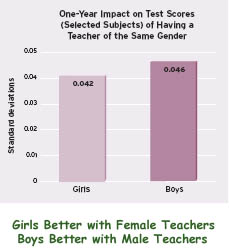
Boys learn better from male teachers, and girls learn better from female teachers. That should not be surprising, given that statistically males and females use different thinking strategies to perform the same mental tasks. A male teacher can teach boys male thinking strategies better, and a female teacher can better teach girls female strategies. Eide Neurolearning blog looks at the improved performance of students when schools provide teachers of their own gender.
What to do about this? There probably will be no quick fix, as gender differences among teachers are fairly steady. It might be that the gender divide among teachers might make it more difficult for students to buck gender predictions - like girls in math and science, or boys in language arts. Parents would do well to be on the alert for this - and if appropriate, search for tutors, mentors who could help.
Source.

Male teachers are becoming an endangered species. According to this CS Monitor story:

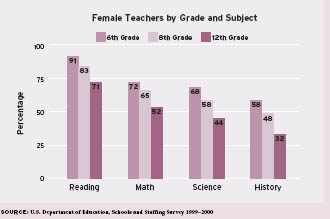
There seem to be fewer than ever these days. Just 21 percent of the nation's 3 million teachers are men, according to the National Education Association (NEA). Over the past two decades, the ratio of men to women in the classroom has steadily declined. Today it stands at a 40-year low.

"The teaching profession is definitely dominated by females," says Donald Washington, senior program analyst for the NEA.

The shortage of male teachers is most pronounced in elementary school, where men make up just 9 percent of teachers, but middle schools and high schools also suffer from a male-female imbalance.

Currently, in secondary schools, about 35 percent of teachers are men - the lowest level ever for the profession.


There are many ways that government schools fail students and their families, and the gender imbalance--whether from anti-male bias or no--adds significantly to the injury that society suffers from its schools. If you want a reason why the proportion of males in universities in North America is dropping, this gender disparity is one important one.

Labels: ,

Bookmark and Share

26 November 2006

Kurzweil Predicts Human Immortality

At the recent SCO6 supercomputing conference, Ray Kurzweil predicted human immortality by way of nanomedicine, and more. "Nanobots" in our bloodstreams will repair cellular and tissue damage as fast as it occurs. Affordable computers will be a thousand times more powerful than a human brain . . . Kurzweil clearly believes in "singularity now!"

According to Kurzweil, here's what we can expect in the not-so-distant future:

—Doctors will be doing a backup of our memories by the late 2030s;

—By the late 2020s, doctors will be sending intelligent bots, or nanobots, into our bloodstreams to keep us healthy, and into our brains to keep us young;

—In 15 years, human longevity will be greatly extended. By the 2020s, we'll be adding a year of longevity or more for every year that passes;

—In the same timeframe, we'll routinely be in virtual reality environments. Instead of making a cell call, we could "meet" someone in a virtual world and take a walk on a virtual beach and chat. Business meetings and conference calls will be held in calming or inspiring virtual locations;

—When you're walking down the street and see someone you've met before, background information about that person will pop up on your glasses or in the periphery of your vision;

—Instead of spending hours in front of a desktop machine, computers will be more ingrained in our environment. For instance, computer monitors could be replaced by projections onto our retinas or on a virtual screen hovering in the air;

—Scientists will be able to rejuvenate all of someone's body tissues and organs by transforming their skin cells into youthful versions of other cell types;

—Need a little boost? Kurzweil says scientists will be able to regrow our own cells, tissues, and even whole organs, and then introduce them into our bodies, all without surgery. As part of what he calls the "emerging field of rejuvenation medicine," new tissue and organs will be built out of cells that have been made younger;

—Got heart trouble? No problem, says Kurzweil. "We'll be able to create new heart cells from your skin cells and introduce them into your system through the bloodstream. Over time, your heart cells get replaced with these new cells, and the result is a rejuvenated, young heart with your own DNA";
Source.

Kurzweil as author, is an example of an uber-synthesist. He sifts through mountains of information to find technology trends. He predicts the future, without bothering to have tongue in cheek.

His biological predictions may even be timid, but Kurzweil's predictions of nanotech healers and machine super-cognition may be more than a little optimistic--from his point of view.

Humans are certainly not ready for super-intelligence, and computers have no point of reference. Human intelligence is based on emotions, which are based on biological survival drives. Computers have nothing similar to build on, other than (anthropomorphizing alert!) an unconscious "need" for electricity, more memory, and faster processors. As soon as computers begin to understand the need for speed and power, we may all be in trouble. Computers are not bound by billions of years of kludgy evolution--they can evolve exponentially.

So it comes down to: how soon can engineers/scientists build emotions and drives into computers--computers with actuators and power to act in the physical world? Because that is when Kurzweilian things start happening. Only computers can program massively parallel computers. They simply need a good reason to do so.

Kurzweil uncharacteristically provides a caveat: terrorists may learn to use this advanced technology. But more realistically, modern terrorists would like nothing more than to take human societies back to the stone age, where merely talking about Kurzweil's predictions would get your head chopped off.

Cross-posted at Al Fin Longevity.

Labels: , , , , ,

Bookmark and Share

25 November 2006

My Favourite Blog Carnivals

What is a Blog Carnival, you ask? A Blog Carnival is simply a blog posting that brings together in one place links to some of the best recent blog articles on a given topic.

My Favourite Blog Carnivals are:

Tangled Bank Excellent Science Carnival
The Synapse Neuroscience Carnival
Grand Rounds Medical Carnival

Blog Carnivals typically travel from blog to blog, which is an excellent way of getting to know new blogs. Following the carnival links themselves is a fine way to acquaint oneself with new and worthy blogs.

Carnivals come and go. The Carnival of Tomorrow is a fine blog carnival for futurist and singularitarian bloggers that is temporarily in stasis. Al Fin was fortunate to be included in a few COTs during COT's vibrant phase.

Go ahead and look at lists of carnivals here and here. You may very well find carnivals that suit your taste, and that might become your favourites. I hope so. The web has many fine features for which we should be grateful, and blogs and blog carnivals are some of the finest.

Update
: Go here for the latest edition of Synapse. Thanks to Dr. Serani.

Update 2: Another good neuro-carnival is Encephalon. I am not certain how long both Synapse and Encephalon will continue to exist "in competition," but there is certainly enough new information in neuroscience and cognition to support two carnivals.

Labels:

Bookmark and Share

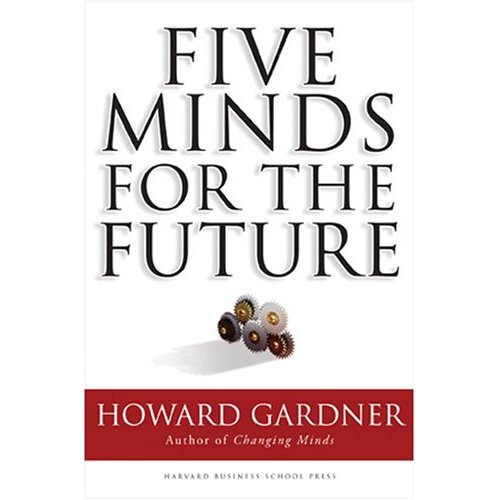
Five Minds for the Future? One Good Mind Would Do Wonders

Howard Gardner is a prolific author, Psychologist, and Harvard Professor. Gardner is perhaps best known for his tendency to multiply intelligences beyond what most experts feel is necessary. (apologies to Occam) Gardner's latest work, Five Minds for the Future, might at first seem to be following in the footsteps of his previous Multiple Intelligences work. Here is the distinction:

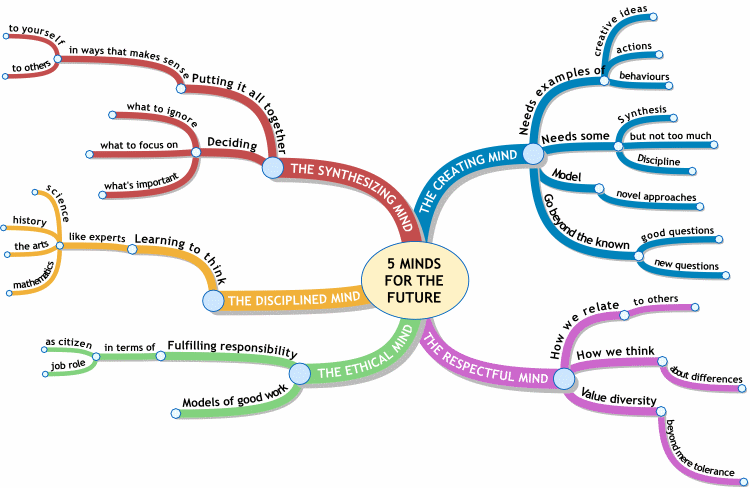
The five minds—disciplined, synthesizing, creating, respectful, and ethical—differ from multiple intelligence in working in a more synergistic fashion as opposed to separate categories of intelligences.
Source.
If you look at the graphic above, you will see that Gardner is actually describing the way "one good mind" would function at its integrated best. Gardner seems to have hit on some valuable principles of mind formation here.

The mind must be DISCIPLINED in three senses. The person must be able to think in terms of the major scholarly disciplines (history, mathematics, science, and the arts); he/she must have at least one area of expertise; he/she must have those habits of continued application so that learning can continue throughout life.

Nobel laureate Murray Gell-Mann argues that in the 21st century, the most important mind will be the SYNTHESIZING MIND. Individuals are subjected to huge amounts of information. We must be able to decide what is important; how best to organize it for ourselves; how best to communicate it to others. Almost everything that can be automated will be.

The last frontier for the mind is that of CREATING New Ideas.... thinking outside of the box. Such thinking presupposes a certain discipline and considerable synthesizing ability but it cannot be constrained by what has been thought or done before.

The first three kinds of minds are cognitive. The last two relate to the world of other individuals, and are thus more social and affective.

The RESPECTFUL MIND goes beyond mere tolerance. Respectful persons welcome human diversity, seek to understand and work with others, and cultivate an atmosphere of openness and reciprocity.

The ETHICAL MIND builds upon respect but entails a more abstract attitude. Ethical individuals ponder their roles as workers and citizens. They carry out good work... work that is excellent, ethical and personally meaningful. They consider their roles as citizens of their community, their region, and the globe and act in constructive, non egocentric ways.
Source.

Gardner heads up Harvard's Project Zero educational research group. Certainly if the abysmal failure of government education in North America is to be salvaged, new ideas and approaches will be vital. It appears that government education has failed in developingevery single one of the five minds that Gardner highlights. Instead, schools develop the resentment mind, the entitlement mind, the addicted mind, the dependent mind, the lazy mind, indiscriminate mind, and the credulous mind. There is certainly a lot of work to be done, and one hopes that Gardner and his group will lend a hand.

Gardner's 11/10/06 (11 October) lecture on audio and transcript (scroll halfway down)

Hat tip The Mouse Trap blog.

Labels:

Bookmark and Share

24 November 2006

What Do You Get When You Combine a Tumour-Eating Clostridium Bacteria with Liposome Packaged Doxorubicin and Irinotecan? More Dead Tumour Cells

Scientists at Johns Hopkins Kimmel Cancer Center have been using Clostridium Novyi against tumours in mice for over five years now. But by combining genetically modified C. Novyi-CT with liposome confined chemotherapy agents Doxorubicin and Irinotecan, the scientists learned how to kill even more of the tumour cells.

Combining C.novyi-NT and liposomes filled with chemotherapy seems to have its synergistic effect on tumors owing to the presence of an enzyme found lurking in C. novyi-NT cultures, which Ian Cheong, Ph.D., in the Vogelstein lab dubbed liposomase. It destroys fatty membranes and may disrupt the outer layer of liposomes releasing their drug contents.

“Drugs contained in these ‘Trojan horse’ compartments are specifically released at the tumor site by the C-novyi-NT bacteria which may improve the effectiveness and safety of the therapy,” says Cheong who is the lead author of the study.

The scientists note that liposomase could be used in a variety of other targeted therapies besides the bacteria combination. Such approaches could include attaching liposomase to antibodies that have an affinity for specific tumors or adding its DNA code to gene therapy. As many drugs can be packaged within liposomes, the investigators say the approach could have general utility.

In a companion study published in the November 19 online issue of Nature Biotechnology, the Hopkins team decoded the entire C.novyi-NT genome which Zhou says “was instrumental in identifying liposomase and will help improve our bacterial-based therapies.”

Preliminary safety tests of injected C. novyi-NT alone are under way in a small number of cancer patients.

....The likely explanation for the greater cancer cell kill by the combination treatment is that the bacteria expose the tumors to six times the amount of chemotherapy than is usually the case by improving the breakdown and dispersal of the chemotherapy’s fatty package at the tumor site.

The investigators repeated experiments using two packaged chemotherapy drugs -- doxorubicin and irinotecan -- and observed similar tumor-killing effects of both when used in combination with the bacteria.

“Packaged” cancer drugs currently are available in microscopic fatty capsules called liposomes which gravitate to tumors because they are too large to fit through the skins of tightly-woven blood vessels surrounding normal tissue and small enough to get through tumor vasculature.
Source.

Using bacteria and viruses against tumours is a biological form of nanotechnology medicine. It is actually the enzymes and other nano-sized molecular machines that assist human scientists in killing the tumours. Eventually scientists will learn to make improved versions of these nano-machines. For now, it is nice to be able to use the deadly spore-forming bacteria as a force for life.

Labels:

Bookmark and Share

The Real Reason France Prohibits Women Cyclists from Le Tour

The French have always seen themselves as being somewhat "progressive" in comparison to most other people, particularly the British, the Germans, the Americans, . . . Feminists have long wondered why the French, as progressive as they clearly are, continue to deny women cyclists the opportunity to compete in Le Tour de France. Finally, science has learned the true reason for the prohibition.

Women who participated in prolonged, frequent bicycling had decreased genital sensation and were more likely to have a history of genital pain than women runners, researchers in the Department of Obstetrics, Gynecology & Reproductive Sciences at Yale School of Medicine and The Albert Einstein College of Medicine report in the current issue of the Journal of Sexual Medicine.

The researchers compared 48 women competitive cyclists to 22 women runners. They used non-invasive techniques to evaluate the possible effects of bicycling on genital sensation and sexual health. Participants in the study were women bicyclists who consistently rode an average of at least 10 miles per week, four weeks per month. Women who ran at least one mile daily or five miles weekly were chosen as a control group because they represent an active group of women who were not exposed to direct pressure in the perineal region.

....“This is the first study to evaluate the effects of prolonged or frequent bicycling on neurological and sexual function in women,” said Guess. “While seated on a bicycle, the external genital nerve and artery are directly compressed. It is possible that chronic compression of the female genital area may lead to compromised blood flow and nerve injury due to disruption of the blood-nerve barrier.”
Source.

Although the researchers deny that women cyclists suffer adverse effects to their sexual health or performance, one tends to question such glib reassurances. Particularly since male cyclists can suffer from genital numbness and erectile dysfunction.

Leave it to the French to be progressive even when it looks like they are being bigots and chauvinists.

Labels:

Bookmark and Share
Newer Posts Older Posts
Al Fin Main Page
Enter your Email


Powered by FeedBlitz
Google
WWW AL FIN

Powered by
Blogger

``