16 July 2006

Delayed Maturation: The Neotenous Society Part II

By staying in school as long as possible, one can delay the day of reckoning, the dreaded day of taking responsibility and being accountable. Some courses of study can occupy a student's time until the age of thirty or later. What if the person finds that he dislikes that line of work, after the preparation is complete? I have known neurosurgeons who were well trained for the profession of neurosurgery, but who were deeply miserable in their work. The same is true for many dentists, attorneys, CPAs, engineers, computer scientists, and many other types of professionals, who for many reasons are compelled to continue on in their work despite their unhappiness.

Would you call such an unhappily compelled person mature? It is almost as if they had passed from the compulsion of schoolwork to the compulsion of an unhappy career, (and possibly an unhappy marriage), without reaching that point of balanced equanimity. Drugs and alcohol can blunt the awareness of one's predicament, but compulsions that are not confronted can remain subconscious and in control for a person's entire life.

We think of a mature person as someone who is accountable, who is responsible--someone who pays the bills and fills a substantial role in society. But if a person is merely going through the motions, without even momentary feelings of satisfaction or peace of mind, or sense of who one is, could that person actually be closer to being a slave than a mature individual? Is it possible the person is "stuck" at a lower level of existence than he should be? Could something have delayed the person's maturation, a badly timed trauma, or perhaps the absence of a necessary trigger of maturation?

Here is one way to look at career satisfaction that may shed a new light on the concept of maturity:

To do something well you have to like it. That idea is not exactly novel. We've got it down to four words: "Do what you love." But it's not enough just to tell people that. Doing what you love is complicated.

....Teachers in particular all seemed to believe implicitly that work was not fun. Which is not surprising: work wasn't fun for most of them. Why did we have to memorize state capitals instead of playing dodgeball? For the same reason they had to watch over a bunch of kids instead of lying on a beach. You couldn't just do what you wanted.

.....By high school, the prospect of an actual job was on the horizon. Adults would sometimes come to speak to us about their work, or we would go to see them at work. It was always understood that they enjoyed what they did. In retrospect I think one may have: the private jet pilot. But I don't think the bank manager really did.

The main reason they all acted as if they enjoyed their work was presumably the upper-middle class convention that you're supposed to. It would not merely be bad for your career to say that you despised your job, but a social faux-pas.

....The most dangerous liars can be the kids' own parents. If you take a boring job to give your family a high standard of living, as so many people do, you risk infecting your kids with the idea that work is boring. [2] Maybe it would be better for kids in this one case if parents were not so unselfish. A parent who set an example of loving their work might help their kids more than an expensive house.

....Unproductive pleasures pall eventually. After a while you get tired of lying on the beach. If you want to stay happy, you have to do something.

.... If your work is not your favorite thing to do, you'll have terrible problems with procrastination. You'll have to force yourself to work, and when you resort to that the results are distinctly inferior.

To be happy I think you have to be doing something you not only enjoy, but admire. You have to be able to say, at the end, wow, that's pretty cool.
Source.

The most successful people I have worked with, were also people who clearly loved their work. There was also, interestingly, something almost childlike about many of them. They had not encased their joy at life inside several layers of forced responsibility and compulsion. They all had to do things at times that they would rather not do, but underneath it all they knew they were living a life they loved. That type of joy has much less to do with the absolute level of income and wealth, and more to do with a person having found their preferred work.

Is it possible that society is so busy teaching children compulsion, that it neglects to teach them how to find what they love? Is it possible that a person never really matures--never really blooms into themselves--until they have found the work they love? Children need to learn how to find this love. Not just a love of work, but a love of work that is truly theirs. Who will teach it to them? It is not part of the curriculum. If they never learn to find their love, who will they blame for their lives going sour? What victims' groups will they join? What tort attorney's children will they help send to college?

I have seen happy plumbers and miserable plumbers. The same is true for virtually any occupation you might name. In opportunity societies such as the US and other anglospheric countries, a plumber can become a millionaire. A public schoolteacher can become a millionaire. I know examples of both. Retiring wealthy is a good thing. Better is working happy and retiring wealthy, or at least, comfortably. Best of all is loving your work so much that, although you could retire comfortably, working is just too much fun to stop.

You see that in many musicians, scientists, and other accomplished professionals who love what they do. But can everybody find that love? How can you tell, if children are not taught how to look for it while they are young enough, if it is left up to chance?

If society is made up mostly of people who are more compelled than mature, what would a society of mature people be like?

Neotenous Society I
Neotenous Society III

Labels: , ,

Bookmark and Share

14 July 2006

Why Startups Condense in America

Why is america currently the location for so many new startups and innovators? Why are there certain locations in america, inside the US and Canada, where startups are particularly likely? Writer Paul Graham has a few ideas, which he penned in his essay, "Why Startups Condense in America."

Here is a list of his reasons:

  1. The US allows immigration.
  2. The US is a rich country.
  3. The US is not a police state.
  4. American universities are better.
  5. You can fire people in america.
  6. In america, work is less identified with employment.
  7. America is not too fussy.
  8. America has a large domestic market.
  9. America has venture funding.
  10. America has dynamic typing for careers.
Then, Graham goes on to explain how a country might incorporate these traits, then go further yet to beat america:
There are also a couple things you could do to beat America at the national level. One would be to have lower capital gains taxes. It doesn't seem critical to have the lowest income taxes, because to take advantage of those, people have to move. [7] But if capital gains rates vary, you move assets, not yourself, so changes are reflected at market speeds. The lower the rate, the cheaper it is to buy stock in growing companies as opposed to real estate, or bonds, or stocks bought for the dividends they pay.

So if you want to encourage startups you should have a low rate on capital gains. Politicians are caught between a rock and a hard place here, however: make the capital gains rate low and be accused of creating "tax breaks for the rich," or make it high and starve growing companies of investment capital. As Galbraith said, politics is a matter of choosing between the unpalatable and the disastrous. A lot of governments experimented with the disastrous in the twentieth century; now the trend seems to be toward the merely unpalatable.

Oddly enough, the leaders now are European countries like Belgium, which has a capital gains tax rate of zero.

....American immigration policy keeps out most smart people, and channels the rest into unproductive jobs. It would be easy to do better. Imagine if, instead, you treated immigration like recruiting-- if you made a conscious effort to seek out the smartest people and get them to come to your country.

A country that got immigration right would have a huge advantage. At this point you could become a mecca for smart people simply by having an immigration system that let them in.
He could have added that american immigration policy lets a lot of not-so-smart people sneak in. People who are a burden on the law enforcement and welfare systems. That cannot be good for startups, unless you are referring to prison startups.

Knowing how to create wealth is one of the hardest things for politically oriented people to comprehend. Redistributing wealth comes easy to politicians and bureaucrats--creating wealth is almost impossible for them.

That is why for the purpose of nurturing the geese that lay the golden eggs, it is best for the politicians to step back, and give the innovative and entrepreneurial people some room. You have to create the wealth before you can re-distribute it, you politician morons. Think for once!

Labels:

Bookmark and Share

“Attention: Illegal Aliens. Cambridge, Mass., is a sanctuary city. For help getting there: . . . . .


....contact projectusa.org/NJ-mass transit.” This message is slated to go up on billboards from coast to coast across the United States. Travel plans and travel assistance to Cambridge, MA, will be provided to illegal immigrants at the border, and in communities across the US.

Cambridge Massachussetts must be populated by very good people, to be willing to accept millions of illegal aliens into their small community. No doubt these millions of new Cambridge residents will constitute something of a new tax burden for the current taxpayers of Cambridge, but the good people of this small college town do not seem to be concerned. Truly these are very good people.

Another reason to praise the people of Cambridge, is the fact that crime rates among illegals is more than three times the normal crime rates of most US towns. Cambridge will obviously need to hire a lot more police officers than it currently has. The surrounding communites of Boston, and as far away as Portland Maine, will no doubt also need to hire more police officers. But do the good people of Cambridge hesitate to invite these millions of illegals to their fair town? No, not at all.

I cannot help but be impressed by the cooperation that the people at Project USA are showing to the city of Cambridge, in helping to provide travel plans and travel assistance to illegals heading to Cambridge. This is certainly going beyond the normal generosity of neighbors and countrymen. It does my heart good to see an independent organisation willing to help a town like Cambridge demonstrate its largesse to those less fortunate, and more violent, than the current residents and taxpayers.

Cambridge is joined by Berkeley, St. Paul, and other US cities, in this selfless desire to bear this burden for the rest of the country. Such unselfishness should not go unrewarded, and I sincerely hope that Project USA and the other organisation providing travel help to Cambridge, will not forget to offer similar help to needy and violent illegals who intend to go to these other sanctuary cities. This is a worthy cause that you all should contribute to without delay.

Source.
More information.
Wizbang's take.
Original Cambridge resolution of sanctuary status.

Labels: ,

Bookmark and Share

13 July 2006

Cellulosic Ethanol Update: BlueFire Ethanol

Cellulosic ethanol is an alternative approach to bio-fuels that could produce liquid fuel for automobiles from waste wood chips, straw, corn stalks, and other non-food biomass. Now we learn from Jim at the Energy Blog, about BlueFire Ethanol, a combination of strategies that promises to cut the cost of ethanol production in half and take the burden of production off of food crops such as corn.

Some of the most important innovations are:

* Flash fermentation
* Membrane distillation
* Chromatographic separation of the acid from the sugars

The company claims that for the first time the technology enables widely available cellulosic materials, or more commonly, biomass, to be converted into sugar in an economically viable manner, thereby providing an inexpensive raw material for fermentation or chemical conversion into any of a hundred different specialty and/or commodity chemicals

Arkenol determined that the concentrated acid hydrolysis process could be made economically viable through the use of new technology, modern control methods, and newer materials of construction.

To demonstrate the efficacy of the technology, Arkenol has constructed and operated a pilot plant near its Southern California offices for roughly five years. The pilot facility is rated at a nominal 1 ton per day biomass throughput, assuming a 24 hour, 3 shift operating schedule. During normal operation, 1 shift per day is sufficient for feedstock studies, design trials, and normal maintenance. The facility was constructed using readily available pilot equipment using no exotic materials.

Izumi Pilot Plant

A lager pilot facility the 21,500 gallon per year fully integrated Izumi (Izumi is a town located on the southern tip of Japan) pilot plant, using waste wood chips as feedstock, has been operational since 2002. The plant is operated by JGC Corporation in cooperation with Kobe University, Kumamoto University, and four other universities, the National Institute of Advanced Industrial Science & Technology, the Japan Alcohol Association, XNRI Co., Ltd., and others. The plant is funded by New Energy and Industrial Technology Development Organization (NEDO) of the Japanese Government under a five year contract ending in 2007.

Some of the significant features and accomplishments are:

* Wood chips are sized to a nominal 10 mm with high fines fraction.
* Cellulose conversion efficiencies have been stable at 70%, with optimization at 80%.
* Sulfuric acid recovery is over 97% with reconcentration of the 18% dilute acid to 75% in continuous use since 2003.
* A simulated moving bed (SMB) chromatographic separation unit, using small plastic beads, is used to separate the acid fraction from the sugars. SMB's are used in the sugar industry for glucose-sucrose separation and separating sugar from molasses.
* Lignin combustion test (requiring 4 tons of lignin) completed successfully.
* JGC developed flash fermentation offers significant operating cost savings. The fermentation takes place in a fluidized reactor with immobilized media
* Uses NREL developed rec. Z. mobilis (under license) in fixed bed and S. cereviscae to produce ethanol at 95% for over one year.
* Uses first commercial membrane distillation and purification system supplied by Mitsui with significant operating cost savings over conventional (molecular sieve) technology.


This technology is apparently progressing rapidly from proving stage to production stage. It is important to note that once butanol fermentation and purification processes are improved, the same basic processes used in the Blue Fire Ethanol process can be used to produce Butanol--a much superior bio-fuel to Ethanol in many ways.

The ongoing process of replacing petroleum fuels with bio-fuels depends upon the economic tradeoffs involved. If ethanol is used in high concentrations in fuel, some significant changes will have to be made in internal combustion engines, pipelines, and storage technologies. If on the other hand, butanol is produced from the same cellulose instead of ethanol, the butanol can be substituted for gasoline straight across.

With perpetual political instability in the middle east, it is unlikely that the price of petroleum will ever again fall low enough to de-rail the bio-fuels train.

Labels: ,

Bookmark and Share

12 July 2006

Multipotent Adult Stem Cells--More Sources

UPenn School of Medicine researchers have learned how to coax adult stem cells from hair follicles to grow into smoothe muscle cells, nerve cells, and melanocytes. While it has long been known that hair follicles contain adult stem cells, no one had succeeded in causing them to differentiate into different cell types until now.

“We are very excited about this new source of adult stem cells that has the potential for a variety of applications,” says senior author Xiaowei (George) Xu, MD, PhD, Assistant Professor of Pathology. “A number of reports have pointed to the fact that adult stem cells may be more flexible in what they become than previously thought, so we decided to look in the hair follicle bulge, a niche for these cells.” Xu and colleagues report their findings in the latest issue of the American Journal of Pathology.

Hair follicles are well known to be a source for adult stem cells. Using human embryonic stem cell culture conditions, the researchers isolated and grew a new type of multipotent adult stem cell from scalp tissue obtained from the National Institute of Health’s Cooperative Human Tissue Network.

The mutipotent stem cells grow as masses the investigators call hair spheres. After growing the “raw” cells from the hair spheres in different types of growth factors, the investigators were able to differentiate the stem cells into multiple lineages, including nerve cells, smooth muscle cells, and melanocytes (skin pigment cells).

The differentiated cells acquired lineage-specific markers and demonstrated appropriate functions in tissue culture, according to each cell type. For example, after 14 days, 20% to 40% of the cells in the melanocyte media took on a weblike shape typical of melanocytes. The new cells also expressed biomarkers typical of pigment cells and when placed in an artificial human skin construct, produced melanin and responded to chemical cues from normal epidermis skin cells.

After 14 days, about 10% of the stem cells in the neuronal cell line -- a type of cell not present in skin or hair -- grew dendrites, the long extensions typical of nerve cells and expressed neuronal proteins. The neurotransmitter glutamate was also present in the cells, but the neurotransmitter dopamine was not detected.

Thirdly, about 80% of the stem cells grown in the muscle media differentiated into smooth muscle cells. These new muscle cells also contracted when placed in a collagen matrix.

Source.

The selection of different growth media to bring about the differentiation of specific cell types is an art that is gradually developing into a science. As these tricks are tried on more adult stem cell types, it is possible that a fairly full palette of cell types might come available, from adult stem cells alone.

While multiple differentiation from embryonic stem cells has been studied and utilised by researchers for several years, the possibilities for multiple differentiation of adult stem cells has not been nearly as intensively looked into. This report indicates a slow trend that seems to be developing, to correct that ommission.

Labels: ,

Bookmark and Share

Making Higher Education Relevant to the Real World: Neumont University

The U.S. has a big problem. The Bureau of Labor Statistics predicts it needs 135,000 new computer professionals each year. But between the dot-com crash and a misperception that all the good tech jobs are going overseas, fewer undergraduates have been majoring in computer science. U.S. universities are churning out only 49,000 grads a year. And many of those U.S. grads require additional training before they can function on the job.
Source.

Salt Lake City's Neumont University is a for-profit school for training software engineers and computer scientists. The emphasis is on providing what employers want in the real world. When a student leaves Neumont U., he is ready for employment at high wages, and top-ranked employers understand this very well.

At elite liberal arts colleges, the profs disdain practical skills and pontificate about theoretical topics suited to their academic journals. Not here. At Neumont students spend only 30% of their time on theory and 70% learning the newest technology, mostly working in groups on projects. That's the way complex software is written today, in groups. Source.

Even in technical courses of study such as Computer Science, professors in universities too often wander onto their own areas of personal interests, and neglect the teaching of some of the most important skills that employers need. University professors often express their indifference to the world of commerce in this way--and the students are the ones who pay the price.

Not surprisingly, the 250 students who have enrolled so far are a pragmatic and career driven bunch. Some have quit full-time jobs for the chance to gain new, higher-paid skills. Scott Baldwin, 28, a straight-A student in Neumont's first graduating class, left a secure job developing Web sites to spend two years at the school. After earning his degree, he got five job offers and opted to move his wife and two daughters to Austin, Tex. for a position at IBM. Source.

If schools are willing to orient their courses of study to more appropriately prepare students for the job marketplace, students will make the transition to steady employment much more readily.

Doxey [Neumont President and founder] aims foremost to please employers--not students, not parents and certainly not the educational establishment. Produce what business needs, he figures, and graduates will win good jobs, which will in turn attract more paying students.

He's onto something. The school's first batch of 27 graduates this past spring all had jobs waiting, with an average starting salary of $61,000--some 20% more than the average computer science grad and 50% more than DeVry University graduates' starting pay. After a year Neumont's graduates should be able to command $70,000 to $90,000, predicts Joshua Steimle, chief executive of Salt Lake City Web design firm MWI, which hired two grads. "Neumont students can jump right into projects," says Steimle. "It would be the first place I'd go to hire more developers."
Source.

Serious students can achieve their degree at an accelerated pace at Neumont. Classes are run from 8 to 5, year round. Students can test out of the introductory classes, if they demonstrate the aptitude. Professors at Neumont are full time computer science professors with excellent backgrounds, including one from Microsoft Corp. Having professors with backgrounds in industry allows Neumont to focus its preparation specifically to computer industry bound graduates.

Eve Andersson, Neumont's academic head, predicts Neumont students will be better prepared when they land in corporate America than those produced by MIT. "Our guys may be their bosses," says Doxey. Forbes.

Eventually, more parents are going to start demanding that universities prepare their kids for the workplace, not the party place. A parent can easily mortgage a family's future on a top ranked university education for a child, then discover that the child has not been prepared for any job but minimum wage level entries. It happens every summer, this crashing despairing awareness of having made a bad choice, despite all the accolades society heaps upon the top schools.

Most universities today do more indoctrinating than educating. No wonder so many students seek escape in parties and binge drinking. Their expensive classroom experiences are not preparing them for a decent future, and many of them know it. But you cannot expect a student at that age to fully comprehend the implications of the monumental waste of his time and his parents' money. That is something the parents should have researched ahead of time.

Universities such as Neumont are merely specialised niche schools. But they are carefully targeted on the future of the marketplace, and how their graduates can help important employers. As more such niche colleges form, due to demand for efficacious education, is it too much to hope that mainstream education might wake up? Indoctrination into obsolete and counter-productive philosophies is a luxury that society cannot afford. Your students deserve better.

Update 7-16: Also see the post "Leapfrog University", for a brave proposal from scholars at the University of Minnesota to re-vamp a traditional university, to make it relevant.

Labels: , , ,

Bookmark and Share

Aubrey de Grey's SENS Stands Up to Lively Debate

I strongly encourage anyone with an interest in gerontology or life extension science to visit the lively debate at Technology Review concerning the "SENS Challenge", with a prize of US $20,000 at stake. The challenge was issued a year ago, with the $20,000 prize offered to anyone who could prove that SENS was "unworthy of learned debate."

Technology Review has provided links to the entire debate (scroll down). Most of the entries failed to approach the level of serious consideration by the challenge judges, however one entry by Preston Estep was considered well enough argued to be awarded a $10,000 grant, which had nothing to do with the prize money for the challenge.

Links from other challengers are also provided on the TR SENS Challenge page, along with Aubrey de Grey's rebuttals, and the counter-rebuttals by the challengers. Finally, Preston Estep posted a strong protest to the judges' decision.

At the MPrize website, the editors correctly proclaim that SENS has withstood the challenges so far, and the $20,000 prize remains unclaimed. The $10,000 award to Estep is briefly discussed there as well.

The real debate is taking place as you read this, on the discussion forum of Technology Review, and other websites. A quick blog search query brought up a large number of news and blog reports on the decision of the judges. Start at the TR SENS Challenge page, and follow the links.

No one is staking his life that SENS is correct in every detail. That level of perfection is not necessary for SENS to have a profound positive impact on anti-aging research. It is only necessary that the SENS theories help lead to positive results, either directly or indirectly, for the theories to have been worthwhile in the long run.

There are backwaters of science that need to be shaken up from time to time. Gerontology had certainly become one of those backwaters by the 1990s. The entry of SENS into the arena has been like a splash of cold water to the face, and like a breath of fresh air, simultaneously.

Technology Review is to be congratulated for helping to stimulate this lively debate, and for furthering interest in this incredibly important field of study.

Labels:

Bookmark and Share

11 July 2006

Fireflies Help Fight Cancer: Restoring p53 Tumour Suppressor Function

Researchers at the University of Pennsylvania School of Medicine have used the luminescence from fireflies to help screen small molecules that might help restore p53 tumour suppressor gene function to cancer cells that had lost that protection through mutation.

In an attempt to defend the body, a normal p53 protein will bind to DNA during periods of cellular stress or damage. The binding of p53 to DNA initiates downstream reactions that keep the stressed cells from multiplying. Under normal conditions, p53 will activate the p21 gene, causing the cell cycle to freeze, halting cell proliferation; p53 will activate KILLER/DR5, which signals for cell death, or apoptosis. Chemotherapy and radiotherapy set out to deliberately stress tumor cells in hopes of promoting their self-destruction. Unfortunately, mutations to the p53 gene disrupt the intracellular defense system.

"Mutants of p53 that occur in human cancer fail to bind to DNA or to activate target genes, such as p21 and KILLER/DR5," explains El-Deiry, who is also the Co-Program Leader of the Radiation Biology Program at the Abramson Cancer Center at Penn. "Therefore, when cells are stressed or damaged, p53-mutant cells fail to shutdown and continue to divide uncontrollably." The development of a drug screen by El-Deiry's lab allowed the researchers to trace the activity of small molecules in p53-mutant cancer cells.

The small molecule drug screen, developed by El-Deiry's lab, was created by inserting firefly luciferase, a reporter gene capable of emitting light, into human tumor cells carrying the p53 mutation, and observing the subsequent response.

"Just as fireflies emit light that we can see with our eyes, the cancer cells were engineered to emit light if a p53-like response was triggered by any of the small molecules that we examined," explains El-Deiry.

The small molecules screened by El-Deiry's research group were obtained from the Developmental Therapeutics Program at the National Cancer Institute. The molecules represent many classes of compounds and include both natural and man-made chemicals.

"One by one, we introduced the small molecules to the p53 mutant cancer cells, which possessed the luciferase reporter gene and screened for light emissions," describes El-Deiry. The light emissions displayed by the live cell imaging instrumentation revealed which molecules were able to achieve p53 responses in the abnormal cancer cells. Further testing exposed the ability of high doses of several groups of the small molecules to kill human cancer cells in cell culture and in mouse models implanted with human tumors.

"Our work provides a blueprint for how molecularly targeted therapy can be discovered using new optical imaging technology," states El-Deiry. "This is very important going forward in the era of molecular medicine and individualized therapy for cancer patients."
Source.

This is a clever approach to cancer drug discovery. This type of drug, if effective, could become a useful second line defense against cancer, after prevention. As cancer screens become more sensitive--able to pick up malignancies very early--the need for safe broad spectrum anti-tumour drugs such as this type of tumour suppressor gene restorer becomes greater. The key is to find such tumour suppressor gene augmentors/restorers that are both safe and effective. Good luck to the UPenn. lab.

Labels: ,

Bookmark and Share

Solar Energy--Even When the Sun Is not Shining

The rate of solar energy intercepted by the earth is about 5,000 times greater than the sum of all other energy sources, but less than 0.5 percent is represented in the kinetic energy of the wind, waves and in photosyntheticstorage in plants. The amount of the solar energyintercepted by earth is only one thousandth of one millionof the total released energy in the sun. Source.

Using photovoltaics, you are limited to an average of six hours per day of usable energy production, minus time for bad weather. Often the periods of heaviest usage of energy are times that the sun does not shine.

One way around that problem is to place photovoltaic panels in earth orbit, well above the shadow of the earth. Generated power can be beamed to earth by microwave, and collected by large rectenna farms on the surface. Here is a link to a blog, Power From Space, devoted to this topic.

Another method is to collect the sun's energy while it shines, and store the energy for later use. Unfortunately, this method does not collect nearly as much energy as the orbiting solar satellites, but the sun provides so much extra energy to earth that it will suffice. What is the best method of storing solar energy?

Batteries are not a good choice for utility-scale storage, because the energy density of batteries is too low, given their high cost and short lifetimes. The only possible exception in terms of current battery technology would be redox flow cells. In five or ten years, redox flow cells might be ready for the challenge.

Electricity is hard to store at the present time. But energy comes in many forms, and is convertible from one form to another. With present technologies, the best form of solar energy storage is thermal storage--heat. Below are several links providing more information about thermal storage.

Wiki
Purdue
Open Directory Thermal Energy Links
Ionic Thermal Storage
Dissertation on Phase-Change Heat Storage Systems

Thermal storage is a type of energy averaging. Rather than being forced to use all the six hours of sunlight at one time, the energy can be stored and used over the entire 24 hour period. Solar Ponds are one form of thermal storage. OTEC is another, and in that sense the ocean itself could be thought of as a huge thermal system.


Phase change thermal storage will eventually become an important strategy for energy conservation in residential and commercial building construction. An incredible amount of useful heat can be stored inside materials that undergo phase changes at appropriate temperatures. Utilities are experimenting with large solar ponds, phase change thermal storage, and other methods of using stored heat to drive a heat engine, to generate electricity over the entire 24 hour period, adjustable to demand.

Eventually, for electric power purposes, redox flow cells and other newer electrical storage methods will eliminate the need for thermal-electric conversion losses. But humans need heating and cooling to live and work comfortably, and in that sense thermal storage will always be useful for human buildings and infrastructure.

Labels: , ,

Bookmark and Share

10 July 2006

The Siren Call of Space--Free to Fly

The future of human exploration, development, and recreation in outer space, appears more dependent upon private space launch companies than on NASA, ESA, or other government agencies. Beginning this year, the pace of private space launches and launches of other private space ventures, will begin to pick up. According to Technology Review:
Last week saw the successful launch of the Space Shuttle, but this week may see something far more relevant to the future of space travel: the launch of a prototype piece of a future orbiting hotel. It comes amid an expected flurry of private launches of small, innovative, and reusable rockets that will make 2006 a watershed year for privately financed rockets.

Taken together, these expected launches could usher in an era of relatively inexpensive space travel. "Even as the shuttle sweeps overhead, we have new items on the real road to practical spaceflight -- private market development -- popping up," says Boston-based aerospace engineer and consultant Charles Lurio.

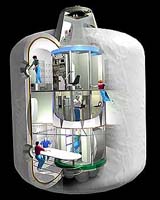
The first of the new companies to launch this year is developing a potential new destination: a hotel in space. Using a design originally conceived as an add-on module for the International Space Station, Las Vegas hotelier Robert Bigelow is planning his first test flight of a subscale version of an inflatable space station module, scheduled to take place by July 14 at a launch pad in Russia. He hopes to have a full-sized orbiting hotel open for tourism by 2012. While some have been skeptical about Bigelow's plans, partly because of his relative secrecy, Lurio says "by all accounts...this is a serious, technically careful project."

But the Bigelow launch is only the first in a series of expected private launches. Some of the loudest roars will be heard this fall in New Mexico, at the X Prize Cup. That's an exposition to showcase developments in new rocket technology, following the 2004 awarding of the $10 million X Prize for private manned rocket launches that reached suborbital altitudes and returned safely. The X Prize Cup will kick off with multiple launches and takeoffs of rocket-powered vehicles.

The Cup will see at least two launches of prototype vertical takeoff, vertical landing rockets that might evolve into a vehicle that could someday land on the moon. These will be made as part of a NASA-sponsored lunar challenge -- a challenge that includes a $2.5 million prize for demonstrating a rocket's ability to take off and land vertically, and move sideways while aloft. Fifty teams have registered for the contest and two are considered almost certain to compete: Armadillo Aerospace of Texas, which was a competitor for the original X Prize, and startup Masten Space Systems of Mojave, CA.

Meanwhile, Space Exploration Corp., or SpaceX, founded by PayPal founder Elon Musk, this October expects to make a second launch attempt of its Falcon 1 rocket, at the Kwajelein Atoll in the Pacific Ocean, after an attempt last spring that failed less than one minute after liftoff (see "Space Tourism or Bust"). When it comes to putting satellites or astronauts into orbit within the next couple of years, as opposed to suborbital flights, SpaceX may be the only real contender.

If the Falcon 1 launch works as expected, the company plans to begin test firings of a much bigger craft, the Falcon 9, as early as this November. Using nine rocket motors identical to the single motor in Falcon 1, the huge rocket could deliver payloads and humans to the International Space Station (ISS), or anywhere else in low Earth orbit. The tests slated for this fall would be static firings -- engine tests while strapped to the launch pad -- but after a series of tests next year, actual commercial flights could begin in 2008, Musk said.

Finally, Virgin Galactic, a partnership between Sir Richard Branson and Burt Rutan -- founder of Scaled Composites, whose SpaceShipOne won the X Prize in 2004 -- is getting close to test flights of a suborbital tourist spaceplane (although Rutan never announces a schedule for his test flights until they happen).
More at Technology Review. Hat tip Keelynet.com.

This is exciting news for space enthusiasts. Some readers may remember watching Neil Armstrong first step onto the moon's surface in 1969. For them, the past few decades must have been very frustrating. Certainly well known writers, scientists, and personalities such as Jerry Pournelle, Larry Niven, Hans Moravec, Eric Drexler, and many others must have been pounding their fists in frustration over the slow progress of space development. Certainly Gerard O'Neill and Robert Heinlein would have been extremely excited to see the uptick in private space activity, had they lived.

Nothing worth doing is without risk, and certainly involvement in outer space will be risky in many ways. Despite the risk, some of the age's most successful entrepreneurs are getting involved. Persons who made billions of dollars from the growth of Microsoft, Amazon.com, Paypal, and other companies, are risking significant chunks of cash on new space launch companies and technologies. These are people who are used to getting things done. Bureaucratic paper shuffling and bowing to Slavic stonewalling are not in their style of doing things.

Humans should not keep all their eggs in one basket. Stray comets and asteroids have destroyed dominant life on earth more than once in the past few billion years. Sooner or later it will happen again. Further away from the sun are materials and life-sustaining volatiles many times the amount of what are present on earth. If humans decide to utilise the resources of their own solar system, many times the population that presently lives on earth could happily inhabit the outer system.

Labels:

Bookmark and Share

09 July 2006

Hydrogen Not Efficient for Energy Storage

The annual fuel cell conference of the European Fuel Cell Forum was held in Lucerne, Switzerland, last week. Much of the sentiment from the conference in regard to hydrogen energy storage was compiled in this Reuters newsreport:

When environmentally friendly wind electricity is used to generate hydrogen, only one-quarter of the energy generated by the wind turbine is eventually used to move a car. The rest is lost during transport and energy conversion, said Ulf Bossel of the European Fuel Cell Forum, which held its annual fuel cell conference in Lucerne, Switzerland, last week.

"With hydrogen energy you only have 25 per cent efficiency to turn wind power to [car] wheel power," he said. It's much more efficient to transport that electricity directly into a car battery, via the grid, and use 90 per cent of its power."

Hydrogen is being discussed at the conference because it is one of the fuels for cells that can generate electricity and heat in an electrochemical conversion.

....Bossel said most renewable energy will be harvested as electricity through wind and solar power and should be used directly.

But he accepted that today's economy is based on fuels and cars will need some liquid fuel for long journeys, rather than recharging batteries every few hundred kilometres.

Even when this liquid energy is made from biomass, it makes sense to turn it into a biodiesel rather than hydrogen, said Wim van Swaaij, professor of thermo-chemical conversion at Netherlands' Twente University.

Biofuels are easy to handle, like today's fuels. Hydrogen, in its pure form, needs to be stored under high pressure which also consumes energy. Biofuels themselves contain hydrogen but in a much more stable form.

"Through steam reforming technology we can turn 40 to 50 per cent of the original fuel content in biomass into biofuel. The percentage is even higher for hydrogen, 50 to 60 per cent, but we will also have to store it and biofuels are the easiest and most efficient way to store it," Van Swaiij said.

The carbon particles in the biofuel will not make a net contribution to heating up the Earth through the greenhouse effect if the fuel is harvested from biomass, because the plants consume carbon dioxide as they grow, Van Swaaij added.

Bossel also said that producing hydrogen, either through electrolysis using nuclear or renewable electricity, or refined from biomass or fossil fuels, requires massive amounts of water. One kilogram of hydrogen requires nine litres of water.

In capitalist countries, the market will decide efficiencies based upon pricing--supply and demand--within the context of government regulation. We should all hope that government does not chase the wild albatross of hydrogen storage too much farther. Eventually nanotechnology and materials technologies may make hydrogen viable, economically. At present it would be smarter to bank on alternatives, such as batteries, supercapacitors, and biofuels such as bio-butanol and biodiesel.

Labels: , ,

Bookmark and Share

08 July 2006

News Media Business as Usual: How to Lie with Opinion Polls

Hat tip to Shrinkwrapped blog for pointing to a NYT newstory based loosely upon a Pew Global Attitudes Project poll.

While the NYT article is titled "Poll Shows Bright View of Muslim Integration", a close study of the graphs in the Pew article about the poll itself suggests a much darker story that could have been written. You have to wonder if the NYT writer ever actually read the poll itself, judgeing from all the happy talk in his story.


These graphs tell a truer and more profound story than the NYT writer was prepared to write. Self-identity can be divided many ways. But anyone who knows muslims personally is surely aware that there was much muslim celebration behind closed doors, on the occasions of 9/11, 7/7, and 3/11. This is one dark side of self-identification that cannot show itself in public. In public there were mainly profuse expressions of concern by muslims that they not all be blamed for the atrocities. (in the old world they came from, they would have been slaughtered, as low status minorities with ties to the religious jihadi mass murderers)

Islamic identity is growing--muslims are not assimilating within modern western nations, but rather simmering in their own broth.


How do muslim immigrants to the west view themselves? Do they relate to old world muslim totalitarian religious life and law, or do they accept the secular rule of law in their new countries? Do they condemn islamic violence and rioting, are are they sympathetic with it?

Muslims in the west are in fact agitating for Islamic Law in western countries? Can you imagine the temerity of mostly uneducated, often on the dole, immigrants demanding their own primitive system of law, in more advanced countries with long established legal traditions?


The true story is hidden within the numbers, and within the methodology of the poll itself. It is also hidden within the dishonest pseudo-virtues of multicultural appeasement by westerners, and the dishonest self-interested fear of reprisal by muslim immigrants. All poll takers must be aware of such things when asking such questions as this.

This is the time of the false truce, or hudna. It is only temporary, just long enough for the faithful to improve their strength, increase their numbers. If the westerners are easily lulled, as under multicultural appeasement, it becomes easier to grow in numbers and capacity to overthrow the established order. Visit the obstetric wards of european hospitals, and look at the majority of names of the newborn children. People who are prolific aim to gain and maintain control. People who choose not to propagate will necessarily cede the territory.

Rejoice, you faithful. Your time is at hand. The rest of you go back to sleep.
Bookmark and Share

06 July 2006

Behaviour Genes: Designer Living

Welcome to a newcomer on my blogroll under Neurosciences, MindBlog. A few days ago, Deric commented on various genes that seem to influence behaviour. Anyone familiar with the twin studies by Bouchard and others should not be surprised by these influential little genes. The names of some of the genes are quite humorous, suggesting that some scientists do indeed have a sense of humour.

INSIG2 - Obesity - A common gene variant that is associated with significantly increased risk of becoming fat among the more than 25 million Americans who carry it. Herbert et al. (2006) "A Common Genetic Variant Associated with Adult and Childhood Obesity". Science 312:279-283.

neuroD2 - Risk-taking - Mice lacking neuroD2 have a greatly reduced sense of fear. Variants of the human version of this gene may lead to risk-taking behaviors. Lin et al. "The dosage of neuroD2 transcription factor regulates amygdala development and emotional learning" Proceedings of the National Academy of Science 41:14877-14882

CYP2A6 - Nicotine Addiction - People with certain forms of this gene smoke more and are more likely to become addicted to cigarettes. Tailoring treatments based on which form of CYP2A6 a person has may help him or her quit. Minematsu et al. (2006) "Limitation of cigarette consumption by CYP2A6*4, *7 and *9 polymorphisms" European Respiratory Journal 27:289-292. Malaiyandi et al. (2006) "Impact of CYP2A6 genotype on pretreatment smoking behavioral and nicotine levels and usage of nicotine replacement therapy". Molecular Psychiatry (2006): 400–409.

AVPR1a and SLC6A4 - Dance talent - Variants of these genes are correlated with creative dance performance. Bachner-Melman et al. "AVPR1a and SLC6A4 Gene Polymorphisms Are Associated with Creative Dance Performance". PLoS Genetics 1(3): e42

DRD2 - Anorexia - Variants of this receptor for the neurotransmitter dopamine have been preliminarily linked to the risk of developing anorexia. Bergen et al. (2005) "Association of Multiple DRD2 Polymorphisms with Anorexia Nervosa" Neuropsychopharmacology 30, 1703-1710.

DRD4 - Sexual desire - Another dopamine receptor gene that is linked in this study with sexual desire and performance. Zion et al. (2006) "Polymorphisms in the dopamine D4 receptor gene (DRD4) contribute to individual differences in human sexual behavior: desire, arousal and sexual function". Molecular Psychiatry (published online ahead of print)

fruitless - Sexual orientation - Male and female fruit flies make different forms of this gene. Males carrying the female gene do not court females. Females carrying the male gene are attracted to other females. Demir and Dickson (2005). "fruitless Splicing Specifies Male Courtship Behavior in Drosophila" Cell 121:785-794.


Go to Deric's article for more information, and links to the original research.

There is always the proviso that single genes do not typically act alone, and a great deal of gene-gene interaction takes place. Even so, it is fascinating to observe the thickening plot in the genetic--environment dance. Blank Slate advocates are finding their support crumbling under their feet.

Labels: ,

Bookmark and Share

04 July 2006

Delayed Maturation: The Neotenous Society Part I

Here is where the trend is taking us: as soon as parents take a newborn home from the hospital, they sign it up for infant-school. From the start, parents drop the infant off at school in the morning and pick it up in the evening, being careful to check its diapers. From birth on, school continues uninterrupted for the little tyke as it progresses through toddler stage, on into traditional K-12 schooling. The high school graduate progresses directly into university, achieving its undergraduate degree (of little value on its own), and progressing to graduate school.

Graduate school can never take too long, so it will be extended over several decades until retirement age. The late middle-aged student will now graduate from school, so as to go directly on retirement pension. Longer lifespans will carry the retiree on for two or three decades of well-pensioned retirement, before mandated euthanasia--to make way for newer generations.

Lifelong students, without any of the unwelcome requirement for employment or risk of running a business. There will be plenty of breaks and vacations to exotic places, as part of the extended curriculum. But no working will be allowed. Society cannot risk allowing these perpetual students cum retirees to shoulder any real responsibility, since nothing in their backgrounds will have prepared them for it.

Immigrants will do whatever work machines cannot do. Immigrants will drive the students to school through K12 and throughout graduate school, until retirement. Then immigrants will drive retirees between places of interest and their retirement homes. All police departments, fire departments, maintenance and custodial services etc. will be staffed by immigrants.

Whenever the immigrants decide to assimilate, they will step into the student/retiree matriculation as well. Students will form unions and agitate for shorter school weeks, and earlier retirement. That is to be expected, and society will do what is necessary to placate the students, since they will be the largest voting block within society.

All military service will be forbidden, since the military is seen as competition for the educational establishment. Any need for military action will be fulfilled by international troops unter international governmental control. Citizens of North America will not need to dirty their hands with that sort of thing. Likewise, religions will be forbidden, as "confusing and unnecessary intrusions into belief systems" that the education department should control.

All students will receive a stipend, which will help pay local and federal taxes to cover immigrant's salaries, as well as international government taxes. All goods and services will be available at the school store, free of charge to students. Students will live in school housing, provided free of charge. Bussing to and from classes is also free. The few married students will be housed separately, close to infant school.

All television, internet sites, magazines and newspapers, will be run by the Education Department, with content carefully selected so as to increase a student's self esteem and willingness to conform to the common good. All medical and dental services will be provided to students and retirees free of charge by immigrant doctors, nurses, dentists, hygienists and assistants.

I have glossed over how the economic system of this brave neotenous society will work. More on that later.

Neotenous Society II
Neotenous Society III

Labels: , , ,

Bookmark and Share

01 July 2006

Other Expectations: Making One's Way

Recent comments from Turtlekill have stimulated me to consider alternative ways in which a person might wish to order his/her life. Both men and women are being shortchanged by current societal expectations.

For women, some evidence suggests that having children at an early age (in her twenties) produces health benefits for both mother and child. But all health concerns aside, is it possible that there is something inherent in the process of raising a very young child that teaches something to a parent that cannot be easily learned any other way? Is it possible that child-raising itself offers benefits to the mother (primarily), that will stand her in good stead in the course of her later career?

I suggest that this is the case, that watching and aiding the physical and mental development of a very small child provides a learning experience that is very profound and very valuable. Such an experience is also frequently very rewarding emotionally, and frequently not regarded as a sacrifice.

A woman trained in human nature by very young professors-in-diapers, can be a formidable judge of character indeed. Often what seems to be missing in trial judges in courts of law, entrepreneurs, and rising executives in enterprise, is that very character judgement. Yet so often professors of feminism discourage young women from having children early, and disparage and criticise women who make such a choice for early child rearing. Perhaps they lack good judgement themselves?

Young men are also putting off marriage and child-rearing later and later in their lives. ( Why should they buy the cow when they can get the milk for free, so to speak?) It is not only the mother who learns from the young child. If the father will pay attention and attend to the child himself, he could also learn a great deal about human nature, and also gain an emotional reward.

Education

It is expected that children of college educated parents will also go to college, and beyond. In fact, it is desired, "societally", that most youth should graduate from high school and go on to graduate from college. But is that the best plan for the youth, and for "society?"

With the internet (and before that with public libraries), virtually everyone can have the knowledge base and erudition of the college educated, regardless of their formal educational attainment--as long as they can read and learn to operate a computer. With faster connection speeds and more advanced interfaces, virtually any type of knowledge or skill will be available over the net.

The lack of a college degree did not keep some of the most famous billionaires and tycoons from achieving their wealth. In a large part of the world, it is still a person's capacity to achieve that counts, rather than the degrees behind the name. Children and youth need to learn real world skills, and problem-solving skills well enough that they acquire justified confidence in their ability to make their way in the world. A college degree is no substitute for confidence based upon achievement.

Unfortunately, the educational system in the west is devised to deny children and youth the opportunity to achieve anything meaningful. This is because the people who devise and revise the educational system do not have real-world skills themselves, so fail to see any value in them. Educated idiots, is the cruel but accurate description for a large proportion of university professors and professors of education. How are these educated idiots going to help students to acquire necessary skills that the idiots do not even recognise as important?

University of Minnesota scholars Harkins and Moravec have put forward a bold plan for making universities relevant again. Their Leapfrog University proposal is a hopeful and reasonable approach to making universities a fertile bed for growing solutions to societies problems.

But not everyone, not even most, perhaps, should go to university. A university education is no guarantee of success or competence. The more society tries to force everyone to get a college degree, the less value the certificate seems to have. Then you need a masters, a doctorate, a post-doc, a post-post-doctoral fellowship, and so on, to distinguish yourself academically.

But in the real world, it is competence that counts. Competence and confidence that is based upon competence. One alternative to college for young men (and recently for young women) has always been military service. Many young people go into the military uncertain and unskilled, and come out with job competencies that in civilian life might have taken much longer to acquire.

In an opportunity society, it is entrepreneurs and independent businesspeople who have the greatest potential for economic growth. In the independent business world, you do not generally need a degree if you have the competence. This is more true in the trades, in businesses that service the large businesses, and in new pioneer industries, where rigour mortis has not set in, as it has in the professions.

An intelligent high school dropout can still apprentice in a trade, learn the business, then strike out on his/her own. If able to out-compete, the dropout can grow a new business to an impressive size, and either cash it in or move to a supervisory and planning role and live on the proceeds. Not bad for a dropout. Better to have the degree, perhaps, but there are ways to compensate if people are open to them.

How many people have internalised the attitude of "failure" or "loser" because of the limited and overly critical attitude of many in society toward educational and professional achievement? How many of these go on to become failures, losers, drunks, junkies, etc. because of this subconscious internalisation of society's attitudes? What might they have contributed if they had been given all their options when they were young?

But how could they, when there is such prejudice against alternative orderings of one's life? When their teachers themselves serve merely as conformist enforcers for the larger society?

These are very interesting things to consider. Do not for a moment believe that this blog has seen the last of speculations on this topic.
:-)

Labels: , ,

Bookmark and Share

30 June 2006

More Realistic Virtual Humans

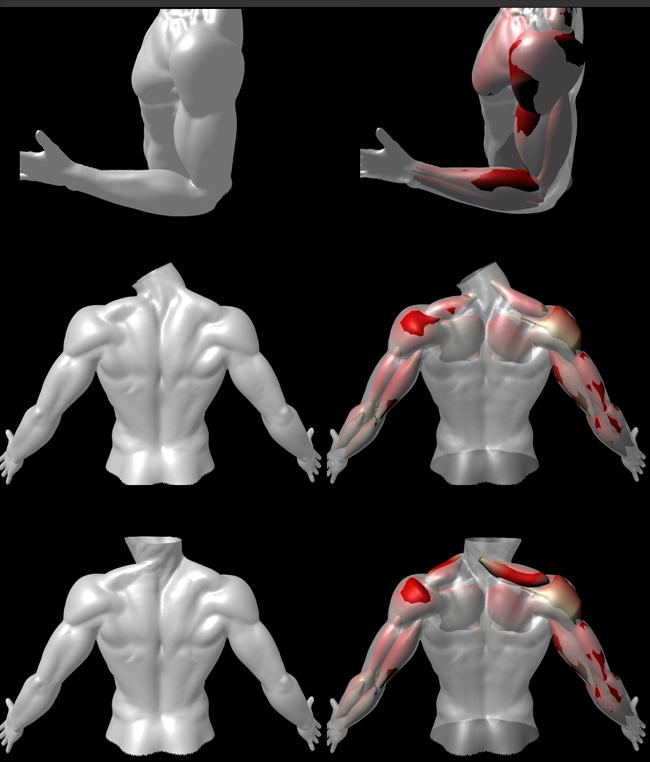
Researchers at the National Center for Computer Animation have devised a computer program that automatically adds realistic muscle shape to simple wire frame and skeletal figures. These virtual muscles will move and change shape realistically, under skin and clothing, when the figures are animated. From the NewScientist article:

Zhang and his colleague Xiaosong Yang have developed a system that takes the outward appearance of a character and automatically generates a skeleton and muscles to fit inside.

"It works by using geometric processing of the still character to determine where muscles should go," he told New Scientist. "If there's an important muscle it will show through the skin so the tool can infer where the major muscles should be."

The software guesses at a suitable skeleton to attach the muscles to by adapting a standard humanoid skeleton to fit the character's overall shape. With skeleton, muscles and skin all in place, the character can be made to move in more realistic ways.

The software simulates how the muscles affect the outward appearance as they contract, relax and slide in relation to joints and other muscles.
Other mammals

"Our method could also be applied to characters based on other mammals," says Zhang. As long as the basic shape of an animal's skeleton is known and the skin is designed, it would work just as well, he says.

But the team first plans to improve the technique's accuracy in generating human-like characters. "We plan to add detailed knowledge of the human anatomy," he explains. "We hope to be able to take a character and fit a very accurate anatomy to it."

This could even have medical applications, says Zhang, allowing doctors to infer the biomechanics of a patient's anatomy from their outer appearance.


Initially you will see this approach used in computer gaming and entertainment animations. Then you will see this improved realism utilised in virtual reality programming, such as virtual surgery tutorials, and other technical tutorial programming.

Judging by the illustration at the top of the page, it may not be long before Chippendale's creates an animated showcase using virtual male strippers. Virtual female strippers and more erotic virtuality is inevitable, given the money flow.

Labels:

Bookmark and Share

Cancer: The Biological Clock, Apoptosis, and Gene Amplification

Understanding cancer, and how to defeat it, is one of the main goals of western medical research. As people living in western nations live longer lives, they are more likely to confront cancer at some point. Cancer and ageing are closely linked.

This Biocom newsrelease discusses the relationship between the body's biological clock, and cancer:

"The notion that the clock regulates DNA-damage input and that mutation can affect the clock as well as the cell cycle is novel," says Jay Dunlap, professor and chair of genetics at DMS. "It suggests a fundamental connection among circadian timing, cell cycle progress, and potentially the origins of some cancers."

....Recent evidence in mammalian cells shows that other cell cycle regulators physically interact with clock proteins. Loss of at least one clock protein (mammalian period-2) is known to increase cancer susceptibility. The coordination of the clock and cell division through cell cycle checkpoints, supports the clock's "integral role in basic cell biology," conclude the researchers." Their work can help advance understanding of cancer origins as well as the timing of anti-cancer treatment.
Much more at source article.

When DNA damage occurs that could lead to cancerous transformation, cells usually detect the DNA damage, and trigger apoptosis, programmed cell death. Cancerous cells have evolved ways to prevent apoptosis, and their own programmed destruction. This Biocom newsrelease provides more details of how malignant cells obstruct apoptotic cascades, and how science might devise drugs to make cancer cells more vulnerable to treatment:

Researchers at The University of Texas M. D. Anderson Cancer Center have significantly refined the scientific understanding of how a cell begins the process of self-destruction - an advance they say may help in the design of more targeted cancer therapies.

In the June 30 issue of the journal Cell, the research team found that a natural "brake" exists in a cell to prevent it from undergoing apoptosis, or programmed cell death, and they say that optimal anti-cancer therapies should take a two-pronged approach to overriding this brake in order to force a tumor cell to die. Very few drugs do this now, they say.

The discovery "demonstrates that apoptosis is more complicated than had been believed, and consequently harder to achieve," says the study's lead author, Dean G. Tang, Ph.D., associate professor in the Department of Carcinogenesis in the Science Park Research Division of M. D. Anderson in Smithville, Texas.

Apoptosis can occur when a cell has reached its lifespan, and so is "programmed" to die, or is initiated when a cell is damaged beyond repair or infected by a virus. Apoptosis is rare in cancer because tumor cells have adapted biological pathways to circumvent cell death, so many anti-cancer therapies focus on inducing apoptosis in these cells, Tang says.

...."Many cancer drugs focus on pushing the mitochondria to release CC [cytochrome c], and not on reducing the nucleotide pool, and our new model suggests that decreasing this pool is essential to produce sensitivity in cancer cells to apoptosis," Tang says.

Cancers that quickly become resistant to therapy, such as melanoma and ovarian tumors, do so because they have found ways to prevent mitochondria from releasing a lot of CC, he says. Tumor cells also don't want to decrease their nucleotide pool, because they need ATP for continued functioning, he says.

"An optimal cancer therapy should combine both strategies," Tang says. "They should maximize release of CC and maximize the decrease of nucleotide levels."

Some chemotherapy drugs, like paclitaxel, cisplatin and etoposide, appear, coincidentally and perhaps inadvertently, to do both, and are very effective for specific cancers, he says. "But based on these new findings, we now have a new theoretical approach that can be used to help in the design of more targeted chemotherapy drugs," Tang says. "This will change the way that scientists now think about the role of nucleotides in cancer therapy."
Much more detail at source.

Here is another interesting finding about the molecular onset of cancer, from researchers at Georgia Tech:

Gene amplification plays an important role in causing cancers via activation of oncogenes. If scientists can determine the rules as to which segments of genetic material become amplified and how, oncologists and drug researchers may be able to interrupt that process and prevent the formation and growth of some tumors. Using yeast as a model organism, researchers at the Georgia Institute of Technology have discovered that the location of a hairpin-capped break relative to the end of the chromosome will determine the fate of the amplification event

Gene amplification is the increase in copy number of a particular piece of DNA and
is a hallmark of tumor cells. Double minutes are extrachromosomal segments of amplified DNA. Homogeneously staining regions are amplified intrachromosomal segments forming large genomic regions. Some strategies of pharmaceutical research in cancer prevention and treatment could involve curbing cancer development via restricting gene amplification. The first step towards achieving this is to discover the rules that govern whether an amplification event is a double minute or a homogenously-staining region.

It’s known that regions of chromosomes that are prone to amplification have
palindromic sequences of DNA, which are weak places where the chromosome can break. These palindromic sequences can be naturally found in human genome. The distribution of such sequences can vary from one individual to another. Researchers at the Georgia Institute of Technology have discovered that a particular type of DNA break, a hairpin-capped double strand break, induced by these palindromic sequences, is a precursor to amplification.

“We have a developed a system in yeast which would mimic the situation in human cancer cells wherein oncogenes might be located next to palindromic sequences. Using this system we have discovered the rules that determine how double minutes or homogeneously staining regions can be generated,” said Kirill Lobachev, assistant professor in Georgia Tech’s School of Biology.

....The findings can help researchers understand the cause of cancer in diseased individuals and also to potentially identify individuals who might be prone for cancer.
More information and links at the source.

The initiation and maintenance of cancer cells and tumours are complex. Only by understanding how to work within this cellular/molecular complexity will researchers devise better cancer therapies.

Labels:

Bookmark and Share

29 June 2006

Women: Have Your Babies While You are Young--Healthier, Longer Living, More Intelligent Children

This newsreport points to research suggesting that children born to younger mothers tend to live longer:

People are more likely to see their 100th birthday, research hints, if they were born to young mothers.

The age at which a mother gives birth has a major impact on how long her child will live, two researchers from the University of Chicago's Center on Aging told the Chicago Actuarial Association meeting this spring.

The chances of living to the ripe old age of 100 -- and beyond -- nearly double for a child born to a woman before her 25th birthday, Drs. Leonid Gavrilov and Natalia Gavrilova reported. The father's age is less important to longevity, according to their research.
More at source.

This newsrelease from Stanford suggests that if you want your children to be as intelligent as possible, you need to spend a lot of time with them in the early years:

Knudsen's findings about how experiences shape the brain's architecture help explain findings in both rats and monkeys, where early experiences translate directly to how the adults behave and learn. Co-author Judy Cameron, PhD, professor of psychiatry at the Oregon National Primate Research Center, has found that monkeys prevented from forming a strong bond with their mothers as infants go on to be less social, less likely to investigate new situations and more prone to anxiety as adults.

Shonkoff said the animal work has an important parallel in human development. For example, kids who are abused or neglected, whose parents are compromised by drugs, alcohol or depression, who are shuttled among relatives and foster-care placements or who spend long hours in poor-quality child-care programs don't develop the same brain power as kids with happier, more nurturing and stable childhoods. Those kids have less chance of securing skilled jobs when they grow up. They are also more likely to need expensive remedial help in school or-even more costly-rely on public assistance or serve jail time as adults.
More at source.

This letter from Nature looks at some of the differences in brain growth mechanics between children of three different intelligence levels:

Children who are adept at any one of the three academic ‘R’s (reading, writing and arithmetic) tend to be good at the others, and grow into adults who are similarly skilled at diverse intellectually demanding activities1–3. Determining the neuroanatomical
correlates of this relatively stable individual trait of general intelligence has proved difficult, particularly in the rapidly developing brains of children and adolescents. Here we demonstrate that the trajectory of change in the thickness of the cerebral cortex,
rather than cortical thickness itself, is most closely related to level of intelligence. Using a longitudinal design, we find a marked developmental shift from a predominantly negative correlation between intelligence and cortical thickness in early childhood to a
positive correlation in late childhood and beyond. Additionally, level of intelligence is associated with the trajectory of cortical development, primarily in frontal regions implicated in the maturation of intelligent activity4,5. More intelligent children demonstrate a particularly plastic cortex, with an initial accelerated and prolonged phase of cortical increase, which yields to equally vigorous cortical thinning by early adolescence. This study
indicates that the neuroanatomical expression of intelligence in children is dynamic.
Much more at source, with helpful graphs and illustrations. Hat tip Neurolearning Blog and Intelligence Testing blog.

Girls are born with their full complement of eggs. The older the woman, the older and more potentially damaged are the remaining eggs. Older women run higher risks of producing chromosomally damaged infants, or of simply being incapable of becoming pregnant.

Young women who intend having children should consider having them while they are in their twenties. Better to have children when you are young and strong and able to keep up with the little dynamos. Once they are well into school years, you can put most of your energies into your career, without worrying about the biological clock.

In addition, younger women possess greater attractiveness to potential fathers, evolutionarily speaking. If a woman waits for marriage and family until she is firmly established in her career, in her late thirties or early forties, her ability to attract the type of man she may wish as the father of her children will be diminished by the natural effects of time and life's stress. You may think an older woman can better choose a good father, given her greater experience, but in this situation the diminished choice can easily balance the greater wisdom of age.

Being politically incorrect is an enormous pleasure, an exhilarating luxury given to the self-employed.
:-)
Bookmark and Share

28 June 2006

Cooling the Earth: Mitigating Global Warming While Avoiding the Next Ice Age

There is a lot of recent interest in methods of cooling earth's climate, by reducing CO2 in the air, and other more direct means. The image above pictures an array of high-tech CO2 sequestrators, made to suck CO2 directly out of the air.

This NY Times article presents even more outlandish ways of cooling the earth:

The plans and proposed studies are part of a controversial field known as geoengineering, which means rearranging the earth's environment on a large scale to suit human needs and promote habitability. Dr. Cicerone, an atmospheric chemist, will detail his arguments in favor of geoengineering studies in the August issue of the journal Climatic Change.

....Geoengineering is no magic bullet, Dr. Cicerone said. But done correctly, he added, it will act like an insurance policy if the world one day faces a crisis of overheating, with repercussions like melting icecaps, droughts, famines, rising sea levels and coastal flooding.

....The study of futuristic countermeasures began quietly in the 1960's, as scientists theorized that global warming caused by human-generated emissions might one day pose a serious threat. But little happened until the 1980's, when global temperatures started to rise.

Some scientists noted that the earth reflected about 30 percent of incoming sunlight back into space and absorbed the rest. Slight increases of reflectivity, they reasoned, could easily counteract heat-trapping gases, thereby cooling the planet.

Dr. Broecker of Columbia proposed doing so by lacing the stratosphere with tons of sulfur dioxide, as erupting volcanoes occasionally do. The injections, he calculated in the 80's, would require a fleet of hundreds of jumbo jets and, as a byproduct, would increase acid rain.

By 1997, such futuristic visions found a prominent advocate in Edward Teller, a main inventor of the hydrogen bomb. "Injecting sunlight-scattering particles into the stratosphere appears to be a promising approach," Dr. Teller wrote in The Wall Street Journal. "Why not do that?"

....Other plans called for reflective films to be laid over deserts or white plastic islands to be floated on the world's oceans, both as ways to reflect more sunlight into space.

Another idea was to fertilize the sea with iron, creating vast blooms of plants that would gulp down tons of carbon dioxide and, as the plants died, drag the carbon into the abyss.


The US Government has been making policies and plans for several years to reduce greenhouse gas emissions, and to increase sequestration of greenhouse gases.

The reason the atmosphere of the climate is even more charged than usual, is the recent schizoid NAS Panel Report. Even Al Gore is rather steamed about the NAS report, among other things.

Although planting more trees would seem to be a more efficient and inexpensive way of reducing greenhouse gases than high-tech sequestrators, one must admit that sequestrators can be placed in areas where trees will not readily grow, such as arid deserts and above timberlines on mountains.

As for the futuristic orbiting lenses and mirrors, temperature control is not a bad thing to research. Clearly the earth has experienced times when it was both much warmer than at present, and much colder. Given human beings' love of comfort, it is only prudent to learn what methods of temperature control will work, and which methods will either not work, or be too dangerous to implement.

Anyone with an IQ above 50 should know that an ice age is a thousand times more lethal to human civilisations than the mild warming trends being experienced currently. Current warming has been mild and not without benefit. More concerning is the possibility of positive feedback warming or cooling. Humans need to be able to recognise early signs of feedback effects quickly, and be prepared to deal with them.

Too much current climate work is based on incompetent modeling and proxie work. The prediction of climate catastrophes based upon unprofessional and unethical quasi-science will only lead to the diverting of resources from projects that reduce poverty and disease, to projects that accomplish nothing productive. It is time for climate research to enter the big leagues, and begin to incorporate solar effects and the effects of water vapour and cloud formation.

Labels: , , ,

Bookmark and Share

27 June 2006

Visual Correlations: Poverty, Corruption, Infant Mortality, IQ, etc.

Corruption


Fertility Rate


Literacy Rate


IQ with GDP

Labels:

Bookmark and Share
Newer Posts Older Posts
Al Fin Main Page
Enter your Email


Powered by FeedBlitz
Google
WWW AL FIN

Powered by
Blogger

``