25 June 2011

US Regulatory Bottlenecks Force Nuclear Development to Move Overseas

"Right now, the regulatory environment here in the U.S. means that it would take decades just to certify the design," he said at a U.S.-China energy summit last year. "By partnering with the Chinese, they can move ahead and commercialize the technology around the world when it is proven," Huntsman said. _NYT
The nuclear licensing process for new reactors in the United States has grown so cumbersome and expensive -- and the US NRC under Obama has become so obstructionist toward new nuclear power -- that some of the newest and most promising new, scalable reactor startups are looking overseas for development and manufacture.

Last year Hyperion Power announced plans to manufacture its small modular reactor (SMR) in the UK, and now Terrapower -- backed by Bill Gates -- is negotiating with potential partners in France, India, China, and Russia, to build its cutting edge breeder reactor technology.
"We've had conversations with the Chinese, the Russians, the Indians, the French," Reynolds said in an interview. "We have an aggressive schedule where we think it is important to get something built and accumulate data so that we can eventually build them in the U.S. Breaking ground in 2015, with a startup in 2020, is more aggressive than our current [U.S.] regulatory structure can support."

In addition to its unique fuel cycle, the TerraPower design employs a high-temperature, liquid metal core cooling technology suited to a breeder reactor with "fast" neutron activity, rather than today's predominant reactors whose water cooling systems slow neutrons. TerraPower wants to partner with countries that are actively pursuing fast, breeder reactor technology. "That isn't here right now," he said, referring to the United States. _NYT_via_NBF
A number of different approaches to scalable nuclear fission have been proposed by US companies, but under President Obama the regulatory climate toward all forms of reliable energy production is extremely bleak. Hence the interest in building the revolutionary, safe, new, scalable designs overseas in an energy-friendly climate.

More on SMRs:
No bigger than a double-wide trailer and built in a factory for a fraction of the cost of a large nuclear plant, the small modular reactor (SMR) is an environmentally friendly and cost-effective way to help meet growing demand for electricity.

SMRs have the potential to replace older coal plants and to provide a hedge against volatility in natural gas prices. And while solar and wind are attractive energy sources, both produce power only intermittently and require back-up power in the event the weather is not cooperating.

Established nuclear-energy companies engaged in the development of SMRs include Westinghouse, General Electric, General Atomics and Charlotte-based Babcock & Wilcox. But the field also includes some smaller start-ups such as NuScale Power in Oregon, Hyperion Power Generation in New Mexico and TerraPower, based on the outskirts of Seattle and established with support from Bill Gates.

...In contrast to a conventional nuclear plant, SMRs could be added one at a time in a cluster of modules, as the need for electricity rises. The cluster's costs would be paid for over time, softening the financial impact. The modules could be factory assembled and be delivered by rail to an existing nuclear plant site. In such a configuration, one SMR could be taken out of service for maintenance or repair without affecting operation of the other units.

Most SMRs would be situated beneath the ground to provide better security. Typically they would operate for many years - possibly decades - without refueling and produce far less waste than conventional reactors.

Significantly, almost all of the SMR development is being done with private financing. Companies are using their own resources to develop the small reactors, without government support from mandates or subsidies of the sort that renewable energy sources now require. An SMR designed by Babcock & Wilcox would generate 125 megawatts, using conventional light-water reactor technology. The Tennessee Valley Authority is considering deploying six of the Babcock & Wilcox modules at its Clinch River site near the Oak Ridge National Laboratory.

Another SMR on the drawing board would be an advanced, sodium-cooled "fast" reactor producing just 25 megawatts - enough electricity to power a rural community or a military installation. Hyperion Power Generation has formed a partnership with the Savannah River National Laboratory to build a sodium-cooled reactor as part of a clean energy park near Aiken, S.C. _Newsobserver

Eventually the energy starvationists who have entrenched themselves in Washington DC will be forced out, and their current premises fumigated and disinfected with fresh, rational, and optimistic thinking regarding an abundant energy future.

Previously published at Al Fin Energy

Labels: ,

Bookmark and Share

13 June 2011

Carnival of Nuclear Energy #56 at NEI Nuclear Notes

The 56th edition of the Carnival of Nuclear Energy is being hosted at NEI Nuclear Notes. (h/t Brian Wang) Here are some excerpts:
To start, Rod Adams at Atomic Insights has a piece describing what’s happening between the NRC, the AP1000 and Friends of the Earth. According to Rod, the NRC appears to be wavering in its commitment to its own established process because some believe that receiving 14,000 emails on the AP1000 design certification indicates a high level of general public opposition. Rod notes that the emails are mainly from a single group, the FOE, who have professionally opposed nuclear energy for 40 years. The group claims credit for orchestrating nearly every one of those emails as part of a campaign against nuclear energy in general, not against the AP1000 in particular. The FOE sources who have identified the cited "technical issues" have questionable professional backgrounds, long histories of antinuclear activity, and little credibility.
Dan Yurman at Idaho Samizdat discusses the NRC Inspector General’s report on the NRC Chairman’s use of budget guidance on the review of the Yucca Mountain license. According to media summaries of the leaked IG’s review in the Wall Street Journal and New York Times, the Chairman issued controversial budget guidance to his staff to stop the work and brushed off complaints from other commissioners about it.
Rick Maltese at Deregulate the Atom pointed out that the NRC should not get all the credit for nuclear energy's decades of safety.
The Institute for Nuclear Power Operations in the US and the World Association of Nuclear Operators deserve a lot of the credit for improvements in safety and other design improvements. They are the Nuclear Industry’s self regulating bodies. And most of the accomplishments were made within the 10 or so years after the Three Mile Island accident. I point this out to set the record straight about who and how the excellent record of safety that has come about in the nuclear industry is not at all understood.
Alan Rominger and Steve Skutnik at Neutron Economy have two posts to mention. Alan explains the connection between the recent idea for "charter cities" where small modular reactors located at the bottom of the ocean can provide sustainable, independent power for such efforts. And Steve explains why he ultimately went from being a physicist to a nuclear engineer. Steve encourages other nuclear professionals and advocates to tell their stories of how they came to be involved in nuclear energy as well (I’m reminded of this example).
Charles Barton at Nuclear Green asks: Why Is Renewable Energy So Expensive, While Molten Salt Reactors will be So Cheap? He finds that an examination of input materials for wind generation systems and solar PV generation is greater than the input materials for an Advanced High Temperature Reactor. The study he cites reveals that the AHTR, a near relative of the Molten Salt Reactor, has big advantages by the little amount of resources needed. MSRs can potentially offer the same material input advantages over renewables, and thus may generate electricity at very competitive costs.
Brian Wang at Next Big Future reports that Lawrenceville Plasma Physics’s (LPP) research team has sorted out several issues on their dense plasma focus fusion project which should enable them to substantially increase power.
_NEI Nuclear Notes
Despite the Obama administration's overarching policy of energy starvation and the Nuclear Regulatory Commission's blatant obstructionism, small modular reactors are being developed rapidly -- the B&W reactor being a prime example.
The concept behind mPower, and small modular reactors designed by B&W competitors, is to let electric utilities add nuclear generation in small blocks. While most reactors on the market today generate more than 1,000 megawatts of power, an mPower module would provide 125 megawatts. A utility could order just enough modules to meet its needs, Halfinger said.

“There are places in the world where they need 1,000 megawatts, (but) one size does not fit all,” he said. “A lot of places need 200 megawatts.”

The nuclear industry has been abuzz about small modular reactors. Westinghouse, NuScale Power and Holtec International also are working on modular designs.

Cross-posted to Al Fin Energy

Labels: , ,

Bookmark and Share

21 January 2011

Undersea Nuclear Reactors to Power Undersea Cities?

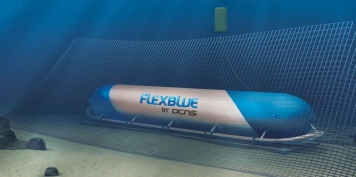
DCNS, the French state-controlled naval company, said it will work in partnership with French companies Areva, EDF, and the French Atomic Energy Commission to build small- and medium-sized underwater reactors to provide electricity to consumers....Radio France Internationale reported Wednesday.

The company said its Flexblue project, expected to enter the building phase in 2013, is in response to global energy challenges and renewed interest in nuclear power. _UPI


Video h/t NextBigFuture
Small, portable nuclear reactors that are made for placement under the sea, could be used for many porpoises purposes. Besides running power cables to land to serve terrestrial customers, such undersea reactors could also serve floating installations and seafloor industries -- even undersea cities.
Akin to the submarines that DCNS has been making for the French navy for 40 years, Flexblue is a cylindrical unit 100 metres in length and 12 to 15 metres in diameter. Inside would be a small nuclear power reactor and well as steam generators, turbines and a generator to produce 50 to 250 MWe.

The vision is for such a unit to be installed on the seabed under 60 to 100 metres of water, several kilometres from a centre of power demand such as a city, industrial base or remote community which it would serve via underwater cables.

A video released today depicts the unit's deployment under naval guard. It is transported to sea on a heavy lift ship which lowers itself to allow Flexblue to maneuvre under its own power. Descent occurs under the watch of divers before a cutaway view reveals four stories of plant within the hull. The structure is then covered by a net and power is transmitted by cable to shore. _WorldNuclearNews_via_NextBigFuture
WNN

Brazil is already planning for "undersea cities" as replacements for deep ocean offshore oil rigs:
The plan is to construct 'cities’ more than 2,000 metres under water, containing machines, giant pieces of equipment and robots that could inspect the systems being used to extract millions of barrels of oil. Many operations would be fully automated while others would be controlled by humans at a distance.

“Our target is that we won’t need platforms in ten years from now,” said Carlos Tadeu Fraga, executive manager of the Petrobras Research Centre.

Petrobras already owns virtual reality laboratories where engineers can inspect 3D images of oil fields. But now they want to take a further technological leap by installing floating rig equipment on the sea bed.

The machinery under the sea would be capable of separating oil, gas, water and sand, compressing substances and generating enough energy to keep the operation functioning.
As deep sea mineral mining and deep sea science and exploration joins deep sea oil & gas drilling, the need for self-powered seafloor installations will grow in urgency. Sealed nuclear reactors that can run between 20 and 50 years on a single fueling will provide the necessary energy security for such installations.

A few years ago, the Estonian Maritime Academy proposed the development and installation of a subsea nuclear reactor off the Estonian coast in the Baltic Sea, for provision of basic power to the country. US naval submarines have traversed the world's oceans for several decades, powered safely and reliably by small nuclear reactors, so the concept of undersea reactors is well proven.

The idea of nuclear powered undersea cities may seem like the stuff of science fiction, but show me a better way to power a post-apocalyptic undersea civilisation. And what better place to survive the great lefty-Luddite environmentalist-engineered dieoff of humans on the surface? Abundant electricity allows for producing freshwater via desalination, oxygen for breathing via electrolytic splitting of water, hydrogen for fuel cells and chemical processes, etc. Nuclear reactors produce plenty of heat, so there would be no reason to be cold, regardless of outside sea temperatures.

Last but not least, plentiful small modular nuclear reactors -- both on land and sea -- should put a quick end to all of the EROEI nonsense one hears batted around at peak energy religious websites. ;-)

Labels: , , ,

Bookmark and Share

16 January 2011

Small Modular Reactors Set to Thrive in Post-Obama Age

A global race is under way to develop small-reactor designs, says Paul Genoa of the Nuclear Energy Institute, an industry body in Washington, DC. He estimates that more than 20 countries have expressed serious interest in buying mini-reactors.

At least eight different approaches are being developed, mainly in America and Asia, by an army of 3,000 nuclear engineers, according to Ron Moleschi of SNC-Lavalin Nuclear, an engineering firm based in Montreal. Regulatory and licensing procedures are lengthy, so little will be built until around 2017, he says. But after that the industry is expected to take off. The International Atomic Energy Agency (IAEA) estimates that by 2030 at least 40 (and possibly more than 90) small reactors will be in operation. It reckons that more than half of the countries that will build nuclear plants in coming years will plump for these smaller, simpler designs. _Economist
Economist

Obama's Nuclear Regulatory Commission is dragging its feet on nuclear energy -- particularly on new safer, more economical reactor designs such as small modular reactors (SMRs). But Obama's agenda of energy starvation, and its job-killing, industry-killing effects are living on borrowed time. In the real world, all forms of currently suppressed energy -- including small modular nuclear reactors -- will find a way.

Upcoming conferences on Small Modular Reactors:

19-20 April 2011 Conference in Columbia, SC, on Small Modular Reactors:
The conference is expected to draw about 120 people from about 60 companies and agencies around the world, such as China National Nuclear Corp., the International Atomic Energy Agency and Iraq Energy Institute. Also, industry heavyweights like Westinghouse, AREVA and GE have signed up, along with the U.S. Department of Energy, the Nuclear Regulatory Commission, the U.S. Army and utilities across the nation.

The conference, scheduled to be held April 19-20 at the Marriott Hotel on Main Street, is sponsored by SCE&G and organized by the Carolinas’ Nuclear Cluster and Nuclear Energy Insider _thestate

SMR Conference 23-24 May 2011 Washington, DC...._ Call for abstracts

Small modular reactors can be built more quickly, safely, and cheaply in a controlled factory environment. They can then be shipped to the site for a quick and inexpensive installation -- pre-loaded with fuel and ready to hook up.

The US Navy has been powering ships safely using small nuclear reactors for many decades. One of the most likely future suppliers of SMRs to the civilian market -- Babcock and Wilcox -- just received a new $2 billion award for Naval Nuclear Reactor Components.

But then, the US military has to actually accomplish something -- unlike the civil portion of the US government which generally does no more than consume scarce resources which would be put to better use elsewhere.

Short Primer on Liquid Fuel Nuclear Reactors
EnergyfromThorium

Adapted from an earlier article at Al Fin Energy

Labels: ,

Bookmark and Share

19 July 2010

An Update on Small Modular Fission Reactors

What is the need?
Most of the world's electrical grids are small. One single source of power generation should not exceed 10-15% of the grid size or risk stability and power concerns when the one large plant goes offline. The "standard" reactor produces 1 to 1.6 GWe and cost and estimated $5B+ and 84 months to build.

There is a an application for small modular reactors that can be built quickly and delivered onsite with fuel intact and ready to go. The small size could be used for power or for desalination. Most designs are modular in that you can add more than one to increase output slowly as needed. Construction of the "standard" reactor includes large forgings and significant resources for movement and construction of the large components. Small reactors are mostly skid built at the factory and shipped in using existing US or small factory construction and forging capabilities. _PowerIndustryTrends
New nuclear power construction has been essentially stalled for the past few decades in the western world, as faux environmental activists and their political connections have seized control of the energy future -- and thus the destiny -- of western societies.

Small modular reactors (SMRs) are one answer to the failure of industry and governments to get past the faux environmental blockade in order to confront the impending critical shortage of electrical power in several parts of the world. SMRs can be used as "anchors" for a more resilient power grid that is capable of separating into dozens of smaller grids when confronted by a threat of cascading failure from an EMP attack, a solar storm, or a concerted hacker attack from China, Russia, or other hostile nation.

SMRs can also power remote off-grid military or scientific stations, remote towns and island populations, large seasteads and other extreme colonies, and large survivalist settlements -- not to mention space colonies and lunar settlements/stations.

This update on progress in SMRs comes from the blog Power Industry Trends, by way of NextBigFuture.
The players:  

Nuscale
-Small modular reactor currently rated at 45MWe with up to 24 units at single location (1080MWe)
-36 months from first concrete to power

-Passive cooling systems using natural circulation
-Proven LWR design which should provide faster regulatory review as it is not novel technology
-24 month refueling cycle
-500 tons as shipped via barge, truck or train, forged and fabbed at any mid-size facility
-Estimated cost advantages due to: simplicity, modular design, volume manufacturing and shorter construction times
-Filing with NRC for design certification in Q2 2012. NuScale expects the first nuclear facility will be operational sometime in 2018.
Data from Nuscale website

B&W mPower
-125 MWe to 750 MWe or more for a 4.5-year operating cycle without refueling
-Proven ALWR design which will reduce regulatory review time
-Design Certification submittal in 2011
-Letter of intent recieved from Tennessee Valley Authority (TVA) to begin the process of evaluating a potential lead plant site
Data and picture from B&W website

IRIS (International Reactor Innovative and Secure)
-Westinghouse 335MWe LWR scalable to 100MWe
-Developed by an international consortium led by Westinghouse including 21 organizations from 10 countries
-Design Certification submittal in Q3 2012
-Up to 4 year refueling cycle
Data from Westinghouse website and NRC

ARC-100 Advanced Reactor Concepts
-Sodium-cooled, metal fueled, fast-reactor currently rated at 50-100MWe
-Sodium Cooled primary to super critical CO2 secondary Brayton Cycle
-Based on technology proven by over 30 years of successful operation of EBR II, an experimental program operated by the U.S. government
-20 year (yes year) refueling cycle
-Proliferation proof fuel system
-10 acre footprint and less than 24 months construction time
-Target cost of $0.05 per KWh for electricity production
-Initial discussions with NRC, but no date for design certification submittal
Data from Advance Reactor Concepts website


Hyperion Power Module (HPM) or Mini Power Reactor (MPR)
-Formerly the Comstar reactor invented by Dr. Otis "Pete"' Peterson at the United States' famed Los Alamos National Laboratory (LANL) in New Mexico. Through the commercialization program at LANL’s Technology Transfer Division, HPG was awarded the exclusive license
-Each liquid metal PbBi cooled HPM-based electric plant generates 25MWe  and can be configured for steam only, co-generation, or electricity only.  Two or more modules can be "teamed" together.
-$50 million for one 25Mwe module 
-Fits into a standard fuel transport containerTransported via ship, rail, or truck. Total mass < 20 metric tons 
-Produces power for 8-10 years and entire reactor module is replaced
-Expect design certification submittal to NRC within a year
-150 purchase commitments from customers such as mining and telecom companies, provided its technology gets licensed for operation 
-Meets all the non-proliferation criteria of the Global Nuclear Energy Partnership (GNEP)  as the entire module is fueled and sealed in the factory and returned to the factory once expended.
-Alternate Energy Holdings Inc (AEHI) has signed a MoU with Hyperion Power Generation Inc of New Mexico which the companies have described as "the beginning of a joint venture" to build and market Hyperion's modular reactors around the world 
Data from Hyperion website 
 

PRISM-GE-Hitachi
 -Power Reactor Innovative Small Module or PRISM
-Liquid sodium cooled 311 MWe design
-use recycled spent nuclear fuel instead of creating new fuel
 -12-24 month refueling cycle
-NRC Combined Operating License submittal in Q1 2012
-NRC staff conducted pre-application review in early 1990s that resulted in the publication of NUREG-1368, "Preapplication Safety Evaluation Report for the Power Reactor Innovative Small Module (PRISM) Liquid-Metal Reactor (January 1994)."
Data from NRC website 


SMART (System Integrated Modular Advanced ReacTor)-KINS
-South Korean 100MWe molten salt reactor
-A consortium of 13 South Korean companies led by Korea Electric Power Co (Kepco) has agreed to invest 100 billion won (about $83 million) in the development of the Korea Atomic Energy Research Institute (Kaeri) Smart reactor
-36 month refueling cycle
-Intend to license design by 2012
Data found here, Korean main link is broken

Pebble Bed Modular Reactor (PBMR)
-165 MWe Helium cooled design by PBMR, LTD
-Online refueling capability
-NRC Design Certification submittal in 2013
-Modular, gas-cooled, pebble bed reactor with online refueling that generates electricity via a gas or steam turbine and which may also be used for process heat applications.
-Licensing of a demonstration plant in South Africa is being reconsidered. Agreement with Chinese for cooperation in development
 Data from PBMR website

Toshiba 4S (Super-Safe, Small, and simple)
-10MWe liquid metal (sodium) design
-30 year refueling cycle
-NRC Design Approval submittal in Q2 2012
-apply later this year for U.S. approval to test the unit in the village of Galena in central Alaska,
 Data from NRC website 

Terrapower
 -Uses depleted uranium packed inside hexagonal pillars. The uranium is bred into plutonium, which undergoes fission, in a wave that moves through the core at only one centimetre per year as the wave moves from one end of the reactor to the other.
-U-238 is bred progressively into Pu-239, which is the actual fuel and undergoes fission. The reaction requires a small amount of enriched uranium to get started and could run for decades without refueling. However it is a low-density core and needs to be relatively large.

-Liquid sodium coolant
-Seeking to outsource the design for others to construct.  Currently in discussion with Toshiba.
Data from Intellectual Ventures website
_PowerIndustryTrends
More information at the Power Industry Trends blog.
US Power Utility Companies Taking Closer Look at SMRs

Don't miss the 10th Carnival of Nuclear Energy at NextBigFuture

Labels: ,

Bookmark and Share

16 November 2009

The Perfect Portable 25 MW Survival Reactor?


On Wednesday in Washington DC, and on Thursday in London, Hyperion Power Generation will unveil the design of its small modular 25 MWe portable nuclear reactor. Brian Wang reports on Hyperion's plans, and provides other details on the remarkable safety and portability of the small modular reactor.

Hyperion's 25 MWe reactor is factory built and factory fueled and re-fueled. It can be shipped by truck, train, or ship. It provides enough power for 20,000 modern homes. A single fueling is good for 5+ years. They are designed for burial underground, for additional safety. All for a mere $25 million -- or about $1,250 per household in a 20,000 home community. For over 5 years of baseload power and heat, a $1,250 investment is minimal.

Perhaps you think a 20,000 home community is too large for a survival refuge? It depends on the emergency. If you are living through a situation where the minimum viable population (MVP) comes into consideration, a 20,000 household community is very close to the proper size. Particularly when the community members are selected for their ability to contribute to the long term survival not only of the community, but of the science, technology, skill set, and cultural and philosophical wealth of the modern western world.

Every community built for survival, should have the skill and knowledge set to re-create a small modern university and a small advanced industrial town. These communities will need reliable baseload power for routine heat and electricity, as well as to power small industrial projects to promote survivability and sustainability.

Some extreme catastrophes may be resolved within a 5 year time period. A successful EMP attack, for example, would require between a year and 5 years for the central authority to re-assert control and to re-establish supply lines, power, transportation, and broadband communication to remote parts of a country. For such extended emergencies, the Hyperion reactor would see the community through the worst.

Other catastrophes would extend far beyond the Hyperion's designed lifetime. While the community might continue to extract heat and power from the reactor for several years beyond the designed re-fueling date, the output would decay rapidly after a certain point.

That is why a community containing relatively large numbers (thousands) of competent individuals is so important for long-term survival. And it is why it is so important that the community be provided a solid 5+ years of reliable baseload power and heat in the early stages of adjustment away from the former established order. Thousands of isolated and distressed individuals need reassurance and stability provided in as many ways as possible.

Under the current leadership of the large western nations, hard-won resources are being squandered at record rates. The earned leadership of the west is being abdicated by incompetent governments. Power abhors a vacuum. With the surrender of western power, other powers will rise.

The new powers will not be so squeamish about human rights, of course, but the new powers will be fragmented and at war between themselves. Large scale breakdown of order should be expected.

In the case of broad-scale anarchy and war, isolated nuclei of civilisation that can provide the nuclei of a re-coalescence of western liberalism may make all the difference in the course of the next thousand years of human history.

Labels: , ,

Bookmark and Share

15 November 2009

Small Nukes Around the World

Small modular reactors (SMRs) are the coming thing in nuclear power. They can be mass-produced in factories, using modern methods of quality control, to assure a safe and uniformly precise construction. Modular reactors can be scaled to match the demand from an isolated small village or seastead, to full scale mega-grid baseload supplier. They can be shipped anywhere in the world to a prepared site, and fueled either in the factory before shipping, or at the final destination after arrival and installation.

Some 40 SMRs are now at different stages of development or design. About a dozen are at advanced design stages and could be deployed within the next decade. These include integral PWR designs (IRIS, SMART, CAREM), floating NPPs (KLT-40S), high temperature gas reactors (PBMR, HTR-PM) and India’s advanced heavy water reactor (AHWR). _Source
The B&W [Babcock & Wilcox] mPower reactor is a 125 MWe integral PWR designed to be factory-made and railed to site. The reactor pressure vessel containing core and steam generator is thus only five metres diameter. It would be installed below ground, have an air-cooled condenser, and passive safety systems. It has a "conventional core and standard fuel" enriched to 5%, with burnable poisons, to give a five-year operating cycle between refuelling. (B&W draws upon over 50 years experience as the main manufacturer of nuclear propulsion systems for the US Navy, involving compact reactors with very long-life cores.) _WorldNuclearNews
Other small nuclear reactors well along in the running:
IRIS


The International Reactor Innovative and Secure (IRIS) is a 335MWe pressurised light water cooled reactor. The reactor vessel houses not only the nuclear fuel, control rods and neutron reflector, but also all the major reactor coolant system components including pumps, steam generators and pressurizer. IRIS has been under development by an international consortium (led by Westinghouse) since 1999.


SMART


SMART is a 330MWt pressurised water reactor with integral steam generators and advanced passive safety features. Developed by the Korea Atomic Energy Research Institute it is designed for generating electricity up to 100MWe and for cogeneration applications.


CAREM


Argentina is developing an indigenous SMR known as CAREM and plans to build a 27MWe prototype (CAREM-25) in 2011 to demonstrate the technology. The distinct design features of the CAREM are: integral primary cooling system with in-vessel steam generators, control rod drives, and pressurizer; self-pressurization; and passive safety systems.


KLT-40S


Twin KLT-40S reactors will be used in Russia’s first floating NPP, Akademik Lomonosov, scheduled for completion in 2011. The factory-built PWRs, similar to those used in Russia’s nuclear powered icebreakers, can produce 300MWt/70MWe for electricity generation or cogeneration of electricity and heat. The KLT-40S was developed by Russia’s OKBM (experimental design bureau for machine building).


Toshiba 4S


In Japan, the 4S (super-safe, small and simple) reactor is under development by Toshiba, with outputs of 30MWt and 135MWt. It is a pool type sodium cooled fast reactor with a core lifetime of about 30 years. The 4S has reached detailed design stage and pre-licensing negotiations with the US Nuclear Regulatory Commission were started in 2007.


HTR-PM


China’s 200MW modular HTR-PM is a high temperature gas cooled reactor with pebble bed fuel and indirect supercritical steam energy conversion cycle. Full-scale demonstration is planned for 2013. Two-module plant configuration is foreseen for the commercial version. __NuclearEngineeringMag

Cross-posted to Al Fin Energy

Labels: ,

Bookmark and Share

05 November 2009

Toshiba 4S 10 MW Reactor Ideal for Survival Retreat

Until the Hyperion backyard reactor clears all the technological and regulatory hurdles, persons wishing to provide multi-decadal baseload power to large isolated facilities, will be looking to Japanese company Toshiba. Whether you wish to power a remote town, a military base, a large mid-ocean seastead, a robust polar colony, or a good-sized survival colony meant to provide a "minimum viable population" for post-apocalyptic civilisational "reset", Toshiba's 10 MW reactor appears capable of providing the initial power boost.

The Toshiba 4S reactor is designed to provide 10 MW of power, with 30 years between refuelings. And Toshiba fully intends to pursue US licensing immediately -- with much deeper pockets for dealing with the US NRC, than startup Hyperion.
The technical specifications for the 4S reactor are unique in the nuclear industry. The actual reactor would be located in a sealed, cylindrical vault 30 m (98 ft) installed underground, while the building above ground would be only 22 x 16 x 11 m (72 × 52.5 x 36 ft) in size. This power plant is designed to provide 10 MW of electrical power. It’s not a big reactor when sized up to those 1800 MG proposals.

The 4S is a fast neutron reactor using neutron reflector panels around the perimeter to maintain neutron density. The reflector panels replace complicated control rods, while still keeping the ability to shut down the nuclear reaction in case of an emergency. Toshiba’s 4S utilizes liquid sodium as a coolant, allowing the reactor to operate 200 degrees hotter than by using water. Using sodium allows the reactor to be unpressurized, even though water at such temperatures would run at thousands of pounds per square inch.

The 4S reactor is expected to provide electric energy for between 5 and 13 cents/kWh, factoring in only the operating costs, to which unknown decommissioning and fuel waste processing and safe disposal costs need to be added. On paper, it has been determined that the reactor could run for 30 years without being refueled.

The Toshiba 4S Nuclear Battery is already being proposed as the power source for the remote Galena Nuclear Power Plant in Galena, Alaska.

Toshiba is the parent company for Westinghouse whose AP1000 is working through its revisions needed to get the original certification from the Nuclear Regulatory Commission back in force. Thus Toshiba has some expertise for an application attempt employed now. News is expected any day for the formal application to be submitted. Toshiba’s staff had at last report met with the NRC back on August 8, 2008, at which time the NRC’s staff met for a pre-application presentation of a Phenomena Identification and Ranking Table (PIRT) for the 4S reactor. _NewEnergyandFuel
Smaller, safer, modular, factory-built nuclear reactors can only be licensed if they are backed by big money. In the US, the regulatory deck is stacked against safe new nuclear designs. But demand for reliable baseload power in the US is significant, and will only grow larger as more emphasis is placed on developing a large new electric vehicle ground fleet. Toshiba and other large reactor companies are determined to cash in on this growing demand.

Labels: , , ,

Bookmark and Share

03 October 2009

Hyperion Plans for Factory Produced Reactors

Hyperion is planning to start building small cheap modular nuclear reactors in a new factory in the UK sometime within the next two years.
For the first time, the advantages of nuclear power – efficient, cheaper, non-polluting with no greenhouse gas emissions – are available for remote locations without designing and building individual, massive, and costly conventional power plants that are built to serve large areas.__NEI
The Hyperion reactor was invented at the Los Alamos National Laboratory in the USA. Through the US government’s technology transfer initiative, the exclusive licence to develop and commercialise the invention was granted to New Mexico-based Hyperion Power Generation, Inc. (HPG). The company has now retained the nation’s top nuclear power design and engineering teams, including staff from US federal laboratories, to further develop the reactor. It will continue to partner with industrial leaders for the reactor’s production, operation, and maintenance.

There are four main applications for the Hyperion reactor:

• Military bases (independent, baseload power).

• Oil & gas recovery and refining, including in oil sands and shale recovery.

• Remote communities lacking accessibility to a source of electrical generation.

• Quickly installed back-up and emergency power for disaster areas. _NEI
According to material published at Next Big Future, Hyperion has customer commitments for over a hundred units, to date. The company expects to go to market in 2013 to 2014, but is already committed to deliveries as far back as 2020!

Hyperion is doing something very clever: They plan to get their design licensed in the UK, to allow UK production and international delivery. This bypasses the exorbitant US licensing fees for new reactor designs.
The key to the success of Hyperion will be its fuel – uranium hydride powder, which allows the hydrogen moderator to easily move in and out of the core. The physical characteristics of uranium hydride, a combined fuel and neutron energy moderator, are ideal for the generation of safe nuclear power. The reactor operates at an optimum temperature of 550°C, selected as the goal for the so-called Generation IV reactors by the US Department of Energy (DoE). At 550°C, the dissociation pressure for the hydrogen above the hydride is approximately eight atmospheres, which permits easy transportation of the gas without presenting significant high-pressure risk. The temperature-driven mobility of the hydrogen contained in the hydride can change the moderation, and therefore the reactor criticality, making the reactor self-regulating.

The hydrogen forced out of the core during any over-temperature excursion reduces the neutron energy moderation necessary for nuclear criticality. The Hyperion Power Module is inherently fail-safe, since any temperature increase from excess activity immediately reduces the criticality parameters and thus the power production. The consequent power reduction causes the temperature to decrease and that temperature decrease eventually reverses the process, resulting in relaxation oscillations that quickly damp out to steady-state operation. __NEI
The US Obama administration has thrown a wide ring of strangulation around US baseload energy sources and fuel supplies. Rather than fighting a battle against Obama czars and zombies, Hyperion has chosen to take its safe, inexpensive approach to abundant energy somewhere that is more likely to appreciate it.

Labels: ,

Bookmark and Share

03 September 2009

Will Mini-Reactors Save the Day? New Nuclear Age

Sandia National Laboratories joined the race to license and build mini nuclear reactors -- small, modular, safe, and cheap in comparison to standard commercial reactors.
Sandia National Laboratories said it has designed a small nuclear reactor and is looking for partners to commercialize it and even sell it overseas. The reactor could provide 100 to 300 megawatts worth of heat. More importantly, the factory-built reactor could be completed in two years, far less than the seven years or more that large (3,000 megawatts), conventional reactors take.

Roughly 85 percent of the design is complete. The cost of the reactor could drop to $250 million once in production. _GreentechMedia
Already in the race are:

Hyperion Power Generation

Babcock and Wilcox

NuScale Power

TerraPower

TerraPower is unique in that it aims to produce fully scalable reactors that run on either natural or depleted uranium. That approach would eliminate the risk of weapons proliferation from its fuel, and would cut fuel costs significantly.

Previously published at Al Fin Energy

Be sure to read a more detailed report on this nuclear development from Brian Westenhaus

One of the biggest problems stopping progress in small reactors is the US Government's exorbitant $100 million up-front application fee for new reactor designs. On top of all the other obstacles against new energy from the Obama reich, it is simply a deal killer.

Labels: ,

Bookmark and Share
Older Posts
Al Fin Main Page
Enter your Email


Powered by FeedBlitz
Google
WWW AL FIN

Powered by
Blogger

``