11 June 2011

Freedom in the 50 US States: Mercatus Center GMU


Since the earliest days of the North American colonies which later became the United States, residents have voted for freedom with their feet. If they find conditions around them growing intolerable for lack of freedom, they will move to another area. Even within the one nation of the USA, it is possible to find a wide range of personal and economic freedoms.

The Mercatus Center of George Mason University in Virginia has published a free downloadable PDF report: Freedom in the 50 States, which looks at the wide variability of different freedoms between the different states of the US.
This study comprehensively ranks the American states on their public policies that affect individual freedoms in the economic, social, and personal spheres. It updates, expands, and improves upon our inaugural 2009 Freedom in the 50 States study. For this new edition, we have added more policy variables (such as bans on trans fats and the audio recording of police, Massachusetts’s individual health-insurance mandate, and mandated family leave), improved existing measures (such as those for fiscal policies, workers’ compensation regulations, and asset-forfeiture rules), and developed specific policy prescriptions for each of the 50 states based on our data and a survey of state policy experts. With a consistent time series, we are also able to discover for the first time which states have improved and worsened in regard to freedom recently.

Our approach to measuring freedom in the states is unique in three respects: (1) it includes measures of social and personal freedoms such as peaceable citizens’ rights to educate their own children, to own and carry firearms, and to be free from unreasonable search and seizure; (2) it incorporates more than 150 distinct public policies; and (3) it is particularly careful to measure fiscal policies in a way that reflects the true cost of government to the citizen.

We find that the overall freest states in the country are New Hampshire and South Dakota, which together achieve a virtual tie for first place, while New York is the least free by a considerable margin. On personal freedom alone, Oregon now comes first, with Vermont and Nevada not too far behind, and Maryland brings up the rear. On economic freedom alone, South Dakota easily takes first, and New York is a distant last. The most improved states since the last edition of our study are Oregon, Nevada, Maine, and Washington, while Wyoming, California, Arizona, and Massachusetts have fallen the furthest. Two of the most intriguing findings of our statistical analysis are that Americans are voting with their feet and moving to states with more economic and personal freedom and that economic freedom correlates with income growth.

The data used to create the rankings are available online at http://mercatus.org/freedom-50-states-2011, and we invite others to see how the overall state freedom rankings might change given their own weightings of the various public policies. _PDF Freedom in the 50 States Executive Summary PDF

Freedom in the 50 States PDF

More from the Mercatus Center website:
Measuring Freedom & Government Intervention

We explicitly ground our conception of freedom on an individual-rights framework. In our view, individuals should be allowed to dispose of their lives, liberties, and properties as they see fit, as long as they do not infringe on the rights of others.

Fiscal Policy
We divide fiscal policy equally into spending and taxation subcategories. These subcategories are highly interdependent; we include them both as redundant measures of the size of government.

Regulatory Policy
In this study, regulatory policy includes labor regulation, health-insurance coverage mandates, occupational licensing, eminent domain, the tort system, land-use regulation, and utilities. Regulations that seem to have a mainly paternalistic justification, such as home- and private-school regulations, are placed in the paternalism category.

Paternalism
In deciding how to weight personal freedoms, we started from the bottom up, beginning with the freedom we saw as least important in terms of saliency, constitutional implications, and the number of people affected, and working up to the most important.

Ranking & Discussion
By summing the economic freedom and personal freedom scores, we obtain the overall freedom index, presented in table 5. New Hampshire and South Dakota again find themselves in a virtual tie for first.

Conclusion
Although we hope we have demonstrated that some states provide freer environments than others, it would be inappropriate to infer that the freest states necessarily enjoy a libertarian streak, while others suffer from a statist mentality.
_Mercatus Center
As economic conditions continue to grow worse over most of the 50 states under the Obama government, residents and businesses will take closer looks at many of the parameters which are highlighted in the Mercatus Center study. A large portion of new jobs over the past two years, have originated within the top 20 ranked states.

In general, crime rates are lower in states which provide citizens greater personal and economic freedoms. Crime rates and other factors relating to quality of life will need to be considered alongside the freedom ratings when choosing an optimal location, whether in the US or any other country.

Labels:

Bookmark and Share

10 June 2011

This Is Your Life

...almost imperceptibly, numbers are infiltrating the last redoubts of the personal. Sleep, exercise, sex, food, mood, location, alertness, productivity, even spiritual well-being are being tracked and measured, shared and displayed _NYT
Secret hopes, secret fears, secret compartments stowed securely around the nooks and crannies of our minds...plus the many details of our lives that we refuse to share, and push beneath the level of consciousness. Perhaps there is no one to be trusted with secrets so deep (or so shallow). Some of these secret rooms serve a useful purpose -- even if only from time to time:
"In every heart there is a room,
A sanctuary safe and strong,
To heal the wounds from lovers past,
Until a new one comes along"
— Billy Joel _Goodreads
But we can create so many secret stashes of thoughts, whims, moods, ideas, emotions, locked and stowed away, so that even we ourselves lose track of who we are and what we want to become. But wouldn't it be better -- wouldn't WE be better -- if we were able to integrate the potential energies of these hidden stashes of personal feelings and information, and free ourselves up?

Meditation, relaxation training, creative visualisation, introspection, and positive affirmations can only take us so far. We need to actually look deeply and objectively at what we are doing and how we are progressing. And that is where the new technological tools of personal and mobile telecomputing can shine.

Decades ago, it was learned that people will reveal things to a computer which they would never confide to another person. So over the years, a computer and internet industry called "self-tracking" has grown up to provide personal tools of self-knowledge and self integration, along with a number of social tools allowing people to share what they know and are learning.
The self-tracking movement, which has sprung to life over just the last couple of years, is enabled in large part by both wireless sensing devices and smart phones. Many people already employ smart phone apps to track food intake and fitness, but a new generation of apps also tracks mood, meditation, migraines and other factors. _TechnologyReview
Self tracking is not a new phenomenon -- it is as old as the maxim "the unexamined life is not worth living." But in the new world of mobile computing and advanced wireless interfacing, self tracking is quickly expanding into new territories.
* There is no end to what can be, and will be, tracked. At each QS meeting I am surprised and amazed at the unpredictable qualities that people will monitor and the clever ways in which they will attempt to quantify them. We've seen one person (or more) track one (or more) of these: sex, dates, attention span, REM sleep, car routes, daydreams, caffeine intake, people they meet, every keystroke, arithmetic speed, allergic reactions, mood, happiness, footsteps, memory recall, body motion, and every medical and health related factor one can quantify. Also check out the lifeloggers.

* There is no end to folks hoping to make a better tool to sell to self-trackers. Like the early days of personal computers, most of the tools available now are primitive and often first cobbled together by someone for their own use. That's what makes the groups so interesting. But as what works and what is desirable settles out, slickness will move in. There's lots of money watching. _Technium

We do not need to know or reveal everything about ourselves. That would be not only impossible but imprudent. What we are looking for is ways to free and direct our flows of energy to build more satisfying lives.
Jon Cousins, an Englishman who had "bouts of dreadful depression" since his 20s but managed to hide it and be reasonably functioning in the world. In his mid-50s, he finally went to see a psychiatrist, and she told him that it seemed likely that he was bipolar: Would he mind tracking his mood for three months so that the condition could be verified? Cousins couldn't find a ready way to do this, so he started using a psychological test that was a set of 20 cards with adjectives. He also tracked his scores on a graph, noting the ups and downs in his mood.

It's when Cousins is unspooling his mood graph that he reveals that he's got a touch of the magician about him (skip to 7:25 in the video). At the end of one summer, some of his friends ask to be kept informed of his mood scores, and all of a sudden his scores rise to a high plateau and stay there. As Cousins relates, the "sheer act" of knowing that other people cared about his mood had the effect of lifting his mood. He's not cured, he still has his down days and weeks, but measuring and sharing has helped, sometimes remarkably. He's moved the whole system online to a site called Moodscope. _Slate

Quantified Self is one website which is trying to monitor the many different apps for self-tracking. Here are 154 videos providing more information on some of these apps. Here is the YouTube channel for Morning Coach, one of the most popular apps.

The idea of examining one's life under a microscope is not appealing to many people. And yet the potential power of such an examination to unleash hidden strengths and talents and to increase our personal satisfaction, makes a very compelling case in favour of self-examination and quantification.
We tolerate the pathologies of quantification — a dry, abstract, mechanical type of knowledge — because the results are so powerful. Numbering things allows tests, comparisons, experiments. Numbers make problems less resonant emotionally but more tractable intellectually. In science, in business and in the more reasonable sectors of government, numbers have won fair and square.

For a long time, only one area of human activity appeared to be immune. In the cozy confines of personal life, we rarely used the power of numbers. The techniques of analysis that had proved so effective were left behind at the office at the end of the day and picked up again the next morning. The imposition, on oneself or one’s family, of a regime of objective record keeping seemed ridiculous. A journal was respectable. A spreadsheet was creepy.

And yet, almost imperceptibly, numbers are infiltrating the last redoubts of the personal. Sleep, exercise, sex, food, mood, location, alertness, productivity, even spiritual well-being are being tracked and measured, shared and displayed. _NYT

Numbers can show us more aspects of the truth about ourselves and our worlds, allowing us to make necessary changes or to do more of what works. We still need to use the forms of meditation, introspection, affirmation etc that work for us.

And we may as well admit it now: Resistance is futile. In many ways, we are all cyborgs now. Even if we do not have machine implants and replacements, almost everyone reading this relies upon information and feedback from complex machines. The best forms of this reliance enable synergism at high levels. This is your life, your cyborg life.

Labels: ,

Bookmark and Share

09 June 2011

What is Bitcoin?

Update 20 June 2011: Bitcoin suffers its first large crisis, as hackers steal virtual encrypted coin and cause a dramatic plunge in Bitcoin value

What Is Bitcoin?

Bitcoin is a peer-to-peer currency. Peer-to-peer means that no central authority issues new money or tracks transactions. These tasks are managed collectively by the network.

Bitcoin is an encrypted "anonymous" digital currency placed online, beyond the whim and caprice of greedy governments and their corrupt co-conspirators. An anonymous marketplace, where almost anything could be bought or sold, is the dream of free marketeers across time and space. Perhaps Bitcoin will pave the way to this nirvana of free marketdom. More about Bitcoin:
Bitcoin—a pseudonymous cryptographic currency designed by an enigmatic, freedom-loving hacker, and currently used by the geek underground to buy and sell everything from servers to cellphone jammers. No, this isn't a cyberpunk artifact from Snow Crash or Neuromancer; it's a real currency currently valued several times higher than the US dollar, the British pound, and the Euro.

Bitcoin is a virtual currency, designed to allow people to buy and sell without centralized control by banks or governments, and it allows for pseudonymous transactions which aren't tied to a real identity. In keeping with the hacker ethos, Bitcoin has no need to trust any central authority; every aspect of the currency is confirmed and secured through the use of strong cryptography.

Over the last few months, Bitcoin's value has risen by an order of magnitude as the sagas of Wikileaks and Anonymous (among others) have highlighted the limits of a financial system which relies on centralized intermediaries. With a current estimated market capitalization of about $100 million, Bitcoin has recently graduated from a theoretical techno-anarchic project patronized by libertarians and hackers to a full-fledged currency prompting comment from technologists and economists. At the time of this writing, one Bitcoin (BTC) is worth about US$15.

...The Bitcoin solution uses cryptography and an open transaction register. Whenever you spend a Bitcoin, you cryptographically sign a statement saying that you have transferred the coin to a new owner and you identify the new owner by their public crypto key. Whenever they need to spend the coin, the new owner uses his private key to sign it over to some further owner. As soon as a transaction takes place, the recipient (who has a very strong incentive to ensure that you don't spend the coin twice) publishes the transaction to the global Bitcoin network. Now every Bitcoin user has incontrovertible evidence that the coin has been spent, and users won't accept that coin from anyone but the new owner.

...In a process known as mining, individual Bitcoin users attempt to generate new coins by checking the integrity of the transactions list. They confirm the previous transactions and attempt to solve a difficult proof-of-work problem which involves exhaustively trying different solutions. There are a very large number of such potential solutions, so the likelihood of finding the solution depends how many other people are looking for it and how much computing power you devote to the problem. The first client to find the solution announces its good fortune to the whole network and earns a little reward for itself in the form of some shiny new Bitcoins. _ArsTecnica

One new marketplace taking advantage of Bitcoin's anonymity is Silk Road.
Silk Road, a digital black market that sits just below most internet users’ purview, does resemble something from a cyberpunk novel. Through a combination of anonymity technology and a sophisticated user-feedback system, Silk Road makes buying and selling illegal drugs as easy as buying used electronics — and seemingly as safe. It’s Amazon — if Amazon sold mind-altering chemicals.

Here is just a small selection of the 340 items available for purchase on Silk Road by anyone, right now: a gram of Afghani hash; 1/8 ounce of “sour 13″ weed; 14 grams of ecstasy; .1 gram tar heroin. A listing for “Avatar” LSD includes a picture of blotter paper with big blue faces from the James Cameron movie on it.

The sellers are located all over the world, a large portion from the United States and Canada. _Wired
Silk Road accepts Bitcoin as payment, and is accessible only via the Tor network of anonymous proxy servers.

More about Silk Road from Kevin Kelly:
Silk Road is all of four weeks old, so its stealthiness is unproven. In theory it looks viable. But Tor and Bitcoin are open source, so the savvy can see what they are standing upon. But there are inherent challenges with any private currency, and there are inherent challenges with any encryption scheme. At the point where either of these systems touch the legitimate world (and they must to be useful), there is potential for breakdown, scams, break-in, or disruptions.

Bitcoin in particular has serious complexities. It is a private currency, and all private currencies are liable to scams. But an anonymous peer-to-peer one is even more liable, because there is no central enforcement -- by definition. The technicalities of Bitcoin are impressive, complex, and almost beyond the understanding for most lay users. For a sobering critique of Bitcoin, I recommend reading at least one skeptic's take on it before you decide to use it. His argument is that the way Bitcoin is engineered makes it biased towards the earliest users (the value of their "dollars" will increase more than later users) and is therefore a type of pyramid scam. That is a long-term consideration; this deflation probably will not deter a kid who wants to score some speed this week.

And the critique says nothing of the potential weaknesses of Bitcoin's encryption aspect. Usually these cypher schemes are not broken directly, but indirectly via patterns of use. As the cypherpunks say, encryption is economics. Anything can be hacked if you apply enough money. As long as the amount of money in these stealth markets remains modest, they will be secure. But once they rise to some threshold, they will trigger investments into cracking them. Perhaps bit traffic is analyzed network wide, or honey pot sellers rated high by shills set up to pounce on the unsuspecting -- whatever. _KevinKelly

The economic arms war between governments and free marketeers is as old as organised human society. Anonymous online versions of digital currency are likely to take the contest to a new level, as government enforcers devote ever more time and tax resources to stamping out the competition and incorrigible independent minded.

What is Bitcoin?

Previously published at Al Fin, The Next Level

Labels:

Bookmark and Share

08 June 2011

When Is a Child's Brain Ready for Maths?

The newest study examined 90 children recruited from a variety of schools. Half had just completed second grade; the other half had just completed third grade. All children had normal intelligence and had math reasoning scores between the 25th and 98th percentile. On average, the third-graders were one year older than the second-graders and had significantly better math-reasoning skills.

...The scientists found that children in third grade showed much more differentiated brain responses between complex and simple problems. They found significant change in the responses of two key regions of the brain to the different types of addition problems.Greater responses to complex addition problems were seen in third-graders’ brains in both the dorsolateral prefrontal cortex, a brain area responsible for manipulating information in working memory, and in the intraparietal sulcus, a posterior brain region essential for representing numerical quantity. _Vinod Menon et al described in Physorg
MyNextBrain_Taken from Brain Age PDF

It appears that significant changes in brain function occur in children sometime between grades 2 and 3, measured by fMRI. At least some of these changes in brain activity appear to allow more sophisticated maths reasoning in children.
Compared to 2nd graders, 3rd graders showed greater activity in dorsal stream parietal areas right SPL, IPS and angular gyrus (AG) as well as ventral visual stream areas bilateral lingual gyrus (LG), right lateral occipital cortex (LOC) and right parahippocampal gyrus (PHG). Significant differences were also observed in the prefrontal cortex (PFC), with 3rd graders showing greater activation in left dorsal lateral PFC (dlPFC) and greater deactivation in the ventral medial PFC (vmPFC). Third graders also showed greater functional connectivity between the left dlPFC and multiple posterior brain areas, with larger differences in dorsal stream parietal areas SPL and AG, compared to ventral stream visual areas LG, LOC and PHG. No such between-grade differences were observed in functional connectivity between the vmPFC and posterior brain regions. These results suggest that even the narrow one-year interval spanning grades 2 and 3 is characterized by significant arithmetic task-related changes in brain response and connectivity, and argue that pooling data across wide age ranges and grades can miss important neurodevelopmental changes. _Abstract Menon et al via ScienceDirect
It is likely that another similar maths-facilitating change occurs during puberty, at least partially triggered by testosterone surge. Understanding these age specific developmental brain changes is critical to the study of group differences and the efficacy of interventions in maths learning.

Abstract from an earlier collaboration between David Geary and Vinod Menon dealing with counting and retrieval strategies in early maths learning.

Modern high tech societies are based upon technologies which require sophisticated maths skills. Various commercial methods from maths learning have been developed in an attempt to assure a plentiful supply of talent for engineering and science training programs of the future. Most of these programs fail to compensate for the huge weaknesses of the government educational system as a whole, which limits their usefulness.

Music learning is another activity which displays a developmental learning window in childhood, at least for highly proficient musical skills and abilities. Not coincidentally, musical skills and math skills overlap significantly. This interesting study looks at brain networks in music, and how they come into play during everyday "segmentation of the neural stream." In other words, good and timely early childhood training in language, maths, music -- and probably many other skills not properly delineated -- can make a crucial difference in the skillful execution of ordinary moment to moment thinking processes.

This page links to a sophisticated analysis (PDF Thesis Download 6MB) of fMRI analysis of mental patterns from a whole-brain spatio-temporal perspective. Only for those most curious.

Modern educators and neuroscientists do not actually understand how children learn, nor do they know the best ways of assisting children in the crucial learning processes. In fact, modern educational practises are so infused with politicised dogma and indoctrination, that a mainstream education is apt to do as much harm as good in the average student.

If you are the parent of a young or adolescent child, DO NOT LEAVE your child's education up to the system. To you, your child is your life. To the system, your child is a statistic, prone to currents of political favouritism and neglect.

Labels: , ,

Bookmark and Share

07 June 2011

Connect the Dots

More 8June11: It's even worse than you think
Gary Locke

International observers are seeing the growing outlines of a world without central leadership or guidance. The US seems unable to find its way out of its stagnant economic condition, and there is no other nation ready, able, and willing to step up to the plate.

Russia's corrupt leadership combined with its one-trick-pony economy simply cannot keep up with the emerging BRICs. Russia's shrinking core population is sick, and morally exhausted. The huge landmass of riches is growing harder to hold.

China's "economic miracle" is in reality a huge house of cards waiting to collapse. Inflation in China is just a tiny hint of the dangerous undercurrent of instability waiting to break into chaotic tumult.

Japan's recent earthquake and tsunami triggered severe economic and social upheaval, which on top of Japan's shrinking demographic promises continued economic problems for the island archipelago as a whole.

The third world is still the third world for many reasons, most of which are not politically correct to mention. It is important to understand that the population of much of the third world is several multiples of the natural carrying capacity of the regions -- without outside aid and assistance. If something happens to the world economy, the death toll in third world nations is apt to be distressingly high.

What about the erstwhile hegemon and superpower of the world, the US? Under President Obama, US economic prospects are looking worse and worse. Americans suspect that there is something wrong with the way that President Obama is handling the US economy. But with the dumbing down of schools and other dulling effects of demographic change on the US population, most Americans lack the ability to pinpoint exactly where Obama is going wrong, economically.

Stimulus after stimulus have failed to achieve anything other than to create an addiction among investors for more stimulus. As QE2 fades, investors look ahead to QE3 for another junky's fix.

Meanwhile, among the US more affluent, educated, and productive classes, birthrates are plummeting. This falling fertility not only reflects a greater affluence and hedonistic tendency, but it also reflects a certain lack of faith in national leadership and the future.

The visible human world is built on psychological whims and beliefs. If those whims and beliefs shift, the human world will shake. Your best bet is to pay attention to basics. Consider instituting triage as appropriate for your personal circumstances.

The financial contraction of 2008 was not a one-off event from which we are all recovering. Almost none of the fundamentals are getting better, and many are getting worse. As a result, 2008 was only a prelude to a worsening future, as long as the twin disasters of debt and demographics continue along their inexorable paths of destruction. Energy starvation due to faux environmentalism, and widespread indoctrination of lobotomising politically correct dogma via the educational system is not helping, either.

Labels: , ,

Bookmark and Share

06 June 2011

Energy Storage: The State of the Art

The state of the art for energy storage leaves a lot to be desired at virtually every scale. Power grids and individual businesses, institutions, and residences are far too vulnerable to power fluctuations and unpredictable outages.
Images via ESA (ht NBF)

For those who are curious about the state of the art, the Electricity Storage Association provides a useful comparison for different methods for electrical energy storage (via Brian Wang).

One significant omission from the ESA list is "Cryonic Energy Storage," which may prove to be the best of the current crop of contenders for now, until "flow batteries" are perfected.
Large -scale stationary applications of electric energy storage can be divided in three major functional categories:

Power Quality. Stored energy, in these applications, is only applied for seconds or less, as needed, to assure continuity of quality power.

Bridging Power. Stored energy, in these applications, is used for seconds to minutes to assure continuity of service when switching from one source of energy generation to another.

Energy Management. Storage media, in these applications, is used to decouple the timing of generation and consumption of electric energy. A typical application is load leveling, which involves the charging of storage when energy cost is low and utilization as needed. This would also enable consumers to be grid-independent for many hours.

Although some storage technologies can function in all application ranges, most options would not be economical to be applied in all three functional categories.

... _ESA

More graphic comparisons from ESA below:
Read the entire ESA comparison sheet for more information.

Cryonic energy storage has far more potential than compressed air storage, given the phase change energies involved.

Among electrical battery storage methods, flow cell batteries are most scalable and versatile in application. Newer approaches to flow cells using more viscous electrolyte media should allow the technology to be used in vehicular power storage applications.

Adapted from an article at Al Fin Energy

Labels: ,

Bookmark and Share

05 June 2011

China vs. Russia: Tug of War with Siberia as the Prize

Mirnaya was once a thriving garrison town with a movie theater, a kindergarten and a park. The Soviet army maintained a base here to keep an eye on neighboring China. Then the Soviet Union collapsed and the military left. To survive, those who stayed behind gradually dismantled and sold off what was left, piece by piece. First they removed the windows from the prefabricated buildings where the officers had once lived and sold them in Chita. Then they ripped radiators and pipes from the walls and sold them to scrap dealers, who then sold the metal in China. The buildings now stand like skeletons in the steppes, evidence of a ruined country. _Spiegel
Spiegel
Compare China's border gate on the left, above, with Russia's gate to the right. You can see yet another load of Russian lumber moving into China. In fact, a lot of raw materials and natural resources have been moving from Russia into China, recently. The Chinese then turn the materials into finished products to sell at a significant markup.

The main thing going into Russia from China is Chinese settlers and investors, building Chinese colonies and outposts inside the very heart of Russia's source of wealth and economic power.
The border between the fallen superpower Russia and the People's Republic, which is gradually becoming a superpower, measures 3,645 kilometers, one of the longest borders in the world. And perhaps this border, where Europe's last offshoots encounter 1.3 billion Chinese, and where Christianity collides with Buddhism and Confucianism, is also one of the most important in the power struggles of the new century.

...Siberia, which covers three-quarters of the landmass of Russia, is home to only a quarter of the country's population: 38 million people. This is the equivalent of the population of Poland, except that Siberia is 40 times the size. It is a situation that many fear could once again spark the eternal rivalry between Russia and China, a rivalry that last produced military clashes in the 1960s.

Chinese investors have already bought a former tank factory in Chita, where they are now producing trucks. They already control the markets in Russian border towns, where they are the richest private business owners. "China invests more in the Russian Far East than our own government does," writes the Moscow newspaper Niezawisimaja Gazieta.

...Years ago Dmitry Rogozin, Russia's eloquent NATO ambassador, said half-jokingly that the Chinese would soon be "crossing the border in small groups of five million." And Vladimir Putin, shortly after being elected president, warned: "Unless we make a serious effort, the Russians in the border regions will have to speak Chinese, Japanese and Korean in a few decades." This hardly seems an exaggeration, given that there are six million Russians living in Eastern Siberia, compared with the 90 million living in China's northern provinces.

...Russian tourists heading to China to buy inexpensive goods are forced to wait up to 12 hours in their cars. These people, who work for distributors and are popularly known as "silk worms" or "camels," travel to China several times a month to bring goods to Russia: jeans and blouses, electric shavers and children's toys, athletic shoes made by a low-wage manufacturer called "Adidos" and chainsaws labeled "Stihl." They are pirated products, and are manufactured in southern China.

... the Chinese aren't just interested in Russian lumber. They also want Russian oil. Some 1,300 kilometers farther to the east, past empty steppes where a driver is likely to encounter no more than three cars an hour, is the small city of Skovorodino. It is the terminal point of the most expensive infrastructure project in the new Russia, a "pipeline with geopolitical significance," as Prime Minister Putin raves.... _Spiegel

Not only does China want Russian timber and Russian oil, they want Russian land and everything on and under the land. Specifically, the Chinese want Eastern Siberia. And since Russia is finding it harder and harder to staff its military with ethnic Russians or to supply its military with state of the art weaponry that actually works, eventually China will have Eastern Siberia. Not that China will be able to hold the land for long. China itself is destined to break up into warring factions sometime in the not so distant future. But Al Fin gamblers are betting that Russia goes down first.

Adapted from a posting at Al Fin Potpourri

Labels: , ,

Bookmark and Share

Obama Doubles Down on Stupid as US Economy Stalls

The US economy is facing another extended downturn, as Obama's economic policies fail yet again to lift US employment prospects. Years ago, Obama promised to keep unemployment under 8% -- as it was when he took office. Unfortunately, unemployment seems to be heading back toward double-digit territory, in the long term.
Under President Obama unemployment has remained above 8 percent for every single month, with the exception of January 2009 when he entered the Oval Office, rising as high as 10.1 percent in October 2009. By any measure, this is a terrible track record, and as even The New York Times acknowledged earlier this week, “no American president since Franklin Delano Roosevelt has won a second term in office when the unemployment rate on Election Day topped 7.2 percent.”

The dire jobs figures are just part of an extraordinarily grim picture for the US economy, nearly two and a half years into the Obama presidency. As ABC News reported yesterday, “a cascade of negative economic reports this week is leaving Americans wondering if this is really a recovery from the recession that officially started December 2007 and ended June 2009.” And the housing market, in which 67 percent of Americans have a stake, is in serious trouble, with home prices sinking to their lowest levels since 2002, falling by 4.2 percent in the first quarter of 2011 and for eight straight months in a row.

In addition, the White House is paralysed in the face of the nation’s towering debts, which reached 62 percent of GDP by the end of 2010, the highest percentage since the end of World War Two. The Congressional Budget Office warned last year in its “alternative fiscal scenario” that “with significantly lower revenues and higher outlays”, the federal debt could grow to a staggering 87 percent of GDP by 2020, rising to 109 percent by 2025 and 185 percent in 2035.
It is little wonder that 66 percent of Americans now worry the federal government will finally run out of their money, and Moody’s Investors Service is threatening to downgrade America’s sterling credit rating unless it gets to grips with the debt crisis. Undoubtedly, the very future of the United States’ position as the word’s only superpower is at stake in the next few years _Telegraph
So what is Obama doing to fix the US' economic problems? He is doubling down on stupid by shutting down a big new oil pipeline from Canada. Not only does this new "Marie Antoinette-esque" policy hurt American energy, industry, and jobs, but it threatens to rile up Canada as well. While in keeping with an overall Obama policy of energy starvation, taking this action at this time makes the US President look even more foolish than usual.
PHMSA is mandating that TransCanada provide a detailed “restart plan,” conduct “mechanical and metallurgical” testing, and analyze the pipeline components that failed last month.

In addition, the order instructs TransCanada to conduct a review of its entire pipeline system within 60 days, among other things.

The order comes at a politically sensitive time for TransCanada. The company is seeking federal approval to expand its Keystone pipeline to carry Canadian oil sands from Alberta to Texas.

The proposed project, known as Keystone XL, is currently undergoing a multi-agency review that is being headed up by the State Department. Comments on the project’s latest layer of environmental review are due by Monday. _The Hill
When combined with the Obama administrations attacks against offshore oil drilling, shale oil fracking, new nuclear reactor design approval, coal plants and new coal technology etc. -- this latest attack on the importation of Canadian oil sands liquids reveals the Obama administration as even more anti-energy than Jimmy Carter.

In the meantime, Obama's crew continues to promote expensive and unreliable solar and wind energy mega-projects technologies -- presumably in an attempt to prevent these funds from reaching other energy projects which might actually supply usable and reliable energy to the American economy.

Of course, never attribute to ideology what could more easily be explained by corruption: One of Obama's biggest financial supporters and public fans, General Electric, is heavily invested in big wind energy and is diving into big solar. The administration is always happy to supply waivers and grant favours to those who are willing to play on the team.

Meanwhile the rest of the US economy is floundering, with no help to be found from an administration of corrupt revolutionaries without a clue.

More: Brian Wang describes the significant buildup of Canadian oilsands production. The Obama - Salazar - Reid policy of energy starvation never made very much sense. If these stuck-on-stupid idiots remain at the controls of US energy policies for much longer, the US may have to join the Organisation of Third World Countries.

More 6June11: More on the political / faux environmental forces lining up in opposition to the Keystone XL cross-border project (including map). With such a large and influential part of government and society promoting suicidal energy policies, the rot will be difficult to excise in time to prevent significant hardship, unless an electoral and taxpayer revolution occurs in the next 2 years.

Labels: , , ,

Bookmark and Share

04 June 2011

Literacy Rates, the Flynn Effect, Brain Wiring, Tautologies

In a recent look at the Flynn Effect, we at Al Fin neglected to mention one of the possible important contributors to at least part of the changes in IQ test scores observed over the 20th century: changes in literacy rates.
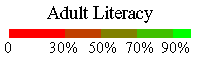
World Literacy 1900s

In a trivial sense, if a test-taker is unable to read and understand the directions for taking the test, his test score would not be valid. IQ Corner blog presents an interesting discussion about the possible relationship between the Flynn Effect and literacy rates.
The importance of being able to read for performance on an IQ test cannot be understated. Instead of measuring ‘intelligence' in a nonliterate test-taker, the test is measuring that person's inability to read....If increasing literacy were really explaining a number of seemingly different IQ trends, then you would expect to see a few things. First, within a population you should expect increased education of literacy skills to be associated with an increase in the average IQ of that population. Second, IQ gains should be most pronounced in the lower half of the IQ bell curve since this is the section of the population that prior to the education would have obtained relatively lower scores due to their inability to comprehend the intelligence test's instructions. With increased literacy, you should expect to see a change in the skewness of the IQ distribution from positive to negative as a result of higher rates of literacy in the lower half of the IQ distribution (but very little change in the top half of the distribution). You should also expect to see differences on the particular intelligence test subscales, with increased literacy showing the strongest effects on verbal tests of intelligence and minimal differences on other tests of intelligence.

...To test these predictions, Marks looked at samples representative of whole populations (rather than individuals), and used ecological methods to calculate statistical associations between IQ and literacy rates across different countries. Were Marks' findings consistent with the predictions?

Strikingly, yes. He found that the higher the literacy rate of a population, the higher that population's mean IQ, and the higher that population's mean IQ, the higher the literacy rate of that population. When literacy rates declined, mean IQ also declined. Marks also found evidence for unequal improvements across the entire IQ spectrum: the greatest effects of increased literacy rates were on those in the lower half of the IQ distribution. Interestingly, he also found that both the Flynn Effect and racial/national IQ differences showed the largest effects of literacy on verbal tests of intelligence, with the perceptual tests of intelligence showing no consistent pattern.

It must be noted that literacy wasn't the only factor responsible for the Flynn effect. Adopting the Cattell-Horn-Carroll (C-H-C) framework (McGrew, 2005, 2009) Marks found that Visual processing (Gv) and Processing Speed (Gs) also made important contributions. _IQCorner
Recent research suggests that learning to read actually changes the physical structure of the brain, and consequently brain activity and processing. If that is the case, then the effect of literacy on IQ scores may extend far beyond the ability to understand the test instructions.
Reading and writing are cognitive tools that, once acquired, change the way in which the brain memorizes facts and conceptualizes ideas, and these changes stimulate abstract thinking. When psychologists use neuroimaging technology, like MRI, to compare the brains of literates and illiterates working on a task, they find many differences in how their brains work whether or not they are reading. Researcher Alexandre Castro-Caldas discovered that processing between the hemispheres of the brain was different between those who could read and those who could not. A key part of the corpus callosum was thicker in literates, and "the occipital lobe processed information more slowly in individuals who learned to read as adults compared to those who learned at the usual age." Psychologists Ostrosky-Solis, Garcia and Perez tested literates and illiterates with a battery of cognitive tests while measuring their brain waves and concluded that "the acquisition of reading and writing skills has changed the brain organization of cognitive activity in general… not only in language but also in visual perception, logical reasoning, remembering strategies, and formal operational thinking." Literacy — a human invention — rewires the human mind. _The Technium
Kelly goes on to point out that the study of music can also alter brain structure and brain function. Then he suggests that the internet and related communication and information technologies may be causing similar changes in the way the brain is wired, thus changing how (and how well) people think.

Children must be exposed to language by a certain age, or they will lose the ability to become skilled in its use -- presumably forfeiting any advantages in brain processing that language confers. The same is true for the timely learning of music, and the skillful development of musical talents. In fact, developmental windows exist for many cognitive skills -- both known and likely unknown (for now) skills.

This raises intriguing questions about what we could be doing -- but aren't -- to facilitate improved thinking skills for our children, and perhaps ourselves. Very few persons, if any, are consistently functioning at their peak cognitive levels. What training methods are we missing which we should be aware of?
As suggested by Castro-Caldas et al. (1998), learning to read and write adds a visuographic dimension, based on operation of matching phonemes and graphemes, to the internal representational system for spoken language, so learning a specific skill during childhood may partially determine the functional organization of the adult brain. _Can Literacy Change Brain Anatomy? Ostrosky-Solis 2004 IJP 39 (1) 27-35

Of course, since reading comprehension is part of what comprehensive IQ tests measure, pointing out that increased literacy rates leads to higher IQ scores is a somewhat tautological -- or circular -- argument. Nevertheless, the human brain is inherently circular in function, and the evidence for a significant change in brain structure due to the acquisition of reading and writing should not be dismissed.

As has been pointed out, the general spread of affluence (in the sense of increased food, education, information technologies, and leisure time) over the 20th century -- at least in the countries and over the time spans registering a significant Flynn Effect -- would lead to a cluster of changes in the pre-natal and post-natal environment of children. Better nutrition, a richer stimulatory environment, increased literacy, better prenatal and childhood medical care, increased exposure to music and music training, etc., could all lead to changes in brain structure and brain function in these upwardly evolving societies.

And yet, it is relatively easy to "cut to the chase" by looking at members of societies who are already at the top of the heap, the affluent socioeconomic classes. By looking at "pre-evolved," already affluent members of a given population group, one can anticipate what the maximum effects of any Flynn Effect are likely to be on a given population.

Rather than to tell you what the results of such studies have been, it might be better to allow you to cogitate on the matter first.

Over time, we are able to incorporate more factors of potential importance into our concepts of the foundations of human cognition. We are stymied by politically correct limitations on what can be studied and tested, but despite the ongoing corruption of science by political correctness, the underlying structures will be worked out piece by piece.

Labels: , ,

Bookmark and Share

03 June 2011

Germany's Nuclear Phobia is Too Stupid for Words

Dan Yurman has published an excellent review of the German government's decision to close down all of its nuclear power plants by the year 2022. The decision's costs to German society and the German people will be incalculable, and once again call to our attention the fact that ordinary humans have no valid perspective on risk.

The chart below comes from an an article out of the Journal of Physicians and Surgeons, in PDF format. Risks from a wide range of events and phenomena are ranked according to days of lost life expectancy. The risks at top are measured in thousands of days in lost expectancy. As you drop down through the chart, lesser risks are measured in days of lost life expectancy. As you can see, risks from nuclear power occupy the very lowest position -- a small fraction of a single day of lost life expectancy on average -- if calculated by government sources.
Journal of Physicians and Surgeons (US) PDF

And yet, Germany's government and much of the entire nation of Germany has panicked itself into a dangerous and expensive restricting of its own future energy resources. Sometimes government can undo damage that government has done previously -- at least in part. Future German governments will curse what Merkel's government has done, but they will deal with it -- and almost certainly return to nuclear power out of necessity.

But they will be forced to buy massive amounts of power from neighboring countries at much higher rates than would have been necessary if they had preserved their nuclear power resources. And when Germany does choose to go nuclear again, it will have to buy reactors and fuels from other countries -- countries which instead of panicking, chose to develop safer, cleaner, cheaper, and more reliable nuclear reactors.

Cross-posted from Al Fin Energy

We will revisit the issue of risk in the near future, since the abuse and misuse of risk continues to play such a devastating role in governmental, non-governmental, and inter-governmental policymaking in Europe and the Anglosphere.

Labels: , ,

Bookmark and Share

02 June 2011

Precautionary Principle, Primum Non Nocere, Paralysis

“The precautionary principle, for all its rhetorical appeal, is deeply incoherent. It is of course true that we should take precautions against some speculative dangers. But there are always risks on both sides of a decision; inaction can bring danger, but so can action. Precautions, in other words, themselves create risks—and hence the principle bans what it simultaneously requires. _C. Sunstein [as Quoted]

The "precautionary principle" appears to be the primary policy guide for the leftist Green environmental movement. It asserts that even in the absence of proven cause and effect, society must vigorously defend against hypothesised environmental harm. It is an open-ended prescription for a chaotic descent into an infinite regress of clashing prohibitions, denials, and punishments.

Here's more on the precautionary principle:
At this year's annual meeting of the prestigious American Association for the Advancement of Science in Anaheim, California, in a symposium titled "The Precautionary Principle: A Revolution in Environmental Policymaking?", environmentalist advocates and academics insisted that a principle of ultimate precaution should trump all other considerations in future environmental and technological policy making....

...The heart of the Principle, of course, is the admonition that "precautionary measures should be taken even if some cause-and-effect relationships are not fully established scientifically." As one biomedical researcher in the audience objected, all scientific conclusions are subject to revision, and none is ever "fully established." Since that is the case, the researcher pointed out, the Precautionary Principle could logically apply to every conceivable activity, since their outcomes are always in some sense uncertain. Furthermore, David Murray, the director of the Statistical Assessment Service in Washington D.C., points out another possible--and disquieting--interpretation of the Principle. Anyone who merely raises "threats of harm" with no more evidence than their fearful imagination gets to invoke precautionary measures. Precautionists would not need to establish any empirical basis for their fears; they may simply posit that something might go wrong and thus stymie any proposed action. _Reason
This "principle" appears to be grounds for using mental phantasms as the basis for technological and environmental policy. That will work up until the point where the economy stagnates for lack of productive output, leading to a long-term population decline.

Eventually, of course, the more ambitious and intelligent people will rebel against the unimaginative drones of the environmental - governmental bureaucratic coalition who have eagerly put such suicidally paralytic "precautionary" policies into place. Basing one's policy upon such a negative principle leads inevitably to an unsustainable society -- unless your plan is to instigate a human dieoff.orgy and technological collapse. In that case, you will want to force humans back into a hunger - gatherer subsistence culture, with a global human population of no more than 100 million persons.

But believers in vague "precautionary principles" do not generally want to understand to figure:ground positive:negative nature of the world. They merely wish to have their own poorly-examined prejudices enforced upon everyone else.

Hippocrates stated the central principle most clearly: Primum Non Nocere, first do no harm . . . or something like that. One wishes not to act, if acting will only make things worse.

But often it is impossible to know or predict in advance the likelihood of a specific action leading to improving or worsening conditions. And in situations where large numbers of people are involved, there will always be those who object to action or inaction.

The question should be: What evidence of possible harm is sufficient to put an end to an action which could conceivably lead to a great good? There is no getting around the grappling in the mud and shite. Leftist Greens want to place themselves and their prejudices above the fray, to seize veto power over any action by commercial, industrial, governmental, or other entities.
Boston University law professor George Annas, a prominent bioethicist who favors the Precautionary Principle, clearly understands that it is not a value-neutral concept. He gleefully told me, "The truth of the matter is that whoever has the burden of proof loses."

The result: Anything new is guilty until proven innocent. It's like demanding that a newborn baby prove that it will never grow up to be a serial killer, or even just a schoolyard bully, before the baby is allowed to leave the hospital. Under this corollary, inventors, scientists, and manufacturers would have to prove that their creations wouldn't cause harm--ever--to the environment or human health before they would be allowed to offer them to the public. This is asking them to prove a negative. How can someone prove that a new plastic will never, ever interact with any metabolic pathway in any plant, animal, microbe, or person? There is simply no way to test for all possible effects given the millions of different species living on the earth. _Reason
Such a principle is a recipe for paralysis across the board of human action. And if modern humans know anything, they should know that they cannot afford to be paralysed -- not if they wish to avoid widespread poverty, starvation, disease, and bloodshed. The leftist Green fantasy of a great human dieoff.orgy is not merely hypothetical -- is sits firmly within the realm of possibility should technology be so tightly constrained as to essentially fail.

Here are some examples of the principle at work in US law:
American environmental law is filled with regulatory programs that authorize, or even compel, regulatory action in the absence of scientific certainty about the nature and extent of potential risks to the environment or public health. The Clean Air Act, for example, requires that the administrator of the Environmental Protection Agency (EPA) adopt measures to control various types of air pollution when, in the administrator’s “judgment,” the emission of certain pollutants “may reasonably be anticipated to endanger public health or welfare.”6 Absolute proof or scientific certainty is not required. Rather, a “reasonable” belief in the possibility of future harm is sufficient—indeed, such a belief may require action.7 Other portions of the Clean Air Act require the EPA to set air-quality standards at the level “requisite to protect the public health” with “an adequate margin of safety,” irrespective of the cost.8 Thus, the law requires the EPA to set the standard at a level more stringent than that known to threaten public health.
In a public policy context, ‘better safe than sorry’ is a fairly vacuous instruction. Taken literally, the precautionary principle is either wholly arbitrary or incoherent.

The Endangered Species Act also requires government action in the absence of scientific certainty. Under the Endangered Species Act, the Fish and Wildlife Service must list species as endangered or threatened on the basis of the “best scientific and commercial data available.”9 That the “best available” scientific evidence may be inconclusive or uncertain does not relieve the Fish and Wildlife Service of its obligation to list a species if the “best available” evidence suggests that it could be threatened with extinction.

Federal environmental law also includes requirements that federal agencies consider the “full range of alternatives” and their likely environmental effects before taking action. Consider the National Environmental Policy Act, which requires the federal government to consider not only the likely environmental consequences of major federal actions but also various alternatives, including forgoing the proposed action altogether.10 This seems to line up nicely with the Wingspread Statement’s call for “an examination of the full range of alternatives, including no action.” _American.com

If any imaginary harm at all could come about as a result of an action -- regardless of the harm from inaction or the good from the action -- under the modern leftist Green principles, the action should be prohibited.

Clearly it is one short step to an all-pervading government control over virtually any conceivable action, and then to the arbitrary exercise of this control to benefit political friends and to harm political enemies. Such corrupt abuse of government power is inevitable, and grows more inevitable and horrific the greater the power of ideological government over virtually any private action.

The end result is a corrupt, quasi-totalitarian Green dictatorship, ruling over an increasingly impoverished, polarised, and suffering human population.

It is difficult to see such misery by merely looking at the words and reading the language of the laws, regulations, and appropriated powers. Even those few individuals who actually do read the acts of Congress and the executive orders might find it hard to foresee the consequences accurately. But the chaotic and counter-productive consequences are unavoidable, once the laws and rules are put in place and strictly enforced.

The first remedy is to return to reasonable standards of evidence, causation, and proof -- in other words, to enforce the Hippocratic rule of "first do no harm" on Congress and the entire governmental structure. If all human governments were forced to abide by such time-tested wisdom first of all, as was intended by the US Constitutional Congress, the massively dysfunctional human world as we know it would not take its current form.

In a human world subject to evolutionary constraints, paralysis is not a workable principle. The self-righteous and vacuous promoters of the modern leftist Green precautionary principle are likely to drown in the tumult resulting from their own policies, unless they cynically plan ahead far enough to step outside the maelstrom. Imagine that -- lefty-Luddites going Galt to escape their own self-created apocalypse arising from playing it "too safe."

In the future we will need to explore the issue of determining levels of risk, and how to make decisions based upon different methods of determining risk.

Off topic desultory aside:

Pascal's Wager is a similar "better safe than sorry" general approach to policy-making -- specifically the personal policy of belief or non-belief in a superior being, god, or God. Pascal suggested that a person had nothing to lose from believing in God, and everything to gain.

But Pascal's principle suffers from a similar lack of "fleshing out" as the so-called precautionary principle. What if God is actually a devil, who only torments those who believe in him? In that case, it would be far better not to believe in God than to do so. And so on, down a million different alternative ways of looking at the human :: superior being contrast and juxtaposition. Pascal's unspoken assumptions are too parochial and constricting to apply to more than a miniscule fraction of the infinite possibilities.

Pascal is discussing the personal risk of "eternal fate." Fortunately, most modern governments have not yet overtly inserted themselves into that particular topic.

Labels: ,

Bookmark and Share

01 June 2011

Choking on Green Malthusian Dogma-Prop

From Paul Erlich's warnings of a population bomb to The Club of Rome's "Limits to Growth," contemporary ecological politics have consistently embraced [leftist] green Malthusianism despite the fact that the Malthusian premise has persistently failed for the better part of three centuries. Indeed, the [capitalist agri-tech] revolution was exponentially increasing agricultural yields at the very moment that Erlich was predicting mass starvation and the serial predictions of peak oil and various others resource collapses that have followed have continue to fail. _Breakthrough.org

One good recent example of frustrated Malthusianism is natural gas supply. Peak oil doomers declared an impending "peak natural gas" throughout the first decade of the 2000s. Even now, in the face of a shale gas bonanza sprouting up over the last few years, the doomers are frantic to justify their Malthusian true faith -- resorting to false claims of rampant water pollution from fracking fluids etc.
Within a year, U.S. recoverable shale gas reserves alone rose from 340 trillion cubic feet to 823 tcf, the Energy Department estimates. That’s 36 years’ worth, based on what the USA currently consumes from all gas sources, or the equivalent of 74 years’ of current annual US oil production. The reserves span the continent, from Barnett shale in Texas to Marcellus shale in Eastern and Mid-Atlantic states – to large deposits in western Canada, Colorado, North Dakota, Montana and other states (and around the world).

Instead of importing gas, the United States could become an exporter. The gas can move seamlessly into existing pipeline systems, to fuel homes, factories and electrical generators, serve as a petrochemical feedstock, and replace oil in many applications. States, private citizens and the federal government could reap billions in lease bonuses, rents, royalties and taxes. Millions of high-paying jobs could be “created or saved.” Plentiful gas can also provide essential backup power for wind turbines.

...Environmentalists voiced alarm. HBO aired “Gasland,” a slick propaganda film about alleged impacts of fracking on groundwater. Its claims have been roundly debunked (for instance, methane igniting at a water faucet came from a gas deposit encountered by the homeowner’s water well – not from a fracking operation). A politically motivated Oscar was predicted, but didn’t happen.

The Environmental Protection Agency revealed a multiple personality disorder. Its Drinking Water Protection Division director told Congress there is not a single documented instance of polluted groundwater due to fracking. (Studies by Colorado and Texas regulators drew the same conclusion.)

EPA’s Texas office nevertheless insisted that Range Resources was “endangering” a public aquifer and ordered the company to stop drilling immediately and provide clean water to area homes. EPA officials then failed to show up at the hearing or submit a single page of testimony, to support their claims.

Meanwhile, EPA Administrator Lisa Jackson announced plans to conduct a “life-cycle” or “cradle-to-grave” study of hydraulic fracturing drilling and gas production techniques, to assess possible impacts on groundwater and other ecological values. Depending on whether the study is scientific or politicized, it could lead to national, state-by-state or even city-by-city drilling delays, bans – or booms. _MasterResource_via_OilPrice

While scientists argue whether water wells located within a mile of shale gas wellheads contain higher levels than normal of dissolved methane, there has been no evidence of water contamination or public health hazard from fracking fluids. Given the incredible financial wealth potential of shale gas deposits, it makes far more sense to let individual states regulate shale gas fracking. This is particularly true when the US government is controlled by an administration packing an "energy starvation agenda."

Malthusian lefty-Luddite Greens litter the landscape of European capitals, and under Obama have become a national hazard in the US as well. Their extreme alarmist rhetoric and anti-commerce stance threatens economies across the western world.
Human technology and ingenuity have repeatedly confounded Malthusian predictions yet green ideology continues to cast a suspect eye towards the very technologies that have allowed us to avoid resource and ecological catastrophes. But such solutions will require environmentalists to abandon the "small is beautiful" ethic that has also characterized environmental thought since the 1960's. We, the most secure, affluent, and thoroughly modern human beings to have ever lived upon the planet, must abandon both the dark, zero-sum Malthusian visions and the idealized and nostalgic fantasies for a simpler, more bucolic past in which humans lived in harmony with Nature. _Breakthrough.org


Cross-posted to Al Fin Energy

Labels: , , ,

Bookmark and Share

31 May 2011

Evolving Technium Landscapes of Mind

Just because we are conscious does not mean we have the smarts to make consciousness ourselves. Whether (or when) AI is possible will ultimately depend on whether we are smart enough to make something smarter than ourselves. We assume that ants have not achieved this level. We also assume that as smart as chimpanzees are, chimps are not smart enough to make a mind smarter than a chimp, and so have not reached this threshold either. While some people assume humans can create a mind smarter than a human mind, humans may be at a level of intelligence that is below that threshold also. We simply don't know where the threshold of bootstrapping intelligence is, nor where we are on this metric. _KevinKelly
Technium

Kevin Kelly has created a "Taxonomy of Minds" as a way of classifying different types of minds and what they might be able to do.
Precisely how a mind can be superior to our minds is very difficult to imagine. One way that would help us to imagine what greater intelligences would be like is to begin to create a taxonomy of the variety of minds. This matrix of minds would include animal minds, and machine minds, and possible minds, particularly transhuman minds, like the ones that science fiction writers have come up with.

Imagine we land on a alien planet. How would we describe or measure the level of the intelligences we encounter there -- assuming they are greater than ours? What are the thresholds of superior intelligence? What are the categories of intelligence in animals on earth? _Read the rest...TaxonomyofMinds
Technium

The actual development of superior minds is more likely to occur via evolutionary mechanisms, rather than from straightforward design from principle. The adaptive landscape graphic above provides a small portion of an evolutionary adaptive landscape. Creatures that achieve the higher peaks may be capable of achieving greater feats, but also may be more subject to extinction when the environment shifts -- or when the adaptive landscape is enlarged by merging with a previously separate adaptive landscape (building a bridge between islands, tunneling through a mountain chain, digging a canal through an isthmus, or the emergence of an intergalactic wormhole).

Rather than waiting until our minds become capable of creating other minds, it is more likely that humans will create an evolutionary landscape from which a more intelligent mind than human minds might emerge.
Recently, in conversations with George Dyson, I realized there is a fifth type of elementary mind:

5) A mind incapable of designing a greater mind, but capable of creating a platform upon which greater mind emerges.

This type of mind cannot figure out how to birth an intelligence equal to itself, but it does figure out how to set up conditions of evolution so that a new mind emerges from the forces pushing it. _Technium
This is the approach to AI which Al Fin cognitive scientists have been promoting and utilising. It would be fooling one's self to imagine that it will be easy to evolve a smarter mind. But at least it is not impossible, as most conventional approaches to AI are proving themselves to be. (conventional AI researchers are attempting quantitative solutions where qualitative solutions apply)

There is something quite amusing here: The human mind itself can flit among the taxonomy of minds, at any given time. Because of how the human brain evolved, and the paths we have taken in development, each one of us is multitudes. Without a doubt, we all need better training in using our minds.

More: An interesting set of links to sources which expect or assume the imminent creation of a super-human machine intelligence (and a consequent "singularity") and a few sources which are critical of such a "hard take-off" to singularity superintelligence

Al Fin is among the skeptics of the "techno-singularity" concept. Rather, Al Fin expects any near-term singularity to be of the "bio-singularity" variety.

Labels: ,

Bookmark and Share

Organising Community Riots: Revolutionary Without a Clue

... Those who run up debt in good times can borrow only so much more when a recession strikes. And heavily indebted governments postpone fiscal stabilization at their peril. If you wait to reform until the bond market calls time, you are—to use a technical term from economics—screwed. _NiallFerguson
Revolutionary Riots Spill Over from Arabs to Europe to US?

If you are US President Obama, you are ready to blame almost anyone else for the economic despair settling over the American population. As a community organiser, President Obama's instinct is to call out the shock troops, take to the streets, and pin the blame on big banks and capitalism. In fact, billions of US$ were recently diverted from Obama's stimulus moneys to community organising groups, for just that contingency -- among others.

In three short years, Obama has added over $3 trillion to the US national debt. And rather than curtailing the deficit as the president had promised, it is getting much worse. Debt is a killer, but it is easy for the politicians who are responsible for the debt to point to everyone but themselves.

Riots in Europe are occurring as European governments look into the abyss of massive debt and cautiously tinker with a few timid spending reforms. But the people of Europe have come to feel entitled, and will not tolerate even the hint of a retreat from the wet nurse nanny state toward a more firm and responsible oversight government.

Americans are beginning to feel the same sense of blanket entitlement as the Europeans, thanks in part to having elected a community organiser as US President. Due to this massive growth of entitlement sense, the same type of riots seen in Arab countries and in Europe could easily spread to the large central cities of the US and Canada.

Risk of systemic fallout from Eurozone crisis

More from Mish on European abyss

The Obama path to collapse

Labels: ,

Bookmark and Share

30 May 2011

Online Puzzles and Brain Boosters: Saving Your Brain

Norman Doidge: Neuro-plasticians show that the brain is plastic not only in early childhood but from cradle-to-grave. This means we have to revisit the whole notion of adult development as a very, very serious undertaking. The adult brain can be maintained, developed and improved in many areas. But not by taking the occasional course after the age of 45.

VB: That message is going to become increasingly important with an aging population.

Norman Doidge: Yes, the longer we live the more relevant it becomes. And it is relevant not just for developing and improving but also for preserving. The secret to old age is a very simple one from the medical point of view. What you want is to have all your organ systems last as long as they can and then cease to function all at once!

VB: Exactly.

Norman Doidge: We’re in a situation now where, because of extended lifespan, a very high proportion of people—close to half—will find that their brains crap out before their hearts, livers and kidneys. So extending mental life span to equal that of other organs is a kind of imperative, otherwise we’ll have aged humans that are like infants who can’t function and care for themselves. _IdeaConnection

We make choices from moment to moment, unconsciously, as to how we will train our brains. Children and young adults need mentors and guides to help them make best use of early life mental plasticity. But the brains of adults and seniors are still plastic to a significant degree. Grownups have to be their own mentors and guides, more times than not, in the continuing task of brain development and preservation. Fortunately, there is a wide range of tools available online to assist in this task. Here is a report on one of these tools, n-back mental training exercises:
In an award address on May 28 at the annual meeting of the Association for Psychological Science in Washington, D.C., University of Michigan psychologist John Jonides presented new findings showing that practicing this kind of task for about 20 minutes each day for 20 days significantly improves performance on a standard test of fluid intelligence—the ability to reason and solve new problems, which is a crucial element of general intelligence. And this improvement lasted for up to three months.

Jonides, who is the Daniel J. Weintraub Collegiate Professor of Psychology and Neuroscience, collaborated with colleagues at U-M, the University of Bern and the University of Tapei on a series of studies with more than 200 young adults and children, demonstrating the effects of various kinds of n-back mental training exercises. The research was supported by the National Science Foundation and by the Office of Naval Research.

According to Jonides, the n-back task taps into a crucial brain function known as working memory—the ability to maintain information in an active, easily retrieved state, especially under conditions of distraction or interference. Working memory goes beyond mere storage to include processing information _MedXPress
Online brain games from Online Brain Games Blog:
Memory Games:
Dual N-Back — Documented I.Q. booster!
Cogolog — Memory game site with 14 different memory games
Board Games:
Go (Go Rules and tips) — 3000yr old board game!
Words:
Crosswords(Crosswords Rules and tips)
Numbers:
Online Math Games – Highlight post with many links
Other:
Click The Color – Based on the Stroop Effect
Connect4 — (Connect4 Rules and tips)
Phit
Tetris
Other Websites with Free Brain Games
brainbashers.com
braingle.com
brainwaves.com
fitbrains.com
freebrainagegames.com
funbrain.com – elementary school
fun4thebrain - elementary school
gamesforthebrain
interjeux.net
mathplayground – elementary/middle school
matica.com
neuroscience for kids - elementary/high school
nursingdegree.net
online-college-blog
playwithyourmind.com
proprofs
samgine.com – online flash game puzzles

100 Online Puzzles, Brain Games, and Brain Tests from Nursingdegree.net (excerpt):

  1. Sharp Brains: This site is "the brain fitness authority," and you’ll find all kinds of tricky brain teasers.
  2. Smart Kit: This "brain gym and puzzle playground" has picture puzzles, Flash puzzle games, brain games, cryptograms, logic puzzles and more.

Evaluation Tools and Articles
Test your brain fitness with these tricks and games.
  1. Brain Teasers and IQ Tests: Visit this site to take all kinds of tests and quizzes and to solve brain teasers.
  2. Test Your Brain: Test your brain on its processing speed, ability to process information in a noisy room and more.
  3. Lumosity: The initial trial for Lumosity’s brain fitness program is free.
  4. IQ and intelligence tests: Take these IQ tests, subliminal messages test, organizational web design tests, memory tests and more to see how well your brain is functioning.
  5. 50 Fun Ways to Maximize Your Brain Fitness: This website has lots of great ways to keep your brain in shape, from drinking pomegranate juice to changing up your regular route.
  6. Steps to Brain Fitness: The Alliance for Aging Research lists 10 different ways to have a well-exercised brain.
  7. Train the Brain: Take reflex tests, play with a Rubik’s cube and more on this site.
  8. Mensa Fun Test: Find out if you’re one of the smartest people in the world when you take this test.
  9. Surveys and Psychology Tests: Tests offered on this BBC website include an art and personality test, memory and more.
  10. Test Cafe: Take all kinds of quizzes to test your brain, IQ, personality type and more.

Labels: ,

Bookmark and Share
Newer Posts Older Posts
Al Fin Main Page
Enter your Email


Powered by FeedBlitz
Google
WWW AL FIN

Powered by
Blogger

``