16 October 2011

Homes Safe from Zombies, Disasters, and Global Collapse?

When ancient people wanted to be safe from zombies, wild animals, and other enemies, they would locate their homes in difficult to access places. In cliffs, caves, or underground, in natural or man-made havens, finding safety for themselves and their tribe in the shelter of solid rock.


Modern people also dig deeply through solid rock, to seek safety from more modern weapons and enemies. But zombies would find it difficult to penetrate the defenses of Cheyenne Mountain, as would fire, flood, tornado, and most nuclear weapons short of a direct megaton scale hit.


Some tribes sought safety in the far north, and learned to survive where other tribes -- including zombies -- could not. Although their modern descendants are forgetting the ways of extreme arctic survival, they may soon be forced to re-learn those skills -- if they can.


We recently looked at this example of a zombie-proofed home, complete with drawbridge and concrete shutters. While we have no record of how such homes survive in the face of tornadoes, hurricanes, earthquakes, or wildfire, there is reason to believe that for most natural disasters, such a home would do better than a traditional stick home.


Monolithic dome homes can be "bermed," or covered with earth. In fact, these domes are strong enough to be covered with approximately 30 feet of soil without suffering damage. Covering these steel-reinforced concrete domes with earth adds to their innate protection against fire and storm.
A regular monolithic dome placed on a hilltop location allows for maximum visibility and advanced warning against zombie attack. Monolithic domes have survived hurricanes, tornados, earthquakes, and wildfires, in situations where most other residences around them were destroyed. The steel rebar inside the dome should provide some EMP protection if grounded, although supplementary integrated wire mesh that is grounded should provide extra EMP shielding.

Some imaginative builders have built houses on hydraulic lifts, in case of flooding. Lifting the house up and out of reach of zombies, would provide the house with additional security. The ultimate in moving a house out of harm's way would be the flying house. But floating houses have been built for low-lying areas, and might be considered if one were forced to live in such a place.

This home in Hollywood Hills has sometimes been referred to as the "safest house in the world." More likely, it is the safest house in Hollywood Hills.

The house was designed by home and yacht security specialist Al Corbi, and provides excellent protection against attack by criminals or zombies -- with its bullet-proof walls, windows, and doors -- and allows for quick evacuation via rooftop helipad in case of regional disaster or global collapse. But it lacks its own power supply, and other necessities needed for an extended siege situation, when basic services have collapsed.


The rolling steel shutters pictured on this house's doors and windows provides excellent protection against thieves, invaders, and zombies. Such types of protection are likely to be in greater demand as the Obama crisis deepens around the world.

Here are some other things to consider:
1. How would you keep your house from freezing in the winter if electricity were unavailable for a long period of time? Do you have some type of wood burning heater? What about hot water?

2. Do you have back-up cooking facilities if an earthquake made natural gas unavailable for a month or two? Could you heat hot water?

3. What if you lose both electricity and gas?

4. Would you be willing to rely on batteries and candles for illumination if a major power outage lasted more than a week?

5. Do you have extra tanks of potable water should public water supplies be cut off or contaminated? Would you know how to collect and filter your own water if none was available for a long time?

6. If a winter storm damaged windows in your home, would you have sufficient plastic sheeting and repair materials to quickly enclose the open areas to retain heat? _The Secure Home
Interesting questions to keep in mind, but what if you had to worry about all of that, at the same time that you were under zombie attack? Obviously th author of "The Secure Home" was not thinking in broad enough terms for the modern age.

If you had to choose one type of home to build for maximum security in a relatively short time span, the monolithic dome is probably your best bet. You would need to provide sufficient protected storage for food, water, medicines, trade goods, and other supplies. You should consider rolling steel shutters for windows and doors, or other methods of protecting those weak points. Avoid building on a flood plain, or in a location without adequate visibility of your surroundings. Stay away from high crime areas, and areas of known zombie habitation. Keep your garden spaces within a defensible area, for the most part.

Most importantly, make sure that you are close to a community of skilled and competent people, who possess a broad range of expertise, and who share your basic values toward private property, free market exchange, and respect for human life.

Above taken from a posting at Al Fin, the Next Level

Follow along with Al Corbi, security specialist, as he describes some of the state-of-the art measures and materials used for modern home security.


More at Al Fin Potpourri

Labels: ,

Bookmark and Share

15 October 2011

The Student Loan Trap

Exposing the Student Loan Racket in America
Via: HealthcareAdministration.com
Another infographic exposing the higher education student debt bubble. This debt bubble is larger than credit card debt, but student loan debts cannot be discharged via bankruptcy. Students can be haunted by this debt for decades, whether they graduate or not.

There are better ways to start one's adult life than to get in debt for a couple hundred thousand dollars for nothing, then try to get a job in the middle of an Obama depression. No wonder methamphetamine is becoming such a popular drug among student loan defaulters and the occupy movement.

Labels: ,

Bookmark and Share

14 October 2011

All the Single, Old, and Childless Ladies

Where Does the Time Go?

Writer Kate Bolick has published a long piece in celebration of women choosing to grow old and single, without a man, and with or without a child. Titled "All the Single Ladies," it is actually about one specific lady -- Kate herself. It is about choices that Kate made or didn't make, back when she was still young enough to make those choices.

The article reveals more about Kate's regret and sense of loss than she is likely to comprehend. But it is actually a tale of an entire society's loss, percolating slowly across its length and breadth, in all the single, old, and childless ladies passing through time like sleepwalkers.
Today I am 39, with too many ex-boyfriends to count and, I am told, two grim-seeming options to face down: either stay single or settle for a “good enough” mate. At this point, certainly, falling in love and getting married may be less a matter of choice than a stroke of wild great luck. A decade ago, luck didn’t even cross my mind. I’d been in love before, and I’d be in love again. This wasn’t hubris so much as naïveté; I’d had serious, long-term boyfriends since my freshman year of high school, and simply couldn’t envision my life any differently.

Well, there was a lot [we] didn’t know 10 years ago....We took for granted that we’d spend our 20s finding ourselves, whatever that meant, and save marriage for after we’d finished graduate school and launched our careers, which of course would happen at the magical age of 30.

That we would marry, and that there would always be men we wanted to marry, we took on faith. How could we not? _All the Single Ladies
But after going through the sad tales of turning down exceptionally fine men so as to give herself more time to "find herself," and discussing how hard it is to find men who are worthy of her at this stage in her life, Kate decides that she sure as hell doesn't need a man anyway. If she wants to have a kid without a man, who's gonna try to stop her?

But who is she kidding? If she couldn't "settle" for a man when she was younger because she needed to sow more wild oats, or because he wasn't perfect enough, is she really going to take a chance with parenting a child? Because the child is sure enough not going to be perfect, and if she finds herself needing a little more time to find herself as a parent, the child is not going to go away for a few months or years to give her that opportunity.

When too many people in a society grow old and childless, the potential -- the future -- of that society withers on the vine. The generations of the unborn begin to haunt the false over-cheeriness of the singles gathering in bars and pubs.

There is a sense of oddness I often feel in the presence of large numbers of gay or lesbian folks. Good folks, cheery folks, happy and friendly folks. But usually childless, and too often needing to make up for that, subconsciously. I am starting to see the same thing whenever in the company of people who are like author Kate. Childless, aging, spinsters in denial, who must at all costs compensate for their lack of a child.

And so all the spinsters -- male or female, gay or straight -- must be the children they never had -- or never acknowledged. Cosmetic surgeons certainly never had it so good. The youth fetish becomes a lifelong pursuit, until it grows into an obsessive and expensive obscenity.

There is a flip side to the coin, which we have discussed here previously. The "Parents of a Certain Age" who make the decision in their late 40s, their 50s, or later that "dammit, I'm gonna have a baby," and follow through with it. There are many more of these than there used to be, but not nearly enough to make up for the childless Kates that our culture is spinning out into the void. Reproductive technology is making it easier to make such late life decisions, and freezing your youthful sperm and eggs -- along with surrogate mothers -- makes it even easier.

Of course, there is the child (or children) that must be raised properly. We can always hope that the midlife crisis survivors have acquired at least some wisdom along the way, compared with how they were when they were younger and more vital. Their time on Earth is growing shorter with every day, and most of what they have not learned by now, they will never learn. Ah...except for the lessons that come from parenting itself. Those are perhaps the most important and poignant lessons of all, and they are learning them so late!

Lionel Tiger described this developing phenomenon best in his 2000 book, The Decline of Males. Neither Kate Bolick nor any other writer since Tiger, has revealed the basis for the phenomenon so accurately, nor revealed the future of it so clearly.

The core advanced populations, the ones that have made so many advances in science and technology, are fading away. They are becoming old, and childless, like the ladies one sees...

Labels: , ,

Bookmark and Share

13 October 2011

Good Fences = Good Neighbors; The Benefits of Segregation

... peace does not depend on integrated coexistence, but rather on well defined topographical and political boundaries separating groups. Mountains and lakes are an important part of the boundaries between sharply defined linguistic areas. Political canton and circle (sub-canton) boundaries often separate religious groups. _PO
Switzerland by Language and Religion


History is filled with examples of ethnic violence, the type that erupts when people with differing cultures attempt to live side by side. The Middle East comes to mind, as does Northern Ireland or Yugoslavia. What’s not so common are studies done that show what sorts of things actually work to prevent problems when people of dissimilar backgrounds live next door to one another. Thus, a new study done by Yaneer Bar-Yam and his team at the New England Complex Systems Institute, appears to be particularly relevant. He and his colleagues, describe in their paper on the preprint server arXiv, how a study they’ve done of the ethnically diverse country of Switzerland, shows that political and geographical boundaries have served to keep the peace between the different groups. _PO

Source for article excerpted above: Good Fences: The Importance of Setting Boundaries for Peaceful Coexistence, arXiv:1110.1409v1 [physics.soc-ph] arXiv:1110.1409v1 [physics.soc-ph]

Forced multicultural integration typically leads to more violence and crime, despite the good wishes of social engineers and government policy makers. Countries and regions with greater ethnic, religious, cultural, and linguistic homogeneity tend to experience lower levels of crime and violence, all other things being equal.

One cannot help but notice the rapid rise in disorder and violence in European cities, as rising numbers of poorly assimilating immigrants and their children crowd the cities of the UK, Netherlands, France, Sweden, Belgium, and so on. The same phenomenon occurs virtually everywhere that significantly dissimilar groups are forced to live too closely together.

No matter how good the intentions of the highly placed promoters and enforcers of the multiculturalist agenda, they are laying the foundations for bloody violence and civil wars of the future. The violence of Beirut and Baghdad are coming to the first world, riding the magic carpet of multicultural good intentions. If you voted for the multiculturalists, you are largely responsible for what is coming.

If you have gotten smarter since then, like Greg Sheridan did, you will begin taking precautions -- and may even consider re-locating.

More: Multiculturalism in the USA...A recent Tulsa Tragedy to go with the Wichita Massacre and the Knoxville Horror.

These stories are actively suppressed by the politically correct, "skankstream media," so one must actively search for them to understand how common these incidents have become.

Labels: , ,

Bookmark and Share

12 October 2011

Education Debt Monster Grows Huge and Ravenous

Higher Education Bubble
From: The Best Colleges
Imagine acquiring all that debt, then having to leave college without a degree. 45% of college students will do exactly that. Not the best way to start one's adult life in a turbulent Obama-conomy -- where existing jobs are going away, and government rules make it harder and harder to create new jobs.

Investment guru Jim Rogers used to advise prospective business students to put the money they would have spent on college into starting their own business. The money would be better spent by giving the young person actual business experience, rather than sitting around listening to professors who had no practical knowledge of running a business. Imagine how much more of a waste of time and money many other college departments offer!

Labels: ,

Bookmark and Share

Obama Makes Predicting the Economic Future Easy


Growing a healthy economy is very much like growing a healthy garden. Economies need the proper conditions to grow, just as gardens do. When a gardener is neglectful of his garden, one can predict a poor result long before the crop is due to mature. The same thing applies to the managers of an economy. Bad -- incompetent or even malicious -- managers make prediction of the future easy.

US President Obama rode into the White House on a huge wave of hope, change, and popular enthusiasm. Everywhere he went, he was met by huge and adoring crowds. Expectations for this new president were astronomically high . . . . and then something happened -- the new president was inaugurated and put in a position where he had to accomplish something, for the first time in his life.
Over the years, Mr. Obama's achievements failed to live up to his promises and the astronomical expectations set for him. As the economy failed to improve -- and in many ways actually worsened -- the number of people flocking to his banner gradually and reluctantly fell away. "How could I have known that he would be such a bad president?", Obama voters would ask themselves, as they walked away from the president, sadly shaking their heads in disappointment and shame.
But in the real world, anyone paying attention could have predicted the ongoing debacle of the Obama economic descent into quagmire. Instead of providing conditions for the economy to grow and prosper, under Obama, debt, designed energy-starvation, and growth-strangling regulations expanded exponentially.

It is easy to see where the economy was going when the gardener is a narcissistic clown of no achievement and no competence, such as Obama. Never having participated in the productive private sector, Obama had no interest in seeing the prospering of markets and trade.

Consequently, debt has ballooned, the dollar has progressively lost value, the cost of consumables has exploded, jobs have disappeared in the millions, wages have shrunk, government has grown, regulations that make starting businesses difficult have proliferated, gold and silver prices have soared, and anyone with cash is holding onto it, just waiting for a glimmer of hope -- such as the Obama's packing up and moving out of the White House.

Of course, the damage Obama has done will live on for many years and decades. Once government regulations and departments are established, they can become almost impossible to remove -- no matter how destructive they are to the prosperity and well-being of the people.

And yet, economic seeds of prosperity -- just like the seeds of plants -- are still there waiting for the proper conditions that will allow them to bloom and grow. Growth and prosperity will be much spottier than they would have been without Obama, but they will come back to parts of the US. Look to the places where shale oil & gas fracking are being done to see pockets of prosperity so strong as to resist even Obama's attempts to shut them down.

The Obama economic agenda is equivalent to a "salting of the soil" approach to gardening. But even salt-toxic soil can be remediated so that healthy growth can take place again. But as I said, the post-Obama recovery in the US (and consequently around the globe) will be spotty. Keep your eyes open. Pay attention.

Predicting the economy will not be so easy when a different president is elected.

Cross-posted to abu al-fin

Labels: ,

Bookmark and Share

11 October 2011

USAF and Boeing Have Not Abandoned Manned Space

The Air Force’s mysterious X-37B “space plane” is only on its second, eight-month-plus orbital mission, ostensibly conducting science experiments. But manufacturer Boeing has already drawn up plans for a major upgrade to the nimble, 29-foot-long robot — one that could more than double the vehicle’s size and make room for up to six astronauts. _Wired
While Obama's NASA may have abandoned the manned space mission, other US entities have not -- including the USAF, SpaceX and Boeing. The US military understands the advantage of occupying the high ground, and private space companies understand the immense wealth to be made by making space accessible.

The USAF secret unmanned space plane known as the X37 has already performed two secret orbital missions. Now, Boeing is revealing plans to extend the capacity of the X37 so that it could deliver cargo to the International Space Station, and eventually carry a human crew to orbit.
Boeing is studying scaled-up variants of the reusable X-37B orbital test vehicle (OTV) for potential delivery of cargo and crew to the International Space Station (ISS) and other low-Earth-orbit destinations.

...The plan builds on the ongoing OTV demonstration with the U.S. Air Force, the first phase of which ended when the classified, unmanned OTV-1 demonstration flight concluded in December 2010 with an autonomous landing at Vandenberg AFB, Calif., following 244 days in orbit. A second mission, OTV-2, is under way.

OTV-2 has been in space since March 5, and assuming it has not already been covertly recovered, is expected to remain in space until at least mid-October. A landing around Oct. 15 will equal the OTV-1’s mission length. Given the 270-day mission endurance limit of the X-37B, as earlier described by the Air Force, the early March launch means the landing at Vandenberg can be expected on or before Nov. 30. _AviationWeek
The X-37B is launched on an Atlas V rocket and has small thrusters that allow it to change its orbit at the whim of ground controllers. But, like the space shuttle, it glides in for an unpowered landing. So far, one X-37B has completed one eight-month space flight, while a second, launched in April, is still in orbit. Its missions are secret - but space flight enthusiasts have done their best to track them.

...Success at this level would then pave the way for "a human-carrying derivative" capable of carrying "five to seven astronauts", Grantz says. Space.com has pictures from Grantz's paper showing what an "X-37C" derivative with a 6-person pressurised crew compartment could look like. Smaller numbers of astronauts could allow for more cargo, says the website. _NewScientist
We do not know if Obama will do the same thing to this USAF space program as he did to NASA's space program. If so, the future of US space efforts may well be entirely up to private sector companies like SpaceX, if they can survive Obama.

Labels:

Bookmark and Share

09 October 2011

UK Met Office Warns of Little Ice Age Conditions

The sun has been behaving in odd ways recently, strangely reminiscent of the solar slowdown which accompanied the "little ice age" 300 years ago, seen on the graphic below.
Solar Output Varies With Climate

The UK Meteorologic Office is warning of expected extreme cold winter conditions due to natural cyclic phenomena.
The climate phenomenon, characterised by unusually cold ocean temperatures in the Pacific, was linked to our icy winter last year – one of the coldest on record.

And it coincides with research from the Met Office indicating the nation could be facing a repeat of the “little ice age” that gripped the country 300 years ago, causing decades of harsh winters.

The prediction, to be published in Nature magazine, is based on observations of a slight fall in the sun’s emissions of ultraviolet radiation, which may, over a long period, trigger Arctic conditions for many years. _Express
Until recently, natural climatic cycles have taken a backseat to carbon hysteria, with most "climate scientologists" and their kin in the media frenzy racket. But with recent odd behaviour coming from the sun, along with an obvious global cooling trend occurring throughout the 21st century, natural climate cycles have become more difficult for climate scientologists to deny. The phony climate consensus is growing strained.

Labels: ,

Bookmark and Share

On Banning Women from the South Pole Research Station

South Pole Station NSF (viaNewsDiscover)

During certain times of the year, travel to and from the South Pole Station is incredibly dangerous. That is why everyone who works there over the southern winter has to accept a long winter's confinement to a lonely duty, when they sign on to the South Pole Station.

Currently, South Pole Station site manager Renee-Nicole Douceur is at her wit's end, demanding immediate evacuation from the station. She says that she is just hanging around, looking out her window, and sees no reason why she cannot be evacuated, one and half months after she claims she suffered a "stroke."

Officials of the National Science Foundation and Raytheon, the entities that run the base, are stating that only life-threatening conditions warrant evacuation under the conditions that are currently present.
The manager of the U.S. South Pole station wants to be evacuated, saying she suffered a stroke more than a month ago. But U.S. polar officials say she'll have to wait until special ski-equipped airplanes can land at the frozen base several weeks from now.

The dispute between site manager Renee-Nicole Douceur, the National Science Foundation and the operator of the base, Raytheon Polar Services, has been simmering since Douceur said she suffered a stroke on Aug. 27. The physician at the U.S.-run Amundsen-Scott South Pole Station recommended her immediate evacuation. But consulting doctors hired by Raytheon and the NSF disagreed.

...In a phone interview with Discovery News, Douceur said she suffers from blurry vision and is worried about long-term effects to her health. She says she can't wait another few weeks.

"I'm just hanging in there and I'm looking out my window and it's nice and clear bright and sunny," Douceur said. I'm saying to myself why isn't there a plane here to get me out of here today or even yesterday?"

Douceur said she worried that she may have had an aneurysm or a blood clot to the brain. The base doesn't have MRI or other scanning equipment to do make that diagnosis.

"I have not been treated fairly here," Douceur said. "They have been making decisions based on budgets. Isn't a stroke a serious thing?"

Representatives of the NSF and Raytheon say a medical evacuation over the Antarctic continent is risky and only attempted if there's a life-threatening condition.

In 1999, for example, base doctor Jerri Nielson was airlifted evacuated in mid-October after treating herself for breast cancer over winter. She died in 2009. In August 2001, another base doctor, Ron Shemenski, was evacuated to Chile after he was diagnosed with potentially life-threatening pancreatitis.

NSF officials in Washington said they are checking in daily on Douceur.

"In considering whether to attempt a very risky emergency medical evacuation during the challenging winter season in Antarctica, NSF must always balance the patient's condition with the possibility for injury or the loss of life of the patient, the flight crew and personnel on the ground at South Pole against the potential benefits to the patient," an NSF spokeswoman said in an e-mailed statement.

"We are continuing to monitor the patient's condition closely and are prepared to consider alternative courses of action if merited by a change in condition, as determined by medical experts." _NewsDiscover

The physician at the station "recommended immediate evacuation," but such a recommendation could be based upon a multitude of reasons -- including psychological reasons. It could also be made to placate the base manager, with the doctor knowing that higher officials are likely to overrule the recommendation.

The concept of "having to make do where you are," being beyond immediate evacuation to civilisation, is foreign to many modern westerners, but has long been a factor for sailors on long voyages, expeditioners on long and remote expeditions, military units on long campaigns, and so on. But the participants of such expeditions, campaigns, and voyages have historically been men, for the most part.

Colonisation, where entire families were transported permanently, far from civilised amenities, required a tougher breed of woman and child than modern westerners are accustomed to seeing.

Typically, women have been protected and kept from dangerous occupations and situations as much as possible, in the western world. A woman's (or a child's) call for help triggers a powerful response in most men, leading them to drop whatever they are doing in order to provide whatever help they can.

But the feminist world in which we live demands that women be provided every opportunity that men are offered, disregarding the problems which such mandates may cause. Modern children are pampered and sheltered throughout most of childhood and adolescence -- often well into adulthood. There is generally no "rite of passage" into adulthood or adult responsiblity before the assumption of occupational duties and responsibilities.

Military physicians are well acquainted with the phenomenon of female service members intentionally getting pregnant so as to be relieved of duties, and often discharged. It is an easy out, when one changes her mind, much like a no-fault divorce. Under such rules, one does not truly have to think about a decision before making it, since backing out can be so painless.

But imagine an expedition to Mars or beyond, where outside help is truly unavailable, and evacuation is out of the question. Will women be allowed to participate in such expeditions, and if so, what sort of "informed consent" will be required?

At this point, no one knows how serious the site manager's condition truly is, since modern diagnostic equipment is not available at the South Pole Station. But the information in the article is not describing an immediate life or death situation. And the circus surrounding her demands for evacuation seem so sterotypically female, that one is forced to wonder if operators of the station are making a mistake by allowing women to take on positions of responsibility in such a remote location.

Certainly the selection procedures should be called into question, and political correctness be damned. ;-)

Labels: ,

Bookmark and Share

08 October 2011

Stephen Pinker Thinks We are Growing Less Violent

Cognitive psychologist and linguist Stephen Pinker's latest book details what he sees as "a historical decline in human violence." Pinker provides a large amount of documentation for his point of view, but a lot of people are not convinced. Political philosopher John Gray thinks that Pinker's argument is more an exercise of faith than a scientific theory. Journalist Ron Rosenbaum does not address Pinker specifically, but he backhandedly scolds cognitive scientists who think they can define away "evil" using scientific theories in the manner of an exorcism.

Pinker appears to have more or less identified a historical trend of decreased violence in advanced societies. His idea is worth a look:
Images via Steven Pinker Edge.org
Pinker's recent Edge.org article describes how human violence has subsided in recent years, providing a glimpse into his newest book.

As seen above, deaths from warfare in the UK have come down significantly from historical times. The chart below illustrates the reduction in European homicides since the year 1200. The bottom graph demonstrates the large peak in genocides in the middle of the 20th century, with subsequent decline. More from Pinker:
Believe it or not—and I know most people do not—violence has been in decline over long stretches of time, and we may be living in the most peaceful time in our species' existence. The decline of violence, to be sure, has not been steady; it has not brought violence down to zero (to put it mildly); and it is not guaranteed to continue. But I hope to convince you that it's a persistent historical development, visible on scales from millennia to years, from the waging of wars and perpetration of genocides to the spanking of children and the treatment of animals.

...The extraordinary 65-year stretch since the end of the Second World War has been called the "Long Peace", and has perhaps the most striking statistics of all, zero. There were zero wars between the United States and the Soviet Union (the two superpowers of the era), contrary to every expert prediction. No nuclear weapon has been used in war since Nagasaki, again, confounding everyone's expectations. There have been no wars between any subset of the great powers since the end of the Korean War in 1953. There have been zero wars between Western European countries. The extraordinary thing about this fact is how un-extraordinary it sounds. If I say I'm going to predict that in my lifetime France and Germany will not go to war, everyone will say, "Yeah, yeah; of course they won't go to war." But that is an extraordinary statement when you consider that before 1945, Western European countries initiated two new wars per year for more than 600 years. That number has now stood at zero for 65 years.

And there have been zero wars between developed countries at all. We take it for granted nowadays that war is something that happens only in poor, primitive countries. That, too, is an extraordinary development; war used to be something that rich countries did, too. Europe, which traditionally has been the part of the world with the biggest military might, is no longer picking on countries in other parts of the world, or hurling artillery shells at one other with the rest of the world suffering collateral damage. This change has been extraordinary. _Edge.org

It is worth at least skimming the entire piece, paying particular attention to the graphic images. Civilisation seems to be growing less violent in most of the ways that can be measured -- at least on a historical scale.

But can we expect this drop in violence to continue? To answer that question, one must look at demographic trends. The populations which are growing are those that exhibit higher rates of violence, and those that are shrinking are the ones which exhibit lower rates of violence -- as a rule. For example, populations within Africa, Asia, and South America which exhibit the world's highest rates of violence are also generally showing the highest birthrates. Even within advanced nations, the subpopulations which show the highest rates of violence also exhibit the highest birthrates.

If these demographic trends continue, the shrinking, less violent populations, are apt to either die off, or be killed off. The violent and prolific populations may just inherit the world.

In modern politically correct cultures, violence is often condemned outright, without qualification, as if violence itself were evil. But violence in defence of one's life, family, and property is the hallmark of civilisations which survive. Without the threat of defensive violence, the weak and passive become prey to any violent person who comes upon them.

Law enforcement cannot be everywhere, protecting everyone. Any society which forbids individuals from using violence to protect themselves or their property is a society in decay. The law is meant to be taken into the hands of citizens. Otherwise the law will serve only a corrupt oligarchy.

So while advanced societies may seem to be experiencing lower rates of violence overall at this time, demographic changes suggest that this trend toward less violence is only an ephemeral one.

Modern civilisations that do not look to their own survival are likely to fall to primitive civilisations that are merely following the growth imperative. The ongoing popularity of the doom cults in the west: carbon catastrophe doom, peak oil doom, resource scarcity doom, etc. speak to the undertow of defeatism eating at the foundations of the culture.

Violence is an integral part of the human condition, as long as humans live in the world within the universe. The modern west may turn its back on violence, imagining itself to have grown morally superior to the old, brutal ways. But having your back turned simply means that you will not see the violence that inevitably seeks you out and finds you, unprepared.

Parts of this article are adopted from an earlier posting on Al Fin, the Next Level

Labels: , ,

Bookmark and Share

07 October 2011

Africa and Nuclear Power: Could it Ever Work?

Subsaharan Africa is rich in minerals, oil, coal, and gas. From Nigeria to Angola to Ghana to South Africa, dictators are growing rich from diamonds, gold, and petroleum production. But the wealth never seems to trickle down to the people of SS Africa. Instead it is too often transferred to Swiss bank accounts, for purposes of conspicuous consumption by the African ruling classes traveling in Europe.

Subsaharan African countries are considered to be in desperate need of reliable electric power, as a starting point to build a more advanced civilisation. Many well-meaning people have suggested the use of nuclear power for Africa. Uranium is certainly abundant in Africa. But given the near-impossibility of finding trained African nuclear scientists, engineers, technicians, etc. for safe operation of a nuclear plant, how are African countries supposed to control the nuclear dragon? Even newer, safer modular reactors meant to operate relatively unattended while buried underground will still require significant oversight and security. And a new, more complex power grid will require a whole new level of maintenance and operating skill. Can Africans do it?

An optimistic article from Engineering News South Africa suggests that nuclear energy may be exactly what Africa needs. Here is an excerpt from the article:
Increasing electricity provision in developing nations results in almost instantaneous social upliftment of developing populations, as a direct result of increased economic growth.

However, electricity provision across the vast expanses of the African continent requires unique ‘African’ solutions, which original-equipment providers in places such as Europe seldom can provide, he said.

Kemm believes the answer lies in radial power supplies, using smaller electricity grids. This would entail the construction of smaller-scale power plants such as what would possibly have been achieved with the shelved Pebble Bed Modular Reactor project.

“Transporting electricity over long distances is wasteful, owing to energy losses and the maintenance of the associated infrastructure. Placing smaller power plants closer to the point of consumption is the ideal scenario for optimal energy efficiency,” he pointed out.

Further, the power source should be as reliable as possible, something Kemm said alternative power sources could not always guarantee.

He explained that wind power, for example, was not a reliable source of energy, owing to high capital costs and that the average output fluctuated severely with the seasons. Wind turbines were said to be less efficient at reduced wind speeds and could not take advantage of higher-than-optimal wind speeds, owing to maintenance concerns.

“France achieves the cheapest cost for electricity, owing to its significant reliance on nuclear power, whereas Belgium, one of the countries with the most installed wind turbines, has some of the most expensive electricity in the world.”

Meanwhile, Kemm believes that Africa needs African solutions for African needs. He pointed out that a small country such as Rwanda’s electricity consumption peaks at about 87 MW, whereas a medium-sized city such as East London consumes about 100 MW at peak levels.

The country does not have sufficient natural fossil fuel resources to feed, for example, a coal-fired power station, and cannot rely on such fuel to be reliably transported across numerous borders.

“A small-scale nuclear power plant would, in such a scenario, provide the ideal solution to long-term sustainable electricity supply to catapult the country’s growing economy into high-gear,” he explained.

Kemm argued that the key to unlocking economic development lies in providing a country with the cheapest possible electricity. It does not matter what the source is, whether it be from fossil fuels, locally available recyclable materials that could be used to generate small amounts of electricity, or alternative energy sources. _Engineering News
It is worth reading further at the link above, for a more enlightened view of climate change than one is likely to read in most mainstream media outlets. Clearly the physicist Dr. Kemm is not worried about being attacked by the South African PC Thought Police anytime soon, by his tone.

Certainly if one plans to take nuclear power to Africa, using small modular reactors (SMRs) in a decentralised pattern of implementation as described, is the most logical approach. But even in such a situation where small scale power grids connected to SMRs are utilised, the requirement for at least a minimal level of expertise in operation and maintenance cannot be overlooked.

In South Africa, the unique demographic pattern (for SS Africa) combined with an above-average educational system, has allowed the continuation of a modicum of a high tech infrastructure to be maintained, long after the abolition of the unjust Apartheid system. But most of SS Africa is without the human capital which South Africa still possesses -- in spite of its corrupt and inept ANC government.

Here is the cold hard truth for most of SS Africa: Outside corporations or nations will need to install new electrical power infrastructure in Africa, and outside expertise will be needed to safely and reliably operate and maintain the new infrastructure -- both the generator complexes and the new power grids.

Corporations such as Westinghouse, with its small modular reactor, could install small generation facilities for individual nations, and help to contract the construction of new grid infrastructure. As long as the oil and mineral dictators of Africa were willing to forego some of their conspicuous overseas consumption for the benefit of a more advanced society where average citizens could benefit, such an arrangement might be made safely.

The problem lies with the long term requirements of advanced nuclear and electrical infrastructure. African dictators will grow tired of paying outsiders to maintain their power systems, and will start to cut corners in operations and maintenance. Required upgrades will not be implemented, the systems will be pushed beyond tolerances, and will ultimately fail. At that point, will shutdown, decommissioning, and cleanup be performed according to accepted standards? Probably not.

Let's be honest: If South Africa -- the most advanced of SS African nations -- cannot keep its power grid running reliably through the winter with its great mineral and energy wealth, how can anyone expect the lesser SS nations to achieve this goal?

Professor Kemm's idea for decentralised power in Africa is a good one, but he did not go far enough, perhaps. The buildup of large African cities requires a support infrastructure that cannot be provided or maintained by native SS Africans. In other words, African cities and large scale industrial infrastructure are not sustainable, using only local talent and workers.

That is the key underlying problem that has to be addressed sooner or later. South Africa can perhaps hobble along for decades longer, based upon its legacy human capital. But other SS nations cannot. For those nations, a back to the basics approach to energy and fuels will be mandatory, if they wish to avoid disaster.

And that means bioenergy, as the core energy technology. Bioenergy will be labour intensive in SS Africa, which is a good thing. And it will provide for the scalable power and fuels production which SS Africa demands.

Unfortunately, outsiders will not leave Africa alone. It is this outside influence which has caused the problematic population explosion within Africa, and which has pushed Africans into cities that are too large for them to maintain in a safe and reliable manner.

This unstable urbanisation of Africa calls for ever more outside involvement to manage the instabilities, which will ultimately lead to even greater instabilities yet, requiring even more outside involvement, . . . . and so it goes until disaster happens.

The one thing that would save Africa is the thing that is unlikely to occur for a few more decades: a cheap, reliable, readily disseminated means for increasing the average IQ for large populations. Since that is unlikely to come along before the crisis point, powerful people in NGOs, the World Bank, the IMF, the UN, the EU, and other powerful international organisations, are likely to consider other solutions -- perhaps a UN program of forced sterilisation concealed within a mass immunisation program? Difficult to say.

The key point here is simply that one does not try to take populations from a 15th century existence directly to a 21st century existence without first ascertaining that the technology being utilised is appropriate for the populations involved. For most of SS Africa, there is no current form of nuclear energy that is appropriate. Perhaps in the future, that will change.

Labels: , ,

Bookmark and Share

06 October 2011

Are Half the People You Know Actually Zombie Brain Mutants?

About 50 percent of people are born with a prominent fold in the brain matter that lies just behind the forehead, explained study co-author author Jon Simons, a researcher at the University of Cambridge in the UK. Simons and his colleagues found that these are the people who seem [to] record very accurate versions of what has happened to and around them.

In contrast, people with a less pronounced fold, or a non-existent one, seem to have problems distinguishing between what they actually experienced and what they might have imagined or heard about, Simons said. _msnbc
Right. Half the people you know may not have that critical part of the brain that would help them to remember what is going on around them from moment to moment. We call them zombies, but we must pretend that they are as human as we are. And just what is this prominent fold in the brain called?
A fold in the front brain called the paracingulate sulcus, or PCS, can apparently help people more accurately remember whether something was imagined or really happened, or which person actually said something. It's one of the final structural folds to develop before birth, and its size varies greatly in the general population, according to researchers at the University of Cambridge. People with the fold were significantly better at memory tasks than people without the fold, the researchers say. The study which was published in the Journal of Neuroscience, involved 53 healthy adult volunteers with no reported history of cognitive difficulties, according to a Cambridge news release. And everyone thought they had a good memory before the tests. _PopSci
PopSci

And what are we to do with these "people?" You know who they are. They are constantly telling you that you did or said something that you know darned well that you never said or did. These zombies can make your life intolerable, and yet, what can you do?

The law protects these creatures the same way it protects us genuine humans. Unfortunately, you cannot have them put to sleep, like a rabid dog. And yet in many ways, these zombies are more dangerous than rabid animals who snarl and slobber rabies-laden foam from half a room away.

Al Fin zombie control officers suspect that the actual proportion of these zombies worldwide is far more than 50%. Perhaps as high as 80% or 90%. And everywhere you go, there they are. There is just no escaping them.

But as long as they are not an immediate threat to your life or property, you should have time to deal with them: First of all, pretend that you do not know that they are zombies. Chances are, they do not know it themselves, so this should not be hard. Second, if you have a joint bank account or business partnership of any kind with one, close and dissolve it immediately. You cannot afford to trust a zombie with your future well-being. Third, you will want to travel around, to find a community that is relatively free of zombies. If you do not do this, you will never truly be safe from them.

To aid your search for a zombie-free community, Al Fin Zombie Control has developed a special pair of sunglasses which allows you to identify zombies on sight. No, they do not look any different through the glasses, but you will feel a tingle going up your leg every time you see one of them -- as long as you are wearing the glasses. It never fails, although sometimes instead of a tingle it is a sharp pain like a 6 inch rusty nail tearing through the sensitive tissues of your thigh. Whatever. At least you know one way or another.

Of course, the possibility exists that you are actually a zombie yourself and do not know it. Zombies can read, after all. They simply cannot remember what they have read accurately. Here is the recommendation of Al Fin Zombie Control: Do not jump off a tall building or a high bridge. Do not set yourself on fire or pull the trigger on a loaded shotgun that is pointed toward your head. If you can remember these recommendations accurately, you should be alright. If you confuse the instructions, you are probably a zombie anyway, so it will be no loss.

Be careful out there. Zombies are particularly abundant in journalism, politics, government, and academia. And always remember: If you discover a zombie that is a particular threat to human society, do not call the police or take action yourself. Instead, call Al Fin Zombie Control. That way, there can be no doubt that the appropriate action will be taken.

Labels: , ,

Bookmark and Share

Andrea Rossi's E-Cat LENR Device Being Tested Now at U. Bologna

Update 1200 PDT 6Oct2011 from Peswiki:
The following was shared with us (over an hour ago) by one of our contacts.

"At 19:00, after 4 hours of continuous self-sustaining operation, the reaction has been interrupted as planned. This will allow some time for the E-Cat module to cool down. Afterwards, it will be disassembled and inspected. The end of the operations is planned for 00:00."

-- Nocompromises 12:00, 6 October 2011 (PDT)

- - - -

Daniele Passerini has posted some interesting updates on his Twitter page and blog. Please forgive the fact that this news is a couple hours old. He has reported that the E-Cat self sustained with zero input power, for over four hours! The E-Cat has been turned off, and will be allowed to cool. Then it will be taken apart and the inside of the device will be examined, and all the components will be weighed again (they were weighed before the test started).

http://twitter.com/#!/22passi

-- Nocompromises 11:52, 6 October 2011 (PDT) _Peswiki
More information will be available after analysis of all the data from the test.


E-Catworld is providing several weblinks to today's test of Rossi's E-Cat at the University of Bologna.

Here is the link to Peswiki's real time updates of today's E-Cat test
- The E-Cat module will be taken apart (except for the reactor core) so the components can be measured and weighed.

- The test will last for 12 hours or longer.

- The E-Cat module will be allowed to operate in self sustain mode -- with no input power -- for an extended period of time.

- Better measurement and data acquisition techniques will be utilized. _Peswiki

Wired.co.uk article on "Cold Fusion" including prominent mention of Rossi's venture

Today's U. Bologna test of Rossi's E-Cat is claimed to be the most definitive testing yet. NASA scientists are said to be on hand [Ed.: This was taken from a comment on one of the cold fusion sites, so take with a grain of salt]. Regardless, expectations are high for either a thumbs up or thumbs down from reliable witnesses after all results are in.

The main question to be answered, is whether or not nuclear reactions are taking place in the E-Cat reactors, providing "excess heat" well over what simple chemical reactions could produce. If so, theoretical physicists have their work cut out explaining the nature of these reactions and future experiments which might be done to clarify the ultimate potential for the new science.

Cross-posted from Al Fin Energy

Correction: The University of Bologna is denying that the university is connected with today's test in any way. Apparently the test is taking place in Bologna, but not at a university facility.

Labels:

Bookmark and Share

The Innateness of Greatness: Using the Best Ingredients

Every good cook understands that using the best ingredients can make all the difference between a good dish and a great dish. The concept is the same with human greatness: start with the best, then make it better. Practise will only get you so far. If you want to be great -- the best -- you will need something extra.

Michigan State University cognitive scientist Zach Hambrick looked at the influence of working memory on human performance. He and his team compared the performance of different individuals with different levels of working memory -- which is closely related to human intelligence.
In a provocative new paper, Hambrick suggests working memory capacity -- which is closely related to general intelligence -- may sometimes be the deciding factor between good and great.

In a series of studies, Hambrick and colleagues found that people with higher levels of working memory capacity outperformed those with lower levels -- and even in individuals with extensive experience and knowledge of the task at hand. The studies analyzed complex tasks such as piano sight reading. _SD

Hambrick disagrees with David Brooks and Malcolm Gladwell when thy claim that intelligence plays no role in lifetime achievement and success:
Hambrick’s response: “David Brooks and Malcolm Gladwell are simply wrong. The evidence is quite clear: A high level of intellectual ability puts a person at a measurable advantage — and the higher the better.”

Research has shown that intelligence has both genetic and environmental origins, Hambrick said, yet “for a very long time we have tried and failed to come up with ways to boost people’s intelligence.”

Hambrick and his fellow researchers continue to study the issue. “The jury’s still out on whether you can improve your general intelligence,” he said.

“We hold out hope that cognitive training of some sort may produce these benefits. But we have yet to find the magic bullet.” _Psychcentral
The PC Thought Police -- as personified by Brooks and Gladwell -- would like to paper over human biodiversity, and the importance of inborn traits and aptitudes. But modern human societies have gotten themselves in a deep mess, and need all the help they can get. If ever there was a time to develop human greatness to meet a challenge, this would be such a time.

And no, technology is not the answer. Technology will be helpful, but technology can lead to dependency, and the loss of certain human faculties. The technology-dependent human will be at a severe loss at times when his technology breaks down or is inaccessible.

Hambrick's research is a shy and tentative "toe in the water." Modern academia, media, and politics are extremely bigoted against the idea of human differences in aptitude and capacity for greatness -- although many of these same academics, celebrities, and politicians readily claim greatness and eliteness for themselves.

This is yet one more example of a crucial area of human study which is not being dealt with honestly or competently by the mainstream. A politically correct "consensus" is inadequate to the task of facing the real universe and its challenges.

Labels: ,

Bookmark and Share

05 October 2011

Is It Possible to Raise the Verbal IQ of Children Using Cartoons?

The cognitive benefit was striking and consistent in 90% of the children who took the four-week learning program and was additionally confirmed by brain imaging data that indicated brain changes had taken place related to the training.

“Our data have confirmed a rapid transfer of cognitive benefits in young children after only 20 days of training on an interactive, music-based cognitive training program. The strength of this effect in almost all of the children was remarkable,” said Dr. Moreno, a world expert on neuroeducation. He is now the Lead Scientist at Baycrest’s Centre for Brain Fitness. _Baycrest


York University (Canada) scientists claim that it is possible to raise the verbal IQ of pre-schoolers using cartoons with music. The animations are actually music-based cognitive training sessions, which the scientists say can raise verbal IQ over a period of roughly 20 days.
In the study, 48 pre-schoolers four to six years of age participated in computer-based, cognitive training programs that were projected on a large classroom wall and featured colorful, animated cartoon characters delivering the lessons. The children were divided into two groups. One group received music-based, cognitive training that involved a combination of motor, perceptual and cognitive tasks, and included training on rhythm, pitch, melody, voice and basic musical concepts. The other group received visual art training that emphasized the development of visuo-spatial skills relating to concepts such as shape, color, line, dimension and perspective.

Each group received two training sessions of one-hour duration each day in classroom, over four weeks, led by instructors at The Royal Conservatory in Toronto.

Researchers tested the children for verbal and spatial intelligence before and after the training using the Wechsler Preschool and Primary Scale of Intelligence (Third Edition). The team also conducted brain imaging using non-invasive electroencephalography (EEG) which measures the time course of brain activity.

The verbal IQ tests assessed the children’s attention, word recall and ability to analyze information and solve problems using language-based reasoning. Brain imaging enabled researchers to detect if functional brain changes had occurred related to the cognitive training. When the children were re-tested five to 20 days after the end of the training programs, researchers did not find any significant increase in verbal intelligence or brain changes for the children who participated in the visual art training module. However, they found quite a different result in the children who took the music-based, cognitive training. Ninety percent of those children exhibited intelligence improvements – five times larger than the other group – on a measure of vocabulary knowledge, as well as increased accuracy and reaction time. The music group also showed brain changes that co-related to their enhanced cognitive performance.

“The results of this study strongly affirm the resonance between music and child development, and encourage us to think of music not just as a medium or tool through which treatment might be delivered, but as the treatment itself,” said Dr. Chau, a Senior Scientist at Bloorview Research Institute and Canada Research Chair in Paediatric Rehabilitation Engineering.

...The findings have exciting implications for conceptualizing and improving neuroeducation programs for children of all ages, and potentially for older adults.

...The study – conducted at York University by Dr. Sylvain Moreno, who is now with Baycrest’s Rotman Research Institute (RRI) – is posted online today in Psychological Science (a journal of the Association for Psychological Science), ahead of print publication in the October issue of the journal _Baycrest
h/t Machineslikeus

This type of training is suitable for homeschool or online use. Below is a video with more information from one of the scientists involved in such research:

The brains of preschool children are particularly changeable. Besides helping children to learn better, it is also the goal of the researchers is to use similar approaches to helping older people to sustain the brain function that they have.

Training programs which seem to improve cognition in young children do not always provide lasting benefits over the lifetime. We need to develop training not only for early childhood cognitive enhancement, but also for reinforcers which maintain the benefits of cognitive training throughout childhood, adolescence and into adulthood.

Certain types of cognitive skills must be acquired by a certain age, or they are probably lost for life. This is true for language learning, and is also quite likely true for advanced musical ability and perhaps advanced mathematical ability.

Bottom line: We are clearly failing our children in terms of early childhood training. But we can fix that, if we try. We are also failing our children in terms of later childhood competency and character development. That will be harder to fix, since so much of the problem is tied into the dominant culture of political correctness.

Labels: , ,

Bookmark and Share

04 October 2011

Everybody Talks about Low IQ in Africans, but Nobody Does Anything About It

IQ of Nations (Wikipedia)

By almost any measure imaginable, Subsaharan Africa is the most backward collection of nations on Earth. When taking measures of literacy, productivity, education, rule of law, corruption, crime, poverty, innovation in terms of patents, Nobel Prizes or Fields Medals, health care, quality of life, etc., SS Africa falls at or near the bottom.

IQ testing has consistently placed average population IQs of most Subsaharan African nations well below 80, with only the Australian aboriginal population (and closely related populations) scoring consistently lower. In other words, the actual performance of the SS African nations by almost any measure is perfectly consistent with the average population IQs which are generally obtained via testing.

If SS Africans consistently outperformed their putative population IQ scores, there would be excellent reason to doubt the validity of those scores. In that case, there would be ample justification to perform much more rigorous IQ testing across the nations of SS Africa. But even with the general agreement between national and regional performance and tested IQ scores, any honest scientist would insist that a program of careful and thorough cognitive testing be carried out in the region.

The reason for this is that there are many possible reasons for the low IQ scores in the region, some of which may well be amenable to intervention -- either now or in the foreseeable future. Valid baseline testing is crucial before any broad scale intervention, in order to assess its effectiveness.

Examples of interventions which might conceivably result in increased IQ scores across parts of SS Africa include eradicating or reducing many of the parasitic and infectious diseases in the region, improving general levels of maternal and childhood nutrition, improving early childhood intellectual stimuli and education, providing greater access to books and the internet, reducing local levels of violence and warfare, and so on . . .

Other viable interventions should suggest themselves as we learn more about the nature of intelligence. Two intriguing candidates for improving IQ which are available now include neurofeedback and working memory training.

Why is IQ important?
The results from a series of follow-up studies indicate that the IQ score at age 13 could be viewed as a relatively good indicator for future life outcomes, defined in terms of attained education, occupational status, and material well being. Dramatic differences in this attainment between the groups of respondents with high and low IQ scores attest to this conclusion. Smaller, yet still significant, differences between talented teenagers and their counterparts from the two control groups who apparently did not have the high IQ advantage also support the thesis that IQ matters much for life success. _Source

Intelligence is a life-long trait that exerts powerful influences on educational success, occupational status, use of health services, life style and recreational choices. _ScienceDirect

Specifically, adults with higher intelligence show attenuated cortical thinning and more pronounced cortical thickening over time than do subjects with average or below average IQ. Genes influencing variability in both intelligence and brain plasticity partly drive these associations. Thus, not only does the brain continue to change well into adulthood, these changes are functionally relevant because they are related to intelligence. _J.Neurosci
Relationships between brain volumes and IQ is being solidly established using MRI and DTI studies, and the relationship between cognitive aptitude - brain volume - and genetic complement is likewise being clearly elaborated bit by bit.

A lot of research will be needed to tease apart the portion of cognitive aptitude attributable to particular constellations of genes, from what is due to various factors in the environment. Throughout this very important process, valid and thorough cognitive testing across SS Africa -- and any other regions where interventions are contemplated -- is absolutely necessary.

Morbidity, mortality, life accomplishment and quality of life are all at stake. Leftist academics, politicians, and pundits attempt to cover up the problem, which only creates greater hardship and misery in the future. Much better to clearly define the problem, then discover what can be done about it -- and political correctness be damned.

More: Interesting website with an interesting assortment of articles on IQ

Finally, look over the charts below and consider what kind of society you could put together with a population whose mean IQ is 70, with a standard deviation of 15.

Labels: ,

Bookmark and Share

03 October 2011

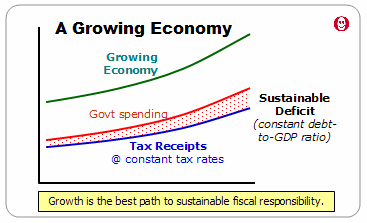
Grow -- Or Die; Get Busy Livin' or Get Busy Dyin'

Grow or Die as Applied to a National Economy

Under current leadership, Europe and America are busy dyin'. Dynamic innovative attitudes and thinking have given way to a stagnant, steady state, dieoff.orgy bureaucratic liquidation of western civilisation. We are being crowded by our overlords into a tight, descending chute, forced down into an abattoir of stasis where civilisations go to die.
Grow or Die Applies to the Living and Business Worlds Also

"Grow or die," is a natural imperative. " ...all living systems are either growing or dying, there is no sustainable stasis...There is accretive, replicative and transformational growth." (Source) We can choose how we are to grow, but we cannot choose not to grow. Not if we want our civilisations and our bloodlines to survive.

Respected science fiction author Neal Stephenson laments the loss of innovativeness in modern American society:
This summer, at the age of 51—not even old—I watched on a flatscreen as the last Space Shuttle lifted off the pad. I have followed the dwindling of the space program with sadness, even bitterness. Where’s my donut-shaped space station? Where’s my ticket to Mars? Until recently, though, I have kept my feelings to myself. Space exploration has always had its detractors. _WorldPolicy


An Unusual Situation from The Farsight Group on Vimeo.

Matt Ridley laments the fact that even today's innovative optimists appear to be contaminated with an overlay of "culture noir," a subconscious acceptance of too much of the modern gospel of stasis. Small wonder that our shrinking number of modern innovators sometimes appear schizoid about progress, when they are so beseiged by the culture of defeat that surrounds them in academia and society.

Obama did not set American culture down this greased rail of pessimism and malaise, but he has accelerated the rate of despair and futility. In Obama's America, there is very little reason to push for growth, when the bureaucratic culture of stasis is standing by to penalise any such efforts. Electing such a person once can be written off to frustrated desperation. Re-electing such a person is a certain sign of the impending death of the society as a going concern.

We are living on a finite Earth, which is floating in an infinite universe. The Earth is our cradle, the universe is our rightful home. Until humans shake off the infantile desire to remain in a comfortable sustainable cradle until it becomes a sustainable grave, stasis will have the upper hand.

But that mainly applies to the part of human civilisation that remains under the guidance of the mainstream, bureaucratic governments of steady state stasis. For those who choose to step outside the mainstream and make their own plans for the future, more positive choices can be made.

Labels: , ,

Bookmark and Share

02 October 2011

Welcome to Utopia!

Images via Gizmag

Project Utopia has more in common with an oil rig than it does with a yacht, and in the word's of the consultancy, "breaks the traditional naval architectural mould which the market has come to expect and offers a truly unique outlook free from any conventional design constraints."

...Yacht Island Design's Project Utopia measures some 330 ft (100 m) in length and breadth, spans 11 decks and has the equivalent floorspace of a present-day cruise liner - indeed, and I'm sure this will be a draw-card to any aspiring wealthy megalomaniacs, there is enough space to create an entire micro-nation.

First and foremost, the island's design is stable, being based on a four legged platform and designed for minimum motion in the most extreme sea conditions. Each leg supports a fully azimuthing thruster and with four such units, the design can redeploy between desired locations at slow speed. _Gizmag

The Project Utopia seastead design is clearly oriented toward the luxury-loving segment of the population, so it will be more similar to a luxury cruise ship than an independent country. And yet, if it adds to our wealth of knowledge of the different ways of living on the ocean, it could serve to help create a more revolutionary type of seastead.
First published at Al Fin Potpourri

Most of the important commercial opportunities of the sea occur close to the shore, on continental shelves. Oil & gas, fishing, aquaculture, tourism, etc. all tend to occur within no more than a few hundred miles from shore. Most of this area would be within a particular nation's control, and out of bounds for "independent" neo-nations. Deep-sea mining could conceivably support an independent ocean community, if it had the technological expertise and could negotiate international treaties of the sea.

The more speculative industries such as offshore banking, gambling, experimental medical procedures, advanced experimental life extension therapies, unconventional sexual opportunities, etc. would have to provide regular and reliable access to outsiders, both incoming and outgoing. The open ocean -- outside national zones of influence -- can be a very unfriendly and unpredictable place.

A seastead that seemed as safe, solid, and accessible from the outside as an island, but was as mobile as a large cruise ship (to avoid large storm systems), might be ideal. So far, Al Fin marine architects have not seen a practical design that can satisfy those criteria.

Labels: ,

Bookmark and Share
Newer Posts Older Posts
Al Fin Main Page
Enter your Email


Powered by FeedBlitz
Google
WWW AL FIN

Powered by
Blogger

``