12 February 2007

The Silicon Cortex

Over the years a lot of AI researchers and electrical engineers have tried to model the neurological function of parts of the brain on silicon. Tech Review features a current effort by Stanford neuroengineer Kwabena Boahen.
"Brains do things in technically and conceptually novel ways--they can solve rather effortlessly issues which we cannot yet resolve with the largest and most modern digital machines," says Rodney Douglas, a professor at the Institute of Neuroinformatics, in Zurich. "One of the ways to explore this is to develop hardware that goes in the same direction."

Neurons communicate with a series of electrical pulses; chemical signals transiently change the electrical properties of individual cells, which in turn trigger an electrical change in the next neuron in the circuit. In the 1980s, Carver Mead, a pioneer in microelectronics at the California Institute of Technology, realized that the same transistors used to build computer chips could be used to build circuits that mimicked the electrical properties of neurons. Since then, scientists and engineers have been using these transistor-based neurons to build more-complicated neural circuits, modeling the retina, the cochlea (the part of the inner ear that translates sound waves into neural signals), and the hippocampus (a part of the brain crucial for memory). They call the process neuromorphing.

Now Kwabena Boahen, a neuroengineer at Stanford University, is planning the most ambitious neuromorphic project to date: creating a silicon model of the cortex. The first-generation design will be composed of a circuit board with 16 chips, each containing a 256-by-256 array of silicon neurons. Groups of neurons can be set to have different electrical properties, mimicking different types of cells in the cortex. Engineers can also program specific connections between the cells to model the architecture in different parts of the cortex.
Source.

I am putting my money on Jeff Hawkins and Rodney Brooks. But when attempting something this ambitious, it doesn't hurt to include as many contestants as possible.

Labels: , ,

Bookmark and Share

11 February 2007

My Very Own Submarine For Christmas?

One can always hope, anyway. While Peter Robbins achieved his lifelong dream when he designed and oversaw the construction of his beautiful submarine, what are the rest of us to do?

That question has an easier answer, now that U-Boat Worx has a new line of personal submarines in production. The C-Quester model can dive to 50 meters and cruise submerged on electric propulsion for two and a half hours. The pressure hull keeps the pilot dry and at reasonable pressure, without requiring decompression. The price tag is US $85,000.

That price should fall well within the range of many affluent adventurers, and high end ocean resorts. Universities with marine studies departments may also want to look into possible external robotic add-on devices for collecting samples.

Labels: ,

Bookmark and Share

Exciting Discoveries in Cancer Genetics

Scientists at Cold Spring Harbor Lab have identified a "master control gene" on chromosome 1 whose protein product appears to affect a "tumour suppressor network" with a powerful potential to suppress many types of tumours.
A decades-old cancer mystery has been solved by researchers at Cold Spring Harbor Laboratory (CSHL). "We not only found a critical tumor suppressor gene, but have revealed a master switch for a tumor suppressive network that means more targeted and effective cancer therapy in the future," said CSHL Associate Professor Alea Mills, Ph.D. The study, headed by Mills, was published in the February issue of Cell.

Specifically, Mills' discovery identifies CHD5, a protein that prevents cancer, as a novel tumor suppressor, mapping to a specific portion of chromosome 1 known as 1p36. When CHD5 is not doing its job, the machinery within our cells that normally prevents cancer is switched off. The ability of CHD5 to function as a master switch for a tumor suppressive network suggests that this gene is responsible for a large number of diverse forms of human cancers. "CHD5 functions like a circuit breaker that regulates the tumor-preventing power in our cells—when it blows, cancer occurs," explains Mills. Modulation of CHD5 activity may provide novel strategies for better design of more effective cancer therapies. This gene has remained a mystery until the discovery by Mills' team.
Source.

In addition, a team of researchers at Dana-Farber Cancer Institute and Broad Institute of the Massachusetts Institute of Technology and Harvard University have developed a new rapid screening method for identifying a tumour's genetic profile, in order to target therapies more efficiently.
The findings, published online today on the Nature Genetics Web site, may help relieve a bottleneck between scientists' expanding knowledge of the genetic mutations associated with cancer and the still nascent ability of doctors to use that knowledge to benefit patients. The results constitute an important step toward the era of "personalized medicine," in which cancer therapy will be guided by the particular set of genetic mutations within each patient's tumor, the authors suggest.

....The authors took advantage of a scientific serendipity to devise a simple test to detect important cancer mutations. Mutations in oncogenes (genes linked to cancer) do not occur randomly; rather, they seem to arise most frequently in certain regions of the oncogenes. As a result, researchers didn't necessarily have to scan the entire length of each gene, but could focus instead on the sections most likely to harbor mutations.

They performed these screenings with a technology known as high-throughput genotyping, a fast, relatively inexpensive way of profiling gene mutations within cells. It involves extracting DNA from a tumor sample, copying this material thousands of times, depositing segments of it in tiny "wells" on a small plate, and mixing in reagents that reveal whether each segment carries a specific mutation. Automated equipment then reads the plates to determine which mutations are present in each sample.
Source.

In the future, routine body fluid protein and cellular nucleic acid analysis will identify tumours at a very early stage in their development. Knowing their genetic profile, and understanding how to control the tumour suppressor network, will allow early effective interventions even for what are now the deadliest of cancers.

Labels: , , ,

Bookmark and Share

Training in Hell, for Hell--and High Water

The appalling costs of war can be measured in the dead, the maimed, the homeless, and the good things that could not be accomplished because the resources were expended making war. War is an evil thing, and spawns other evils such as famine, disease, and pillage.

Is it possible that war spawns good as well as evil, at least in some cases? Certainly ridding the world of Hitler's Nazi machine could be considered good. Mad dictators are always threats to their own countries and their neighbors.

But on a smaller scale, is it possible that war may spin off other goods besides relieving a population from tyranny and oppression? Robert Kaplan suggests that a nation can be enriched by the proficiency of warriors--can reap large benefits from the competencies that fighters gain in overcoming the immediate challenges of war.
What I'm talking about is a kind of "warrior working class:" high-school graduates, but who can speak foreign languages, often exotic languages; know their way around capital cities from Brazaville to Mombasa, to all kinds of places; can deal with NGOs and others better and better; and, obviously, know how to fight.

But most of what they do, ironically, falls into the realm of disaster relief. Now I'm starting to warm to my theme. In any given week, U.S. Special Forces Command is involved in about sixty-eight countries around the world. This was a typical summer for me with the U.S. military. I spent the first half of it in Algeria, the second half in Nepal, where we are also active. In these sixty-eight countries—Colombia, the Philippines, Djibouti, Somalia, all these training missions to Thailand, Singapore, training at the Jungle Warfare School in Brunei, other things—what I have found is that the fewer American troops we have on the ground, the lower beneath the media radar screen it is, the more it attempts to nip a problem in the bud when it is still on page 11—before it gets to page 5, even—the more bang for the buck the taxpayer gets out of it.

....The distinction between disaster relief and combat is much less than you think. It is only the training for expeditionary combat that enabled the marines and sailors to perform so well in Indonesia. Combat and relief is about quick insertion. It's about access. It's about establishing security perimeters the moment you're on the ground, because after you have a natural disaster, be it an earthquake, a flood,or a hurricane, normal security systems get swept away along with everything else, and if there wasn't lawlessness before, there is now.

....What we have seen in Indonesia and New Orleans, and what we'll see more of, is the militarization of relief assistance, because of the lawlessness that erupts after a natural disaster, because the military, precisely by training for combat, is best equipped to provide relief fast, because it has the assets, air and sea assets. What's the first thing you need after a disaster, normally? Fresh water. The USS ABRAHAM LINCOLN can pump—pumped, in fact—hundreds of millions of gallons of fresh water onshore in Indonesia. They ramped that up, because the sailors did not take showers for two weeks in order to get more water available for the civilian people onshore.

....Another issue here is that we are going to see more and more of these disasters, for the simple reason that you have vast urban populations living on environmentally, seismically, and climatically fragile places for the first time in human history. Two-thirds of China lives in a flood zone.

I did a cover piece in The Atlantic last June about how the U.S. military sees China, in terms of rising to China's "shop till you drop" policy on building nuclear submarines and acquiring them. But there's an irony in all of this. While the U.S. military Pacific Command is now formulating how to contain a rising Chinese military power, they also know that the first time U.S. troops go onshore in China may be for disaster relief, ten or twenty years from now. How they perform may have a great impact on stabilizing U.S.-Chinese relations. In an era of global mass media, whatever the politics are between two countries, if there is a massive disaster, that country simply, politically, cannot say no to any foreign element that has the assets and is able to provide relief on the spot.

....But the military on the ground, these NCOs, these noncoms, are getting really good at things.
Source.

The military does not pay people to sit around and do nothing, unlike most civil service jobs and university jobs. The military trains its members in skills, and puts them in situations where those skills will be used. Whether a wartime disaster or a peacetime disaster--the military trains for disaster. As bad as war is, being unprepared for war and disaster in a world such as this one is worse.

The media focuses on the returning caskets, and the returning amputees, post traumatic syndromes, and brain damaged service members. For every casualty, there are hundreds returning with more skills and more insights on the world. War is surely hell, but surviving war with your learned competencies intact can be good for everyone you deal with in the future.

As Kaplan noted above, the military tries to extinguish a fire before it becomes noticeable. The military is sometimes given a mission that does not allow that type of preventive warfare to be carried out. The military has to train for all sorts of missions that political leaders might assign.

The military focuses on "getting things done." That means a focus on the competencies of a task. Given that government schools, universities, and popular media focus on anything but competencies for real life, the military acts as a useful counter-point to most of the rest of an affluent--and corrupt--society. As long as the military remains firmly under civilian leadership, that "can do" focus on practical competencies can be channeled into constructive uses for the society.

Labels: ,

Bookmark and Share

China's Future In the Balance

China suffers from a monumental environmental crisis, a crisis in non-performing loans, shoddy construction practices and materials that result in collapsing bridges, highway tunnels, and buildings, etc. At the same time, China's economy is projected to continue its almost 10% per year GDP growth at least until the end of this decade.

Several recent presidents of the US have assumed that by promoting economic modernisation in China, they were also promoting freedom and democracy. That has not been the case, for reasons discussed in this analysis of China's institutional response to massive economic growth.
Certainly, the lack of political progress was not what successive Republican and Democratic administrations promised. In lobbying for continued trade with China, President Bill Clinton predicted in 2000, “We will be unleashing forces no totalitarian operation rooted in last century’s industrial society can control.” President George W. Bush reiterated Clinton’s prediction in 2005: “I believe a whiff of freedom in the marketplace will cause there to be more demand for democracy.” Just how China is to proceed from “a whiff of freedom” to democracy no one knows. Meanwhile, the ccp is determined to show otherwise: It continues to gobble up Western technology, know-how, and capital without relinquishing its monopoly on power.
Source.

North American and European approaches to influencing third world authoritarian governments has always been naive. Incisive criticism from Amy Chua, Peter Bauer, Robert Kaplan, Thomas Sowell, Hernando de Soto, Ludwig von Mises, and many others has failed to influence the basic naivete of western governments in their approach to modernising more primitive and authoritarian nations.

Former Hong Kong attorney Gordon Chang has sounded the warning of a coming collapse in China for years now. Chang correctly points out many of the critical problems in China's economic and political infrastructure, which would ordinarily signal the impending collapse--or at least the radical re-structuring--of most nations.

China's government has successfully played the strengths of its human capital against the weaknesses of its organisational infrastructure--by depending upon the wishful thinking and naivete of western governments and business/financial interests. Microsoft felt it was contributing to the liberalisation of China--not to perpetuating the prisoner executions cum human organ factories. Westinghouse thought it was helping democratize China, not promote the brutal suppression of basic freedoms. Google was certain it was opening up the flow of information in China so as to make the citizens freer--not providing the oppressive regime a more powerful tool for spying on more of the people.

Past methods of predicting financial outcomes may not work very well when mega-economies such as that of the US are directly involved. Make no mistake, it is the US economy that is propping up China, just as the US is helping to prop up the EU. As long as US presidents continue to believe that promoting billions of dollars of trade with China is the surest route to changing China from a belligerent regional foe into an ally and friend, China will be able to paint over the inner rot with outer glitz and the appearance of prosperity. Western investors will continue to be thrilled right up to the moment the sandy foundation gives way.

China needs to occupy Taiwan in order to guarantee a free route to the sea for a growing blue water navy. But the moment China attacks Taiwan, it risks the collapse of its economy with the inevitable internal strife that will bring. War with the US over Taiwan would not be nearly as important if not for the fact that trade with the US gives China the cash reserves it craves, and apparent peace with the US reassures investors in other parts of the world that investment in China is safe.

It will not go on forever. China will invade Taiwan, perhaps under cover of a provocation against the US and Japan by North Korea, or a nuclear strike against Israel by Iran. Then all bets are off.

But China will not take the irrevocable step until its Politburo and Supreme Leader determine that China will emerge from the other end of the tunnel as hegemon of Asia. They must believe that the US has served China's purpose long enough as a stupid pack-mule, and that it is now time for China to accept its destiny.


Here is a great video of Gordon Chang and two critics at a Cato Institute gathering. Here is a Gordon Chang article on "the grand wager on China", this is a Ching-tsi Chang article on China's Collapse, and this is an Orville Schell interview on the coming collapse.

Labels: , ,

Bookmark and Share

10 February 2007

Burning the Heretics Part II

"The debate is over, let the trials begin":
With the debate now settled, what are we to do with those scientific heretics (deniers is a much too mild a term for these dangerous individuals) who continue in their error and refuse to accept the teachings of the UN's ecumenical council of scientists. David Roberts has already called for climate change heretics to be put on trial, but he goes too far as he appears to want to punish people for heretical statements they made prior to the issuance of the latest UN writ. After all, as the earlier pronouncements from the UN's ecumenical council were not as definitive as the current one and the debate not yet closed, these unfortunate souls must be given a chance to repent from their errors before they are punished.

Following enlightened historical precedence (see Galileo), I humbly suggest that the UN create an office to be known as the Permanent Tribunal of Universal Inquiry to investigate into the views of scientists on climate change. Those who publicly repent from their errors would be given leniency, but those who maintain their heretical positions should be handed over to civil authorities for proper punishment. In times past the penalty for the crime of heresy was burning at the stake but, regretfully, this would release too many greenhouse gases, so another form of punishment must be found.

Lord Monckton should be one of the first of the heretics to be brought in front of the tribunal of inquiry. I cite his recent critique of the IPCC report only as evidence with which he condemns himself. He has had the audacity to continue to publish his heretical views even after he was duly informed that the debate was officially over. His critique of the IPCC report is comprehensive and it could cause weaker minds to question the infallibility of the IPCC.

....[and there is] Dr. Edward Wegman, professor at the Centre for Computational Statistics at George Mason University and chairman of the National Academy of Sciences' Committee on Applied and Theoretical Statistics. Dr. Wegman's crime is that he verified the McIntyre and McKitrick critique of Michael Mann's famous "hockey stick" graph, and has also complained that climate change scientists have routinely made basic statistical errors and insists that climate scientists actually consult with professional statisticians when using statistics in their work. I do note that the IPCC, quietly and without comment, has dropped the use of Dr. Mann's graph from its latest report. The IPCC's current global temperature graph, which only starts in 1850, will hopefully stop all the embarrassing distractions on the Medieval Warm Period and the Little Ice Age.

Then there is Dr. Henrik Svensmark, director of the Centre for Sun-Climate Research at the Danish Space Research Institute. Dr. Svensmark presents an alternate theory on climate change that involves the sun's magnetic field, cosmic rays and cloud formation. Dr. Svensmark has even conducted experimentation to support his theory. As the IPCC report concedes that cloud formation and feedback remains a major source of uncertainty and its discussion of the role of the sun is limited to solar irradiance, it is clear that an alternative theory that attacks the weakest parts of the IPCC dogma must be silenced.

An what are we to do about Dr. Habibullo Abdussamatov, head of the Russian Academies of Sciences' Pulkovo Astronomical Observatory in St. Petersburg and head of the International Space Station's Astrometry project? He comes to the puzzling conclusion that the simultaneous global warming on Mars, where there are no man-made (or martian-made) greenhouse gases, shows shows that the sun rather than man's industrial activity, is the main cause of warming on the Earth. The very fact that the IPCC report did not address Mars warming shows how irrelevant this argument is for global warming on the Earth. Another of his heresies is that the IPCC has the cause and effect backwards, that it is the Earth's warming that causing the release of CO2 from the world's oceans, rather than rising CO2 causing the warming. He also points out the surface layers of the world's oceans are actually cooling. Allowing the dissemination of such information will only cause confusion.
Source.

Another interesting skeptical look at the recent IPCC political summary for policy makers comes from the erudite President of the Czech Republic, Vaclav Klaus.
Indeed, I never measure the thickness of ice in Antarctica. I really don't know how to do it and don't plan to learn it. However, as a scientifically oriented person, I know how to read science reports about these questions, for example about ice in Antarctica. I don't have to be a climate scientist myself to read them. And inside the papers I have read, the conclusions we may see in the media simply don't appear. But let me promise you something: this topic troubles me which is why I started to write an article about it last Christmas. The article expanded and became a book. In a couple of months, it will be published. One chapter out of seven will organize my opinions about the climate change.
Source.

Whether by burning, banishment, or simply ignoring what they say--it is simply too important an issue to allow the heretics to speak out publicly. The high inquisition of the climate orthodoxy simply cannot allow it.

Labels: , , , ,

Bookmark and Share

09 February 2007

News Briefs

Human DNA varies from person to person by up to 10% of genes, by Copy Number Variation (CNV). Scientists are just now learning how to detect the DNA differences that make a difference.

UWMadison researchers have devised chips with "nano-slots" sized perfectly for holding DNA strands for detailed study.

Human mental abilities can be influenced by gene variants. One version of a gene that influences brain development offers certain advantages--and certain risks. Some of the population differences in intelligence and demeanor will eventually be tracked to gene variant affecting neural development.

Evolution is a powerful conceptual tool for studying and understanding biology. So it should not be surprising that our understanding of Evolution is itself evolving.

When fighting cancer, biomedical science is willing to use whatever works. The generally harmless reovirus seems to be particularly useful, since it not only kills cancer cells, the virus leaves the cells vulnerable to attack, even after the virus particles are gone.

This research in machine vision is particularly interesting, due to closer modeling of biological vision. Just as nanotechnology needs to learn from biological nano-assembly, so does machine sensory intelligence need to learn from biological sensory intelligence.

Labels:

Bookmark and Share

Statistical Ignoramuses Overload Climate Science

In modern scientific studies, it is important that competent statisticians have input into the data analysis phase. In climate science, many researchers seem to have forgotten that basic step. As a result, much of what most journalists and members of the public believe has been "proven" about climate change, is simply wrong.
Dr. Wegman is a professor at the Center for Computational Statistics at George Mason University, chair of the National Academy of Sciences' Committee on Applied and Theoretical Statistics, and board member of the American Statistical Association. Few statisticians in the world have CVs to rival his (excerpts appear nearby).

Wegman became involved in the global-warming debate after the energy and commerce committee of the U.S. House of Representatives asked him to assess one of the hottest debates in the global-warming controversy: the statistical validity of work by Michael Mann. You may not have heard of Mann or read Mann's study but you have often heard its famous conclusion: that the temperature increases that we have been experiencing are "likely to have been the largest of any century during the past 1,000 years" and that the "1990s was the warmest decade and 1998 the warmest year" of the millennium. You may have also heard of Mann's hockey-stick shaped graph, which showed relatively stable temperatures over most of the last millennium (the hockey stick's long handle), followed by a sharp increase (the hockey stick's blade) this century.

Mann's findings were arguably the single most influential study in swaying the public debate, and in 2001 they became the official view of the International Panel for Climate Change, the UN body that is organizing the worldwide effort to combat global warming. But Mann's work also had its critics, particularly two Canadians, Steve McIntyre and Ross McKitrick, who published peer-reviewed critiques of their own.

Wegman accepted the energy and commerce committee's assignment, and agreed to assess the Mann controversy pro bono. He conducted his third-party review by assembling an expert panel of statisticians, who also agreed to work pro bono. Wegman also consulted outside statisticians, including the Board of the American Statistical Association. At its conclusion, the Wegman review entirely vindicated the Canadian critics and repudiated Mann's work.
Source.

You may remember that "hockey stick" graph from Al Gore's unintentionally comedic documentary, "An Inconvenient Truth." Dr. Wegman apparently confirmed the McIntyre and McKitrick paper that revealed Mann's hockey stick as garbage science. Al Gore was a bit slow on the uptake, and even the IPCC still releases statements based upon the phony hockey stick claims.

Here are links to a series from the National Post on science skeptics of the orthodox doctrine of CAGW--catastrophic anthropogenic global warming. It's really more fun to be a skeptic--especially when the orthodoxy is as dimwitted as this one seems to be.

The entire series is well worth reading:

Statistics needed -- The Deniers Part I

Warming is real -- and has benefits -- The Deniers Part II

The hurricane expert who stood up to UN junk science -- The Deniers Part III

Polar scientists on thin ice -- The Deniers Part IV

The original denier: into the cold -- The Deniers Part V

The sun moves climate change -- The Deniers Part VI

Will the sun cool us? -- The Deniers Part VII

The limits of predictability -- The Deniers Part VIII

Look to Mars for the truth on global warming -- The Deniers Part IX

Limited role for C02 -- the Deniers Part X


Dr. Shariv's digging led him to the surprising discovery that there is no concrete evidence -- only speculation -- that man-made greenhouse gases cause global warming. Even research from the Intergovernmental Panel on Climate Change-- the United Nations agency that heads the worldwide effort to combat global warming -- is bereft of anything here inspiring confidence. In fact, according to the IPCC's own findings, man's role is so uncertain that there is a strong possibility that we have been cooling, not warming, the Earth. Unfortunately, our tools are too crude to reveal what man's effect has been in the past, let alone predict how much warming or cooling we might cause in the future.

All we have on which to pin the blame on greenhouse gases, says Dr. Shaviv, is "incriminating circumstantial evidence," which explains why climate scientists speak in terms of finding "evidence of fingerprints." Circumstantial evidence might be a fine basis on which to justify reducing greenhouse gases, he adds, "without other 'suspects.' " However, Dr. Shaviv not only believes there are credible "other suspects," he believes that at least one provides a superior explanation for the 20th century's warming.

"Solar activity can explain a large part of the 20th-century global warming," he states, particularly because of the evidence that has been accumulating over the past decade of the strong relationship that cosmic- ray flux has on our atmosphere. So much evidence has by now been amassed, in fact, that "it is unlikely that [the solar climate link] does not exist."

The sun's strong role indicates that greenhouse gases can't have much of an influence on the climate -- that C02 et al. don't dominate through some kind of leveraging effect that makes them especially potent drivers of climate change. The upshot of the Earth not being unduly sensitive to greenhouse gases is that neither increases nor cutbacks in future C02 emissions will matter much in terms of the climate.

Even doubling the amount of CO2 by 2100, for example, "will not dramatically increase the global temperature," Dr. Shaviv states. Put another way: "Even if we halved the CO2 output, and the CO2 increase by 2100 would be, say, a 50% increase relative to today instead of a doubled amount, the expected reduction in the rise of global temperature would be less than 0.5C. This is not significant."


Hat tip Climate Audit Blog.

Labels: ,

Bookmark and Share

07 February 2007

Burning the Heretics

Unbelievable.

Also, see this perspective.

Labels: , ,

Bookmark and Share

The Idiocracy Creeps Up On An Unsuspecting Aging Population

The future is clear for those who can read the numbers. The population of western countries is becoming less literate--and less intelligent. There are only a few specific things that can be done to change this trend, and a nation hamstrung by political correctness cannot do those things.
US workers may be significantly less literate in 2030 than they are today.

The reason: Most baby boomers will be retiring and a large wave of less-educated immigrants will be moving into the workforce. This downward shift in reading and math skills suggests a huge challenge for educators and policymakers in the future, according to a new report from the Educational Testing Service (ETS).

If they can't reverse the trend, then it could spell trouble for a large swath of the labor force, widen an already large skill gap, and shrink the middle class.

....The decline in literacy is one of the more startling projections in a report that examines what it calls a "perfect storm" of converging factors and how those trends are likely to play out if left unchecked.

The three factors identified are: a shifting labor market increasingly rewarding education and skills, a changing demographic that include a rapid-growing Hispanic population, and a yawning achievement gap, particularly along racial and socioeconomic lines, when it comes to reading and math.

....One factor that's been gaining increasing attention lately is the changing economic rewards in an economy in which demand for manufacturing and lower skilled labor is declining. It's become tougher for workers without higher education – or higher cognitive skills – to get the sort of job that can support a family.

But exacerbating the changes such an economic shift is causing are demographic factors, researchers say. Baby boomers are retiring and being replaced by less-skilled workers. A combination of immigration and population growth means that the share of the population that is Hispanic is expected to grow from 14 percent in 2005 to more than 20 percent by 2030. More than half of the immigrant Hispanics lack a high school diploma.
....
Source.

What the Monitor will never tell you is that immigration policy allows--even encourages--less intelligent and capable immigrants to stay, at the expense of more intelligent and capable immigrants. I am a very politically incorrect person to even suggest such a thing. Nevertheless, it turns.

In addition, social policy and tax policy in combination discourage more intelligent person's from having children and encourage less intelligent persons to give birth. There--I've done it again! Bad boy, bad boy!

Finally, educational methods and policies encourage a groupthink mentality oriented toward less intelligent and capable students, and discourage independent thinking more suitable to students at the upper ends of the intelligence and competence curves. As a result, the leadership potential of students is being steadily destroyed by the government endorsed system of education. Only a radical--in the true sense of the word--rethinking of education can make the best of the education situation.

Idiocracy--not just a film, but a coming way of life.


Hat tip: Steve Sailer

Labels: , , , , ,

Bookmark and Share

06 February 2007

Fantastic Video of RNA Interference


If you liked The Inner Life of the Cell, you will be thrilled by RNAi, the video about RNA Interference a type of non-coding RNA. The narration in this video describes how RNAi participates in gene expression by blocking specific mRNAs from being translated.

Thanks again to Biosingularity Blog.

Contemplate what you learned from the above video when reading this newsrelease, describing a "masterswitch" for preserving adult stem cells in their primitive state.

Labels: , , , , ,

Bookmark and Share

China Set to be World's Largest Polluter and CO2 Emitter


China has had a booming economy for the past two decades, since economic liberalisation. One of the downsides of China's boom is the pollution that the populous country is spewing into the East Asian skies.
But it's not just sand, smog and ash that China is spewing into the atmosphere. The country's factories and power plants already emit more sulfur dioxide (SO2) and carbon dioxide (CO2) than Europe, even though the booming Chinese economy manages only a fraction of the per capita gross domestic product that the old industrialized nations do. Between 2000 and 2005, China's SO2 emissions grew to 26 million tons. In just a few years the country will surpass the United States to become the world's biggest carbon dioxide producer. China already accounts for more than 15 percent of total global CO2 emissions.

...In order to feed its appetite for energy, China is building coal-fired power plants as fast as it can. Every seven to ten days a new plant begins spewing smoke into the sky. The amount by which China increased its power production last year alone is greater than Britain's entire capacity.

Coal heavily pollutes the air, but China's leaders see little alternative to a dirty resource that is available in ample quantities around the country. Some 69 percent of all Chinese power plants are run on coal. China used 2.1 billion tons of it in 2004 -- more than the United States, the European Union and Japan together. Even if the Chinese economy only continues to grow seven percent annually, its coal usage would double to 4 million tons within ten years.

....The country is home to 16 of the world's 20 dirtiest cities. The inhabitants of every third metropolis are forced to breathe polluted air, causing the deaths of an estimated 400,000 Chinese each year. Half of China's 696 cities and counties suffer from acid rain. Two-thirds of its major rivers and lakes are cesspools and more than 340 million people do not have access to clean drinking water. The Yangtze River, once China's proud artery of life, is biologically dead for long stretches. Many other rivers flow with blackened water and along their banks there are the notorious "cancer villages" where many people die early.
More at the Source.

The combination of autocratic rule and a disregard for the environment leads to the same devastation of the atmosphere that Eastern Europe and the USSR suffered under communist rule, before the liberation of the late 1980s and early 1990s. A similar liberation may be necessary before China cleans up its industry. China certainly needs a leadership that cares more about the residents of the country and their health.

Labels: , ,

Bookmark and Share

05 February 2007

News Bits

A menagerie of bacteria hiding in plain sight.

The bounty of the sea: A toxin to kill cancer, and a mitochondrial-marking protein to study diseases of neurodegeneration. And using a tool called FISH (fluorescent in situ hybridization) to spell out links between cancer, aging, and Werner's syndrome progeria. Okay, the last one was not really from the sea--just a pun--but still important.

Nanostructures from DNA, and how they can self-assemble, and using beta-amino acids to make peptides instead of nature's alpha-amino acid peptides, are just two fascinating looks into artificial molecular assembly that may pay off big in the long run...

Micro-nano hardware advances may lead to advanced optical computing, more rapid sorting of interesting proteins in biological fluids, and tiny gas flow sensors to detect early leaks of important and potentially dangerous gases.

Finally, an anti-obesity drug that has serendipitous anti-cancer activity.

Labels: ,

Bookmark and Share

04 February 2007

Alzheimer's Disease and Microglia Triggered Inflammation


A recent posting at Developing Intelligence blog discussed the vital role of glial cells in the activity of neurons, including the effect of inflammation triggered by glia. Now U Penn Medical School researchers have shown that microglial activation leads to formation of neural tangles of tau protein. These tangles cause more inflammation and so on . . .
Researchers at the University of Pennsylvania School of Medicine have shown that impaired function and loss of synapses in the hippocampus of a mouse form of Alzheimer’s disease (AD) is related to the activation of immune cells called microglia, which cause inflammation. These events precede the formation of tangles – twisted fibers of tau protein that build up inside nerve cells – a hallmark of advanced AD. The researchers report their findings in the February 1 issue of Neuron.

“Abolishing the inflammation caused by the accumulation of the tau protein might be a new therapy for treating neurodegenerative disorders,” says senior author Virginia Lee, PhD, Director of the Center for Neurodegenerative Disease Research. “This work points the way to a new class of drugs for these diseases.”

In addition, the immunosuppressant FK506 diminishes neuron loss and extends the life span of the transgenic Alzheimer’s mice. Normally only 20 percent of these mice survive by one year. With FK506, 60 percent of the mice were alive by one year.
Source.

Glial cells perform housekeeping functions for neurons, but in some situations can trigger inflammation that leads to neuron death. Learning how to intervene in such situations before irreversible damage is done to neurons may postpone the loss of mental function in senescent individuals.

Labels: , , ,

Bookmark and Share

03 February 2007

Geologist Giegenback: I Voted For Al Gore, Not His Documentary!

U Penn's Bob Giegenback has been a respected geologist specialising in climate change for almost 50 years. His career has spanned the "global cooling" scare of the 1960's and 70's, and the current "climate change catastrophe" scare of modern times. He has viewed Al Gore's documentary, and he is not amused.

...Giegengack tells his students they might want to consider that “natural” climatic temperature cycles control carbon dioxide levels, not the other way around. That’s the crux of his argument with Gore’s view of global warming — he says carbon dioxide doesn’t control global temperature, and certainly not in a direct, linear way.

Gieg has lots more slides to show. He points out that within his lifetime, there was a three-decade period of unusually low temperatures that culminated in the popular consciousness with the awful winter of 1976-77. Back then, scientists started sounding the alarm about a new ice age.

....“Sea level is rising,” Giegengack agrees, switching off the sound. But, he explains, it’s been rising ever since warming set in 18,000 years ago. The rate of rise has been pretty slow — only about 400 feet so far. And recently — meaning in the thousands of years — the rate has slowed even more. The Earth’s global ocean level is only going up 1.8 millimeters per year. That’s less than the thickness of one nickel.

...“At the present rate of sea-level rise,” Gieg says, “it’s going to take 3,500 years to get up there. So if for some reason this warming process that melts ice is cutting loose and accelerating, sea level doesn’t know it. And sea level, we think, is the best indicator of global warming.”

....If we somehow cut our CO2 emissions in half, you wouldn’t be able to measure the difference because of the role played by India and China.

“It’s over. If CO2 is the problem, we’ve already lost.”

When Gieg gets to this point in his argument, as he often does when talking about global warming, he gets a little frustrated. “I always get sidetracked because, first of all, the science isn’t good. Second, there are all these other interpretations for what we see. Third, it doesn’t make any difference, and fourth, it’s distracting us from environmental problems that really matter.” Among those, Gieg says, are the millions of people a year who die from smoking and two million people a year who die because they don’t have access to clean water.

Source.
Professor Giegenback is not the most vocal of the skeptical mainstream scientists who are trying to head off the lemming-like stampede over the cliff. He is just an ordinary and conscientious geologist who has studied the issue for most of his life, and has come to several inconvenient conclusions honestly.

The release of the recent IPCC political summary for policymakers should be the stimulus for scientists from all fields that impact climate studies to be heard--in all their diversity of opinions. The totalitarian orthodoxy of apocalyptic climatologic catastrophe has been allowed to exercise rigid control of this debate for far too long.

Labels: , ,

Bookmark and Share

02 February 2007

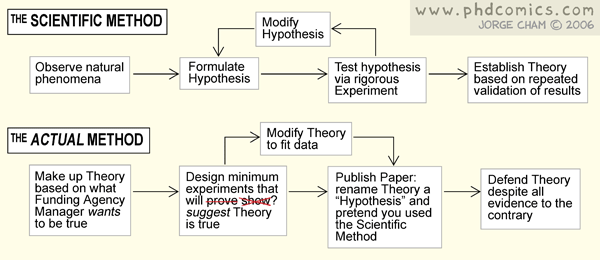
The Scientific Method in an Idiocracy

We all know how the scientific method is supposed to work--when it is not being manipulated by tautological ideologies such as creationism or climate change.

Unfortunately, most journalists, social scientists, school teachers, and members of the public do not know how it is supposed to work. That means your children will never learn how a disinterested system of epistemology should work. Worse, they will never suspect that that is something they should have been taught. They will live their lives believing that political correctness is the most important thing in life.

Unless they are lucky. Because if they are lucky, political correctness will be knocked on its can, and ideological diversity--the only kind of diversity that matters in schools and universities--will be restored to systems of learning and education. Then perhaps science has a ghost of a chance to rise above politics and help us to find the next level.

The Idiocracy will be happy to serve us our future, if we persist in political correctness.

Graphic comes courtesy of JohnA at Climate Audit blog.

Labels:

Bookmark and Share

31 January 2007

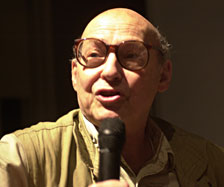
Marvin Minsky on the Mind, Neuroscience, and AI


Marvin Minsky has long been one of my heroes. Since reading "Society of Mind", I have respected Minsky's ability to sort through complex ideas and clarify their essence. In this interview with Discover, Minsky discusses a few issues that are close to this blog's raison d'etre.
Although educated in mathematics, Minsky has always thought in terms of mind and machine. For his dissertation at Princeton University in the 1950s, he analyzed a "learning machine," meant to simulate the brain's neural networks, that he had constructed as an undergrad. In his early career he was also an influential inventor, creating the first confocal scanning microscope, a version of which is now standard in labs worldwide. In 1959 Minsky cofounded the Artificial Intelligence Laboratory at MIT, where he designed and built robotic hands that could "feel" and "see" and manipulate objects, a watershed in the field.

...His latest book, The Emotion Machine, continues ideas begun in Society of Mind, reflecting twenty-some additional years of thought. It is a blueprint for a thinking machine that Minsky would like to build—an artificial intelligence that can reflect on itself—taking us a step forward into a future that may seem as if out of an Asimov story.

What are your latest ideas about the mind, as set out in The Emotion Machine?

The theme of the book is that humans are uniquely resourceful because they have several ways to do everything. If you think about something, you might think about it in terms of language, or in logical terms, or in terms of diagrams, pictures, or structures. If one method doesn't work, you can quickly switch to another. That's why we're so good at dealing with so many situations. Animals can't imagine what the room would look like if you change that couch from black to red. But a person has ways of constructing mental images or sentences or bits of logic.

...So as you see it, artificial intelligence is the lens through which to look at the mind and unlock the secrets of how it works?

Yes, through the lens of building a simulation. If a theory is very simple, you can use mathematics to predict what it'll do. If it's very complicated, you have to do a simulation. It seems to me that for anything as complicated as the mind or brain, the only way to test a theory is to simulate it and see what it does. One problem is that often researchers won't tell us what a simulation didn't do. Right now the most popular approach in artificial intelligence is making probabilistic models. The researchers say, "Oh, we got our machine to recognize handwritten characters with a reliability of 79 percent." They don't tell us what didn't work.

Neuroscientists like Oliver Sacks and V. S. Ramachandran study people who have brain injuries; to them, what is not happening in the brain is more informative than what is happening. Is that similar to what you're saying?

Yes. In fact, those are just about the two best thinkers in that field. Antonio Damasio is pretty good, but Ramachandran and Sacks are more sophisticated than most. They consider alternative theories instead of trying to prove one particular theory.

...Can artificial intelligence have human-style common sense?

There are several large-scale projects exploring that issue. There's the one that Douglas Lenat in Texas has been pursuing since 1984. He has a couple of million items of commonsense knowledge, such as "People live in houses" or "When it rains, you get wet," which are very carefully classified. But what we don't have are the right kind of answers to questions that a 3-year-old child would be filled with. So we're trying to collect those now. If you ask a childlike question like, "Why, when it rains, would somebody want to stay dry?" it's confusing to a computer, because people don't want to get wet when it rains but they do when they take a shower.
More at Source.

It's interesting that people such as Marvin Minsky and Jeff Hawkins--outsiders to neuroscience--should be producing some of the most seminal ideas for exploring and simulating the underlying processes of mind. But then, that is the way science works, when it works well.

Rather than trying to exclude outsiders--as is too often done in the baby science of climatology--a more mature and wiser science will welcome intelligent inputs from outsiders as potential breaths of fresh air.

Hat tip, KurzweilAI.net.

Labels: ,

Bookmark and Share

30 January 2007

The Limitations on Engineered Biological Systems

I was recently made aware of a stimulating article at Acceleration Watch dealing with the "Limits of Engineered Biological Systems." Written by John Smart, the essay lays out reasons why it will be extremely difficult--if not impossible in practice--to genetically bioengineer the human body for long life and superintelligence.

Specifically, the "path dependency" of the development of the human bio-organism--the complexity of interacting gene systems--makes it almost impossible to make significant changes in the genome that will be more beneficial than detrimental. All of the "legacy code" of the human genome is extremely resistant to intentional tampering, and makes it far more likely that any given intervention will be harmful rather than helpful in achieving a biological singularity.

I encourage everyone with an interest in the biosingularity, and the genetic augmentation of human intelligence and lifespan, to read John Smart's well-reasoned essay.

In the coming weeks and months, I will be dealing with the issues in more detail. I am in full agreement with the basic outline and most of the main points of Smart's argument. It is likely that essentially immortal machines will acquire many of the strengths of human cognition, and human mobility, before mobile and mortal humans gain long life (200+ year lifespans) and superintelligence.

It is likely that cyborg augments with neural and vascular interfaces will extend human functionality and lifespan before humans gain the mastery of their own highly complex genomes.

But I feel that there are some loopholes in the legacy code. Recent discoveries of epigenetic mechanisms including "non-coding RNA's" and other means of influencing "families" of gene expression from "the outside", suggests that it is not necessary to change the actual genome to any great extent in order to achieve significant improvements in targeted human functions.

All futurists who write about the genetic improvement of human existence, including myself, need to take into account John Smart's clear and cogent cautions on the dangers of trying to change the human genetic design.

Labels: , ,

Bookmark and Share

29 January 2007

Has the Infant Science of Climatology Oversold the Coming Catastrophe?

Many climate scientists are beginning to suspect that they have allowed their profession to become a circus.
Climate scientists might be expected to bask in the spotlight after their decades of toil. The general public now cares about greenhouse gases, and with a new Democratic-led Congress, federal action on climate change may be at hand.

Problem is, global warming may not have caused Hurricane Katrina, and last summer's heat waves were equaled and, in many cases, surpassed by heat in the 1930s.

In their efforts to capture the public's attention, then, have climate scientists oversold global warming? It's probably not a majority view, but a few climate scientists are beginning to question whether some dire predictions push the science too far.

"Some of us are wondering if we have created a monster," says Kevin Vranes, a climate scientist at the University of Colorado.

....Would junior scientists feel compelled to mute their findings, out of concern for their careers, if the research contradicts the climate change consensus?

"I can understand how a scientist without tenure can feel the community pressures," says environmental scientist Roger Pielke Jr., a colleague of Vranes' at the University of Colorado.

Pielke says he has felt pressure from his peers: A prominent scientist angrily accused him of being a skeptic, and a scientific journal editor asked him to "dampen" the message of a peer-reviewed paper to derail skeptics and business interests.
Source.


Is there really a similarity between the top-down forcing of opinion in climate science, and purges and inquisitions in political and religious history? After all, science is not populated by disinterested saints, but by humans who are just as vain and pompous and contemptuous of those who contradict their pet theories as any occupation. It should not be too surprising if threats are made against meteorologists and others who refuse to meekly repeat the "official" stance on an issue of scientific debate such as catastrophic anthropogenic global warming. If some data and discussion is suppressed in the interest of presenting a unified front to the public, would you really be that surprised?

As one commenter here stated:


• James Hansen advocating Nuremberg-style war crimes trials for skeptics of AGW

• .... Dr. Heidi Cullen advocating decertifying colleagues who express contrarian positions on greenhouse warming

• British Foreign Secretary Beckett comparing “climate-change skeptics” to terrorists

• Labeling scientists who question the evidence for AGW as “Deniers” (read Holocaust Deniers)

• The Royal Society admonishing organizations that question the link between greenhouse emissions and global warming,

• Re-introduction this week of the Orwellian “fairness doctrine” legislation by Congress

Does anyone else see a nasty pattern developing here? I don’t like the picture.


While the heavy-handed tactics of the orthodoxy of CAGW may not be a sinister and diabolical as the above commenter implies, the end result is the suppression of science in the interest of promoting politically motivated biases.

Labels: ,

Bookmark and Share

28 January 2007

Developing Competence in Children--John David Garcia and the Moral Society

Is it possible to create a system of education that encourages children to develop to their potential? Can children learn to be competent and responsible, as well as learned? What type of educational and para-educational curriculum could best make use of the child's innate intelligence, while also instilling positive character traits and an emotional competence that would serve the child's well-being for the entire lifetime?

Many attempts have been made to improve on the failed model of education currently being practised by government schools. Montessori, the Waldorf System, the system developed by Glenn Doman (IAHP), homeschool curricula, and many others.

The most impressive "open source" curriculum I have seen, is the one developed by the late John David Garcia, an inventor/philosopher who spent his last years in Oregon promoting the creation of a moral and ethical society. Garcia's curriculum is built around the Physical World (theory and practice), the Biological world (theory and practice), the Psychosocial World (theory and practice), and the Integrative world in theory and practice.

The theory behind Garcia's educational curriculum is more broadly elucidated in this chapter of the online book, Creative Transformation. A child could be introduced to this curriculum at any age from 3 to 90, whenever deemed ready by the instructors. It is most important in young children to develop a sense of competence in meeting the world. A genuine sense of competence can only be developed by teaching the child effective tools--both internal and external.

It is important to present alternative educational pathways to parents--particularly those who are concerned about the quality of mass production government education. Longtime readers of this blog may recognize most of the ideas in this post from an earlier article dated over a year ago. It is vital to present these useful alternatives over and over again.

Psychological neoteny is rampant in western societies, due to parents, schools, and society in general, which all neglect the development of character and competence in children. The problem is a type of societal rot, and will not get better on its own.

Update: For a fascinating glimpse of the difficulties and rewards of instituting an intentional articulated curriculum into a public charter school, read this account from a high school humanities teacher.

Update2: Here is a real gift: a free online book describing in detail the Montessori curriculum from ages 3 to 12, written by a Montessori instructor. Definitely worth the price of a mouse click.

Labels: , , ,

Bookmark and Share
Newer Posts Older Posts
Al Fin Main Page
Enter your Email


Powered by FeedBlitz
Google
WWW AL FIN

Powered by
Blogger

``