10 November 2006

As Good As It Gets?

Humans are quite good at complaining. Humans complain about just about anything. Even when an objective observer might see that the persons have relatively little reason to complain, they still find plenty to complain about.

In a democracy, people express their displeasure through the election process. If a nation's economy is doing extremely well, if a severe threat of homeland terrorism has been reasonably controlled, if the nation's military is involved overseas in a conflict that involves relatively little bloodshed compared to other wars--even then many voters can become incited by incessant negative news coverage to view their nation's situation as "unbearably bad." Many people have relatively little "personal ballast", and are easily moved by outside opinion. (as opposed to objective data that has been placed in perspective) This is naturally true of young people with little real life experience. But it is also true of older people who fail to develop personal depth. People without personal heft are people who are easily affected by special interest morons including those who populate the newsrooms of North America and the western world.

The recent US election will have very little substantive effect on the actual situation of most US citizens. But the "stylistic" effect of the election will occupy the pseudo-journalists for months and years. That type of superfluous "analysis" is expected from the type of person who typically goes into journalism. As time goes by, people looking for alternative points of view, and more data-based coverage of the world, will find what they are looking for in the internet.

The mid-term election of 2006 is similar in many ways to the election year of 1992. In both cases, voters were tired of several years of republican domination of national politics, and decided to "send a message" to complacent republicans. This many years after 1992, the salient fact about that year's election is what happened in the mid-term election only two years later, in 1994. Not only a reversal, but a reversal with a vengeance.

The founders of the USA were wary of democracy, and mob rule. They tried to build checks and balances into the system, to limit the "madness of the mob" that afflicts democratic forms of government. The incredible madness of the Palestinian territories, where decent people are afraid of walking the streets for fear of being gunned down by different radical Palestinian factions, is an example of a society where democracy can not work. Iraq--with its deep ethnic and religious divides--may very well be another example.

Partition of Iraq into three near-autonomous regions may be in the cards. But it will not be the cure-all that many people anticipate. Iraq is merely a prominent symptom of the problems in the islamic world, and the undeveloped world in general. The US is there, holding a spotlight to the problem. Even after the US leaves, the problems will be there, just as bad or worse. That is how that part of the world is, without strong-arm dictators like Saddam, Assad, or the mullahs in Iran. Does the US experience a benefit by directing the world's attention to the endemic problems of that part of the world? Will withdrawing the coalition troops so as to re-direct the world's attention to other parts of the world mean that the problems are gone? Will the fact that fewer coalition military members are killed in combat be balanced by more civilian deaths in coalition countries--when the islamic combatants are freed up to travel outside their native regions? Maybe.

An interesting dilemma, and not susceptible to the easy solutions that any of the vocal critics are suggesting. Critics are a dime a dozen. But acting in the world, no matter what one does, necessarily brings mixed results. By focusing on the negative--as the media often does--without looking at the larger picture, humans who need to understand never will.

As good as it gets does not mean perfection. As good as it gets means that everything you do will have at least some negative results. Pretending that is not true is commonplace, but not very intelligent.

Labels:

Bookmark and Share

08 November 2006

Joseph Lieberman Elected King of US Congress

If there is any one person who was elevated to leadership of the US Congress in yesterdays American election, it is Joseph Lieberman, US Senator from Connecticut. As the deciding democratic senate vote, and the leader of a cross-aisle alliance of moderates composing nearly 20 US Senators, Mr. Lieberman has achieved a level of power that most legislators only dream of. All because of a demented group of democratic party power brokers in Connecticut who decided to "punish" Lieberman for not being antagonistic enough toward US President Bush.

Democrats and Republicans alike will need Lieberman, a longtime Democrat whose independent ways will make him a power broker in a closely divided Senate. He's vowed to caucus with Democrats, but Republicans who provided support for his re-election are expected to court him as well.

Lieberman, who stressed his ability to work across the political aisle on the campaign trail, crafted his comeback from a shattering primary loss last August to political newcomer Ned Lamont by putting together a loose coalition of Republicans, Democrats and independent voters.
Source.

Lieberman will be a powerful moderating force in the new US Congress. With democrats in the majority for the first time in many years, a large number of the more radical democrats will want to flex their muscles in a leftist direction--to make their mark. With Lieberman bridging the ever widening gap in US politics, change will come slowly.
Bookmark and Share

07 November 2006

Becoming Cyborgs--One Organ At A Time


One of the most important steps in becoming a cyborg is developing a stable, working interface between electronic devices and nerve tissue. Nanotechnology has produced the nanotube, which not only serves as a scaffolding for the re-growth of damaged nerve tissue--nanotubes can also serve as interfaces between electronic chips and nerves.

Writing today in Advanced Materials, Nicholas Kotov of the University of Michigan and colleagues describe how they have used hollow, submicroscopic strands of carbon, carbon nanotubes, to connect an integrated circuit to nerve cells. The new technology offers the possibility of building an interface between biology and electronics.

Kotov and colleagues at Oklahoma State University and the University of Texas Medical Branch have explored the properties of single-walled nanotubes (SWNTs) with a view to developing these materials as biologically compatible components of medical devices, sensors, and prosthetics. SWNTs are formed from carbon atoms by various techniques including deposition and resemble a rolled up sheet of chicken wire, but on a tiny scale. They are usually just a few nanometers across and up to several micrometers in length.

The researchers built up layers of their SWNTs to produce a film that is electrically conducting even at a thickness of just a few nanometers. They next grew neuron precursor cells on this film. These precursor cells successfully differentiated into highly branched neurons.

A voltage could then be applied, lateral to the SWNT film layer, and a so-called whole cell patch clamp used to measure any electrical effect on the nerve cells. When a lateral voltage is applied, a relatively large current is carried along the surface but only a very small current, in the region of billionths of an amp, is passed across the film to the nerve cells. The net effect is a kind of reverse amplification of the applied voltage that stimulates the nerve cells without damaging them.

High quality, low cost single-wall (SWCNT) & multi-walled (MWCNTs)
Kotov and his colleagues report that such devices might find use in pain management, for instance, where nerve cells involved in the pain response might be controlled by reducing the activity of those cells. An analogous device might be used conversely to stimulate failed motor neurons, nerve cells that control muscle contraction. The researchers also suggest that stimulation could be applied to heart muscle cells to stimulate the heart.
Source.

In addition to neural-electronic interfaces, good cyborgs should also have a good supply of artificial organs, such as kidneys. Cyborgs, like conventional humans, may be injured, and will need replacement parts.

To make bioartificial kidneys, scientists grow cells harvested from donor kidneys not suitable for transplant and then insert them into a specially developed filter tube. Because the finished product contains live cells, it is treated like an organ for transplant, flown to the receiving hospital by helicopter in a temperature-controlled case. Humes founded a company, now known as RenaMed, to commercialize the device, which has not yet been approved by the Food and Drug Administration.

Early clinical trials of the device show that it can dramatically improve the health of patients with acute renal failure. According to the results of a trial released last year, patients treated with the device showed a 70 percent improved survival rate 28 days after treatment. (Scientists at RenaMed are currently analyzing interim results from a subsequent trial.)

However, the devices used in these trials were made with a manufacturing process that is only appropriate for growing small batches of cells. To run the larger clinical trials required for approval by the FDA and to supply needy patients if the device is approved, RenaMed will need to find a way to make and deliver the device on a much larger scale.
Source.

Humans evolved over billions of years. Now that human medicine influences human evolution, humans may be close to a dead end of sorts. Cyborgs--part human, part machine--will be one way out of the rut in the short term. Genetic engineering of germ tissue will be another way humans will jump-start evolution. A combination of both approaches is most likely in the intermediate term.

Labels: ,

Bookmark and Share

06 November 2006

A Shocking Memory Boost from Germany

German scientists have discovered that certain types of electric current stimulation applied to the scalp during sleep, can improve recall in a word-learning task. The subjects were healthy medical students, but it is conceivable that similar electrical stimulation might improve the memories of persons with Alzheimer's Disease, brain trauma, and various neurodegenerative conditions.

The scientists at the University of Lubeck say that when several mild electrical stimulation at the right frequency was applied to patients brains while they were sleeping, their ability to remember words on waking improved.

The currents, applied via electrodes stuck to the scalp, apparently mimic the natural slow oscillating brain waves in the sleep cycle linked to consolidating word memory.

During slow wave sleep there are regular electrical fluctuations in the prefrontal neocortex, which is linked to conscious thought and spatial reasoning.

The experiment which was carried out on thirteen medical students who had done a word-learning task, led to improved memory retention, says lead author neuroscientist Jan Born.

The scientists suggest brain stimulation could help people with memory problems and Alzheimer's disease and offers an alternative method of intensifying or improving sleep and its memory function.

The researchers stimulated their brain while they slept and on awaking the students were asked to recall the words they had memorized.

The scientists found that if the currents were applied to the scalp during the deep sleep phase, during the first few hours of nocturnal sleep, the students recalled a greater number of words than if they had been given a sham brain stimulation.

Born says the eight percent increase overall was striking and shows that slow oscillation has the function during sleep of building and consolidating memory.
Source.

Understanding the electro-chemical language of the brain will take time, but should yield enormous benefits. Better quality sleep, better healing from brain damage, and possible reversal of neurodegenerative changes are all possible benefits of intelligent administration of electric currents of the proper frequencies and combinations. In the brain, timing is very important in coordinating learning and memory tasks.

Labels: ,

Bookmark and Share

Nanotechnology for Robust Reverse Osmosis Production of Freshwater

The human appetite for clean freshwater is getting larger, as the global supply of groundwater supplies is decreasing. It has been obvious for several decades that better ways of producing freshwater from brackish and salt water would be needed. Finally, thanks to work done at UCLA with maturing nanotechnology methods, it is getting easier to design and manufacture more efficient and robust membranes for reverse osmosis.

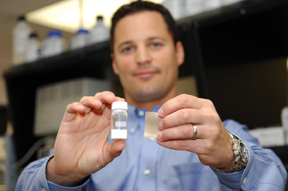
The new membrane, developed by civil and environmental engineering assistant professor Eric Hoek and his research team, uses a uniquely cross-linked matrix of polymers and engineered nanoparticles designed to draw in water ions but repel nearly all contaminants. These new membranes are structured at the nanoscale (the width of human hair is approximately 100,000 nanometers) to create molecular tunnels through which water flows more easily than contaminants.

Unlike the current class of commercial RO membranes, which simply filter water through a dense polymer film, Hoek’s membrane contains specially synthesized nanoparticles dispersed throughout the polymer — known as a nanocomposite material.

“The nanoparticles are designed to attract water and are highly porous, soaking up water like a sponge, while repelling dissolved salts and other impurities,” Hoek said. “The water-loving nanoparticles embedded in our membrane also repel organics and bacteria, which tend to clog up conventional membranes over time.”

With these improvements, less energy is needed to pump water through the membranes. Because they repel particles that might ordinarily stick to the surface, the new membranes foul more slowly than conventional ones. The result is a water purification process that is just as effective as current methods but more energy efficient and potentially much less expensive. Initial tests suggest the new membranes have up to twice the productivity — or consume 50 percent less energy — reducing the total expense of desalinated water by as much as 25 percent.

Source.

The new nanotech membranes are also less subject to bacterial and particulate fouling, which limits the lifetime of current reverse osmosis membranes. With the development of more efficient and longer-lasting nano-membranes, all that will be needed is the energy to drive the high pressure pumps that force the water through the membrane.

Presently, the Persian Gulf oil states are the main users of reverse osmoses desalination/water purification. With more efficient methods, there is no reason why most seaports and coastal areas cannot produce more of their water from desalination.

Labels: ,

Bookmark and Share

05 November 2006

US Economy: Under Unprecedented Pressure--But Still Kicking Ass

The US economy has suffered several major blows in the past five years. Hurricanes, wars, terrorist attacks, high petroleum prices--but you would never know there was a problem from looking at unemployment figures or job creation. What does it take to put this economy down for the count? The Futurist blog has taken a look at this question, and makes a few speculative guesses.

Over the last 3 years, the US has averaged 3.5% annual GDP growth, which is exactly at the long-term trendline. The unemployment rate is lower than it has been for 35 of the last 38 years, with seven million jobs being created in the last 3 years. What is remarkable is that in this period, a number of factors that have caused recessions in the past have occurred, even as new negative forces have simultaneously emerged, and all these have not derailed economic growth. But does this mean we could be growing even faster, had these problems not emerged? Let us look at all the bullets that did not manage to do the damage that they once did, and the new bullets that we have successfully endured.

1) Terrorism and War : Depending on how one measures it, the Sept. 11, 2001 terrorist attacks cost the US economy anywhere from $200 to $800 billion. In addition, it worsened the recession on 2001-02, and still slows the productivity of the US economy through longer lines at airports, increased security expenditures, difficulties that law-abiding foreign tourists face in getting visas to enter the US (costing us over $100 billion a year in tourist revenue from those who opt to vacation elsewhere), etc. This is effectively a new tax that we will be paying in perpetuity.

While the War on Terror has still cost the US just 3000 troops in 5 years (vs. 50,000+ in VietNam and Korea), the media coverage and resultant burden on the psyche of the US consumer today may comparable to what it was during the VietNam War. Add to that the threat that Americans could be killed in the US mainland when they least suspect it. This lingering fear makes consumer confidence lower than it should be.

2) Oil Spike : When oil reached $90 in today's dollars back in 1980, this caused a very deep recession, even though prices quickly dropped after that. In 2006, oil reached $78 per barrel before dropping, without causing a recession. In fact, it appears that sustained prices near $60/barrel are not sufficient to cause a significant drag on the US economy. This is partly because of the US economy evolving to a state where a large portion of output is based on innovation and technological advancement, which are much less tied to oil prices. An oil spike hurts GM and American Airlines much more so than it hurts Google and Microsoft.

Read : $70+/barrel oil, the non-crisis.

3) Massive Natural Disaster : Hurricane Katrina was the largest natural disaster the US has been struck with in several decades, with the direct economic costs of a major city being submerged with water compounded by the displacement of hundreds of thousands of people and the economic activity they generate. It cut the GDP growth of Q305 down to 1.8%. But in the next quarter, GDP bounced back smartly to 5.6%. The US economy adapted to the shock in a very short time.

4) Corporate Scandal Tax : While scandals like Enron and Worldcom could happen in any era, the resultant Sarbanes-Oxley (SOX) legistation has proven to so oppressive to law-abiding corporations that the economic cost exceeds the implosion of Enron and Worldcom by a large margin. Medium-sized public companies have to pay an estimated $3 million per year to comply with SOX, which is money that could otherwise go towards R&D, or passed onto shareholders. Estimates on the total opportunity cost of SOX over the last 3 years run as high as $1 trillion. Hopefully SOX can be scaled back for medium-sized enterprises with under $1 billion in annual revenue.

5) Trade Deficit : The US trade deficit, or the amount by which imports exceed exports, is not entirely a negative economic force, but it currently is over 5% of GDP, vs. just 2% of GDP in the mind-1990s. This reduces the total US GDP growth rate by over 1% a year.

....So in conclusion, the US economy is performing very well relative to historical norms, and this is even more remarkable given the many blows it has taken in recent years.
Source.

Then he looks at the world economic growth rate, and expresses disappointment that the US growth rate lags behind that of the developing world. Of course, if something is as large as the US economy, it takes a lot more growth to create an impressive per centage growth rate, compared to the many midget economies of the developing world--where minimal growth translates into large percentage growth rates.

All I ask from people who compare numbers is that they think first about how those numbers are derived.
Bookmark and Share

Climate Catastrophe Bandwagon: Morons Get Free Admission

The Catastrophic Anthropogenic Global Warming (CAGW) bandwagon is shifting into overdrive. Powered largely by speculative models often based upon poor methodology, this bandwagon is expansible enough to carry as many mental conformists and followers as wish to board. More intelligent people are having second thoughts.

In 1988, James Hansen, a climatologist, told the US Congress that temperature would rise 0.3C by the end of the century (it rose 0.1C), and that sea level would rise several feet (no, one inch). The UN set up a transnational bureaucracy, the Intergovernmental Panel on Climate Change (IPCC). The UK taxpayer unwittingly meets the entire cost of its scientific team, which, in 2001, produced the Third Assessment Report, a Bible-length document presenting apocalyptic conclusions well beyond previous reports.

....First, the UN implies that carbon dioxide ended the last four ice ages. It displays two 450,000-year graphs: a sawtooth curve of temperature and a sawtooth of airborne CO2 that's scaled to look similar. Usually, similar curves are superimposed for comparison. The UN didn't do that. If it had, the truth would have shown: the changes in temperature preceded the changes in CO2 levels.

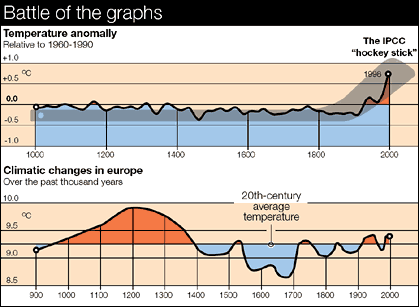
Next, the UN abolished the medieval warm period (the global warming at the end of the First Millennium AD). In 1995, David Deming, a geoscientist at the University of Oklahoma, had written an article reconstructing 150 years of North American temperatures from borehole data. He later wrote: "With the publication of the article in Science, I gained significant credibility in the community of scientists working on climate change. They thought I was one of them, someone who would pervert science in the service of social and political causes. One of them let his guard down. A major person working in the area of climate change and global warming sent me an astonishing email that said: 'We have to get rid of the Medieval Warm Period.' "

So they did. The UN's second assessment report, in 1996, showed a 1,000-year graph demonstrating that temperature in the Middle Ages was warmer than today. But the 2001 report contained a new graph showing no medieval warm period. It wrongly concluded that the 20th century was the warmest for 1,000 years.
Souce.

Even the leaders in the climate change movement are being attacked by the catastrophists for not being "catastrophic" enough! Mike Hulme, director of the Tyndall Centre for Climate Change Research is one of the sober climate players being condemned for his sobriety.

It seems that mere "climate change" was not going to be bad enough, and so now it must be "catastrophic" to be worthy of attention.

The increasing use of this pejorative term - and its bedfellow qualifiers "chaotic", "irreversible", "rapid" - has altered the public discourse around climate change.

This discourse is now characterised by phrases such as "climate change is worse than we thought", that we are approaching "irreversible tipping in the Earth's climate", and that we are "at the point of no return".

It seems that we, the professional climate scientists, who are now the (catastrophe) sceptics

I have found myself increasingly chastised by climate change campaigners when my public statements and lectures on climate change have not satisfied their thirst for environmental drama and exaggerated rhetoric.

It seems that it is we, the professional climate scientists, who are now the (catastrophe) sceptics. How the wheel turns.

Some recent examples of the catastrophists include Tony Blair, who a few weeks back warned in an open letter to EU head of states: "We have a window of only 10-15 years to take the steps we need to avoid crossing a catastrophic tipping point."

Today, a mass demonstration in Trafalgar Square will protest, aiming to "stop climate chaos" - the name for a coalition of environmental activists and faith-based organisations.

The BBC broadcast in May its Climate Chaos season of programmes. There is even a publicly-funded science research project called Rapid.

Why is it not just campaigners, but politicians and scientists too, who are openly confusing the language of fear, terror and disaster with the observable physical reality of climate change, actively ignoring the careful hedging which surrounds science's predictions?

....What has pushed the debate between climate change scientists and climate sceptics to now being between climate change scientists and climate alarmists?

I believe there are three factors now at work.

First, the discourse of catastrophe is a campaigning device being mobilised in the context of failing UK and Kyoto Protocol targets to reduce emissions of carbon dioxide.

The signatories to this UN protocol will not deliver on their obligations. This bursting of the campaigning bubble requires a determined reaction to raise the stakes - the language of climate catastrophe nicely fits the bill.

Hence we now have the militancy of the Stop Climate Chaos activists and the megaphone journalism of the Independent newspaper, with supporting rhetoric from the prime minister and senior government scientists.

Others suggest that the sleeping giants of the Gaian Earth system are being roused from their millennia of slumber to wreck havoc on humanity.

Second, the discourse of catastrophe is a political and rhetorical device to change the frame of reference for the emerging negotiations around what happens when the Kyoto Protocol runs out after 2012.

The Exeter conference of February 2005 on "Avoiding Dangerous Climate Change" served the government's purposes of softening-up the G8 Gleneagles summit through a frenzied week of "climate change is worse than we thought" news reporting and group-think.

By stage-managing the new language of catastrophe, the conference itself became a tipping point in the way that climate change is discussed in public.

Third, the discourse of catastrophe allows some space for the retrenchment of science budgets.

It is a short step from claiming these catastrophic risks have physical reality, saliency and are imminent, to implying that one more "big push" of funding will allow science to quantify them objectively.

....The language of catastrophe is not the language of science. It will not be visible in next year's global assessment from the world authority of the Intergovernmental Panel on Climate Change (IPCC).

To state that climate change will be "catastrophic" hides a cascade of value-laden assumptions which do not emerge from empirical or theoretical science.

Is any amount of climate change catastrophic? Catastrophic for whom, for where, and by when? What index is being used to measure the catastrophe?

The language of fear and terror operates as an ever-weakening vehicle for effective communication or inducement for behavioural change.
Source.

It is incredibly difficult for me to hold back the profanity when discussing the way the media has allied with the alarmists to jack up the intensity of this climate circus. Schoolchildren around the world have been lassooed into believing false claims and impossible predictions. This fiasco has gone beyond the absurd to the totally farcical. It is not a question of whether the world is presently "warming."
It is more a question of looking at the larger picture more intelligently.

Hat tip Climate Audit.

Labels: , ,

Bookmark and Share

04 November 2006

Remember: Be Afraid--Be Very Afraid, Monsieur Amygdala

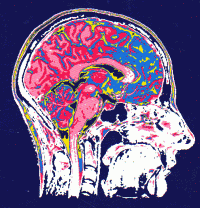
The amygdala is involved in fear and fear based memory. A recent article at the Neurophilosopher Blog provides a fascinating discussion of the general role of the amygdala, along with some very interesting recent research findings into gene expression within the amygdala.

The amygdala receives its main inputs from the visual, auditory and somatosensory cortices; it couples these sensory stimuli (something scary) to the fight-or-flight response and, therefore, its main outputs are to the hypothalamus, which controls hormone production and homeostasis, and autonomic centres in the brainstem.

Recent work by Gleb Shumyatsky and his colleagues at Rutgers University in New Jersey has led to the discovery of several genes that are enriched in the amygdala and appear to be involved in the formation of fearful memories. One of these proteins, stathmin (also known as oncoprotein 18) is now known to be involved in mediating the formation of memories of of both conditioned and unconditioned fear; there is a high level of expression of the stathmin gene, and a corresponding high concentration of stathmin protein, in the amygdala, but not in the adjacent hippocampus.

Mutant mice lacking the stathmin gene were unable to learn new fears or to act instinctively in a fearful situation, i.e. they had weaker memories of fearful experiences. The stathmin knockout mice also showed less anxiety when presented with new mazes to explore or with potentially dangerous situations. Upon further examination, it was observed that mice lacking the stathmin gene had a less dynamic microtubule network than wild type (normal) mice. Memories are formed by the establishment of new synaptic connections, which require a re-arrangement of microtubules. In the absence of the stathmin protein, microtubules aren’t re-arranged so easily, and, as a consequence, the synapses that would normally be modified during memory formation are not as plastic as they should be.

More recently, researchers have used functional magnetic resonance imaging (fMRI) to show that the rostral anterior cingulate cortex(rACC) modulates activity in the amygdala, effectively acting as an ‘on-off’ switch. Joy Hirsch and her colleagues at Columbia University used a variant of the Stroop test, which involves presenting words for colours, which are printed in a colour that differs from that of the meaning of the word (e.g. green). This discrepancy leads to a delay in the processing of the visual information, reducing the reaction time taken to perform the task.

Instead of using words, Hirsch’s team presented participants in their experiments with photographs of happy or scared faces with the word ‘HAPPY’ or ‘FEAR’ written across them. It was found that the amygdala was activated before the rACC when the participants were presented with a happy face with the word ‘FEAR’ printed across it. Soon afterwards, though, the activity in the amygdala would be reduced. That is, initially, the amygdala processes the word ‘FEAR’, but, soon afterwards, the rACC processes the happy face, and inhibits activity in the amygdala to reduce the fear response. In contrast, when participants were presented with a photograph of a scared face which had the word ‘FEAR’ written across it, the rACC remained inactive, while activity in the hippocampus persisted for longer.
More at Source.

In twin studies, some aspects of phobia show a heritability of around 45% or higher.

Although many social scientists still deny the importance of heritability in cognitive and emotional function, people who actually work in the field know better. In fact, it would not be surprising to find that heredity influences cognitive styles that would predispose individuals to particular styles of political or ideological belief, within the broad spectrums of human political/ideological behaviour.

When one contemplates the increasing likelihood that different attitudes toward morality are at least partially inherited, it is not a great leap to expect that heredity plays a part in philosophical, ideological, or political predisposition. Teasing out all the possible mechanisms will be beyond complex.

Labels: ,

Bookmark and Share

03 November 2006

It Has Only Taken Us 3.2 Billion Years to Catch Up to Primitive Bacteria

Primitive bacteria learned to split water using sunlight over 3 billion years ago. That crucial part of photosynthesis paved the way for life as we know it on Earth. Now researchers at the US DOE Lawrence Berkeley National Lab have taken a huge step in understanding this critical step--which should eventually result in much improved efficiencies in renewable energy.

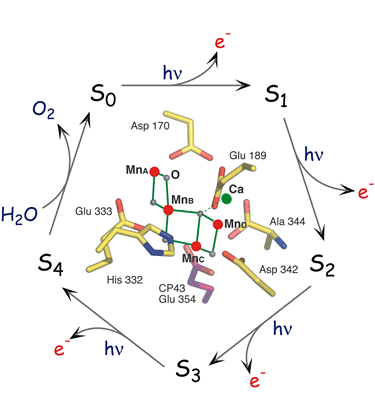
Specifically, an international team led by scientists from the U.S. Department of Energy’s Lawrence Berkeley National Laboratory (Berkeley Lab) pieced together high-resolution (approximately 0.15 Ångstrom) structures of a Mn4Ca cluster found in a photosynthetic protein complex (one Ångstrom equals one ten-billionth of a meter). The team, which includes scientists from Germany’s Technical and Free Universities in Berlin, the Max Planck Institute in Mülheim, and the Stanford Synchrotron Radiation Laboratory, used an innovative combination of x-ray spectroscopy and protein crystallography to yield the highest-resolution structures yet of the metal catalyst.

“This is the first study to combine x-ray absorption spectroscopy and crystallography in such a detailed manner to determine the structure of an active metal site in a protein, especially something as complicated as the photosynthetic Mn4Ca cluster,” says Junko Yano of Berkeley Lab’s Physical Biosciences Division, who is one of the lead authors of the study.

The metal catalyst resides in a large protein complex, called photosystem II, found in plants, green algae, and cyanobacteria. The system drives one of nature’s most efficient oxidizing reactions by using light energy to split water into oxygen, protons, and electrons. Because of its efficiency and reliance on nothing more than the sun, the catalyst has become a target of scientists working to develop carbon-neutral sources of energy. Learn the catalyst’s structure, then how it works, and perhaps scientists can develop similarly robust molecules.

But until now, the precise structure of the catalyst has eluded all attempts of determination by x-ray diffraction and various spectroscopic techniques. Even a 3.0-Ångstrom-resolution structure obtained by the Berkeley Lab group’s collaborators at the Technical and Free Universities in Berlin, using x-ray diffraction, didn’t allow the researchers to pinpoint the exact positions of the cluster’s manganese and calcium atoms and its surrounding ligands.
Much more at Source.

There are many more research teams working on understanding the various processes in photosynthesis and electron transport, including the two teams detailed in this previous Al Fin posting. Once science has a firm understanding of a natural process, it can then proceed to modify the process for specific human purposes.

Labels:

Bookmark and Share

02 November 2006

Dopamine--Polymer Implant Stimulates Rapid Nerve Growth

Scientists at Georgia Tech have discovered how to stimulate rapid nerve growth in tissue culture, using a polymer with dopamine impregnated into it. This method may offer hope for nerve regeneration in patients with Parkinson's, Alzheimer's, and other neuro-degenerative conditions.

Because neural circuits use electrical signals often conducted by neurotransmitters (chemical messengers) to communicate between the brain and the rest of the body, he (Ya Dong Wang) could build neurotransmitters into the material used to repair a broken circuit. The neurotransmitters could coax the neurons in the damaged nerves to regrow and reconnect with their target organ.

Strange though his idea might have seemed to others in his field, Wang, an assistant professor in the Wallace H. Coulter Department of Biomedical Engineering at Georgia Tech and Emory University, discovered that he could integrate dopamine, a type of neurotransmitter, into a polymer to stimulate nerve tissues to send out new connections. The discovery is the first step toward the eventual goal of implanting the new polymer into patients suffering from neurological disorders, such as Alzheimer's, Parkinson’s or epilepsy, to help repair damaged nerves. The findings were published online the week of Oct. 30 in the Proceedings of the National Academy of Sciences (PNAS).

“We showed that you could use a neurotransmitter as a building block of a polymer,” said Wang. “Once integrated into the polymer, the transmitter can still elicit a specific response from nerve tissues.”

The “designer” polymer was recognized by the neurons when used on a small piece of nerve tissue and stimulated extensive neural growth. The implanted polymer didn’t cause any tissue scarring or nerve degeneration, allowing the nerve to grow in a hostile environment post injury.

When ready for clinical use, the polymer would be implanted at the damaged site to promote nerve regeneration. As the nerve tissue reforms, the polymer degrades.
Read more at Source.

This is an interesting experiment, illustrating that there are still many new uses to which commonplace biochemicals can be put. The combination of dopamine with an unnamed polymer apparently has effects no one predicted. How many other everyday biochemicals, when combined with polymers, nanostructures, or other modifying agents, have the capacity to perform similar useful functions? Time will tell.

Labels: ,

Bookmark and Share

01 November 2006

CERN Anti-matter Particle Beam Obliterates Living Cells

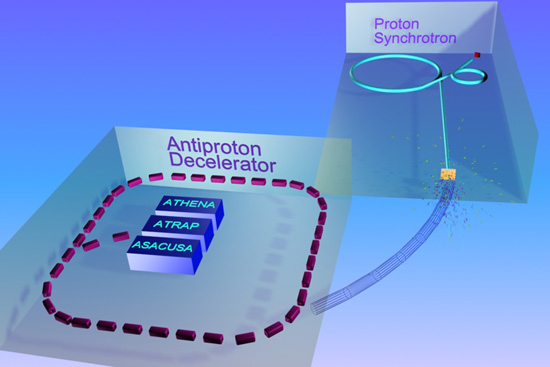
For the past three years, scientists at CERN have been experimenting with anti-proton beams and their effect on living cells. They have discovered that anti-proton beams are four times more deadly to living tissue than proton beams. This discovery offers promise of safer and more effective treatments for cancer.

Current particle beam therapy commonly uses protons to destroy tumour cells inside a patient. The ACE experiment directly compared the effectiveness of cell irradiation using protons and antiprotons. To simulate a cross-section of tissue inside a body, tubes were filled with hamster cells suspended in gelatine. Researchers sent a beam of protons or antiprotons with a range of 2 cm depth into one end of the tube, and evaluated the fraction of surviving cells after irradiation along the path of the beam.

The results showed that antiprotons were four times more effective than protons. When comparing a beam of antiprotons with a beam of protons that cause identical damage at the entrance to the target, the experiment found the damage to cells inflicted at the end of the beam path to be four times higher for antiprotons than for protons. Michael Holzscheiter, spokesperson of the ACE experiment, summarises: “To achieve the same level of damage to cells at the target area one needs four times fewer antiprotons than protons. This significantly reduces the damage to the cells along the entrance channel of the beam for antiprotons compared to protons. Due to the antiproton's unsurpassed ability to preserve healthy tissue while causing damage to a specific area, this type of beam could be highly valuable in treating cases of recurring cancer, where this property is vital.”

Antiprotons are antimatter; they have to be produced in small amounts in a laboratory with the help of a particle accelerator. When matter and antimatter particles meet, they annihilate, or destroy each other, transforming their mass into energy. The experiment makes use of this property as the antiproton would annihilate with a part of the nucleus of an atom in a tumour cell. The fragments produced from the energy released by the annihilation would be projected into adjacent tumour cells, which are in turn destroyed.
Source.

Proton beams have been put to good use treating prostate cancer and other cancers. If anti-proton beams are even more effective, with less incidental normal tissue destruction, the new treatment would contribute to both quantity and quality of life.

This is still a case of swatting flies with sledge-hammers, but at least we will be swinging the hammers with a bit more finesse. Newer methods of programming viruses, bacteria, and immune cells to target cancers would seem to be much more potentially accessible methods of cancer treatment for patients all around the world. Even so, it is good to put multi-billion dollar physics facility to the use of saving lives.

Labels:

Bookmark and Share

30 October 2006

Russian Brides--Coming to America and the West

Why do so many successful North American men choose to spend thousands of dollars corresponding with Russian women, then spend more thousands to travel to Russia or Eastern Europe to meet these women face to face? Why do so many men choose to marry these Russian women they have only recently met, and only known for a relatively short time, knowing that the cultural differences and (frequently) age differences already put them two strikes behind the count? Part of the answer is here on this website, and on other similar websites by successful trans-cultural and trans-national brides.

Mping at Fat Knowledge blog recently did a story on "The Vanishing Russians." Average Russians are truly in desperate circumstances, due to the corruption of their government. The KGB-ocracy of communist days has transformed almost seamlessly into the mafi-ocracy of the modern times. Russian men have no opportunities for success, meaning they cannot marry and support families. This leaves Russian women who want the normal life of marriage and children out in the cold. No wonder so many sign up with the marriage agencies to try to meet North American, European, and Australian men.

But why do successful american men go through the inconvenience and expense of corresponding with, and traveling to Russia and Eastern Europe to meet, Russian women?

There is no mystery here. Successful middle-aged men want to marry somewhat younger women, who can appreciate the life the man can provide them, and can also give the men children in many cases. If the man takes the trouble to correspond long enough with the woman, and knows how to judge a woman's character, he can develop a lifelong friendship and love relationship--with the trans-cultural, trans-linguistic nature of the relationship as a spiced icing on the cake.

The man can also make a mistake, and marry someone who only wants legal residency in the west. That happens frequently, but no more frequently than all-western marriages go badly. There are plenty of foreign bride scams operating. People have to be careful. The Russian women themselves, even with the dismal conditions in Russia, also have to be extremely careful not to get themselves into a situation worse than what they have at home.

Here is another reason Russian brides may be in higher demand than brides from southeast Asia or South America. Crush41 at Audacious Epigone posted an interesting look at the relative expenses charged to adopting parents for babies of different ethnic backgrounds. A similar calculus may apply to the "price" western men will pay for overseas brides of various nationalities. Knowing that their babies will possess the ethnic characteristics of both mothers and fathers, perhaps more western fathers want to marry caucasian wives, even if they are from a different culture.

I know a number of professional colleagues who have married Russian women from overseas. They are generally very happy with their choices, and recommend Russian women to their friends, if their friends are careful and take the time to develop an honest relationship that will allow both parties to make a rational choice. You probably know someone who is married to a Russian woman. It is becoming much more common than you think.

So--what is wrong with American women, that successful American men will reject them in favour of foreign women? Let us be honest here. There is plenty wrong with any particular man or woman. No one is perfect. But the war of the sexes in North America and much of the western world has become very personal.

Anyone who has not read "The Myth of Male Power" or "Who Stole Feminism?" is in no position to even discuss the issue of current day power struggles in the trenches between the sexes. Go to Amazon and click on the similar books that will be displayed on the same pages as those two books. Read a dozen or so similar books and you will begin to understand why a lot of western men are looking outside the culture for life partners.

Women are favoured in modern education from the beginning, all the way to graduate school, post-docs, and employment/tenure. Affirmative Action applies to women too, not just minorities. That built-in inequality tends to instill an attitude of entitlement to many women, which is obvious in the activities of many radical feminists who control Women's Studies Departments in the Universities, and who also have enormous influence in the modern US Democratic Party political machine.

Fathers are often discriminated against in divorce settlements and child custody settlements as well. The male proportion of college graduates and graduate students in most fields (except math-intensive fields) is diminishing steadily. Women have a nearly endless set of resources to call upon to help them with their goals. Men are pretty much on their own. All of these inequities and many more lead to a deep distrust between the sexes. Even if all of these things are never consciously considered by most western men, they still affect the subconscious thinking.

So what is up with these Russian women who are marrying so many financially successful western men? These women know western men are not perfect. But compared to so many Russian men, these western men can give them a home, a family, and a better lifestyle with more freedoms. And compared to western women, these Russian women can give the western men a level of respect and acceptance that many western women are no longer willing to give.

Many Russian women are professionals by training, and with some re-training in the west are able to be highly successful in their own right. The salaries they are capable of earning are many times higher than what is being paid in Russia.

This trend toward more Russian brides is not likely to slow. Because the trend toward indoctrinating western women into the man-hating sisterhood is not slowing. The two things are intimately related. One feeds the other.

Labels: ,

Bookmark and Share

28 October 2006

Viruses Affect Memory

Recent research looks at how viral infections can involve the brain, affecting how the memory works. In fact, some of the incidental memory degeneration associated with ageing may be due to past viral infections. Aetiology Blog looks at this issue.

A recent article highlights one area of investigation: how viral infections can influence memory problems......

A family of viruses that cause a range of ills from the common cold to polio may be able to infect the brain and cause steady damage, a team at the Mayo Clinic in Minnesota reported on Monday.

"Our study suggests that virus-induced memory loss could accumulate over the lifetime of an individual and eventually lead to clinical cognitive memory deficits," said Charles Howe, who reported the findings in the journal Neurobiology of Disease. [Article can be found here; --TS]


This may seem somewhat far-fetched at first, but we know that viruses certainly can cause severe damage to the brain and nervous system. Therefore, this lends plausibility to the idea that they can cause more minor damage as well. As they note, polio (a picornavirus) is a prime example of this, with the potential to affect the brain and the spinal cord and result in paralysis. A related virus in mice, called Theiler's murine encephalomyelitis virus, has also been used to induce damage to the nervous system (for example, it's used as a mouse model for multiple sclerosis), and researchers infected mice with this and then performed cognitive tests to see if it had more subtle effects as well:

Infected mice later had difficulty learning to navigate a maze. Some were barely affected, while others were completely unable to manage, and when the mice were killed and their brains examined, a correlating amount of damage was seen in the hippocampus region, related to learning and memory.


Now, it's always a bit difficult to extrapolate directly from an animal model to humans, but the study is certainly intriguing and can open doors for epidemiological studies of viruses and cognition in humans.

One virus particularly likely to cause brain damage is enterovirus 71, which is common in Asia, the researchers said. It can cross over into the brain and cause encephalitis, a brain inflammation that can lead to coma and death.

"Our findings suggest that picornavirus infections throughout the lifetime of an individual may chip away at the cognitive reserve, increasing the likelihood of detectable cognitive impairment as the individual ages," the researchers wrote in their report.

"We hypothesize that mild memory and cognitive impairments of unknown etiology may, in fact, be due to accumulative loss of hippocampus function caused by repeated infection with common and widespread neurovirulent picornaviruses."
Source.


The link to this story came from Tangled Bank #65. There are many more good stories to be found from this edition, so check them out.

This is a particularly disturbing concept--one that has probably spawned a large number of zombie stories and other tales of malignant mass mental transformations. Vaccines have minimised incidence of bacterial meningitis, which previously destroyed the minds of many thousands of people every year--at least in the western world. Neurovirulent viruses can be more difficult to control.

Labels:

Bookmark and Share

26 October 2006

Bioremediation--Using Microbes to Infect Us into Wellness

The concept of a benign infection with helpful micro-organisms is not a new one. Our normal bacterial flora on the skin, in the gut, and other body locations--all of these bacteria protect us from pathological infections and provide us with other benefits as well. Now, researchers are looking into using benign infections to combat atherosclerosis--the major killer of persons in the western world. From the Methuselah Foundation:

The Biodesign Institute at Arizona State University has awarded biochemist John Schloendorn a $30,000 scholarship that will enable him to pursue anti-aging research as a Ph.D. student in the School of Life Sciences. Schloendorn is part of the institute’s inaugural doctoral graduate assistantship class of 2006.

Schloendorn’s pioneering work concerns a new field of research called medicalbioremediation. The research focuses on identifying microbes that possess particularly effective mechanisms to biodegrade the molecular “junk” thataccumulates inside cells over time, and is at the root of many of the debilitiescaused by aging. Schloendorn’s research has been and is supported by a seedgrant made by the Methuselah Foundation, a charity dedicated to accelerating theprocess of discovering methods to defeat the debilities caused by aging.

Schloendorn’s work has led to the isolation and characterization of bacteriathat efficiently degrade several recalcitrant cholesterol breakdown products,among them 7-ketocholesterol, that are thought to play a major role inatherosclerosis (the cause of almost all heart attacks and strokes). His futureobjective is to isolate the enzymes responsible for the breakdown and test theirtherapeutic prospects in cell models of the disease, with the ultimate goal ofcreating medical bioremediation treatments for humans.
See the Methuselah Foundation website for more information.

Of course using viruses to introduce new genetic sequences is another way of using microbes in a hopefully benevolent way. As scientists learn more sophisticated and multi-level ways of affecting the human organism using microbe genomes and other cellular machinery, they will need to understand both human biology and microbial biology at correspondingly more sophisticated levels. Micro-organisms are a biological form of nanotechnology, and will no doubt compete with other forms of nanotech medicine to perform similar cellular rejuvenation tasks.

Labels:

Bookmark and Share

25 October 2006

Expecting More from Our Cars

Maybe it was all the James Bond films. The floating cars, the submarine cars, the flying boats, and so on. We simply want our transportation devices to do more than one thing.

Take the new Hydra Spider super fast floating car.

With its snazzy snout, convertible top, Corvette V8 engine and jet "impeller" -- the stainless-steel cone protruding from the rear that propels it through water -- the Hydra Spyder is poised to become the first, mass-produced amphibious automobile in America.

"It's incredibly nimble in the water. The Spyder turns smoothly, docks easily," the 46-year-old inventor boasts.

It has one shortcoming, he concedes. On the water, "the parallel parking really sucks."

Giljam tingles at the idea of anglers taking their cars out on lakes for a day of fishing; of rush-hour commuters bypassing congestion by taking a river as an alternate route; of water-skiers bouncing along in the wake of a speedboat with four wheels.

Or take the flying car presently under development by former MIT engineering student Carl Dietrich and his company Terrafugia. Sooner or later, someone will develop a comfortable road car that also flies.

My personal choice would be a flying car that could also travel submerged like a submarine, or like a hovercraft over water, mud, or ice. It would have to also function as a motorhome, for overnight trips. I do not think I am asking too much, not really. At least I didn't ask for a built in warp drive or time machine. Not yet, anyway.

Labels:

Bookmark and Share

24 October 2006

Amazing Neurochip Has Potential to Strengthen Neural Connections

UW Researchers report on an implantable electronic neurochip that may help rehabilitate patients with stroke or other types of brain damage. This chip is capable of performing an amazing function--it creates an artificial neural pathway that the brain can use to recuperate from otherwise disabling injury.

Researchers at the University of Washington (UW) are working on an implantable electronic chip that may help establish new nerve connections in the part of the brain that controls movement. Their most recent study, to be published in the Nov. 2, 2006, edition of Nature, showed such a device can induce brain changes in monkeys lasting more than a week. Strengthening of weak connections through this mechanism may have potential in the rehabilitation of patients with brain injuries, stroke, or paralysis.....

When awake, the brain continuously governs the body's voluntary movements. This is largely done through the activity of nerve cells in the part of the brain called the motor cortex. These nerve cells, or neurons, send signals down to the spinal cord to control the contraction of certain muscles, like those in the arms and legs.

The possibility that these neural signals can be recorded directly and used to operate a computer or to control mechanical devices outside of the body has been driving the rapidly expanding field of brain-computer interfaces, often abbreviated BCI. The recent Nature study suggests that the brain's nerve signals can be harnessed to create changes within itself.

The researchers tested a miniature, self-contained device with a tiny computer chip. The devices were placed on top of the heads of monkeys who were free to carry out their usual behaviors, including sleep. Called a Neurochip, the brain-computer interface was developed by Mavoori for his doctoral thesis.

"The Neurochip records the activity of motor cortex cells," Fetz explained, "It can convert this activity into a stimulus that can be sent back to the brain, spinal cord, or muscle, and thereby set up an artificial connection that operates continuously during normal behavior. This recurrent brain-computer interface creates an artificial motor pathway that the brain may learn to use to compensate for impaired pathways."

Jackson found that, when the brain-computer interface continuously connects neighboring sites in the motor cortex, it produces long-lasting changes. Namely, the movements evoked from the recording site changed to resemble those evoked from the stimulation site.
Source.

An electronic implant that can learn neuronal "language" in order to teach damaged brain to repair itself, is something new and promising. Insightful thinkers have wanted to learn the "language of the brain" for many years. Now we seem poised on the brink of beginning that process productively for healing purposes. I look forward to following this progress.

Labels: ,

Bookmark and Share

Ending the Torture--How Long?

For everyone who has earned themselves a root canal and crown, you understand what torture can be. None of this lady's underwear tease for torture crap. When you talk about dental work, you are talking genuine existential torture without the need for exaggeration you see in ideological claims of torture.

Well, things are changing. It may seem that dentistry is the last profession to innovate--and that may be true. Even so, better late innovation than no innovation at all. Medgadget blog brings a fascinating story about rapid same-day crown manufacture and placement--in the office.

Digital dentistry, using high-end computer-aided design and manufacturing right in dentists offices, will take crown fabrication from the painful multi-visit ordeal it is now to a quick, 30 minute job. And according to the Dallas Morning News, the company that will bring this innovation to you isn't modest about their beliefs:

Anyone who's ever had a tooth reconstructed knows the routine. The problem tooth is drilled down, and a temporary covering is put on while a permanent crown is made. The patient returns in a few weeks to have the permanent crown put in.

For four years, D4D has been working feverishly to change that. With its now-patented technology, the tooth is digitized using a laser wand, and a virtual 3-D model is sent to a computerized milling machine that makes the crown, inlay, onlay or veneer in 30 minutes. The patient leaves with a new tooth.

Company founder and chief executive Basil Haymann says the system is undergoing user testing and clinical studies (including one just starting at Baylor College of Dentistry). It's also in the final approval stage with the Food and Drug Administration.

"I had to be a little insane," the 60-year-old says, "because I've put in tens of millions of dollars into a dream, which everyone told me was impossible."
Source.

Did you get that? The tooth is digitized with a laser wand, and a micro milling machine makes the crown in 30 minutes or less! This may be the beginning of a beautiful transformation of how ordinary people view a trip to the dentist's. I look forward to more innovations from dental researchers. Having rapidly decaying rocks in our mouths for masticating food may have been a good idea when people lived only thirty or forty years on average. Now that people look to live close to a century or longer, our mineral teeth as currently designed may not go the distance with the rest of us.
Bookmark and Share

23 October 2006

Academic Bill of Rights--Where to Go from Here

Yesterday I presented the problem of the "indoctrination university"--a place for students to go to be brainwashed rather than to be taught different styles of thinking and viewing the world, so as to be able to forge their own unique style.

The Students for Academic Freedom have published on their site the Academic Bill of Rights, as a guideline for universities who seek to bring open-mindedness back to universities, to replace the politically and philosophically one-sided hyper-bias of current universities in North America.

.....Academic freedom consists in protecting the intellectual independence of professors, researchers and students in the pursuit of knowledge and the expression of ideas from interference by legislators or authorities within the institution itself. This means that no political, ideological or religious orthodoxy will be imposed on professors and researchers through the hiring or tenure or termination process, or through any other administrative means by the academic institution. Nor shall legislatures impose any such orthodoxy through their control of the university budget.

This protection includes students. From the first statement on academic freedom, it has been recognized that intellectual independence means the protection of students – as well as faculty – from the imposition of any orthodoxy of a political, religious or ideological nature. The 1915 General Report admonished faculty to avoid “taking unfair advantage of the student’s immaturity by indoctrinating him with the teacher’s own opinions before the student has had an opportunity fairly to examine other opinions upon the matters in question, and before he has sufficient knowledge and ripeness of judgment to be entitled to form any definitive opinion of his own.” In 1967, the AAUP’s Joint Statement on Rights and Freedoms of Students reinforced and amplified this injunction by affirming the inseparability of “the freedom to teach and freedom to learn.” In the words of the report, “Students should be free to take reasoned exception to the data or views offered in any course of study and to reserve judgment about matters of opinion.” ....
Source.

If you read the ABR carefully at the link above, you will see that it does not call for any type of faculty quota. I will quote from the ABR below so that you can see exactly what is being called for:


1. All faculty shall be hired, fired, promoted and granted tenure on the basis of their competence and appropriate knowledge in the field of their expertise and, in the humanities, the social sciences, and the arts, with a view toward fostering a plurality of methodologies and perspectives. No faculty shall be hired or fired or denied promotion or tenure on the basis of his or her political or religious beliefs.

2. No faculty member will be excluded from tenure, search and hiring committees on the basis of their political or religious beliefs.

3. Students will be graded solely on the basis of their reasoned answers and appropriate knowledge of the subjects and disciplines they study, not on the basis of their political or religious beliefs.

4. Curricula and reading lists in the humanities and social sciences should reflect the uncertainty and unsettled character of all human knowledge in these areas by providing students with dissenting sources and viewpoints where appropriate. While teachers are and should be free to pursue their own findings and perspectives in presenting their views, they should consider and make their students aware of other viewpoints. Academic disciplines should welcome a diversity of approaches to unsettled questions.


5. Exposing students to the spectrum of significant scholarly viewpoints on the subjects examined in their courses is a major responsibility of faculty. Faculty will not use their courses for the purpose of political, ideological, religious or anti-religious indoctrination.


6. Selection of speakers, allocation of funds for speakers programs and other student activities will observe the principles of academic freedom and promote intellectual pluralism.


7. An environment conducive to the civil exchange of ideas being an essential component of a free university, the obstruction of invited campus speakers, destruction of campus literature or other effort to obstruct this exchange will not be tolerated.


8. Knowledge advances when individual scholars are left free to reach their own conclusions about which methods, facts, and theories have been validated by research. Academic institutions and professional societies formed to advance knowledge within an area of research, maintain the integrity of the research process, and organize the professional lives of related researchers serve as indispensable venues within which scholars circulate research findings and debate their interpretation. To perform these functions adequately, academic institutions and professional societies should maintain a posture of organizational neutrality with respect to the substantive disagreements that divide researchers on questions within, or outside, their fields of inquiry.


Many people when first exposed to the concept of intellectual diversity, assume that those who are ideologically being actively excluded from faculties would naturally call for an affirmative action or quota policy, to ensure the inclusion of their own political point of view on faculties. As you can see by reading the Academic Bill of Rights, that is not the case.

Unfortunately, going from the present absurdly skewed and biased system, to a more principled and inclusivist, and less biased, system, will not be easy. The faculty stands ready at the barricades to repel all invaders to their sacred ground of power and indoctrination.

Rationality does not signify here, for these faculty defenders live in the post-modern world, the post-rational world as it were. These will be interesting times on the battlefields of academic freedom. You have to watch the definitions, because in the post modern world, words no longer mean what you think they mean.
:-)See also the website for FIRE--the Foundation for Individual Rights in Education.

Labels: , , ,

Bookmark and Share

22 October 2006

Intellectual Diversity on Campus--What Went Wrong?

Universities were never meant to be the indoctrination centers for political correctness they have become. In "The Elusive Goal of Intellectual Diversity," award winning science fiction author Orson Scott Card discusses the current pathetic state of intellectual restrictiveness that is almost universally present on North American university campuses.

....As a friend of mine on the faculty of a western university wrote not long ago, "higher education may have other litmus tests for ideological conformity, but the you-better-believe-in-diversity test is the only one that isn't hidden."

Ironically, the result of this absolute insistence on a commitment to diversity is ... a lack of diversity.

When the administration and faculty have all had to make the same affirmation in order to get their jobs, how likely is it that anyone will use their "academic freedom" to question a doctrine that they have already declared they believe in?

....Here and there, however, students are beginning to rebel against the pious cant that they hear from their relentlessly establishment teachers.

For instance, at Utah State University, student officers voted for an "Academic Bill of Rights." The goal was to "support intellectual diversity" on campus, and it called for such things as:

"Faculty will not use their courses for the purpose of political, ideological, religious, or non-religious indoctrination."

"Selection of speakers, allocation of funds for speakers programs and other student activities will observe the principles of academic freedom and promote intellectual pluralism."
More at Source.

Or take this Chronicle.com oped discussing the Academic Bill of Rights, promoting Intellectual Diversity.

By adopting the Academic Bill of Rights, an institution would recognize scholarship rather than ideology as an appropriate academic enterprise. It would strengthen educational values that have been eroded by the unwarranted intrusion of faculty members' political views into the classroom. That corrosive trend has caused some academics to focus merely on their own partisan agendas and to abandon their responsibilities as professional educators with obligations to students of all political persuasions. Such professors have lost sight of the vital distinction between education and indoctrination, which -- as the AAUP recognized in its first report on academic freedom, in 1915 -- is not a legitimate educational function
Source.

When "search committees" look for new faculty members, they are actually looking for more faculty members who think the same way as the search committe thinks. This leads to monolithic intellectual conformism in a faculty, which harms students' ability to function in the real world.

Former leftist radical turned conservative rabble-rouser David Horowitz has made a cause of intellectual diversity on campus. Recently Horowitz visited Duke University to give a talk on intellectual diversity among faculties. But a professor of women's studies had a surprise waiting for him--a bevy of women students prepared to laugh, heckle, and take off their shirts to distract attendees from Horowitz topic. I wish young women students would do that for me when I give a lecture or talk. That type of distraction I could deal with.

This CFIF commentary gives even more insight into the sad lack of range of intellectual challenge provided for students on the modern PC campus.

College students love to complain about how campuses are removed from "reality," which is generally defined as living in subsidized housing, sleeping on a park bench, or working in a makeshift medical clinic in Africa. But these same students seem completely oblivious to how far removed their campuses are from the rest of the nation’s political discourse. In the country as a whole, Democrats and Republicans are almost evenly split, but studies indicate that academic faculties are often skewed at least 10 to 1 in Democrats’ favor. My law school’s faculty of more than 100 includes only one registered Republican. On many campuses, students are more likely to find a Marxist professor than a conservative professor. It’s not unusual to hear a professor assert that Ronald Reagan systematically and deliberately spread AIDS to homosexuals, or that George W. Bush is not legitimately our president; many professors at my law school quite convincingly contend there is no such thing as a free-market economy and that law itself is completely indeterminate.

The most disturbing aspect of this phenomenon is how students on both sides of the political spectrum — most paying astronomical tuition — are being shortchanged. Schools often structure their curricula around professors’ specialties; thus when liberal thought is so drastically overrepresented, it is bound to overshadow necessary curricula. During most of my terms as an undergraduate, the journalism school I attended offered at least three advanced courses on race, poverty, gender or the evils of the death penalty, but not a single class on editorial writing.

Although many classes attempt to examine issues from both sides, conservative arguments are bound to be less convincing when rarely advanced by anyone who believes them. This is regrettable for both conservative and liberal students — for conservatives because they are not taught the most defensible form of their arguments and for liberals because their own views are not adequately challenged. Sure, students can make an effort to push the envelope themselves, but shouldn’t the bulk of that burden belong on the faculty? After all, they are the ones paid to foster diversity of thought.

Professors with a point of view are not incapable of teaching two sides of an issue — in my experience, many do a remarkable job. But not all professors are so open-minded; some blatantly intend to inculcate students with their political views. For example, last year a Citrus College professor required students to write anti-war letters to President Bush, and a Colorado professor asked students to write an essay explaining why the President was a war criminal. Students who refused or expressed different opinions received no credit. Sometimes professors offer such assignments for extra credit, but is that really a proper option — those who think like me get extra credit, and those who don’t, please keep it to yourself?

Maybe one Berkeley professor had it right in adding to a course description: "conservative thinkers are encouraged to seek other sections." Although the professor later apologized, one can almost appreciate the initial honesty in admitting up front that a course is designed in furtherance of a professor’s point of view.
Source.

This is a fascinating topic that is playing itself out on campuses across america. It is obvious to me that the leftist end of the spectrum has overwhelming control of most university campuses--and intends to consolidate and increase that control. It is up to more level headed minds who are actually concerned about the quality of education modern North American students receive, to attempt to provide more balanced offerings on more and more campuses.

Visit Students for Academic Freedom for more information. Another good resource is FIRE--Foundation for Individual Rights in Education.

Labels: , , , , , , ,

Bookmark and Share

21 October 2006

Mental Chronometry As Alternative to IQ Tests--New Book from Jensen

Mental Chronometry (MC) has been used for 150 years to measure the underlying neurological processes that support cognition. IQ tests have largely supplanted MC for measuring "g", or general intelligence, but as Psychometrician Kevin McGrew points out in his interesting post, Arthur Jensen maintains in his new book that MC can be very useful indeed to find measures of "g".

First developed in mid-1800, MC was subsequently eclipsed by more complex and practically useful types of psychometric tests stemming from Alfred Binet. This class of mental tests, however, has no true metric relating the test scores to any specific properties of the brain per se. The scores merely represent an ordinal scale, only ranking individuals according to their overall performance on a variety of complex mental tasks. The resulting scores represent no more than ranks rather than being a true metrical scale of any specific dimension of brain function. Such an ordinal scale, which merely ranks individuals in some defined population, possesses no true scale properties, possessing neither a true zero or equal intervals throughout the scale. This deficiency obstructs the development of a true natural science of mental ability. The present burgeoning interest in understanding individual differences in mental abilities in terms of the natural sciences, biology and the brain sciences in particular, demands direct measures that functionally link brain and behavior. One such natural ratio scale is time itself - the time it takes the brain to perform some elementary cognitive task, measured in milliseconds.


After more than 25 years researching MC, Jensen here presents results on an absolute scale showing times for intake of visual and auditory information, for accessing short-term and long-term memory, and other cognitive skills, as a function of age, at yearly intervals from 3 to 80 years. The possible uses of MC in neurological diagnosis and the monitoring of drug effects on cognition, the chronometric study of special time-sensitive talents such as musical performance, and presents a theory of general intelligence, or g, as a function of the rate of oscillation of neural action potentials as measured by chronometric methods. Finally, Jensen urges the world-wide standardization of chronometric methods as necessary for advancing MC as a crucial branch of biopsychological science.


Source, quoting from Amazon.com.

MC can be very useful as an adjunct to conventional IQ testing, in the effort to bypass cultural bias and other test-taking artifacts. Inside the PC University environment, measurement of aptitude is frowned upon--particularly when measuring between groups such as race and gender. In the real world, it is necessary to discard PC in order to discover important but inconvenient truths.

Hat tip to Chris at Develintel.

Labels: ,

Bookmark and Share
Newer Posts Older Posts
Al Fin Main Page
Enter your Email


Powered by FeedBlitz
Google
WWW AL FIN

Powered by
Blogger

``