06 January 2011

Weather-Making: Thunderstorms In Place of Desalinators

The Metro System scientists used ionisers to produce negatively charged particles ....

They have a natural tendency to attach to tiny specks of dust which are ever-present in the atmosphere in the desert-regions.

These are then carried up from the emitters by convection - upward currents of air generated by the heat release from sunlight as it hits the ground.

Once the dust particles reach the right height for cloud formation, the charges will attract water molecules floating in the air which then start to condense around them.

If there is sufficient moisture in the air, it induces billions of droplets to form which finally means cloud and rain. _DailyMail
DailyMail

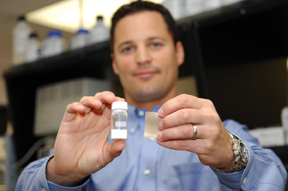
Scientists from the Max Planck Institute for Meteorology have been fiddling with Abu Dhabi's weather. Using the negative-ion generators pictured above, the scientists have been successful in creating rainfal and thunderstorms in the Arabian summer months of July and August -- when rain rarely falls naturally.
Last June Metro Systems built five ionising sites each with 20 emitters which can send trillions of cloud-forming ions into the atmosphere.

Over four summer months the emitters were switched on when the required atmospheric level of humidity reached 30 per cent or more.

While the country's weather experts predicted no clouds or rain in the Al Ain region, rain fell on FIFTY-TWO occasions.

The project was monitored by the Max Planck Institute for Meteorology, one of the world's major centres for atmospheric physics.

Professor Hartmut Grassl, a former institute director, said: There are many applications. One is getting water into a dry area.

'Maybe this is a most important point for mankind.'

...Building an ionising system is about £7 million while a desalination plant would be £850 million and costs a lot more to run.

Some scientists are treating the results in Al Ain with caution because Abu Dhabi is a coastal state and can experience natural summer rainfall triggered by air picking up moisture from the warm ocean before dropping it on land.

But the number of times it rained in the region so soon after the ionisers were switched on has encouraged researchers.

Professor Peter Wilderer witnessed the experiments first hand and is backing the breakthrough. _DailyMail
Local and regional control of weather and climate has long been a goal of visionaries and utopians. An entire arsenal of weather devices will be needed, for dealing with the extremes of any season. In this case, the ability to trigger rainfall can substitute for more expensive desalination plants -- for freshwater. In other situations, seasonal weather might be modified to create ideal growing seasons for highly valued crops.

In this modern age of global warming cooling climate change, it's best to be prepared for anything.

Labels: ,

Bookmark and Share

06 April 2010

New Desalination Membrane Self-Cleaning

A new method of fabricating nano-membranes for desalinating and purifying water, is described in the current issue of Journal of Materials Chemistry. The new membrane structure was devised by UCLA researchers, and incorporates nano-fibrous "brushes" which self-clean the membrane to prevent fouling. This self-cleaning should reduce the maintenance costs of reverse osmosis desalination and water purification appreciably.
The highly permeable, surface-structured membrane can easily be incorporated into today's commercial production system, the researchers say, and could help to significantly reduce desalination operating costs. Their findings appear in the current issue of the Journal of Materials Chemistry.

...The new membrane was synthesized through a three-step process. First, researchers synthesized a polyamide thin-film composite membrane using conventional interfacial polymerization. Next, they activated the polyamide surface with atmospheric pressure plasma to create active sites on the surface. Finally, these active sites were used to initiate a graft polymerization reaction with a monomer solution to create a polymer "brush layer" on the polyamide surface. This graft polymerization is carried out for a specific period of time at a specific temperature in order to control the brush layer thickness and topography.

...In this new membrane, the polymer chains of the tethered brush layer are in constant motion. The chains are chemically anchored to the surface and are thus more thermally stable, relative to physically coated polymer films. Water flow also adds to the brush layer's movement, making it extremely difficult for bacteria and other colloidal matter to anchor to the surface of the membrane. _PO

It is now a matter of finding economic ways to scale the process for fabricating large surface areas of material cheaply.

Labels:

Bookmark and Share

22 March 2010

A World of Fresh, Clean Water for the Taking

A new device out of MIT is aimed at making efficient desalinating devices cheap, portable, and battery-powered. Current desalination mechanisms are extremely expensive energy hogs. But the MIT device gets down to the molecular level to sort the water from the salt molecules. Using smarter nanotechnology, the job can be done better.
We are using a phenomenon called ion concentration polarisation to "push" the salt out of seawater,' says Jongyoon Han, who led the research at Massachusetts Institute of Technology. 'When a voltage is applied across a small membrane made from an ion-selective material such as Nafion, something unusual happens. On one side of the membrane, charged particles are repelled - and on the other side, they are collected.'

Han's team developed a microchip-sized device that funnels a stream of water down to a fork and splits into two channels. The entrance to one channel is covered with a charged Nafion membrane, which shields the water flowing down it and pushes any salt down the other channel. Crucially, the shield also repels other charged particles, both positive and negative, which includes most organic matter and microorganisms, such as bacteria, viruses and other contaminants.

But to function effectively the process requires very small water channels and these can only produce tiny amounts of water on their own. 'Our future direction is similar to how the semiconductor industry makes microchips,' Han explains. 'We can envision thousands of water channels on a single chip - the goal is to make systems that can produce around a litre of purified water over ten minutes.'

Although Han admits this is a relatively small amount, it may be possible to run the device continually for a long time using solar power, which could be extremely valuable in areas of critical water shortage. _ChemistryWorld

Battery or solar powered portable desalination / water purification devices would be the perfect survival method of assuring clean water supplies wherever there is water of any kind. Pre-filters would be needed to elminate larger particles that would clog the micro-channel intakes, but such pre-filters are cheap and easily made from ordinary materials.

It will take some work to bring the manufacture of such devices up to scale, and to make them re-usable over a long time span. But that is why US taxpayers allow their governments to cut them to the quick -- to pay for world-leading research in virtually every area of science, biomedicine, and technology (among other things).

You may as well bask in all of this great science and technology while you can. Soon the US government will be diverting ever larger portions of its budget away from r&d and toward vast new exponentially growing entitlements + the rapidly growing interest on the federal debt.

Labels: ,

Bookmark and Share

12 April 2008

Solving the World's Water Problems I: Desalination

One of the most serious environmental problems for humans of Earth is the shortage of clean water for drinking and other human uses. Perhaps 1 billion people lack access to clean freshwater. But since 97% of the water on Earth is salty water, one promising method to create clean water is desalination. Desalination is expensive due to high energy costs, but some progress is being made on that front.
The specific (per unit of produced potable water) energy of desalination has been reduced from over 10 kW h m-3 in the 1980s to below 4 kW h m-3 (refs 78, 83)....For zero per cent recovery, that is, the removal of a relatively small amount of water from a very large amount of sea water, the calculated theoretical minimum energy for desalination is 0.70 kW h m-3 of fresh water produced. This theoretical minimum increases to 0.81, 0.97 and 1.29 kW h m-3 for recoveries of 25, 50 and 75%, respectively, suggesting that further improvements in the energy efficiency of RO desalination are still possible.

...Recent work by the Affordable Desalination Coalition78, 84 has demonstrated a remarkably low specific energy of seawater desalination, at 1.58 kW h m-3, under ideal conditions (that is, new membranes, no fouling, and low water flux) at 42% recovery. This value is relatively close to the theoretical minimum energy for seawater desalination at that recovery, suggesting that next-generation fouling-resistant RO membranes will be able to desalinate sea water with lower energy consumption. __Nature__via__SoftMachines
A large part of Earth's human population lives close enough to salt water seas and oceans for desalination to play a much larger role in clean water access, as the energy issue is managed by more efficient technologies, and more plentiful energy supplies.

Advances in nanotechnology promise significant improvements in clean water efforts. Here is a PDF download discussing nanotech approaches to providing clean water from Foresight.org. More on nanotech solutions to clean water problems.

Eventually, plants will be gene-engineered to take up saltwater in their roots, purify to freshwater, and collect the freshwater in an interior cavity that can be tapped for a freshwater supply. I expect such plants to be developed in 5 to 10 years time.

Update: OTEC--ocean thermal energy conversion--offers other routes to clean water. Low pressure distillation of warm seawater and atmospheric moisture condensation by cold seawater. Here are two websites that try to monitor progress in OTEC:
OTEC News
Hawaii Energy Options

And a bonus 2 visionary looks at potential uses of the ocean from:

John Craven
S Ramachandran

Labels: , ,

Bookmark and Share

04 January 2008

Is Desalination Affordable?

The answer to that question depends upon what you can afford. EcoWorld has an interesting article on the question of affordable desalination. They even provide an online spreadsheet so everyone can crunch the numbers.

Different types of desalination entail different costs. Solar desalination, which is used for the Ecoworld calculations above, is one set of approaches. This online desalination reference discusses different desalination projects in California as of the 1990s.

Some relatively affluent countries, such as Australia and Israel, are forced to include desalination as part of an overall water strategy. Many Persian Gulf nations also utilise desalination.

Desalination by any method is expensive--due to energy costs. Nano-filters may eventually slash the costs by 75% or more. As photovoltaic costs come down, combining nano-filters with PV electric pumps will allow arid coastal regions in the mid to low latitudes more affordable desalinated fresh water. Even without improved electric storage, daytime-only production can be ample. If improved storage is available, 24 hour production should reduce overall costs eventually.

Labels: , , ,

Bookmark and Share

19 December 2007

Small Nuclear

Brian Wang writes about recent trends in small nuclear reactors. Small fission reactors in the 100 kw to 100 Mw range make it possible for large installations and smaller communities to make their own baseload power, independent of the energy grid or weather patterns. Small reactors are also appropriate for shipboard energy, for water desalination in remote, arid coastal locations, and for combined electricity and heat production--which would come in very handy in arctic or antarctic conditions (not to mention during a little or big ice age or on Mars).

The 200 kilowatt Toshiba designed reactor is engineered to be fail-safe and totally automatic and will not overheat. Unlike traditional nuclear reactors the new micro reactor uses no control rods to initiate the reaction. The new revolutionary technology uses reservoirs of liquid lithium-6, an isotope that is effective at absorbing neutrons. The Lithium-6 reservoirs are connected to a vertical tube that fits into the reactor core. The whole whole process is self sustaining and can last for up to 40 years, producing electricity for only 5 cents per kilowatt hour, about half the cost of grid energy.

Toshiba expects to install the first reactor in Japan in 2008 and to begin marketing the new system in Europe and America in 2009.

Source


The goal is to produce safe, limited supervision nuclear reactors of the appropriate size for a wide range of uses. These reactors would be built to reliably provide a specified level of power for a specific period of time, before needing service.
Some small reactors are conceived for areas away from transmission grids and with small loads, others are designed to operate in clusters in competition with large units. The cost of electricity from a 50 MWe unit is estimated by the U.S. Department of Energy (DOE) as 5.4 to 10.7 cents/kWh (compared with charges in Alaska and Hawaii from 5.9 to 36.0 c/kWh).

US Congress is now funding research on both small modular nuclear power plants (assembled on site from factory-produced modules) and advanced gas-cooled designs (which are modular in the sense that up to ten or more units are progressively built to comprise a major power station). A US DOE report in 2001 considered nine designs which could possibly be deployed by 2010.

Already operating in a remote corner of Siberia are four small units at the Bilibino co-generation plant. These four 62 MWt (thermal) units are an unusual graphite-moderated boiling water reactor (BWR) design with water/steam channels through the moderator. They produce steam for district heating and 11 MWe (net) electricity each. They have performed well since 1976, much more cheaply than fossil fuel alternatives in the Arctic region.
Encyclopedia of Earth
Read more at Advanced Nano.

Small reactors without on-site refuelling should have the following essential features [1]:
  1. • Capability to operate without refuelling for a reasonably long period consistent with the plant economics and energy security;
  2. • Minimum inventory of fresh and spent fuel being stored at the site outside the reactor during its service life;
  3. • Enhanced level of safety, consistent with the scale of global deployment of such
  4. reactors, through wider implementation of inherent and passive safety features and systems;
  5. • Economic competitiveness for anticipated market conditions and applications;
  6. • Difficult unauthorized access to fuel during the whole period of its presence at the site and during transportation, and design provisions to facilitate the implementation of safeguards;
  7. • The capability to achieve higher manufacturing quality through factory mass
  8. production, design standardization and common basis for design certification.
Source

There are many disturbing trends observable in the modern world that should serve as fair warning for forward thinking groups and individuals. The concurrent rise of religious and ideological fundamentalism--both proclaiming that the ends justify the means, no matter what--and the rapid empowerment of individuals of near-average intelligence in the areas of nanotechnology, synthetic biology, autonomous vehicles, explosives technology, genetic modification, sabotage of information and communications systems, biowarfare agents, etc etc, all suggest that the massively interconnected world which we now enjoy may soon be subject to segmentation.

I suggest keeping your eyes open as much as possible.

Labels: , , , , ,

Bookmark and Share

06 December 2007

Worldchanging: Plentiful Freshwater from Hybrid Bio-synthetic Membranes

The need for plentiful freshwater is one of this planets greatest environmental needs. While the ocean covers more of Earth's surface than the continents, ocean water is undrinkable and unusable for crop irrigation. Until now, it has been prohibitively expensive to desalinate salt water for human use. Until now:
The experimental membranes, currently in the form of vesicles, show significantly higher water transport than existing reverse-osmosis membranes used in water purification and desalination. The researchers describe their membranes in a paper accepted for publication in the Proceedings of the National Academy of Sciences. The paper is to be published in PNAS Online Early Edition this week. ... To make their protein-polymer membranes, the researchers begin with a polymer that self-assembles into hollow spheres called vesicles. While the polymer is assembling, the researchers add Aquaporin Z – a protein found in Escherichia coli bacteria.

...“By varying the amount of Aquaporin Z, we can vary the membrane’s permeability,” Kumar said, “which could be very useful for drug-delivery applications.”

With their high permeability and high selectivity, the biomimetic membranes also are ideal for water treatment by desalination, which is becoming increasingly important for water purification in semiarid coastal regions.

When tested, the productivity of the Aquaporin Z-incorporated polymer membranes was more than 10 times greater than other salt-rejecting polymeric membranes.
Physorg

E. Coli bacteria can be modified to mass-produce large numbers of the aquaporin protein efficiently and economically, in the same way that E. Coli is used to mass produce various pharmaceuticals. A hybrid biological-synthetic membrane of this type is a crude example of the "grobyC" concept--inserting biological materials into mechanical or synthetic substrates and devices.
These bio-synthetic membranes can also be used to purify other types of tainted water besides saltwater and brine water. Studying the use of this type of membrane in waste treatment/water purification should be a top priority of persons who consider themselves environmentalists.

Labels: , ,

Bookmark and Share

06 November 2006

Nanotechnology for Robust Reverse Osmosis Production of Freshwater

The human appetite for clean freshwater is getting larger, as the global supply of groundwater supplies is decreasing. It has been obvious for several decades that better ways of producing freshwater from brackish and salt water would be needed. Finally, thanks to work done at UCLA with maturing nanotechnology methods, it is getting easier to design and manufacture more efficient and robust membranes for reverse osmosis.

The new membrane, developed by civil and environmental engineering assistant professor Eric Hoek and his research team, uses a uniquely cross-linked matrix of polymers and engineered nanoparticles designed to draw in water ions but repel nearly all contaminants. These new membranes are structured at the nanoscale (the width of human hair is approximately 100,000 nanometers) to create molecular tunnels through which water flows more easily than contaminants.

Unlike the current class of commercial RO membranes, which simply filter water through a dense polymer film, Hoek’s membrane contains specially synthesized nanoparticles dispersed throughout the polymer — known as a nanocomposite material.

“The nanoparticles are designed to attract water and are highly porous, soaking up water like a sponge, while repelling dissolved salts and other impurities,” Hoek said. “The water-loving nanoparticles embedded in our membrane also repel organics and bacteria, which tend to clog up conventional membranes over time.”

With these improvements, less energy is needed to pump water through the membranes. Because they repel particles that might ordinarily stick to the surface, the new membranes foul more slowly than conventional ones. The result is a water purification process that is just as effective as current methods but more energy efficient and potentially much less expensive. Initial tests suggest the new membranes have up to twice the productivity — or consume 50 percent less energy — reducing the total expense of desalinated water by as much as 25 percent.

Source.

The new nanotech membranes are also less subject to bacterial and particulate fouling, which limits the lifetime of current reverse osmosis membranes. With the development of more efficient and longer-lasting nano-membranes, all that will be needed is the energy to drive the high pressure pumps that force the water through the membrane.

Presently, the Persian Gulf oil states are the main users of reverse osmoses desalination/water purification. With more efficient methods, there is no reason why most seaports and coastal areas cannot produce more of their water from desalination.

Labels: ,

Bookmark and Share

27 August 2006

Seascape One--Floating City, Home on the Sea


Seasteads are floating cities--meant as both permanent residencies and vacation destinations. David Grassi has gone beyond the preliminary planning stage to the more detailed planning phase. His Seascape One seastead venture is actively seeking investors to make the dream into a reality. Here is more:
Unlike a cruise ship, Seascape One will serve as both a destination and its own port of call. Seascape One will never dock, tooling around the Mediterranean Sea 365 days out of the year under the power of its own massive sail and cruising past the many cultural hotspots that dot this historic part of the world. At a total height of 3,000 feet, Seascape One will be the tallest habitable structure in the world, dwarfing even the Taipei 101 tower in Taiwan.

Another thing that sets Seascape One apart from its nearest cousin, the cruise ship, is that, while vacationers will be welcome aboard for shorter-term stays, this unique, car-free and totally green floating environment will serve as a year-round home for many of its passengers.

....Wind turbines, hydro turbines and millions of square feet of solar cells will provide electrical energy for guests and businesses, onboard desalination stations will provide fresh water, and recycled wastewater will be used to irrigate landscaped areas and hydroponic crops for food production. Grassi expects that the fully sustainable environment he envisions will serve as a model for future generations of developers.

Over the course of the last three years, Grassi has collaborated with a team of architects, designers and animators to flesh out his idea. Last year, with a proposal and pages of artist renderings to show to potential investors, Grassi began the arduous process of trying to raise money to pay for the project’s final design. The design process, he estimates, will cost between $3 million and $5 million, and take two or three years to complete.

Construction will then take another three to four years to complete, according to Grassi, and will cost several billion dollars. He proposes that a host country, probably Third World, provide seaside land on which to build a dry dock, where the floating island would be constructed. The dry dock could then be used to build more of these structures.
Much more at source.

Seasteads can be built as a form of arcology, or as a loose conglomerate of individual floating structures. Given the relentlessly destructive nature of the sea toward manmade structures, seasteads will have to be one of the most carefully planned and constructed classes of structures ever built.

Labels: , ,

Bookmark and Share
Older Posts
Al Fin Main Page
Enter your Email


Powered by FeedBlitz
Google
WWW AL FIN

Powered by
Blogger

``