19 May 2012

Preserving Food for 100 Years? . . . Indefinitely?

Food and Drug Administration Article about a shelf life test that was conducted on 100-year old canned foods that were retrieved from the Steamboat Bertrand can be read at the following link:

http://web.archive.org/web/20070509153848/http://www.fda.gov/bbs/topics/CONSUMER/CON00043.html

Following is a brief summary of a very small portion of the above article:

"Among the canned food items retrieved from the Bertrand in 1968 were brandied peaches, oysters, plum tomatoes, honey, and mixed vegetables. In 1974, chemists at the National Food Processors Association (NFPA) analyzed the products for bacterial contamination and nutrient value. Although the food had lost its fresh smell and appearance, the NFPA chemists detected no microbial growth and determined that the foods were as safe to eat as they had been when canned more than 100 years earlier. _Grandpappy Shelflife

So food that is carefully canned and stored may still be safe to eat 100 years later! But here is something even more impressive: Hormel Foods says their canned meats can stay safe to eat indefinitely!
"What is the shelf life of a Hormel Foods product in an unopened can?

The processing techniques utilized by Hormel Foods makes the canned product safe for use indefinitely if the product seal remains intact, unbroken and securely attached to a can that has been well maintained. It is suggested that all canned products be stored in a cool and dry environment to keep the flavor adequately preserved. For maximum flavor it is recommended that the product be used within three years of the manufacturing date. After that period of time, the product is still safe to use however, the flavor gradually declines."


These products include the following among many others:

Dinty Moore Beef Stew 
Dinty Moore Chicken Stew 
Hormel Corned Beef 
Hormel Corned Beef Hash_Wilderness Survival
Hormel suggests eating their canned foods within a few years, however, for maximum taste and nutritive value.

9 foods that can outlast you...

Information on food radiation, which improves shelf life......more here

General discussion of shelf life of a range of foods and beverages

Food Product Design archives of news articles on shelf life

Surprising foods you can freeze to eat or drink later . . .

Conventional ways of preserving foods include canning, freezing, drying, salting, freeze-drying, vacuum packing, nitrogen packing, and smoking, among others. But irradiating foods can become a useful additional way of extending the shelf life of foods.

Under the old regime of psychological neotenates, it would be unheard of for a prepper group or a survival compound to have its own food irradiator. But we are approaching the days of "the dangerous child," which is likely to change everything.

Remember: It is never too late to have a dangerous childhood.

Labels: ,

Bookmark and Share

23 September 2011

Will European Populations Be Reduced to Eating Insects?

Telegraph

Food riots have occurred in many parts of the third world recently, but Europeans have always felt immune from food concerns -- ever since the introduction of the potato from the Americas, in the 1500s. But recent financial concerns of government debt and demographic decline across the continent, are raising concern in Brussels about future food supplies in Europe.

It is easy to grow tasty insect larvae almost anywhere, on scraps and waste. But these plump, juicy larvae are not only suitable for fish bait. According to the EU food experts, an entire continent of humans can, and perhaps should, be taught to live on insects.
Experts in Brussels believe insects and other creepy crawlies could be a vital source of nutrition which will not only solve food shortages but also help save the environment.

They have launched a three million euro (£2.65 million) project to promote the eating of insects while also asking national watchdogs like the UK's Food Standards Agency to investigate the issue.

...According to one study, small grasshoppers offer 20 per cent protein and just six per cent fat, to lean ground beef's 24 per cent protein and 18 per cent fat.

Crickets are also said to be high in calcium, termites rich in iron, and a helping of giant silkworm moth larvae apparently provides all the daily copper and riboflavin requirements. There are even claims that bees boost the libido.

Insects emit less greenhouse gases than cattle and require less feed, supposedly making them environmentally-friendly. And supporters claim they could help feed [Europe], because they are so abundant they provide at least 200kg of biomass for every human.

The European Commission is offering the money to the research institute with the best proposal for investigating "Insects as novel sources of proteins". _Telegraph

Europe's population is imploding, due to low birthrates. Europe's elites and overseers are looking for ways to cut costs, to meet the increasingly burdensome social obligations of Euro nanny-states, in the face of a shrinking demographic and disappearing taxpayers. One should probably not feel surprised to see grub and larvae soup and salad appearing on the menus of future bistros.

It is not yet clear how the rapidly growing Muslim population of Europe will accept new EU insect food guidelines. But everybody's gotta eat, right?
H/T ImpactLab

Adapted from an earlier article at Al Fin, the Next Level

Labels: ,

Bookmark and Share

15 August 2011

Prepare A Year's Worth of Bisin Sandwiches in One Weekend!

DailyMail

Yes, it's true! This weekend, you can shop for next year's bisin sandwich ingredients on Saturday, then prepare all of next year's sandwiches on Sunday. And no, bisin is not misspelled. Bisin is a natural chemical preservative that can keep food preserved for years, without refrigeration! Here's more:
No time to make a packed lunch before work? Soon you could make it a year in advance.

Scientists have discovered a natural preservative which could spell the end of rotting food.
They have pinpointed the substance which destroys the bacteria that make meat, fish, eggs and dairy products decompose.

...The preservative, called bisin, could extend the food’s life for several years – and even work for opened bottles of wine and salad dressing.

The discovery is set to revolutionise the way we shop and reduce the 20million tonnes of food waste thrown out in the UK every year.

Bisin occurs naturally in some types of harmless bacteria. It prevents the growth of lethal bacteria including E-coli, salmonella and listeria.

...The substance could extend the life of a variety of everyday foods which have strict use-by dates including seafood, cheese and canned goods.

In some cases these foods could last for years and may not even need to be kept in the fridge, the researchers at the University of Minnesota claim.

The scientists, who have patented the substance, are already in talks with food manufacturers. The first products containing bisin are expected to be on the market within three years. _DailyMail
Even if your child is too young for school, you could make an entire year's lunch sandwiches for her years in advance. Imagine the time you can save through economies of scale!

Bisin may be bad news for refrigerator manufacturers and dumpster divers, but it is great news for moms everywhere. Preppers should also take note.

H/T Impact Lab

Labels:

Bookmark and Share

16 April 2011

Eating Ten Year Old Meat

How to Know Spoiled Meat

If you do not do something to preserve fresh meat, it tends to go bad rather quickly. Early humans discovered that eating fresh kill was healthier than eating days or weeks old flesh. Italians in Naples may be discovering the same thing:
Italian police arrested a Naples butcher after discovering worm-infested meat for sale in his store that was 10 years past its expiry date, the ANSA news agency reported Friday.

Shocked food safety inspectors discovered pasta and biscuits crawling with parasites, rotting meats and dairy products, and olives covered in mold in the store of horrors.

The butcher tampered with expiry dates on the products in order to keep on selling the items, even though some were a decade old, the report said.

Police arrested the butcher on suspicion of endangering public health. _FoxDC
Of course, the worms just add to the protein content. But seriously, how did the butcher preserve meat so well that it could be sold to conscious humans after ten years?


Curing Meat
Thousands of years ago, man figured out that salting and smoking meat could retard spoilage and improve flavor. One old-fashioned and time-tested method is the salt barrel. Packed in a barrel of salt, meat will last almost indefinitely. However, salt is a commodity like anything else: unless you have access to an unlimited supply of it, the salt barrel is a very resource intensive method of food preservation. Meat is often salt cured and smoked, but by itself, that is more for flavor than actual preservation. Ironically, the relatively low temperatures at which meat is smoked actually encourages the growth of one very serious pathogen: Botulism.

...To effectively preserve meat in a survival situation, you need only have two things: Salt and Sodium Nitrate. With these two ingredients, you can produce an unbelievable variety of cured and preserved meats that are ready for long term storage or immediate consumption, and eaten “raw” or cooked.

...To dry-cure the meat:
Wrap it in cheesecloth. This is to discourage insects. Hang it in a humid, cool environment. 70% humidity and 55 degrees Fahrenheit are ideal. Humidity may be increased by placing a container of salted water near the meat. Somewhat paradoxically, higher humidity actually yields better results. It may slow the curing process a bit, but in the absence of sufficient humidity, the outer surface of the meat will dry and lock moisture in, causing spoilage. A cellar or even an uninhabited cave is an ideal curing chamber. An unused refrigerator will work as well.

Depending on climate conditions, size, and type of meat, this can take anywhere from a week to several months. A ham should be cured for six months; a pork belly or duck breast only needs a week. It is ready when it has reduced its weight by a third, or just feels “cooked.” You may cook the meat after it is cured, or eat it as is. You can store it by leaving it to hang in the curing environment. It should last almost indefinitely, and add flavor and variety to your diet. _SurvivalBlog
So, according to the author of the piece above, dry cured meat "should last almost indefinitely." That is reassuring, should the power ever go down for 10 or 20 years.

Apparently butchers cannot get away with selling 20 year old meat, but if you are willing to practise the art of dry-curing until you become an expert at the craft, you may be able to put in a good supply of long-term meat, without depending upon a deep freeze to keep the meat edible.

Just something to consider as the moocher in chief doubles down on his lifetime revolutionary goals.

More: Drug-resistant bacteria are commonly found in supermarket meat and poultry. Is food irradiation the answer? Perhaps yet one more reason for stocking your survival compound with a small modular nuclear reactor.

Labels:

Bookmark and Share

15 February 2011

Making Your Own Survival Rations 1: Puffed Grain Cakes


Video courtesy of Popular Science
If you buy a machine to make your own puffed-grain cakes, you can pay hundreds of thousands of dollars and more. But you can make a machine to do the job with spare junk around the shop. In these days of tighter budgets, it helps to know smart ways to trim the fat.
The science behind puffing is simple. Heating the moisture inside of a grain creates pressure and builds up steam, which is trapped by the grain’s hull or shell. When that hull suddenly fails, everything inside it expands in a blast, transforming the grains into a crispy, porous mass; the best example of this is popcorn. Some grains can fuse together, making a cake.

... We built a metal shell using a pipe, a rod and a plate to mount the pipe on, forming a bottom to clamp against, like a piston in a cylinder. Using vise grips, we put the shell over a butane burner, clamped it tightly, and then unclamped it to make it puff. At high temperatures, you have 10 to 20 seconds when the grains puff before they start to burn. We puffed millet, wild rice, sorghum, barley, and white and brown rice. We called the results “vise cakes.”

Our equation for the process looks roughly like this: 150 psi (pressure) and 480ºF (heat) x 12 seconds (time) + sudden release back to atmosphere = 1 vise cake.
Last year we built a rig to make mini vise cakes, which worked well, but it took a long time to produce a large quantity. So this time we increased the scale, creating a design that could make the cakes with a 2.5-inch diameter. All told, it cost us only $57. Our design requires at least four hands to operate, though why puff solo when you can puff in a group? Besides, you‘re saving a good million bucks or so off the price of a commercial machine. _PopSci

Al Fin survival nutritionists are working on something far more sophisticated which they are not allowed to talk about right now, but you can get the germ of an idea about the project here. No more about that, for now.

Labels: ,

Bookmark and Share

14 October 2010

Eat Your Drugs, Billy, So You Can Grow Up Big and Strong

AphrodisiacHerbs

While consuming certain drugs can get you locked up and labeled as a criminal-for-life, the truth is that everyone is constantly consuming drugs of all kinds. In their food, their drink, even the air they breathe. Your body itself is constantly busy synthesising drugs that affect your moods and your motivations. Your life as a drug.
...unripe bananas contain the neurotransmitter serotonin. When you eat an unripe banana, its serotonin is free to act upon the serotonin neurons within your digestive tract.

...potatoes, tomatoes, and eggplants contain solanine and α-chaconine, substances that can enhance the action of acetylcholine, a chemical in your brain that is vital to memory formation. Your mood might be enhanced slightly by eating fava beans because they contain L-DOPA, a precursor to the production of dopamine, the reward chemical in your brain. Whether these food-borne compounds actually affect your brain depends upon how much you consume and your own personal physiology. This might explain why some people find it quite rewarding to eat potatoes or eggplants.

Morphine-like chemicals capable of acting upon the brain are produced in your intestines when you consume milk, eggs, cheese, spinach, mushrooms, pumpkin, and various fish and grains. Dairy products in particular contain a protein known as casein, which enzymes in your intestines can convert into beta-casomorphin. In newborns, that beta-casomorphin can easily pass out of the immature gut and into the developing brain to produce euphoria.

The pleasurable feeling produced by this opiate-like compound in newborn mammals after their first taste of their mother’s milk is believed to encourage the infant to return again and again for nourishment. Thus, being able to experience the euphoria induced by this opiate-like chemical has life and death consequences for the newborn child. _Seed

Many herbs are thought to have aphrodisiac and other drug-like properties:
Aphrodisiac Herbs Part I
Aphrodisiac Herbs Part II

The difference between what society sees as "drugs" and what it sees as "food" is likely to become even more insubstantial, as synthetic biologists begin to modify food plants to produce drugs and drug-like chemicals. Imagine a tomato plant, for instance, which excreted a cocaine-like substance into its fruit. Would the police have to arrest you for eating a BLT?

There are few limits to what jazzed up food plants and animals could produce, if properly modified. That could make the culinary arts and the act of eating far more interesting down the road.

Labels:

Bookmark and Share

03 July 2010

The Frontier Diet: Learning to Live Through the Twilight

America and western civilisation are experiencing the twilight of peak influence and power. Debt and demography -- plus abysmally incompetent leadership -- are leaving western nations in a position where they will be unable to resist the inevitable crises that will hit them with implacable and increasing frequency. That means that you will be responsible for yourself and those you care about. It is critical that you prepare yourself for a variety of unfortunate circumstances.

Survival Blog is a repository of useful information, usually from people who have been through difficult life trials, and lived to tell about them. This entry details the "Frontier Diet," a spartan dietary approach to staying alive on the way to something better.
This I call the Frontier diet – four high-speed, low drag foods that can get where you are going without weighing you down....The four foods are: Coffee (or tea), hardtack, parched corn, and pemmican. All are easy to make at home, with the exception of the coffee and all offer excellent storage lives, ease of preparation, and all may be eaten cold if necessary. Each offers a specific set of advantages and they all can be used together to provide a bit of variety in your meals.

The coffee I am talking about is the commercial, freeze dried product found in small, one-cup packets. I would not consider any other type of packaging – the packets are air-tight, waterproof and frankly, I find the flavor to be superior. I suffered through many years with the “coffee product” found in C rations, Long Range Patrol Rations, and more recently in MREs. All were pretty nasty, at least in my opinion.

The value of coffee in the Frontier diet is in its use as an appetite suppressant. Strong tea (green, black or other non-herbal teas) will also provide the same effect. Tea normally requires hot water to provide a satisfactory product – though cold soaking tea bags for several hours will provide a drinkable product. Freeze dried coffee will quickly mix with water at any temperature.

... Hardtack or hard bread has been part of a soldiers ration since Roman times. Often reviled, always hated, hardtack (or sailor/pilot bread) serves to provide a long lasting, lightweight food that offers needed calories for travel. Commercially baked hardtack or hard bread is a staple in both Alaska and Hawaii. Modern commercial hardtack is seen as “Saloon Pilot” crackers in Hawaii and in Alaska as my favorite “Sailor Boy” pilot bread. Very long lasting when stored properly and eatable by itself cold, hardtack is improved with anything you might have, from peanut butter to apple sauce.

You can make your own hard bread, SurvivalBlog has several recipes already posted or you can use this one. Remember, if you add salt to your home made hardtack, it will reduce the storage life as the salt attracts moisture. Store in a cool, dry location and physically protect the product, lest weevils become part of your travel diet.

...Corn has been a staple of frontier ‘dining’ since before the United States was an independent nation. Made from dried corn, parched corn offers a very long term storage item, a useful addition to your diet and adds both calories and variety to the food you eat. You can make your own or purchase a commercial product. I will have to say parched corn is an acquired taste but offers many options as a food.

I make my parched corn in a cast iron skillet with just a bit of olive oil. Start with dried corn, heat the skillet and add the corn one layer (or kernel) deep. Keep the corn moving in the pan until it plumps and turns brown. If the corn starts to pop, reduce the heat slightly. Dump the parched corn in a bowl to cool. It is ready to eat. Add any spices or salt after the corn is cooked. The corn should be browned, plump and soft when you bite into it. If not try again. Start with small batches until you are happy with the results.

I pack mine in a wide-mouth water bottle (airtight container), and store in the cool location. I also grind some of the parched corn in the wheat grinder with the stones set in an 'open' position to give a course meal.

...The last item in our travel food bag is pemmican, food of trappers, fur traders and Antarctic exploration teams. A mixture of tallow and dried meat. It is a staple that has a long storage life. It may be eaten cold and contains nutrients needed to keep you going in tough times. The famed explorer Amundsen used pemmican made with dried peas, a key reason his party survived with the Scott expedition did not. Made from tallow and dried meat, pemmican is an energy dense food with excellent keeping properties.

Several folks have posted their recipes on the site, so use the keyword search as "Pemmican". If the thought of eating fat leaves you a bit queasy, you can try pemmican made with peanut butter.

This version of pemmican uses peanut butter rather than melted suet or lard as the binding agent, which is likely more palatable with the younger members of your family. Grind [or pound] the dried meat to a mealy powder. Add any dried berries, seeds or nuts if peas are not to your taste. Heat the peanut butter until softened. Blend all ingredients. When cooled, store in a plastic bag or sausage casing in a cool dry place. It will keep for months if stored properly. Some pemmican recipes call for honey, cayenne pepper and other spices. Experiment now, while you can. _SurvivalBlog
That is one person's short list of survival foods, ready for a quick getaway.

By all means, keep a good stockpile of food, water, supplies, power generation apparatus and fuel, etc. at your home. Most crises may allow you to stay home and tread water while society is rearranging itself into a more sustainable form. But just in case you have to run for it, be ready for that too.

Remember that you may not have much time to pack for the wild ride to safety. Have your bags ready to go, and consider keeping extra bags cached at likely locations -- workplace, schools, friends' or relative's houses, etc.

Food, water & water purification, fire starters, essential tools, emergency pharmaceuticals etc. Stick to barest essentials. Make sure your bugout food has a long shelf life.

Society is being progressively weakened by disastrous public policy and incompetent leadership. The particular shock that pushes things over the edge -- and makes it necessary for you to seek a safer environment -- cannot be accurately anticipated.

Labels: , ,

Bookmark and Share

28 April 2010

This Is Your Brain On Smut

Impactlab

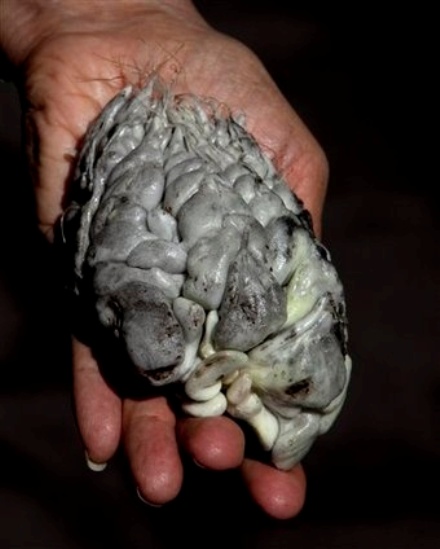
Wait, that's not right. This is not your brain on smut -- this is smut! Corn smut, a fungal parasite on maize, and something that is rapidly becoming a food delicacy in the Napa Valley.
It's now an established scientific fact: Smut is GOOD for you. Corn smut, that is.

For years, scientists have assumed that huitlacoche (WEET-LA-KO-CHEE) — a gnarly, gray-black corn fungus long-savored in Mexico — had nutritional values similar to those of the corn on which it grew. But test results just published in the journal Food Chemistry reveal that an infection that U.S. farmers and crop scientists have spent millions trying to eradicate, is packed with unique proteins, minerals and other nutritional goodies.

And here's a bonus: agro-economists have found it can sell for more than the corn it ruins. _Source
Corn smut is packed with lysine -- an essential amino acid that corn cannot supply in adequate quantities. Smut unpacks the latent nutrition in corn, supplementing it with rich fungal nutrition.

Steve Sando runs a specialty food company in Northern California. He led an expedition to Xochimilco -- on Mexico City's south side -- looking for the corn smut, huitlacoche (the name means sleeping shit in the indigenous tongue). They hit paydirt, finding basketloads full of the stuff, as well as chili-stuffed smut tamales.
An ear of huitlacoche costs about 41 cents to produce and sells for about $1.20. By comparison, an ear of sweet corn costs about less than a dime, with profits of just a few cents per ear.

Sando has few competitors in the fresh market, even though gourmet chefs pay $20 or more per pound for a chance to add the delicacy to their menus. But there are several Hispanic food companies, including San Marcos and Del Fuerte, who sell canned huitlacoche in the U.S. _Source

Labels:

Bookmark and Share

07 February 2010

Gourmet Fare: Bugs and Mushrooms

Can you imagine eating grasshoppers "more savoury than shrimp?" It's easy if you try. Costa Rican scientists at the National Biodiversity Institute are researching insect farming for purposes of food production. It makes sense: insects are high in protein, low in carbs, and produce very high quality fats including omega 3s. And insects can learn to eat a wide range of cheap feed -- even algal carcases left over from the production of algal biofuels!
At the institute, Costa Rican scientists mingle with Bhutan mycology expert Ugyen Yangchen and Elisabeth Zannou, an entomologist from Benin.

Costa Rica and Benin share historical ties, as many slaves were taken from the western African country to Central America during the colonial era.

“Benin knows a lot about insect consumption and Bhutan about eating mushrooms, while Costa Rica is bringing its experience in managing biodiversity,” Marianella Feoli, who manages the foundation coordinating the research program, told AFP.

In Benin, termites, grasshoppers and crickets, as well as butterfly and moth larvae are a common part of people’s diet, explained Zumbado, who traveled with his colleagues to explore the phenomenon in the coastal country.

“In other countries, gourmet restaurants serve insects,” he noted. _ImpactLab
If Obama is US President for much longer, humans will have to learn to eat lower on the food chain. Elections have consequences.

Labels: , ,

Bookmark and Share

10 November 2009

Forget Universal Health Care: Eat Your Ice Cream!


Ice cream researchers are converting the cold treat into a Trojan Horse for long life and vitality. They are learning to supplement the frozen delight with ingredients known to bolster the health of the cardiovascular, digestive, endocrine, and immune systems. And they are just getting started . . . .
Adding nutrients such as pro-biotics, which are already found in some dairy products, and fiber to ice cream can improve digestive health. Many diseases are caused by inflammation that starts in the intestines, Gruen said. Improving digestive health with functional foods might reduce that inflammation. Although functional foods have health benefits, there are many challenges to adding nutrients to ice cream.

"Our major challenges are texture, flavor and psychological acceptance," Gruen said. "The nutrients we add often have bitter tastes and affect the texture of ice cream that we have to mask. Flavors like chocolate are easier to work with because the flavor is so strong that it can overcome other flavors from the nutrients. Another challenge is determining whether people would be upset that we're 'tampering' with a comfort food. We need to know if they would be more willing to pay for ice cream with added nutritional benefits."

Gruen and his research team are looking at using the açai berry and remnants from grapes in wine-making to add nutrients to ice cream. They hope to have a prototype ready for tasting in the next six months. _SD
Al Fin nutritionists are unanimous in their support for this approach to good health. Whereas the health care bills before the US Congress threaten to destroy everything that is innovative and generative in the US biomedical system, health-promoting ice cream is merely food.

It is understandable why persons prone to premature senility and aging -- such as Speaker of the House Nancy Pelosi -- might be obsessed with matters of health, to the point of losing all sense of reason and proportion. But that is no reason to destroy the most innovative biomedical system in the world. Don't be such a jerk, Nancy! ;-)

But seriously, folks, the concept of using ordinary foods and beverages as vectors for evolutionary and revolutionary health improvements, is an idea long overdue. Mainstream food scientists think very small. Al Fin nutritionists think very big. Stay tuned.

Labels: , ,

Bookmark and Share

15 August 2008

Animal Proteins: Which is Most Efficient?

We all know that it takes a lot more crop area to produce beef steak and ham for human food, than it would to produce crops for humans directly. How do different animal protein foods compare in terms of efficiency?
Among major commercial species, poultry is the most efficient, with two kilograms of food making one kilogram of chicken, followed by three to five kilograms for hogs and then seven for sheep and seven to eight for cattle.

Among lesser species, rabbits are similar to poultry, as are fish with one to two kilograms of grain needed, which is more efficient than any land species, potentially making them a very attractive commodity investment. _source
If fish is the most efficient animal protein for human food, what would be a good high protein food to feed the fish? Neptune Industries Inc. believes that insect protein can become a most economical fish feed, easily produced using residual algae cake left over from biodiesel production. Neptune coincidentally raises fish in a unique, clean environment called an "Aqua-Sphere", and uses fish waste to grow algae for biodiesel. You can see the fascinating circle of resourcefulness: Insect protein to feed the fish --> Fish waste to feed the algae for biodiesel --> algae cake residue to feed the insects --> and so on.

Of course, you might ask why humans have to eat meat in the first place? Here is an interesting study relating to that question:
In the study led by Dr. Cheskin, and funded by the Mushroom Council, study participants were randomly chosen to receive either beef or mushroom lunch entrées over four days – lasagna, napoleon, sloppy Joe and chili. Subjects then switched entrées to consume the other ingredient (mushroom or beef) the following week.1

Energy (calorie) intakes were significantly higher during meat meals than mushroom meals, a difference that averaged 420 more calories and 30 more fat grams per day over the four-day test period. Subjects' ratings for palatability (meal appeal), appetite, satiation (after meal fullness) and satiety (general fullness) did not differ between groups.

"The most intriguing finding was that subjects seemed to accept mushrooms as a palatable and suitable culinary substitute for meat," said Dr. Cheskin. "They didn't compensate for the lower calorie mushroom meal by eating more food later in the day."

The preliminary findings of Cheskin's team follow findings from other initial data that suggested if men substituted a 4-ounce Portabella mushroom for a 4-ounce grilled hamburger every time they ate a grilled hamburger over the course of a year, and didn't change anything else, they could save more than 18,000 calories and nearly 3,000 grams of fat.3 That's the equivalent of 5.3 pounds or 30 sticks of butter. More research is needed to further understand mushrooms' role in weight management as a low-energy density food. _Eurekalert
Losing weight by eating well? Sounds good to me.

Update 15 August 08: The Speculist is throwing Kangaroo into the running for best protein, based upon environmental factors. Free range kangaroo may be a bit tough and gamey, but it should put a spring in your step! ;-)

Labels: , ,

Bookmark and Share

01 July 2008

Bill Gates Develops "Miracle Cassava" That Has Everything a Person Needs to Live


These magic roots have been gene engineered by plant molecular biologists at Ohio State University and other centers--using a grant from the Bill and Melinda Gates Foundation--to provide all the nutrition that a human being needs.
The labs in the project have used a variety of techniques to improve on the model cassava plant used for the research. They used genes that facilitate mineral transport to produce a cassava root that accumulates more iron and zinc from the soil. To fortify the plants with a form of vitamin E and beta-carotene (also called pro-vitamin A because it converts to vitamin A in the body), the scientists introduced genes into the plant that increase terpenoid and carotenoid production, the precursors for pro-vitamin A and vitamin E. They achieved a 30-fold increase in pro-vitamin A, which is critical for human vision, bone and skin health, metabolism and immune function.

Adding protein to the cassava plant has posed a challenge, Sayre said. The scientists discovered that most of the nitrogen required to make the amino acids used for protein synthesis in roots is derived from the cyanogens that also cause cyanide toxicity. So their strategy for increasing protein levels in roots focuses on accelerating the conversion of cyanide-containing compounds into protein rather than completely eliminating cyanogen production, which would hinder the efforts to increase protein production, Sayre explained. To further address the cyanide problem, the scientists have also developed a way to accelerate the processing methods required to remove cyanide -- a days-long combination of peeling, soaking and drying the roots before they are eaten.

To strengthen the cassava plant's resistance to viruses, the scientists introduced a protein and small interfering RNA molecules that interfere with the viruses' ability to reproduce.

Prolonging cassava's shelf life has involved the development of a hybrid species that crosses two related plants native to Texas and Brazil. The strategy, still in development, will combine the properties of these plants and additional genes that function as antioxidants, slowing the rotting process that has been traced to the production of free radicals that damage and kill cells in newly harvested cassava roots. __ScienceDaily
The potential of genetically engineered plants has always been a huge one. Agricultural analysts and economists who base their projections upon the crops that they are familiar with will soon find themselves at a total loss, as plants specially engineered for specific purposes begin to make their appearances.

Making a cassava or a potato or rice or maize etc that has all the nutritional needs for humans is a good, humane early step. Designing plants that dispense fuels, specialty chemicals, patented pharmaceuticals, and alcoholic fruit drinks should not take much longer. Drug enforcement officials should understand that eventually, ordinary plants will start making the very drugs they have tried so hard to restrict access to. Plants do what their DNA tells them to do, to the best of their ability. DNA is simply code. Code can be hacked.

The news media tries to keep viewers and readers in an uproar over "energy shortages" and "food shortages" and the end of the world from "climate change" etc. But if an African villager can grow all the food his family needs in a small patch behind the house, why would he need to riot over food prices? If a small grove of trees can provide the village with all the diesel oil it needs, why would villagers riot over fuel costs? Do not such developments, along with new ways of providing vaccines and prevention and treatment for common diseases constitute a type of "singularity" for rural third world villagers?

Of course, if the villagers take advantage of relative plenty to increase their numbers unwisely, Malthus may have the last laugh. But if women villagers are made aware of a certain easily grown fruit that acts as a contraceptive, perhaps women's rights will come to the third world after all.

Labels: , ,

Bookmark and Share

24 April 2008

Urban High Rise Farming Cuts Transportation Cost

The largest driver of current high food costs is the high cost of energy. It requires energy to run farm machinery, and energy to transport the goods from the farm to the warehouse, and from the warehouse to the market. Why not grow the food in the city where it will be consumed, and save some of the energy cost?
Advanced aeroponics growing systems can provide fresh-grown vegetables and fruit year-round, with minimal use of water and no soil required! Aeroponics-grown produce is free of disease, and requires less energy than most other growing systems.
As biological systems are being modified to produce medicines and fuels, as well as food, the full range of crops and products could be grown in almost any urban environment.

We are only beginning to see the variety of approaches to building an urban high-rise farm. As the idea begins to be implemented, and the various problems of financing, marketing, and custom building are overcome, expect urban architects to bring a lot more imagination to the enterprise.The last image provides an architect's view of a "prosthetic add-on" to pre-existing buildings. These "vertical parks" could incorporate wind turbines and photovoltaics, as well as crop-growing zones. They could provide emergency exits from high-rises in case of fire, and could also serve as "skywalks" in cold weather, to allow people to brave the iciest of ice ages.

We live in a de-centralised world, in terms of food supply. In a single day, a person may consume food products from at least 3 or 4 different continents. But a lot of things can change to force food services and retailers to look much closer to home, for product.


H/T FutureScanner

Labels: , , ,

Bookmark and Share

11 April 2008

Planting a Garden On the Moon and COS 49

A permanent manned presence on the moon will require lunar residents to produce their own food on Luna. This introduction to the topic of lunar agriculture was featured in the Carnival of Space #49.
There are two main types of seleneculture generally considered: hydroponic and soil-based. As its name implies, hydroponics relies primarily on water-delivery of nutrients to the naked roots of different plants. This style of growing plants has been extensively studied by NASA scientists as a means of providing a high-efficiency/low-mass greenhouse for a space station, and is used in industrial farming here on Earth. It may not be ideally suited for the Moon, but would certainly provide a quick way to get started.

Soil-based plant cultivation uses plants in dirt. The most frequent objection in this case is that plants can’t grow in Moon-dirt, so you’d have to ship up tons of Earth dirt for the plants to grow in. This will certainly be true in the beginning though not to the tune of tons, and we probably will be shipping up small quantities of high quality humus. Still, is it true that plants cannot grow in Moon dirt? __read more at Out of the Cradle
Of course, there is a third approach to Lunar agriculture that might work even better than the two above: aeroponics. Aeroponics uses less water than hydroponics, and has no need for soil or other growing medium (except air). In fact, NASA has developed an inflatable aeroponics module, for use in small space stations and space habitats.

Aeroponics International

Biocontrols Aeroponics Systems

Small self-contained aeroponics chamber you can use at home

Labels: , , ,

Bookmark and Share
Older Posts
Al Fin Main Page
Enter your Email


Powered by FeedBlitz
Google
WWW AL FIN

Powered by
Blogger

``