12 July 2012

Private Space Launch: Enter the Virgin

Richard Branson's Virgin Galactic has decided to enter the orbital satellite launch field, using air-launch technology already developed for its sub-orbital space tourism project. Interestingly, asteroid-mining venture Planetary Resources is one of the investors in the Virgin project (more).
The announcement isn’t a huge surprise, as it’s long been assumed the WhiteKnightTwo carrier aircraft would serve as a launch platform for other space-bound vehicles beyond SpaceShipTwo. Keeping the naming of its space vehicles relatively simple, LauncherOne is capable of carrying up to 500 pounds (225 kilograms) to low earth orbit for less than $10 million.

“Virgin Galactic’s goal is to revolutionize the way we get to space,” Branson said at Farnborough. “Now, LauncherOne is bringing the price of satellite launch into the realm of affordability for innovators everywhere, from start-ups and schools to established companies and national space agencies. It will be a critical new tool for the global research community, enabling us all to learn about our home planet more quickly and affordably.” _Wired

Also, see Brian Wang's take on the Virgin Galactic - Planetary Resources teamup

The Stratolaunch air launch system pictured above is a much larger version of an air-launch to orbit system, allowing for heavier payloads. Like the Virgin system, Stratolaunch allows for a very versatile approach to orbital insertions. The huge carrier craft serves as the "first stage" of the launch system, carrying the launch craft to altitude and providing a wider range of opportunistic launch attitudes than is conveniently possible for fixed launch sites.

In other recent space-related news:

The US Defense Department's DARPA is resuming efforts to develop a hypersonic "X-plane (HX). DARPA's plans are ambitious, and will require very rapid innovation and development in order to meet its schedule -- achieving a rocket launched hypersonic craft by the year 2016.
The hypersonic X-plane (HX) will launch using a disposable rocket stack, unlike previous models which have used space launch rockets, then begin its hypersonic glide. The plan is for the "highly manoeuvrable" vehicle to be recoverable, meaning it will either return to Earth with the help of a parachute, or possibly land on a runway.

Darpa is reigniting the hypersonic flight research with the intention of launching future missions ranging from "space access to survivable, time-critical transport [troop deployment] to conventional prompt global strike." _Wired

Development of the Skylon spaceplane has passed a critical milestone following tests on the key component for its Sabre engine.

The engine, being developed by Reaction Engines Ltd, looks set to revolutionise not only space travel but also air transport around the world.

It promises to allow a new generation of aircraft to fly from one side of the Earth to the other, e.g. the UK to Australia, in just four hours instead of the 22 or so needed nowadays.

But it will also provide sufficient boost to send the Skylon spaceplane into orbit where it could deliver satellites or link up with the International Space Station.

What makes Sabre different from other aircraft engines is a revolutionary ability to switch from an air-breathing mode to that of a rocket engine.

This hybrid function will allow it to power aircraft at up to five times the speed of sound within the atmosphere or directly into Earth orbit at 25 times the speed of sound. _Wired

Brian Wang has more on this development.

Hybrid engines of this type may provide a crucial weight savings in the early stages of the development of workable hypersonic craft. Engineers need to be cautious in avoiding excessive complexity in this new type of engine. KISS (Keep it simple, stupid!) is the key, as far as it is possible.
The type of craft pictured above has been discussed by Brian Wang in multiple articles. It is powered in multiple ways: by chemical rocket, air-breathing propulsion, by MHD, and by dense plasma focus fusion -- all of which should combine to allow it to travel at very high velocities. It will require significant development of several components, including the focus fusion module, before it becomes practical.

Parts of the above posting were excerpted and adapted from an earlier article published on Al Fin Potpourri

Ideally, all components of the system would be reusable, to save on costs. There are several tradeoffs to be made in terms of launch platforms, launch attitudes, propulsion strategies: pure vs. hybrid vs multiple etc., numbers of propulsion stages, orbital vs sub-orbital flight, method of terrestrial return, and so on.

Hypersonic flight inside the Earth's atmosphere is very punishing, physically. Better types of outer covering materials are needed to provide greater durability for multiple flights. Alternatively, inexpensive spray-on outer skins may be applied prior to each flight, which will naturally ablate in the course of the flight.

An earlier Al Fin article on this topic

Labels: , ,

Bookmark and Share

25 April 2012

Is This the Door to a Human Springtime?

....the metals we prize most — all the gold, platinum, iron, manganese, molybdenum, nickel, tungsten, and several others — wouldn't exist in Earth's crust if they hadn't been delivered here by asteroids in the final throes of planetary formation. _Sky & Telescope


Spacehabs.com Asteroid Mining Info Screen Capture

Dreams of asteroid mining aren't new — the first speculations date back a hundred years...What gives the Planetary Resources plan credibility are two key factors that've been missing from prior schemes: a space-savvy management team, and investors willing to fund them.

...Plans call for a three-phase approach. First, a series of small orbiting telescopes to find and track thousands of of NEOs. The first of these — dubbed Arkyd 101 is already under construction at the company's plant in Bellevue, Washington, and should be launched within two years. Next come clusters of Arkyd 200 satellites, equipped with propulsion packs to rendezvous with promising targets and assess their resource potential.

Finally, perhaps a decade from now, robotic miners will land and start harvesting the cosmic paydirt. "We're creating simple, elegant designs," says Lewicki. "We're going to create robotic explorers that cost one to two orders of magnitude less than current systems."

By then, the investors should start seeing a return on their investment. "An asteroid the size of this auditorium would be hundreds of billions of dollars," Diamandis noted. _Sky & Telescope
The new generation of robots will be smaller, cheaper, faster, and better. They will be networked in swarms, capable of communicating with other classes of robots which will serve other functions.

Not every observer is optimistic about the prospects for this venture. But even the naysayers have to admit that there are positive aspects to the plan:
Platinum and gold to one side, asteroids are thought to contain untold riches held in other precious metals and rare minerals -- asteroids, after all, are built from the same "stuff" as Earth (albeit in varying quantities) as they were formed in the same proto-planetary disk of material when the sun was a baby. It's reasonable to say that if we have the technology and if we can establish a mining outfit in space, the first company to do so could have access to resources that would make today's oil companies drool.

But Planetary Resources isn't just going to build the world's first refinery tomorrow. Like the majority of commercial space companies, they are going to take an incremental approach to the endeavor, building an observation satellite first and then developing new technologies for robotic probes that could autonomously prospect nearby asteroid candidates. They hope to make some profit along the way to develop the next technology needed to reach their ultimate goal.

It is known that asteroids contain water, so the first operation carried out on asteroids probably wouldn't be mining per se, it'll be extracting water and refining it for spaceship fuel. One of the costliest things to launch into space is propellant for in-space maneuvers; if there's a supply of fuel already floating in orbital "fuel stops," cheap and sustainable spaceflight may be possible -- the spin-off technology potential seems more exciting than asteroid mining itself.

"Water is perhaps the most valuable resource in space," said Eric Anderson, co-founder of Planetary Resources. "Accessing a water-rich asteroid will greatly enable the large-scale exploration of the solar system. In addition to supporting life, water will also be separated into oxygen and hydrogen for breathable air and rocket propellant." _DiscoverNews
Of course, all of these asteroid mining robots will need a way to get into space in the first place, and for them, Elon Musk's SpaceX hopes to be the main space transportation company.

The entire human space enterprise has been waiting for the chance to begin -- waiting for the "killer app" that would start the cash flow to feed the entire snowballing process. Near Earth asteroid mining may be that killer app (PDF).

More from Scientific American

More: The Re-Invigoration of the West through Outer Space Development

This is the real goal -- the jump-starting of a new phase of human horizons. Until now, it was not certain that enough persons of sufficient heft cherished the same vision. Doomers are a dime a dozen. But dreamers with a well-thought out plan and enough clout to see the dream through -- those have been vanishingly rare.

Labels: ,

Bookmark and Share

24 April 2012

Tech $Billionaires Want to Be Space $Trillionaires

It will cost as much as $3 billion to finance a credible assault on near Earth asteroids, in search of $trillions of dollars worth of space minerals, such as platinum, according to this PDF white paper from the Keck Institute, CIT, and JPL. And as mentioned here recently, it looks as if a group of private investors with sufficient clout is prepared to do what the US government space agency NASA has never considered doing -- making space exploration and development an enterprise that can pay for itself.
A group of wealthy, adventurous entrepreneurs will announce on Apr. 24 a new venture called Planetary Resources, Inc., which plans to send swarms of robots to space to scout asteroids for precious metals and set up mines to bring resources back to Earth, in the process adding trillions of dollars to the global GDP, helping ensure humanity’s prosperity and paving the way for the human settlement of space.

...Despite the promise of astronomical profits, the long time-scales and uncertain return on asteroid mining has historically driven most investors away from such undertakings. But the new company is also backed by a number of other billionaire luminaries, including Google’s CEO Larry Page and executive chairman Eric Schmidt, former Microsoft chief architect Charles Simonyi, and Ross Perot Jr. The venture also counts on filmmaker James Cameron, former astronaut Tom Jones, former JPL engineer Chris Lewicki, and planetary scientist Sara Seager as advisers. _Wired

Image Credit
On Tuesday, Planetary Resources Inc., whose mission has been shrouded in secrecy, will outline in Seattle its plan to send an unmanned spacecraft to an asteroid and mine it for valuable metals and water that could be used in further space exploration or returned to earth.

The company, backed by several billionaires, is working to recruit engineering and mission-planning expertise and allow private companies to bid to help it launch the spacecraft, said John S. Lewis, a University of Arizona planetary-science professor who said he is an adviser to Planetary.

...Mr. Lewis, whose 1997 book, "Mining the Sky," helped popularize the idea of extracting natural resources from asteroids, said Planetary's president already owns a small firm that builds spacecraft.

Despite the early financial support from wealthy investors and the backing of well-known space-exploration researchers, Planetary Resources faces many technical questions and uncertainties about costs and the technology required to extract materials from asteroids.

Scientists have said such a pursuit could cost hundreds of millions of dollars at least....The 70-year-old Mr. Lewis said the technical requirements for sending an unmanned mission to an asteroid near Earth is "easier than landing on the moon because there is almost no gravity" to contend with on asteroids.

Scientists, including some researchers from National Aeronautics and Space Administration, have said they believe mining asteroids is crucial to future space exploration. Mr. Lewis said asteroids could yield "astronomical quantities" of minerals such as iron and nickel that could be used to build components for housing space explorers, and supply water for a fuel source.

"We could cut the umbilical cord that ties us to Earth," he said.

In addition, studying asteroids could help humans figure out methods to prevent large ones from colliding with Earth, he said. _WSJ
Private space enterprise is the best hope for establishing a permanent and expanding human presence off-planet. The biggest obstacle is governmental and inter-governmental fears that private groups might become powerful enough to escape the control of Earth governments.

While such an escape is likely to happen eventually -- unless humans give themselves up to lefty-Luddite green faux environmental primitivism -- the kind of people who are attracted to top governmental and inter-governmental office these days are not usually the kind of persons who willingly give up control over others.

For now, as long as money-making space enterprises are willing to pay their taxes and tributes to Earthly bureaucracies, they may be allowed to sample a tiny part of the resource wealth which has always circled above, just out of reach.

Labels: ,

Bookmark and Share

15 November 2011

Peter Thiel Talks to Stanford Young Entrepreneurs on Innovation

[Jump ahead to the 10 minute mark on the video above, to skip the noise and superfluous comments.]

In the video, Thiel discusses entrepreneurship from two opposite standpoints: 1. Take the money and run, and 2. Building a company to last. He also talks about the difference between running a company yourself as an entrepreneur, or bringing in outside management to run your company for you.

Thiel brings an interesting historical perspective to tech startups of the past 20 years, bringing up many of the conundrums which founding entrepreneurs had to solve in order to succeed.

Interestingly, Thiel extends these problem-solving concepts which are wrestled with by tech entrepreneurs, onto the thinking of the US as a society in solving its current set of problems. In other words, how would an innovator and entrepreneur solve the modern problems of the US and other modern nations? (see this Business Insider article for a rather non-perceptive interpretation of Thiel's talk)

Thiel's discussion of the need for technological growth and innovation in order to create any type of livable future, should be an eye-opener for most stasists, but unfortunately it is likely to go right over their heads.

It is Thiel speaking as a successful insider which makes the talk interesting. Continued success in the modern world is either a result of being good, being consistently lucky (very unlikely), or being connected to corrupt seats of power (the Obama crony approach). Needless to say, Thiel as a libertarian has had to make it on his own, without cronyism.

More from NextBigFuture

Labels: ,

Bookmark and Share

09 November 2011

SpaceX Dragon: To the ISS in 2011; On to Mars in 2018?

The 368-ton Falcon 9, a sleek, 180-foot aluminum lithium alloy rocket filled with liquid oxygen and kerosene, could launch from Cape Canaveral, Fla., as early as Dec. 19. Sitting in the rocket's nose will be an unmanned spacecraft named Dragon. After liftoff, Dragon will separate, attain orbit, conduct communications and maneuverability tests, and then—upon NASA approval—dock with the International Space Station. _World
Nature Dragon on Mars

Dragon is SpaceX' cargo and crew capsule, built to ride atop the Falcon 9 rocket. The Dragon is meant to serve for ISS re-supply missions, and a range of other missions for NASA and other customers. But SpaceX has its sights on the long term, including a possible Mars shot in 2018.
Dragon, the privately built space capsule intended to haul cargo and astronauts to the International Space Station (ISS), is auditioning for another high-profile role. Its maker, SpaceX of Hawthorne, California, says that the capsule, which is set to make its first test flight to the ISS later this month, could be dispatched to Mars — drastically cutting the cost of exploration on the red planet. Together with researchers at the NASA Ames Research Center in Moffett Field, California, the company is working on a proposal for a first 'Red Dragon' mission. _Nature
More from PopSci
SpaceX Aims for Re-Usable Spacecraft
SpaceX is trying to reduce the cost of space launch by achieving near-total reuse of its entire space launch system.
SpaceX's approach is to convert the two stages of the Falcon 9 rocket into independent vehicles capable of making return landings at their launch site. The first stage, after separating from the rest of the rocket, would fire its engines to guide itself back to the launch site, extending a set of legs from its base to land vertically. The upper stage, outfitted with the heat shield that SpaceX developed for its Dragon spacecraft, which was designed to transport cargo and eventually crews to and from the space station, would reenter after deploying its payload in space. It would also use its engine for a powered vertical landing. _TechnologyReview
SpaceX is one of several private space companies being funded by billionaire-entrepreneurs, intent on pushing the future forward. SpaceX founder Elon Musk has been unrelenting in his support of the company and its ambitious goals.

Here is a chart listing some of Musk's fellow billionaire launchers of the future:
Opportunity societies such as the US once was, allowed large numbers of relatively young (mainly) men to achieve great wealth. Some of these young and young-at-heart men are devoting a considerable amount of their wealth to drive future-oriented enterprises such as access to outer space, advanced nuclear fission and fusion, and more. Peter Thiel, for example, is backing life extension, seasteads, and a number of other futuristic game changing technologies.

Jeff Bezos of Amazon.com has backed space launch company Blue Origin for years, and is now backing unconventional nuclear fusion startup General Fusion. Bill Gates' investment in Terrapower advanced fission reactors appears to reflect a deep commitment to advanced abundant energy.

A fair number of these billionare drivers of the future were also school dropouts. Perhaps there is something about having succeeded without receiving the official seal of approval from the educational establishment, which gives a person the courage to push ahead -- risking part of a huge fortune on ideas that are ever further out.

Billionaire Elon Musk's SpaceX is the frontrunner in the private space launch race, having successfully orbited its Falcon 9 boosted Dragon capsule. Robert Bigelow's Bigelow Aerospace is likewise the frontrunning developer of privately built space habitats. Both companies are bringing private sector performance values to the space enterprise which had been hampered by a government sector mentality up until recently.

Richard Branson's Virgin Galactic is the frontrunner for the exciting new industry of space tourism, due in large part to Branson's fortuitous partnership with pioneering aerospace engineer Burt Rutan. Billionaire Paul Allen also played an important role in that partnership. _Al Fin, the Next Level
We should also mention that the Google billionaires are putting up the Google Lunar X Prize, to motivate technology development for a return to the moon.

It is quite possible that the first individual worth over a trillion dollars will derive his wealth from space commerce and resources. Elon Musk and the rest of the list -- and others yet to declare themselves -- are hoping to be that first trillionaire.

We at the Al Fin Blog Syndicate wish them luck.

Labels: , ,

Bookmark and Share

05 October 2010

Lunar X Prize Drives Private Race to the Moon

The $30 million prize will go to the first privately-financed team to place a robot on the surface of the moon.

The machine will then have to rove for 24 hours, travelling more [than] 500 metres, before sending back a data package including high-definition images.

President of the X PRIZE Foundation Robert Weiss said: "With this competition we hope to lower the cost of space exploration, which in the hands of government is usually quite expensive. _BBC

Engineers and experts with 21 teams are gathering this week on the Isle of Man, to take part at the Google Lunar X Prize Summit, a discussion with all those involved in the multi-million-dollar effort.

The main goal of this competition is to land an autonomous, private, home-made robot on the surface of the Moon, using a delivery system built by the same team that made the robot. _Softpedia

The $30 million Google Lunar X Prize is one Google investment that makes sense. Easily affordable to a company with Google's revenues and stock value, the X Prize is driving 21 private teams toward the goal of landing an autonomous robot on the moon, capable of roving for 24 hours and sending back high definition images.

There is much wealth on the moon, waiting for the first groups of enterprising humans to scoop it up and run with it.
The seemingly barren moon may actually be a treasure-trove of priceless resources: a potentially bountiful, mineral-rich – yet untapped – cosmic quarry. Still, few see the moon as an alluring mining site, ripe for the picking of rare elements of strategic and national security importance.

..."Yes, we know there are local concentrations of REE on the moon," Pieters told SPACE.com, referring to rare earth elements by their acronym REE. "We also know from the returned samples that we have not sampled these REE concentrations directly, but can readily detect them along a mixing line with many of the samples we do have."

Pieters is also principal investigator for NASA's Moon Mineralogy Mapper, known as M3, which was carried on India's Chandrayaan-1 lunar-orbiting spacecraft. That probe was lofted by the Indian Space Research Organization in October 2008 and operated around the moon until late August 2009.

Among other findings, the M3 gear found a whole new range of processes for mineral concentrations on the moon – unappreciated until now.

For example, the M3 experiment detected a new lunar rock – a unique mixture of plain-old plagioclase – plentiful in the Earth's crust and the moon's highlands – and pink spinel, an especially beautiful arrangement of magnesium, aluminum and oxygen that, in its purest forms, is prized as a gemstone here on Earth.

What about the whereabouts of precious elements sitting there on our celestial neighbor in gravitational lock?

Pieters said lunar scientists have a good idea how lunar rare earth elements became concentrated – it occurred as part of the moon's magma ocean differentiation sequence. But it is now also recognized that "early events disrupted and substantially reorganized that process in ways we are still trying to decipher," she added. _Space.com_via_ImpactLab

A Romanian team contesting the Lunar X Prize is using a rocket - balloon combination. A recent test launching of the system achieved an altitude of 40,000 metres -- the balloon took the rocket to 12,000 metres, and the rocket engines carried the payload the rest of the distance. That is just one out of 21 different approaches to reaching the moon.

Successful private enterprises, permanently located in space and on lunar and Martian surfaces and beyond, are crucial first steps to the emergence of humanity from its planetary womb. It is no accident that internet and computer entrepreneurs such as Peter Thiel, Jeff Bezos, the Google team, and Paul Allen, along with billionaires Richard Branson and Robert Bigelow, are behind several projects to achieve private space enterprise.

Excess wealth always looks for future enterprises which may become the next big thing. It is this drive for new enterprise which is needed in order to expand the possibilities for humans on Earth and beyond. But that is exactly the kind of ambition and enterprise which the Obama regime has worked hard to shut down and prevent.

We are at a crossroads. One choice leads downward to perpetual totalitarian statism and near-ubiquitous poverty. The other choice leads to a limitless expansion and unlimited possibilities. You must choose.

More: How NASA helped prove how much water exists on the moon

Labels: ,

Bookmark and Share

08 June 2010

Entrepreneurs Push the Outer Limits

Update 9June10: Be sure to check out the Carnival of Space #157 at Out of the Cradle, via Brian Wang: "Over 100 links and 6 embedded videos."

Discovery

Entrepreneurs want to be best, first, and biggest, and are willing to take risks to get there. The entrepreneurial mindset is world's away from the risk-averse attitude of bureaucrats, academics, and attorneys. The most difficult part of getting humans into space was creating an atmosphere that allowed entrepreneurs into the game. Thanks to the multiple booms of the 80s and 90s, a few high-flying entrepreneurs acquired enough wealth to help start developing their own space programs in the late 90s and the 00s.
"Commercial space is the only way forward. If we go with super-expensive government development, in the absence of some massive increase in the space budget, we will never do anything interesting in space. It's not a path forward. It's the only path forward." _SpaceX's Elon Musk, quoted in Discovery

The successful launch of SpaceX’s Falcon 9 rocket into orbit last week once again pushed the private space race back into the spotlight. While the Falcon 9 is slated to begin carrying cargo to the International Space Station, it is also designed so that it could one day carry human passengers as well. With the Falcon 9 making it to orbit on the first try, it undoubtedly gave a boost to the private space industry.

There are several companies currently developing a wide range of space products that could one day fill in for what has so far been left to a few big nations. From the delivery of payloads to orbit and lunar landers, to space hotels and sub-orbital tourist rides, the private space race spans a wide range of opportunities. _Wired
One of the companies most eager to get into space and start making money in "the final frontier", is Bigelow Aerospace.
At the Bigelow Aerospace factory here, the full-size space station mockups sitting on the warehouse floor look somewhat like puffy white watermelons. The interiors offer a hint of what spacious living in space might look like.

“Every astronaut we have come in here just says, ‘Wow,’ ” Robert T. Bigelow, the company founder, told Kenneth Chang of The New York Times. “They can’t believe the size of this thing.”

Four years from now, the company plans for real modules to be launched and assembled into the solar system’s first private space station. Paying customers — primarily nations that do not have the money or expertise to build a space program from scratch — would arrive a year later.

In 2016, a second, larger station would follow. The two Bigelow stations would then be home to 36 people at a time — six times as many as currently live on the International Space Station.

If this business plan unfolds as it is written — the company has two fully inflated test modules in orbit already — Bigelow will be buying 15 to 20 rocket launchings in 2017 and in each year after...

...A habitat called Sundancer, with an inflated volume of about 6,400 cubic feet, would launch first. A separate rocket would then carry two Bigelow astronauts to take up residence in Sundancer as additional pieces — a second Sundancer, a larger habitat of about 11,700 cubic feet, and a central connecting node — are launched. The modules are to dock by themselves with the astronauts present to fix any glitches.

Once the stations are up, Bigelow still needs to demonstrate that it can juggle the logistics of supplying food, water and air, as well as fix the inevitable glitches that will arise. Mr. Bigelow said that he would hire people with the needed experience and skills, and that space stations were not all that different from hotels.

“I’ve had four decades of serving people, tens and tens and tens of thousands of people, all over the southwest part of the United States,” he said. “I have four decades of building all kinds of things. The principles are the same.”

As a private company, Bigelow can operate space stations much more efficiently than NASA and its governmental partners can operate the International Space Station, Mr. Bigelow said. _NYT

Other companies, that plan to take humans into suborbital space, include Virgin Galactic, XCOR, Armadillio Aerospace and Space Adventures. Jeff Bezos' Blue Origin should also be ready for suborbital spaceflights -- with manned suborbital flights as early as 2012.

And then there is the great-grandpappy of commercial space startups -- Orbital Sciences. Orbital Sciences is no longer small, and is positioned to ride the entrepreneurial wave much higher.
You may never have heard of Orbital Sciences, despite the fact its revenues topped $1.1 billion back in 2008. The company was founded in 1982 by David Thompson, Bruce Ferguson and Scott Webster, and has had many successes in space and missile technology since then.

It's the other company tapped by NASA to develop cargo-capable rockets to supply the ISS, and it's also responsible for the launch-abort escape rockets of the only surviving bit of the Constellation program, the Orion manned capsule. In March of 2010 Orbital bought General Dynamics Advanced Information Systems Satellite Division for $55 million, retaining the 325 employees and planning on using the tech to further the company's space science and engineering expertise.

Orbital's future is bright, and though some of its missions will be high-profile, like those supporting the ISS, other parts of its business (like its Missile Defense Agency test launches) may ensure it doesn't occupy the same sort of limelight that SpaceX or the other enterprises here will. _FastCompany

These entrepreneurs -- many of them self-made billionaires -- are looking beyond the initial toeholds they are digging out. They are looking for some very big payoffs, as a reward for being among the first private companies to offer space to the public.

And beyond that? The thing about congenital entrepreneurs is that they're never satisfied. They are always scheming, always looking for the next sky-wide opportunity. And the more they achieve, the more they want to achieve.

Labels: ,

Bookmark and Share

05 June 2010

Private Space Companies: The First Trillionaires?

Update 6June: Brian Wang takes a closer look at private space launch vehicles
Space.com
The successful orbital launch yesterday, of the SpaceX Falcon 9 rocket and Dragon spacecraft, opens the door for the further expansion of private enterprise in space. The vast riches of outer space resources offer the best opportunity for a rejuvenated global economy, and perhaps the creation of the first human $trillionaire. Space.com takes a look at 6 likely private space companies:
The era of private spaceflight is breaking new ground with the first test launch of the new Falcon 9 rocket by the company Space Exploration Technologies (SpaceX), which hopes to use the booster to fly its Dragon spaceship on space station trips. And with NASA's space shuttles retiring this year, SpaceX is not alone in the bid to launch cargo and astronauts into space.

NASA has tapped SpaceX and another company – Virginia's Orbital Sciences – to build unmanned cargo ships to stock up the International Space Station after its final two shuttle missions fly later this year. SpaceX's Falcon 9 rocket is poised to make its first test flight this week.

After that, the agency plans to modify the Lockheed Martin-designed Orion capsule as a space station lifeboat. Aerospace juggernaut Boeing is also hoping to compete for commercial crew capabilities.

But while giants like Lockheed Martin and Boeing duke it out, some smaller – but equally ambitious – companies have joined SpaceX in the race to build the next spacecraft to put Americans in space. Here's a look at six companies vying for the future of human spaceflight:

Space Exploration Technologies (SpaceX)

Company: SpaceX
Spaceship Name: Dragon spacecraft and Falcon 9 rocket|
Founder(s): Elon Musk, co-founder of PayPal
Backing: $100 million of Musk's personal fortune, $20 million more from outside investors
Location: Hawthorne, California
Launched the Business: 2002
Plans to Launch into Space: Debut launch tests in 2010, first operational flights in 2011...

Orbital Sciences

Company: Orbital Sciences
Spaceship Name: Cygnus and Taurus 2 rocket
Founder(s): David W. Thompson, Bruce W. Ferguson, Scott L. Webster
Backing: Publicly traded company, $1.1 billion in revenue
Location: Dulles, Virginia
Launched the Business: 1982
Plans to Launch into Space: 2011...

Blue Origin

Company: Blue Origin
Spaceship Name: New Shepard
Founder(s): Jeff Bezos
Backing: His personal fortune as founder of Amazon.com
Location: Kent, Washington
Launched the Business: 2004
Plans to Launch into Space: Mid-2012...

Bigelow Aerospace

Company: Bigelow Aerospace
Spaceship Name: Sundancer and BA-330
Founder(s): Robert Bigelow
Backing: $180 million of his personal fortune as owner of the Budget Suites of America hotel chain.
Location: North Las Vegas, Nevada
Launched the Business: 1999
Plans to Launch into Space: 2015...

SpaceDev/Sierra Nevada Corp.

Company: SpaceDev
Spaceship Name: Dream Chaser
Founder: Jim Benson (deceased), now led by Fatih Ozmen
Backing: Sierra Nevada Corp., of Sparks, Nev.
Location: Poway, Calif.
Launched the Business: 1997
Plans to Launch into Space: Under Development...

Virgin Galactic

Company: Virgin Galactic
Spaceship Name: SpaceShipTwo
Founder(s): British Billionaire Sir Richard Branson
Backing: His personal fortune as founder of Virgin Group
Location: London, England, and Spaceport, New Mexico
Launched the Business: 2004
Plans to Launch into Space: end of 2011 or early 2012...
... _Much more at Space.com


Note that most of the 6 highlighted new space companies are founded by billionaires in their own right, independent of space activities. But here's the thing: once independent human enterprises establish a foothold in space, they will start to get ideas. Some of these ideas will include an awareness of the vast resource wealth that is sitting in space, waiting to be made good use of.
The market value for a single moderate sized asteroid is considerably more than the entire accumulated US national debt. _ SpaceExploration
Even a modest sized asteroid's mineral (and volatiles) wealth could easily create the first human $trillionaire.

Yes, there is the law of supply and demand which will impact mineral prices. But if you are so small-minded as to believe that $trillion asteroids do not exist, then you truly know nothing about real world economics.

The 1980s and 1990s boom and balloon in economic activity and technological development led to the creation of several billionaires. Many of these billionaires have turned to new ventures which have the potential to be totally disruptive to the status quo economic infrastructure. Space access and development is merely one of these activities.

As space (and other new-venture) entrepreneurs hit paydirt and achieve personal and company wealth in the hundreds of $billions range and higher, they will inevitably funnel this excess wealth into newer and even more disruptive new ventures. That is the creative destruction of capitalism, and anyone who ignores that (currently relatively latent) force has made an obsolete fool of himself. Most university academics in the social, political, and economic sciences fall into that category.

People who believe in zero growth economics assume that vast new mineral wealth from space would quickly saturate the terrestrial market for those minerals. But they neglect the sprouting up of entirely new extra-terrestrial markets that have the potential to dwarf the value of anything happening at the bottom of the gravity well.

How can that be? More on this later.

More: Take a look at Brian Wang's comparison of costs to orbit between SpaceX, the Delta IV, and Ariane 5

Labels: , , ,

Bookmark and Share

22 May 2007

The Man Who Sold the Moon, Part II

The title of this post comes from a book by SF author Robert Heinlein. It details the quest of a private businessman to conquer cis-lunar space, for profit and the spirit of mankind.

Something similar is happening with internet tycoon Elon Musk, and his private company SpaceX. Musk is betting the farm that he can build a better launch vehicle--one that can compete with the tax-supported dinosaurs from the US, Europe, Russia, and other large governments.
Five years ago, Musk was just another lucky young Internet lion starting a commercial space company. But he was more audacious than his peers — he wouldn't be satisfied with a quick, touristy trip to the edge of Earth's atmosphere, like the X-Prize-winning SpaceShipOne. That rocket, and the passenger version that will make up Richard Branson's Virgin Galactic fleet, goes just over 60 miles high. And still it took the aeronautical genius of Burt Rutan and $20 million from Microsoft cofounder Paul Allen to get SpaceShipOne up and down. Musk wants to fly resupply missions — with astronauts! — to the International Space Station, at 250 miles up in low Earth orbit.

...But first he's got to get the thing off the ground. At the dawn of the space age, between 1957 and 1966, the US sent 429 rockets into orbit; a quarter of them failed. Musk is 36 years old and has spent a fortune to build the world's first privately funded, orbit-capable vehicle to take passengers into space. And now it's sitting on its launchpad, going nowhere. Worse, it's already failed once.

....Before he founded SpaceX in 2002, Musk created two Internet companies: Zip2, which he sold to Compaq in 1999 for $307 million in cash, and PayPal, which went public shortly before being sold to eBay. Musk, the largest shareholder, was 30 years old, crazy rich, and "tired of the Internet."

Sitting in traffic on the Long Island Expressway in 2001, mulling the problems of the world, Musk started wondering about NASA's plans to send people to Mars. Which, he discovered when he finally reached a computer, didn't exist. Musk was horrified. A native of South Africa, he had earned physics and business degrees from the University of Pennsylvania and dropped out of a graduate program in physics at Stanford. He had always been interested in space, convinced that humans were destined to be a multiplanet species. But where were the Columbuses and da Gamas of the 21st century?

...The list of companies that have tried and failed to go orbital is long enough to have spawned a hackneyed joke: What's the fastest way to become a commercial space millionaire? Start as a commercial space billionaire. "Moore's law does not apply to rockets," says John Pike, a space analyst at GlobalSecurity.org. "Humanity has spent hundreds of billions of dollars on space exploration in the past half century, and the numbers have not changed: about $10,000 per pound to put something in low Earth orbit. Elon Musk is asserting that his future is going to be remarkably different, and that's a tall claim."

So how will Musk charge half that? "I thought it would be hard, and it's harder than I thought," he admits. "But I want to make rockets 100 times, if not 1,000 times, better. The ultimate objective is to make humanity a multiplanet species. Thirty years from now, there'll be a base on the moon and on Mars, and people will be going back and forth on SpaceX rockets."
Source

Musk has the right attitude to make it work. In many ways, he seems like one of the heroes from a Heinlein or Ayn Rand novel. And he is spending his own money to try to reach his goal, unlike most of the space evangelists on the stump.

The internet, telecom, computer hardware/software, and consumer electronics have all launched billionaires and mega-millionaires into the financial stratosphere. Clearly, for many of these free spirits, the next big springboard to even greater things is outer space--and the potential to become the world's first trillionaire, even after adjusting for inflation.

Labels: , , , , , , ,

Bookmark and Share

23 July 2006

Passport to Space: West Texas? Ask Jeff Bezos of Amazon.com

Microsoft's Paul Allen financed Burt Rutan's group that won the Ansari-X Prize. Robert Bigelow, real estate billionaire, recently sent an inflatable space station prototype into space. Now Jeff Bezos of Amazon.com wants to make his mark on the nascent private space development industry.

Bezos is behind the new space launch company, Blue Origin. Bezos has purchased a large ranch in West Texas, with the goal of building it into a successful spaceport for space launch and landing. Here is a news story discussing some of Blue Origin's recent maneuvering:

An environmental study facing scrutiny this week offers a tantalizing glimpse into the secretive West Texas private spaceport project being bankrolled and developed by Amazon.com founder Jeff Bezos.

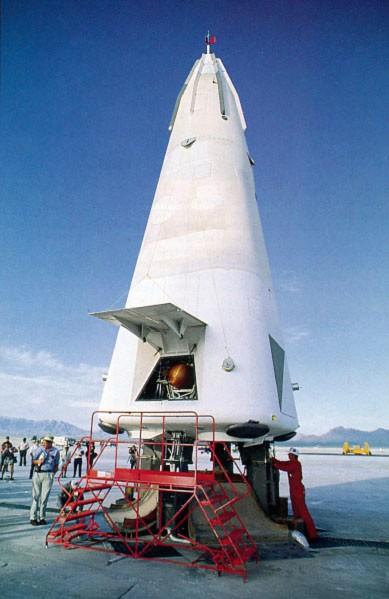
Under the banner of a Seattle-area company called Blue Origin, a spacecraft dubbed the New Shepard Reusable Launch Vehicle would take off vertically, like NASA's space shuttle. But unlike the shuttle, which glides to earth and lands like an airplane, the spaceship would land vertically.

The craft would hit an altitude of about 325,000 feet before descending and restarting its engine for a "precision vertical powered landing on the landing pad" located in sparsely populated Culberson County about 125 miles east of El Paso.

Those were among the plans detailed in a 229-page draft of an environmental review filed with the Federal Aviation Administration. The FAA has responsibility to issue permits and licenses for Blue Origin to go ahead with its launch plans.

A public hearing on the environmental review was scheduled Tuesday in Van Horn, a town of 3,000 and the closest center of population to the space base. Bezos, the 42-year-old billionaire who built Amazon into an Internet sales giant, won't be attending the hearing, Blue Origin spokesman Bruce Hicks said.

The report was assembled by Blue Origin and Tetra Tech Inc., a Pasadena, Calif.-based engineering and technical consulting firm.

The environmental assessment process is "only one of the steps prior to obtaining an experimental permit for a launch operator's license," FAA spokesman Hank Price said. "We have received permit applications from Blue Origin and are evaluating them for safety and other considerations as well."

As many as 10 flight tests lasting as long as a minute and reaching an altitude of about 2,000 feet could be launched this year from the site north of Van Horn on the 165,000-acre Corn Ranch purchased by Bezos. Over the following three years, as many as 25 launches would be made annually, growing in altitude to 325,000 feet and in duration to more than 10 minutes.

Commercial flights, a goal of the project, could begin in 2010, according to the timetable in the document, with as many as 52 a year.

"The flight rate would depend on market demand," said the document filed to the FAA.

The launch site is about 25 miles north of Van Horn and 35 miles south of Guadalupe Mountains National Park on the Texas-New Mexico border. The park contains many of the highest mountains in Texas, including the signature 8,085-foot El Capitan. It can be seen from a distance on Bezos' property amid desert and cattle-grazing terrain and salt lake beds.

Construction would cover 223 acres with buildings, launch and landing pads, storage tanks and parking lots, but that's just over 1 percent of the land. New fencing would be needed to enclose the actual launch site area, defined as some 18,600 acres of desert scrubland and grassland now in use as a private wildlife management area.

Within that fenced area is the likely landing area if something goes wrong with a flight.

....Bezos, who spent summers on his grandfather's ranch in South Texas as a child, has talked in the past of building spaceships that can orbit Earth and possibly lead to colonies in space.

According to its Web site, which offers few details, Blue Origin "is developing vehicles and technologies that, over time, will help enable an enduring human presence in space."

"We are currently working to develop a crewed, suborbital launch system that emphasizes safety and low cost of operations," the Web site says.

Blue Origin has been renovating a suburban site in Kent, Wash., south of Seattle, to design and build spacecraft and engines.

According to the environmental statement, the craft to be launched from West Texas includes one module for propulsion and one "capable of carrying three or more space flight participants to space." The two would be stacked atop one another to form a conical-shaped vehicle about 50 feet tall and 22 feet in diameter at the base.

The reusable propulsion module would have its own avionics and operate autonomously with onboard computers. The crew module would have similar computers and avionics and be equipped with small rocket motors for use in emergencies.
Much more at the source story.

Allen, Bigelow, and Bezos appear to be investing their hard-earned money in a long-shot business sector still in its infancy. The potential payoff is huge, but the investors will have to demonstrate a lot of staying power. Opening a new area of enterprise can be more beneficial to humankind than a million philanthropists like Bill Gates and Warren Buffett.

If these successful businessmen can open the door to a permanent human presence in space, free of the interference from western government agencies and totalitarian entities like China, the future of the human experiment will appear much brighter and more likely to succeed. The combination of vision and resources can be potent, if the people who are assigned to get things done are sufficiently inventive and persistent.

Labels: , ,

Bookmark and Share
Older Posts
Al Fin Main Page
Enter your Email


Powered by FeedBlitz
Google
WWW AL FIN

Powered by
Blogger

``