23 February 2012

The Great Wall of Canada

The USA Is Already Lost, But Canada Can Still Be Saved!

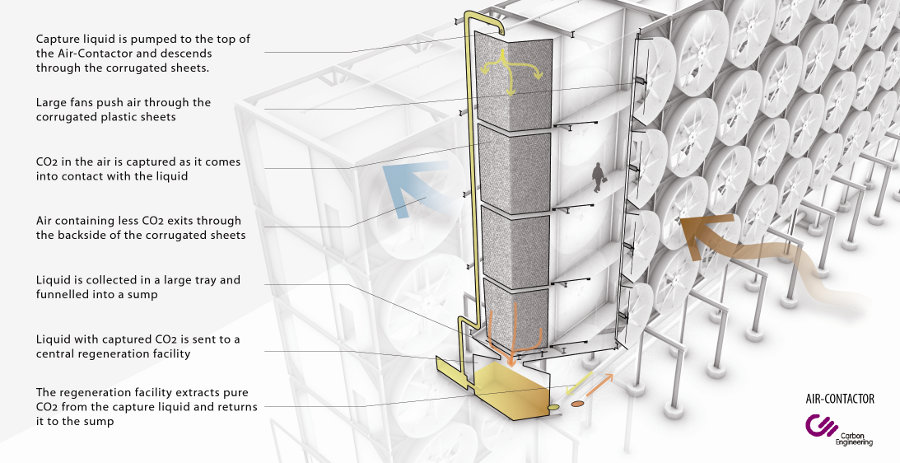
Top-secret plans are afoot to build a giant wall of carbon purification along the entire length of the Canada - USA border. A prototype wall section built by Carbon Engineering of Calgary demonstrates what such a wall might look like.
Great Wall Route

The technology incorporated into the Great Wall of Canada will be fairly straightforward. Special carbon-capture liquids will be pumped through atmospheric-contact channels, automatically removing the deadly demon gas CO2 from our precious common breathing gases. The carbon will then be removed from the capture liquid, freeing it up for another cycle.
The Great Wall of Canada would be but a first-line defense, of course. Smaller carbon purifying units would be located near large population and industrial zones, for added life-saving protection.
As noted above, the USA is already lost to toxic, acidifying levels of the demon gas. But if we work quickly, we can still save Canada from the demonic forces that threaten most of the rest of the world.
We should consider the Great Wall Project as the first in a series of protective measures against the widespread decay that is destroying large parts of Europe and North America. And thanks to massive resources of coal, gas, bitumens, and crude oil, we can afford to build such a wall, coast to coast. And thanks to our friends from China, for pitching in.

Remember, in the new age of climate change, southern Canada will be the new Arizona and Florida. There will be no need for winter migrations to the south any longer. We need to learn to watch out for ourselves, now.

As for our neighbors to the south, we are willing to sell our carbon purification technology to them, but they must be prepared to pay the full price. We recommend that they start by building a wall along their own southern border, and take it from there.

Labels: , , , ,

Bookmark and Share

31 January 2011

Islamic Fertility: Far from Fading

More 4 Feb 2011: Dennis Mangan looks at this issue and receives many comments, including a thought-provoking comment from "Albert" who claims to be a US government diplomatic employee in Europe. Most of Dennis' commenters feel that the Pew numbers were understated -- not including illegal immigrants who may in some countries be as large in number as legal declared immigrants. Another valid point made is that although problems with crime and hostility are significant due to the rapid expansion if Muslim immigrants, perhaps a greater problem being ignored -- in terms of crime -- is legal and illegal immigration into Europe from Subsaharan Africa, whether Muslim or not.
“The Future of the Global Muslim Population”, produced by the Pew Research Centre, a non-profit outfit based in Washington, DC, reckons Muslim numbers will soar....by 2030....from 23.4% to 26.4% of the global total. _Economist
Since most of the Muslims in Europe and Canada will be concentrated into large cities such as London, Paris, Toronto, Hamburg etc., their influence will be greater on the nation at large. Muslims are a particularly vocal and visible population, exerting an influence on civil and political affairs far out of proportion to their actual numbers or percentage of population.
THE number of Muslims in Australia will grow four times more quickly than non-Muslims over the next 20 years as the continued instability in developing Islamic countries in Southeast Asia drives migrants and refugees to these shores.

A major new study by the US-based Pew Research Centre has forecast a global surge in the Muslim population, with Australia and New Zealand among the nations expected to see the biggest rises.

In Australia, the Muslim community will grow from about 399,000 to 714,000 by 2030, an increase of 80 per cent.

In that time the non-Muslim population will increase by about 18 per cent.

This trend is even more dramatic in New Zealand, where there will be a 150 per cent rise in residents who adhere to Islam. _TheAustralian
Australia and New Zealand are nations with relatively low populations. Both nations are beginning to see adverse affects from the growing numbers of newcomers bringing cultures which can clash badly with the majority -- sometimes violently. Schools, city streets, and prisons from Europe to Canada to Oceania will feel the growing swell of hostility and violence.
... in 2030 Britain will have a Muslim population of 5.5 million people, roughly 8.2 per cent of the total population.

That’s hardly Eurabia, I hear some saying. But that figure will not be spread evenly across the UK. By that stage Oldham, Bradford, Blackburn and Burnley, and possibly Birmingham, may well be Muslim-majority towns. What will race relations be like in those places, I wonder? _Telegraph
As Muslim populations concentrate in particular towns, the ability of individual Muslims within these zones of control to assimilate to the host country will be lost. Instead, growing ghettos of tribal and religious intolerance will be imported from the old countries, and there will be no safety for anyone who thinks or acts outside the narrow rules of the religious tribe.

Think in terms of multiple "no-go zones" run by local Taliban, Hamas, or Hizbollah equivalent gangs. Think of Beirut, Gaza, Baghdad, and the other perpetual hot spots of violence fueled by the endemic violence and intolerance of Islamic culture.
As poor migrants start families in Spain and Italy, numbers there will rocket; in France and Germany, where some Muslims are middle-class, rises will be more modest—though from a higher base. Russia’s Muslims will increase to 14.4% or 18.6m, up from 11.7% now (partly because non-Muslims are declining). The report takes a cautious baseline of 2.6m American Muslims in 2010, but predicts the number will surge by 2030 to 6.2m, or 1.7% of the population—about the same size as Jews or Episcopalians. In Canada the Muslim share will surge from 2.8% to 6.6%.

How will liberal democracies accommodate such variety? The clarity of a written constitution may give America an advantage over many European countries, where unwritten custom has more sway. Jonathan Laurence, an Islam-watcher and professor at Boston College, thinks Europe could rise to the challenge, but failure is also easy to imagine. _Economist
It is best not to think of Europe as a monolithic entity in this case. Clearly, some nations will fall to the human tide of tribalist primitivism, and some nations will assert their right of self-determination. It will depend upon the toughness of the indigenous Europeans within each country.

Some cities in France, Sweden, and the Netherlands are as good as overrun. As noted earlier, Muslims do not need to be in the majority to dominate over more passive, less assertive Europeans. They merely need to be positioned to intimidate a weak government -- first in cities and provinces, then national capitals, then the nation at large.

The borders of Islam are bloody around the world, from Africa to Asia and increasingly inside Europe itself. The hostile and intolerant folkways of Islam are entirely portable, capable of establishing themselves inside entirely foreign cultures -- creating completely new bloody borders at every turn.

If Pakistanis, Egyptians, Yemenis, Iraqis, etc. cannot maintain order within their own boundaries, how can one expect much weaker and more tolerant European governments to deal with these primitive violent tribal cultures?

Labels: , , ,

Bookmark and Share

30 September 2010

Obama's Policy of Energy Starvation Hurts US, Benefits Canada

While Obama's inept moratorium on oil drilling along the US Gulf Coast heaps misery upon millions of Americans, Alberta's economy is being rejuvenated by the shift of resources northward to the oil sands. If Obama's political agenda prevents oil companies from investing in the United States, they will naturally turn to the vast hydrocarbon resources of other nations such as Canada -- while Mexico, Cuba, Russia, China, and Brasil move to take advantage of deep sea oil resources that the US government eschews.
In a research note this week, investment bank Peters & Co. said as much as $30 billion will be spent from 2011 to 2015 on mining and in situ oilsands projects to boost production by almost one million barrels per day.

"Most new sizable projects are controlled by majors with less financing risk and lower costs of capital than juniors of previous cycles," wrote research analyst Todd Garman.

"Based on our assessment of currently planned oilsands mining and in situ projects, including phase expansions, we forecast total potential production additions of about 900,000 bpd, with mining and in situ production of 300,000 bpd and 600,000 bpd, respectively."

..."Specifically, we anticipate that ConocoPhillips' Surmont, Husky's Sunrise, Imperial's Kearl, MEG's Christina Lake and Suncor's Firebag 4 projects provide potential oilsands construction growth opportunities for Flint, with these projects expected to be awarded by 2010 year-end," Garman wrote.

He said the biggest risk for development is related to oil prices -- the projects are projected to break even at between $55 and $65 US per barrel. _CalgaryHerald
As long as oil is priced in terms of the weak Obama Dollar, the price of oil is likely to be above $55 per barrel.

As peak oil drifts ever further into the distance, the more relevant and proximal causes of energy shortages derive from "political peak oil", and the disastrous decisions being made daily by incompetent clowns in public office.

Cross-posted to Al Fin Energy

Labels: , ,

Bookmark and Share

10 April 2010

Canada's Changing Ethnic Makeup

Canada Census
Canada is an important part of the Anglosphere. Rich in natural resources and human resources, Canada should have a strong 21st century to look forward to. But Canada's population is increasing slowly -- and mainly due to immigration. If not for immigration, Canada's population future would be as bleak as Japan's or Russia's.
Canada Census
Canada's visible minorities comprise less than 20% of the total population -- compared to the US where visible minorities comprise just over 40% of the total population.
Ethnic origin  % Population Largest reported ethnic identity
Canadian 32.22% &0000000010066290.00000010,066,290  Quebec ( 66.2% )
English 21.03% &0000000006570015.0000006,570,015  Newfoundland and Labrador ( 97.7% )
French 18.82% &0000000004941210.0000004,941,210  New Brunswick ( 32.6% )
Scottish 15.11% &0000000004719850.0000004,719,850  Nova Scotia ( 29.3% )
Irish 13.94% &0000000004354155.0000004,354,155  Nova Scotia ( 19.9% )
German 10.18% &0000000003179425.0000003,179,425  Saskatchewan ( 30.0% )
Italian 4.63% &0000000001445335.0000001,445,335  Ontario ( 7.0% )
Chinese 4.31% &0000000001346510.0000001,346,510  British Columbia ( 10.6% )
North American Indian 4.01% &0000000001253615.0000001,253,615  Nunavut ( 83.6% )
Ukrainian 3.87% &0000000001209085.0000001,209,085  Alberta ( 10.2% )
Dutch (Netherlands) 3.31% &0000000001035965.0000001,035,965  British Columbia ( 5.3% )
Polish 3.15% &0000000000984565.000000984,565
Indian 3.08% &0000000000962665.000000962,665  British Columbia ( 6.4%)
Russian 1.60% &0000000000500600.000000500,600  British Columbia ( 4.2%)
Welsh 1.41% &0000000000440965.000000440,965
Filipino 1.40% &0000000000436190.000000436,190
Norwegian 1.38% &0000000000432515.000000432,515
Portuguese 1.32% &0000000000410850.000000410,850
Métis 1.31% &0000000000409065.000000409,065
Swedish 1.07% &0000000000334765.000000334,765
Latin American 1.04% &0000000000315510.000000315,510  British Columbia (3.2%)
Hungarian 1.01% &0000000000315510.000000315,510  Ontario
Jewish 1.01% &Expression error: Unrecognised punctuation character ","Expression error: Unrecognised punctuation character ","Expression error: Unrecognised punctuation character ","Expression error: Unrecognised punctuation character ","Expression error: Unrecognised punctuation character ","Expression error: Unrecognised punctuation character ","Expression error: Unrecognised punctuation character ","Expression error: Unrecognised punctuation character ","Expression error: Unrecognised punctuation character ","Expression error: Unrecognised punctuation character ","Expression error: Unrecognised punctuation character ","Expression error: Unrecognised punctuation character ","Expression error: Unrecognised punctuation character ","Expression error: Unrecognised punctuation character ","Expression error: Unrecognised punctuation character ","Expression error: Unrecognised punctuation character ",".Expression error: Unrecognised punctuation character ","315,510 Template:Country data Bathurst St., Toronto

Wikipedia


Year 1996 1996% 2001 2001% 2006 2006%
South Asian 670,590 2.35% 917,070 3.09% 1,233,275 4.00%
Chinese 860,150 3.02% 1,029,395 3.47% 1,168,485 3.70%
Black 573,860 2.01% 662,215 2.23% 783,795 2.50%
Filipino 234,195 0.82% 308,575 1.04% 389,550 1.30%
Latin American 176,970 0.62% 304,245 1.00%
Arab 265,550 0.90%
Southeast Asian 172,765 0.61% 231,425 0.70%
West Asian 156,700 0.50%
Korean 64,835 0.23% 138,425 0.40%
Japanese 68,135 0.24% 60,415 0.20%
Multiple visible minorities 61,575 0.22% 104,215 0.30%
Visible minority, n.i.e. 69,745 0.24% 71,420 0.20%
Total visible minority population 3,197,480 11.21% 3,983,845 13.44% 5,068,095 16.20%
Non-Visible Minority Population 25,330,645 88.79% 25,655,185 86.56% 26,172,935 83.78%
Total Population 28,528,125 100.00% 29,639,030 100.00% 31,241,030 100.00%

Wikipedia


The makeup of Canadian visible minorities is distinctly different from that of the US. Most of Canadian visible minority populations come from Asia -- East and South Asia, primarily, with a growing number of Southeast Asians, including Filipinos. Blacks are only 2.5% of the population and Latinos are only 1% of the Canadian population. Canadian native americans make up almost 4% of the population.

The total fertility rate of Canada has declined to around 1.5, well under replacement rate of 2.1 children per woman. As you can see below, Canada, Europe, and Japan have comparable low TFRs.

The conclusion: Canada needs immigrants to avoid a Japan-style population implosion. Canada is unlikely to feel as much of the negative effects of immigration as the US or Europe for at least 2 reasons:

1. Canada is starting with a base of greater than 80% non-minority population.
2. More of Canada's immigrants are coming from East Asia and South Asia, where crime rates are lower than in Mexico and Africa -- two large sources of immigrants to the US and Europe, respectively.
It is hoped that more Canadian immigrants will find a way to assimilate successfully into Canadian society than European immigrants typically have done.

If not for the cold winters in Canada, it would probably see much higher rates of immigration. Even so, Canada is a much stronger immigration draw than Russia, which has comparable winters.

Labels: ,

Bookmark and Share

13 April 2009

Timothy McVeigh is Alive and Well on a Canadian Organic Chicken Farm, Plotting the Destruction of All Modern Civilisation

Be sure to check out this CBC special report on Peak Oil Doomers. The peak oil movement is well sprinkled with extremists who are not only preparing for a collapse of civilisation, but are actively working to bring it about. The catastrophic global warming movement also attracts its share of intellectuals who have a soft spot in their heart for violent radicalism.

In fact, wherever one looks in the mainstream faux environmental movement, one will find poorly concealed sympathies for the use of violence to bring about revolutionary change in the economic systems of regions, countries, and the world. One might be forgiven for thinking that the entire faux environmental front is just a cover for its many intellectuals who harbour a desire to see a violent overthrow of the established order.

The CBC is too often like the BBC in its coddling and encouragement of these marginals. A more critical investigation of this phenomenon might have reflected better on the organisation.

Labels: ,

Bookmark and Share

30 January 2008

Canadian Oil Boom--A Difference in Values

It is possible to take oil wealth and do something good with it. Take Alberta's ongoing oil boom, which is beginning to rival China's business boom. Alberta is actually accomplishing long-lasting sustainable good from its temporary (probably decades-long) oil boom.

Brian Wang looks at a recent scientific creation from the University of Alberta:
Canadian scientists have succeeded in building the least expensive portable device for rapid genetic testing ever made. The cost of carrying out a single genetic test currently varies from hundreds to thousands of pounds, and the wait for results can take weeks. Now a group led by Christopher Backhouse, University of Alberta, Edmonton, have developed a reusable microchip-based system that costs just 500 (pounds) to build, is small enough to be portable, and can be used for point-of-care medical testing.

To keep costs down, 'instead of using the very expensive confocal optics systems currently used in these types of devices we used a consumer-grade digital camera', Backhouse explained.

The device can be adapted for used in many different genetic tests. 'By making small changes to the system you could test for a person's predisposition to cancer, carry out pharmacogenetic tests for adverse drug reactions or even test for pathogens in a water supply,' said Backhouse.(source)

The device is now much smaller than size of a shoe-box (USB stick size) with the optics and supporting electronics filling the space around the microchip.____NextBigFuture


One must ask oneself the question: which oil-rich countries are putting their newfound wealth into advancing knowledge for the future, and which are spending it on Las Vegas style glitz, and stashing it away in the Swiss bank accounts of royalty and dictators? It is a question of values.

Canada has different values than the oil-rich countries of the Persian Gulf. So far, Alberta has taken a different approach to the use of oil wealth than the royalty-saturated kingdoms and emirates of the middle east. Alberta's approach is even different from that of socialist leaning Norway, whose scientific output is only somewhat above that of the Arab world.

So far, Canada has managed to avoid most of the "oil curse" of windfall wealth. The oil curse is the natural laziness of a culture that does not have to work for a living. The decadence of unearned wealth.

For the Canadian provinces of Alberta--and now Saskatchewan--the oil boom is just beginning. For now, the main limiting factor is the significant manpower shortage, which is being felt in the oil and gas industry worldwide. Peak manpower, not peak oil.

Labels: , , , ,

Bookmark and Share

27 January 2008

Peak Oil: Meet Bakken Formation

The Bakken geologic formation straddling the border of the US with Canada, contains a lot of oil shale, and sweet crude. Brian Wang at NextBigFuture looks at the possibility that there may be another "Saudi Arabia's worth" of oil under the plains of Saskatchewan and North Dakota.
Estimates are anywhere from a conservative 25 billion barrels of oil in place, to a high estimate by the United States Geological Survey of 400 billion barrels of oil in the Bakken formation. Not only is the oil plentiful, but it's high quality too, 41 degree light sweet crude. The Bakken formation is a formation of black shale, siltstone, and sandstone. The formation lies beneath the Mississippian formation, Saskatchewan's current source of light sweet crude. The Bakken formation is situated beneath southeastern Saskatchewan, southwestern Manitoba, and North Dakota.

In 2007, EOG Resources out of Houston, Texas reported that a single well it had drilled into an oil-rich layer of shale below Parshall, North Dakota is anticipated to produce 700,000 barrels of oil.____>Brian Wang (much more with links)
No one expects such regional oil deposits to give North America independence from the "dictator's oil" of Russia, the Persian Gulf, Africa, or Venezuela any time soon. Industrial economies necessarily draw their energy from a wide variety of sources--particularly in the age of a booming India and China, with their huge, growing energy demands.

It is interesting to note that Saskatchewan has huge deposits of tar sands farther north, in addition to the potentially enormous deposits of oil shale and sweet crude within Bakken. Will Regina and Saskatoon begin taking on some of the more affluent aspects of Dubai?

Here is a pdf document looking at the estimate of oil within Bakken

It is important for those who truly wish to understand the current energy situation, to know that there is a tremendous shortage of skilled and trained manpower to develop all of the reserves known to exist--and a much greater shortage of trained and skilled manpower needed to explore and discover the huge oil fields likely to exist, but remaining undiscovered. Peak oil is actually a euphemism for the shortage of trained and skilled workers.

Labels: , , , , ,

Bookmark and Share

19 December 2007

Northwest Passage: The Media and Most Bloggers Get it Wrong

Something interesting happened when the Northern summer 2007 ice cap tried to enter Guiness book of world records for the opening of the Northwest Passage: Guiness told the ice to check its history books!
The BBC dramatically reported on September 14 that: “The most direct shipping route from Europe to Asia is fully clear of ice for the first time since records began.”...The first time!!!! Really? How can they say that? They actually reported on September 10, 2000 that: “A Canadian police patrol boat has completed a voyage through the fabled Northwest Passage without encountering any pack ice.”...How many “first times” are there at the BBC? Is this the environmental equivalent being a virgin, again?

...The problem is that ships have sailed through the Northwest Passage before today and long before a police patrol did it in 2000. It has happened several times. The historically impassable route has been passed through numerous times for over a century now....Norwegian explorer Roald Amundsen “became the first person to sail the entire Passage from east to west” and that was in 1906....The USS Storis made the journey in 1957 as this US Coast Guard history of the ship mentions....A Dutch businessman, Willy de Roos, 56, made a solo voyage through the Northwest Passage in 1977...a couple of Canadians, Mike Beedell and Jeffrey MacInnis, sailed through the Northwest Passage using a catamaran with wind power only. That was in 1988.

And in 1985 there was a diplomatic row between the US and Canada because the ship, the Polar Sea, was setting sail through the Northwest Passage and hadn’t asked Canadian permission....Even tourists on the M.V. Lindblad, a Swedish ship, have traveled through the Northwest Passage. They did it with luxurious food and in comfort. The trip was a 40 day trip from Newfoundland to Japan via the Passage and cost the tourists $16,000 to $22,000 in 1984!...The Lindblad made a second trip through the Passage in 1988...In 1977 another Canadian ship, with four Canadians, made the trip through the Passage as well. At one point of their trip they sailed together with the Dutch businessman who was making the solo trip. Source

Hat tip Climate Skeptic via Tom Nelson

If you want honest reporting about anything relating to science, politics, or just about everything else--you have to do the research yourself. The media jumped the shark a few decades ago, when it comes to honest reporting. Fortunately the web makes it easier to spot most of the rather obvious boneheaded mistakes generally made by the media.

Labels: , ,

Bookmark and Share

29 November 2007

Canadian Oilmen Learning to Like THAI Takeout?


Recent posts at Advanced Nanotechnology and Energy Blog shine a spotlight on Toe to Heel Air Injection (THAI) technology for extracting oil from tar sands deposits.
THAI™ uses a system where air is injected into the oil deposit down a vertical well and is ignited. The heat generated in the reservoir reduces the viscosity of the heavy oil, allowing it to drain into a second, horizontal well from where it rises to the surface.

THAI™ is very efficient, recovering about 70 to 80 per cent of the oil, compared to only 10 to 40 per cent using other technologies.

Duvernay Petroleum’s heavy oil field in Peace River contains 100 million barrels and this will be a first test of THAI™ on heavy oil, for which THAI™ was originally developed. Duvernay Petroleum has signed a contract with the Canadian firm Petrobank, which owns THAI™, to use the process.

The THAI™ process was first used by Petrobank at its Christina Lake site in the Athabasca Oil Sands, Canada, in June 2006 in a pilot operation which is currently producing 3,000 barrels of oil a day. This was on deposits of bitumen - similar to the surface coating of roads - rather than heavy oil.

Petrobank is applying for permission to expand this to 10,000 barrels a day though there is a potential for this to rise to 100,000.

The 50,000 acre site owned by Petrobank contains an estimated 2.6 billion barrels of bitumen. The Athabasca Oil Sands region is the single largest petroleum deposit on earth, bigger than that of Saudi Arabia.
Source

THAI promises much better efficiencies for tar sands recovery which converts to better profitability for investors. The huge deposits of tar sands in Canada and Venezuela dwarf the proven oil reserves of Saudi Arabia. For tar sands, the future is now.

Toe to Heel Air Injection recovery is not suitable for shale oils, but other in situ processes for shale oil recovery are being perfected which should make those resources available for substantial recovery within 15 years.

Labels: , , ,

Bookmark and Share

03 March 2006

Peak Oil: Meet Athabasca Oil Sands


The Athabasca oil sands region lies in northern Alberta Province, in Canada. The Chevron oil company has been involved in oil recovery efforts in Athabasca for several years. Now Chevron is moving into the region in a big way, having recently acquired several oil sands leases, for land with over 7 billion barrels of oil in place.

The new leases are approximately 76 miles west of Fort Mackay in northern Alberta, and 24 miles south west of AOSP.

Chevron will use Steam Assisted Gravity Drainage (SAGD), an in-situ technology that uses steam and horizontal drilling to extract the bitumen. Shell Canada and Western Oil Sands will each have the right to elect to acquire a 20% working interest in these leases.

The SAGD process involves drilling pairs of horizontal wells in the oil sands reservoir. Steam is injected through an upper well—about 3 to 10 meters above the lower—and contacts the bitumen. The heated bitumen becomes mobile and flows with condensed water from the steam chamber to the lower well through gravity drainage. Thence it is lifted to the surface for upgrading.

Each well pair is typically 2,500 to 3,000 feet in length, and optimally produces 1,000 to 1,500 barrels per day. Well pairs are drilled parallel to one another, and spaced 300 to 650 feet apart.


Read the full article here.

Oil sands are a heavy oil resource, requiring special refining methods, and not nearly as well suited for gasoline production as sweet crude oil. Along with shale oil, oil sands represent a huge and relatively untapped oil resource.

In addition to oil sands and shale oil, coal is another fossil fuel that can be converted to liquid hydrocarbon fuel form. Cleaner methods of processing and buring coal are a top priority in the industrial nations.

Peak Oil Debunked is an excellent source of information about Peak Oil Hype. Go on over and give them a look.

I am a big fan of renewable energy, having helped install a number of solar and wind home energy systems. Fossil fuels and nuclear fission should be seen as only a stopgap measure until renewable methods of energy production can take over.

One other source of gasoline that I should mention--cow dung! Japanese scientists have learned to make gasoline from the dung of cattle. They are a bit short on details at the moment, but it seems they are in earnest.

Update 6 March 06: Here is an update on the Chevron oil sands venture:

On Friday I was at the Stanford Institute for Economic Policy Research’s Economic Summit (some videos available), where among other things I learned that the oil sands of Canada are, unfortunately, more accurately thought of as “tar sands”. But Chevron has announced a $60 million deal to develop these sands. The Motley Fool’s Jack Uldrich speculates on why they are willing to take this big project on:

“The risky venture could ultimately cost tens of billions of dollars and take up to a decade to develop, since the tar in the oil sands isn’t easily converted to usable oil. But Chevron may have a very tiny ace up its sleeve, thanks to its involvement with nanotechnology…

“Chevron’s work in creating new nanoparticles offers the greatest promise. If the company can produce new nanoparticles with unique catalytic capabilities, it may be able to more effectively and efficiently refine the thick, gooey tar-sands into highly refined — and profitable –oil.

“Headwaters (NYSE: HW) is already developing nanocatalysts to convert heavy oils into higher-yield oils, and I have reason to believe that Chevron is doing the same. If the company succeeds, these powerful new nanocatalysts could make extracting oil from the tar sands profitable, even at prices lower than $35 a barrel. And if oil prices stay high, a cheaper extraction process will only bolster Chevron’s profit margins. It’s yet another small solution to a potentially big risk.”


The use of nanoparticles as catalysts to make the oil sands more productive, is just one timely synergy of technological development. There will be many more, that improve both the economy and the environment. The key is for the active members of society to think like problem solvers, rather than doomsayers.

Labels: , , , ,

Bookmark and Share

20 February 2006

Europe Falls Further Behind


Albion's Seedlings provides a posting that compares the economic progress of Europe with that of the USA. I am happy to see that at least Canada is doing relatively well.

Adding 1 million net citizens every nine months (one every 13 seconds), America is extending its lead in prosperity over not only poor and moderately wealthy nations, but over virtually all of its erstwhile companions on the “heights” of Mount Prosperity. Next-door neighbour Canada is the only eight digit population close to the US, coming in at 78% of US per capita GDP (PPP adjusted).

The article discusses the rise of Japan, Korea, and China, along with the relative stagnation of Brazil, Russia, India, and Europe. Follow this link to read the entire article.


Unfortunately for Europeans, the member states of the EU appear to be transforming into a large retirement home of limited means. Even more sadly for Europe, the young workers being imported to provide financial support for the native retirees appear to have troublemaking on their minds.

Labels: ,

Bookmark and Share
Older Posts
Al Fin Main Page
Enter your Email


Powered by FeedBlitz
Google
WWW AL FIN

Powered by
Blogger

``