12 January 2013

Who Will Become the 51st US State?

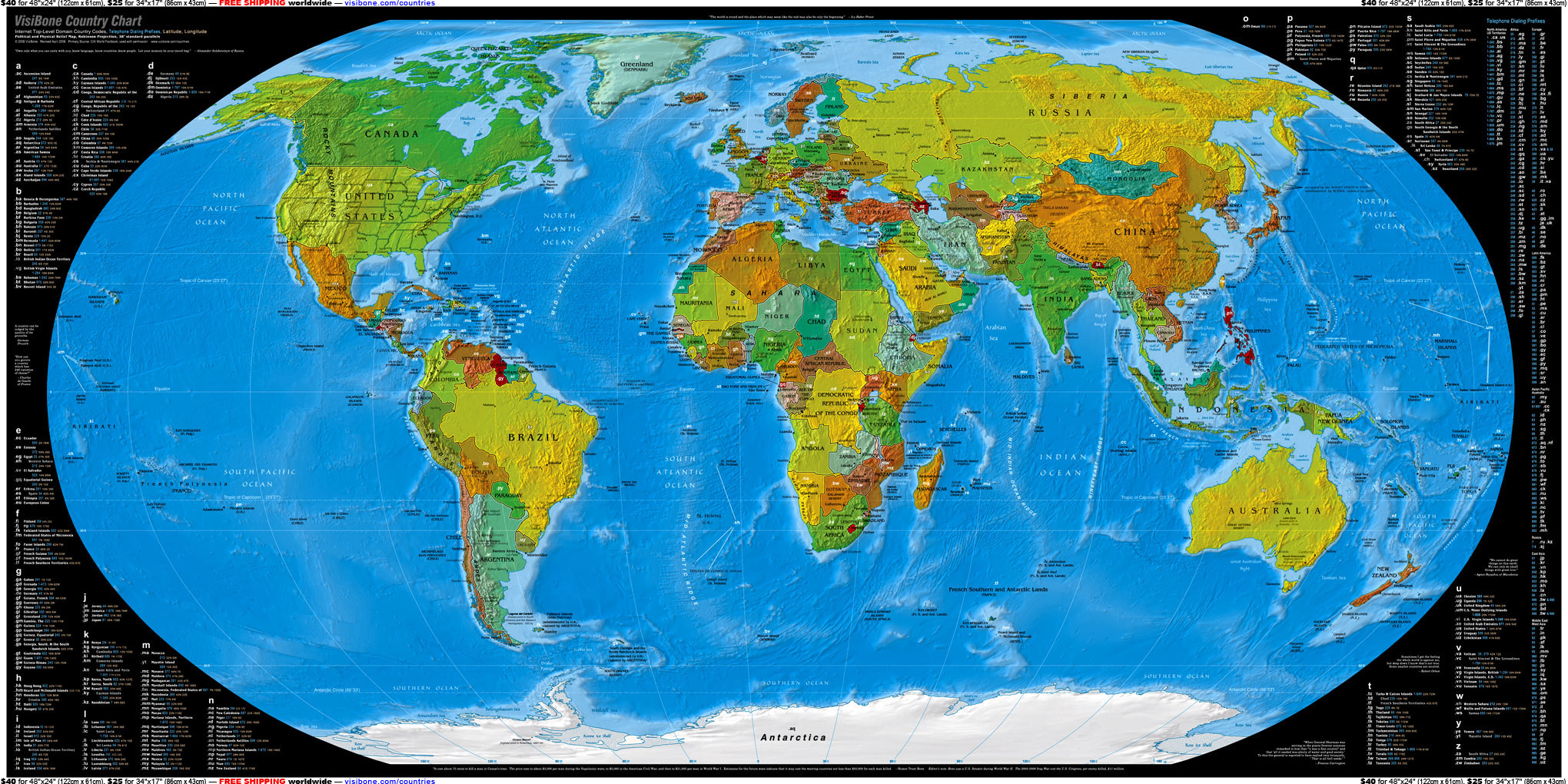
The USA has been stuck on just 50 states for over half a century now. There has been a good deal of talk about adding Puerto Rico to the US as the 51st state, but both the Puerto Rican population and the US population seem at least a little bit ambivalent about that choice.
Another candidate that has been tossed around a bit, is Taiwan!
...David Chou comes right out and says it: Taiwan should become the 51st state of the United States.

Mr. Chou is not joking. He has a plan. It may never work, but just try telling Mr. Chou that. He has been working on it for years.

Mr. Chou set up the 51 Club in 1994 to promote his idea. He admitted 51 members. But to him it is not a gimmick. It is a cause. And with all the confusing explanations that Taiwan's Government puts forth about whether it is part of China or something separate, Mr. Chou's unusual proposal is refreshingly straightforward.

''If we were a state, our most serious problem -- security -- would be solved,'' said Mr. Chou, 49, who looks and sounds considerably more normal than his proposal might suggest. ''The current Government can't solve it; neither can the opposition. But statehood can.'' _NYT
Perhaps it is possible that the security situation for Taiwan may grow dire enough for its people to look to the US for the "absolute security" that statehood would guarantee. Time will tell.
The names of other currently independent nations -- such as Canada and Mexico -- have been tossed around for potential statehood, ever since the passage of NAFTA.

The USA's North American neighbors already exist under a US defence umbrella, and are given very privileged trade status. But actual statehood may be too much for the US' neighbors to the north and south to swallow, for now.

Other potential candidates across the Pacific in addition to Taiwan that have been discussed in the context of statehood, include the rapidly de-populating Japan, the Philippine Islands, and South Korea. As with Taiwan, the most likely reason for a majority of the people of any of those countries to be willing to submit to US statehood, would be for security reasons -- although economic and demographic reasons may also come into play over time.

Most of the US' great land acquisition took place during the 1800s. Since the year 1900, the US has given up more territory than it has acquired. One of the most important territories to have given up, was the Panama Canal Zone. The Philippine Islands were also given up in 1946, after having been considered for full statehood prior to the Japanese occupation.

It may seem odd to be talking about adding more states to the USA, when so many current US states have been discussing the possibility of secession from an increasingly dysfunctional union.

Under President Obama, the US government has overstepped itself far beyond the putative limits of the US Constitution, as never before. For that reason, as well as for other reasons, a number of scholars are predicting the collapse and dissolution of the USA as we currently know it.

But for such a collapse to occur, there would need to be some form of viable alternative as global economic, military, and political hegemon. To this point, nothing except a coming anarchy has shown its future face as a replacement for the USA.

And even in decline, some organisations have been known to attempt to bloat themselves up to massively oversized proportions, just before the end. Much like spouses in a failing marriage often choose to have more children, in a last-ditch attempt to preserve the union.

Citizens of the US are being given an opportunity -- in a second Obama term -- of seeing how badly the US could have declined during a second Jimmy Carter term. National malaise under Carter was admittedly severe. If not for the surprising "US fracking boom," things would likely be even worse by now, under Obama.

If Obama embraces the boom in US oil & gas resources, along with the coming boom in next-gen nuclear power reactors and the accompanying booms in nanotech, biotech, materials science, advanced automated manufacturing, and a number of other significant scientific and technological advancements which an abundant economy would allow -- he could be known to future generations as one of the great US presidents, despite the underlying reality.

Should that unlikely recantation of his previous life occur, the US might be looking at rates of economic growth previously only dreamed of in the history of the country. At that point, the idea of 51 states -- or 57 states, for that matter -- would not seem such outrageous subject matter.

In such a case, for the sake of avoiding a more rapid decline into an Idiocracy, the US might well choose candidate territories with higher -- rather than lower -- population average IQs than the current US population IQ average..

Labels: ,

Bookmark and Share

11 January 2013

Germany's Bad Energy Choices Leading into Cul de Sac?

Previously published on Al Fin Energy


Big wind and big solar are hopelessly intermittent and unreliable forms of energy production. But Germany has rashly committed itself to supplying 40% of its power from the intermittent unreliables by 2020. As a result of this giant leap of faith, German energy planners are scrambling for ways to convert big wind and big solar energy to more reliable forms of energy that can be stored, and used whenever needed.
As seen in the diagram above, a new €3.3 million project aims to produce methane from wind and solar generated electricity, using alkaline electrolyser stacks.
Once the hydrogen has been produced it passes through a methanisation process. The resulting methane can be injected directly into the natural gas grid, thus allowing for renewable energy storage on a timescale of months or more. The gas contributes to decarbonising the grid, and can be used for electricity generation or to fuel natural gas vehicles. _FuelCellToday
Here is more information about an earlier, preliminary research project to prove the concept:
The Centre for Solar Research Baden-Württemberg (ZSW) has inaugurated a research facility to convert solar power to methane. The methane is then added to the natural gas grid.

The project uses solar power to electrolyse water in a pressurised alkaline electrolyser, producing hydrogen and oxygen. The hydrogen gas then undergoes methanation, and with the facility able to produce up to 300 cubic meters of renewable methane per day, it is the largest of its type in the world. _FuelCellToday
More information from ZSW (in German)

Needless to say, the concentration of CO2 in the Earth's atmosphere is vanishingly small (0.04%) -- making atmospheric CO2 far too rare and expensive as a CO2 source, for an industrial-scale project. This being the case, it is clear that the project will have to use concentrated CO2 effluent from a hydrocarbon-burning power plant, cement plant, or other industrial scale plant.

And as it happens, Germany is burning much more coal lately, as a result of its impulsive decision to shut down its nuclear power plants. All of which brings up a very good question: "If Germans want to produce methane from CO2 and H2 from the electrolysis of water, why not use nuclear power as your source of electricity?" Nuclear power is cheaper, more reliable, and more potentially abundant than the intermittent unreliables -- big wind and big solar.

Perhaps the answer to the question is that the Germans are not actually serious about all of this, but are merely posturing for the energy and environmental media -- and for green oriented voters and power blocs.

That would be a shame. Germany is in dire need of competent people who are willing to take a serious approach to present and future electrical power needs.

Today's bad choices by German leaders will have the effect of limiting possible good choices in the future. Germany is being painted into a corner, led into a cul de sac, by faux environmental greens who have been given too much power across the EU.

The green ideology is doing for Germany and the EU what the communist ideology did for the former USSR.

Labels: , ,

Bookmark and Share

10 January 2013

Sceptics vs. Deniers: What Would a Scientist Do?

Science is impossible without a healthy scepticism, along with a voracious appetite for data -- and data transparency. Climate sceptics, for example, demand a higher level of evidence to support "catastrophic anthropogenic global warming," before the energy industries of advanced nations are turned on their heads, and before many trillions of dollars are forcibly redistributed from advanced nations to the emerging and third world nations -- using the United Nations and the IPCC as intermediaries in the redistribution of these funds.

Skepticism is generally viewed as a reluctance to believe in something. Skepticists demand evidence, and cold hard facts that can be tested and retested.

The reason that science is so trustworthy is the level of evidence that is demanded before an idea is accepted as truth, and even then, scientists must be willing to reexamine their fundamental ideas. _Answers

Climate science has been infiltrated by political interests, who support the catastrophic alarmist attitude toward climate -- and who urge a rapid and precipitous disruption in energy industries, along with a massive transfer of funds from productive nations to non-productive and politically connected entities.

Other sciences have likewise been infiltrated by political activists, who wish to declare the science "settled" long before the debate has even begun, or the data collected. The field of genetics and human behaviour, the study of gender differences, and the study of human biodiversity (HBD) in general, have all been caught and hamstrung in the web of politically correct corruption.

Here is how you can tell the difference between a healthy scientific "sceptic," and a corrupt "denier" of a political activist: The sceptic wants to open up scientific enquiry, in order to learn as much as possible about the topic. The denier, in contrast, wishes to shut down any free enquiry into the question, and declare the matter settled.

The distinction is easily made. And it is a crucial distinction to make, in this age of politically correct corruption of the scientific process by political interests -- extending well into both governmental and private funding agencies of science.

Does the group or individual wish to open the question to all honest investigators, or is the intent to shut down all honest and open investigation?

It doesn't matter if the person or group calls himself or itself "sceptical" or not. Judge them by their actions. Do they promote free and open enquiry, with complete data transparency and availability? Or do they want to close the debate decades before the necessary data can be compiled and analysed?

Only a complicit news media and a thoroughly dishonest political regime and academic regime could keep pseudo-scientific hoaxes such as carbon hysteria and climate alarmism, alive.

Labels: ,

Bookmark and Share

09 January 2013

Consider it Fair Warning

In recent years, world-class investment gurus such as Jim Rogers, Peter Schiff and more, have been recommending that ordinary investors start planning to provide basic life necessities for themselves and their families, in the face of a potentially catastrophic global economic breakdown caused by suicidal government economic policies.

Post-Apocalyptic Trading Post

Such quasi-apocalyptic talk is not necessarily hyperbole. Consider it more in the territory of "fair warning."

Modern government economic policies from the US to Europe to Australia, are built upon tens or hundreds of $trillions of imaginary capital and wealth which does not actually exist in the real world. This "phantom wealth" resides mainly within the imagination. It is an article of faith and economic belief systems.

Whether there is a catastrophic and bloody economic collapse depends largely upon the psychology of the herd -- and what it might take to collapse the belief system and set off a stampede.

The combination of exponentially growing debt with an ongoing demographic collapse of core populations, casts ominous spells over the futures of most of the nations of the developed world. There is still time to change course and correct past mistakes -- but there is no political will to do so. And there is not enough "grit" in most modern populations to turn toward sustainable demographic and fiscal policies, even if a few politicians at the top had the backbone to promote such changes in policy.

The US is on a suicidal economic course to disaster. This is not a new finding, but the rate of economic decline has accelerated significantly in recent years, and is likely to accelerate even more over the next few years.

It takes almost $10 in new US government spending to achieve $1 in new GDP growth. That "return on investment" has been falling steadily as the type of new government spending changes away from the "infrastructure" category, inexorably over to the "entitlement" category. The same dead end trend is taking place from Australia to Europe to Japan to Canada.
Entitlements Overwhelm Revenues

As spending for entitlements overruns and overwhelms all sources of revenue, government borrowing to pay for both infrastructural and entitlement spending -- plus the interest on pre-existing debt -- explodes through the roof. Eventually lenders -- both foreign and domestic -- bail out of government bonds and notes. The government will no longer be able to borrow on open markets, and will be forced to print money to pay its debts and operating expenses.

Any student of history worth his salt understands what happens to the empire when it runs out of "gold," or whatever is perceived as real wealth to pay its bills and the salaries of its centurions, clerks, and PR flacks.

The Obama administration was given a magnificent gift in the form of the "fracking revolution." The economic growth that has occurred and will continue to occur as a result of this unexpected "gift horse" will help cover up and take the edges off the near term decline.

But the Obama administration's thick-headed and reactionary economic policies are poison to the economy as a whole. Real unemployment remains at historically high levels, dependency on government benefits continues growing to record levels, and there is only so much happy talk that the media can spread around to cover up what is essentially a crappy economic outlook.

Here is a brief summary of the "Ponzi Finance Scheme" that underlies the economies of modern developed nations.

Argentina has gone through this cycle multiple times, and is approaching the critical stage of yet another dysfunctional populist economic cycle. It is easy to sit back in one's easy chair before a fire in Munchen or Victoria, and "tut tut" over Argentina's perennial dysfunction and economic dunderheadedness. But when the dysfunction reaches your front doorstep, if you have not made preparations you will have a few other choice expletives forced from your lips.

It is never too late to have a dangerous childhood.

Labels:

Bookmark and Share

08 January 2013

Global Flow of Human Resources

When we think of a global brain drain, we typically think of third world countries in Africa, and emerging nations in Asia and South America. Despite some recent boom years, even Russia and China are losing significant numbers of their best and most ambitious scientists, engineers, and professionals.
More than 150,000 mainlanders [Chinese] obtained overseas citizenship last year, meaning they have made a new home, or an alternative one. The report says the rich and educated elites are becoming the main force in the latest round of emigration, and that many had left in search of a more democratic society, a cleaner environment and better educational opportunities. The main beneficiaries were the US (87,000), Canada and Australia (30,000 each) and New Zealand (6,000).

Li Xiaogang, a research director of the Shanghai Academy of Social Sciences, says the elite are leaving because China's social and political development has not kept up with the economic environment in which they achieved their success. _Chinese Emigration
Even plucky Israel, with a loyal and vibrant, hardworking and intelligent population, loses educated and skilled people to lands with perceived greater opportunity.
Most Israelis who are headed abroad in search of economic opportunities or furthering their professional careers have their sights set on the United States, although the ultimate destination is largely a function of educational achievements. Emigrants from Israel to the United States tend to be more educated or professionally qualified than those choosing other destinations,...

...Among emigrant families where both spouses were born in Israel, 64% went to the United States, 18% to central or western Europe, 3% to eastern Europe and 15% to other destinations.

...Of the emigrants with undergraduate degrees, 60% went to the United States and 20% to Europe, while for those with a master's degree these figures were 62% and 19%, respectively. Among the Israeli emigrants with a medical degree, 72% chose the United States and 7.6% headed to Europe. For those with a Ph.D., these numbers were nearly 80% and 13%, respectively. _Haaretz
Even highly skilled and educated professionals and scientists from the UK and Europe are leaving for better opportunities in Canada, the US, Australia, and Switzerland. (PDF)

Of course, under US President Obama, US economic prospects continue to be tenuous -- with large numbers of business leaders complaining about the Obama administration's anti-private sector bias, and a high level of uncertainty as to crucial future economic policies in the US. Such dissatisfaction with the economically incompetent US president has kept US employment levels and new business startups suppressed far beyond what would have occurred in a normal recovery.

The prolonged Obama recession has led to what many in the media have labeled a "reverse brain drain" back to countries of origin for many educated emigrants and persons on educational visas. But in the larger scheme of things, such a "reverse brain drain" constitutes more of an eddy current than a genuinely significant counter-current -- at least so far.

Give Obama enough time to wreck the US economy, and such a reverse brain drain may well develop in earnest. That would require rational economic policies to be instituted in other countries, of course, which is not typically seen these days.

Labels: , ,

Bookmark and Share

07 January 2013

For Now: It's The Family, Stupid!; Tomorrow, It Will Be Something Quite Different


Question: Why Are So Few Women at the Top of Their Professions or Companies?

The answer to that question 50 years ago was quite different than the answer to that question today. And the answer to the question today, is quite different from the answer tomorrow. Yesterday's women may not have had the opportunities to compete beyond "the glass ceiling." As for today's women? Kay S. Hymowitz explains why today's women are not willing to fight for the top job:
...women don’t ascend the career ladder in the business world the way men do. According to Catalyst, just 37 percent of those who receive the first major promotion—to manager—are women. And the higher you go, the scarcer women get. Only 26 percent of vice presidents and senior executives are female, as are 14 percent of executive committees, and those numbers haven’t changed in years.

It seems that few women are even auditioning for the star positions. A longitudinal study of Booth School of Business graduates at the University of Chicago found men and women launching careers in equal numbers and, if you take into account differences in their industries and subspecialties, earning about the same amount of money at the outset. Ten years later, though, barely half of the female grads—52 percent—were working full-time, compared with over 90 percent of the men.

In their thirties and forties, women with children are typically looking for ways to work less, not more. They’re twice as likely as men to work part-time, and surveys show that that’s the way they want it. Female physicians have been avoiding emergency-room medicine and flocking to dermatology and pediatrics, which bring fewer emergency calls and night hours. Harvard economists Claudia Goldin and Lawrence Katz have demonstrated that women’s preference for fewer and more flexible hours has transformed a number of professional occupations, including veterinary medicine, pharmacy work, and certain medical specialties. The group practices that have all but replaced lone practitioners in these fields allow women to limit their night and weekend hours, work three or four days a week, and avoid the headaches of ownership. The rising generation of women doesn’t look likely to change any of this. One recent survey of students by four University of Wisconsin psychologists found that college women, as they planned their careers (and they did expect to work), were already thinking about cutting back hours when they had children. A recent Gallup poll showed that 44 percent of women wished that they didn’t work at all, compared with 22 percent of men. _Kay S. Hymowitz
Ignore biology at your peril -- unless you are a politician, journalist, professor, or a bureaucrat -- and do not pay a penalty for your egregious mistakes.

So, yesterday's woman could not get to the top of the heap even if she wanted to. Today's woman, for the most part, doesn't want to pay the penalty for reaching the top, and staying there. What about tomorrow's woman?

The problem for tomorrow's women will be more complex, as coming generations of women are being raised more by peers and consumer electronics offerings than by adults who are capable of passing along meaningful principles of navigating their way through life.

...young girls are in a ‘catastrophic’ state of crisis because of the ‘toxic’ influences of advertising, celebrity and pornography which pressurise them to grow up too quickly._Daily Mail
What if there is even a tiny sliver of truth in the quote above? Then rather than expect tomorrow's generations of young women to lead humans into a brave new future, we should more likely expect them to create huge new headaches for anyone even remotely connected to them.

The human capital of a society is its most precious resource. What would cause a society to squander its present and future resources -- male and female, young and adult -- at such a prodigal and cynical rate?

It may be that most of tomorrow's women will be challenged maintaining a halfway competent retail counter, or even household accounts -- much less planning important tactics and strategies for the survival or ascendancy of important public and private entities.

Where will tomorrow's competent women (and men) come from, if popular culture, the educational establishment, and the family have all been corrupted to the point of being unable to instill confidence that is based upon true competency in meaningful skills?

A lot more money is being spent on raising girls up to competitive levels in science, technology, law, medicine, business, and government. But most of that money is being mis-spent on political and ideological strategies that take no account of biology and genetics -- and are thus destined to fail.

Boys are certainly being neglected by modern hyper-feminised PC society, but in the long run that may be to their advantage -- once more unpaid volunteer mentors for boys come along and figure out what is what.

Young women, however, are caught in the political feminist's web of control, and may never emerge from the trap as a whole, independent, thinking, competent person, separate from the PC groupthink police and informer network. More's the pity.

Labels: ,

Bookmark and Share

05 January 2013

American Monkeys Should Look to Taller Trees

American monkeys are under stress from other countries’ monkeys in regards to less complex, easier-to-make products. So the U.S. [monkeys] should look to the taller trees. The tallest trees in product space are pharmaceuticals, chemicals, and machinery. It’s very hard to get into those. Very few countries are in that game.

That is why I say the really long-term play is for the U.S. to be the source of the machinery that will power the coming global manufacturing revolution. The U.S. can grow by using capabilities that few others have.

...I think 3-D printing could change the dynamics. I use 3-D printing as shorthand for shorter production runs, more design, and much closer to the market. It’s a paradigmatic shift in what manufacturing is going to look like. _Ricardo Hausman on Future Manufacturing in Technology Review
Hausman is one of several economists who are beginning to look at how a resurgence in manufacturing might boost US and other western economies back into a competitive position -- or at least into a position where they could imagine a longer term, livable future. He mentions 3-D printing, which is likely to develop into many significant niche markets, but how long will it be before molecular nano-manufacturing steps in to take over all of the niches?

The shale gas fracking boom has helped to trigger a US resurgence in manufacturing related to chemicals and other industries that rely on cheap natural gas and cheap electricity. But there are a number of other ways to make new-generation manufacturing more viable for advanced western nations.
The strategy adopted by many multinational conglomerates, whether based in the U.S. or in Europe, was simple: substitute inexpensive labor for capital. Why invest in a machine to assemble iPhones when Chinese companies could throw half a million workers at the problem? The Internet, telephones, and affordable air travel and sea shipping made it easier than ever to coördinate labor from far away.

Partly as a result, the U.S. lost about six million manufacturing jobs—33 percent of the total—between 2000 and 2010, and China has overtaken the U.S. as the world’s largest producer of manufactured goods. But the impact extends beyond macroeconomic statistics.

...Lately, however, economic trends have been turning. Wages in China’s southern cities have been rising fast and may soon reach $6 an hour, about what they are in Mexico. Boston Consulting Group—the same consulting firm that told clients to run, not walk, overseas—now says it’s time to “reassess” China and estimates that for some products, that country’s overall cost advantage could disappear by 2015.

The vanishing comparative advantage of Asian cheap labor isn’t the only reason for companies to question offshore manufacturing. Natural catastrophes can occur anywhere, but the risks of long supply lines became apparent in 2011, when the Japanese earthquake and tsunami interrupted shipments of computer chips and floods in Thailand left disk-drive factories under 10 feet of water. Meanwhile, higher oil prices have quietly raised the cost of shipping goods. And a bonanza of cheap natural gas has made the U.S. a relatively cheap place to manufacture many basic chemicals and is providing industries with an inexpensive source of power.

...The U.S. holds advantages in many advanced technologies, such as simulation and digital design, the use of “big data,” and nanotechnology. All of these can play a valuable role in creating innovative new manufacturing processes (and not just products). Andrew McAfee, a researcher at MIT’s Sloan School of Business, says it’s also hard to ignore coming changes like robots in warehouses, trucks that drive themselves, and additive manufacturing technologies that can create a complex airplane part for the price of a simple one. The greater the capital investment in automation, the less labor costs may matter. _Antonio Regalado in TechnologyReview
Manufacturing that relates to agriculture -- and how to get the most sustainable production out of one's growing area -- is another promising area for US manufacturing. Producing agricultural machines which run on cheap natural gas would be one good idea. Producing robotic agricultural machines which free up farmers from labour limitations is another good idea for manufacturing in the agricultural field. There are many others that could help transform US agriculture into an even mightier economic powerhouse.

Advanced genetic engineering will impact all aspects of our lives, from the food that we eat, to the fuels we put in our fuel tanks, to the biomedical products that will presumably help us to live longer, healthier, more satisfied and productive lives. New machines that facilitate automated research, discovery, design, and production in genetic engineering will help to push that area of industry into the forefront -- for any nation that promotes their development.

US technology has been bogged down on smart phones, pad computers, and other devices primarily devoted to trivial pursuits. There is nothing wrong with that, but those are not the transformative or disruptive technologies we are looking for. Weigh each new technology announcement on the scale of transformativeness or disruptiveness.

The ideal disruptive technologies are the ones which help to liberate families and smaller communities from the tyranny of the mob, the tyranny of government. Think of all the things which government claims to provide to individuals, families, and communities -- and then think of ways to provide those things with advanced, new generation technologies. That is the direction we should be heading.

But we will see some difficult times -- some very irrational times -- between now and then. Hope for the best. But prepare for the worst.

Labels: , ,

Bookmark and Share

04 January 2013

Moving Toward a Brave New World

In Aldous Huxley's classic 1932 novel Brave New World, we are introduced to a future world of universal genetically engineered humans. Each person's destiny is precisely and genetically determined in the laboratory before birth, so as to promote harmony in the perfect society. "A place for everyone, and everyone in his place," would be an understated description of the brave new society.

Brave New World (narrated by author)
An international team of researchers from MIT, Harvard, Tsinghua University, Columbia University, and the Rockefeller University, have taken a significant step toward Brave New World style complex genomic editing. Now scientists can efficiently add and delete genetic segments over multiple areas of the genome, simultaneously. The scientific world of genetic engineering is unlikely to ever be the same again.
Precise genome editing would have, the authors say, powerful applications across basic science, biotechnology and medicine. The technology, based on a bacterial defense system against viruses, could offer an easy-to-use, less-expensive way to engineer organisms that produce biofuels, to design animal models to study human disease, and to develop new therapies, among other potential applications.

They further note that it could be used to treat human diseases, either inserting missing or dysfunctional genes, or removing harmful genetic elements with much more precision than any available techniques.

...Making use of naturally occurring bacterial protein-RNA systems that recognize and snip viral DNA, the researchers created DNA-editing complexes that include a nuclease enzyme, Cas9, bound to short RNA sequences. These sequences can be designed to target specific locations in the genome; when they encounter a match, the Cas9 nuclease cuts the DNA.

And each of the RNA segments can target a different sequence. “That’s the beauty of this—you can easily program a nuclease to target one or more positions in the genome,” Zhang says, noting that it can be used either to disrupt the function of a gene or to replace it with a new one. To replace the gene, the researchers must also add a DNA template for the new gene, which would be copied into the genome after the DNA is cut.

The method is also very precise... _More at GenEngNews
MIT News Release on story
Among other possible applications, this system could be used to design new therapies for diseases such as Huntington’s disease, which appears to be caused by a single abnormal gene. Clinical trials that use zinc finger nucleases to disable genes are now under way, and the new technology could offer a more efficient alternative.

The system might also be useful for treating HIV by removing patients’ lymphocytes and mutating the CCR5 receptor, through which the virus enters cells. After being put back in the patient, such cells would resist infection.

This approach could also make it easier to study human disease by inducing specific mutations in human stem cells. “Using this genome editing system, you can very systematically put in individual mutations and differentiate the stem cells into neurons or cardiomyocytes and see how the mutations alter the biology of the cells,” Zhang says. _MIT


In Huxley's Brave New World, human society is intentionally stratified by genetically programmed aptitude.
Brave New World is a benevolent dictatorship: a static, efficient, totalitarian welfare-state. There is no war, poverty or crime. Society is stratified by genetically-predestined caste. Intellectually superior Alphas are the top-dogs. Servile, purposely brain-damaged Gammas, Deltas and Epsilons toil away at the bottom. The lower orders are necessary in BNW because Alphas - even soma-fuelled Alphas - could allegedly never be happy doing menial jobs. _http://www.huxley.net/
But in the developing Brave New World of genetic engineering, everyone will want to be an Alpha.

It will be many years before genome editing techniques are reliable enough to use routinely in humans. But that will not prevent them from being used experimentally on political prisoners, for example, inside totalitarian states. And wouldn't it be ironic if the first genetically designed super-intelligent human turned out to be "an enemy of the state?"

Obscure developments in out of the way laboratories can have profound and widespread effects on the human world. Watch closely, and always consider your options.

Labels:

Bookmark and Share

03 January 2013

"Attack Proofing" The Dangerous Child; Never Too Late

Previously published on Al Fin, the Next Level


The clip above depicts John Perkins with different students, demonstrating the "contact flow" quasi-sparring method of training. Perkins is the developer of the "Attack Proof" method of self defence.

Notice how the speed of interaction can be varied depending upon the level of expertise, control, and familiarity with the techniques and the training partner.

Slow contact training of this sort is safe, and an excellent introduction to the balance and dynamics of actual physical confrontation. Several years of this type of training, beginning at a young age, could lend a significant amount of dangerousness to any child.

An entire set of video clips

Perkins emphasises "what works and what doesn't work." Many of the classical techniques of defence taught in traditional martial arts classes are not likely to work on the street. Perkins -- a former law enforcement officer -- focuses on what works.

Another approach to practical no-nonsense street level defence comes from the American Combato system from Bradley Steiner. Four years of free newsletters are available at the American Combato website. More free how-to articles from the same source are available here.

Both gentlemen mentioned above teach their systems as a business, but offer a significant amount of information online free of charge.

It is never too late to have a dangerous childhood.

h/t to commenter "Inthewest"

Labels:

Bookmark and Share

Europe Exhausting Herself Running From Energy Boogeymen

Cross-posted from Al Fin Energy


Europe's high energy costs are driving increasing numbers of industries and large employers overseas. Most of Europe's high energy costs are caused by Europe's reflexive flight from inexpensive energy of the hydrocarbon and nuclear varieties.
High energy costs are emerging as an issue in Europe that is prompting debate, including questioning of the Continent’s clean energy initiatives. Over the past few years, Europe has spent tens of billions of euros in an effort to reduce carbon dioxide emissions.

“We embarked on a big transition to a low-carbon economy without taking into account the cost and without factoring in the competitive impact,” says Fabien Roques, head of European power and carbon at the energy consulting firm IHS CERA in Paris. “I think there will be a critical review of some of these policies in the next few years.” _NewYorkTimes
Carbon dioxide is boogeyman #1 for the European greens who control much of the continent's energy policy. But Europe's ineffectual attempts to reduce carbon emissions amount to suicidal self-flagellation and self-strangulation. It is all grand theatre, with the end result being self righteous self-immolation.

Boogeyman #2 is nuclear power. Germany is the poster boy of sacrificial self-castration in this regard.
The changes have been rapid. Nuclear power supplies 17 percent of the country’s energy needs, down from 23, while renewables have climbed from 20 to 25 percent in just months.

...Despite technological advances, wind, solar, hydro and other green energy sources still remain an unprofitable investment in a fair market. The way to encourage their exploitation is through a set of feed-in tariffs, a policy where energy companies are forced to buy electricity from green generators at a price set by the government (which is usually legislated to remain the same for two decades).

The German government has passed the cost of the payment from the energy companies to the consumer... This week, energy companies announced that the charge would go up by 47 percent for next year. The average Germany household will now pay €250 a year to sponsor green energy producers, four times more than in 2009. _RT
But green energy is expensive and unreliable. Which means that big industries whose profit margins depend upon the use of inexpensive energy, must move overseas -- and take their good paying jobs with them.
On Dec. 19, Voestalpine, an Austrian maker of high-quality steel for the auto industry, announced that it would build a plant in North America that would employ natural gas to reduce iron ore to a kind of raw iron that would then be used in the company's European blast furnaces.

...Energy-intensive industries like chemicals and steel are, if not closing European plants outright, looking toward places like the United States that have lower energy costs as they pursue new investments.

BASF, the German chemical giant, has been outspoken about the consequences of energy costs for competitiveness and is building a new plant in Louisiana.

“We Europeans are currently paying up to four or five times more for natural gas than the Americans,” Harald Schwager, a member of the executive board at BASF, said last month. “Energy efficiency alone will not allow us to compensate for this. Of course, that means increased competition for all the European manufacturing sites.” _NYT
Europeans have unwittingly handed their futures over to saboteurs in high places. Green government officials and their advisors are pushing European economies over a cliff, for the sake of faux environmental fear mongering. They are running from the energy boogeymen, and in the process are destroying the economic futures of their people.

Europeans are no longer living in a democracy, but are being controlled by a non-representative quasi-feudal system known as the European Union, based in Brussels. And the EU is essentially in thrall to the faux environmental power interests.

With such suicidal leadership, it is no wonder that demographic projections show most European populations rapidly withering away.

The future of Europe rests in the hands of her people, although Europeans have not been noted historically for understanding that fact -- except for the popular uprisings against communist governments in the late 1980s and early 1990s.

And there is very little time.

Labels: , ,

Bookmark and Share

02 January 2013

Can Black People Be Trusted?

Trust is crucial in a society. The level of trust in a society is related to economic activity, levels of happiness, levels of harmony, and other beneficial aspects of a well functioning society.
Acting Black?


Can Black People Be Trusted?

Yes. Like other people black people can be trusted to be who they are. The problem of living in a multicultural society is that one cultural group may not have a good understanding of what they can expect from another cultural group. Such misunderstanding can lead to failed expectations, a growing lack of trust, outright hostility, and eventual violence and low level inter-cultural wars and ethnic cleansing.

When societies choose to go multicultural, they should know what to expect from every one of the disparate cultures that they accept into the fold.

In a classic blog posting from May of 2006, Steve Sailer looks at multicultural societies from the standpoint of creativity:
Conventional wisdom holds that the more ethnically diverse a society is, the more "vibrant" its cultural creativity.

This sounds plausible in theory, but down through history, the opposite is more likely to be true. Periclean Athens wasn't as cosmopolitan as Alexandria or Rome, and Fourteenth Century Florence was full of Italians but not much else, and so forth. Right now, America is more diverse than ever, but it sure doesn't seem as creative as it was for most of the 20th Century. _Steve Sailer
But a reduction in creativity is a rather mild criticism of multiculturalism. A much more telling criticism of multicultural societies is the lack of trust between subpopulations -- which leads to less economic activity, less happiness, and more violence.

This story, for example, relates how three black teenage boys in Philadelphia lay in wait outside a bar, for someone to rob. When they finally spotted a white woman sitting in a Jeep Cherokee, they proceeded to take turns raping her for several hours, while driving around Philadelphia in her car. They finished by stealing her handbag and running back home to the house of one of their mothers. This source has more information and links on the story.

We know that blacks commit more violent crime than other ethnic/cultural groups living in western societies. We know that blacks are less intelligent and less productive on average than most other ethnic and cultural groups. It appears that blacks tend to be more impulsive, with less self control, on average.


These are things that we should expect from black populations, on average. So, when we say that we can trust people to be themselves, on average, that includes black people.

So yes, black people can be trusted, on average, to be themselves. Part of the problem is no doubt cultural. Part of the problem is likely to be heritable, judging by statistics.

Keep in mind that most black people are not violent criminals or thieves. A significant number of black people will be intelligent, productive, conscientious members of their society. Such people are assets to any society to which they belong.

But going by statistics, and by crime rates, almost everywhere that high proportions of blacks are found, one also finds high crime rates, high poverty rates, high rates of governmental corruption, high rates of illegitimacy and inter-generational dependency on government benefits, and low levels of achievement.

Do not judge every black person by these rates and statistics. Give every person -- regardless of ethnicity or culture -- a chance to prove himself. And be very careful out there.

Labels: ,

Bookmark and Share

01 January 2013

New Year's Resolution: Always Carry 10 Concealed Weapons

Dangerous children are most dangerous because of their creative minds and their wide range of practical skills. But the training of the dangerous child does not neglect the crucial aspects of self defence and self-preservation in the face of threat.

Since it is never too late to have a dangerous childhood, we grownups should also take this New Year's opportunity to resolve to increase our own "DQ," dangerousness quotient. The best place to start is to learn how to "arm up" whenever we go out.

Normally when we think of "concealed carry," we think of firearms. And certainly, concealed firearms are very useful in a situation when faced with a dangerous adversary, including those who are carrying a knife or a gun. But many places we go, we will have to do without firearms. We still need to carry 10 concealed weapons.


"10 concealed weapons," you ask? "And how am I supposed to wear 10 weapons on my person without looking like a medieval Japanese samurai warrior?"

Relax. You already carry 14 concealed weapons with you, even dressed in your birthday suit, unless you have had significant body parts removed.

Although these are not the weapons that I am talking about, let's get them out of the way first:
  1. Two feet
  2. Two hands
  3. Two elbows
  4. Two knees
  5. Two shoulders (!)
  6. Two hips (!)
  7. A hard head (!)
  8. A brain
Bonus weapon: Your teeth!

The hands can be used open or closed, front or back, fingers first or heel of palm first. They can be used for striking, clawing (eyes etc.), clapping over the ears, choking, or a number of other things which I am not allowed by Google to mention at this time. ;-)

Likewise for the other body parts -- the number of ways in which they may be used as weapons is almost endless. But again, those are not the weapons to which I refer in the title.

Here is a short blurb on personal defense weapons offered by a website called http://www.weapons-universe.com (no endorsement implied).
For safety aware individuals, there are a variety of non-lethal personal defense weapons which are used for the act of defending oneself, one's property or the well-being of another from physical harm. Such personal defense weapons include pepper spray which is a chemical compound that irritates the eyes of your attacker to cause tears, pain, and even temporary blindness. Also an air taser or stun gun which is an incapacitant weapon used for subduing an attacker by administering electric shocks aimed at disrupting muscle functions. And expandable batons for less lethal self-defense, also called collapsible or telescopic batons are like metal sticks of less than arm's length used to defensively strike, jab, block, and can aid in the application of armlocks. And SAP gloves, also called weighted-knuckle gloves are a type of weapon used in hand to hand combat used to help protect your hands against injuries when punching without compromising the effectiveness of the punch. _WU
The collapsible baton is a particularly useful concealed weapon if it is well constructed. They are easily deformed in a real fight, so you may only get one good use out of it. Even so, if you know how to use a short stick in very close combat, a collapsible baton can save you from some of the more dangerous weapons.

More on the short stick:
The Joongbong, or short stick, is the most versatile and easy to learn weapon. Once mastered, the principles of the Joongbong can be applied to any blunt weapon. The most comfortable length for the Joongbong is the length of your arm from the armpit to the middle fingertip when you stretch your arm out with your fingers fully open.

Grip the Joongbong approximately one to two inches above the end. The tip of the Joongbong aims at the eyes or the Adam's apple of the opponent with your arm at almost a 90 degree angle to the Joongbong.

There are five different blocks: high, cross, inside, outside, and low block. There are five offense skills: straight strike, thrust, inside cut, outside cut, and cross cuts. _Junsado
There is a wide range of "wearable" weapons, including knives and sharp jabbing implements. There are also creative weapons such as this self-defence cap, these steel knuckle gloves, or this key chain baton.

As you can imagine, this does not by any means exhaust the list of potential concealed weapons. Credit cards, for example, have been used as deadly weapons, as have writing pens, eyeglass frames, heavy belt buckles, and even concealed dental floss.

If you do happen to have a concealed carry permit for firearms, and want to be stylish about it, here is one gentlemen's guide to stylish concealed carry.

You may wonder whether all of these weapons for personal defence are legal in your area. That is certainly a concern, so you will want to try to stay within the letter of the law as far as possible, while maintaining a safe margin of protection for yourself and your family. And if you develop good relationships with local law enforcement before the fact of a life-saving interaction, far fewer questions are likely to be asked afterward. Also, if it comes to that, you may ask yourself whether you would rather repent and pay penance, or rot underground. The choice is yours.

Seriously, any type of law that makes it difficult for non-violent and non-aggressive individuals to protect themselves from violent and aggressive persons, is not necessarily the kind of law that should be adhered to -- or allowed to stand unchallenged.

So think about it. If you take the survival of yourself and those you care about seriously, you may want to make a New Year's resolution to go out better prepared in the days ahead.

Note: Weapons do not protect you without your help. If you choose to carry weapons, make sure that you are trained in how to use them safely and effectively.

If you find yourself confronted by an armed mugger who seems mainly interested in your money, give him your money. Perhaps that will be the end of it. But there are tipoffs that may tell you that he will not be content with merely robbing you. Do not let an entirely natural emotional denial and wishful thinking prevent you from seeing the indicators that you are in a life and death struggle.

It is best to avoid such situations in the first place, which is why it is a good idea to talk about them ahead of time. But sometimes crime happens to the best people, and if they are not mentally and physically prepared, they may die.

Labels: ,

Bookmark and Share

31 December 2012

Their Faith Was Misplaced

Mentally unbalanced attackers often release their rage upon groups of helpless victims such as schoolchildren, shoppers, or co-workers. Although half-mad with rage, these predators have enough wit to carry out their attacks within environments where they are unlikely to meet significant opposition in time to prevent them from carrying out their atrocities.


Helpless Victims, Herded Together in Age-Matched Groups, Left Unprotected

The recent mass killing in a Connecticut school reminds us of the innate helplessness of small children, in the face of a deadly threat. Small children themselves can not be expected to defend themselves against guns, knives, clubs, or other deadly weapons including strong adult hands and feet. These children and their parents assume that the little ones will be safe behind the walls of government schools -- so generously supported by US taxpayers.

But their faith is sadly misplaced. Most schools are so called "gun free zones," which means that any miscreant who can devise a way to carry loaded guns onto school properties is guaranteed to have several minutes of carefree trigger time, unmolested by meaningful opposition -- at least until the police arrive.

But some school districts have decided to toughen up, and make it more difficult for mentally deranged killers to have their bloody way with the children -- whether they are using guns, knives, swords, hammers, clubs, or baseball bats.

In Ohio, the Buckeye Firearms Foundation is swamped with 20 times more applications — from teachers and administrators to custodians and bus drivers -- than they have space for in a three-day tactical defense course to be offered this this spring.

Jim Irvine, president of the Ohio foundation, said Thursday that the $1,000 per person Armed Teacher Training Program would be free for the 24 people selected from more than 400 applicants. "What better use for an educational foundation than to help educators protect our children," he said.

...In Salt Lake City, Utah, shortly before their latest class was set to start, Clark Aposhian, chairman of the sponsoring Utah Shooting Sports Council, said they were expecting at least 200 people to attend.

They have trained about a dozen teachers a year. Utah has allowed teachers to carry concealed weapons on K-12 campuses for 12 years now and, said Aposhian, "We have never had any accidental or intentional shootings." He serves on the state board where any violation of concealed weapon laws would be reported.

"Teachers are professionals. They will take appropriate measures to maintain a gun discreetly and safely," said Aposhian, a tactical firearm instructor. _USAToday
There is a great deal of opposition to the idea of allowing teachers to have access to loaded weapons on school grounds. But such opposition is likely to be pushed back by the need to protect children with more than just high sounding words and hypocritical catch phrases.

Several armed criminal attacks are aborted by bystanders carrying concealed weapons every year. One of the most famous massacres in US history -- the Luby's massacre in Texas 20 years ago before concealed carry was allowed -- would have been curtailed with much less loss of life, if a young chiropractor eating in the cafeteria at the time had been allowed to carry her handgun.

A recent shooting at a mall in Clackamas County outside Portland, Oregon, was cut short when a bystander with a gun appeared to have frightened the shooter into killing himself.

Other would-be shooting sprees have been cut short by armed bystanders, before they reached the threshold of murder and mayhem in which the skankstream press appears to revel so gleefully. Clearly more such incidents would be aborted by armed bystanders if not for the fact that they typically take place in areas where it is illegal to carry firearms.

Concealed Campus.org is dedicated to promoting legal concealed carry on campus.

Survival is not politically correct. Instead, what is politically correct is for presidents, senators, celebrities, academics, and journalists to use tragic deaths to trumpet their pet causes -- which would merely leave citizens even more helpless against deranged predators than they are at present.

Labels:

Bookmark and Share

29 December 2012

Survival is Not Politically Correct -- It May Even Be Illegal

Adapted from an article previously published on Al Fin, the Next Level


“The BBC offers this advice for anyone in Britain who is attacked on the street: You are permitted to protect yourself with a briefcase, a handbag, or keys. You should shout ‘Call the Police’ rather than ‘Help.’ Bystanders are not to help. They have been taught to leave such matters to the professionals. If you manage to knock your attacker down, you must not hit him again or you risk being charged with assault.” _Gun Tutor

Humans of the advanced world have entered a brave and dangerous new phase of existence. We are moving through a stage where it is politically incorrect -- and sometimes illegal -- to protect oneself and one's family in order to survive a growing range of threats which one is not supposed to be aware of, much less mention in polite company.

Nevertheless, if you want to play through to the next level, you must survive this phase of existence with enough resources and in good enough condition to proceed to the next phase.

For those who are raising children, this point cannot be made strongly enough. Your children need to be raised to be dangerous. Competent, yes. Highly skilled, yes. Technologically savvy, yes. And very, very, dangerous.

But where do children go to learn skills of survival, teamwork, discipline in dangerous settings, calmness under fire, etc. in the modern hyper-feminised politically correct world? That is a very good question (but be careful where you ask it).

There is a national program in the US that is called the Young Marines, which should give program designers some useful ideas. The Young Marines is open to boys and girls from the age of 8 all the way through the high school years. The organisation provides summer camp and a wide range of training programs, including community service.

Several ranks and awards are available throughout the course of training -- similar to the Boy Scouts' ranks and badges. Here is a list of skills and goals for the most basic level of Young Marines:
  • Drill movements, including march, halt, fall-in and fall-out of ranks, positions of attention, parade rest, at ease and rest
  • Execution of column movements, saluting, and facing movements
  • Uniform regulations
  • Grooming and personal appearance standards
  • Rank structure of the Young Marines
  • Military customs and courtesies
  • Practicing Formation
  • Young Marine history
  • Military terms and jargon
  • Outdoor tools safety
  • Assembling survival kits
  • Stove & lantern safety
  • Constructing a shelter
  • Knot tying
  • Lighting fires
  • Reading of maps
  • Signs on topographical maps
  • Orient a map without the use of a compass
  • Introduction to the compass.
  • Drug Resistance
  • Basic elements of speech preparation
  • Duties of both a team member and team leader
  • Duties of a Young Marine Flag Bearer
  • Duties of fire watch
  • Responsibilities of US citizens
  • History of the US flag
  • Components of physical fitness
  • Developing personal physical fitness plans
  • Tips on healthy eating
  • Basic first aid techniques
  • In order to proceed to Junior ranks, each Young Marine must perform 50 hours of community service
_Basic Rank Skills & Goals

Information on Ranks and Rank Advancement

The Young Marines programs should be seen as idea generators for most parents, since such programs will not be available everywhere -- and will not necessarily be exactly what many parents are looking for regardless.

But many children will learn important skills of survival, group cohesion and support, and self-discipline, when training with other children of various skills levels but with a generally unified intention to succeed and excel.

The various curricula which we have discussed in connection with dangerous child training have had little to do with military tactical or strategic thought or training. And yet, a well-rounded dangerous child should know something about military tactics -- if only to understand how to avoid being caught up in a combat situation.

For some communities that wish to establish a certain degree of independence from potentially dangerous and aggressive outside groups, a more intimate knowledge of small unit tactics, and infantry weapons may become important to acquire.

Under the US constitution, the right of individuals and communities to organise militias and to bear arms is guaranteed in the second amendment. Up to this point, very few US communities and regions have taken advantage of their constitutional rights to organise such small fighting units.

But as the US moves more deeply into its paradoxical and surreal world of politically correct denial in the face of growing and deadly threats inside the homeland itself, even a "conspiracy of silence" on the part of government, academia, and popular news media outlets will not stop a growing trend toward organised self-defense.

It is never too late to have a dangerous childhood.

Basic small unit tactics (PDF)

Out of control third world violence may be coming to a city near you

One of many potential threats

Labels: , ,

Bookmark and Share

The Global Comeback of Slavery and Human Trafficking

Originally published on Al Fin, You Sexy Thing!


Popular destinations for victims of the slave trade are the Arab countries in the Persian Gulf. According to the head of the Tehran province judiciary, traffickers target girls between 13 and 17, although there are reports of some girls as young as 8 and 10, to send to Arab countries. _Mullahs Drive Child Sex Trade
Slavery is making a comeback in the modern world, with more people enslaved around the globe at this time, than all the Africans ever transported overseas as slaves in the history of the African slave trade. Modern slavery is big, $billion business, and much of the trade focuses on the sexual use of children and teenaged girls.

Normally one might think of Bangkok or Manila in regard to child sex slavery, but there are a number of other countries where officials are turning a blind eye to the sex slave trafficking of children and women.

Take Islamic Iran, for example. The ruling mullahs of Iran not only tolerate a massive sex slave trade -- they participate in the buying and selling of young sex slaves for their own pleasure and profit.
Given the totalitarian rule in Iran, most organized activities are known to the authorities. The exposure of sex slave networks in Iran has shown that many mullahs and officials are involved in the sexual exploitation and trade of women and girls. Women report that in order to have a judge approve a divorce they have to have sex with him. Women who are arrested for prostitution say they must have sex with the arresting officer. There are reports of police locating young women for sex for the wealthy and powerful mullahs.

One factor contributing to the increase in prostitution and the sex slave trade is the number of teen girls who are running away from home. The girls are rebelling against fundamentalist imposed restrictions on their freedom, domestic abuse, and parental drug addictions. Unfortunately, in their flight to freedom, the girls find more abuse and exploitation. Ninety percent of girls who run away from home will end up in prostitution.

In cities, shelters have been set-up to provide assistance for runaways. Officials who run these shelters are often corrupt; they run prostitution rings using the girls from the shelter. For example in Karaj, the former head of a Revolutionary Tribunal and seven other senior officials were arrested in connection with a prostitution ring that used 12 to 18 year old girls from a shelter called the Center of Islamic Orientation. _Donna M. Hughes_via_Fort Liberty
A similar situation exists across many parts of Russia.

Statistics provided by Moscow police indicated that more than 70,000 victims of trafficking for prostitution are in Moscow, of which 80 per cent are underage children. 4 In 2007, 104 cases involving trafficking for sexual exploitation were investigated. 5 _Russia Trafficking Factsheet (PDF)
In Russia, child abuse is routine. Children are routinely abandoned by mothers, growing up in orphanages where they are used as sadistic targets of the psychotics who run the institutions.
According to various estimates, 50 to 95 percent of children who grow up in Russian orphanages become drug addicts or alcoholics or commit suicide. Russian orphanages essentially produce children who suffer from Mowgli Syndrome — that is, they are ill-equipped to function in any capacity in society.

...the dead bodies of girls 15 years old and younger were discovered in Nizhny Tagil in 2008. A prostitution ring had kidnapped the girls and murdered them when they refused to become prostitutes. In the end, not a single criminal charge was ever filed in the case. _MoscowTimes
It is ironic that Russian president Putin recently signed a law forbidding US citizens from adopting Russian orphans, as well as forbidding US charitable organisations and NGOs from operating inside Russia.

India is another country that seems to be a destination for sex traffickers:
White skin is "in demand" in the flesh trade where customers pay thousands of rupees to procure sex workers from Russia and the countries of the former Soviet Union and South-East Asian countries like Thailand.

The prostitution racket run through the internet is much more complex than the conventional pimp-sex worker deal and is proving to be beyond the capacity of Goa Police to crack who admit unofficially that is near-impossible to track down the masterminds. The girls trafficked into Goa to have sex with paying customers are referred to in the trade as "Russian Girls" but are usually from the lesser known countries surrounding Russia. _Goa Sex Trade

Labels: ,

Bookmark and Share

28 December 2012

Escape from High School Hell? A Hogwarts for Brainiacs

Davidson Academy looks a lot like a typical high school. It’s only when the students open their mouths that you realize that this is an exceptional place, a sort of Hogwarts for brainiacs. As these math whizzes, musical prodigies and chess masters pass in the hallway, the banter flies in witty bursts. Inside humanities classes, discussions spin into intellectual duels. _PS
It does not take a brainiac to understand that something has gone very wrong with US public education. But no one seems to know what to do to remedy a broken down and corrupt system of mis-education and fraudulent misuse of public funds.
Like interchangeable parts in an industrial machine, students [are] treated alike, regardless of their individual characteristics and needs. Square peg, meet round hole.

Putting kids together and sorting by age [creates] that dysfunctional creature, the “teenager.” Once [long ago,] teen-agers weren’t so much a demographic as adults-in-training. They worked, did farm chores, watched children and generally functioned in the real world. They got status and recognition for doing these things well, and they got shame and disapproval for doing them badly.

But once they were segregated by age in public schools, teens looked to their peers for status and recognition instead of to society at large. As Thomas Hine writes in The American Heritage, “Young people became teenagers because we had nothing better for them to do. We began seeing them not as productive but as gullible consumers.” _NYP
What we got from shutting away students by age was what is called by greedy corporate marketers, "the youth culture" or "the youth demographic." Thanks to public schools, the teen years are a breeding ground for delinquency, crime, bullying, drug abuse, shallowness, dark nihilistic sub-cultures -- almost anything except a healthy transition into adulthood.

So what about this mysterious "Hogwarts for Brainiacs?" And are there other similar places for youth to escape high school holding cells for more productive endeavours?
A rational society would know what to do with a kid like Taylor Wilson, especially now that America’s technical leadership is slipping and scientific talent increasingly has to be imported. But by the time Taylor was 12, both he and his brother, Joey, who is three years younger and gifted in mathematics, had moved far beyond their school’s (and parents’) ability to meaningfully teach them. Both boys were spending most of their school days on autopilot, their minds wandering away from course work they’d long outgrown.

...only 10 individuals had managed to build working fusion reactors. Taylor contacted one of them, Carl Willis, then a 26-year-old Ph.D. candidate living in Albuquerque, and the two hit it off. But Willis, like the other successful fusioneers, had an advanced degree and access to a high-tech lab and precision equipment. How could a middle-school kid living on the Texas/Arkansas border ever hope to make his own star?

...The Davidson Academy is a subsidized public school for the nation’s smartest and most motivated students, those who score in the top 99.9th percentile on standardized tests. The school, which allows students to pursue advanced research at the adjacent University of Nevada–Reno, was founded in 2006 by software entrepreneurs Janice and Robert Davidson. Since then, the Davidsons have championed the idea that the most underserved students in the country are those at the top.

On the family’s first trip to Reno, even before Taylor and Joey were accepted to the academy, Taylor made an appointment with Friedwardt Winterberg, a celebrated physicist at the University of Nevada who had studied under the Nobel Prize–winning quantum theorist Werner Heisenberg. When Taylor told Winterberg that he wanted to build a fusion reactor, also called a fusor, the notoriously cranky professor erupted: “You’re 13 years old! And you want to play with tens of thousands of electron volts and deadly x-rays?” Such a project would be far too technically challenging and hazardous, Winterberg insisted, even for most doctoral candidates. “First you must master calculus, the language of science,” he boomed. “After that,” Tiffany said, “we didn’t think it would go anywhere. Kenneth and I were a bit relieved.” _PS
And so it began for young brainiac Taylor, at The Davidson Academy in Reno, Nevada. Read more about Taylor's adventures in nuclear fusion at the Brainiac Hogwarts, in the story linked above.

As the founders of The Davidson Academy point out, "the most underserved students in the country are those at the top." This is particularly true if those at the top happen to be boys.

Every society (except for intentionally stagnant dictatorships like North Korea) needs its most talented young minds. But under a regime of political correctness, the bright and the exceptional are typically neglected or even stunted and abused by an overly regimented system.

It might even surprise you to know that billionaire Bill Gates has joined Barack Obama to become part of the problem, rather than part of the solution. Ratcheting up regimentation and central control over school systems is the last thing one would expect from someone commonly seen as a benevolent philanthropist. And yet instead of creating mind-stretching alternatives to the government's concentration camp approach to education, Bill Gates appears to be in league with uber-ideologue Barack Obama in priming all US schools for future programs in mass indoctrination.

It is a sad thing to see, indeed.

But it is unlikely that the underground trend toward alternative schooling is ready to lay down and die, simply because dumbed down US voters allowed the re-selection of a narcissistic national administrator of fanatical tendencies toward central control of everything.

In the race to the development of powerful decentralised tools of disruptive technologies, the greater the number of approaches and the larger the number of centres of innovation, the better.

When small groups of individuals are capable of providing for themselves virtually all of the goods and services which their governments claim to provide for them, the need for those governments becomes much less clear.

Labels: ,

Bookmark and Share
Newer Posts Older Posts
Al Fin Main Page
Enter your Email


Powered by FeedBlitz
Google
WWW AL FIN

Powered by
Blogger

``