11 March 2009

Becoming More Fully Human: Music Training
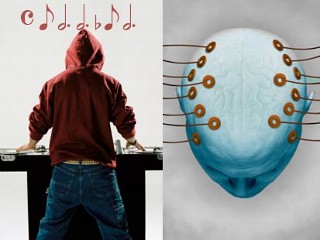
Most children are being short-changed in brain development. Much of the potential of that multifunctional tool for survival -- the human brain -- goes undeveloped due to neglect by parents, teachers, communities, and entire societies. One important human brain function -- emotional competency -- can be more fully incorporated into the developing brain via music training.
Musicians heard an emotion-packed, complex sound with an enhanced sensitivity, and they also were less distracted by simple sounds, according to the study, published in the current issue of the European Journal of Neuroscience.

"What we found in this study is both an enhancement and an economy of resources varies as a function of the extent of musical experience," Kraus said. "The more years the person has been playing an instrument, and the earlier the person began musical training, the larger the effect."

Although many other studies have tried to show the beneficial effects of musical training, the researchers said their findings "provide the first biological evidence for behavioral observations indicating that musical training enhances the perception of vocally expressed emotion." The findings have implications far beyond the world of music.

"The same neural transcription process that is enhanced in musicians is found to be deficient in some children with language disorders such as dyslexia and autism," Kraus noted.

The research suggests that something as basic as musical training may be a useful therapeutic device, along with other more traditional techniques.

..."Our results provide evidence for a subcortical role in the processing of emotional cues by showing that auditory brainstem responses to emotionally salient vocal sounds are dynamic, shaped by life-long, multisensory experience with auditory signals," the researchers note. "These responses are not hardwired but malleable with extensive auditory training."

In other words, we aren't just who we are. We're also what we have done. _ABCNews
The brain goes through very rapid growth and modification in the first few years of life. By the time a child's brain is 5 years old, most of his brain is already shaped by early experiences. But important developmental windows will open and close over the next several years -- and a child's mind is not fully matured until the middle 20s.

We know that infants not exposed to sight or sound in early infancy will lose much of their brain's ability for fine distinction of auditory and optic stimuli if later restored. Children who are not exposed to language in the early years will never develop any language skill. Children not exposed to music before the age of 10 or 12 will find it difficult to achieve mastery from later training. The same opening and closing of developmental windows applies to frontal lobe functioning: the best time to teach a child pre-frontal executive functions that are so vital to life success, is between the ages of 4 and 6-7. Waiting any later will doom a child to lesser degrees of success than he would have otherwise been capable of.

The brain has its own schedule of development and maturation. If caretakers of children are not willing to work within those developmental windows that are constantly opening to some functions and closing to others, too bad for the child.

Labels: , , ,

Bookmark and Share

19 April 2008

Brain-Building Through Early Childhood Music

Lately, parents have taken to playing Mozart to their infant children, in hopes that the music will provide an advantage in brain development for the child. Music and math, at least, are related. Many mathematicians are also skilled musicians. The long relationship between music and mathematics apparently runs deep in the structure of the human brain. But to provide a true advantage to the young, growing brain, may require more active participation than merely listening to the music.
Schlaug, now at Harvard Medical School in Boston, and colleagues including Marie Forgeard and Ellen Winner at Boston College, studied 31 children. The researchers collected detailed magnetic resonance images of the children's brains at age 6 and again at 9. Of the original group, six children faithfully practiced at least 2.5 hours a week in the time between the scans. In these budding musicians, a region of the corpus callosum that connects movement-planning regions on the two sides of the brain grew about 25% relative to the overall size of the brain. Children who averaged only an hour or two of weekly practice and those who dropped their instruments entirely showed no such growth. All of the children practiced instruments, such as a piano or a violin, that required two hands.

In every subject, the researchers found that the size of increase in the corpus callosum predicted the improvement on a nonmusical test that required the children to tap out sequences on a computer keyboard. Schlaug says the findings should settle the earlier debate by showing that musical training can enhance neural connections related to planning and coordinating movements between the two hands. His team is now following up with the same children to investigate whether their training had other benefits, such as improved memory or reasoning skills. __Science
Schlaug's findings appear quite significant, and you would expect that 25% growth in the corpus callosum, which connects the two cerebral hemispheres, would contribute to significant differences in other brain functions, and probably behaviours, besides musical performance. It is important to note that both instruments practised by the children required the use of both hands. Other instruments that require complex planning and coordination between the two hands would likely produce similar neuro-structural changes.

Music possesses an inner, mathematical structure. As young brains struggle to reproduce the inner structure of music through practise, is there any doubt but that their brains are changing--modifying themselves--to be better able to instantiate the musical structure through the musical instrument of choice?

The neuroanatomical changes only occurred in children who began regular musical practise before the age of 7, which suggests that an early start on musical training is important for those who eventually are to become virtuosos--for these particular instruments anyway.

The young brain develops along a sequential pathway. Critical periods or windows for different brain functions occur at different points in time. The window for vision is from two months to eight months. The social development and emotional control window is particularly open from ten to eighteen months. The window for math and logical skills is widely open between one and four years, and the window for musical development is between three and ten years--although perhaps one should not wait much beyond the sixth year to start. Source Other sources suggest waiting until five years before intense fingering training on musical instruments begins. Each child's developmental windows will be unique, although they should roughly follow the sequence suggested.

If children are to learn to speak a second language like a native, they should be introduced to the language by age ten. Source for more windows of development According to this source, social developmental windows remain open until ten years, particularly for empathy and envy.

The brain's neural axons myelinate in a roughly back-of-the-brain to front-of-the-brain direction, over the years. Trying to jump-start a particular brain function before the particular nerve pathways are myelinated, may produce less than satisfactory results. The windows of development for thought/emotional/motor skills follow the myelination sequence of the brain.

The pre-frontal lobes are the last parts of the brain to myelinate and mature--finally completing anywhere between the early twenties to the late twenties. Adolescents lack perspective and judgment at least partially due to the delayed maturity of the prefrontal lobes. Other neural functions can be mature, and the adolescent capable of phenomenal performance in many areas--and still lack basic adult-level maturity. This is common knowledge to any observer of adolescents and young adults.

We are all unique. We begin as unique individuals genetically, and grow more unique with every passing and diverging experience. Even identical twins display uniqueness in both genetics (copy number variants [CNV] and environmentally triggered epigenetic controls) and environment (intra- and extra-uterine).

The more we know about the unfolding of a child's being with time, the better able we will be to provide a more optimal environment for child development, and the acquisition of real world talents and competence.
But as the imaging technologies have become more sophisticated, the scientists have found many other neuroanatomical effects of the practice of music. Musicians have enlarged Broca's areas--the famous language area named after the 19th century psychiatrist.
Music practice correlates with an enlarged left planum temporale which is in Wernicke's area and lights up during both speech and music processing. What's going on with these language centers? One very clever study revealed the "bottomline". The scientists hooked up some musicians to the fMRI machines and had them listen to and follow the score of a Bach chorale. Unbeknownst to the musicians the investigators introduced an error into both teh performance and the score, to see what what would happen with this kind of 'exception processing' What happened was that the unexpected event lit up half a dozen areas of the brain which had prior thereto been considered part of the language-specific cortical circuitry.

So that's the bottom line of a decade of PET, MRI, fMRI and other imaging studies on the effect of the practice of music on the brain. The practice of music develops the language circuitry of the brain.
Source

Labels: , , , , ,

Bookmark and Share

03 October 2007

Plastic Brains--Shaping Your Future Self

The human brain retains some capacity to learn and change throughout its life. Cortical neurons can not only change their wiring based upon inputs, but new neurons can be grown to reinforce (and replace?) existing networks. Neuroscientists are hot on the trail of brain plasticity, and the story is far from being told entire.

Focal hand dystonia (FHD) is a fascinating disorder of brain plasticity that particularly affects musicians. FHD involves plastic changes in the somatosensory cortex that receives inputs from the involved hand. The brain actually loses its ability to distinguish sensory input from the different fingers, leading to the inability of the musician to synchronize and sequence the intricate fingerings of difficult pieces for piano, violin, and other instruments. The reason for this brain confusion is that long practise sessions playing rapid, difficult pieces confuse the brain into thinking that input from different fingers is actually coming from the same finger. Input from one finger grows into the somatosensory map of a different finger as the brain adapts to this new input, until the brain can no longer distinguish one finger from another when attempting to play music. Here is more on focal dystonia.

We have only so much cortex to work with. The intricate folding of the neocortex provides us with more gray matter than we would have with smooth-surfaced brains, but there is a limit. If we lose an eye or a limb, the cortex serving that part of the body is freed up for other uses. Inputs from other sensory organs or other units of the same sense will typically grow into the unused area of cortex in those cases. Thus someone who goes blind may develop keener hearing and much better discrimination with his Braille reading hand.

Similar plastic remapping of motor cortex can occur, for example after a stroke (CVA). You should not be surprised that many scientists and mental health professionals believe that the associative cortex is capable of similar plastic remapping. In other words, it appears that you truly are shaped by the things you most commonly think about. Your brain accomodates your choices of thought and action by changing as you think, act, cogitate, and daydream.

Jeffrey Schwartz has gone beyond thinking about brain plasticity, to incorporating it into a therapy for his Obsessive Compulsive Disorder (OCD) patients. His results are promising.

While most educated persons may consider themselves too modern to fall for the admonitions of religious teachers and self-help gurus, who constantly drone that "you are what you think," perhaps it is time to go back to the underlying idea--without all the religious and other extraneous matter.

Humans are at a major turning point. They can either choose the path of accelerating change, or the path of stagnation--with its inherent vulnerability to more primitive, more vital ways of thinking and living. Al Fin frequently points out the stagnant and self-defeating ways of education and child-raising in the modern west. Here at Al Fin, the best alternative put forward to mainstream stagnation, is the next level. But the next level will require smarter humans--humans who can direct their own evolution.

The curve of forward development and accelerating change will not be a smooth, continuously upward curve. It will develop in fits and starts, with occasional relapses and reversals. We are missing much of the data we will need for many of our forward leaps, but more than that, we are missing the conceptual power we will need. If we--through our commitment to stagnant ideologies and customs--neglect basic advances we could be making, we will pay for our lapses dearly, in time.

Adult brains are not nearly as plastic as childhood and teenage brains. The one advantage that adult brains possess, is their life experience and possibly their fuller use of the prefrontal pathways of the brain. These advantages may be used exclusively for one's own benefit, or in addition, used to assist younger generations.

We will eventually utilise gene therapy to bring about higher intelligence in humans. This will be done first in neurodegenerative conditions of old age and childhood. As the methods improve, the benefits of better intelligence-conferring genes (and other augments) will be made available to everyone who can pay--even if the person must travel to Brasil or India to obtain the treatments. But I suspect that we are capable of significant improvement in our ability to learn and conceptualize simply by using the natural plasticity of our own brains. Certainly methods for teaching our children can result in much more capable and confident children if they work with the natural plasticity and the natural hunger for competence of the young brain.

The positive lessons of brain plasticity in Schwartz's treatments for OCD and the negative lessons of brain plasticity in FHD, should give a thoughtful person much to think about.

Previous posts at Al Fin discussed the importance of "purpose" in providing motivation for development and positive change. Learning the lessons of neuroplasticity provides a deeper rationale for discovering purpose in life, and using that purpose to motivate, and to set personal goals.

Religious and ideological zealots and terrorists have no lack of purpose or motivation. They simply want to destroy all competing ideologies and religions. Those of us with more constructive goals may need to focus a bit more.

Labels: , , , , ,

Bookmark and Share
Older Posts
Al Fin Main Page
Enter your Email


Powered by FeedBlitz
Google
WWW AL FIN

Powered by
Blogger

``