31 December 2006

Dodging Doomsday--Taking Out Insurance on the Unthinkable

Civilisation is a delicate thing. It could end in many ways. If we humans were prudent, we would take certain precautions.

The folks at the Lifeboat Foundation feel the same way. They are dedicated to the creation of Ark I, a self-sustaining space colony for the preservation of technological civilisation.

Ark I will be initially placed in orbit around the Earth at a height of 400 kilometers (248 miles) to make it easier to engage in trade and tourists from Earth. Both it and the other Arks will be moved further away from the Earth as the project progresses.

Why should we live in orbit rather than on a planet or moon? Because orbit is far superior to the Moon and Mars for colonization, and other planets and moons are too hot, too far away, and/or have no solid surface.
Source.

Another such group is ARC--Alliance to Rescue Civilization. Here is part of ARC's mission statement:


ARC Mission:

The mission of the Alliance to Rescue Civilization (ARC) is to protect the human species and its civilization from destruction that could result from a global catastrophic event, including nuclear war, acts of terrorism, plague and asteroid collisions. To fulfill its mission, ARC is dedicated to creating continuously staffed facilities on the Moon and other locations away from Earth. These facilities will preserve backups of scientific and cultural achievements, and of the species important to our civilization. In the event of a global catastrophe, the ARC facilities will be prepared to reintroduce lost technology, art, history, crops, livestock and, if necessary, even human beings to the Earth.

ARC Vision

The Alliance to Rescue Civilization is a very long-term international project. It seeks to copy and continuously update the essence of Earth in its many forms for safekeeping at a manned site off the planet (the Moon or a huge station are the leading candidates.) ARC would in effect comprehensively back up Earth's collective hard drive for use in rescuing and rebuilding the planet in the event of a catastrophic disaster, natural or man-made. It would in no sense be a time capsule, but would rather be an updated record of Earth's multiple life forms, flora and fauna, and its broad spectrum of arts and sciences, history, technology and all else that constitutes the planet's collective nature and culture.

In the event of a major catastrophe, for example worldwide plague, comet impact, nuclear war or social collapse, the staff of ARC will function in a rescue capacity rather than as librarians. They will be prepared to help the survivors reestablish a functioning technological society, or in the worst instance, to repopulate the Earth themselves, and re-introduce the additionally needed biological species here. The primary mission of ARC will be to secure our tenancy of this planet, although it is fully compatible with plans to extend human settlement beyond the Earth-Moon system. ARC will provide our manned space program with the central purpose which it has so sorely lacked, linking it firmly to human survival on our home planet and elsewhere. The ARC facility will stand as a visible and inspiring symbol of our aspirations, one which can overcome the negative connotations associated with disaster relief. With ARC in place, of course, other scientific and commercial uses of space will be facilitated. ARC can serve as an engine that pulls many freight cars.
Source.

In 1975, Oscar Falconi wrote an essay on the need for humans to colonize space. He discusses several ways in which humans might destroy themselves and their ability to survive on earth. Arthur C. Clarke reached the same conclusions as Falconi in his 1951 book, The Exploration of Space. More recently, astrophysicist Stephen Hawking wrote: "I don't think the human race will survive . . unless we spread into space."

It is wise for humans to take precautions against likely disasters. Distributing human knowledge databases in different regions of space might be helpful one day.

Many more links on this and similar topics at Sylvia Engdahl's site.

Labels: , , , ,

Competence--A Vanishing Commodity?


Competence is often stated to exist at four levels:

1. Unconscious incompetence (unaware of lack of competence)
2. Conscious incompetence (becomes aware of incompetence)
3. Conscious competence (competence with conscious effort)
4. Unconscious competence (acquires competence without conscious effort--automaticity)

The learner or trainee always begins at stage 1 - 'unconscious incompetence', and ends at stage 4 - 'unconscious competence', having passed through stage 2 - 'conscious incompetence' and - 3 'conscious competence'.

.... It's essential to establish awareness of a weakness or training need (conscious incompetence) prior to attempting to impart or arrange training or skills necessary to move trainees from stage 2 to 3.

People only respond to training when they are aware of their own need for it, and the personal benefit they will derive from achieving it.
Source.

The final level of "unconscious competence" is exemplified by Michael Jordan's performance on the basketball court, the blazing downhill skiing of a gold medalist, or the onstage musical improvisations of a master jazz musician. The master doesn't have to think--he just does. In ordinary life, automatic competence is seen in language fluency, or simply walking while chewing gum.

Emotional competence is vital to the overall competence of the individual.


Self Regulation

Managing your internal states, impulses and resources

* Self control: keeping disruptive emotions and impulses in check
* Trustworthiness: maintaining standards of honesty and integrity
* Conscientiousness: taking responsibility for personal performance
* Adaptability: flexibility in handling change
* Innovation: being comfortable with novel ideas, approaches, and new information

Motivation

Emotional tendencies that guide or facilitate reaching goals

* Achievement drive: striving to improve or meet a standard of excellence
* Commitment: aligning with the goals of the group or organisation
* Initiative: readiness to act on opportunities
* Optimism: persistence in pursuing goals despite obstacles and setbacks
Source.

A recent study of New Zealand schoolchildren discovered the close relationship between attitudinal competencies (curiosity, perseverance, communication) and traditional scholastic competencies in mathematics, literacy, and problem-solving.

The model shows that there are strong relationships between the attitudinal competencies, and also between mathematics and literacy. It also shows moderate associations between the attitudinal competencies and logical problem-solving, and with literacy. Sixty-five percent of the variance in literacy scores could be accounted for by scores in communication, curiosity, perseverance, and logical problem-solving. The link between the attitudinal competencies and mathematics appears to be indirect, with more direct associations between the former and logical problem-solving and reading comprehension.
Source.

A look at necessary competencies to rehabilitate juvenile offenders by the State of Pennsylvania, zeroed in on five:

After examining the research, we settled on the following definition—competency development is the process by which juvenile offenders acquire the knowledge and skills that make it possible for them to become productive, connected, and law abiding members of their communities and selected five core competency domains—areas in which one could reasonably expect young people in trouble with the law to build and demonstrate competencies depending on their age and stage of development. These domains are:

1. Pro-Social Skills
2. Moral Reasoning Skills
3. Academic Skills
4. Workforce Development Skills
5. Independent Living Skills

These domains do not represent a complete list of the competency areas or skills that young people need in order to succeed in life or all the things parents might want for their children. But research indicates that these are the competency areas that matter most for success in school, work and life; that strengthening these areas increases resistance to delinquency; and that deficits in these areas put juveniles at risk for continued involvement in the juvenile justice system.
Source.

A child's sense of his/her own competence (self-efficacy) also influences subsequent performance:

Efficacy beliefs are influenced by acquisition of cognitive skills, but they are not merely a reflection of them. Children with the same level of cognitive skill development differ in their intellectual performances depending on the strength of their perceived efficacy. Several factors may account for the predictive superiority of efficacy belief over acquired skills. Children vary, in how they interpret, store, and recall their successes and failures. As a result, they differ in how much self-efficacy they derive from similar attainments. Moreover, in judging their capabilities, children evaluate social influences that contribute to efficacy beliefs independently of skills. Academic performances are the products of cognitive capabilities implemented through motivational and other self-regulatory skills. The efficacy beliefs that children form affect how consistently and effectively they apply what they know. Perceived self-efficacy, therefore, is a better predictor of intellectual performance than skills alone.
Source.

Many educators misunderstood Bandura's point in the quote above. The educators thought that if the students' self-esteem was raised, that academic progress would follow automatically. Self-efficacy beliefs in academics are based on many things--including grade and test score feedback. Students are not the idiots that educators often think. Students can judge if they get a good grade for no reason. Such artificial attempts to boost self-efficacy beliefs are destined to fail.

Current trends in government education tend to eradicate personal competence of schoolchildren, while simultaneously boosing self-esteem.

This blog has devoted several posts to the issue of psychological neoteny, and the role of current educational practices in promoting maturational failure in children and young adults. It requires little imagination to see a direct connection between personal incompetence, and the failure to acquire the mature skills of emotional competence, due to perverse educational methods and policies.

In a free society, the parent is responsible for the child's education and maturation. That responsibility cannot be placed in anyone else's hands.

Here is an old oriental proverb that expresses a similar concept as the four levels of competence:

  • He who knows not, and knows not that he knows not, is a fool - shun him, (= Unconscious Incompetent)
  • He who knows not, and knows that he knows not is ignorant - teach him, (= Conscious Incompetent)
  • He who knows, and knows not that he knows, is asleep - wake him, (= Unconscious Competent)
  • But he who knows, and knows that he knows , is a wise man - follow him. (= Conscious Competent)
Source.

Labels: , , ,

A Simple Candle-Powered Steam Engine


Hat tip Make Blog.
The Hole - video powered by Metacafe

30 December 2006

Stem Cell Superstar!--From The Umbilical Cord

I have cut dozens of umbilical cords, and drawn blood samples from many more. I never dreamed cord blood would eventually be recognized as a major new source for multipotent stem cells! Cord blood stem cells can be differentiated into all three germ layers now--ectoderm, endoderm, and mesoderm. It was recently reported that scientists at the University of Minnesota differentiated respiratory epithelial cells from umbilical cord blood [UCB].

To obtain the MLPC [multi-lineage progenitor cell] from cord blood, we used a stem cell isolation technology — PrepaCyte-MLPC — from BioE. We successfully isolated the rare MLPC from four UCB units obtained from the American Red Cross.

...We then put the UCB stem cells into culture and allowed them to expand using mesenchymal stromal cell growth medium (MSCGM) prior to adding small airway growth medium (SAGM), both mediums from Cambrex BioScience (East Rutherford, N.J., USA). Following several days in culture, we demonstrated differentiation of MLPCs into type II alveolar cells, which was confirmed by the presence of a definitive type II alveolar cell marker — surfactant protein C (SPC).
Source.

The process of sequentially using growth factors and media to differentiate stem cells into mature cell types continues to fascinate me. No one truly understands the potential of stem cells from cord blood, menstrual blood, the testicle, the breast, the brain--or any of the growing number of stem cell sources. Although Australia has legalized the production of human embryos specifically for the purpose of producing stem cells, few other countries have followed the Aussie's lead. That means that other countries will either learn to work with what is legally available, or will fall badly behind the researchers in Oz.

There is growing expertise in producing increasing varieties of cell types from readily available sources of stem cells. Resourceful scientists with ingenuity can do amazing things with the materials on hand.

Labels:

For My Birthday Next Year . . .

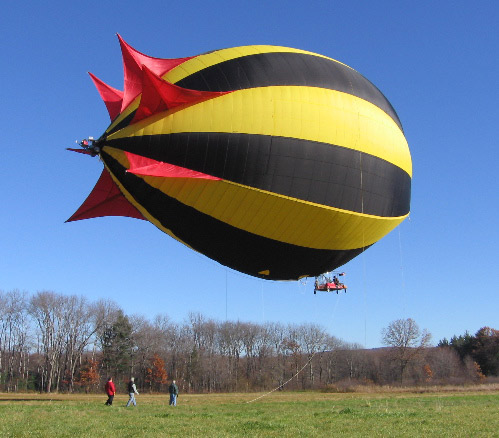
. . . I would like a personal blimp.

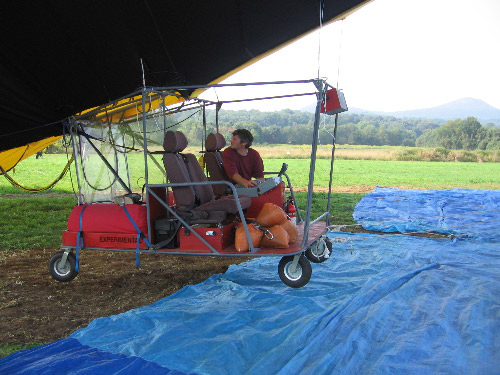
The experimental aircraft, which has been in the works for about five years, still needs at least one more year of research and development. The current design doesn't yet live up to the company's standards of quiet flight.

In initial flight tests, Alberto uses a conventional gas-powered motor. Once the early tests are done, the airship will be fitted with electric motors, along with quieter hot-air burners.

Although a number of design refinements, as well as FAA certification, lie ahead, Skyacht says it expects the airship to be priced between $100,000 and $200,000.

That's about the cost of a new, small airplane and much less the the $2 million price tag on the cheapest helium airships, to say nothing of the $12 million for a high-end Zeppelin NT, according to the company.


So you see, it is quite affordable, and quite useful as an observation platform for surveying all your domains.

While I am still holding out for a universal vehicle that I can drive on the highway, fly like a plane, power over the water like a hydrofoil, and dive under the water like a submarine--I am not averse to using separate vehicles for each function while I am waiting for the combo.

Hat tip Impact Lab

Labels:

28 December 2006

Psychological Neoteny--A Second Opinion

The problems of the neotenous society, and psychological neoteny, have received extensive coverage on this blog. But it seems that I am not the only one to ride this particular hobbyhorse. Bruce Charlton is an Evolutionary Psychiatrist at the University of Newcastle upon Tyne. Charlton is the author of a fascinating online ebook--The Modernization Imperative--and was featured in a Discovery Channel news article earlier this year.

...it seems a growing number of people are retaining the behaviors and attitudes associated with youth.

As a consequence, many older people simply never achieve mental adulthood, according to a leading expert on evolutionary psychiatry.

...Formal education now extends well past physical maturity, leaving students with minds that are, he said, “unfinished.”

“The psychological neoteny effect of formal education is an accidental by-product — the main role of education is to increase general, abstract intelligence and prepare for economic activity,” he explained.

“But formal education requires a child-like stance of receptivity to new learning, and cognitive flexibility."

"When formal education continues into the early twenties," he continued, "it probably, to an extent, counteracts the attainment of psychological maturity, which would otherwise occur at about this age.”

Charlton pointed out that past cultures often marked the advent of adulthood with initiation ceremonies.

While the human mind responds to new information over the course of any individual’s lifetime, Charlton argues that past physical environments were more stable and allowed for a state of psychological maturity. In hunter-gatherer societies, that maturity was probably achieved during a person’s late teens or early twenties, he said.

“By contrast, many modern adults fail to attain this maturity, and such failure is common and indeed characteristic of highly educated and, on the whole, effective and socially valuable people," he said.

"People such as academics, teachers, scientists and many other professionals are often strikingly immature outside of their strictly specialist competence in the sense of being unpredictable, unbalanced in priorities, and tending to overreact.”
Source.

Isolating children and young adults inside classrooms, away from the productive world and meaningful responsibility, will probably result in large numbers of "failure-to-mature" adults, as we see in modern western societies. Immature adults are unprepared to face the momentous challenges that western civilisation faces today. There are many "micro-pockets" of maturity within these societies--small arenas where teens and young adults are faced with meaningful responsibility, and acquire useful competencies.

But those micro-pockets of reality exist outside of school curricula.

Labels: ,

27 December 2006

Boosting a Woman's Sex Drive--The German Drug

Researchers at German drugmaker Boehringer Ingelheim have stumbled upon a drug that may be another sex drive booster that works in women. The scientists were looking for a new fast acting anti-depressant, but incidentally discovered that the drug--flibanserin--generated a surge of sexual desire in many women subjects.

Like all companies working on antidepressants, Boehringer surveyed patients in its clinical trial to assess dampening of libido, a well-established side effect. Far from complaining about a drop in sexual desire and arousal, many of the women in the trial reported a surge.

The men had no such response—and neither group showed any improvement in mood. "It is an interesting drug," says Dr. André T. Guay, director of the Center for Sexual Function at the Lahey Clinic Northshore, Peabody, Mass., and assistant professor at Harvard Medical School. "These things come about in strange ways."

...."This is not something that can be taken on a Friday for the weekend," says Boehringer Ingelheim spokesman Mark R. Vincent. "There is a gradual increase in sexual desire over a six- to eight-week period."

Pinning down the mechanism is especially critical, in this case, because the FDA views drugs that affect the complicated central nervous system with extra caution.
Source.

The other drug currently in the pipeline with the ability to boost a woman's (and men's) libido, is Bremelanotide.

Some are calling the new female libido boosters "viagra for women", but that only demonstrates their ignorance of both how Viagra works and what it actually does for men--which has little to do with sex drive, and everything to do with the mechanics of joinery.

While women might look forward to flibanserin working its slow way through the drug approval process, men will need to focus their sights on Bremelanotide.

Hat tip Pharmagossip.

Labels: ,

News of Interest

One of the pressing needs in biomedical research, is to understand genetic control in the living organism. Now, using fruit flies as their experimental subjects, "developmental biologists at the Kimmel Cancer Center at Thomas Jefferson University in Philadelphia may have discovered a new way that genes are turned on and off during development." This is only one method of genetic control in the fly, operating in early development. But combining genetic control with gene therapy would give medical therapists powerful tools for treating virtually any serious chronic condition.

Stem cell research is another important area of biomedical inquiry. Thanks to Biosingularity Blog for pointing out this story:

Working with visiting graduate student Fabrizio Gelain from Milan, Zhang created a designer scaffold from a network of protein nanofibers, each 5,000 times thinner than a human hair and containing pores up to 20,000 times smaller than the eye of a needle.

The researchers were able to grow a healthy colony of adult mouse stem cells on the three-dimensional scaffold without the drawbacks of two-dimensional systems.

In addition to helping researchers get a more accurate picture of how cells grow and behave in the body, the new synthetic structure can provide a more conducive microenvironment for tissue cell cultures and tissues used in regenerative medicine, such as skin grafts or neurons to replace brain cells lost to injury or disease.

The scaffold itself can be transplanted directly into the body with no ill effects.
Source.
Being able to direct stem cell growth in 3-D is vital in the quest to develop replacement body parts from stem cells.

Roger Pielke Sr. at Climate Science Blog points us to a new online science news service, with stories written mostly by actual scientists. Called Scitizen, the website contains only fact checked science news stories.

Climate Science Blog also discusses a paper that discusses the highly significant role of agriculture in the climate system--yet another very important component left out of most climate models. The "just-so" (contrived) nature of most climate models is receiving much more scrutiny lately.

Meanwhile, in Egypt, avian flu has killed approximately ten Egyptians this year, with the latest cases occurring in families in Zifta, and Garbiya province. The cases appear to have had direct contact with infected birds, and all Egyptian deaths were female. Direct bird-to-human infection appears responsible. Given how difficult it is for the virus to transfer directly from human to human, a large human outbreak anytime soon appears unlikely.

Finally, Biosingularity Blog points to a curious medical case of an Afghan boy in Germany with a unique gene mutation in the XPF gene (involved in DNA repair) causing a progeria syndrome. The German scientists compared the gene expression of liver cells from a group of mice with engineered defects in the XPF-ERCC1 gene ensemble with resulting progeria, with gene expression of liver cells from normal aging mice. They found some fascinating parallels between gene expression in the progeria mice and in the normal aging mice.

26 December 2006

Peter Robbins and His Beautiful Submarine

Peter Robbins had wanted his own submarine since his teenage years.
Q: How old were you when you first dreamt of having your own submarine?

Peter Robbins: I was about 15 years old. I'd flunked out of a whole bunch of schools, and my father had sent me to Tabor Academy in Marion, Massachusetts. It was an honor naval school. During my time there, I got a summer job at Woods Hole [Oceanographic Institution], and I just got fascinated with the ocean. When I graduated from Tabor, I wanted to go into a program where you started in the navy as an enlisted man and then went to Annapolis to become a submarine officer. But I didn't get a chance to do that. Life didn't give it to me that way. So I said, "Someday when I retire, if I have enough funding, I'll get a submarine going." That's what started the whole idea.
Source.

The PBS NOVA special documented the story of the Alicia, Robbins' beautiful submersible. There is currently a short preview video here, but within the next month, PBS should put the full documentary up for viewing at this website.

Currently, the Alicia is at work off the Plymouth, England, coast, conducting tours for the National Marine Aquarium. For a spectacular online short film documenting some of the building of Alicia, and an English Channel dive looking for a submarine wreck, go to this context.tv website and click on the promo trailer link or screen. Interviews are in English, narration is in German, and the photography is excellent.

Peter Robbins' story is inspiring. Watching the fulfillment of Robbins' quirky dreams should give others encouragement that perhaps their own unconventional dreams are not completely out of reach.

Labels: ,

What If You Could Have This Particular Gene?

An intriguing gene that is associated with long life and extended mental clarity has been studied among a population of Ashkenazi Jews by scientists at the Albert Einstein College of Medicine of Yeshiva University.

Dr. Barzilai and his colleagues had previously shown that this gene variant helps people live exceptionally long lives and apparently can be passed from one generation to the next. Known as CETP VV, the gene variant alters the Cholesterol Ester Protein. This protein affects the size of "good" HDL and "bad" LDL cholesterol, which are packaged into lipoprotein particles. Centenarians were three times likelier to possess CETP VV compared with a control group representative of the general population and also had significantly larger HDL and LDL lipoproteins than people in the control group.

Researchers believe that larger cholesterol particles are less likely to lodge themselves in blood vessels. So people with the CETP VV gene (and the larger cholesterol particles they produce) run a lower risk of heart attacks and strokes, which may explain their unusual longevity.

The findings of this new study suggest that CETP VV also protects the cognitive integrity of the brain--either through the same vascular "anti-clogging" benefit that prevents heart attacks and strokes or through an independent protective mechanism that remains to be found.
Source.

Gene therapy (GT) experiments on humans have been scaled back significantly over the past 6 years due to serious side effects of GT, including cancer and death. Nevertheless, GT treatments for erectile dysfunction, osteoporosis, pulmonary artery hypertension, vascular diseases, and cancer, among other conditions including SCID, Huntington's, Parkinson's, Lesch-Nyhan syndrome and phenylketonuria.

Gene therapy will eventually provide safe and effective treatment and/or prophylaxis for virtually any meaningful disease and affliction. Right now, ethical and therapeutic oversight committees are stalled on the issue of safety. These issues will be overcome. And eventually, if you want genes that lend toward greater mental clarity, or extended lifespan, there will be ethical providers who can give them to you safely.

Labels:

25 December 2006

Homes from Dirt; Energy from Dung; Clean Water from Piss

Yes, it is true. It is possible to provide solid shelter, clean water, and reliable electricity from dirt, dung, and piss. Can you think of many places that significant numbers of humans live where there is not ample supply of all three?

Dean Kamen--successful college dropout, inventor extraordinaire--provides the means to make energy from dung or other bio-combustibles, and pure water from piss--or any impure water source. The ingenious devices that provide clean water and plentiful energy can be mass produced cheaply, and transported anywhere.

Houses from dirt are rather easily made using small portable machines to compress earthen brick. I made many such bricks of earth in helping to build such a house in the mountains of the western US. It is a house I would not mind living in myself.

The missing ingredient is food--but where there are clean water and plentiful energy, it is quite possible to grow food.

Wealthy inventor Dean Kamen does not hesitate to drink his own urine(!)--once it has passed through his patented "Slingshot" purification system. He does this in front of audiences to convince them that it is possible to do away with water-born illness around the globe. Would George Bush or Nancy Pelosi drink their own urine to help make the world a better place? Interesting question.

There should be no shortage of clean water, no homeless people, no one without electricity, no one without food. The only real shortages existing are shortages of intelligence, ingenuity, cooperation, and tolerance for other religions and ideologies. Dean Kamen has provided the ingenuity for plentiful freshwater and energy--no matter how remote the village. Ingenuity for building solid earthen homes is within the grasp of almost anyone--even a social science professor or journalist.

Labels: , , ,

24 December 2006

It's A Wonderful Life (1946) - Feature Film

Here it is, in all its Christmassy splendour! Coming to your computer complete and without commercial interruption for Christmas Eve, and anytime you want.

Innovation in Cars and Motors

The Nissan Pivo is a concept car that incorporates some fascinating innovations. But the most fascinating innovation to me, is the "super motor" that incorporates two rotors and shafts but only one stator. Very resourceful, that.


Here are some links to other innovative/imaginative motors and generators. Given the direction ground transportation is going, anyone who can invent a more efficient motor for automobiles will probably be able to afford to drive any car he wants.

IQ by Country

Hong Kong (PRC) 107 Russia 96 Fiji 84
South Korea 106 Slovakia 96 Iran 84
Japan 105 Uruguay 96 Marshall Islands 84
Taiwan (ROC) 104 Portugal 95 Puerto Rico (US) 84
Singapore 103 Slovenia 95 Egypt 83
Austria 102 Israel 94 India 81
Germany 102 Romania 94 Ecuador 80
Italy 102 Bulgaria 93 Guatemala 79
Netherlands 102 Ireland 93 Barbados 78
Sweden 101 Greece 92 Nepal 78
Switzerland 101 Malaysia 92 Qatar 78
Belgium 100 Thailand 91 Zambia 77
China (PRC) 100 Croatia 90 Congo-Brazzaville 73
New Zealand 100 Peru 90 Uganda 73
United Kingdom 100 Turkey 90 Jamaica 72
Hungary 99 Indonesia 89 Kenya 72
Poland 99 Suriname 89 South Africa 72
Australia 98 Colombia 89 Sudan 72
Denmark 98 Brazil 87 Tanzania 72
France 98 Iraq 87 Ghana 71
Norway 98 Mexico 87 Nigeria 67
United States 98 Samoa 87 Guinea 66
Canada 97 Tonga 87 Zimbabwe 66
Czech Republic 97 Lebanon 86 Congo-Kinshasa 65
Finland 97 Philippines 86 Sierra Leone 64
Spain 97 Cuba 85 Ethiopia 63
Argentina 96 Morocco 85 Equatorial Guinea 59


Table courtesy of Wikipedia
Map courtesy of R. Pongett

The tabular data above comes from Lynn and Vanhanen's IQ and the Wealth of Nations. For a good review of Richard Lynn's more recent and comprehensive Race Differences in Intelligence, look here.
Here is another fine analysis of the concept of GDP vs. IQ--with the element of free market rules thrown in.

Of muslim nations, Malaysia has the highest average IQ, 92. Malaysia's population contains 30% ethnic Chinese. Turkey has the second highest average IQ of muslim nations at 90. All other muslim nations have average IQ's of less than 90--some of them much less.

It is possible that some individual nations are misplaced on the above table, with average IQs either a bit higher or a bit lower than stated. But it is possible to detect trends by looking at different groupings of nations and their average IQ.

Given that population average IQ needs to be at least 90 for a modern technology based nation to function, immigration policy should be oriented toward inviting high value immigrants.

Observing what happened to Zimbabwe's prosperity after Robert Mugabe drove the most prosperous (and presumably most intelligent) farmers from their land, provides a good example of what NOT to do. Idi Amin's actions in Uganda provide another example. Fidel Castro's actions in Cuba provide a third. You don't want to drive out your intelligent and resourceful groups.

Update (26Dec06): Visit this Fourmilab page for a graphic illustration of the change in average global IQ with projected population trends. Accompanying the animated graphic is a thoughtful discussion of some of the issues involved in projecting trends in global intelligence.

Thanks to an Audacious Epigone commenter.

Labels: , , ,

23 December 2006

Time Lapse Mind Trip

Mind tripping on time lapse and psychedelic music/effects. No acid necessary. Do they have this in a screensaver?

Waiting for Bird Flu

You can look at the top ten public health stories of 2006 for the US below, and not find a trace of Bird Flu.

  1. AHA Dietary and Lifestyle Recommendations Revised
  2. Guidelines Updated for Mumps Immunization
  3. High Carb, Low Glycemic Index Diet Best to Reduce CV Risk
  4. CDC Recommends HIV Testing and Screening in Routine Clinical Care
  5. Calcium Plus Vitamin D May Not Reduce Hip Fracture or Colorectal Cancer Risk
  6. CDC Updates Guidelines for Immunization Against Hepatitis B Virus Infection
  7. Fat-Reduced Diet May Not Reduce Risk for Cancer or Cardiovascular Disease
  8. Guidelines Updated on Secondary Prevention for Atherosclerotic Vascular Disease
  9. Children May Need 90 Minutes of Physical Activity Per Day
  10. New Guidelines Issued for Beverage Classification and Consumption


Sadly for Bird Flu, it did not even make it to the top ten "junk science" list of 2006. What does an over-hyped medical story need to do to get some respect? At least bird flu made it to #24 of the Discover top science stories of 2006. But the Discover blurb on Bird Flu was merely to explain why bird flu was not the global pandemic that all the newspapers and "science" blogs predicted it would be.

There are several emerging viruses that have the potential to mutate or recombine into pandemic killer viruses. This has always been true. It is the job of the CDC to remain vigilant to influenza transmission and infection worldwide, to advise governments, medical authorities, and vaccine makers how to prepare for the next six months or so. Meanwhile, viral surveillance and research into new vaccines is proceeding apace, just as it would do without all the hype.

In March University of Wisconsin virologist Yoshihiro Kawaoka looked for H5N1 receptors in the human respiratory tract and found them only deep within the lungs, on the tiny air sacs through which oxygen passes into blood. That deep location would make it difficult for an infected person to spread the avian flu virus through coughing or sneezing.
Source.

Science, including medical science, is too complex for most journalists to understand. Journalism students are typically among the least competent and least intelligent students in university. Paradoxically, journalists act as public filters of science, and magnifying glasses--selecting the stories the public will hear, often inflating selected stories to incredible size and significance. Such was the case with bird flu.

Why do the public and many bloggers fall for media hype of science and medicine, time after time--without catching on? Waiting for bird flu. Waiting for climate catastrophe. Waiting for Godot. Actually, the list of catastrophes the media would have us wait for is much longer. But the public has a short attention span for almost everything except faux catastrophe. They would rather wait, thanks.

Labels:

22 December 2006

Love, Empathy, Kindness--Not Just for Christmas

Humans have evolved with a full set of emotions and dispositions. Even infants can be seen empathizing with others who are suffering. These tender emotions are worth bringing out and exercising frequently, not just at certain times of the year.

But we should own all of our emotions, the good and the bad. Otherwise, what we try to suppress within ourselves becomes our "shadow self", and gains power with each act of suppression. Since we don't want to act obnoxiously without good reason, we need to find a safe way of exercising all of our emotions. I like Manfred Clyne's discovery of Sentic Cycles--the safe way to let all your emotions out to play.

Thanks to Eide Neurolearning.

Labels: ,

21 December 2006

Exactly As Fast As A Speeding Bullet

From "Lord of War", the graphic life story of a rifle round. Signifying nothing so much as the fleeting and capricious nature of life in so many parts of the world.

Try the movie in French at the link above.

20 December 2006

Superconducting Ring Accelerator to Launch Payloads Into Space

We are used to thinking of superconducting ring accelerators in the context of physics research with particle accelerators. The idea of accelerating macro-sized payloads up to 100 kgs in weight to a velocity of six miles per second in a ring accelerator, simply never occurred to most space launch theorists. The idea did occur to Jim Fiske at LaunchPoint Technologies in Goleta, CA,

The design calls for a high-speed accelerator that whips a projectile as heavy as 220 pounds around a circular 1.5-mile-radius vacuum tunnel. Powerful electromagnetic motors inside the tunnel will accelerate the unit, strapped to a magnetic sled, in circles until it reaches a velocity of six miles per second and then will eject the projectile from a launch ramp into space.

The system is still just an idea on paper, but the U.S. Air Force has awarded Launchpoint a two-year, $500,000 grant to prove it can work. Project leader Jim Fiske, an expert in magnetic levitation, believes that the magnetic forces would counteract the pulverizing G-forces generated by radial acceleration and prevent the sled from touching the tunnel wall.

As for the system’s cost, its low power requirements would allow spy micro-satellites to be slung into orbit for $50,000, a small fraction of the current $5-million launch cost. That explains the Air Force’s interest, but the system could also be a boon for space exploration. An inexpensive magnet-propelled pipeline could toss construction materials, food and other basic resources into orbit to supply tomorrow’s space colonies. “You could send a block of aluminum, water or even frozen mashed potatoes,” Fiske suggests—anything durable enough to handle the stress.
Source (hat tip Michael Anissimov)


Here is more from a Newscientist.com article:

The satellite, encased in an aerodynamic, cone-shaped shell that would protect it from the intense heat of launch, would be attached to a sled designed to respond to the forces from the superconducting magnets.

When the sled had been accelerated to its top speed of 10 kilometres per second, laser and pyrotechnic devices would be used to separate the cone from the sled. Then, the cone would skid into a side tunnel, losing some speed due to friction with the tunnel's walls.

The tunnel would direct the cone to a ramp angled at 30° to the horizon, where the cone would launch towards space at about 8 kilometres per second, or more than 23 times the speed of sound. A rocket at the back end of the cone would be used to adjust its trajectory and place it in a proper orbit.

Anything launched in this way would have to be able to survive enormous accelerations – more than 2000 times the acceleration due to gravity (2000g). This would seem to be an obstacle for launching things like communications satellites, but Fiske points out that the US military uses electronics in laser-guided artillery, which survive being fired out of guns at up to 20,000g.

....If the ring launched hundreds of satellites a year, it would be cheaper than conventional rocket launches. With 300 launches per year, the team estimates the ring could put payloads into orbit for $745 per kilogram. If the launch rate reached 3000 launches per year, they calculate that would drop to $189 per kilogram. Today, it costs more than 100 times that to send payloads into space.
Source.

Of course this type of mass accelerator could be used to boost supplies for space exploration, scientific study of earth from space, space colonization, and certainly could boost weapons to orbital or sub-orbital velocities. Anything that could stand the extreme acceleration.

Humans are too fragile for such high accelerations, but if most of the mass humans need could be boosted cheaply in this fashion, the relatively few humans going to space could get there via chemical rocket, for now.

Labels:

Europe is Bleeding Cash

The European Union is a supranational federation based in Brussels. France and Germany have pushed the expansion of the EU into more and more impoverished regions of Europe, and even Asia (Turkey). But why are France and Germany is such a hurry to expand their control? Do they understand how expensive this project is becoming?

People in Luxembourg have on average over eight times the spending power of people in EU member-states-to-be Romania and Bulgaria, Eurostat says in a survey showing startling contrasts in wealth in the new European Union.

The study, which shows the Grand Duchy enjoys a GDP/capita level of 251 percent of the EU average while the Balkan duo have 33 and 34 percent, matches popular perception in western Europe that Romanian and Bulgarian villages are a far cry from London or Paris.

Of the old EU15 countries, Ireland, the Netherlands, Denmark and Austria lead the pack, while Slovenia and the Czech republic stand out in the new EU10, having already leapfrogged Portugal in 2005 and beginning to catch up on Greece.

But the biggest new member state, Poland, is moving more slowly and still has personal wealth levels just half the EU average, with only Latvia faring worse out of the 2004 enlargement round countries.

EU-candidate Croatia has a similar standard of living to Poland and is better off than Romania and Bulgaria.

But Turkey trails far behind at just 28 percent of the EU average GDP/capita, in a reminder of how much EU structural aid cash the country of 80 million people would require if it joined quickly.

Source.

The problem with adding poorer countries to the EU is the structural requirements for aid built-in to the EU framework. While eventually the Czech Republic and Slovenia may achieve parity with some of the richer EU nations, it is likely that Romania, Bulgaria, and Turkey never will. By adding these countries, the EU is in essence grafting national slums of perpetual dependency to the EU budgetary burden. Who will this benefit, and who will it harm? Why the hurry?

Hat tip Modern Tribalist.

Labels:

19 December 2006

PNAS Study Shakes Foundations of Neuroscience!

Very rarely, a scientific study appears with results so revolutionary that it upsets some of the basic teachings of a science. That is what an upcoming report in PNAS by Nicholas Spitzer and Laura Borodinsky is likely to trigger--a massive shakeup in theories and textbooks.

Spitzer and Laura Borodinsky, who was an assistant project scientist working with Spitzer when she performed the research, wanted to know if genetics is the only factor responsible for the selection of acetylcholine as the language used in nerve to muscle communication, or if other factors could play a role.

To find out, the researchers used drugs to increase and decrease the electrical activity in nerve cells of frog embryos. These changes in activity changed the identity of the neurotransmitter produced by the nerve cells. Because the new chemical language being used by the nerves would not be detected if the muscles continued to produce only acetylcholine receptors, Spitzer and Borodinsky also looked for changes in the muscle cells’ transmitter receptors.

They discovered that, unlike in adult muscle, very early in development the muscle cells actually make multiple types of receptors, not just acetylcholine receptors. Remarkably, neurotransmitter receptors on the muscle cells are selected to match the neurotransmitter being produced by the nerve cells when early activity is perturbed.

“Our discovery, that developing muscle cells express several different types of neurotransmitter receptors, is surprising,” said Borodinsky, who is now an assistant professor of physiology at the U.C. Davis School of Medicine. “The vertebrate neuromuscular junction has been very well studied, and it has long been thought that acetylcholine was the only neurotransmitter used there.

“Sometimes people studying development can be misled by knowing how things work in an adult animal,” she added. “You have so much information about the end point that you may not open your eyes to what happens early on.”

The results show that the development of communication between nerves and muscles is flexible. Rather than a genetic program specifying that acetylcholine will be the language of communication, it is one of several languages that nerve cells are capable of using. Similarly, muscle cells have the potential to understand several languages. During development, the level of electrical activity in nerve cells determines which of many possible neurotransmitter languages will be used.

“It may seem wasteful to start with multiple types of receptors, and then eliminate the ones that aren’t needed,” commented Spitzer. “But it provides organisms with the ability to adapt to the environmental conditions in which they are living.”

The researchers are not certain if the adult human brain will retain this same flexibility, but experimental treatments involving electrical stimulation of the brain are being used by other researchers in clinical practice. Spitzer thinks this study provides useful information for the researchers developing these therapies.

“Our research provides new insight about a way in which electrical stimulation affects communication in the nervous system,” explained Spitzer. “If electrical stimulation shows promise as a treatment, understanding the mechanism by which it works should make it possible to be much more selective about how and where to stimulate the brain.”
Source.

Electromagnetic stimulation used in conjunction with neurofeedback sessions might be enough to recover some of the neural flexibility exhibited by the CNS in early development.

The results of this study open the door to exploration of a type of neural plasticity in the adult that no one thought possible, at least no one in science.

Labels:

TED 2006 Conference Presentation: Aubrey de Grey

For those unable to attend a talk by de Grey in person, here is his presentation to the 2006 TED Conference.

Presentation by Aubrey de Grey at the Technology Entertainment Design (TED) Conference 2006.

http://www.ted.com/conference/flashpage.cfm?conferenceKey=2006

Related websites:
http://www.Mprize.org
http://www.ImmInst.org
http://www.Sens.org


MPrize and SENS--Extending the Lifespan

The Methuselah Mouse Prize (Mprize) is a set of contests to develop the longest living mus musculus research mouse. The Mprize is an example of an "Inducement Prize", a cash award created to induce contestants to achieve a notable goal. Other examples of inducement prizes include the recent XPrize won by Burt Rutan's group and the Kremer Prizes for human powered flight won by Paul MacReady's group.

Aubrey de Grey and his SENS group are involved in several approaches to extending human life span, in addition to participating in the Mprize effort.

Peter Thiel, cofounder of Paypal, has recently donated US $3.5 million to SENS research projects. $500,000 was donated for immediate use, and $3 million was contributed in the form of matching grants.

Difficult challenges such as the human longevity challenge, require special champions able to direct scientific researchers toward likely avenues of research and to capture the imagination of donors and the general public. Aubrey de Grey has proven himself up to the challenge on both counts.

For those interested in attending a talk by de Grey, here is his schedule of coming talks. The Edmonton Aging Symposium would be a good choice for Canadians and other North Americans new to the field of life extension.

Humans need longer lives so as to acquire wisdom for future challenges. Although popular "culture" emphasizes amusements and entertainments, there really are serious challenges being met today--although you would never know it from the main stream media. That is one reason why the msm is "old media", obsolete, and a definite "sell."

Labels: , ,

18 December 2006

Dumber Humans: Will They Kill the Future?


James Flynn is now saying that humans are not getting smarter--he is admitting that the Flynn Effect has mostly played itself out, at least in the developed world.

Steve Sailer goes further, and suggests that there are several lines of evidence suggesting that the average IQ is dropping for the US and much of the developed world. Sailer predicts that the average IQ in the US will drop from 97 to 93 by 2050.

Is a 4 point drop in average IQ really meaningful? Certainly if the drop were from a mean of 127 to a mean of 123 the practical difference for society would be negligible. Dropping from a mean of 97 to 93 is a different matter. Since IQ distribution in populations approximates a Bell Curve, such a drop in the mean reduces the numbers in the population who can serve efficiently as physicians, engineers, technologists, judges, scientists, and others who propel a modern society. Societies with average IQs below 90 cannot pull themselves up on their own, lacking the intellectual talent at the upper end of the curve.

The movie Idiocracy was meant as a satire. The concept of a dysgenic future is not a new one, and has been portrayed by some of the better science fiction authors. One of the problems in facing the threat of the dysgenic future, is the heavy political overtones of the problem. For the politically correct, the problem is invisible, swept under the carpet.

Without the intelligence at the upper end of the curve, there will be no cures for Alzheimer's, no cures for breast cancer or prostate cancer, no longevity or life extension treatments, no chance for effective smart pills.

Dumber people make dumber decisions. Combining dumber people with pre-existing nuclear weapons and other WMDs casts a pall over the future. Dumber people worry about dumber pseudo-problems, and neglect the more serious problems that are growing around them. That is why most journalists worry about global warming disasters and completely neglect the underlying dissipation of human capital. With that human capital, humans could solve more problems. Without that capital, humans will not only not solve problems, they will invent problems that do not exist, to occupy their minds.

If humans could grow smarter, rather than dumber, and live longer so as to accumulate more experience and wisdom--then humans would have a chance to move to a higher level, to the next level up.

Labels: ,

17 December 2006

First Protons, Then Anti-Protons--Now Carbon Ion Beams Treat Inoperable Cancer

Since 1990, proton beam therapy has been utilised in the treatment of prostate cancer and other malignancies. Recently anti-proton beam therapy has been available in limited locations. Now carbon ion beams have been studied in Heidelberg for the treatment of spinal tumours and brain tumours.

The carbon-ion therapy accelerates ions to up to 73 per cent of the speed of light in a synchrotron - a machine similar to the particle accelerator at the CERN laboratory in Switzerland - before beams are fired into patients' cancerous cells.

Dr Juergen Debus, the chief radiologist at the Heidelberg Ion Beam Therapy Centre (HIT) in Germany, where the treatment will first be available, claimed the process turned the carbon ions into "miniature precision-guided missiles" that can destroy cancer cells with pin-point accuracy.
Source.

The use of ion beams for treating cancer and other diseases is still in its relative infancy. Carbon ions seem likely material for such use, but other ionic materials may prove even more useful in targeted killing of unwanted cells and tissues.

Labels:

16 December 2006

A Multiple Front War Against Alzheimer's Disease

Alzheimer's Disease (AD) accounts for about 60% of dementia cases in the elderly. Although current treatments for AD try mainly to maximise Acetylcholine levels in the brain, there are many other approaches to treatment for AD that are in the pipeline.

Genentech is buying licenses for antibody-based compounds that attack amyloid plaques in the brain.

GlaxoSmithKline (GSK) is partnering with Epix to develop a G Coupled Protein Receptor (GCPR) agonist that both increases Acetylcholine (ACh) levels and decreases formation of new amyloid plaques.

Samaritan Pharmaceuticals has developed a drug labeled SP 233
that not only blocks formation of new amyloid plaques, but also causes the removal of pre-existing plaques. Such elimination of plaques may hold promise for retrieval of mental function that was assumed lost.

Researchers at Washington University School of Medicine in St. Louis have developed a matrix metalloproteinase enzyme (MMP 9) that contributes to the clearance of Abeta plaques from between neurons.

Finally, Neuropharma has developed an enzyme inhibitor that may slow the formation of neurofibrillary tangles, the other principle neuropathology seen in AD. Their compound is labeled NP-12. If this inhibitor is effective in preventing neurofibrillary tangles, it may provide a complementary approach to anti-amyloid treatments of AD.

Although AD is not the only cause of dementia and neurodegeneration in the elderly, it is likely that at least some of the treatments being developed for AD will also benefit people who suffer from other degenerative conditions. The multiplicity of approaches to treatment of this disease is heartening, and provides hope that more people in the future will be able to enjoy a greater part of their lifespan.

Labels:

15 December 2006

Al Gore Weighs in at AGU

Al Gore was welcomed warmly by the scientists at the AGU meetings in San Francisco yesterday. Mr. Gore urged the scientists to impress upon the public the importance of global warming, and to not allow themselves to be muzzled.

However, the climate change crisis, it seems, is not itself the biggest problem, as it is merely a “symptom” of he “collision between our species and the planet” - a collision marked by population increase, by a scientific and technological revolution under which each person has a bigger footprint on the planet and, worst of all, a new way of thinking in which we are ruled by a short discount rate, overnight polls. Gore quoted someone Daley who said that we were running the planet like a business in liquidation.

Then on to the brain. The neocortex is hard-wired to the amygdula or something like that. This seems to be part of the problem. I looked around the audience to see if I could discern symptoms of neocortex-amygdula hardwiring but couldn’t tell. Was this an episode of Invasion?

Then Gore peered soulfully into the sky. He continued, each paragraph in his speech skilfully punctuated by looking first at one end of the auditorium and then the other.
Much more deconstruction of Al Gore's presentation here.

Having once been a supporter of Al Gore, watching him become a caricature of himself is a needful lesson in looking beneath the surface level of politicians. Most politicians have little else to offer, but it never hurts to look.

Labels:

14 December 2006

Microsoft Robotics Studio--Windows for Robots?

In June 2006, Microsoft released its Beta version of Robotics Studio. Since that time the Microsoft robotics software has apparently achieved a great deal of support among academic departments, commercial enterprises, and hobbyists. Now, Microsoft has released the commercial version of Robotics Studio, with a free download version available here free for evaluation and non-commercial use.

Microsoft Robotics Studio is now compatible with applications, services and robots from the following companies: CoroWare Inc., fischertechnik, iRobot, KUKA Robot Group, Larsen & Toubro InfoTech Ltd., the LEGO Group, Lynxmotion Inc., Parallax Inc., Phidgets Inc., RoboDynamics Corp., Robosoft, RoboticsConnection, Senseta, Sharp Logic, Surveyor and WhiteBox Robotics Inc. In addition, many leading companies from around the world have joined the Microsoft Robotics Studio Partner Program with plans to ship compatible applications, services and robots in the future. They include Braintech Inc., Camelot Robotics ApS, Cerebellum, ED Co. Ltd., Graupner, Hanulkid Co. Ltd., InTouch Health, JADI Inc., LG CNS, MicroInfinity, Mostitech Inc., RE2 Inc., RidgeSoft LLC, Robo3, SRI, VIA Technologies Inc. and Yujin Robot.

Microsoft also continues to work closely with many top universities and research institutions in the area of robotics, such as the Institute for Personal Robots in Education (http://roboteducation.org) hosted at Georgia Tech with Bryn Mawr College, and the Center for Innovative Robotics (http://www.cir.ri.cmu.edu) hosted at Carnegie Mellon University.

“We hope to put a robot in every home in Korea by 2013,” said Dr. Ho-Gil Lee, director of the Korea Institute of Industrial Technology (KITECH). “We welcome the advanced technologies of Microsoft Robotics Studio to our rapidly growing, emerging robotics industry, as it will help us get to this level of competitiveness in the decades ahead.”
Source.

Hat tip Robot Gossip.

Labels:

13 December 2006

American Geophysical Union Fall Meeting Dec 11-15 San Francisco

The Fall meetings of the AGU are taking place now in SF. "AGU is a worldwide scientific community that advances, through unselfish cooperation in research, the understanding of Earth and space for the benefit of humanity." The AGU is concerned with physical phenomena taking place on earth, in the oceans, in the atmosphere, in space, and on the planets. For the current meetings, the hot topic is the interaction of earth-ocean-atmosphere-"space" which causes climate variability.

One of the presenters at this year's conference, Steve McIntyre, offers an interesting look at the proceedings:

One comment which should be re-assuring to many readers. There are many younger scientists starting to push their way into positions where they are evaluating the climate of the last 1000 years and I feel quite confident that a reasonable view on the matter will emerge within whatever material is available. Andy Bunn and Andrea Lloyd have a NSF contract to to do a big update of tree ring sites. Rob Wilson is trying to resolve the divergence problem on new sites, without using the same sites. Julie Richey is doing high-resolution analysis of new cores and has no patience for endlessly re-using the same data. Alicia Newton’s high resolution core in the Western Equatorial Pacific is an excellent contribution. Who knows what the results will actually be?

....I get quite a different personal reaction from the young scientists. Both Bunn and Wilson were very friendly and interested in what I was planning to do. In reverse, I was glad to see that both of them are progressing in their field. Bunn has moved on from a post-doc position to a tenure-track position. Rob seems to have established himself at the University of Edinburgh. In a way, despite my age, my perspective on the field is more like that of a young grad student or post-doc – everything is still fresh (except maybe principal components which I’m bored with). When you do one thing too long, you get stale.

....
Source.

McIntyre is something of an outsider to most of the AGU ranks, and it is impressive that the AGU would invite him to speak at the meetings. Many sciences become inbred and cut off from reality, due to their inability and unwillingness to listen to criticism from intelligent and knowledgeable outsiders. If the rest of the scientific organisations that bear on climatology can understand the importance of outside methodologic audits, as the AGU apparently does, it may be possible that the shaky underpinnings of climatologic predictions can be shored up by some actual science. One can only cross one's fingers.

Journalists and politicians have been at the forefront of promotion for the "alarmist" interpretation of climate science. A few less ethical climatologists have jumped aboard the gravy train--since foundations and government funding have been generous to the alarmist faction. That has created a false sense of "consensus" on climate issues among the less informed public and journalists. This will change. When it changes, many bloggers who have fallen for the alarmists' methodological mistakes and lack of honesty, will be caught by surprise. It would be better for these bloggers and individuals to pay closer attention to the cogent criticisms of the alarmists, and the political and journalistic "hangers-on" who are trying to cash in on the current trend.

Labels: ,

11 December 2006

Escaping the Labyrinth

Prior to the middle of the 19th century, contemporaries associated puberty with rising power and energy rather than with the onset of an awkward and vulnerable stage of life which would later become known as adolescence. Census classifications also underscored the importance attached to the age of 15 or 16, for after 1740 censuses generally distinguished those under 16, the "dependent" ages, from those between 16 and 60, the "productive" ages (p 17).
Joseph F Kett, Rites of Passage, Adolescence in America 1790 to the Present (1977 Basic Books)

Kett's important but neglected book lays out other systems of child-raising that did not produce the neotenous incompetencies for which our modern school systems are famous. I strongly recommend reading the book for its historical insights into alternatives to the present-day educational and child-raising disasters.

As you can see from John Gatto's Online Underground History of American Education, a prolonged confinement inside age-segregated classrooms is not particularly important in the cultivation of character, refinement, or achievement.
You had to do it yourself through courage, determination, honesty, and hard work. Don’t discount this as hot air; it marks a critical difference between Americans and everyone else. Teachers had a place in this process of self-creation, but it was an ambiguous one: anyone could teach, it was thought, just as anyone could self-teach. Secular schools, always a peripheral institution, were viewed with ambivalence, although teachers were granted some value—if only gratitude for giving mother a break.
JTGatto

In addition you can see from looking at the opinions of several Nobel Prize winners, forced confinement in classrooms can detract from accomplishment more than it contributes.

It took a large number of educated idiots to contrive our modern labyrinthine monstrosity of government forced "education." What the government has destroyed, no government will restore to effectiveness--notwithstanding "No Child Left Behind". The special vested interests that come together to form the educational establishment in North America are as ruthless as any mafia and as self-interested. Your children are a means to an end for these corrupted organisations, not an end in themselves.

Individual parents, enlightened educators, and the children themselves will have to take the lead in plotting an escape course from the downward path of modern mis-education into neotenous incompetence.

The effects of the system on minority children are particularly horrendous, resulting in mounting numbers of incarcerated and otherwise state-dependent minorities. More on that later.

Labels: , , ,

10 December 2006

This Isn't Working Out Part II

Modern societies have structured the lives of children, protecting them from the adult world, so that they will remain helpless and incompetent for as long a time as possible. Grammar school and high school are structured for preparing students for more schooling, rather than for preparing students for participating in the adult world. Youth naturally crave relevance and a sense of competence, but the adult world holds them back, "for their own good."

A "Youth Liberation Movement" has emerged over the past two decades, which demands modifications to the voting age, drinking age, and curfews--among other things. But it is easy to see why such a movement is futile. By the time youth become aware of being victimised by "adultism", they are only a few years away from being adults themselves. It is as if women who become deeply engaged in feminism suddenly became men themselves, or blacks involved in a black power movement suddenly became white.

Children and adolescents will never be able to free themselves from the neotenous society that is thrust upon them. They will try in their own fashion, but their forebrains do not mature until they are in their twenties. By then they are expected by employers and financial institutions to act like adults, even though society has prevented them from developing the skills and maturity they need.

In the absence of interaction with the adult world, youth will develop their own culture. But is "youth culture" really youth culture? Actually it is a corporate guided culture masquerading as youth culture. Clever marketers go to significant lengths to encourage a youthful impulsivity to "grow up without taking responsibility." To exercise the passions, independent action, and economic power of adulthood, without actually becoming adults.

The resulting society suffers from a lack of responsible adults, and a shortage of trained and trainable workers at all levels, resulting in the absolute need to import workers and outsource work overseas. Are you unhappy about illegal immigration? Employers will hire anyone who will do the job--often the alternative is going out of business. Penalize the businesses all you want, but going out of business is a bigger penalty, and results in less economic activity in your part of the world.

Anyone who complains about illegal immigration, but ignores the neotenous method of bringing up children in modern societies, is just blowing it out the tailpipes. The same is true about those who complain about juvenile drug use, crime, pregnancies, or other problems in the underage population. Neotenous child-rearing creates a bumper harvest of problems. It is a "lethal meme" for societies, but its lethal effects veil the underlying problem, and few people understand until too late.

Children need to learn competence early. A child should start learning how to support himself, and how to deal with the technology of modern existence, by the early teen years. By the normal age of high school graduation, a child should have at least one competence by which he can support himself by at least twice minimum wage. By college age, most youth should have multiple skills that are valued in the adult world.

Modern neotenous schooling methods are killing society. Children are not "pets" to be kept stunted for the amusement of their parents. Having twenty-five and thirty year-old children still living at home is not very amusing, but it is happening more and more often. This society of incompetents cannot survive for long, if confronted by a more primitive but more vital (rapidly procreating) society. Rome crumbled before the primitive tribes, after it had decayed from within.

Death by school. Death by neoteny. The epitaph of the modern world.

Part I.

Labels: ,

08 December 2006

This Isn't Working Out Part I

Modern societies treat their children as if they are incapable of bearing the least responsibility until they have finished at least twelve to sixteen years of schooling--sometimes up to twenty-five years of training or longer. This is a huge mistake that is bringing a destructive rot to society from the inside out.

Our official assumptions about the nature of modern childhood are dead wrong. Children allowed to take responsibility and given a serious part in the larger world are always superior to those merely permitted to play and be passive. At the age of twelve, Admiral Farragut got his first command. I was in fifth grade when I learned of this. Had Farragut gone to my school he would have been in seventh.
Source.

Have you ever wondered why there do not seem to be people like Benjamin Franklin around anymore?

At twelve he was bound apprentice to brother James, a printer. After a few years of that, and disliking his brother’s authority, he ran away first to New York and soon after to Philadelphia where he arrived broke at the age of seventeen. Finding work as a printer proved easy, and through his sociable nature and ready curiosity he made acquaintance with men of means. One of these induced Franklin to go to London where he found work as a compositor and once again brought himself to the attention of men of substance. A merchant brought him back to Philadelphia in his early twenties as what might today be called an administrative assistant or personal secretary. From this association, Franklin assembled means to set up his own printing house which published a newspaper, The Pennsylvania Gazette, to which he constantly contributed essays.

At twenty-six, he began to issue "Poor Richard’s Almanac," and for the next quarter century the Almanac spread his fame through the colonies and in Europe. He involved himself deeper and deeper in public affairs. He designed an Academy which was developed later into the University of Pennsylvania; he founded the American Philosophical Society as a crossroads of the sciences; he made serious researches into the nature of electricity and other scientific inquiries, carried on a large number of moneymaking activities; and involved himself heavily in politics. At the age of forty-two he was wealthy. The year was 1748.
Source.

Franklin was finished with formal schooling at age ten, and learned various trades working for his father and other relatives. He struck out on his own at a fairly early age, like most of his contemporaries, and made his own way.

You might object that there is a lot more to learn now than in Franklin's time, or even than your own grandfather's time. Surely in the complex modern world, children need to be sequestered in classrooms most of their first 18 to 25 years, before being allowed to take any responsibility?

Well-meaning parents and societies might want to provide a "worry-free" upbringing for their children. Make sure the child never has to "want for anything" in his early formative years. Bring them up like only the wealthy could afford to bring up children, before the last century. Except the wise wealthy never brought up children the way we are bringing up children. Only the insane would do that, knowingly.

Full literacy wasn’t unusual in the colonies or early republic; many schools wouldn’t admit students who didn’t know reading and counting because few schoolmasters were willing to waste time teaching what was so easy to learn. It was deemed a mark of depraved character if literacy hadn’t been attained by the matriculating student. Even the many charity schools operated by churches, towns, and philanthropic associations for the poor would have been flabbergasted at the great hue and cry raised today about difficulties teaching literacy.
Source.

Many college students today lack the reading skills that children in the early US possessed before they ever started school. Are children and college students today really that much stupider--or is the way they are treated today making them seem that way?

Labels:

Android Actuators, Little by Little

As I mentioned in a previous post, the Nanotech Institute of the University of Texas at Dallas, has been working on solving the problem of "robot muscle"--strong and efficient linear actuators for androids and robots. Ray Baughman is the director of the Institute, and principal overseer of the robot muscle projects at UTD.

In Baughman's latest work, done in collaboration with John Madden at the University of British Columbia, the researchers made actuators out of carbon-nanotube yarns. The yarns are created by first growing densely packed nanotubes, each about 100 micrometers long. The carbon nanotubes are then gathered from a portion of this field and spun together into long, thin threads. The nanotube yarn can be just 2 percent of the width of a hair--not even visible--but upwards of a meter long. According to Baughman, spinning these threads was "like hauling in a fish with an invisible line." In his conference presentation, he described yarns that could support loads 150 times greater than nanotube papers could.


However, much work remains to be done in developing the materials. For one thing, as greater loads are applied to actuators, they can start to exhibit "creep"--that is, they do not completely return to their original state with successive cycles. Baughman says that before these actuators can be useful, creep must be eliminated. "Under load, the cycle is not reversible--you've got a little creep. In most actuator applications, you don't want any creep."

Another key issue is scaling up from thin individual threads. Although the carbon-nanotube muscles can outperform natural muscles on a per-area basis, exerting 100 times the force, natural muscles are much larger, making them stronger. This scale-up issue has been a challenge for artificial muscles in general, which is why they still can't beat human muscles in such functions as arm wrestling, Bar-Cohen says.
Source.

Strong and efficient self-contained linear actuators are one of the main obstacles to making a free moving, unplugged android. The balance problem has been as good as solved by engineers in Japan, and by technology developed by college dropout inventor Dean Kamen.

Rodney Brooks and other progressive roboticists and workers in machine intelligence have made progress in making "robot brains" produce behaviour that is more animal-like, and eventually human-like.

But androids need to be able to ambulate without pneumatic, hydraulic, or electrical cables attached. They should be able to work for several hours without being re-fueled--just as humans can go for several hours between meals. For androids to be able to move in a human-like fashion, they need linear actuators that work in an analogous manner to muscle. And even though the workers at UTD still have far to go to accomplish all that, they are making significant progress.

So tonight when you are gathered with your friends in the local pub, raise a glass to Ray Baughman and his group. They are helping to change the world.

Labels:

07 December 2006

Dropping Out of School to Get Rich

A degree is no guarantee of competence or aptitude. Particularly these days, when political correctness and conformism are more important to teachers and professors than any valid understanding of the world. Here are some billionaires who dropped out to get rich:

Bill Gates
Larry Ellison
Steve Jobs
Michael Dell

Here are some wealthy and famous persons who dropped out of high school:

Jim Clark, Internet Billionaire
Sir Richard Branson, Virgin Galactic
Sir Michael Caine, Actor
Louis Armstrong, Musician
Ella Fitzgerald, Musician
Duke Ellington, Musician
Pierce Brosnan, Actor
Sir Sean Connery, Actor
Jack Kent Cooke, Media Billionaire
More at source.

Here is a long list of famous and wealthy dropouts at Wikipedia.

Here is a super-list of celebrity dropouts.

The fact is, if you are good at filling a perceived need of the public, government, or commercial interests, you may have a better chance of being successful by making your own way, than by staying in cookie cutter assembly line style of conformist education, oppressed by mindless politically correct guidelines.

Labels: ,

06 December 2006

Where Does It Come From?

When I was five I thought electricity was created by electric sockets. I didn't realize there were power plants out there generating it. Likewise, it doesn't occur to most kids that wealth is something that has to be generated. It seems to be something that flows from parents.


To children most things simply appear as if by magic. No wonder they believe in Santa Claus and tooth fairies. But when people get older, they are supposed to learn better. Some people never do.

Where does wealth come from? People make it. This was easier to grasp when most people lived on farms, and made many of the things they wanted with their own hands. Then you could see in the house, the herds, and the granary the wealth that each family created. It was obvious then too that the wealth of the world was not a fixed quantity that had to be shared out, like slices of a pie. If you wanted more wealth, you could make it....

In the real world, you can't keep living off your parents. If you want something, you either have to make it, or do something of equivalent value for someone else, in order to get them to give you enough money to buy it. In the real world, wealth is (except for a few specialists like thieves and speculators) something you have to create, not something that's distributed by Daddy. And since the ability and desire to create it vary from person to person, it's not made equally.
Source.

No, the talent of wealth creation has a bell curve distribution, like height, talent at sports, intelligence, and attractiveness. If you are one of the many who are not good at wealth creation--like college professors or journalists--you tend to look at those who are good at wealth creation as thieves. In totalitarian societies and before market economics, the most wealthy people may have been thieves of some sort. But ever since the industrial revolution and the free market, most people with comfortable amounts of wealth have earned it legally and ethically. If you are the jealous type, though, you will tend to side with Karl Marx and other less than talented intellectuals.

It is not only wealth and electricity that mystify so many children. Technology and science, like business skills, are poorly taught in most schools, and like wealth remain a mystery to the neotenous older children that populate our society.

Most individuals in developed societies are dependent on technology for their comfort and health, but are almost completely ignorant of technology and the underlying science. Their well-being is dependent on many hundreds of people linked by invisible threads of commerce and skilled work, but they are ignorant of their dependency and their ignorance. They remind me of nothing so much as spoiled children of slave owners who never even notice the slaves that make their pampered lives possible.

As long as society runs smoothly, they have no problems. Most find some way to exchange their time for money, which they can convert to the wealth of their choosing. Only when things go wrong are these oblivious ones forced to see the layers of strenuous activity that support their lives.

The best way to get rich in a free market society is through your own business. Better than professional training, better than working your way up the corporate ladder, better than being a celebrity or lottery winner--most wealthy people in free societies are businesspeople. The funny thing is, learning business skills is generally easier, and more likely to have a payday, than learning a lot of things that pay much less in the long run.

But don't hold your breath until you learn those basic facts from the media or government schools. The loudest, most persistent voices in the media and schools are all saying that wealth is distributed unjustly. They are saying wealth should be distributed equally--as if wealth sprung magically from some "Daddy's" billfold. Unperceptive people with lazy minds. They cling to their lazy envy as if their lives depended on it.

Superfluous people, flotsam on the river of commerce and technology that is mostly passing them by. Interesting things are happening below their level of awareness--things that are making them even more superfluous than they already are. More on that later.

Labels:

04 December 2006

Video Sharing News

Did you think that the YouTube/Google deal, or other YouTube deals are the only things happening in video sharing? Sorry, it's not quite that simple.

Dozens of new video sharing websites have sprung up, with some of them offering addictive features for would-be video and movie producers:


Yahoo, based in Sunnyvale, CA, recently acquired Jumpcut after looking at the trajectory of Internet video, says Jason Zajac, general manager of social media at Yahoo. He says that more people are participating in online content creation than ever before, from publishing photos on Flickr to sharing bookmarked webpages on Delicious (both companies are owned by Yahoo). For Yahoo, Zajac says, Jumpcut had the best approach and technology to effectively stir the average person to put together personal movies.

Jumpcut has "enabled real-time video editing through the Web browser," says Mike Folgner, cofounder of the company. Using an advanced Flash-based application, people can preview changes while editing. "This real-time feedback mimics the desktop editing experience that people are used to," Folgner says.

Using the software is straightforward. You can upload your own video clips (each up to 100 megabytes in size) and then play around by changing their order, speeding up time, and adding special Flash effects that, for instance, make butterflies flutter across the screen. If the thought of starting a project with a blank slate seems daunting, there are plenty of clips and videos already available on Jumpcut, just waiting to be remixed. The preexisting clips are provided by other users and sponsors.


Other companies have raised the stakes in video quality for full screen video--far and above YouTube and even better than DVD video!

Available at Zudeo, users can upload, download and comment on videos in a manner similar to other video sharing sites like YouTube, Metacafe and Revver. But instead of the low-resolution video offered by competing services, the Azureus system promises internet video at better than DVD quality, thanks to BitTorrent's ability to distribute huge video files speedily.

"Try watching a YouTube video in full-screen mode," says Azureus CEO Gilles BianRosa. "You can't make out the details of what's going on. We've changed all that."

Azureus is best known for its popular file-sharing client of the same name, which allows users to download big files from each other using the peer-to-peer BitTtorrent protocol.

BianRosa says his company's video service is more than just another YouTube clone.

"Our main target is high-definition video, which is a whole new market online," he says. "People will be able to post any kind of quality on our platform, but on top of that, we also make it possible to post videos that exceed DVD quality."

BianRosa says the company, which is based in Palo Alto, plans to add television shows and full-length feature films to the service later this month. Azureus has inked distribution deals with 12 television, film and media companies, he says.


If Azureus can bring HDTV to online fullscreen video, and provide a quality service to online customers using a workable online business model, they may be able to stick around long enough to compete with the Google and Yahoo machines.

Online video is just now appearing on the radar screens of old media. For them, it could be too late.

Thinking, Feeling Machines--Clean Your House, and More

Modern household robots might be able to vacuum your carpet, but can they pick up empty pizza cartons and assemble your Ikea furniture? Soon they may be able to.
Modern microelectronic technology can work at amazing speeds and store increasingly unbelievable quantities of data. But modern digital computers lack "common sense", and emotion based gut feelings and intuition.

Computer Science pioneer Marvin Minsky has some ideas on how one might insert emotions into computers, to enhance their range of abilities.

Q So here you are, a pioneer of artificial intelligence, writing a book about emotions. What's going on?

A Somehow, most theories of how the mind works have gotten confused by trying to divide the mind in a simple way.

My view is that the reason we're so good at things is not that we have the best way but because we have so many ways, so when any one of them fails, you can switch to another way of thinking. So instead of thinking of the mind as basically a rational process which is distorted by emotion, or colored and made more exciting by emotion -- that's the conventional view -- emotions themselves are different ways to think. Being angry is a very useful way to solve problems, for instance, by intimidating an opponent or getting rid of people who bother you.

The theme of the book is really resourcefulness and why are people so much better at controlling the world than animals are? The argument is: because they have far more different ways to think than any competitor.

Q What, then, is the most important thing for us to understand about our own thinking?

A Your mind can work on several levels at once so, when you think about any particular subject, you also can think about the way you've been thinking -- and then use that experience to change yourself. Similarly, when you admire some teacher or leader, you can try to imitate their ways to think -- instead of just learning the things that they say.
Source.

Other luminaries of computer science and electronics also hold strong opinions on the possibility of creating a conscious machine. At a recent debate at MIT between Ray Kurzweil and David Gelertner, the audience was treated to two divergent viewpoints from two brilliant veterans of computer science and electronic invention.

"We'll have systems that have the suppleness of the human brain," Kurzweil said, adding that to contemplate how those machines will be developed, it's important to accept that current software and computing power aren't up to the task and that technological advances are necessary first. So, it's important to look out 20 or so years.

Humans will recognize the intelligence of such machines because "the machines will be very clever and they'll get mad at us if we don't," he joked.

Gelernter smiled at that, but he also shook his head. He's not buying it because logically any machine that is programmed to mimic human feelings, which are an aspect of consciousness, is programmed to lie because a machine cannot feel what a human feels. That's the case even if the machine seems to be able to "think" like a human.

"It's clear that you don't just think with your brain," he said. "You think with your body."

Kurzweil noted that recently a computer simulated protein folding, which is something that was believed to be impossible for a machine to do, suggesting that it's difficult to predict what machines will be capable of doing. Gelernter had an answer for that, too -- that's all that happened, just the simulation of the folding, the process stopped there.

"You can simulate a rainstorm and nobody gets wet," he said to use another example.


I understand both points of view, but I suspect that within 20 years, machines will be able to emulate emotions quite well, and not have to "lie" to do it.

It is when the discussion turns to unmanned combat vehicles that many people start to become wary of computers and robots. Nevertheless, research on development of unmanned combat robots, and unmanned aerial combat vehicles (UCAV) is proceeding apace.

Qinetiq says the architecture under development is intended to allow for the control of multiple, self-organising UAVs or UCAVs by a single operator.

The approach is intended to facilitate human in the loop involvement in critical mission phases, such as a ground strike by multiple UCAVs in a combat environment. In a civil scenario, that critical human operator role could potentially involve the positive identification and recovery of a survivor in a search and rescue operation carried out by multiple UAVs controlled from a helicopter.

Proving the ability to distribute decision making between the operator and the individual air vehicles to reduce workloads is a key focus of the research programme.


The human-machine interface would be critical in such a cooperative effort, as would the autonomous software built into the unmanned vehicles.

The advantages humans have over machines at this point, derive from the massively parallel architecture of the human brain, from intuitive and emotional thinking processes, and from the mind-body integration that has evolved over billions of years. Human scientists and inventors are busy attempting to negate those advantages, so that machines can do as much as and more than humans--only faster, more tirelessly, and with more precision.

Personally, I am in favour of giving humans more advantages--such as even greater intelligence, more physical strength and speed, and longer lives so as to gain more wisdom from greater experience.

Labels: , ,

03 December 2006

Convergence at Work

Peekvid offers free streaming videos online from several genres. Feature films, TV shows, Anime, Cartoons, Independent TV, Sports, and more. Check them out and see if they have anything you like.

The quality can be uneven, and some videos may display "Evaluation Copy" printed on the side of the picture. Even so, it is interesting how the convergence of computers with video entertainment continues to develop.

The explosion of activity and enterprise surrounding the web is something no one could foresee in entirety. Peekvid seems to lie within a gray zone, and may run into copyright problems eventually. Nevertheless, convergence is unstoppable at this point--data processing, communication, entertainment, background music, creativity enhancing software, telecommuting, distance education, a glimpse of freedom to those oppressed by totalitarianism and stone age theocracy. All of that and more.

Hat tip, GNXP

Update: Video sharing on the web is growing exponentially. Here is a comparison of ten video sharing services from DV Guru. Be sure to check out the comments for more video sharing sites.

02 December 2006

Brainwashing, Consciousness-Raising, and Cult Indoctrination


"Brainwashing" came to be recognized as a term around 1950, in Mao's attempts to transform revolutionary China. The term came into use in the western world in the USA during the Korean War of the 1950s, when it became known that the Chinese communists were using brainwashing techniques on western prisoners of war.

What is brainwashing?

In the late 1950s, psychologist Robert Jay Lifton studied former prisoners of Korean and Chinese war camps. He determined that they'd undergone a multistep process that began with attacks on the prisoner's sense of self and ended with what appeared to be a change in beliefs. Lifton ultimately defined a set of steps involved in the brainwashing cases he studied:

1. Assault on identity
2. Guilt
3. Self-betrayal
4. Breaking point
5. Leniency
6. Compulsion to confess
7. Channeling of guilt
8. Releasing of guilt
9. Progress and harmony
10. Final confession and rebirth

Each of these stages takes place in an environment of isolation, meaning all "normal" social reference points are unavailable, and mind-clouding techniques like sleep deprivation and malnutrition are typically part of the process. There is often the presence or constant threat of physical harm, which adds to the target's difficulty in thinking critically and independently.
Source.

These methods should be familiar to anyone who has experienced indoctrination into a cult, or the political indoctrination known as "consciousness raising." Consciousness raising is a method of "programming" a person into an extremist philosophy--and is common practise in many leftist and nazi-type organisations. In fact the original method of programming for radical feminists was consciousness raising. It is important to separate the individual from her previous "program", in order to program her into the new ideology.

Our study groups were radicalizing our own consciousness and it suddenly became apparent that women could be doing on a mass scale what we were doing in our own group, that the next logical radical action would be to get the word out about what we were doing. This kind of study would be part of what was necessary to achieve the liberation of women on a mass scale. Source.


Cult indoctrination and indoctrination in muslim extremism follows much the same form as the other types of brainwashing.


* Breaking sessions: that pressure a person until they crack.
* Changing values: to change what is right and wrong.
* Confession: to leave behind the undesirable past.
* Entrancement: open the mind and limit rational reflection.
* Engagement: that draws a person in.
* Exhaustion: so they are less able to resist persuasion.
* Guilt: about the past that they can leave behind.
* Higher purpose: associate desirability with a higher purpose.
* Identity destruction: to make space for the new identity.
* Information control: that blocks out dissuading thoughts.
* Incremental conversion: shifting the person one step at a time.
* Isolation: separating people from dissuasive messages.
* Love Bomb: to hook in the lonely and vulnerable.
* Persistence: never giving up, wearing you down.
* Special language: that offers the allure of power and new meaning.
* Thought-stopping: block out distracting or dissuading thoughts.
Source.
Anyone reading the above list of characteristics of "conversion techniques" will notice similarities between cult techniques, political ideological techniques, and techniques used against prisoners of war in the Korean and Vietnamese wars.
The sad truth is, in leftist dominated universities in the western world, as in muslim and extreme fundamentalist religious schools, such "consciousness raising" types of brainwashing are routinely used in many classes given by women's studies, ethnic studies, political science, and many other departments where political and religious indoctrination is considered more important than preparing the students to be fit to meet the future.

Labels: , , ,

Second Nature--Neural Darwinism

Gerald Edelman is a distinguished scientist and Nobel laureate, accomplished in multiple scientific fields. His most recent book, Second Nature, summarizes and brings up to date much of his thinking and research on the natural selection of neural groupings in learning and cognition.

Neural Darwinism rests on three points:

1. Variation: On the microscopic level, every brain is connected differently. “Neurons that fire together, wire together.” Brain activity is constantly adjusting and changing these connections so that no two brains are identical. This point is in sharp contrast to the supporters of innate syntax like Stephen Pinker, who argue that all minds are the same.
2. Selection: Some of the various connections formed are preserved through a selection process while others are lost.
3. Feedback: The selection process is the result of a feedback (“reentry”) process that evaluates some brain connections favorably and some less favorably.
Source.

Here are some reviews of Edelman's recent book from a few well known scientists and thinkers:

"Until this provocative book, I thought that Gerald Edelman was merely one of our greatest and most original thinkers in neuroscience. But now having read such a remarkable disquisition on the relationship between brain physiology, consciousness and knowledge as he presents here, I have become certain of something about which I had previously only wondered: he is also one of our greatest philosophers."—Sherwin Nuland, Yale University

"Edelman's Second Nature offers the mature synthesis of his reflections on brain and mind. Somehow, it is both intellectually satisfying and wise."—Antonio Damasio, author of Descartes' Error and Looking for Spinoza

"A remarkable contribution to the philosophy of the mind, Edelman's Second Nature breaks new ground to an age-old problem by launching brain-based epistemology. Original, lucid, concise, succinct: easily the best in the field."—Apostolos P. Georgopoulos, Regents Professor, University of Minnesota

“Dr. Edelman has done something unique in this book. He deals both with the important epistemological issues and the mechanisms in the brain that give rise to them.”—Avrum Stroll, University of California, San Diego

“In the tradition of John von Neumann’s The Computer and the Brain and Erwin Schrödinger’s What Is Life? Gerald Edelman summarizes his seminal contributions to our understanding of the human brain and the human mind. The reader is drawn into a conversation with a master, who is at once witty and wise.”—Howard Gardner, author of Changing Minds

"It was William James's dream that physiology, psychology and philosophy be joined into a single discipline, and in Second Nature, the latest volume in Gerald M. Edelman's seminal series of books on Neural Darwinism, this dream of a brain-based epistemology is brought closer than ever to realization. For anyone who is interested in human consciousness, this is required reading. "—Oliver Sacks, author of The Man Who Mistook His Wife for a Hat

"Second Nature is well worth reading. It serves as a bridge between the traditionally separate camps of ‘hard’ science and the humanities."—Richard Restak, Wilson Quarterly

"[Edelman] reviews the latest research in brain-based approaches to consciousness, creativity, and mental illness."—ScienceNews.org
Source.

Labels: ,

01 December 2006

Rhythms of the Brain

All the things that humans have done since the dawn of civilisation have come about because of the rhythmic electro-pulsing inside the cranial vault. Scientific knowledge of the oscillatory language of the brain is accruing rapidly. In Rhythms of the Brain:

Gyorgy Buzsaki guides the reader from the physics of oscillations through neuronal assembly organization to complex cognitive processing and memory storage. His clear, fluid writing accessible to any reader with some scientific knowledge is supplemented by extensive footnotes and references that make it just as gratifying and instructive a read for the specialist. The coherent view of a single author who has been at the forefront of research in this exciting field, this volume is essential reading for anyone interested in our rapidly evolving understanding of the brain.
Source.

Chris at the excellent neuroblog Develintel gives a very favorable review:

"Rhythms of the Brain" begins with the premise that "structure defines function," and then outlines how the architectural principles of neural networks can give rise to neural oscillations. In the process, he meticulously covers topics like the complex, small-world, scale-free connectivity of cortex without resorting to complicated equations - the concepts are carefully grounded in real-world analogies and lay terms.

Buzsáki introduces several other topics that are usually found only in mathematically sophisticated academic works on the brain: for example, how "neural noise" can actually enhance processing through stochastic resonance and the 1/f or "pink noise" signature of EEG, mechanisms of "phase precession" and "phase reset" within nested oscillations, and the difference between relaxation and harmonic oscillators.
Source.

This appears to be a very important book, on a topic that bears on recent discussions in comments here. Although I have not yet read the book, I intend to, and based upon Chris Chatham's recommendation, if you are interested in how the brain works, you should consider reading it as well.

Labels: ,

Al Fin Main Page
Enter your Email


Powered by FeedBlitz
Google
WWW AL FIN

Powered by
Blogger

``